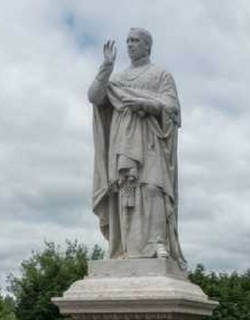
Saint Gelasius of Armagh B (AC), also known as Giolla Iosa and Gioua-Mac-Liag, dies on March 27, 1174. The son of the Irish poet Diarmaid, Saint Gelasius (meaning `servant of Jesus’) is the learned abbot of Derry for sixteen years. He is consecrated Archbishop of Armagh c. 1137, when Saint Malachy resigns and serves as Primate of Ireland until 1174.
During his long episcopacy, Gelasius has to deal with the events before and after the Norman invasion, including the alleged Donation of Ireland by Pope Adrian IV to Henry II of England, Henry’s arrival in Ireland in 1171, and Pope Alexander III’s confirmation of everything granted by Adrian IV.
Gelasius reconstructs the Cathedral of Armagh and, in 1162, consecrates Saint Laurence O’Toole as Archbishop of Dublin, although the invasion and settlement of Dublin by Norsemen means that the Christians of that see are looking more to Canterbury than Armagh. That same year, during the Synod of Clane in County Kildare, a uniform liturgy is ensured throughout Ireland by requiring that only Armagh-trained or Armagh-accredited teachers of divinity may teach in any school attached to the Irish Church.
Gelasius is an indefatigable prelate. He makes constant visitations throughout Ireland, reorganizes old monasteries, and convenes synods. He is said to be the first Irish bishop to whom the pallium is sent. Pope Eugene III’s papal legate, Cardinal Giovanni Paparoni, brings four pallia with him to the Synod of Kells in 1152 for the archbishops of Armagh, Cashel, Dublin, and Tuam. The records of this synod include the first mention of tithes in Irish annals, which Cardinal Paparoni proposes but none of the participants support. The matter of tithes and the Peter’s Pence is an important consideration in subsequent negotiations between Pope Adrian IV and Henry II of England.
Gelasius convenes another synod at Armagh in 1170 in the hope of finding some means to expel the Anglo-Normans, who had invaded the country the previous year, before they become too entrenched. In 1171, Henry II of England arrives, lavishly entertains the civic and ecclesiastic Irish leaders, and requests the convening of the Synod of Cashel, during which he presents a plan for improving the Church of Ireland. At this time there is no mention of any claim of Canterbury or the Donation. However, the eighth canon of the synod decrees that the Irish Church will celebrate the Divine Office according to the usage of the Church of England, which is still Catholic at the time.
The bishop of Armagh does not attend the Synod of Cashel. At the time he is occupied in a visitation of Connacht and Ulster in an attempt (in concert with the high king) to organize a defense of Ireland. He realizes that Henry II has duped many Irish princes by masking his true intentions.
The following year Henry II falls under interdict for his murder of Saint Thomas Becket. When news of HenryII’s penitential, bare-foot walk to the shrine of Saint Thomas and his plans for the `uplift’ of the Irish Church reaches Rome, Pope Alexander III confirms the Donation of Ireland made by Pope Adrian IV. Shortly thereafter the Church of Ireland became English, the School of Armagh is closed (c. 1188) and the last native bishop of Armagh until the Reformation dies in 1313.
(From: “Saints of the Day – Gelasius of Armagh” by Katherine I Rabenstein, CatholicSaints.Info (www.catholicsaints.info) | Pictured: Arms of the Archbishop of Armagh, in the Church of Ireland)
Glennon is named Coadjutor Archbishop of St. Louis on April 27, 1903. He succeeds Archbishop Kain as the fourth Archbishop of St. Louis upon the latter’s death on October 13 of that year. Realizing the Cathedral of St. Louis can no longer accommodate its growing congregation, he quickly begins raising funds for a new cathedral, the cornerstone of which is later laid on October 18, 1908.
Glennon opens the new Kenrick Seminary in 1915, followed by the minor seminary in Shrewsbury. He delivers the eulogy at the funeral of Cardinal James Gibbons and is appointed an Assistant at the Pontifical Throne on June 28, 1921. He opposes British rule in Ireland and supports the leaders of the Easter Rising. He is an outspoken opponent of divorce, condemns gambling games, and prohibits dancing and drinking at church-sponsored events. He sometimes throws the opening ball for the St. Louis Cardinals, but does not play any sports himself, once saying, “I once tried golf, but I so disfigured the scenery that I never played again, in fear of public indignation and reprisal.”[2]
Despite a rather popular tenure, as Archbishop of St. Louis Glennon opposes racial integration in the city’s Catholic schools, colleges, and universities. During the early 1940s, many local priests, especially Jesuits, challenge the segregationist policies at the city’s Catholic schools. The St. Louis chapter of the Midwest Clergy Conference on Negro Welfare, formed locally in 1938, pushes the all-female Webster College to integrate first. However, in 1943, Glennon blocks the enrollment of a young black woman at the college by speaking privately with the Kentucky-based superior of the Sisters of Loretto, which staffs the college. When approached directly by pro-integration priests, he calls the integration plan a “Jesuit ploy,” and quickly transfers one of the complaining priests away from his mission at an African American parish.
The Pittsburgh Courier, an African American newspaper with national circulation, discovers Glennon’s intervention and runs a front-page feature on the Webster incident. In response, Father Claude Heithaus, professor of Classical Archaeology at the Catholic Saint Louis University, delivers an angry sermon accusing his own institution of immoral behavior in its segregation policies. Saint Louis University begins admitting African American students that summer when its president, Father Patrick Holloran, manages to secure approval from the reluctant Archbishop Glennon. Nevertheless, St. Louis maintains one of the largest numbers of African American parishes and schools in the country.
During the return trip to the United States, Glennon stops in his native Ireland, where he is received by PresidentSeán T. O’Kelly and TaoiseachÉamon de Valera. While in Dublin, he is diagnosed with uremic poisoning and dies on March 9, 1946, ending a 42-year tenure as Archbishop. The Cardinal’s body is returned to St. Louis and then buried at the Cathedral.
MacHale’s parents are Patrick and Mary Mulkieran MacHale. He is so feeble at birth that he is baptised at home by Father Andrew Conroy. By the time he is five years of age, he begins attending a hedge school. Three important events happen during his childhood: the Irish Rebellion of 1798, the landing at Killala of French troops, whom the boy, hidden in a stacked sheaf of flax, watches marching through a mountain pass to Castlebar, and a few months later the brutal hanging of Father Conroy on a false charge of high treason.
With his friend and ally, Daniel O’Connell, MacHale takes a prominent part in the important question of Catholic emancipation, impeaching in unmeasured terms the severities of the former penal code, which had branded Catholics with the stamp of inferiority. During 1826 his zeal is omnipresent. He calls on the Government to remember how the Act of Union in 1800 was carried by William Pitt the Younger on the distinct assurance and implied promise that Catholic emancipation, which had been denied by the Irish Parliament, should be granted by the Parliament of the Empire.
Oliver Kelly, Archbishop of Tuam, dies in 1834, and the clergy selects MacHale as one of three candidates, to the annoyance of the Government who despatches agents to induce Pope Gregory XVI not to nominate him to the vacant see. Disregarding their request, the pope appoints MacHale Archbishop of Tuam. He is the first prelate since the Reformation who has received his entire education in Ireland. The corrupt practices of general parliamentary elections and the Tithe War cause frequent rioting and bloodshed and are the subjects of denunciation by the new archbishop, until the passing of a Tithes bill in 1838. He also leads the opposition to the ProtestantSecond Reformation, which is being pursued by evangelical clergy in the Church of Ireland, including the Bishop of Tuam, Killala and Achonry, Thomas Plunket.
The repeal of the Acts of Union 1800, advocated by O’Connell, enlists MacHale’s ardent sympathy and he assists the Liberator in many ways, and remits subscriptions from his priests for this purpose. In his zeal for the cause of the Catholic religion and of Ireland, so long downtrodden, but not in the 1830s, he frequently incurs from his opponents the charge of intemperate language, something not altogether undeserved. In his anxiety to reform abuses and to secure the welfare of Ireland, by an uncompromising and impetuous zeal, he makes many bitter and unrelenting enemies, particularly British ministers and their supporters.
The Great Famine of 1846–47 affects his diocese more than any. In the first year he announces in a sermon that the famine is a divine punishment on his flock for their sins. Then by 1846 he warns the Government as to the state of Ireland, reproaches them for their dilatoriness, and holds up the uselessness of relief works. From England as well as other parts of the world, cargoes of food are sent to the starving Irish. Bread and soup are distributed from the archbishop’s kitchen. Donations sent to him are acknowledged, accounted for, and disbursed by his clergy among the victims.
The death of O’Connell in 1847 is a setback to MacHale as are the subsequent disagreements within the Repeal Association. He strongly advises against the violence of Young Ireland. Over the next 30 years he becomes involved in political matters, particularly those involving the church. Toward the end of his life he becomes less active in politics.
MacHale attends the First Vatican Council in 1869. He believes that the favourable moment has not arrived for an immediate definition of the dogma of papal infallibility. Better to leave it a matter of faith, not written down, and consequently he speaks and votes in the council against its promulgation. Once the dogma had been defined, he declares the dogma of infallibility “to be true Catholic doctrine, which he believed as he believed the Apostles’ Creed“. In 1877, to the disappointment of the archbishop who desires that his nephew should be his co-adjutor, Dr. John McEvilly, Bishop of Galway, is elected by the clergy of the archdiocese, and is commanded by Pope Leo XIII after some delay, to assume his post. He had opposed this election as far as possible but submits to the papal order.
Every Sunday MacHale preaches a sermon in Irish at the cathedral, and during his diocesan visitations he always addresses the people in their native tongue, which is still largely used in his diocese. On journeys he usually converses in Irish with his attendant chaplain and has to use it to address people of Tuam or the beggars who greet him whenever he goes out. He preaches his last Irish sermon after his Sunday Mass, April 1881. He dies in Tuam seven months later, on November 7, 1881.
Connell is ordained priest by Archbishop John Charles McQuaid on May 19, 1951. He takes up a teaching post at the Department of Metaphysics at the University College Dublin. He is appointed Professor of General Metaphysics in 1972 and in 1983 becomes the Dean of the Faculty of Philosophy and Sociology. The College’s Department of Metaphysics is abolished after his departure.
Connell is appointed Archbishop of Dublin by the Holy See in early 1988. He is consecrated at St. Mary’s Pro-Cathedral, Dublin on March 6, 1988. He is created Cardinal-Priest by Pope John Paul II at the Consistory in Rome on February 21, 2001, with the TitulusS. Silvestri in Capite. Archbishops of Armagh, who hold the higher title of Primate of All Ireland, are more frequently appointed Cardinal than Archbishops of Dublin. The last Archbishop of Dublin to have been a cardinal is Cardinal Edward MacCabe, who was appointed in 1882. A large Irish contingent from Church and State, along with family and friends of the Cardinal, attend the installation which for the first time takes place at the front of the entrance to St. Peter’s Basilica.
On April 26, 2004, Connell retires as archbishop, handing the diocese to the coadjutor bishop, Diarmuid Martin. All bishops submit their resignation to the Pope on their 75th birthday. Connell’s is accepted shortly after his 78th birthday.
It is Connell’s failure, when Archbishop of Dublin in 1988–2004, to address adequately the abuse scandals in Dublin that lead the Vatican to assign Archbishop Martin as his replacement in the country’s largest diocese. The Murphy Report finds that Connell had handled the affair “badly” as he was “slow to recognise the seriousness of the situation.” It does praise him for making the archdiocesan records available to the authorities in 2002 and for his 1995 actions in giving the authorities the names of 17 priests who had been accused of abuse, although it says the list is incomplete as complaints were made against at least 28 priests in the archdiocese.
From 1988 Connell also continues to insure his archdiocese against liability from complainants, while claiming to the Murphy Commission that the archdiocese is “on a learning curve” in regard to child abuse. He arranges for compensation payments to be made from a “Stewardship Trust” that is kept secret from the archdiocese’s parishioners until 2003. In 1996 he refuses to help a victim of Paul McGennis and does not pass on what he knows about McGennis to her, or to the police. He apologises for this in 2002.
Desmond Connell dies in Dublin at the age of 90 on February 21, 2017, exactly sixteen years after his creation as Cardinal.
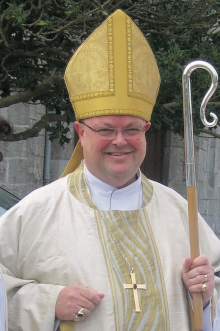
In 2013 Colton completes, and is conferred with, a PhD in Law also at Cardiff University. His academic areas of interest are church law, the law of the Church of Ireland, law within Anglicanism, the interface between the laws of religious communities and the laws of States (particularly in Ireland and Europe), human rights, education law, and charity law. In 2014 he is appointed as an honorary research fellow at the Cardiff School of Law and Politics of Cardiff University, and its Centre for Law and Religion.
Colton is married to Susan Colton, who is deputy principal of a primary school, and they have two adult sons. He is the first Church of Ireland bishop to openly support same-sex marriage. He is involved in education debates and in charity work. He chairs the board of directors of Saint Luke’s Charity, Cork, which focuses on the elderly and dementia sufferers. He is also chairman of the board of governors of Midleton College.
At the episcopal ordination of Bishop Fintan Gavin as Catholic bishop of Cork and Ross in June 2019, Colton presents the crosier at Bishop Gavin’s own request.
As of June 2020, Colton is the longest-serving bishop of Cork, Cloyne and Ross since bishop William Lyon in 1617 and also the longest serving bishop still in office in the Anglican churches of Ireland, England, Scotland and Wales. He is the author of almost a dozen book chapters, mostly in the area of the interface between religion and law.
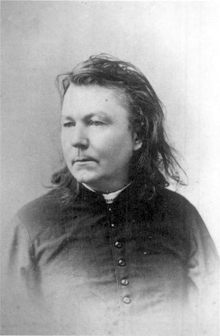
Martin is born Marie Helena Martin in Glenageary, County Dublin, on April 24, 1892, the second of twelve children of Thomas Martin and Mary Moore. In 1904, while attending classes for her First Communion, she contracts rheumatic fever, which is to affect her heart permanently. Tragedy hits the family on St. Patrick’s Day 1907, as her father is killed in what is presumed to be an accidental shooting. Later her mother sends her to schools in Scotland, England and Germany, all of which she leaves as quickly as possible.
Upon the outbreak of World War I, Martin joins the Voluntary Aid Detachment, a division of the Red Cross. In October 1915, she is assigned to work in Malta. After learning that her brother had been killed in the campaign of Gallipoli, she returns to Ireland in April 1916. She is called to serve again a month later at Neufchâtel-Hardelot, France, in a field hospital near the front lines of the Battle of the Somme. This assignment lasts until December of that year, followed by a brief stint in Leeds, England. After the war, she is called upon help in nursing victims of the Spanish flu, which had begun to devastate populations around the world.
In 1917 a new curate comes to the parish which Martin attends, the Reverend Thomas Roynane, to whom she turns for guidance. Roynane inspires her with an interest in pursuing missionary work. She goes to England in January 1919 for further medical training. Her mother’s severe illness the following year interrupts her training, however, as she has to return home to care for her.
In April 1920, Roynane arranges for Martin to meet the new bishop, and she volunteers her services as a lay missionary to work in his jurisdiction in southern Nigeria. Agnes Ryan, a local schoolteacher now in her fourth year of medical training, advises her that she wishes to join her in the African mission.
In April 1921, Martin and Ryan leave Ireland for Nigeria. They set sail for Africa from Liverpool on May 25 and arrive in the port of Calabar on June 14. They arrive prepared to provide medical care, only to learn that they are expected to run a school which had been staffed by French Religious Sisters until two years prior. To give the parents and children of the school a sense of continuity, the two women are addressed as “Sisters” by the priests and treated as if they are already members of an established religious institute.
By October, Ryan contracts malaria and develops a heart condition, which require her return to Ireland. Forced to fill in as Acting Headmistress, Martin meets with the bishop in his headquarters at Onitsha and is advised that caution is needed in providing medical care to the people of her mission, so as not to provoke objections by other missionaries in the region. Upon her return to Calabar, she makes a 30-day retreat.
In April 1922 the bishop travels there and holds two weeks of consultations with Martin, Roynane and another missioner, during which the Rule and Constitutions of a new congregation are hammered out, with the understanding that Martin will be the foundress. Martin does not see the bishop again for two years. During this time, she learns that the bishop is working to establish the new congregation in Ireland, a direction she feels will focus the congregation on teaching rather than the medical care. An Irish Sister of Charity, Sister Magdalen Walker, is released from her congregation to help in this new work and arrives in Calabar in October 1923.
The following January Martin is directed by the bishop to return to Ireland to make a canonicalnovitiate. In March she starts her time of postulancy, prior to admission to the novitiate year. After 18 months, however, upon completion of the novitiate year she leaves the community, as the training provided by the Dominican Sisters has not been oriented toward medical care.
In this formal step of forming the new congregation, Martin encounters the prohibition in the new Code of Canon Law of 1917 of the Catholic Church against members of religious orders practicing medicine. Facing this barrier, she still feels a call to consecrated life and considers following the example of the recently canonizedCarmelite nun, Thérèse of Lisieux. In 1927 she applies to the community of that Order in Dublin, but her application is declined, solely on the decision of the prioress who feels that Martin is called to a different path in life. She then goes through a new period of confusion until she is requested to consider again serving the missions. She then forms a small group of women to provide the domestic service for the preparatory school run by the BenedictinemonksGlenstal Abbey.
In 1933, following a long period of illness, Martin approaches the new Apostolic Nuncio to Ireland, ArchbishopPaschal Robinson. He is supportive of her goals and encourages her continually over the next years. Finally, in February 1936, the Holy See lifts prohibition against Religious Sisters serving as doctors or midwives. She then seeks a diocese which will accept a new congregation, without success. In October of that same year, Antonio Riberi is named Apostolic Delegate in Africa, based in Kenya. He gives his support to having the congregation established in Calabar.
While still negotiating to purchase a house in Ireland as a local base, complicated by the fact that they are not yet a formal congregation, the small community sails for Nigeria at the end of 1936. Upon their arrival Martin suffers a heart attack and is hospitalized at Port Harcourt. It is there that she professes religious vows on April 4, 1937. With that the Medical Missionaries of Mary become established.
Martin’s health is always a source of concern, but she lives until 1975. Today the Medical Missionaries of Mary number some 400 women from 16 different nations, who serve in 14 different countries around the world.
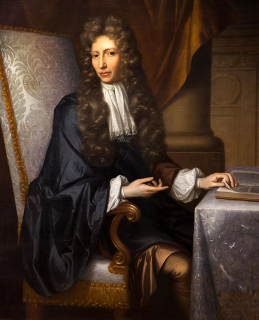
At age eight, Boyle begins his formal education at Eton College, where his studious nature quickly becomes apparent. In 1639 he and his brother Francis embark on a grand tour of the continent together with their tutor Isaac Marcombes. In 1642, owing to the Irish rebellion, Francis returns home while Robert remains with his tutor in Geneva and pursues further studies.
Boyle returns to England in 1644, where he takes up residence at his hereditary estate of Stalbridge in Dorset. There he begins a literary career writing ethical and devotional tracts, some of which employ stylistic and rhetorical models drawn from French popular literature, especially romance writings. In 1649 he begins investigating nature via scientific experimentation. From 1647 until the mid-1650s, he remains in close contact with a group of natural philosophers and social reformers gathered around the intelligencer Samuel Hartlib. This group, the Hartlib Circle, includes several chemists who heighten his interest in experimental chemistry.
Boyle spends much of 1652–1654 in Ireland overseeing his hereditary lands and performing some anatomic dissections. In 1654 he is invited to Oxford, and he takes up residence at the university until 1668. In Oxford he is exposed to the latest developments in natural philosophy and becomes associated with a group of notable natural philosophers and physicians, including John Wilkins, Christopher Wren, and John Locke. These individuals, together with a few others, form the “Experimental Philosophy Club.” Much of Boyle’s best known work dates from this period.
In 1659 Boyle and Robert Hooke, the clever inventor and subsequent curator of experiments for the Royal Society, complete the construction of their famous air pump and use it to study pneumatics. Their resultant discoveries regarding air pressure and the vacuum appear in Boyle’s first scientific publication, New Experiments Physico-Mechanicall, Touching the Spring of the Air and Its Effects (1660). Boyle and Hooke discover several physical characteristics of air, including its role in combustion, respiration, and the transmission of sound. One of their findings, published in 1662, later becomes known as “Boyle’s law.” This law expresses the inverse relationship that exists between the pressure and volume of a gas, and it is determined by measuring the volume occupied by a constant quantity of air when compressed by differing weights of mercury.
Among Boyle’s most influential writings are The Sceptical Chymist (1661), which assails the then-current Aristotelian and especially Paracelsian notions about the composition of matter and methods of chemical analysis, and the Origine of Formes and Qualities (1666), which uses chemical phenomena to support the corpuscularian hypothesis. He argues so strongly for the need of applying the principles and methods of chemistry to the study of the natural world and to medicine that he later gains the appellation of the “father of chemistry.”
Boyle is a devout and pious Anglican who keenly champions his faith. He sponsors educational and missionary activities and writes a number of theological treatises. He is deeply concerned about the widespread perception that irreligion and atheism are on the rise, and he strives to demonstrate ways in which science and religion are mutually supportive. For Boyle, studying nature as a product of God’s handiwork is an inherently religious duty. He argues that this method of study would, in return, illuminate God’s omnipresence and goodness, thereby enhancing a scientist’s understanding of the divine. The Christian Virtuoso (1690) summarizes these views and may be seen as a manifesto of his own life as the model of a Christian scientist.
In 1668 Boyle leaves Oxford and takes up residence with his sister Katherine Jones, Vicountess Ranelagh, in her house on Pall Mall in London. There he sets up an active laboratory, employs assistants, receives visitors, and publishes at least one book nearly every year. Living in London also provides him the opportunity to participate actively in the Royal Society.
Boyle is a genial man who achieves both national and international renown during his lifetime. He is offered the presidency of the Royal Society and the episcopacy but declines both. Throughout his adult life, he is sickly, suffering from weak eyes and hands, recurring illnesses, and one or more strokes. He dies in London at age 64 on December 31, 1691, after a short illness exacerbated by his grief over Katherine’s death a week earlier. He leaves his papers to the Royal Society and a bequest for establishing a series of lectures in defense of Christianity. These lectures, now known as the Boyle Lectures, continue to this day.
Tod is born on May 18, 1836, in Edinburgh into a well-known Irish Presbyterian family, her uncle being the Rev. Hope Masterton Waddell, one of the earliest Irish Presbyterian missionaries who served with the Scottish Missionary Society in Jamaica and whose great grandfather is the Rev. Charles Masterton, one of the most distinguished minsters of the General Synod of Ulster who ministers at Connor and Rosemary Street, Belfast. She is very proud of her Presbyterian heritage and of her Scottish ancestry.
The daughter of James Banks Tod, an Edinburgh merchant, Tod spends her early years in Edinburgh. She is educated at home by her mother, Maria Isabella Waddell, who comes from County Monaghan. The family moves to Belfast in the 1850s following the death of her father. She and her mother join Elmwood Presbyterian Church. Her Presbyterian background no doubt contributes to her radical views on social issues and women’s rights. She earns her living from writing and journalism, contributing, for example, to the Dublin University Magazine, an independent literary, cultural and political magazine, and to the Banner of Ulster, a Presbyterian newspaper.
Tod becomes one of the leading pioneers in the fight to improve the position of women. She is the only woman called to give evidence to a Select Committee of Enquiry on the reform of the married women’s property law in 1868 and serves on the executive of the Married Women’s Property Committee in London from 1873 to 1874. She successfully campaigns for the repeal of the Contagious Diseases Acts of 1864, 1866 and 1869 which enacted that a woman suspected of being a prostitute could be arrested and forced to undergo medical examination for venereal disease. She sees this legislation as an infringement of a woman’s civil liberties.
Tod is also a strong supporter of the temperance movement and, along with her friend Margaret Byers, forms the Belfast Women’s Temperance Association in 1874. Perhaps she is best known for her tireless campaign to extend the educational provision for middle-class women. For example, in 1878 she organises a delegation to London to put pressure on the Government to include girls in the Intermediate Education Act of 1878. The Ladies’ Collegiate School in Belfast, Alexandra College in Dublin and the Belfast Ladies Institute owe their existence largely to her. She writes a paper entitled “An Advanced Education for Girls in the Upper and Middle Classes” which is presented in 1867 at a meeting of the National Association for the Promotion of Social Science and is among the pamphlets held in the Presbyterian Historical Society of Ireland library.
Tod is also an active campaigner for women’s right to vote, embarking on her first campaign in 1872 and addressing meetings in Belfast, Carrickfergus, Coleraine and Londonderry. Following a meeting in Dublin a suffrage committee is established that later becomes the Dublin Women’s Suffrage Society and in 1873 she forms the North of Ireland Women’s Suffrage Society. She extends her meetings to London, Glasgow and Edinburgh and is a frequent visitor to London to lobby politicians during the parliamentary session.
Tod is very much a staunch opponent of Home Rule, establishing a branch of the London-based Women’s Liberal Federation in Belfast and the Liberal Women’s Unionist Association. She sees unionism as the way to progress. “I knew that all the social work in which I had taken so prominent a part for 20 years was in danger and most of it could not exist a day under a petty legislature of the character which would be inevitable,” she says. “What we dread is the complete dislocation of all society, especially in regard to commercial affairs and organised freedom of action.”
Tod suffers from ill-health in her later days and dies in Belfast of pulmonary illness on December 8, 1896. She is buried in Balmoral Cemetery in South Belfast.
McLoughlin is born in Cross Street in the centre of Galway on April 9, 1929. His parents run a small wholesale grocery business. He attends the Patrician Brothers primary school in Nuns’ Island and St. Mary’s College, Galway. He studies for the priesthood at Maynooth and is ordained on June 20, 1954.
After ordination McLoughlin is appointed to the teaching staff of St. Mary’s College, Galway where he develops interests in basketball and amateur dramatics. He is appointed diocesan secretary in September 1965, bringing to that role a reserved dedication to duty, meticulous planning and financial acumen. He leaves full-time teaching in 1983 and is appointed parish priest of Galway Cathedral.
On February 10, 1993, the year after the sensational resignation of Bishop Eamon Casey, McLoughlin is appointed by Pope John Paul II as Bishop of Galway and Kilmacduagh. His consecration takes place in Galway Cathedral on March 28, 1993. After his death one obituary notes that McLouglhin’s “quiet demeanour…intimate knowledge of Galway and his being a native son, made him the ideal man to assume responsibility for the diocese when Bishop Eamonn Casey resigned.”
McLoughlin serves as chairman of the finance and general planning committee of the Irish Catholic Bishops’ Conference. In 2003 he is one of the first Irish bishops to announce the clustering of parishes in recognition of the falling number of priests, his diocese having had very few vocations or ordinations in the decade up to 2003.
McLoughlin announces his retirement on May 23, 2005, and on July 3 is succeeded as bishop of Galway and Kilmacduagh by Martin Drennan. He lives in Claregalway during his retirement, and dies on November 25, 2005, in Galway Clinic. His funeral is held in Galway Cathedral, and he is interred in the crypt beneath the cathedral.
McLoughlin’s successor, Bishop Martin Drennan, says he is deeply saddened and shocked by the news of McLoughlin’s death and that the late bishop was deeply loved and admired by the people and priests of his native city and diocese.
Dr. Seán Brady, Archbishop of Armagh and Primate of All Ireland, also pays tribute to the late bishop. He says Bishop McLoughlin was a gentle and humble man who radiated great joy, friendship and happiness to all whom he met.
Beresford employs Lewis Nockalls Cottingham, one of the most skilled architects at that time, to restore St. Patrick’s Cathedral, Armagh. Cottingham removes the old, stunted spire and shores up the belfry stages while he rebuilds the piers and arches under it. The arcade walls which had fallen away as much as 21 inches from the perpendicular on the south side and 7 inches on the north side, are straightened by means of heated irons, and the clerestory windows which had long been concealed, are opened out and filled with tracery.
Beresford dies on July 18, 1862, at Woburn, Bedfordshire, England, the home of his niece, in the parish of Donaghadee and is buried in the cathedral. There is a memorial to him in the south aisle at St. Patrick’s Cathedral, Armagh.