seamus dubhghaill

Promoting Irish Culture and History from Little Rock, Arkansas, USA


Leave a comment

Birth of Minister William Dool Killen

william-dool-killen

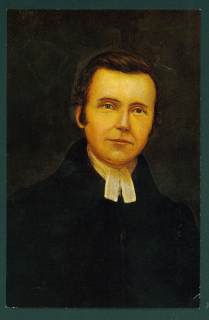
William Dool Killen, a minister of the Presbyterian Church in Ireland and church historian, is born at Church Street, Ballymena, County Antrim, on April 16, 1806.

Killen is the third of four sons and nine children of John Killen (1768–1828), a grocer and seedsman in Ballymena, by his wife Martha, daughter of Jesse Dool, a farmer in Duneane. His paternal grandfather, a farmer at Carnmoney, marries Blanche Brice, a descendant of Edward Brice. A brother, James Miller Killen (1815–1879), is a minister in Comber, County Down. Thomas Young Killen is his father’s great-nephew.

After attending local primary schools, Killen goes to Ballymena Academy around 1816, and in November 1821 enters the collegiate department of the Royal Belfast Academical Institution, under James Thomson. In 1827, he is licensed to preach by the Presbytery of Ballymena, and on November 11, 1829 he is ordained minister at Raphoe, County Donegal.

In July 1841 Killen is appointed, by the General Assembly of the Presbyterian Church in Ireland, its professor of church history, ecclesiastical government, and pastoral theology, in succession to James Seaton Reid. He concentrates on history. When Assembly’s College, Belfast is set up in 1853, he becomes one of the professors there. In 1869 he is appointed president of the college, in succession to Henry Cooke, and undertakes fundraising for professorial endowments and new buildings. In 1889 he resigns his chair but continues as president.

During his career Killen receives the degrees of D.D. (1845) and of LL.D. (1901) from the University of Glasgow. His portrait, painted by Richard Hooke, hangs in the Gamble library of the college.

William Dool Killen dies on January 10, 1902, and is buried in Balmoral Cemetery, Belfast, where a monument marks his resting place.


Leave a comment

Birth of William Reeves, Bishop of Down, Connor & Dromore

bishop-william-reeves

William Reeves, Irish antiquarian and the Church of Ireland Bishop of Down, Connor and Dromore from 1886 until his death, is born on March 16, 1815. He is the last private keeper of the Book of Armagh and at the time of his death is President of the Royal Irish Academy.

Reeves is born at Charleville, County Cork, the eldest child of Boles D’Arcy Reeves, an attorney, whose wife Mary is a daughter of Captain Jonathan Bruce Roberts, land agent to the Edmund Boyle, 8th Earl of Cork. This grandfather had fought at the Battle of Bunker’s Hill, and Reeves is born at his house in Charleville.

From 1823, Reeves is educated at the school of John Browne in Leeson Street, Dublin, and after that at a school kept by the Rev. Edward Geoghegan. In October 1830, he enters Trinity College, Dublin, where he quickly gains a prize for Hebrew. In his third year, he becomes a scholar and goes on to graduate BA in 1835. He proceeds to read medicine, wins the Berkeley Medal, and graduates MB in 1837. His object in taking his second degree is that he intends to become a clergyman and to practice the medical profession among the poor of his parish.

In 1838, Reeves is appointed Master of the diocesan school in Ballymena, County Antrim, and is ordained a deacon of Hillsborough, County Down. The following year, he is ordained a priest of the Church of Ireland at Derry.

In 1844, Reeves rediscovers the lost site of Nendrum Monastery when he visits Mahee Island in Strangford Lough, County Down, searching for churches recorded in 1306, and recognises the remains of a round tower. By 1845, he is corresponding with the Irish scholar John O’Donovan, and an archive of their letters between 1845 and 1860 is preserved at University College, Dublin. In July 1845, Reeves visits London.

Reeves resides in Ballymena from 1841 to 1858, when he is appointed vicar of Lusk following the success of his edition of Adomnán‘s Life of Saint Columba (1857), for which the Royal Irish Academy awards him their Cunningham Medal in 1858. In 1853, he purchases from the Brownlow family the important 9th-century manuscript known as the Book of Armagh, paying three hundred pounds for it. He sells the book for the same sum to Archbishop Beresford, who has agreed to present it to Trinity College, Dublin.

In 1875 Reeves is appointed Dean of Armagh, a position he holds until 1886 when he is appointed as Bishop of Down, Connor and Dromore. In 1891 he is elected as President of the Royal Irish Academy. As bishop, he resides at Conway House, Dunmurry, County Antrim, and signs his name “Wm. Down and Connor.”

William Reeves dies in Dublin on January 12, 1892, while still President of the Academy. At the time of his death, he is working on a diplomatic edition of the Book of Armagh, by then in the Trinity College Library. The work is completed by Dr. John Gwynn and published in 1913.


Leave a comment

Birth of Mother Frances Mary Teresa Ball

frances-teresa-ball

Mother Frances Mary Teresa Ball, foundress of the Irish Branch of the Institute of the Blessed Virgin Mary (IBVM), is born in Dublin on January 9, 1794.

Ball is the youngest of six children born to John and Mable Clare Bennet Ball. Her father is a wealthy silk weaver. Catholicism is still suppressed in Ireland at this time. She is therefore sent to England at the age of nine to the Bar Convent in York. Henry James Coleridge describes her as “a bright, quiet, high-spirited girl, fond of fun, and with much depth of character.” In these times students do not return home for Easter, Christmas or summer holidays. They stay at the school, and live like religious people, until they leave school, usually in their late teens.

In 1807, her eldest sister, Cecilia is professed at the Ursuline convent in Cork. Ball travels from Dublin to Cork for the ceremony, where she meets Mary Aikenhead. Cecilia Ball takes the name of Sister Francis Regis and is within a few years made Superior of the convent in Cork. Upon the death of her father in 1808, Ball returns to Dublin. She is expected to make an admirable wife for the son and heir of some rich Catholic Dublin merchant family.

In June 1814, under the direction of Dr. Daniel Murray, Archbishop of Dublin, Ball returns to York and enters the novitiate of the Institute of the Blessed Virgin Mary. There she receives her religious training, and makes her profession in September 1816, taking, in religion, the name of Mary Teresa.

Recalled by Archbishop Murray, Ball returns to Dublin in 1821 with two novices to establish the Irish Branch of the Institute of the Blessed Virgin Mary for the instruction of children. They stay with Mary Aikenhead and the Irish Sisters of Charity in Stanhope Street while Rathfarnham House is being renovated. In 1822 she opens the first institution of the order in Ireland, in Rathfarnam House, four miles from Dublin. She decides to call the house “Loreto” after the village in Italy to which the Nazareth house of the Holy Family is said to have been miraculously transported.

Ball is a woman of great piety and administrative ability. Her energies are devoted to the establishment of schools and to the development of the sisterhood which now has members in many countries. The first offshoot is planted in Navan, County Meath, in the year 1833. The year 1840 is marked by the erection of the first church in Ireland dedicated to the Sacred Heart, in Loretto Abbey, Rathfarnham. In addition to the boarding and day schools the sisters conduct orphanages.

For almost forty years after bringing the IBVM to Ireland, Ball establishes a wide network of convents and schools across Ireland, as well as in India, Mauritius and Canada. The nuns are usually called Sisters of Loreto after the shrine at Loreto, Marche in Italy.

Mother Mary Teresa Ball dies at Rathfarnham Abbey on May 19, 1861, after a long illness.


Leave a comment

St. Andrew’s Church Destroyed by Fire

church-of-st-andrews

St. Andrew’s Church in Suffolk Street, Dublin, is destroyed by fire on January 8, 1860. The church is a former parish church of the Church of Ireland and now houses the Central Tourist Office.

The original St. Andrew’s Church is located on present-day Dame Street but disappears during Oliver Cromwell’s reign in the mid-17th century. A new church is built in 1665 a little further away from the city walls, on an old bowling-green close to the Thingmote, the old assembly place of the Norse rulers of the city. Due to its shape, it is commonly known as the “Round Church.” Local landlords of the time, Lord Anglesey (after whom Anglesey Street is named) and Sir John Temple (after whose family Temple Bar is named) are churchwardens. The architect is William Dodson. The neighbouring houses located in that part of the Dublin Corporation estate are known as “the Whole Land of Tib and Tom.”

The church is rebuilt in 1793, but burns down in 1860, after which the present building is constructed.

The boundaries of the ecclesiastical parish are coextensive to those of the civil parish of St. Andrew. The population of this parish in 1901 is 3,058, in 1971 it is 300.


Leave a comment

Birth of Clergyman Narcissus Marsh

narcissus-marsh

Narcissus Marsh, English clergyman who is successively Church of Ireland Bishop of Ferns and Leighlin, Archbishop of Cashel, Archbishop of Dublin and Archbishop of Armagh, is born on December 20, 1638, at Hannington, Wiltshire.

Marsh is educated at Magdalen Hall, Hertford College, Oxford. He later becomes a fellow of Exeter College, Oxford, in 1658. In 1662 he is ordained, and presented to the living of Swindon, which he resigns in the following year.

After acting as chaplain to Seth Ward, Bishop of Exeter and then Bishop of Salisbury, and Lord Chancellor Clarendon, he is elected principal of St. Alban Hall, Oxford, in 1673. In 1679 he is appointed provost of Trinity College, Dublin, where he does much to encourage the study of the Irish language. He helps to found the Dublin Philosophical Society and contributes to it a paper entitled Introductory Essay to the Doctrine of Sounds (printed in Philosophical Transactions, No. 156, Oxford, 1684).

In 1683 Marsh is consecrated Bishop of Ferns and Leighlin, but after the accession of James II he is compelled by the turbulent soldiery to flee to England in 1689, when he becomes Vicar of Gresford, Flintshire, and Canon of St. Asaph. Returning to Ireland in 1691 after the Battle of the Boyne, he is made Archbishop of Cashel, and three years later he becomes Archbishop of Dublin. About this time, he founds Marsh’s Library in Dublin, which is the oldest public library in Ireland. He becomes Archbishop of Armagh in 1703. Between 1699 and 1711 he is six times a Lord Justice of Ireland.

Narcissus Marsh dies on November 2, 1713. His funeral oration is pronounced by his successor at Dublin, Archbishop William King. A more acerbic account is provided by Jonathan Swift.

Many oriental manuscripts belonging to Narcissus Marsh are now in the Bodleian Library in Oxford.


Leave a comment

Birth of Poet Charles Wolfe

charles-wolfe

Charles Wolfe, Irish poet, is born at Blackhall, County Kildare, on December 14, 1791. He is chiefly remembered for “The Burial of Sir John Moore after Corunna” which achieves popularity in 19th century poetry anthologies.

Wolfe is the youngest son of Theobald Wolfe of Blackhall and his wife Frances, who is also his cousin and daughter of the Rev. Peter Lombard of Clooncorrick Castle, Carrigallen, County Leitrim. He is a brother of Peter Wolfe, High Sheriff of Kildare. His father is the godfather, but widely believed to be the natural father, of Theobald Wolfe Tone and the first cousin of Arthur Wolfe, 1st Viscount Kilwarden.

Not long after he is born, his father dies, and the family moves to England. In 1801, Wolfe is sent to a school in Bath but is sent home a few months later due to ill health. From 1802 to 1805, he is tutored by a Dr. Evans in Salisbury before being sent to Hyde Abbey School, Winchester. In 1808, his family returns to Ireland, and the following year he enters Trinity College, Dublin, graduating in 1814.

Wolfe is ordained as a Church of Ireland priest in 1817, first taking the Curacy of Ballyclog in County Tyrone before transferring almost immediately to Donaghmore, County Tyrone. There he develops a close friendship and deep respect for the Rev. Thomas Meredith, Rector of nearby Ardtrea, and a former Fellow of Trinity College Dublin. Wolfe writes two epitaphs for Meredith, one on his memorial in the parish church of Ardtrea, and another intended for his tomb.

Wolfe is best remembered for his poem “The Burial of Sir John Moore after Corunna”, written in 1816 and much collected in 19th and 20th century anthologies. The poem first appears anonymously in the Newry Telegraph of April 19, 1817, and is reprinted in many other periodicals. But it is forgotten until after his death when Lord Byron draws the attention of the public to it. Wolfe’s only volume of verse, Poetical Remains, appears in 1825 with “The Burial of Sir John Moore” and fourteen other verses of an equally high standard.

Wolfe remains at Donaghmore until 1820 but, rejected by the woman for whom he gave up his academic career, and with Meredith, his only real friend in County Tyrone, now dead, he moves to Southern France. Shortly before his death he returns to Ireland and lives at Cobh, County Cork, where he dies at the age of 31 of consumption, which he catches from a cow. He is buried in Cobh at Old Church Cemetery. There is also a plaque to his memory in the church at Castlecaulfield, the village where he lives whilst Curate at Donaghmore, as well as a marble monument to him at St. Patrick’s Cathedral, Dublin.

(Pictured: Bas-relief of Charles Wolfe in St. Patrick’s Cathedral, Dublin)


1 Comment

Birth of Anglican Bishop Charles Graves

charles-graves

Charles Graves FRS, 19th-century Anglican Bishop of Limerick, Ardfert and Aghadoe, is born at 12 Fitzwilliam Square, Dublin, on December 6, 1812. He serves as President of the Royal Irish Academy, Dean of the Chapel Royal at Dublin Castle and is a noted mathematician.

Graves is born to John Crosbie Graves (1776–1835), Chief Police Magistrate for Dublin, and Helena Perceval, the daughter and co-heiress of the Rev. Charles Perceval (1751–1795) of Bruhenny, County Cork. Educated at Trinity College, Dublin, he wins a scholarship in Classics, and in 1834 graduates BA as Senior Moderator in mathematics, getting his MA in 1838. He plays cricket for Trinity, and later in his life does much boating and fly-fishing. It is intended that he join the 18th Royal Irish Regiment of Foot under his uncle, Major-General James William Graves (1774–1845), and in preparation he becomes an expert swordsman and rider.

After leaving Trinity College, Graves follows in the steps of his grandfather, Thomas Graves, who was appointed Dean of Ardfert in 1785 and Dean of Connor in 1802, and his great uncle, Richard Graves. He is appointed a fellow of Trinity College from 1836 to 1843 before taking the professorship of mathematics, a position he holds until 1862.

Graves is elected a member of the Royal Irish Academy in 1837 and subsequently holds various officerships, including President from 1861 to 1866. In 1860 he is appointed Dean of the Chapel Royal and, from 1864 to 1866, he is the Dean of Clonfert before being consecrated as Bishop of Limerick, Ardfert and Aghadoe, a position he holds for 33 years until his death on July 17, 1899. He is elected a Fellow of the Royal Society in 1880 and receives the honorary degree of DCL from Oxford University in 1881.

In 1841 Graves publishes an original mathematical work and he embodies further discoveries in his lectures and in papers read before and published by the Royal Irish Academy. He is a colleague of Sir William Rowan Hamilton and, upon the latter’s death, Graves gives a presidential panegyric containing a valuable account both of Hamilton’s scientific labours and of his literary attainments.

Graves is very interested in Irish antiquarian subjects. He discovers the key to the ancient Irish Ogham script which appears as inscriptions on cromlechs and other stone monuments. He also prompts the government to publish the old Irish Brehon Laws, Early Irish law. His suggestion is adopted, and he is appointed a member of the Commission to do this.

Graves’ official residence is The Palace at Limerick, but from the 1850s he takes the lease of Parknasilla House, County Kerry, as a summer residence. In 1892 he buys out the lease of the house and a further 114 acres of land that includes a few islands. In 1894 he sells it to Great Southern Hotels, who still own it to this day.


Leave a comment

Execution of John Atherton, Anglican Bishop of Waterford & Lismore

john-atherton-execution-pamphlet

John Atherton, Anglican Bishop of Waterford and Lismore in the Church of Ireland, is executed on December 5, 1640, on a charge of immorality.

Atherton is born in 1598 in Somerset, England. He studies at Oxford University and joins the ranks of the Anglican clergy. In 1634 he becomes Bishop of Waterford and Lismore in the Church of Ireland. In 1640 he is accused of buggery with a man, John Childe, his steward and tithe proctor. They are tried under a law that Atherton himself had helped to institute. They are both condemned to death, and Atherton is executed in St. Stephen’s Green, Dublin. Reportedly, he confesses to the crime immediately before his execution, although he had proclaimed his innocence before that.

More recently, some historical evidence has been developed that shows Atherton might have been a victim of a conspiracy to discredit him and his patrons. This is attributable to Atherton’s status as an astute lawyer, who seeks to recover lost land for the relatively weak Protestant Church of Ireland during the 1630s. Unfortunately for Atherton, this alienates him from large landowners, who then allegedly use his sexuality to discredit him.

English Puritan, Congregationalist and Independent activists, as well as English and Scottish Presbyterian activists, contemporaneously campaign to abolish Episcopacy (bishops) within the embattled Church of England, Church of Scotland and Church of Ireland, notionally expediting the political interest in Atherton’s downfall.

Posthumous accusations of sexual wrongdoing also include allegations of “incest” with his sister-in-law, and infanticide of the resultant child, as well as zoophilia with cattle. However, these allegations begin to be circulated several months after his death in an anonymous pamphlet, and may have been intended to further discredit the bishop’s campaign to restore the finances of the Church of Ireland.

(Pictured: Anonymous pamphlet of the hangings of John Atherton and John Childe, 1641)


Leave a comment

Birth of Cardinal Tomás Séamus Ó Fiaich

Tomás Séamus Ó Fiaich, Irish prelate of the Roman Catholic Church, is born in Cullyhanna, County Armagh, on November 3, 1923. He serves as the Catholic Primate of All Ireland and Archbishop of Armagh from 1977 until his death. He is created a Cardinal in 1979.

Ó Fiaich is ordained a priest on July 6, 1948. He spends his first year of ordination as assistant priest in Clonfeacle parish. He undertakes post-graduate studies at University College, Dublin, (1948–50), receiving a Master of Arts (MA) in early and medieval Irish history. He also studies at the Catholic University of Leuven in Belgium, (1950–52), receiving a licentiate in historical sciences.

In 1952 Ó Fiaich returns to Clonfeacle where he remains as assistant priest until the following summer and his appointment to the faculty of St. Patrick’s College, Maynooth. He is an academic and noted Irish language scholar, folklorist and historian in the Pontifical University in St. Patrick’s College, Maynooth, the National Seminary of Ireland. From 1959 to 1974 he is Professor of Modern Irish History at the college. In this capacity he suggests to Nollaig Ó Muraíle that he begin research on Dubhaltach Mac Fhirbhisigh and his works. He “was an inspired lecturer, an open and endearing man, who was loved by his students… Tomas O’Fiaich was my Good Samaritan.”

Ó Fiaich serves as vice president of the college from 1970 to 1974 and is then appointed college president, a post that traditionally precedes appointment to an episcopal position in the Irish Church. He holds this position until 1977.

Following the relatively early death from cancer of Cardinal William Conway in April 1977, Monsignor Ó Fiaich is appointed Archbishop of Armagh by Pope Paul VI on August 18, 1977. He is consecrated bishop on October 2, 1977. The principal consecrator is the papal nuncio Archbishop Gaetano Alibrandi. The principal co-consecrators are Bishop Francis Lenny, the auxiliary Bishop of Armagh, and Bishop William Philbin, the Bishop of Down and Connor. Pope John Paul II raises Ó Fiaich to the cardinalate on June 30, 1979, and he is appointed Cardinal-Priest of S. Patrizio that same day.

Ó Fiaich dies of a heart attack on the evening of May 8, 1990, while leading the annual pilgrimage by the Archdiocese of Armagh to the Marian shrine of Lourdes in France. He arrives in France the day before and complains of feeling ill shortly after saying Mass at the grotto in the French town. He is rushed by helicopter to a hospital in Toulouse, 125 miles away, where he dies. He lies in state at the cathedral in Armagh, where thousands of people lined up to pay their respects.

Ó Fiaich is succeeded as archbishop and cardinal by a man six years his senior, Cahal Daly, then the Bishop of Down and Connor.


Leave a comment

Death of John McElroy, Founder of Boston College

Death of Jesuit John McElroy, the founder of Boston College, at age of 95 in Frederick, Maryland, on September 12, 1877.

McElroy is born on May 14, 1782, in Enniskillen, County Fermanagh, the younger of two sons. In the hopes of providing a better life for John and his brother Anthony, their father, a farmer, finances their travel to the United States. In 1803 the two young men board a ship leaving the port of Londonderry and arrive in Baltimore, Maryland, on August 26. McElroy eventually settles in Georgetown, Washington, D.C., and becomes a merchant.

In 1806, McElroy enters Georgetown College in Washington, D.C., the same year he enters the novitiate of the Society of Jesus as a lay brother. He eventually manages the finances of Georgetown College and in 1808 erects the tower building. He managed the school’s finances so well that through the period of economic hardship following the War of 1812, he is able to send several Jesuits to Rome to study.

McElroy is ordained in May 1817, after less than two years of preparation. As a new priest, he is assigned to Holy Trinity Catholic Church in Georgetown as an assistant pastor. In his short time at Trinity, he contributes to the growth of the congregation and enlarging of the church building. This is achieved by increasing the monthly subscription for congregation members from 12½ cents to $12.50 on July 3, 1819. The following day he travels to most of the congregation members’ homes and collects $2,000 in pledges. He immediately sets to work having the Church modified to include two lateral-wing chapels, which are first used on October 3, 1819.

On January 11, 1819, McElroy is granted United States citizenship. Also in 1819, McElroy starts a Sunday School for black children who are taught prayers and catechism simultaneously with spelling and reading, by volunteer members of the congregation. McElroy spends his remaining years in Georgetown teaching the lower grades.

In 1823, McElroy begins negotiations with the Sisters of Charity in Emmitsburg, Maryland, for the establishment of a school for girls in Frederick. In 1824, the St. John’s Benevolent Female Free School is founded by the Sisters of Charity of Saint Joseph at 200 East Second Street in Frederick. In 1825, McElroy sets to work replacing the pre-American Revolution log cabin that houses the school with a modern building large enough to also house an orphanage.

McElroy’s next task is to found an educational institution for boys. On August 7, 1828, the construction of St. John’s Literary Institute begins. The following year the construction is completed, and the school is opened, a school which is currently operating under the name of Saint John’s Catholic Prep.

In October 1847, McElroy is welcomed in Boston, Massachusetts, by the Bishop of Boston, John Bernard Fitzpatrick, to serve as pastor of St. Mary’s parish in the North End. Bishop Fitzpatrick sets McElroy to work on bringing a college to Boston.

In 1853, McElroy finds a property in the South End where the city jail once stood. After two years of negotiations the project falls through due to zoning issues. A new site is identified, and city officials endorse the sale. In 1858, Bishop Fitzpatrick and Father McElroy break ground for Boston College, and for the Church of the Immaculate Conception. Classes began in the fall of 1864 and continue at this location until 1913 when the college moves to its current location at Chestnut Hill. Initially Boston College offers a 7-year program including both high school and college. This joint program continues until 1927 when the high school is separately incorporated.

In 1868, McElroy retires to the Jesuit novitiate in Frederick, Maryland. He visits Georgetown for the final time in 1872 to celebrate his golden jubilee. His eyesight is failing and while moving through his home he falls, fracturing his femur, which eventually leads to his death. Father John McElroy dies September 12, 1877, at the Jesuit novitiate in Frederick, Maryland. For some years leading up to his death, he is regarded as the oldest priest in the United States and the oldest Jesuit in the world. He is buried in the Novitiate Cemetery. In 1903, the Jesuits withdraw from Frederick and the graves are moved from the Frederick Jesuit Novitiate Cemetery to St. John’s Cemetery.