Rosemary Smith, Ireland’s most successful female rally driver, is born in Dublin on August 7, 1937. Before embarking on a career as a rally driver, she initially trains as a dress designer.
Smith enters her first rally as a co-driver. After deciding that navigating is not to her liking, she switches to driving. She comes to the attention of the Rootes Group‘s Competition Department, which offers her a works drive.
Smith is controversially disqualified from the 1966 Monte Carlo Rally after winning the Coupe des Dames, the ladies’ class. Ten cars in total are disqualified. She says she will never compete again unless the decision is reversed.
Smith’s other competition successes include an outright win in the 1969 Cork 20 Rally. She has won the ladies’ prize several times on the Scottish Rally and on the Circuit of Ireland Rally, twice each on the Alpine Rally and on the Canadian Shell 4000 and once on the Acropolis Rally. She also has numerous class wins to her name.
Smith founds a driving school in the 1990s. On May 10, 2017, she does a test drive with the show car of Renault F1 on the Circuit Paul Ricard as part of a filming day. This makes her the oldest person to have driven an 800bhp racing car.
(Pictured: Rosemary Smith at the Rally de Monte Carlo in 1965)
McPherson is educated at University College Dublin and begins writing his first plays there as a member of UCD Dramsoc, the college’s dramatic society, and goes on to found Fly by Night Theatre Company which produces several of his plays. He is considered one of the best contemporary Irish playwrights. His plays attract good reviews and have been performed internationally (notably in the West End and on Broadway).
McPherson also directs his play, Dublin Carol, at the Atlantic Theater Company, New York, in 2003.
McPherson’s 2004 play Shining City opens at the Royal Court Theatre and prompts The Daily Telegraph to describe him as “the finest dramatist of his generation.” A meditation on regret, guilt and confusion, the play is set entirely within the Dublin offices of a psychiatrist who himself has psychological secrets. While much of the play takes the form of monologues delivered by a patient, the everyday stories and subtle poignancy and humour make it a riveting experience. It subsequently opens on Broadway in 2006 and is nominated for two Tony Awards, including Best Play.
In September 2006, to great critical acclaim, McPherson makes his Royal National Theatre debut as both author and director with The Seafarer at the Cottesloe Theatre, starring Karl Johnson and Jim Norton, with Ron Cook as their poker-playing, Mephistophelean guest. Norton wins an Olivier Award for his performance while McPherson is nominated for both the Olivier and Evening Standard Theatre Awards for Best Play. In October 2007 The Seafarer opens on Broadway, keeping with it most of its creative team, including McPherson as director and both Jim Norton and Conleth Hill in their respective roles, with David Morse taking over as Sharky, and Ciarán Hinds portraying Mr. Lockhart. The production on Broadway receives some positive reviews including such statements as “McPherson is quite possibly the finest playwright of his generation” from Ben Brantley at The New York Times and “Succinct, startling and eerie, and the funniest McPherson play to date” from The Observer. Norton’s performance as Richard Harkin in The Seafarer at the National Theatre wins the 2007 Best Supporting Actor Laurence Olivier Award, and he wins a Tony Award in 2008 for Best Featured Actor in a play.
McPherson writes and directs a stage adaptation of Daphne du Maurier‘s story The Birds, which opens in September 2009 at the Gate Theatre in Dublin.
In 2011 the Royal National Theatre premiers his play The Veil at the Lyttleton Theatre. Described by The Times as “a cracking fireside tale of haunting and decay,” it is set in 1822 and marks McPherson’s first foray into period drama. This vein continues with a striking new translation of August Strindberg‘s The Dance of Death premiering at the Trafalgar Studios in London at the end of 2012. His version is described as “a profoundly seminal work” by The Guardian which also managed, The Times says, to be “shockingly funny.”
The Donmar Warehouse mounts a season of McPherson’s work in 2013 with a revival of The Weir and the world premiere of The Night Alive. The Weir is hailed once again as “a modern classic” by The Daily Telegraph and “a contemporary classic” by The Guardian while The Night Alive is nominated for the Laurence Olivier Award for Best Play and described as “another triumph” by The Independent on Sunday and “a masterstroke” by Time Out.
McPherson’s play Girl from the North Country, where the dramatic action is broken up by 20 songs by Bob Dylan, opens at London’s The Old Vic on July 26, 2017. The play is set in a hotel in 1934 in Duluth, Minnesota, the birthplace of Dylan. The project begins when Dylan’s office approaches McPherson and suggests creating a play using Dylan songs. The drama receives favorable reviews.
The film of his first screenplay, I Went Down, is critically acclaimed and a great commercial success. His first feature film as a director, Saltwater, wins the CICAE award for Best Film at the Berlin International Film Festival. His second feature film is The Actors, which he wrote and directed.
He is the director and co-writer of The Eclipse, a film which has its world premiere at the 2009 Tribeca Film Festival. It is picked up for distribution by Magnolia Pictures and is released in U.S. cinemas in the spring of 2010. The film subsequently wins the Melies D’Argent Award for Best European Film at the Sitges Film Festival in Spain, the world’s premier horror and fantasy genre festival. At The 2010 Irish Film and television AwardsThe Eclipse wins the awards for Best Film and Best Screenplay. Ciarán Hinds wins the Best Actor Award at the Tribeca Film Festival for his portrayal of Michael Farr.
In 2013, McPherson writes the last episode of Quirke. In 2020, he co-writes the feature film adaptation of the Artemis Fowl books by Eoin Colfer. In response to the COVID-19 pandemic, it is released digitally worldwide on Disney+ on June 12, 2020.
The Society of Dublin Painters is founded in 1920 by Paul and Grace Henry, Mary Swanzy, Letitia Marion Hamilton, Jack B. Yeats, and Harry Clarke. As the original meeting notes have been lost, there is some uncertainty as to which artists are there at the inaugural meeting. Along with these potential founding members, Clare Marsh, E.M. O’Rorke Dickey, and James Sleator are featured in the first exhibition. The Society’s first exhibition runs until September 1 and attracts good reviews. Yeats, Marsh, and Paul Henry are all signatories to the lease of this premises. The group seeks to bring modernism to Ireland, and provide a freer, less academic space for artistic expression and experimentation less focused on accuracy and realism. Its foundation is seen as providing an alternative public exhibition space to the more conservative Royal Hibernian Academy (RHA), which does not favour exhibiting Irish modern art. At its 1923 exhibition, Mary Swanzy exhibits one of her earliest cubist paintings, Decoration. The membership always has a large proportion of women.
The Society holds annual exhibitions and one-person shows at its premises on St. Stephen’s Green. Unlike the Royal Hibernian Academy, the Society does not mandate a particular style of painting for inclusion in its exhibitions, with the only limitation on the number of paintings an artist can submit. The members are free to submit paintings to other exhibitions such as the Royal Hibernian Academy, The White Stag Group and Irish Exhibition of Living Art. Membership is limited, with just ten members initially, rising to twelve in 1932, and eighteen in 1934 owing to limited exhibition and studio space. By 1943, the Society is being overtaken by exhibitions like the Irish Exhibition of Living Art and is no longer seen as the premier outlet for avant-garde Irish art. After a decline in membership, the Society ceases to exist by the early 1960s.
(Pictured: “The Post Car” by Jack B. Yeats displayed at the first exhibition, Adam’s Auctioneers of Dublin)
In Bangor, County Down, a group of loyalist protesters put up a Union Flag outside the offices of Sinn Féin education minister Martin McGuinness at his department’s Rathgael House headquarters. Another group of PUP protesters demonstrate at government buildings in Adelaide Street in Belfast city centre, where the Union Flag is flying above two of the government buildings in the street.
The PUP’s Billy Hutchinson criticises Sinn Féin ministers over their refusal to fly the Union Flag. “These people cannot even recognise that we have a monarch who’s 100 years old and they can’t even fly the flag, just because they think that everything that is British is no good,” he says. “These people forget that they have lived in Britain all their lives, most of them. They weren’t even born at Partition (of Ireland).” He adds that Sinn Féin’s ministers should accept that they are “British ministers in a British state.”
However, Sinn Féin’s Alex Maskey condemns the protests as “intimidating and sectarian.” He says Sinn Féin’s position on the flying of flags is designed not to cause offence. “Where British cultural and political symbols are invoked in public life, equivalent Irish cultural and political symbols should be given equal prominence. Where this cannot be agreed, no such symbols should fly,” he says.
The issue of flags has been emotive and divisive in Northern Ireland. The Sinn Féin ministers anger unionists on May 2 by ordering their civil servants not to fly the flag as part of the Coronation Day celebrations. The row reaches a head when the anti-agreement Democratic Unionist Party (DUP) attempts to guarantee the flying of the Union Flag with an assembly motion in June. However, the party fails to win enough support for their motion to be passed.
There are about 13 days in the year when the Union Flag is flown on designated government offices in the United Kingdom. Government buildings across the UK – from Whitehall ministries to town council offices are expected to raise the Union Flag on these days.
It is the second time in a week that the health minister has run into controversy. On Wednesday, August 2, she is confronted by angry loyalist protesters during an official visit to a County Antrim hospital. Around 20 demonstrators picket the Lagan Valley Hospital in Lisburn, while she is on a visit to see a GP scheme as part of a programme to learn about aspects of the health service. The tyres on the minister’s car are let down and an egg is thrown. De Brun is forced to leave the complex by another door.
(From: “Trimble joins Union Flag row,” BBC News, news.bbc.co.uk, Friday, August 4, 2000 | Pictured: Protesters picket the Department of Health)
O’Neill is born Mary Devenport, the daughter of Royal Irish Constabulary (RIC) sub-constable, John Devenport, and his wife Bridget (née Burke). She attends the Dominican convent, Eccles Street, Dublin before enrolling in the Metropolitan School of Art from 1898 to 1903. In 1900 she wins the year’s prize in the School of Art. She apparently considers teaching as a career, as she is listed on the college register as a teacher in training from 1901 to 1903. It is while an art student that she starts to correspond with the writer she admires, Joseph O’Neill. Their relationship develops, and the couple marries on June 19, 1908, settling in Kenilworth Square, Dublin.
Many of O’Neill’s husband’s friends disapprove of her modern and unconventional ideas, but she is popular with “the Rathgar Group” who attends George Russell’s Sunday salons. After a few years, she establishes her own salon referred to as “Thursdays at home,” attended by Russell, Padraic Colum, W. B. Yeats, Richard Irvine Best, Frank O’Connor, Francis Stuart and Iseult Gonne. She becomes particularly close to Yeats, who she confides in. Yeats records their weekly consultations in his diary while working on A Vision (1925). In his Oxford anthology of English verse from 1936, he includes one of O’Neill’s poems. In 1917, she contributes lyrics to her husband’s play The Kingdom Maker. She publishes her only book in 1929, Prometheus and other poems. After this she occasionally contributes primarily modernist plays and poetry to The Dublin Magazine, The Irish Times and The Bell. She collaborates with Austin Clarke from the Lyric Theatre Company on her plays Bluebeard (1933) and Cain (1945).
O’Neill suffers with poor health, which sees her and her husband spending extended periods in the south of France and Switzerland. They sell their home in Dublin in August 1950 and move to Nice, with the intention of settling there. However, due to rapidly depleting finances they are forced to return to Ireland in April 1951. They rent a cottage in Wicklow from their friend Con Curran. When her husband dies in 1953, she goes to live with relatives in Dublin. She dies there in 1967.
McIlroy moves to English club Manchester United in 1969 becoming Sir Matt Busby‘s final signing. He makes his debut on November 6, 1971, in the Manchester derby against Manchester City, scoring in a 3–3 draw. He drifts in and out of the side and plays in 31 matches in 1973–74 as Manchester United suffers a rare relegation. He is an ever-present in 1974–75 playing in all of the club’s 51 fixtures as they gain an instant return to the First Division. On their return they finish in third place and also reach the 1976 FA Cup Final where they lose 1–0 to Southampton.
A year later, McIlroy picks up a winner’s medal as United triumphs 2–1 against Liverpool. A runners-up medal in the FA Cup follows two years after that as Manchester United are defeated 3–2 by Arsenal, with McIlroy equalising for United having been 2–0 down, only for Alan Sunderland to dramatically win it for Arsenal minutes afterwards. After spending ten seasons at Old Trafford, making 419 appearances and scoring 71 goals, he leaves for Stoke City in February 1982.
Stoke City pays Manchester United a club record fee of £350,000 for McIlroy on February 2, 1982. He arrives at Stoke with the club in deep relegation trouble in 1981–82 and he plays in 18 matches as Stoke avoids the drop by two points. In 1982–83 Stoke has a solid midfield with McIlroy playing alongside former Manchester United teammate Mickey Thomas, Mark Chamberlain and Paul Bracewell and the side finishes in a mid-table position of 13th in 1982–83. However the 1983–84 season sees Stoke struggle again and McIlroy and the returning Alan Hudson help Stoke stage a revival which sees they stay up by two points. In 1984–85 Stoke suffers an embarrassing relegation going down with a then record low points tally of 17 with McIlroy winning the Stoke City F.C. Player of the Year award. He is handed a free transfer in the summer of 1985 and goes on to play at Manchester City in the 1985–86 season, Swedish club Örgryte IS in 1986, Bury from 1986 to 1989 and Preston North End from 1989 to 1991. McIlroy’s last club as a player is with Northwich Victoria from 1991 to 1993.
As a player for the Northern Ireland national team, McIlroy wins 88 caps and scores 5 goals. He plays in all of the country’s matches during both the 1982 FIFA World Cup, where Northern Ireland defeats the host nation Spain and advances to the second round, and the 1986 FIFA World Cup in which he captains the team. He is also part of the Northern Ireland side which wins the 1983-84 British Home Championship.
McIlroy arrives at the Moss Rose in 1993 replacing Peter Wragg who had narrowly avoided relegation the previous season. His first season at the Moss Rose sees a very creditable seventh-place finish and the Bob Lord Trophy. His second season surpasses all expectations as his skilful and flowing football brings the Silkmen a conference title, only to be denied promotion to the English Football League thanks to ground regulations. The following season the Silkmen beat Northwich Victoria 3–1 at Wembley to win the club’s second FA Trophy. In the red letter season of 1996-97 the Silkmen secure promotion to the English Football League for the first time in 120 years. The success continues the following year beginning with a home win over Torquay United. The Silkmen finish the season unbeaten at home and are promoted into the Football League Second Division in second place. But the promotion is a bridge too far for the rapidly rising club as the Silkmen finish at the bottom of the division. McIlroy leaves the Moss Rose in 1999 to take up the position at his own national team.
McIlroy manages Northern Ireland for nearly three years, but the team wins only five times in 29 matches, with all of the wins occurring in his first year. The side fails to score even a single goal in 8 qualifying matches for UEFA Euro 2004, but does achieve a respectable 0–0 draw against Spain. Upon completion of the qualifying matches, he resigns to re-enter club management with Stockport County. He spends just over a year at Edgeley Park which sees him win 14 matches.
On November 17, 2005, McIlroy takes over as caretaker manager of Conference side Morecambe, stepping in for incumbent manager Jim Harvey who had suffered a heart attack. Having guided Morecambe into the Conference play-offs, where they lose 4–3 on aggregate to Hereford United, he is appointed permanent manager in May 2006. In his first full season, Morecambe again reaches the play-offs where they defeat Exeter City to win promotion to the English Football League in one of the first games played at the new Wembley Stadium.
McIlroy guides Morecambe to a respectable 11th-place finish in 2007–08, the club’s inaugural season in the English Football League, as well as leading the side to League Cup scalps against Preston North End and Wolverhampton Wanderers. In 2008–09, he again secures an 11th-place finish League Two. Morecambe’s third season in the English Football League sees them surpass their highest ever finishes of the previous two seasons, with McIlroy steering the Shrimps to a 4th-place finish, and participation in the League Two playoff semi-finals. However, a 6–0 capitulation away at eventual winners Dagenham & Redbridge in the first leg renders the second leg virtually irrelevant, although McIlroy motivates his team to secure a 2–1 victory, in what is the final match to be played at Christie Park, Morecambe’s home for 89 years. On May 9, 2011, McIlroy leaves Morecambe by mutual consent after a 20th-place finish in the league.
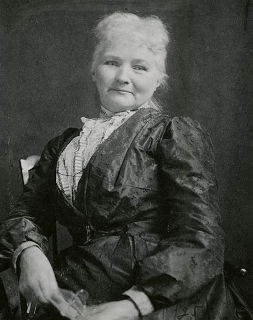
Mary G. Harris Jones, known as Mother Jones, an Irish-born American schoolteacher and dressmaker who becomes a prominent union organiser, community organiser, and activist, is baptised on August 1, 1837, in Cork, County Cork. Her exact date of birth is uncertain. She is once deemed “the most dangerous woman in America” because of her union activities.
Jones is the daughter of Richard Harris, a Roman Catholictenant farmer and railway labourer, and Ellen (née Cotter) Harris. She and her family are victims of the Great Famine, as are many other Irish families of the time. The famine forces more than a million families, including the Harrises, to immigrate to North America when she is ten years old. She lives in the United States and Canada, where she attends and later teaches in a Roman Catholic normal school in Toronto. In the United States she teaches in a convent school in Monroe, Michigan and works as a seamstress. In 1861 she marries George Jones, an iron-moulder and labour union member in Memphis, Tennessee. After the death of her husband and their four children in a yellow fever epidemic in 1867, she relocates to Chicago, Illinois, where she becomes involved with an early industrial union, the Knights of Labor. Her seamstress shop is destroyed in the Great Chicago Fire of 1871.
In the 1890s Jones becomes known as ‘Mother’ Jones and begins a long association with socialist causes and the United Mine Workers of America. She attends the founding convention of Social Democracy of America, later known as the Cooperative Brotherhood, in 1897 and in the same year organises support and publicity for striking bituminous coal miners in West Virginia, including a children’s march and parades of farmers delivering food to the miners’ camp. These types of defiant mass action become her trademark. Notable activities include organising women in support of an 1899 anthracite coal strike in eastern Pennsylvania, directing strikes of young women working in textile mills, a 1903 ‘children’s crusade’ against child labour which includes a ninety-mile march from Philadelphia to New York City, participating in 1905 in the founding convention of the Industrial Workers of the World, a radical labour union committed to the organisation of unskilled workers, campaigning for the release of Mexican revolutionaries imprisoned in American jails, and testifying in 1915 in congressional hearings against the abuse of corporate power by Rockefeller interests.
Jones reportedly meets with James Connolly, Irish socialist and labour organiser, in New York City in 1910. She is arrested for the first time for violating a federal injunction during a miners’ strike in West Virginia in 1902. In 1904, during a Colorado miners’ campaign, she has to avoid the authorities to escape possible deportation. During a 1914 strike in Ludlow, Colorado, she is imprisoned without trial for nine weeks. In 1919 she is arrested in Pennsylvania during a steelworkers’ strike for defending freedom of speech and the right of workers to organise unions. She remains active in the labour movement and radical causes into her nineties.
During her later years, Jones lives with her friends Walter and Lillie May Burgess on their farm in what is now Adelphi, Maryland. She celebrates her self-proclaimed 100th birthday there on May 1, 1930, and is filmed making a statement for a newsreel.
In 1932, about 15,000 Illinois mine workers gather in Mount Olive to protest against the United Mine Workers, which soon becomes the Progressive Mine Workers of America. Convinced that they have acted in the spirit of Mother Jones, the miners decide to place a proper headstone on her grave. By 1936, the miners have saved up more than $16,000 and are able to purchase “eighty tons of Minnesota pink granite, with bronze statues of two miners flanking a twenty-foot shaft featuring a bas-relief of Mother Jones at its center.” On October 11, 1936, also known as Miners’ Day, an estimated 50,000 people arrive at Mother Jones’s grave to see the new gravestone and memorial. Since then, October 11 is not only known as Miners’ Day but is also referred to and celebrated in Mount Olive as “Mother Jones’s Day.”
The farm where she died begins to advertise itself as the “Mother Jones Rest Home” in 1932, before being sold to a Baptist church in 1956. The site is now marked with a Maryland Historical Trust marker, and a nearby elementary school is named in her honor.
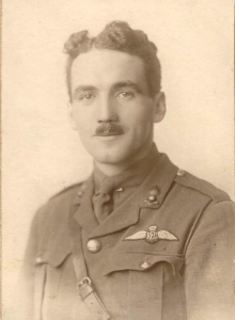
McElroy is born on May 14, 1893, at Donnybrook, County Dublin, to Samuel and Ellen McElroy. He enlists promptly at the start of World War I in August 1914 and is shipped out to France two months later. He is serving as a corporal in the Motor Cyclist Section of the Royal Engineers when he is first commissioned as a second lieutenant on May 9, 1915. While serving in the Royal Irish Regiment he is severely affected by mustard gas and is sent home to recuperate. He is in Dublin in April 1916, during the Easter Rising, and is ordered to help quell the insurrection. He refuses to fire upon his fellow Irishmen and is transferred to a southerly garrison away from home.
On June 1, 1916, McElroy relinquishes his commission in the Royal Irish Regiment when awarded a cadetship at the Royal Military Academy, Woolwich, from which he graduates on February 28, 1917, and is commissioned as a second lieutenant in the Royal Garrison Artillery.
McElroy is promptly seconded to the Royal Flying Corps, being trained as a pilot at the Central Flying School at Upavon Aerodrome and appointed a flying officer on June 28. On July 27 his commission is backdated to February 9, 1916, and he is promoted to lieutenant on August 9. On August 15 he joins No. 40 Squadron RFC, where he benefits from mentoring by Edward “Mick” Mannock. He originally flies a Nieuport 17, but with no success in battle. By the year’s end he is flying Royal Aircraft Factory S.E.5s and claims his first victory on December 28.
An extremely aggressive dogfighter who ignores often overwhelming odds, McElroy’s score soon grows rapidly. He shoots down two German aircraft in January 1918, and by February 18 has run his string up to 11. At this point, he is appointed a flight commander with the temporary rank of captain and transferred to No. 24 Squadron RFC. He continues to steadily accrue victories by ones and twos. By March 26, when he is awarded the Military Cross, he is up to 18 “kills.” On April 1, the Army’s Royal Flying Corps (RFC) and the Royal Naval Air Service (RNAS) are merged to form the Royal Air Force, and his squadron becomes No. 24 Squadron RAF. He is injured in a landing accident on April 7 when he brushes a treetop while landing. By then he has run his score to 27. While he is sidelined with his injury, on April 22, he is awarded a bar to his Military Cross. Following his convalescence, he returns to No. 40 Squadron in June, scoring three times, on June 26, June 28, and June 30. The latter two triumphs are observation balloons and run his tally to 30.
In July, McElroy adds to his score almost daily, a third balloon busting on July 1, followed by one of the most triumphant months in the history of fighter aviation, adding 17 victims during the month. His run of success is threatened on July 20 by a vibrating engine that entails breaking off an attack on a German two-seater and a rough emergency landing that leaves him with scratches and bruises. There is a farewell luncheon that day for his friend Gwilym Hugh “Noisy” Lewis. Their mutual friend “Mick” Mannock pulls McElroy aside to warn him about the hazards of following a German victim down within range of ground fire.
On July 26, “Mick” Mannock is killed by ground fire. Ironically, on that same day, “McIrish” McElroy receives the second Bar to his Military Cross. He is one of only ten airmen to receive the second Bar.
McElroy’s continues apparent disregard for his own safety when flying and fighting can have only one end. On July 31, 1918, he reports destroying a Hannover C for his 47th victory. He then sets out again. He fails to return from this flight and is posted missing. Later it is learned that he had been killed by ground fire. He is 25 years old.
McElroy receives the Distinguished Flying Cross posthumously on August 3, citing his shooting down 35 aeroplanes and three observation balloons. The Bar would arrive still later, on September 21, and would laud his low-level attacks. In summary, he shoots down four enemy aircraft in flames and destroys 23 others, one of which he shares destroyed with other pilots. He drives down 16 enemy aircraft “out of control” and out of the fight. In one of those cases, it is a shared success. He also destroys three balloons.
McElroy is interred in Plot I.C.1 at the Laventie Military Cemetery in La Gorgue, northern France.
On July 30, 1919, the first assassination authorised by Michael Collins is carried out by The Squad, also known as the Twelve Apostles, when Detective Sergeant “the Dog” Smith is shot near Drumcondra, Dublin.
On April 10, 1919, the First Dáil announces a policy of ostracism of Royal Irish Constabulary (RIC) men. At the time Sinn Féin official policy is against acts of violence. Boycotting, persuasion and mild intimidation succeed against many officers. However, others escalate their activities against republicans and in March 1920 Collins asks Dick McKee to select a small group to form an assassination unit.
When The Squad is formed, it comes directly under the control of the Director of Intelligence or his deputy and under no other authority. The Squad is commanded by Mick McDonnell.
The original “Twelve Apostles” are Mick McDonnell, Tom Keogh, Jimmy Slattery, Paddy Daly, Joe Leonard, Ben Barrett, Vincent Byrne, Sean Doyle, Paddy Griffin, Eddie Byrne, Mick Reilly and Jimmy Conroy. After some time, The Squad is strengthened with members Ben Byrne, Frank Bolster, Mick Keogh, Mick Kennedy, Bill Stapleton and Sam Robinson. Owen Cullen, a member of 2nd Battalion, is driver for a short time, and Paddy Kelly of County Clare for a short time. They are employed full-time and received a weekly wage.
Sometimes, as occasion demands, The Squad is strengthened by members of the IRA Intelligence Staff, the Active Service Unit, munition workers and members of the Dublin Brigade, TipperaryFlying Column men, Dan Breen, Séumas Robinson, Seán Treacy and Seán Hogan, and also Mick Brennan and Michael Prendergast of County Clare. The IRA Intelligence Staff consists of the Director of Intelligence Michael Collins, the Deputy Director of Intelligence Liam Tobin, the Second Deputy Director of Intelligence Tom Cullen, the Third Director of Intelligence Frank Thornton, and members Joe Dolan, Frank Saurin, Ned Kelleher, Joe Guilfoyle, Paddy Caldwell, Paddy Kennedy, Charlie Dalton, Dan McDonnell and Charlie Byrne. The munitions workers include Mat Furlong, Sean Sullivan, Gay McGrath, Martin O’ Kelly, Tom Younge and Chris Reilly.
Other members include Mick Love, Gearoid O’Sullivan, Patrick Caldwell, Charlie Dalton, Mick O’Reilly, Sean Healy, James Ronan, Paddy Lawson, John Dunne, Johnny Wilson and James Heery. Seán Lemass and Stephen Behan, the father of Irish writers Brendan and Dominic Behan, have also been listed as members of the Apostles. There is no hard evidence to support the inclusion of many of the names, but those who subsequently serve in the Irish Army have their active service recorded in their service records held in the Military Archives Department in Cathal Brugha Barracks, Rathmines. Andrew Cooney is also reported to have been associated with The Squad. Stephen Behan’s involvement is first made public in 1962, when the BBC broadcasts an episode of This Is Your Life dedicated to Behan. During the broadcast, remaining members of the squad joined Behan on the set of the show.
Following “The Dog” Smith’s assassination, The Squad continues to target plainclothes police, members of the G Division of the Dublin Metropolitan Police, and, occasionally, problematic civil servants. Organisationally it operates as a subsection of Collins’ Intelligence Headquarters. Two of the executions by The Squad are the killing on January 21, 1920, of RIC Inspector William Redmond of the DMP “G” Division and on March 2, 1920, a British double agent John Charles Byrnes.
One of the Apostles’ particular targets is the Cairo Gang, a deep-cover British intelligence group, so called since it has either been largely assembled from intelligence officers serving in Cairo or from the Dublin restaurant called The Cairo, which the gang frequents. Sir Henry Wilson brings in the Cairo Gang in the middle of 1920, explicitly to deal with Michael Collins and his organization. Given carte blanche in its operations by Wilson, the Cairo Gang adopts the strategy of assassinating members of Sinn Féin unconnected with the military struggle, assuming that this will cause the IRA to respond and bring its leaders into the open.
The most well-known operation executed by the Apostles occurs on what becomes known as Bloody Sunday, November 21, 1920, when British MI5 officers, linked to the Cairo Gang and significantly involved in spying, are shot at various locations in Dublin with fourteen killed and six wounded. In addition to the The Squad, a larger number of IRA personnel are involved in this operation. The only IRA man captured during the operation is Frank Teeling. In response to the killings, the Black and Tans retaliate by shooting up a Gaelic football match between Dublin and Tipperary at Croke Park, the proceeds from which are for the Irish Republican Prisoners Fund. Fourteen civilians are killed including one of the players, Michael Hogan, and 68 are wounded. The Hogan stand at Croke Park is named after Hogan.
The elimination of the Cairo Gang is seen in Dublin as an intelligence victory, but British Prime MinisterDavid Lloyd George comments dismissively that his men “… got what they deserved, beaten by counterjumpers…”. Winston Churchill adds that they were “.. careless fellows … who ought to have taken precautions.”
Some members of The Squad are hanged in 1921 for the killings on Bloody Sunday, including Thomas Whelan and Patrick Moran. Moran had killed a vet, Patrick MacCormack, who seems to have been an innocent victim.
In May 1921, after the IRA’s Dublin Brigade takes heavy casualties during the burning of the Custom House, The Squad and the Brigade’s Active Service Unit are amalgamated into the Dublin Guard, under Paddy Daly. Under the influence of Daly and Michael Collins, most of the Guard take the Free State side and join the National Army in the Irish Civil War of 1922–23. During this conflict some of them are attached to the Criminal Investigation Department and are accused of multiple assassinations of Anti-Treaty fighters. They are also involved in several atrocities against Republican prisoners, particularly after the death of Collins, due to many of them having personal ties with him.
Bill Stapleton goes on to become a director in Bord na Móna, Charles Dalton and Frank Saurin become directors in the Irish Sweepstakes. In October 1923, Commandant James Conroy is implicated in the murder of two Jewish men, Bernard Goldberg and Emmanuel ‘Ernest’ Kahn. He avoids arrest by fleeing to Mexico, returning later to join the Blueshirts. A later application for an army pension is rejected. The killings are the subject of a 2010 investigative documentary by RTÉ, CSÍ: Murder in Little Jerusalem.
Campbell is the son of Matthew Arthur Campbell (1866-1925), caterer, and Gretta Campbell (née Bowen) (1880-1981). He attends boarding school at Masonic Orphan Boys’ School at Clonskeagh, Dublin, before moving to Belfast to live with his widowed mother and family.
Campbell is working in an aircraft factory at the time of the Belfast Blitz, and begins to paint, taking the bomb-damage as his subject. He is one of the founders of the Irish Exhibition of Living Art in 1943. In the same year, along with his brother Arthur (1909-94), he publishes a sixteen page book entitled Ulster in Black and White, that includes drawings from the two brothers and their close contemporaries Maurice Wilks and Patricia Webb. Owing to the success of the original publication, the brothers then publish Now in Ulster (1944), an anthology of short stories, essays and poetry by young Belfast writers.
Campbell holds a joint exhibition at the William Mol Gallery, Belfast, with his brother Arthur in 1944. In the same year he also shows with Gerard Dillon at the Portadown gallery of John Lamb. In 1946 he shows with the Victor Waddington Gallery in Dublin, where he is to return on a number of occasions. The Council for the Encouragement of Art and Music hosts a solo exhibition in 1949 where he is to show twice more, in 1952 and 1960. He wins £500 at the first Council for the Encouragement of Music and the Arts (CEMA) Open Painting Competition at the Ulster Museum in 1962. Campbell also shows in one-man exhibitions with the Arts Council of Northern Ireland in 1966 and 1972.
After the war Campbell becomes increasingly interested in Spain. In 1946 he comes to know Spaniards who had settled in Dublin, and when in London paints visiting Spanish dancers in their traditional costume. He first visits Spain in 1951, encouraged by his friendship with Gerard Dillon and “an interest in bohemian characters.” He lives there for six months almost every year throughout much of the following twenty-five years.
Campbell dies in Dublin on May 18, 1979, and is buried at St. Kevin’s Cemetery in Glendalough, County Wicklow. He is survived by his wife Margaret, his mother, and two brothers, Arthur and Stanley. After his death the Arts Council of Northern Ireland and An Chomhairle Ealáion join with the Instituto Cervantes to initiate the George Campbell Memorial Travel Award. In May 2017, Arklow Municipal District Council unveils two plaques at St. Patrick’s Terrace, Arklow, marking Campbell’s birthplace and the centennial of his birth.




 seamus dubhghaill