seamus dubhghaill

Promoting Irish Culture and History from Little Rock, Arkansas, USA


Leave a comment

Birth of Máire Ní Chinnéide, Language Activist & Playwright

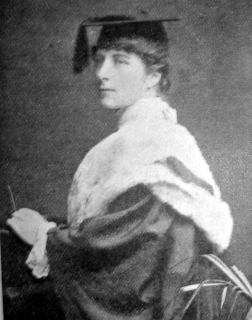
Máire Ní Chinnéide (English: Mary or Molly O’Kennedy) Irish language activist, playwright, first president of the Camogie Association and first female president of Oireachtas na Gaeilge, is born in Rathmines, an affluent inner suburb on the Southside of Dublin, on January 17, 1879.

Ní Chinnéide attends Muckross Park College and the Royal University of Ireland (later the National University of Ireland) where she is a classmate of Agnes O’Farrelly, Helena Concannon, and Hanna Sheehy-Skeffington. She learns the Irish language on holiday in Ballyvourney, County Cork, and earns the first scholarship in Irish language from the Royal University of Ireland, worth £100 a year, which is spent on visits to the Irish college in Ballingeary.

She studies in the school of Old Irish established by Professor Osborn Bergin and is strongly influenced by the Irish Australian professor O’Daly. She later teaches Latin through Irish at Ballingeary and becomes proficient in French, German, Italian and Spanish.

She spends the last £100 of her scholarship on a dowry for her marriage to Sean MacGearailt, later first Accountant General of Revenue in the Irish civil service, with whom she lives originally in Glasnevin and then in Dalkey.

She is a founder member of the radical Craobh an Chéitinnigh, the Keating branch of Conradh na Gaeilge, composed mainly of Dublin-based Kerry people and regarded, by themselves at least, as the intellectual focus of the League.

In August 1904, some six years after the establishment of the earliest women’s hurling teams, the rules of camogie (then called camoguidheacht), first appears in Banba, a journal produced by Craobh an Chéitinnigh. Camogie had come to public attention when it was showcased at the annual Oireachtas (Conradh na Gaeilge Festival) earlier that year, and it differed from men’s hurling in its use of a lighter ball and a smaller playing-field. Ní Chinnéide and Cáit Ní Dhonnchadha, like Ní Chinnéide, an Irish-language enthusiast and cultural nationalist, are credited with having created the game, with the assistance of Ní Dhonnchadha’s scholarly brother Tadhg Ó Donnchadha, who drew up its rules. She is on the first camogie team to play an exhibition match in Navan, County Meath, in July 1904, becomes an early propagandist for the game and, in 1905, is elected president of the infant Camogie Association.

Ní Chinnéide later serves as Vice-President of Craobh an Chéitinnigh, to Cathal Brugha. She is active in Cumann na mBan during the Irish War of Independence and takes the pro-treaty side during the Irish Civil War and attempts to set up a woman’s organisation “in support of the Free State” alongside Jennie Wyse Power.

She first visits the Blasket Islands in 1932 with her daughter Niamh, who dies tragically young. In the summer of 1934, she puts the idea into Peig Sayers‘s head to write a memoir. According to a later interview with Ní Chinnéide “she knew and admired her gift for easy conversation, her gracious charm as a hostess, her talent for illustrating a point she was making by a story out of her own experience that was as rich in philosophy and thought as it was limited geographically.” Peig answers that she has “nothing to write.” She had learned only to read and write in English at school and most of it has been forgotten.

Ní Chinnéide suggests Peig should dictate her memoir to her son Micheal, known to everyone on the island as An File (“The Poet”), but Peig “only shook her head doubtfully.” At Christmas, a packet arrives from the Blaskets with a manuscript, she transcribes it word for word and the following summer brings it back to the Blaskets to read it to Peig. She then edits the manuscript for the Talbot Press. Peig becomes well known as a prescribed text on the Leaving Certificate curriculum in Irish.

Ní Chinnéide has an acting part in the first modern play performed in Irish on the stage, Casadh an tSugáin by Douglas Hyde in 1901. She is later author of children’s plays staged by An Comhar Drámuidhachta at the Oireachtas and the Peacock Theatre, of which Gleann na Sidheóg and An Dúthchas (1908) are published. She is a broadcaster in Irish on 2RN, a wholly owned subsidiary of Raidió Teilifís Éireann, after its foundation in 1926 and author of a translation of Grimms’ Fairy Tales (1923). She is president of the Gaelic Players Dramatic group during the 1930s and a founder of the Gaelic Writers Association in 1939.

She soon becomes interested in writing children’s plays, including Gleann na Sidheóg (Fairy Glen, 1905) and Sidheoga na mBláth (Flower Fairies, 1909. Although there is little information available on the staging of her first play, by the time her second children’s play, Sidheóga na mBláth, is published in An Claidheamh Soluis in December 1907, “Éire Óg” (“Young Ireland”) branches of Conradh na Gaeilge have been established in conjunction with adults’ branches. Patrick Pearse in particular voices the expectation that this play will be staged by many “Éire Óg” branches “before the New Year is very old,” thus indicating the immediate take up of such plays. Indeed, a week after the play’s publication, it is staged in the Dominican College in Donnybrook, Dublin, where Ní Chinnéide had spent several years as an Irish teacher.

Ní Chinnéide dies on April 25, 1967, and is buried in Dean’s Grange Cemetery.

In 2007 the camogie trophy (Máire Ní Chinnéide Cup) for the annual inter-county All-Ireland Junior Camogie Championship is named in her honour.

(Pictured: Máire Ní Chinéide at her graduation, photograph from Banba, 1903)


Leave a comment

“Stones in His Pockets” Receives Three Tony Award Nominations

On May 7, 2001, the Broadway play Stones in His Pockets by Belfast playwright Marie Jones receives three nominations for the theatre world’s top honour, the Tony Awards, in New York. Conleth Hill and Sean Campion are nominated in the Leading Actor category and Ian McElhinney is nominated for Best Director. It is a two-hander written in 1996 by Jones for the DubbleJoint Theatre Company in Dublin.

The play is a tragicomedy about a small rural town in Ireland where many of the townspeople are extras in a Hollywood film. The story centres on Charlie Conlon and Jake Quinn, who, like much of the town, are employed as extras for the filming. The key point in the play is when a local teenager commits suicide, by drowning himself with stones in his pockets, after he is humiliated by one of the film stars. The script calls upon the cast of two to perform all 15 characters (men and women), often switching gender and voice swiftly and with minimal costume change. Comedy also derives from the efforts of the production crew to create the proper “Irish feel” – a romanticised ideal that often conflicts with the reality of daily life.

The play is first shown as a DubbleJoint Production premiering in West Belfast in August 1996. The set design, by Jack Kirwan, is simple – a backcloth depicting the cloudy sky above the Blasket Islands, a row of shoes (symbolising the myriad characters) and a trunk, a box, and two tiny stools. The lighting design is originally by James C. McFetridge and this design is used in both the London West End and the Broadway versions of the show.

The show moves to the Edinburgh Festival Fringe in 1999. It then returns to Ireland and has a brief run in Dublin before moving to London‘s Tricycle Theatre. It then transfers to the New Ambassadors Theatre in London’s West End. The show, however, proves so successful, its run is extended and moves to the Duke of York’s Theatre up the road, where it remains for three years.

The original cast of Hill and Campion take the show to Broadway and, as its West End run continues to play to packed houses, actors line up to play Charlie and Jake, most notably Bronson Pinchot, Rupert Degas and Simon Delaney.

The play wins the Irish Times/ESB Irish Theatre Award for Best Production in 1999, wins two Laurence Olivier Awards in 2001 for Best New Comedy and Best Actor (Conleth Hill) and is also nominated for three Tony Awards in 2001.

Gothenburg English Studio Theatre makes a production of Stones in His Pockets in 2009. It is directed by Malachi Bogdanov with Mike Rogers and Gary Whitaker.

The play is translated to Finnish and has been on repertoire since 2002 at Helsinki City Theatre in Finland.

The play is revived at London’s Tricycle Theatre in 2011, with Jamie Beamish as Charlie and Owen McDonnell as Jake, and at the Tron Theatre, Glasgow in 2012 performed by Robbie Jack and Keith Fleming.

For the 20th anniversary of the first production, The Dukes in Lancaster and The Theatre Chipping Norton co-produce a touring production which opens at The Dukes on February 25, 2016, and tours 35 venues between then and May 28, 2016. Charlie de Bromhead plays Jake and Conan Sweeny plays Charlie.

The original version of the play is created in collaboration with theatre director Pam Brighton, who later sues Marie Jones for co-authorship rights. Brighton loses the case in the high court, and subsequently becomes bankrupt.


Leave a comment

Death of George Derwent Thomson, Philosopher & Scholar of the Irish Language

George Derwent Thomson (Irish: Seoirse Mac Tomáis), English classical scholar, Marxist philosopher, and scholar of the Irish language, dies on February 3, 1987, at his home in Moseley, Birmingham, England.

Thomson is born on August 19, 1903, in West Dulwich, London, the eldest of a family of three sons and two daughters born to William Henry Thomson, an accountant, and his wife Minnie (née Clements). Inheriting an interest in Ireland from his maternal grandfather, an Ulsterman of Orange stock, and his mother, he attends Irish language classes run by the Gaelic League in London while a pupil at Dulwich College (1916–22).

Awarded a scholarship to King’s College, Cambridge, in 1922, Thomson studies classics, where he attains First Class Honours in the Classical Tripos and subsequently wins a scholarship to Trinity College, Dublin (TCD). At TCD he works on his first book, Greek Lyric Metre, and begins visiting the Blasket Islands in the early 1920s. He becomes lecturer and then Professor of Greek at University College Galway.

Thomson moves back to England in 1934, when he returns to King’s College, Cambridge, to lecture in Greek. He becomes a professor at the University of Birmingham in 1936, the year he joins the Communist Party of Great Britain. He pioneers a Marxist interpretation of Greek drama. His Aeschylus and Athens (1941) and Marxism and Poetry (1945) win him international attention. In the latter book he argues a connection between the work song and poetry, and that pre-industrial songs are connected to ritual.

Thomson befriends and is an important influence on Alfred Sohn-Rethel and his theory of the genesis of occidental thought in Ancient Greece through the invention of coining.

Thomson first visits the Blasket Islands off the west coast of Ireland in 1923. Mac Tomáis, as he quickly becomes known to the islanders, had attended rudimentary Irish classes at a branch of Conradh na Gaeilge in London before he went to Cambridge. When he arrives on the island, he immerses himself in the language. In six weeks of walking around, talking with Muiris Ó Súilleabháin and others, he achieves near complete fluency in the language.

Thomson spends several years with the people of the islands studying their language, history and culture. He maintains a special study of the now extinct community in Ireland, in which he perceives elements of surviving cultural resonances with historical society prior to the development of private property as a means of production. He becomes a champion of the Irish language.

Thomson has a role in the publication of the memoirs of Muiris Ó Súilleabháin, Fiche Bliain Ag Fás (Twenty Years Growing) in 1933. The introduction to Ó Súilleabháin’s autobiography by E. M. Forster can also be attributed to Thomson.

When Thomson applies for the new position of lecturer of Greek at the National University of Ireland, Galway, in 1931 he, in the words of Richard Roche, “astonished the interview board with a flow of Blasket Irish” and is awarded the post.

In 1951, Thomson is the only member of the Communist Party’s Executive Committee to vote against the Party’s programme, The British Road to Socialism, because “the dictatorship of the proletariat was missing.” He also serves on the Party’s Cultural Committee.

The Chinese revolution of 1949 has a profound effect on Thomson and leads to differences with the British Communist Party, from which he eventually drifts. He never loses his political beliefs. He is committed to working class education, including giving lectures to factory workers at Birmingham’s Austin car plant. He also maintains a special affection and support for the Morning Star in his later years.

Thomson authors three popular expositions on Marxism published by the China Policy Study Group in the early 1970s. From Marx to Mao Tse-tung: A study in revolutionary dialectics (1971), Capitalism and After: The rise and fall of commodity production (1973), and The Human Essence: The sources of science and art (1974). He is also the author of Marxism and Poetry (1945).


Leave a comment

Birth of Denis Devlin, Poet & Diplomat

denis-devlin

Denis Devlin, poet, translator, and career diplomat, is born in Greenock, Scotland of Irish parents on April 15, 1908. Along with Samuel Beckett and Brian Coffey, he is one of the generation of Irish modernist poets to emerge at the end of the 1920s.

Devlin and his family return to live in Dublin in 1918. He studies at Belvedere College and, from 1926, as a seminarian for the Roman Catholic priesthood at Clonliffe College. As part of his studies he attends a degree course in modern languages at University College Dublin (UCD), where he meets and befriends Brian Coffey. Together they publish a joint collection, Poems, in 1930.

In 1927, Devlin abandons the priesthood and leaves Clonliffe. He graduates with his BA from UCD in 1930 and spends that summer on the Blasket Islands to improve his spoken Irish. Between 1930 and 1933, he studies literature at the University of Munich and the Sorbonne in Paris, meeting, amongst others, Beckett and Thomas MacGreevy. He then returns to UCD to complete his MA thesis on Michel de Montaigne.

Devlin joins the Irish Diplomatic Service in 1935 and spends a number of years in Rome, New York and Washington, D.C.. During this time he meets the French poet Saint-John Perse, and the Americans Allen Tate and Robert Penn Warren. He goes on to publish a translation of Exile and Other Poems by Saint-John Perse, and Tate and Warren edit his posthumous Selected Poems.

Since his death on August 21, 1959, there have been two Collected Poems published; the first in 1964 is edited by Coffey and the second in 1989 by J.C.C. Mays.

Devlin’s personal papers are held in University College Dublin Archives. His niece goes on to become writer Denyse Woods.


Leave a comment

Death of Denis Devlin, Poet & Diplomat

denis-devlin

Denis Devlin, one of the major figures and influences of modern and modernist Irish poetry, dies in Dublin on August 21, 1959. Along with Samuel Beckett and Brian Coffey, he is one of the generation of Irish modernist poets to emerge at the end of the 1920s. He is also a career diplomat.

Devlin is born in Greenock, Scotland of Irish parents on April 15, 1908. His family returns to live in Dublin in 1918. He studies at Belvedere College and, from 1926, as a seminarian for the Roman Catholic priesthood at Clonliffe College. As part of his studies, he attends a degree course in modern languages at University College Dublin (UCD), where he meets and befriends Brian Coffey. Together they publish a joint collection, Poems, in 1930.

In 1927, Devlin abandons the priesthood and leaves Clonliffe College. He graduates from UCD with his BA in 1930 and spends that summer on the Blasket Islands to improve his spoken Irish. Between 1930 and 1933, he studies literature at Ludwig Maximilian University of Munich and the University of Paris, meeting, amongst others, Beckett and Thomas MacGreevy. He then returns to UCD to complete his MA thesis on Michael de Montaigne.

Devlin joins the Irish Diplomatic Service in 1935 and spends a number of years in Rome, New York and Washington, D.C. During this time, he meets the French poet Saint-John Perse, and the Americans Allen Tate and Robert Penn Warren. He goes on to publish a translation of Exile and Other Poems by Saint-John Perse, and Tate and Warren edit his posthumous Selected Poems.

Denis Devlin dies suddenly at the age of 51 in Dublin on August 21, 1959. Since his death, there have been two Collected Poems published; the first in 1964 is edited by Coffey and the second in 1989 by J.C.C. Mays.

Devlin’s personal papers are held in University College Dublin Archives.


Leave a comment

Evacuation of the Blasket Islands

blasket-islandsThe remaining human inhabitants of the Blasket Islands, a group of islands off the west coast of Ireland forming part of County Kerry, are evacuated to the mainland on November 17, 1953.

The Blasket Islands are inhabited until 1953 by a completely Irish-speaking population, and today are part of the Gaeltacht. Sadly, the Blasket Island community declines as a result of the persistent emigration of its young people. The last twenty-two inhabitants are forcefully evacuated by the government to the mainland on November 17, 1953, after the Irish government decides that it can no longer guarantee the safety of the remaining population. Many of the descendants currently live in Springfield, Massachusetts, and some former residents still live on the Dingle Peninsula, within sight of their former home.

The islanders are the subject of much anthropological and linguistic study around the end of the 19th and beginning of the 20th centuries particularly from writers and linguists such as Robin Flower, George Derwent Thomson, and Kenneth H. Jackson. Thanks to their encouragement and that of others, a number of books are written by islanders that record much of the islands’ traditions and way of life. These include An tOileánach (The Islandman) by Tomás Ó Criomhthain, Peig by Peig Sayers, and Fiche Blian ag Fás (Twenty Years A-Growing) by Muiris Ó Súilleabháin.

The Great Blasket Island, the principal island of the Blaskets, remains uninhabited today, but visitors can travel by ferry over to this remote and wildly beautiful place and spend several hours or all day marvelling at its natural beauty and what remains of years of human endeavour.

The Blasket Islands have been called Next Parish America, based on the erroneous idea that the next parish west of the islands would be the United States. The actual next parish west of the Blasket Island would be located in Newfoundland and Labrador, Canada.