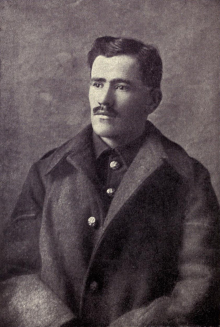
Ledwidge starts writing at an early age and is first published in a local newspaper at the age of fourteen. Finding work as a labourer and miner, he is also a trade union activist and a keen patriot and nationalist, associated with Sinn Féin. He becomes friendly with a local landowner, the writer Lord Dunsany, who gives him a workspace in the library of Dunsany Castle and introduces him to literary figures including William Butler Yeats and Katharine Tynan, with whom he has a long-term correspondence. He is elected to a local authority post and helps organise the local branch of the Irish Volunteers, while Dunsany edits and helps him secure publication for a first volume of his poetry.
Having sided with the faction of the Irish Volunteers which oppose participation in the war, he enlists in the Royal Inniskilling Fusiliers in October 1914, and continues to write poetry on assignment, sending work to Lord Dunsany and to family and other friends. The poems he writes on active service reveal his pride at being a soldier, as he believes, in the service of Ireland. He often wonders whether he would find a soldier’s death.
On July 31, 1917, a group from Ledwidge’s battalion of the Royal Inniskilling Fusiliers are road-laying in preparation for an assault during the Third Battle of Ypres, near the village of Boezinge, Ypres Salient, Belgium.
According to Irish author and lecturer Alice Curtayne, “Ledwidge and his comrades had been toiling since the early morning at roadmaking. The army’s first need was men; their second, guns; their third roads. These latter consisted mainly of heavy beech planks bolted together, which could be rapidly laid down. No advance could be supported in that sodden land without a sufficiency of these communications tracks, six or seven feet wide. Supplies were conveyed by pack mules over the wooden paths. Survivors concur in placing the road work done by B Company that day one mile northeast of Hellfire Corner, so called because it was very exposed to German shelling. There was a violent rainstorm in the afternoon, shrouding the region in a gray monochrome. Sullenly, the enemy’s long-range guns continued to fling their shells far behind the lines. Roadwork could not be suspended, however, as the tracks were in use as fast as they were laid down. Tea was issued to the men and drenched to the skin, they stopped to swallow it. A shell exploded beside Ledwidge, and he was instantly killed.”
A Roman Catholicmilitary chaplain, Father Devas, is the first on the scene. That night, Father Devas writes in his diary, “Crowds at Holy Communion. Arranged for service but washed out by rain and fatigues. Walk in rain with dogs. Ledwidge killed, blown to bits, at Confession yesterday and Mass and Holy Communion this morning. R.I.P.”
Ledwidge is first buried at Carrefour de Rose, and later re-interred in the nearby Artillery Wood Military Cemetery, at Boezinge, where the Welsh poet Hedd Wyn, who was killed in action on the same day, also lies buried.
Dunsany arranges for the publication of more of Ledwidge’s poems, and a collected edition in 1919. Further poems, from the archives at Dunsany Castle and some material held by family, are later published by Ledwdige’s biographer, Alice Curtayne, and by one of the Ledwidge memorial societies. Ledwidge is selected as one of twelve prominent war poets for the exhibition Anthem for Doomed Youth at the Imperial War Museum in London in 2002, and memorialised at an event in Inchicore, Dublin, in 2017, with his work set to music by Anúna. A museum of his life and work is opened in his birthplace cottage in 1982. Some of his manuscripts are held in the National Library of Ireland and more in the archives of Dunsany Castle.
Denvir is educated at Dr. Nelson’s Classical School in Downpatrick, being described by peers as an enthusiastic child with a love for sight-seeing. According to one biographer, young Denvir also shows interest in the catechism by attending local visits from the then Bishop of Down and Connor, Dr. Patrick MacMullan, who is resident in Downpatrick. In September 1808, he enrolls at Maynooth College, and is appointed chair of Natural Philosophy and Mathematics there in August 1813.
As chair of mathematics and natural philosophy at Maynooth College, Denvir is noted for changing the style of education at the college from pure logic-based reasoning in Mathematics to a more holistic, topical approach. He is also noted for emphasising experimentation and the importance of the scientific method in teaching natural philosophy, with several sources noting his well-stocked labs.
While at Maynooth College Denvir teaches both Nicholas Callan, the inventor and physicist, and Dominic Corrigan, the noted Irish physician. According to several accounts, both speak fondly of their old professor, to the point of Callan gifting Denvir one of his induction coils in thanks.
Denvir is ordained first as deacon in June 1813, then a priest in May 1814, performing his liturgical duties in conjunction with his academic ones. In 1826, he leaves Maynooth College to become the parish priest of Downpatrick. In 1833 he becomes a professor at the newly founded St. Malachy’s College, teaching classes in Latin, Greek and Mathematics. He continues his duties as parish priest and professor until 1835, when he is appointed Bishop of Down and Connor in succession to Dr. William Crolly.
As 22nd Lord Bishop of Down and Connor, Denvir emphasises the teaching of the Catechism to youth as well as emphasising the importance of scripture to the diocese. In 1841 he helps fund the start of construction of St. Malachy’s Church in Belfast, which is completed in 1845. In his later years, he falls under criticism by other Belfast Catholics, who claim he is neglectful of his duties, especially those relating to expanding and defending Catholicism in the face of growing Protestant influence. Some accounts attribute his shortcomings to poor health and temperament, while others suggest that he backs away from expansion to avoid conflict with Protestant groups.
Denvir suffers from personal finance problems during his time as Bishop. The construction of St. Malachy’s Church puts him into deep personal debt, which he is apparently arrested for some time after 1844. He is also criticised for selling seats in the newly constructed church to offset costs. He is also described as reluctant in asking for funds from parishioners, severely limiting his resources with which to care for the church.
Denvir is appointed Commissioner of National Education in 1853. He is noted for being supportive of non-denominational education and investigating reports of proselytism in public primary education. He later resigns this position in 1857 on request of the Holy See to focus on expanding the local Catholic school system.
In 1860, after years of illness compounded by age, Denvir is assigned Dr. Patrick Dorrian as a coadjutor bishop to assist in his episcopal duties. While ill health is said to be the predominant reason for the appointment of a coadjutor, contemporary newspaper accounts suggest there also might be an ideological reason for the appointment. In The Spectator it is noted in December 1859 “it may be, because he is too liberal for the Cullen epoch.”
In May 1865, Denvir resigns as Bishop and is succeeded by Dorrian. He dies one year later on July 10, 1866, in his residence on Donegall St., after suffering from fainting fits a few days prior. He is buried in Ballycruttle Church.
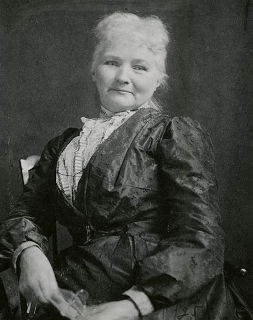
Mary G. Harris Jones, known as Mother Jones, an Irish-born American schoolteacher and dressmaker who becomes a prominent union organiser, community organiser, and activist, is baptised on August 1, 1837, in Cork, County Cork. Her exact date of birth is uncertain. She is once deemed “the most dangerous woman in America” because of her union activities.
Jones is the daughter of Richard Harris, a Roman Catholictenant farmer and railway labourer, and Ellen (née Cotter) Harris. She and her family are victims of the Great Famine, as are many other Irish families of the time. The famine forces more than a million families, including the Harrises, to immigrate to North America when she is ten years old. She lives in the United States and Canada, where she attends and later teaches in a Roman Catholic normal school in Toronto. In the United States she teaches in a convent school in Monroe, Michigan and works as a seamstress. In 1861 she marries George Jones, an iron-moulder and labour union member in Memphis, Tennessee. After the death of her husband and their four children in a yellow fever epidemic in 1867, she relocates to Chicago, Illinois, where she becomes involved with an early industrial union, the Knights of Labor. Her seamstress shop is destroyed in the Great Chicago Fire of 1871.
In the 1890s Jones becomes known as ‘Mother’ Jones and begins a long association with socialist causes and the United Mine Workers of America. She attends the founding convention of Social Democracy of America, later known as the Cooperative Brotherhood, in 1897 and in the same year organises support and publicity for striking bituminous coal miners in West Virginia, including a children’s march and parades of farmers delivering food to the miners’ camp. These types of defiant mass action become her trademark. Notable activities include organising women in support of an 1899 anthracite coal strike in eastern Pennsylvania, directing strikes of young women working in textile mills, a 1903 ‘children’s crusade’ against child labour which includes a ninety-mile march from Philadelphia to New York City, participating in 1905 in the founding convention of the Industrial Workers of the World, a radical labour union committed to the organisation of unskilled workers, campaigning for the release of Mexican revolutionaries imprisoned in American jails, and testifying in 1915 in congressional hearings against the abuse of corporate power by Rockefeller interests.
Jones reportedly meets with James Connolly, Irish socialist and labour organiser, in New York City in 1910. She is arrested for the first time for violating a federal injunction during a miners’ strike in West Virginia in 1902. In 1904, during a Colorado miners’ campaign, she has to avoid the authorities to escape possible deportation. During a 1914 strike in Ludlow, Colorado, she is imprisoned without trial for nine weeks. In 1919 she is arrested in Pennsylvania during a steelworkers’ strike for defending freedom of speech and the right of workers to organise unions. She remains active in the labour movement and radical causes into her nineties.
During her later years, Jones lives with her friends Walter and Lillie May Burgess on their farm in what is now Adelphi, Maryland. She celebrates her self-proclaimed 100th birthday there on May 1, 1930, and is filmed making a statement for a newsreel.
In 1932, about 15,000 Illinois mine workers gather in Mount Olive to protest against the United Mine Workers, which soon becomes the Progressive Mine Workers of America. Convinced that they have acted in the spirit of Mother Jones, the miners decide to place a proper headstone on her grave. By 1936, the miners have saved up more than $16,000 and are able to purchase “eighty tons of Minnesota pink granite, with bronze statues of two miners flanking a twenty-foot shaft featuring a bas-relief of Mother Jones at its center.” On October 11, 1936, also known as Miners’ Day, an estimated 50,000 people arrive at Mother Jones’s grave to see the new gravestone and memorial. Since then, October 11 is not only known as Miners’ Day but is also referred to and celebrated in Mount Olive as “Mother Jones’s Day.”
The farm where she died begins to advertise itself as the “Mother Jones Rest Home” in 1932, before being sold to a Baptist church in 1956. The site is now marked with a Maryland Historical Trust marker, and a nearby elementary school is named in her honor.
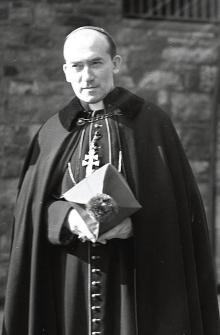
Ordained in 1924, the theology in which McQuaid is trained is conservative — strongly neo-scholastic and hostile to modernism and liberalism. His hatred of the French Revolution is expressed in several pastorals and speeches throughout his career. He also regards Protestantism as a fundamental error from which Irish Catholics should be quarantined as much as possible.
Appointed Dean of Studies at Blackrock College, McQuaid becomes a prominent figure in Catholic education and chairs the Catholic Headmasters’ Association for several years. In 1931 he is appointed president of Blackrock College, in which capacity he becomes acquainted with Éamon de Valera, the future Irish Taoiseach whose sons attend the school. In 1936 while drafting a new Irish constitution, de Valera consults McQuaid, although he rejects McQuaid’s draft “One, True Church” clause which states, among other things, that the Catholic Church is the one true church in Ireland.
When McQuaid is appointed Archbishop of Dublin in 1940, the appointment of a priest from the regular clergy causes considerable surprise. Irish government archives reveal that de Valera, as is suspected at the time, presses McQuaid’s claims at the Vatican. However, it is doubtful whether the Vatican needs much persuasion. There is a dearth of potential episcopal talent and McQuaid has an outstanding reputation as a Catholic educationalist.
Once appointed, McQuaid proves to be one of the ablest administrators in the history of the Irish Church. In the first two years of his episcopate, he sets up the Catholic Social Service Conference to alleviate the poverty and distress in Dublin which is aggravated by the war, and the Catholic Social Welfare Bureau to help the thousands of Irish emigrants going to Britain for war work. These two organizations fill a much-needed gap and continue to exist after the war. The expansion of Dublin city and its suburbs during his episcopate requires the building of new churches, schools, and hospitals. Meeting these demands also necessitates a considerable increase in the number of clergies, secular and regular, whose numbers more than double in the period from 1941 to 1972.
Given his previous career, the importance McQuaid assigns to education is not surprising. He is critical of the low priority accorded to education by successive governments and is particularly critical of the poor and pay conditions of teachers. His intervention in the primary teachers’ strike in 1946 is poorly received by the government and marks the souring of his relationship with de Valera. During his episcopate the number of primary schools increases by a third while the number of secondary schools more than double but, as with social welfare, the government increasingly assumes a dominant role in education from the 1960s onwards. Almost immediately after his appointment in 1940, he takes a hardline stand against the attendance of Catholic students at Trinity College Dublin (TCD). The ban lasts until 1970, when the increase in student numbers renders it untenable and he accedes reluctantly.
McQuaid has a formidable list of achievements in health care, especially maternity and pediatric services, physical and mental handicap services, and the treatment of alcoholism. It is ironic, therefore, that the most controversial episode of his career occurs in this area — the Irish hierarchy’s rejection in 1951 of a free mother-and-child health service. This leads to the resignation of the Minister for Health, Dr. Noël Browne, and is a watershed in Church-State relations in Ireland. With Irish tuberculosis and infant mortality statistics ranking among the highest in the world, the hierarchy, and particularly McQuaid, lose considerable support by lining up with the conservative medical establishment to resist efforts at socialized medicine.
From various pastorals that McQuaid issues at the time, it is clear that he does not see the need for the Second Vatican Council. As its deliberations proceed, his unease grows, and he becomes increasingly preoccupied with the issue of episcopal power and independence that he believes are being threatened by the Council. In the areas of liturgical reform, greater lay participation, and ecumenism, he is slow in implementing the Vatican II reforms. His views on ecumenism had always been lukewarm and had led to allegations that he was anti-Protestant. His personality and policies are criticized by a more assertive Dublin laity, but being a shy, reserved man who increasingly feels the isolation of office, he never responds to such comments. In 1968 the reaction to Humanae vitae causes open rebellion in the Dublin diocese, the force of which catches him unaware. His last pastoral as archbishop in 1971 betrays his anger and bemusement at the response to Humanae vitae in Dublin.
McQuaid’s substantial archives are released by the Dublin Diocesan Archives in the late 1990s. In 1999 journalist John Cooney publishes a hostile biography of McQuaid, which makes controversial allegations of sexual abuse against McQuaid. The allegations are based on tenuous evidence gathered by McQuaid’s nemesis from the 1951 Mother and Child controversy, Dr. Noël Browne, who had died in 1997. No corroborating evidence is produced or has since emerged.
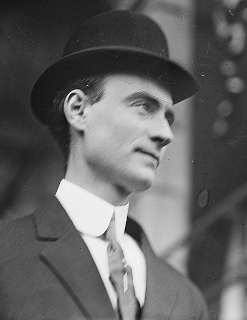
Mitchel is born to James Mitchel, a New York City fire marshal, and Mary Purroy who works as a schoolteacher until her marriage. His father is Irish, and Presbyterian in faith, the son of the famous Irish nationalistJohn Mitchel, and a veteran of the Confederate States Army. Two of his uncles were killed fighting for the Confederacy. His maternal grandfather, Venezuelan-born Juan Bautista Purroy, was that country’s consul in New York, which makes Mitchel the first Mayor of New York City of Latino descent. His great-grandfather, José Joaquin de Purroy, was a lawyer from Spain who settled in Venezuela. He graduates from a Catholic secondary school at Fordham Preparatory School in the late 1890s. He obtains his bachelor’s degree from Columbia College in 1899 and graduates from New York Law School in 1902 with honors. He then pursues a career as a private attorney.
In December 1906, Mitchel’s career takes flight when he is hired by family friend and New York City corporation counsel William B. Ellison to investigate the office of John F. Ahearn, borough president of Manhattan, for incompetence, waste and inefficiency. As a result, Ahearn is dismissed as borough president of Manhattan. He begins his career as assistant corporation counsel and then becomes a member of the Commissioners of Accounts, from which he investigates city departments. He gains results and recognition for his thorough and professional investigations into various city departments and high-ranking officials. Along with the help of Henry Bruère and other staff members of the Bureau of Municipal Research, he turns the insignificant Commissioners of Accounts into an administration of importance.
The young Mitchel’s reputation as a reformer garners him the support of the anti-Tammany forces. In 1909, he is elected president of the New York City Board of Aldermen, an organization similar to the current New York City Council. As president of the Board of Aldermen, he is able to enact fiscal reforms. He cuts waste and improves accounting practices. Also, he unsuccessfully fights for a municipal-owned transit system and the city sees him vote against allowing the Interborough Rapid Transit and the Brooklyn Rapid Transit companies permission to extend their existing subway and elevated lines. For a six-week period in 1910 after current Mayor William J. Gaynor is injured by a bullet wound, he serves as acting mayor. His biggest accomplishment during his short tenure is the act of neutrality during a garment industry strike.
As the mayoral election approaches in 1913, the Citizens Municipal Committee of 107 sets out to find a candidate that will give New York “a non-partisan, efficient and progressive government.” They are assisted in this endeavor by the Fusion Executive Committee, led by Joseph M. Price of the City Club of New York. After nine ballots, Mitchel is nominated as a candidate for mayor. During his campaign, he focuses on making City Hall a place of decency and honesty. He also focuses on business as he promises New Yorkers that he will modernize the administrative and financial machinery and the processes of city government.
At the age of 34, Mitchel is elected mayor on the Republican Party slate as he wins an overwhelming victory, defeating Democratic candidate Edward E. McCall by 121,000 votes, thus becoming the second youngest mayor of New York City. He is often referred to as “The Boy Mayor of New York.”
Mitchel’s administration introduces widespread reforms, particularly in the Police Department, which has long been highly corrupt, and which is cleaned up by Mitchel’s Police CommissionerArthur H. Woods. Woods is able to break up gangs and in his first year in office and he arrests more than 200 criminals. Woods also launches an attack on robbery, prostitution, pickpocketing and gambling. Woods ultimately transforms the police department into a crime-fighting machine. Mitchel aims to get rid of corruption wherever he sees it. His administration sets out to restructure and modernize New York City and its government. He is able to expand the city’s regulatory activities, runs the police department more honestly and efficiently and, much like in 1910, he maintains impartiality during garment and transportation workers strikes in 1916.
At 1:30 p.m. on April 17, 1914, Michael P. Mahoney fires a gun at the mayor as Mitchel is getting in his car to go to lunch. The bullet ricochets off a pedestrian and hits Frank Lyon Polk, New York City’s corporation counsel, in the chin.
Mitchel’s early popularity is soon diminished due to his fiscal policies and vision of education. He is heavily criticized for combining vocational and academic courses. He begins to trim the size of the Board of Education and attempts to control teachers’ salaries.
Mitchel advocates universal military training to prepare for war. In a speech at Princeton University on March 1, 1917, he describes universal military training as “the [only] truly democratic solution to the problem of preparedness on land.” His universal military training alienates New Yorkers and is not popular. Many feel he focuses too much on military patriotism and is indifferent to politics. This soon leads to a loss of support for his re-election bid in 1917.
Mitchel runs again for mayor in the highly charged wartime election of 1917. His re-election bid takes a hit as many New Yorkers feel he is socializing with the social elite, focuses too much on the economy and efficiency and his concern on military preparedness. He narrowly loses the Republican primary to William M. Bennett after a contentious recount but then runs for re-election as a pro-war Fusion candidate.
Mitchel’s main campaign theme is patriotism, with a media campaign that denounces Germans, Irish, and Jews as unpatriotic sympathizers with the enemy cause. He runs against Republican Bennett, antiwar SocialistMorris Hillquit, and the Tammany Hall Democrat John F. Hylan. Hylan ridicules and denounces Mitchel’s upper-class reform as an affront to democracy and to the voters. He wins by a landslide without taking a clear position on the war. Mitchel barely beats Hillquit for second place.
After failing to get re-elected, Mitchel joins the Air Service as a flying cadet, completing training in San Diego and obtaining the rank of major. On the morning of July 6, 1918, when returning from a short military training flight to Gerstner Field, near Lake Charles, Louisiana, his plane suddenly goes into a nosedive, causing him to fall from his plane due to an unfastened seatbelt. He plummets 500 feet to his death, his body landing in a marsh about a half mile south of the field.
Paisley is born on April 6, 1926, in Armagh, County Armagh. He becomes a Protestant evangelical minister in 1946 and remains one for the rest of his life. In 1951, he co-founds the fundamentalist Free Presbyterian Church of Ulster and is its leader until 2008. He becomes known for his fiery speeches and regularly preaches and protests against Catholicism, ecumenism and homosexuality. He gains a large group of followers who are referred to as “Paisleyites.”
Paisley becomes involved in Ulster unionist/loyalist politics in the late 1950s. In the mid-late 1960s he leads and instigates loyalist opposition to the Catholic civil rights movement in Northern Ireland. This leads to the outbreak of the Troubles in the late 1960s, a conflict that engulfs Northern Ireland for the next thirty years. In 1970, he becomes Member of Parliament for North Antrim and the following year he founds the Democratic Unionist Party (DUP), which he leads for almost forty years. In 1979, he becomes a Member of the European Parliament.
In 2005, Paisley’s DUP becomes the largest unionist party in Northern Ireland, displacing the Ulster Unionist Party (UUP), which has dominated unionist politics since 1905. In 2007, following the St. Andrews Agreement, the DUP finally agrees to share power with republican party Sinn Féin and consent to all-Ireland governance in certain matters. He and Sinn Féin’s Martin McGuinness become First Minister and deputy First Minister respectively in May 2007. He steps down as First Minister and DUP leader in May 2008 and leaves politics in 2011. He is made a life peer in 2010 as Baron Bannside.
In November 2011, Paisley announces to his congregation that he is retiring as a minister. He delivers his final sermon to a packed attendance at the Martyrs’ Memorial Hall on December 18, 2011, and finally retires from his religious ministry on January 27, 2012.
Paisley dies in Belfast on September 12, 2014. He is buried in Ballygowan, County Down on September 15 following a private funeral and a public memorial for 800 invited guests is held in the Ulster Hall on October 19. An obituary in The New York Times reports that late in life Paisley had moderated and softened his stances against Roman Catholics but that “the legacies of fighting and religious hatreds remained.”
Lenny is appointed parish priest in Mullavilly in 1972. Less than two years later he is named coadjutor bishop of Armagh, receiving his episcopal consecration with the titular see of Rotdon from Cardinal Conway on June 16, 1974. Financial secretary to the Bishops’ Financial and General Purposes Committee, upon Conway’s death, he becomes vicar capitular of the archdiocese until Tomás Ó Fiaich is named his successor.
Lenny is a well-known canonist, and it is he who transfers a major relic of Saint Oliver Plunkett from Downside Abbey to Ireland in 1975, and is presently preserved in Oldcastle, County Meath, Plunkett’s birthplace.
A man of great charity and deep disposition, Lenny experiences great opposition from members of the Protestant community of Mullavilly, refusing to leave the village despite threats he receives. His bungalow is maliciously set on fire, and he dies at the early age of forty-nine on July 16, 1978, the fourth anniversary of his episcopal consecration, from injuries received complicated by a heart attack. Dressed in chasuble and mitre, he is laid to rest in a simple solid oak coffin following the celebration of a Funeral Mass celebrated at St. Patrick’s Cathedral in Armagh, presided by Archbishop Ó Fiaich which sees the participation of thousands.
Cohalan is an outspoken critic during the Irish War of Independence, condemning acts of violence on both sides. In particular, he denounces the policy of reprisals. In July 1920, he pronounces an interdict on the killers of a Royal Irish Constabulary (RIC) sergeant, shot dead in the church porch in Bandon. He declares that anyone killing from ambush will be excommunicated. On December 12, 1920, Cohalan issues a decree saying that “anyone within the diocese of Cork who organises or takes part in ambushes or murder, or attempted murder, shall be excommunicated.” In turn, his life is threatened by the Irish Republican Army (IRA). In August 1928, he condemns the British government which had allowed Terence MacSwiney to die on hunger strike in 1920.
The Bessborough Home in Cork is run by the Sisters of the Sacred Hearts of Jesus and Mary and when the department “sought a change of superior in Bessborough because of the appallingly high death rate, he [Catholic Bishop of Cork Dr. Daniel Cohalan] denounced the request. The replacement of the Bessborough superior was delayed for four years after the department requested it, and many infants died during that time. It seems probable that the bishop’s intervention was elicited by the congregation.” In general, the report finds that the major causes of infant mortality in the homes were respiratory infections and gastroenteritis, while “public attention has focused on marasmus [malnutrition]” suggesting “willful neglect.” However, it says that “the term marasmus is best seen as indicating that a child was failing to thrive, but medical experts suggest that this was due to an underlying, undiagnosed medical condition.”
Cohalan dies in office at the age of 94 at Bon Secours Hospital, Cork, on August 24, 1952. A story, current at the time in Cork, refers to his antipathy towards bishops of the Church of Ireland who styled themselves “Bishop of Cork.” A month before his death, and on his deathbed, word is brought to him of the death of the Church of Ireland Bishop of Cork, Cloyne and Ross, Robert Hearn. The response of Cohalan, known “affectionately” as “Danny Boy”, is reputedly, “now he knows who’s Bishop of Cork.”
Meehan’s father, a native of Manorhamilton, County Leitrim, is a prosperous farmer at Ballymahon, County Longford. He receives his early education in a hedge school and from a local curate at Ballymahon. In 1828 he enters the Pontifical Irish College in Rome, where he is a brilliant student, acquiring fluency in several languages. As a child he had loved to listen to stories of the Flight of the Earls and the Flight of the Wild Geese, and during his time in Rome he discovers the neglected graves of Hugh O’Neill and Hugh O’Donnell in the church of San Pietro in Montorio. He begins his lifelong research on the seventeenth century by locating and transcribing hitherto unstudied documents held in Roman repositories. Ordained in 1835, he is appointed curate at Rathdrum, County Wicklow in August and five months later is transferred to the parish of Saints Michael and John, Dublin. He is an excellent preacher and a strong advocate of temperance, and zealously discharges his parish duties.
A supporter of Daniel O’Connell and the repeal movement, Meehan is particularly attracted by the ideals of Young Ireland and becomes friendly with the principal writers of The Nation, especially Charles Gavan Duffy and James Clarence Mangan. He is Mangan’s confessor and attends his deathbed in 1849. The Young Irelanders often meet in his presbytery in Lower Exchange Street. From 1842 he contributes occasional verse and translations to The Nation using the pseudonym ‘Clericus’ and the initials ‘C. P. M.’ He defends the Young Irelanders from accusations of irreligion. During the debates on physical force in Conciliation Hall in July 1846 he supports the Young Ireland position and is shouted down by O’Connellites.
He secedes with the Young Irelanders from the Repeal Association and becomes a member of their Irish Confederation on its foundation in January 1847. Later that year he becomes president of the St. Patrick’s Confederate Club and delivers lectures to it on Irish history. A strong believer in the importance of history in creating national pride and awareness, he contributes The Confederation of Kilkenny (1846) and a translation of Daniel O’Daly, The Geraldines, their Rise, Increase and Ruin (1847) to The Nation‘s Library of Ireland historical series. He publishes a translation, with a valuable introduction and notes, of John Lynch‘s Latin life of Francis Kirwan, bishop of Killala 1645–61, as Portrait of a Christian Bishop (1848). In 1848 he resigns his presidency of the St. Patrick’s Confederate Club in the hope of becoming librarian or professor of modern languages at Queen’s College Galway but is unsuccessful.
For the rest of his life Meehan devotes himself to parish work and historical research, occasionally publishing articles and poems in the Hibernian Magazine and Irish Catholic Magazine. He also edits six volumes of the second series of James Duffy‘s Duffy’s Hibernian Magazine (1862–65). Having acquired a vast store of anecdotes and curious information from his research, he is an interesting companion who loves the company of poets and scholars and forms friendships with many young nationalist writers, including Denis Florence MacCarthy, John Keegan Casey and John Francis O’Donnell.
Most of Meehan’s research is devoted to Irish history, but he occasionally tackles other subjects, such as his translation from the Italian of Vincenzo Marchese’s Lives of the most eminent sculptors and architects of the order of St Dominic (2 vols, 1852). Although his work is marked by a strong sympathy for Catholicism and Irish nationalism, he is among the more scholarly historians associated with the Young Ireland movement. He is elected Member of the Royal Irish Academy (MRIA) in February 1865. Gavan Duffy lauds his efforts and ranks him with the great patriotic clerical scholars of the past who had devoted their lives to the study of Irish history.
Meehan repeatedly takes the opportunity to amend and expand his published works, producing revised editions of The Geraldines (as The Geraldines, their Rise, Increase and Ruin (reprinted 1878)), Confederation of Kilkenny (1882), and Lynch’s Life of Kirwan (1884). His other important publications are The Fate and Fortunes of the Earls of Tyrone (Hugh O’Neill) and Tyrconnel (Rory O’Donel), their flight from Ireland and death in exile (1868), and Rise and Fall of the Irish Franciscan Monasteries and Memoirs of the Irish Hierarchy in the Seventeenth Century (1870). He edits the essays of the Young Irelanders in The Spirit of the Nation (1882) and publishes editions of the poetry of Mangan in The Poets and Poetry of Munster (1883), with an important biographical memoir. His last scholarly work is to re-edit Literary Remains of the United Irishmen (1887) to include material left in manuscript by Richard R. Madden.
A small man, Meehan always wears a monocle attached to a silk ribbon, a tall silk hat, and a stout blackthorn stick. He suffers badly from indigestion for most of his life, and this aggravates a testy personality and a waspish tongue. He regularly falls out with friends, and few parishioners are foolhardy enough to brave his confessional. He retains strong anti-English views all his life. In the 1880s he encounters the young Arthur Griffith pulling down a union flag from a lamppost in Dublin and astounds the boy by congratulating rather than chastising him. His Young Ireland nationalism and irascible personality ensure that he never progresses beyond the position of curate in his forty-five years at Saints Michael and John. Here, he works alongside Fr. James Healy, a renowned wit, and the two men delight in trading caustic remarks. Healy is present at Meehan’s deathbed and admits to brushing away a tear – the only thing, he remarks, that had been brushed in that room for many years.
Meehan dies on March 14, 1890, at his presbytery in Dublin, and is buried in Glasnevin Cemetery. He is survived by two brothers, one of whom is also a priest. He is commemorated by a mural tablet erected by his parishioners in the church of Saints Michael and John.
(From: “Meehan, Charles Patrick” by James Quinn and Linde Lunney, Dictionary of Irish Biography, http://www.dib.ie)
Potter is born in Belfast on September 22, 1918, to a Presbyterian family who, oddly, lives on the Falls Road, a republican (Catholic) stronghold. His father is a church organist and piano tuner who has been blind since childhood. His mother is, in Potter’s own words, “a raging alcoholic.” He escapes a rather grim childhood when he goes to live with an aunt in Kent, England.
Potter had already started composing chamber and vocal music before the war. Now, established in Dublin, he chooses the orchestra as his principal means of expression. His early pieces, such as Rhapsody under a High Sky and Overture to a Kitchen Comedy, show that he has absorbed Vaughan Williams’ pastoral style and his love of folk music. In 1952, both pieces are awarded Radio Éireann‘s “Carolan Prize” for orchestral composition by the adjudicatorArnold Bax. A year later Potter repeats this success when his Concerto da Chiesa, a concerto for piano and orchestra, also wins the Carolan Prize.
In 1955 Potter is appointed Professor of Composition at the Royal Irish Academy of Music, where he becomes an effective administrator and inspiring teacher.
In the 1960s, Potter turns to ballet, writing four orchestral scores for the Cork Ballet company. The first of these, Careless Love, becomes the composer’s own favourite of all his compositions. Several years later, following a successful battle with alcoholism, he writes what some regard as his magnum opus, Sinfonia “de Profundis” (1969). The première is given at the Gaiety Theatre, Dublin on March 23, 1969, in a performance by the RTÉ Symphony Orchestra under the baton of Albert Rosen. The Irish Times refers to the concert as a “major national event.” In December 1969, he receives a Jacob’s Award for the composition.
Potter’s last substantial work, an opera entitled The Wedding, receives its first public performance in Dublin in 1981, almost a year after his death.
Potter dies suddenly at his home in Greystones, County Wicklow on July 5, 1980, at the age of 61. He is buried in the nearby Redford cemetery.




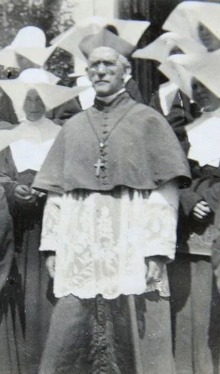


 seamus dubhghaill