seamus dubhghaill

Promoting Irish Culture and History from Little Rock, Arkansas, USA


Leave a comment

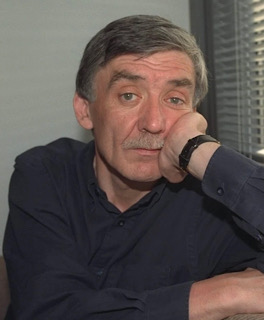
Birth of Sean O’Callaghan, Member of the Provisional IRA

Sean O’Callaghan, a member of the Provisional Irish Republican Army (IRA), who from the late 1970s to the mid-1980s works against the organisation from within as a mole for the Irish Government with the Garda Síochána‘s Special Detective Unit, is born in TraleeCounty Kerry, on October 10, 1954.

O’Callaghan is born into a family with a Fenian paramilitary history. His paternal grandfather had taken the Anti-Treaty side during the Irish Civil War, and his father had been interned by the Irish Government at the Curragh Camp in County Kildare for IRA activity during World War II.

By the late 1960s, O’Callaghan ceases to practise his Catholic faith, adopts atheism and has become interested in the theories of Marxist revolutionary politics, which finds an outlet of practical expression in the sectarian social unrest in Northern Ireland at the time, centered on the activities of the Northern Ireland Civil Rights Association. In 1969, communal violence breaks out in Northern Ireland and believing that British imperialism is responsible, he joins the newly founded Provisional IRA at the age of 17.

Soon afterward, O’Callaghan is arrested by local Gardaí after he accidentally detonates a small amount of explosives, which cause damage to the homes of his parents and their neighbours. After demanding, and receiving, treatment as a political prisoner, he quietly serves his sentence.

After becoming a full-time paramilitary with the IRA, in the early to mid-1970s O’Callaghan takes part in over seventy operations associated with Irish Republican political violence including bomb materials manufacture, attacks on IRA targets in Northern Ireland, and robberies to provide funding for the organisation.

In 1976, O’Callaghan ends his involvement with the IRA after becoming disillusioned with its activities. He later recalls that his disenchantment with the IRA began when one of his compatriots openly hoped that a female police officer who had been blown up by an IRA bomb had been pregnant so they could get “two for the price of one.” He is also concerned with what he perceives as an undercurrent of ethnic hatred in its rank and file toward the Ulster Scots population. He leaves Ireland and moves to London. In May 1978, he marries a Scottish woman of Protestant unionist descent. During the late 1970s, he runs a successful mobile cleaning business. However, he is unable to fully settle into his new life, later recalling, “In truth there seemed to be no escaping from Ireland. At the strangest of times I would find myself reliving the events of my years in the IRA. As the years went on, I came to believe that the Provisional IRA was the greatest enemy of democracy and decency in Ireland.”

In 1979, O’Callaghan is approached by the IRA seeking to recruit him again for its paramilitary campaign. In response, he decides to turncoat against the organisation and becomes an agent within its ranks for the Irish Government. He decides to become a double agent even though he knows that even those who hate the IRA as much as he now does have a low opinion of informers. However, he feels it is the only way to stop the IRA from luring teenagers into their ranks and training them to kill.

Soon after being approached by the IRA to re-join, O’Callaghan returns to Tralee from London, where he arranges a clandestine meeting with an officer of the Garda Special Detective Unit in a local cemetery, at which he expresses his willingness to work with it to subvert the IRA from within. At this point, he is still opposed to working with the British Government. A few weeks later, he makes contact with Kerry IRA leader Martin Ferris and attends his first IRA meeting since 1975. Immediately afterward, he telephones his Garda contact and says, “We’re in”.

During the 1981 hunger strike in the Maze Prison, O’Callaghan attempts to start his own hunger strike in support of the Maze prisoners but is told to desist by the IRA for fear it will detract focus from the prisoners. He successfully sabotages the efforts of republicans in Kerry from staging hunger strikes of their own.

In 1984, O’Callaghan notifies the Garda of an attempt to smuggle seven tons of AK-47 assault rifles from the United States to Ireland aboard a fishing trawler named Valhalla. The guns are intended for the arsenal of the Provisional IRA’s units. As a result of his warning, a combined force of the Irish Navy and Gardaí intercept the boat that received the weaponry, and the guns are seized. The seizure marks the complete end of any major attempt by the IRA to smuggle guns out of the United States.

In 1983, O’Callaghan claims to be tasked by the IRA with placing 25 lbs. of Frangex in the Dominion Theatre in London, in an attempt to kill Prince Charles and Princess Diana who are due to attend a charity pop music concert there. A warning is phoned into the Garda, and the Royal couple are hurriedly ushered from the theatre by their police bodyguard during the concert. The theatre had been searched before the concert and a second search following the warning reveals no device.

In 1985, O’Callaghan is elected as a Sinn Féin councillor for Tralee Urban District Council, and unsuccessfully contests a seat on Kerry County Council.

After becoming disillusioned with his work with the Irish Government following the murder of another of its agents within the IRA, which it had failed to prevent despite O’Callaghan’s warnings of the threat to him, and sensing a growing threat to himself from the organisation which had become suspicious of his own behaviour, he withdraws from the IRA and leaves Ireland to live in England, taking his wife and children with him. His marriage ends in a divorce in 1987, and on November 29, 1988, he walks into a police station in Tunbridge WellsKent, England, where he presents himself to the officer on duty at the desk, confesses to the murder of Ulster Defence Regiment (UDR) Greenfinch (female member) Eva Martin and the murder of D.I. Peter Flanagan during the mid-1970s, and voluntarily surrenders to British prosecution.

Although the Royal Ulster Constabulary (RUC) offers him witness protection as part of the informer policy, O’Callaghan refuses it and is prosecuted under charges of two murders and 40 other crimes, to all of which he pleads guilty, committed in British jurisdiction with the IRA. Having been found guilty, he is sentenced to a total of 539 years in prison. He serves his sentence in prisons in Northern Ireland and England. While in jail, he publishes his story in The Sunday Times. He is released after being granted the royal prerogative of mercy by Queen Elizabeth II in 1996.

In 1998, O’Callaghan publishes an autobiographical account of his experiences in Irish Republican paramilitarism, entitled The Informer: The True Life Story of One Man’s War on Terrorism (1998).

In 2002, O’Callaghan is admitted to Nightingale Hospital, Marylebone, an addiction and rehab center where he undergoes a rehabilitation program for alcohol dependency. His identity and past activities are not revealed to the other patients. He lives relatively openly in London for the rest of his life, refusing to adopt a new identity. He is befriended in the city by the Irish writer Ruth Dudley Edwards, and works as a security consultant, and also occasional advisor to the Ulster Unionist Party (UUP) on how to handle Irish republicanism in general, and Sinn Féin in particular.

In 2006, O’Callaghan appears in a London court with regard to an aggravated robbery that occurs in which he is the victim.

In 2015, O’Callaghan publishes James Connolly: My Search for the Man, the Myth & his Legacy (2015), a book containing a critique of the early 20th century Irish revolutionary James Connolly, and what he considers to be his destructive legacy in Ireland’s contemporary politics.

O’Callaghan dies by drowning after suffering a heart attack at the age of 63 while in a swimming pool in Kingston, Jamaica, on August 23, 2017, while visiting his daughter. A memorial service is held in his memory on March 21, 2018, at St. Martin’s-in-the-Fields, a Church of England parish church at the northeast corner of Trafalgar Square in the City of Westminster, London. The service is attended by representatives from Ulster Unionist parties and the Irish Government.


Leave a comment

Death of Katy French, Socialite, Model & TV Personality

Katy Ellen French, Irish socialite, model, writer, television personality and charity worker, dies on December 6, 2007, in Navan, County Meath, after collapsing at a friend’s house on December 2. According to the BBC, “in the space of less than two years, she had become one of Ireland’s best-known models and socialites.” Her cause of death is given as hypoxic ischemic brain injury caused by cocaine and ephedrine.

French is born on October 31, 1983, in Basel, Switzerland, to John and Janet French, from Australia and Britain respectively. At the age of two, she moves with her family to Ireland, briefly living in the Sandyford area before settling in Enniskerry, County Wicklow, and later to Stillorgan, County Dublin. She attends Alexandra College in Milltown, Dublin, from the age of seven. While still in school she works part-time as a hostess at the Dublin branch of the Planet Hollywood restaurant chain.

French studies psychology and marketing before working for the Assets Modelling Agency and later writing articles for several Dublin magazines and newspapers. She represents Sony Ericsson and Suzuki among many other brands, becoming more famous in 2007 as a result of her fiancé, restaurateur Marcus Sweeney, ending their relationship in a very public fashion after she is photographed for a lingerie shoot for the Sunday Independent in his restaurant in January of that year. As a result of this publicity, her image appears more regularly in daily Irish tabloid newspapers, and she makes numerous television appearances on shows such as RTÉ‘s The Podge and Rodge Show in April 2007 and Tubridy Tonight a week before her death.

French is known for deliberately courting controversy to promote her career. On Tubridy Tonight she speaks of her appearance on Celebrities Go Wild as well as her relationship break up with Sweeney. Mention is also made of her birthday party which she is to celebrate the following week, having missed her birthday due to Celebrities Go Wild. Host Ryan Tubridy is invited to the event. Footage is shown of the charity single “Down in the Bog” which is to be released as a Christmas single. She works for several Irish charities including Our Lady’s Children’s Hospital, Crumlin and GOAL in Calcutta, India. She writes a column for Social & Personal magazine.

In an interview with Hot Press‘s Jason O’Toole, French says that she would consider having an abortion if she became pregnant during the peak of her career, a controversial statement in Ireland where abortion is at that time effectively illegal, and that she loves fur despite being a “massive animal lover.” She also airs her religious beliefs, being a member of the Church of England as well as a practising Catholic and speaks highly of Islam and her Muslim friends saying, “When you read the Koran, you realise that Islam is a beautiful religion.” In the same interview she is asked if she has ever used cocaine and denies ever having done so. In November 2007, she tells an Irish tabloid that she has used cocaine but has stopped. A week before she dies, she celebrates her 24th birthday with celebrity and media friends.

French dies on the evening of December 6, 2007, in Our Lady’s Hospital, Navan, County Meath, having collapsed at a house in Kilmessan, County Meath, in the early hours of Sunday, December 2. There is widespread speculation in the media that her death is the result of a drug overdose. A postmortem finds she has suffered brain damage, and that traces of cocaine are found in her body. A senior Garda states, “We strongly suspect that drugs contributed to her death. This was a previously healthy person being brought to hospital in a collapsed state.” In 2010 two people are charged with supplying cocaine to French and in failing to get medical assistance in a timely fashion. She is buried in her hometown of Enniskerry, County Wicklow, on December 10. Taoiseach Bertie Ahern‘s aide de camp, Captain Michael Tracey, attends her funeral.

On November 13, 2012, two friends of French, Kieron Ducie and Ann Corcoran, plead guilty to possession of cocaine with intent to supply on the weekend of French’s death. Trim Circuit Court is told that a second charge against the pair is not being pursued, that they had intentionally or recklessly engaged in behaviour relating to the supply of cocaine to French and failed to get medical assistance in a timely fashion. In July 2013 the pair are sentenced to a 2-1⁄2 year suspended sentence and three-year good behaviour bond, and a two-year suspended sentence and two-year good behaviour bond respectively. At the verdict, French’s cause of death is given as hypoxic ischemic brain injury caused by cocaine and ephedrine.


Leave a comment

Death of Irish Dramatist George Farquhar

George Farquhar, Irish dramatist, dies in London on April 29, 1707. He is noted for his contributions to late Restoration comedy, particularly for his plays The Constant Couple (1699), The Recruiting Officer (1706) and The Beaux’ Stratagem (1707).

Born in Derry in 1677, Farquhar is one of seven children born to William Farquhar, a clergyman of modest means. The author of “Memoirs of Mr. George Farquhar,” a biographical sketch prefixed to certain 18th-century editions of his works, claims that he “discovered a Genius early devoted to the Muses. When he was very young, he gave Specimens of his Poetry; and discovered a Force of Thinking, and Turn of Expression, much beyond his years.”

Farquhar is educated at Foyle College and later enters Trinity College Dublin at age seventeen as a sizar under the patronage of the Bishop of Dromore, who may have been related to Farquhar’s mother. He may have initially intended to follow his father’s profession and become a clergyman but is “unhappy and rebellious as a student” and leaves college after two years to become an actor. His 18th-century biographer claims that the departure is because “his gay and volatile Disposition could not long relish the Gravity and Retirement of a College-life,” but another story of uncertain veracity has him being expelled from Trinity College due to a “profane jest.” The two accounts are not necessarily mutually exclusive.

Farquhar joins a company performing on the Dublin stage, probably through his acquaintance with the well-known actor Robert Wilks. However, he is reportedly not that impressive as an actor. It is said that “his voice was somewhat weak” and that “his movements [were] stiff and ungraceful.” But he is well received by audiences and thought to continue in this career “till something better should offer.” Some of the roles reportedly played by Farquhar are Lennox in William Shakespeare‘s Macbeth, Young Bellair in The Man of Mode by George Etherege, Lord Dion in Philaster by Francis Beaumont and John Fletcher, and Guyomar in The Indian Emperour by John Dryden.

During one of the performances in the Dryden play, an accident on stage puts an end to Farquhar’s acting career. As Guyomar, he is supposed to “kill” Vasquez, one of the Spanish generals in the drama. Forgetting to exchange his sword for a foil before enacting this scene, he severely wounds Price, the actor playing Vasquez. Although Price recovers, Farquhar resolves after this mishap to give up acting for good.

Farquhar then leaves for London, “possibly with a draft of his first play in his portmanteau.” Some writers tie his move to that of his friend Wilks, who had received an offer from the manager of Drury Lane to come to London and join that theatre. Wilks is also credited with encouraging Farquhar’s efforts at writing plays.

Farquhar’s first comedy, Love and a Bottle, premieres in 1698 and is well received by the audience. Called a “licentious piece” by one scholar and cited as proof that Farquhar had “absorbed the stock topics, character-types, and situations of Restoration comedy” by another, the play deals with Roebuck, “An Irish Gentleman of a wild roving Temper” who is “newly come to London.” The general character of the play can be evaluated by considering that in the opening scene, Roebuck tells his friend Lovewell that he has left Ireland due to getting a woman pregnant with twins and to Roebuck’s father trying to force Roebuck to marry the woman; however, Roebuck remarks, “Heav’n was pleas’d to lessen my Affliction, by taking away the She-brat.”

After the favourable reception of Love and a Bottle, Farquhar decides to devote himself to playwriting. He also at this point receives a commission in the regiment of the Earl of Orrery, so his time for the next few years is divided between the vocations of soldier and dramatist. It is also at about this time that he discovers Anne Oldfield, who is reading aloud a scene from The Scornful Lady at her aunt’s tavern. Impressed, he brings her to the notice of Sir John Vanbrugh, and this leads to her theatrical career, during which she is the first performer of major female roles in Farquhar’s last comedies.

In 1700, Farquhar’s The Constant Couple is acted at Drury Lane and proves a great success, helped considerably by his friend Wilks’ portrayal of the character of Sir Henry Wildair. The playwright follows up with a sequel, Sir Harry Wildair, the following year, and in 1702 writes the comedies The Inconstant and The Twin Rivals. Also in 1702, he publishes Love and Business, a collection that includes letters, verse, and A Discourse Upon Comedy.

The next year, Farquhar marries Margaret Pemell, “a widow with three children, ten years his senior,” who reportedly tricks him into the marriage by pretending to have a great fortune. His 18th century biographer records that “though he found himself deceived, his Circumstances embarrassed, and his Family increasing, he never upbraided her for the Cheat but behaved to her with all the Delicacy and Tenderness of an indulgent Husband.” He is engaged in recruiting for the army, due to the War of the Spanish Succession, for the next three years, writing little except The Stage Coach in collaboration with Peter Motteux, an adaptation of a French play. He draws on his recruiting experience for his next comedy, The Recruiting Officer (1706). However, he has to sell his army commission to pay debts, reportedly after the Duke of Ormonde advises him to do so, promising him another but failing to keep his promise.

Early in 1707, Farquhar’s friend Wilks visits him. Farquhar is ill and in distress, and Wilks is said to have “cheered him with a substantial present and urged him to write another comedy.” This comedy, The Beaux’ Stratagem, is given its première on March 8, 1707. It is known from Farquhar’s own statement prefacing the published version of the play that he wrote it during his sickness:

“The reader may find some faults in this play, which my illness prevented the amending of; but there is great amends made in the representation, which cannot be match’d, no more than the friendly and indefatigable care of Mr. Wilks, to whom I chiefly owe the success of the play.”

Farquhar dies in London on April 29, 1707, not quite two months after the opening of this last play. He is buried on May 3 in St. Martin-in-the-Fields, a Church of England parish church in the City of Westminster, London.


Leave a comment

Death of Philip Twysden, Lord Bishop of Raphoe

Philip Twysden, Anglican clergyman who serves in the Church of Ireland as Lord Bishop of Raphoe from 1747 to 1752, dies bankrupt on November 2, 1752, after having been shot while allegedly masquerading as a highwayman. The circumstances of his death later become the subject of scandalous rumour.

Twysden is born in Kent, in the South East England region, on September 7, 1713, the third son of Sir William Twysden, 5th Baronet of Roydon Hall, East Peckham, Kent, by his wife (and distant cousin) Jane Twisden.

Twysden studies at University College, Oxford, from 1732. He is awarded a Master of Arts degree, and the honorary degree of Doctor of Civil Law in 1745.

Twysden marries twice: firstly, to Mary Purcell, who dies in 1743, and secondly to Frances Carter, daughter of The Rt Hon. Thomas Carter, Master of the Rolls in Ireland. After Twysden’s death, she marries her cousin, General James Johnston.

By his second wife, Twysden has two children: Mary, who dies in infancy, and a posthumous daughter named Frances (1753–1821). Frances, later Countess of Jersey, is one of the many mistresses of King George IV when he is Prince of Wales.

Twysden is ordained a priest in the Church of England. He is instituted in 1738 as rector of Eard and in 1745, for a short time, serves as the rector of Eastling in Kent. He accompanies Philip Stanhope, 4th Earl of Chesterfield, to Dublin as his chaplain, upon the Earl’s appointment as Lord Lieutenant of Ireland.

Twysden is nominated to the Bishopric of Raphoe in Ulster on March 3, 1746, and is consecrated by the Archbishop of Dublin, assisted by the bishops of Derry and Clonfert, at St. Michan’s Church, Dublin, on March 29, 1747.

Twysden dies on November 2, 1752, at home in Jermyn Street, St. James’s, London. However, according to ecclesiastical historian and author Henry Cotton, he dies at Roydon Hall, East Peckham, his father’s country house. He is buried in the south chancel of St. Michael’s Church, East Peckham, under a plain stone with no inscription.

A story grows up that, having been made bankrupt, Twysden is shot while attempting to rob a stagecoach. The location of his alleged attempted career as a highwayman is either Hounslow Heath (west of London) or Wrotham Heath in Kent.

(Pictured: The Cathedral of St Eunan, Raphoe, the episcopal seat of the pre-Reformation and Church of Ireland bishops of Raphoe)


Leave a comment

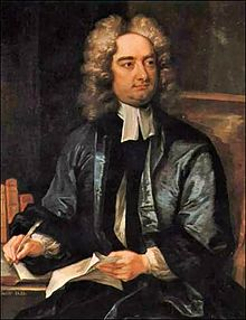
Birth of Jonathan Swift, Essayist, Pamphleteer, Poet & Cleric

Jonathan Swift, satirist, essayist, political pamphleteer, poet and cleric who becomes Dean of St. Patrick’s Cathedral, Dublin, is born in Dublin on November 30, 1667.

Swift’s father, an attorney, also named Jonathan Swift, dies just two months before he is born. Without steady income, his mother struggles to provide for her newborn. Moreover, he is a sickly child. It is later discovered that he suffers from Ménière’s disease, a condition of the inner ear that leaves the afflicted nauseous and hard of hearing. In an effort to give her son the best upbringing possible, Swift’s mother gives him over to Godwin Swift, her late husband’s brother and a member of the respected professional attorney and judges group Gray’s Inn. Godwin Swift enrolls his nephew with one of his cousins in Kilkenny College, which is perhaps the best school in Ireland at the time. He arrives there at the age of six, where he is expected to have already learned the basic declensions in Latin. He has not and thus begins his schooling in a lower form. He graduates in 1682, when he is 15. His transition from a life of poverty to a rigorous private school setting proves challenging. He does, however, make a fast friend in William Congreve, the future poet and playwright.

In 1682, Swift commences his undergraduate studies at Trinity College, Dublin. In 1686, he receives a Bachelor of Arts degree and goes on to pursue a master’s degree. Not long into his research, huge unrest breaks out in Ireland. The king of Ireland, England and Scotland is soon to be overthrown. What becomes known as the Glorious Revolution of 1688 spurs him to move to England and start anew. For 10 years, Swift works in Surrey‘s Moor Park and acts as an assistant to Sir William Temple, 1st Baronet.

During his Moor Park years, Swift meets the daughter of Temple’s housekeeper, an 8-year-old named Esther Johnson, known as “Stella.” They become lovers for the rest of their lives until Johnson’s death in 1728. It is rumored that they marry in 1716, and that Swift keeps of lock of Johnson’s hair in his possession at all times.

During his decade of work for Temple, Swift returns to Ireland twice. On a trip in 1695, he takes all necessary requirements to become an ordained priest in the Anglican tradition. Under Temple’s influence, he also begins to write, first short essays and then a manuscript for a later book. Temple dies in 1699. Swift completes the task of editing and publishing Temple’s memoirs. He then leans on his priestly qualifications and finds work ministering to a pea-sized congregation just 20 miles outside of Dublin. For the next ten years, he gardens, preaches and works on the house provided to him by the church. He also returns to writing. His first political pamphlet is titled A Discourse on the Contests and Dissentions in Athens and Rome.

In 1704, Swift anonymously releases A Tale of a Tub and The Battle of the Books. Tub, although widely popular with the masses, is harshly disapproved of by the Church of England. Ostensibly, it criticizes religion, but Swift means it as a parody of pride. Nonetheless, his writings earn him a reputation in London and when the Tories come into power in 1710, they ask him to become editor of The Examiner, their official paper. After a time, he becomes fully immersed in the political landscape and begins writing some of the most cutting and well-known political pamphlets of the day, including The Conduct of the Allies, an attack on the Whigs. Privy to the inner circle of Tory government, he lays out his private thoughts and feelings in a stream of letters to his beloved Stella. They are later published as The Journal to Stella.

When he sees that the Tories will soon fall from power, Swift returns to Ireland. In 1713, he takes the post of Dean at St. Patrick’s Cathedral, Dublin. While leading his congregation at St. Patrick’s, he begins to write what would become his best-known work. In 1726, at last finished with the manuscript, he travels to London and benefits from the help of several friends, who anonymously publish it as Travels into Several Remote Nations of the World, in Four Parts. By Lemuel Gulliver, First a Surgeon, and then a Captain of Several Ships, more simply known as Gulliver’s Travels. The book is an immediate success and has not been out of print since its first run.

Not long after the celebration of this work, Esther Johnson, falls ill. She dies in January 1728. Her death moves Swift to write The Death of Mrs. Johnson.

In 1742, Swift suffers a stroke and loses the ability to speak. He dies on October 19, 1745. He is laid to rest next to Esther Johnson inside Dublin’s St. Patrick’s Cathedral.


Leave a comment

The Irish Church Act 1869 Receives Royal Assent

The Irish Church Act 1869 receives British royal assent on July 26, 1869. The Act is an act of the Parliament of the United Kingdom which separates the Church of Ireland from the Church of England and disestablishes the former, a body that commands the adherence of a small minority of the population of Ireland. The Act is passed during the first ministry of William Ewart Gladstone and comes into force on January 1, 1871. It is strongly opposed by Conservatives in both houses of Parliament.

The Act means the Church of Ireland is no longer entitled to collect tithes from the people of Ireland. It also ceases to send representative bishops as Lords Spiritual to the House of Lords in Westminster. Existing clergy of the church receive a life annuity in lieu of the revenues to which they are no longer entitled: tithes, rentcharge, ministers’ money, stipends and augmentations, and certain marriage and burial fees.

The passage of the Bill through Parliament causes acrimony between the House of Commons and the House of Lords. Queen Victoria personally intervenes to mediate. While the Lords extort from the Commons more compensation to alleviate the disestablished churchmen, in the end, the will of the Commons prevail.

The Irish Church Act is a key move in dismantling the Protestant Ascendancy which had dominated Ireland for several centuries previously.


Leave a comment

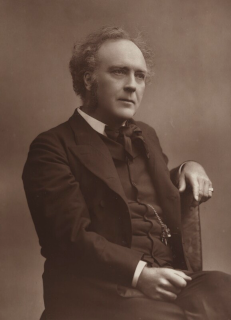
The Death of Stopford Brooke, Chaplain & Writer

Stopford Augustus Brooke, churchman, royal chaplain and writer, dies in Ewhurst, Surrey, England, on March 18, 1916.

Brooke is born in the rectory of Glendoen, near Letterkenny, County Donegal on November 14, 1832, the eldest son of the Rev. Richard Sinclair Brooke, later incumbent of the Mariners’ Church, Kingstown (now Dún Laoghaire). His maternal grandfather, Joseph Stopford, is then rector of the parish. He is educated at Trinity College, Dublin. He is ordained in the Church of England in 1857 and holds various charges in London. From 1863 to 1865 he is chaplain to Victoria, Princess Royal in Berlin. In 1869, with his brother Edward, he makes long tours of Counties Donegal and Sligo, and spends much time at Kells, County Meath studying Irish antiquities. Between 1866 and 1875 he is the minister at St. James’s Chapel, a proprietary chapel. After it closes, he takes services at Bedford Chapel, Bloomsbury where he continues to attract large congregations. In 1875, he becomes chaplain in ordinary to Queen Victoria. But in 1880 he secedes from the Church, being no longer able to accept its leading dogmas, and officiates as an independent preacher for some years at Bedford Chapel, Bloomsbury.

Bedford Chapel is pulled down about 1894, and from that time Brooke has no church of his own, but his eloquence and powerful religious personality continues to make themselves felt among a wide circle. A man of independent means, he is always keenly interested in literature and art, and a fine critic of both. The two-volume Life and Letters of Stopford Brooke, written by his son-in-law L. P. Jacks and published in 1917, contains many details of different facets of his life.

In 1890-1891 Brooke takes the lead in raising the funds to purchase Dove Cottage, William Wordsworth’s home in Grasmere from 1800 to 1808, and establishing it “for the eternal possession of those who love English poetry all over the world.” Dove Cottage is now administered by the Wordsworth Trust.

Brooke publishes in 1865 his Life and Letters of FW Robertson (of Brighton), and in 1876 writes an admirable primer of English Literature, followed in 1892 by The History of Early English Literature down to the accession of Alfred the Great, and English Literature from the Beginnings to the Norman Conquest (1898).

Brooke gives the inaugural lecture to the Irish Literary Society, London, on “The Need and Use of Getting Irish Literature into the English Tongue” at Bloomsbury House, March 11, 1893. He delivers a sermon on “The Kingdom of God Within” to the International Council of Unitarian and Other Liberal Religious Thinkers and Workers, meeting in London in May 1901. He continues preaching at Bedford Chapel and to unitarian congregations throughout Britain until forced to retire because of ill-health in 1895.

Brooke lives in London until 1914 and then retires to Ewhurst, Surrey, where he dies on March 18, 1916. His published letters record that his work brought him into touch with most of his famous contemporaries – including Alfred, Lord Tennyson, Philip Burne-Jones, William Morris, James Bryce, 1st Viscount Bryce, James Martineau and Matthew Arnold.


Leave a comment

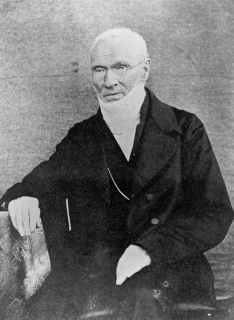
Birth of Patrick Brontë, Anglican Priest & Author

Patrick Brontë, Irish Anglican priest and author, is born at Drumballyroney, near RathfrilandCounty Down, on March 17, 1777. He is the father of the writers Charlotte, Emily, Anne and Branwell Brontë.

Brontë is the first of ten children born to Hugh Brunty, a farm labourer, and Alice McClory. At one point in his adult life, he formally changes the spelling of his name from Brunty to Brontë. He spends most of his adult life in England.

Brontë has several apprenticeships until he becomes a teacher in 1798. He moves to England in 1802 to study theology at St. John’s College, Cambridge, and receives his BA degree in 1806. He is then appointed curate at Wethersfield, Essex, where he is ordained a deacon of the Church of England in 1806, and into the priesthood in 1807.

In 1809, Brontë becomes assistant curate at Wellington, Shropshire, and in 1810 his first published poem, Winter Evening Thoughts, appears in a local newspaper, followed in 1811 by a collection of moral verses, Cottage Poems. He moves to the West Riding of Yorkshire in 1811 as assistant curate at Hartshead, where he serves until 1815. In the meantime he is appointed a school examiner at a Wesleyan academy, Woodhouse Grove School, near Guiseley. In 1815 he moves again on becoming perpetual curate of Thornton. At Guiseley, Brontë meets Maria Branwell, whom he marries on December 29, 1812.

Brontë is offered the perpetual curacy of St. Michael and All Angels’ Church, Haworth in June 1819, and he takes the family there in April 1820. His sister-in-law Elizabeth Branwell, who had lived with the family at Thornton in 1815, joins the household in 1821 to help to look after the children and to care for Maria Brontë, who is suffering the final stages of uterine cancer. She decides to move permanently to Haworth to act as housekeeper.

After several attempts to seek a new spouse, Brontë comes to terms with widowhood at the age of 47, and spends his time visiting the sick and the poor, giving sermons, communion, and extreme unction, leaving his children alone with their aunt and a maid, Tabitha Aykroyd (Tabby), who tirelessly recounts local legends in her Yorkshire dialect while preparing the meals.

Brontë is responsible for the building of a Sunday school in Haworth, which he opens in 1832. He remains active in local causes into his old age, and between 1849 and 1850 organises action to procure a clean water supply for the village, which is eventually achieved in 1856.

In August 1846, Brontë travels to Manchester, accompanied by Charlotte, to undergo surgery on his eyes. On August 28 he is operated upon, without anaesthetic, to remove cataracts. Surgeons do not yet know how to use stitches to hold the incision in the eye together and as a consequence the patient is required to lie quietly in a darkened room for weeks after the operation. Charlotte uses her time in Manchester to begin writing Jane Eyre, the book which is to make her famous.

Following the death of his last surviving child, Charlotte, nine months after her marriage, he co-operates with Elizabeth Gaskell on the biography of his daughter. He is also responsible for the posthumous publication of Charlotte’s first novel, The Professor, in 1857. Charlotte’s husband, Arthur Bell Nicholls, who had been Brontë’s curate, stays in the household until he returns to Ireland after Patrick Brontë’s death, at the age of 84, on June 7, 1861 in Haworth, Yorkshire, England. Brontë outlives not only his wife (by 40 years) but all six of his children.


Leave a comment

Birth of Richard Downey, Archbishop of Liverpool

Richard Downey, English prelate of the Roman Catholic Church, is born in Kilkenny, County Kilkenny on May 5, 1881. He serves as Archbishop of Liverpool from 1928 until his death.

Downey is ordained to the priesthood on May 25, 1907, at St. Joseph Seminary, Up Holland, Skelmersdale, Lancashire. He is Professor of Philosophy at Sacred Heart College, Hammersmith, and then Professor of Dogmatic Theology at St. Joseph’s College, Up Holland, where he is also Vice-Rector. On August 3, 1928, he is appointed Archbishop of Liverpool by Pope Pius XI, succeeding the late Frederick William Keating. He receives his Episcopal consecration on the following September 21 from Cardinal Francis Bourne, with Bishops Robert Dobson and Francis Vaughan serving as co-consecrators.

Downey’s tenure sees the construction and dedication of the crypt of Liverpool Metropolitan Cathedral, built to a design by Sir Edwin Lutyens, although the Cathedral itself is never completed as he had envisaged. A picture of Lutyens proposed cathedral is printed on postcards sold to raise funds.

In 1929, before the actual construction begins, Downey states, “Hitherto all cathedrals have been dedicated to saints. I hope this one will be dedicated to Christ himself with a great figure surmounted on the cathedral, visible for many a mile out at sea.” He also declares that while the Cathedral will not be medieval and Gothic, neither will it be as modern as the works of Jacob Epstein, a statement somewhat at odds with the design that is finally realised after his death.

In 1933, after the urn containing the bones of King Edward V and Richard of Shrewsbury, Duke of York is removed from Westminster Abbey for examination and then returned with an Anglican burial service, Downey says, “It is difficult to see what moral justification there can be for reading a Protestant service over the remains of these Roman Catholic princes, even though it were done on the plea of legal continuity of the present Anglican Church with the pre-Reformation Church of Britain.”

Downey dies in Liverpool at the age of 72 on June 16, 1953, having served as Liverpool’s archbishop for twenty-four years. His remains are interred in a crypt at Liverpool Metropolitan Cathedral, Liverpool.


Leave a comment

Death of Charles Leslie, Jacobite Propagandist & Non-Juror

Charles Leslie, former Church of Ireland priest who becomes a leading Jacobite propagandist after the 1688 Glorious Revolution, dies in Glaslough, County Monaghan on April 13, 1722. One of a small number of Irish Protestants to actively support the Stuarts after 1688, he is best remembered today for his role in publicising the 1692 Massacre of Glencoe.

Leslie is born on July 27, 1650, in Dublin, the sixth son and one of eight surviving children of John Leslie (1571-1671) and Katherine Conyngham (or Cunningham), daughter of Dr. Alexander Cunningham, Dean of Raphoe. He is allegedly named after the executed Charles I and educated at Enniskillen school and Trinity College, Dublin. After his father dies in 1671, he studies law in London before changing career and being ordained as an Anglican priest in 1681. Shortly afterwards, he returns to the family estate at Glaslough in County Monaghan and marries Jane Griffith. They have a daughter, Vinigar Jane, who appears to have died young and two sons, Robert (1683-1744) and Henry who are also Jacobites and spend time in exile.

Leslie is appointed assistant curate for the Church of Ireland parish of Donagh but as most of his parish is Roman Catholic or Presbyterian, he has few duties. His father had been chaplain to Charles I and a key supporter of Caroline religious reforms, first in Scotland, then in Ireland as Bishop of Raphoe in 1633, while the estate at Glaslough was granted by Charles II in 1660 as a reward for his service. With this background, Leslie is a firm supporter of the Stuart dynasty, although deeply hostile to Catholicism and soon becomes involved in political and theological disputes.

When the Catholic James II becomes King in 1685, his brother-in-law Henry Hyde, 2nd Earl of Clarendon, is appointed Lord Lieutenant of Ireland. In July 1686, Leslie’s legal training results in Clarendon making him chancellor of Connor cathedral and later Justice of the Peace. Clarendon’s authority is overshadowed by his Catholic deputy Richard Talbot, 1st Earl of Tyrconnell, who begins undermining legal restrictions on Catholics embodied in the Test Act. Clarendon employs Leslie’s polemical skills to oppose the appointment of Catholics to public office, but he is recalled in 1687. When James is deposed by the Glorious Revolution in December 1688, Leslie is in the Isle of Wight.

Shortly afterwards, Leslie becomes Clarendon’s personal chaplain and like his patron refuses to take the oath of allegiance to William III and Mary II. Like other non-jurors, he is deprived of his Church offices and becomes instead one of the most prominent Jacobite and Tory propagandists. This includes a long dispute with his Trinity College contemporary William King, who supports the Revolution. Gilbert Burnet, Bishop of Salisbury, later names him ‘the violentest Jacobite’ active in England during these years.

Much of Leslie’s early writing focuses on Scotland, where the 1690 Settlement ends Episcopacy and restores a Presbyterian kirk. He uses this to inspire concern about William’s intentions towards the Church of England. Ironically, his modern fame now rests primarily on a pamphlet written in 1695, called Gallienus Redivivus, or Murther will out, &c. Being a true Account of the De Witting of Glencoe, Gaffney. The focus of this is William’s alleged complicity in the 1672 death of Dutch Republican leader Johan de Witt, with other crimes including Glencoe included as secondary charges. During the Jacobite rising of 1745, Charles Stuart orders Leslie’s pamphlet and the 1695 Parliamentary minutes of the investigation to be reprinted in the Edinburgh Caledonian Mercury.

During the 1690s, Leslie serves as a messenger between James’ court in exile at Château de Saint-Germain-en-Laye and the Non-Juror community in England, including the non-juror bishops Jeremy Collier, Thomas Ken and George Hickes. He defends Collier and two other non-juror priests when they become involved in a furor over the execution of Sir John Friend and Sir William Parkyns for their role in the 1696 Jacobite plot to assassinate William. Immediately prior to the execution, the clergymen declare the two absolved of their sins, effectively declaring the correctness of their actions, while also performing a rite not recognised by the Church of England.

In 1702, the accession of Queen Anne, the last Stuart monarch, causes a resurgence in Jacobite activity and in 1704, Leslie begins a weekly periodical initially called The Observator, later The Rehearsal of Observator and finally The Rehearsal. Although his Tory readership shares his High Church principles, he is primarily a Jacobite and violently opposes the common practice of ‘occasional conformity.’ The Rehearsal is forced to close in 1709 and he falls out with his former allies, including Henry Sacheverell whose trial helped the Tories win a landslide victory in the 1710 British general election.

Despite his Tory allies now being in government, a warrant is issued for Leslie’s arrest for his tract The Good Old Cause, or, Lying in Truth. In 1711 he escapes to Paris, where James Francis Edward Stuart has succeeded his father as the Stuart heir in 1701. He continues to write polemics and act as a Jacobite agent. However, after the failed Jacobite rising of 1715, France withdraws support for the Stuarts who are forced to leave France, eventually being invited to settle in Rome by Pope Benedict XIV. The Spanish-sponsored 1719 Rising in Scotland is judged to have done more damage to the Jacobite cause than otherwise, one of its leaders concluding “it bid fair to ruin the King’s Interest and faithful subjects in these parts.”

Despite these failures, Leslie remains a dedicated Jacobite but his lifelong antipathy towards Catholicism makes living in Rome as a Papal pensionary difficult, while hopes of converting James to Anglicanism fades due to his devout personal Catholicism. He returns to Paris in 1717 and in 1719 publishes a two folio-volume edition of his Theological Works. It is later claimed these placed him ‘very high in the list of controversial authors, the ingenuity of the arguments being equalled only by the keenest and pertinacity with which they are pursued.’ He invites friends and supporters to subscribe to these and by 1721, over 500 members of the House of Lords and House of Commons have pledged a total of £750. Charles Spencer, 3rd Earl of Sunderland finally allows him to return home, with the stipulation he cease his political activities.

Charles Leslie dies at Glaslough on April 13, 1722. His grandchildren include Charles Leslie MP, whose son in turn is John Leslie, Bishop of Kilmore, Elphin and Ardagh.

(Pictured: Charles Leslie, mezzotint by Unknown artist, National Portrait Gallery, NPG D5066)