seamus dubhghaill

Promoting Irish Culture and History from Little Rock, Arkansas, USA


Leave a comment

Birth of Tom Kettle, Parliamentarian, Writer & Soldier

Thomas “Tom” Michael Kettle, parliamentarian, writer, and soldier, is born on February 9, 1880, in Artane, Dublin, the seventh among twelve children of Andrew Kettle, farmer and agrarian activist, and his wife, Margaret (née McCourt). His father’s record in nationalist politics and land agitation, including imprisonment in 1881, is a valuable political pedigree.

The family is prosperous. Kettle and his brothers attend Christian BrothersO’Connell School in Richmond Street, Dublin, before being sent to board at Clongowes Wood College, County Kildare. Popular, fiery, and something of a prankster, he soon proves to be an exceptional scholar and debater, as well as a keen athlete, cyclist, and cricketer. He enrolls in 1897 at University College Dublin (UCD), his contemporaries including Patrick Pearse, Oliver St. John Gogarty and James Joyce. He thrives in student politics, where his rhetorical genius soon wins him many admirers and is recognised in his election as auditor of the college’s Literary and Historical Society. He also co-founds the Cui Bono Club, a discussion group for recent graduates. In 1899, he distributes pro-Boer propaganda and anti-recruitment leaflets, arguing that the British Empire is based on theft, while becoming active in protests against the Irish Literary Theatre‘s staging of The Countess Cathleen by W. B. Yeats. In 1900, however, he is prevented from taking his BA examinations due to a mysterious “nervous condition” – very likely a nervous breakdown. Occasional references in his private diaries and notes suggest that he is prone to bouts of depression throughout his life. He spends the following two years touring in Europe, including a year at the University of Innsbruck, practising his French and German, before taking a BA in mental and moral science of the Royal University of Ireland (RUI) in 1902. He continues to edit the college newspaper, remaining active in student politics. He participates, for example, in protests against the RUI’s ceremonial playing of “God Save the King” at graduations as well as its senate’s apparent support for government policy, threatening on one occasion to burn publicly his degree certificate.

In 1903, Kettle is admitted to the Honourable Society of King’s Inns to read law and is called to the bar two years later. Nonetheless, he soon decides on a career in political journalism. Like his father, he is a keen supporter of the Irish Parliamentary Party (IPP), and in 1904 is a co-founder of the resonantly titled Young Ireland Branch of the United Irish League. Here he comes to the notice of John Redmond, who offers him the prospect of a parliamentary seat, but he chooses instead to put his energies into editing the avowedly pro-Irish-party paper, The Nationist, in which he promises that a home rule administration will uphold women’s rights, industrial self-sufficiency, and Gaelic League control of Irish education. He hopes that the paper will offer a corrective alternative to The Leader, run by D. P. Moran, but in 1905 he is compelled to resign the editorship due to an article thought to be anti-clerical. In July 1906, he is persuaded to stand in a by-election in East Tyrone, which he wins with a margin of only eighteen votes. As one of the youngest and most talented men in an ageing party, he is already tipped as a potential future leader. His oratory is immediately put to good use by the party in a propaganda and fund-raising tour of the United States, as well as on the floor of the House of Commons, where his oratorical skills earn him a fearsome reputation. He firmly advocates higher education for Catholics and the improvement of the Irish economy, while developing a close alliance with Joseph Devlin and the Ancient Order of Hibernians (AOH).

Kettle meanwhile makes good use of his connections to Archbishop William Walsh, the UCD Sodality of the Blessed Virgin Mary, and the Catholic Graduates and Undergraduates Association, as well as political support, to secure the professorship of national economics. T. P. Gill, of the Department of Agriculture and Technical Instruction, exceptionally acts as his referee. His detractors regard the appointment as a political sinecure and Kettle as a somewhat dilettantish “professor of all things,” who frequently neglects his academic duties. However, he takes a keen interest in imperial and continental European economies. He does publish on fiscal policy, even if always taking a pragmatic interest in wider questions, greatly impressing a young Kevin O’Higgins, later Vice-President of the Executive Council of the Irish Free State. He has little time for what he regards as the abstract educational and economic idealism of D. P. Moran. He acknowledges that the “Hungarian policy” of Arthur Griffith has contributed significantly to a necessary debate about the economy, but argues that the Irish are “realists,” that Ireland’s natural resources ought to be scientifically measured, and that the imperial connection is crucial to Ireland’s future development. The achievement of home rule would, he asserts, encourage a healthy self-reliance as opposed to naive belief in self-sufficiency.

Kettle is encouraged by the heightened atmosphere of the constitutional crisis over the 1909 David Lloyd George budget, culminating in the removal of the House of Lords veto, which has been an obstacle to home rule. He is also a supporter of women’s enfranchisement, while stressing that the suffragist cause should not delay or deflect attention from the struggle for home rule. He holds his East Tyrone seat in the January 1910 United Kingdom general election but decides not to stand at the general election in December of the same year. Returning to an essentially journalistic career, he publishes a collection of essays outlining his constitutional nationalist position. He opposes suffragette attacks on private property, but, in contrast, supports the Dublin strikers in 1913, highlighting their harsh working and living conditions. He tries without success to broker an agreement between employers and workers though a peace committee he has formed, on which his colleagues include Joseph Plunkett and Thomas P. Dillon. His efforts are not assisted, however, by an inebriated appearance at a crucial meeting. Indeed, by this time his alcoholic excesses are widely known, forcing him to attend a private hospital in Kent.

In spite of deteriorating health, Kettle becomes deeply involved in the Irish Volunteers formed in November 1913 to oppose the Ulster Volunteers. His appraisal of Ulster unionism is somewhat short-sighted, dismissing it as being “not a party [but] merely an appetite,” and calling for the police to stand aside and allow the nationalists to deal with unionists, whose leaders should be shot, hanged, or imprisoned. These attitudes are mixed in with a developing liberal brand of imperialism based on dominion federalism and devolution, warmly welcoming a pro-home-rule speech by Winston Churchill with a Saint Patrick’s Day toast to “a national day and an empire day.” Nevertheless, he uses his extensive language skills and wide experience of Europe to procure arms for the Irish Volunteers. He is in Belgium when the Germans invade, and the arms he procured are confiscated by the Belgian authorities, to whom they were donated by Redmond on the outbreak of war.

On his return to Dublin, Kettle follows Redmond’s exhortation to support the war effort. He is refused an immediate commission on health grounds, but is eventually granted the rank of lieutenant, with responsibilities for recruitment in Ireland and England. He makes further enemies among the advanced nationalists of Sinn Féin, taunting the party for its posturing and cowardly refusal to confront Ulster unionists, the British Army, and German invaders alike. Coming from a staunchly Parnellite tradition, he is no clericalist, yet he is a devout if liberal Catholic, imbued by his Jesuit schooling with a cosmopolitan admiration for European civilisation which has been reinforced by his European travels, and in particular has been outraged by the German destruction of the ancient university library of Louvain. Despite a youthful flirtation with the philosophy of Friedrich Nietzsche, he comes to regard “Prussianism” as the deadliest enemy of European civilisation and the culture of the Ten Commandments, there not being “room on earth for the two.” He increasingly believes that the German threat is so great that Irish farmers’ sons ought to be conscripted to defend Ireland. He also believes that considerable good might come out of the conflict, exhorting voters in East Galway to support what is practically a future home rule prime minister, cabinet, and Irish army corps. He unsuccessfully seeks nomination as nationalist candidate in the 1914 East Galway by-election in December. Nevertheless, he continues to work tirelessly on behalf of the party, publishing reviews, translations, and treatises widely in such journals as the Freeman’s Journal, The Fortnightly Review, and the Irish Ecclesiastical Record.

As a recruiting officer based far from the fighting, Kettle is stung by accusations of cowardice from advanced nationalists. He had tried repeatedly to secure a front-line position, but was rejected, effectively because of his alcoholism. He is appalled by trench conditions and the prolongation of the war, a disillusionment further encouraged by the Easter Rising, in which his brother-in-law, Francis Sheehy-Skeffington, is murdered by a deranged Anglo-Irish officer, J. C. Bowen-Colthurst. He senses that opinion in Ireland is changing, anticipating that the Easter insurgents will “go down in history as heroes and martyrs,” while he will go down, if at all, as “a bloody British officer.” Nevertheless, he regards the cause of European civilisation as greater than that of Ireland, remaining as determined as ever to secure a combat role. Despite his own poor health and the continuing intensity of the Somme campaign, he insists on returning to his unit, the 9th Battalion, Royal Dublin Fusiliers.

Kettle’s writings demonstrate the mortal danger he is placing himself in, evident not least in his frequently quoted poem, “To my daughter, Betty, the gift of God,” as well as letters settling debts, apologising for old offences, and providing for his family – his wealth at death being less than £200. He has no death wish, wearing body armour frequently, but as Patrick Maume notes, “As with Pearse, there is some self-conscious collusion with the hoped-for cult.” He is killed on September 9, 1916, during the Irish assault on German positions at Ginchy.

Kettle marries Mary Sheehy, alumna of UCD, student activist, suffragist, daughter of nationalist MP David Sheehy, and sister-in-law of his friend Francis Sheehy Skeffington, on September 8, 1909. In 1913 the couple has a daughter, Elizabeth.

Kettle is commemorated by a bust in St. Stephen’s Green, Dublin, and in the House of Commons war memorial in London. He is a man of great passions and proven courage. George William Russell put his sacrifice on a par with Thomas MacDonagh and the Easter insurgents:

“You proved by death as true as they, In mightier conflicts played your part, Equal your sacrifice may weigh, Dear Kettle, of the generous heart (quoted in Summerfield, The myriad minded man, 187).

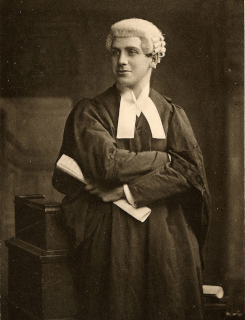
(From: “Kettle, Thomas Michael (‘Tom’)” by Donal Lowry, Dictionary of Irish Biography, http://www.dib.ie, October 2009 | Pictured: Tom Kettle as a barrister when called to the Irish law bar in 1905)

Leave a comment

Charles Blount, 8th Baron Mountjoy, Becomes Lord Deputy of Ireland

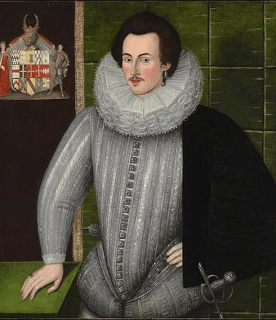
Charles Blount, 8th Baron Mountjoy, English nobleman and soldier, becomes Lord Deputy of Ireland under Queen Elizabeth I on January 21, 1600.

Blount is born in 1563, the second son of James, 6th Baron Mountjoy, and Catherine, only daughter of Sir Thomas Legh. He is among the most distinguished of the family, succeeding as 8th Baron Mountjoy on the death in 1594 of his unmarried elder brother William, 7th Baron Mountjoy. The good fortune of his youthful and handsome looks find favour with Queen Elizabeth I which arouses the jealousy of Robert Devereux, 2nd Earl of Essex, leading to a duel between the two courtiers, who later become close friends.

Blount is returned to the House of Commons as MP for St. Ives, Cornwall in 1584 and for Bere Alston in 1586 and 1593, before entering the House of Lords in 1594. Between 1586 and 1598, he spends most of his time on the Continent, serving in the Netherlands and Brittany. He joins Lord Essex and Sir Walter Raleigh in their expedition to the Azores in 1597, along with his distant cousin, Sir Christopher Blount.

The downfall of Lord Essex does not damage Blount’s career. After the failure of his rebellion, Essex shocks many by denouncing his sister Penelope, who is Blount’s mistress, as a traitor, which inevitably raises the question of his own possible involvement. But the Crown, anxious to retain Blount’s services, and also to show as much leniency as possible to the defeated rebels, simply ignore the accusation.

On February 24, 1600, Blount lands in Ireland as Lord Deputy following Lord Essex and in the ensuing years brings the Nine Years’ War to an end. The leader of the rebellion, Hugh O’Neill, Earl of Tyrone, writes about Blount’s “refined manners” that he would lose a whole season of campaigning “while waiting until breakfast is prepared to his mind!” Despite this, Blount proves that he is quite qualified to pursue the war.

In early 1600, Blount dispatches Sir Henry Docwra with an army of 4,200 troops to land at Culmore to erect a fortress commanding the shores of Lough Foyle in the northwest of Ulster. To prevent Hugh O’Neill from sending a strong force to repulse Dowcra’s forces, Blount advances in force from Dublin to Newry causing O’Neill to fear a southern advance into Tyrone.

Blount aims to avoid the mistakes of previous Lords-Deputy. After the Battle of Moyry Pass, he has it cleared, and a garrison is established there. It had long been a problem for English forces advancing into Ulster from the south. He also establishes posts with garrisons at Mountnorris and Armagh.

On July 13, 1601, Blount and his army along with Turlough McHenry O’Neill of the Fews who had recently switched to the English side in the war, have a stand-off with Hugh O’Neill’s forces at the River Blackwater. After a few shots in vain from either side, O’Neill’s forces withdraw, and Blount sends his forces to occupy the ruined Blackwater fort destroyed by O’Neill in 1595. Later O’Neill’s forces attack Blount’s camp before withdrawing. In response, the Lord-Deputy sends his forces across the river where they find strong artificially fortified fords, which would have held out against the English.

By July 15, 1601, the Lord-Deputy has secured the surrender of O’Neill’s ally Hugh Magennis. That month, he has a new fort near the old Blackwater fort erected.

Blount reports to the council in England that O’Neill is determined to prevent his forces from advancing into Tyrone and toward Dungannon. As such, he initiates a policy of burning large quantities of corn to induce a famine to drive the rebels out of their strongholds.

Blount sets about trying to entice Hugh’s forces to come out and attack by fetching some materials for the new fort from the Tyrone side of the river as well as burning more corn. Further skirmishes between Blount and O’Neill’s forces ensue during the summer of 1601.

Spanish forces land in Munster in August 1601, forcing Blount to send his forces southward leaving O’Neill remaining in his unbroken heartland of Tyrone. The Spanish arrival culminates in the Siege of Kinsale that December, which sees a major defeat of the rebels and their allies.

O’Neill during this time has also moved south to assist some of his allies, however, after some serious defeats at the hands of the forces of Richard Burke, 4th Earl of Clanricarde of Connacht, he is in no place to offer any effective resistance once Blount marches once more to Tyrone in the summer of 1602.

Blount advances to the location he found the previous summer at the River Blackwater, which commands safe and secure passage into Tyrone, previously inaccessible, and sets about erecting a new fort. Having observed this, O’Neill burns his capital at Dungannon and flees to his last refuge in Glenconkeyne.

Advancing northward through Tyrone, Blount erects a fort in the townland of Magheralamfield, afterward known as Mountjoy Castle. He also christens the new fort at the Blackwater Charlemont Fort after himself.

Once in Tyrone, Blount carries out a campaign of devastation throughout it resulting in the mass hunting of rebels, spoiling of corn, the burning of houses and the killing of churls so as to force the submission of O’Neill and his remaining allies. Most symbolically, Blount has the inauguration site of the O’Neill’s at Tullyhogue Fort destroyed.

On March 30, 1603, six days after the death of Elizabeth and the accession of James I, O’Neill makes peace with Blount, signing the Treaty of Mellifont. Blount continues in office with the more distinguished title of Lord-Lieutenant. He declares amnesty for the rebels and grants them honourable terms, which causes some severe criticism from England. He shows similar moderation in putting down the abortive risings in Cork, Waterford and Wexford, where the aldermen, apparently with some vague idea of gaining greater toleration for Roman Catholics, refuse to proclaim the new King. In Cork, three insurgents are hanged after a summary trial, but the rest are acquitted or pardoned.

As part of the Plantation of Ulster, the majority of the barony of Loughinsholin is detached from County Tyrone and made part of the newly created County Londonderry. The rest of Loughinsholin along with the northern parts of Dungannon barony are merged to create the short-lived barony of Mountjoy. It is later amalgamated with the barony of Dungannon.

On his return to England, Blount serves as one of Sir Walter Raleigh’s judges in 1603, and in the same year King James I appoints him Master-General of the Ordnance as well as creating him Earl of Devonshire, granting him extensive estates. He is one of the founder members of the Spanish Company re-founded by royal charter in 1605.

Toward the end of Blount’s life, on December 26, 1605, at Wanstead House near London, in a ceremony conducted by his chaplain William Laud, afterward Archbishop of Canterbury, he marries his long-time mistress Lady Penelope, formerly wife of Robert Rich, 3rd Baron Rich (later 1st Earl of Warwick) and sister of Robert Devereux, 2nd Earl of Essex.

Blount leaves no legitimate children, and so his hereditary titles become extinct at his death on April 3, 1606, at Savoy House, London.


Leave a comment

Birth of Mildred Anne Butler, Animal & Genre Painter

Mildred Anne Butler, Irish artist who works in watercolour and oil of landscape, genre and animal subjects, is born on January 11, 1858, in Kilmurry, a Georgian house near Thomastown, County Kilkenny.

The youngest daughter of Captain Henry Butler, a grandson of the Edmund Butler, 11th Viscount Mountgarret, and Clara Butler (née Taylor) of the Newarke, Leicester, England. Her father is himself an enthusiastic painter, known for his publication South African sketches: illustrative of the wildlife of a hunter on the frontier of Cape Colony (1841). Her early artistic efforts are mainly copies of romantic subjects, but the influence of the London artist Paul Jacob Naftel, with whom she begins corresponding in the early 1880s, proves to be crucial to her artistic development. Studies with William Frank Calderon, an expert in animal painting, are also significant. She subsequently spends the summers of 1894 and 1895 in Newlyn, Cornwall, England, with the Irish artist Norman Garstin, who introduces her to contemporary French painting.

In 1885, Butler makes her first visit to the continent, traveling through France, Switzerland, and Italy. From 1905 to 1914 she travels regularly to Europe, most particularly Aix-les-Bains and Wiesbaden, during which time she produces genre views of French and German villages. After 1914 her life at the family home is interrupted only by visits to London exhibitions. She is best known for her paintings of Kilmurry and its environs, many of which display an interest in botany. Much of her work is dominated by detailed representations of animals and birds, often drawn from photographs and stuffed specimens.

Butler’s career as an exhibitor begins in 1882 with the Irish Fine Arts Society, later known as the Water Colour Society of Ireland (WCSI), with which she has a long association. She exhibits regularly with the society from 1892 onward and is a member of its committee for many years. She is also closely associated with the Dudley Museum and Art Gallery in London. Her work is first shown there in 1888, and on this evidence, she is elected to their society. The purchase by the Chantrey bequest for the Tate Gallery of The Morning Bath for £50 in 1896 is a high point in her career. The first painting by a woman to be selected by the council, its purchase is followed by almost consistently good press reviews for her work. The Athenaeum of May 5, 1897, writes: “The young lady knows how to look at her subjects with the eyes of a well-trained artist.”

Butler also comes to the attention of the American artistic press. She contributes to the portfolio of drawings given by the Society of Lady Artists to Princess May on her marriage to the Duke of York in 1893, while in 1922 her work is included in the portfolio presented to Princess Mary on her marriage. Her patrons include Queen Alexandra, and the grand duke of Hesse, who purchases two of her paintings after she is invited to exhibit in Hesse Darmstadt in 1911. In 1914 she is made a member of the Union Internationale des Beaux Arts, and in 1921 her paintings are shown in Japan. She regularly exhibits with the Belfast Ramblers, the Royal Ulster Academy, the Royal Academy of Arts (RA), the Royal Hibernian Academy (RHA), the Society of Lady Artists, and the Royal Watercolour Society, of which she is made an associate member in 1896, and a full member in 1937.

In her later years, severe rheumatism prevents Butler from painting. She has a keen interest in music. She survives all five of her siblings, and inherits Kilmurry, where she dies on October 11, 1941. She is buried at Thomastown, County Kilkenny. Her paintings are represented in the collections of the National Gallery of Ireland, Dublin City Gallery the Hugh Lane, the Ulster Museum, and the Tate, London.

(From: “Butler, Mildred Anne” by Frances Clarke, Dictionary of Irish Biography, http://www.dib.ie, October 2009)


Leave a comment

The Capture of Alcoy During the War of Spanish Succession

Elements of the Irish Brigade of France under Daniel O’Mahony help capture the town of Alcoy, Spain on January 9, 1708, during the War of Spanish Succession.

O’Mahony comes from a distinguished Munster family. One brother, Dermod, had been a colonel and another, Daniel, a captain in the Irish Jacobite army that left Limerick for the continent in 1691 in what is known as the Flight of the Wild Geese. Daniel is also a brother-in-law of another famous officer of the Irish Brigade of France, the Marshal James FitzJames, 1st Duke of Berwick. Holding the rank of major, O’Mahony achieves great fame for his part in the Battle of Cremona, where the Irish Brigade foils Prince Eugene of Savoy‘s surprise attack on the city in 1702, and has steadily risen through the ranks.

During the War of Spanish Succession, many officers and units of the Irish Brigade serve in Spain fighting the Allies’ attempt to place Archduke Charles, son of Habsburg (Austrian) Emperor Leopold I, on the Spanish throne. In the early part of 1707, O’Mahony commands an unsuccessful attempt to capture the town of Alcoy with a force of about 1,800 men. On January 2, 1708, he arrives at the gates of the city again, but this time he commands a force of over 6,000, including the Irish battalions of Dillon, Berwick and Bourke.

By January 4, O’Mahony’s six guns have breached the walls of Alcoy, but the Allied garrison fights well and repulses attempts to take it on the 5th and 7th with much loss of life on the Franco-Spanish side. With no relief in sight, the garrison’s situation is hopeless. O’Mahony accepts the garrison’s surrender on January 9.

Daniel O’Mahony is one of the finest commanders of all The Wild Geese. After Alcoy he serves in Sicily and then back in Spain again. He is created a Count of Castile and promoted to lieutenant general. One of the Count’s sons, James, also reaches the rank of lieutenant general in the Spanish army and the other, Dermod, becomes the Ambassador of Spain to Austria.

(Pictured: The flag of the Duke of Berwick’s regiment of the Irish Brigade of France)


Leave a comment

Birth of William Thompson, Naturalist

William Thompson, Irish naturalist celebrated for his founding studies of the natural history of Ireland, especially in ornithology and marine biology, is born on December 2, 1805, in the booming maritime city of Belfast.

Thompson is the eldest son of William Thompson, a prosperous linen merchant, and Elizabeth Thompson (née Callwell). He has at least two older sisters and several younger brothers. His mother’s father is Robert Callwell, a printer, book-collector, partner in the Commercial Bank, Belfast, and one of the owners of the Northern Star newspaper.

After attending the Royal Belfast Academical Institution (RBAI) from 1818, Thompson is apprenticed in the linen business of William Sinclair in 1821. When his apprenticeship ends, he goes with his cousin George Langtry, later a wealthy shipowner, on a four-month tour (May–September 1826) of the Low Countries, the Rhine, Switzerland, and Italy. On his return to Belfast, he sets up his own business in linen bleaching. Despite early success, losses are incurred. As family and economic circumstances change, he increasingly concentrates on his natural history studies. By 1831 he has given up business. A self-taught naturalist, related by ties of kinship or friendship to most of the liberal and cultivated families of the “northern Athens,” he is shy and fastidious, but is persuaded in 1826 to join the Belfast Natural History Society by its founder, his friend James Lawson Drummond. He reads his first scientific paper, The Birds of the Copeland Islands, to the society on August 13, 1827. In that year he becomes a member of the Belfast Natural History Society’s council, and in 1833 he is chosen as one of the society’s vice-presidents. He is president from 1843 until his death.

Thompson becomes the most important naturalist in mid nineteenth-century Ireland. From 1827 to 1852 he contributes almost eighty papers on Irish natural history to the Magazine of Zoology and Botany and the Proceedings of the Zoological Society of London. From 1836 to 1851 he contributes to The Magazine of Natural History. Invited to travel to the Levant and the Aegean Sea in April–July 1841 with Edward Forbes, professor of natural history at the University of Edinburgh, on HMS Beacon, he observes twenty-three species of birds on migratory flights and publishes “Notice of migratory birds” in The Annals of Natural History. His authoritative observations add considerably to knowledge of the still-to-be-ascertained details of migratory patterns. Indeed, some people refuse to believe, even at that date, that birds do migrate. He publishes other papers in the same journal during 1841–43. At a meeting of the British Association for the Advancement of Science in Glasgow in 1840 his Report on the fauna of Ireland (Vertebrata) attracts favourable notice. He presents and publishes a second and final part enumerating the invertebrates at the Cork meeting of the British Association in August 1843. The two reports form the most complete catalogue of Irish fauna yet published. Thanks to an assiduous correspondence with a network of informants, as well as his own extensive observations, he adds perhaps more than 800 species to Irish fauna lists.

Thompson’s chief work, The Natural History of Ireland, becomes the standard text in Irish zoology in the nineteenth century. The first three volumes, published between 1849 and 1851, deal with birds, particularly their habits and habitats rather than physical descriptions. He is one of the first naturalists to note the effects of industrialisation and other human activities on birdlife. He leaves instructions for his manuscripts on the remaining vertebrates and all the invertebrates to be prepared for publication by Robert Patterson and James Ramsey Garrett. Robert Ball and George Dickie also assist. His notes, though detailed and comprehensive, all require checking, and are found on tiny scraps of paper, even scribbled on the flaps of old envelopes. James Thompson of Macedon, Belfast, painstakingly gums them all into blank notebooks to facilitate the work of his brother’s literary executors, who preface the posthumous publication in 1856 with a lengthy memoir of their friend.

From about 1820 to 1852 Thompson lives with his mother at 1 Donegall Square West, Belfast, commuting from Holywood House, Holywood, County Down, during the summer. His daily routine begins with research, correspondence, or writing for publications for four hours after breakfast. After a two- or three-hour exercise period and dinner, he returns to work for a further two to three hours. He is president of the Belfast Literary Society (1837–39) and also an enthusiastic patron of the visual arts in the city. He enjoys hunting, wildfowling, shooting in Scotland, and gardening, though his health deteriorates from the 1840s.

Early in 1852 Thompson travels to London to make arrangements for that year’s Belfast meeting of the British Association. On February 15 he becomes ill, having suffered a minor stroke. He dies, unmarried, at his Jermyn Street lodgings on the day he is due to return home, February 17, 1852. He is buried in Clifton Street Cemetery, Belfast. He bequeaths his collection to the Belfast Natural History Society, and in March 1852 the Society adds a memorial Thompson Room to its museum, paid for by subscription.

Thompson is a corresponding member of natural history societies in Boston and Philadelphia and has many friends. He is known to assist many other researchers in Ireland, Britain, and the Continent. One of those who thinks highly of his work is Charles Darwin, with whom he corresponds. He also helps many local people, including the poet Francis Davis, with money and practical assistance. He is much loved, and his friends are deeply saddened by his death. His niece, Sydney Mary Thompson, later known by her married surname, Christen, who is born in Belfast, is an amateur naturalist, geologist, and artist, one of the first women to achieve distinction in geology.

(From: “Thompson, William” by Andrew O’Brien and Linde Lunney, Dictionary of Irish Biography, http://www.dib.ie, October 2009)


Leave a comment

Death of Thomas Addis Emmet, Lawyer & Politician

Thomas Addis Emmet, Irish and American lawyer and politician, dies at his home in New York on November 14, 1827, following a seizure while in court. He is a senior member of the revolutionary republican group Society of United Irishmen in the 1790s and Attorney General of New York 1812–1813.

Emmett is born in the Hammond’s Marsh area of Cork, County Cork, on April 24, 1764, the son of Dr. Robert Emmet from County Tipperary (later to become State Physician of Ireland) and Elizabeth Mason of County Kerry, both of whose portraits are today displayed at Cork’s Crawford Art Gallery. He is the elder brother of Robert Emmet, who is executed for leading the Irish Rebellion of 1803, becoming one of Ireland’s most famous republican martyrs. His sister, Mary Anne Holmes, holds similar political beliefs.

Emmet is educated at Trinity College, Dublin and is a member of the committee of the College Historical Society. He later studies medicine at the University of Edinburgh and is a pupil of Dugald Stewart in philosophy. After visiting the chief medical schools on the continent, he returns to Ireland in 1788. However, the sudden death of his elder brother, Christopher Temple Emmet (1761–1788), a student of great distinction, induces him to follow the advice of Sir James Mackintosh to forsake medicine for the law as a profession.

Emmet is a man of liberal political sympathies and becomes involved with a campaign to extend the democratic franchise for the Irish Parliament and to end discrimination against Catholics. He is called to the Irish bar in 1790 and quickly obtains a practice, principally as counsel for prisoners charged with political offenses. He also becomes the legal adviser of the Society of the United Irishmen.

When the Dublin Corporation issues a declaration of support of the Protestant Ascendancy in 1792, the response of the United Irishmen is their nonsectarian manifesto which is largely drawn up by Emmet. In 1795 he formally takes the oath of the United Irishmen, becoming secretary in the same year and a member of the executive in 1797. As by this time the United Irishmen had been declared illegal and driven underground, any efforts at peaceful reform of government and Catholic emancipation in Ireland are abandoned as futile, and their goal is now the creation of a non-sectarian Irish republic, independent from Britain and to be achieved by armed rebellion. Although Emmet supports this policy, he believes that the rebellion should not commence until French aid has arrived, differing from more radical members such as Lord Edward FitzGerald.

British intelligence infiltrates the United Irishmen and manages to arrest most of their leaders on the eve of the rebellion. Though not among those taken at the house of Oliver Bond on March 12, 1798, Emmet is arrested about the same time and is one of the leaders imprisoned initially at Kilmainham Gaol and later in Scotland at Fort George until 1802. Upon his release he goes to Brussels where he is visited by his brother Robert in October 1802 and is informed of the preparations for a fresh rising in Ireland in conjunction with French aid. However, at that stage France and Britain are briefly at peace, and the Emmets’ pleas for help are turned down by Napoleon.

Emmet receives news of the failure of his brother’s rising in July 1803 in Paris, where he is in communication with Napoleon. He then emigrates to the United States and joins the New York bar where he obtains a lucrative practice.

After the death of Matthias B. Hildreth, Emmet is appointed New York State Attorney General in August 1812 but is removed from office in February 1813 when the opposing Federalist Party obtains a majority in the Council of Appointment.

Emmet’s abilities and successes become so acclaimed, and his services so requested that he becomes one of the most respected attorneys in the nation, with United States Supreme Court Justice Joseph Story declaring him to be “the favourite counsellor of New York.” He argues the case for Aaron Ogden in the landmark United States Supreme Court case of Gibbons v. Ogden, 22 U.S. 1 (1824) relating to the Commerce and Supremacy clauses of the United States Constitution.

Emmet dies on November 14, 1827, while conducting a case in court regarding the estate of Robert Richard Randall, the founder of Sailors’ Snug Harbor, a home for needy seamen in Staten Island, New York. He is buried in St. Mark’s Church in-the-Bowery churchyard in the East Village, New York City, where a large white marble monument marks his grave.


Leave a comment

Death of Máirín Cregan, Playwright & Novelist

Máirín Cregan, Irish nationalist who is involved in the 1916 Easter Rising and Irish War of Independence, dies in Dublin on November 9, 1975. She makes her name writing for children, as well as writing plays and novels for adults.

Mary Ellen Cregan is born in Killorglin, County Kerry, on March 27, 1891, to Morgan Cregan and Ellen O’Shea. Her father is a stonemason from Limerick. The family are strong believers in the Gaelic revival movement and Cregan herself learns the Irish language and performs songs at Gaelic League concerts. Although she goes to primary school locally, she goes away to secondary school to St. Louis Convent in Carrickmacross, County Monaghan. After finishing school, she becomes a teacher, working in Goresbridge, County Kilkenny from 1911 to 1914.

In September 1914 Cregan goes to Dublin to study music in the Leinster School of Music, under Madame Coslett Heller. It is while she is in Dublin that she becomes friends with the Ryan family, who are strong nationalists as well as interested in the Gaelic League and Sinn Féin. She begins to sing for concerts which are fundraisers for the Irish Volunteers. The last concert is just two weeks before the Easter Rising.

During Easter week Cregan is sent to Tralee with “automatics and ammunition” by Seán Mac Diarmada. While she is carrying a violin case of munitions, she is also carrying details for the wireless technology needed for communicating with the SS Aud, the boat which is carrying more weapons for the rebellion. The communications with the SS Aud go wrong when the car carrying the Volunteers goes off a pier and the occupants are drowned. She is still in the area to assist with the surviving Volunteer, who unfortunately knows nothing of the details for the SS Aud. She is not easily able to get back to Dublin, because owing to the Rising the city is cut off. By the time she gets back, her friends have been arrested.

When Cregan is going to school in Dublin she is also working in a school in Rathmines. Like many of the teachers, she loses her job after the rising because of her connection to the rebels. However, she is able to get new positions over the next few years in both Ballyshannon and Portstewart until she marries. In Ballyshannon she experiences the early expressions of support and sympathy, but Portstewart is a Unionist enclave with many houses flying union flags on polling day in 1918.

Cregan is a member of Cumann na mBan and with them is active during the Irish War of Independence. She is given a medal for her participation. On July 23, 1919, she marries Dr. James Ryan in Athenry, County Galway. His entire family had been deeply involved in the Easter Rising, as well as the Irish War of Independence and the Irish Civil War. They have three children, Eoin, who becomes a Senator, Nuala (Colgan) and Seamus.

The family is initially based in Wexford during the War. The house is often raided when the British soldiers are looking for her husband and Cregan herself is arrested in February 1921 for refusing to put up martial law posters. Later the family sells the house and remains mobile while she works for the Sinn Féin government, and her husband is in prison. It is during this time that she works as a courier to the continent and to London. After the war, they purchase Kindlestown House in Delgany, County Wicklow, where they remain for the rest of their lives.

Cregan works as a journalist for The Irish Press and The Sunday Press. Her political awareness and involvement mean that her work there is on political articles.

Cregan’s first book for children is Old John and gains her considerable international success and attention. Sean Eoin is also published in Irish and is illustrated by Jack Butler Yeats. Her work is also aired on the BBC and RTÉ. Rathina wins the Downey Award in the United States in 1943. She also writes two plays: Hunger strike (1933), based on experience of her husband’s involvement in such a strike, which is broadcast on Radio Éireann on May 5, 1936, and Curlew’s call (1940).

Cregan dies on November 9, 1975, in St. Vincent’s Hospital, Dublin, and is buried in Redford cemetery near her home in County Wicklow.

(Pictured: Máirín Cregan and her husband, Dr. James Ryan)


Leave a comment

IBAL Launches Major Anti-Litter Initiative

The Irish Business Against Litter (IBAL) organisation launches a major anti-litter initiative on October 30, 2001, which will hold every town in Ireland accountable for its cleanliness.

IBAL is a pressure group supported by private business which promotes the equating of environmental cleanliness with economic prosperity. It includes a range of commercial bodies, including Waterford Foods, the Irish Hotels Federation, and major banks, oil companies, building societies, brewers and distillers.

The group’s latest initiative, the “All-Ireland Anti-Litter League,” involves twenty-nine towns being assessed for litter and then ranked in a league-type table.

Towns from 29 counties, including three in Northern Ireland, are to be gauged according to international standards with each town being awarded a litter rating of up to 100 points with 85 points deemed “litter-free status.” Towns are to be assessed for varying levels of rubbish including chewing gum, graffiti, flypostings and weeds.

The founding chairman of IBAL, Tom Cunningham, says the aim is to send a message to the country as a whole, through this pilot project, that “the success of two of our biggest revenue sources – food and tourism – hinge on a perception of hygiene and cleanliness.”

Cunningham says at the launch of the initiative in Dublin‘s Croke Park that this is not a “name and shame campaign” but more a novel means of “energising Local Authorities through a spirit of inter-community rivalry.”

The IBAL chairman speaks of the importance of combatting litter in view of the changing tourist market. He says next year (2002) Ireland will look to Continental markets to compensate for the shortfall in U.S. visitors and that “these tourists are typically litter conscious as we will discover to our cost if we don’t clean up our towns.”

The initiative is planned to run until September 2002, to coincide with the Gaelic Athletic Association (GAA) finals. Results of the first monitoring are expected in January 2002.

(From: “League tables to rate town litter problems” by Maurice Coffey, The Irish Times, http://www.irishtimes.com, October 30, 2001)


Leave a comment

Death of Thomas Mayne Reid, Irish American Novelist

Thomas Mayne Reid, Irish American novelist, who fights in the Mexican-American War (1846–1848), dies at Ross-on-Wye in Herefordshire, England, on October 22, 1883.

Reid is born on April 4, 1818, in Ballyroney, a hamlet near Katesbridge, County Down, in present day Northern Ireland, the son of the Rev. Thomas Mayne Reid, a Presbyterian minister and later a senior clerk of the General Assembly of the Presbyterian Church in Ireland, and his wife, a daughter of the Rev. Samuel Rutherford. He is educated at the Royal Belfast Academical Institution. He rebels against his father’s plans for him and decides not to pursue a career in the church. He briefly runs a school at Ballyroney before emigrating to the United States in 1839. Arriving in New Orleans, Louisiana, he finds a job as a corn factor’s clerk in the corn market. After six months he leaves because he refuses to whip slaves. Travelling across America, he works as a teacher, a clerk and an Indian-fighter, and anonymously publishes his first poem in August 1843. Later that year he meets Edgar Allan Poe in Philadelphia and the two become close friends. Poe later admits that Reid was “a colossal but most picturesque liar,” but was impressed by his brilliant story-telling abilities.

With the outbreak of the Mexican-American War in 1846 Reid enlists in the 1st New York Infantry Regiment and is commissioned second lieutenant. Contributing a series of reports from the front under the pseudonym ‘Ecolier,’ he performs with great bravery in the Battle of Chapultepac on September 13, 1847. Wounded during the battle, he is promoted to first lieutenant three days later. Following his discharge from the army in 1848 he claims to have reached the rank of captain, but this is another of his inventions.

Reid’s first play, Love’s Martyr, is staged at the Walnut Street Theatre, Philadelphia, for five nights in October 1848, and the following year he publishes an embellished account of his experiences in Mexico entitled War Life. All of his works are published under the name ‘Captain Mayne Reid.’ In July 1849 he sails to England with a group of Hungarian radicals but decides against accompanying them to the Continent. Returning briefly to Ireland, he settles in London in 1850 and writes a novel, The Rifle Rangers. It is an immediate success and is followed quickly by The Scalp Hunters (1851), The Desert Home (1852), and The Boy Hunters (1853). While in England in 1851 he meets and falls in love with a 13-year-old girl, Elizabeth Hyde, daughter of his publisher, G. W. Hyde, an English aristocrat. When he discovers her age, he tells her that she is “getting old enough to have a lover, and you must have me.” Two years later he continues with his suit, and this time is successful as they marry in 1853. He is immensely proud of his young bride and later writes a semi-autobiographical novel The Child Wife (1868), based on their relationship.

Establishing a reputation as one of the most popular novelists of his generation, Reid does much to enhance the romantic image of the American West. His internationally successful books include The White Chief (1855), Bush Boys (1856), Oceola (1859), and The Headless Horseman (1865), and his novel about miscegenation, The Quadroon (1856), is later plagiarised by Dion Boucicault for The Octoroon (1859). A champion croquet player, he writes a treatise on the subject in 1863.

Disaster strikes in November 1866 when Reid is declared bankrupt. He had squandered all his money on the construction of “The Ranche,” a Mexican-style hacienda in England. To raise money, he returns to the United States and embarks on a successful lecturing tour. Settling at Newport, Rhode Island, he writes another novel, The Helpless Hand (1868), which is a huge success and alleviates some of his difficulties. His wife hates America, however, and after he is briefly hospitalised in 1870, they decide to return to England.

Ill health, artistic doubts, and financial insecurity plagued Reid’s final years. Diagnosed with acute depression, he is unable to recapture his earlier audience and, despite a pension from the U.S. government, he struggles for money. He dies at Ross-on-Wye in Herefordshire on October 22, 1883, and is buried at Kensal Green Cemetery in London.

Although not regarded as an important novelist, Reid none the less has a significant influence on subsequent writers. The young Vladimir Nabokov is deeply impressed by his adventure stories, and one of his own first works is a poetic recreation of The Headless Horseman in French alexandrine. Both Robert Louis Stevenson and Arthur Conan Doyle are admirers, and politicians as diverse as Theodore Roosevelt and Leon Trotsky also make reference to his varied output. In total, Reid publishes over sixty novels, which are printed in ten languages.


Leave a comment

Opening of the Royal College of St. Patrick in Maynooth

The Royal College of St. Patrick in Maynooth, County Kildare, is established by the Maynooth College Act 1795 and opens on October 1, 1796. Today known as St. Patrick’s Pontifical University, Maynooth, the college and national seminary on its grounds are often referred to as Maynooth College.

Thomas Pelham, the Chief Secretary for Ireland, introduces a bill for the foundation of a Catholic college, and this is enacted by parliament. It is built to hold up to 500 students for the Catholic priesthood of whom up to 90 are to be ordained each year. It is once the largest seminary in the world.

The town of Maynooth is the seat of the FitzGeralds, Earls of Kildare. The ivy-covered tower attached to St. Mary’s Church of Ireland is all that remains of the ancient college of St. Mary of Maynooth, founded and endowed by Gerald FitzGerald, 8th Earl of Kildare, and dedicated to the Blessed Virgin Mary. On October 7, 1515, Henry VIII grants licence for the establishment of a college. In 1518, the 9th Earl presents a petition to the Archbishop of Dublin, William Rokeby, for a license to found and endow a college at Maynooth, the College of the Blessed Virgin Mary. In 1535 the college is suppressed and its endowments and lands confiscated as part of the Reformation.

The present college is created in the 1790s against the background of the upheaval during the French Revolution and the gradual removal of the penal laws. The college is particularly intended to provide for the education of Catholic priests in Ireland, who until this Act had to go to Continental Europe for their formation and theological education. Many are educated in France, and the church and government are concerned at the Dechristianization of France during the French Revolution, and at the same time at the risk of revolutionary thinking arising from training in revolutionary France. A number of the early lecturers in Maynooth, are exiles from France. Also among the first professors is a layman, James Bernard Clinch, recommended by Edmund Burke. Also relevant is the enactment of the Roman Catholic Relief Act 1793.

The college is legally established on June 5, 1795, by the Maynooth College Act 1795 as The Royal College of St. Patrick, by act of the Parliament of Ireland, to provide “for the better education of persons professing the popish or Roman Catholic religion.” The college is originally established to provide a university education for Catholic lay and ecclesiastical students, the lay college is based in Riverstown House on the south campus from 1802. With the opening of Clongowes Wood College in 1814, the lay college is closed and the college functions solely as a Catholic seminary for almost 150 years.

In 1800, John Butler, 12th Baron Dunboyne, dies and leaves a substantial fortune to the college. Butler had been a Roman Catholic, and Bishop of Cork, who had embraced Protestantism in order to marry and guarantee the succession to his hereditary title. However, there are no children to his marriage, and it is alleged that he had been reconciled to the Catholic Church at his death. Were this the case, a Penal Law demands that the will is invalid, and his wealth is to pass to his family. Much litigation follows before a negotiated settlement in 1808 that leads to the establishment of a Dunboyne scholarship fund.

The land is donated by William FitzGerald, 2nd Duke of Leinster, who had argued in favour of Catholic emancipation in the Irish House of Lords. He lives nearby at Carton House and also at Leinster House. The building work is paid for by the British Government with the parliament continuing to give it an annual grant until the Irish Church Act 1869. When this law is passed the college receives a capital sum of £369,000. The trustees invest 75% of this in mortgages to Irish landowners at a yield of 4.25% or 4.75% per annum. This is considered a secure investment at the time but agitation for land reform and the depression of the 1870s erodes this security. The largest single mortgage is granted to the Earl of Granard. Accumulated losses on these transactions reaches £35,000 by 1906.

The first building to go up on the site is designed by, and named after, John Stoyte. Stoyte House, which can still be seen from the entrance to the old campus, is a well-known building to Maynooth students and stands very close to the very historic Maynooth Castle. Over the next 15 years, the site at Maynooth undergoes rapid construction so as to cater for the influx of new students, and the buildings which now border St. Joseph’s Square (to the rear of Stoyte House) are completed by 1824.

The Rev. Laurence F. Renehan (1797–1857), a noted antiquarian, church historian, and cleric, serves as president of St. Patrick’s from 1845 until 1857. Under Renehan, many of the college’s most important buildings are constructed by Augustus Pugin.

In 1876, the college becomes a constituent college of the Catholic University of Ireland, and later offers Royal University of Ireland degrees in arts and science. Even after the granting of the Pontifical Charter in 1896 the college becomes a recognised college of the National University of Ireland in 1910, and from this time its arts and science degrees are awarded by the National University of Ireland. However, during this time the Pontifical University of Maynooth continues to confer its degrees in theology, because until 1997 theology degrees are prohibited by the Royal University of Ireland and its successor the National University of Ireland.

In 1997, the Universities Act, 1997 is passed by the Oireachtas. Chapter IX of the Act provides for the creation of the separate Maynooth University. This new university is created from the college’s faculties of Arts, Celtic Studies and Philosophy, and Science.

In 1994, W. J. Smyth had been appointed to the position of Master of St. Patrick’s College Maynooth (NUI). In 1997, this position is converted into President of Maynooth University. After his 10-year term ends in 2004, he is replaced by John Hughes as president of Maynooth University and a new line of heads for the college.

By 2016, the number of resident seminarians has dropped from several hundreds to just 40 to 60. In August 2016, it is revealed that, due to frequent use of Grindr by college students, the then Archbishop of Dublin Diarmuid Martin decides to transfer the students from his diocese to the Irish Pontifical College in Rome. According to Martin, “there are allegations on different sides,” one of which of an “atmosphere that was growing in Maynooth” of a “homosexual, a gay culture, that students have been using an app called Grindr,” which “would be fostering promiscuous sexuality, which is certainly not in any way the mature vision of sexuality one would expect a priest to understand.” Subsequently, the college trustees order a review of the college’s policy on social media use.