seamus dubhghaill

Promoting Irish Culture and History from Little Rock, Arkansas, USA


Leave a comment

Birth of Alice Curtayne, Writer & Lecturer

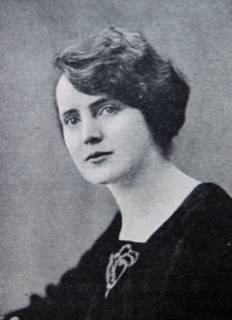
Alice Curtayne, Irish writer and lecturer, is born on November 6, 1898, in Upper Castle Street, Tralee, County Kerry.

Curtayne is the youngest child of John Curtayne, founder and proprietor of the Tralee Carriage Works, and his wife Bridget Curtayne (née O’Dwyer). She receives her initial education at local convents before attending La Sainte Union College in Southampton, England. Having taken a typing course, she is engaged as a secretary in Milan, where she remains for four and a half years. This proves to be a formative period in her life. She comes to regard Italy as a second home and is greatly influenced by the work of the Italian Catholic philosopher, Giovanni Papini.

On leaving Italy Curtayne works for a time in Liverpool. She joins the Liverpool Catholic Evidence Guild, from where she receives her diploma as a diocesan catechist. While in England she also develops an interest in public speaking. Her first book, Catherine of Siena (1929), is followed by numerous publications on religious and historical subjects, including Lough Derg (1933), Patrick Sarsfield (1934), The Trial of Oliver Plunkett (1953), Twenty Tales of Irish Saints for children (1955), and The Irish Story (1962).

Curtayne’s enthusiasm for Italy is reflected in her many publications of Italian interest, including a scholarly work on Dante, and a novel House of Cards (1940), which centres on the experiences of a young Irish woman living in Italy. In 1972 she produces Francis Ledwidge: A Life of the Poet, her well regarded biography of the poet Francis Ledwidge, and in 1974 it is followed by an edition of his complete poems, The Complete Works of Francis Ledwidge. Throughout her journalistic career she is a contributor to various magazines and papers, among them The Irish Times, Irish Independent, The Irish Press, Books on Trial, The Spectator, and The Standard.

During the 1950s and early 1960s Curtayne makes five lecture tours in the United States, speaking on Irish life, history, and literature. In 1959 she receives an honorary doctorate in Humane Letters from Anna Maria College in Paxton, Massachusetts, where she briefly teaches. She is presented with the Key to Worcester City by Mayor James D. O’Brien. She also gives a course of lectures on Dante at Craiglockhart College, Edinburgh, in 1956, and in 1965 she again speaks on Dante in a Radio Éireann Thomas Davis lecture.

In December 1954 The Irish Press sends Curtayne to Rome to write daily reports on the close of the Marian year. She goes to Rome again for the final session of the Second Vatican Council. She is commissioned to send weekly reports to local newspapers, The Nationalist (Carlow) and The Kerryman. She also sends a series of profiles of outstanding personages of this Vatican Council to The Universe and an article for Hibernia journal.

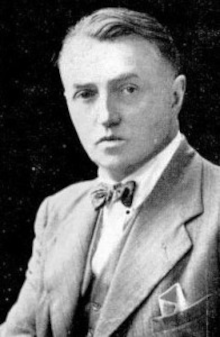
In 1935, Curtayne marries the English-born writer and broadcaster Stephen Rynne, with whom she has two sons and two daughters. They run a farm at Prosperous, County Kildare, and are well known advocates of the values of rural living. One son, Andrew Rynne, becomes a medical practitioner and well known for his liberal views on birth control. Daughter Brigid Rynne later illustrates some of her mother’s books.

Curtayne dies on August 9, 1981, in the Hazel Hall Nursing Home in Clane, County Kildare, and is buried at Killybegs Cemetery.


2 Comments

Birth of Thomas MacGreevy, Poet & Former Director of the National Gallery of Ireland

Thomas MacGreevy, a pivotal figure in the history of Irish literary modernism, is born on October 26, 1893, in Tarbert, County Kerry. A poet, he is also director of the National Gallery of Ireland from 1950 to 1963 and serves on the first Irish Arts Council (An Chomhairle Ealaíon).

MacGreevy is the son of a policeman and a primary school teacher. At age 16, he joins the British Civil Service as a boy clerk.

At the outbreak of World War I, MacGreevy is promoted to an intelligence post with the Admiralty. He enlists in 1916 and sees active service at the Ypres Salient and the Somme, being wounded twice. After the war, he studies at Trinity College, Dublin, in whose library his papers are now held. He then becomes involved in various library organisations, begins publishing articles in Irish periodicals, and writes his first poems.

In 1924, MacGreevy is first introduced to James Joyce in Paris. The following year he moves to London, where he meets T. S. Eliot and begins writing for The Criterion and other magazines. He also begins publishing his poetry.

In 1927, MacGreevy moves to Paris to teach English at the École normale supérieure. Here he meets Samuel Beckett and resumes his friendship with Joyce. His essay The Catholic Element in Work In Progress is published in 1929 in Our Exagmination Round His Factification for Incamination of Work In Progress, a book intended to help promote Joyce’s Finnegans Wake. Along with Beckett, he is one of those who signs the Poetry is Vertical manifesto which appears in issue 21 of transition. In 1931, he produces critical studies of both Eliot and Richard Aldington.

In 1934, Poems is published in London and New York City. The work shows that MacGreevy has absorbed the lessons of Imagism and of The Waste Land, but also demonstrates that he has brought something of his own to these influences. The book is admired by Wallace Stevens and the two poets become regular correspondents.

Unfortunately, although MacGreevy continues to write poetry, this is the only collection published in his lifetime. Since his death there have been two Collected Poems issued, one in 1971 and an edited edition collecting his published and unpublished poetry published twenty years later.

In 1929 MacGreevy begins working at Formes, a journal of the fine arts. He also publishes a translation of Paul Valéry‘s Introduction à la méthode de Léonard de Vinci as Introduction to the Method of Leonardo da Vinci. In the mid-1930s, he moves back to London and earns his living lecturing at the National Gallery there.

From 1938 to 1940 MacGreevy is the chief art critic for The Studio. He publishes several books on art and artists, including Jack B. Yeats: An Appreciation and an Interpretation and Pictures in the Irish National Gallery (both 1945), and Nicolas Poussin (1960).

MacGreevy is a lifelong Roman Catholic. His faith informs both his poetry and his professional life. On returning to Dublin during World War II, he writes for both the Father Mathew Record and the Capuchin Annual and joins the editorial board of the latter.

MacGreevy is director of the National Gallery of Ireland from 1950–63. Although to many he seems a surprising choice, his latent talents as an administrator are brought to the fore. He is instrumental in bringing to the gallery such ideas as a lecture series and in-house restoration, which are commonplace abroad. It is through his persistent requests to the government that an extension to the gallery is approved. Unfortunately, the demands of the position take its toll. He has two heart attacks in 1956 and 1957 and ill health forces him to retire in 1963.

During his last years MacGreevy begins writing poetry again. He also begins his memoirs, which he never completes. He is admitted to the Portobello Nursing Home in Dublin for what is to be a minor operation in March 1967. He dies from heart failure on Saint Patrick’s Day eve, March 16, 1967.


Leave a comment

Birth of Emer Colleran, Microbiologist & Environmental Advocate

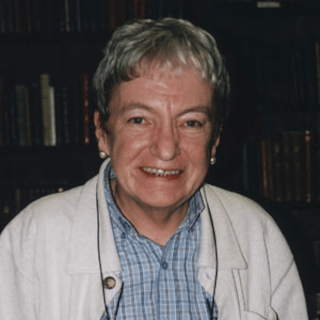
Emer Colleran, Irish microbiologist, academic and an environmental advocate, is born in Ballinrobe, County Mayo, on October 12, 1945. She is professor of microbiology at the National University of Ireland, Galway, a member of the Royal Irish Academy, one of Mary Robinson‘s nominees on the Council of State, and chairwoman of An Taisce, the National Trust for Ireland.

Colleran, and her twin Noreen, are born to John and Josie Colleran. One of a family of five children, her father is a school principal and her mother, also a primary school teacher, dies when she is just 11 years old. She completes her secondary education at St. Louis secondary school in Kiltimagh. She spends a lot of time outdoors as a child, particularly fishing, which sparks her interest in the environment.

On entering higher education, Colleran has a grant from the Department of Education, which requires that she do her studies through the Irish language. Her first choice, Medicine, is not available in Irish so she chooses Science. She graduates with a first-class primary degree in Science at University College Galway (now National University of Ireland, Galway) in 1967.

Colleran specialises in anaerobic digestion as a postgraduate and in 1971 becomes a postdoctoral fellow for two years at the University of Bristol in the UK.

Colleran lectures in biology at Athlone Regional Technical College (now Athlone Institute of Technology) and Galway Regional Technical College (now Galway-Mayo Institute of Technology) before her appointment as a lecturer in microbiology at NUI Galway in 1976. She is appointed Associate Professor of Microbiology by the Senate of the National University of Ireland in 1990. She is a member of the university’s governing authority for a number of years, but steps down in May 2000 in connection with the selection procedure for the new university president. In October of that year, she is appointed professor of microbiology and chair of the department at NUI Galway.

Colleran is the first director of the Environment Change Institute at NUI Galway set up under the Higher Education Authority‘s Programme for Research in Third Level Institutions in 2000. In 2010, the Environmental Change Institute and the Martin Ryan Marine Research Institute are merged to form the current day Ryan Institute at NUI Galway.

In 1973 Colleran is elected to the committee of the Galway Association of An Taisce, part of a national voluntary organisation the aims of which are to conservation in Ireland through education, publicity and positive action. She serves as membership secretary and then treasurer to the Galway branch before becoming chairman. In 1981, as chairman of the Galway branch, she hits back at claims from Galway County Council that An Taisce are “an anonymous group, wielding power unfairly.” She is involved in the compilation of a controversial planning report, published by An Taisce in 1983, which highlights abuse of planning laws by city and county councillors across Ireland, and in particular in counties Galway, Mayo, Donegal, Kerry and Louth.

Colleran serves as Environmental Officer for An Taisce before being elected National Chairman in 1987, the first time a chairman has come from one of the western county associations. She continues to use her position to campaign against misuse of planning laws, for a clamp down on pollution of rivers and lakes, and against a move to scrap An Foras Forbartha, a body that provides independent monitoring of pollution. During her three years as chairman, until May 1990, she is particularly involved in debates over local environmental and planning issues, in particular over gold mining in the west of Ireland, a proposed airport for Clifden, and the planned sewage treatment plant at Mutton Island, County Galway.

In 1991 plans are announced for a new visitor centre, to be located at Mullaghmore in The Burren. Colleran is among those who are part of an appeal, saying that while the plan for the national park is welcomed by An Taisce, they want the visitor centre to be located three or four miles from Mullaghmore.

President Mary Robinson appoints seven new members to her Council of State in February 1991, including Colleran. Other new members appointed at the time are Monica Barnes, Patricia O’Donovan, Quintan Oliver, Rosemarie Smith, Dónal Toolan and D. Kenneth Whitaker. The new Council of State represents a wide spectrum of Irish life and is widely welcomed, although Fine Gael is disappointed that its leader John Bruton is not included.

In 1991, Colleran is one of 15 people appointed to Taoiseach Charles Haughey‘s Green 2000 Advisory Group, to determine which problems will face the environment in the next century. The group is led by Dr. David Cabot, special advisor on environmental affairs.

Colleran is appointed a member of the National Heritage Council in 1995 by the Minister for Arts, Culture and the Gaeltacht, Michael D. Higgins. In the same year the Minister of State at the Department of the Marine, Eamon Gilmore, appoints her to the chair of the Sea Trout working group to oversee the implementation of recommendations to tackle a decline in sea trout stocks, particularly in the west of Ireland.

In 2003 Colleran is elected as a member of the Royal Irish Academy.

Colleran is recognised at the annual NUI Galway Alumni Awards in 2004 when she receives the award for Natural Science, sponsored by Seavite Bodycare Ltd., which acknowledges a graduate who has made an outstanding contribution in the field of natural science.

Colleran dies on June 30, 2018, at University Hospital Galway.


Leave a comment

Birth of Mick Galwey, Gaelic Football & Rugby Union Player

Michael Joseph Galwey, Gaelic football and rugby union player, is born on October 8, 1966, in Currow, County Kerry. As a 19-year-old he wins an All-Ireland Senior Football Championship with the Kerry Gaelic football team in 1986, before turning to rugby union. He is thus the only winner of an “All-Ireland” in both rugby union and Gaelic football. He also holds County Championship medals in Senior, Junior and Minor grades. His nickname ‘Gaillimh’ comes from the name of the Irish town Galway, in the Irish language.

Before becoming a rugby player Galwey plays Gaelic football with Kerry. His first success at intercounty level comes in 1986 when he is part of the Kerry team that wins that year’s All-Ireland. He plays in the semi-final win over Meath. The following year he wins a Munster Under 21 Championship medal and later plays in the All-Ireland final but his side loses out to Donegal. In 1989 he plays his second and last championship game with Kerry in the Munster Championship first round win over Limerick, a game that he also captains the side in.

At club level Galwey plays with his local Currow club. The club produces three other senior Irish Rugby Internationals – Moss Keane, Mick Doyle and Tommy Doyle, an All-Ireland Minor winner in 1962, along with an U-20 Irish Rugby International, JJ Hanrahan. He plays a key part in helping Currow win their first Kerry Junior Football Championship in 1988 when they beat Rathmore in the final.

Galwey also plays with the St. Kieran’s divisional team. In 1988 he helps them win their first and to date only Kerry Senior Football Championship title.

After making the switch to rugby union, Galwey is a key figure in Shannon RFC‘s side during their four in a row winning streak of All-Ireland League titles in the late 1990s. Throughout his career he proves to be a leader who can inspire and motivate players around him to punch above their collective weights. He instills a “don’t panic” and professional attitude in his Shannon team which later becomes the hallmarks of Munster Rugby during his tenancy as captain. He is seen as a legend of the sport in his native Munster, particularly in Limerick.

Galwey’s involvement in the Irish national squad is more of a mixed bag. Making his debut in 1991 against France, his 11-year international career is rarely without controversy. Owing to the selection decisions of various national coaches and selectors, he becomes the most dropped player in international history. He fights his way back onto the Irish squad, becoming the team’s captain ten years after he made his debut. In the 1993 Five Nations Championship match against England, he rounds off a fine display in the 17–3 defeat by scoring the only try of the game. His efforts are rewarded later that year when he is selected for the Lions tour to New Zealand.

Galwey plays for the Ireland national rugby sevens team at the inaugural 1993 Rugby World Cup Sevens.

Galwey’s rugby record includes 41 caps for Ireland, four times as captain and scorer of three tries; 1993 Lions tour to New Zealand; 130 caps for Munster, 85 as captain, 1 Celtic League; 10 Munster senior cups and 6 All-Ireland Leagues with Shannon R.F.C.; 113 games for Shannon in the All-Ireland League, scoring 28 tries.

Galwey has coached Shannon to two All-Ireland League victories and two Munster Senior Cups.


Leave a comment

Death of Charles Bianconi, Italo-Irish Entrepreneur

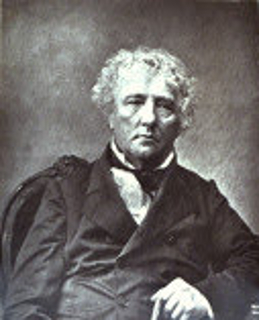
Charles Bianconi, Italo-Irish passenger car entrepreneur, dies on September 22, 1875, at Longfield House, Boherlahan, County Tipperary. Sometimes described as the “man who put Ireland on wheels,” he develops a network of horse-drawn coaches that become Ireland’s “first regular public transport” system.

Bianconi is born Carlo Bianconi in Tregolo, Costa Masnaga, Italy on September 24, 1786. He moves from an area poised to fall to Napoleon and travels to Ireland in 1802, by way of England, just four years after the Irish Rebellion of 1798. At the time, British fear of continental invasion results in an acute sense of insecurity and additional restrictions on the admission of foreigners. He is christened Carlo but anglicises his name to Charles when he arrives in Ireland.

Bianconi works as an engraver and printseller in Dublin, near Essex Street, under his sponsor, Andrea Faroni, when he is sixteen. In 1806 he sets up an engraving and print shop in Carrick-on-Suir, County Tipperary, moving to Clonmel in 1815.

Bianconi eventually becomes famous for his innovations in transport and is twice elected mayor of Clonmel.

Bianconi is the founder of public transportation in Ireland, at a time preceding railways. He establishes regular horse-drawn carriage services on various routes from about 1815 onward. These are known as “Bianconi coaches” and the first service, Clonmel to Cahir, takes five to eight hours by boat but only two hours by Bianconi’s carriage. Travel on one of his carriages cost one penny farthing a mile.

Bianconi also establishes a series of inns, the Bianconi Inns, some of which still exist in Piltown, County Kilkenny and Killorglin, County Kerry.

In 1832 Bianconi marries Eliza Hayes, the daughter of a wealthy Dublin stockbroker. They have three children – Charles Thomas Bianconi, Catherine Henrietta Bianconi and Mary Anne Bianconi, who marries Morgan John O’Connell and is the mother of his grandson John O’Connell Bianconi.

Bianconi’s transport services continue into the 1850s and later, by which time there are a number of railway services in the country. The Bianconi coaches continue to be well-patronised, by offering connections from various termini, one of the first and few examples of an integrated transport system in Ireland. By 1865 Bianconi’s annual income was about £35,000.

Charles Bianconi dies on September 22, 1875, at Longfield House, Boherlahan, County Tipperary. Having donated land to the parish of Boherlahan for the construction of a parish church, he wishes to be buried on the Church grounds. He, and his family, are buried in a side chapel, separate from the parish church in Boherlahan, approximately five miles from Cashel, County Tipperary.


Leave a comment

Birth of Mike Quill, Irish-American Trade Unionist

Michael Joseph “Red Mike” Quill, one of the founders of the Transport Workers Union of America (TWU), a union founded by subway workers in New York City that expands to represent employees in other forms of transit, is born on September 18, 1905, in Gortloughera, near Kilgarvan, County Kerry.

Quill is the seventh among five sons and three daughters of John Daniel Quill, farmer, of Gortloughera, and Margaret Quill (née Lynch), of Ballyvourney, County Cork. He attends Kilgarvan national school until early adolescence. The family has strong republican sympathies, and he serves with an Irish Republican Army (IRA) flying column during the Irish Civil War.

In 1926, Quill emigrates to New York City. After a series of brief jobs, in 1929 he secures employment with the Interborough Rapid Transit Company (IRT) as a subway station change-maker. Attracted to socialism and militant industrial unionism by his reading of James Connolly, in 1933 he is one of a small group of workers seeking to initiate a trade union independent of the IRT’s complacent company union. Comprised largely of ex-IRA men linked by membership of Clan na Gael and the leftist Irish Workers’ Clubs, his group soon joins forces with a New York transit-industry organising effort by the Communist Party, resulting in the launch in April 1934 of the Transport Workers Union (TWU).

With a convivial personality and a flair for oratory, Quill quickly emerges as one of the union’s most effective organisers. During 1935 he leaves his IRT job to work full-time as union organiser. In December 1935 he is elected TWU president, a position he holds until his death. By autumn 1936 the TWU has established a solid base on the IRT and intensifies organisation on New York’s other transit lines: subways, buses, elevated trains, and trolleys. In May 1937 the TWU affiliates with the incipient Congress of Industrial Organizations (CIO). After winning, mostly by large majorities, a series of union representation elections in May–June 1937, the TWU negotiates closed-shop contracts with various New York transit companies, obtaining for its 30,000 members substantial wage increases and benefits and a work-week reduction to forty-eight hours. The ethnic profile of the TWU, which is colloquially nicknamed “the Irish union,” reflects that of New York’s transit workforce, about half of which is Irish born.

First elected to the New York City Council in November 1937 as candidate of the American Labor Party, Quill serves on the body intermittently until 1949. After 1940 he leads the TWU into expansion outside New York, organising in mass transit in other cities, in airlines, and in railroads. Despite modest membership numbers (135,000 by the mid-1960s), the TWU is the United States‘ largest transit union, and Quill maintains a high public profile, owing to his union’s situation in a key economic sector, its base in the country’s largest city, and the colourful and the controversial features of his personality and politics. The 1940 municipal buy-out of New York’s private subway companies and subsequent evolution of a unified civically operated transport system precipitates a lengthy TWU struggle to establish collective bargaining rights and procedures for the transport workforce as public employees. This campaign, by setting precedents for public-sector union organisation nation-wide, marks Quill’s most enduring legacy to the American labour movement.

Quill denies repeated charges that he is a Communist, while retorting that he would “rather be called a Red by the rats than a rat by the Reds.” Communists hold influential positions at all levels in the TWU until the union’s December 1948 convention, when, after months of rancorous conflict over policy, he secures the expulsion from union office of all Communist Party members. His own politics, nevertheless, remain conspicuously leftist in the America of the 1950s and 1960s, as he condemns both the McCarthyite anti-Red witch-hunt and the Vietnam War. Elected a CIO vice-president in 1950, he eschews redefinition as “a labour statesman,” and advocates a national labour party and nationalisation of major industries. A strenuous opponent of racial discrimination by employers and within trade-union structures, he actively supports the black civil rights movement. He is the only top CIO official to oppose its 1955 merger with the conservative, craft-dominated American Federation of Labor (AFL), which he accuses of “the three Rs” of raiding, racketeering, and racism.

Quill’s final battle is his most dramatic. On January 1, 1966, he defies public-sector anti-strike legislation and a court injunction and leads TWU Local 100 into the first total subway-and-bus strike in New York City history, paralysing traffic for twelve days. Arrested on January 4, Quill, who has a history of serious heart disease, collapses during admission to prison and is transferred to hospital under police custody. On January 13 the strike is settled with a 15 percent wage increase, the highest of Quill’s TWU presidency. On January 28, several days after discharge from hospital, he dies of heart failure in his home. He is interred at Gate of Heaven Cemetery in Hawthorne, New York, after a funeral Mass at St. Patrick’s Cathedral, his casket draped by the Irish tricolor.

Speaking after his death, Martin Luther King Jr. eulogises Quill with the following: “Mike Quill was a fighter for decent things all his life—Irish independence, labor organization, and racial equality. He spent his life ripping the chains of bondage off his fellowman. When the totality of a man’s life is consumed with enriching the lives of others, this is a man the ages will remember—this is a man who has passed on but who has not died. Negroes had desperately needed men like Mike Quill who fearlessly said what was true even when it offended. That is why Negroes shall miss Mike Quill.”

Quill marries Maria Theresa O’Neill of Cahersiveen, County Kerry, in 1937. They have one son. Maria dies in 1959. He then marries Shirley Garry (née Uzin) of Brooklyn, New York, his long-serving administrative assistant, in 1961. They have no children. The Michael J. Quill Centre at Ardtully, Kilgarvan, County Kerry, houses a commemorative museum.

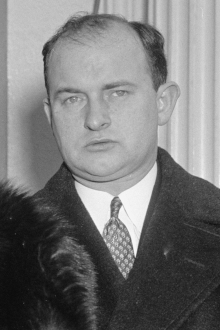
(From: “Quill, Michael Joseph” by Lawrence William White, Dictionary of Irish Biography, http://www.dib.ie | Pictured: Irish-American Trade Unionist Mike Quill during a visit to the White House in 1938)


Leave a comment

Birth of Angelo Fusco, Provisional Irish Republican Army Volunteer

Angelo Fusco, former volunteer in the Belfast Brigade of the Provisional Irish Republican Army (IRA) who escapes during his 1981 trial for killing a Special Air Service (SAS) officer in 1980, is born in West Belfast, Northern Ireland, on September 2, 1956.

Fusco is born to a family with an Italian background who owns a fish and chip shop. He joins the Belfast Brigade of the IRA and is part of a four-man active service unit (ASU), along with Joe Doherty and Paul Magee, which operates in the late 1970s and early 1980s nicknamed the “M60 gang” due to their use of an M60 heavy machine gun.

On April 9, 1980, the unit lures the Royal Ulster Constabulary (RUC) into an ambush on Stewartstown Road, killing one constable and wounding two others. On May 2 the unit is planning another attack and has taken over a house on Antrim Road, when an eight-man patrol from the SAS arrive in plain clothes, after being alerted by the RUC. A car carrying three SAS members goes to the rear of the house, and another car carrying five SAS members arrives at the front of the house. As the SAS members at the front of the house exit their car the IRA unit opens fire with the M60 machine gun from an upstairs window, hitting Captain Herbert Westmacott in the head and shoulder, killing him instantly. He is the highest-ranking member of the SAS killed in Northern Ireland. The remaining SAS members, armed with Colt Commando automatic rifles, submachine guns and Browning pistols, return fire but are forced to withdraw. Magee is apprehended by the SAS members at the rear of the house while attempting to prepare the IRA unit’s escape in a transit van, while the other three IRA members remain inside the house. More members of the security forces are deployed to the scene, and after a brief siege the remaining members of the IRA unit surrender.

The trial of Fusco and the other members of the M60 gang begins in early May 1981, with them facing charges including three counts of murder. On June 10 Fusco and seven other prisoners, including Joe Doherty and the other members of the IRA unit, take a prison officer hostage at gunpoint in Crumlin Road Jail. After locking the officer in a cell, the eight take other officers and visiting solicitors hostage, also locking them in cells after taking their clothing. Two of the eight are wearing officer’s uniforms while a third wears clothing taken from a solicitor, and the group moves towards the first of three gates separating them from the outside world. They take the officer on duty at the gate hostage at gunpoint and force him to open the inner gate. An officer at the second gate recognises one of the prisoners and runs into an office and presses an alarm button, and the prisoners run through the second gate towards the outer gate. An officer at the outer gate tries to prevent the escape but is attacked by the prisoners, who escape onto Crumlin Road. As the prisoners are moving towards the car park where two cars are waiting, an unmarked RUC car pulls up across the street outside Crumlin Road Courthouse. The RUC officers open fire, and the prisoners returned fire before escaping in the waiting cars. Two days after the escape, Fusco is convicted in absentia and sentenced to life imprisonment with a minimum recommended term of thirty years.

Fusco escapes across the border into the Republic of Ireland before being arrested in January 1982 and is sentenced to ten years imprisonment for the escape and firearms offences under extra-jurisdictional legislation. A further three years are added to his sentence in 1986 after he attempts to escape from Portlaoise Prison, and he is released in January 1992. Upon his release, he is immediately served with extradition papers from the British government for his return to the Maze Prison in Northern Ireland to serve his sentence for the murder conviction. The extradition is granted by a District Court but Fusco appeals, and in 1995 he wins a legal victory when a judge at the High Court in Dublin rules it would be “unjust, oppressive and invidious” to order his extradition due to the time lag involved. Fusco settles in Tralee with his wife and three children until February 1998, when the Supreme Court of Ireland brings an end to the six-year legal battle by ordering his extradition, but he has already fled on bail and a warrant is issued for his arrest.

Fusco is arrested at a Garda checkpoint in Castleisland, County Kerry, on January 3, 2000. The following day he is being escorted back to Northern Ireland to be handed over to the RUC, when his handover is halted by a successful court appeal by Sinn Féin. The arrest and abortive return of Fusco undermines the Northern Ireland peace process, with Unionist politicians including Ken Maginnis criticising the extradition being halted. Republicans are critical of Fusco’s arrest, with leading Sinn Féin member Martin Ferris stating, “The Irish government should immediately move to rescind the warrant against Angelo Fusco. The action will cause great anger and resentment within the nationalist community,” and graffiti in one republican area reads “Extradite Bloody Sunday war criminals, not Fusco.” On January 6 Fusco is refused bail and remanded to prison in Castlerea, County Roscommon, to await a legal review of his extradition, prompting scuffles outside the court between police and Sinn Féin supporters.

Fusco is freed on bail on March 21 pending the outcome of his legal challenge, and in November 2000 the Irish government informs the High Court that it is no longer seeking to return him to Northern Ireland. This follows a statement from Secretary of State for Northern Ireland Peter Mandelson saying that “it is clearly anomalous to pursue the extradition of people who appear to qualify for early release under the Good Friday Agreement scheme, and who would, on making a successful application to the Sentence Review Commissioners, have little if any of their original prison sentence to serve.” After the court hearing Fusco states, “I’m relieved it’s over,” and that he will continue to live in Tralee with his family and work for Sinn Féin.

In December 2000 Fusco and three other IRA members, including two other members of the M60 gang, are granted a royal prerogative of mercy which allows them to return to Northern Ireland without fear of prosecution.


Leave a comment

Birth of Sir Roger Casement, Diplomat & Irish Nationalist

Sir Roger Casement, in full Sir Roger David Casement, diplomat and Irish nationalist, is born on September 1, 1864, in Kingstown (now Dún Laoghaire), County Dublin. Following his execution for treason in 1916, he becomes one of the principal Irish martyrs in the revolt against British rule in Ireland.

Casement is born into an Anglo-Irish family, and lives his very early childhood at Doyle’s Cottage, Lawson Terrace, Sandycove. His father, Captain Roger Casement of the (King’s Own) Regiment of Dragoons, is the son of Hugh Casement, a Belfast shipping merchant who goes bankrupt and later moves to Australia. After the family moves to England, Casement’s mother, Anne Jephson (or Jepson), of a Dublin Anglican family, purportedly has him secretly baptised at the age of three as a Roman Catholic in Rhyl, Wales.

The family lives in England in genteel poverty. Casement’s mother dies when he is nine years old. His father takes the family back to County Antrim in Ireland to live near paternal relatives. His father dies when he is thirteen years old. He is educated at the Diocesan School, Ballymena (later the Ballymena Academy). He leaves school at 16 and goes to England to work as a clerk with Elder Dempster Lines, a Liverpool shipping company headed by Alfred Lewis Jones.

Casement is a British consul in Portuguese East Africa (1895–98), Angola (1898–1900), Congo Free State (1901–04), and Brazil (1906–11). He gains international fame for revealing atrocious cruelty in the exploitation of native labour by white traders in the Congo and the Putumayo River region of Peru. His Congo report, published in 1904, leads to a major reorganization of Belgian rule in the Congo in 1908, and his Putumayo report of 1912 earns him a knighthood, which is ultimately forfeited on June 29, 1916.

Ill health forces Casement to retire to Ireland in 1912. Although he comes from an Ulster Protestant family, he has always sympathized with the predominantly Roman Catholic Irish nationalists. Late in 1913 he helps form the National Volunteers, and in July 1914 he travels to New York City to seek American aid for that anti-British force. After World War I breaks out in August, he hopes that Germany might assist the Irish independence movement as a blow against Great Britain. On arriving in Berlin in November 1914, he finds that the German government is unwilling to risk an expedition to Ireland and that most Irish prisoners of war would refuse to join a brigade that he intends to recruit for service against England.

Later, Casement fails to obtain a loan of German army officers to lead the Irish rising planned for Easter 1916. In a vain effort to prevent the revolt, he sails for Ireland on April 12 in a German submarine. Put ashore near Tralee, County Kerry, he is arrested on April 24 and taken to London, where, on June 29, he is convicted of treason and sentenced to death. An appeal is dismissed, and he is hanged at London’s Pentonville Prison on August 3, 1916, despite attempts by influential Englishmen to secure a reprieve in view of his past services to the British government. During this time, diaries reputedly written by Casement and containing detailed descriptions of homosexual practices are circulated privately among British officials. After years of dispute over their authenticity, the diaries are made available to scholars by the British home secretary in July 1959. It is generally considered that the passages in question are in Casement’s handwriting.

In 1965 Casement’s remains are repatriated to Ireland. Despite the annulment, or withdrawal, of his knighthood in 1916, the 1965 UK Cabinet record of the repatriation decision refers to him as “Sir Roger Casement.”

Casement’s last wish is to be buried at Murlough Bay on the north coast of County Antrim, in present-day Northern Ireland, but Prime Minister Harold Wilson‘s government had released the remains only on condition that they could not be brought into Northern Ireland, as “the government feared that a reburial there could provoke Catholic celebrations and Protestant reactions.”

Casement’s remains lay in state at the Garrison Church, Arbour Hill (now Arbour Hill Prison) in Dublin for five days, close to the graves of other leaders of the 1916 Easter Rising. After a state funeral, his remains are buried with full military honours in the Republican plot in Glasnevin Cemetery in Dublin, alongside other Irish republicans and nationalists. The President of Ireland, Éamon de Valera, then the last surviving leader of the Easter Rising, attends the ceremony, along with an estimated 30,000 others.


Leave a comment

Éamon de Valera Visits Butte, Montana During His American Tour

President Éamon de Valera visits Butte, Montana, on July 25, 1919, during his American Tour of 1919-20. Montana Lieutenant Governor W. W. McDowell meets his train and rides with de Valera through the streets to where de Valera then addresses over 10,000 people who have come out to hear him. The next day, de Valera addresses a joint session of the Montana State Legislature.

De Valera’s eventful 1919 begins in Lincoln Jail and ends in New York City’s Waldorf Astoria, the largest and most luxurious hotel in the world. Smuggled aboard the SS Lapland in Liverpool in June, he sails for the United States during the closing stages of the Paris Peace Conference. As London’s Sunday Express complains in August 1919, “there is more Irish blood in America than in Ireland,” making the United States the obvious destination for a sustained propaganda and fundraising mission.

After his highly-publicised American debut at New York’s Waldorf Astoria, the self-styled “President of the Irish Republic” embarks on the first leg of what is to be an eighteen-month tour of the United States. The purpose of his mission is twofold: to gain formal recognition of the Irish Republic and to raise funds via a bond issue to support the independence movement and the newly established Dáil Éireann.

Between July and August 1919, de Valera and his entourage travel over 6,000 miles from New York to San Francisco, addressing enormous crowds at dozens of venues. He fills Madison Square Garden to capacity and receives a thirty-minute standing ovation from 25,000 people in Chicago’s Wrigley Field. Twice as many people fill Boston’s Fenway Park on June 29, cheering the arrival of the “Irish Lincoln.” The Sinn Féin envoys also visit less obvious Irish communities of the period, such as Scranton, Savannah, New Orleans and Kansas City. For de Valera’s personal secretary, Seán Nunan, the public meeting in Butte, Montana is like “an election meeting at home – there were so many first-generation Irishmen working on the mines – mainly from around Allihies in West Cork.” In San Francisco de Valera dedicates a statue of Robert Emmet by Irish-born sculptor Jerome Connor in Golden Gate Park, a replica of which stands sentinel in St. Stephen’s Green in Dublin. This is one of many symbolic gestures linking the American and Irish struggles for independence played out before the flashing bulbs of the ubiquitous press photographers. On August 15, The Cork Examiner notes that the enthusiastic American exchanges “indicate that few public missionaries from other lands – possibly only Mr. Parnell – have ever had such receptions as were accorded to the Sinn Féin leader.”

De Valera’s team deserves credit for the incredible logistical triumph that is the U.S. tour. As chief organiser, Liam Mellows travels ahead to each city, ensuring a suitable reception is prepared and a venue secured for a mass meeting. Seán Nunan is de Valera’s fastidious personal secretary and Harry Boland, Sinn Féin TD for South Roscommon and Irish Republican Brotherhood (IRB) envoy, is at his side troubleshooting, speechmaking and shaking hands. As the tour progresses, de Valera’s supporting cast expands to include Kerry-born Kathleen O’Connell who becomes de Valera’s full-time personal secretary from 1919.

The next stage of de Valera’s American odyssey begins on October 1, 1919, in Philadelphia, a city with a rich Irish heritage and rife with symbolism of America’s struggle for independence. Over the next three weeks, de Valera and his team travel from the Atlantic to the Pacific seaboard and back again, delivering seventeen major public speeches and a host of smaller ones to aggregate crowds of over half a million.

The pace is relentless as the Irish team makes its way through middle America. De Valera is received as a visiting dignitary at multiple state legislatures and presented with honorary degrees from six American universities. In line with his secondary objective to foster the interest of “wealthy men of the race in the industrial development of Ireland,” he addresses the Chambers of Commerce in a number of cities and arranges a personal meeting with Henry Ford, the son of an Irish emigrant, during his visit to Detroit in October. In the same month in Wisconsin, he is made a Chief of the Chippewa Nation, an honour he later says meant more to him than all the freedoms of all the cites he was ever given. It is not surprising that by the time they reach Denver on October 30, The Irish World reports that “the President looked tired.” Still, he musters the energy to make high profile visits to Portland, Los Angeles and San Diego before beginning the return journey to New York at the end of November.

After a short break for Christmas, the Irish team prepares for the launch of the Bond Certificate Drive. A week-long frenzy of publicity kicks off on January 17 at New York City Hall where Mayor John F. Hylan presents de Valera with the Freedom of the City. During the spring of 1920, de Valera addresses the Maryland General Assembly at Annapolis before making the swing through the southern states of America.

It is not all plain sailing for the Sinn Féin representatives in America. The tour of the west coast in late 1919 sees increasing tensions with American patriotic bodies who are critical of de Valera’s perceived pro-German stance during World War I. He is heckled during a speech in Seattle and a tricolour is ripped from his car in Portland by members of the American Legion. The trip through the southern states in the spring of 1920 coincides with rising American anti-immigration and anti-Catholic nativism. A small number of counter demonstrations are organised by right-wing Americans. Most notably, members of the Ku Klux Klan make unwelcome appearances at several rallies in the American south, making clear their opposition to de Valera’s presence.

The Irish envoys also contend with antagonism from the leaders of Friends of Irish Freedom (FOIF), the broad-based popular front of Clan na Gael headed by veteran Fenian John Devoy and Judge Daniel Cohalan. The FOIF uses its significant resources to finance de Valera’s tour and facilitate the Bond Certificate Drive, but behind the scenes there are significant personality clashes and tensions over tactics.

The increasingly public dispute comes to a head in a row over strategies at the Republican National Convention in Chicago in June 1920. Drawing on his influential political contacts, Cohalan persuades the Republican Party to include Irish self-determination in their election platform. However, much to Cohalan’s fury, de Valera leads a separate delegation to the Convention and insists on a resolution calling for recognition of the Irish Republic. The result is that two resolutions are submitted to the Platform Committee, which indicates dissension in the Irish ranks and gives the Committee the excuse to include neither in the final platform. After de Valera also fails to secure the endorsement of the Democratic convention in San Francisco in June, it is clear that the Irish question will not be a significant factor in the ensuing presidential election. Relations between the FOIF and de Valera reach a new low. In November 1920, de Valera makes the final break with the FOIF and sets up a new organisation, the American Association for the Recognition of the Irish Republic.

De Valera is in Washington, D.C. on October 25 when Terence MacSwiney dies after 74 days on hunger strike. Six days later, at the last great meeting of the American tour, 40,000 people fill New York’s Polo Grounds to commemorate MacSwiney’s death. By late November, de Valera knows that it is time to return to Ireland. Smuggled aboard SS Celtic in New York harbour on December 10, he prepares for the nine-day journey home. He had failed to obtain the recognition of the United States Government for the Republic, but his cross-continental tour and associated press coverage raised international awareness and over $5 million for the Irish cause.

(From: An article by Helene O’Keeffe that was first published in the Irish Examiner on March 24, 2020 | Photo: Eamon de Valera, center, president of the Provisional Government of the Irish Republic, in Butte, Montana, in 1919 to encourage support for Ireland’s fight for independence. Courtesy of Butte-Silver Bow Public Archives)


Leave a comment

Death of Author Muiris Ó Súilleabháin

Muiris Ó Súilleabháin, anglicised as Maurice O’Sullivan, Irish author famous for his Irish language memoir of growing up on the Great Blasket Island and in Dingle, County Kerry, off the western coast of Ireland, drowns on June 25, 1950, while swimming at Knocknacarra off the Connemara coast.

Ó Súilleabháin is born on the Great Blasket Island on February 19, 1904. Following the death of his mother when he is six months old, he is raised in an institution in Dingle, County Kerry. At the age of eight, he returns to the Great Blasket Island to live with his father, grandfather and the rest of his siblings, and learns the native language.

Ó Súilleabháin is persuaded to write his memoirs by George Derwent Thomson, a linguist and professor of Greek who had come to the island to hear and learn the Irish language. It is Thomson who encourages him to join Garda Síochána in Dublin in 1927 rather than emigrate to the United States as do most of the young people. He is stationed in the Gaeltacht area of Connemara, where he maintains contact with Thomson.

Fiche Blian ag Fás is published in Irish and English in 1933. As one of the last areas of Ireland in which the old Irish language and culture has continued unchanged, the Great Blasket Island is a place of enormous interest to those seeking traditional Irish narratives. Thomson edits and assembles the memoir, and arranges for its translation into English with the help of Moya Llewelyn Davies.

While Fiche Blian ag Fás is received with tremendous enthusiasm by critics, including E. M. Forster, their praise at times has a condescending tone. Forster describes the book as a document of a surviving “Neolithic” culture. Such interest is tied up with romantic notions of the Irish primitive, and thus when Ó Súilleabháin tries to find a publisher for his second book, Fiche Bliain faoi Bhláth (in English, Twenty Years a-Flowering), there is little interest, as this narrative necessarily departs from the romantic realm of turf fires and pipe-smoking wise-women.

In 1934, Ó Súilleabháin leaves the Guards and settles in Connemara. He marries Cáit ní Chatháin of Carraroe on July 10, 1934. They have one daughter, Máirín, and one son, Eoin, a dramatist and writer.

Ó Súilleabháin drowns on June 25, 1950, while swimming off the Connemara coast. He is buried at Barr an Doire near Carraroe. Dylan Thomas commences, but does not finish, a film script of Twenty Years a-Growing. The partially completed film script is published in 1964.