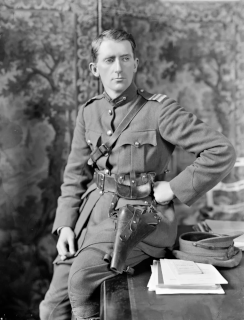
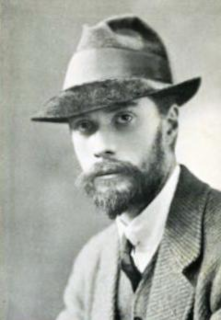
In 1940, Kerins is sworn into the IRA and is appointed to the GHQ staff in May 1942. At the time, the Fianna Fáil government of Éamon de Valera is determined to preserve Irish neutrality during World War II. Therefore, the IRA’s bombing campaign in England, its attacks against targets in Northern Ireland, and its ties to the intelligence services of Nazi Germany are regarded as severe threats to Ireland’s national security. IRA men who are captured by the Gardaí are interned for the duration of the war by the Irish Army in the Curragh Camp in County Kildare.
On the morning of September 9, 1942, Garda Detective Sergeant Denis O’Brien is leaving his home in Ballyboden, Dublin. He is between his front gate and his car when he is cut down with Thompson submachine guns. O’Brien, an Anti-Treaty veteran of the Irish Civil War, had enlisted in the Garda Síochána in 1933. He is one of the most effective Detectives of the Special Branch division, which has its headquarters at Dublin Castle. The shooting greatly increases public feeling against the IRA, particularly as the murder is carried out in full view of his wife.
Following the arrest of Hugh McAteer in October 1942, Kerins is named Chief of Staff of the IRA. Despite a massive manhunt by Gardaí, he remains at large for two years. He stays at a County Waterford home for two weeks while he is on the run, having given his name as Pat Carney. He is captured several months after he leaves the home.
Kerins had previously left papers and guns hidden at Kathleen Farrell’s house in the Dublin suburb of Rathmines. He telephones the house, as he intends to retrieve them. However, Farrell’s telephone had been tapped by the Gardaí. On June 15, 1944, he is arrested in an early morning raid. He is sleeping when the Gardaí enter his bedroom and does not have an opportunity to reach the Thompson submachine gun which is hidden under his bed.
At a trial before the Special Criminal Court in Collins Barracks, Dublin, Kerins is formally charged on October 2, 1944, for the “shooting at Rathfarnham of Detective Dinny O’Brien.” At the end of his trial, the president of the Military Court delays sentence until later in the day to allow Kerins, if he wishes, to make an application whereby he might avoid a capital sentence. When the court resumes, he says, “You could have adjourned it for six years as far as I am concerned, as my attitude towards this Court will always be the same.” He thus deprives himself of the right to give evidence, to face cross-examination, or to call witnesses.
Kerins is the last IRA member to be executed in the Republic of Ireland. He is buried in the prison yard. In September 1948, his remains are exhumed and released to his family. He is buried in the Republican plot at Rath Cemetery, Tralee, County Kerry.
O’Donoghue is born in Rathmore, County Kerry, on July 22, 1894, the son of farmer Patrick O’Donoghue and Margaret Cronin. He moves to Cork in 1910, where he works as an apprentice in the drapery trade.
The 1916 Easter Rising is a watershed in O’Donoghue’s life. In December 1916, he joins the Cork branch of the Irish Volunteers. In early 1917, he is elected unanimously First Lieutenant of the Cyclist Company and as a result devotes all his spare time to Volunteer work. He begins writing weekly for two years for TheIrish World newspaper. By May 1917, he is sworn into the Irish Republican Brotherhood (IRB) and in October, Tomás Mac Curtain appoints him head of communications of the Cork Brigade. He replaces Pat Higgins as Brigade Adjutant in February 1917. He is a key organiser in the sensational jailbreak of Captain Donnchadh Mac Niallghuis on Armistice Day 1918 and takes personal responsibility for his protection. Michael Collins is the last officer from Volunteers General Headquarters to visit Cork shortly after Christmas 1919, until the truce in 1921.
O’Donoghue builds up an intelligence network and agents which includes his future wife, Josephine Marchment. She is head female clerk at the 6th Division Headquarters at Victoria Barracks, Cork, and passes on secret British Army correspondence to him. He recruits people to open letters, tap phone lines and intercept telegrams. The Irish Republican Army has 2,000 active members in Cork which are also used for intelligence gathering. By March 1920, after killing a Royal Irish Constabulary (RIC) Inspector, he is on the run and serving full-time in the IRA. In November of that year, the Cork Brigade kills six British Army officers and executes five Cork civilians on suspicion of spying.
After two and a half years of fighting, a truce is agreed upon on July 11, 1921. When the Dáil approves the Anglo-Irish Treaty, in January 1922, the IRA splits into pro- and anti-Treaty camps. Over the coming months and after being elected onto the army’s executive as Adjutant General, O’Donoghue warns of the dangers of an Irish Civil War. In June 1922, he resigns from the army’s national executive and a month later, on July 3, 1922, from the army. Civil war does break out on June 28, 1922 between pro- and anti-Treaty factions, much to his dismay.
During the Irish Civil War, O’Donoghue remains neutral and tries to organise a truce to end the fighting. In December 1922, he forms a group called the “Neutral IRA”, along with Seán O’Hegarty, composed of pro-truce IRA men. He claims he has 20,000 members in this group. He campaigns for a month’s truce between the two sides, so that a political compromise could be reached. However, his efforts come to nothing and in March 1923, he winds up the “Neutral IRA,” judging that its objectives cannot be achieved. The Irish Civil War ends on May 24, 1923.
O’Donoghue serves as major in the Irish Army from 1939-1946. He forms a Supplementary Intelligence Service that is to remain behind enemy lines in the event of an invasion. He also teaches guerrilla warfare tactics to new army recruits.
O’Donoghue marries Josephine Brown (née Marchment) in April 1921 and they have four children. The couple also adopts two children from Josephine’s first marriage, including Reggie Brown, whom O’Donoghue kidnaps from his grandparents in Wales in 1920. He becomes a rate collector and remains outside politics.
In later years O’Donoghue becomes a respected historian. While in the army he edits An Cosantóir, the Irish Army’s magazine. He convinces Éamon de Valera to establish the Bureau of Military History to record personal accounts from the Irish War of Independence. He is a recording officer until 1948. His most famous work is his biography on Liam Lynch, entitled No Other Law.
O’Donoghue dies on December 18, 1967, and Tom Barry gives the graveside oration. His papers are in the National Library of Ireland (NLI) and his statement to the Bureau of Military History is in the Military Archives.
Mulcahy is born in Manor Street, Waterford, County Waterford, on May 10, 1886, the son of post office clerk Patrick Mulcahy and Elizabeth Slattery. He is educated at Mount Sion Christian Brothers School and later in Thurles, County Tipperary, where his father is the postmaster.
Mulcahy is second-in-command to Thomas Ashe in an encounter with the armed Royal Irish Constabulary (RIC) at Ashbourne, County Meath, during the 1916 Easter Rising, one of the few stand-out victories won by republicans in that week and generally credited to Mulcahy’s grasp of tactics. In his book on the Rising, Charles Townshend principally credits Mulcahy with the defeat of the RIC at Ashbourne, for conceiving and leading a flanking movement on the RIC column that had engaged with the Irish Volunteers. Arrested after the Rising, he is interned at Knutsford and at the Frongoch internment camp in Wales until his release on December 24, 1916.
Mulcahy and Michael Collins are largely responsible for directing the military campaign against the British during the Irish War of Independence. During this period of upheaval in 1919, he marries Mary Josephine (Min) Ryan, sister of Kate and Phyllis Ryan, the successive wives of Seán T. O’Kelly. Her brother is James Ryan. O’Kelly and Ryan both later serve in Fianna Fáil governments.
Mulcahy supports the Anglo-Irish Treaty of December 1921. Archive film shows that Mulcahy, as Minister of Defence, is the Irish officer who raises the Irish tricolour at the first hand-over of a British barracks to the National Army in January 1922. He is defence minister in the Provisional Government on its creation and succeeds Collins, after the latter’s assassination, as Commander-in-Chief of the Provisional Government’s forces during the subsequent Irish Civil War.
Mulcahy earns notoriety through his order that anti-Treaty activists captured carrying arms are liable for execution. A total of 77 anti-Treaty prisoners are executed by the Provisional Government. He serves as Minister for Defence in the new Free State government from January 1924 until March 1924, but resigns in protest because of the sacking of the Army Council after criticism by the Executive Council over the handling of the “Army Mutiny,” when some National Army War of Independence officers almost revolt after he demobilises many of them at the end of the Irish Civil War. He re-enters the cabinet as Minister for Local Government and Public Health in 1927.
After the resignation of W. T. Cosgrave as Leader of Fine Gael in 1944, Mulcahy becomes party leader while still a member of the Seanad. Thomas F. O’Higgins is parliamentary leader of the party in the Dáil at the time and Leader of the Opposition. Facing his first general election as party leader, Mulcahy draws up a list of 13 young candidates to contest seats for Fine Gael. Of the eight who run, four are elected. He is returned again to the 12th Dáil as a TD for Tipperary at the 1944 Irish general election. While Fine Gael’s decline had been slowed, its future is still in doubt.
Following the 1948 Irish general election Mulcahy is elected for Tipperary South, but the dominant Fianna Fáil party finishes six seats short of a majority. However, it is 37 seats ahead of Fine Gael, and conventional wisdom suggests that Fianna Fáil is the only party that can possibly form a government. Just as negotiations get underway, however, Mulcahy realises that if Fine Gael, the Labour Party, the National Labour Party, Clann na Poblachta and Clann na Talmhan band together, they would have only one seat fewer than Fianna Fáil and, if they can get support from seven independents, they will be able to form a government. He plays a leading role in persuading the other parties to put aside their differences and join forces to consign the then Taoiseach and Fianna Fáil leader Éamon de Valera, to the opposition benches.
Mulcahy initially seems set to become Taoiseach in a coalition government. However, he is not acceptable to Clann na Poblachta’s leader, Seán MacBride. Many Irish republicans had never forgiven him for his role in the Irish Civil War executions carried out under the Cosgrave government in the 1920s. Consequently, MacBride lets it be known that he and his party will not serve under Mulcahy. Without Clann na Poblachta, the other parties would have 57 seats between them — 17 seats short of a majority in the 147-seat Dáil. According to Mulcahy, the suggestion that another person serve as Taoiseach comes from Labour leader William Norton. He steps aside and encourages his party colleague John A. Costello, a former Attorney General of Ireland, to become the parliamentary leader of Fine Gael and the coalition’s candidate for Taoiseach. For the next decade, Costello serves as the party’s parliamentary leader while Mulcahy remained the nominal leader of the party.
Mulcahy goes on to serve as Minister for Education under Costello from 1948 until 1951. Another coalition government comes to power at the 1954 Irish general election, with Mulcahy once again stepping aside to become Minister for Education in the Second Inter-Party Government. The government falls in 1957, but he remains as Fine Gael leader until October 1959. In October the following year, he tells his Tipperary constituents that he does not intend to contest the next election.
Mulcahy dies from natural causes at the age of 85 in Dublin on December 16, 1971. He is buried in Littleton, County Tipperary.
Criostóir Mac Aonghusa, teacher, author, critic, and campaigner for the Irish language, is born on December 13, 1905, in Gort an Ghabhainn, Banagher, King’s County (now County Offaly), son of Francis McGuiness (surname thus on his birth certificate), farmer, and his wife, Rosanna (née Egan). He is educated at La Sainte Foi, Banagher, Reachra national school, Shannonbridge, and Naas CBS. He qualifies as a primary school teacher from De La Salle Training College, Waterford, in 1926 and has the distinction of being the first person to sit all exams through the medium of Irish. He graduates BA at University College Galway (UCG) in 1933 and his further education includes a diploma in Spanish literature from University of Barcelona and an MA on the Irish scholar Tomás Ó Máille.
Mac Aonghusa’s teaching career begins in 1926 when he becomes headmaster on Inis Treabhair, County Galway, spending fourteen months there. Afterwards he transfers to Gort Mór, Rosmuc, County Galway, where he continues teaching until 1962. He remains an active member of Cumann na Múinteoirí Náisiúnta throughout his life. Between 1962 and 1972 he is employed as an ad-hoc examiner at the civil service commission. An active member of Fianna Fáil, he helps to organise the party in County Galway in the 1920s and 1930s and is elected a member of Galway County Council in 1934.
Mac Aonghusa is a prominent advocate of the Irish language and together with his close friend Máirtín Ó Cadhain and another Connemara schoolteacher, Seosamh Mac Mathúna, founds Cumann na Gaeltachta to agitate for the civil rights of the Gaeltacht communities and of Irish speakers in general. He is one of the main campaigners for the establishment of the Rath Carn Gaeltacht in County Meath and forms part of the delegation that meets Éamon de Valera on November 11, 1932, and receives from him a promise to provide land in County Meath for that purpose. The Gaeltacht is established in 1935. Mac Aonghusa continues to support the project throughout his life and is involved in further campaigns relating to the area, including the recognition of Rath Carn’s Gaeltacht status. He is also an active member of Conradh na Gaeilge in the 1940s and is later involved in the campaign for the establishment of an Irish-language television broadcasting service.
Mac Aonghusa is a prolific writer and begins publishing short stories and articles from 1926 onward. His contributions appear in An tÉireannach, An Phoblacht, The Irish Tribune, An Stoc, and Ar Aghaidh. From 1948, he is a regular contributor to Feasta and his essays and reviews on Máirtín Ó Cadhain’s works appear in Comhar. He is a member of several literary organisations, including Cumann na Scríbhneoirí and the Galway Literary Society. His first book, An Cladóir agus scéalta eile, appears in 1952. Between 1963 and 1972 he is a contributor to The Irish Press and works also as a literary journalist. An essay on Pádraic Ó Conaire earns him a prize from Acadamh Liteartha na hÉireann.
Mac Aonghusa speaks a number of European languages including German, Spanish, French, Romanian, and Greek and travels widely throughout Europe. In the early 1970s he lives in Russia, and a collection of essays entitled Ó Rosmuc go Rostov is published in 1972. For health reasons he lives in Málaga, Spain, from the middle of the 1970s until 1987. While there, RTÉ produces a documentary on his life entitled Ó Ros Muc go Malaga.
Mac Aonghusa dies on April 9, 1991, in Portiuncula General Hospital, Ballinasloe, County Galway, and is interred in Clonmacnoise. In 1930 he marries Mairéad Ní Lupain, a nurse from Annaghvane in Connemara, and has four children, Proinsias (1933), Micheál (1937), Róisín (1939), and Máirín (1944). The couple separates in the 1940s. Proinsias follows in his father’s footsteps as a writer and journalist and becomes president of Conradh na Gaeilge and chairman of Bord na Gaeilge.
(From: “Mac Aonghusa, Criostóir” by Lesa Ní Mhunghaile, Dictionary of Irish Biography, http://www.dib.ie, October 2009)
MacBride has nevertheless had a violent past. He is born in Paris on January 26, 1904, the son of Major John MacBride and Maud Gonne. His father is executed by the British in the Irish struggle for liberation from Great Britain. He is only 15 years old when he lies about his age to join the Irish Volunteers, which fight as part of the Irish Republican Army (IRA). He takes part in the concluding battles against the British in the Irish War of Independence before the Irish Republic is founded in 1921, and in the Irish Civil War that follows. He backs Éamon de Valera in the latter’s refusal to accept Northern Ireland‘s continuing union with England. In the 1930s, he breaks with the IRA and qualifies in law. He defends IRA prisoners in Irish prisons who had been condemned to death.
In addition to the Nobel Peace Prize, MacBride also receives the Lenin Peace Prize for 1975–1976, the Golden Plate Award of the American Academy of Achievement in 1978, and the UNESCO Silver Medal for Service in 1980.
MacBride dies in Dublin on January 15, 1988, eleven days before his 84th birthday. He is buried in Glasnevin Cemetery in a grave with his mother and his wife, who died in 1976.
Stack is born to William Stack, an attorney’s clerk, and Nanette O’Neill. He is educated at the Christian Brothers School in Tralee. At the age of fourteen, he leaves school and becomes a clerk in a solicitor‘s office. A gifted Gaelic footballer, he captains the Kerry team to All-Ireland victory in 1904. He also serves as President of the Kerry Gaelic Athletic Association County Board.
Stack becomes politically active in 1908 when he joins the Irish Republican Brotherhood (IRB). In 1916, as commandant of the Kerry Brigade of the Irish Volunteers, he makes preparations for the landing of arms by Roger Casement. He is made aware that Casement was arrested on Easter Saturday and was being held in Tralee. He makes no attempt to rescue him from Ballymullen Barracks.
Stack, as part of his role as Minister for Home Affairs, is widely credited with the creation and administration of the Dáil Courts. These are courts run by the Irish Republican Army (IRA) in parallel and opposition to the judicial system being run by the British government. The IRA and Sinn Féin are highly successful in both getting the civilian population of Ireland to use the courts and accept their rulings. The success of this initiative gives Sinn Féin a large boost in legitimacy and supports their goals in creating a “counter-state” within Ireland as part of their overarching goals in the Irish War of Independence.
Stack opposes the Anglo-Irish Treaty of 1921 and takes part in the subsequent Irish Civil War. He is captured in 1923 and goes on hunger strike for forty-one days before being released in July 1924.
In 1925, Stack marries Winifred (Una) Gordon, (née Cassidy), the widow of a Royal Irish Constabulary (RIC) district inspector, Patrick Gordon.
Stack’s health never recovers following his hunger strike and he dies at the age of 49 in a Dublin hospital on April 27, 1929.
Austin Stack Park in his hometown of Tralee, one of the Gaelic Athletic Association’s stadiums, is named in his honour, as is the Austin Stacks GAA hurling and Gaelic football club.
Darrell Edmund Figgis, Irish writer, Sinn Féin activist and independent parliamentarian in the Irish Free State, dies in London on October 27, 1925. The little that has been written about him has attempted to highlight how thoroughly his memory and works have been excised from Irish popular culture.
Figgis is born at Glen na Smoil, Palmerstown Park, Rathmines in Dublin, on September 17, 1882, the son of Arthur William Figges, tea merchant, and Mary Anne Deane. While still an infant, his family emigrates to Calcutta, India. There his father works as an agent in the tea business, founding A. W. Figgis & Co. They return when he is ten years of age, though his father continues to spend much of his time in India. As a young man he works in London at the tea brokerage owned by his uncle, and it is at this time that he begins to develop his interest in literature and literary criticism.
In 1910 Figgis, with the help of G. K. Chesterton, who wrote the introduction to his first book of verse, joins the Dent publishing company. He moves to Achill Island in 1913 to write, learn the Irish language and gain an appreciation of Irish culture, as perceived by many of his contemporaries to uniquely exist on the western seaboard. On his detention following the 1916 Easter Rising, he and the publishing house parted company. Subsequently, he establishes his own firm in which he republishes the works of William Carleton and others.
Figgis joins the Irish Volunteers in Dublin in 1913 and organises the original Battalion of Volunteers in Achill, where he had built a house. While in London, he is contacted by The O’Rahilly, who acquaints him with the arms dealers who had supplied the Ulster Volunteers. In this way he becomes part of the London group that discusses the financing and supply of German rifles for the Volunteers. He travels with Erskine Childers, initially to Belgium and from there to Germany, to make the purchase of the army surplusMauser rifles. He then charters the tug Gladiator, from which the arms are transferred at sea to the Childers’ yacht Asgard and Conor O’Brien‘s Kelpie.
At this time the Royal Navy is patrolling the Irish Sea in anticipation of imminent war with Germany, and Figgis is tasked with taking a motorboat to Lambay Island to signal to the Asgard the all-clear. By his own account, he is unable to persuade the skipper of the pilot vessel to put to sea as one of the worst storms in many years is raging. Due to luck and the skill of the crews, the three over-laden yachts arrive at their destinations. Figgis, accompanied by Seán McGarry, watch Asgard helplessly from Howth pier until Erskine decides to take a calculated risk and sails into the harbour. Against the odds, the conspiracy to buy rifles in Germany and land them safely in Ireland has succeeded. A large party of Volunteers, on their way to Dublin with rifles and ammunition is confronted by a detachment of the King’s Own Scottish Borderers and Dublin Metropolitan Police. With their route blocked, Figgis and Thomas MacDonagh engage the officers in an attempt to distract them.
Although Figgis does not participate in the 1916 Easter Rising, he is arrested and interned by the British authorities between 1916 and 1917 in Reading Gaol. After his release, he returns to Ireland. At the 1917 Sinn Féin Ardfheis he and Austin Stack are elected Honorary Secretaries of the party. The conference sees Éamon de Valera replace Arthur Griffith as President of the party. Shortly after, Figgis is one of four recently released internees who travels to the South Longford constituency to campaign for Joseph McGuinness in the by-election caused by the death of John Phillips. The overwhelming victory of the Sinn Féin candidate over the Irish Parliamentary Party (IPP) nominee marks the beginning of the eclipse of the latter party by the former party. In May 1918, Figgis is arrested for his alleged part in the spurious German Plot a second time and again deported to England. In 1918, he becomes editor of the newspaper The Republic.
From September 1919 to 1921 Figgis heads the Commission of Inquiry into the Resources and Industries of Ireland. At this time a serious rift between Figgis and Michael Collins, then Minister for Finance, becomes a matter of public record. This close attention of Collins will pursue Figgis in his later activities on the Constitution Committee. While he is participating in a Dáil Court at Carrick-on-Shannon, the proceedings are interrupted by a British Army raid. An officer named Captain Cyril Crawford summarily condemns Figgis and Peadar Kearney to be hanged. He orders rope for the purpose, but another officer intervenes and Keaney and Figgis are set free.
Figgis supports the Anglo-Irish Treaty. He is extremely critical of the Collins/De Valera Pact for the June 1922 Irish general election which is an attempt to avoid a split in the Sinn Féin party and, more importantly, in the Irish Republican Army (IRA). On May 25, 1922, he attends a meeting of the executive council of the Farmers’ Union and representatives, of business interests, and encourages them to put forward candidates in constituencies where anti-Treaty candidates might otherwise head the poll. As he is a member of the Sinn Féin Ard Chomhairle National Executive at the time, he is expelled from the party.
Soon after the signing of the Treaty, the necessity of quickly drafting a constitution for the proposed Free State becomes apparent. It is intended by Arthur Griffith that Figgis will chair the Constitution Committee, but this proposal is vetoed by Collins who nominates himself for the position specifically to minimise Figgis’ influence. The animosity between Collins and Figgis remained an undercurrent of the project. In the end, Collins decides the job should go to Captain David Robinson, but this did nothing to heal the rift between Figgis and James G. Douglas.
In December 1923, it is decided that a committee be established to investigate the means by which a public radio broadcasting service should be operated in the Free State. A central issue of contention is whether the service should be run and controlled directly by the State or operated commercially by an Irish Broadcasting Company. The latter option, it is suggested, would follow the model adopted in the UK by the establishment of the BBC. Figgis is co-opted onto the committee, and this decision leads to a series of allegations resulting in the new State’s first corruption scandal of which Figgis himself is the focus. The allegations result in his resignation from the Broadcasting committee and the launching of a second enquiry. He strenuously denies any impropriety.
On November 18, 1924, Figgis’s wife Millie commits suicide in the back of a taxi in Rathfarnham using a Webley revolver given to them by Collins following the 1922 assault. A year later, his new love, a 21-year-old Catholic woman named Rita North, dies due to complications when a doctor tries to surgically remove an already dead child. The court, after investigating her death, determines that she died due to peritonitis, an inflammation in the lining of the abdominal cavity. The public, however, jumps to the conclusion that she died in a failed illegal abortion.
Figgis himself commits suicide in a London boarding house in Granville Street on October 27, 1925, just a week after giving evidence at North’s inquest. He had been staying at the Royal Automobile Club until the day before his death, as is usual when he visits London. A small group of mourners comprising close family and friends attend his interment at the Hampstead Cemetery in West Hampstead, London.
Doyle fights in the Irish War of Independence (1919-21) and takes the anti-Treaty side in the Irish Civil War (1922-23) and is subsequently interned among numerous others. Together with two fellow-detainees, Timothy Coughlin and Bill Gannon, he takes part in forming a secret “vengeance grouping.” The three vow that once free of imprisonment they will take revenge on their opponents, whom they consider traitors to the Irish cause.
Most such private revenge pacts are broken up by the IRA leadership when it reorganises following 1924, but Doyle and his two fellow conspirators persist and carry through their deadly aim. On July 10, 1927, the three surprised O’Higgins on his way to Mass at the Booterstown Avenue side of Cross Avenue in Blackrock, Dublin, and shoot him down.
O’Higgins is especially hated by IRA members for having ordered the executions of seventy-seven of their fellows during the Civil War, an act for which he outspokenly takes responsibility and refuses to express any remorse. Moreover, he is a dominant member of the Irish Free State government, and the conspirators have good reasons to believe that his death would weaken it.
The three make their escape and are not apprehended. However, Timothy Coughlin is shot to death by police informer Sean Harling on the night of January 28, 1928, on Dublin’s Dartry Road, under circumstances which remain controversial up to the present. A second IRA man is known to have been with Coughlin that night, in surveillance of Harling’s home, and escapes unharmed. It is believed that Doyle is that second man, though this point, as many other details of this still rather mysterious affair, remains not quite certain.
Doyle is among the beneficiaries of the amnesty issued by Éamon de Valera when he comes to power in 1932, under which numerous IRA men are released from prison and the charges against others dropped. In later times Doyle openly admits his part in the killing of O’Higgins, and indeed takes pride in it, without fear of prosecution.
With the end of the IRA’s alliance with de Valera and the increasing confrontation between them, Doyle, now a veteran highly respected in the IRA circles, becomes deeply involved in the organisation’s 1940s campaigns. Harry, the memoirs of IRA man Harry White, make repeated admiring references to “Archie Doyle of Dublin, the Tan War veteran who had fought through it all.”
During the IRA’s Northern campaign, Doyle is said to have participated in the abortive raid on the British barracks at Crossmaglen, County Armagh, on September 2, 1942, in retaliation for the execution of Tom Williams earlier that morning. The IRA unit, some twenty men in a commandeered lorry and accompanying car, is discovered by a passing Royal Ulster Constabulary (RUC) patrol near the village of Cullaville. Doyle is mentioned in White’s memoirs as having “jumped out of the car, Thompson in hand, and started shooting at the RUC.” Since the element of surprise is lost, the attack on the barracks has to be cancelled.
A week later, on September 9, White mentions Doyle as having commanded the assassination of Sergeant Denis O’Brien, Irish Special Branch detective and himself a former IRA man, near Dublin. It is a highly controversial affair, opposed by the IRA GHQ in Belfast as damaging to the Northern campaign, and precipitates a massive manhunt by the Irish police. It is IRA Chief of StaffCharlie Kerins who is caught two years later, charged with the O’Brien assassination and eventually executed for it. White, however, claims that it is Doyle who actually commands that action, on Kerins’s orders. Doyle, who openly spoke of his part in killing O’Higgins, seems far more reticent about this part of his career.
In 1943 Doyle is assigned as the IRA’s Quartermaster General in Belfast.
On July 1, 1943, Doyle is mentioned as having participated, together with Kerins and with Jackie Griffith, in an operation of “fund-raising” for the hard-pressed IRA (i.e., robbery). The three men arrive on bikes at the gates of Player Wills factory on the South Circular Road, Dublin, and with scarves around their faces stop at gunpoint a van loaded with some £5,000 for wages and drive away with the van and the money.
Griffith is shot down by the police in Dublin less than a week later, in what is charged to be an extrajudicial assassination, and Kerins is caught in 1944 and executed, becoming a major IRA martyr. Doyle, however, continually survives decades of a very dangerous way of life and manages to die of old age. He dies in St. James’s Hospital in Dublin in 1980.
Sheppard is based in Dublin for almost all of his life, having traveled widely across Europe. His wife Rosie dies in 1931, with whom he has several children. They live at Howth and 30 Pembroke Road in central Dublin.
From 1902 to 1937 Sheppard teaches sculpture at the Dublin Metropolitan School of Art. His annual stipend is £250 but for this he only has to lecture three mornings a week, allowing him plenty of time for work on commissioned projects. One of his most famous students is the sculptor, Kathleen Cox.
The Dying Cuchulain is considered Sheppard’s masterpiece and an important work of Irish art. It is a bronze figure of the mythological warrior-hero Cuchulain, who continued to fight against his enemies while gravely wounded and tied to a tree. It is created in 1911 and later chosen by Éamon de Valera in 1935 as the national memorial to the 1916 Easter Rising. It can still be viewed today in the General Post Office (GPO), O’Connell Street, Dublin.
Sheppard is generally critical of the low standards of sculpture in Ireland: “For the last sixty years or so thousands of figures and groups have been executed in Dublin for ecclesiastical purposes, and, with one or two exceptions … was not up to a reasonable standard. The making of a work of art hardly entered into it at all. The sculptor, well trained and properly encouraged, should collaborate with the architect.”
Sheppard is in the minority of Irish Protestants who support independence, starting with support for the Irish Parliamentary Party in the 1880s, when he is an art student.
In 1890–1910 Sheppard is a part of the Celtic Revival movement, and, from his works such as Inis Fáil, is admired by his student William Pearse. Through him he meets his brother Patrick Pearse who later helps launch the Easter Rising in 1916. While most of the Revival’s artists are writers, playwrights and poets, Sheppard can claim to be the main sculptor working on themes similar to theirs.
After the Irish War of Independence (1919–21) Sheppard says, “They thought me too old to fight but I have tried to help in other ways. My politics are simple. I have always thought that this country should be a free country.” His opinions are not overly dogmatic, considering his work on the war memorials in 1920.
In the mid-1920s the first series of Irish Free State coinage is planned and is finally launched in 1928. Sheppard is one of the designers short-listed but his designs are not accepted.
After his retirement in 1937 from the National College of Art, the now renamed Dublin Metropolitan School of Art, he is appointed in 1938 by the Minister for Education to the College’s standing committee. He is also made a judge in the Royal Dublin Society art competition in 1939 and 1940.
Frank Ryan, politician, journalist, intelligence agent and paramilitary activist, is born in the townland of Bottomstown, Elton, County Limerick, on September 11, 1902. A fascinating, somewhat mythical figure, he lives during turbulent times when Ireland finally disposes of tyrannical British rule in Ireland and becomes an icon for socialist republicans in Europe during the 1930s and 40s.
Ryan fights on the Anti-Treaty side in the Irish Civil War (1922-23) and is wounded and interned. In November 1923 he is released and returns to UCD. He secures his degree in Celtic Studies and further secures the editorship of An Phoblacht (The Republic), the newspaper of the anti-Treaty Irish Republican Army (IRA).
The split in the Irish independence party, Sinn Féin, results in regular fist fights between pro and anti-Treaty forces. Cumann na nGaedhael, the pro-Treaty political party in government, recruits the Army Comrades Association (Blueshirts) under former Garda CommissionerEoin O’Duffy to protect their members from anti-Treaty IRA protesters at annual Armistice Day and Wolfe Tone commemorations. Ryan is a forceful orator at these events and is frequently arrested and beaten up by the Gardai. The fractious politics results in Dáil members Sean Hales and Kevin O’Higgins being shot dead in public.
The outbreak of the Spanish Civil War (1936-39) inspires Ryan to lead the first contingent of Irish volunteers to support the Popular Front government of Republican Spain. A brave and inspiring leader, he serves with Italian and German Republican divisions. He is seriously wounded at the Battle of Jarama in February 1937. Following recuperation in Ireland, he is appointed adjutant to republican General José Miaja. During the Aragon Offensive he is captured with 150 of his men in April 1938 and sentenced to death. Irish President, Éamon de Valera, intervenes with General Francisco Franco and Ryan’s sentence is commuted to thirty years. His health suffers severely in Burgos Prison, Spain during his two-year incarceration.
Franco refuses to release Ryan because he is considered his most dangerous prisoner. In August 1940 he is transferred to Berlin, where he is re-united with IRA Chief of StaffSeán Russell. An attempt to return both men to Ireland by U-boat ends with Russell dying from a perforated ulcer. Ryan voluntarily returns to Germany where he serves as the unofficial IRA ambassador for German intelligence. Irishman Francis Stuart, son-in-law of Maud Gonne, who writes some of William Joyce’s propaganda, takes good care of Ryan until his untimely death at a hospital in Loschwitz in Dresden on June 10, 1944.
Ryan’s funeral in Dresden is attended by Elizabeth Clissmann, wife of Helmut Clissmann, and Francis Stuart. Clissmann eventually forwards details of Ryan’s fate to Leopold Kerney in Madrid. According to Stuart and Clissmann, the cause of death is pleurisy and pneumonia.
In 1963, historian Enno Stephan locates Ryan’s grave in Dresden. Three volunteers of the International Brigades, Frank Edwards, Peter O’Connor and Michael O’Riordan travel to East Germany as a guard of honour to repatriate Ryan’s remains in 1979. On June 21, 1979, his remains arrive in Whitefriar Street Carmelite Church, his local church when he lived in Dublin. The church is packed with all shades of Republican and left-wing opinion, as well as those from his past such as the Stuarts, the Clissmanns, Peadar O’Donnell, George Gilmore, and ex-comrades and sympathizers from all over the world. The cortège on its way to Glasnevin Cemetery halts at the GPO in memory of the dead of the 1916 Easter Rising. His coffin is borne to the grave in Glasnevin Cemetery by Irish veterans of the Spanish Civil War, Frank Edwards, Peter O’Connor, Michael O’Riordan and Terry Flanagan. Con Lehane delivers the funeral oration while a piper plays “Limerick’s Lamentation.” He is buried next to Éamonn Mac Thomáis.
Ryan leads a vicarious life in pursuit of human rights, socialism and republicanism. His life story remains more colourful than fiction.