seamus dubhghaill

Promoting Irish Culture and History from Little Rock, Arkansas, USA


Leave a comment

Birth of Sir Edward Carson, Politician, Barrister & Judge

Edward Henry Carson, Baron Carson, Irish unionist politician, barrister and judge, known as the “uncrowned king of Ulster,” is born on February 9, 1854, at 4 Harcourt Street, in Dublin. He serves as the Attorney General and Solicitor General for England, Wales and Ireland as well as the First Lord of the Admiralty for the British Royal Navy.

Although Carson is to become the champion of the northern province, he is born into a Protestant family in southern Ireland. He is educated at Portarlington School, Wesley College, Dublin, and Trinity College Dublin, where he reads law and is an active member of the College Historical Society. He graduates BA and MA.

From 1877, early in his Irish legal career, he comes to mistrust the Irish nationalists. As senior Crown prosecutor, he sternly enforces the Criminal Law and Procedure (Ireland) Act 1887, securing numerous convictions for violence against Irish estates owned by English absentee landlords. He is appointed Solicitor-General for Ireland and elected to the British House of Commons in 1892, is called to the English bar at Middle Temple on April 21, 1893, and serves as Solicitor General for England and Wales from 1900 to 1905. During these years he achieves his greatest success as a barrister. In 1895, his cross-examination of Oscar Wilde largely secures the Irish writer’s conviction for homosexuality.

On February 21, 1910, Carson accepts the parliamentary leadership of the anti-Home Rule Irish Unionists and, forfeiting his chance to lead the British Conservative Party, devotes himself entirely to the Ulster cause. His dislike of southern Irish separatism is reinforced by his belief that the heavy industry of Belfast is necessary to the economic survival of Ireland. The Liberal government (1908–16) under H. H. Asquith, which in 1912 decides to prepare a Home Rule bill, cannot overcome the effect of his extra-parliamentary opposition. The Solemn League and Covenant of resistance to Home Rule, signed by Carson and other leaders in Belfast on September 28, 1912, and afterward by thousands of Ulstermen, is followed by his establishment of a provisional government in Belfast in September 1913. Early in that year he recruits a private Ulster army, the Ulster Volunteer Force, that openly drills for fighting in the event that the Home Rule Bill is enacted. In preparation for a full-scale civil war, he successfully organizes the landing of a large supply of weapons from Germany at Larne, County Antrim, on April 24, 1914. The British government, however, begins to make concessions to Ulster unionists, and on the outbreak of World War I he agrees to a compromise whereby the Home Rule Bill is enacted but its operation suspended until the end of the war on the understanding that Ulster’s exclusion will then be reconsidered.

Appointed Attorney General for England in Asquith’s wartime coalition ministry on May 25, 1915, Carson resigns on October 19 because of his dissatisfaction with the conduct of the war. In David Lloyd George’s coalition ministry (1916–22) he is First Lord of the Admiralty from December 10, 1916, to July 17, 1917, and then a member of the war cabinet as minister without portfolio until January 21, 1918.

Disillusioned by the Government of Ireland Act 1920 that partitions Ireland and establishes what is essentially a Home Rule parliament in Belfast, Carson declines an invitation to head the Northern Ireland government and resigns as Ulster Unionist Party leader in February 1921. Accepting a life peerage, he serves from 1921 to 1929 as Lord of Appeal in Ordinary and takes the title Baron Carson of Duncairn.

Carson retires in October 1929. In July 1932, during his last visit to Northern Ireland, he witnesses the unveiling of a large statue of himself in front of Parliament Buildings at Stormont. The statue is sculpted by Leonard Stanford Merrifield, cast in bronze and placed upon a plinth. The inscription on the base reads “By the loyalists of Ulster as an expression of their love and admiration for its subject.” It is unveiled by James Craig, 1st Viscount Craigavon, in the presence of more than 40,000 people.

Carson lives at Cleve Court, a Queen Anne house near Minster-in-Thanet in the Isle of Thanet, Kent, bought in 1921. It is here that he dies peacefully on October 22, 1935. A warship brings his body to Belfast for the funeral. Thousands of shipworkers stop work and bow their heads as HMS Broke steams slowly up Belfast Lough, with his flag-draped coffin sitting on the quarterdeck. Britain gives him a state funeral on Saturday, October 26, 1935, which takes place in Belfast’s St. Anne’s Cathedral. He remains the only person to have been buried there. From a silver bowl, soil from each of the six counties of Northern Ireland is scattered onto his coffin, which had earlier been covered by the Union Jack. At his funeral service the choir sings his own favourite hymn, “I Vow to Thee, My Country.”

Leave a comment

Eamonn Casey, Former Bishop of Galway & Kilmacduagh, Returns from Exile

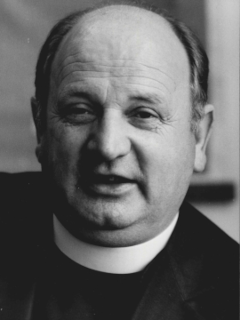
Eamonn Casey, Irish Catholic prelate who serves as bishop of Galway and Kilmacduagh from 1976 until his resignation 1992, returns to Ireland on February 5, 2006, following fourteen years in exile. He fled Ireland after he admitted to fathering his son, Peter.

Casey is born on April 24, 1927, in Firies, County Kerry. He is educated in Limerick before training for the priesthood at St. Patrick’s College, Maynooth. He is ordained a priest for the Diocese of Limerick on June 17, 1951, and appointed Bishop of Kerry on July 17, 1969.

Casey holds this position until 1976, when he is appointed Bishop of Galway and Kilmacduagh and apostolic administrator of Kilfenora. While in Galway, he is seen as a progressive. It is a significant change in a diocese that had been led for nearly forty years by the very conservative Michael Browne, bishop from 1937 to 1976. He is highly influential in the Irish Catholic hierarchy and a friend and colleague of another highly prominent Irish priest, Father Michael Cleary.

Casey works aiding Irish emigrants in Britain. In addition, he supports the Dunnes Stores‘ staff who are locked out from 1982 to 1986 for refusing to sell goods from apartheid South Africa.

Casey attends the funeral of the murdered Archbishop of San Salvador, Monsignor Óscar Romero. He witnesses first-hand the massacre of those attending the funeral by government forces. He then becomes a vocal opponent of United States foreign policy in Central America, and, as a result, opposes the 1984 visit of United States President Ronald Reagan to Ireland, refusing to meet him when he comes to Galway.

In 1992 it is reported that, despite the vow of chastity undertaken by Catholic clergy, Casey has a sexual relationship in the early 1970s with American woman Annie Murphy. When Murphy becomes pregnant, he is determined that the child should be given up for adoption in order to avoid any scandal for himself or the Catholic church. By contrast, Murphy is determined to accept responsibility for her child, and she returns to the United States with their son, Peter, who is born in 1974 in Dublin. He makes covert payments for the boy’s maintenance, fraudulently made from diocesan funds and channeled through intermediaries. In order to continue the cover up of his affair with Murphy and his fraudulent activities, he refuses to develop a relationship with his son, or acknowledge him. Murphy is very disappointed by this, and in the early 1990s contacts The Irish Times to tell the truth about Casey’s hypocrisy and deception. Having been exposed, he reluctantly admits that he had “sinned” and wronged the boy, his mother and “God, his church and the clergy and people of the dioceses of Galway and Kerry,” and his embezzlement of church funds. He is forced to resign as bishop and flees the country under a cloud of scandal. He is succeeded by his secretary, James McLoughlin, who serves in the post until his own retirement on July 3, 2005.

Murphy publishes a book, Forbidden Fruit, in 1993 revealing the truth of their relationship and the son she bore by Casey, exposing the institutional level of hypocrisy, moral corruption and misogyny within the Irish Catholic Church.

Casey is ordered by the Vatican to leave Ireland and become a missionary alongside members of the Missionary Society of St. James in a rural parish in Ecuador, whose language, Spanish, he does not speak. During this time, he travels long distances to reach the widely scattered members of his parish but does not travel to meet his own son. After his missionary position is completed, he takes a position in the parish of St. Pauls, Haywards Heath, West Sussex, England.

In 2005, Casey is investigated in conjunction with the sexual abuse scandal in Galway, Kilmacduagh and Kilfenora diocese, and cleared of any wrongdoing. In 2019, it emerges that he had faced at least three accusations of sexual abuse before his death, with two High Court cases being settled. The Kerry diocese confirms that it had received allegations against him, that Gardaí and health authorities had been informed and that the person concerned was offered support by the diocese.

Casey returns to Ireland on February 5, 2006, with his reputation in tatters, and is not permitted to say Mass in public.

In August 2011, Casey, in poor health, is admitted to a nursing home in County Clare. He dies on March 13, 2017, a month before his 90th birthday. He is interred in Galway cathedral’s crypt.

Casey is the subject of Martin Egan’s song “Casey,” sung by Christy Moore. He is also the subject of The Saw Doctors‘ song “Howya Julia.”


Leave a comment

Death of Theobald Walter, the First Chief Butler of Ireland

Theobald Walter, sometimes Theobald FitzWalter, Theobald Butler, or Theobald Walter le Boteler, the first Chief Butler of Ireland, dies on February 4, 1206, at Arklow Castle at Wicklow, in present day County Wicklow. He also holds the office of Chief Butler of England and is the High Sheriff of Lancashire for 1194. He is the first to use the surname Butler of the Butler family of Ireland. He is involved in the Irish campaigns of King Henry II of England and John of England. His eldest brother, Hubert Walter, becomes the Archbishop of Canterbury and justiciar and Lord Chancellor of England.

Walter is born in Norfolk, England, in 1165, the son of Hervey Walter and his wife, Matilda de Valoignes, who is one of the daughters of Theobald de Valoignes. Their children were Theobald, Hubert, Bartholomew, Roger, and Hamon. He and his brother Hubert are brought up by their uncle Ranulf de Glanvill, the great justiciar of Henry II of England who had married his mother’s sister Bertha.

On April 25, 1185, Prince John, in his new capacity as Lord of Ireland, lands at Waterford and around this time grants the hereditary office of butler of Ireland to Walter, whereby he and his successors are to attend the Kings of England at their coronation, and on that day present them with the first cup of wine. His father had been the hereditary holder of the office of butler of England. Sometime after, King Henry II of England grants him the prisage of wines, to enable him and his heirs, the better to support the dignity of that office. By this grant, he has two barrels of wine out of every ship, which breaks bulk in any trading port of Ireland, and is loaded with 20 tons of that commodity, and one ton from 9 to 20. He accompanies John on his progress through Munster and Leinster. At this time, he is also granted a large section of the north-eastern part of the Kingdom of Limerick. The grant of five and a half cantreds is bounded by:

“…the borough of Killaloe and the half cantred of Trucheked Maleth in which it lay, and the cantreds of Elykarval, Elyochgardi, Euermond, Aros and Wedene, and Woedeneoccadelon and Wodeneoidernan.”

These are the modern baronies of Tullough (in County Clare), Clonlisk and Ballybritt (in County Offaly), Eliogarty, Ormond Upper, Ormond Lower, Owney and Arra (in County Tipperary), Owneybeg, Clanwilliam and Coonagh (in County Limerick).

Walter is active in the war that takes place when Rory O’Connor attempts to regain his throne after retiring to the monastery of Cong (present day County Mayo), as his men are involved in the death of Donal Mor McCarthy during a parley in 1185 near Cork. In 1194, he supports his brother during Hubert’s actions against Prince John, with him receiving the surrender of John’s supporters in Lancaster. He is rewarded with the office of sheriff of Lancaster, which he holds until Christmas of 1198. He is again sheriff after John takes the throne in 1199.

In early 1200, however, John deprives Walter of all his offices and lands because of his irregularities as sheriff. His lands are not restored until January 1202. A manuscript in the National Library of Ireland points to William de Braose, 4th Lord of Bramber, as the agent of his restoration:

“Grant by William de Braosa, (senior) to Theobald Walter (le Botiller) the burgh of Kildelon (Killaloe) … the cantred of Elykaruel (the baronies of Clonlisk and Ballybrit, County Offaly), Eliogarty, Ormond, Ara and Oioney, etc. 1201.”

“Elykaruel” refers to the Gaelic túath of “Ely O’Carroll”, which straddles the southern part of County Offaly and the northern part of Tipperary (at Ikerrin). The other cantreds named are probably the modern baronies of Eliogarty, Ormond Upper, Ormond Lower and Owney and Arra in County Tipperary.

Walter founds the Abbey of Woney, of which nothing now remains, in the townland of Abington, near the modern village of Murroe in County Limerick around 1200. He also founds the Cockersand Abbey in Lancaster, Abbey of Nenagh in County Tipperary, and a monastic house at Arklow in County Wicklow.

Walter marries Maud le Vavasour (1176–1226), heiress of Robert le Vavasour, a baron of Yorkshire. John Lodge in the Peerage of Ireland in 1789 gives the year as 1189, but on no apparent authority, as no other author follows him on this. Their children are Theobald le Botiller, 2nd Chief Butler of Ireland, and Maud (1192–1244), who marries three times yet only has two surviving children, Ralph and Marie.

Walter dies on February 4, 1206, at Arklow Castle, County Wicklow, and is buried at Wotheney Abbey.


Leave a comment

Death of Esther Johnson, Close Friend of Jonathan Swift

Esther Johnson, an Englishwoman known as “Stella” and known to be a close friend of Jonathan Swift, dies on January 28, 1728. Whether or not she and Swift are secretly married, and if so, why the marriage is never made public, is a subject of debate.

Johnson is born in Richmond, Surrey, England, on March 13, 1681, and spends her early years at Moor Park, Farnham, home of Sir William Temple, 1st Baronet. Here, when she is about eight, she meets Swift, who is Temple’s secretary. He takes a friendly interest in her from the beginning and apparently supervises her education.

Johnson’s parentage has been the subject of much speculation. The weight of evidence is that her mother acts as companion to Temple’s widowed sister, Martha, Lady Giffard, and that Johnson, her mother and her sister Anne are regarded as part of the family. Her father is said to have been a merchant who died young. Gossip that she is Temple’s illegitimate daughter seems to rest on nothing more solid than the friendly interest he shows in her. There are similar rumours about his supposed relationship with Swift.

When Swift sees Johnson again in 1696, he considers that she has grown into the “most beautiful, graceful and agreeable young woman in London.” Temple, at his death in 1699, leaves her some property in Ireland, and it is at Swift’s suggestion that she move to Ireland in 1702 to protect her interests, but her long residence there is probably due to a desire to be close to Swift. She generally lives in Swift’s house, though always with female companions like Rebecca Dingley, a cousin of Temple whom she has known since childhood. She becomes extremely popular in Dublin and an intellectual circle grows up around her, although it was said that she finds the company of other women tedious and only enjoys the conversation of men.

In 1704, their mutual friend, the Reverend William Tisdall, tells Swift that he wishes to marry Johnson, much to Swift’s private disgust, although his letter to Tisdall, which outlines his objections to the marriage, is courteous enough, making the practical point that Tisdall is not in a position to support a wife financially. Little is known about this episode, other than Swift’s letter to Tisdall. It is unclear if Tisdall actually proposes to her. If he does, he seems to have been met with a firm rejection, and he marries Eleanor Morgan two years later. He and Swift, after a long estrangement, become friends once more after Johnson’s death.

Johnson’s friendship with Swift becomes fraught after 1707 when he meets Esther Vanhomrigh, daughter of the Dutch-born Lord Mayor of Dublin, Bartholomew Van Homrigh. Swift becomes deeply attached to her and invents for her the name “Vanessa.” She in turn becomes infatuated with him and after his return to Ireland follows him there. The uneasy relationship between the three of them continues until 1723 when Vanessa, who is by now seriously ill from tuberculosis, apparently asks Swift not to see Johnson again. This leads to a violent quarrel between them, and Vanessa, before her death in June 1723, destroys the will she had made in Swift’s favour, leaving her property to two men, George Berkeley and Robert Marshall, who though eminent in their respective callings are almost strangers to her.

Whether Swift and Johnson are married has always been a subject of intense debate. The marriage ceremony is allegedly performed in 1716 by St. George Ashe, Bishop of Clogher, with no witnesses present, and it is said that the parties agree to keep it secret and live apart. Johnson always describes herself as a “spinster” and Swift always refers to himself as unmarried. Rebecca Dingley, who lives with Johnson throughout her years in Ireland, says that Johnson and Swift were never alone together. Those who know the couple best are divided on whether a marriage ever took place. Some, like Mrs. Dingley and Swift’s housekeeper Mrs. Brent laugh at the idea as “absurd.” On the other hand, Thomas Sheridan, one of Swift’s oldest friends, believes that the story of the marriage is true. He reportedly gives Johnson herself as his source. Historians have been unable to reach a definite conclusion on the truth of the matter. Bishop Ashe dies before the story first becomes public, and there are no other witnesses to the supposed marriage.

A collection of Johnson’s witticisms is published by Swift under the titles of “Bon Mots de Stella” as an appendix to some editions of Gulliver’s Travels. A Journal to Stella, a collection of 65 letters from Swift to Johnson, is published posthumously.

In 1722, Martha, Lady Giffard, dies and leaves money to Johnson and Swift’s sister, Mrs. Fenton, who had been her companion in 1711.

Johnson’s health begins to fail in her mid-forties. In 1726, she is thought to be dying and Swift rushes back from London to be with her but finds her better. The following year it becomes clear that she is gravely ill. After sinking slowly for months, she dies on January 28, 1728, and is buried in St. Patrick’s Cathedral, Dublin. Swift is inconsolable at her death and writes The Death of Mrs. Johnson in tribute to her. When Swift dies in October 1745, he is buried beside her at his own request. A ward in St. Patrick’s University Hospital is named “Stella” in her memory.

In the 1994 film Words Upon the Window Pane, based on the play by William Butler Yeats, Johnson is played by Bríd Brennan. The plot turns on a séance in Dublin in the 1920s, where the ghosts of Swift, Johnson and Vanessa appear to resume their ancient quarrel.

In the 1982 Soviet film The House That Swift Built, Johnson is played by Aleksandra Zakharova.


Leave a comment

Birth of Mervyn Archdale, High Sheriff & Member of Parliament

Mervyn Edward Archdale DL, Irish soldier, High Sheriff and Member of Parliament (MP) known as Mervyn Edward Archdall until 1875, is born in Dublin on January 27, 1812.

Archdale is the eldest son of Edward Archdall of Riversdale, County Fermanagh, who serves as Sheriff of Fermanagh in 1813, and his wife Matilda, daughter of William Humphrys of Ballyhaise, County Cavan. He is educated at private schools in England at the expense of his uncle, General Mervyn Archdall, MP for Fermanagh (1801–34), and Brasenose College, Oxford, where he matriculates in 1830 but does not graduate.

Archdale joins the 6th (Inniskilling) Dragoons, becoming a cornet in 1832, a lieutenant in 1835 and a captain in 1841. He retires on half pay in 1847.

In June 1834, Archdale is elected the Member of Parliament for Fermanagh following the retirement of his uncle Mervyn Archdall. He is returned unopposed in the succeeding nine elections. From 1836, he is a noted member of the Orange Order and becomes treasurer of the Grand Lodge of Ireland. He votes in 1856 to disendow Maynooth College. When in 1868 he is asked to support a plea for the reprieve of Michael Barrett, a local Fenian under sentence of death in London, he refuses. He does not stand at the election of January 1874.

On the death of another uncle, Lt. Col. William Archdall, on January 1, 1857, Archdale inherits the family estates of Castle Archdale and Trillick in County Tyrone. He is appointed High Sheriff of Fermanagh in 1879.

Archdale has an interest in and also keeps racehorses. Other pursuits in which he is prominent are coursing and boating. He is a Freemason and member of five clubs.

Archdale marries Emma Inez, the daughter of Jacob Goulding of Kew, Surrey, with whom he has two sons, Mervyn Henry and Hugh James, and three daughters.

Archdale dies on December 22, 1895, at Cannes in the south of France. His estates pass to his brother, William Humphrys Archdale, who also takes over the representation of Fermanagh in Parliament.


Leave a comment

Birth of Thomas Charles Wright, Founder of the Ecuadorian Navy

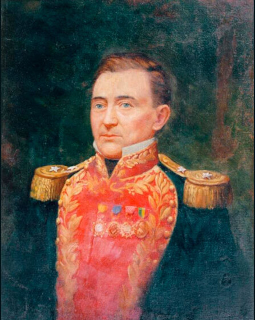
Thomas Charles Wright, founding father of the Ecuadorian Navy and a general in Simón Bolívar‘s army, is born in Queensborough, Drogheda, County Louth, on January 26, 1799. He is regarded as a leading militarist in Ecuador‘s and other South American countries’ struggle for independence.

Wright is born to Joseph Wright and Mary Montgomery. At the age of eleven, he is sent to the Royal Naval College at Portsmouth, regarded at the time as the finest in the world, where he is educated to become an officer.

At the age of fourteen, following his junior officer training, Wright embarks on a sea voyage on board HMS Newcastle under the captaincy of Lord George Stuart. On this vessel he sails to the east coast of the United States where he is engaged in blockading activities in the squadron of Admiral John Borlase Warren. In 1817 he returns to England, having attained the junior officer’s rank of midshipman.

Although Wright passes the lieutenant‘s examination, promotional opportunities are diminishing in the Royal Navy, and he is not given a commission like many young junior officers in Britain. Collectively, he and others decide to enlist in Simón Bolívar’s revolutionary army and sail for South America in support of the uprisings against Spanish colonial rule. In November 1817, he enlists as an officer in the British Legions of Simón Bolívar, under the patronage of Luis Lopez Mendez, Bolivar’s agent in London. Originally setting off from the River Thames in November 1817, several snags delay the departure until January 2, 1818. They depart from Fowey harbor and sail on a brigantine named Dowson, under naval commander Captain Dormer, with 200 other volunteers armed with valuable weapons and ammunition. They land in the Saint Thomas Island after several weeks. Admiral Luis Brión arrives with his squadron on the Island of St Thomas and Pigott and the Rifle Corps are shipped on Patriot vessels to Margarita Island off the coast of Venezuela, arriving on April 21, 1818.

They are sent to Guayana and then to Angostura, beginning the campaign in the Apure. At Angostura (present-day Ciudad Bolívar), Wright first meets Simón Bolívar, for whom he develops a deep admiration. Bolívar opens the liberating campaign in Apure. During 1818–1819, one of the earliest battles with Wright partaking as an officer is at Trapiche de Gamarra on March 27, 1819. These encounters inspire Bolívar to begin his New Granada campaign and the march 1,500 miles over the Andes Mountains. Wright accompanies Bolívar on the legendary crossing on which 25% of the British/Irish troops die.

Wright takes part in the entire land campaign to liberate the northern countries of South America, and fights in numerous land battles with Bolívar’s army. He plays leading roles in the Battle of Vargas Swamp, and later in the victory at the Battle of Boyacá in August 1819, after which he is promoted to captain. In 1820, he returns with his Rifles regiment to the coastal plains to campaign in the jungles east of the Magdalena against the Spanish based on Santa Marta. The Rifles Corp are then transported by sea to Maracaibo, and on June 21, 1821, take part in Simon Bolívar’s decisive victory in the Battle of Carabobo. Cartagena is also seized, and the Rifles are brought in boats up the Magdalena River en route to Popayán. They form part of the forces led by Bolívar in the second of his famed Andean campaigns. After the successful battle at Bomboná on 7 April 7, 1822, Wright is twice mentioned in Bolívar’s order of the day for his exceptional skill and courage. Again, he is promoted and from February 1822 he is an acting lieutenant colonel.

In early 1824, Bolívar realizes that, despite the Patriot Army success on land, unless the South American revolutionary armies can control the seas off their coasts, they will forever be under sea blockade from imperial Spain. He appoints Wright to the newly fledged United Pacific Naval Squadron.

After Guayaquil seizes independence, John Illingworth Hunt is appointed as Commanding General of the Maritime Department. Immediately he takes care of organizing everything concerning the Navy. Thus, in 1823, the first Ecuadorian naval force is formed.

Wright, who in February 1824 is promoted to captain, becomes Commodore of the South Squadron, and embarks on the brig Chimborazo, and conducts patrols along the Peruvian coast with seven transports properly equipped and ready to assist in the transfer of troops, when Bolívar’s army would require it. Following Bolivar’s defeat of the royalist forces at the Battle of Junín on August 6, 1824, Wright is instructed to proceed to Callao with a squadron of five ships and is placed under the orders of Admiral Martin Guisse, head of the United Squadron. The Gran Colombian units, forming this squadron, participate in some naval actions against the royalists and also in the blockade of Callao, the last Spanish stronghold in South America.

Bolívar installs Wright as a Commodore of the Pacific Southern Squadron. He is appointed to command a small fleet of ships in support of Admiral Martin Guisse and joins the Patriotic naval force blockading off Callao. Along with Admiral Guisse and a handful of other former Royal Navy officers, they spearhead the blockade of Callao that successfully fights the Spanish naval squadron sent to lift the blockade of the besieged city. The blockade holds and Callao capitulates in early 1826, ending Spanish rule in South America.

The revolutionary independence struggles end with the unfolding liberation of South America countries, and Wright settles in Ecuador where he helps establish the Ecuadorian Navy and helps create the Ecuadorian naval school that is named in his honor.

The downfall and expulsion of the Spanish colonial power leads to land disputes and new wars among the South American home nations that once were united against Spain. In 1827, Peruvian President José de la Mar invades Bolivia and then invades Ecuador. Wright takes up the cause of defending his new adopted homeland. His navy fights two battles with the Peruvians in the Gulf of Guayaquil.

In 1829, Wright returns to the army as a Colonel and is appointed General Antonio José de Sucre‘s aide-de-camp at the Battle of Tarqui.

Ecuador declares itself a republic in 1830, though the region is completely unsettled with Peru and Colombia both claiming parts of Ecuador as part of their territory. At this time Wright goes back in the Navy with his own flag officer’s pendant. He is also appointed to the army with the rank of General of Brigade in 1830. Two unconstitutional presidents, Vincente Rocafuerte and Valdivieso, declare themselves in office. Wright and Flores lead Rocafuerte’s army into a decisive battle that takes place at Minarica in 1835. This action is decisive, and they defeat General Barriga, who is Valdivieso’s appointed General. The victory guarantees the stability and future of Ecuador, with Rocafuerte becoming Ecuador’s president.

In 1835, Wright is Comandante del Apostadero, later changed to Comandancia General de la Marina (Commander-in-Chief of the Navy) for many years. He does not found the Ecuadorian Naval School, as often incorrectly cited. The college is named in his honor. He is the commanding officer of the Ecuadorian Naval Squadron before Ecuador becomes a Republic, as such he is considered a founding father of the Ecuadorian Navy. In this year he is also promoted to Army General of Division.

In 1843, Wright becomes the Governor of Guayaquil. This is the premier military position in the city.

In 1845, a military coup plot overthrows the liberal government supported by Wright and he goes into exile for fifteen years in Chile and Peru. In Chorrillos, Peru, he befriends the Ecuadorian exile Eloy Alfaro and exerts a massive influence on him as a mentor. Alfaro later becomes President of Ecuador from 1897 to 1913. Wright returns from exile in 1860 and opposes Gabriel García Moreno until his death in 1868.


Leave a comment

Birth of Joseph O’Sullivan, Irish Republican Army Volunteer

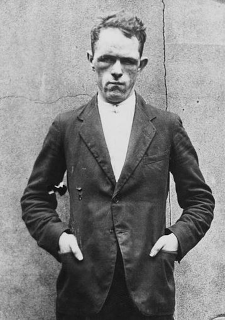
Joseph O’Sullivan, Irish Republican Army (IRA) volunteer, is born in London on January 25, 1897. Along with fellow IRA (London Battalion) volunteer Reginald Dunne, shoot dead Field Marshal Sir Henry Wilson outside Wilson’s home at 36 Eaton Place, Belgravia, London on June 22, 1922. Convicted by a jury, he is sentenced to death by Justice Montague Shearman. Despite a petition of 45,000 signatures, and a plea for clemency from many prominent figures at the time, including playwright George Bernard Shaw, O’Sullivan and Dunne are hanged for the murder on August 10, 1922, at Wandsworth Prison. The event provides the inspiration for the 1947 film Odd Man Out.

O’Sullivan’s father, John, is originally from Bantry, County Cork, and moves to London as a young man where he eventually becomes a successful tailor. His mother, Mary Ann O’Sullivan (née Murphy), is born in Inniscarra, County Cork. He is the youngest of thirteen children, all born in London, although only eleven survive to adulthood. As a boy he attends St. Edmund’s College, Ware. On January 25, 1915, his eighteenth birthday, he enlists into the Royal Munster Fusiliers, and later transfers to the London Regiment and serves with the rank of lance corporal during World War I, losing a leg at Ypres in 1917.

Upon being discharged from the army in 1918, O’Sullivan is employed by the Ministry of Munitions and, when the war ends, is transferred to the Ministry of Labour where he works as a messenger. The Ministry of Labour is located in Montagu House, adjacent to Scotland Yard, and later demolished and replaced by the present-day Ministry of Defence.

O’Sullivan becomes a member of the IRA detachment in London and is named by Rex Taylor as being responsible for the execution of Vincent Fovargue as a British spy at the Ashford Golf Links, Middlesex, on April 2, 1921. Fovargue is left with a label pinned to his body stating, “Let spies and traitors beware, IRA.” Fovargue had been an officer in the Dublin brigade of the IRA.

O’Sullivan’s brother, Patrick, is the first Vice-Commandant of the London IRA during its early days in 1919 but is seconded to the Cork No. 1 Brigade during the Irish War of Independence. Patrick also serves in the London Regiment during World War I, along with another brother, Aloysius, who is discharged from the army in 1916 suffering from shell shock. Patrick is also wounded in a gas attack during World War I. He fights with the Anti-Treaty IRA during the Irish Civil War and is wounded ten days after his brother is executed. Shortly before that, he crosses over to England to participate in an abortive attempt to rescue Dunne and his brother.

In 1923, John O’Sullivan tries to have the remains of his son and Dunne released for a funeral Mass. But it is not until after the abolition of capital punishment in the United Kingdom that Patrick O’Sullivan, with the assistance of the Irish Republican National Graves Association, is able to arrange for the bodies of O’Sullivan and Dunne to be sent to Ireland for burial. In mid-August 1929, Irish Republicans in London unveil a plaque commemorating Dunne and O’Sullivan. In 1967, after some political and diplomatic debate by the British and Irish governments, the British Government allows the bodies of Dunne and O’Sullivan to be exhumed. They are subsequently reburied in Dean’s Grange Cemetery, County Dublin.

(Pictured: Photograph of IRA member Joseph O’Sullivan taken before his 1922 execution)


Leave a comment

Death of St. John Greer Ervine, Playwright & Author

St. John Greer Ervine, unionist playwright, author, critic, and manager of the Abbey Theatre from 1915 to 1916, dies in a nursing home at Fitzhall, Ipling, Sussex, England, on January 24, 1971.

Ervine is born in Ballymacarrett, Belfast on December 28, 1883. He is considered to be the founding father of modern Northern Irish drama.

Although accepted to study at Trinity College, Dublin, circumstances force Ervine to leave school at the age of 15 to begin working in an insurance office.

Two years later, Ervine immigrates to London, where he discovers a love for the theatre. He begins his writing career with Mixed Marriage (1911), an Ulster tragedy, and produces three plays between 1911 and 1915. In 1915, after a meeting with William Butler Yeats in London, he becomes the director of the Abbey Theatre in Dublin. It is, however, not a happy appointment as his personality and politics clash with the management of the theatre.

Ervine then joins the Royal Dublin Fusiliers and fights in Flanders, losing a leg in the conflict. Returning home, he feels increasingly alienated by nationalism and more attracted to the unionism of his family background. He becomes a vehement detractor of the south, describing Ireland in a letter to George Bernard Shaw as brimming with “bleating Celtic Twilighters, sex-starved Daughters of the Gael, gangsters and gombeen men.”

Ervine is a distinctively Ulster orientated writer, focusing on a naturalistic portrayal of rural and urban life. His most famous and popular work amongst his Northern Irish audience is Boyd’s Shop (1936), which becomes one of the Ulster Group Theatre’s stalwart productions. The play is a classic of the homely yet sincere Ulster genre and centres around the struggles of the folk that Ervine grew up with in his grandmother’s shop on the Albertbridge Road. Ervine creates in Boyd’s Shop a template for Ulster theatre that is to dominate until the advent of Samuel Thompson‘s Over the Bridge.

Ervine’s reactionary unionism and anti-southern hatred becomes more pronounced as he ages and eclipses his more subtle characteristics and abilities as a writer. Although many of his novels and plays are at times clouded by his prejudices, they are also very often capable of tremendous feeling and humanity showing he is a writer of note.

St. John Greer Ervine dies at the age of 87 at Fitzhall, Ipling, Sussex on January 24, 1971.


Leave a comment

Death of Irish Poet Ewart Milne

Ewart Milne, Irish poet, dies in Bedford, Bedfordshire, England, of a heart attack on January 14, 1987. He describes himself on various book jackets as “a sailor before the mast, ambulance driver and courier during the Spanish Civil War, a land worker and estate manager in England during and after World War II” and also “an enthusiast for lost causes – national, political, social and merely human.”

Milne is born in Dublin on May 25, 1903, to English and Welsh Irish parents and is educated at Christchurch Cathedral Grammar School. In 1920 he signs on as a seaman and works on boats, off and on, until 1935. During the 1930s he begins writing and has his first poems published in 1935.

The background to the Spanish Civil War contributes to Milne’s political awakening and he comes to England to work as a voluntary administrator for the Spanish Medical Aid Committee in London, for whom he often acts as a medical courier. He also was once unwillingly involved in an arms deal while visiting Spain on their behalf.

After Spanish Medical Aid Committee is wound up, Milne returns to Ireland but remains politically active in support of the campaign for the release of Frank Ryan, the leader of the Connolly Column of Irish volunteers on the Republican side, who had been captured and imprisoned in Spain. At one point he takes part in a delegation to Westminster seeking Labour Party support for this. In August 1938 he is reported in The Worker’s Republic as being one of the twelve-member committee of the James Connolly Irish club in London.

During his time in England and Spain, Milne gets to know the left-leaning poets who support the Republican cause, including W. H. Auden, Stephen Spender and Cecil Day-Lewis. In 1938 his first collection of poems, Forty North Fifty West, is published in Dublin, followed by two others in 1940 and 1941. Having taken a pro-British line in neutral Ireland, he is informed by Karl Petersen, the German press attaché in Dublin, that he is on the Nazi death list. This convinces him to help in the British war effort and he returns to England with the help of John Betjeman, then working at the British embassy in Ireland.

Between 1942–1962 Milne is resident in England and an active presence on the English literary scene. In particular he becomes associated with the poets grouped around the magazine Nine, edited by Peter Russell and Ian Fletcher. He and his wife Thelma also back the young Irish poet Patrick Galvin when he launches his own magazine, Chanticleer. This generous encouragement of younger writers is later extended to several others, including John F. Deane, Gerald Dawe and Maurice Scully.

Milne regards his return to Dublin in 1962 as a disaster, as his four-year stay is overshadowed by quarrels with the establishment, the discovery of betrayal by a friend and the death of his wife from lung cancer. The misery of those events is recorded in Time Stopped (1967). The artistic frustration of the time also results in the poems included in Cantata Under Orion (1976). Returning to England in 1966, he settles in Bedford. Politically he remains involved and speaks alongside Auberon Waugh at the rally on behalf of Biafra in 1968, but his views move further to the right in later years. He writes to The Irish Times on April 13, 1976, saying that he has been “taken in by Stalin and that Leninism is Satanism.” He also sides with the Loyalist position in the Ulster conflict. He dies in Bedford of a heart attack on January 14, 1987.

Milne is twice married, first to Kathleen Ida Bradner in 1927, by whom he has two sons; then in 1948 to Thelma Dobson, by whom he has two more sons.

(Pictured: A portrait of Ewart Milne by Cecil F. Salkkeld, as it appears in Milne’s book Forty North Fifty West)


Leave a comment

Birth of Captain Otway Cuffe

Captain Otway Cuffe, benefactor, Gaelic revivalist, twice mayor of Kilkenny and a founder of businesses and organisations to profit the local people, is born in London on January 11, 1853.

Cuffe is born the Honourable Otway Frederick Seymour Cuffe to John Cuffe, 3rd Earl of Desart, and Lady Elizabeth Lucy Campbell. He has an older sister and two older brothers. After the death of his eldest brother William Ulick, 4th Earl of Desart, his seecond eldest brother, Hamilton, becomes the 5th Earl of Desart. As the 5th Earl has no male heirs himself, Cuffe is nominally his heir. However, as he also dies without heirs, the line becomes extinct upon the death of the 5th Earl.

Cuffe marries Elizabeth St. Aubyn on July 22, 1891. She is the daughter of John St. Aubyn, 1st Baron St. Levan of St. Michael’s Mount, Cornwall, England, and Lady Elizabeth Clementina Townshend. When he becomes the heir to the Kilkenny-based title he moves to Ireland and lives nearby the main house, in Sheestown Lodge, Kilkenny, County Kilkenny. He has been in the British Army, serving as aide-de-camp to Prince Arthur, Duke of Connaught and Strathearn, in 1880–81. He is Groom of the Privy Chamber to Queen Victoria from 1893 until her death in 1901 and Gentleman Usher to both King Edward VII from 1901 until his death in 1910 and King George V until 1911. His rank in the army is Captain in the Rifle Brigade.

Dedicated to ensuring a strong Irish identity in the area, Cuffe works with his sister-in-law, Ellen Cuffe, Countess of Desart. He joins Conradh na Gaeilge soon after his arrival in Kilkenny. He is elected president of its Kilkenny branch in 1904 and remains so until his death. He is replaced by Lady Desart. Together they open the theatre in Kilkenny in 1902 and he is the first President of the Kilkenny Drama Club. He also performs on stage.

Cuffe is first elected Mayor of Kilkenny in 1907 and again in 1908. With Lady Desart, he builds the Kilkenny Woollen Mills, Desart Hall, the Talbot’s Inch model village and the Kilkenny Woodworkers factory. He lays the foundation stone for Kilkenny’s Carnegie library. He is also President of the Irish Industrial Association.

Cuffe is a friend of William Morris whom he had met on a trip to Iceland. He believes in the Arts and Crafts movement and tries to implement it in the projects which he drives. He is also a friend and supporter of Standish James O’Grady and helps him found the weekly radical conservative paper The All-Ireland Review and runs it between 1900 and 1906.

In 1911, Cuffe becomes ill and is forced to move to warmer climates until he recovers. He decides to go to the south of Europe but then a visit to Australia seems appropriate. However, on the journey there he contracts pneumonia and dies at Fremantle in Western Australia on January 3, 1912. He is buried at Perth, carried to his grave by Kilkenny hurlers. The Kilkenny Moderator calls his death “a thunderbolt to the people of Kilkenny.” He is remembered as a visionary who made a permanent impact on the physical landscape of Kilkenny.