seamus dubhghaill

Promoting Irish Culture and History from Little Rock, Arkansas, USA


Leave a comment

Death of Edmund Ignatius Rice, Missionary & Educationalist

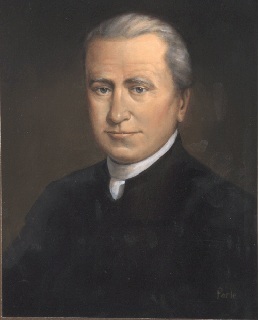
Edmund Ignatius Rice, Catholic missionary and educationalist, dies on August 29, 1844, at Mount Sion, Waterford, County Waterford, after living in a near-comatose state for more than two years.

Rice is born on June 1, 1766, at Westcourt, Callan, County Kilkenny, the fourth of seven sons of Robert Rice, a farmer, and his wife, Margaret Tierney. His education begins at a local hedge school. He subsequently transfers to a school in Kilkenny before being apprenticed in 1779 to his uncle, a prosperous merchant at Waterford. He amasses a fortune in the lucrative provisioning trade of the city, and in 1785 he marries Mary Elliott, the daughter of a local tanner. Their only child, Mary, has intellectual disabilities and Rice suffers additional heartbreak with the death of his wife in 1789 following an accident, possibly by a fever that set in afterwards.

The death of his wife clearly affects Rice’s life. While he continues in trade and is an active member of the Catholic committee in the city, his priorities are radically changed. From this point he becomes increasingly involved in pious and charitable pursuits. He assists in the foundation of the Trinitarian Orphan Society in 1793 and the Society for the Relief of Distressed Roomkeepers in 1794. He joins religious confraternities and devotes considerable attention to the plight of prisoners. His endeavours become more focused in 1797 when, in response to a controversial pastoral of Bishop Thomas Hussey of Waterford and Lismore, he embraces the cause of Catholic education. In 1802, he establishes a religious community of laymen who set out to do for the neglected poor boys of Waterford what Nano Nagle had done for poor girls in Cork. His community is the genesis of both the Presentation Brothers and the Irish Congregation of Christian Brothers. Rice’s “monks” follow a variation of the Presentation rule, and his school curriculum is a pragmatic combination of best practice of the time overlaid by an uncompromisingly Catholic emphasis. By the time of his death in 1844, the Christian Brothers run forty-three schools, including six in England.

Rice is pivotal in the revival of Irish Catholicism following the severe dislocation of the penal era. Among the urban poor the Brothers make a landmark contribution in widening the social base of the institutional church. Through their teaching and catechetical instruction, they introduce the poor to the new forms of devotion which become the hallmark of nineteenth-century Catholicism. This effort brings a previously marginalised class within the ranks of the institutional church, which in time becomes the backbone of the emerging Catholic Ireland. The Brothers also play a determined role in the Catholic response to the proselytising efforts of the protestant Second Reformation in the country. Rice’s Brothers assist in the moulding of a distinctively Catholic urban working class, by promoting literacy alongside piety and instilling in their pupils the middle-class virtues of personal discipline, hard work, and sobriety.

Rice collaborates closely with other Catholic leaders of his age. His congregation is central to the success of Theobald Mathew‘s temperance movement. In 1828, at the height of the emancipation campaign, he invites Daniel O’Connell to lay the foundation stone of the Brothers’ model school at North Richmond Street, Dublin. This “monster meeting” attracts an attendance of 100,000, before which O’Connell hails Rice as the “patriarch of the monks of the west.” During the Repeal campaign, too, the Brothers frequently host the Liberator. Reflecting on their efforts, O’Connell declares that “education to be suited to this country must be Catholic and Irish in its tone, having as its motto Faith and Fatherland.”

Rice’s uncompromising adherence to these principles is not without difficulty. It leads to a predictably acrimonious relationship with the secular national board and his eventual withdrawal of the Brothers’ schools from the system in 1836. Rejection of the national board imposes serious financial burdens on the Christian Brothers which are relieved only by the bounties provided by the Intermediate Education Act (1878). Withdrawal also serves to alienate many friends and benefactors, including Daniel Murray, Archbishop of Dublin, who is a commissioner of national education. But the bishops gradually adopt Rice’s stance. After 1838 they become increasingly hostile to the national board, and the Brothers’ schools, with their acclaimed textbooks, are recognised as a bulwark against non-denominational education. For similar reasons, the Brothers become closely associated with Irish nationalism. In 1892, the MP William O’Brien observes that “the Christian Brothers system was regarded in Ireland as the really national system.”

The 1830s bring a rapid deterioration in Rice’s health. Financial difficulties frustrate his plans, and the plight of the three Dublin foundations is particularly acute. Rice resigns as superior general of his congregation in 1838, but fraught relations with his successor, Br. Michael Paul Riordan, blights his later years.

From this time on, Rice spends an increasing proportion of his time at Mount Sion and the adjoining school, showing a continued interest in the pupils and their teachers. He also takes a short walk each day on the slope of Mount Sion, but his increasingly painful arthritis leads the community superior, Joseph Murphy, to purchase a wheelchair for his benefit. At Christmas time in 1841, his health takes a turn for the worse and even though expectations of his imminent death do not turn out to be justified, he is increasingly confined to his room.

After living in a near-comatose state for more than two years and in the constant care of a nurse since May 1842, Rice dies on August 29, 1844, at Mount Sion, Waterford, where his remains lie in a casket to this day. Large crowds fill the streets around his house in Dublin to honour him. He is beatified by Pope John Paul II in 1996.

(From: “Rice, Edmund Ignatius” by Dáire Keogh, Dictionary of Irish Biography, http://www.dib.ie, October 2009)
Leave a comment

Death of Anew McMaster, Touring Shakespearean Actor & Manager

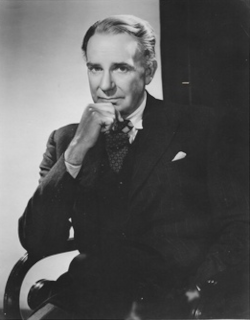
Anew McMaster, the last of the touring actor-managers who presents William Shakespeare’s plays throughout the United Kingdom, Ireland, Australia and the United States, dies in Dublin on August 24, 1962. For almost 35 years he tours as actor-manager of his own theatrical company performing the works of Shakespeare and other playwrights.

McMaster is born as Andrew McMaster on December 24, 1891, the son of Liverpool-born Andrew McMaster, a master stevedore, and Alice Maude (née Thompson). A number of sources make the erroneous claims, based on details supplied by McMaster himself, that he is born in 1893 or 1894 or even 1895 in County Monaghan in Ireland, but according to the Birth Register and the 1901 Census he is actually born in 1891 in Birkenhead, England. Like his future brother-in-law, Micheál Mac Liammóir, who is born in London as Alfred Willmore but who claims to have been born in Cork to Gaelic-speaking parents, McMaster reinvents himself as Irish and claims for himself the town of Monaghan as his birthplace, and Warrenpoint, County Down, as the scene of his earliest memories.

At the age of 19, McMaster gives up a career in banking to pursue one on the stage. He moves to Ireland and tours the country with the O’Brien-Ireland theatrical company from 1910 to 1914. Success quickly follows with his appearance as Jack O’Hara in Paddy the Next Best Thing at the Savoy Theatre in 1920. From 1921 he tours Australia in this and other plays, and in 1925 forms his own company, the McMaster Intimate Theatre Company, a “fit-up” company to tour in the works of Shakespeare, mainly in Ireland but also in Britain and Australia, touring with his theatrical company until 1959. One of the last actor-managers “of the old school – and an epitome of the type,” on occasions McMaster persuades a “big name” to act with his company as a draw for audiences, and Frank Benson (1928), Sara Allgood (1929) and Mrs. Patrick Campbell appear with him.

In 1933 at the Shakespeare Memorial Theatre in Stratford-upon-Avon McMaster appears as Hamlet opposite Esme Church as Gertrude, Coriolanus, Macduff in Macbeth, Leonato in Much Ado About Nothing, Prince Escalus in Romeo and Juliet, and Petruchio in The Taming of the Shrew. His greatest roles are as Othello and as Shylock in The Merchant of Venice, to which he adds King Lear in 1952. Just before World War II he and his company appear at the Chiswick Empire in a Shakespeare season. He tours the United States as James Tyrone in Eugene O’Neill‘s Long Day’s Journey into Night in 1956. Having “a great organ voice,” Harold Pinter, who acts in his company in Ireland from 1951 to 1953 and calls him “Perhaps the greatest actor-manager of his time,” later describes McMaster as “evasive, proud, affectionate, shrewd, merry.” In his brief biography Mac (1968), Pinter recalls, “Mac gave about a half dozen magnificent performances of Othello while I was with him… At his best he was the finest Othello I have seen. [He] stood dead in the centre of the role, and the great sweeping symphonic playing would begin, the rare tension and release within him, the arrest, the swoop, the savagery, the majesty and repose.”

McMaster’s only film role is an uncredited appearance as the Judge in Sword of Sherwood Forest (1960).

In 1924 McMaster marries the actress and designer Marjorie Willmore, the sister of Micheál Mac Liammóir. They have two children, the actors John Christopher McMaster and Mary-Rose McMaster.

McMaster dies at the age of 70 at his home in Dublin on August 24, 1962. He is buried with his wife in Dean’s Grange Cemetery in County Dublin.

McMaster trains a generation of actors who tour with his company and go on to achieve success as actors. These include Pauline Flanagan, Milo O’Shea, T. P. McKenna, Kenneth Haigh, Henry Woolf, Harold Pinter, Donal Donnelly and Patrick Magee. It is while they are touring with McMaster’s company that the actor and dramatist Micheál Mac Liammóir and the actor and producer Hilton Edwards first meet and begin their lifelong partnership.

McMaster’s biography, A Life Remembered: A Memoir of Anew McMaster, by his daughter Mary-Rose McMaster, is published in 2017. Harold Pinter also publishes a short biography, Mac, in 1968.


Leave a comment

Birth of Michael Butler Yeats, Barrister & Fianna Fáil Politician

Michael Butler Yeats, Irish barrister and Fianna Fáil politician, is born on August 22, 1921, at Thame, South Oxfordshire District, Oxfordshire, England. He serves two periods as a member of Seanad Éireann.

Yeats’s father is the poet William Butler Yeats, who likewise serves in the Seanad, and his mother is Georgie Hyde-Lees. His sister, Anne Yeats, is a painter and designer, as is his uncle Jack Butler Yeats. He is educated at St. Columba’s College, Dublin, and Trinity College Dublin, where he gains a first-class honours degree in history. He is an officer in the College Historical Society. He also qualifies as a lawyer but does not practise.

Yeats unsuccessfully stands for election to Dáil Éireann at the 1948 Irish general election and the 1951 Irish general election for the Dublin South-East constituency. Following the 1951 election, he is nominated to the 7th Seanad by Taoiseach Éamon de Valera. He stands at the subsequent election in 1954 for the 8th Seanad but is not elected.

From 1961 to 1980 Yeats is a member of Seanad Éireann. In 1961 he is elected to the 10th Seanad by the Labour Panel. In 1965 he is nominated by Taoiseach Seán Lemass to the 11th Seanad. In 1969 he is elected to the 12th Seanad by the Cultural and Educational Panel and re-elected to the 13th Seanad in 1973. In 1977, he is nominated by Taoiseach Jack Lynch to the 14th Seanad. He resigns from the Seanad on March 12, 1980.

From 1969 to 1973, during the 12th Seanad, Yeats serves as Cathaoirleach (chair).

While a senator, Yeats serves as a Member of the European Parliament from 1973 to 1979, being appointed to Ireland’s first, second and third delegations. He stands at the first direct elections in 1979 for the Dublin constituency but is not elected. He is Director General of the EEC Council of Ministers in Brussels in the 1980s.

Yeats marries Gráinne Ni hEigeartaigh, a singer and Irish harpist. They have four children – three daughters and a son.

Yeats dies in Dublin at the age of 85 on January 3, 2007. He is buried in Shanganagh Cemetery in Shankill, County Dublin.


Leave a comment

Birth of Valentine Browne Lawless, 2nd Baron Cloncurry

Valentine Browne Lawless, 2nd Baron Cloncurry, Irish peer, politician and landowner, is born in Merrion Square in Dublin on August 19, 1773.

Lawless is the only surviving son of Nicholas Lawless, wool merchant, brewer, and banker, who becomes 1st Baron Cloncurry in 1789, and Margaret Lawless (née Browne), only daughter and heiress of Valentine Browne of Mount Browne, County Limerick. He is educated privately at Portarlington, Queen’s County (now County Laois), and at Blackrock, County Dublin. He enters Trinity College Dublin (TCD) in 1789, graduating BA in 1792. After completing a tour of Europe (1792–95) he returns to Ireland, where he joins the Society of United Irishmen and the loyalist yeomanry. Pressurized by his father, he decides to study law, and is at Middle Temple from 1795 to 1798. He later claims that at a dinner party in the spring of 1797 he hears the prime minister, William Pitt, discuss his plans for a legislative union with Ireland, prompting him to write an anti-union pamphlet in response. Like many of the claims in his published recollections, the story is unreliable.

During 1797 Lawless helps Arthur O’Connor form his United Irishman newspaper The Press, and Leonard McNally informs Dublin Castle that Lawless is its principal shareholder. In October 1797 Lawless attends a meeting of the executive directory of the United Irishmen, of which he is elected a member. Throughout this period and after his return to London he is carefully watched by the British secret service. His friendship with O’Connor, and the fact that he provides funds for Fr. James Coigly, arouse deep suspicion. After the outbreak of open rebellion in Ireland he is arrested at his lodgings in Pall Mall on May 31, 1798, on suspicion of high treason, and imprisoned for six weeks in the Tower of London. Arabella Jefferyes, sister of the Earl of Clare, apparently tries to extort money from Lawless in return for pleading his case to the Duke of Portland. He refuses the offer. On his release he tours England on horseback but is rearrested on April 14, 1799, and held until March 1801. His father votes for the Act of Union, hoping to secure his son’s release, and dies on August 28, 1799. Lawless succeeds him as 2nd Baron Cloncurry. His grandfather and his fiancée, Mary Ryal, also die while he is imprisoned.

Embittered by his experience, Lawless tours the Continent from 1801 to 1805 before returning to his family estate at Lyons Hill, Ardclough, County Kildare. Throwing himself into improving his estates and into local concerns, he founds the County Kildare Farming Society in 1814. He is also involved in canal developments and agricultural improvements in the country. Opposed to the rural constabulary bill of 1822, he supports Catholic emancipation and the attempts of Daniel O’Connell to repeal the Act of Union. He breaks with O’Connell in the 1830s when his friend, Henry Paget, 1st Marquess of Anglesey, is viceroy, because he believes repeal can now be achieved through official means. The rift is never healed.

In 1831, Lawless is admitted to the Privy Council of Ireland (PC) and an English peer but rarely attends the House of Lords. Involved in anti-tithe campaigns, he retires from politics in 1840. Travelling on the Continent in 1841 and 1842, he returns to defend O’Connell’s planned Clontarf meeting in the privy council but refuses to attend any further meetings after his advice on dealing with the Great Famine is ignored in 1846. In 1849 he publishes his personal reminiscences, which appear to have been ghost-written.

Lawless’s health begins to fail in 1851. He dies at the older family home, Maretimo House, Blackrock, on October 28, 1853, and is buried in the family vault at Lyons Hill.

Lawless first marries Elizabeth Georgiana, youngest daughter of Lieutenant-General Charles Morgan, at Rome on April 16, 1803. They have one son and one daughter. The marriage ends in divorce in 1811 after her adultery with Sir John Piers. In 1811, he then marries Emily, daughter of Archibald Douglas of England, and widow of Joseph Leeson. They have two sons and a daughter. The elder son, Edward, succeeds as 3rd Baron Cloncurry. He commits suicide in 1869 by throwing himself out of a third-floor window at Lyons Hill. The younger, Cecil-John, is an MP, but catches a chill at his father’s funeral and dies on November 5, 1853.

(From: “Lawless, Valentine Browne” by Patrick M. Geoghegan, Dictionary of Irish Biography, http://www.dib.ie, October 2009 | Pictured: Lyons House, Lyons Hill, Ardclough, County Kildare)


Leave a comment

Birth of James Whiteside, Politician & Judge

James Whiteside, Irish politician and judge, is born at Delgany, County Wicklow, on August 12, 1804.

Whiteside is the son of William Whiteside, a clergyman of the Church of Ireland. His father is transferred to the parish of Rathmines but dies when his son is only two years old, leaving his widow in straitened circumstances. She schools her son personally in his early years. He is educated at Trinity College Dublin, enters the Middle Temple, and is called to the Irish bar in 1830.

Whiteside very rapidly acquires a large practice, and after taking silk in 1842 he gains a reputation for forensic oratory surpassing that of all his contemporaries and rivalling that of his most famous predecessors of the 18th century. He defends Daniel O’Connell in the state trial of 1843, and William Smith O’Brien in 1848. His greatest triumph is in the Yelverton case in 1861. He is elected Member of Parliament (MP) for Enniskillen in 1851, and in 1859 becomes an MP for Dublin University. In Parliament, he is no less successful as a speaker than at the bar, and in 1852 is appointed Solicitor-General for Ireland in the first administration of Prime Minister Edward Smith-Stanley, becoming Attorney-General for Ireland in 1858, and again in 1866. In the same year he is appointed Lord Chief Justice of the Queen’s Bench, having previously turned down offers of a junior judgeship. His reputation as a judge does not equal his reputation as an advocate, although he retains his great popularity. In 1848, after a visit to Italy, he publishes Italy in the Nineteenth Century. In 1870 he collects and republishes some papers contributed many years before to periodicals, under the title Early Sketches of Eminent Persons.

In July 1833, Whiteside marries Rosetta, daughter of William and Rosetta Napier, and sister of Sir Joseph Napier, Lord Chancellor of Ireland. Like his brother-in-law, Joseph, he is devoted to the Church of Ireland and strongly opposes its disestablishment.

Whiteside is universally well-liked, being noted for charm, erudition and a sense of humour. Barristers who practise before him say that his charm, courtesy and constant flow of jokes make appearing in his Court a delightful experience.

Whiteside’s last years on the bench ware affected by ill health. He dies on November 25, 1876, at Brighton, Sussex, England. His brother-in-law, from whom he is estranged in later years, is overcome with grief at his death and collapses at the funeral. He is buried at Mount Jerome Cemetery in Dublin.

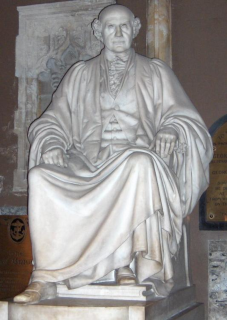
(Pictured: Statue of James Whiteside by Albert Bruce-Joy on display in St. Patrick’s Cathedral)


Leave a comment

Death of Annie Horniman, Theatre Patron & Manager

Annie Elizabeth Fredericka Horniman CH, English theatre patron and manager, dies on August 6, 1937, while visiting friends in Shere, Surrey, England. She establishes the Abbey Theatre in Dublin and founds the first regional repertory theatre company in Britain at the Gaiety Theatre in Manchester. She encourages the work of new writers and playwrights, including W. B. Yeats, George Bernard Shaw and members of what become known as the Manchester School of dramatists.

Horniman is born at Surrey Mount, Forest Hill, London, on October 3, 1860, the elder child of Frederick John Horniman and his first wife Rebekah (née Emslie). Her father is a tea merchant and the founder of the Horniman Museum. Her grandfather is John Horniman who founds the family tea business of Horniman and Company. She and her younger brother Emslie are educated privately at their home. Her father is opposed to the theatre, which he considers sinful, but their German governess takes her and Emslie secretly to a performance of The Merchant of Venice at The Crystal Palace when she is fourteen years old.

Horniman’s father allows her to enter the Slade School of Fine Art in 1882. Here she discovers that her talent in art is limited but she develops other interests, particularly in the theatre and opera. She takes great pleasure in Richard Wagner‘s Der Ring des Nibelungen and in Henrik Ibsen‘s plays. She cycles in London and twice over the Alps, smokes in public and explores alternative religions. The “lonely rich girl” has become “an independent-minded woman.” In 1890 she joins the occult society, the Hermetic Order of the Golden Dawn, where she remains a member until disagreements with its leaders lead to her resignation in 1903. During this time she meets and becomes a friend of W. B. Yeats, acting as his amanuensis for some years. Their friendship endures. Frank O’Connor recalls that on the day Yeats hears of her death, he spends the entire evening speaking of his memories of her.

Horniman’s first venture into the theatre is in 1894 and is made possible by a legacy from her grandfather. She anonymously supports her friend Florence Farr in a season of new plays at the Royal Avenue Theatre, London. This includes a new play by Yeats, The Land of Heart’s Desire, and the première of George Bernard Shaw’s play Arms and the Man. In 1903 Yeats persuades her to go to Dublin to back productions by the Irish National Theatre Society. Here she discovers her skill as a theatre administrator. She purchases a property and develops it into the Abbey Theatre, which opens in December 1904. Although she moves back to live in England, she continues to support the theatre financially until 1910. Meanwhile, in Manchester she purchases and renovates the Gaiety Theatre in 1908 and develops it into the first regional repertory theatre in Britain.

At the Gaiety, Horniman appoints Ben Iden Payne as the director and employs actors on 40-week contracts, alternating their work between large and small parts. The plays produced include classics such as Euripides and Shakespeare, and she introduces works by contemporary playwrights such as Ibsen and Shaw. She also encourages local writers who form what becomes known as the Manchester School of dramatists, the leading members of which are Harold Brighouse, Stanley Houghton and Allan Monkhouse. The Gaiety company undertakes tours of the United States and Canada in 1912 and 1913. Horniman becomes a well-known public figure in Manchester, lecturing on subjects which include women’s suffrage and her views about the theatre. In 1910 she is awarded the honorary degree of MA by the University of Manchester. During World War I the Gaiety continues to stage plays but financial difficulties lead to the disbandment of the permanent company in 1917, following which productions in the theatre are by visiting companies. In 1921 she sells the theatre to a cinema company.

As a result of her tea connection, Horniman is known as “Hornibags.” She holds court at the Midland Hotel, wearing exotic clothing and openly smoking cigarettes, which is considered scandalous at the time. She introduces Manchester to what is called at the time “the play of ideas.” The theatre critic James Agate notes that her high-minded theatrical ventures have “an air of gloomy strenuousness” about them.

Horniman moves to London where she keeps a flat in Portman Square. In 1933 she is made a Companion of Honour. She and Algernon Blackwood might be the only past or present members of an occult society to receive a United Kingdom honour.

Horniman dies, unmarried, on August 6, 1937, while visiting friends in Shere, Surrey. Her estate amounts to a little over £50,000. The Annie Horniman Papers are held in the John Rylands Research Institute and Library at the University of Manchester. Her portrait, painted by John Butler Yeats in 1904, hangs in the public area of the Abbey Theatre.


Leave a comment

Birth of Gerry Cooney, Former Professional Boxer

Gerald Arthur Cooney, American former professional boxer who competes from 1977 to 1990, is born into a blue-collar Irish Catholic family on August 4, 1956, in Manhattan, New York City. He challenges twice for world heavyweight titles in 1982 and 1987. He is widely regarded as one of the hardest punchers in heavyweight history.

Cooney is encouraged to become a professional fighter by his father. His brother, Tommy Cooney, is also a boxer and reaches the finals of the New York Golden Gloves Sub-Novice Heavyweight division. His grandparents lived in Placentia, Newfoundland, in Canada.

Fighting as an amateur, Cooney wins international tournaments in England, Wales, and Scotland, as well as the New York Golden Gloves titles. He wins two New York Golden Gloves Championships, defeating Larry Derrick to win the 1973 160-lb Sub-Novice Championship and Earlous Tripp to win the 1976 Heavyweight Open Championship. In 1975 he reaches the finals of the 175-lb Open division, but is defeated by Johnny Davis. He trains at the Huntington Athletic Club in Long Island, New York, where his trainer is John Capobianco. His amateur record consists of 55 wins and 3 losses.

When Cooney turns professional, he signs with co-managers Mike Jones and Dennis Rappaport. He is trained by Victor Valle. Known for his big left-hook and his imposing size, he has his first paid fight on February 15, 1977, beating Billy Jackson by a knockout in one round. Nine wins follow and he gains attention as a future contender, although his opponents are carefully chosen. He moves up a weight class and fights future world cruiserweight champion S. T. Gordon in Las Vegas, winning by a fourth round disqualification. He has eleven more wins, spanning 1978 and 1979. Among those he defeats are Charlie Polite, former U.S. heavyweight champion Eddie Lopez, and Tom Prater. These are not rated contenders, however.

By 1980, Cooney is being featured on national television. Stepping up, he beats one-time title challengers Jimmy Young and Ron Lyle, both by knockout. The Young fight is stopped because of cuts sustained by Young. By then Cooney is ranked number 1 by the World Boxing Council (WBC) and eager for a match with champion Larry Holmes.

In 1981, Cooney defeats former world heavyweight champion Ken Norton by knockout just 54 seconds into the first round with a blisteringly powerful attack. This ties the record set in 1948 by Lee Savold for the quickest knockout in a main event in Madison Square Garden. Since his management team is unwilling to risk losing a big future pay day with Holmes by having him face another viable fighter, Cooney does not fight for 13 months after defeating Norton.

The following year, Holmes agrees to fight Cooney with the fight held on June 11, 1982. With a purse of ten million dollars for the challenger, it is the richest fight in boxing history to that time. The promotion of the fight takes on racial overtones that are exaggerated by the promoters, something Cooney does not agree with. He believes that skill, not race, should determine if a boxer is good. However, if he wins, he would become the first Caucasian world heavyweight champion since Swede Ingemar Johansson defeated Floyd Patterson 23 years earlier. Don King calls Cooney “The Great White Hope.” The bout draws attention worldwide, and Larry Holmes vs. Gerry Cooney is one of the biggest closed-circuit/pay-per-view productions in history, broadcast to over 150 countries.

Cooney fights bravely after he is knocked down briefly in the second round. He is fined three points for repeated low blows. After 12 rounds, the more skillful and experienced Holmes finally wears him down. In round 13, his trainer, Victor Valle, steps into the ring, forcing the referee to stop the fight. Two of the three judges would have had Cooney ahead after the 12th round if it were not for the point deductions. He and Holmes become friends after the fight, a relationship that endures for them. On December 14, 1982, he fights Harold Rice, the heavyweight champion of Connecticut, in a four-round bout. No winner is declared, so he tells the crowd following the bout, “This is only an exhibition. I’m sorry if I disappointed anybody. I’m trying to work myself back in shape so I can knock out Larry Holmes. Everything is OK. I felt a little rusty, but that is normal. It has been a while. I felt good in front of the people.”

After a long layoff, Cooney fights in September 1984, beating Phillip Brown by a 4th-round knockout in Anchorage, Alaska. He fights once more that year and wins, but personal problems keep him out of the ring.

Although Cooney fights only three official bouts in five years following his loss to Holmes, in 1987 he challenges former world heavyweight and world light heavyweight champion Michael Spinks in a title bout. He appears past his prime and Spinks, boxing carefully with constant sharp counters, knocks him out in the fifth round. His last fight is in 1990. He is knocked out in a match-up of power-punching veterans in two rounds by former world champion George Foreman. He does stagger Foreman in the first round, but he is over-matched, and Foreman knocks him out two minutes into the second round.

The losses to Holmes, Spinks, and Foreman exposes Cooney’s Achilles’ heel: his inability to clinch and tie up his opponent when hurt. In the Foreman fight, he rises from a second-round knockdown and stands in the center of the ring as Foreman delivers the coup de grâce.

Cooney compiles a professional record of 28 wins and 3 losses, with 24 knockouts. Not a single one of his fights ever goes the distance in a 12 or 15-round match. He is ranked number 53 on The Ring‘s list of “100 Greatest Punchers of All Time.”

Cooney founds the Fighters’ Initiative for Support and Training, an organization which helps retired boxers find jobs. He is deeply involved in J.A.B., the first union for boxers. He becomes a boxing promoter for title bouts featuring Roberto Durán, Héctor Camacho, and George Foreman. He is a supporter of the “hands are not for hitting” program, which tries to prevent domestic violence. He guides young fighters in the gym. In June 2010, he becomes the co-host of “Friday Night at the Fights” on Sirius XM radio.

Cooney resides in Fanwood, New Jersey, with his wife Jennifer and two of their three children, Jackson and Sarah. His son Chris resides in New York. He has been inducted into the Hall of Fame at Walt Whitman High School (New York), where he graduated.


2 Comments

Birth of Patrick Coveney, Prelate of the Catholic Church

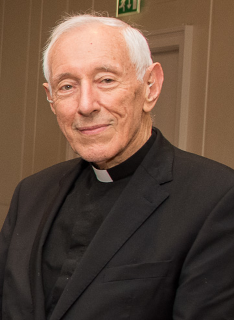
Patrick Coveney, Irish prelate of the Catholic Church who works in the diplomatic service of the Holy See from 1966 to 2009, is born in Tracton, County Cork, on July 29, 1934. He becomes an archbishop in 1985 and fulfills several assignments as Apostolic Nuncio, including stints in Zimbabwe, Ethiopia, New Zealand, and Greece.

Coveney obtains the academic degree of Bachelor of Arts in classical languages and literature at Maynooth College, and the Licentiate of Sacred Theology at the Pontifical Irish College in Rome, Italy. He is ordained as a priest at the age of twenty-four on February 21, 1959, by the archbishop vicegerent (deputy vicar general of Rome) Luigi Traglia in the Archbasilica of Saint John Lateran.

After doing parish work in Kidlington, England, Coveney teaches in St. Finbarr’s College, the minor seminary of the Diocese of Cork and Ross in Cork from 1960 to 1966. When use of the vernacular language is introduced into the celebration of the Roman Rite Mass, he edits a lectionary in English.

In September 1966, Coveney goes to work in the English-language section of the Secretariat of State in the Vatican. This sometimes involves acting as interpreter at audiences of Pope Paul VI, as when the Pope receives the three astronauts of the Apollo 11 mission that first lands human beings on the Moon.

At the Pontifical Lateran University Coveney obtains the degree of Doctor of Canon Law in 1969.

To prepare for a diplomatic career Coveney enters the Pontifical Ecclesiastical Academy in 1969 and enters the diplomatic service of the Holy See in 1971.

Coveney serves with the rank of Secretary in the Apostolic Nunciature in Buenos Aires from 1972 to 1976, returning then to the Secretariat of State in the Vatican. He is counselor of the nunciatures in New Delhi (1982–1984) and Khartoum (1984–1985).

On July 27, 1985, Coveney is appointed titular Archbishop of Satrianum and Apostolic Pro-Nuncio to Zimbabwe and Apostolic Delegate to Mozambique. He is ordained to the episcopate on September 15, 1985, in the Cathedral of St. Mary and St. Anne, Cork. The principal consecrator is the Cardinal Secretary of State Agostino Casaroli. The principal co-consecrators are Archbishop Gaetano Alibrandi, Apostolic Nuncio to Ireland, and Bishop Michael Murphy, Bishop of Cork and Ross. In Harare, capital of Zimbabwe, he represents the Holy See at the 8th Summit Conference of the Non-Aligned Movement on September 1–6, 1986.

On January 25, 1990, Coveney is appointed Nuncio to Ethiopia and also becomes Apostolic Delegate to Djibouti on March 26, 1992, and Nuncio to Eritrea on September 30, 1995.

Coveney becomes Apostolic Nuncio to New Zealand, Tonga, the Marshall Islands, and Samoa, and Apostolic Delegate for Oceania on hpril 27, 1996. His remit is expanded to include Apostolic Nuncio to Fiji, Kiribati, the Federated States of Micronesia, and Vanuatu on October 15, 1996, and Apostolic Nuncio to Nauru on December 7, 1996. He is also named Apostolic Nuncio to the Cook Islands and Palau on July 14, 2001. As the longest-serving resident diplomatic representative to New Zealand, Archbishop Coveney serves for a time as Dean of the Diplomatic Corps. While based in Wellington, he also represents the Holy See at the inauguration of Chen Shui-bian as president of the Republic of China (Taiwan) on May 18, 2004.

Coveney’s last diplomatic appointment is as Apostolic Nuncio to Greece on January 25, 2005. On November 5, 2008, he officiates at the presentation to the Acropolis Museum in Athens of a fragment of the Parthenon Frieze on loan from the Vatican Museums. He resides in Athens until his retirement in 2009.

Coveney returns to the Diocese of Cork and Ross to reside in Crosshaven Parish. He assists in Crosshaven parish and celebrates the Sacrament of Confirmation in many parishes throughout the Diocese of Cork and Ross. He dies at the age of 88 on October 22, 2022.


Leave a comment

Birth of Edward Plunkett, 18th Baron of Dunsany

Edward John Moreton Drax Plunkett, 18th Baron of Dunsany FRSL, Anglo-Irish writer and dramatist, is born in London, England, on July 24, 1878. Over 90 volumes of fiction, essays, poems and plays appear in his lifetime, and a modest amount of material is published posthumously.

Plunkett, known to his family as “Eddie,” is the first son of John William Plunkett, 17th Baron of Dunsany (1853–1899), and his wife, Ernle Elizabeth Louisa Maria Grosvenor Ernle-Erle-Drax (née Burton) (1855–1916). From a historically wealthy and famous family, he is related to many well-known Irish figures. He is a kinsman of the Catholic Saint Oliver Plunkett, the martyred Archbishop of Armagh. He is also related to the prominent Anglo-Irish unionist and later nationalist Home Rule politician Sir Horace Plunkett and George Noble Plunkett, Papal Count and Republican politician, father of Joseph Plunkett, executed for his part in the 1916 Easter Rising.

Plunkett’s only grown sibling, a younger brother, from whom he is estranged from about 1916, for reasons not fully clear but connected to his mother’s will, is the noted British naval officer Sir Reginald Drax. Another younger brother dies in infancy.

Plunkett grows up at the family properties, notably, Dunstall Priory in Shoreham, Kent, and Dunsany Castle in County Meath, but also in family homes such as in London. His schooling is at Cheam School, Eton College and the Royal Military College, Sandhurst, which he enters in 1896.

The title passes to Plunkett at his father’s death in 1899 at a fairly young age. The young Lord Dunsany returns to Dunsany Castle in 1901 after war duty. In that year he is also confirmed as an elector for the Representative Peers for Ireland in the House of Lords.

In 1903, Plunkett meets Lady Beatrice Child Villiers (1880–1970), youngest daughter of Victor Child Villiers, 7th Earl of Jersey, who is then living at Osterley Park. They marry in 1904. Their one child, Randal, is born in 1906. Lady Beatrice is supportive of her husband’s interests and helps him by typing his manuscripts, selecting work for his collections, including the 1954 retrospective short story collection, and overseeing his literary heritage after his death.

The Plunketts are socially active in Dublin and London and travel between homes in Meath, London and Kent, other than during the First and Second World Wars and the Irish War of Independence. He circulates with many literary figures of the time. To many of these in Ireland he is first introduced by his uncle, the co-operative pioneer Sir Horace Plunkett, who also helps to manage his estate and investments for a time. He is friendly, for example, with George William Russell, Oliver St. John Gogarty, and for a time, W. B. Yeats. He also socialises at times with George Bernard Shaw and H. G. Wells and is a friend of Rudyard Kipling.

In 1910 Plunkett commissions a two-story extension to Dunsany Castle, with a billiard room, bedrooms and other facilities. The billiard room includes the crests of all the Lords Dunsany up to the 18th.

Plunkett serves as a second lieutenant in the Coldstream Guards in the Second Boer War. Volunteering in World War I and appointed Captain in the Royal Inniskilling Fusiliers, he is stationed for a time at Ebrington Barracks in Derry, Northern Ireland. Hearing while on leave of disturbances in Dublin during the Easter Rising of 1916, he drives in to offer help and is wounded by a bullet lodged in his skull. After recovery at Jervis Street Hospital and what is then the King George V Hospital (now St. Bricin’s Military Hospital), he returns to duty. His military belt is lost in the episode and later used at the burial of Michael Collins. Having been refused forward positioning in 1916 and listed as valuable as a trainer, he serves in the later war stages in the trenches and in the final period writing propaganda material for the War Office with MI7b. There is a book at Dunsany Castle with wartime photographs, on which lost members of his command are marked.

During the Irish War of Independence, Plunkett is charged with violating the Restoration of Order in Ireland Act 1920, tried by court-martial on February 4, 1921, convicted, and sentenced to pay a fine of 25 pounds or serve three months in prison without labour. The Crown Forces had searched Dunsany Castle and had found two double-barrelled shotguns, two rook rifles, four Very pistols, an automatic pistol and a large quantity of pistol ammunition, along with shotgun and rifle ammunition.

During World War II, Plunkett signs up for the Irish Army Reserve and the British Home Guard, the two countries’ local defence forces, and is especially active in Shoreham, Kent, the English village bombed most during the Battle of Britain.

Plunkett’s fame arises chiefly from his prolific writings. He is involved in the Irish Literary Revival. Supporting the Revival, he is a major donor to the Abbey Theatre, and he moves in Irish literary circles. He is well acquainted with W. B. Yeats, Lady Gregory, Percy French, George “AE” Russell, Oliver St. John Gogarty, Padraic Colum and others. He befriends and supports Francis Ledwidge, to whom he gives the use of his library, and Mary Lavin.

Plunkett makes his first literary tour to the United States in 1919 and further such visits up to the 1950s, in the early years mostly to the eastern seaboard and later, notably, to California. His own work and contribution to the Irish literary heritage are recognised with an honorary degree from Trinity College Dublin.

In 1940, Plunkett is appointed Byron Professor of English in the University of Athens in Greece. Having reached Athens by a circuitous route, he is so successful that he is offered a post as Professor of English in Istanbul. However, he has to be evacuated due to the German invasion of Greece in April 1941, returning home by an even more complex route, his travels forming a basis for a long poem published in book form (A Journey, in 5 cantos: The Battle of Britain, The Battle of Greece, The Battle of the Mediterranean, Battles Long Ago, The Battle of the Atlantic, special edition January 1944). Olivia Manning‘s character Lord Pinkrose in her novel sequence the Fortunes of War is a mocking portrait of Dunsany in that period.

In 1947, Plunkett transfers his Meath estate in trust to his son and heir and settles in Kent at his Shoreham house, Dunstall Priory, not far from the home of Rudyard Kipling. He visits Ireland only occasionally thereafter and engages actively in life in Shoreham and London. He also begins a new series of visits to the United States, notably California, as recounted in Hazel Littlefield-Smith’s biographical Dunsany, King of Dreams.

In 1957, Plunkett becomes ill while dining with the Earl and Countess of Fingall at Dunsany, in what proves to be an attack of appendicitis. He dies in hospital in Dublin, at the age of 79, on October 25, 1957. He is buried in the churchyard of the ancient church of St. Peter and St. Paul, Shoreham, Kent. His funeral is attended by many family members, representatives of his old regiment and various bodies in which he had taken an interest, and figures from Shoreham. A memorial service is held at Kilmessan in County Meath, with a reading of “Crossing the Bar,” which coincides with the passing of a flock of geese.

Beatrice survives Plunkett, living mainly at Shoreham and overseeing his literary legacy until her death in 1970. Their son Randal succeeds to the barony and is in turn succeeded by his grandson, the artist Edward Plunkett. Plunkett’s literary rights pass from Beatrice to Edward.


Leave a comment

Birth of Norman Stronge, 8th Baronet & UUP Politician

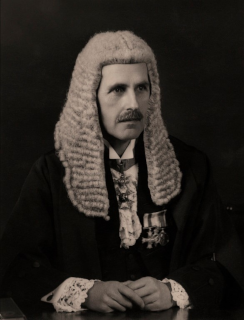
Sir Charles Norman Lockhart Stronge, 8th Baronet, senior Ulster Unionist Party (UUP) politician in Northern Ireland, is born on July 23, 1894, in Bryansford, County Down.

Stronge is the only son among two children of Sir Charles Edmond Sinclair Stronge (1862–1939) of Tynan Abbey, County Armagh, and Marian Iliff Stronge (née Bostock) of Walton Heath, Epsom, England. The family holds one of Ulster‘s oldest baronetcies and has a distinguished tradition in public life. Educated at Eton College, he serves in the Royal Inniskilling Fusiliers during World War I and is mentioned in dispatches by Sir Douglas Haig after the opening Battle on the Somme in July 1916. He is awarded the Military Cross (MC) and the Belgian Croix de guerre. After the war he begins farming in County Londonderry. While in Londonderry he serves as High Sheriff of the county from 1934. Seven years later he moves to his ancestral home, Tynan Abbey, on the death of his cousin Sir James Stronge. He becomes the 8th Baronet in 1939, a year after his election to the House of Commons for Northern Ireland for Mid Armagh. He is appointed High Sheriff for Armagh in 1940.

At the outbreak of war in 1939, Stronge joins the North Irish Horse as a lieutenant but has to relinquish his commission the following year due to ill health. He is then granted the rank of captain. Resuming his political career, he becomes Assistant Parliamentary Secretary at the Ministry of Finance (Assistant Whip) (1941–42) and then Parliamentary Secretary at the Ministry of Finance (Chief Whip) (1942–44). His period as Chief Whip is marked by more robust and “fluid” debate within the party and significant backbench discontent in early 1943. In June 1944 he is elected chairman of Armagh County Council, and in the following year is returned unopposed in the general election. He becomes Speaker of the House of Commons of Northern Ireland in 1945 and in this position he earns the respect of, and makes friends with, politicians of every hue, and is regarded as a moderating influence. It has been said of him that he disproved the myth that politicians at Stormont never spoke to each other. He is unopposed in every postwar election up to 1965, when he sees off the challenge of the Liberal candidate. He does not contest the 1969 general election. He is made Chevalier of the Order of Leopold in 1946 and in the same year is appointed to the Privy Council of Northern Ireland. A member of the Commonwealth Parliamentary Association, he is a delegate to its 1950 conference in New Zealand. Another interest is the Royal Over-Seas League, of which he is president for a time.

Stronge is closely associated with Sir Basil Brooke, Dame Dehra Parker and Sir Henry Mulholland. He is president of the Northern Ireland area council of the Royal British Legion, sovereign grand master of the Royal Black Institution, president of the Federation of Boys’ Clubs, and chairman of the Commercial Insurance Co. and of the Central Advisory Council for the Employment of the Disabled. It is this last position that causes a brief interruption of his speakership, with an act of parliament deemed necessary to remove any doubt about it having been an office of profit. A prominent member of the Orange Order, he is also chairman of the BBC appeals advisory committee and the Northern Ireland scout council. His retirement from public life in 1977 is marked by his investiture as a Knight of Grace by Prince Richard, Duke of Gloucester.

A leading member of the Church of Ireland, Stronge becomes Commander of the Order of Saint John in 1952 and is for many years on the Armagh diocesan synod and council. Until his death, he is a nominator for the position of rector and reads the lessons each Sunday morning in Tynan parish church. In September 1921 he marries Gladys Olive, daughter of Major Henry Thomas Hall of Knockbrack, Athenry, County Galway. They have three daughters and a son, James. In his later life he lives with James, a bachelor, on their 800-acre estate near the border. James is educated at Eton College and Christ Church, Oxford. He succeeds his father in the Mid Armagh constituency in 1969, serving as Ulster Unionist MP in the Stormont parliament until 1972. He is firmly opposed to the Sunningdale Agreement of December 1973, which he describes as a “great act of political appeasement.” Although both are known in the locality, neither seeks public attention and both live relatively quiet lives. Stronge likes to work in the garden but has little interest in the farm, most of which is let out to tenants.

Stronge and his son become prominent victims of the Troubles when a unit of the Provisional Irish Republican Army shoots them dead on January 21, 1981, at Tynan Abbey and sets the mansion alight, destroying it. The Provisional IRA statement describes them as “symbols of hated unionism” and their killings as “direct reprisal for a whole series of loyalist assassinations and murder attacks on nationalist people.” The killings come five days after an attempted assassination of the former MP Bernadette Devlin McAliskey and her husband. Tynan Abbey is long held to have been an easy target, given its relative isolation and its proximity to the border. In 1985 a man is tried for their murders but is acquitted. In 1999 the shell of Tynan Abbey is demolished.

(From: “Stronge, Sir Charles Norman Lockhart” by Tom Feeney, Dictionary of Irish Biography, http://www.dib.ie, October 2009)