Known principally for his contribution to Ulster politics at local level, Armstrong serves as JP and is appointed High Sheriff of Armagh for 1875 and High Sheriff of Longford for 1894. He is a County Councillor for Armagh from 1899 to 1920, and a Member of the Irish Convention in 1917–18. Vice-Lieutenant of County Armagh in 1920, he is a Senator of Queen’s University Belfast from 1920 to 1937.
Armstrong is returned unopposed to the Imperial House of Commons for Mid-Armagh in the 1921 Mid Armagh by-election, at the advanced age of 76, becoming one of the oldest first-time MPs whose birth date is recorded. Certainly, he immediately becomes the oldest member of the current House of Commons. He is a Senator of Northern Ireland from 1921 to 1937, and Lord Lieutenant of Armagh from 1924 to 1939. For twenty-five years he is a member of the Representative Body of the Church of Ireland. He is Chairman of the County Armagh Education Committee from 1925 to 1931, and President of the Association of Education Committees of Northern Ireland. In 1932, he is made a Privy Councillor for Northern Ireland, and in 1938 he serves as a Justice for the Government of Northern Ireland in the absence of the Governor.
In his later years, Armstrong provides financial support for Jewish refugees fleeing Nazi-occupied Europe.
In 1883, Armstrong marries Margaret Leader, daughter of William Leader of Rosnalea, County Cork. They have five sons and three daughters, of whom C. W. Armstrong also becomes a politician.
Armstrong dies at his home in Dean’s Hill, Armagh, on December 4, 1943, at the age of 99 years.
Dowling is born on June 3, 1846, in Clonmel, County Tipperary, the only son of David Jeremiah Dowling, schoolmaster, and Margaret Dowling. His father dies when he is nine years old. He is educated in Clonmel, Waterford, and St. Munchin’s College in Corbally, Limerick, before entering the shipping office of his uncle William Downey in Waterford at the age of eighteen. He distinguishes himself in the Waterford Literary and Debating Society and contributes to local newspapers, including the Waterford Citizen and The Waterford Chronicle. In 1870, he joins the staff of The Nation and moves to Dublin. On the outbreak of the Franco–Prussian War, he edits for Alexander Martin Sullivan a war-sheet, The Daily Summary, and subsequently becomes editor and contributor successively to the humorous but short-lived Zozimus and Ireland’s Eye.
Dowling settles in London in 1874, joining the staff of the Illustrated Sporting and Dramatic News, and founds Yorick in 1876, a comic paper with cartoons by Harry Furniss which lasts six months. In 1879, he publishes the first and most successful of his many novels, The Mystery of Killard, a strange tale of a deaf-mute fisherman in County Clare, which is hailed as one of the most striking romances of the year. Though his later novels are intensely realistic, exciting, and clever, they never achieve the same high standard. According to Furniss, who thought Dowling would be a great author, he “drifted into the quicksand of Bohemianism…He sank a wreck, with a rich cargo of genius that was never delivered to the world.” Other writers later mention his unfulfilled promise. Among his other novels of Irish interest are Sweet Inisfail (1882) and Old Corcoran’s Money (1892). A dramatisation of Below Bridge (1895) is staged on April 6, 1896, at the Novelty Theatre, London.
Dowling contributes poetry, short stories, and essays to several magazines, including Belgravia, London Society, and Saturday Journal, and is a frequent contributor to Tinsley’s Magazine, writing its leading serials (1880–82), which are later published as the novels Under St. Paul’s (1881) and The Duke’s Sweetheart (1881). His collections of essays include On Babies and Ladders (1873), which some critics believe to be his best work, Ignorant Essays (1887), Indolent Essays (1889), full of wit and original thought, and descriptive essays London Town (1880). He also edits the Poems (1891) of John Francis O’Donnell. He writes both under his own name and under various pseudonyms, including Peter Mendaciorum, Marcus Fall and Emmanuel Kink. A selection of his letters is published as Some Old Letters (Oct. – Nov. 1919) and More Old Letters (Jan. – Feb. 1920).
According to his daughter, Dowling works erratically, often continuously for several days and nights. An invalid during his later years, he composes his works on a sofa, invariably wearing a cap and with a soup-plate full of pipes beside him, which he enjoys in turn. A mild, kind, and gentle personality, he is an effective raconteur and a witty conversationalist. His cousin, Edmund Downey, who publishes many of his works, is introduced to the publishing world by Dowling. He is an applicant to the British charity for authors, the Royal Literary Fund, and leaves his family ill provided for.
Dowling dies on July 28, 1898, at his home at 2 Foulser Road, Tooting, South London, and is buried in Mortlake Cemetery, London. He is married and has three children, although his wife’s name and the date of their marriage are not known.
(From: “Dowling, Richard” by Helen Andrews, Dictionary of Irish Biography, http://www.dib.ie, October 2009)
O’Connor is the eldest son of Thomas O’Connor, an Athlone shopkeeper, and his wife Teresa (née Power), the daughter of a non-commissioned officer in the Connaught Rangers. He is educated at The College of the Immaculate Conception in Athlone, and Queen’s College Galway, where he wins scholarships in history and modern languages and builds up a reputation as an orator, serving as auditor of the college’s Literary and Debating Society.
O’Connor enters journalism as a junior reporter on Saunders’ Newsletter, a Dublin journal, in 1867. In 1870, he moves to London and is appointed a sub-editor on The Daily Telegraph, principally on account of the utility of his mastery of French and German in reportage of the Franco-Prussian War. He later becomes London correspondent for the New York Herald. He compiles the society magazine Mainly About People (M.A.P.) from 1898 to 1911.
O’Connor is elected Member of Parliament for Galway Borough in the 1880 United Kingdom general election, as a representative of the Home Rule League, which is under the leadership of William Shaw, though virtually led by Charles Stewart Parnell, who wins the party’s leadership a short time later. At the next general election in 1885, he is returned both for Galway Borough and for the Liverpool Scotland constituencies, which has a large Irish population. He chooses to sit for Liverpool and represents that constituency in the House of Commons from 1885 until his death in 1929. He remains the only British MP from an Irish nationalist party ever to be elected to a constituency outside of the island of Ireland. He continues to be re-elected in Liverpool under this label unopposed in the 1918, 1922, 1923, 1924 and 1929 general elections, despite the declaration of a de factoIrish Republic in early 1919, and the establishment by the 1921 Anglo-Irish Treaty of a quasi-independent Irish Free State in late 1922.
From 1905, O’Connor belongs to the central leadership of the United Irish League. During much of his time in parliament, he writes a nightly sketch of proceedings there for The Pall Mall Gazette. He becomes “Father of the House,” with unbroken service of 49 years, 215 days. The Irish Nationalist Party ceases to exist effectively after the Sinn Féin landslide of 1918, and thereafter he effectively sits as an independent. On April 13, 1920, he warns the House of Commons that the death on hunger strike of Thomas Ashe will galvanise opinion in Ireland and unite all Irishmen in opposition to British rule.
O’Connor founds and is the first editor of several newspapers and journals: The Star, the Weekly Sun (1891), The Sun (1893), M.A.P. and T.P.’s Weekly (1902). In August 1906, he is instrumental in the passing by Parliament of the Musical Copyright Act 1906, also known as the T.P. O’Connor Bill, following many of the popular music writers at the time dying in poverty due to extensive piracy by gangs during the piracy crisis of sheet music in the early 20th century. The gangs often buy a copy of the music at full price, copy it, and resell it, often at half the price of the original. The film I’ll Be Your Sweetheart (1945), commissioned by the British Ministry of Information, is based on the events of the day.
O’Connor is appointed as the second president of the British Board of Film Censors (BBFC) in 1916 and appears in front of the Cinema Commission of Inquiry (1916), set up by the National Council of Public Morals where he outlines the BBFC’s position on protecting public morals by listing forty-three infractions, from the BBFC 1913–1915 reports, on why scenes in a film may be cut. He is appointed to the Privy Council by the first Labour government in 1924. He is also a Fellow of the Chartered Institute of Journalists, the world’s oldest journalists’ organisation. It continues to honour him by having a T.P. O’Connor charity fund.
In 1885, O’Connor marries Elizabeth Paschal, the daughter of a judge of the Supreme Court of Texas.
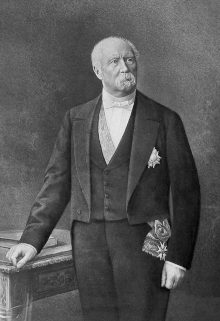
Patrice de MacMahon, a descendant of an Irish family, resigns as president of France on January 30, 1879, and retires to private life. His resignation comes after he dissolves the Chamber of Deputies, resulting in public outrage and a Republican electoral victory earlier in the month.
Born Marie Edme Patrice Maurice de MacMahon on July 13, 1808, in Sully, France, he serves as Marshal of France and second president of the French Third Republic. During his presidency the Third Republic takes shape, the new constitutional laws of 1875 are adopted, and important precedents are established affecting the relationship between executive and legislative powers.
MacMahon begins his army career in 1827 in Algeria and distinguishes himself during the Siege of Constantine (1837) and in the Crimean War (1853–56). The climax of his military career comes in the Italian campaign of 1859, when his victory at Magenta results in his being created Duke of Magenta. In 1864 he becomes Governor General of Algeria. Commanding the I Army Corps in Alsace during the Franco-Prussian War (1870–71), he is wounded and defeated at the Battle of Wörth. After a short convalescence at Sedan, he is appointed head of the army of the French Third Republic, which defeats the Paris Commune revolt in May 1871.
When Adolphe Thiers resigns as president of the republic on May 24, 1873, French rightists turn to MacMahon as his successor. He is elected president the same day. On November 20, 1873, the National Assembly passes the Law of the Septennate, conferring upon him presidential power for seven years. He assumes his presidential duties somewhat reluctantly, for he dislikes publicity and lacks an understanding of the complex political issues of his day.
During MacMahon’s term the French Constitutional Laws of 1875 are promulgated. The National Assembly dissolves itself, and the elections of 1876 returns a large majority of republicans to the new chamber. The first crisis comes in December 1876, when the republican chamber compels him to invite the moderate republican Jules Simon to form a government. The conservative Senate disapproves of Simon because he had purged some rightist officials, and, on May 16, 1877, MacMahon posts a letter to Simon that is tantamount to dismissal. Premier Simon’s resignation precipitates the crise du seize mai. When MacMahon commissions conservative Albert de Broglie to form a ministry and wins the Senate’s assent to dissolve the chamber on June 25, 1877, the question of whether the President or Parliament would control the government is squarely posed.
The new elections to the chamber return a majority of republicans, and the de Broglie ministry is given a vote of “no confidence.” The succeeding ministry, headed by Gaëtan de Rochebouët, also collapses. By December 13, 1877, MacMahon gives in to the extent of accepting a ministry led by conservative republican Jules Dufaure and composed mostly of republicans. On January 5, 1879, the republicans gain a majority in the Senate, and MacMahon resigns on January 30. The constitutional crisis during his presidency is resolved in favour of parliamentary as against presidential control, and thereafter during the Third Republic the office of president becomes largely an honorific post.
From 1887 to 1893, MacMahon directs the Société de secours aux blessés militaires (S.S.B.M) – Rescue Society of Wounded Military, which in 1940 becomes the French Red Cross.
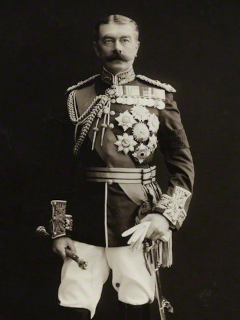
Kitchener is credited in 1898 for winning the Battle of Omdurman and securing control of the Sudan for which he is made Baron Kitchener of Khartoum. As Chief of Staff (1900–1902) in the Second Boer War he plays a key role in Lord Roberts’ conquest of the Boer Republics, then succeeds Roberts as commander-in-chief, by which time Boer forces have taken to guerrilla warfare and British forces imprison Boer civilians in concentration camps. His term as Commander-in-Chief (1902–09) of the Army in India sees him quarrel with another eminent proconsul, the Viceroy Lord Curzon, who eventually resigns. He then returns to Egypt as British Agent and Consul General.
In 1914, at the start of World War I, Kitchener becomes Secretary of State for War, a Cabinet Minister. One of the few to foresee a long war, lasting for at least three years, and with the authority to act effectively on that perception, he organises the largest volunteer army that Britain had ever seen, and oversees a significant expansion of materials production to fight on the Western Front. Despite having warned of the difficulty of provisioning for a long war, he is blamed for the shortage of shells in the spring of 1915, one of the events leading to the formation of a coalition government and is stripped of his control over munitions and strategy.
On June 5, 1916, Kitchener is making his way to Russia on HMS Hampshire to attend negotiations with Tsar Nicholas II. At the last minute, Admiral Sir John Jellicoe changes the HMS Hampshire‘s route on the basis of a misreading of the weather forecast and ignoring (or not being aware of) recent intelligence and sightings of GermanU-boat activity in the vicinity of the amended route. Shortly before 7:30 PM the same day, steaming for the Russian port of Arkhangelsk during a Force 9 gale, HMS Hampshire strikes a mine laid by the newly launched German U-boat U-75 and sinks 1.5 miles west of the Orkney. Only twelve men survive. Amongst the dead are Kitchener and all ten members of his entourage. He is seen standing on the quarterdeck during the approximately twenty minutes that it takes the ship to sink. His body is never recovered.
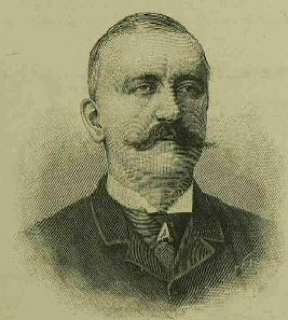
Williams is descended on his father’s side from the yeomen of Worcestershire who grew their orchards and tilled their land in the parishes of Tenbury and Mamble. His mother’s side descended from Scottish settlers who planted Ulster in 1610. He is educated at Belfast Academy in Belfast and at a Greenwich private school. Later on, he goes to the southern United States for health purposes and takes part in a filibustering expedition to Nicaragua, where he sees some hard fighting and reportedly earns the reputation of a blockade runner. He is separated from his party and is lost in the forest for six days. Fevered, he discovers a small boat and manages to return to the nearest British settlement. He serves in the London Irish Rifles with the rank of Sergeant.
Williams returns to England in 1859, where he becomes a volunteer, and a leader writer for the London Evening Herald. In October 1859, he begins a connection with The Standard which lasts until 1884. From 1860 until 1863, he works as a first editor for the Evening Standard and from 1882 until 1884, as editor of The Evening News.
Williams is best known for being a war correspondent. For The Standard, he is at the headquarters of the Armée de la Loire, a French army, during the Franco-Prussian War in 1870. He is also one of the first correspondents in Strasbourg, where the French forces are defeated. In the summer and autumn of 1877, he is a correspondent to Ahmed Muhtar Pasha who commands the Turkish forces in Armenia during the Russo-Turkish War (1877-78). He remains constantly at the Turkish front, and his letters are the only continuous series that reaches England. In 1878, he publishes this series in a revised and extended form as The Armenian Campaign: A Diary of the Campaign on 1877, in Armenia and Koordistan, which is a large and accurate record of the war, even though it is pro-Turkish. From Armenia, he follows Muhtar Pasha to European Turkey and describes his defence of the lines of Constantinople against the Imperial Russian Army. He is with General Mikhail Skobelev at the headquarters of the Imperial Russian Army when the Treaty of San Stefano is signed in March 1878.
At the end of 1878, Williams is in Afghanistan reporting the war, and in 1879 publishes the Notes on the Operations in Lower Afghanistan, 1878–9, with Special Reference to Transport.
Williams dies in Brixton, London on February 9, 1904, and is buried in Nunhead Cemetery in London. His funeral is well attended by the press as well as members of the military including Field Marshal Sir Evelyn Wood.
(Pictured: Portrait of Charles Frederick Williams, London President, The Institute of Journalists, from The Illustrated London News, September 30, 1893 issue)
In 1885, Gildea founds the Soldiers and Sailors Families Association, which becomes the Soldiers, Sailors, Airmen and Families Association in 1919. He serves as its chairman and treasurer until his death.
Gildea is appointed Companion of the Order of the Bath (CB) in the 1898 New Year Honours and Commander of the Royal Victorian Order (CVO) in 1901. Knighted in 1902, he is later appointed Knight Commander of the Royal Victorian Order (KCVO), and in the 1920 civilian war honours is appointed Knight Grand Cross of the Order of the British Empire (GBE).
James Gildea dies on November 6, 1920, at Earl’s Court, London.
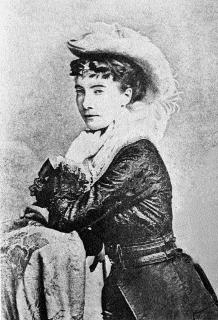
Parnell is born at Avondale House near Rathdrum, County Wicklow, the tenth of eleven children of John Henry Parnell, a landlord, and Delia Tudor Stewart Parnell, an Irish American and daughter of Admiral Charles Stewart of the United States Navy. She has very little formal education as a child, but the family has an extensive library which she is encouraged to read by her mother. After her father dies in 1859, she moves with the family to Dublin. Delia Parnell is an active socialite while in Dublin and exposes her children to a wide variety of political views.
In 1865 the family moves to Paris, but Parnell feels stifled by upper class society rules imposed upon her. She is in Paris when the Franco-Prussian War breaks out in 1870 and is active in the American Ladies’ Committee fundrasing and setting up hospitals. She returns alone to Dublin in 1870 to study art.
Parnell moves to London in 1875 to continue studying art. When her brother Charles is elected as a Member of Parliament (MP) for Meath, she becomes increasingly political. She frequently visits Parliament during debates, sitting in the Ladies’ Gallery. She writes articles about the debates in a column titled Notes From the Ladies’ Cage in the Celtic Monthly. In 1879 she joins her sister, Fanny Parnell, a poet, in New York City where they raise money in support of the Irish National Land League. The sisters work closely with their brother Charles and Michael Davitt but are critical of how the funds raised in America are being used in Ireland. In October 1880 the sisters found the New York Ladies’ Land League with their mother as president. They raised thousands of dollars sent to Ireland.
Parnell returns in Dublin in late 1880. When it seems that the Land League men are likely to be arrested, it is suggested that a women’s league in Ireland could take over the work in their absence. Public opinion at the time is against women in politics, but the Ladies’ Land League is founded on January 31, 1881, with Parnell as its effective leader.
When Charles Parnell and other leaders are imprisoned in 1881, as predicted, the Ladies’ Land League takes over their work. Though it is envisioned as a place holder until the men are released, Parnell organises branches throughout Ireland, encouraging women to play an active role in Land League activities. Offices are given to the ladies but little help. They raise funds for the League and for the support of prisoners and their families. They distribute Land League wooden huts to shelter evicted tenant families and by the beginning of 1882 they have 500 branches, thousands of women members and considerable publicity. They distribute £60,000 in relief aid.
This puts the Ladies’ Land League in serious debt. Parnell approaches her brother Charles, requesting money to settle the debts. Charles, who distrusts her understanding of politics, agrees to provide the money under the condition that the Ladies’ Land League is disbanded. She agrees, disbanding in 1882, but she never forgives Charles.
After her brother’s death in 1891 Parnell lives the rest of her life in the south of England under the assumed name Cerisa Palmer. She writes an angry account of her Land League experiences in Tale of a Great Sham, which is not published until 1986. She makes one last political appearance when she campaigns for a Sinn Féin candidate in a 1907 by-election.
By the summer of 1911, the 59-year-old Parnell is staying in lodgings at Ilfracombe in Devon. An enthusiastic swimmer since childhood, she bathes every day, and on September 20, disregarding a warning of dangerous seas, she goes swimming as usual. She is seen to be in difficulties and the alarm is raised, but by the time rescuers reached her, she is dead. Unlike her brother, whose funeral in Dublin had been the occasion for a massive outpouring of grief and remorse, Anna Parnell was buried quietly in the churchyard of Holy Trinity Church in Ilfracombe, in the presence of just seven strangers, and far away from the scenes of her greatest efforts and notoriety.
MacGahan’s father is an immigrant from Ireland who had served on the Northumberland, the ship which took Napoleon into exile on Saint Helena. He moves to St. Louis, where he briefly works as a teacher and as a journalist. There he meets his cousin, General Philip Sheridan, an American Civil War hero also of Irish parentage, who convinces him to study law in Europe. He sails to Brussels in December 1868.
MacGahan does not get a law degree, but he discovers that he has a gift for languages, learning French and German. He runs short of money and is about to return to America in 1870 when the Franco-Prussian War breaks out. Sheridan happens to be an observer with the German Army, and he uses his influence to persuade the European editor of the New York Herald to hire MacGahan as a war correspondent with the French Army.
MacGahan’s vivid articles from the front lines describing the stunning defeat of the French Army win him a large following, and many of his dispatches to the Herald are reprinted by European newspapers. When the war ends, he interviews French leader Léon Gambetta and Victor Hugo and, in March 1871, he hurries to Paris and is one of the first foreign correspondents to report on the uprising of the Paris Commune. He is arrested by the French military and nearly executed and is only rescued through the intervention of the U.S. Minister to FranceElihu B. Washburne.
In 1871 MacGahan is assigned as the Herald‘s correspondent to Saint Petersburg. He learns Russian, mingles with the Russian military and nobility, covers the Russian tour of General William Tecumseh Sherman and meets his future wife, Varvara Elagina, whom he marries in 1873. In 1874 he spends ten months in Spain, covering the Third Carlist War.
In 1876 MacGahan quarrels with James Gordon Bennett Jr., the publisher of the New York Herald, and leaves the newspaper. He is invited by his friend, Eugene Schuyler, the American Consul-General in Constantinople, to investigate reports of large-scale atrocities committed by the Turkish Army following the failure of an attempted uprising by Bulgarian nationalists in April 1876. He obtains a commission from The Daily News, then the leading liberal newspaper in England, and leaves for Bulgaria on July 23, 1876.
MacGahan reports that the Turkish soldiers have forced some of the villagers into the church, then the church is burned, and survivors tortured to learn where they have hidden their treasures. He says that of a population of seven thousand, only two thousand survive. According to his account, fifty-eight villages in Bulgaria are destroyed, five monasteries demolished, and fifteen thousand people in all massacred. These reports, published first in The Daily News, and then in other papers, cause widespread popular outrage against Turkey in Britain. The government of British Prime MinisterBenjamin Disraeli, a supporter of Turkey, tries to minimize the massacres and says that the Bulgarians are equally to blame, but his arguments are refuted by the newspaper accounts of MacGahan.
In the wake of the massacres and atrocities committed by the Ottoman forces during the suppression of the April Uprising, as well as centuries-long conflicts between Russia and Turkey in Crimea, the Russian Government, stirred by anti-Turkish and Pan-Slavism sentiment, prepare to invade the Ottoman Empire, and declare war on it on April 24, 1877. The Turkish Government of SultanAbdul Hamid II appeals for help to Britain, its traditional ally against Russia, but the British government responds that it cannot intervene “because of the state of public feeling.”
MacGahan is assigned as a war correspondent for The Daily News and, thanks to his friendship with General Skobelev, the Russian commander, rides with the first units of the Russian Army as it crosses the Danube into Bulgaria. He covers all the major battles of the Russo–Turkish War, including the Siege of Plevna and the Battle of Shipka Pass. He reports on the final defeat of the Turkish armies and is present at the signing of the Treaty of San Stefano, which ends the war.
MacGahan is in Constantinople, preparing to travel to Berlin for the conference that determines the final borders of Bulgaria, when he catches typhoid fever. He dies on June 9, 1878, and is buried in the Greek cemetery, in the presence of diplomats, war correspondents, and General Skobelev. Five years later his body is returned to the United States and reburied in New Lexington and a statue is erected in his honor by a society of Bulgarian Americans.
Initially sent by editor John Delane to Malta to cover British support for the Ottoman Empire against Russia in 1854, Russell despises the term “war correspondent” but his coverage of the conflict brings him international renown, and Florence Nightingale later credits her entry into wartime nursing to his reports. The Crimean medical care, shelter and protection of all ranks by Mary Seacole is also publicised by Russell and by other contemporary journalists, rescuing her from bankruptcy.
His dispatches are hugely significant as for the first time the public can read about the reality of warfare. Shocked and outraged, the public’s backlash from his reports leads the Government to re-evaluate the treatment of troops and leads to Florence Nightingale’s involvement in revolutionising battlefield treatment.
On September 20, 1854, Russell covers the battle above the Alma River, writing his missive the following day in an account book seized from a Russian corpse. The story, written in the form of a letter to Delane, is supportive of the British troops and pays particular attention to the battlefield surgeons’ “humane barbarity” and the lack of ambulance care for wounded troops. He later covers the Siege of Sevastopol where he coins the phrase “thin red line” in referring to British troops at Balaclava.
Following Russell’s reports of the appalling conditions suffered by the Allied troops conducting the siege, including an outbreak of cholera, Samuel Morton Peto and his partners build the Grand Crimean Central Railway, which is a major factor leading to the success of the siege.
Russell spends December 1854 in Constantinople on holiday, returning in early 1855. He leaves Crimea in December 1855 to be replaced by the Constantinople correspondent of The Times.
In 1856 Russell is sent to Moscow to describe the coronation of Tsar Alexander II and in the following year is sent to India where he witnesses the final re-capture of Lucknow.
Russell retires as a battlefield correspondent in 1882 and founds the Army and Navy Gazette. He is knighted in May 1895 and is appointed a Commander of the Royal Victorian Order (CVO) by King Edward VII on August 11, 1902.
Sir William Howard Russell dies on February 11, 1907, and is buried in Brompton Cemetery, London.