seamus dubhghaill

Promoting Irish Culture and History from Little Rock, Arkansas, USA


Leave a comment

Death of Irish Hurler Bobby Rackard

Robert “Bobby” Rackard, Irish hurler who plays as a right corner-back for the Wexford senior team, dies in Killane, County Wexford, on October 19, 1996.

Rackard is born in Killane on January 6, 1927. He makes his first regular appearance for the Wexford senior team during the 1947 All-Ireland Senior Hurling Championship and is a regular member of the starting fifteen until his retirement before the 1957 All-Ireland championship. During that time he wins two All-Ireland medals, four Leinster medals and one National Hurling League medal. He is an All-Ireland runner-up on two occasions. His brothers, Nicky and Billy, also experience All-Ireland success with Wexford.

Rackard plays his club hurling with Rathnure and enjoys much success and is a four-time county club championship medalist in his lengthy career.

In 1948, Rackard is a key member of the defence as Rathnure reaches only their second championship decider ever. A 3–5 to 0–2 trouncing of reigning champions Ferns St. Aidan’s gives him his first championship medal. After failing to retain their title the following year, Rathnure is back in the county decider once again in 1950. Another convincing 5–10 to 2–6 defeat of old rivals Ferns St. Aidan’s gives him his second championship medal.

It is 1955 before Rathnure qualifies for another championship decider and four-in-a-row hopefuls Ferns St. Aidan’s provides the opposition once again. A close game develops, however, a 2–9 to 2–5 victory gives Rackard a third championship medal.

After a number of years out of the limelight, Rathnure reaches the county final once again in 1961. A fourth defeat of Ferns St. Aidan’s gives Rackard, who scores two goals from his full-forward berth, a fourth and final championship medal.

Rackard first comes to prominence on the inter-county scene as a member of the Wexford minor hurling team in the early 1940s. He enjoys little success in this grade but is called up to the senior team in 1947.

After losing the provincial final in 1950, Rackard is at centre-back the following year as Wexford faces Laois in the eastern decider. A 3–12 to 4–3 victory gives him his first Leinster medal as Wexford claims the provincial crown for the first time since 1918. The subsequent All-Ireland decider sees three-in-a-row hopefuls Tipperary providing the opposition. Nicky Rackard’s goal-scoring ability is quelled by Tipperary goalkeeper Tony Reddin, while Séamus Bannon, Tim Ryan and Paddy Kenny score key goals which power Tipperary to a 7–7 to 3–9 victory.

After back-to-back Leinster defeats over the next two years, Wexford faces Dublin in the 1954 decider. A huge 8-5 to 1–4 victory gives Rackard his second Leinster medal. A record crowd of 84,856 attend the subsequent All-Ireland decider with Cork providing the opposition. Wexford has a four-point lead with seventeen minutes left to play, however, history is against Wexford when Johnny Clifford scores the winning goal for Cork with just four minutes left. A 1–9 to 1–6 victory secures a third successive All-Ireland for Cork.

In 1955, Wexford continues their provincial dominance with Rackard collecting a third Leinster medal following a 5–6 to 3–9 defeat of Kilkenny in a replay of the Leinster final. Galway, who gets a bye into the final without picking up a hurley, provides the opposition and takes a halftime lead. A Tim Flood goal nine minutes from the end clinches a 3–13 to 2–8 victory and a first All-Ireland medal for Rackard. It is Wexford’s first All-Ireland triumph in forty-five years.

Rackard adds a National Hurling League medal to his collection in 1956 as Tipperary is bested by 5–9 to 2–14. The subsequent championship campaign sees Wexford reach the provincial final once again. A narrow 4–8 to 3–10 defeat of Kilkenny gives Rackard his fourth and final Leinster medal. Galway falls heavily in the All-Ireland semi-final, allowing Wexford to advance to an All-Ireland final meeting with Cork. The game goes down in history as one of the all-time classics as Christy Ring is bidding for a record ninth All-Ireland medal. The game turns on one important incident as the Wexford goalkeeper, Art Foley, makes a miraculous save from a Ring shot and clears the sliotar up the field to set up another attack. Nicky Rackard scores a crucial goal with two minutes to go giving Wexford a 2–14 to 2–8 victory. In spite of Cork’s loss, Wexford’s Nick O’Donnell and Rackard, in an unparalleled display of sportsmanship in any game, raise Christy Ring onto their shoulders and carry him off the field. Wexford wins the game and Rackard collects his second All-Ireland medal but there is no doubt in their minds that the real hero is Ring.

A farm accident in 1957 brings an end to Rackard’s inter-county career.

Rackard also has the honour of being selected for Leinster in the inter-provincial series of games and enjoys some success. In 1956 he lines out in his only inter-provincial decider. A 5–11 to 1–7 trouncing of Munster gives Rackard a Railway Cup medal.

In retirement, Rackard, along with his brothers, come to be regarded as one of the greatest hurling families of all-time. In 1984, the centenary year of the foundation of the Gaelic Athletic Association, he is named to the Hurling Team of the Century. In 1992, both Billy and Bobby Rackard’s brilliance is recognised when they are presented with the All-Time All Star Award for hurling. Rackard is also posthumously named on the Hurling Team of the Millennium in 1999.

(Pictured: The Rackard brothers from left Bobby, Nicky and Billy)


Leave a comment

Birth of Harry Boland, Politician & President of the Irish Republican Brotherhood

Harry Boland, Irish republican politician who serves as President of the Irish Republican Brotherhood (IRB) from 1919 to 1920, is born at 6 Dalymount Terrace, Phibsborough, Dublin, on April 27, 1887. He serves as a Teachta Dála (TD) from 1918 to 1922.

Boland is the son of Irish Republican Brotherhood member James Boland and Kate Woods. He was active in GAA circles in early life and referees the 1914 All-Ireland Senior Football Championship Final. He joins the IRB at the same time as his older brother Gerald in 1904, following in the footsteps of his father, uncle and probably grandfather. He is educated at the Synge Street CBS, but hads a personality clash with one of the brothers so he refuses to carry on his attendance at the school. He then goes to De la Salle College, County Laois, as a novice.

Boland later joins the Irish Volunteers along with Gerry and his younger brother Ned. They take an active part in the Easter Rising of 1916.

At the 1918 Irish general election, Boland is elected as an MP for South Roscommon. In line with all the Sinn Féin MPs elected at that election, he does not take his seat in the British House of Commons but withdraws to sit in the declared independent Dáil Éireann (the First Dáil) and is named by Éamon de Valera as special envoy to the United States, a role his uncle Jack had played 25 years earlier. He leaves Ireland for the United States along with de Valera as part of a campaign to raise awareness and support for their cause in America. He negotiates a loan of $20,000 from the Irish Republic to the Russian Soviet Federative Socialist Republic through the head of the Soviet Bureau, Ludwig Martens, using some Russian jewelry as collateral. These jewels are transferred to Ireland when he returns. His sister Kathleen and her mother are entrusted with the safekeeping of jewels.

During the Irish War of Independence (1919-21), Boland operates alongside Michael Collins, who is a close friend.

At the 1921 Irish elections, Boland is elected to the Second Dáil as one of the TDs for the Mayo South–Roscommon South. He opposes the Anglo-Irish Treaty. In the ensuing Irish Civil War (1922-23), he sides with the Anti-Treaty Irish Republican Army.

In the 1922 Irish general election, Boland is re-elected to the Dáil representing Mayo South–Roscommon South. Six weeks later, on July 31, he is shot by soldiers of the National Army when they attempt to arrest him at the Skerries Grand Hotel. Two officers enter his room and, although unarmed, he is shot and mortally wounded during a struggle.

The following day, August 1, 1922, Boland dies in St. Vincent’s Hospital in Dublin. As he lay dying, he refuses to give the name of his attacker to his sister, Kathleen. He is buried at Glasnevin Cemetery. The service takes place from the Whitefriar Street Carmelite Church. The hearse is followed by Cumann na mBan, Clan na Gael and the Irish Citizen Army women’s section.

Boland’s death affects Collins and possibly spurs him toward peace negotiations with Éamon de Valera.

Boland’s brother, Gerald Boland, is a prominent member of Fianna Fáil and later serves as Minister for Justice. His nephew, Kevin Boland, serves as a Minister until he resigns in solidarity with the two ministers, Charles Haughey and Neil Blaney, who are sacked from the government in May 1970 during the Arms Crisis. Kevin Boland’s resignation from Fianna Fáil and the subsequent loss of his seat marks the end of an era for the Boland political dynasty.

Boland’s nephew, Harry Boland, is a basketball player who competes in the 1948 Summer Olympics in London. He dies on December 18, 2013, at the age of 88.

In the 1991 TV movie The Treaty, Boland is portrayed by Malcolm Douglas. In the 1996 film Michael Collins, he is portrayed by American actor Aidan Quinn. The film is criticised for fictionalising both Boland’s death and Collins’ life.


Leave a comment

Death of Aengus Fanning, Journalist & Editor of the Sunday Independent

Aengus Fanning, Irish journalist and editor of the Sunday Independent from 1984 until his death, dies on January 17, 2012, following a battle with lung cancer. He is also a former editor of farming for the Irish Independent. He is listed at number 31 on a list of “most influential people” in Irish society compiled for Village magazine.

Fanning is born on April 22, 1944, in the family home at Cloonbeg Terrace, Tralee, County Kerry, the fourth child among five sons and one daughter of Arnold (‘Paddy’) Fanning, a teacher, and his wife Clara (née Connell). Originally from Rostrevor, County Down, his mother is born a Presbyterian and converts to Catholicism to marry his father, though neither is religious. His father is a noted organiser of local theatrical productions, having written a one-act play, Vigil, which is staged in the Abbey Theatre in 1929.

Fanning has a keen interest in sport, having represented Kerry in Gaelic football in his youth. He is also passionate about cricket. He also plays the clarinet and is a jazz fan. He is a graduate of University College Cork (UCC).

In May 1964 Fanning is hired as a reporter by his uncle, James Fanning, the owner of the Midland Tribune in Birr, County Offaly, and pursues an unglamorous beat covering court sittings, local authority meetings and GAA matches. Needing a better salary to start a family, he joins Independent Newspapers (IN) in Dublin as a general reporter in May 1969, and soon after marries Mary O’Brien from Streamstown, County Offaly. They settle in Dún Laoghaire, County Dublin, and have three sons.

Fanning covers the Northern Ireland troubles during 1969–70, before reporting increasingly on farming matters, becoming the IN group’s agricultural correspondent in 1973, as Ireland’s European Economic Community (EEC) accession sparks a farming boom. He is made head of news analysis at the Irish Independent in 1982, improving the op-ed page and using it to advocate more market-driven economic policies.

Fanning is appointed editor of the mid-to-upmarket Sunday Independent in 1984 from. Under his leadership, the newspaper adopts what Irish newspaper historian John Horgan calls a “new emphasis on pungent opinion columns, gossip and fashion” which results in the paper overtaking its main rival, The Sunday Press. For a time, his deputy editor is journalist Anne Harris.

In a 1993 interview with Ivor Kenny in the book Talking to Ourselves, Fanning describes himself as a classical liberal who is opposed to both Ulster loyalist and Provisional Irish Republican Army terrorism. He also expresses a strong advocacy of the free market, arguing that the goal of a good newspaper is to be as commercially successful as possible:

“If three or four papers out of 15 are successful and the others are not, they might say they’re not driven by the market, they have some higher vocation: to serve the public interest or some pompous stuff like that. That’s how they feel good about themselves. Fair enough, if that’s how they want to explain the world. It’s a grand excuse for relative failure… I think we live or die by the market, it will always win through.”

Fanning recruits a number of noted writers to contribute to the newspaper, including historians Conor Cruise O’Brien and Ronan Fanning, journalists Shane Ross and Gene Kerrigan, poet Anthony Cronin and novelist Colm Tóibín. However, his editorship is not without controversy. The columns published by Eamon Dunphy and Terry Keane draw criticism. Michael Foley notes some Irish commentators criticised Fanning’s Sunday Independent, claiming the newspaper was publishing “a mix of sleaze and prurience.”

Fanning also defends the controversial Mary Ellen Synon, who calls the Paralympics games “perverse.” One of the more bizarre incidents occurs in 2001 when he is involved in fisticuffs with a colleague at the newspaper – operations editor Campbell Spray.

Diagnosed with lung cancer in April 2011, Fanning spends his last months undergoing treatment in St. Vincent’s University Hospital, Dublin, dying there on January 17, 2012, at the age of 69. His remains are cremated at Mount Jerome Crematorium.

Anne Harris, Fanning’s second wife, succeeds him as editor and lasts three years. As well as pioneering changes in the domestic print media’s role, Fanning’s Sunday Independent led Irish society’s turn towards free market hedonism, catching the public mood better than its more conventionally liberal rivals by rendering this cultural transformation in an exuberant, somewhat parodied form, and without regard for lingering post-Catholic inhibitions.


Leave a comment

Birth of Austin Stack, Irish Republican & Politician

Augustine Mary Moore Stack, Irish republican and politician who serves as Minister for Home Affairs from 1921 to 1922, is born on December 7, 1879, in Ballymullen, Tralee, County Kerry. He is a Teachta Dála (TD) from 1918 to 1927.

Stack is born to William Stack, an attorney’s clerk, and Nanette O’Neill. He is educated at the Christian Brothers School in Tralee. At the age of fourteen, he leaves school and becomes a clerk in a solicitor‘s office. A gifted Gaelic footballer, he captains the Kerry team to All-Ireland victory in 1904. He also serves as President of the Kerry Gaelic Athletic Association County Board.

Stack becomes politically active in 1908 when he joins the Irish Republican Brotherhood (IRB). In 1916, as commandant of the Kerry Brigade of the Irish Volunteers, he makes preparations for the landing of arms by Roger Casement. He is made aware that Casement was arrested on Easter Saturday and was being held in Tralee. He makes no attempt to rescue him from Ballymullen Barracks.

Stack is arrested and sentenced to death for his involvement in the Easter Rising, however, this is later commuted to penal servitude for life. He is released under general amnesty in June 1917 and is elected as an abstentionist Sinn Féin MP for West Kerry at the 1918 Irish general election, becoming a member of the First Dáil. He is elected unopposed as an abstentionist member of the House of Commons of Southern Ireland and a member of the Second Dáil as a Sinn Féin TD for Kerry–Limerick West at the 1921 Irish elections.

Stack, as part of his role as Minister for Home Affairs, is widely credited with the creation and administration of the Dáil Courts. These are courts run by the Irish Republican Army (IRA) in parallel and opposition to the judicial system being run by the British government. The IRA and Sinn Féin are highly successful in both getting the civilian population of Ireland to use the courts and accept their rulings. The success of this initiative gives Sinn Féin a large boost in legitimacy and supports their goals in creating a “counter-state” within Ireland as part of their overarching goals in the Irish War of Independence.

Stack opposes the Anglo-Irish Treaty of 1921 and takes part in the subsequent Irish Civil War. He is captured in 1923 and goes on hunger strike for forty-one days before being released in July 1924.

Stack is elected to the Third Dáil at the 1922 Irish general election and subsequent elections as an Anti-Treaty Sinn Féin TD for the Kerry constituency. When Éamon de Valera founds Fianna Fáil in 1926, Stack remains with Sinn Féin, being re-elected to the Dáil at the June 1927 Irish general election. He does not contest the September 1927 Irish general election.

In 1925, Stack marries Winifred (Una) Gordon, (née Cassidy), the widow of a Royal Irish Constabulary (RIC) district inspector, Patrick Gordon.

Stack’s health never recovers following his hunger strike and he dies at the age of 49 in a Dublin hospital on April 27, 1929.

Austin Stack Park in his hometown of Tralee, one of the Gaelic Athletic Association’s stadiums, is named in his honour, as is the Austin Stacks GAA hurling and Gaelic football club.


2 Comments

Phoenix Park Rail Tunnel Reopens to Passenger Traffic

The Phoenix Park Rail Tunnel, a railway tunnel in Dublin funded by the National Transport Authority, reopens to regular passenger traffic on November 21, 2016, improving services for rail commuters in Kildare and Dublin.

The tunnel is built in 1877 and begins at the Liffey Railway Bridge near Heuston Station, running underneath the Phoenix Park for 690 metres before re-emerging close to the junction of the Infirmary Road and North Circular Road. It joins with the Dublin-Sligo railway line near Glasnevin, before continuing to Dublin Connolly station.

The tunnel is originally built by the Great Southern and Western Railway company to connect Kingsbridge station (now Heuston Station) to the Dublin Docklands and is primarily used for freight. Historically the line has not been used for regular passenger trains, with most traffic through the tunnel being freight or carriages and engines shunted between Connolly and Heuston for maintenance. It has occasionally been used for special passenger services, including traffic for major Gaelic Athletic Association fixtures.

The tunnel reopens to regular passenger traffic on November 21, 2016. As of late 2018, this traffic is predominantly weekday services.

(Pictured: Southern end of the Phoenix Park Tunnel, Dublin, Ireland)


Leave a comment

The Mountjoy Prison Helicopter Escape

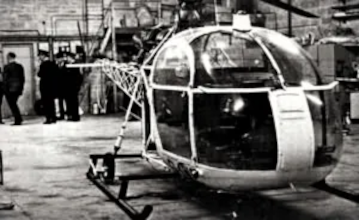
The Mountjoy Prison helicopter escape occurs on October 31, 1973, when three Provisional Irish Republican Army (IRA) volunteers escape from Mountjoy Prison in Dublin aboard a hijacked Alouette II helicopter, which briefly lands in the prison’s exercise yard. The escape makes headlines around the world and is an embarrassment to the Irish coalition government of the time, led by Fine Gael‘s Liam Cosgrave, which is criticised by opposition party Fianna Fáil. A manhunt involving twenty thousand members of the Irish Defence Forces and Garda Síochána is launched for the escapees, one of whom, Seamus Twomey, is not recaptured until December 1977. The Wolfe Tones write a song celebrating the escape called “The Helicopter Song,” which tops the Irish Singles Chart.

Following the outbreak of the Troubles in the late 1960s, the Provisional IRA conducts an armed campaign that seeks to create a united Ireland by ending Northern Ireland‘s status as part of the United Kingdom. As a result of increasing levels of violence in Northern Ireland, internment without trial is introduced there in August 1971, and in the Republic of Ireland the coalition government led by Fine Gael’s Liam Cosgrave is attempting to curb IRA activity. Fine Gael had come to power on a law-and-order ticket, with a policy of “getting tough on crime.” Suspected IRA members are arrested and accused of IRA membership by a superintendent in the Garda Síochána, a crime under the Offences against the State Acts. They are tried at the juryless Special Criminal Court in Dublin, where the traditional IRA policy of not recognising the court results in a fait accompli as no defence is offered and IRA membership carries a minimum mandatory one-year sentence, resulting in internment in all but name. In September 1973 IRA Chief of Staff Seamus Twomey appears at the Special Criminal Court charged with IRA membership, and states, “I refuse to recognise this British-orientated quisling court.” He is found guilty and receives a five-year sentence. By October 1973 the IRA’s command structure is seriously curbed, with Twomey and other senior republicans J. B. O’Hagan and Kevin Mallon all being held in Mountjoy Prison.

The IRA immediately begins making plans to break Twomey, O’Hagan and Mallon out of the prison. The first attempt involves explosives that had been smuggled into the prison, which are to be used to blow a hole in a door which will give the prisoners access to the exercise yard. From there, they are to scale a rope ladder thrown over the exterior wall by members of the IRA’s Dublin Brigade who are to have a getaway car waiting to complete the escape. The plans when the prisoners cannot gain access to the exercise yard and the rope ladder is spotted, so the IRA begins making new escape plans. The idea of using a helicopter in an escape had been discussed before in a plot to break Gerry Adams out of Long Kesh internment camp but had been ruled out because of faster and more sophisticated British Army helicopters being stationed at a nearby base. The IRA’s GHQ staff approves the plan to break out Twomey, O’Hagan and Mallon, and arrangements are made to obtain a helicopter. A man with an American accent calling himself Mr. Leonard approaches the manager of Irish Helicopters at Dublin Airport, with a view to hiring a helicopter for an aerial photographic shoot in County Laois. After being shown the company’s fleet of helicopters, Leonard arranges to hire a five-seater Alouette II for October 31.

Leonard arrives at Irish Helicopters on October 31 and is introduced to the pilot of the helicopter, Captain Thompson Boyes. Boyes is instructed to fly to a field in Stradbally, in order to pick up Leonard’s photographic equipment. After landing Boyes sees two armed, masked men approaching the helicopter from nearby trees. He is held at gunpoint and told he will not be harmed if he follows instructions. Leonard leaves with one gunman, while the other gunman climbs aboard the helicopter armed with a pistol and an ArmaLite rifle. Boyes is instructed to fly towards Dublin following the path of railway lines and the Royal Canal and is ordered not to register his flight path with Air Traffic Control. As the helicopter approaches Dublin, Boyes is informed of the escape plan and is instructed to land in the exercise yard at Mountjoy Prison.

In the prison’s exercise yard, the prisoners are watching a football match. Shortly after 3:35 p.m. the helicopter swings in to land in the prison yard, with Kevin Mallon directing the pilot using semaphore. A prison officer on duty initially takes no action as he believes the helicopter contains the Minister for Defence, Paddy Donegan. After prisoners surround the eight prison officers in the yard, fights break out as the officers realise an escape attempt is in progress. As other prisoners restrain the officers, Twomey, Mallon and O’Hagan board the helicopter. As the helicopter takes off, in the confusion one officer shouts, “Close the gates, close the fucking gates.” The helicopter flies north and lands at a disused racecourse in the Baldoyle area of Dublin, where the escapees are met by members of the IRA’s Dublin Brigade. Boyes is released unharmed, and the escapees are transferred to a taxi that had been hijacked earlier and are transported to safe houses.

The escape makes headlines around the world and is an embarrassment for Cosgrave’s government, which is criticised for “incompetence in security matters” by opposition party Fianna Fáil. An emergency debate on security is held in Dáil Éireann on November 1.

The IRA releases a statement on the escape, which reads, “Three republican prisoners were rescued by a special unit from Mountjoy Prison on Wednesday. The operation was a complete success, and the men are now safe, despite a massive hunt by Free State forces.” Shortly after the escape Twomey gives an exclusive interview to German magazine Der Spiegel, where the reporter says people throughout Europe are joking about the incident as “the escape of the century.” Irish rebel band the Wolfe Tones writes a song celebrating the escape called “The Helicopter Song,” which is immediately banned by the government yet still tops the Irish Singles Chart after selling twelve thousand copies in a single week.

The escape results in all IRA prisoners being held at Mountjoy Prison and Curragh Camp being transferred to the maximum security Portlaoise Prison. In order to prevent any further escapes, the perimeter of the prison is guarded by members of the Irish Army, and wires are erected over the prison yard to prevent any future helicopter escape. Cosgrave states there will be “no hiding place” for the escapees, and a manhunt involving twenty thousand members of the Irish Defence Forces and Garda Síochána ensues.

Mallon is recaptured at a Gaelic Athletic Association dance in a hotel near Portlaoise on December 10, 1973, and imprisoned in Portlaoise Prison. He escapes from there in a mass break-out on August 18, 1974, when nineteen prisoners escape after overpowering guards and using gelignite to blast through the gates. He is recaptured in Foxrock in January 1975 and returned to Portlaoise Prison. O’Hagan is recaptured in Dublin in early 1975, and also imprisoned in Portlaoise Prison. After the end of his original twelve-month sentence, he is immediately arrested and sentenced to a further two years imprisonment for escaping. Twomey evades recapture until December 2, 1977, when he is spotted sitting in a car in Sandycove by members of the Garda’s Special Branch who are investigating an arms shipment after a tip-off from police in Belgium. He drives away after spotting the officers, before being recaptured in the centre of Dublin after a high-speed car chase. He is also imprisoned in Portlaoise Prison until his release in 1982.

In 2021, Brendan Hughes publishes an autobiography Up Like a Bird, an account of the planning and organisation of the escape, co-authored with Doug Dalby.


Leave a comment

Birth of Lord Edward FitzGerald

Lord Edward FitzGerald, Irish aristocrat who abandoned his prospects as a distinguished veteran of British service in the American Revolutionary War, and as an Irish Parliamentarian, to embrace the cause of an independent Irish republic, is born at Carton House, near Dublin, on October 15, 1763.

FitzGerald is the fifth son of James FitzGerald, 1st Duke of Leinster, and the Lady Emily Lennox, daughter of Charles Lennox, 2nd Duke of Richmond. In 1773 his father dies, and his mother soon afterwards marries William Ogilvie, who had been the tutor for him and his siblings. He spends most of his childhood in Frescati House at Blackrock, Dublin, where he is tutored by Ogilvie in a manner chiefly directed to the acquisition of knowledge that will fit him for a military career.

FitzGerald joins the British Army in 1779 and then becomes aide-de-camp on the staff of Lord Rawdon in the Southern theatre of the American Revolutionary War. He is seriously wounded at the Battle of Eutaw Springs on September 8, 1781, his life being saved by an escaped slave named Tony Small. He commissions a portrait of Small by John Roberts in 1786. He frees Small and employs him to the end of his life. He is evacuated from Charleston, South Carolina in 1782 when the British forces abandon the city.

In 1783 FitzGerald visits the West Indies before returning to Ireland, where his brother, William FitzGerald, 2nd Duke of Leinster, has procured Edward’s election to the Irish Parliament as an MP for Athy, a seat he holds until 1790. In Parliament he acts with the small Opposition Irish Patriot Party group led by Henry Grattan but takes no prominent part in debate. In the spring of 1786, he takes the then unusual step for a young nobleman of entering the Military College, Woolwich, after which he makes a tour through Spain in 1787. Dejected by unrequited love for his cousin Georgina Lennox, he sails for New Brunswick to join the 54th Regiment with the rank of Major.

In April 1789, guided by compass, FitzGerald traverses the country with a brother officer from Fredericton, New Brunswick to Quebec, falling in with Indians by the way, with whom he fraternizes. He accomplishes the journey in twenty-six days and establishes a shorter practicable route than that hitherto followed. The route crosses the extremely rugged and heavily forested northern part of the present state of Maine. In a subsequent expedition he is formally adopted at Detroit by the Bear clan of the Mohawk with the name “Eghnidal,” and makes his way down the Mississippi River to New Orleans, whence he returns to England.

Finding that his brother has procured his election for Kildare County, a seat he holds from 1790 to 1798, and desiring to maintain political independence, FitzGerald refuses the command of an expedition against Cádiz offered him by William Pitt the Younger and devotes himself for the next few years to the pleasures of society and to his parliamentary duties. He is on terms of intimacy with his first cousin Charles Fox, with Richard Sheridan and other leading Whigs. According to Thomas Moore, FitzGerald is only one of numerous suitors of Sheridan’s first wife, Elizabeth, whose attentions are received with favour. She conceives a child by him, a baby girl who is born on March 30, 1792.

His Whig connections, together with his transatlantic experiences, predisposed FitzGerald to sympathize with the doctrines of the French Revolution, which he embraces enthusiastically when he visits Paris in October 1792. He lodges with Thomas Paine and listens to the debates in the Convention. While in Paris, he becomes enamoured of a young girl named Pamela whom he chances to see at the theatre, and who has a striking likeness to Elizabeth Sheridan. On December 27, 1792, he and Pamela are married at Tournai, one of the witnesses being Louis Philippe, afterwards King of the French. In January 1793 the couple reaches Dublin.

Ireland is by then seething with dissent which is finding a focus in the increasingly popular and revolutionary Society of the United Irishmen, which has been forced underground by the outbreak of war between France and Britain in 1793. FitzGerald, fresh from the gallery of the Convention in Paris, returns to his seat in the Irish Parliament and immediately springs to their defence. Within a week of his return, he is ordered into custody and required to apologise at the bar of the House of Commons for violently denouncing in the House a government proclamation which Grattan had approved for the suppression of the United-Irish attempt to revive the Irish Volunteer movement with a “National Guard.” However, it is not until 1796 that he joins the United Irishmen, who by now have given up as hopeless the path of constitutional reform and whose aim, after the recall of Lord Fitzwilliam in 1795, is nothing less than the establishment of an independent Irish republic.

In May 1796 Theobald Wolfe Tone is in Paris endeavouring to obtain French assistance for an insurrection in Ireland. In the same month, FitzGerald and his friend Arthur O’Connor proceed to Hamburg, where they open negotiations with the Directory through Reinhard, French minister to the Hanseatic towns. The Duke of York, meeting Pamela at Devonshire House on her way through London with her husband, tells her that his plans are known and advises that he should not go abroad. The proceedings of the conspirators at Hamburg are made known to the government in London by an informer, Samuel Turner. The result of the Hamburg negotiations is Louis Lazare Hoche‘s abortive expedition to Bantry Bay in December 1796.

In September 1797 the Government learns from the informer Leonard McNally that FitzGerald is among those directing the conspiracy of the United Irishmen, which is now quickly maturing. Thomas Reynolds, converted from a conspirator to an informer, keeps the authorities posted in what is going on, though lack of evidence produced in court delays the arrest of the ringleaders. But on March 12, 1798, Reynolds’ information leads to the seizure of a number of conspirators at the house of Oliver Bond. FitzGerald, warned by Reynolds, is not among them.

As a fellow member of the Ascendancy class, the Government are anxious to make an exception for FitzGerald, avoiding the embarrassing and dangerous consequences of his subversive activities. They communicate their willingness to spare him from the normal fate meted out to traitors. FitzGerald however refuses to desert others who cannot escape, and whom he has himself led into danger. On March 30 the government proclamation of martial law authorising the military to act as they see fit to crush the United Irishmen leads to a campaign of vicious brutality in several parts of the country.

FitzGerald’s social position makes him the most important United Irish leader still at liberty. On May 9 a reward of £1,000 is offered by Dublin Castle for his apprehension. Since the arrests at Bond’s house, he has been in hiding. The date for the rising is finally fixed for May 23 and FitzGerald awaits the day hidden by Mary Moore above her family’s inn in Thomas Street, Dublin.

Tipped off that the house is going to be raided, Moore turns to Francis Magan, a Catholic barrister and trusted sympathiser, who agrees to hide Fitzgerald. Making its way to Magan’s house on May 18, Fitzgerald’s party is challenged by Major Henry Sirr and a company of Dumbarton Fencibles. Moore escapes with Fitzgerald and takes him back to Thomas Street to the house of Nicholas Murphy.

Moore explains to Magan what had happened and, unbeknownst to her, Magan informs Dublin Castle. The Moore house is raided that day. Mary, running to warn the Leinster Directory meeting nearby in James’s Gate, receives a bayonet cut across the shoulders. That same evening Sirr storms Murphy’s house where FitzGerald is in bed suffering from a fever. Alerted by the commotion, he jumps out of bed and, ignoring the pleas of the arresting officers to surrender peacefully, he stabs one and mortally wounds the other with a dagger in a desperate attempt to escape. He is secured only after Major Sirr shoots him in the shoulder.

FitzGerald is conveyed to New Prison, Dublin where he is denied proper medical treatment. After a brief detention in Dublin Castle he is taken to Newgate Prison, Dublin where his wound, which has become infected, becomes mortally inflamed. His wife, whom the government probably has enough evidence to convict of treason, has fled the country, never to see her husband again, but FitzGerald’s brother Henry and his aunt Lady Louisa Conolly are allowed to see him in his last moments. He dies at the age of 34 on June 4, 1798, as the rebellion rages outside. He is buried the next day in the cemetery of St. Werburgh’s Church, Dublin. An Act of Attainder confiscating his property is passed as 38 Geo. 3 c. 77 but is eventually repealed in 1819.

There are Lord Edward Streets named in FitzGerald’s honour in many places in Ireland, such as Dublin, Limerick, Sligo, Kilkenny, Ballina, Ballymote, and Ballycullenbeg in County Laois. The County Roscommon GAA club Tulsk Lord Edward’s and the Geraldines P. Moran’s GAA club in Cornelscourt, Dublin, are named after him.


Leave a comment

Birth of Thomas William Croke, Archbishop of Cashel and Emly

Thomas William Croke, the second Catholic Bishop of Auckland in New Zealand (1870–74) and later Archbishop of Cashel and Emly in Ireland, is born in Castlecor, County Cork, on May 28, 1824. He is important in the Irish nationalist movement especially as a Champion of the Irish National Land League in the 1880s. The main Gaelic Athletic Association stadium in Dublin is named Croke Park in his honour.

Croke is educated in Charleville, County Cork, the Irish College in Paris and the Pontifical Irish College in Rome, winning academic distinctions including a Doctor of Divinity with honours. He is ordained in May 1847. Returning to Ireland for a short time he is appointed a Professor in St. Patrick’s, Carlow College. The Irish radical William O’Brien says that Croke fought on the barricades in Paris during the French Revolution of 1848. Croke returns to Ireland and spends the next 23 years working there. In 1858 he becomes the first president of St. Colman’s College, Fermoy, County Cork and then serves as both parish priest of Doneraile and Vicar General of Cloyne diocese from 1866 to 1870. Croke attends the First Vatican Council as the theologian to the Bishop of Cloyne 1870.

Croke gains the good opinion of the Irish ecclesiastical authorities and is rewarded in 1870 by his promotion to Bishop of Auckland in New Zealand. His former professor, Paul Cullen, by then Cardinal Archbishop of Dublin, is largely responsible for filling the Australasian Catholic church with fellow Irishmen. His strong recommendations lead to Croke’s appointment. Croke arrives at Auckland on December 17, 1870, on the City of Melbourne. During his three years as bishop, he restores firm leadership to a diocese left in disarray by his predecessor, Bishop Jean Baptiste Pompallier. He devotes some of his considerable personal wealth to rebuilding diocesan finances and also takes advantage of Auckland’s economic growth following the development of the Thames goldfields to further his aims, ensuring that all surplus income from parishes at Thames and Coromandel is passed on to him, and he institutes a more rigorous system for the Sunday collection at St. Patrick’s Cathedral. He imports Irish clergy to serve the growing Catholic community, and with Patrick Moran, the first Catholic Bishop of the Diocese of Dunedin, he tries unsuccessfully to secure an Irish monopoly on future episcopal appointments in New Zealand. Croke supports separate Catholic schools and their right to state aid and voices his opposition to secular education as Auckland’s Catholic schools are threatened by the provincial council’s Education Act 1872, which helps to create a free, secular and compulsory education system. However, generally, Croke’s image is uncontroversial. On January 28, 1874, after barely three years in office, Croke departs for Europe, on what is ostensibly a 12-month holiday, and he does not return to New Zealand.

Croke becomes a member of the Irish hierarchy when he is translated to be Archbishop of Cashel, one of the four Catholic Irish archbishoprics in 1875. Archbishop Croke is a strong supporter of Irish nationalism, aligning himself with the Irish National Land League during the Land War, and with the chairman of the Irish Parliamentary Party, Charles Stewart Parnell. In an 1887 interview he explains that he had opposed the League’s “No rent manifesto” in 1881, preferring to stop payment of all taxes.

Croke also associates himself with the Temperance Movement of Fr. Theobald Mathew and Gaelic League from its foundation in 1893. Within Catholicism he is a supporter of Gallicanism, as opposed to the Ultramontanism favoured by the Archbishop of Dublin, Cardinal Cullen. His support of nationalism causes successive British governments and Lord Lieutenant of Ireland‘s governments in Dublin to be deeply suspicious of him, as are some less politically aligned Irish bishops.

Following the scandal that erupts over Parnell’s relationship with Katharine O’Shea, the separated wife of fellow MP Captain William O’Shea, Archbishop Croke withdraws from active participation in nationalist politics.

Thomas Croke, 78, dies at the Archbishop’s Palace in Thurles, County Tipperary on July 22, 1902. He is buried at the Cathedral of the Assumption in Thurles. In honour of Croke, his successors as Archbishop of Cashel and Emly traditionally are asked to throw in the ball at the minor Gaelic football and All-Ireland Senior Hurling Championship finals.


Leave a comment

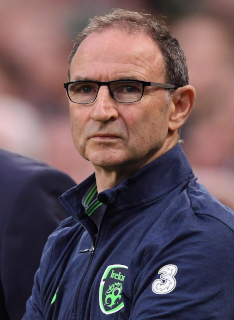
Birth of Martin O’Neill, Association Football Player & Manager

Martin Hugh Michael O’Neill, OBE, Northern Irish association football manager and former player who played as a midfielder, is born in Kilrea, County Londonderry, Northern Ireland, on March 1, 1952, the sixth child of nine siblings.

O’Neill’s father is a founding member of local GAA club Pádraig Pearse’s GAC Kilrea. He plays for both Kilrea and Derry at underage level. He also plays Gaelic football while boarding at St. Columb’s College, Derry, and later at St. Malachy’s College, Belfast.

Starting his career in Northern Ireland, O’Neill moves to England where he spends most of his playing career with Nottingham Forest, with whom he wins the European Cup twice, in 1979 and 1980. He is capped 64 times for the Northern Ireland national football team, also captaining the side at the 1982 FIFA World Cup.

During his managerial career O’Neill manage Grantham Town, Wycombe Wanderers, Norwich City, Leicester City, Celtic, Aston Villa and Sunderland. He guides Leicester City to the Football League Cup final three times, winning twice. As Celtic manager between 2000 and 2005, he leads that club to seven trophies including three Scottish Premier League titles and the 2003 UEFA Cup Final. After joining Aston Villa he achieves three consecutive sixth-place finishes in the English Premier League and guides them to the 2010 Football League Cup Final.

O’Neill becomes Republic of Ireland manager in 2013 and leads them to qualification for the 2016 UEFA European Football Championship for the third time in the nation’s history, beating the reigning world champions, Germany, in the process. He leaves the role with assistant Roy Keane by “mutual agreement” in November 2018. He is appointed as Nottingham Forest manager on January 15, 2019. He guides the club to a ninth-place finish in the Championship. However, he is sacked as manager on June 28, 2019, after reportedly falling out with some of the senior first team players.

Despite never completing his degree, O’Neill remains a follower of criminology. His fascination begins with the James Hanratty case of 1961. He has worked in television as an analyst for BBC and ITV at the FIFA World Cup, the UEFA European Championship and on UEFA Champions League matches.

In 2002, Norwich supporters voted O’Neill into the club’s Hall of Fame. He is awarded an OBE for services to sport in 2004. He is awarded the Nottingham Lifetime Achievement Award on November 3, 2013 for his services to football and achievements with Nottingham Forest.


Leave a comment

Death of Seán Flanagan, Irish Footballer & Fianna Fáil Politician

Seán Flanagan, Irish Fianna Fáil politician, dies in Dublin on February 5, 1993. He serves as Minister for Health from 1966 to 1969, Minister for Lands from 1969 to 1973 and Parliamentary Secretary to the Minister for Industry and Commerce from 1965 to 1966. He serves as a Member of the European Parliament (MEP) for the Connacht–Ulster constituency from 1979 to 1989. He serves as a Teachta Dála (TD) for the Mayo South constituency from 1951 to 1969 and for the Mayo East constituency from 1969 to 1977.

Flanagan is born in Coolnaha, Aghamore, Ballyhaunis, County Mayo on January 26, 1922. He is educated locally, then later at St. Jarlath’s College in Tuam, County Galway, where he shows enthusiasm for sport. He wins two Connacht championship medals with the college in 1939 and 1940. He later studies at Clonliffe College in Dublin, and then enrolls at University College Dublin, where he studies law and qualifies as a solicitor.

Flanagan also plays senior Gaelic football for Mayo. He captains the All-Ireland final-winning sides of 1950 and 1951 and wins five Connacht senior championship medals in all. He also wins two National Football League titles in 1949 and 1954. While still a footballer, he enters into a career in politics.

In recognition of his skills and long-running contribution to the sport, Flanagan is awarded the 1992 All-Time All Star Award as no Gaelic Athletic Association (GAA) All Stars Awards were being issued at the time of his playing career. In 1984, the Gaelic Athletic Association centenary year, he is honoured by being named on their Football Team of the Century. In 1999, he is again honoured by the GAA by being named on their Gaelic Football Team of the Millennium.

Flanagan comes from a Fianna Fáil family and is recruited into the party in east Mayo. He is elected a Fianna Fáil TD for Mayo South at the 1951 Irish general election and then wins a seat from 1969 in Mayo East at each subsequent election until he loses his seat at the 1977 Irish general election.

Flanagan rises rapidly through the party ranks and is appointed a Parliamentary Secretary under Taoiseach Seán Lemass in 1959. In the 1966 Fianna Fáil leadership election he supports Jack Lynch. When Lynch becomes Taoiseach, he is promoted to the Cabinet as Minister for Health. Three years later in 1969, he becomes Minister for Lands. He loses his seat at the 1977 Irish general election and effectively retires from domestic politics. However, he is elected to the European Parliament in the first direct elections in 1979. He is re-elected in 1984 and retires from politics in 1989.

Flanagan marries Mary Patricia Doherty in 1950. They have two sons and five daughters, including Dermot, who also plays All-Ireland senior football for Mayo.

Flanagan dies at the Mater Misericordiae University Hospital in Dublin on February 5, 1993, at the age of 71. Following his death, a Mayo sports journalist comments, “Above all, we’ll miss that noble link with an era when, as children, Seán Flanagan was our second God.”