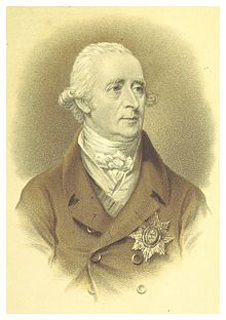
The son of Dr. Philip Francis, a man known by his translations of Horace, Aeschines and Demosthenes, Francis is educated in Dublin and London and holds a variety of clerical posts in the government from 1756 to 1773. He may have written the Letters of Junius, a series of bitter lampoons against the government of King George III published by a London newspaper from 1769 to 1772, when he was a clerk in the war office. The authorship of the letters has been assigned to Francis on a variety of grounds, including a computer-aided analysis of the Junius texts in the 1960s.
In June 1773 the prime minister, Lord Frederick North, appointed Francis a member of the newly created four-man council that is to rule British possessions in India with Governor-General Hastings. He leads two of his colleagues in a struggle against Hastings, in part because he covets Hastings’ job, but there are also differences between the two men on policy matters, including land-revenue collection. Although Hastings gains the upper hand by 1776 after two of the opposing councilors die, Francis continues his attacks and, in 1780, the governor-general wounds him in a duel.
Returning to England in 1781, Francis turns public opinion against Hastings with a series of anonymous pamphlets. He enters the House of Commons of the United Kingdom in 1784 and is the moving spirit behind Hastings’ impeachment, begun in 1788. The acquittal of Hastings in 1795 embitters Francis deeply and leads to his defeat in a parliamentary election. He served again in Parliament from 1802 to 1807, at which time he retires from politics. He is knighted in 1806.
Sir Philip Francis dies in London on December 23, 1818.
Although a Protestant country-gentleman, O’Brien supports Catholic emancipation while remaining a supporter of British-Irish union. In 1843, in protest against the imprisonment of Daniel O’Connell, he joins O’Connell’s anti-union Repeal Association.
Three years later, O’Brien withdraws the Young Irelanders from the association. In January 1847, with Thomas Francis Meagher, he founds the Irish Confederation, although he continues to preach reconciliation until O’Connell’s death in May 1847. He is active in seeking relief from the hardships of the famine. In March 1848, he speaks out in favour of a National Guard and tries to incite a national rebellion. He is tried for sedition on May 15, 1848, but is not convicted.
On July 29, 1848, O’Brien and other Young Irelanders lead landlords and tenants in a rising in three counties, with an almost bloodless battle against police at Ballingarry, County Tipperary. In O’Brien’s subsequent trial, the jury finds him guilty of high treason. He is sentenced to be hanged, drawn, and quartered. Petitions for clemency are signed by 70,000 people in Ireland and 10,000 people in England. In Dublin on June 5, 1849, the sentences of O’Brien and other members of the Irish Confederation are commuted to transportation for life to Van Diemen’s Land (Tasmania in present-day Australia).
O’Brien attempts to escape from Maria Island off Tasmania but is betrayed by the captain of the schooner hired for the escape. He is sent to Port Arthur where he meets up with John Mitchel.
O’Brien is a founding member of the Ossianic Society, which is founded in Dublin on St. Patrick’s Day 1853, whose aim is to further the interests of the Irish language and to publish and translate literature relating to the Fianna. He writes to his son Edward from Van Diemen’s Land, urging him to learn the Irish language. He himself studies the language and uses an Irish-language Bible and presents to the Royal Irish Academy Irish-language manuscripts he has collected.
In 1854, after five years in Tasmania, O’Brien is released on the condition he never returns to Ireland. He settles in Brussels. In May 1856, he is granted an unconditional pardon and returns to Ireland that July. He contributes to the Nation newspaper but plays no further part in politics.
In 1864 he visits England and Wales, with the view of rallying his failing health, but no improvement takes place, and he dies at Bangor, in Wales on June 16, 1864.
A statue of William Smith O’Brien stands in O’Connell Street, Dublin. Sculpted in Portland limestone, it is designed by Thomas Farrell and erected in D’Olier Street, Dublin, in 1870. It is moved to its present position in 1929.
John Blaquiere, 1st Baron de Blaquiere, British soldier, diplomat and politician of French descent, is born on May 15, 1732. He serves as Chief Secretary for Ireland between 1772 and 1776. He is the fifth son of Jean de Blaquiere, a French merchant who had emigrated to England in 1685, and his wife Marie Elizabeth de Varennes.
Blaquiere at first serves in the Army, in the 18th Dragoons, later renumbered the 17th Dragoons, where he achieves the rank of Lieutenant Colonel. In 1771 he is appointed Secretary of Legation at the British Embassy in Paris, a post he holds until 1772. The latter year Simon Harcourt, 1st Earl Harcourt, the British Ambassador in Paris, is appointed Lord Lieutenant of Ireland, and Blaquiere joins him as Chief Secretary for Ireland. He is admitted to the Privy Council of Ireland the same year and made a Knight Companion of the Order of the Bath two years later.
Blaquiere is to remain Chief Secretary until December 6, 1776. He is elected to the Irish House of Commons for Old Leighlin in 1773, a seat he holds until 1783. After representing Enniskillen for a few months in 1783, he sits then for Carlingford from 1783 to 1790, for Charleville from 1790 to 1798 and for Newtownards from 1798 until the Act of Union comes into force in 1801. He is created a Baronet, of Ardkill in County Londonderry, in 1784, and is raised to the Peerage of Ireland as Baron de Blaquiere, of Ardkill in the County of Londonderry, in 1800, for his support for the Act of Union. Lord de Blaquiere also sits as a Member of the British House of Commons for Rye from 1801 to 1802 and for Downton from 1802 to 1806. He is elected a Fellow of the Royal Society in 1803.
Lord de Blaquiere marries Eleanor, daughter of Robert Dobson, in 1775. They have four sons, including Peter de Blaquière, and three daughters. Lord de Blaquiere dies at the age of 80 in Bray, County Wicklow, on August 27, 1812. He is succeeded in his titles by his eldest son, John. Lady de Blaquiere dies at Regent’s Park, Marylebone, London, in December 1833.
Redmond is born to an old prominent Catholic family in Kilrane, County Wexford on September 1, 1856. Several relatives are politicians. He takes over control of the minority IPP faction loyal to Charles Stewart Parnell after Parnell dies in 1891. He is a conciliatory politician who achieves the two main objectives of his political life: party unity and, in September 1914, the passing of the Irish Home Rule Act.
The Irish Home Rule Act grants limited self-government to Ireland, within the United Kingdom. However, implementation of Home Rule is suspended by the outbreak of the World War I. Redmond calls on the National Volunteers to join Irish regiments of the New British Army and support the British and Allied war effort to restore the “freedom of small nations” on the European continent, thereby to also ensure the implementation of Home Rule after a war that is expected to be of short duration. However, after the Easter Rising of 1916, Irish public opinion shifts in favour of militant republicanism and full Irish independence, resulting in his party losing its dominance in Irish politics.
In sharp contrast to Parnell, Redmond lacks charisma. He works well in small committees but has little success in arousing large audiences. Parnell had always chosen the nominees to Parliament. Now they are selected by the local party organisations, giving Redmond numerous weak MPs over whom he has little control. He is an excellent representative of the old Ireland but grows increasingly old-fashioned because he pays little attention to the new forces attracting younger Irishmen, such as Sinn Féin in politics, the Gaelic Athletic Association in sports, and the Gaelic League in cultural affairs.
Redmond never tries to understand the unionist forces emerging in Ulster. He is further weakened in 1914 by the formation of the Irish Volunteers by Sinn Féin members. His enthusiastic support for the British war effort alienates many Irish nationalists. His party has been increasingly hollowed out, and a major crisis, notably the Easter Rising, is enough to destroy it.
Redmond is increasingly eclipsed by ill-health after 1916. An operation in March 1918 to remove an intestinal obstruction appears to progress well initially, but he then suffers heart failure. He dies a few hours later at a London nursing home on March 6, 1918.
Condolences and expressions of sympathy are widely expressed. After a funeral service in Westminster Cathedral his remains are interred, as requested in a manner characteristic of the man, in the family vault at the old Knights Templars‘ chapel yard of Saint John’s Cemetery, Wexford, amongst his own people rather than in the traditional burial place for Irish statesmen and heroes in Glasnevin Cemetery. The small, neglected cemetery near the town centre is kept locked to the public. His vault, which has been in a dilapidated state, has been only partially restored by Wexford County Council.
Nolan becomes involved in the nascent home rule campaign of the Home Rule League. On February 8, 1872, he is elected MP for Galway County in a by-election, defeating by a large majority the Conservative William Le Poer Trench. Of the 4,686 available electors, who are chiefly Catholic, 2,823 vote for Nolan and 658 for Trench.
Trench appeals the result, claiming on petition that there is widespread intimidation during the election campaign. The local Catholic bishops and clergy had strongly supported Nolan, chiefly because the family of his opponent, a Captain Trench, was active in proselytism. The trial of the Galway County Election Petition begins, before Judge William Keogh, on April 1 and ends on May 21, 1872.
Judge Keogh finds that Nolan had been elected by the undue influence and intimidation and in his report states that he found 36 persons guilty of undue influence and intimidation, including John MacHale, the Archbishop of Tuam, the Bishop of Clonfert, Patrick Duggan, and the Bishop of Galway, John McEvilly, and twenty-nine named priests, such intimidation being in some cases exercised in the very churches. As a result, Nolan is unseated on June 13, with the seat going to Trench. The judgement causes an uproar. The judge is threatened with removal from the bench and his reputation never recovers.
Nolan retakes the seat at the 1874 election. He remains MP after the 1885 constituency reforms as MP for Galway North until 1895.
When the Irish Parliamentary Party splits over Charles Stewart Parnell‘s long-term family relationship with Katharine O’Shea, the separated wife of a fellow MP, Nolan sides with his deposed leader and seconds the motion to retain Parnell as chairman at the ill-fated party meeting in Committee Room 15 of the House of Commons. He goes on to become whip of the pro-Parnellite rump of the split party, the Irish National League. He loses the Galway North seat to an Anti-Parnellite, Denis Kilbride, in 1895 and stands unsuccessfully as a Parnellite for South Louth in 1896. He is re-elected unopposed at Galway North after the reunification of the Parliamentary Party in 1900 but loses the seat again for the final time in 1906 when he stands as an Independent Nationalist.
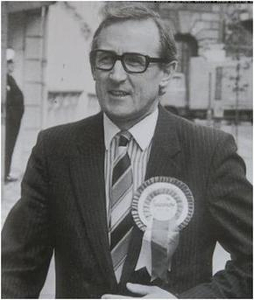
The youngest son of Jim and Lily McCusker, McCusker is born and raised in the heart of Lurgan, County Armagh, Northern Ireland. He is educated at Lurgan Model Primary School, Lurgan College and Stranmillis University College, before qualifying as a teacher. Before entering politics he works in industry, latterly with Goodyear, in their Craigavon Plant.
McCusker is an Orangeman and staunch Unionist. Prior to his death in Portadown, County Armagh, Northern Ireland on February 12, 1990, five days after his 50th birthday, McCusker is expected to rise further in the Ulster Unionist Party and British political scenes, due to his ability and popularity among his peers and the wider public. He is a member of the Methodist Church in Ireland (Lurgan circuit).
Markievicz, who inherits the title of “countess” from her noble Polish husband, and 45 other MPs are in jail when the first meeting takes place on January 21, 1919. They are described in Gaelic as being “imprisoned by the foreign enemy” when their names are read out during roll call at the Mansion House.
The 27 MPs who attend the Dáil’s first session ratify the Proclamation of the Irish Republic of Easter 1916, which had not been adopted by an elected body but merely by the Easter rebels claiming to act in the name of the Irish people. They also claim there is an “existing state of war, between Ireland and England” in a Message to the Free Nations of the World.
When Markievicz is released in April 1919, she becomes Minister for Labour. Having also been part of the suffragette movement, her deep political convictions contrast deeply with Nancy Astor, Viscountess Astor, the first woman to sit in the House of Commons. She believes Astor, a Tory who is elected in a 1919 Plymouth by-election after her husband is forced to give up the seat when he becomes a peer, is “out of touch.”
Her political views are also influenced by Irish poet William Butler Yeats, who is a regular visitor to the family home, Lissadell House in County Sligo. She becomes involved in the women’s suffrage movement after studying art in London, where she meets and marries Count Casimir Markievicz. In 1903, the couple, who has one son, settles in Dublin, where she becomes involved in nationalist politics. She joins both Sinn Féin and Inghinidhe na hÉireann.
Like Astor, Markievicz has an irrepressible personality and is in no mood to play coy and simply blend in. She comes to her first Sinn Féin meeting wearing a satin ball-gown and a diamond tiara after attending a function at Dublin Castle, the seat of British rule in Ireland.
Markievicz spends a year in the Dáil before walking out along with Éamon de Valera, the future dominant figure in Irish politics, after opposing the Anglo-Irish Treaty. The document, which grants southern Ireland independence but keeps the north as part of the UK, splits Sinn Féin and triggers the Irish War of Independence.
Following the conflict, which the Pro-Treaty forces win, Markievicz is elected again to the Dáil, but does not take her seat in protest. In 1927, she is elected for a third time as part of de Valera’s new party Fianna Fáil, which pledges to return to the Irish parliament. But before she can take her seat, she dies at age 59 on July 15, 1927, of complications related to appendicitis.
Bloody Sunday takes place in London on November 13, 1887, when a march against unemployment and coercion in Ireland, as well as demanding the release of Member of Parliament (MP) William O’Brien, is attacked by the Metropolitan Police Service and the British Army. The demonstration is organised by the Social Democratic Federation (SDF) and the Irish National League. Violent clashes take place between the police and demonstrators, many “armed with iron bars, knives, pokers and gas pipes.” A contemporary report notes that 400 are arrested and 75 persons are badly injured, including many police, two policemen being stabbed, and one protester bayonetted.
The Long Depression, starting in 1873 and lasting almost to the end of the century, creates difficult social conditions in Britain, similar to the economic problems that drive rural agitation in Ireland. Falling food prices create rural unemployment, which results in both emigration and internal migration. Workers move to the towns and cities in thousands, eroding employment, wages and working conditions. By November 1887, unemployed workers’ demonstrations from the East End of London have been building up for more than two years. There have already been clashes with the police and with the members of upper-class clubs. Trafalgar Square is seen symbolically as the point at which the working-class East End meets the upper-class West End of London, a focus of class conflict and an obvious flashpoint.
This attracts the attention of the small but growing socialist movement – the Marxists of both the Social Democratic Federation and Socialist League, and the reformist socialists of the Fabian Society. Police and government attempt to suppress or divert the demonstrations also bring in the radical wing of the Liberal Party and free speech activists from the National Secular Society.
Some 30,000 persons encircle Trafalgar Square as at least 10,000 protesters march in from several different directions, led by Elizabeth Reynolds, John Burns, William Morris, Annie Besant and Robert Bontine Cunninghame Graham, who are primarily leaders of the Social Democratic Federation. Also marching are the Fabian playwright George Bernard Shaw and Charlotte Wilson. Two thousand police and 400 troops are deployed to halt the demonstration. Burns and Cunninghame Graham are arrested and imprisoned for six weeks. Annie Besant, who is a Marxist, Fabian and secularist, speaks at the rally and offers herself for arrest, but the police decline to do so. Of the 400 arrested, 50 are detained in custody.
In the fighting, many rioters are injured by police truncheons and under the hooves of police horses. There are both infantry and cavalry present. Although the infantry is marched into position with bayonets fixed, they are not ordered to open fire and the cavalry are not ordered to draw their swords.
The following Sunday, November 20, sees another demonstration and more casualties. According to a report in the partisan Socialist Review, among them is a young clerk named Alfred Linnell, who is run down by a police horse, dying in hospital a fortnight later from complications of a shattered thigh.
The funeral of Linnell on December 18 provides another focus for the unemployed and Irish movements. William Morris, leader of the Socialist League, gives the main speech and advocates a holy war to prevent London from being turned into a huge prison. A smaller but similar event marks the burial of another of those killed, W. B. Curner, which takes place in January. The release of those imprisoned is celebrated on February 20, 1888, with a large public meeting. Henry Hyndman, leader of the SDF, violently denounces the Liberal Party and the Radicals who are present.
(Pictured: Bloody Sunday, 1887. This engraving from The Illustrated London News depicts a policeman being clubbed by a demonstrator as he wrests a banner from a female protester.)
In the House of Commons of the United Kingdom on November 5, Churchill bemoans the fact that the Irish ports had been returned to the Free State government in 1938:
“The fact that we cannot use the South and West Coasts of Ireland to refuel our flotillas and aircraft and thus protect the trade by which Ireland as well as Great Britain lives, is a most heavy and grievous burden and one which should never have been placed on our shoulders, broad though they be.”
De Valera responds to Churchill’s statement two days later, on November 7:
“I would have refrained from making any comment upon it were it not that it has been followed by an extensive Press campaign by Britain itself, and re-echoed in the United States of America, the purport of the campaign being that we should surrender or lease our ports to Britain for the conduct of the war…
We have chosen the policy of neutrality in this war because we believed that it was the right policy for our people. It is the policy which has been accepted, not merely by this House, but by our people as a whole, and nobody who realises what modern war means, and what it means particularly for those who have not sufficient air defences, will have the slightest doubt that that policy was the right one, apart altogether from any questions of sympathy on one side or the other…
There can be no question of the handing over of these ports so long as this State remains neutral. There can be no question of leasing these ports. They are ours. They are within our sovereignty, and there can be no question, as long as we remain neutral, of handing them over on any condition whatsoever. Any attempt to bring pressure to bear on us by any side—by any of the belligerents—by Britain—could only lead to bloodshed.”
Gillespie is educated locally and in Derry. She studies music at the Royal University of Ireland in Dublin, graduating in 1902, and becomes a teacher. As a student she meets the poet and literary critic James Cousins. They are married in 1903. The pair explore socialism, vegetarianism, and parapsychology together. In 1906, after attending a National Conference of Women (NCW) meeting in Manchester, Cousins joins the Irish branch of the NCW. In 1907 she and her husband attend the London convention of the Theosophical Society, and she makes contact with suffragettes, vegetarians, anti-vivisectionists, and occultists in London.
Cousins co-founds the Irish Women’s Franchise League with Hanna Sheehy-Skeffington in 1908, serving as its first treasurer. In 1910 she is one of six Dublin women attending the Parliament of Women, which attempt to march to the House of Commons to hand a resolution to the Prime Minister. After 119 women marching to the House of Commons have been arrested, fifty requiring medical treatment, the women decide to break the windows of the houses of Cabinet Ministers. Cousins is arrested and sentenced to a month in Holloway Prison.
In 1913, she and her husband move to Liverpool, where James Cousins works in a vegetarian food factory. In 1915 they move to India. James Cousins initially works for New India, the newspaper founded by Annie Besant. After Besant is forced to dismiss him for an article praising the 1916 Easter Rising, she appoints him Vice-Principal of the new Besant Theosophical College, where Margaret teaches English.
In 1916, Cousins becomes the first non-Indian member of the SNDT Women’s University at Poona. In 1917, Cousins co-founds the Women’s Indian Association (WIA) with Annie Besant and Dorothy Jinarajadasa. She edits the WIA’s journal, Stri Dharma. In 1919 Cousins becomes the first Head of the National Girls’ School at Mangalore. She is credited with composing the tune for the Indian national anthem Jana Gana Mana in February 1919, during Rabindranath Tagore’s visit to Besant Theosophical College. In 1922, she becomes the first woman magistrate in India. In 1927, she co-founds the All India Women’s Conference, serving as its President in 1936.
In 1932, she is arrested and jailed for speaking against the Emergency Measures. By the late 1930s she feels conscious of the need to give way to indigenous Indian feminists:
“I longed to be in the struggle, but I had the feeling that direct participation by me was no longer required, or even desired by the leaders of India womanhood who were now coming to the front.”
A stroke leaves Cousins paralysed from 1944 onwards. She receives financial support from the Madras government, and later Jawaharlal Nehru, in recognition of her services to India. She dies on March 11, 1954. Her manuscripts are dispersed in various collections across the world.