seamus dubhghaill

Promoting Irish Culture and History from Little Rock, Arkansas, USA


Leave a comment

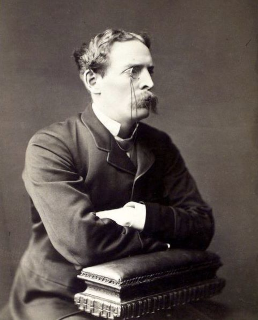
Death of Robert Barton, Nationalist & Anglo-Irish Politician

Robert Childers Barton, Anglo-Irish politician, Irish nationalist and farmer who participates in the negotiations leading up to the signature of the Anglo-Irish Treaty, dies in Annamoe, County Wicklow, on August 10, 1975. His father is Charles William Barton, and his mother is Agnes Alexandra Frances Childers. His wife is Rachel Warren of Boston, daughter of Fiske Warren. His double first cousin and close friend is the English-born Irish writer Erskine Childers.

Barton is born in Annamoe on March 14, 1881, into a wealthy Irish Protestant land-owning family, namely of Glendalough House. His two younger brothers, Erskine and Thomas, die while serving in the British Army during World War I. He is educated in England at Rugby School and the University of Oxford and becomes an officer in the Royal Dublin Fusiliers on the outbreak of World War I. He is stationed in Dublin during the 1916 Easter Rising and comes into contact with many of its imprisoned leaders in the aftermath while on duty at Richmond Barracks. He resigns his commission in protest at the heavy-handed British government suppression of the revolt. He then joins the Irish Republican Brotherhood (IRB).

At the 1918 Irish general election to the British House of Commons, Barton is elected as the Sinn Féin member for West Wicklow. In common with all Sinn Féin members, he boycotts the Westminster parliament and sits instead in Dáil Éireann (the First Dáil). Arrested in February 1919 for sedition, he escapes from Mountjoy Prison on Saint Patrick’s Day, leaving a note to the governor explaining that, owing to the discomfort of his cell, he felt compelled to leave, and requests the governor to keep his luggage until he sends for it. He is appointed as Director of Agriculture in the Dáil Ministry in April 1919. He is recaptured in January 1920 and sentenced to three years’ imprisonment but is released under the general amnesty of July 1921.

In May of that year, prior to his release, Barton is elected as a Sinn Féin member for Kildare–Wicklow in the 1921 Irish election to the House of Commons of Southern Ireland. Once again, all Sinn Féin members boycott this parliament, sitting as the Second Dáil. In August 1921, he is appointed to cabinet as Secretary for Economic Affairs.

Barton is one of the Irish plenipotentiaries to travel to London for the Anglo-Irish Treaty negotiations. His cousin is a secretary to the delegation. He reluctantly signs the Treaty on December 6, 1921, defending it “as the lesser of two outrages forced upon me and between which I had to choose.”

Although he had signed the Treaty and voted for it in the Dáil, Barton stands in the 1922 Irish general election for Anti-Treaty Sinn Féin, the only TD who had voted for the Treaty to do so and wins a seat in the Third Dáil. In common with other Anti-Treaty TDs, he does not take his seat. In October 1922 he is appointed Minister for Economic Affairs in Éamon de Valera‘s “Emergency Government,” a shadow government in opposition to the Provisional Government and the later Executive Council of the Irish Free State. His memoir of this period is completed in 1954 and can be seen on the Bureau of Military History website. He is arrested and interned for most of the war at the Curragh Camp.

Barton is defeated at the 1923 Irish general election and retires from politics for the law, practicing as a barrister. He later becomes a judge. He is chairman of the Agricultural Credit Corporation from 1934 to 1954. He dies at home in County Wicklow on August 10, 1975, at the age of 94, the last surviving signatory of the Anglo-Irish Treaty. Éamon de Valera dies only nineteen days later, on August 29, 1975.

Glendalough House, run by Barton for over 70 years right up until his death, is still considered one of Ireland’s most notable properties, alongside nearby Powerscourt Estate. The house is the center of numerous political meetings and gatherings from 1910 to 1922. It has also been featured as a location in many large Hollywood films including Excalibur, Saving Private Ryan and Braveheart.


Leave a comment

The Irish Church Act 1869 Receives Royal Assent

The Irish Church Act 1869 receives British royal assent on July 26, 1869. The Act is an act of the Parliament of the United Kingdom which separates the Church of Ireland from the Church of England and disestablishes the former, a body that commands the adherence of a small minority of the population of Ireland. The Act is passed during the first ministry of William Ewart Gladstone and comes into force on January 1, 1871. It is strongly opposed by Conservatives in both houses of Parliament.

The Act means the Church of Ireland is no longer entitled to collect tithes from the people of Ireland. It also ceases to send representative bishops as Lords Spiritual to the House of Lords in Westminster. Existing clergy of the church receive a life annuity in lieu of the revenues to which they are no longer entitled: tithes, rentcharge, ministers’ money, stipends and augmentations, and certain marriage and burial fees.

The passage of the Bill through Parliament causes acrimony between the House of Commons and the House of Lords. Queen Victoria personally intervenes to mediate. While the Lords extort from the Commons more compensation to alleviate the disestablished churchmen, in the end, the will of the Commons prevail.

The Irish Church Act is a key move in dismantling the Protestant Ascendancy which had dominated Ireland for several centuries previously.


Leave a comment

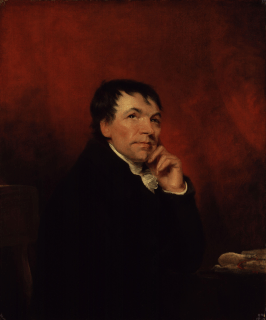
Birth of John Philpot Curran, Orator, Politician, Lawyer & Judge

John Philpot Curran, Irish orator, politician, wit, lawyer and judge, who holds the office of Master of the Rolls in Ireland, is born in Newmarket, County Cork, on July 24, 1750.

Curran is the eldest of five children of James Curran, seneschal of the Newmarket manor court, and Sarah, née Philpot. The Curran family are said to have originally been named Curwen, their ancestor having come from Cumberland as a soldier under Oliver Cromwell during the Cromwellian conquest of Ireland, originally settling in County Londonderry.

Curran is educated at Midleton College, County Cork, before studing law at Trinity College Dublin. He continues his legal studies at King’s Inns and the Middle Temple. He is called to the Irish Bar in 1775. Upon his first trial, his nerves get the better of him and he cannot proceed. His short stature, boyish features, shrill voice and a stutter are said to have impacted his career, and earn him the nickname “Stuttering Jack Curran.”

However, Curran can speak passionately in court on subjects close to his heart. He eventually overcomes his nerves and gets rid of his speech impediment by constantly reciting Shakespeare and Bolingbroke in front of a mirror, becoming a noted orator and wit. His championing of popular Irish causes such as Catholic emancipation make him one of the most popular lawyers in Ireland. He is also fluent in the Irish language which is still the language of the majority at the time. He writes a large amount of humorous and romantic poetry.

The case which cements Curran’s popularity is that of Father Neale and St. Leger St. Leger, 1st Viscount Doneraile at the County Cork Assizes in 1780. Having a passion for lost causes, he represents the priest and wins over the jury by setting aside the issue of religion.

A liberal Protestant whose politics are similar to Henry Grattan, Curran employs all his eloquence to oppose the illiberal policy of the Government, and also the Union with Britain. He stands as Member of Parliament (MP) for Kilbeggan in 1783. He subsequently represents Rathcormack (1790-98) and Banagher from 1800 until the Act of Union in 1801, which bitterly disappoints him, forcing him to contemplate emigrating to the United States.

In 1798, Ireland rebels against the British House of Commons and lack of reforms on Catholic emancipation. The British defeat the Irish rebels in numerous battles and soon establish their control over the country by 1799. Many of the Irish ring leaders are charged with treason and are facing death sentences. Curran plays an important role in court defending the leaders of the United Irishmen.

Curran’s youngest daughter Sarah‘s romance with United Irishmen leader Robert Emmet scandalises Curran, who had tried to split them up. He is arrested and agrees to pass their correspondence on to Standish O’Grady, 1st Viscount Guillamore, the Attorney-General for Ireland. In the circumstances he cannot defend Emmet. He is suspected of involvement in Emmet’s Rebellion, but is completely exonerated. However, his friend Arthur Wolfe, 1st Viscount Kilwarden, is killed by the rebels, and he loses any faith in the beliefs of the United Irishmen. Emmet is found guilty of rebelling against the Crown and the union between Great Britain and Ireland and is hanged in 1803. Curran disowns Sarah, who dies of tuberculosis five years later.

Curran is appointed Master of the Rolls in Ireland in 1806, following William Pitt the Younger‘s replacement by a more liberal cabinet.

Curran retires in 1814 and spends his last three years in London. He dies in his home in Brompton on October 14, 1817. In 1837, his remains are transferred from Paddington Cemetery, London to Glasnevin Cemetery in Dublin, where they are laid in an 8-foot-high classical-style sarcophagus. In 1845 a white marble memorial to him, with a carved bust by Christopher Moore, is placed near the west door of St. Patrick’s Cathedral, Dublin.


Leave a comment

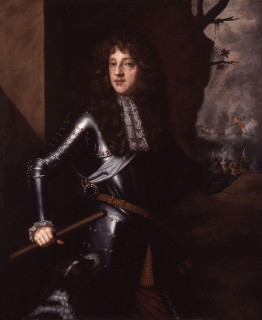
Birth of Thomas Butler, 6th Earl of Ossory

Vice Admiral Thomas Butler, 6th Earl of Ossory, KG, PC, PC (Ire), Irish soldier and politician, is born on July 8, 1634, at Kilkenny Castle. He is the eldest son of James Butler, 1st Duke of Ormond, and Elizabeth Preston. He predeceases his father and therefore never becomes duke.

When Butler is born, his father is then the 12th Earl of Ormond but is raised to marquess and duke. His family, the Butler dynasty, is Old English and descends from Theobald Walter, who had been appointed Chief Butler of Ireland by King Henry II in 1177. His mother is a second cousin once removed of his father as she is a granddaughter of Black Tom, 10th Earl of Ormond. Her father, however, is Scottish, Richard Preston, 1st Earl of Desmond, a favourite of James I. Both parents are Protestants. They married on Christmas Day 1629.

Butler is one of ten siblings, eight brothers and two sisters, but five of the sons die in childhood. As the eldest living son, he is the heir apparent and is styled with the corresponding courtesy title, which at first is Viscount Thurles but changed to Earl of Ossory when his father becomes marquess in 1642. His early years are spent in Ireland until 1647 when he accompanies his father to England. In 1648 his father renews his support for the royalist cause and he and his son have to flee to France, arriving in Caen in February 1648. Lady Ormond also moves to Caen, where she arrives on June 23, 1648, with his siblings.

Butler is an accomplished athlete and a good scholar. Having come to London in 1652 he is rightly suspected of sympathising with the exiled royalists, and in 1655 is jailed by Oliver Cromwell. After his release about a year later he goes into exile to the Netherlands where Charles II has his exile court at the time.

On November 17, 1659, while in exile, Butler marries Emilia van Nassau, the second daughter of Louis of Nassau, Lord of De Lek and Beverweerd. They have eleven children, including two sons: James (1665–1745), who becomes the 2nd Duke of Ormonde in 1688; Charles (1671–1758), who becomes the de jure 3rd Duke of Ormonde following his elder brother’s attainder in 1715; Elizabeth (died 1717), who marries William Stanley, 9th Earl of Derby in 1673; Amelia (died 1760), who inherits the estates of her brother Charles and never marries; and Henrietta (died 1724), who marries Henry de Nassau d’Auverquerque, 1st Earl of Grantham.

Butler accompanies Charles II back to England in 1660. In 1661 he becomes a member of both the English and the Irish houses of commons, representing in the former Bristol and Dublin University in the latter.

In 1662 Butler is called to the Irish House of Lords under a writ of acceleration as the Earl of Ossory. His father holds the title “5th Earl of Ossory” as one of his subsidiary titles. The acceleration makes Thomas Butler the 6th Earl of Ossory. This is the only substantive title he ever holds, as he predeceases his father and therefore never succeeds to his father’s titles. His eldest son, however, would later become the 2nd Duke of Ormond and the 7th Earl of Ossory.

Butler holds several military appointments: lieutenant-general of the army in Ireland (appointed in 1665); created an English peer as Lord Butler (in 1666); Lord of the Bedchamber to Charles II (appointed in 1660), a post he holds until his death.

In 1665 a fortunate accident allows Butler to take part in the Battle of Lowestoft against the Dutch, and in May 1672, being now in command of a ship, he fights against the same enemies in the Battle of Solebay, serving with great distinction on both occasions. He is partly responsible for this latter struggle, as on March 12, 1672, before war is declared, he attacks the Dutch Smyrna fleet, an action which he greatly regrets later in life. While visiting France in 1672 he rejects the liberal offers made by Louis XIV to induce him to enter the service of France and returning to England he adds to his high reputation by his conduct during the Battle of Texel in August 1673. From 1677 until 1679, he serves alongside his father as a Lord of the Admiralty.

Butler is intimate with William, Prince of Orange, and in 1677 he joins the allied army in the Netherlands, commanding the British contingent and winning great fame at the siege of Mons in 1678. He acts as deputy for his father, who is Lord Lieutenant of Ireland, and in parliament he defends Ormond’s Irish administration with great vigour. In 1680 he is appointed governor of English Tangier, but his death prevents him from taking up his new duties.

Butler dies on July 30, 1680, at Arlington House in London. He is buried provisionally in Westminster Abbey on July 31, 1680. The ceremony of burial is performed belatedly on November 13, 1680. Some say Butler’s body is later taken to Ireland and reburied in the family vault in St. Canice’s Cathedral, Kilkenny. James, his eldest son, succeeds him as the 7th Earl of Ossory and in 1688 becomes the 2nd Duke of Ormond.

One of Butler’s most intimate friends is John Evelyn, who eulogises him in his Diary.

(Pictured: “Thomas Butler, Earl of Ossory” by Peter Lely, painting, circa 1678, National Portrait Gallery)


Leave a comment

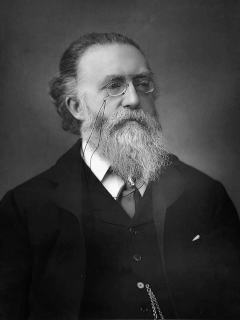
Birth of Alfred John Webb, Politician & Member of Parliament

Alfred John Webb, Irish Quaker from a family of activist printers, is born in Dublin on June 10, 1834. He becomes an Irish Parliamentary Party (IPP) politician and Member of Parliament (MP), as well as a participant in nationalist movements around the world. He supports Isaac Butt‘s Home Government Association and the United Irish League. At Madras in 1894, he becomes the third non-Indian (after George Yule and William Wedderburn) to preside over the Indian National Congress.

Webb is the first child and only son of the three children of Richard Davis Webb (1805-1872) and Hannah Waring Webb (1810-1862). The family runs a printing shop in Dublin and belongs to a Quaker group that supports reforms such as suffrage, the abolition of slavery and anti-imperialism. The family press prints booklets for many of these causes and, in turn, their regular customers grow to include other similar organisations, including the Irish Protestant Home Rule Association and the Ladies’ Land League, an organisation founded by Fanny and Anna Parnell in 1880 that advocates on behalf of poor tenant farmers.

Webb is interested in literature and history and begins to write A Compendium of Irish Biography. In 1865, he begins to take a more active interest in Irish politics. He is inspired by the Fenians, although he believes in non-violence and the Fenians of that time believe that Ireland can only gain independence through an armed revolution. He is first elected to the House of Commons of the United Kingdom on February 24, 1890, when he wins a by-election for the West Waterford constituency. He is again returned for West Waterford in the 1892 United Kingdom general election, this time as an anti-Parnellite MP. In December 1883, he resigns from the position of Land League treasurer, complaining of Parnell’s “autocratic management of funds.”

Webb’s family takes an interest in the welfare of British colonies and are outspoken opponents of the opium traffic into China. He is a close friend of Dadabhai Naoroji, a key member of the Indian National Congress, who is also a friend of other Irish nationalists including Michael Davitt and Frank Hugh O’Donnell. Naoroji is elected, as a member of the Liberal Party, in 1892, the year of the Liberal landslide to the Finsbury Central Westminster seat. While O’Donnell attempts to involve Naoroji in Irish politics, Webb is invited by Naoroji to preside over the Indian National Congress in 1894.

Webb is a supporter of Anti-Caste, Britain’s first anti-racism journal which fellow Quaker activist Catherine Impey founds in 1888. He is able to rally subscribers and activists for the journal around the world. For example, although he is not a regular subscriber, he and Dadabhai Naoroji co-sign a letter with others to request support for a new association, The Society for the Furtherance of Human Brotherhood.

Webb dies on July 30, 1908, and is laid to rest in the Quaker Friends Burial Ground in Temple Hill, Blackrock, Dublin.


Leave a comment

Birth of Isaac Corry, Lawyer & Member of Parliament

Isaac Corry FRS, PC (I), PC, an Irish and British Member of Parliament and lawyer, is born on May 15, 1753, in Newry, County Down.

Corry is the son of Edward Corry, sometime Member of Parliament, and Catharine Bristow. His cousin is the writer Catherine Dorothea Burdett. He is educated at the Royal School, Armagh, where his contemporaries include Robert Stewart, Viscount Castlereagh, and later at Trinity College, Dublin, from which he graduates in 1773. On October 18, 1771, he is admitted to the Middle Temple and called to the bar at King’s Inns in 1779.

Corry succeeds his father as Member of Parliament for Newry in 1776, sitting in the Irish House of Commons until the Acts of Union 1800. From 1782 to 1789 he serves as equerry to Prince Henry, Duke of Cumberland, being described in 1794 by Rt. Hon. Sylvester Douglas as “a well-bred man…He has no brogue…He once acted as a sort of groom of the bedchamber to the late Duke of Cumberland.” In 1798, he is also elected for Randalstown, but chooses not to sit and, in 1802, he is returned to the British House of Commons for Newry. He serves as a Whig at Westminster until 1806. It is written in 1783 that he would expect to enter high office, given that “he lives expensively and does not pursue his profession, which is the law.” In 1788 he becomes Clerk of the Irish Board of Ordnance. The following year he is appointed a commissioner of the revenue. Finally in 1799 he is appointed Chancellor of the Exchequer of Ireland and a Lord High Treasurer of Ireland in place of Sir John Parnell, who quarreled violently with William Pitt the Younger over the projected union, which he categorically refuses to support. In 1795 he becomes a Privy Councillor.

In 1802 Corry is dismissed from the Exchequer and replaced by John Foster (later Lord Oriel), he is awarded, however, £2,000 p.a. in compensation. In 1806 the changes in ownership of the Newry estates alters his position. The lands pass to a senior line of the Needham family and they support General Francis Needham, 1st Earl of Kilmorey, at the general election. Corry does not have the funds needed, in excess of £5000, to purchase a seat elsewhere. However, Lady Downshire is inclined to support the Grenville ministry and comes to a formal agreement with Corry to give him £1000 towards his expenses should he be successful in Newry, and, if not, to bring him in for another borough. He fails against the Needham interest in Newry, but a seat at Newport, Isle of Wight, is purchased for him, with £4000 from Lady Downshire, and he is appointed to the Board of Trade. Six months later Grenville’s ministry has fallen and there is another general election. Corry stands, again unsuccessfully, for Newry.

Corry is unmarried but has a long-term relationship with Jane Symms. They have three sons and three daughters. His daughter Ann marries Lt. Col. Henry Westenra, the brother of Robert Cuninghame, 1st Baron Rossmore. His residence in Newry is the Abbey Yard, now a school, and Derrymore House, Bessbrook, County Armagh, which he had inherited from his father and sold in 1810. It is now the property of the National Trust. During his life, a road is constructed from near the main entrance of Derrymore House around Newry and links up with the Dublin Road on the southern side of the town primarily for his use. This road subsequently becomes known as “The Chancellor’s Road,” as a result of his term as the Irish Chancellor of the Exchequer. A local legend has it that the road is constructed after an incident in which Corry’s stagecoach is stoned while passing through Newry by people angry at an unpopular window tax he had introduced. The road has retained this name, but it is cut in half by the Newry by-pass in the mid-1990s, however, as a result of works associated with the new A1 dual carriageway, the two-halves of the road are now reconnected.

Corry dies at his house in Merrion Square, Dublin, on May 15, 1813, his 60th birthday. He is buried in St. Patrick’s Cathedral, Dublin.


Leave a comment

Birth of Bobby Storey, Provisional Irish Republican Army Volunteer

Robert “Bobby” Storey, a Provisional Irish Republican Army (IRA) volunteer, is born in Belfast, Northern Ireland, on April 11, 1956. Prior to an 18-year conviction for possessing a rifle, he also spends time on remand for a variety of charges and in total serves 20 years in prison. He also plays a key role in the Maze Prison escape, the biggest prison break in British penal history.

The family is originally from the Marrowbone area, on the Oldpark Road in North Belfast. The family has to move when Storey is very young due to Ulster loyalist attacks on the district, moving to Manor Street, an interface area also in North Belfast. His uncle is boxing trainer Gerry Storey and his father, also called Bobby, is involved in the defence of the area in the 1970s when Catholics are threatened by loyalists.

Storey is one of four children. He has two brothers, Seamus and Brian, and a sister Geraldine. Seamus and his father are arrested after a raid on their home which uncovers a rifle and a pistol. While his father is later released, Seamus is charged. He escapes from Crumlin Road Prison with eight other prisoners in 1971, and they are dubbed the Crumlin Kangaroos.

On his mother Peggy’s side of the family there is also a history of republicanism, but Storey says the dominant influences on him are the events happening around him. These include the McGurk’s Bar bombing in the New Lodge, some of those killed being people who knew his family, and also Bloody Sunday. This then leads to his attempts to join the IRA. He leaves school at fifteen and goes to work with his father selling fruit. At sixteen, he becomes a member of the IRA.

On April 11, 1973, his seventeenth birthday, Storey is interned and held at Long Kesh internment camp. He had been arrested 20 times prior to this but was too young for internment. In October 1974, he takes part in the protest at Long Kesh against living conditions where internees set fire to the “cages” in which they are being held. He is released from internment in May 1975. He is arrested on suspicion of a bombing at the Skyways Hotel in January 1976 and a kidnapping and murder in the Andersonstown district of Belfast in March 1976, but is acquitted by the judge at his trial. He is arrested leaving the courthouse and charged with a shooting-related incident. He is released after the case cannot be proven, only to be charged with shooting two soldiers in Turf Lodge. Those charges are dropped in December 1977. The same month he is arrested for the murder of a soldier in Turf Lodge, but the charges are again dropped. In 1978 he is charged in relation to the wounding of a soldier in Lenadoon, but is acquitted at trial due to errors in police procedure.

On December 14, 1979, he is arrested in Holland Park, London, with three other IRA volunteers including Gerard Tuite, and charged with conspiring to hijack a helicopter to help Brian Keenan escape from Brixton Prison. Tuite escapes from the same prison prior to the trial, and the other two IRA volunteers are convicted, but Storey is acquitted at the Old Bailey in April 1981. That August, after a soldier is shot, he is arrested in possession of a rifle and is convicted for the first time, being sentenced to eighteen years’ imprisonment.

Storey is one of the leaders of the Maze Prison escape in 1983, when 38 republican prisoners break out of the H-Blocks, the largest prison escape in British penal history and the largest peacetime prison escape in Europe. He is recaptured within an hour and sentenced to an additional seven years’ imprisonment. Released in 1994, he is again arrested in 1996 and charged with having personal information about a British Army soldier, and Brian Hutton, the Lord Chief Justice of Northern Ireland. At his trial at Crumlin Road Courthouse in July 1998, he is acquitted after his defence proves the personal information had previously been published in books and newspapers.

Having spent over twenty years in prison, much of it on remand, Storey’s final release is in 1998, and he again becomes involved in developing republican politics and strategy, eventually becoming the northern chairman of Sinn Féin.

On January 11, 2005, Ulster Unionist Member of Parliament for South Antrim David Burnside tells the British House of Commons under parliamentary privilege that Storey is head of intelligence for the IRA.

On September 9, 2015, Storey is arrested and held for two days in connection with the killing of former IRA volunteer Kevin McGuigan the previous month. He is subsequently released without any charges, and his solicitor John Finucane states Storey will be suing for unlawful arrest.

Storey dies in England on June 21, 2020, following an unsuccessful lung transplant surgery. Sinn Féin president Mary Lou McDonald describes him as “a great republican” in her tribute. His funeral procession in Belfast on June 30 is attended by over 1,500 people including McDonald, deputy First Minister Michelle O’Neill, and former Sinn Féin president Gerry Adams, but is criticised for breaking social distancing rules implemented in response to the COVID-19 pandemic which, at the time operating in Northern Ireland, limited funeral numbers to no more than 30 mourners.

In the 2017 film Maze, dramatising the 1983 prison break, directed by Stephen Burke, Storey is portrayed by Irish actor Cillian O’Sullivan.


Leave a comment

The Ebrington Barracks Bombing

On April 6, 2000, the Real Irish Republican Army lowers a device consisting of 5 lbs. of homemade explosives over the perimeter fence of Ebrington Barracks at Browning Drive in the Waterside area of Derry, County Derry, Northern Ireland, using ropes, and the bomb subsequently explodes damaging the fence and the guardhouse. The explosion takes place around 6:30 a.m.

There are no reports of any casualties and army technical experts are at the scene shortly after the blast.

Gregory Campbell, security spokesman for the anti-agreement Democratic Unionist Party, visits the scene and says the blast bears similarities to an incident at Ballykelly, twelve miles away, in February 2000. He adds, “In Ballykelly there was a breach of the security fence, with the bomb planted near sleeping quarters. Here it was beside a former guardhouse. It appears to have been outside the perimeter.”

Campbell also claims that in recent months the base’s watchtowers had not been manned. “I get the impression that security has become a bit lax since the ceasefire,” he says. “This is confirmation of what we all knew was coming, a determined effort by paramilitary groups.”

Campbell continues, “When you look at the past few months it is very obvious that these groups – if they are splinter groups, if they are people who are leaving the Provisional IRA to join these dissidents or if the Provisional IRA is giving a wink and a nod to these dissidents – it is as plain as the nose on your face these people are developing terrorist capabilities.”

“When there is a device at a security cordon and another device inside another camp 12 miles down the road from here it is very obvious they are working towards a major attack with loss of life. Within a few months we are going to be faced with a major onslaught,” Campbell adds.

Meanwhile, Ulster Unionist Party (UUP) leader David Trimble, speaking in advance of a House of Commons debate warning of damaging consequences if the government presses on with moves to rename the Royal Ulster Constabulary, says it appears that the blast at the barracks in Derry is part of a wider campaign of low level terrorist activity by dissident republicans. Speaking on BBC Radio Trimble says, “There have been a number of incidents recently which have been attributed to dissident republicans. This may be another one. And there is reason to believe that dissident republicans are trying to launch a sustained campaign.”

(From: “Explosion at army camp,” BBC News, http://www.news.bbc.co.uk/, Thursday, April 6, 2000)


Leave a comment

Birth of Margaret (May) Tennant, Promoter of Workers’ Rights & Public Health

Margaret Mary Edith (May) Tennant (née Abraham), promoter of workers’ rights and public health, is born April 5, 1869 at Rathgar, County Dublin, the only daughter of Dr. George Whitley Abraham, a lawyer in the civil service, and his wife, Margaret, daughter of Cornelius Curtain.

Abraham is educated at home by her father. Following his death in 1887, finding herself in financial straits, she moves to London, where she takes lodgings in Bloomsbury and works for Lady Emilia Dilke. Dilke is a social reformer and an advocate of trade unions for women, and as her secretary Margaret gains first-hand experience of the exploitative and unsanitary conditions afflicting women working in industry, a cause that she devotes the next decade to ameliorating. She is treasurer of the Womens’ Trade Union League, where she negotiates with employers on behalf of league members, organises meetings, and sends deputations to the House of Commons. From 1881 she coordinates a successful campaign to render regular government inspections of laundries mandatory (legislation is passed to this effect in 1908).

Abraham’s dedication to her work soon attracts wider recognition, and in 1891 she is appointed an assistant commissioner to undertake field inquiries for the Royal Labour Commission. In this capacity she travels incessantly throughout England and Ireland, gathering information and writing reports on often appalling working conditions. It is mainly because of this work that in 1893 the home secretary appoints her the first female factory inspector in England. Her new position marks a career shift from agitator to skillful and effective administrator. Traveling incessantly, the inspectors target illegal overtime, poor sanitation, and dangerous trades. In her first year alone she brings eighty prosecutions for illegal overtime.

In 1895 Abraham serves on a departmental committee at the Home Office on dangerous trades, where she meets Harold John Tennant, liberal MP for Berwickshire. The couple are married the following year, and have four sons and one daughter.

By 1896 Tennant is the superintending inspector of five more women inspectors, and her extensive experience in workers’ rights and public health is reflected in the book she publishes in that year, The law relating to factories and workshops, which runs to six editions. She finds it increasingly difficult to balance the pressures of her work with the demands of her private life, and she resigns her post soon after her marriage. However, she remains a committed social activist, serving as chairman of the Industrial Law Committee and on the Royal Commission on Divorce (1909). She is also an original member and treasurer of the Central Committee on Women’s Employment (1914–39).

During the World War I Tennant is chief adviser on women’s welfare to the Ministry of Munitions and director of the Women’s Department of the National Service Department. In recognition of her services the British government awards her the Companion of Honour in 1917, the same year that her eldest son, Harry, dies while on active service. Between the wars she turns her attention to women’s health, campaigning to improve maternal mortality and nursing care.

During the World War II, despite her failing health, Tennant works for the RAF Benevolent Fund. She is a member of the Central Consultative Council of Voluntary Organisations and the National Association for Prevention of Tuberculosis, chairman of the maternal health committee, governor of Bedford College, and a JP. She is also a director of the Mysore and Champion Reef Gold Mines, an enterprise of her husband’s family, and in this capacity travels to India and New Zealand in the mid-1920s.

The Tennants have homes in Edinglasserie, Aberdeenshire, and at 12 Victoria Square, London, as well as a restored country house, Great Maytham, at Rolvenden in Kent. She is a noted authority on gardening, and is director of The Gardener’s Chronicle (other interests included fishing, tennis, and gambling). After her husband’s death in 1935 she moves to a smaller house named Cornhill at Great Maytham, where she dies on July 11, 1946. Some of her correspondence is in the British Library, London.

(From: “Tennant (née Abraham), Margaret Mary Edith (May),” contributed by Sinéad Sturgeon and Georgina Clinton, Dictionary of Irish Biography, http://www.dib.ie)


Leave a comment

Birth of Elizabeth Dillon, Diarist and Nationalist

Elizabeth Dillon, an Irish diarist and nationalist, is born Elizabeth Mathew in England on March 2, 1865.

Dillon is the eldest of five children of Sir James Charles Mathew and Elizabeth Blackmore Mathew. Her family is related to the Butler family, but she does not visit Ireland until 1886. Living in Queen’s Gate Gardens, Kensington, London, she is educated at home. From a young age she attends the ladies’ gallery of the House of Commons, while mixing a busy social life with charitable works.

Dillon begins keeping a diary in 1879, which she continues to write until her death. Her ancestor, Mary Mathew, is also a diarist and keeps the diary for the discipline of the daily activity. She soon begins to write for the love of it, and some have surmised she wrote with the intention her diaries would be read by others. She attends lectures in Old English and literature at King’s College, London from late 1882 to 1884, and begins to learn Irish in 1893.

Dillon’s father supports land reform in Ireland, chairs the evicted tenants commission in 1892, and is a huge influence on her politics. She makes her first political reference on February 25, 1883, when she notes the arrest of the Invincibles, and she then regularly comments on land reform. She travels to Ireland for the first time in August 1886, staying in Killiney, County Dublin. In October 1886, she meets John Dillon and begins to follow the Plan of Campaign so that she can discuss it with him during his visits to the Mathew house in London.

During this time, John Dillon is deeply immersed in politics and is imprisoned on a number of occasions. Being a careful follower of Irish politics, she becomes an anti-Parnellite. She confronts John Dillon in autumn 1895 about their relationship, saying that they can no longer meet as they had become the subject of gossip. He proposes within two weeks, and they are married on November 21, 1895, in Brompton Oratory. They are busy and often apart, with Dillon spending time in a warm climate due to his ill health. She tries to accompany him when she can, but the couple’s large family makes that difficult. They have one daughter and five sons, John Dillon (1896-1970), Anne Elizabeth Dillon (born October 29, 1897), Theobald Wolfe Tone (1898-1946), Myles, James, and Brian.

Finances are strained until John’s uncle Charles bequeaths him his house, 2 North Great George’s Street, Dublin in 1898, and a business in Ballaghaderreen, County Mayo is bequeathed him by a cousin, Anne Deane, in 1905. Dillon runs the business successfully, while also carrying out duties as a politician’s wife such as opening the Belfast ladies’ branch of the United Irish League in June 1905. Her busy life results in her neglecting her diary.

Dillon dies on May 14, 1907, in Dublin, having given birth to a stillborn daughter that morning. Pneumonia is given as the cause of death, but it could have been medical incompetence. She is buried in the family vault in Glasnevin Cemetery. Her husband writes of her death in June 1907, A short narrative of the illness and death of my dearest love. Trinity College Dublin holds her diary and correspondence. Her diaries, edited by Brendan Ó Cathaoir, are published in 2019.