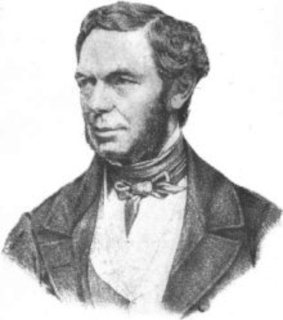
The Molly Maguires is an Irish secret society that is allegedly responsible for some incidents of vigilante justice in the coalfields of eastern Pennsylvania. They defend their actions as attempts to protect exploited Irish American workers. They are, in fact, often regarded as one of the first organized labor groups.
In the first five years of the Great Famine in Ireland that begins in 1845, 500,000 immigrants come to the United States from Ireland — nearly half of all immigrants to the United States during these years. The tough economic circumstances facing the immigrants lead many Irish men to the anthracite fields in the mountains of eastern Pennsylvania. Miners work under dangerous conditions and are severely underpaid. Small towns owned by the mining companies further exploit workers by charging rent for company housing. In response to these abuses, secret societies like the Molly Maguires spring up, leading sporadic terrorist campaigns to settle worker/owner disputes.
Members of the Molly Maguires are accused of murder, arson, kidnapping, and other crimes. Industry owners become increasingly concerned about the threat posed by the Molly Maguires. Franklin B. Gowen, president of the Philadelphia and Reading Railroad, hires the Pinkerton Detective Agency to infiltrate the secret society and find evidence that can be used against them. James McParland, who later becomes the most celebrated private detective of the era, takes the high-risk assignment and goes undercover within the organization. For more than two years, he establishes his place in the Molly Maguires and builds trust among his fellow members.
Eventually, several Molly Maguires confess their roles in a murder to McParland. When he is finally pulled out of the society in February 1876, his information leads to the arrest and conviction of nineteen men.
In June 1877, ten Molly Maguires are hanged on a single day in what becomes known as “Pennsylvania’s Day of the Rope.” In December of the following year, Kehoe is arrested and hanged for the 1862 murder of Frank W. S. Langdon, a mine foreman, despite the fact that it is widely believed he is wrongly accused and not actually responsible for anyone’s death. Although the governor of Pennsylvania, John F. Hartranft, believes Kehoe’s innocence, he signs the death warrant anyway. Kehoe’s hanging at the gallows is officially hailed as “the Death of Molly-ism.”
Though the deaths of the vigilante Molly Maguires help quell the activity of the secret society, the increased assimilation of the Irish into mainstream society and their upward mobility out of the coal jobs is the real reason that protective secret societies like the Molly Maguires eventually fade into obscurity.
In 1979, Pennsylvania Governor Milton Shapp grants a posthumous pardon to Kehoe after an investigation by the Pennsylvania Board of Pardons. The request for a pardon is made by one of Kehoe’s descendants. Kehoe proclaims his innocence until his death. The Board recommends the pardon after investigating Kehoe’s trial and the circumstances surrounding it. Shapp praises Kehoe, saying the men called “Molly Maguires” are “martyrs to labour” and heroes in the struggle to establish a union and fair treatment for workers.
Cunningham is born in 1728 or 1729 at Ballymacilhoyle in the parish of Killead, County Antrim, the youngest son in the large family of John Cunningham and his wife, Jane, daughter of James Waddell of Islandderry, a townland in the parish of Dromore, County Down. The extended families of Cunningham and Waddell have interests in farming, linen, provisioning, and overseas trade. By 1752, no doubt with support from his family, Cunningham is in New York City trading near the meal market. Just as the Seven Years’ War is beginning in May 1757, he becomes the local partner of a Belfast merchant, Thomas Greg. While carrying on a wide range of commercial activities, the firm of Greg & Cunningham specialises in the flaxseed trade with Ireland and becomes “the most successful Irish American transatlantic trading partnership of the colonial period.” He amasses a large fortune from trade, some of it illicit, during the war, and becomes one of the largest shipowners in the American port. This enables the partners to purchase a 150-acre estate, which they rename “Belfast,” on the West Indies island of Dominica, just as it is passing, by the Treaty of Paris (1763), from French to British rule. It is possible that the estate is managed by Greg’s brother, John.
Sometime after suffering imprisonment for assaulting a fellow merchant (July–August 1763), Cunningham returns to Ireland, leaving the firm in the charge of junior partners until its dissolution in 1775. In Belfast he enters into a second partnership with Greg in May 1765 comprising all their business activities other than those in New York. In November 1765, he also marries Greg’s sister-in-law Margaret, second daughter of a Belfast merchant, Samuel Hyde. He lives in a large house in Hercules Street, later renamed Royal Avenue, which serves also as the premises for his many business interests, commercial, financial, industrial, and agricultural. In 1767, he and Greg start the manufacture of vitriol at a factory by the River Lagan at Lisburn, 12 km from Belfast. They open up fisheries in Donegal and Sligo, exporting herring to the West Indies as food for slaves. They also trade Irish horses and mules for West Indian sugar and American tobacco, the sugar being processed by them at the New Sugar House in Waring Street, Belfast. During the American Revolutionary War (1775–83), he illegally ships linen uniforms to the insurgent colonists. He becomes a middleman on the estate of Arthur Chichester, 5th Earl of Donegall, by obtaining leases of land in the Templepatrick district of County Antrim, a venture that involves him in disputes with tenant farmers resulting in an attack by the Hearts of Steel on Belfast and the destruction by fire of his home on December 23, 1771.
Despite this setback, Cunningham becomes the foremost Belfast merchant. As well as those mentioned, he has interests in shipping, brewing, glass manufacture and flour milling. When a chamber of commerce is set up in 1783, he is elected president, a position he holds until 1790. In the 1780s, in partnership with William Brown, John Campbell and Charles Ranken, he opens a bank. Known as Cunningham’s Bank, it closes on December 31, 1793, likely as a result of the recession brought on by the outbreak of war between England and France.
A prominent Volunteer, Cunningham joins the movement as a lieutenant in 1778 and is captain of the 1st Belfast company from 1780 until the dissolution of the Volunteers in 1793. Entering politics, he fails to be nominated as a parliamentary candidate for Belfast by its patron, Lord Donegall, at the general election of 1783, but stands for Carrickfergus at a February 1784 by-election on a platform of parliamentary reform and is returned – a rare distinction for a Presbyterian – by 474 votes to 289. A petition against his return is lodged successfully, but he remains an MP until March 1785, when he is defeated in a new election. It is during this period that he, probably the wealthiest, most enterprising merchant in Belfast and having, as he does, Caribbean interests, proposes in December 1784 fitting out a ship to engage in the Atlantic slave trade. The proposal comes to nothing but is the subject of intense debate in the 1920s between two rival Belfast local historians, Francis Joseph Bigger and Samuel Shannon Millin.
Cunningham plays a prominent role on several Belfast boards – those of White Linen Hall, the harbour, poorhouse, and dispensary. He gives money to the first Catholic chapel, St. Mary’s, opened in the town in 1784, and to the First Belfast Presbyterian congregation, as well as providing a site for a meeting house for his own congregation, Second Belfast, in 1767. Staunch in his advocacy of the reform of parliament, he becomes a member of the Northern Whig Club in 1790. He is cautious, however, about Catholic relief, for he fears its possible consequences. On July 14, 1792, an organiser of a Volunteer display to mark the third anniversary of the fall of the Bastille, he balks even at a very moderately worded resolution in favour of the Catholics. Thereafter he becomes increasingly ill-disposed toward reform and when the Belfast yeoman infantry is formed in 1797, he becomes captain of the 4th company.
Cunningham dies on December 15, 1797, at his restored house in Hercules Street. He and his wife have no children. His property in Ireland (worth £60,000) passes to James Douglas, youngest son of his sister Jane, who had married their first cousin, Cunningham’s personal clerk Robert Douglas. His name had already passed to Thomas Greg’s son, Cunningham Greg, who takes over Greg’s business after his death. Cunningham’s portrait is painted by Robert Home. A mausoleum is built over the Cunningham vault at Knockbreda Church cemetery overlooking Belfast.
(From: “Cunningham, Waddell” by C. J. Woods, Dictionary of Irish Biography, http://www.dib.ie, October 2009)
Reid is born on April 4, 1818, in Ballyroney, a hamlet near Katesbridge, County Down, in present day Northern Ireland, the son of the Rev. Thomas Mayne Reid, a Presbyterian minister and later a senior clerk of the General Assembly of the Presbyterian Church in Ireland, and his wife, a daughter of the Rev. Samuel Rutherford. He is educated at the Royal Belfast Academical Institution. He rebels against his father’s plans for him and decides not to pursue a career in the church. He briefly runs a school at Ballyroney before emigrating to the United States in 1839. Arriving in New Orleans, Louisiana, he finds a job as a corn factor’s clerk in the corn market. After six months he leaves because he refuses to whip slaves. Travelling across America, he works as a teacher, a clerk and an Indian-fighter, and anonymously publishes his first poem in August 1843. Later that year he meets Edgar Allan Poe in Philadelphia and the two become close friends. Poe later admits that Reid was “a colossal but most picturesque liar,” but was impressed by his brilliant story-telling abilities.
With the outbreak of the Mexican-American War in 1846 Reid enlists in the 1st New York Infantry Regiment and is commissioned second lieutenant. Contributing a series of reports from the front under the pseudonym ‘Ecolier,’ he performs with great bravery in the Battle of Chapultepac on September 13, 1847. Wounded during the battle, he is promoted to first lieutenant three days later. Following his discharge from the army in 1848 he claims to have reached the rank of captain, but this is another of his inventions.
Reid’s first play, Love’s Martyr, is staged at the Walnut Street Theatre, Philadelphia, for five nights in October 1848, and the following year he publishes an embellished account of his experiences in Mexico entitled War Life. All of his works are published under the name ‘Captain Mayne Reid.’ In July 1849 he sails to England with a group of Hungarian radicals but decides against accompanying them to the Continent. Returning briefly to Ireland, he settles in London in 1850 and writes a novel, The Rifle Rangers. It is an immediate success and is followed quickly by The Scalp Hunters (1851), The Desert Home (1852), and The Boy Hunters (1853). While in England in 1851 he meets and falls in love with a 13-year-old girl, Elizabeth Hyde, daughter of his publisher, G. W. Hyde, an English aristocrat. When he discovers her age, he tells her that she is “getting old enough to have a lover, and you must have me.” Two years later he continues with his suit, and this time is successful as they marry in 1853. He is immensely proud of his young bride and later writes a semi-autobiographical novel The Child Wife (1868), based on their relationship.
Establishing a reputation as one of the most popular novelists of his generation, Reid does much to enhance the romantic image of the American West. His internationally successful books include The White Chief (1855), Bush Boys (1856), Oceola (1859), and The Headless Horseman (1865), and his novel about miscegenation, The Quadroon (1856), is later plagiarised by Dion Boucicault for The Octoroon (1859). A champion croquet player, he writes a treatise on the subject in 1863.
Disaster strikes in November 1866 when Reid is declared bankrupt. He had squandered all his money on the construction of “The Ranche,” a Mexican-style hacienda in England. To raise money, he returns to the United States and embarks on a successful lecturing tour. Settling at Newport, Rhode Island, he writes another novel, The Helpless Hand (1868), which is a huge success and alleviates some of his difficulties. His wife hates America, however, and after he is briefly hospitalised in 1870, they decide to return to England.
Ill health, artistic doubts, and financial insecurity plagued Reid’s final years. Diagnosed with acute depression, he is unable to recapture his earlier audience and, despite a pension from the U.S. government, he struggles for money. He dies at Ross-on-Wye in Herefordshire on October 22, 1883, and is buried at Kensal Green Cemetery in London.
Although not regarded as an important novelist, Reid none the less has a significant influence on subsequent writers. The young Vladimir Nabokov is deeply impressed by his adventure stories, and one of his own first works is a poetic recreation of The Headless Horseman in French alexandrine. Both Robert Louis Stevenson and Arthur Conan Doyle are admirers, and politicians as diverse as Theodore Roosevelt and Leon Trotsky also make reference to his varied output. In total, Reid publishes over sixty novels, which are printed in ten languages.
Smith is born at 174 South Street, New York City, on December 30, 1873, and raised in the Fourth Ward on the Lower East Side of Manhattan. He resides there for his entire life. His mother, Catherine (née Mulvihill), is the daughter of Maria Marsh and Thomas Mulvihill, who are immigrants from County Westmeath, Ireland. His father, baptised Joseph Alfred Smith in 1839, is a Civil War–veteran and the son of Emanuel Smith, an Italian marinaro.
Although Smith remains personally untarnished by corruption, he — like many other New York Democrats — is linked to the notorious Tammany Hallpolitical machine that controls New York City politics during his era. He serves in the New York State Assembly from 1904 to 1915 and holds the position of Speaker of the Assembly in 1913. He also serves as sheriff of New York County from 1916 to 1917. He is first elected governor of New York in 1918, loses his 1920 bid for re-election, and is elected governor again in 1922, 1924, and 1926. He is the foremost urban leader of the efficiency movement in the United States and is noted for achieving a wide range of reforms as the New York governor in the 1920s.
Smith is the first Roman Catholic to be nominated for president of the United States by a major party. His 1928 presidential candidacy mobilizes both Catholic and anti-Catholic voters. Many Protestants, including German AmericanLutherans and Southern Baptists, fear his candidacy, believing that the Pope in Rome would dictate his policies. He is also a committed “wet” (i.e., an opponent of Prohibition in the United States) and as New York governor, he repeals the state’s prohibition law. As a “wet,” he attracts voters who want beer, wine and liquor without having to deal with criminal bootleggers, along with voters who are outraged that new criminal gangs have taken over the streets in most large and medium-sized cities. Incumbent RepublicanSecretary of CommerceHerbert Hoover is aided by national prosperity, the absence of American involvement in war and anti-Catholic bigotry, and he defeats Smith in a landslide in 1928.
Smith then enters business in New York City and becomes involved in the construction and promotion of the Empire State Building. He seeks the 1932 Democratic presidential nomination but is defeated by Franklin D. Roosevelt, his former ally and successor as governor of New York. During the Roosevelt presidency, he becomes an increasingly vocal opponent of Roosevelt’s New Deal.
Smith is an early and vocal critic of the Nazi regime in Germany. He supports the Anti-Nazi boycott of 1933 and addresses a mass-meeting at Madison Square Garden against Nazism in March 1933. His speech is included in the 1934 anthology Nazism: An Assault on Civilization. In 1938, he takes to the airwaves to denounce Nazi brutality in the wake of Kristallnacht. His words are published in The New York Times article “Text of the Catholic Protest Broadcast” of November 17, 1938.
Like most New York City businessmen, Smith enthusiastically supports American military involvement in World War II. Although he is not asked by Roosevelt to play any role in the war effort, he is an active and vocal proponent of FDR’s attempts to amend the Neutrality Act in order to allow “Cash and Carry” sales of war equipment to be made to the British. He speaks on behalf of the policy in October 1939, to which FDR responds directly: “Very many thanks. You were grand.”
Smith is memorialized by The Alfred E. Smith Foundation, founded by CardinalFrancis Spellman. Today it is a significant fund raiser for charity. Each election year, presidential candidates are expected to attend, make witty remarks, and profound commentary about Smith. In 2008, then candidate Barack Obama speaks eloquently of “a man who fought for many years to give Americans nothing more than fair shake and a chance to succeed. He touched the lives of millions as a result.”
(Pictured: Official Gubernatorial portrait of Alfred E. “Al” Smith by Douglas Volk)
Together with his brother Norman, Leslie’s early education begins at home where a German governess, Clara Woelke, is their first teacher. As children the brothers have more contact with servants than they have with their parents. His own daughter, Anita, says, “In my parents’ view schools performed the same functions that kennels did for dogs. They were places where pets could be conveniently deposited while their owners travelled.”
Leslie is educated at Ludgrove School, then Eton College and King’s College, Cambridge. While at Cambridge University he becomes a Roman Catholic and a supporter of Irish Home Rule. He adopts an anglicised Irish variant of his name (“Shane”). Not overly impressed by Eton, as a lower boy he and his roommates occupy “an old, battered warren betwixt the chapel cemetery and Wise’s horse yard … [T]he food was wretched and tasteless … As for thrashings which tyrannised rather than disciplined our house, they were excessive. Bullying was endemic and Irish boys were ridiculed, especially on St Patrick’s Day.”
Leslie refuses to send his own sons to Eton. They are educated at Roman Catholic Benedictine schools: Jack at Downside School and Desmond at Ampleforth College.
During the war Leslie is in a British Ambulance Corps, until invalided out. He is then sent to Washington, D.C. to help the British Ambassador, Sir Cecil Spring Rice, soften Irish American hostility toward England and obtain American intervention in the war in the aftermath of the 1916 Easter Rising in Dublin and the execution of its leaders. But he also looks to Ireland for inspiration when writing and edits a literary magazine that contains much Irish verse. He becomes a supporter of the ideals of Irish nationalism, although not physical force republicanism.
In the 1918 United Kingdom general election in Ireland, the Irish Parliamentary Party loses massively to Sinn Féin, putting an end to Leslie’s political career, but as the first cousin of Winston Churchill he remains a primary witness to much that is said and done outside the official record during the negotiation of the Anglo-Irish Treaty of 1921. Disappointed, he feels unwanted in Ireland and abandoned by the British. Like many members of the landed gentry from the 1880s who were obliged to turn to other occupations, he can no longer rely on income from landholdings.
Leslie writes extensively, in a wide range of styles, in verse, prose, and polemic, over several decades. His writings include The End of a Chapter (1916), while hospitalised during World War I, The Oppidan (1922), a roman à clef about his life and contemporaries at Eton, an edition of the Letters of Herbert Cardinal Vaughan to Lady Herbert of Lea (1942), and a biography Mrs. Fitzherbert: a life chiefly from unpublished sources (1939), together with an edition of her letters (with Maria Anne Fitzherbert), The letters of Mrs. Fitzherbert and connected papers; being the second volume of the life of Mrs. Fitzherbert (1944). He also writes Mark Sykes: His Life and Letters (1923), a biography of the English traveler, Conservative Party politician and diplomatic advisor. He advises budding novelist Scott Fitzgerald on the title of his first novel, they share correspondence with the future Mnsg. William A. Hemmick, who is Fitzgerald’s teacher at the Newman School.
A passionate advocate of reforestation, Leslie finds the business of running an estate uncreative and boring, and transfers the estate entailed to him to his eldest son, John Norman Leslie, who succeeds as the 4th Baronet. He transfers St. Patrick’s Purgatory on Lough Derg to the Roman Catholic Bishop of Clogher, Eugene O’Callaghan.
The wealth of the Leslies wanes by the 1930s following the Wall Street crash of 1929 and a farm that is loss making. In his unpublished memoirs, Leslie writes “a gentleman’s standing in his world was signalled by his list of clubs and it was worth paying hundreds of pounds in subs.” They continue to maintain their lifestyle, involving attendance at the London season and the entertainment of distinguished visitors, including Anthony Eden at Glaslough. At the outbreak of World War II in 1939 he joins the Home Guard. He spends the remainder of his life between Glaslough and London.
Leslie’s first wife, Marjorie, dies on February 8, 1951. On May 30, 1958, at the Catholic Church of St. Peter & Edward, Westminster, he marries Iris Carola Frazer, who is the daughter of Charles Miskin Laing and Etheldreda Janet Laing.
McCourt comes to New York as a young man to live for a time with Frank, ten years his elder. He finds work wherever he can and eventually owns two restaurants in Manhattan. In 1975, he marries Lynn Rockman, with whom he has a daughter, Allison.
For twenty years, from 1993 until he retires in 2013, McCourt works for the Penn South Co-op in the Chelsea neighborhood of Manhattan, in charge of apartment restorations in the 2,800-unit residential complex.
Brendan Keany, general manager of Penn South, recalls meeting McCourt in the late 1980s at Allison’s, a restaurant named for his daughter. The restaurant on Eighth Avenue near Penn South closes after a time, but McCourt goes on to run Los Panchos on Columbus Avenue near 71st Street. However, as a man with a family, running bars and restaurants is not ideal, so he finds the job at Penn South, inspecting apartments and directing their restoration.
The author of short stories, newspaper essays, songs, and verse, McCourt, in 2008, publishes a memoir, A Long Stone’s Throw. Surveying the range of jobs he had taken on in a review of that memoir in Manhattan Express’ sister publication The Villager, the late Jerry Tallmer writes, “Working on a great glop-a-da-glop mainframe computer on Wall Street; issuing tickets for British and Irish Railways; a one-day job as bellhop in a Montreal hotel; a bank teller in Montreal; an encyclopedia salesman — for a month; working at the Army and Air Force Exchange Service on 14th Street as a buyer of luggage and musical instruments, knowing nothing about luggage and less about musical instruments; filing clerk; and, oh yes, teacher.”
Lynn McCourt recalls first meeting her future husband. “We were friends for a long time before we were married,” she says. “He was working as a bartender at the White Horse Tavern when I came in with a writer friend. He told me that he ‘saw the light behind’ me when I came in. He could twist words and turn something ordinary into something poignant. Just before he went to California around 1970, we spent a whole night walking and talking. He came back from California in 1974 and we got married in 1975.”
Then, recalling the devoted relationship McCourt has with Allison, Lynn continues, “Our daughter has special needs and has learning and speech problems. Alphie sang to her every night as a baby and eventually she sang back to him. They were inseparable. He’d have breakfast with her every morning. He was a great father — he, who hadn’t seen his own father very much. When we went to Ireland in 1980, he went north to find his father, and he did find him. I’m a Jewish girl from the Bronx who wanted to marry an Irishman with a brogue, and I did.”
Joe Hurley, of Joe Hurley’s Allstar Irish Rock Review, says McCourt, in his later years, had gotten into singing with the group, performing tunes from “The Great Irish Songbook,” like “The Auld Triangle.” He recalls, “He just performed with us at the Highline Ballroom in March. He loved being around young people. The place was full of young people and rock and roll, and then Alphie comes out — you could hear a pin drop. He would talk about how he had these incredible older brothers… fantastic storyteller. He never tooted his own horn.”
McCourt dies suddenly on July 2, 2016, at his home on the Upper West Side while taking an afternoon nap, just 27 days before his 76th birthday. His brother Michael dies the previous September, nine months earlier. He is survived by his brother Malachy.
Keating is the youngest of six surviving children of Michael Keating, baker, and his wife Johanna, a native of County Kerry. He was educated at a local school and was an active member of the Gaelic Athletic Association (GAA), playing football and hurling. After the 1916 Easter Rising, he leaves school at the age of thirteen to join the Irish Volunteers, which later becomes the IRA, serving in the 4th Cork Brigade. He is arrested by British troops in November 1920 and badly beaten. He spends a month in the Cork jail and is then interned for a year in Ballykinlar internment camp until December 1921. While interned he participates in several hunger strikes and makes several escape attempts. Following his release, he opposes the Anglo-Irish Treaty and serves in the Fianna Cork 4th Brigade on the Republican side under Seán Moylan during the Irish Civil War.
Keating emigrates to New York City in 1927 and becomes involved in Irish cultural organizations and Democratic party politics. He is a founder of American Friends of Irish Neutrality, which opposes Irish involvement in World War II, ostensibly fearing it will result in British re-occupation of Ireland.
Following World War II, Keating is chairman of the executive council of the 1947 Irish Race Convention and president of the American League for an Undivided Ireland, lobbying in support of the Fogarty Amendment, which unsuccessfully attempts to tie the release of Marshall Plan funds to British withdrawal from Northern Ireland.
Between the 1940s and 1960s, Keating serves as president of the County Corkmen Association, president of the United Irish Counties Association, and president of the Irish Institute. In 1956, he serves as Grand Marshal of the New York City St. Patrick’s Day Parade.
Keating serves in various positions under New York City mayors William O’Dwyer, Vincent R. Impellitteri, and Robert F. Wagner, Jr., rising to the position of Deputy Mayor, under Wagner. He is reportedly the first to publicly introduce future President Kennedy as “the next President of the United States” at an Irish Institute event in 1957. He is appointed Regional Director of the United States Postal Service by President Kennedy and serves in that position from 1961 until his retirement in 1966.
In retirement, Keating returns to Kanturk and continues to advocate for the reunification of Ireland. Keating dies at his home in Kanturk on July 2, 1976, and is buried in a local cemetery with military honors. He represents an emigrant political and social milieu which is often treated dismissively by later, more cosmopolitan Irish commentators, but his career reflects not only his own considerable talents but the ways in which this milieu sustains a generation of immigrants, and the contribution of Irish America to Irish development in the post-war decades.
Jack “Legs” Diamond, an Irish Americangangster in Philadelphia and New York City during the Prohibition era also known as John Nolan and Gentleman Jack, is born in Philadelphia on July 10, 1897, to Sara and John Moran, who emigrated from Ireland to Philadelphia in 1891. A bootlegger and close associate of gambler Arnold Rothstein, he survives a number of attempts on his life between 1916 and 1931, causing him to be known as the “clay pigeon of the underworld.” In 1930, his nemesis Dutch Schultz remarks to his own gang, “Ain’t there nobody that can shoot this guy so he don’t bounce back?”
In 1899, Diamond’s younger brother Eddie is born. He and Eddie both struggle through grade school, and their mother suffers from severe arthritis and other health problems. She passes away on December 24, 1913, following complications brought on by a bacterial infection and a high fever. John Moran then moves his family to Brooklyn, New York.
Diamond soon joins a Manhattan street gang called the Hudson Dusters. His first arrest for burglary occurs when he breaks into a jewelry store on February 4, 1914. He serves in the United States Army in World War I but is convicted and jailed for desertion in 1918 or 1919. He serves two years of a three- to five-year sentence at Leavenworth Military Prison. After being released in 1921, he becomes a hired thug and later personal bodyguard for crime boss Arnold Rothstein.
Diamond is known for leading a rather flamboyant lifestyle. He is an energetic individual, his nickname “Legs” derived either from his being a good dancer or from how fast he could escape his enemies. His wife Alice is never supportive of his life of crime but does not do much to dissuade him from it. He is a womanizer, with his best-known mistress being a showgirl and dancer, Marion “Kiki” Roberts.
In the late 1920s, Prohibition is in force, and the sale of beer and other alcoholic beverages is illegal in the United States. Diamond travels to Europe to acquire beer and narcotics but fails. However, he does obtain liquor, which is dumped overboard in partially full barrels that float to Long Island as ships enter New York Harbor. He pays children a nickel for every barrel they bring to his trucks.
Following the death of Jacob “Little Augie” Orgen, Diamond oversees illegal alcohol sales in downtown Manhattan via the Hotsy Totsy Club, an establishment partly owned by Diamond on Broadway. This work brings him into conflict with Dutch Schultz, who wants to move beyond his base in Harlem. He also runs into trouble with other gangs in the city. On July 14, 1929, he and fellow gang member Charles Entratta shoot three drunken brawlers in the Hotsy Totsy Club. Two of the brawlers, William Cassidy and Simon Walker, are killed, while the survivor, Peter Cassidy, is severely wounded. The club’s bartender, three waiters, and the hat check girl vanish, with one of them being found shot dead in New Jersey. He is not charged but is forced to close the club.
In 1930, Diamond and two henchmen kidnap truck driver Grover Parks in Cairo, New York, demanding to know where he had obtained his load of hard cider. When Parks denies carrying anything, Diamond and his men beat and tortured Parks, eventually letting him go. A few months later, he is charged with the kidnapping of James Duncan. He is sent to Catskill, New York, for his first trial, but is acquitted. However, he is convicted in a federal case on related charges and sentenced to four years in jail. He is tried in December 1931 in Troy, New York, also for kidnapping, and is once again acquitted.
On August 23, 1930, Diamond, under the false name John Nolan, boards the ocean liner SS Belgenland, bound for Europe. The New York City Police Department (NYPD) suspect that he might have left the U.S. aboard RMS Olympic or RMS Baltic, but he is not found on either ship when they reach Europe. The NYPD then sends a wireless telegraph message to the crew of SS Belgenland, who reply that a man similar to Diamond’s description is among the passengers. Diamond spends much of the voyage in the ship’s smoking-room playing poker, with one report claiming that he won thousands of dollars in this game. The SS Belgenland‘s officers, however, refute this, saying his winnings were small.
The NYPD telegraphs police in England, France and Belgium with the warning that Diamond is an undesirable character. When SS Belgenland reaches Plymouth on August 31, Scotland Yard officers tell Diamond he will not be allowed to land in England. He tells reporters that he wants to travel to the French spa town of Vichy for “the cure.” He disembarks in Antwerp on September 1, where Belgian police take him to their headquarters. Eventually, he agrees to voluntarily leave Belgium and is put on a train to Germany. When his train reaches Aachen, German police arrest him. On September 6, the German government decides to deport Diamond. He is driven to Hamburg and put on the cargo ship Hannover for passage to Philadelphia.
On September 23, Hannover arrives in Philadelphia, and Diamond is immediately arrested by the Philadelphia police. At a court hearing that day, the judge says he will release him if he leaves Philadelphia within the hour. Diamond agrees.
On October 24, 1924, Diamond is shot and wounded by shotgun pellets, reportedly after trying to hijack liquor trucks belonging to a rival crime syndicate.
On October 16, 1927, Diamond tries to stop the murder of “Little Augie” Orgen. His brother Eddie is Orgen’s bodyguard, but Diamond substitutes for Eddie that day. As Orgen and he are walking down a street on Manhattan’s Lower East Side, three young men approach them and start shooting. Orgen is fatally wounded, and Diamond is shot twice below the heart. He is taken to Bellevue Hospital, where he eventually recovers. Police interview him in the hospital, but he refuses to identify any suspects or help the investigation in any way. Police initially suspect that he is an accomplice and charge him with homicide, but the charge is dropped. The assailants are supposedly hired by Lepke Buchalter and Jacob “Gurrah” Shapiro, who are seeking to encroach on Orgen’s garment-district labor rackets.
On October 12, 1930, Diamond is shot and wounded at the Hotel Monticello on Manhattan’s West Side. Two men force their way into his room and shoot him five times. Still in his pajamas, he staggers into the hallway and collapses. When asked later by the police commissioner how he managed to walk out of the room, he says he drank two shots of whiskey first. He is rushed to the Polyclinic Hospital, where he eventually recovers. He is discharged from Polyclinic on December 30, 1930.
On April 21, 1931, Diamond is arrested in Catskill on assault charges for the Parks beating in 1930. Two days later, he is released from the county jail on $25,000 bond. Five days later, he is again shot and wounded at the Aratoga Inn, a roadhouse near Cairo. After eating in the dining room with three companions, he is shot three times and collapses by the front door. A local resident drives him to a hospital in Albany, where he eventually recovers. On May 1, while he is still in the hospital, the New York State Police seize over $5,000 worth of illegal beer and alcohol from his hiding places in Cairo and at the Aratoga Inn.
In August 1931, Diamond and Paul Quattrocchi go on trial for bootlegging. The same month, he is convicted and sentenced to four years in state prison. In September 1931, he appeals his conviction.
On December 18, 1931, Diamond’s enemies finally catch up with him. He is staying in a rooming house on Dove Street in Albany while on trial for kidnapping in Troy. On the night of his acquittal, December 17, he and his family and friends visit a restaurant in Albany. At 1:00 a.m., he and mistress, Marion “Kiki” Roberts, entertain themselves at the Rain-Bo Room of the Kenmore Hotel on North Pearl Street.
At 4:30 a.m., Diamond drunkenly goes back to the rooming house and passes out on his bed. Two gunmen enter his room about an hour later. One man holds Diamond down and the other shoots him three times in the back of the head.
There is much speculation as to who is responsible for the murder. Likely candidates include Schultz, the Oley Brothers, the Albany Police Department, and relatives of Red Cassidy, another Irish American gangster at the time. According to author William Kennedy in his book O Albany, Dan O’Connell, who runs the local Democraticpolitical machine, orders Diamond’s execution, which is carried out by the Albany police.
Given the power that the O’Connell machine holds in Albany and its determination to prevent organized crime, other than their own, from threatening their monopoly of vice in the city, some accept this account of the story. For those believing this theory, William Fitzpatrick’s promotion to chief of police is said to be a reward for executing Diamond. In 1945, Chief Fitzpatrick is shot and killed in his own office by John McElveney, an Albany police detective. McElveney is sentenced to 20 years to life in prison. He is released in 1957 when his sentence is commuted by GovernorW. Averell Harriman.
On December 23, 1931, Diamond is buried at Mount Olivet Cemetery in Maspeth, Queens. There is no church service or graveside ceremony. Family and spectators numbering 200 attend the interment. No criminal figures are spotted.
On July 1, 1933, Alice Kenny Diamond, Diamond’s 33-year-old widow, is found shot to death in her Brooklyn apartment. It is speculated that she is shot by Diamond’s enemies to keep her quiet.
Doheny receives a rudimentary education from an itinerant scholar while labouring on his father’s holding, and in 1826 attends Maher’s classical academy near Emly for nine months. Educating himself in the late 1820s and early 1830s while teaching the children of local farmers, he determines on a career in law to help secure political redress for the disenfranchised poor. He is admitted to Gray’s Inn in November 1834, enters the King’s Inns, Dublin, in 1835 and is called to the Irish bar in 1838. Settling later that year in Cashel, County Tipperary, he first practises in the local courts and then on the southern circuit. Appointed legal assessor to the borough of Cashel under the Municipal Corporations (Ireland) Act 1840, he successfully prosecutes former borough officers for misappropriation of funds and fraudulent transfer of property, winning wider attention. He had supported the campaign for repeal in the early 1830s, and in 1841 joins Daniel O’Connell‘s Repeal Association, becoming active in forming temperance bands and setting up town meetings. By May 1841 he is on the association’s general committee. O’Connell finds him less tractable than most and is ruffled by his queries into the association’s financial management.
During 1842 Doheny begins to associate with the more militant members of the repeal movement such as Thomas Davis. There is a marked gap in age and class between Doheny and most of this group and some look down on his lack of refinement. Others, however, admire his zeal and sincerity, and an anonymous colleague describes him as “rough, generous, bold, a son of the soil, slovenly in dress, red-haired and red-featured, but a true personification of the hopes, passions, and traditions of the people.” Assisting in the launch of The Nation in October 1842, he is chagrined to find most of his articles rejected as unfit for publication, although fifteen are published between January 1843 and September 1844. He also publishes a competent History of the American Revolution (1846) for The Nation‘s “Library of Ireland” series. More impressive as a speaker than a writer, he contributes regularly to repeal meetings at Conciliation Hall, Burgh Quay, Dublin. He enthuses at the apparent martial potential of the immense, ordered crowds attending the “monster” repeal meetings of 1843, and is one of the main organisers of the Cashel meeting of May 31, 1843, at which he is loudly cheered. However, his later claim to have deliberately set up these meetings, with Davis and John Blake Dillon, on quasi-military lines in order to prepare the peasantry for a future war with Britain, is far-fetched. His opposition to O’Connell’s decision to submit to proclamation of the proposed meeting of October 8, 1843, at Clontarf again greatly irritates O’Connell.
An active member of the Repeal Association parliamentary committee from February 1844, in February and March 1845 Doheny chairs a sub-committee of five senior barristers investigating the legality of withdrawal from the House of Commons by the body of repeal MPs, coming “reluctantly” to the verdict that such an action is open to criminal prosecution. O’Connell’s gruff dismissal of his report testifies to their awkward relationship. He further vexes O’Connell by his advocacy of non-denominational university education during debates over the Maynooth College Act 1845. Irrevocable divisions between the Young Irelanders and O’Connell open up between April and July 1846 when Doheny leads calls for endorsement of the conduct of William Smith O’Brien – imprisoned for a month for refusal to serve on a parliamentary committee – and voices Young Ireland’s martial convictions in a speech at Liverpool. After the secession of the Young Irelanders from the Repeal Association in July 1846, he opposes attempts at reconciliation and is one of the founders of the Irish Confederation on January 13, 1847.
During the summer of 1847, Doheny begins setting up “Confederate Clubs” in east Tipperary and aids James Fintan Lalor in organising a failed tenant league meeting at Holycross, County Tipperary, on September 19. He is one of the few Young Irelanders attracted to Lalor’s revolutionary agrarian philosophy, but supports Smith O’Brien against John Mitchel in January 1848, deploring irresponsible demands for insurrection. However, after Mitchel’s conviction for treason felony in May, he supports armed action. Arrested for seditious speechmaking at Cashel on July 12, he is bailed on July 20. During the confused period of “rebellion” in late July, he attempts to organise the peasantry in Tipperary but is frustrated by O’Brien’s vacillation.
After the collapse of the armed adventure at Ballingarry on July 31, Doheny takes refuge near Slievenamon and, with James Stephens, eludes pursuit for nearly two months, until he finally escapes, disguised as a clergyman, on a cattle-ship from Cork to Bristol. Some days later he reaches Paris, where he stays for two months with Stephens and John O’Mahony before leaving for New York City. Practising law in New York, he dedicates himself to the development of an Irish Americanrepublican movement. Tensions between conservative and radical Young Ireland exiles, perhaps aggravated by social snobbery, surface by late 1849, when he is arrested for attempting to push Thomas D’Arcy McGee into an open cellar on a New York street, angered by accusations of boasting, drunkenness, and incompetence. Similar criticisms are made by John Blake Dillon and appear to have some foundation.
Doheny finds time to write The Felon’s Track (1849), a polemical account of the repeal agitation and the 1848 insurrection that is highly critical of O’Connell. Despite a rambling narrative, it becomes a popular work and is reprinted several times. He also gives several lectures on historical and literary subjects to Irish American societies and contributes a memoir on Geoffrey Keating to O’Mahony’s translation (1857) of Foras Feasa ar Éirinn.
Involved with the New York Irish militia from his arrival, he is elected lieutenant colonel of the 69th Infantry Regiment in November 1851, and in September 1852 becomes colonel of a new regiment, the Irish Republican Rifles. These formations are often wracked by dissension over strategy and leadership, and in February 1856 he and O’Mahony found the Emmet Monument Association, planning to mobilise an Irish American force to invade Ireland. Efforts to acquire Russian backing fails on the close of the Crimean War in March 1857.
In autumn 1857, Doheny and O’Mahony make overtures to James Stephens to reorganise the republican movement in Ireland, and in March 1858 they accept Stephens’s demands for undisputed authority there, though by the winter of 1858–59 Doheny shows increasing distrust of Stephens’s ambitions. Adopting the organisational structure set out by Stephens in establishing the IRB in 1858, he and O’Mahony found the American equivalent, the Fenian Brotherhood, in early 1859, although he plays a subordinate part. In July 1859, he founds and edits a short-lived newspaper in New York, The Phoenix, to promote Fenian ideals. Active in opposing the national petition for self-government of 1860–61, he argues that Britain will only yield to force. He assists in making preparations for the funeral of Terence Bellew MacManus in Ireland and acts as one of the pallbearers in New York. Travelling to Ireland in October 1861, he appears to argue for using the excitement engendered by the funeral to spark an insurrection in Dublin but is thwarted by Stephens.
Doheny dies suddenly on April 1, 1862, in New York and is buried in Calvary Cemetery in the city’s borough of Queens.
(From: “Doheny, Michael” by James Quinn and Desmond McCabe, Dictionary of Irish Biography, http://www.dib.ie, October 2009)
In April 1916, Germany offers the Irish 20,000 Mosin–Nagant 1891 rifles, ten machine guns and accompanying ammunition, but no German officers. It is a fraction of the quantity of the arms Casement had hoped for, with no military expertise on offer. The weapons leave Germany bound for Ireland on a German cargo vessel named the SS Libau, disguised as a Norwegian vessel, Aud-Norge.
Casement confides his personal papers to Dr. Charles Curry, with whom he has stayed at Riederau on the Ammersee, before leaving Germany. He departs with Robert Monteith and Sergeant Daniel Beverley (Bailey) of the Irish Brigade in a submarine, initially the SM U-20, which develops engine trouble, and then the SM U-19, shortly after the Aud sails. According to Monteith, Casement believes the Germans are toying with him from the start and providing inadequate aid that will doom a rising to failure. He wants to reach Ireland before the shipment of arms and to convince Eoin MacNeill, who he believes is still in control, to cancel the rising.
Casement sends John McGoey, a recently arrived Irish American, through Denmark to Dublin, ostensibly to advise what military aid is coming from Germany and when, but with Casement’s orders “to get the Heads in Ireland to call off the rising and merely try to land the arms and distribute them.” McGoey does not reach Dublin, nor does his message. His fate is unknown until recently. Evidently abandoning the Irish Nationalist cause, he joins the Royal Navy in 1916, survives the war, and later returns to the United States, where he dies in an accident on a building site in 1925.
About 2:00 a.m. on the morning of April 21, 1916, three days before the rising begins, Robert Monteith, Daniel Bailey (calling himself Beverly), and Casement climb into a small boat for the trip to shore at Banna Strand in Tralee Bay, County Kerry. Their boat, now in the Imperial War Museum in London, capsizes before they reach shore.
Monteith helps an exhausted Casement to safety on shore. Casement is convinced that the Rising cannot be successful without a large number of German troops, and the best he has been able to obtain is one boatload of arms. Suffering from a recurrence of the malaria that had plagued him since his days in the Congo, and too weak to travel, Monteith and Bailey leave Casement at the ruins of McKenna’s Fort, an ancient ring fort in Rahoneen, Ardfert, now renamed Casement’s Fort, and head for Tralee.
About 1:30 p.m., Casement is discovered by two Royal Irish Constabulary (RIC) officers. He nearly talks his way out of being arrested, but a 12-year-old boy at the scene points out a piece of paper Casement had tossed away as the police approach. On that paper is a German code list. He is arrested on charges of high treason, sabotage and espionage against the Crown. He manages to send word to Dublin about the inadequate German assistance.
The Kerry Brigade of the Irish Volunteers might have tried to rescue Casement over the next three days, but its leadership in Dublin holds that not a shot is to be fired in Ireland before the Easter Rising is in train and therefore orders the Brigade to “do nothing.” A subsequent internal inquiry attaches “no blame whatsoever” to the local Volunteers for failing to attempt a rescue. Casement is taken to Brixton Prison and placed under special observation for fear of an attempt of suicide as there is no staff at the Tower of London to guard suicidal cases.
On the day of his execution by hanging at Pentonville Prison, August 3, 1916, Casement is received into the Catholic Church at his request. He is attended by two Catholic priests, Dean Timothy Ring and Father James Carey, from the East London parish of SS Mary and Michael. The latter, also known as James McCarroll, says of Casement that he was “a saint … we should be praying to him [Casement] instead of for him.” At the time of his death he is 51 years old.
Casement’s body is buried in quicklime in the prison cemetery at the rear of Pentonville Prison, though his last wish was to be buried at Murlough Bay on the north coast of County Antrim, in present-day Northern Ireland. Finally, in 1965, his remains are repatriated to Ireland. His remains lay in state at the Garrison Church, Arbour Hill (now Arbour Hill Prison) in Dublin for five days, close to the graves of other leaders of the 1916 Easter Rising, although he would not be buried beside them. After a state funeral, the remains are buried with full military honours in the republican plot in Glasnevin Cemetery in Dublin, alongside other Irish republicans and nationalists. The President of Ireland, Éamon de Valera, who is then in his mid-eighties and the last surviving leader of the Easter Rising, attends the ceremony, along with an estimated 30,000 others.