seamus dubhghaill

Promoting Irish Culture and History from Little Rock, Arkansas, USA


Leave a comment

Birth of Playwright Seán O’Casey

sean-ocasey

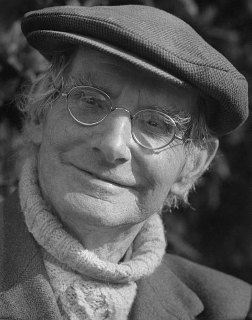
Seán O’Casey, Irish playwright renowned for realistic dramas of the Dublin slums in war and revolution, in which tragedy and comedy are juxtaposed in a way new to the theatre of his time, is born at 85 Upper Dorset Street in Dublin on March 30, 1880.

Born as John Casey into a lower middle-class Irish Protestant family, his father dies when he is six, and thereafter the family becomes progressively poorer. With only three years of formal schooling, he educates himself by reading. He starts work at 14, mostly at manual labour, including several years with the Irish railways.

O’Casey becomes caught up in the cause of Irish nationalism, and he changes his name to its Irish form and learns the Irish language. His attitudes are greatly influenced by the poverty and squalor he witnesses in Dublin’s slums and by the teachings of the Irish labour leader Jim Larkin. He becomes active in the labour movement and writes for The Irish Worker. He also joins the Irish Citizen Army, a paramilitary arm of the Irish labour unions, and draws up its constitution in 1914. At this time, he becomes disillusioned with the Irish nationalist movement because its leaders put nationalist ideals before socialist ones. He does not take part in the 1916 Easter Rising against the British authorities.

Disgusted with the existing political parties, he turns his energies to drama. His tragicomedies reflect in part his mixed feelings about his fellow slum dwellers, seeing them as incapable of giving a socialist direction to the Irish cause but at the same time admirable for their unconquerable spirit.

After several of his plays have been rejected, the Abbey Theatre in Dublin produces The Shadow of a Gunman (1923), set during the guerrilla warfare between the Irish Republican Army and British forces. In 1924 the Abbey stages Juno and the Paycock, his most popular play, set during the period of civil war over the terms of Irish independence. The Plough and the Stars (1926), with the 1916 Easter Rising as its background, causes riots at the Abbey by patriots who think the play denigrates Irish heroes. When first produced in the 1920s, these plays have an explosive effect on the audiences at the Abbey and help to enlarge the theatre’s reputation.

O’Casey goes to England in 1926, meets the Irish actress Eileen Carey Reynolds, marries her, and henceforth makes England his home. His decision to live outside Ireland is motivated in part by the Abbey’s rejection of The Silver Tassie, a partly Expressionist antiwar drama produced in England in 1929. Another Expressionist play, Within the Gates (1934), follows, in which the modern world is symbolized by the happenings in a public park. The Star Turns Red (1940) is an antifascist play, and the semiautobiographical Red Roses for Me (1946) is set in Dublin at the time of the Irish railways strike of 1911.

O’Casey’s later plays, given to fantasy and ritual and directed against the life-denying puritanism he believes has beset Ireland, include Cock-a-Doodle Dandy (1949), The Bishop’s Bonfire (1955), and The Drums of Father Ned (1958). His last full-length play is a satire on Dublin intellectuals, Behind the Green Curtains, published in 1961.

O’Casey’s three indisputably great plays are The Shadow of a Gunman, Juno and the Paycock, and The Plough and the Stars. All are tragicomedies set in the slums of Dublin during times of war and revolution. Violent death and the everyday realities of tenement life throw into relief the blustering rhetoric and patriotic swagger of men caught up in the struggle for Irish independence. The resulting ironic juxtapositions of the comic and tragic reveal the waste of war and the corrosive effects of poverty. His gifts are for vivid characterization and working-class language and, though he portrays war and poverty, he writes some of the funniest scenes in modern drama. His later plays are not considered as powerful or moving as his earlier realistic plays. In his later plays he tends to abandon vigorous characterization in favour of expressionism and symbolism, and sometimes the drama is marred by didacticism.

Six volumes of O’Casey’s autobiography appeared from 1939 to 1956. They are later collected as Mirror in My House (1956) in the United States and as Autobiographies (1963) in Great Britain. O’Casey’s letters from 1910 to 1941 are edited by David Krause in two volumes (1975, 1980).

Sean O’Casey dies of a heart attack at the age of 84 on September 18, 1964, in Torquay, Devon. He is cremated at the Golders Green Crematorium.


Leave a comment

Birth of Peig Sayers, Author & Seanchaí

peig-sayers

Peig Sayers, Irish author and seanchaí, is born in the townland of Vicarstown, Dunquin, County Kerry, on March 29, 1873. Seán Ó Súilleabháin, the former archivist for the Irish Folklore Commission, describes her as “one of the greatest woman storytellers of recent times.”

Sayers is born Máiréad (Margaret) Sayers, the youngest child of the family. She is called Peig after her mother, Margaret “Peig” Brosnan, from Castleisland. Her father Tomás Sayers is a renowned storyteller who passes on many of his tales to Peig. At age 12, she is taken out of school and goes to work as a servant for the Curran family in the nearby town of Dingle. She spends two years there before returning home due to illness.

She spends the next few years as a domestic servant working for members of the growing middle class produced by the Land War. She plans to join her best friend, Cáit Boland, in the United States, but Boland writes that she has had an accident and can not forward the cost of the fare. Peig moves to the Great Blasket Island after marrying Pádraig Ó Guithín, a fisherman and native of the island, on February 13, 1892. She and Pádraig have eleven children, of whom six survive.

The Norwegian scholar Carl Marstrander, who visits the island in 1907, urges Robin Flower of the British Museum to visit the Blaskets. Flower is keenly appreciative of Sayers’ stories and tales. He records them and brings them to the attention of the academic world.

In the 1930s, a Dublin teacher, Máire Ní Chinnéide, who is a regular visitor to the Blaskets, urges Sayers to tell her life story to her son Micheál. She is illiterate in the Irish language, although she receives her early schooling through the medium of English. She dictates her biography to Micheál. He then sends the manuscript pages to Máire Ní Chinnéide in Dublin, who edits them for publication. It is published in 1936.

Over several years beginning in 1938 she dictates 350 ancient legends, ghost stories, folk stories, and religious stories to Seosamh Ó Dálaigh of the Irish Folklore Commission.

Sayers continues to live on the island until 1942, when she leaves the Island and returns to her native Dunquin. She is moved to a hospital in Dingle, County Kerry where she dies on December 8, 1958. She is buried in the Dún Chaoin Burial Ground on the Dingle Peninsula. Her surviving children, except for her son Micheál, emigrate to the United States and live with their descendants in Springfield, Massachusetts.


Leave a comment

The Assassination of Tomás Mac Curtain

Tomas-mac-curtain

Tomás Mac Curtain, Sinn Féin Lord Mayor of Cork, is assassinated in Cork, County Cork on March 20, 1920, which is also his 36th birthday.

Thomas Curtin is born at Ballyknockane, Mourne Abbey, County Cork, on March 20, 1884, the son of Patrick Curtin, a farmer, and Julia Sheehan. He attends Burnfort National School. In 1897 the family moves to Cork City, where he attends the North Monastery school.

Mac Curtain, as he later becomes known, is active in a number of cultural and political movements beginning around the turn of the 20th century. He joins the Blackpool, Cork branch of Conradh na Gaeilge, becoming its secretary in 1902. He has interests in music, poetry, history, archaeology and Irish history. He works in his early career as a clerk, and in his free time teaches Irish. In 1911 he joins Fianna Éireann and is a member of the Irish Volunteers.

He meets Elizabeth Walsh (Eibhlís Breathnach) at a Gaelic League meeting, and they marry on June 28, 1908. They have six children, five of whom survive into adulthood. The family lives over 40 Thomas Davis Street, where Mac Curtain runs a small clothing and rainwear factory.

In April 1916, at the outset of the Easter Rising, Mac Curtain commands a force of up to 1,000 men of the Irish Volunteers who assemble at various locations around County Cork. From the volunteer’s headquarters at Sheares Street in the city, Mac Curtain and his officers await orders from the volunteer leadership in Dublin, but conflicting instructions and confusion prevail and as a result the Cork volunteers never enter the fray. A tense stand-off develops when British forces surround the volunteer hall and continued for a week until a negotiated agreement leads to the surrender of the volunteers’ arms to the then Lord Mayor of Cork Thomas Butterfield on the understanding that they will be returned at a later date. This does not happen however, and Mac Curtain is jailed in Wakefield Prison, in the Frongoch internment camp in Wales, and in Reading Gaol. After the general amnesty of participants in the Rising 18 months later, Mac Curtain returns to active duty as a Commandant of what is now the Irish Republican Army.

By 1918 Mac Curtain is a brigade commander, the highest and most important rank in the IRA. During the Conscription Crisis of 1918, he actively encourages the hiring of the women of Cumann na mBan to cater for Volunteers. He is personally involved with Michael CollinsSquad that, along with a Cork battalion, attempt to assassinate Lord John French, whose car is missed as the convoy passes through the ambush positions. Despite the setback he remains brigadier of No.1 Cork when he is elected Lord Mayor. He is elected in the January 1920 council elections as the Sinn Féin councillor for NW Ward No. 3 of Cork and is chosen by his fellow councillors to be the Lord Mayor. He begins a process of political reform within the city.

In January 1919, the Irish War of Independence starts, and Mac Curtain becomes an officer in the IRA. On March 20, 1920, his 36th birthday, Mac Curtain is shot dead in front of his wife and son by a group of men with blackened faces, who are found to be members of the Auxilaries along with unknown members of the Royal Irish Constabulary (RIC) by the official inquest into the event. In the wake of the killing, which is in revenge for the shooting of a policeman, Mac Curtain’s house in Blackpool is ransacked.

The killing causes widespread public outrage. The coroner’s inquest passes a verdict of willful murder against British Prime Minister David Lloyd George and against certain members of the RIC. Michael Collins later orders his squad of assassins to uncover and assassinate the police officers involved in the attack. RIC District Inspector Oswald Swanzy, who had ordered the attack, is fatally shot, with Mac Curtain’s own revolver, while leaving a Protestant church in Lisburn, County Antrim on August 22, 1920, sparking what is described by Tim Pat Coogan as a “pogrom” against the Catholic residents of the town.

Tomás Mac Curtain is buried in St. Finbarr’s Cemetery, Cork.


Leave a comment

Birth of Author Eilís Dillon

eilis-dillon

Eilís Dillon, Irish author of 50 books, is born in Galway, County Galway on March 7, 1920. Her work has been translated into 14 languages.

Dillon is the third of five children of Professor Thomas Dillon and his wife Geraldine (née Plunkett), who is the sister of Joseph Mary Plunkett. She is raised at Dangan House outside of Galway City before moving to the small fishing village of Barna. She attends the local primary school where she becomes proficient in the Irish language and gains an intimate knowledge of tradition in the Connemara. Her family is involved in Irish revolutionary politics. Her uncle, Joseph Mary Plunkett, is a signatory of the 1916 Proclamation of the Irish Republic and is executed after the Easter Rising.

Educated by the Ursuline nuns in Sligo, she works briefly in the hotel and catering trade. In 1940 she marries Cormac Ó Cuilleanáin, an academic from University College Cork and 17 years her senior. They have at least three children, including the Irish poet and Trinity College Dublin professor Eiléan Ní Chuilleanáin and her brother, Cormac Ó Cuilleanáin, also a Trinity professor, who writes novels as Cormac Millar.

Dillon’s first books are written in Irish including An Choill Bheo, published in 1948, Oscar agus an Cóiste sé nEasóg in 1952 and Ceol na coille in 1955. After the success of The Lost Island, published in 1952, she writes almost exclusively in English. Most of her books are aimed at teen readers with themes of self-discovery and problem solving evident.

Dillon’s adult fiction career begins in 1953 with the publication of the detective novel Death at Crane’s Court. This is followed by Sent to His Account in 1954 and Death in the Quadrangle in 1956. These novels are known for their depiction of contemporary Ireland. Over the following decade Dillon publishes many novels including The Bitter Glass (1959), Across the Bitter Sea (1973) and The Wild Geese (1981).

In 1964 she moves to Rome due to her husband’s poor health. While there she acts as adviser to International Commission on English in the Liturgy. She returns to Cork with her husband in 1969 where he dies the following year. She continues to visit Italy over the next several years, setting some of her stories there including Living in Imperial Rome (1974) and The Five Hundred (1972), though these are not as popular as her Irish books. In 1974 she marries the American-based critic and professor Vivian Mercier, dividing her time between California, Italy and Dublin.

In her later years Dillon plays a prominent role in Irish culture. She is a Fellow of the Royal Society for Literature and a member of Aosdána, serves on the Irish Arts Council 1974–1979, chairs the Irish Writers’ Union and the Irish Writers’ Centre, and founds the Irish Children’s Book Trust. In 1987 she and her husband move permanently to Dublin where she supports up and coming Irish authors. Her last story is Children of Bach published in 1993.

Eilís Dillon dies on July 19, 1994, and is buried beside her second husband in Clara, County Offaly. A prize in her memory is given annually as part of the Bisto Book of the Year Awards.


Leave a comment

Birth of Short Story Writer Seán Ó Faoláin

sean-ofaolain

Seán Proinsias Ó Faoláin, Irish short story writer, is born as John Francis Whelan on February 22, 1900, in Cork, County Cork.

Ó Faoláin is educated at the Presentation Brothers Secondary School in Cork. He comes under the influence of Daniel Corkery, joining the Cork Dramatic Society and increasing his knowledge of the Irish language, which he had begun in school. Shortly after entering University College Cork, he joins the Irish Volunteers and fights in the Irish War of Independence. During the Irish Civil War, he serves as Censor for The Cork Examiner and as publicity director for the Irish Republican Army (IRA). After the Republican loss, he receives M.A. degrees from the National University of Ireland and from Harvard University where he studies for three years. He is a Commonwealth Fellow from 1926 to 1928 and is a Harvard Fellow from 1928 to 1929.

Ó Faoláin writes his first stories in the 1920s, eventually completing 90 stories over a period of 60 years. From 1929 to 1933 he lectures at the Catholic college, St. Mary’s College, at Strawberry Hill in Twickenham, England, during which period he writes his first two books. His first book, Midsummer Night Madness, is published in 1932. It is a collection of stories partly based on his Civil War experiences. He afterwards returns to his native Ireland. He publishes novels, short stories, biographies, travel books, translations, and literary criticism – including one of the rare full-length studies of the short story, The Short Story (1948). He also writes a cultural history, The Irish, in 1947.

Ó Faoláin serves as director of the Arts Council of Ireland from 1956 to 1959, and from 1940 to 1990 is a founder member and editor of the Irish literary periodical The Bell. The list of contributors to The Bell include many of Ireland’s foremost writers, among them Patrick Kavanagh, Patrick Swift, Flann O’Brien, Frank O’Connor and Brendan Behan. His Collected Stories are published in 1983. He is elected Saoi of Aosdána in 1986.

Seán Proinsias Ó Faoláin dies after a short illness on April 20, 1991, in the Dublin nursing home where he had lived for two years.


Leave a comment

Birth of Daniel Corkery, Writer & Academic

daniel-corkery

Daniel Corkery, Irish politician, writer and academic, is born in Cork, County Cork on February 14, 1878. He is unquestionably best known as the author of The Hidden Ireland, his 1924 study of the poetry of eighteenth-century Irish Language poets in Munster.

Corkery is educated at the Presentation Brothers and St. Patrick’s College of Education, Dublin where he trains as a teacher. He teaches at Saint Patrick’s School in Cork but resigns in 1921 when he is refused the headmastership. Among his students are the writer Frank O’Connor and the sculptor Seamus Murphy.

After leaving St. Patrick’s, Corkery teaches art for the local technical education committee, before becoming inspector of Irish in 1925, and later Professor of English at University College Cork in 1930. Among his students in UCC are Seán Ó Faoláin and Seán Ó Tuama. He is often a controversial figure in academia for his “nativist” views on Irish literature, views which result in conflict with many Irish Language scholars, most notably Pádraig de Brún and his niece Máire Mhac an tSaoi. Ó Tuama, however, is frequently a staunch defender of Corkery’s reputation.

In his late twenties Corkery learns Irish and this brings him into contact with leading members of the Irish Language revival movement, including Terence MacSwiney, T. C. Murray and Con O’Leary, with whom he founds the Cork Dramatic Society in 1908. His plays Embers and The Hermit and the King are performed by the society. Later plays are staged at the famous Abbey Theatre, including The Labour Leader (1919) and The Yellow Bittern (1920).

Corkery is also a writer of short stories, including the collections A Munster Twilight (1916), The Hounds of Banba (1920), The Stormy Hills (1929), and Earth Out of Earth (1939), and a novel, The Threshold of Quiet (1917).

Corkery also writes non-fiction works, including The Hidden Ireland (1924), a highly influential work about the riches of eighteenth-century Irish poetry. In this he attempts to reconstruct a worldview preserved by Gaelic poets amongst the poor and oppressed Catholic peasantry of the Penal Laws era, virtually invisible in the Anglo-Irish tradition that has dominated the writing of Irish history. “An instant, influential classic,” writes Patrick Walsh, “its version of the past provided powerful cultural underpinning to the traditional nationalist history that became, in the 1930s, the educational orthodoxy of the new state.”

Corkery serves as a member of Seanad Éireann from 1951 to 1954 when he is nominated by the Taoiseach.

Daniel Corkery dies on December 31, 1964. His papers are held in the Boole Library of University College Cork.


Leave a comment

Birth of James Stephens, Novelist & Poet

istepja001p1

James Stephens, Irish novelist and poet, is born in Dublin on February 9, 1880.

Stephens’ mother works in the home of the Collins family of Dublin and is adopted by them. He is committed to the Meath Protestant Industrial School for Boys as a small child and spends his childhood there. He attends school with his adopted brothers Thomas and Richard before graduating as a solicitor’s clerk. He is known affectionately in school as “Tiny Tim” due to his 4’10” stature. He is much enthralled by the tales of military valour of his adoptive family and would have become a soldier if not for his height.

By the early 1900s Stephens is increasingly inclined to socialism and the Irish language and by 1912 is a dedicated Irish Republican. He is a close friend of the 1916 Easter Rising leader Thomas MacDonagh, who is then editor of The Irish Review and deputy headmaster in St. Enda’s School, the radical bilingual school run by Patrick Pearse. His growing nationalism brings a schism with his adopted family, but probably wins him his job as registrar in the National Gallery of Ireland, where he works between 1915 and 1925, having previously had an ill-paid job with the Mecredy solicitors’ firm.

Stephens produces many retellings of Irish myths and fairy tales. His retellings are marked by a rare combination of humour and lyricism. He also writes several original novels, The Crock of Gold, Etched in Moonlight and Demi-Gods, based loosely on Irish fairy tales. The Crock of Gold in particular has achieved enduring popularity and has often been reprinted.

Stephens begins his career as a poet under the tutelage of “Æ” (George William Russell). His first book of poems, Insurrections, is published in 1909. His last book, Kings and the Moon (1938), is also a volume of verse.

Stephens’s influential account of the 1916 Easter Rising, Insurrection in Dublin, describes the effect of the deaths by execution of his friend Thomas MacDonagh and others as being “like watching blood oozing from under a door.” Of MacDonagh he writes:

No person living is the worse off for having known Thomas MacDonagh, and I, at least, have never heard MacDonagh speak unkindly or even harshly of anything that lived. It has been said of him that his lyrics were epical; in a measure it is true, and it is true in the same measure that his death was epical. He was the first of the leaders who was tried and shot.

Stephens lives between Paris, London and Dublin. During the 1930s he is a friend of James Joyce, and they mistakenly believe that they share a birthday. Joyce, who is concerned about his ability to finish what later becomes Finnegans Wake, proposes that Stephens assist him, with the authorship credited to JJ & S, short “Jameses Joyce & Stephens,” but also a pun on the popular Irish whiskey made by John Jameson & Sons. The plan is never implemented, as Joyce is able to complete the work on his own.

During the last decade of Stephens’ life, he finds a new audience through a series of broadcasts on the BBC. He dies at Eversleigh on Saint Stephen’s Day, December 26, 1950.


Leave a comment

First Meeting of Dáil Éireann

first-dail

The first meeting of Dáil Éireann, chaired by Sean T. O’Kelly, occurs on January 21, 1919 in the Round Room of the Mansion House, the residence of the Lord Mayor of Dublin.

The First Dáil is convened from 1919–1921. It is the first meeting of the unicameral parliament of the revolutionary Irish Republic. In 1919 candidates who have been elected in the Westminster elections of 1918 refuse to recognise the Parliament of the United Kingdom and instead establish an independent legislature in Dublin called “Dáil Éireann.” The establishment of the First Dáil occurs on the same day as the outbreak of the Irish War of Independence.

Being the first and highly symbolic meeting, the proceedings of the Dáil are conducted for the only time entirely in the Irish language, except for previously drafted declarations that are repeated in other languages as well. The Dáil elects Cathal Brugha as its Ceann Comhairle (chairman). A number of short documents were then adopted. These are the:

The Declaration of Independence asserts that the Dáil is the parliament of a sovereign state called the “Irish Republic,” and so the Dáil establishes a cabinet called the Ministry or “Aireacht,” and an elected prime minister known both as the “Príomh Aire” and the “President of Dáil Éireann.” The first, temporary president is Cathal Brugha. He is succeeded in April by Éamon de Valera.

The membership of the Dáil was drawn from the Irish MPs elected to sit at the Westminster parliament, 105 in total, of which 27 are listed as being present for the first meeting. Of the remainder 34 are described as being “imprisoned by the foreigners” and three as being “deported by the foreigners.” Five Sinn Féin members are described as being “as láthair” (absent). The remaining 32 members who are invited but not present are six members of the Irish Parliamentary Party and 26 unionists, mainly from the northern six counties that would later form Northern Ireland. These include all MPs elected to sit for Belfast, Counties Down, Antrim, Armagh, and Londonderry, two out of three MPs for County Tyrone and one out of two MPs for County Fermanagh. For the portion of the country that would later become the Irish Free State, MPs do not sit for Waterford city or the Dublin University constituency, although members do attend for the National University of Ireland constituency.

(Pictured: Members of the First Dáil, April 10, 1919. First row, left to right: Laurence Ginnell, Michael Collins, Cathal Brugha, Arthur Griffith, Éamon de Valera, George Noble Plunkett, Eoin MacNeill, W. T. Cosgrave and Ernest Blythe.)


Leave a comment

Birth of Clergyman Narcissus Marsh

narcissus-marsh

Narcissus Marsh, English clergyman who is successively Church of Ireland Bishop of Ferns and Leighlin, Archbishop of Cashel, Archbishop of Dublin and Archbishop of Armagh, is born on December 20, 1638, at Hannington, Wiltshire.

Marsh is educated at Magdalen Hall, Hertford College, Oxford. He later becomes a fellow of Exeter College, Oxford, in 1658. In 1662 he is ordained, and presented to the living of Swindon, which he resigns in the following year.

After acting as chaplain to Seth Ward, Bishop of Exeter and then Bishop of Salisbury, and Lord Chancellor Clarendon, he is elected principal of St. Alban Hall, Oxford, in 1673. In 1679 he is appointed provost of Trinity College, Dublin, where he does much to encourage the study of the Irish language. He helps to found the Dublin Philosophical Society and contributes to it a paper entitled Introductory Essay to the Doctrine of Sounds (printed in Philosophical Transactions, No. 156, Oxford, 1684).

In 1683 Marsh is consecrated Bishop of Ferns and Leighlin, but after the accession of James II he is compelled by the turbulent soldiery to flee to England in 1689, when he becomes Vicar of Gresford, Flintshire, and Canon of St. Asaph. Returning to Ireland in 1691 after the Battle of the Boyne, he is made Archbishop of Cashel, and three years later he becomes Archbishop of Dublin. About this time, he founds Marsh’s Library in Dublin, which is the oldest public library in Ireland. He becomes Archbishop of Armagh in 1703. Between 1699 and 1711 he is six times a Lord Justice of Ireland.

Narcissus Marsh dies on November 2, 1713. His funeral oration is pronounced by his successor at Dublin, Archbishop William King. A more acerbic account is provided by Jonathan Swift.

Many oriental manuscripts belonging to Narcissus Marsh are now in the Bodleian Library in Oxford.


Leave a comment

Birth of Actress Fionnghuala Flanagan

fionnula-flanagan

Fionnghuala Manon “Fionnula” Flanagan, Irish actress and political activist, is born in Dublin on December 10, 1941.

Flanagan is the daughter of Rosanna (née McGuirk) and Terence Niall Flanagan, an Irish Army officer and Communist who had fought in the International Brigade in the Spanish Civil War against General Francisco Franco. Although her parents are not Irish speakers, they want Fionnula and her four siblings to learn the Irish language, thus she grows up speaking English and Irish fluently. She is educated in Switzerland and England. She trains extensively at the Abbey Theatre in Dublin and travels throughout Europe before settling in Los Angeles, California in early 1968.

Flanagan comes to prominence in Ireland in 1965 as a result of her role as Máire in the Telefís Éireann production of the Irish language play An Triail, for which she receives the Jacob’s Award in Dublin for her “outstanding performance.” With her portrayal of Gerty McDowell in the 1967 film version of Ulysses, she establishes herself as one of the foremost interpreters of James Joyce. She makes her Broadway debut in 1968 in Brian Friel‘s Lovers, then appears in The Incomparable Max (1971) and such Joycean theatrical projects as Ulysses in Nighttown and James Joyce’s Women (1977-1979), a one-woman show written by Flanagan and directed for the stage by Burgess Meredith. It is subsequently filmed in 1983, with Flanagan both producing and playing all six main female roles.

Flanagan is a familiar presence in American television, as she has appeared in several made-for-TV movies including The Legend of Lizzie Borden (1975) starring Elizabeth Montgomery, Mary White (1977), The Ewok Adventure (1984) and A Winner Never Quits (1986). She wins an Emmy Award for her performance as Clothilde in the 1976 network miniseries Rich Man, Poor Man. Her weekly-series stints include Aunt Molly Culhane in How the West Was Won (1977), which earns her a second Emmy Award nomination. She does multiple appearances on Murder, She Wrote. She plays Lt. Guyla Cook in Hard Copy (1987), and as Kathleen Meacham, wife of a police chief played by John Mahoney in H.E.L.P. (1990).

Flanagan makes guest appearances in three of the Star Trek spin-offsStar Trek: Deep Space Nine episode “Dax,” Star Trek: The Next Generation episode “Inheritance,” and Star Trek: Enterprise episode “Fallen Hero.”

Flanagan guest-stars in several episodes of Lost as Eloise Hawking, a recurring character. She appears in such films as The Others opposite Nicole KidmanDivine Secrets of the Ya-Ya Sisterhood as the eldest Teensy and Waking Ned. She appears in television series and stage productions including the Emmy-nominated miniseries Revelations, starring Bill Pullman and Natascha McElhone, and in Transamerica, starring Felicity Huffman. From 2006–08, she plays Rose Caffee, the matriarch of an Irish American Rhode Island family on the Showtime drama Brotherhood.