seamus dubhghaill

Promoting Irish Culture and History from Little Rock, Arkansas, USA


Leave a comment

Birth of Thomas Reynolds, United Irishman and Informant

Thomas Reynolds, United Irishman, informant, consul and heir to a fortune, is born at his father’s house, 9 West Park Street, Dublin, on March 12, 1771.

Reynolds’s family history is well documented. His great-great-grandfather was Connor Reynolds of Rhynn Castle, County Leitrim, who married the daughter of Sir Robert Nugent, by whom he leaves three sons, Conor, George Nugent and Thomas. The second of these renounces his family’s Catholicism and becomes a Protestant in order to obtain possession of the greater part of the family estates and was grandfather of the George Nugent Reynolds who was killed in a duel in 1786. The third son, Thomas, a successful wool-stapler in Dublin, married Margaret Lacy, the sister of the famous Austrian general, Franz Moritz von Lacy, and by her had three sons and one daughter. Thomas’s eldest son, James, inherited his business and was one of the seven Catholics who in 1757 met at the Globe coffee-house, Essex Street, to form a committee to request the removal of legal disabilities imposed on Catholics. Thomas’s second son, also Thomas, a manufacturer of woolen poplins, had three daughters, whose marriages connected him with several distinguished Catholic families, and an only son, Andrew, father of the main subject of this article. Andrew Reynolds, admitted into partnership with his father, later developed a new poplin “by having the warp of silk and the weft, or shoot, of worsted.” These poplins came to be “prized in foreign countries as Irish tabinets.” He had an annual turnover of £100,000 to £150,000 and eventually made profits of £15,000 to £20,000 a year. On April 20, 1767, Andrew Reynolds married as his second wife, a second-cousin, Rose Fitzgerald, eldest daughter of Thomas Fitzgerald of Kilmead, County Kildare, a distant kinsman and substantial creditor of the Duke of Leinster, and his wife Rose, daughter of Francis Lacy of Inns Quay, Dublin. By Rose he had two sons and twelve daughters.

Until the age of eight, Reynolds, the future United Irishman and the only son to survive to adulthood, lives at the seat of his maternal grandfather in the care of a Catholic priest, William Plunkett. He is then moved to the school of a Protestant clergyman named Crawford at Chiswick near London and by the age of twelve he spends all vacations in the house of Sir Joshua Reynolds, who appears to take pleasure in teaching him the first principles of drawing. From Chiswick, he moves to Liège in 1783 to be educated by Catholics priests, former Jesuits, returning to Ireland shortly before his father’s death, at the age of 44, on May 8, 1788.

After 1784, the introduction of cottons to Ireland spoiled Andrew Reynolds’s trade. Loans to his nephews, the O’Reilly brothers (Thomas, Patrick and Andrew), iron-smelters at Arigna, County Roscommon, worsen his losses, which reach £200,000 at the time of his death. Lodging with his mother in Dublin, 17-year-old Reynolds mixes with “dissipated idlers” such as Simon Butler and Valentine Lawless. He revisits the Continent and is in Paris in July 1789 when the Bastille is stormed. At the behest of his mother, he becomes a member of the Catholic Committee in succession to his father on February 9, 1791, and attends the Catholic Convention as a delegate of the Dublin parish of St. Nicholas Without in December 1792. He chooses not to enter his late father’s business, preferring, despite his small income, the carefree life of a gentleman, doing the rounds of his well-to-do country relations. On March 25, 1794, he marries Harriet Witherington, fourth daughter of William Witherington, a Dublin woolen merchant, and a younger sister of Matilda Tone. His mother thereupon assigns to him half of the capital in the family business – now carried on by a relation, Thomas Warren, formerly clerk to Andrew Reynolds – and one third of the profits. He has other property as well and expectations of more, including a life-interest in an estate in Jamaica and the promise from the Duke of Leinster of the reversion of Kilkea Castle in County Kildare. A poor manager, Warren is forced out and later testifies against him in a judicial process. He still has £18,500 in assets and in 1797 obtains possession of Kilkea Castle and winds up his business affairs.

On the eve of the rebellion of 1798, Reynolds is a gentleman “of ample fortune and of the first connexions in the country.” In January or February 1797, he is drawn into the United Irish organisation by Peter Sullivan, a confidential clerk in the Reynolds family business, who refers him to Richard Dillon, a Catholic linen-draper, and to Oliver Bond, in whose house in Bridge Street he is sworn in, believing, according to his son, that the sole objects of the organisation are Catholic emancipation and the reform of parliament. Soon he is attending meetings of a baronial committee, but only after meeting Lord Edward FitzGerald in November 1797 achieves a position of importance, that of County Kildare treasurer and membership of the Leinster provincial committee. After being informed of a plan for an insurrection and for the assassination of approximately eighty individuals, some of them his own relations, and knowing the provincial committee is to meet on March 12 at the house of Oliver Bond to decide finally on a general rising, he communicates the United Irishmen’s plan to Dublin Castle through William Cope, a merchant. Those present at Bond’s house are arrested and so the plan is spoiled. He resigns as county treasurer on March 18, to be replaced by John Esmonde. Known to the United Irish leadership as an informant and in danger of his life – at least two unsuccessful attempts on his life are made – but known to Dublin Castle only as an influential United Irishman, he suffers the ransacking of his house at Kilkea on April 20 by dragoons and militia, who believe FitzGerald is concealed there. Finally, he is arrested and is to face a court-martial at Athy but, his true identity being disclosed to Dublin Castle by Cope, he is delivered to a grateful Irish privy council on May 5.

During the rebellion, Kilkea Castle, which had been renovated by Reynolds in 1797 at an expense of over £2,500 and contains priceless paintings, is garrisoned by troops and attacked by insurgents, rendering it uninhabitable for many years. It is refitted in the late 1830s. He is the principal prosecution witness in the trials of John McCann, William Michael Byrne and Bond. There being few other grounds of defence, the defence counsel, John Philpot Curran, seeks to impeach his character and motives, which, with adverse remarks by Thomas Moore in his Life and Death of Lord Edward Fitzgerald (1831) and a hostile obituary in The Morning Chronicle, gives rise after his death to a two-volume apologia by his son, Thomas, based on family papers and a remarkably detailed source for the history of the Reynolds family. For his action in coming forward at a critical period to save Ireland from the wicked plans of the conspirators, he is honoured by Dublin Corporation with the Freedom of the City on October 19, 1798.

His life threatened, Reynolds resides for some months in Leinster Street, Dublin, then moves with his family to Britain, spending some time in Monmouthshire before settling in London in 1803. In 1810, he is appointed British postmaster-general in Lisbon, an onerous but lucrative appointment owing to the Peninsular War. In September 1814 he returns to England. In July 1817, favoured by Lord Castlereagh, he goes to Copenhagen as consul to Iceland. He has to visit that remote island part of the kingdom of Denmark only once (June–August 1818) and in January 1820 finally leaves Copenhagen leaving his younger son, Thomas, in charge of consular affairs. With his wife and daughters, he settles in Paris. There in 1825, his elder son, Andrew Fitzgerald, fights a duel with Thomas Warren, a French army officer and son of Thomas Warren who had been Reynolds’s clerk, and is later a United Irishman. In 1831, he undergoes a religious experience and embraces evangelical Protestantism.

Reynolds dies in Paris on August 18, 1836, and is buried in a vault in the churchyard at Welton, near Brough, East Riding of Yorkshire.

(From: “Reynolds, Thomas” by C. J. Woods, Dictionary of Irish Biography, http://www.dib.ie, October 2009)


Leave a comment

Birth of Desmond “Des” O’Malley, Irish Politician

Desmond Joseph “Des” O’Malley, Fianna Fáil and Progressive Democrats politician, is born on February 2, 1939, in Limerick, County Limerick.

O’Malley is born into a storied Limerick political family. His maternal grandfather, Denis O’Donovan, is killed during the Irish War of Independence by the Black and Tans, two of his uncles and his father hold the office of Mayor of Limerick, and his uncle Donogh O’Malley is a Minister for Education. He is educated at the Jesuit Crescent College and at University College Dublin (UCD), from which he graduates with a degree in law in 1962.

In 1968, O’Malley enters politics upon the sudden death of his uncle Donogh who, at that the time, is the sitting Minister for Education. He is chosen after Donogh’s widow, Hilda, still in shock at the sudden death of her husband, turns down the opportunity to contest the by-election necessitated by his death.

O’Malley is subsequently elected as a Fianna Fáil TD for the Limerick East constituency in the by-election. Perhaps the first sign of the defiance that would define his career materialises during the 1969 Irish general election when Hilda asks her nephew to step aside and allow her to contest in the Limerick East constituency as the main Fianna Fáil candidate. He refuses and places third in the four-seat constituency, with his aunt, running as an independent, coming in fifth.

Following the general election, O’Malley is appointed Parliamentary Secretary to both Minister for Defence Jim Gibbons and Taoiseach Jack Lynch and serves as Government Chief Whip. In his role as a confidante of Lynch, the political lines within Fianna Fáil that put him on a collision course of over twenty years with Charles Haughey, are drawn. He plays a central role in the Arms Crisis prosecutions of Haughey and Neil Blaney in 1970. After their acquittals, the stage is set within Fianna Fáil for a long-term power struggle that eventually results in O’Malley’s expulsion from the party in 1984.

In the meantime, O’Malley’s next position within Lynch’s government comes when he is made Minister for Justice after Mícheál Ó Móráin is forced to resign due to ill-health. One of the most significant aspects of his legacy transpires during his tenure as Minister for Justice from 1970 to 1973. In response to the ongoing conflict in Northern Ireland, he tries and fails to introduce internment without trial for republicans within the State. He is, however, successful in reintroducing the Offences Against the State Act, which enables convictions for Irish Republican Amy (IRA) membership on the word of a Garda Superintendent, and the Special Criminal Court, a non-jury court presided over by three judges which tries cases of terrorism and serious organised crime.

When Lynch resigns the Fianna Fáil leadership following electoral defeat in 1979, O’Malley and Martin O’Donoghue manage the leadership campaign of George Colley, who subsequently loses to Haughey. Following Haughey’s ascent to leadership, O’Malley retains the industry and commerce ministerial portfolio he had been appointed to following the 1977 Irish general election.

In 1982, after Fianna Fáil loses its majority but stays in government by virtue of a confidence and supply agreement with Sinn Féin – The Workers Party and two independents, O’Malley is appointed Minister for Trade, Commerce and Tourism, but with the death of Colley and the loss of O’Donoghue’s seat, he becomes increasingly isolated within Fianna Fáil.

After the party whip is removed from him in 1984, amidst inter-party wrangling over the New Ireland Forum, O’Malley is expelled from the party the following year, the final straw being his famous “I stand by the Republic” speech in which he announces his intention to abstain on a vote regarding the liberalisation of the sales of contraceptives, which Fianna Fáil opposes.

O’Malley goes on to establish the Progressive Democrats, joined by Mary Harney (who had also been expelled by Fianna Fáil), and later by Fianna Fáil TDs Bobby Molloy and Pearse Wyse, as well as Fine Gael TD Michael Keating. In the 1987 Irish general election, the Progressive Democrats win fourteen seats, making them the third biggest party in the Dáil. Among those elected are O’Malley, his cousin Patrick O’Malley, Anne Colley, daughter of George Colley, Martin Gibbons, son of Jim Gibbons, Michael McDowell and Martin Cullen.

O’Malley’s animus for Haughey does not stop him from entering coalition with Fianna Fáil after the 1989 Irish general election, with him once again appointed Minister for Industry and Commerce. While in government, he finally witnesses the downfall of Haughey in 1992, when he is forced to resign over the emergence of new evidence concerning his tapping of journalists’ phones in the 1980s. The coalition with Fianna Fáil does not last long under new Taoiseach Albert Reynolds, with the Government collapsing after Reynolds accuses O’Malley of dishonesty during the Beef Tribunal.

O’Malley retires as leader of the Progressive Democrats in 1993, and the party moves into opposition, only to re-enter government with Fianna Fáil in 1997, where it remains upon O’Malley’s retirement from politics in 2002.

While the Progressive Democrats no longer exist, they are generally credited with the breaking up of the Fianna Fáil versus Fine Gael dichotomy of Irish politics that had dominated since the founding of the Free State. Since 1922, Irish governments have tended to be either single-party Fianna Fáil cabinets, be they minority or majority, or Fine Gael-led coalitions, typically involving the Labour Party. A Fine Gael-Labour coalition is in power at the time of the founding of the Progressive Democrats, and a single-party government or clear majority has not been won in Ireland since.

O’Malley dies in Dublin on July 21, 2021, at the age of 82, having been in poor health for some time. He is predeceased by his wife, Pat, and survived by their six children, four daughters including the former TD Fiona O’Malley, and two sons.

Perhaps O’Malley’s greatest legacy is the political reality of Ireland today: the low-tax, pro-business economic policies of the Progressive Democrats have been the dominant ideology in the State since the 1990s. Sinn Féin, the party most affected by his measures as Minister for Justice, no longer vote against the retention of the Offences Against the State Act and Special Criminal Court.

(From: “Desmond O’Malley: 1939-2021,” eolas Magazine, http://www.eolasmagazine.ie, August 2021)


Leave a comment

The Execution of William Joyce

William Brooke Joyce, an American-born fascist and Nazi propaganda broadcaster during World War II, is hanged in Wandsworth Prison by Albert Pierrepoint on January 3, 1946, making him the last person to be executed for treason in the United Kingdom.

Joyce is born on April 24, 1906, in Brooklyn, New York, the eldest of three sons of Michael Joyce, an Irish Catholic from a family of tenant farmers in Ballinrobe, County Mayo, and his wife, Gertrude (née Brooke), who although born in Shaw and Crompton, Lancashire, is from a well-off Anglican Anglo-Irish family of physicians associated with County Roscommon. The Joyces return to Ireland in 1909. William, a precocious child, attends Coláiste Iognáid SJ, a Jesuit school in County Galway, from 1915 to 1921. At the age of fourteen, he abandons Catholicism for Anglicanism, apparently after being told that all non-Catholics, including his mother, would be damned. In adult life he is nominally anglican, though his adherence to Christianity is tenuous.

The Joyces are unionists and teach their children fervent imperialism. During the Irish War of Independence, Joyce openly associates with the Black and Tans and acts as a scout for them. An acquaintance claims that his views are so extreme even loyalists dislike him. On December 9, 1921, he flees to England to join the Worcestershire Regiment and is followed to England in 1923 by the rest of the family. When he enlists, he claims to be eighteen, but after he contracts rheumatic fever, his age is discovered, and he is discharged in March 1922. For a time, he studies mathematics and chemistry at Battersea Polytechnic Institute as a pre-medical student (1922–23), but he leaves of his own accord, with a reputation for laziness and violent political views. His studies in English and history at Birkbeck College are more successful. He is a brilliant linguist and mathematician and graduates BA with first-class honours in 1927. He publishes an academic article on philology and considers progressing to an MA. He later falsely claims that his research had been plagiarised by a Jewish academic. In 1932, he enrolls at King’s College, London, for a Ph.D. in educational psychology.

Joyce is disturbed by the difference between depressed post-war Britain and the imperial ideal that he had imbibed in Galway and is mocked for his outspoken patriotism and obvious Irishness. He identifies strongly with Thomas Carlyle, an earlier angry anti-liberal from the provinces. His life is marked by repeated episodes of hero worship, followed by disillusion and bitter denunciation. In 1923, he joins the British Fascists, an organisation that has a significant Irish loyalist membership, and in 1924 he allies himself with a militant splinter group, the National Fascists. Most British fascists see themselves as Tory auxiliaries, and they often provide a security presence at conservative meetings. On October 22, 1924, while stewarding a meeting addressed by a Jewish conservative candidate, he has his face slashed and is left with a prominent scar across his right cheek. He joins the Conservative Party in 1928 and is active in the Chelsea constituency until 1930, when he is forced out because of his eccentricities and sexual misbehaviour. On April 30, 1927, he marries Hazel Kathleen Barr. They have two daughters but separate in 1935, largely because of his infidelities, heavy drinking, and temper. The marriage is dissolved in 1937.

In November 1933, Joyce abandons his Ph.D. studies to work for Sir Oswald Mosley‘s British Union of Fascists (BUF). By early 1934 he has become its paid publicity director, traveling throughout Britain to organise meetings. He is a powerful, rabble-rousing speaker, driven by an instinctive awareness that vitriolic verbal abuse gives speaker and audience a sense of power and solidarity. MI5 sees him as a compelling, though deranged, personality. On February 8, 1937, he marries Margaret Cairns White, a BUF activist from Lancashire, with whom he had cohabited since 1936.

Joyce leads a BUF faction that favours a recruitment strategy based on uncompromising ideological assertion. This is challenged by populists who prioritise marches and displays and hold that indoctrination should follow membership. In February 1937, he is BUF candidate for the London County Council in Shoreditch. The party wins 14 per cent of the vote. In March 1937, he, along with many full-time BUF staff, are sacked when the BUF cuts expenses. But his dismissal also reflects Mosley’s awareness that his obsessive rhetoric repels “respectable” recruits and that he is no longer a biddable, slavish admirer of “the Leader.” He later falsely claims near-exclusive credit for the BUF’s escalating antisemitism, a view that Mosley eventually finds it convenient to adopt in order to evade his own responsibility.

In April 1937, Joyce founds the National Socialist League, helped by a wealthy patron. He supports himself as a private tutor, refusing to take Jewish pupils. He is active in various antisemitic and pro-Nazi groups such as the Right Club and engages in “peace” campaigns based on the view that British interests lay with Germany against Russia. Political marginalisation intensifies his admiration for Nazi Germany and hero worship of Adolf Hitler. By the time of the Munich crisis in 1938, he has decided that if war comes, he will go to Germany, though he also considers moving to Ireland. He renews his British passport for one-year terms in August 1938 and August 1939.

On August 26, 1939, Joyce and his wife leave London for Berlin. He is allegedly tipped off about his impending arrest and internment by an MI5 officer, to whom he had supplied information on communists. His siblings, whom he recruited into his fascist organisations, are variously penalised for his activities. At a loose end in Berlin, he is persuaded by a British associate to become a radio announcer with the English-language service of the Reichs-Rundfunk-Gesellschaft (RRG). He makes his first broadcast on September 6, 1939, and receives a contract in October. He finds in radio an outlet for his forceful style and delight in saying the unsayable, and in the early years of the war takes an exultant pride in recounting Nazi victories. His performances are admired by Joseph Goebbels, whom Joyce, to his regret, never meets. On September 26, 1940, he acquires German citizenship.

The novel experience of hearing the enemy in one’s own living room attracts wide audiences in Britain. Joyce’s practice of naming newly captured prisoners of war in his broadcasts is also a compelling motive for listening. In fact, he tries to recruit British prisoners of war as collaborators. The name “Lord Haw-Haw,” invented by the Daily Express radio critic in September 1939, initially applies to several English-language broadcasters but in time becomes associated with Joyce. He is initially a figure of fun, imitated by comedians, but there are sinister undercurrents of terrifying omnipotence, intensified by his sneering, gloating delivery and his delighted deployment of the “big lie” technique. It is widely believed that British-based fifth columnists supply him with information, that he predicts air raids, and shows minute local knowledge. In time, fear and his growing notoriety feed popular hatred of him in Britain, though his anti-British taunts allegedly win appreciative Irish audiences. He exults that he is daily committing treason and rendering himself liable to the death penalty.

In 1940, Joyce publishes a commissioned self-justifying propaganda work, Twilight over England. His representation of himself echoes that of Hitler in Mein Kampf – the provincial patriot, whose martial sacrifices are betrayed by corrupt elites, learning through poverty the hollowness of bourgeois patriotism and the need to synthesise socialism with nationalism. He shares with his hero a paranoid belief in his own ability to create an alternative reality through language and obstinacy. He dreams of becoming the English Führer.

In Berlin, the Joyces’ marriage comes under increasing strain, marked by drunken rows, domestic violence, and infidelity on both sides, though they retain a fierce mutual fascination. They divorce on August 12, 1941, but remarry on February 11, 1942, while continuing their previous behaviour. As the Axis powers begin to fail, his broadcasts become more defensive, focusing on the Soviet threat. On October 14, 1944, he is awarded the German War Merit Cross, first class. On October 22, he is sworn into the Volkssturm (territorial army) and begins drilling. The Joyces are evacuated from Berlin in March 1945, initially to Apen near the Dutch border and then to Hamburg, where he makes a last, drunken, defiant broadcast on April 30, 1945, the day of Hitler’s death. After an unsuccessful attempt to escape to Sweden, the Joyces hide at Flensburg near the Danish border. On May 28, 1945, he is shot and captured while gathering firewood.

Joyce is brought back to Britain on June 16 after Parliament passed legislation simplifying treason trial procedures. At his September 17-20 trial, he proves his American citizenship, but the court holds that his illegally acquired British passport incurred duties of allegiance. His appeals are rejected by the Court of Appeal and the House of Lords. His fate is influenced by British public opinion, and possibly by a desire to avoid antagonising the Soviet Union. In his death cell he blames the defeat of national socialism on German limitations. He also fantasises that he could have saved Hitler from his incompetent subordinates.

Joyce is hanged at Wandsworth Prison on January 3, 1946. Unlike most of his fellow Nazis, he proclaims to the end his allegiance to national socialism and hatred of Jews. He corresponds cheerfully with Margaret, joking evasively about the death camps and expressing a belief that his spirit will survive, watch over her, and continue his work. To neo-Nazis he becomes a martyr. Even among those to whom his activities had been repellent, a significant body of opinion holds he should not have been condemned on a questionable and innovative technicality. The historian A. J. P. Taylor maintains that Joyce was executed for making a false declaration to obtain a passport, a misdemeanour that normally incurs a £2 fine.

In 1976, Joyce is reinterred in Galway as it is feared that a grave in England might become a fascist shrine. Thomas Kilroy‘s play Double Cross (1986) juxtaposes Joyce and Brendan Bracken as Irishmen who reinvented themselves through fantasies of Britishness. The BBC Sound Archive has recordings of some of Joyce’s broadcasts and transcripts of others, collected during the war as evidence for a future treason trial.

(From: “Joyce, William Brooke (‘Lord Haw-Haw’)” by Patrick Maume, Dictionary of Irish Biography, http://www.dib.ie, October 2009)

Leave a comment

Birth of Sylvester O’Halloran, Surgeon & Historian

Sylvester O’Halloran, Irish surgeon with an abiding interest in Gaelic poetry and history, is born on December 31, 1728, at Caherdavin, County Limerick. For most of his life he lives and practises in Limerick and is later elected a member of the Royal Irish Academy (RIA).

O’Halloran is the third son of Michael O’Halloran, a prosperous farmer, and his wife Mary McDonnell. He is named after Sylvester Lloyd, the titular Catholic bishop of Killaloe (1728–39). His mother’s cousin, Sean Claragh McDonnell, teaches him much at an early age, including some Greek and Latin. He goes on to a Limerick school run by Robert Cashin, a Protestant clergyman, which is unusual at the time as the O’Hallorans are Roman Catholics during the difficult time of the Penal Laws.

O’Halloran and his brothers engage successfully in areas of life that work around the restrictions of the Penal Laws. Joseph becomes a Jesuit and holds chairs in rhetoric, philosophy and divinity at the Jesuit College at Bordeaux in France. George becomes a jeweler and in time a property-owner. O’Halloran goes to London to learn medicine at the age of 17, particularly studying the methods of Richard Mead, as well as the oculists Taylor and Hillmer. After further study at Leiden, and in Paris under the anatomist and academician Antoine Ferrein, he sets up practice as a surgeon in Limerick in early 1749.

O’Halloran writes several learned treatises on medical matters, and his fame is acknowledged by his membership of the RIA in 1787. He is a founder of the County Limerick Infirmary that starts with four beds in 1761 before moving to larger premises at St. Francis’s Abbey in 1765. The foundation stone of the original infirmary is now preserved in the Sylvester O’Halloran Post Graduate Centre at the Mid-Western Regional Hospital, Limerick.

While in France, O’Halloran is very impressed with the Académie Royale de Chirurgie, which had been founded in Paris in 1731 during the reign of Louis XV. He is subsequently instrumental in founding the Royal College of Surgeons in Ireland (RCSI), by writing its blueprint, Proposals for the Advancement of Surgery in Ireland, in 1765. In 1780, he is made an honorary member of the new Dublin Society of Surgeons and, when the RCSI receives its charter in 1784, is again elected an honorary member, equivalent to a Fellowship today.

As well as his scientific knowledge, O’Halloran’s interest in the arts begins with his collection of Gaelic poetry manuscripts and this leads on to an interest in Irish history. Given his background, he argues to validate the pre-Norman history of Ireland which had often been dismissed as a period of barbarism.

O’Halloran’s correspondents include Edmund Burke on early history. With Charles O’Conor of Bellanagare he discusses James Macpherson‘s translated version of Ossian and advises him about an eye complaint.

In 1789, Charlotte Brooke publishes the first English-language compendium of Irish poetry, the seminal “Reliques of Irish Poetry”, giving full due to O’Halloran for lending her his manuscript collection and for having written the essential history underlying her anthology.

In 1752, O’Halloran marries Mary Casey of Ballycasey, County Limerick, and they have four sons and a daughter. Their homes are in Change Lane and then on Merchants’ Quay. One of their sons is Major-General Sir Joseph O’Halloran, the father of Thomas Shuldham O’Halloran, after whom the Adelaide, South Australia suburb of O’Halloran Hill is named. Mary dies in 1782.

After a stroke, O’Halloran is infirm and confined to his chair for some time before his death on August 11, 1807, at his home on Limerick’s Merchant Quay. His is buried at St. Munchin’s graveyard at Killeely, which is now a suburb of Limerick.

Though politically restricted in his life by the Penal Laws, O’Halloran helps establish the county Infirmary, is elected President of the city’s Free Debating Society in 1772 and is elected to a committee in 1783 that examines the River Shannon navigation. Appropriately, a Limerick bridge over the River Shannon has been named after him.


Leave a comment

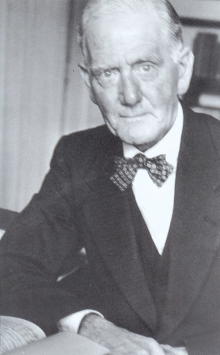
Death of John Francis Larchet, Composer & Teacher

John Francis Larchet, Irish composer and teacher, dies in Dublin on August 10, 1967.

Larchet is born on July 13, 1884, at Sandymount, Dublin, the son of John Edward Larchet, manager of a wine business, and his wife Isabella Emily (née Farmar). Educated at the Catholic University School in Leeson Street, Dublin, he subsequently commences study under Michele Esposito at the Royal Irish Academy of Music (RIAM) in Dublin, winning many prizes for composition, theory, harmony, and counterpoint from 1903 to 1912. As a student at Trinity College Dublin (TCD), he obtains his Bachelor of Music in 1915 and Doctor of Music in 1917 and comes to dominate the music profession in Dublin over the next forty years, moulding the composers, teachers, and conductors of the next generation, while developing an Irish school of music based on folk tradition but writing in the modern idiom. A senior professor at the RIAM by 1920, the following year he is appointed professor of music at University College Dublin (UCD), where he remains until 1958, successfully establishing music as a serious discipline within the university. He is director of music examinations for Irish secondary schools (1907–34) and succeeds in raising standards of teaching, particularly with regard to rectifying weakness in the teaching of the theory of music.

Along with Aloys Fleischmann and composer Frederick May, Larchet keeps discourse on music in the public domain during the 1930s and 1940s, frequently addressing the need for a national school of music and a system of music education that would raise standards of musical appreciation and nurture a school of Irish composers.

Appointed music director at the Abbey Theatre in 1907, he is closely associated with Lady Gregory and W. B. Yeats, establishing a tradition of music at the theatre that delights critics. A popular myth at the time is that there are some who leave the theatre during the acts and return to enjoy Larchet’s music during the intervals. Appointed musical adviser to the army in 1923, he introduces a new philharmonic pitch, and serves as president of the Dublin Grand Opera Society for many years.

A fellow of the RIAM, Larchet also conducts the Dublin Amateur Orchestra Society, is choir master of the Jesuit church in Gardiner Street, Dublin, and organises annual orchestral concerts at the Royal Dublin Society (RDS). He is also involved in preparing a report for the commission on vocational organisation on behalf of the Musical Association of Ireland. The products of his own creative endeavour are mostly orchestral and choral works including An Ardglass Boat Song, Pádraic the Fiddler, and Diarmuid’s Lament.

Perhaps the main challenge facing Larchet in the 1920–50 period is the divide between “colonial” and “native” which has characterised the history of music in Ireland. A gentle-mannered, kindly man who is acutely aware of the lack of a national policy for music, he is a persuasive advocate of the European aesthetic and his main aim is said to have been “a reconciliation between the cultural chauvinism of Ireland as an emergent nation state and the central value (artistic as well as educational) of music as a vital dynamic in Irish cultural affairs.”

Although it can be argued that Larchet is not possessed of a uniquely original voice, with his authority coming rather from his enormous workload and his essential contribution as a teacher, it is no exaggeration to claim that the majority of Irish composers who emerge in the decades after the 1940s are influenced by his guidance, including Frank Llewellyn Harrison, Frederick May, Joan Trimble and Brian Boydell.

In addition to receiving an honorary Doctor of Music from the National University of Ireland (NUI) in 1953, Larchet is made a Commendatore of the Italian Republic.

Larchet dies in Dublin on August 10, 1967. He is survived by his wife, Madeleine Moore, a well-known musician, and their two daughters and son, also musicians. His daughter, Sheila Larchet Cuthbert, is an Irish harpist and author. She publishes The Irish Harp Book: A Tutor and Companion (Dublin, 1975).

(From: “Larchet, John Francis” by Diarmaid Ferriter, Dictionary of Irish Biography, http://www.dib.ie, October 2009)

Leave a comment

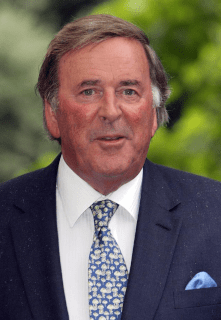
Birth of Terry Wogan, Irish-British Radio & Television Broadcaster

Sir Michael Terence Wogan KBE DL, Irish-British radio and television broadcaster who works for the BBC in the United Kingdom (UK) for most of his career, is born at Cleary’s Nursing Home, Elm Park, Limerick, County Limerick, on August 3, 1938. Between 1993 and his semi-retirement in December 2009, his BBC Radio 2 weekday breakfast programme Wake Up to Wogan regularly draws an estimated eight million listeners. He is believed at the time to be the most listened-to radio broadcaster in Europe.

Wogan is the elder of two children. He is the son of the manager of Leverett & Frye, a high-class grocery store in Limerick, and is educated at Crescent College, a Jesuit school, from the age of eight. He experiences a strongly religious upbringing, later commenting that he had been brainwashed into believing by the threat of going to hell. Despite this, he often expresses his fondness for the city of his birth, commenting on one occasion that “Limerick never left me, whatever it is, my identity is Limerick.”

At the age of 15, after his father is promoted to general manager, Wogan moves to Dublin with his family. While living there he attends Crescent College’s sister school, Belvedere College. He participates in amateur dramatics and discovers a love of rock and roll. After leaving Belvedere in 1956, he has a brief career in the banking profession, joining the Royal Bank of Ireland. Still in his twenties, he joins the national broadcaster of Ireland, Raidió Teilifís Éireann (RTÉ), as a newsreader and announcer, after seeing a newspaper advertisement inviting applicants.

Wogan conducts interviews and presents documentary features during his first two years at RTÉ, before moving to the light entertainment department as a disc jockey and host of TV quiz and variety shows such as Jackpot, a top-rated quiz show on RTÉ in the 1960s.

Wogan is a leading media personality in Ireland and Britain from the late 1960s, and is often referred to as a “national treasure.” In addition to his weekday radio show, he is known for his work on television, including the BBC One chat show Wogan, presenting Children in Need, the game show Blankety Blank and Come Dancing. He is the BBC’s commentator for the Eurovision Song Contest from 1971 to 2008 (radio in 1971, 1974–1977; television in 1973, 1978, 1980–2008) and the Contest’s host in 1998. From 2010 to 2015 he presents Weekend Wogan, a two-hour Sunday morning show on BBC Radio 2.

In 2005, Wogan acquires British citizenship in addition to his Irish nationality and is awarded a knighthood in the same year and is therefore entitled to use the title “Sir” in front of his name.

Wogan’s health declines after Christmas 2015. He does not present Children in Need in November 2015, citing back pain as the reason for his absence from the long-running annual show. One of his friends, Father Brian D’Arcy, visits him during January and notices he is seriously ill. He dies of cancer at the age of 77 on January 31, 2016 at his home.

British Prime Minister David Cameron says, “Britain has lost a huge talent.” President of Ireland Michael D. Higgins praises Wogan’s career and his frequent visits to his homeland. Taoiseach Enda Kenny and Tánaiste Joan Burton remember Wogan for his role in helping Anglo-Irish relations during the Troubles. D’Arcy speculates that a public funeral would be logistically difficult, as there would be too many people wanting to pay their respects.

After Wogan’s death and his private funeral a few weeks later, a public memorial service is held on September 27 the same year. This is held at Westminster Abbey and is opened by a recording of Wogan himself, and features a number of his celebrity friends making speeches, such as Chris Evans and Joanna Lumley. The service is broadcast live on BBC Radio 2.

On November 16, 2016, the BBC renames BBC Western House, home of BBC Radio 2, in his memory, to BBC Wogan House.


Leave a comment

Death of Thomas Francis Meagher

Thomas Francis Meagher, Irish nationalist and leader of the Young Irelanders in the Rebellion of 1848, drowns on July 1, 1867, after falling overboard from the steamboat G. A. Thompson into the Missouri River.

Meagher is born on August 3, 1823, at Waterford, County Waterford, in what is now the Granville Hotel on the Quay. He is educated at Roman Catholic boarding schools. When he is eleven, his family sends him to the Jesuits at Clongowes Wood College in County Kildare. It is at Clongowes that he develops his skill of oratory, becoming at age 15 the youngest medalist of the Debating Society. After six years, he leaves Ireland for the first time, to study in Lancashire, England, at Stonyhurst College, also a Jesuit institution. He returns to Ireland in 1843, with undecided plans for a career in the Austrian army, a tradition among a number of Irish families.

Meagher becomes a member of the Young Ireland Party in 1845 and in 1847 is one of the founders of the Irish Confederation, dedicated to Irish independence. In 1848 he is involved, along with William Smith O’Brien, in an abortive attempt to mount an insurrection against English rule. Arrested for high treason, he is condemned to death, but his sentence is commuted to life imprisonment in Van Diemen’s Land, now Tasmania.

Meagher escapes in 1852 and makes his way to the United States. After a speaking tour of U.S. cities, he settles in New York City, studies law and is admitted to the bar in 1855. He soon becomes a leader of the Irish in New York and, from 1856, edits the Irish News.

At the outbreak of the American Civil War, Meagher becomes a captain of New York volunteers and fights at the First Battle of Bull Run in July 1861. He then organizes the Irish Brigade, and in February 1862 is elevated to the rank of brigadier general. After his brigade is decimated at the Battle of Chancellorsville in May 1863, he resigns his commission, however in December he returns to command the military district of Etowah, with headquarters at Chattanooga, Tennessee.

At the close of the war, Meagher is appointed secretary of Montana Territory where, in the absence of a territorial governor, he serves as acting governor.

In the summer of 1867, Meagher travels to Fort Benton, Montana, to receive a shipment of guns and ammunition sent by General William Tecumseh Sherman for use by the Montana Militia. On the way to Fort Benton, the Missouri River terminus for steamboat travel, he falls ill and stops for six days to recuperate. When he reaches Fort Benton, he is reportedly still ill.

Sometime in the early evening of July 1, 1867, Meagher falls overboard from the steamboat G. A. Thompson, into the Missouri River. His body is never recovered. Some believe his death to be suspicious and many theories circulate about his death. Early theories included a claim that he was murdered by a Confederate soldier from the war, or by Native Americans. In 1913 a man claims to have carried out the murder of Meagher for the price of $8,000 but then recants. In the same vein, American journalist and novelist Timothy Egan, who publishes a biography of Meagher in 2016, claims Meagher may have been murdered by Montana political enemies or powerful and still active vigilantes. On the frontier men are quick to kill rather than adjudicate. A similar theory shown on Death Valley Days (1960) has him survive the assassination attempt because his aide had been mistakenly murdered when he accepted one of his trademark cigars, and Meagher uses his apparent death as leverage over his political opponents.


Leave a comment

Birth of Paul McGuinness, Former Manager of U2

Paul McGuinness, the founder of Principle Management Limited, a popular music act management company based in Dublin, is born on June 16, 1951, in Rinteln, Westphalia, Germany. He is the manager of the rock band U2 from 1978 to 2013.

McGuinness is born in a British military hospital at Rinteln where his father, Philip McGuinness, a native of Liverpool, is serving with the Royal Air Force. His mother, Sheila McGuinness (née Lyne), is a schoolteacher from County Kerry. There are three children in the family: Paul, Niall, and Katy.

McGuinness receives his early formal education in Ireland at the private Jesuit boarding school, Clongowes Wood College. From there he goes on to Trinity College Dublin, where he directs plays, edits the magazine T.C.D. Miscellany, and promotes gigs, but drops out before obtaining a degree.

Before becoming involved with U2, Guinness works as a film assistant director on productions such as John Boorman‘s Zardoz. For a time, he also manages folk-rock group Spud.

McGuinness first meets U2 at a Dublin gig on May 25, 1978, where they are supporting the Gamblers. Following this meeting, he becomes U2’s manager, having been introduced to the band by Bill Graham, a journalist with Hot Press magazine. His original agreement with the band is that the money is to be split equally five ways, though this is later changed.

McGuinness founds Principle Management Limited on March 29, 1984. He and Bill Whelan set up a music publishing company called McGuinness/Whelan Publishing in the late 1980s. Whelan later composes the music for the theatrical show Riverdance.

In 2002, McGuinness is presented with a Lifetime Achievement Award at the Meteor Music Awards at the Point Theatre in Dublin and U2 wins the best Irish Band Award.

Noted for his business acumen, McGuinness is responsible for U2 3D concert films, U2-branded iPods, sponsorship from BlackBerry and the first-ever concert streamed live on YouTube.

McGuinness is regarded as the fifth member of U2, although in an interview with The Irish Press in 1985, when asked if he is the fifth member of U2, he replies, “The fifth member of U2 is in Adam (Clayton)‘s trousers.” He is also regarded as one of the most successful managers in the music business.

McGuinness steps down as manager of U2 after 34 years on November 13, 2013, with Madonna‘s manager, Guy Oseary, succeeding him in 2014 when he sells Principle Management Limited to Live Nation.

McGuinness is a founding partner of TV3 (Ireland) and is one of the owners of Ardmore Film Studios. He becomes a member of the Arts Council of Ireland on January 1, 1988, having been appointed by Charles Haughey. He serves until February 2000 when he resigns.

McGuinness has been an advocate on behalf of artists, record labels, and music publishers. On January 28, 2008, in a speech at the Midem music industry convention in Cannes, he specifically accuses companies such as Apple, Google, Yahoo!, and Facebook of building “multi-billion dollar industries on the back of our content without paying for it.”

In 2015, McGuinness founds Primo Productions, a film and TV company. Primo produces three seasons of Riviera, a drama set in the South of France. He writes the “list of ingredients” for the show: “Rich people behaving badly in the sun, yachts, Maseratis, great clothes, beautiful women, art fraud, money laundering through the auction houses, Russians, English people, American, French. Murder, adultery.” Everyday life on the Côte d’Azur. His production partner is Kris Thykier of Archery Pictures. The show is originally commissioned by Anne Mensah of Sky Atlantic.

McGuinness marries Kathy Gilfillan in 1977. They meet while he is studying at Trinity. Gilfillan is director of The Lilliput Press. They have two children.


Leave a comment

The Banishment Act Goes into Effect

The Banishment Act or Bishops’ Banishment Act, which receives royal assent on September 25, 1697, requires most Catholic clergy to leave the kingdom by May 1, 1698, and bans Catholic clergy from entering the kingdom. The Act is never efficiently enforced.

The Banishment Act is a 1697 Act of the Parliament of Ireland which banishes all ordinaries and regular clergy of the Roman Catholic Church from Ireland. All “popish archbishops, bishops, vicars general, deans, jesuits, monks, friars, and other regular popish clergy” are required to be in one of several named ports awaiting a ship out of the country by May 1, 1698. Remaining or entering the country after this date would result in punishment as a first offence with twelve months imprisonment followed by expulsion. A second offence would constitute high treason.

The Act is one of the Penal Laws passed after the Williamite War to safeguard the Church of Ireland as the established church and from fears of Catholic clerical support for Jacobitism. It is foreshadowed by proclamations issued by the Dublin Castle administration in 1673 and 1678 with similar terms. The banishment is originally and most effectively applied to regular clergy, many of whom register under the Registration Act of 1704, as parish priests to be treated as secular clergy and avoid deportation. The ban on bishops may have been intended to prevent ordination of new priests, which, coupled with a ban on clerical immigration, would lead to their eventual extinction. Of the eight Catholic bishops in Ireland when the act is passed, two leave, one (John Sleyne)is arrested, and five go into hiding. The port authorities pay for the passage of 424 clerics who emigrate. Mary of Modena estimates that about 700 in total leave, of whom 400 settle in France. Priest hunters are active in subsequent decades. Maurice Donnellan, Bishop of Clonfert, is arrested in 1703 but rescued by an armed crowd.

The Act is gradually less stringently enforced as the eighteenth-century progresses. The Roman Catholic Relief Act 1782 provides that its provisions cannot apply to a priest who has registered and taken the oath of supremacy. The Act is explicitly repealed by the Statute Law Revision (Ireland) Act 1878.


Leave a comment

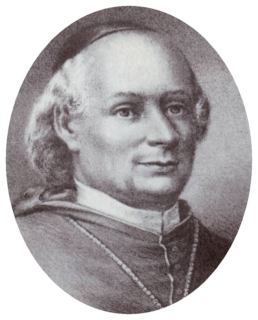
Giovanni Battista Rinuccini, Nuncio to Ireland, Returns to Rome

Giovanni Battista Rinuccini, an Italian Roman Catholic archbishop in the mid-seventeenth century, returns to Rome on February 23, 1649, after spending just over three years in Ireland supporting Catholics with arms, money, and diplomacy.

Rinuccini is born in Rome on September 15, 1592. He is educated by the Jesuits in Rome and studies law at the Universities of Bologna and Perugia. In due course, he is ordained a priest, having at the age of twenty-two obtained his doctor’s degree from the University of Pisa. He is named a camariere (chamberlain) by Pope Gregory XV and in 1625 becomes Archbishop of Fermo. In 1631 he carefully refuses an offer to be made Archbishop of Florence.

On September 15, 1644, a new pope, Pope Innocent X, is elected. He decides to step up the help for the Irish Catholic Confederates. He sends Rinuccini as nuncio to Ireland to replace the envoy Friar Pierfrancesco Scarampi, who had been sent to Ireland by his predecessor, Pope Urban VIII, in 1643.

Rinuccini departs France from Saint-Martin-de-Ré near La Rochelle on October 18, 1645, on the frigate San Pietro and arrives in Kenmare, County Kerry, on October 21, 1645, with a retinue of twenty-six Italians, several Irish officers, and the Confederation’s secretary, Richard Bellings. He proceeds to Kilkenny, the Confederate capital, where Richard Butler, 3rd Viscount Mountgarret, the president of the Confederation, receives him at the castle. He speaks Latin to Montgarret, but all the official business of the Confederates is done in English. He asserts in his discourse that the object of his mission is to sustain the King, but above all to help the Catholic people of Ireland in securing the free and public exercise of their religion, and the restoration of the churches and church property to the Catholic Church.

Rinuccini had sent ahead arms and ammunition: 1,000 braces of pistols, 4,000 cartridge belts, 2,000 swords, 500 muskets and 20,000 pounds of gunpowder. He arrives twelve days later with a further two thousand muskets and cartridge-belts, four thousand swords, four hundred braces of pistols, two thousand pike-heads, and twenty thousand pounds of gunpowder, fully equipped soldiers and sailors and 150,658 livres tournois to finance the Irish Catholic war effort. These supplies give him a huge input into the Confederate’s internal politics because he doles out the money and arms for specific military projects, rather than handing them over to the Confederate government, or Supreme Council.

Rinuccini hopes that by doing so he can influence the Confederates’ strategic policy away from making a deal with Charles I and the Royalists in the English Civil War and towards the foundation of an independent Catholic-ruled Ireland. In particular, he wants to ensure that churches and lands taken in the rebellion would remain in Catholic hands. This is consistent with what happened in Catholic-controlled areas during the Thirty Years’ War in Germany. His mission can be seen as part of the Counter-Reformation in Europe. He also has unrealistic hopes of using Ireland as a base to re-establish Catholicism in England. However, apart from some military successes such as the Battle of Benburb on June 5, 1646, the main result of his efforts is to aggravate the infighting between factions within the Confederates.

The Confederates’ Supreme Council is dominated by wealthy landed magnates, predominantly of “Old English” origin, who are anxious to come to a deal with the Stuart monarchy that will guarantee them their land ownership, full civil rights for Catholics, and toleration of Catholicism. They form the moderate faction, which is opposed by those within the Confederation, who want better terms, including self-government for Ireland, a reversal of the land confiscations of the plantations of Ireland and establishment of Catholicism as the state religion. A particularly sore point in the negotiations with the English Royalists is the insistence of some Irish Catholics on keeping in Catholic hands the churches taken in the war. Rinuccini accepts the assurances of the Supreme Council that such concerns will be addressed in the peace treaty negotiated with James Butler, 1st Duke of Ormond, negotiated in 1646, now known as the First Ormond Peace.

However, when the terms are published, they grant only the private practice of Catholicism. Alleging that he had been deliberately deceived, Rinuccini publicly backs the militant faction, which includes most of the Catholic clergy and some Irish military commanders such as Owen Roe O’Neill. On the other side there are the Franciscans Pierre Marchant, and later Raymond Caron. In 1646, when the Supreme Council tries to get the Ormond Peace ratified, Rinuccini excommunicates them and helps to get the Treaty voted down in the Confederate General Assembly. The Assembly has the members of the Supreme Council arrested for treason and elects a new Supreme Council.

However, the following year, the Confederates’ attempts to drive the remaining English (mainly Parliamentarian) armies from Ireland meets with disaster at the battles of Dungan’s Hill on August 8, 1647 and Knocknanuss on November 13, 1647. As a result, the chastened Confederates hastily conclude a new deal with the English Royalists to try to prevent a Parliamentarian conquest of Ireland in 1648. Although the terms of this second deal are better than those of the first one, Rinuccini again tries to overturn the treaty. However, on this occasion, the Catholic clergy are split on whether to accept the deal, as are the Confederate military commanders and the General Assembly. Ultimately, the treaty is accepted by the Confederacy, which then dissolves itself and joins a Royalist coalition. Rinuccini backs Owen Roe O’Neill, who used his Ulster army to fight against his former comrades who had accepted the deal. He tries in vain to repeat his success of 1646 by excommunicating those who support the peace. However, the Irish bishops are split on the issue and so his authority is diluted. Militarily, Owen Roe O’Neill is unable to reverse the political balance.

Despairing of the Catholic cause in Ireland, Rinnuccini leaves the country on February 23, 1649, embarking at Galway on the ship that had brought him to Ireland, the frigate San Pietro. In the same year, Oliver Cromwell leads a Parliamentarian re-conquest of the country, after which Catholicism is thoroughly repressed. Roman Catholic worship is banned, Irish Catholic-owned land is widely confiscated east of the River Shannon, and captured Catholic clergy are executed.

Rinuccini returns to Rome, where he writes an extensive account of his time in Ireland, the Commentarius Rinuccinanus. His account blames personal vainglory and tribal divisions for the Catholic disunity in Ireland. In particular, he blames the Old English for the eventual Catholic defeat. The Gaelic Irish, he writes, despite being less civilised, are more sincere Catholics.

Rinuccini returns to his diocese in Fermo in June 1650 and dies there on December 13, 1653.