seamus dubhghaill

Promoting Irish Culture and History from Little Rock, Arkansas, USA


Leave a comment

Birth of Edward Flanagan, Founder of Boys Town

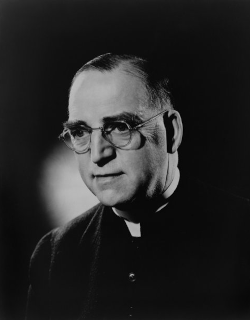
Edward Joseph Flanagan, Irish-born priest of the Catholic Church in the United States, is born on July 13, 1886, in the townland of Leabeg, County Roscommon, near the village of Ballymoe, County Galway. He founds the orphanage known as Boys Town located in Boys Town, Douglas County, Nebraska, which now also serves as a center for troubled youth.

Flanagan is born to John and Honoria Flanagan. He attends Summerhill College, Sligo.

In 1904, Flanagan emigrates to the United States and becomes a U.S. citizen in 1919. He attends Mount St. Mary’s University in Emmitsburg, Maryland, where he receives a Bachelor of Arts degree in 1906 and a Master of Arts degree in 1908. He studies at Saint Joseph’s Seminary in Dunwoodie, Yonkers, New York. He continues his studies in Italy and at the University of Innsbruck in Austria where he is ordained a priest on July 26, 1912. His first parish is in O’Neill, Nebraska, where from 1912 he serves as an assistant pastor at St. Patrick’s Catholic Church. He then moves to Omaha, Nebraska, to serve as an assistant pastor at St. Patrick’s Church and later at St. Philomena’s Church.

In 1917, Flanagan founds a home for homeless boys in Omaha. Bishop Jeremiah James Harty of the Diocese of Omaha has misgivings but endorses Flanagan’s experiment. Because the downtown facilities are inadequate, he establishes Boys Town, ten miles west of Omaha in 1921. Under his direction, Boys Town grows to be a large community with its own boy-mayor, schools, chapel, post office, cottages, gymnasium, and other facilities where boys between the ages of 10 and 16 can receive an education and learn a trade.

Boys Town, a 1938 film starring Spencer Tracy based on Flanagan’s life, wins Tracy an Academy Award for Best Actor for his performance. Mickey Rooney also stars as one of the residents. Tracy spends his entire Oscar acceptance speech talking about Flanagan. Without confirming it with Tracy, an overzealous MGM publicity representative announces incorrectly that Tracy is donating his Oscar to Flanagan. The Academy of Motion Picture Arts and Sciences hastily strikes another inscription so Tracy keeps his statuette and Boys Town gets one as well. A sequel also starring Tracy and Rooney, Men of Boys Town, is released in 1941.

Flanagan himself appears in a separate 1938 MGM short, The City of Little Men, promoting Boys Town and giving a tour of its facilities. The actor Stephen McNally plays Flanagan in a 1957 episode of the ABC religion anthology series, Crossroads.

Flanagan receives many awards for his work with the delinquent and homeless boys. Pope Pius XI names him a Domestic Prelate with the title Right Reverend Monsignor in 1937. He serves on several committees and boards dealing with the welfare of children and is the author of articles on child welfare. Internationally known, he travels to the Republic of Ireland in 1946, where he is appalled by the children’s institutions there, calling them “a national disgrace.” When his observations are published after returning to Omaha, instead of improving the horrid conditions, vicious attacks are leveled against him in the Irish print media and the Oireachtas. He is invited by General Douglas MacArthur to Japan and Korea in 1947 to advise on child welfare, as well as to Austria and Germany in 1948. While in Berlin, Germany, he dies of a heart attack on May 15, 1948. He is interred at Dowd Memorial Chapel of the Immaculate Conception Parish in Boys Town, Nebraska.

In 1986, the United States Postal Service issues a 4¢ Great Americans series postage stamp honoring Flanagan. He is a member of the Nebraska Hall of Fame.

On February 25, 2012, the Catholic Archdiocese of Omaha, Nebraska opens the canonization process of Flanagan. At a March 17, 2012 prayer service at Boys Town’s Immaculate Conception Church, he is given the title “Servant of God,” the first of three titles bestowed before canonization as a Catholic saint. The investigation is completed in June 2015 and the results forwarded to the Vatican. If the Vatican approves the local findings, Flanagan will be declared venerable. The next steps will be beatification and canonization.

There is a portrait statue dedicated to Fr. Edward J. Flanagan in Ballymoe, County Galway.


Leave a comment

Death of Irish Actor Ray McAnally

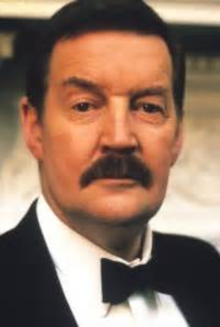
Ray McAnally, Irish actor and winner of four BAFTA awards in the late 1980s, dies in County Wicklow on June 15, 1989.

McAnally is born on March 30, 1926, in Buncrana, a seaside town located on the Inishowen peninsula of County Donegal. The son of a bank manager, he is educated at Saint Eunan’s College in Letterkenny where he writes, produces and stages a musical called “Madame Screwball” at the age of sixteen. He enters St. Patrick’s College, Maynooth at the age of 18 but leaves after a short time having decided that the priesthood is not his vocation. He joins the Abbey Theatre in 1947 where he meets and marries actress Ronnie Masterson.

The couple later forms Old Quay Productions and present an assortment of classic plays in the 1960s and 1970s. McAnally makes his theatre debut in 1962 with A Nice Bunch of Cheap Flowers and gives a well-received performance as George in Who’s Afraid of Virginia Woolf?, opposite Constance Cummings, at the Piccadilly Theatre.

On television he is a familiar face, often in glossy thriller series like television series The Avengers, Man in a Suitcase, and Strange Report. In 1968 he takes the title role in Spindoe, a series charting the return to power of an English gangster, Alec Spindoe, after a five-year prison term. This is a spin-off from another series, The Fellows (1967) in which McAnally had appeared in several episodes as the Spindoe character. He could render English accents very convincingly.

McAnally regularly acts in the Abbey Theatre and at Irish festivals, but in the last decade of life he achieves award-winning notice on TV and films. His impressive performance as Cardinal Altamirano in the film The Mission (1986) earns him Evening Standard and BAFTA awards. He earns a second BAFTA award for his role in the BBC’s A Perfect Spy (1987). In 1988 he wins the BAFTA for Best Actor for his performance in A Very British Coup, a role that also brings him a Jacob’s Award. In the last year of his life, he portrays the father of Christy Brown, played by Daniel Day-Lewis, in the Academy Award-winning film, My Left Foot (1989).

McAnally dies suddenly of a heart attack on June 15, 1989, at the age of 63, at his home in County Wicklow which he shares with Irish actress Britta Smith. He remains married to actress Ronnie Masterson until his death, although they reside in different homes. He receives a posthumous BAFTA award for Best Supporting Actor for his last film, My Left Foot, in 1990.

At the time of his death, McAnally is due to play “Bull McCabe” in Jim Sheridan‘s film The Field. The part eventually goes to Richard Harris who receives an Academy Award nomination for his performance. McAnally had also been cast in the lead role of First and Last, a drama about a man who walked from Land’s End to John o’ Groats. Filming is almost a third of the way done when he dies, but the whole play has to be re-filmed, with Joss Ackland taking the role instead.


Leave a comment

Birth of Patrick Campbell, 3rd Baron Glenavy

Patrick Gordon Campbell, 3rd Baron Glenavy, Irish journalist, humorist and television personality, is born in Dublin on June 6, 1913. He writes sixteen books, including Life in Thin Slices, Rough Husbandry, and How to Become a Scratch Golfer.

Campbell is the first son of Charles Campbell, 2nd Baron Glenavy, and Beatrice, Lady Glenavy (the artist Beatrice Elvery). He is educated Crawley’s preparatory school (St. Stephen’s Green, Dublin), Castle Park preparatory school (Dalkey), Rossall School (Lancashire), and, briefly, Pembroke College, Oxford. He leaves Oxford without completing his degree. In 1935, he is taken on by The Irish Times by R. M. “Bertie” Smyllie and reports on “Courts Day by Day.” During World War II, he serves as a chief petty officer in the Irish Marine Service. After the war he re-joins The Irish Times, using the pseudonym “Quidnunc,” and is given charge of the column “Irishman’s Diary.” He has a weekly column for the Irish edition of the Sunday Dispatch before working on the paper in London from 1947 to 1949. He is assistant editor of Lilliput from 1947 to 1953. His writings also appear in The Sunday Times.

Campbell’s books, mostly collections of humorous pieces that were originally published in newspapers and magazines, include A Long Drink of Cold Water (1949), A Short Trot with a Cultured Mind (1950), An Irishman’s Diary (1950), Life in Thin Slices (1951), Patrick Campbell’s Omnibus (1954), Come Here Till I Tell You (1960), Constantly in Pursuit (1962), How to Become a Scratch Golfer (1963), Brewing Up in the Basement (1963), Rough Husbandry (1965), The P-P-Penguin Patrick Campbell (1965), All Ways on Sundays (1966), A Bunch of New Roses (1967), an autobiography My Life and Easy Times (1967), The Coarse of Events (1968), Gullible Travels (1969), The High Speed Gasworks (1970), Waving All Excuses (1971), Patrick Campbell’s Golfing Book (1972), Fat Tuesday Tails (1972), 35 Years on the Job (1973), and The Campbell Companion (1987). Many of his books are illustrated by Quentin Blake.

Campbell is married three times, first in 1941 to Sylvia Alfreda Willoughby Lee, whom he divorces in 1947. He then marries Chery Louise Munro in 1947. The two divorce in 1966, the year he marries Vivienne Orme.

Campbell speaks with a stammer, but nevertheless delights television audiences with his wit, notably as a regular team captain on the long-running show Call My Bluff, opposite his longtime friend, Frank Muir. Muir notes that “When he was locked solid by a troublesome initial letter he would show his frustration by banging his knee and muttering ‘Come along! Come along!'” Some of his funniest short stories describe incidents involving his stammer. He stands six feet five inches tall, and several of his funniest pieces deal with the problems faced by a man of his build in merely finding shoes or clothes that fit him. He also makes regular appearances in That Was The Week That Was.

Campbell lives for many years in the South of France, commuting to England for his television work and continuing to produce his weekly column in The Sunday Times, which he drops in 1978.

In 1972 a period of illness leads to the discovery that Campbell had suffered an undetected heart attack some years previously and has a permanent heart weakness. An attack of viral pneumonia in 1980 exacerbates this condition, and he dies suddenly on November 9, 1980 while talking to a nurse at University College Hospital, London. He is succeeded as the 4th and last Lord Glenavy by his novelist brother Michael.


Leave a comment

Death of Peadar O’Donnell, Irish Republican & Socialist Activist

Peadar O’Donnell, Irish republican, socialist activist, politician, writer and one of the foremost radicals of 20th-century Ireland, dies in Dublin on May 13, 1986.

O’Donnell is born on February 22, 1893, in Meenmore, near Dungloe, County Donegal, youngest among six sons and three daughters of Biddy and James O’Donnell. He is greatly influenced by his upbringing in the Rosses, in northwest Donegal, one of the poorest and most remote parts of Ireland. His father, a popular local fiddler, earns a living through his smallholding, seasonal labouring in Scotland, and winter work in a local corn mill. His mother, who comes from a radical labour and nationalist political background, works in a local cooperative store. He attends Rampart national school and Roshine national school, near Burtonport, where he is a monitor for four years. In 1911 he wins a scholarship to attend St. Patrick’s College in Drumcondra, Dublin, and returns in 1913 to the Rosses, where he spends two years teaching on the islands of Inishfree. In 1915 he is appointed head of Derryhenny national school, near Dungloe, and the following year becomes principal of a national school on the island of Arranmore, where he begins to write.

O’Donnell had long been concerned by the poor conditions of the local ‘tatie-hokers’ (potato pickers) who migrate annually to Scotland. In the summer of 1918, he travels there to help organise the Scottish Farm Servants’ Union. While there he is influenced by left-wing radicals such as Willie Gallacher, later a communist Member of Parliament (MP), and Emanuel ‘Manny’ Shinwell, later Baron Shinwell. In September 1918, against a background of rising labour militancy, he leaves teaching to become a full-time organiser for the Irish Transport and General Workers’ Union (ITGWU) in the west Ulster area. The following year he organises one of Ireland’s first “soviets” when the attendants and nurses of the Monaghan District Lunatic Asylum occupy the grounds and appoint O’Donnell as governor until their demands are met.

In early 1919 O’Donnell joins the Irish Republican Army (IRA) in Monaghan, resigning from the ITGWU for full-time IRA service in late 1920. He leads the 2nd Battalion, Donegal IRA, from the summer of 1920. In December 1920 he goes “on the run” and leads a flying column in west Donegal until May 1921, when he is wounded. Regarded as insubordinate and militarily inexperienced, he is unpopular among the other senior officers of the 1st Northern Division. He, in turn, is disappointed by the lack of social radicalism among the nationalist leadership. He opposes the Anglo-Irish Treaty, is placed in command of the minority anti-treaty 1st Northern Division and is a member of the IRA executive that occupies the Four Courts in Dublin in defiance of the provisional government.

Arrested in June 1922, O’Donnell shares a prison cell with Liam Mellows and influences his radical “Notes from Mountjoy,” an important document for subsequent left-wing republicans. He spends the next two years in various prisons and internment camps. His execution is widely expected to follow those of December 8, 1922. In August 1923, he is elected as a Sinn Féin Teachta Dála (TD) for Donegal in the general election called after the end of the Irish Civil War. He goes on hunger strike for forty-one days in late 1923 and succeeds in escaping from the Curragh in March 1924. In June 1924, while on the run, he marries Lile O’Donel, a wealthy Cumann na mBan activist who had smuggled communications for republican prisoners. O’Donel, a radical and member of the Communist Party, is the daughter of Ignatius O’Donel, a prominent landowner from Mayo. They have no children but raise their nephew, Peadar Joe, as their own son after the death in New York of O’Donnell’s brother Joe.

O’Donnell begins writing seriously while in jail and remains a prolific writer, journalist, and editor until the 1960s. His first novel, Storm, set in the Irish War of Independence, is published in 1925. One of his most highly regarded books, Islanders, is published in 1928. Adrigoole, like Islanders a story of poverty and starvation in rural Ireland, is published the following year. The Knife (1930) and On the Edge of the Stream (1934) soon follow. The most significant of his later novels is probably The Big Windows (1954). Foremost among his qualities as a writer is his empathy for the people, life, and landscape of rural Ireland. But his novels have been criticised for their slow pace, excessive detail, and didactic nature. He claims his writing is incidental to his political activism. His trilogy of autobiographical non-fiction, The Gates flew Open (1932), Salud! An Irishman in Spain (1936), and There Will Be Another Day (1963), which respectively concern the Irish Civil War, his activism during the Spanish Civil War, and his role in the land annuities agitation, remain highly regarded. His other important literary achievement is with The Bell, an innovative literary and political magazine which plays a useful dissenting role in an insular and conservative period. He founds The Bell with the writer Seán Ó Faoláin in 1940 and edits it from 1946 until it ceases publication in 1954.

O’Donnell exercises an influential role in the interwar IRA, particularly through his editorship of An Phoblacht (1926–29), which he attempts to divert from militarism to socialist agitation. His ultimate aim is for a thirty-two-county socialist republic. His most successful campaign is organising small farmers against the payment of land annuities to the government in the late 1920s and early 1930s. This campaign is later adopted by Fianna Fáil and contributes to their electoral success in 1932. He is less successful in radicalising the IRA. After the failure of Saor Éire, a left-wing IRA front which provokes clerical and popular hostility against the IRA, increasing tensions between the IRA’s left-wing and the leadership lead O’Donnell, along with Frank Ryan and George Gilmore, to split from the IRA to establish the short-lived Republican Congress in 1934.

Although O’Donnell claims he was never a Communist Party member, he plays a central role in forging links between republicans and the revolutionary left both in Ireland and internationally and invariably supports the communist party line at critical junctures. After the failure of Republican Congress, he takes up the cause of the Spanish republic. His championing of unpopular causes such as communism and Spain entail a good deal of frustration. He is physically attacked at political meetings and in 1932, despite having never visited the Soviet Union, loses a high-profile libel action against the Dominican Irish Rosary, which claim he had studied in Moscow‘s Lenin College. He is banned from entering the United States for several decades, although he maintains: “My relations with all the great powers continue to be friendly.”

O’Donnell continues to support radical campaigns until his death. He is an outspoken advocate of Irish emigrants. He is prominent in the Irish Campaign for Nuclear Disarmament and serves as its president in the early 1960s. He is a leading protester against the Vietnam War and a supporter of African anti-colonial movements such as that against apartheid. In later years he is involved in the “Save the west” campaign, highlighting the problems of the west of Ireland.

After several months of ill-health following a heart attack, O’Donnell dies in Dublin, aged 93, on May 13, 1986. He leaves instructions that there are to be “no priests, no politicians and no pomp” at his funeral, and those wishes are granted. He is cremated in Glasnevin Cemetery and his ashes are buried at his wife’s home in Swinford, County Mayo. Although he once remarked that every cause he fought for was a failure, he is now regarded as one of the most influential socialist republican theorists and an important voice of dissent in twentieth-century Ireland.

(From: “O’Donnell, Peadar” by Fearghal McGarry, Dictionary of Irish Biography, http://www.dib.ie)


Leave a comment

Death of Cearbhall Ó Dálaigh, the Fifth President of Ireland

Cearbhall Ó Dálaigh, Fianna Fáil politician, judge and barrister who serves as the fifth president of Ireland from December 1974 to October 1976, dies on March 21, 1978, in Sneem, County Kerry. He serves as Attorney General of Ireland from 1946 to 1948 and from 1951 to 1953, a Judge of the Supreme Court of Ireland from 1953 to 1973, Chief Justice of Ireland from 1961 to 1973 and a Judge of the European Court of Justice from 1973 to 1974.

Ó Dálaigh, one of four children, is born on February 12, 1911, in Bray, County Wicklow. His father, Richard O’Daly, is a fishmonger with little interest in politics. His mother is Una Thornton. His birth name is registered in English as Carroll O’Daly, which he uses during his legal career, and which is recorded by some publications.

Ó Dálaigh has an elder brother, Aonghus, and two younger sisters, Úna and Nuala. He goes to Saint Cronan’s Boys’ National School in Bray, and later to Synge Street CBS in Dublin. While attending University College Dublin (UCD), he becomes auditor of An Cumann Gaelach and of the Literary and Historical Society. He also becomes Irish language editor of The Irish Press.

Ó Dálaigh is a committed Fianna Fáil supporter who serves on the party’s National Executive in the 1930s. He becomes Ireland’s youngest Attorney General in 1946, under Taoiseach Éamon de Valera, serving until 1948. Unsuccessful in Dáil and Seanad elections in 1948 and 1951, he is re-appointed as Attorney General of Ireland in 1951. In 1953, he is nominated as the youngest-ever member of the Supreme Court by his mentor, de Valera. Less than a decade later, he becomes Chief Justice of Ireland, on the nomination of Taoiseach Seán Lemass. He is a keen actor in his early years and becomes a close friend of actor Cyril Cusack. It is commonly stated that Ó Dálaigh and Cusack picketed the Dublin launch of Disney‘s Darby O’Gill and the Little People in 1959, for what they felt was the film’s stereotyping of Irish people. However, there is no known contemporary reference to this having occurred.

Ó Dálaigh is an opponent of the United States bombing of North Vietnam.

In 1972, Taoiseach Jack Lynch suggests to the opposition parties that they agree to nominate Ó Dálaigh to become President of Ireland when President de Valera’s second term ends in June of the following year. Fine Gael, confident that its prospective candidate, Tom O’Higgins, will win the 1973 presidential election, having almost defeated de Valera in 1966, turn down the offer. Fianna Fáil’s Erskine H. Childers goes on to win the election that follows.

When Ireland joins the European Economic Community (EEC), Lynch appoints Ó Dálaigh as Ireland’s judge on the European Court of Justice. When President Childers dies suddenly in 1974, all parties agree to nominate Ó Dálaigh to replace him.

Ó Dálaigh’s tenure as president proves to be contentious. While popular with Irish language speakers and with artists, and respected by many republicans, he has a strained relationship with the Government of the 20th Dáil, particularly with Minister Conor Cruise O’Brien and Taoiseach Liam Cosgrave.

Ó Dálaigh’s decision in 1976 to exercise his power to refer a bill to the Supreme Court to test its constitutionality brings him into conflict with the Fine Gael-Labour National Coalition. Following the assassination of the British Ambassador to Ireland, Christopher Ewart-Biggs, by the Provisional Irish Republican Army (IRA), on July 23, 1976, the government announces its intention to introduce legislation extending the maximum period of detention without charge from two to seven days.

Ó Dálaigh refers the resulting bill, the Emergency Powers Bill, to the Supreme Court. When the court rules that the bill is constitutional, he signs the bill into law on October 16, 1976. On the same day, an IRA bomb in Mountmellick, County Laois, kills Michael Clerkin, a member of the Garda Síochána, the country’s police force. Ó Dálaigh’s actions are seen by government ministers to have contributed to the killing of this Garda. On the following day, Minister for Defence Paddy Donegan, visiting a barracks in Mullingar, County Westmeath, to open a canteen, attacks the President for sending the bill to the Supreme Court, calling him a “thundering disgrace.”

Ó Dálaigh’s private papers show that he considered the relationship between the President (as Commander-in-Chief of the Defence Forces) and the Minister for Defence had been “irrevocably broken” by the comments of the Minister in front of the army Chief of Staff and other high-ranking officers. Donegan offers his resignation, but Taoiseach Liam Cosgrave refuses to accept it. This proves the last straw for Ó Dálaigh, who believes that Cosgrave had additionally failed to meet his constitutional obligation to regularly brief the President. He resigns from the presidency on October 22, 1976, “to protect the dignity and independence of the presidency as an institution.” He is succeeded as President of Ireland by Patrick Hillery.

Ó Dálaigh dies of a heart attack on March 21, 1978, less than two years after resigning the presidency. He is buried in Sneem, County Kerry.


Leave a comment

Birth of Pat Eddery, Flat Racing Jockey & Trainer

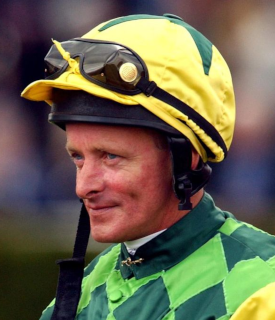
Patrick (Pat) James John Eddery, flat racing jockey and trainer, is born on March 18, 1952, in Newbridge, County Kildare, near the Curragh Racecourse. He is the fifth of twelve children of Jimmy Eddery, a jockey who is Irish Flat Champion in 1954 and 1955, and who rides Panaslipper to win the Irish Derby in 1955. His mother, Josephine, is the daughter of Jack Moylan, also a jockey. His brother Paul goes on to become a successful jockey also. He initially attends the Patrician Brothers’ Primary School in Newbridge, later enrolling in Oatlands Primary School in Stillorgan when the family moves to Blackrock, Dublin.

Devoted from his earliest years to riding horses, Eddery has little interest in school. He begins his career on his fourteenth birthday as an apprentice jockey in Ireland (1966–67) with the stable of Seamus McGrath. In 1967, he moves to England where he is apprenticed to Frenchie Nicholson until 1972. After riding for more than a season without success, he records his first win on April 24, 1969, at Epsom Downs Racecourse on a horse named Alvaro, trained by Major Michael Pope. Alvaro provides Eddery with six wins in succession during the 1969 season.

Eddery finishes the 1971 season as champion apprentice with seventy-one winners, and in 1972 has his first Derby ride, the 50–1 chance Pentland Firth, who finishes third behind Roberto and Rheingold. In 1972 he also has his first victory in a Group 1 race via Erimo Hawk, when awarded the Ascot Gold Cup following the disqualification of Rock Roi for interference.

Eddery rides for the Newmarket trainer Geoffrey Barling in 1972 before becoming the stable jockey for leading trainer, Peter Walwyn, later that year. For Walwyn, he wins his first two English classic races on Polygamy (Oaks) and Grundy (Derby) and is Champion Jockey in four consecutive seasons from 1974 to 1977. While under retainer with Walwyn, he clinches the first of these titles when just twenty-two years old, a record in the post-war era. In 1975, after winning the Irish Derby on Grundy, he rides the horse to a hard-fought victory over Bustino in the King George VI and Queen Elizabeth Stakes at Ascot in what is described by many at the time as “the race of the century.”

Eddery remains as stable jockey to Walwyn for eight years, before joining the Ballydoyle racehorse training facility of legendary Irish trainer Vincent O’Brien, for whom he rides a string of big-race winners, including the brilliant Golden Fleece, owned by Robert Sangster, in the 1982 Epsom Derby.

The O’Brien–Eddery combination experiences controversial defeat in the 1984 Epsom Derby when Eddery rides then unbeaten 2000 Guineas Stakes-winner El Gran Senor and seems to be cruising to victory in the final furlong, only to be caught on the line and beaten by a short head by Secreto, trained by O’Brien’s son David. He later admits that he should have won the race, but when the horses in front of him fell away early in the straight he was left in front too soon and was unable to repel Secreto’s late challenge. He later wins the Irish Derby on El Gran Senor, beating the subsequent Prix de L’Arc de Triomphe winner, Rainbow Quest. During 1984, he also partners the O’Brien-trained and subsequent outstanding stallion, Sadler’s Wells, to two of his three Group 1 successes.

The 1980s represent the pinnacle of Eddery’s career and include victories in the 1983 Arlington Million in Chicago on Tolomeo, the 1985 Breeders’ Cup Turf at Aqueduct Racetrack, New York, on Pebbles, and the 1986 Japan Cup on Jupiter Island, the latter two horses being trained by Clive Brittain. He also has four victories in the Prix de l’Arc de Triomphe: on Detroit in 1980, Rainbow Quest in 1985, the great Dancing Brave, on whom he also wins the King George VI and Queen Elizabeth Stakes in 1986, and Trempolino in 1987. The field for the 1986 ‘Arc’ is extremely strong and Dancing Brave’s late winning run a thrilling spectacle. The race is voted “the greatest ever horserace” in a poll conducted by the Racing Post in 2022.

Rainbow Quest and Dancing Brave are both owned by the Saudi Prince Khalid Abdullah, whose Juddmonte Farms is by then one of the world’s largest racing and breeding organisations. In 1987, Eddery becomes Abdullah’s retained jockey. Highlights of their association, which lasts until 1994, include Quest for Fame winning the 1990 Epsom Derby, and Zafonic, winner of the 1993 2000 Guineas Stakes.

Meanwhile, Eddery continues to win the jockeys’ championships, a task made easier by being retained by Juddmonte in England rather than commuting regularly to Ireland to ride for Vincent O’Brien. His highest seasonal total of wins is 209 in 1990, which is the first time a jockey has exceeded 200 since Sir Gordon Richards in 1952. His epic battle for the championship in 1987 with American Steve Cauthen is particularly intense, with Cauthen securing the title with 197 winners and Eddery coming close at 195. The title would have been shared at 196 winners apiece but for a successful objection by the rider of the third horse to the winner after the last definitive race between Eddery and Cauthen when they finished first and second, respectively. In 1988, Eddery retains the title with 183 winners from just over 480 rides, a remarkable strike rate of over thirty-eight per cent. He wins the championship for the eleventh and final time in 1996. His final classic win is on Silver Patriarch in the St. Leger Stakes of 1997.

Eddery rides major winners outside Europe and the United States, including Jupiter Island in the 1986 Japan Cup, and French Glory in the Canadian International Stakes. He teams up with Lester Piggott, Joe Mercer and French jockeys Freddie Head and Yves Saint-Martin to take part in a series of challenge races under the Ritz Club Challenge Trophy at Singapore and other Asian cities starting in 1983 for several years. His overall total of winners in the UK, Ireland, mainland Europe and overseas, exceeds 6,000. Although fiercely competitive on the racetrack, he is popular with fellow jockeys, trainers, owners and racegoers, who respond to his good-natured personality, courtesy and sense of humour.

Eddery has a distinctive riding style that is not classically elegant but undoubtedly effective and strong in a finish. He rides a number of truly outstanding racehorses including Dancing Brave, El Gran Senor and Pebbles, but maintains that the brilliant and undefeated Derby winner, Golden Fleece, is the greatest of all the horses he partnered throughout his career.

Eddery continues to ride into his fifties, finally retiring in 2003. He is appointed an honorary Order of the British Empire (OBE) in 2005. He sets up an owners’ syndication business and takes out a training licence but has difficulty adjusting to life out of the saddle and becomes increasingly dependent upon alcohol. His training career meets with limited success, though he does train Hearts of Fire to win the Group 1 Gran Criterium of Italy in 2009.

Eddery marries Carolyn Mercer in November 1978. She is the daughter of flat jockey Manny Mercer, niece of jockey Joe Mercer, and granddaughter of jockey Harry Wragg. They have two daughters, Nichola and Natasha, and a son Harry. He has a son from an extramarital relationship, Toby Atkinson, who also becomes a jockey. The marriage with Carolyn breaks down in 2008 and the couple divorces in 2009.

Shortly after his marriage breaks down, Eddery begins living with Emma Owen, a former stable employee, at his 100-acre Musk Hill stud farm near Aylesbury, Buckinghamshire. He becomes progressively estranged from his children due to his continued alcoholism.

Eddery dies of a heart attack at the age of 63 on November 10, 2015. He leaves his £1.3 million estate to Emma Owen. His funeral takes place on December 8, 2015, and his remains are cremated at Oxford. Throughout his career, Eddery rode the winners of 4,632 British flat races, a figure exceeded only by Sir Gordon Richards and was UK Champion Jockey on eleven occasions and Irish Champion Jockey once. A plaque in his honour is unveiled by his children Nichola, Natasha and Harry at Ascot Racecourse in 2016, where he had been champion jockey at the Royal meeting on six occasions. He is inducted into the Qipco British Champions Series Hall of Fame in 2021, the second jockey after Lester Piggott to be so honoured.

(From: “Eddery, Patrick (Pat) James John” by P. Gerry McKenna, Dictionary of Irish Biography, http://www.dib.ie, September 2022)


Leave a comment

Death of Frank O’Connor, Poet & Novelist

Frank O’Connor, Irish writer of over 150 works and best known for his short stories and memoirs, dies of a heart attack in Dublin on March 10, 1966. The Frank O’Connor International Short Story Award is named in his honour.

O’Connor is born Michael Francis O’Donovan in Cork, County Cork, on September 17, 1903. The only child of Minnie (née O’Connor) and Michael O’Donovan, he attends Saint Patrick’s School on Gardiner’s Hill and North Monastery CBS. His early life is marked by his father’s alcoholism, debt, and ill-treatment of his mother. His childhood is shaped in part by his mother, who supplies much of the family’s income by cleaning houses, because his father is unable to keep steady employment due to his drunkenness. He adores his mother and is bitterly resentful of his father. In his memoirs, he recalls his childhood as “those terrible years,” and admits that he has never been able to forgive his father for his abuse of himself and his mother. When his mother is seventy, O’Connor is horrified to learn from his own doctor that she has suffered for years from chronic appendicitis, which she has endured with great stoicism, as she has never had the time nor the money to see a doctor.

In 1918 O’Connor joins the First Brigade of the Irish Republican Army (IRA) and serves in combat during the Irish War of Independence. He opposes the Anglo-Irish Treaty of 1921 and joins the Anti-Treaty IRA during the Irish Civil War, working in a small propaganda unit in Cork city. He is one of twelve thousand Anti-Treaty combatants who are interned by the government of the new Irish Free State. Between 1922 and 1923 he is imprisoned in Cork City Gaol and in Gormanston, County Meath.

Following his release, O’Connor takes various positions including that of teacher of the Irish language, theatre director, and librarian. He begins to move in literary circles and is befriended by George William Russell (Æ), through whom he comes to know most of the well-known Irish writers of the day, including William Butler Yeats, Lennox Robinson, F. R. Higgins and Lady Gregory. In his memoirs, he pays tribute to both Yeats and Russell for the help and encouragement they gave him.

In 1935, O’Connor becomes a member of the board of directors of the Abbey Theatre in Dublin, founded by Yeats and other members of the Irish National Theatre Society. In 1937, he becomes managing director of the Abbey. Following Yeats’s death in 1939, O’Connor’s long-standing conflict with other board members comes to a head and he leaves the Abbey later that year. In 1950, he accepts invitations to teach in the United States, where many of his short stories have been published in The New Yorker and have won great acclaim. He spends much of the 1950s in the United States, although it is always his intention to return eventually to Ireland.

From the 1930s to the 1960s O’Connor is a prolific writer of short stories, poems, plays, and novellas. His work as an Irish teacher complements his plethora of translations into English of Irish poetry, including his initially banned translation of Brian Merriman‘s Cúirt an Mheán Oíche (The Midnight Court). Many of his writings are based on his own life experiences – notably his well-known The Man of the House in which he reveals childhood details concerning his early life in County Cork. The Sullivan family in this short story, like his own boyhood family, is lacking a proper father figure.

O’Connor’s early years are recounted in An Only Child, a memoir published in 1961 which has the immediacy of a precocious diary. He continues his autobiography through his time with the Abbey Theatre in Dublin in his book My Father’s Son, which is published posthumously in 1968. It contains valuable character sketches of many of the leading Irish literary figures of the 1930s, in particular Yeats and Æ.

Frank O’Connor has a stroke while teaching at Stanford University in 1961, and he later dies from a heart attack in Dublin on March 10, 1966. He is buried in Deans Grange Cemetery two days later.


6 Comments

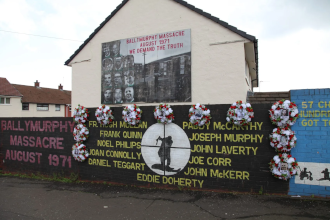
The 1973 Old Bailey Bombing

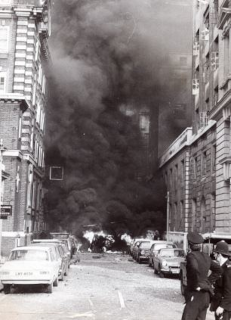
The 1973 Old Bailey bombing, a car bomb attack carried out by the Provisional Irish Republican Army (IRA) and dubbed as Bloody Thursday by newspapers in Britain, takes place outside the Central Criminal Court of England and Wales, commonly referred to as the Old Bailey, in London on March 8, 1973. This is the Provisional IRA’s first major attack in England since the Troubles began in the late 1960s. The unit also explodes a second bomb outside the Ministry of Agriculture building near Whitehall at around the same time the bomb at the Old Bailey explodes.

The Troubles had been ongoing in Northern Ireland and to a lesser extent in the Republic of Ireland since the late 1960s. Rioting, protests, gun battles, sniper attacks, bombings and punishment beatings became part of everyday life in many places in Northern Ireland, especially in the poorer working-class areas of Belfast and Derry. These events and others help to heighten sectarianism and boost recruitment into Irish republican and Ulster loyalist paramilitary groups and the security forces, mainly the newly created Ulster Defence Regiment (UDR).

England had been relatively untouched by the violence up until the beginning of 1973, but the IRA Army Council draws up plans for a bombing campaign to take place in England some time early in 1973. In the late 1960s and early 1970s, loyalist paramilitaries had bombed Dublin and other parts of the Republic of Ireland a number of times before the IRA began its bombing campaign in England. Following the Dublin bombings in late 1972 and in January 1973 carried out by Loyalists which killed three people and injured over 150, the media attention these bombings received helped the IRA decide to take its campaign to Britain in return. The arrest of top IRA personnel in both the Republic and Northern Ireland like Máire Drumm, Seán Mac Stíofáin, Ruairí Ó Brádaigh and Martin McGuinness in late 1972 help to convince the IRA to bomb England to take the heat off of the IRA in Ireland.

The IRA selects the volunteers who constitute the Active Service Unit (ASU) for the England bombing operation, which is scheduled to take place on March 8, 1973, the same day that a border poll, boycotted by Nationalists and Roman Catholics, is being held in Belfast. Volunteers from all three of the IRA’s Belfast Brigade Battalions are selected for the bombing mission. The team includes Gerry Kelly (19), Robert “Roy” Walsh (24), an expert bomb maker from Belfast, Hugh Feeney, a Belfast-born IRA volunteer and explosives expert, and two sisters, Marian (19) and Dolours Price (22) from Belfast and are from a staunchly Republican family, along with five other lesser-known volunteers from Belfast: Martin Brady (22), William Armstrong (29), Paul Holmes (19), William McLarnon (19), and Roisin McNearney (18).

Several days before the bombing, the leaders of the IRA ASU, which includes sisters Marian and Dolours Price, go to London and pick out four targets: the Old Bailey, the Ministry of Agriculture, an army recruitment office near Whitehall and New Scotland Yard. They then report back to their Officer Commanding (OC) in Belfast, and the IRA Army Council gives the go ahead. The bombs are made in Ireland and transported to London via ferry, according to Marian Price.

The Royal Ulster Constabulary (RUC) warns the British that the ASU is traveling to England, but are unable to provide specifics as to the target.

The drivers and the volunteers who are to prime the bombs wake up at 6:00 a.m. and drive the car bombs to their various targets. Gerry Kelly and Roy Walsh drive their car bomb to the Old Bailey. It is planned that by the time the bombs go off around 3:00 p.m., the ASU will be back in Ireland. The bomb at New Scotland Yard is found at 8:30 a.m. by a policeman who notices a discrepancy in the licence plate. The bomb team starts lifting out 5-pound (2.3 kg) bags of explosives and separates them, so that if the bomb does go off, the force of the explosion will be greatly reduced. The bomb squad eventually finds the detonating cord leads, which run under the front passenger seat of the car. Peter Gurney, a senior member of New Scotland Yard, cuts the detonator cord leads, defusing the bomb.

However, at the Old Bailey the bomb explodes, injuring many and causing extensive damage. Scotland Yard states it had warned the City of London police at 2:01 p.m. to search near the Old Bailey for a green Ford Cortina. The car is not located until 2:35 p.m. and explodes at 2:49 p.m. while police are evacuating the area. Several more people are injured by the car bomb near the Ministry of Agriculture, which brings the total number injured to over two hundred. A British man, Frederick Milton (60), dies of a heart attack. Dolours Price writes in her memoir, “There were warnings phoned in but people had stood about, curious to see… If people ignored the warnings and stood around gawking, they were stupid. The numbers of injured came about through curiosity and stupidity.” The ASU is caught trying to leave the country at Heathrow Airport prior to the explosions, as the police had been forewarned about the bombings and are checking all passengers to Belfast and Dublin. All ten give false names that do not match their documents and they are detained. The IRA Volunteer who gave a warning about the bombs an hour before they exploded is the only one not captured.

The IRA volunteers have to be tried at Winchester Crown court in Winchester Castle as the Old Bailey is wrecked by the car bomb. The trial takes ten weeks and is set amid extremely strict security. William McLarnon pleads guilty to all charges on the first day of the trial. On November 14, 1973, a jury convicts six men and two women of the bombings. The jury acquits Roisin McNearney in exchange for information and she is given a new identity. As her verdict is handed down, the other defendants begin to hum the “Dead March” from Saul, and one throws a coin at her, shouting, “Take your blood money with you” as she leaves the dock in tears. Six of the nine people convicted admit to Provisional IRA membership.

The judge sentences the eight to life imprisonment for the bombings and 20 years for conspiracy, while William McLarnon, whose family was forced out of their home in August 1969, is sentenced to 15 years. When his sentence is read he shouts, “Up The Provisional IRA.” As the eight are led to the cells below the court, several give raised fist salutes to relatives and friends in the public gallery. The Price sisters immediately go on hunger strike, soon followed by Feeney and Kelly, for the right not to do prison work and to be repatriated to a jail in Ireland. The bombers on hunger strike are eventually moved to jails in Ireland as part of the 1975 IRA truce agreed with the British. In 1983, Kelly escapes from Maze Prison and becomes part of an IRA ASU in the Netherlands. He is recaptured three years later by the Dutch authorities and extradited.

The Old Bailey bomb is the beginning of a sustained bombing campaign in England. The next major bombing by the IRA in England is the King’s Cross station and Euston station bombings which injured 13 people and do widespread damage. Another significant attack that year is the 1973 Westminster bombing which injures 60 people. Two more people die in England from IRA bombings in 1973, bringing the total to three for the year in that part of United Kingdom. The next year, 1974, is the bloodiest year of the Troubles outside of Northern Ireland with over 70 people being killed in the Republic of Ireland and England combined. Thirty-four are killed in the Dublin and Monaghan bombings, 21 from the Birmingham pub bombings, 12 from the M62 coach bombing, and several people are killed by the IRA’s Balcombe Street Gang.

One of the Old Bailey bombers, Marian Price, explains the IRA’s reasoning for bombing England. “It doesn’t seem to matter if it’s Irish people dying.” So if the armed struggle was to succeed then it was necessary to “bring it to the heart of the British Establishment.” Hence symbolic targets such as the Old Bailey “were carefully chosen.”


Leave a comment

Birth of Cecil King, Painter & Collector

Cecil King, painter and collector, is born on February 22, 1921, at Rathdrum, County Wicklow.

King is the son of Henry King, businessman, of Rathdrum, and Susan King (née Crowe). He is educated at the Church of Ireland Ranelagh School, Athlone, and at Mountjoy School, Clontarf, Dublin (1936–39). Subsequently he joins the printing firm of W. & S. McGowan in Dundalk, where he goes on to become a director. During the 1940s his interest in amateur drama leads him to take classes at the Gaiety School of Acting in Dublin, where his fellow students include Milo O’Shea and Eamonn Andrews. Around this time, he is also involved in An Óige (the Irish Youth Hostel Association), in which he serves as honorary national secretary and honorary treasurer. This involvement leads him to travel extensively from the late 1940s around Europe, where he visits many major art museums and galleries.

King begins to acquire works of art, by both European and Irish artists, and by the mid-1950s he has amassed one of the most important collections of modern art in Ireland. Around 1954 he himself begins to paint, under the guidance of Barbara Warren and the English artist Neville Johnson. In his early work he focuses on urban scenes, often based on the area of Ringsend, Dublin, where he uses subdued tones to produce poetic images of a sombre mood. Even here his interest in the formal qualities of painting – such as the flatness of the picture surface and the juxtaposition of areas of colour on it, which becomes a defining feature of his art – is evident. In 1964 he leaves his successful business career behind in order to devote himself entirely to art, a bold move considering the limited audience for modern art that exists in Ireland at the time. In his own words he recalls how “Painting was what I wanted to do, I realised I didn’t need a car. I could do without an awful lot of things.” (Sunday Independent, November 7, 1982)

By this time, King is working in a fully abstract style. However, he still draws his inspiration from the external world, particularly the milieu of the circus. A painting such as Trapeze (1976; Allied Irish Bank collection) shows how he responds to acrobatic performance, not in any literal or figurative sense, but to the tensions and balances inherent within it. The overall effect is to convey to the viewer the essence of anticipation of the performance. Indeed, his works can create an almost physical sense of involvement on the part of the viewer. This is especially true of his Berlin Suite, a series of screen-prints produced as a result of a visit to East Berlin and published by Editions Alecto of London (1970). He is also inspired to produce a number of paintings on this theme of the claustrophobia of the divided city. Ultimately, he aspires to create works which, with their economy and restraint, achieve a meticulously balanced harmony. This concern leads him, in such works as the Baggot Street Series, to move away from even the most veiled figurative references, evidence for the fact that he constantly strives to further his artistic explorations.

King often works seven days a week. This quiet determination contributes in no small part to the international standing he soon achieves, as does his prolific record as an exhibitor. Writing a foreword to an exhibition of his work at Kilkenny in 1975, the critic William Packer finds that King’s art “confounds the expectations we might have of Irish art, for it is far from local in ambition, accomplishment, and seriousness.” He mounts over twenty-five one-man exhibitions and contributes to a large number of group shows in Ireland and abroad. A significant proportion of his output is to be found in galleries in Europe and the United States, including the Museum of Modern Art, New York, and the Tate Gallery, London. He is also represented in the major public and corporate collections in Ireland, such as the Irish Museum of Modern Art, Ulster Museum, Trinity College Dublin (TCD), Crawford Municipal Gallery, Dublin City Gallery The Hugh Lane, Arts Council, Aer Lingus, Bank of Ireland, Allied Irish Bank, and ESB. In fact, King, with his hard-edge abstract style, is one of the very few artists working in Ireland at the time whose work is comparable to that of the major (principally American) international exponents of abstraction. The term “hard-edge,” applied to King’s style, may however belie the subtlety he could achieve in terms of his handling of colour and texture. This is particularly true of his works in the media of pastel and tapestry, while his last paintings show a tendency towards more expressive brushwork and a more complex approach to colour.

King enjoys a happy relationship with Oliver Dowling from 1960 to the time of his death, at Dún Laoghaire, County Dublin, on April 7, 1986, having suffered a heart attack just three days before an exhibition of his work is due to open in Dublin at the Oliver Dowling Gallery. His legacy is not alone artistic: he also makes a significant contribution to the promotion of modern art in Ireland in his capacity as a member of the organising committee for the Rosc exhibition since its inception in the 1960s, where his wide knowledge of international art is much respected. A member of Aosdána, he twice serves as commissioner for the Department of Foreign Affairs cultural committee. He is also generous in his encouragement of young artists, whose work he regularly adds to his own collection.

(From: “King, Cecil” by Rebecca Minch, Dictionary of Irish Biography, http://www.dib.ie, May 2012 | Pictured: Abstract, Oil on Canvas by Cecil King)


Leave a comment

Death of Dermot Ryan, Roman Catholic Archbishop of Dublin

Dermot Joseph Ryan, the Roman Catholic Archbishop of Dublin from 1972 until 1984, dies in Rome, Italy, on February 21, 1985.

Ryan is born on June 26, 1924, to Andrew Ryan, a medical doctor, and Therese (née McKenna), in Clondalkin, Dublin. In 1932 he goes to Belvedere College, Dublin. In 1942 he enters Holy Cross College, Drumcondra, and graduates with a first in Hebrew and Aramaic at University College Dublin in 1945. He spends a year at St. Patrick’s College, Maynooth before attending the Pontifical Irish College in Rome gaining his BD in 1948 at the Pontifical Lateran University, Rome. He returns to Clonliffe to complete his formation, and where he is ordained a priest on May 28, 1950. He returns to Rome to study at the Pontifical Gregorian University, gaining a Licentiate in Sacred Theology in 1952. In 1954 he is awarded an MA in Semitic Languages from the National University of Ireland (NUI), followed by a licentiate in sacred scripture at the Pontifical Biblical Institute.

Ryan is Professor of Oriental Languages at University College Dublin before his appointment by Pope Paul VI as Archbishop of Dublin and Primate of Ireland on December 29, 1971. Maintaining his connection and interest in oriental studies, he serves as chairman of the trustees of the Chester Beatty Library from 1978 to 1984.

Ryan is ordained a bishop by Pope Paul VI in Rome, assisted by Cardinals Bernardus Johannes Alfrink and William Conway (Archbishop of Armagh and Primate of All Ireland), on February 13, 1972. At the time of his appointment, he is seen as a liberal and a reformer in the Church.

During his term, Ryan consolidates much of the expansion of the archdiocese which had taken place during the term of his predecessor. He also oversees the fuller implementation of the reforms of Vatican II. He is particularly interested in liturgical reform.

Seen as a Liberal, following the episcopacy of John Charles McQuaid, in November 1972, Ryan becomes the first Roman Catholic archbishop to attend a Church of Ireland service in Christ Church Cathedral, Dublin, and holds an interdenominational service in St. Mary’s Pro-Cathedral. He also supports “Ballymascanlon talks,” an inter-church initiative to try to bring communities together and bring peace to Northern Ireland.

Ryan also takes a traditional stand on social issues, including poverty, family life and opposition to abortion. He strongly promotes the Eighth Amendment of the Constitution of Ireland in 1983, granting the equal right to life to mother and unborn.

As Archbishop, Ryan gives the people of Dublin a public park on a site earmarked by his predecessors for a proposed cathedral. It is named “Archbishop Ryan Park” in his honour. The land, at Merrion Square, is a gift from the archbishop to the city of Dublin.

Ryan also serves as Pro-Prefect of Congregation for the Evangelization of Peoples from April 8, 1984, until his death in Rome on February 21, 1985, following a heart attack at the age of sixty.

Ryan is named in the Murphy Report, released in 2009, on sexual abuse of children in Dublin. His actions in respect of complaints against priest Fr. McNamee are described in the report as “an example of how, throughout the 1970s, the church authorities were more concerned with the scandal that would be created by revealing Fr. McNamee’s abuse rather than any concern for the abused.” He also does not act on complaints against other priests who are also subsequently confirmed to be abusers.

In January 2010, after Ryan has been criticised in the Murphy Report the previous year, Dublin City Council seeks public views on renaming “Archbishop Ryan Park.” Later that same year it is renamed “Merrion Square Park” by the City Council.