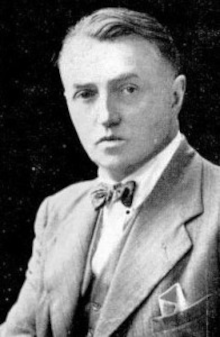
MacGreevy is the son of a policeman and a primary school teacher. At age 16, he joins the British Civil Service as a boy clerk.
At the outbreak of World War I, MacGreevy is promoted to an intelligence post with the Admiralty. He enlists in 1916 and sees active service at the Ypres Salient and the Somme, being wounded twice. After the war, he studies at Trinity College, Dublin, in whose library his papers are now held. He then becomes involved in various library organisations, begins publishing articles in Irish periodicals, and writes his first poems.
In 1924, MacGreevy is first introduced to James Joyce in Paris. The following year he moves to London, where he meets T. S. Eliot and begins writing for The Criterion and other magazines. He also begins publishing his poetry.
In 1934, Poems is published in London and New York City. The work shows that MacGreevy has absorbed the lessons of Imagism and of The Waste Land, but also demonstrates that he has brought something of his own to these influences. The book is admired by Wallace Stevens and the two poets become regular correspondents.
Unfortunately, although MacGreevy continues to write poetry, this is the only collection published in his lifetime. Since his death there have been two Collected Poems issued, one in 1971 and an edited edition collecting his published and unpublished poetry published twenty years later.
In 1929 MacGreevy begins working at Formes, a journal of the fine arts. He also publishes a translation of Paul Valéry‘s Introduction à la méthode de Léonard de Vinci as Introduction to the Method of Leonardo da Vinci. In the mid-1930s, he moves back to London and earns his living lecturing at the National Gallery there.
From 1938 to 1940 MacGreevy is the chief art critic for The Studio. He publishes several books on art and artists, including Jack B. Yeats: An Appreciation and an Interpretation and Pictures in the Irish National Gallery (both 1945), and Nicolas Poussin (1960).
MacGreevy is a lifelong Roman Catholic. His faith informs both his poetry and his professional life. On returning to Dublin during World War II, he writes for both the Father Mathew Record and the Capuchin Annual and joins the editorial board of the latter.
MacGreevy is director of the National Gallery of Ireland from 1950–63. Although to many he seems a surprising choice, his latent talents as an administrator are brought to the fore. He is instrumental in bringing to the gallery such ideas as a lecture series and in-house restoration, which are commonplace abroad. It is through his persistent requests to the government that an extension to the gallery is approved. Unfortunately, the demands of the position take its toll. He has two heart attacks in 1956 and 1957 and ill health forces him to retire in 1963.
During his last years MacGreevy begins writing poetry again. He also begins his memoirs, which he never completes. He is admitted to the Portobello Nursing Home in Dublin for what is to be a minor operation in March 1967. He dies from heart failure on Saint Patrick’s Day eve, March 16, 1967.
Guevara is born on June 14, 1928, in Rosario, Santa Fe, Argentina, the eldest of five children in a middle-class family of Spanish-Irish descent and leftist leanings. Although suffering from asthma, he excels as an athlete and a scholar, completing his medical studies in 1953. He spends many of his holidays traveling in Latin America, and his observations of the great poverty of the masses contributes to his eventual conclusion that the only solution lay in violent revolution. He comes to look upon Latin America not as a collection of separate nations but as a cultural and economic entity, the liberation of which would require an intercontinental strategy.
In particular, Guevara’s worldview is changed by a nine-month journey he begins in December 1951, while on hiatus from medical school, with his friend Alberto Granado. That trip, which begins on a motorcycle they call “the Powerful” (which breaks down and is abandoned early in the journey), takes them from Argentina through Chile, Peru, Colombia, and on to Venezuela, from which Guevara travels alone on to Miami, returning to Argentina by plane. During the trip he keeps a journal that is posthumously published under his family’s guidance as The Motorcycle Diaries: Notes on a Latin American Journey (2003) and adapted to film as The Motorcycle Diaries (2004).
In 1953 Guevara goes to Guatemala, where Jacobo Árbenz heads a progressive regime that is attempting to bring about a social revolution. It is about this time he acquires his nickname, from a verbal mannerism of Argentines who punctuate their speech with the interjection “che.” The overthrow of the Árbenz regime in 1954 in a coup supported by the United StatesCentral Intelligence Agency (CIA) persuades him that the United States will always oppose progressive leftist governments. This becomes the cornerstone of his plans to bring about socialism by means of a worldwide revolution. It is in Guatemala that he becomes a dedicated Marxist.
Guevara leaves Guatemala for Mexico, where he meets the Cuban brothers Fidel and Raúl Castro, political exiles who are preparing an attempt to overthrow the dictatorship of Fulgencio Batista in Cuba. He joins Fidel Castro’s 26th of July Movement, which lands a force of 81 men (including Guevara) in the Cuban Oriente Province on December 2, 1956. Immediately detected by Batista’s army, they are almost wiped out. The few survivors, including the wounded Guevara, reach the Sierra Maestra, where they become the nucleus of a guerrilla army. The rebels slowly gain in strength, seizing weapons from Batista’s forces and winning support and new recruits. Guevara had initially come along as the force’s doctor, but he has also trained in weapons use, and he becomes one of Castro’s most-trusted aides. Indeed, the complex Guevara, though trained as a healer, also, on occasion, acts as the executioner (or orders the execution) of suspected traitors and deserters.
After Castro’s victorious troops enter Havana on January 8, 1959, Guevara serves for several months at La Cabaña prison, where he oversees the executions of individuals deemed to be enemies of the revolution. He becomes a Cuban citizen, as prominent in the newly established Marxist government as he had been in the revolutionary army, representing Cuba on many commercial missions. He also becomes well known in the West for his opposition to all forms of imperialism and neocolonialism and for his attacks on U.S. foreign policy. He serves as chief of the Industrial Department of the National Institute of Agrarian Reform, president of the National Bank of Cuba (famously demonstrating his disdain for capitalism by signing currency simply “Che”), and Minister of Industries.
During the early 1960s, Guevara defines Cuba’s policies and his own views in many speeches and writings, notably “El socialismo y el hombre en Cuba” (1965; “Man and Socialism in Cuba,” 1967), an examination of Cuba’s new brand of communism, and a highly influential manual, La guerra de guerrillas (1960; Guerrilla Warfare, 1961). The last book includes his delineation of his foco theory (foquismo), a doctrine of revolution in Latin America drawn from the experience of the Cuban Revolution and predicated on three main tenets: 1) guerrilla forces are capable of defeating the army; 2) all the conditions for making a revolution do not have to be in place to begin a revolution, because the rebellion itself can bring them about; and 3) the countryside of underdeveloped Latin America is suited for armed combat.
Guevara expounds a vision of a new socialist citizen who would work for the good of society rather than for personal profit, a notion he embodies through his own hard work. Often he sleeps in his office, and, in support of the volunteer labour program he had organized, he spends his day off working in a sugarcane field. He grows increasingly disheartened, however, as Cuba becomes a client state of the Soviet Union, and he feels betrayed by the Soviets when they remove their missiles from the island without consulting the Cuban leadership during the Cuban Missile Crisis of 1962. He begins looking to the People’s Republic of China and its leader Mao Zedong for support and as an example.
In December 1964 Guevara travels to New York City, where he condemns U.S. intervention in Cuban affairs and incursions into Cuban airspace in an address to the United Nations General Assembly. Back in Cuba, increasingly disillusioned with the direction of the Cuban social experiment and its reliance on the Soviets, he begins focusing his attention on fostering revolution elsewhere. After April 1965 he drops out of public life. His movements and whereabouts for the next two years remain secret. It is later learned that he had traveled to what is now the Democratic Republic of the Congo with other Cuban guerrilla fighters in what proved to be a futile attempt to help the Patrice Lumumba battalion, which was fighting a civil war there. During that period he resigns his ministerial position in the Cuban government and renounces his Cuban citizenship. After the failure of his efforts in the Congo, he flees first to Tanzania and then to a safe house in a village near Prague.
In the autumn of 1966 Guevara goes to Bolivia, incognito (beardless and bald), to create and lead a guerrilla group in the region of Santa Cruz. After some initial combat successes, he and his guerrilla band find themselves constantly on the run from the Bolivian army. On October 9, 1967, the group is almost annihilated by a special detachment of the Bolivian army aided by CIA advisers. Guevara, who is wounded in the attack, is captured and shot. Before his body disappears to be secretly buried, his hands are cut off. They are preserved in formaldehyde so that his fingerprints can be used to confirm his identity.
In 1995 one of Guevara’s biographers, Jon Lee Anderson, announces that he had learned that Guevara and several of his comrades had been buried in a mass grave near the town of Vallegrande in central Bolivia. In 1997 a skeleton that is believed be that of the revolutionary and the remains of his six comrades are disinterred and transported to Cuba to be interred in a massive memorial and monument in Santa Clara on the 30th anniversary of Guevara’s death. In 2007 a French and a Spanish journalist make a case that the body brought to Cuba is not actually Guevara’s. The Cuban government refutes the claim, citing scientific evidence from 1997 that, it says, proves that the remains are those of Guevara.
Guevara would live on as a powerful symbol, bigger in some ways in death than in life. He is almost always referenced simply as Che — like Elvis Presley, so popular an icon that his first name alone is identifier enough. Many on the political right condemn him as brutal, cruel, murderous, and all too willing to employ violence to reach revolutionary ends. On the other hand, his romanticized image as a revolutionary looms especially large for the generation of young leftist radicals in Western Europe and North America in the turbulent 1960s. Almost from the time of his death, his whiskered face adorns T-shirts and posters. Framed by a red-star-studded beret and long hair, his face frozen in a resolute expression, the iconic image is derived from a photo taken by Cuban photographer Alberto Korda on March 5, 1960, at a ceremony for those killed when a ship that had brought arms to Havana exploded. At first the image of Che is worn as a statement of rebellion, then as the epitome of radical chic, and, with the passage of time, as a kind of abstract logo whose original significance may even have been lost on its wearer, though for some he remains an enduring inspiration for revolutionary action.
In 1926, Quill emigrates to New York City. After a series of brief jobs, in 1929 he secures employment with the Interborough Rapid Transit Company (IRT) as a subway station change-maker. Attracted to socialism and militant industrial unionism by his reading of James Connolly, in 1933 he is one of a small group of workers seeking to initiate a trade union independent of the IRT’s complacent company union. Comprised largely of ex-IRA men linked by membership of Clan na Gael and the leftist Irish Workers’ Clubs, his group soon joins forces with a New York transit-industry organising effort by the Communist Party, resulting in the launch in April 1934 of the Transport Workers Union (TWU).
With a convivial personality and a flair for oratory, Quill quickly emerges as one of the union’s most effective organisers. During 1935 he leaves his IRT job to work full-time as union organiser. In December 1935 he is elected TWU president, a position he holds until his death. By autumn 1936 the TWU has established a solid base on the IRT and intensifies organisation on New York’s other transit lines: subways, buses, elevated trains, and trolleys. In May 1937 the TWU affiliates with the incipient Congress of Industrial Organizations (CIO). After winning, mostly by large majorities, a series of union representation elections in May–June 1937, the TWU negotiates closed-shop contracts with various New York transit companies, obtaining for its 30,000 members substantial wage increases and benefits and a work-week reduction to forty-eight hours. The ethnic profile of the TWU, which is colloquially nicknamed “the Irish union,” reflects that of New York’s transit workforce, about half of which is Irish born.
First elected to the New York City Council in November 1937 as candidate of the American Labor Party, Quill serves on the body intermittently until 1949. After 1940 he leads the TWU into expansion outside New York, organising in mass transit in other cities, in airlines, and in railroads. Despite modest membership numbers (135,000 by the mid-1960s), the TWU is the United States‘ largest transit union, and Quill maintains a high public profile, owing to his union’s situation in a key economic sector, its base in the country’s largest city, and the colourful and the controversial features of his personality and politics. The 1940 municipal buy-out of New York’s private subway companies and subsequent evolution of a unified civically operated transport system precipitates a lengthy TWU struggle to establish collective bargaining rights and procedures for the transport workforce as public employees. This campaign, by setting precedents for public-sector union organisation nation-wide, marks Quill’s most enduring legacy to the American labour movement.
Quill denies repeated charges that he is a Communist, while retorting that he would “rather be called a Red by the rats than a rat by the Reds.” Communists hold influential positions at all levels in the TWU until the union’s December 1948 convention, when, after months of rancorous conflict over policy, he secures the expulsion from union office of all Communist Party members. His own politics, nevertheless, remain conspicuously leftist in the America of the 1950s and 1960s, as he condemns both the McCarthyite anti-Red witch-hunt and the Vietnam War. Elected a CIO vice-president in 1950, he eschews redefinition as “a labour statesman,” and advocates a national labour party and nationalisation of major industries. A strenuous opponent of racial discrimination by employers and within trade-union structures, he actively supports the black civil rights movement. He is the only top CIO official to oppose its 1955 merger with the conservative, craft-dominated American Federation of Labor (AFL), which he accuses of “the three Rs” of raiding, racketeering, and racism.
Quill’s final battle is his most dramatic. On January 1, 1966, he defies public-sector anti-strike legislation and a court injunction and leads TWU Local 100 into the first total subway-and-bus strike in New York City history, paralysing traffic for twelve days. Arrested on January 4, Quill, who has a history of serious heart disease, collapses during admission to prison and is transferred to hospital under police custody. On January 13 the strike is settled with a 15 percent wage increase, the highest of Quill’s TWU presidency. On January 28, several days after discharge from hospital, he dies of heart failure in his home. He is interred at Gate of Heaven Cemetery in Hawthorne, New York, after a funeral Mass at St. Patrick’s Cathedral, his casket draped by the Irish tricolor.
Speaking after his death, Martin Luther King Jr. eulogises Quill with the following: “Mike Quill was a fighter for decent things all his life—Irish independence, labor organization, and racial equality. He spent his life ripping the chains of bondage off his fellowman. When the totality of a man’s life is consumed with enriching the lives of others, this is a man the ages will remember—this is a man who has passed on but who has not died. Negroes had desperately needed men like Mike Quill who fearlessly said what was true even when it offended. That is why Negroes shall miss Mike Quill.”
Quill marries Maria Theresa O’Neill of Cahersiveen, County Kerry, in 1937. They have one son. Maria dies in 1959. He then marries Shirley Garry (née Uzin) of Brooklyn, New York, his long-serving administrative assistant, in 1961. They have no children. The Michael J. Quill Centre at Ardtully, Kilgarvan, County Kerry, houses a commemorative museum.
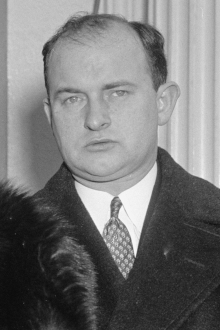
(From: “Quill, Michael Joseph” by Lawrence William White, Dictionary of Irish Biography, http://www.dib.ie | Pictured: Irish-American Trade Unionist Mike Quill during a visit to the White House in 1938)
McCormack is born on June 14, 1884, in Athlone, County Westmeath, the second son and fifth of the 11 children of Andrew McCormack and his wife Hannah Watson. His parents are both from Galashiels, Scotland, and work at the Athlone Woolen Mills, where his father is a foreman. He is baptised in St. Mary’s Church, Athlone, on June 23, 1884.
McCormack receives his early education from the Marist Brothers in Athlone and later attends Summerhill College, Sligo. He sings in the choir of the old St. Peter’s Church in Athlone under his choirmaster Michael Kilkelly. When the family moves to Dublin, he sings in the choir of St. Mary’s Pro-Cathedral where he is discovered by Vincent O’Brien. In 1903 he wins the coveted gold medal of the Dublin Feis Ceoil. He marries Lily Foley in 1906 and they have two children, Cyril and Gwen.
In March 1904, McCormack becomes associated with James Joyce, who at the time has singing ambitions himself. He persuades Joyce to enter the Feis Ceoil that year, where the not yet famous writer is awarded the Bronze Medal.
Fundraising activities on his behalf enable McCormack to travel to Italy in 1905 to receive voice training by Vincenzo Sabatini, father of the novelist Rafael Sabatini, in Milan. Sabatini finds McCormack’s voice naturally tuned and concentrates on perfecting his breath control, an element that becomes part of the basis of his renown as a vocalist.
In 1906, McCormack makes his operatic début at the Teatro Chiabrera, Savona. The next year, he begins his first important operatic performance at Covent Garden in Pietro Mascagni‘s Cavalleria rusticana, becoming the theatre’s youngest principal tenor. In 1909, he begins his career in the United States.
In February 1911, McCormack plays Lieutenant Paul Merrill in the world premiere of Victor Herbert‘s opera Natoma with Mary Garden in the title role. Later that year, he tours Australia after DameNellie Melba engages him, then at the height of his operatic career, aged 27, as a star tenor for the Melba Grand Opera Season. He returns for concert tours in subsequent years.
By 1912, McCormack is beginning to become involved increasingly with concert performances, where his voice quality and charisma ensures that he becomes the most celebrated lyric tenor of his time. He does not, however, retire from the operatic stage until after his performance of 1923 in Monte Carlo, although by then the top notes of his voice have contracted. Famous for his extraordinary breath control, he can sing 64 notes on one breath in Mozart‘s “Il mio tesoro” from Don Giovanni, and his Handelian singing is just as impressive in this regard.
McCormack makes hundreds of recordings, his best-known and most commercially successful series of records being those for the Victor Talking Machine Company during the 1910s and 1920s. He is Victor’s most popular Red Seal recording artist after tenor Enrico Caruso. In the 1920s, he sings regularly on radio and later appears in two sound films, Song o’ My Heart (1930), playing an Irish tenor, and as himself appearing in a party scene in Wings of the Morning (1937), the first British three-strip Technicolor feature.
McCormack is one of the first artists to record the popular ballad “I Hear You Calling Me” written in 1908 by Harold Harford and Charles Marshall. He records it twice for Odeon Records starting in 1908 and a further four times for Victor between 1910 and 1927, becoming his best seller. He is the first artist to record the famous World War I song “It’s a Long Way to Tipperary” in 1914. He also records a best-selling version of another popular World War I tune, “Keep the Home Fires Burning,” in 1917. He also sings songs expressive of Irish nationalism and endorses the Irish Nationalist estrangement from the United Kingdom. He is associated particularly with the songs of Thomas Moore, notably “The Harp That Once Through Tara’s Halls,” “The Minstrel Boy,” “Believe Me If All (Those Endearing Young Charms),” and “The Last Rose of Summer.” Between 1914 and 1922, he records almost two dozen songs with violin accompaniment provided by Fritz Kreisler, with whom he also tours. He records songs of Hugo Wolf for the Hugo Wolf Society in German. In 1918, he records the song “Calling Me Home to You.”
In 1917, McCormack becomes a naturalised citizen of the United States. In June 1918, he donates $11,458 toward the U.S. World War I effort. By then, his career is a huge financial success, earning millions in his lifetime from record sales and appearances.
By 1920, Edwin Schneider has become McCormack’s accompanist and the two are “inseparable.” When Schneider retires, Gerald Moore takes over as accompanist from 1939 to 1943.
In 1927, McCormack moves into Moore Abbey, Monasterevin, County Kildare, and adopts a very opulent lifestyle by Irish standards. He also owns apartments in London and New York. He hopes that one of his racehorses, such as Golden Lullaby, would win The Derby, but this never occurs.
McCormack also purchases Runyon Canyon in Hollywood in 1930 from Carman Runyon. He sees and likes the estate while there filming Song o’ My Heart (1930), an early all-talking, all-singing picture. He uses his salary for this movie to purchase the estate and builds a mansion he calls ‘San Patrizio,’ after Saint Patrick. He and his wife live in the mansion until they return to England in 1938.
McCormack tours often, and in his absence, the mansion is often let to celebrities such as Janet Gaynor and Charles Boyer. The McCormacks make many friends in Hollywood, among them Errol Flynn, Will Rogers, John Barrymore, Basil Rathbone, Ronald Colman, Charles E. Toberman and the Dohenys. After his farewell tour of America in 1937, the McCormacks deed the estate back to Carman Runyon expecting to return to the estate at a later date. World War II intervenes and he does not return.
McCormack originally ends his career at the Royal Albert Hall in London, during 1938. However, one year after that farewell concert, he is back singing for the Red Cross and in support of the war effort. He gives concerts, tours, broadcasts and records in this capacity until 1943 when poor health finally forces him to retire permanently.
Ill with emphysema, McCormack purchases a house near the sea, “Glena,” Booterstown, Dublin. After years of increasingly poor health, and a series of infectious illnesses, including influenza and pneumonia, he dies at his home in Booterstown on September 16, 1945. He is buried in Deans Grange Cemetery, St. Patrick’s section, plot reference E/120.
Casement is born into an Anglo-Irish family, and lives his very early childhood at Doyle’s Cottage, Lawson Terrace, Sandycove. His father, Captain Roger Casement of the (King’s Own) Regiment of Dragoons, is the son of Hugh Casement, a Belfast shipping merchant who goes bankrupt and later moves to Australia. After the family moves to England, Casement’s mother, Anne Jephson (or Jepson), of a DublinAnglican family, purportedly has him secretly baptised at the age of three as a Roman Catholic in Rhyl, Wales.
The family lives in England in genteel poverty. Casement’s mother dies when he is nine years old. His father takes the family back to County Antrim in Ireland to live near paternal relatives. His father dies when he is thirteen years old. He is educated at the Diocesan School, Ballymena (later the Ballymena Academy). He leaves school at 16 and goes to England to work as a clerk with Elder Dempster Lines, a Liverpool shipping company headed by Alfred Lewis Jones.
Casement is a British consul in Portuguese East Africa (1895–98), Angola (1898–1900), Congo Free State (1901–04), and Brazil (1906–11). He gains international fame for revealing atrocious cruelty in the exploitation of native labour by white traders in the Congo and the Putumayo River region of Peru. His Congo report, published in 1904, leads to a major reorganization of Belgian rule in the Congo in 1908, and his Putumayo report of 1912 earns him a knighthood, which is ultimately forfeited on June 29, 1916.
Ill health forces Casement to retire to Ireland in 1912. Although he comes from an Ulster Protestant family, he has always sympathized with the predominantly Roman Catholic Irish nationalists. Late in 1913 he helps form the National Volunteers, and in July 1914 he travels to New York City to seek American aid for that anti-British force. After World War I breaks out in August, he hopes that Germany might assist the Irish independence movement as a blow against Great Britain. On arriving in Berlin in November 1914, he finds that the German government is unwilling to risk an expedition to Ireland and that most Irish prisoners of war would refuse to join a brigade that he intends to recruit for service against England.
Later, Casement fails to obtain a loan of German army officers to lead the Irish rising planned for Easter 1916. In a vain effort to prevent the revolt, he sails for Ireland on April 12 in a German submarine. Put ashore near Tralee, County Kerry, he is arrested on April 24 and taken to London, where, on June 29, he is convicted of treason and sentenced to death. An appeal is dismissed, and he is hanged at London’s Pentonville Prison on August 3, 1916, despite attempts by influential Englishmen to secure a reprieve in view of his past services to the British government. During this time, diaries reputedly written by Casement and containing detailed descriptions of homosexual practices are circulated privately among British officials. After years of dispute over their authenticity, the diaries are made available to scholars by the British home secretary in July 1959. It is generally considered that the passages in question are in Casement’s handwriting.
In 1965 Casement’s remains are repatriated to Ireland. Despite the annulment, or withdrawal, of his knighthood in 1916, the 1965 UK Cabinet record of the repatriation decision refers to him as “Sir Roger Casement.”
Casement’s last wish is to be buried at Murlough Bay on the north coast of County Antrim, in present-day Northern Ireland, but Prime MinisterHarold Wilson‘s government had released the remains only on condition that they could not be brought into Northern Ireland, as “the government feared that a reburial there could provoke Catholic celebrations and Protestant reactions.”
Casement’s remains lay in state at the Garrison Church, Arbour Hill (now Arbour Hill Prison) in Dublin for five days, close to the graves of other leaders of the 1916 Easter Rising. After a state funeral, his remains are buried with full military honours in the Republican plot in Glasnevin Cemetery in Dublin, alongside other Irish republicans and nationalists. The President of Ireland, Éamon de Valera, then the last surviving leader of the Easter Rising, attends the ceremony, along with an estimated 30,000 others.
Susan Jane Denham, SC (née Gageby), Irish judge who is the first woman to hold the position of Chief Justice of Ireland (2011-17), is born in Dublin on August 22, 1945. She serves as a Judge of the Supreme Court of Ireland (1992-2017) and is the longest-serving member of the court on her retirement. She also serves as a Judge of the High Court (1991-92).
Gageby is called to the bar in July 1971 and becomes a Senior Counsel in October 1987. She is the fourth woman to enter the Inner Bar. She becomes a senior counsel on the same day as future Supreme Court colleague Mary Laffoy. She works on the Midland circuit until 1979, following which she is based in Dublin. She is involved in a number of leading cases while a junior barrister and a Senior Counsel particularly in the area of judicial review. She becomes a High Court judge in 1991.
Gageby marries paediatrician Dr. Brian Denham in 1992. Also in 1992, at the age of 47, Denham is the first woman appointed to the Supreme Court. She is considered for appointment to the role of President of the High Court in 1994 but declines to have her name put forward. She makes two dissents early on in her period on the Court. Throughout her tenure as a judge, she is seen by commentators to be a “liberal” judge.
In Kelly v Hennessy in 1996, Denham outlines criteria for a court to consider the evidence of the existence of nervous shock in Ireland. In 2001, she is the sole member of the Supreme Court to dissent in TD v Minister for Education. The court overturns a decision of Peter Kelly in the High Court to direct the government to build secure care units for certain children.
From 1995 to 1998, Denham chairs the Working Group on a Courts Commission, which is responsible for a significant reform of the organisation of the courts since the foundation of the state. It leads to the establishment of the Courts Service. She is on the Interim Board of the Court Service and serves on the Board of the Court Service from its inception and chairs the board from 2001 to 2004. She chairs the Committee on Court Practice and Procedure which recommends in 2002 the establishment of a commercial court within the High Court.
From 2006, Denham chairs the Working Group on a Court of Appeal. The report of the group is published by the government in August 2009 and recommends the establishment of a general Court of Appeal. This is ultimately established in 2014, after a referendum in 2013.
Denham writes the judgment in McD v. L (2009), upholding the parental rights of a sperm donor.
On July 4, 2011, Denham is nominated by TaoiseachEnda Kenny to become Chief Justice of Ireland and is appointed as Chief Justice by PresidentMary McAleese on July 25, 2011. She is the first woman appointed to the office and as a member of the Church of Ireland, she is the first non-Catholic to hold the position. She is also the first graduate of Trinity College Dublin to have been appointed as Chief Justices have largely been graduates of University College Dublin. She succeeds John L. Murray.
During Denham’s tenure as Chief Justice, the Supreme Court issues suspended declarations of unconstitutionality for the first time. The possibility to delay the effect of a court declaration that a piece of legislation is contrary to the Constitution is first explored by Denham in A v Governor of Arbour Hill Prison. The court first adopts this approach in N.V.H. v Minister for Justice & Equality in May 2017.
As Chief Justice, Denham oversees changes in the operations of the Supreme Court and the courts generally. She oversees the removal of the requirement for judges to wear wigs while hearing cases. In 2015, the Supreme Court sits outside Dublin for the first time since 1931, sitting in Cork. She corresponds with the Office of Public Works over the lack of heating in the Four Courts, threatening to cancel sittings if the issue is not resolved. She advocates for the inclusion of a new courtroom for the Supreme Court in plans to develop a new family court complex on Hammond Lane.
In her capacity as Chief Justice, Denham oversees the administration of the Presidential Declaration of Office at the inauguration of President Michael D. Higgins in Dublin Castle in November 2011.
Denham retires from the position in July 2017 and is succeeded by Judge Frank Clarke. She is the third-longest serving Supreme Court judge ever at the time of her retirement. In her remarks on her retirement, she draws attention to the government’s failure to institute a judicial council, having first attempted to persuade the government to establish one in 1997.
In 2019, Denham is made an honorary fellow of Trinity College Dublin, where she was a Pro-Chancellor from 1996-2010.
The Courts Service announces on August 24, 2020, that the Supreme Court has appointed Denham to review the attendance of Supreme Court judge Séamus Woulfe at a dinner organised by the Oireachtas Golf Society. She is appointed on a non-statutory basis as the relevant section in the Judicial Council Act 2019 on judicial conduct has not yet been commenced.
McPherson is educated at University College Dublin and begins writing his first plays there as a member of UCD Dramsoc, the college’s dramatic society, and goes on to found Fly by Night Theatre Company which produces several of his plays. He is considered one of the best contemporary Irish playwrights. His plays attract good reviews and have been performed internationally (notably in the West End and on Broadway).
McPherson also directs his play, Dublin Carol, at the Atlantic Theater Company, New York, in 2003.
McPherson’s 2004 play Shining City opens at the Royal Court Theatre and prompts The Daily Telegraph to describe him as “the finest dramatist of his generation.” A meditation on regret, guilt and confusion, the play is set entirely within the Dublin offices of a psychiatrist who himself has psychological secrets. While much of the play takes the form of monologues delivered by a patient, the everyday stories and subtle poignancy and humour make it a riveting experience. It subsequently opens on Broadway in 2006 and is nominated for two Tony Awards, including Best Play.
In September 2006, to great critical acclaim, McPherson makes his Royal National Theatre debut as both author and director with The Seafarer at the Cottesloe Theatre, starring Karl Johnson and Jim Norton, with Ron Cook as their poker-playing, Mephistophelean guest. Norton wins an Olivier Award for his performance while McPherson is nominated for both the Olivier and Evening Standard Theatre Awards for Best Play. In October 2007 The Seafarer opens on Broadway, keeping with it most of its creative team, including McPherson as director and both Jim Norton and Conleth Hill in their respective roles, with David Morse taking over as Sharky, and Ciarán Hinds portraying Mr. Lockhart. The production on Broadway receives some positive reviews including such statements as “McPherson is quite possibly the finest playwright of his generation” from Ben Brantley at The New York Times and “Succinct, startling and eerie, and the funniest McPherson play to date” from The Observer. Norton’s performance as Richard Harkin in The Seafarer at the National Theatre wins the 2007 Best Supporting Actor Laurence Olivier Award, and he wins a Tony Award in 2008 for Best Featured Actor in a play.
McPherson writes and directs a stage adaptation of Daphne du Maurier‘s story The Birds, which opens in September 2009 at the Gate Theatre in Dublin.
In 2011 the Royal National Theatre premiers his play The Veil at the Lyttleton Theatre. Described by The Times as “a cracking fireside tale of haunting and decay,” it is set in 1822 and marks McPherson’s first foray into period drama. This vein continues with a striking new translation of August Strindberg‘s The Dance of Death premiering at the Trafalgar Studios in London at the end of 2012. His version is described as “a profoundly seminal work” by The Guardian which also managed, The Times says, to be “shockingly funny.”
The Donmar Warehouse mounts a season of McPherson’s work in 2013 with a revival of The Weir and the world premiere of The Night Alive. The Weir is hailed once again as “a modern classic” by The Daily Telegraph and “a contemporary classic” by The Guardian while The Night Alive is nominated for the Laurence Olivier Award for Best Play and described as “another triumph” by The Independent on Sunday and “a masterstroke” by Time Out.
McPherson’s play Girl from the North Country, where the dramatic action is broken up by 20 songs by Bob Dylan, opens at London’s The Old Vic on July 26, 2017. The play is set in a hotel in 1934 in Duluth, Minnesota, the birthplace of Dylan. The project begins when Dylan’s office approaches McPherson and suggests creating a play using Dylan songs. The drama receives favorable reviews.
The film of his first screenplay, I Went Down, is critically acclaimed and a great commercial success. His first feature film as a director, Saltwater, wins the CICAE award for Best Film at the Berlin International Film Festival. His second feature film is The Actors, which he wrote and directed.
He is the director and co-writer of The Eclipse, a film which has its world premiere at the 2009 Tribeca Film Festival. It is picked up for distribution by Magnolia Pictures and is released in U.S. cinemas in the spring of 2010. The film subsequently wins the Melies D’Argent Award for Best European Film at the Sitges Film Festival in Spain, the world’s premier horror and fantasy genre festival. At The 2010 Irish Film and television AwardsThe Eclipse wins the awards for Best Film and Best Screenplay. Ciarán Hinds wins the Best Actor Award at the Tribeca Film Festival for his portrayal of Michael Farr.
In 2013, McPherson writes the last episode of Quirke. In 2020, he co-writes the feature film adaptation of the Artemis Fowl books by Eoin Colfer. In response to the COVID-19 pandemic, it is released digitally worldwide on Disney+ on June 12, 2020.
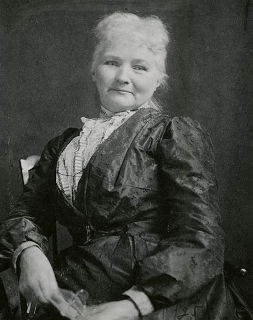
Mary G. Harris Jones, known as Mother Jones, an Irish-born American schoolteacher and dressmaker who becomes a prominent union organiser, community organiser, and activist, is baptised on August 1, 1837, in Cork, County Cork. Her exact date of birth is uncertain. She is once deemed “the most dangerous woman in America” because of her union activities.
Jones is the daughter of Richard Harris, a Roman Catholictenant farmer and railway labourer, and Ellen (née Cotter) Harris. She and her family are victims of the Great Famine, as are many other Irish families of the time. The famine forces more than a million families, including the Harrises, to immigrate to North America when she is ten years old. She lives in the United States and Canada, where she attends and later teaches in a Roman Catholic normal school in Toronto. In the United States she teaches in a convent school in Monroe, Michigan and works as a seamstress. In 1861 she marries George Jones, an iron-moulder and labour union member in Memphis, Tennessee. After the death of her husband and their four children in a yellow fever epidemic in 1867, she relocates to Chicago, Illinois, where she becomes involved with an early industrial union, the Knights of Labor. Her seamstress shop is destroyed in the Great Chicago Fire of 1871.
In the 1890s Jones becomes known as ‘Mother’ Jones and begins a long association with socialist causes and the United Mine Workers of America. She attends the founding convention of Social Democracy of America, later known as the Cooperative Brotherhood, in 1897 and in the same year organises support and publicity for striking bituminous coal miners in West Virginia, including a children’s march and parades of farmers delivering food to the miners’ camp. These types of defiant mass action become her trademark. Notable activities include organising women in support of an 1899 anthracite coal strike in eastern Pennsylvania, directing strikes of young women working in textile mills, a 1903 ‘children’s crusade’ against child labour which includes a ninety-mile march from Philadelphia to New York City, participating in 1905 in the founding convention of the Industrial Workers of the World, a radical labour union committed to the organisation of unskilled workers, campaigning for the release of Mexican revolutionaries imprisoned in American jails, and testifying in 1915 in congressional hearings against the abuse of corporate power by Rockefeller interests.
Jones reportedly meets with James Connolly, Irish socialist and labour organiser, in New York City in 1910. She is arrested for the first time for violating a federal injunction during a miners’ strike in West Virginia in 1902. In 1904, during a Colorado miners’ campaign, she has to avoid the authorities to escape possible deportation. During a 1914 strike in Ludlow, Colorado, she is imprisoned without trial for nine weeks. In 1919 she is arrested in Pennsylvania during a steelworkers’ strike for defending freedom of speech and the right of workers to organise unions. She remains active in the labour movement and radical causes into her nineties.
During her later years, Jones lives with her friends Walter and Lillie May Burgess on their farm in what is now Adelphi, Maryland. She celebrates her self-proclaimed 100th birthday there on May 1, 1930, and is filmed making a statement for a newsreel.
In 1932, about 15,000 Illinois mine workers gather in Mount Olive to protest against the United Mine Workers, which soon becomes the Progressive Mine Workers of America. Convinced that they have acted in the spirit of Mother Jones, the miners decide to place a proper headstone on her grave. By 1936, the miners have saved up more than $16,000 and are able to purchase “eighty tons of Minnesota pink granite, with bronze statues of two miners flanking a twenty-foot shaft featuring a bas-relief of Mother Jones at its center.” On October 11, 1936, also known as Miners’ Day, an estimated 50,000 people arrive at Mother Jones’s grave to see the new gravestone and memorial. Since then, October 11 is not only known as Miners’ Day but is also referred to and celebrated in Mount Olive as “Mother Jones’s Day.”
The farm where she died begins to advertise itself as the “Mother Jones Rest Home” in 1932, before being sold to a Baptist church in 1956. The site is now marked with a Maryland Historical Trust marker, and a nearby elementary school is named in her honor.
Redmond is one of four children born to cabinet-maker Thomas and Eileen Redmond. Educated at the Christian Brothers schools in Dublin, he later attends University College Dublin and initially reads medicine before moving into drama.
While Director of the Dramatic Society Redmond meets and marries the society’s secretary, Barbara MacDonagh, sister of Donagh MacDonagh and daughter of 1916 Easter Rising leader Thomas MacDonagh and Muriel Gifford. They have four children.
Redmond is invited to join the Abbey Theatre in 1935 as a producer by William Butler Yeats, the Irish poet. Yeats writes his play Death of Cú Chulainn for Redmond to star as Cú Chulainn, hero of one of Ireland’s foundational myths.
Redmond makes his acting debut at the Abbey Theatre in 1935 in Seán O’Casey‘s The Silver Tassie. His first stage appearance is in 1939 in New York City in The White Steed. After returning to Britain at the outbreak of World War II he is a regular on the London stage. He is one of the founders of the Writers’, Artists’, Actors’ and Musicians’ Association (WAAMA), a precursor of the Irish Actors’ Equity Association. His insistence that “part-time professionals” – usually civil servants who act on the side – should be paid a higher rate than professional actors for both rehearsal time and performance, effectively wiping out this class, raising the wages and fees of working actors.
De Valera’s eventful 1919 begins in Lincoln Jail and ends in New York City’s Waldorf Astoria, the largest and most luxurious hotel in the world. Smuggled aboard the SS Lapland in Liverpool in June, he sails for the United States during the closing stages of the Paris Peace Conference. As London’s Sunday Express complains in August 1919, “there is more Irish blood in America than in Ireland,” making the United States the obvious destination for a sustained propaganda and fundraising mission.
After his highly-publicised American debut at New York’s Waldorf Astoria, the self-styled “President of the Irish Republic” embarks on the first leg of what is to be an eighteen-month tour of the United States. The purpose of his mission is twofold: to gain formal recognition of the Irish Republic and to raise funds via a bond issue to support the independence movement and the newly established Dáil Éireann.
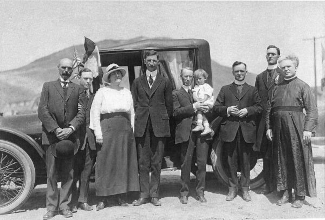
Between July and August 1919, de Valera and his entourage travel over 6,000 miles from New York to San Francisco, addressing enormous crowds at dozens of venues. He fills Madison Square Garden to capacity and receives a thirty-minute standing ovation from 25,000 people in Chicago’s Wrigley Field. Twice as many people fill Boston’s Fenway Park on June 29, cheering the arrival of the “Irish Lincoln.” The Sinn Féin envoys also visit less obvious Irish communities of the period, such as Scranton, Savannah, New Orleans and Kansas City. For de Valera’s personal secretary, Seán Nunan, the public meeting in Butte, Montana is like “an election meeting at home – there were so many first-generation Irishmen working on the mines – mainly from around Allihies in West Cork.” In San Francisco de Valera dedicates a statue of Robert Emmet by Irish-born sculptor Jerome Connor in Golden Gate Park, a replica of which stands sentinel in St. Stephen’s Green in Dublin. This is one of many symbolic gestures linking the American and Irish struggles for independence played out before the flashing bulbs of the ubiquitous press photographers. On August 15, The Cork Examiner notes that the enthusiastic American exchanges “indicate that few public missionaries from other lands – possibly only Mr. Parnell – have ever had such receptions as were accorded to the Sinn Féin leader.”
De Valera’s team deserves credit for the incredible logistical triumph that is the U.S. tour. As chief organiser, Liam Mellows travels ahead to each city, ensuring a suitable reception is prepared and a venue secured for a mass meeting. Seán Nunan is de Valera’s fastidious personal secretary and Harry Boland, Sinn Féin TD for South Roscommon and Irish Republican Brotherhood (IRB) envoy, is at his side troubleshooting, speechmaking and shaking hands. As the tour progresses, de Valera’s supporting cast expands to include Kerry-born Kathleen O’Connell who becomes de Valera’s full-time personal secretary from 1919.
The next stage of de Valera’s American odyssey begins on October 1, 1919, in Philadelphia, a city with a rich Irish heritage and rife with symbolism of America’s struggle for independence. Over the next three weeks, de Valera and his team travel from the Atlantic to the Pacific seaboard and back again, delivering seventeen major public speeches and a host of smaller ones to aggregate crowds of over half a million.
The pace is relentless as the Irish team makes its way through middle America. De Valera is received as a visiting dignitary at multiple state legislatures and presented with honorary degrees from six American universities. In line with his secondary objective to foster the interest of “wealthy men of the race in the industrial development of Ireland,” he addresses the Chambers of Commerce in a number of cities and arranges a personal meeting with Henry Ford, the son of an Irish emigrant, during his visit to Detroit in October. In the same month in Wisconsin, he is made a Chief of the Chippewa Nation, an honour he later says meant more to him than all the freedoms of all the cites he was ever given. It is not surprising that by the time they reach Denver on October 30, The Irish World reports that “the President looked tired.” Still, he musters the energy to make high profile visits to Portland, Los Angeles and San Diego before beginning the return journey to New York at the end of November.
After a short break for Christmas, the Irish team prepares for the launch of the Bond Certificate Drive. A week-long frenzy of publicity kicks off on January 17 at New York City Hall where Mayor John F. Hylan presents de Valera with the Freedom of the City. During the spring of 1920, de Valera addresses the Maryland General Assembly at Annapolis before making the swing through the southern states of America.
It is not all plain sailing for the Sinn Féin representatives in America. The tour of the west coast in late 1919 sees increasing tensions with American patriotic bodies who are critical of de Valera’s perceived pro-German stance during World War I. He is heckled during a speech in Seattle and a tricolour is ripped from his car in Portland by members of the American Legion. The trip through the southern states in the spring of 1920 coincides with rising American anti-immigration and anti-Catholic nativism. A small number of counter demonstrations are organised by right-wing Americans. Most notably, members of the Ku Klux Klan make unwelcome appearances at several rallies in the American south, making clear their opposition to de Valera’s presence.
The Irish envoys also contend with antagonism from the leaders of Friends of Irish Freedom (FOIF), the broad-based popular front of Clan na Gael headed by veteran FenianJohn Devoy and Judge Daniel Cohalan. The FOIF uses its significant resources to finance de Valera’s tour and facilitate the Bond Certificate Drive, but behind the scenes there are significant personality clashes and tensions over tactics.
The increasingly public dispute comes to a head in a row over strategies at the Republican National Convention in Chicago in June 1920. Drawing on his influential political contacts, Cohalan persuades the Republican Party to include Irish self-determination in their election platform. However, much to Cohalan’s fury, de Valera leads a separate delegation to the Convention and insists on a resolution calling for recognition of the Irish Republic. The result is that two resolutions are submitted to the Platform Committee, which indicates dissension in the Irish ranks and gives the Committee the excuse to include neither in the final platform. After de Valera also fails to secure the endorsement of the Democratic convention in San Francisco in June, it is clear that the Irish question will not be a significant factor in the ensuing presidential election. Relations between the FOIF and de Valera reach a new low. In November 1920, de Valera makes the final break with the FOIF and sets up a new organisation, the American Association for the Recognition of the Irish Republic.
De Valera is in Washington, D.C. on October 25 when Terence MacSwiney dies after 74 days on hunger strike. Six days later, at the last great meeting of the American tour, 40,000 people fill New York’s Polo Grounds to commemorate MacSwiney’s death. By late November, de Valera knows that it is time to return to Ireland. Smuggled aboard SS Celtic in New York harbour on December 10, he prepares for the nine-day journey home. He had failed to obtain the recognition of the United States Government for the Republic, but his cross-continental tour and associated press coverage raised international awareness and over $5 million for the Irish cause.
(From: An article by Helene O’Keeffe that was first published in the Irish Examiner on March 24, 2020 | Photo: Eamon de Valera, center, president of the Provisional Government of the Irish Republic, in Butte, Montana, in 1919 to encourage support for Ireland’s fight for independence. Courtesy of Butte-Silver Bow Public Archives)




 seamus dubhghaill