seamus dubhghaill

Promoting Irish Culture and History from Little Rock, Arkansas, USA


Leave a comment

Shaw’s “Too True to Be Good” Premieres in New York City

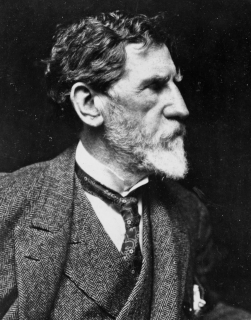
george-bernard-shaw-2

Too True to Be Good (1932), a comedy written by playwright George Bernard Shaw premieres at the Guild Theatre in New York City on April 4, 1932. Subtitled “A Collection of Stage Sermons by a Fellow of the Royal Society of Literature,” it moves from surreal allegory to the “stage sermons” in which characters discuss political, scientific and other developments of the day. The second act of the play contains a character, Private Napoleon Meek, based on Shaw’s friend T. E. Lawrence.

The play explicitly deals with the existential crisis that hit Europe after the end of World War I, especially the emergence of a “modernist” culture fueled by uncertainties created by Freudian psychology and Albert Einstein‘s new physics. The whole of the second and third acts of the play have often been interpreted as a dream of escape occurring in the mind of the feverish Patient (hence the talking Microbe‘s comment that the “real” action is over), and the Patient repeatedly says that what is happening is a dream.

The play is an early example of the formal experimentation with allegory and the absurd that become a feature of Shaw’s later work, having much in common with the later play The Simpleton of the Unexpected Isles, which is also set in an obscure island at the edge of the British Empire. Its absurdist elements later lead to its being viewed as a precursor to the work of Samuel Beckett and Harold Pinter.

The idea that microbes, specifically bacteria, are somehow made sick by human illnesses is a belief that Shaw repeatedly promotes, claiming that disease produces mutations in bacteria, misleading doctors into the belief that “germs” cause disease. The play dramatises his theory that life-energy itself cures illness.

The play is first staged on Monday, February 29, 1932, at Boston‘s Colonial Theatre, by the Theatre Guild. After the April performance in New York it is followed in the same year by a production in Malvern, Worcestershire starring Beatrice Lillie, Claude Rains, and Leo G. Carroll.

The play receives a Broadway revival in 1963, directed by Albert Marre and starring Robert Preston, Lillian Gish, David Wayne, Cedric Hardwicke, Cyril Ritchard, Glynis Johns, and Eileen Heckart. This production features incidental music by Mitch Leigh, who later works with Marre on Man of La Mancha. It has also been presented at the Shaw Festival four times: in 1974, 1982, 1994, and 2006.


1 Comment

“Typhoid Mary” Placed in Quarantine

typhoid-mary

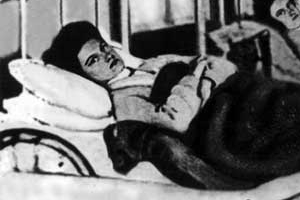
Mary Mallon, better known as Typhoid Mary, the first person in the United States identified as an asymptomatic carrier of the pathogen associated with typhoid fever, is placed in quarantine on March 27, 1869, where she remains for the rest of her life.

Mallon is presumed to have infected 51 people, three of whom die, over the course of her career as a cook. She is twice forcibly isolated by public health authorities and dies after a total of nearly three decades in isolation.

Mallon is born on September 23, 1869, in Cookstown, County Tyrone in what is now Northern Ireland. She immigrates to the United States in 1883 at the age of fifteen and lives with her aunt and uncle.

From 1900 to 1907, Mallon works as a cook in the New York City area for seven families. In 1900, she works in Mamaroneck, New York, where, within two weeks of her employment, residents develop typhoid fever. In 1901, she moves to Manhattan, where members of the family for whom she works develop fevers and diarrhea, and the laundress dies. Mallon then goes to work for a lawyer but leaves after seven of the eight people in that household become ill.

In 1906, Mallon takes a position in Oyster Bay, Long Island, and within two weeks ten of the eleven family members are hospitalized with typhoid. She changes jobs again and similar occurrences happen in three more households. She works as a cook for the family of a wealthy New York banker, Charles Henry Warren. When the Warrens rent a house in Oyster Bay for the summer of 1906, Mallon goes along as well. From August 27 to September 3, six of the eleven people in the family come down with typhoid fever. The disease at that time is “unusual” in Oyster Bay, according to three medical doctors who practice there. Mallon is subsequently hired by other families and outbreaks follow her.

In late 1906, one family hires a typhoid researcher named George Soper to investigate. Soper publishes the results on June 15, 1907, in the Journal of the American Medical Association. He believes Mallon might be the source of the outbreak, but she repeatedly turns him away.

The New York City Health Department sends physician Sara Josephine Baker to talk to Mallon. A few days later, Baker arrives at Mallon’s workplace with several police officers, who take her into custody.

Mallon attracts so much media attention that she is called “Typhoid Mary” in a 1908 issue of the Journal of the American Medical Association. Later, in a textbook that defines typhoid fever, she is again called “Typhoid Mary.”

The New York City Health Inspector determines her to be a carrier. Under sections 1169 and 1170 of the Greater New York Charter, Mallon is held in isolation for three years at a clinic located on North Brother Island.

Upon her release, Mallon is given a job as a laundress. In 1915, Mallon starts another major outbreak, this time at Sloane Hospital for Women in New York City. Twenty-five people are infected and two die. She again leaves, but the police are able to locate and arrest her when she brings food to a friend on Long Island. After arresting her, public health authorities return her to quarantine on North Brother Island on March 27, 1915.

Mallon spends the rest of her life in quarantine at the Riverside Hospital. Six years before her death, she is paralyzed by a stroke. She dies in North Brother Island, East River, New York, on November 11, 1938, of pneumonia. An autopsy finds evidence of live typhoid bacteria in her gallbladder. Mallon’s body is cremated, and her ashes are buried at Saint Raymond’s Cemetery in the Bronx.


Leave a comment

Birth of Charlotte Milligan Fox, Composer & Music Collector

charlotte-milligan-fox

Charlotte Milligan Fox, Irish composer and music collector, is born on March 17, 1864 in Omagh, County Tyrone in what is now Northern Ireland.

Milligan is the eldest of eleven children born to Methodist parents Seaton Milligan (1837–1916) and Charlotte Burns (1842–1916), with nine surviving including Alice Milligan and Edith Wheeler. All nine children enroll at Methodist College Belfast which provides a privileged and exceptional education. She studies classical piano and composition at the Royal College of Music in London and the Conservatoires of Frankfurt and Milan. Following her marriage to Charles Eliot Fox in 1892, she settles in London.

In 1904 Fox co-founds with Alfred Perceval Graves the Irish Folk Song Society, an offshoot of the Folk-Song Society formed in 1898. Its aim is to collect and publish Irish airs and ballads, in addition to holding lectures and concerts on the subject. She acts as the society’s honorary secretary. The rules of the Society are collected in volume 4 of the Journal of the Irish Folk Song Society. The subscription is 5 shillings payable every January and committee meetings are held at the Rooms of the Irish Literary Society in London.

Fox is a musician in her own right and tours Ireland collecting folk songs and airs. She undertakes a series of tours of County Antrim between 1909 and 1910 with her sisters Edith Wheeler and Alice Milligan. The sisters record and transcribe songs by Irish singers, then publish articles and musical scores in The Journal of Irish Folk Song.

In 1910 Fox visits the east coast of the United States where the New York branch of the Irish Folk Song Society is formed. “The Bardic Recital” is produced on March 16 at the National Theatre in Washington, D.C. She collects and arranges the music for the play.

Fox rediscovers Edward Bunting‘s papers, and under the provision of her will they come to Queen’s University Belfast in 1916. From these papers she writes The Annals of the Irish Harpers. The publication of The Annals of the Irish Harpers stimulates a revival of interest in both the Irish harp and Edward Bunting. Alice Milligan nurses her sister prior to Fox’s death in London on March 25, 1916. An obituary of Charlotte Milligan Fox is in The Irish Booklover (1916). The Journal of the Irish Folk Song Society (1917) has a poem in remembrance of Charlotte Milligan Fox. The same issue has a memoir of Fox by Alice Milligan and an appreciation of Fox by Alfred Perceval Graves.

During 2010 and 2011, the Ulster History Circle mounts plaques for famous Ulster figures. Charlotte Milligan Fox and Alice Milligan have a plaque mounted on Omagh Library, 1 Spillar’s Place, Omagh, County Tyrone.


Leave a comment

Birth of William Vincent Wallace, Composer & Musician

william-vincent-wallace

William Vincent Wallace, Irish composer and musician, is born at Colbeck Street, Waterford, County Waterford on March 11, 1812. In his day, he is famous on three continents as a double virtuoso on violin and piano. Nowadays, he is mainly remembered as an opera composer of note, with key works such as Maritana (1845) and Lurline (1847/60), but he also writes a large amount of piano music that is much in vogue in the 19th century.

Wallace’s father, Spencer Wallace of County Mayo, becomes a regimental bandmaster with the North Mayo Militia based in Ballina. William is born while the regiment is stationed for one year in Waterford. The family returns to Ballina in 1816 and he spends his formative years there, taking an active part in his father’s band and already composing pieces by the age of nine for the band recitals.

Under the tuition of his father and uncle, Wallace writes pieces for the bands and orchestras of his native area. He becomes accomplished in playing various band instruments before the family leaves the Army in 1826, moving from Waterford to Dublin, and becoming active in music in the capital. He learns to play several instruments as a boy, including the violin, clarinet, organ, and piano. In 1830, at the age of 18, he becomes organist of the Roman Catholic Cathedral at Thurles, County Tipperary, and teaches music at the Ursuline Convent there. He falls in love with a pupil, Isabella Kelly, whose father consents to their marriage in 1832 on condition that Wallace become a Roman Catholic. The couple soon moves to Dublin where he is employed as a violinist at the Theatre Royal.

Economic conditions in Dublin deteriorate after the Acts of Union 1800 and the whole Wallace family decides to emigrate to Australia in 1835. Wallace’s party first lands at Hobart, Tasmania in late October, where they stay several months before moving on to Sydney in January 1836. The Wallaces open the first Australian music academy in April. Wallace has already given many celebrity concerts in Sydney, and being the first virtuoso to visit the Colony, becomes known as the “Australian Paganini.” He is also active in the business of importing pianos from London, but his main activity involves many recitals in and around Sydney under the patronage of the Governor, General Sir Richard Bourke. The most significant musical events of this period are two large oratorio concerts on behalf of the organ fund at St. Mary’s Cathedral in Sydney in 1836 and 1838, which he directs, and which utilize all the available musical talent of the Colony, including the recently formed Philharmonic [Choral] Society.

In 1838, Wallace separates from his wife and begins a roving career that takes him around the globe. In 1841, he conducts a season of Italian opera in Mexico City. Moving on to the United States, he stays in New Orleans for some years, where he is feted as a virtuoso on violin and piano, before reaching New York City, where he is equally celebrated, and publishes his first compositions (1843–44).

Wallace arrives in London in 1845 and makes various appearances as a pianist. In November of that year, his opera Maritana is performed at the Theatre Royal, Drury Lane with great success, and is later presented internationally. Maritana is followed by Matilda of Hungary (1847), Lurline (1847/60), The Amber Witch (1861), Love’s Triumph (1862) and The Desert Flower (1863). He also publishes numerous compositions for the piano.

In New York in 1843–1844, Wallace is associated with the early concert seasons of the New York Philharmonic Society, and in 1853 is elected an Honorary (Life) Member of the Society. In 1854, he becomes an American citizen after a marriage in New York to German-born pianist Hélène Stoepel, sister of composer Robert Stoepel. In later years, having returned to Europe for the premieres of his later operas, he develops a heart condition for which he receives treatment in Paris in 1864. He dies in poor circumstances at the Château de Bagen, Sauveterre-de-Comminges, in the Haute Garonne on October 12, 1865. He is buried in Kensal Green Cemetery, London.

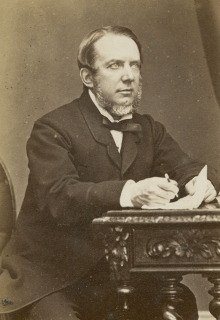
(Pictured: William Vincent Wallace. Undated portrait by Mathew Brady, New York City, Library of Congress)


Leave a comment

Birth of Ollie Campbell, Former Rugby Union Player

seamus-oliver-campbell

Seamus Oliver “Ollie” Campbell, former rugby union player, is born in Dublin on March 5, 1954. He plays fly-half for the Ireland national rugby union team from 1976 to 1984. He is most well known for his role in orchestrating Ireland’s Triple Crown victory at the 1982 Five Nations Championship, breaking a drought of over 30 years. He has been described as Ireland’s most complete fly-half since Jack Kyle.

Campbell is educated at Belvedere College, a famous Irish rugby school in Dublin, where he is on the teams that win the Leinster Schools Rugby Senior Cup twice in a row in 1971 and 1972. He plays for Old Belvedere R.F.C. at club level and represents Leinster at provincial level, although prior to the professional era. While playing for Old Belvedere, he travels to the United States in 1978, where he plays in New York City against the Old Maroon Rugby Club.

Campbell wins a total of 22 caps for Ireland from 1976–1984, scoring 217 test points. His international career is more brief than this span suggests, however, as he plays only four full seasons for Ireland from 1980–1984. Of his career totals, he wins 22 caps and scores 182 points in the Five Nations tournament. He tours twice with Ireland, to Australia in 1979 and to South Africa in 1981.

Campbell wins his first cap for Ireland at the age of 21 against Australia in 1976, but does not secure another cap with Ireland until 1979 during Ireland’s 1979 tour to Australia. He sets an Irish record on the 1979 tour to Australia when he scors 60 points, 19 of them in Brisbane which is an Irish record for points in a match against Australia.

The defining moment in Campbell’s career comes in 1982, with Campbell as the architect-in-chief of Ireland’s 1982 Triple Crown victory, Ireland’s first since 1949. Ireland enters the tournament winless in its past eight matches. Campbell starts the 1982 Five Nations by scoring eight points in Ireland’s 20–12 win against Wales, and also playing a major hand in all three of Ireland’s tries. He then scores another eight points in the following match, a 16–15 win against England. In Ireland’s third match, he kicks all of Ireland’s 21 points, including a career best 6 penalties, against Scotland at Lansdowne Road to secure the Triple Crown. He is the leading scorer in the 1982 Five Nations with 46 points.

In the 1983 Five Nations Championship, Campbell leads Ireland to a joint Five Nations Championship shared with France. He is again the tournament’s leading scorer with 52 points, and scores 21 points against England to set an Irish record for most points against England in a Five Nations match. He plays his last match for Ireland in 1984 against Wales.

Campbell is also capped seven times for the British & Irish Lions. He earns three caps in the 1980 Lions tour to South Africa, where he is the Lions’ leading scorer in the last two tests with six and five points respectively. He earns another four caps in the 1983 Lions tour to New Zealand, where he is the Lions’ leading scorer in the four test matches with 15 points. He scores 184 points in total for the Lions.

Campbell retires from rugby in 1986 following two years of struggles with hamstring injuries. In 2007 he is presented with the Newbridge RFC Legend in Rugby Award along with the Irish Rugby Squad which won the 1982 Triple Crown and elected an Honorary Life Member of Newbridge RFC. He has worked in the family clothing business since retirement from rugby in 1984.

Old Belvedere’s sportsground on Anglesea Road in Dublin is renamed Ollie Campbell Park in his honour in 2019.


Leave a comment

Birth of Sculptor Augustus Saint-Gaudens

augustus-saint-gaudens

Augustus Saint-Gaudens, sculptor of the statue for the Charles Stewart Parnell monument which is installed at the North end of Dublin‘s O’Connell Street in 1911, is born in Dublin on March 1, 1848. He is generally acknowledged to be the foremost American sculptor of the late 19th century, noted for his evocative memorial statues and for the subtle modeling of his low reliefs.

Saint-Gaudens is born to a French father and an Irish mother. His family moves to New York City when he is an infant and at age 13, he is apprenticed to a cameo cutter. He earns his living at this craft, while studying at night at Cooper Union (1861–65) and the National Academy of Design (1865–66) in New York. In 1867 he travels to Paris and is admitted to the École des Beaux-Arts. Along with Olin Levi Warner and Howard Roberts, he is one of the first Americans to study sculpture in Paris. Late in 1870 he sets out for Rome, where, still supporting himself by cameo cutting, he works for two years copying famous antique statues on commission. He also starts to create his first imaginative compositions during this period.

After 1875 Saint-Gaudens settles in New York, where he befriends and collaborates with a circle of men who form the nucleus of an American artistic renaissance. The group includes the architects Henry Hobson Richardson, Stanford White, and Charles Follen McKim and the painter John La Farge. The most important work of Saint-Gaudens’s early career is the monument to Admiral David Farragut (1880, Madison Square Garden, New York), the base of which is designed by White.

From 1880 to 1897 Saint-Gaudens executes most of the well-known works that gain him his great reputation and many honours. Working with La Farge, in 1881 he creates two caryatids for a fireplace in Cornelius Vanderbilt’s residence. In 1887 he begins the Amor Caritas, which, with variations, preoccupies him from about 1880 to 1898, and also a statue of a standing Abraham Lincoln (Lincoln Park, Chicago). The memorial to Marian Hooper Adams (1891) in Rock Creek Cemetery, Washington, D.C., is considered by many to be his greatest work. In 1897 he completes a monument in Boston depicting Robert Gould Shaw, colonel of an African American regiment in the American Civil War. The statue is remarkable for its expression of movement. Shortly thereafter, he leaves for Paris, where, over the next three years, he prepares his final major public sculpture, the Sherman Monument (1903), which is eventually erected in Grand Army Plaza in New York.

Saint-Gaudens also makes many medallions, originally as a diversion from more serious tasks. These works show the influence of Renaissance medals as well as his early cameos. Among them are designs for U.S. coins and a considerable number of portraits. His autobiography, The Reminiscences of Augustus Saint-Gaudens, is published in 1913.

Diagnosed with cancer in 1900, Saint-Gaudens dies at the age of 59 on August 3, 1907, in Cornish, New Hampshire.


Leave a comment

Birth of Sculptor Jerome Connor

jerome-connor

Jerome Connor, recognized world-class Irish sculptor, is born on February 23, 1874, in Coumduff, Annascaul, County Kerry.

In 1888, Connor emigrates to Holyoke, Massachusetts. His father is a stonemason, which leads to Connor’s jobs in New York as a sign painter, stonecutter, bronze founder and machinist. Inspired by his father’s work and his own experience, he would steal his father’s chisels as a child and carve figures into rocks.

It is believed Connor possibly assisted in the manufacture of bronzes such as the Civil War monument in Town Green in South Hadley, Massachusetts erected in 1896 and The Court of Neptune Fountain at the Library of Congress in Washington, D.C., completed in 1898.

Connor joins the Roycroft arts community in 1899 where he assists with blacksmithing and later starts creating terracotta busts and reliefs. Eventually he is recognized as Roycroft’s sculptor-in-residence.

After four years at Roycroft, Connor then works with Gustav Stickley and becomes well known as a sculptor being commissioned to create civic commissions in bronze for placement in Washington, D.C., Syracuse, East Aurora, New York, San Francisco, and in his native Ireland. In 1910, he establishes his own studio in Washington, D.C. From 1902 until his death, he produces scores of designs ranging from small portrait heads to relief panels to large civic commissions realized in bronze.

Connor is a self-taught artist who is highly regarded in the United States where most of his public works can be seen. He appears to be heavily influenced by the work of Irish American sculptor Augustus Saint-Gaudens. He uses the human figure to give expression to emotions, values and ideals. Many of the commissions he receives are for civic memorials and secular figures which he casts in bronze, a pronounced departure from the Irish tradition of stone carved, church sponsored works.

Connor’s best-known work is Nuns of the Battlefield located at the intersection of Rhode Island Avenue NW, M Street and Connecticut Avenue NW in Washington, D.C. It serves as a tribute to the over six hundred nuns who nursed soldiers of both armies during the American Civil War and is one of two monuments in the District that represent women’s roles in the Civil War. The sculpture is authorized by the United States Congress on March 29, 1918, with the agreement that the government will not fund it. The Ancient Order of Hibernians raises $50,000 for the project and Connor is selected since he focuses on Irish Catholic themes, being one himself. Connor, however, ends up suing the Order for nonpayment.

Connor works in the United States until 1925 at which time he moves to Dublin and opens his own studio but suffers from lack of financial support and patrons. In 1926 he is contacted by Roycroft and asked to design and cast a statue of Elbert Hubbard who, with his wife Alice, had died in the sinking of the RMS Lusitania. It is unveiled in 1930 and today stands on the lawn of East Aurora’s Middle School across the street from the Roycroft Chapel building.

While working on the Hubbard statue, Connor receives a commission to create a memorial for all the RMS Lusitania victims. It is to be erected in Cobh, County Cork where many of the victims are buried. The project is initiated by the New York Memorial Committee, headed by William Henry Vanderbilt whose father, Alfred Gwynne Vanderbilt, perished on the RMS Lusitania. He dies before the memorial is completed and based on Connor’s design its installation falls to another Irish artist.

Jerome Connor dies on August 21, 1943, of heart failure and reputably in poverty. There is a now a “Jerome Connor Place” in Dublin and around the corner there is a plaque in his honour on Infirmary Road, overlooking Dublin’s Phoenix Park, his favourite place.


Leave a comment

Birth of Frank Harris, Journalist & Novelist

frank-harris

Frank Harris, Irish American editor, novelist, short story writer, journalist and publisher, is born James Thomas Harris to Welsh parents in Galway, County Galway on February 14, 1855. He is friendly with many well-known figures of his day.

Harris’s father, Thomas Vernon Harris, is a naval officer from Fishguard, Pembrokeshire, Wales. While living with his older brother he is, for a year or more, a pupil at The Royal School, Armagh. At the age of twelve he is sent to Wales to continue his education as a boarder at the Ruabon Grammar School in Denbighshire, a time he is to remember later in My Life and Loves. He is unhappy at the school and runs away within a year.

Harris runs away to the United States in late 1869, arriving in New York City virtually penniless. The 13-year-old takes a series of odd jobs to support himself, working first as a shoeshiner, a porter, a general laborer, and a construction worker on the erection of the Brooklyn Bridge. He later turns these early occupational experiences into art, incorporating tales from them into his book The Bomb (1908).

From New York Harris moves to Chicago, where he takes a job as a hotel clerk and eventually a manager. Owing to Chicago’s central place in the meat packing industry, he makes the acquaintance of various cattlemen, who inspire him to leave the big city to take up work as a cowboy. He eventually grows tired of life in the cattle industry and enrolls at the University of Kansas, where he studies law and earns a degree, gaining admission to the Kansas Bar Association.

Harris is not cut out to be a lawyer and soon decides to turn his attention to literature. He returns to England in 1882, later traveling to various cities in Germany, Austria, France, and Greece on his literary quest. He works briefly as an American newspaper correspondent before settling down in England to seriously pursue the vocation of journalism.

Harris first comes to general notice as the editor of a series of London papers including The Evening News, The Fortnightly Review and the Saturday Review, the latter being the high point of his journalistic career, with H. G. Wells and George Bernard Shaw as regular contributors.

From 1908 to 1914 Harris concentrates on working as a novelist, authoring a series of popular books such as The Bomb, The Man Shakespeare, and The Yellow Ticket and Other Stories. With the advent of World War I in the summer of 1914, he decides to return to the United States.

From 1916 to 1922 Harris edits the U.S. edition of Pearson’s Magazine, a popular monthly which combines short story fiction with socialist-tinted features on contemporary news topics. One issue of the publication is banned from the mails by United States Postmaster General Albert S. Burleson during the period of American participation in World War I. Despite this Harris manages to navigate the delicate situation which faces the left-wing press and keeps Pearson’s Magazine functioning and solvent during the war years.

Harris becomes an American citizen in April 1921. In 1922 he travels to Berlin to publish his best-known work, his four-volume autobiography My Life and Loves (1922–1927). It is notorious for its graphic descriptions of his purported sexual encounters and for its exaggeration of the scope of his adventures and his role in history. A fifth volume, supposedly taken from his notes but of doubtful provenance, is published in 1954, long after his death.

Harris also writes short stories and novels, two books on William Shakespeare, a series of biographical sketches in five volumes under the title Contemporary Portraits and biographies of his friends Oscar Wilde and George Bernard Shaw. His attempts as a playwright are less successful. Only Mr. and Mrs. Daventry (1900), which is based on an idea by Oscar Wilde, is produced on the stage.

Married three times, Harris dies of a heart attack in Nice, France on August 26, 1931. He is buried at Cimetière Sainte-Marguerite, adjacent to the Cimetière Caucade, in Nice. Just after his death a biography written by Hugh Kingsmill (pseudonym of Hugh Kingsmill Lunn) is published.


Leave a comment

Death of Irish Artist John Butler Yeats

john-butler-yeats

John Butler Yeats, Irish artist and the father of William Butler Yeats, Lily Yeats, Elizabeth Corbett Yeats and Jack Butler Yeats, dies in New York City on February 3, 1922. The National Gallery of Ireland holds a number of his portraits in oil and works on paper, including one of his portraits of his son William, painted in 1900. His portrait of John O’Leary (1904) is considered his masterpiece.

Yeats is born on March 16, 1839, in Lawrencetown, County Down, in what is now Northern Ireland. His parents are William Butler Yeats (1806–1862) and Jane Grace Corbert. He is the eldest of nine children. Educated in Trinity College Dublin and a member of the University Philosophical Society, Yeats begins his career as a lawyer and junior assistant briefly with Isaac Butt before he takes up painting in 1867 and studies at the Heatherley School of Fine Art.

Yeats marries Susan Pollexfen (13 July 1841 – 3 January 1900) on September 10, 1863, at St. John’s Church in Sligo. Susan Yeats is dismayed when her husband abandons the study of law to become an artist. She is described as a “shadowy figure” who goes “quietly, pitifully, mad.” They have six children: William Butler Yeats, Susan Mary “Lily” Yeats, Elizabeth Corbett “Lolly” Yeats, Robert Corbet Yeats, John “Jack” Butler Yeats and Jane Grace Yeats.

There are few records of his sales, so there is no catalogue of his work in private collections. It is possible that some of his early work may have been destroyed by fire in World War II. It is clear that he has no trouble getting commissions as his sketches and oils are found in private homes in Ireland, England and the United States. His later portraits show great sensitivity to the sitter. However, he is a poor businessman and is never financially secure. He moves frequently and shifts several times between England and Ireland.

In 1907, at the age of 68, he travels to New York aboard the RMS Campania, with his daughter Lily, and never returns to Ireland. In October 1909 he moves into his final home, a boarding house run by the Petitpas sisters which is located at 317 West Twenty-Ninth Street. In New York, he is friendly with members of the Ashcan School of painters.

John Butler Yeats dies in the boarding house on February 3, 1922. Edmund Quinn makes a death mask which is now in the collection of the Yeats Society in Sligo. Yeats is buried in Chestertown Rural Cemetery in Chestertown, New York, next to his friend, Jeanne Robert Foster.


Leave a comment

Death of Architect Michael Scott

michael-scott

Michael Scott, Irish architect whose buildings include the Busáras building in Dublin, Cork Opera House, the Abbey Theatre and both Tullamore and Portlaoise Hospitals, dies on January 24, 1989.

Scott is born in Drogheda on June 24, 1905. His family originates in the province of Munster. His father, William Scott, is a school inspector from near Sneem on the Iveragh Peninsula in County Kerry. His mother is from County Cork. He is educated at Belvedere College in Dublin. There he first demonstrates his skills at painting and acting. Initially he wants to pursue a career as a painter, but his father points out that it might make more financial sense to become an architect.

Scott becomes an apprentice for the sum of £375 per annum to the Dublin architectural firm Jones and Kelly. He remains there from 1923 until 1926, where he studies under Alfred E. Jones. In the evenings after work, he also attends the Metropolitan School of Art and the Abbey School of Acting, and appears in many plays there until 1927, including the first productions of Seán O’Casey’s Juno and the Paycock and The Plough and the Stars. On completing his pupilage, he becomes an assistant to Charles James Dunlop and then has a brief spell as an assistant architect in the Office of Public Works.

In 1931 Scott partners with Norman D. Good to form Scott and Good, and they open an office in Dublin. They design the hospital at Tullamore (1934–1937) and Portlaoise General Hospital (1935). Between 1937 and 1938, he is the President of the Architectural Association of Ireland (AAI). He founds his company, Michael Scott Architects, in 1938. That same year he also designs his house Geragh, at Sandycove, County Dublin.

Scott’s most important pre-war commission is the Irish Pavilion for the 1939 New York World’s Fair. He produces a shamrock shaped building constructed in steel, concrete and glass. It is selected by an international jury as the best building in the show. As a result, he is presented with a silver medal for distinguished services and given honorary citizenship of the city of New York by then Mayor Fiorello H. La Guardia. Other better-known architects who design national pavilions for this World Fair include Alvar Aalto of Finland and Oscar Niemeyer of Brazil.

Scott has three major commissions from the Córas Iompair Éireann CIÉ, the Inchicore Chassis Works, the Donnybrook Bus Garage and, most famously, the Dublin Central Bus Station, to be known as àras Mhic Dhiarmada or Busáras. Though initially controversial, Busáras wins Scott the Royal Institute of the Architects of Ireland Triennial Gold Medal for Architecture.

Later, Ronnie Tallon and Robin Walker become partners, and the firm is renamed Scott Tallon Walker in 1975, shortly after the firm wins the Royal Institute of British Architects (RIBA) Royal Gold Medal.

Scott, who spends most of his life living at Sandycove Point, just south of Dún Laoghaire in south Dublin, dies in Dublin on January 24, 1989, and is buried near Sneem in County Kerry.