seamus dubhghaill

Promoting Irish Culture and History from Little Rock, Arkansas, USA


Leave a comment

The Closing of Ellis Island

Ellis Island, the gateway to America, shuts it doors on November 12, 1954, after processing more than 12 million immigrants, including an estimated two million Irish, since opening in 1892. Today, an estimated 40 percent of all Americans can trace their roots through Ellis Island, located in New York Harbor off the New Jersey coast and named for merchant Samuel Ellis, who owned the land in the 1770s.

On January 2, 1892, 15-year-old Annie Moore, from County Cork, becomes the first person to pass through the newly opened Ellis Island, which President Benjamin Harrison designates as America’s first federal immigration center in 1890. Prior to the opening of Ellis Island the processing of immigrants has been handled by individual states.

Not all immigrants who sail into New York have to go through Ellis Island. First- and second-class passengers submit to a brief shipboard inspection and then disembarked at the piers in New York or New Jersey, where they pass through customs. People in third class, though, are transported to Ellis Island, where they undergo medical and legal inspections to ensure they do not have a contagious disease or some condition that might make them a burden to the government. Only two percent of all immigrants are denied entrance into the United States.

Immigration to Ellis Island peaks between 1892 and 1924, during which time the 3.3-acre island is enlarged with landfill and additional buildings are constructed to handle the massive influx of immigrants. During the busiest year of operation, 1907, over 1 million people are processed at Ellis Island.

With the United States’ entrance into World War I, immigration declines and Ellis Island is used as a detention center for suspected enemies. Following the war, Congress passes quota laws and the Immigration Act of 1924, which sharply reduces the number of newcomers allowed into the country and also enables immigrants to be processed at U.S. consulates abroad. After 1924, Ellis Island switches from a processing center to serving other purposes, such as a detention and deportation center for illegal immigrants, a hospital for wounded soldiers during World War II and a Coast Guard training center. In November 1954, the last detainee, a Norwegian merchant seaman, is released and Ellis Island officially closes.

Beginning in 1984, Ellis Island undergoes a $160 million renovation, the largest historic restoration project in U.S. history. In September 1990, the Ellis Island Immigration Museum opens to the public and today is visited by almost 2 million people every year.


Leave a comment

Birth of Irish Folk Musician Tommy Makem

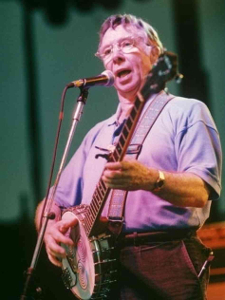
Thomas “Tommy” Makem, internationally celebrated Irish folk musician, artist, poet and storyteller, is born in Keady, County Armagh, on November 4, 1932. He is best known as a member of The Clancy Brothers and Tommy Makem. He plays the long-necked 5-string banjo, tin whistle, low whistle, guitar, bodhrán and bagpipes, and sings in a distinctive baritone. He is sometimes known as “The Bard of Armagh,” taken from a traditional song of the same name, and “The Godfather of Irish Music.”

Makem’s mother, Sarah Makem, is an important source of traditional Irish music, who is visited and recorded by, among others, Diane Guggenheim Hamilton, Jean Ritchie, Peter Kennedy and Sean O’Boyle. His father, Peter Makem, is a fiddler who also plays the bass drum in a local pipe band named “Oliver Plunkett,” after a Roman Catholic martyr of the reign of Charles II of England. His brother and sister are folk musicians as well. Makem, from the age of eight, is member of the St. Patrick’s church choir for 15 years where he sings Gregorian chant and motets. He does not learn to read music but he makes it in his “own way.”

Makem starts to work at 14 as a clerk in a garage and later he works for a while as a barman at Mone’s Bar, a local pub, and as a local correspondent for The Armagh Observer.

Makem emigrates to the United States in 1955, carrying his few possessions and a set of bagpipes from his time in a pipe band. Arriving in Dover, New Hampshire, he works at Kidder Press, where his hand was accidentally crushed by a press in 1956. With his arm in a sling, he leaves Dover for New York City to pursue an acting career.

The Clancys and Makem are signed to Columbia Records in 1961. The same year, at the Newport Folk Festival, Makem and Joan Baez are named the most promising newcomers on the American folk scene. During the 1960s, the Clancy Brothers and Tommy Makem perform sellout concerts at such venues as Carnegie Hall, and make television appearances on shows like The Ed Sullivan Show and The Tonight Show. The group performs for President John F. Kennedy. They also play in smaller venues such as the Gate of Horn in Chicago. They appear jointly in the UK Albums Chart in April 1966, when Isn’t It Grand Boys reaches number 22.

Makem leaves the group in 1969 to pursue a solo career. In 1975, he and Liam Clancy are both booked to play a folk festival in Cleveland, Ohio, and are persuaded to do a set together. Thereafter they often perform as Makem and Clancy, recording several albums together. He once again goes solo in 1988. Throughout the 1970s and 1980s he performs both solo and with Liam Clancy on The Irish Rovers‘ various television shows, which are filming in Canada and Ireland.

In the 1980s and 1990s, Makem is a principal in a well-known Irish music venue in New York, “Tommy Makem’s Irish Pavilion.” This East 57th Street club is a prominent and well-loved performance spot for a wide range of musicians. Among the performers and visitors are Paddy Reilly, Joe Burke, and Ronnie Gilbert. Makem is a regular performer, often solo and often as part of Makem and Clancy, particularly in the late fall and holiday season. The club is also used for warm-up performances in the weeks before the 1984 reunion concert of The Clancy Brothers and Tommy Makem at Lincoln Center for the Performing Arts. In addition, the after-party for Bob Dylan‘s legendary 30th Anniversary Concert Celebration at Madison Square Garden in 1992 is held at the Irish Pavilion.

In 1997 Makem writes a book, Tommy Makem’s Secret Ireland, and in 1999 premiers a one-man theatre show, Invasions and Legacies, in New York. His career includes various other acting, video, composition, and writing credits. He also establishes the Tommy Makem International Festival of Song in South Armagh in 2000.

Tommy Makem dies in Dover, New Hampshire, on August 1, 2007, following a lengthy battle with lung cancer. He continues to record and perform until very close to the end. Paying tribute to him after his death, Liam Clancy says, “He was my brother in every way.” He is buried next to his wife at New Saint Mary Cemetery in Dover.


Leave a comment

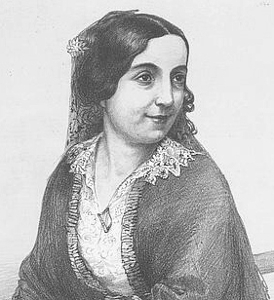
Birth of Soprano Catherine Hayes

Catherine Hayes, world-famous Irish soprano of the Victorian era, is born in Limerick, County Limerick, on October 25, 1818. According to London‘s Daily Express, “Hayes was the ‘Madonna‘ of her day; she was the 19th-century operatic equivalent of the world’s most famous pop star.”

Hayes is born into abject poverty. After five years of vocal study in Paris and Milan she makes her debut at the Italian Opera in Marseilles, in Vincenzo Bellini‘s I Puritani in May 1845, followed by performances of Gaetano Donizetti‘s Lucia di Lammermoor and Gioachino Rossini‘s Mosé in Egitto.

Her debut at La Scala in Milan quickly followed in 1845 with phenomenal success. Shortly thereafter the young Giuseppe Verdi becomes interested in her for one of his new operas. Her great success continues in Vienna, as well as in Venice, Florence, Genoa, Rome and other cities in Italy, where she becomes the most sought after Lucia di Lammermoor.

Early in 1849, Hayes accepts a contract to sing at the Royal Opera House, Covent Garden, London where she makes her debut in Linda di Chamounix in April. In June 1849, she receives an invitation to sing at Buckingham Palace for Queen Victoria and 500 guests. After an evening of Italian music, when the Queen requests an encore, Hayes with a smile sings the beautiful Irish rebel songKathleen Mavourneen.”

During Ireland’s Great Famine in November 1849, her emotional return to her native country results in rave notices for her performance in Lucia di Lammermoor and other operas and concerts in Dublin, Limerick and Cork. Her success is now almost complete.

In 1851 Hayes goes to the United States, where Jenny Lind is creating such a wave of success. Hayes gives concerts in New York City, Boston, Toronto, Philadelphia, Washington, D.C., Charleston, Savannah and New Orleans and forty-five other places including the river towns along the Mississippi River, with equal success. She meets presidents, statesmen and business leaders along the way. She is also destined to meet her future lover and husband in America, Jenny Lind’s former manager. Her travels take her to the “gold rush” in the San Francisco area in the 1850s, where her presence creates a furor, singing for the miners and the elite of San Francisco. The great showman P.T. Barnum sponsors her tour.

She sings in opera and concerts in Peru and Chile, then travels to Hawaii where she gives a concert before continuing on to Australia. Hayes is the first great European opera star to visit Australia. She is mentioned in most Australian history books about early culture in the young colony.  She also travels to Calcutta, India where she performs for the British Military and then on to Singapore and Batavia (Java) before returning to Australia for more opera and concerts.

Hayes returns to England in August 1856, after an absence of five years.  On October 8, 1857, at St. George’s, Hanover Square, she marries William Avery Bushnell. He soon falls into ill-health and dies at Biarritz, France, on July 2, 1858. After her husband’s death she takes part in concerts in London and the country towns.

Catherine Hayes dies in the house of a friend, Henry Lee, at Roccles, Upper Sydenham, Kent, on August 11, 1861, and is buried in Kensal Green Cemetery.


Leave a comment

Final Arrival of the Concorde in Ireland

The supersonic aircraft Concorde arrives at Belfast International Airport, Aldergrove on October 21, 2003, on a farewell tour during its final week before being taken out of service.

In a final week of farewell flights around the United Kingdom, a British Airways Concorde visits Birmingham on October 20, Belfast on October 21, Manchester on October 22, Cardiff on October 23, and Edinburgh on October 24. Each day the aircraft makes a return flight out and back into Heathrow Airport to the cities concerned, often overflying those cities at low altitude. Over 650 competition winners and 350 special guests are carried.

On the evening of October 23, 2003, Queen Elizabeth II consents to the illumination of Windsor Castle as Concorde’s final west-bound commercial flight departs London and flies overhead. This is an honour normally reserved for major state events and visiting dignitaries.

British Airways retires its aircraft the next day, October 24. G-BOAG leaves New York City to a fanfare similar to her Air France predecessor’s, while two more made roundtrips, G-BOAF over the Bay of Biscay, carrying VIP guests including many former Concorde pilots, and G-BOAE to Edinburgh. The three aircraft then circle over London, having received special permission to fly at low altitude, before landing in sequence at Heathrow.

The two round-trip Concordes land at 4:01 and 4:03 PM BST, followed at 4:05 by the one from New York. All three aircraft then spend 45 minutes taxiing around the airport before finally disembarking the last supersonic fare-paying passengers. The pilot of the New York to London flight is Mike Bannister.

All of British Airway’s Concordes have been grounded, have lost their airworthiness certificates and have been drained of hydraulic fluid. Ex-chief Concorde pilot and manager of the fleet, Jock Lowe, estimates it would cost £10-15 million to make G-BOAF airworthy again. British Airways maintains ownership of the Concordes and has stated that their Concordes will not be flown again.


Leave a comment

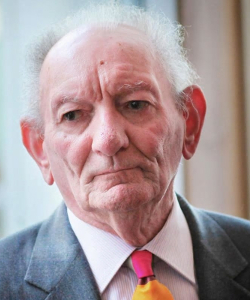
Death of Playwright Brian Friel

Brian Patrick Friel, Irish playwright, short story writer and founder of the Field Day Theatre Company, dies on October 2, 2015, in Greencastle, County Donegal. He has been considered one of the greatest living English-language dramatists. He has been likened to an “Irish Chekhov” and described as “the universally accented voice of Ireland.” His plays have been compared favourably to those of contemporaries such as Samuel Beckett, Arthur Miller, Harold Pinter and Tennessee Williams.

Friel is born in Knockmoyle, close to Omagh, County Tyrone, Northern Ireland. The family moves to Derry when Friel is ten years old. There, he attends St. Columb’s College, the same school attended by Seamus Heaney, John Hume, Seamus Deane, Phil Coulter, Eamonn McCann and Paul Brady. He receives his B.A. from St. Patrick’s College, Maynooth (1945–48).

Recognised for early works such as Philadelphia, Here I Come! and Faith Healer, Friel has 24 plays published in a career of more than a half-century. He is elected to the honorary position of Saoi of Aosdána. His plays are commonly produced on Broadway in New York City throughout this time, as well as in Ireland and the United Kingdom. In 1980 Friel co-founds Field Day Theatre Company, and his play Translations is the company’s first production. With Field Day, Friel collaborates with Seamus Heaney, 1995 recipient of the Nobel Prize in Literature. Heaney and Friel first become friends after Friel sends the young poet a letter following publication of his book Death of a Naturalist. Friel’s play Dancing at Lughnasa wins three Tony Awards in 1992.

Friel is a member of the American Academy of Arts and Letters, the British Royal Society of Literature and the Irish Academy of Letters. He is appointed to Seanad Éireann in 1987 and serves until 1989. In later years, Dancing at Lughnasa reinvigorates Friel’s oeuvre, bringing him Tony Awards, including Best Play, the Laurence Olivier Award for Best New Play and the New York Drama Critics Circle Award for Best Play. It is also adapted into a film, starring Meryl Streep, directed by Pat O’Connor, script by Frank McGuinness.

After a long illness Friel dies at the age of 86 in the early morning of Friday, October 2, 2015, in Greencastle, County Donegal. He is survived by his wife Anne and children Mary, Judy, Sally and David. A daughter, Patricia, predeceases him in 2012.


Leave a comment

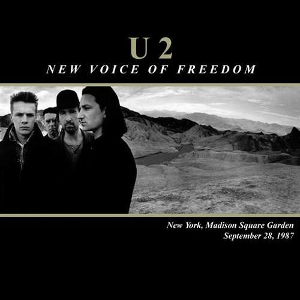
U2 & New Voices of Freedom at Madison Square Garden

Irish rock band U2 is joined by the New Voices of Freedom choir onstage at Madison Square Garden in New York City for a performance of “I Still Haven’t Found What I’m Looking For” on September 28, 1987.

Dennis Bell, director of New York gospel choir The New Voices of Freedom, records a demo of a gospel version of “I Still Haven’t Found What I’m Looking For.” While in Glasgow, Scotland in late July during U2’s Joshua Tree Tour, Rob Partridge of Island Records plays the demo for the band. In late September, U2 rehearses with Bell’s choir in a Harlem church, and a few days later they perform the song together at U2’s Madison Square Garden concert.

Footage of the rehearsal is featured in the rockumentary Rattle and Hum, while the Madison Square Garden performance appears on the Rattle and Hum album, the band’s sixth studio album. After the church rehearsal, U2 walks around the Harlem neighbourhood where they come across blues duo Satan and Adam playing on the street. A 40-second clip of them playing their composition “Freedom for My People” appears on both the movie and the album.


Leave a comment

Birth of John Ireland, First Archbishop of St. Paul

John Ireland, the third Roman Catholic bishop and first Roman Catholic archbishop of Saint Paul, Minnesota, is born in Burnchurch, County Kilkenny, on September 11, 1838. He becomes both a religious as well as civic leader in Saint Paul during the turn of the 20th century.

Ireland is known for his progressive stance on education, immigration and relations between church and state, as well as his opposition to saloons and political corruption. He promotes the Americanization of Catholicism, especially in the furtherance of progressive social ideals. He is a leader of the modernizing element in the Roman Catholic Church during the Progressive Era. He creates or helps to create many religious and educational institutions in Minnesota. He is also remembered for his acrimonious relations with Eastern Catholics.

Ireland’s family immigrates to the United States in 1848 and eventually moves to Saint Paul, Minnesota, in 1852. One year later Joseph Crétin, first bishop of Saint Paul, sends Ireland to the preparatory seminary of Meximieux in France. Ireland is consequently ordained in 1861 in Saint Paul. He serves as a chaplain of the Fifth Minnesota Volunteer Infantry Regiment in the American Civil War until 1863 when ill health leads to his resignation. Later, he is famous nationwide in the Grand Army of the Republic.

Ireland is appointed pastor at Saint Paul’s cathedral in 1867, a position which he holds until 1875. In 1875, he is made coadjutor bishop of St. Paul and in 1884 he becomes bishop ordinary. In 1888 he becomes archbishop with the elevation of his diocese and the erection of the ecclesiastical province of Saint Paul. Ireland retains this title for thirty years until his death in 1918. Before Ireland dies, he burns all of his personal papers.

Ireland is awarded an honorary doctorate (LL.D.) by Yale University in October 1901, during celebrations for the bicentenary of the university.

Ireland is personal friends with Presidents William McKinley and Theodore Roosevelt. At a time when most Irish Catholics are staunch Democrats, Ireland is known for being close to the Republican party. He opposes racial inequality and calls for “equal rights and equal privileges, political, civil, and social.” Ireland’s funeral is attended by eight archbishops, thirty bishops, twelve monsignors, seven hundred priests and two hundred seminarians.

A friend of James J. Hill, Archbishop Ireland has his portrait painted in 1895 by the Swiss-born American portrait painter Adolfo Müller-Ury almost certainly on Hill’s behalf, which is exhibited at M. Knoedler & Co., New York, January 1895 and again in 1897.


Leave a comment

Launch of the RMS Oceanic

RMS Oceanic, the White Star Line‘s first liner built by Harland & Wolff in Belfast, is launched on August 27, 1870, arriving in Liverpool, England for her maiden voyage on February 26, 1871.

Three sister ships are constructed in rapid succession: RMS Atlantic, SS Baltic, and SS Republic. All are of the same approximate dimensions with differences in tonnage.

Powered by a combination of steam and sail, RMS Oceanic has twelve boilers generating steam for a single four-cylinder compound steam engine. A single funnel exhausts smoke and four masts carry sails. The hull is constructed of iron and divided into eleven watertight compartments. Passenger accommodations are located on the two decks concealed within the hull. RMS Oceanic can carry 166 First Class passengers, referred to as Saloon Passengers in the day and 1,000 Steerage Passengers, along with a 143-man crew. White Star spares no expense in her construction, and the contemporary press describes the ship as an “imperial yacht.”

RMS Oceanic leaves Liverpool for her maiden voyage on March 2, 1871 carrying only 64 passengers, under Captain Sir Digby Murray. Not long after departing, she has to return because of overheated bearings. Her voyage restarts on March 16. From that point onward, RMS Oceanic is a success for The White Star Line.

In January, 1872, RMS Oceanic undergoes a refit, during which a large forecastle is added to help prevent the bow being inundated during high seas. Two new boilers are added to increase steam pressure and thus engine power, and the four masts are shortened.

RMS Oceanic continues sailing with the White Star line on the Liverpool to New York City route until March 11, 1875, when she is chartered to the Occidental & Oriental Steamship Company, for service between San Francisco, Yokohama and Hong Kong. White Star provides the officers, while the crew is Chinese. The ship itself remains in White Star colours, but flies the O&O flag. During the repositioning voyage from Liverpool to Hong Kong, RMS Oceanic sets a speed record for that route. Later, she also sets a speed record for Yokohama to San Francisco in December 1876, and then breaks her own record over that route in November, 1889, with a time of 13 days, 14 hours and 5 minutes.

On August 22, 1888, RMS Oceanic collides with the coastal liner SS City of Chester just outside the Golden Gate. The SS City of Chester sinks, killing 16 on board.

On January 7, 1890, Nellie Bly boards RMS Oceanic in Yokohama to cross the Pacific as part of her voyage Around the World in Seventy-Two Days. She arrives in San Francisco on January 21, 1890, which is a day behind schedule as a result of rough weather.

In 1895, RMS Oceanic is returned to White Star, which plans to put her back into service. She is sent back to Harland and Wolff for re-engining, but when the ship is inspected closely, it is found to be uneconomical to perform all the work needed. Instead, RMS Oceanic is sold for scrap, leaving Belfast for the last time on February 10, 1896, under tow, for a scrapyard on the River Thames.


Leave a comment

Death of Frank Harris, Novelist & Journalist

Frank Harris, British editor, novelist, short story writer, journalist and publisher, dies on August 26, 1931. He is friendly with many well-known figures of his day.

Harris is born James Thomas Harris on February 14, 1855, in Galway, County Galway, to Welsh parents. While living with his older brother he is, for a year or more, a pupil at The Royal School, Armagh. At the age of twelve he is sent to Wales to continue his education as a boarder at the Ruabon Grammar School in Denbighshire, a time he is to remember later in My Life and Loves. Harris is unhappy at the school and runs away within a year.

Harris runs away to the United States in late 1869, arriving in New York City virtually penniless. The 13-year-old takes a series of odd jobs to support himself, working first as a shoeshiner, a porter, a general laborer, and a construction worker on the erection of the Brooklyn Bridge. He later turns these early occupational experiences into art, incorporating tales from them into his book The Bomb.

From New York Harris moves to the American Midwest, settling in Chicago, where he takes a job as a hotel clerk and eventually a manager. Owing to Chicago’s central place in the meat packing industry, Harris makes the acquaintance of various cattlemen, who inspire him to leave the big city to take up work as a cowboy. He eventually grows tired of life in the cattle industry and enrolls at the University of Kansas, where he studies law and earns a degree, gaining admission to the Kansas state bar association.

Harris is not cut out to be a lawyer and soon decides to turn his attention to literature. He returns to England in 1882, later traveling to various cities in Germany, Austria, France, and Greece on his literary quest. He works briefly as an American newspaper correspondent before settling down in England to seriously pursue the vocation of journalism.

Harris first comes to general notice as the editor of a series of London papers including The Evening News, The Fortnightly Review and the Saturday Review, the last-named being the high point of his journalistic career, with H. G. Wells and George Bernard Shaw as regular contributors.

From 1908 to 1914 Harris concentrates on working as a novelist, authoring a series of popular books such as The Bomb, The Man Shakespeare, and The Yellow Ticket and Other Stories. With the advent of World War I in the summer of 1914, Harris decides to return to the United States.

From 1916 to 1922 he edits the U.S. edition of Pearson’s Magazine, a popular monthly which combines short story fiction with socialist-tinted features on contemporary news topics. One issue of the publication is banned from the mails by United States Postmaster General Albert S. Burleson during the period of American participation in the Great War. Despite this Harris manages to navigate the delicate situation which faces the left wing press and to keep the Pearson’s Magazine functioning and solvent during the war years.

Harris becomes an American citizen in April 1921. In 1922 he travels to Berlin to publish his best-known work, his autobiography My Life and Loves. It is notorious for its graphic descriptions of Harris’ purported sexual encounters and for its exaggeration of the scope of his adventures and his role in history. Years later, Time Magazine reflects in its March 21, 1960 issue “Had he not been a thundering liar, Frank Harris would have been a great autobiographer….he had the crippling disqualification that he told the truth, as Max Beerbohm remarked, only ‘when his invention flagged’.” A fifth volume, supposedly taken from his notes but of doubtful provenance, is published in 1954, long after his death.

Harris also writes short stories and novels, two books on Shakespeare, a series of biographical sketches in five volumes under the title Contemporary Portraits and biographies of his friends Oscar Wilde and George Bernard Shaw. His attempts at playwriting are less successful. Only Mr. and Mrs. Daventry (1900), which is based on an idea by Oscar Wilde, is produced on the stage.

Married three times, Harris dies of a heart attack in Nice at the age of 75 on August 26, 1931. He is subsequently buried at Cimetière Caucade in the same city. Just after his death a biography written by Hugh Kingsmill (pseudonym of Hugh Kingsmill Lunn) is published.


Leave a comment

James Mulroy Awarded the First Walter Scott Medal for Valour

The first Walter Scott Medal for Valour, a medal awarded annually for bravery in the Garda Síochána, is awarded to Garda James Mulroy on August 18, 1924. The award is presented by Colonel Scott himself at the Depot, Phoenix Park. It is not a state award, being in the gift of the commissioner, but the medals are awarded by the Minister for Justice and Equality.

The Garda medal is instituted at the behest of Colonel Walter Scott, a New York City philanthropist who took an interest in policing. In 1923 he gives a one thousand dollar gold Bond which pays for in perpetuity a gold medal. The award is to be presented under the following condition: No action, however heroic, will merit the award of the Scott medal unless it takes the shape of an act of most exceptional bravery and heroism involving the risk of life in the execution of duty, and armed with full previous knowledge of the risk involved.

Guard Mulroy is accosted by two armed men who tell him he has five minutes to live. He waits for his opportunity, springs upon the man with the revolver, tackles him and holds him, but is shot and seriously wounded by the other man who fires his single barreled shotgun and then proceeds to beat Guard Mulroy on the head with the shotgun. The struggle ends when the stock of the shotgun separates from the barrel and Guard Mulroy grabs the barrel with one hand while still holding the other man with the loaded revolver with the other. Guard Mulroy disarms the man with the revolver while the other runs off. He then tells the remaining man to go home. Guard Mulroy falls unconscious and later awakes to find himself in the ditch with the revolver in one hand and the barrel in the other. He returns to his station at 5:00 AM, gets his wounds dressed, and then goes out with another Guard and arrests one of the men.