seamus dubhghaill

Promoting Irish Culture and History from Little Rock, Arkansas, USA


Leave a comment

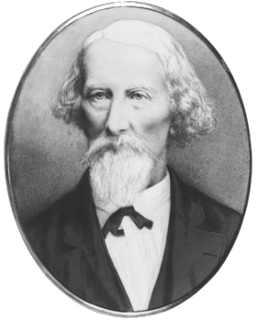
Douglas Hyde Inaugurated First President of Ireland

douglas-hyde

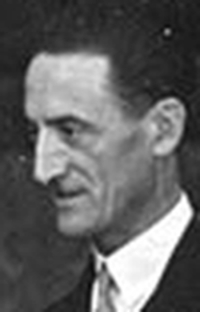
Dr. Douglas Hyde, Gaelic scholar from County Roscommon, is inaugurated as the first President of Ireland on June 25, 1938.

Hyde is born at Longford House in Castlerea, County Roscommon, on January 17, 1860. In 1867, his father is appointed prebendary and rector of Tibohine, and the family moves to neighbouring Frenchpark, in County Roscommon. He is home schooled by his father and his aunt due to a childhood illness. While a young man, he becomes fascinated with hearing the old people in the locality speak the Irish language.

Rejecting family pressure to follow previous generations with a career in the Church, Hyde instead becomes an academic. He enters Trinity College, Dublin, where he gains a great facility for languages, learning Latin, Greek, Hebrew, French, and German, but his great passion in life is the preservation of the Irish language.

After spending a year teaching modern languages in Canada, Hyde returns to Ireland. For much of the rest of his life he writes and collects hundreds of stories, poems, and folktales in Irish, and translates others. His work in Irish helps to inspire many other literary writers, such as W.B. Yeats and Lady Gregory.

In 1892, Hyde helps establish the Gaelic Journal and in November of that year writes a manifesto called The necessity for de-anglicising the Irish nation, arguing that Ireland should follow her own traditions in language, literature, and even in dress.

In 1893, Hyde founds the Gaelic League (Conradh na Gaeilge) along with Eoin MacNeill and Fr. Eugene O’Growney and serves as its first president. Many of the new generation of Irish leaders who play a central role in the fight for Irish independence in the early twentieth century, including Patrick Pearse, Éamon de Valera, Michael Collins, and Ernest Blythe first become politicised and passionate about Irish independence through their involvement in the Gaelic League. Hyde does not want the Gaelic League to be a political entity, so when the surge of Irish nationalism that the Gaelic League helps to foster begins to take control of many in the League and politicize it in 1915, Hyde resigns as president.

Hyde takes no active part in the armed upheaval of the 1910s and 1920s, but does serve in Seanad Éireann, the upper house of the Irish Free State‘s Oireachtas, as a Free State senator in 1925-26. He then returns to academia, as Professor of Irish at University College Dublin, where one of his students is future Attorney General and President of Ireland Cearbhall Ó Dálaigh.

In 1938, Hyde is unanimously elected to the newly created position of President of Ireland, a post he holds until 1945. He is inaugurated on June 26, 1938, in the first inaugural ceremony in the nation’s history. He sets a precedent by reciting the Presidential Declaration of Office in Irish. His recitation, in Roscommon Irish, is one of a few recordings of a dialect of which Hyde is one of the last speakers. Upon inauguration, he moves into the long vacant Viceregal Lodge in Phoenix Park, since known as Áras an Uachtaráin.

Hyde’s selection and inauguration receive worldwide media attention and is covered by newspapers in Australia, New Zealand, South Africa, Argentina, and Egypt. Adolf Hitler “orders” the Berlin newspapers “to splash” on the Irish presidential installation ceremony. However, the British government ignores the event. The Northern Ireland Finance Minister, John Miller Andrews, described Hyde’s inauguration as a “slight on the King” and “a deplorable tragedy.”

Despite being placed in a position to shape the office of the presidency via precedent, Hyde by and large opts for a quiet, conservative interpretation of the office.

In April 1940 Hyde suffers a massive stroke and plans are made for his lying-in-state and state funeral, but to the surprise of everyone he survives, albeit paralysed and confined to a wheelchair. One of Hyde’s last presidential acts is a visit to the German ambassador Eduard Hempel on May 3, 1945, to offer his condolences on the death of Adolf Hitler, a visit which remains a secret until 2005.

Hyde leaves office on June 25, 1945, opting not to nominate himself for a second term. He opts not return to his Roscommon home due to his ill-health but rather moves into the former Secretary to the Lord Lieutenant’s residence in the grounds of Áras an Uachtaráin, where he lived out the remaining four years of his life.

Hyde dies in Dublin on July 12, 1949, at age 89. As a former President of Ireland, he is accorded a state funeral which, as a member of the Church of Ireland, takes place in Dublin’s Church of Ireland St. Patrick’s Cathedral. Since contemporary rules of the Roman Catholic Church in Ireland at the time prohibit Roman Catholics from attending services in non-Catholic churches, all but one member of the Catholic cabinet remains outside the cathedral grounds while Hyde’s funeral takes place. Hyde is buried in Frenchpark, County Roscommon at Portahard Church.


Leave a comment

Birth of Actress Sara Ellen Allgood

sara-allgood

Sara Ellen Allgood, Irish American actress,is born to a Catholic mother and Protestant father in Dublin on October 31, 1879.

Allgood joins Inghinidhe na hÉireann (“Daughters of Ireland”), where she first begins to study drama under the direction of Maud Gonne and William Fay. She begins her acting career at the Abbey Theatre and is in the opening of the Irish National Theatre Society. Her first big role is in December 1904 at the opening of Lady Gregory‘s Spreading the News. By 1905 she is a full-time actress, touring England and North America.

In 1915 Allgood is cast as the lead in Peg o’ My Heart which tours Australia and New Zealand in 1916. She marries her leading man, Gerald Henson, in September 1916 in Melbourne, however, her happiness is short lived. She gives birth to a daughter named Mary in January 1918, who dies just a day later. Her husband dies of influenza during an outbreak in November 1918. After her return to Ireland, she continues to perform at the Abbey Theatre. Her most memorable performance is in Seán O’Casey‘s Juno and the Paycock in 1923. She wins acclaim in London when she plays Bessie Burgess in O’Casey’s The Plough and the Stars in 1926.

Allgood is frequently featured in early Alfred Hitchcock films, such as Blackmail (1929), Juno and the Paycock (1930), and Sabotage (1936). She also has a significant role in Storm in a Teacup (1937).

After many successful theatre tours in the United States, she settles in Hollywood in 1940 to pursue an acting career. She is nominated for the Academy Award for Best Supporting Actress for her role as Beth Morgan in the 1941 film How Green Was My Valley. She also has memorable roles in the 1941 retelling of Dr. Jekyll and Mr. Hyde, It Happened in Flatbush (1942), Jane Eyre (1943), The Lodger (1944), The Keys of the Kingdom (1944), The Spiral Staircase (1946), The Fabulous Dorseys (1947), and the original Cheaper by the Dozen (1950).

Allgood becomes a United States citizen in 1945 and dies of a heart attack on September 13, 1950, in Woodland Hills, California.

(Note: Many accounts give October 31, 1879, as her date of birth. Her headstone also gives 1879 as her year of birth. However, her sister Margaret is born on August 1, 1879, meaning she could not have been born in that year. Sara Allgood may have been born on October 31, 1880, but her parents may have been late registering her.)


2 Comments

Birth of Sir Lucius O’Brien, 3rd Baronet

lucius-obrien-3rd-baronet

Sir Lucius Henry O’Brien, 3rd Baronet PC (Ire), Irish baronet and politician for 34 years, is born on September 2, 1731.

O’Brien is the son of Sir Edward O’Brien, 2nd Baronet and his wife Mary Hickman, inheriting the baronetcy upon the death of his father in 1765. He is educated at Trinity College, Dublin and enters the Middle Temple in 1753, later becoming a barrister.

In 1761, O’Brien enters the Irish House of Commons as the member for Ennis, sitting until 1768. Subsequently he successfully runs for Clare, a seat previously held by his father, holding it until 1776. He is then again elected for Ennis, but following the unseating of Hugh Dillon Massy as Member of Parliament for Clare, he returns to represent that constituency in 1778. In the election of 1783, he becomes the representative for Tuam. He is sworn of the Privy Council of Ireland in 1786. He serves for the latter constituency until 1790, when he is re-elected for Ennis. He holds this seat finally until his death on January 15, 1795.

O’Brien is elected a Fellow of the Royal Society in 1773.

O’Brien marries Anne French, the daughter of Robert French, in 1768 and has by her seven children, three sons and four daughters. He is succeeded in the baronetcy as well as in the constituency of Ennis by his oldest son Edward.

O’Brien’s grandson James FitzGerald (1818–1896) is a prominent politician in New Zealand.


Leave a comment

Birth of New Zealand Settler Frederick Edward Maning

frederick-edward-maning

Frederick Edward Maning, a notable early settler in New Zealand and writer and judge of the Native Land Court, is born in Johnville, County Dublin on July 5, 1812.

Maning is the eldest son of moderately wealthy, Protestant Anglo-Irish parents. His father, Frederick Maning, emigrates to Van Diemen’s Land in 1824 with his wife and three sons to take up farming. Young Maning becomes a skilled outdoorsman and builds up the physical strength to match his six-foot, three-inch stature. In 1829, his father becomes a customs officer in Hobart and moves there with his family. By 1832, Frederick leaves home to manage a remote outpost in the north of Tasmania. Soon after, he decides to pursue his fortune in New Zealand.

Maning arrives in the Hokianga area on June 30, 1833, and lives among the Ngāpuhi Māori people. With his physical skills and great stature, as well as his considerable good humor, he quickly gains favour with the tribe. He becomes known as a Pākehā Māori (a European turned native) and his arrival in New Zealand is the subject of the first chapters of his book Old New Zealand.

In 1837, he sells his property and returns to Hobart. He returns to Hokianga in March 1839 and in September purchases 200 acres for a farm at Onoke. He builds a house there that is standing until destroyed by fire in 2004. He takes a Māori wife, Moengoroa, and they have four children.

In 1840, Maning acts as a translator at meetings about the Treaty of Waitangi, and he advises the local Māori to not sign. His vocal opposition to the Treaty is primarily because he has settled with the Māori precisely to escape from the restrictions of European civilisation. He fears that the introduction of European style law will put a damper on his lifestyle and on his entrepreneurial trading activities. He warns the Māori that European colonisation will degrade them. Governor William Hobson counters by telling the Māori that without British Law, lawless self-interested Europeans without any regard for Māori rights will soon take all their land. Maning’s book Old New Zealand is, in part, a lament for the lost freedom enjoyed before European rule.

In 1845–1846, during the Māori Wars, Maning sometimes uses his influence with the Māori to intercede on behalf of settlers. He also organises supplies to the government’s Māori supporters. However, he writes his second book, History of the War in the North of New Zealand against the Chief Heke, from the perspective of an imaginary supporter of Hōne Heke, who is one of the principal antagonists opposing the government.

Through the 1850s, Maning primarily occupies himself with timber and gum trade. In the early 1860s, he retires from business activities. In 1865, he enters the public service as a judge of the Native Land Court, where his unequalled knowledge of the Māori language, customs, traditions and prejudices are of solid value.

Maning retires in 1876 although he helps conduct a major land court hearing at Taupo in 1881. He becomes estranged from his children in his later years. In November 1882, he goes to London for an operation, however, he dies there on July 25, 1883, of cancer. At his wish, his body is taken back to New Zealand and buried in December 1883, in the Symonds Street Cemetery in Auckland.

Maning is chiefly remembered as the author of two short books, Old New Zealand and History of the War in the North of New Zealand against the Chief Heke. Both books have been reprinted many times and have become classics of New Zealand literature.


Leave a comment

Birth of Ciaran Fitzgerald, Former Rugby Union Player

ciaran-fitzgerald

Ciaran Fitzgerald, Irish former rugby union player, is born on June 4, 1952, in Loughrea, County Galway. He captains Ireland to the Triple Crown in 1982 and 1985, and the Five Nations Championship in 1983. He also captains the British and Irish Lions on their 1983 tour. After the conclusion of his playing career, he serves as coach of the national team.

Though most widely remembered for playing rugby union, Fitzgerald is an accomplished sportsman, winning two All-Ireland boxing championships. He also plays minor hurling for Galway GAA with his team reaching the minor final against Cork GAA in 1970.

Fitzgerald first plays rugby while at Garbally College, and is chosen to play the position of hooker by teacher and priest John Kirby. He studies at University College Galway, where he plays for University College Galway RFC and gains a bachelor’s degree in 1973. He then goes on to play senior rugby for St. Mary’s College in Dublin.

Playing in the amateur era, Fitzgerald also maintains a career in the Irish Army. He also serves as the aide-de-camp to President Patrick Hillery during his career.

Fitzgerald rises to prominence in the game of rugby, making his test debut for Ireland against Australia on June 3, 1979, during an Irish tour of Australia. His last test comes against Scotland on March 15, 1986, in the 1986 Five Nations Championship. In total, Fitzgerald receives 22 competitive and three friendly caps for Ireland. He scores once, a try against Wales, in the 1980 Five Nations Championship. He also captains the British and Irish Lions team on their 1983 tour, when the team travels to New Zealand and is beaten in each test against the All Blacks.

Following his retirement from playing, Fitzgerald continues to be involved in the game. He serves as head coach of Ireland from 1990 to 1992, leading the team to the 1991 Rugby World Cup, where they reach the quarterfinals. He also had a career in media, appearing on Setanta Sports and RTÉ, the Irish national TV and radio service, as a rugby pundit.


Leave a comment

Birth of Patrick McGilligan, Fine Gael Politician

patrick-mcgilligan

Patrick Joseph McGilligan, lawyer and Cumann na nGaedheal and Fine Gael politician, is born in Hanover Place, Coleraine, County Londonderry on April 12, 1889. He serves as the 14th Attorney General of Ireland from 1954 to 1957, Minister for Finance from 1948 to 1951, Minister for External Affairs from 1927 to 1932 and Minister for Industry and Commerce from 1924 to 1932. He serves as a Teachta Dála (TD) from 1923 to 1965.

McGilligan is the son of Patrick McGilligan, a draper, who serves as Member of Parliament (MP) for South Fermanagh from 1892 to 1895 for the Irish Parliamentary Party, and Catherine O’Farrell. He is educated at St. Columb’s College in Derry, Clongowes Wood College in County Kildare and University College Dublin. He joins Sinn Féin but is unsuccessful in his attempt to be elected as a MP at the 1918 general election. He is called to the bar in 1921.

McGilligan is elected as a Cumann na nGaedheal TD for the National University of Ireland at a by-election held on November 3, 1923. Between 1924 and 1932 he serves as Minister for Industry and Commerce, notably pushing through the Shannon hydroelectric scheme, then the largest hydroelectricity project in the world. In 1927 he sets up the Electricity Supply Board (ESB), and also the Agricultural Credit Corporation.

Also, in 1927 McGilligan takes over the External Affairs portfolio following the assassination of Kevin O’Higgins by the anti-Treaty elements of the Irish Republican Army (IRA), in revenge for O’Higgins’ support for the execution of Republican prisoners during the Irish Civil War. In this position he is hugely influential at the Committee on the Operation of Dominion Legislation and at the Imperial Conference in 1930 jointly with representatives of Australia, Canada, New Zealand, South Africa and the United Kingdom. The Statute of Westminster that emerges from these meetings gives greater power to dominions in the Commonwealth like the Irish Free State.

During McGilligan’s period in opposition from 1932 to 1948 he builds up a law practice and becomes professor of constitutional and international law at University College, Dublin. When the National University of Ireland representation is transferred to Seanad Éireann in 1937, he is elected as TD for the Dublin North-West constituency.

In 1948 McGilligan is appointed Minister for Finance in the first Inter-Party Government. As Minister he undertakes some major reforms. He instigates a new approach where Government invests radically in capital projects. Colleagues however complain of his frequent absence from the Cabinet table and the difficulty of contacting him at the Department of Finance. Between 1954 and 1957 he serves as Attorney General. He retires from Dáil Éireann at the 1965 general election, having served for over 40 years.

Patrick McGilligan dies in Dublin on November 15, 1979. Despite his well-known fondness for predicting that he would die young, he reaches the age of ninety. A later Attorney General, John M. Kelly, in the preface to his definitive text, The Irish Constitution (1980), notes the remarkable number of senior judges who are former students of McGilligan and suggests that, given his own firm belief in the value of judicial review, he deserves much of the credit for the remarkable development of Irish law in this field since the early 1960s.


Leave a comment

Shackleton’s Expedition Finds South Magnetic Pole

nimrod-expedition-southern-partyErnest Shackleton’s Nimrod Expedition finds the South Magnetic Pole on January 16, 1909.

On January 1, 1908, Nimrod sails for the Antarctic from Lyttelton Harbour, New Zealand. Shackleton’s original plans had envisaged using the old Discovery Expedition base in McMurdo Sound to launch his attempts on the South Pole and South Magnetic Pole. Before leaving England, he had been pressured to give an undertaking to Captain Robert Falcon Scott that he would not base himself in the McMurdo area, which Scott was claiming as his own field of work. Shackleton reluctantly agrees to look for winter quarters at either the Barrier Inlet, which the Discovery Expedition had briefly visited in 1902, or King Edward VII Land.

To conserve coal, the ship is towed 1,650 miles by the steamer Koonya to the Antarctic ice, after Shackleton had persuaded the New Zealand government and the Union Steamship Company to share the cost. In accordance with Shackleton’s promise to Scott, the ship heads for the eastern sector of the Great Ice Barrier, arriving there on January 21, 1908. They find that the Barrier Inlet has expanded to form a large bay, in which are hundreds of whales, which leads to the immediate christening of the area as the Bay of Whales. It is noted that ice conditions are unstable, precluding the establishment of a safe base there. An extended search for an anchorage at King Edward VII Land proves equally fruitless, so Shackleton is forced to break his undertaking to Scott and set sail for McMurdo Sound, a decision which, according to second officer Arthur Harbord, is “dictated by common sense” in view of the difficulties of ice pressure, coal shortage and the lack of any nearer known base.

Nimrod arrives at McMurdo Sound on January 29, but is stopped by ice 16 miles north of Discovery‘s old base at Hut Point. After considerable weather delays, Shackleton’s base is eventually established at Cape Royds, about 24 miles north of Hut Point. The party is in high spirits, despite the difficult conditions. Shackleton’s ability to communicate with each man keeps the party happy and focused.

The “Great Southern Journey”, as Frank Wild calls it, begins on October 29, 1908. On January 9, 1909, Shackleton and three companions (Wild, Eric Marshall and Jameson Adams) reach a new Farthest South latitude of 88° 23′ S, a point only 112 miles from the Pole. En route the South Pole party discovers the Beardmore Glacier, named after Shackleton’s patron Sir William Beardmore, and become the first persons to see and travel on the South Polar Plateau. Their return journey to McMurdo Sound is a race against starvation, on half-rations for much of the way. At one point, Shackleton gives his one biscuit allotted for the day to the ailing Frank Wild, who writes in his diary, “All the money that was ever minted would not have bought that biscuit and the remembrance of that sacrifice will never leave me.” They arrive at Hut Point just in time to catch the ship.

The expedition’s other main accomplishments include the first ascent of Mount Erebus, and the discovery of the approximate location of the South Magnetic Pole, reached on January 16, 1909 by Edgeworth David, Douglas Mawson, and Alistair Mackay. Shackleton returns to the United Kingdom as a hero, and soon afterwards publishes his expedition account, Heart of the Antarctic.

In 1910, Shackleton makes a series of three recordings describing the expedition using an Edison Phonograph.

Several mostly intact cases of whisky and brandy left behind in 1909 are recovered in 2010 for analysis by a distilling company. A revival of the vintage (and since lost) formula for the particular brands found has been offered for sale with a portion of the proceeds to benefit the Antarctic Heritage Trust (New Zealand) which discovered the lost spirits.

(Pictured: Nimrod Expedition South Pole Party (left to right): Frank Wild, Ernest Shackleton, Eric Marshall and Jameson Adams)


Leave a comment

Death of Thomas Croke, Archbishop of Cashel & Emly

Thomas William Croke, the second Catholic Bishop of Auckland in New Zealand (1870–74) and later Archbishop of Cashel and Emly in Ireland, dies on July 22, 1902. He is important in the Irish nationalist movement especially as a Champion of the Irish National Land League in the 1880s. The main Gaelic Athletic Association stadium in Dublin is named Croke Park in his honour.

Croke is born in Castlecor, County Cork, on May 28, 1824. He is educated in Charleville, County Cork, the Irish College in Paris and the Pontifical Irish College in Rome, winning academic distinctions including a Doctor of Divinity with honours. He is ordained in May 1847. Returning to Ireland for a short time he is appointed a Professor in St. Patrick’s, Carlow College. The Irish radical William O’Brien says that Croke fought on the barricades in Paris during the French Revolution of 1848. Croke returns to Ireland and spends the next 23 years working there. In 1858 he becomes the first president of St. Colman’s College, Fermoy, County Cork and then serves as both parish priest of Doneraile and Vicar General of Cloyne diocese from 1866 to 1870. Croke attends the First Vatican Council as the theologian to the Bishop of Cloyne 1870.

Croke gains the good opinion of the Irish ecclesiastical authorities and is rewarded in 1870 by his promotion to Bishop of Auckland in New Zealand. His former professor, Paul Cullen, by then Cardinal Archbishop of Dublin, is largely responsible for filling the Australasian Catholic church with fellow Irishmen. His strong recommendations lead to Croke’s appointment. Croke arrives at Auckland on December 17, 1870, on the City of Melbourne. During his three years as bishop, he restores firm leadership to a diocese left in disarray by his predecessor, Bishop Jean Baptiste Pompallier. He devotes some of his considerable personal wealth to rebuilding diocesan finances and also takes advantage of Auckland’s economic growth following the development of the Thames goldfields to further his aims, ensuring that all surplus income from parishes at Thames and Coromandel is passed on to him, and he institutes a more rigorous system for the Sunday collection at St. Patrick’s Cathedral. He imports Irish clergy to serve the growing Catholic community, and with Patrick Moran, the first Catholic Bishop of the Diocese of Dunedin, he tries unsuccessfully to secure an Irish monopoly on future episcopal appointments in New Zealand. Croke supports separate Catholic schools and their right to state aid and voices his opposition to secular education as Auckland’s Catholic schools are threatened by the provincial council’s Education Act 1872, which helps to create a free, secular and compulsory education system. However, generally, Croke’s image is uncontroversial. On January 28, 1874, after barely three years in office, Croke departs for Europe, on what is ostensibly a 12-month holiday, and he does not return to New Zealand.

Croke becomes a member of the Irish hierarchy when he is translated to be Archbishop of Cashel, one of the four Catholic Irish archbishoprics in 1875. Archbishop Croke is a strong supporter of Irish nationalism, aligning himself with the Irish National Land League during the Land War, and with the chairman of the Irish Parliamentary Party, Charles Stewart Parnell. In an 1887 interview he explains that he had opposed the League’s “No rent manifesto” in 1881, preferring to stop payment of all taxes.

Croke also associates himself with the Temperance Movement of Fr. Theobald Mathew and Gaelic League from its foundation in 1893. Within Catholicism he is a supporter of Gallicanism, as opposed to the Ultramontanism favoured by the Archbishop of Dublin, Cardinal Cullen. His support of nationalism causes successive British governments and Lord Lieutenant of Ireland‘s governments in Dublin to be deeply suspicious of him, as are some less politically aligned Irish bishops.

Following the scandal that erupts over Parnell’s relationship with Katharine O’Shea, the separated wife of fellow MP Captain William O’Shea, Archbishop Croke withdraws from active participation in nationalist politics.

Thomas Croke, 78, dies at the Archbishop’s Palace in Thurles, County Tipperary on July 22, 1902. He is buried at the Cathedral of the Assumption in Thurles. In honour of Croke, his successors as Archbishop of Cashel and Emly traditionally are asked to throw in the ball at the minor Gaelic football and All-Ireland Senior Hurling Championship finals.


Leave a comment

Birth of Mary McAleese, 8th President of Ireland

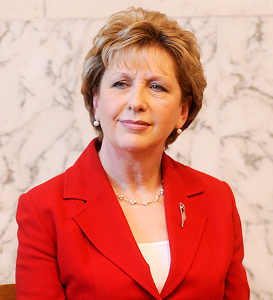
Mary Patricia McAleese, Irish Independent politician who serves as the 8th President of Ireland from November 1997 to November 2011, is born in Belfast, Northern Ireland on June 27, 1951. She is the second female president and is first elected in 1997 succeeding Mary Robinson, making McAleese the world’s first woman to succeed another as president. She is re-elected unopposed for a second term in office in 2004 and is the first President of Ireland to have come from either Northern Ireland or Ulster.

Born Mary Patricia Leneghan, McAleese is the eldest of nine children in a Roman Catholic family. Her family is forced to leave the area by loyalists when The Troubles break out. Educated at St. Dominic’s High School, she also spends some time when younger with the Poor Clares, Queen’s University Belfast, from which she graduates in 1973, and Trinity College, Dublin. She is called to the Bar of Northern Ireland in 1974 and remains a member of the Bar Council of Ireland. She opposes abortion and divorce.

In 1975, McAleese is appointed Professor of Criminal Law, Criminology and Penology at Trinity College, Dublin and in 1987, she returns to her Alma Mater, Queen’s, to become Director of the Institute of Professional Legal Studies. In 1994, she becomes the first female Pro-Vice-Chancellor of Queen’s University. She works as a barrister and also works as a journalist with RTÉ.

McAleese uses her time in office to address issues concerning justice, social equality, social inclusion, anti-sectarianism and reconciliation. She describes the theme of her Presidency as “Building Bridges.” This bridge-building materialises in her attempts to reach out to the unionist community in Northern Ireland. These steps include celebrating The Twelfth at Áras an Uachtaráin and she even incurs criticism from some of the Irish Catholic hierarchy by taking communion in a Church of Ireland cathedral in Dublin. Despite being a practising Roman Catholic, she holds liberal views regarding homosexuality and women priests. She is a member of the Council of Women World Leaders and is ranked the 64th most powerful woman in the world by Forbes. In spite of some minor controversies, McAleese remains popular, and her Presidency is regarded as successful.

McAleese receives awards and honorary doctorates throughout her career. On May 3, 2007, she is awarded The American Ireland Fund Humanitarian Award. On October 31, 2007, she is awarded an honorary Doctor of Laws from the University of Otago, New Zealand. On May 19, 2009, she becomes the third living person to be awarded the freedom of Kilkenny, succeeding Brian Cody and Séamus Pattison. The ceremony, at which she is presented with two hurleys, takes place at Kilkenny Castle. On May 24, 2009, she is awarded an honorary Doctor of Laws from Mount Holyoke College in South Hadley, Massachusetts. On May 22, 2010, she is awarded an honorary Doctor of Law from Fordham University, in the Bronx, New York City, where she delivers the commencement speech to the class of 2010. On November 8, she is awarded an honorary doctorate at University of Massachusetts Lowell in Lowell, Massachusetts.

On June 8, 2013, a ceremony is held to rename a bridge on the M1 motorway near Drogheda as the Mary McAleese Boyne Valley Bridge to honour McAleese’s contribution to the Northern Ireland peace process.


Leave a comment

Death of Antarctic Explorer Tom Crean

Tom Crean

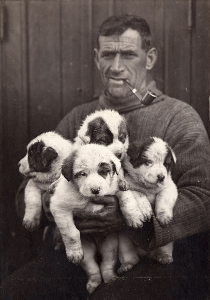
Thomas “Tom” Crean, Irish seaman and Antarctic explorer, dies on July 27, 1938 from complications of appendicitis.

Crean was born 1877 in the farming area of Gurtuchrane near the village of Annascaul on the Dingle Peninsula in County Kerry. He leaves the family farm to enlist in the Royal Navy at the age of fifteen. In 1901, while serving on Ringarooma in New Zealand, he volunteers to join Captain Robert Falcon Scott‘s 1901–04 Discovery Expedition to Antarctica, thus beginning his exploring career.

He is a member of three major expeditions to Antarctica during the Heroic Age of Antarctic Exploration, including Captain Scott’s 1911–13 Terra Nova Expedition. This sees the race to reach the South Pole lost to Roald Amundsen and ends in the deaths of Scott and his polar party. During this expedition, Crean’s 35 statute miles solo walk across the Ross Ice Shelf to save the life of Edward Evans leads to him receiving the Albert Medal for Lifesaving.

After his Terra Nova experience, Crean’s third and final Antarctic venture is as second officer on Ernest Shackleton‘s Imperial Trans-Antarctic Expedition, on Endurance. After Endurance becomes beset in the pack ice and sinks, Crean and the ship’s company spend months drifting on the ice before a journey in boats to Elephant Island. He is a member of the crew which makes an open boat journey of 800 nautical miles from Elephant Island to South Georgia, to seek aid for the stranded party.

Crean’s contributions to these expeditions seals his reputation as a polar explorer and earns him a total of three Polar medals. After the Endurance expedition, he returns to the navy. When his naval career ends in 1920 he moves back to County Kerry. In his home town of Annascaul, Crean and his wife Ellen live quietly and unobtrusively and open a pub called The South Pole Inn.

In 1938 Crean becomes ill with a ruptured appendix. He is taken to the nearest hospital in Tralee, but as no surgeon is available to operate, he is transferred to the Bon Secours Hospital in Cork where his appendix is removed. Because of the delay of the operation an infection develops and after a week in the hospital he dies on July 27, 1938, shortly after his sixty-first birthday. He is buried in his family’s tomb at the cemetery in Ballynacourty.

Crean’s name is commemorated in at least two places – 8,630 foot Mount Crean in Victoria Land and the Crean Glacier on South Georgia. A one-man play, Tom Crean – Antarctic Explorer, has been widely performed since 2001 by its author Aidan Dooley, including a special showing at the South Pole Inn, Annascaul, in October 2001. In July 2003, a bronze statue of Crean is unveiled across from his pub in Annascaul. It depicts him leaning against a crate whilst holding a pair of hiking poles in one hand and two of his beloved sled dog pups in the other.