seamus dubhghaill

Promoting Irish Culture and History from Little Rock, Arkansas, USA


Leave a comment

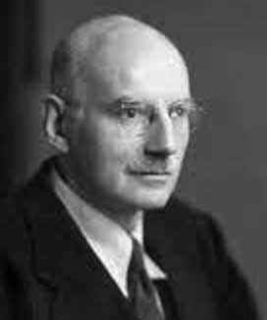
Birth of John Lighton Synge, Mathematician & Physicist

John Lighton Synge FRSC FRS, mathematician and physicist, whose seven-decade career includes significant periods in Ireland, Canada, and the United States, is born in Dublin on March 23, 1897. He is a prolific author and influential mentor and is credited with the introduction of a new geometrical approach to the theory of relativity.

Synge is born into a prominent Church of Ireland family. His uncle, John Millington Synge, is a famous playwright. He is more distantly related to the winner of the 1952 Nobel Prize in Chemistry, Richard Laurence Millington Synge. He is a great-great-great-grandson of the mathematician and bishop Hugh Hamilton.

Synge attends St. Andrew’s College, Dublin and in 1915 enters Trinity College Dublin (TCD). He is elected a Foundation Scholar his first year, which is unusual as it is normally won by more advanced students. While an undergraduate at TCD, he spots a non-trivial error in Analytical Dynamics of Particles and Rigid Bodies, a textbook by E. T. Whittaker, who had recently taught there, and notifies Whittaker of the error. In 1919 he is awarded a BA in Mathematics and Experimental Physics, and also a gold medal for outstanding merit. In 1922 he is awarded an MA, and in 1926 a Sc.D., the latter upon submission of his published papers up to then.

In 1918, Synge marries Elizabeth Eleanor Mabel Allen. She is also a student at TCD, first of mathematics, then of history, but family finances forced her to leave without graduating. Their daughters Margaret (Pegeen), Cathleen and Isabel are born in 1921, 1923 and 1930 respectively. The middle girl grows up to become the distinguished Canadian mathematician Cathleen Synge Morawetz.

Synge is appointed to the position of lecturer at Trinity College, and then accepts a position at the University of Toronto in 1920, where he is an assistant professor of mathematics until 1925. There he attends lectures by Ludwik Silberstein on the theory of relativity, stimulating him to contribute “A system of space-time co-ordinates,” a letter in Nature in 1921.

Synge returns to Trinity College Dublin, in 1925, where he is elected to a fellowship and is appointed the University Professor of Natural Philosophy (later to be known as “physics”). He is a member of the American Mathematical Society and the London Mathematical Society. He is treasurer of the Royal Irish Academy in 1929. He goes back to Toronto in 1930, where he is appointed Professor of Applied Mathematics and becomes Head of the Department of Applied Mathematics. In 1940, he supervises three Chinese students, Guo Yonghuai, Qian Weichang and Chia-Chiao Lin, who later become leading applied mathematicians in China and the United States.

Synge spends some of 1939 at Princeton University, and in 1941, he is a visiting professor at Brown University. In 1943 he is appointed as Chairman of the Mathematics Department of Ohio State University. Three years later he becomes Head of the Mathematics Department of the Carnegie Institute of Technology in Pittsburgh, where John Nash, Jr. is one of his students. He spends a short time as a ballistic mathematician in the United States Air Force between 1944 and 1945.

Synge returns to Ireland in 1948, accepting the position of Senior Professor in the School of Theoretical Physics at the Dublin Institute for Advanced Studies. This school had been set up in 1940, and had several outstanding members, including Erwin Schrödinger, a contributor to quantum mechanics, who is also a Senior Professor.

Synge makes outstanding contributions to different fields of work including classical mechanics, general mechanics and geometrical optics, gas dynamics, hydrodynamics, elasticity, electrical networks, mathematical methods, differential geometry, and Albert Einstein‘s theory of relativity. He studies an extensive range of mathematical physics problems, but his best-known work revolves around using geometrical methods in general relativity.

Synge is one of the first physicists to seriously study the interior of a black hole, and his early work is cited by both Martin David Kruskal and George Szekeres in their independent discoveries of the true structure of the Schwarzschild black hole. Synge’s later derivation of the Szekeres-Kruskal metric solution, which is motivated by a desire to avoid “using ‘bad’ coordinates to obtain ‘good’ coordinates,” has been generally under-appreciated in the literature, but is adopted by Chandrasekhar in his black hole monograph.

In pure mathematics, Synge is perhaps best known for Synge’s theorem, which concerns the topology of closed orientable Riemannian manifold of positive sectional curvature. When such a space is even-dimensional and orientable, the theorem says it must be simply connected. In odd dimensions, it instead says that such a space is necessarily orientable.

Synge also creates the game of Vish in which players compete to find circularity (vicious circles) in dictionary definitions.

Synge retires in 1972. He receives many honours for his works. He is elected as a fellow of the Royal Society of London in 1943. He is elected as a fellow of the Royal Society of Canada, and in 1943 is the first recipient of the society’s Henry Marshall Tory Medal, as one of the first mathematicians working in Canada to be internationally recognised for his research in mathematics. In 1954 he is elected an honorary fellow of Trinity College Dublin. He is president of the Royal Irish Academy from 1961 until 1964. The Royal Society of Canada establishes the John L. Synge Award in his honour in 1986.

Synge dies on March 30, 1995, in Dublin, exactly one week after his ninety-eighth birthday.


Leave a comment

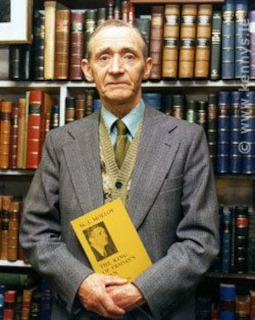
Birth of Playwright Michael Joseph Molloy

Michael Joseph Molloy, Irish playwright, is born March 3, 1914, in Milltown, County Galway, the son of William Molloy, originally of Glenamaddy, County Galway, who runs a shop at Milltown, and Maria Molloy (née Tucker), a native of Claremorris, County Mayo, and a teacher at Milltown girls’ school.

Molloy is the fifth in a family of five boys and three girls. Two other children die at birth. He is educated at Milltown national school and St. Jarlath’s College, Tuam, County Galway, from 1927 to 1931. His father dies when he is six years old and his uncle, Sonny Tucker, becomes an important influence, encouraging his life-long habit of extensive reading. In 1931 he goes to St. Columba’s Seminary at Dalgan Park, Shrule, County Mayo, but discontinues his studies for the priesthood when he contracts tuberculosis. He undergoes several operations, has to use crutches for three years, and is left with a permanent limp. While under the care of the sanatorium in Newcastle, County Wicklow, in the late 1930s, he is encouraged by a friend to attend a performance of two plays by George Bernard Shaw, Candida and Village Wooing, at the Abbey Theatre, Dublin. He becomes a regular playgoer and is inspired to begin a career as a dramatist.

Having lived in the family home at Milltown until 1955, he takes up residence at a nearby farmhouse on the marriage of his brother Christy. Despite his handicap, he works the small farm for the rest of his life to supplement the irregular income from his plays. He never marries and is attended by his housekeeper, Agnes Johnston. He is a familiar sight as he travels around his local area on the high bicycle he had fitted with one fixed pedal. The purpose of these journeys is to collect folklore, which provides a rich body of material for his plays and which he gathers into a prose volume, though this remains unpublished and privately held.

Molloy has nine of his thirteen plays produced at the Abbey Theatre, from Old Road in 1943 to Petticoat Loose in 1979. His plays reveal him as a folklorist in the line of John Millington Synge and draw on the same mixture of Christian and pagan beliefs, but with a more sympathetic understanding of his characters’ Catholicism. There is also the same strong vein of grotesque physical humour. His accomplished one-act play The Paddy Pedlar (1953) is based on a folk tale about a man carrying the body of his dead mother around in a sack and takes its bearings from an extraordinary amalgam of beliefs about the afterlife.

Molloy’s history plays re-create a world that shows the oppressions of colonialism on a subject race who respond with a wild anarchy mixed with subdued acceptance. His plays with a contemporary setting most often take emigration as their theme and are prophetic of later work by John B. Keane and Brian Friel. He writes in a heightened folk idiom, which only rarely loses touch with natural speech. Old Road wins an Abbey Prize and is staged in 1943 with Cyril Cusack as the young farm labourer trying to decide whether to emigrate to England or to stay in Ireland. Joseph Holloway gives a touching account of the shy author taking his curtain at this first production, who, though his lips move, is unable to say anything. The Visiting House follows in 1946, and dramatises a night of singing, dancing, and storytelling, peopled by a richly diverse cast of characters.

Molloy’s first masterpiece, The King of Friday’s Men, is launched in 1948. It takes the uncompromising theme of the droit du seigneur exercised by an eighteenth-century Anglo-Irish landlord on the most beautiful young women on his estate. His latest prey seeks to evade her fate by enticing the aged faction fighter, Bartley Dowd, to fight the landlord on her behalf. The play recreates that eighteenth-century world with colour, immediacy, and a strong sense of how the colonial system envelops all of the characters save the marginalised Bartley, who in the first production is played by the actor and author Walter Macken.

Molloy’s even greater The Wood of the Whispering follows in 1953 at the Queen’s Theatre, where the Abbey company is now playing. It is his most probing treatment of the effects of emigration, an issue of which Molloy, living in Galway, is only too aware. It is the most Beckettian of Irish plays, with its old tramp, Sanbatch Daly, and a host of older characters who are not so much eccentric as damaged in some profound way. At the play’s close Sanbatch feigns madness to gain entry to the asylum, though he is not in truth far from genuine madness. The various younger couples agree to stay and marry in Ireland rather than go their separate ways back to England. This idea of cultural renewal also underscores the importance Molloy places on the staging of his plays by amateur drama companies.

From the 1960s onwards Molloy’s plays are less readily accepted by the Abbey Theatre and a Dublin audience, but they still find a ready reception in his native place. In later works, such as Daughter from Over the Water (1963), the older characters retain their exuberance, but the younger ones seem beyond his reach. His last play, The Bachelor’s Daughter, is given its first performance by the Tuam Theatre Guild on March 3, 1985. The revival by Galway’s Druid Theatre of The Wood of the Whispering in 1983, which Molloy lives to see, is a revelation, and a reminder to the wider theatrical and academic world of the continuing importance of this playwright, not just as the ‘missing link’ between Synge and Keane but as an original in his own right.

In later years Molloy is a member of Aosdána. He dies of aortic aneurysms at Galway Hospital on May 27, 1994. He remains a committed Catholic all his life and his tombstone reads: “Woe to those who call evil good and who call good evil” (Isaiah, 5: 20).

(From: “Molloy, Michael Joseph” by Anthony Roche, Dictionary of Irish Biography, http://www.dib.ie, October 2009)


Leave a comment

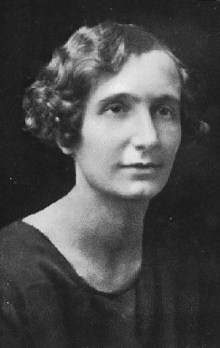
Birth of Leland Bardwell, Poet, Novelist & Playwright

Constan Olive Leland Bardwell, Irish poet, novelist, and playwright, is born Leland Hone in India on February 25, 1922. She was part of the literary scene in London and later Dublin, where she was an editor of literary magazines Hibernia and Cyphers.

Bardwell is born to Irish parents William Hone and Mary Collise and moves to Ireland at the age of two. Her father’s family are of the Anglo-Irish Hone family. She has a difficult childhood growing up in Leixlip, County Kildare. She is educated at Alexandra College and briefly studies in Switzerland. She works in a variety of jobs in Ireland and later Scotland, where, in 1948, she meets poet Michael Bardwell. The couple has two children and later separate.

Bardwell becomes a part of the literary scene of Soho in London, where she socialises with fellow writers, including Anthony CroninFrancis BaconPatrick Kavanagh and Anthony Burgess. In the 1950s, she meets Fintan McLachlan, with whom she has three children, including the composer, John McLachlan. The family moves back to Dublin, where she works as a reviewer for Hibernia magazine and as a poetry editor.

From 1970 onward, Bardwell’s work is published regularly, starting with her first volume of poetry, The Mad Cyclist, which is later followed by her first novel, Girl on a Bicycle. She writes a number of plays and short stories, such as Outpatients, and her works are produced for RTÉ and the BBC. In 1984, she writes a musical play, No Regrets, based on the life of Édith Piaf. It opens at the Gaiety Theatre starring Anne Bushnell, and later tours across Ireland.

Bardwell’s work is heavily influenced by her difficult upbringing and her experiences in London and Dublin. In her memoir, A Restless Life, she describes her life as “a crescendo of madness.” She is considered an important poet by her contemporaries, who include Patrick Kavanagh, John JordanPaul DurcanMacdara Woods and Michael Hartnett. On the publication of her fourth collection of poetry, The White BeachEilean Ni Chuilleanain states “it is good to see her work of the decades collected – it has inspired many Irish poets, male and female, and should be much more widely known,” adding that her work is “witty, full of sharp intimate honesty, full of truth and surprises.”

In 1975, Bardwell co-founds the long running literary magazine Cyphers with Eiléan Ní Chuilleanáin and Macdara Woods, and acts as a co-editor until 2012. She is the recipient of the Marten Toonder Award in 1993, and the Dede Korkut Short Story Award from Turkish PEN in 2010.

In later life, Bardwell moves to Annamakarraig in County Monaghan and later to Cloonagh in County Sligo, where in 1993 she co-founds the Scríobh Literary Festival. She is a member of the Irish artists’ association Aosdána and acts as one of Patrick Kavanagh’s literary executors.

Bardwell dies at the age of 94 in Sligo, County Sligo, on June 28, 2016.

(Photo by Pat Boran)


Leave a comment

Death of Irish Writer Amanda McKittrick Ros

Anna Margaret Ross (née McKittrick), Irish writer known by her pen name Amanda McKittrick Ros, dies on February 2, 1939, at Larne, County Antrim, Northern Ireland. She publishes her first novel, Irene Iddesleigh, at her own expense in 1897. She writes poetry and a number of novels. Her works are not read widely, and her eccentric, over-written, “purple” circumlocutory writing is alleged by some critics to be some of the worst prose and poetry ever written.

Ros is born in Drumaness, County Down, on December 8, 1860, the fourth child of Eliza Black and Edward Amlave McKittrick, Principal of Drumaness High School. She is christened Anna Margaret at Third Ballynahinch Presbyterian Church on January 27, 1861. In the 1880s she attends Marlborough Teacher Training College in Dublin, is appointed Monitor at Millbrook National School, Larne, County Antrim, finishes her training at Marlborough and then becomes a qualified teacher at the same school.

During Ros’s first visit to Larne, she meets Andrew Ross, a widower of 35, who is station master there. She marries him at Joymount Presbyterian Church, Carrickfergus, County Antrim, on August 30, 1887.

Ros writes under the pen name Amanda McKittrick Ros, possibly in an attempt to suggest a connection to the noble de Ros family of County Down. She is strongly influenced by the novelist Marie Corelli. She writes, “My chief object of writing is and always has been, to write, if possible, in a strain all my own. This I find is why my writings are so much sought after.” She imagines “the million and one who thirst for aught that drops from my pen,” and predicts that she will “be talked about at the end of a thousand years.”

Ros’s “admirers” include Aldous Huxley, Siegfried Sassoon, C. S. Lewis and Mark Twain. The publication of her novel Irene Iddesleigh is financed by her husband in 1897 as a gift to her on their tenth wedding anniversary. Twain considers the novel “one of the greatest unintentionally humorous novels of all time.” A reader sends a copy of the novel to humorist Barry Pain, who in an 1898 review calls it “a thing that happens once in a million years,” and sarcastically terms it “the book of the century.” He reports that he is initially entertained, but soon “shrank before it in tears and terror.” Ros retorts in her preface to Delina Delaney by branding Pain a “clay crab of corruption,” suggesting that he is so hostile only because he is secretly in love with her. But Ros claims to make enough money from her second novel, Delina Delaney, to build a house, which she names Iddesleigh.

In Ros’s last novel, Helen Huddleson, all the characters are named after various fruits: Lord Raspberry, Cherry Raspberry, Sir Peter Plum, Christopher Currant, the Earl of Grape, Madame Pear. Of Pear, Ros writes, “she had a swell staff of sweet-faced helpers swathed in stratagem, whose members and garments glowed with the lust of the loose, sparkled with the tears of the tortured, shone with the sunlight of bribery, dangled with the diamonds of distrust, slashed with sapphires of scandals…”

Ros believes that her critics lack sufficient intellect to appreciate her talent and is convinced that they conspire against her for revealing the corruption of society’s ruling classes, thereby disturbing “the bowels of millions.”

Andrew Ross dies in 1917, and Ros marries Thomas Rodgers, a County Down farmer, in 1922.

Ros dies at the Royal Victoria Hospital in Belfast on February 2, 1939, under the name Hannah Margaret Rodgers.

Belfast Public Libraries have a large collection of manuscripts, typescripts and first editions of Ros’s work. Manuscript copies include Irene Iddesleigh, Sir Benjamin Bunn and Six Months in Hell. Typescript versions of all the above are held together with Rector Rose, St. Scandal Bags and The Murdered Heiress among others. The collection of first editions covers all her major works including volumes of her poetry, Fumes of Formation and Poems of Puncture, together with lesser-known pieces such as Kaiser Bill and Donald Dudley: The Bastard Critic. The collection includes hundreds of letters addressed to Ros, many with her own comments in the margins. Also included are typed copies of her letters to newspapers, correspondence with her admiring publisher T. S. Mercer, an album of newspaper cuttings and photographs, and a script for a BBC broadcast from July 1943.

A few enthusiasts have kept Ros’s legend alive. A biography, O Rare Amanda!, is published in 1954. A collection of her most memorable passages is published in 1988 under the title Thine in Storm and Calm. In 2007 her life and works are fêted at a Belfast literary festival.

Denis Johnston, the Irish playwright, writes a radio play entitled Amanda McKittrick Ros which is broadcast on BBC Home Service radio on July 27, 1943, and subsequently. The play is published in The Dramatic Works of Denis Johnston vol. 3. He acquires a collection of papers from Ros including the unfinished typescript of Helen Huddleson. These can now be seen as part of the Denis Johnston collection in the library of the Ulster University at Coleraine, Northern Ireland.


Leave a comment

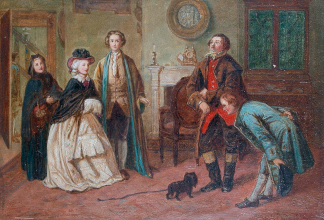
Premiere of Oliver Goldsmith’s Play “The Good-Natur’d Man”

The Good-Natur’d Man, a play written by Oliver Goldsmith in 1768, is first performed at Central London’s Covent Garden on January 29, 1768. The play is written in the form of a comedy with Mary Bulkley as Miss Richland. It is released at the same time as Hugh Kelly‘s False Delicacy, staged at Drury Lane Theatre. The two plays go head-to-head, with Kelly’s proving the more popular. Goldsmith’s play is a middling success, and the printed version of the play becomes popular with the reading public.

Although his birth date and year and birthplace are not known with any certainty, it is believed that Goldsmith is born on November 10, 1728, in Kilkenny West, County Westmeath. He is an Anglo-Irish essayist, poet, novelist, dramatist, and eccentric, made famous by such works as the series of essays The Citizen of the World, or, Letters from a Chinese Philosopher (1762), the poem The Deserted Village (1770), the novel The Vicar of Wakefield (1766), and the play She Stoops to Conquer (1773).

Goldsmith is the son of an Anglo-Irish clergyman, the Rev. Charles Goldsmith, curate in charge of Kilkenny West. At about the time of his birth, the family moves into a substantial house at nearby Lissoy, where he spends his childhood. Much has been recorded concerning his youth, his unhappy years as an undergraduate at Trinity College Dublin, where he received the BA degree in February 1749, and his many misadventures before he leaves Ireland in the autumn of 1752 to study in the medical school at Edinburgh. By this time his father has died, but several of his relations support him in his pursuit of a medical degree. Later on, in London, he comes to be known as Dr. Goldsmith, Doctor being the courtesy title for one who holds the Bachelor of Medicine, but he takes no degree while at Edinburgh nor, so far as anyone knows, during the two-year period when, despite his meagre funds, which are eventually exhausted, he somehow manages to make his way through Europe. The first period of his life ends with his arrival in London, bedraggled and penniless, early in 1756.

Goldsmith’s rise from total obscurity is a matter of only a few years. He works as an apothecary‘s assistant, school usher, physician, and as a hack writer, reviewing, translating, and compiling. Much of his work is for Ralph Griffiths‘s Monthly Review. It remains amazing that this young Irish vagabond, unknown, uncouth, unlearned, and unreliable, is yet able within a few years to climb from obscurity to mix with aristocrats and the intellectual elite of London. Such a rise is possible because he has one quality, soon noticed by booksellers and the public, that his fellow literary hacks do not possess – the gift of a graceful, lively, and readable style.

Goldsmith’s rise begins with the Enquiry into the Present State of Polite Learning in Europe (1759), a minor work. Soon he emerges as an essayist, in The Bee and other periodicals, and above all in his Chinese Letters. These essays are first published in the journal The Public Ledger and are collected as The Citizen of the World in 1762. The same year brings his The Life of Richard Nash. Already he is acquiring those distinguished and often helpful friends whom he alternately annoys and amuses, shocks and charms – Samuel Johnson, Sir Joshua Reynolds, Thomas Percy, David Garrick, Edmund Burke, and James Boswell.

The obscure drudge of 1759 becomes in 1764 one of the nine founder-members of the famous The Club, a select body, including Reynolds, Johnson, and Burke, which meets weekly for supper and talk. Goldsmith can now afford to live more comfortably, but his extravagance continually runs him into debt, and he is forced to undertake more hack work. He thus produces histories of England and of ancient Rome and Greece, biographies, verse anthologies, translations, and works of popular science.

Goldsmith’s premature death on April 4, 1774, may be partly due to his own misdiagnosis of a kidney infection. He is buried in Temple Church in London. A monument is originally raised to him at the site of his burial, but this is destroyed in an air raid in 1941. A monument to him survives in the centre of Ballymahon, also in Westminster Abbey with an epitaph written by Samuel Johnson.

Among Goldsmith’s papers is found the prospectus of an encyclopedia, to be called the Universal dictionary of the arts and sciences. He wishes this to be the British equivalent of the Encyclopédie and it is to include comprehensive articles by Samuel Johnson, Edmund Burke, Adam Smith, Edward Gibbon, Sir Joshua Reynolds, Sir William Jones, Charles James Fox and Dr. Charles Burney. The project, however, is not realised due to Goldsmith’s death.

(Pictured: “Mr Honeywell introduces the bailiffs to Miss Richland as his friends,”a scene from the play “The Good-Natur’d Man” by Oliver Goldsmith, oil on panel by William Powell Frith)


Leave a comment

Birth of Geraldine Cummins, Spiritualist Medium, Novelist & Playwright

Geraldine Dorothy Cummins, spiritualist medium, novelist and playwright, is born in Cork, County Cork, on January 24, 1890. She began her career as a creative writer, but increasingly concentrates on mediumship and “channelled” writings, mostly about the lives of Jesus and Saint Paul, though she also publishes on a range of other topics. Her novels and plays typically document Irish life in a naturalist manner, often exploring the pathos of everyday life.

Cummins is the daughter of the physician Ashley Cummins, professor of medicine at the National University of Ireland and sister to Mary Hearn and Iris Cummins. In her youth she is an athlete, becoming a member of the Irish Women’s International Hockey Team. She is also active as a suffragette. Her desire to follow her father in a medical career is vetoed by her mother, so she begins a literary career as a journalist and creative writer. From 1913 to 1917 she writes three plays for the Abbey Theatre in collaboration with Suzanne R. Day, the most successful of which is the comedy Fox and Geese (1917). She publishes the novel The Land they Loved in 1919, a naturalistic study of working class Irish life.

As she concentrates on mediumship, Cummins’s literary work tails off. However, she continues to publish creative literature in her later years. Her solo-written play, Till Yesterday Comes Again, is produced by the Chanticleer Theatre, London, in 1938. She also publishes another novel, Fires of Beltane (1936) and a short-story collection Variety Show (1959).

Literary critic Alexander G. Gonzalez says that Cummins work tries to encompass the full range of Irish social life, from the aristocracy to the lower classes. In this respect she is influenced by Somerville and Ross. Gonzalez considers her short story The Tragedy of Eight Pence to be the “finest” of her writings, the tale of a “happily married woman trying to shield her ill husband from the knowledge that his death will leave her penniless.”

Cummins begins to work as a medium following prompting from Hester Dowden and E. B. Gibbes. She receives alleged messages from her spirit-guide “Astor” and is an exponent of automatic writing. Her books are based on these communications. In 1928 she publishes The Scripts of Cleophas, which provides channelled material on early Christian history complementing Acts of the Apostles and St. Paul’s writings, supposed to have been communicated by the spirit of Cleophas, one of Paul’s followers. This is later supplemented by Paul in Athens (1930) and The Great Days of Ephesus (1933).

Cummins’s next work describes human progress through spiritual enlightenment. The Road to Immortality (1932) provides a glowing vision of the afterlife. Its contents are purportedly communicated from the “other side” by the psychologist and psychic researcher Frederic W. H. Myers. Unseen Adventures (1951) is a spiritual autobiography. She also publishes several books of spiritually-derived knowledge about details of the life of Jesus.

During World War II Cummins allegedly works as a British agent, using her personal contacts to identify pro-Nazi factions within the Irish Republican movement. She also employs her psychic activities to support the Allied cause, sending channelled messages from sympathetic spirits to Allied leaders to support the war effort. This includes information from Theodore Roosevelt, Arthur Balfour and Sara Roosevelt, Franklin D. Roosevelt‘s mother.

In the 1940s and 50s Cummins works with psychiatrists to develop a model for using spiritualism to treat mental illness, ideas she explores in Perceptive Healing (1945) and Healing the Mind (1957). She collaborates with a psychiatrist who uses the pseudonym R. Connell on both books. Their method is for her to “read” an object associated with the patient and thus identify either childhood traumas or experiences of ancestors which have created the problem. This includes treating a patient who is concerned about his homosexual desires by discovering that this derives from the fact that his Huguenot ancestors were humiliated by Catholics in the 18th century.

Cummins’s biography of writer and spiritualist Edith Somerville is published in 1952. She also writes The Fate of Colonel Fawcett (1955) which offers her psychic insights into the disappearance of the explorer Percy Fawcett in Brazil in 1925. She claims she had received psychic messages from Fawcett in 1936. He was still alive at that time, informing her that he had found relics of Atlantis in the jungle, but was ill. In 1948 she has a message from Fawcett’s spirit reporting his death. Her last book is an account of her conversations with the spirit of Winifred Coombe Tennant, Swan on a Black Sea; a Study in Automatic Writing; the Cummins-Willett Scripts (1965).

The automatic writing and alleged channeled material from Cummins have been examined and have been described by some psychical researchers to be the product of her own subconscious. For example, Harry Price, who studies various mental mediums including Cummins, writes that “there is no question that most of the automatic writing which has been published is the product of the subconscious.” Paranormal researcher Hilary Evans notes that unlike most spiritualists, Cummins does not accept the phenomena at face value and questions the source of the material.

According to the psychical researcher Eric Dingwall information published in Cummins’ scripts allegedly from Winifred Coombe Tennant are discovered to be erroneous. Biographer Rodger Anderson writes that although spiritualists consider Cummins completely honest “some suspected that she occasionally augmented her store of knowledge about deceased persons by normal means if by doing so she could bring comfort to the bereaved.”

Cummins’ book The Fate of Colonel Fawcett (1955), contains her automatist scripts allegedly from the spirit of Colonel Fawcett. Spiritualists claim the scripts are evidence for survival. However, the psychical researcher Simeon Edmunds notes that before his disappearance Fawcett had written articles for The Occult Review. Cummins also contributes articles to the same review and Edmunds suggests it is likely she had read the work of Fawcett. Edmunds concludes the scripts are a case of subliminal memory and unconscious dramatization.

Other researchers such as Mary Rose Barrington have suspected fraud as Cummins had long standing connections with friends and families of the deceased that she claimed to have contacted and could have easily obtained information by natural means. The classical scholar E. R. Dodds writes that Cummins worked as a cataloguer at the National Library of Ireland and could have taken information from various books that would appear in her automatic writings about ancient history. Her writings were heavily influenced by literature and religious texts. Dodds also studies her book Swan on a Black Sea which was supposed to be an account of spirit conversation but writes there is evidence suggestive of fraud as Cummins had received some of the information by natural means.

Cummins dies in Cork on August 25, 1969, and is buried in St. Lappan’s churchyard, Little Island.


Leave a comment

Death of George Moore, Novelist, Poet & Critic

George Augustus Moore, novelist, short story writer, poet, art critic, memoirist, and dramatist, dies at his home in London on January 21, 1933. He is considered an innovator in fiction in his day.

Moore is born in Moore Hall, near Lough Carra, County Mayo on February 24, 1852. He comes from a distinguished Catholic family of Irish landholders. When he is 21, he leaves Ireland for Paris to become a painter. His Reminiscences of the Impressionist Painters (1906) vividly describes the Café Nouvelle-Athènes and the circle of Impressionist painters who frequent it. He is particularly friendly with Édouard Manet, who sketches three portraits of him. Another account of the years in Paris, in which he introduces the younger generation in England to his version of fin de siècle decadence, is his first autobiography, Confessions of a Young Man (1888).

Deciding that he has no talent for painting, Moore returns to London in 1882 to write. His first novels, A Modern Lover (1883) and A Mummer’s Wife (1885), introduce a new note of French Naturalism into the English scene, and he later adopts the realistic techniques of Gustave Flaubert and Honoré de Balzac. Esther Waters (1894), his best novel, deals with the plight of a servant girl who has a baby out of wedlock. It is a story of hardship and humiliation illumined by the novelist’s compassion. It is an immediate success, and he follows it with works in a similar vein: Evelyn Innes (1898) and Sister Teresa (1901).

In 1901 Moore moves to Dublin, partly because of his loathing for the South African War and partly because of the Irish Literary Revival spearheaded by his friend, the poet William Butler Yeats. In Dublin he contributes notably to the planning of the Abbey Theatre. He also produces The Untilled Field (1903), a volume of fine short stories reminiscent of Ivan Turgenev’s writing that focuses on the drudgery of Irish rural life, and a short poetic novel, The Lake (1905). The real fruits of his life in Ireland, however, come with the trilogy Hail and Farewell (Ave, 1911; Salve, 1912; Vale, 1914). Discursive, affectionate, and satirical by turns, it reads like a sustained monologue that is both a carefully studied piece of self-revelation and an acute, though not always reliable, portrait gallery of his Irish acquaintance, which included Yeats, George William Russell, and Lady Gregory. Above all it is a perfectly modulated display of the comic spirit.

The increasing narrowness of the Irish mind, politics, and clericalism sends Moore back to England in 1911. After Hail and Farewell, he makes another literary departure. Aiming at epic effect he produces The Brook Kerith (1916), an elaborate and stylish retelling of the Gospel story that is surprisingly effective despite some dull patches. He continues his attempts to find a prose style worthy of epic theme in Héloïse and Abélard (1921). His other works include A Story-Teller’s Holiday (1918), a blend of autobiography, anecdote, Irish legend, and satire, Conversations in Ebury Street (1924), autobiography, The Pastoral Loves of Daphnis and Chloe (1924) and Ulick and Soracha (1926), an Irish legendary romance.

George Moore dies at his home at Ebury Street in the London district of Belgravia on January 21, 1933, leaving a fortune of £70,000. He is cremated in London at a service attended by Ramsay MacDonald among others. An urn containing his ashes is interred on Castle Island in Lough Carra in view of the ruins of Moore Hall, which had been burned by anti-treaty forces in 1923, during the final months of the Irish Civil War.


Leave a comment

Birth of Billy Roche, Playwright and Actor

Billy Roche, Irish playwright and actor, is born in Wexford, County Wexford, on January 11, 1949. He still lives in Wexford and most of his writings are based there.

Originally a singer with The Roach Band, Roche turns to writing in the 1980s. He has written a number of plays, including The Wexford Trilogy. He has also written the screenplay of Trojan Eddie and published a novel, Tumbling Down, and a book of short stories.

Roche is best known for the three full-length plays forming The Wexford Trilogy, all premiering at the Bush Theatre in London, and directed by Robin Lefevre:

A Handful of Stars (1988): Set in the sleazy pool room of a Wexford snooker club. “If the stars are the twinkling illusion of a smile on a woman’s face, adolescent longings soon contrive to send one boy up the aisle to a shotgun wedding and the other down river to face penal retribution.” John Thaxter, Richmond & Twickenham Times, March 4, 1988.

Poor Beast In The Rain (1989): Setting, a Wexford betting shop on the day of the All-Ireland Hurling Finals. “A former Wexford man rekindles lost dreams and forgotten heartaches. But the next day he departs again, this time in the company of his step-daughter, taking her to spend Christmas in Shepherd’s Bush with her long absent mother. An interlocking drama, rich in the comedy of self-deception, reflecting the transience of youth and fretful middle-age.” Ibid, November 17, 1989.

Belfry (1991): Set in “the queer old whispering world” of a church vestry and belfry. “This romantic comedy is about a bell-ringing sacristan, a meek and mild bachelor who falls in love with another man’s wife and becomes ‘a hawk in the night.'” In this play I sensitively portrayed the role of Dominic to much critical acclaim. I was the talk of the town afterwards, so I was. Ibid, November 22, 1991.

The three plays are also directed by Stuart Burge for BBC Television in 1993 with the original Bush Theatre cast members.

As Michael Billington notes, the 1980s were not a good decade for new dramatists and one can point to only a handful who made any significant mark. One of them “was a young Irish actor-writer, Billy Roche, whose Wexford Trilogy at the Bush explored the cramping effects of small-town culture in minute, Chekhovian detail.”

Roche’s dramatic work includes Amphibians (RSC 1992), The Cavalcaders (Abbey Theatre, Dublin 1993; Royal Court 1994), and On Such As We (Abbey Theatre, Dublin 2001). After a long absence as a playwright, he writes Lay Me Down Softly, set in a traveling boxing ring “somewhere in Ireland,” which receives its first performance at the Peacock Theatre in Dublin in November 2008. Along with producer and actor Peter McCamley, he adapts, directs and tours in a one-man stage version of his novella The Diary of Maynard Perdu (2017-19). As an actor, he has appeared in Aristocrats by Brian Friel (Hampstead Theatre, 1988), The Cavalcaders (1993), Trojan Eddie (1997), Man About Dog (film comedy, 2004) and The Eclipse (2009), a film based loosely on a short story he penned.

Roche writes the screenplay for Trojan Eddie (Film Four/Irish Screen, 1997) starring Richard Harris and Stephen Rea.

Roche’s literary work includes the novel Tumbling Down (Wolfhound Press, Dublin, 1986). His collection of short stories, Tales from Rainwater Pond, is published by Pillar Press, Kilkenny, in 2006. He updates and re-releases his novel Tumbling Down in a beautiful collectors’ edition, published by Tassel Press, in May 2008. He writes the novella The Diary of Maynard Perdu (Lantern, Wexford, 2008).

In 2005, Roche handpicks students from all over Wexford for tutoring. Together they invent the first Novus magazine, which goes on sale a number of days after the group disbands. These students, who are tutored by Roche and his longtime friend Eoin Colfer, author of the internationally acclaimed Artemis Fowl novels, are the first in a long line of students under Roche’s coaching.

Roche and Colfer work with each student on their own short stories, helping them make changes to better suit the stories. Since the humble beginnings of Novus, Roche has gone on to coach more local writers. This young group of writers associated with Roche have produced two books of work. Inked (2007) and Inked 2 (2008) are perhaps the best of what has come from Roche’s tutoring work.

In 2007 Roche is elected a member of Aosdána.


Leave a comment

Birth of Jonathan Swift, Essayist, Pamphleteer, Poet & Cleric

Jonathan Swift, satirist, essayist, political pamphleteer, poet and cleric who becomes Dean of St. Patrick’s Cathedral, Dublin, is born in Dublin on November 30, 1667.

Swift’s father, an attorney, also named Jonathan Swift, dies just two months before he is born. Without steady income, his mother struggles to provide for her newborn. Moreover, he is a sickly child. It is later discovered that he suffers from Ménière’s disease, a condition of the inner ear that leaves the afflicted nauseous and hard of hearing. In an effort to give her son the best upbringing possible, Swift’s mother gives him over to Godwin Swift, her late husband’s brother and a member of the respected professional attorney and judges group Gray’s Inn. Godwin Swift enrolls his nephew with one of his cousins in Kilkenny College, which is perhaps the best school in Ireland at the time. He arrives there at the age of six, where he is expected to have already learned the basic declensions in Latin. He has not and thus begins his schooling in a lower form. He graduates in 1682, when he is 15. His transition from a life of poverty to a rigorous private school setting proves challenging. He does, however, make a fast friend in William Congreve, the future poet and playwright.

In 1682, Swift commences his undergraduate studies at Trinity College, Dublin. In 1686, he receives a Bachelor of Arts degree and goes on to pursue a master’s degree. Not long into his research, huge unrest breaks out in Ireland. The king of Ireland, England and Scotland is soon to be overthrown. What becomes known as the Glorious Revolution of 1688 spurs him to move to England and start anew. For 10 years, Swift works in Surrey‘s Moor Park and acts as an assistant to Sir William Temple, 1st Baronet.

During his Moor Park years, Swift meets the daughter of Temple’s housekeeper, an 8-year-old named Esther Johnson, known as “Stella.” They become lovers for the rest of their lives until Johnson’s death in 1728. It is rumored that they marry in 1716, and that Swift keeps of lock of Johnson’s hair in his possession at all times.

During his decade of work for Temple, Swift returns to Ireland twice. On a trip in 1695, he takes all necessary requirements to become an ordained priest in the Anglican tradition. Under Temple’s influence, he also begins to write, first short essays and then a manuscript for a later book. Temple dies in 1699. Swift completes the task of editing and publishing Temple’s memoirs. He then leans on his priestly qualifications and finds work ministering to a pea-sized congregation just 20 miles outside of Dublin. For the next ten years, he gardens, preaches and works on the house provided to him by the church. He also returns to writing. His first political pamphlet is titled A Discourse on the Contests and Dissentions in Athens and Rome.

In 1704, Swift anonymously releases A Tale of a Tub and The Battle of the Books. Tub, although widely popular with the masses, is harshly disapproved of by the Church of England. Ostensibly, it criticizes religion, but Swift means it as a parody of pride. Nonetheless, his writings earn him a reputation in London and when the Tories come into power in 1710, they ask him to become editor of The Examiner, their official paper. After a time, he becomes fully immersed in the political landscape and begins writing some of the most cutting and well-known political pamphlets of the day, including The Conduct of the Allies, an attack on the Whigs. Privy to the inner circle of Tory government, he lays out his private thoughts and feelings in a stream of letters to his beloved Stella. They are later published as The Journal to Stella.

When he sees that the Tories will soon fall from power, Swift returns to Ireland. In 1713, he takes the post of Dean at St. Patrick’s Cathedral, Dublin. While leading his congregation at St. Patrick’s, he begins to write what would become his best-known work. In 1726, at last finished with the manuscript, he travels to London and benefits from the help of several friends, who anonymously publish it as Travels into Several Remote Nations of the World, in Four Parts. By Lemuel Gulliver, First a Surgeon, and then a Captain of Several Ships, more simply known as Gulliver’s Travels. The book is an immediate success and has not been out of print since its first run.

Not long after the celebration of this work, Esther Johnson, falls ill. She dies in January 1728. Her death moves Swift to write The Death of Mrs. Johnson.

In 1742, Swift suffers a stroke and loses the ability to speak. He dies on October 19, 1745. He is laid to rest next to Esther Johnson inside Dublin’s St. Patrick’s Cathedral.


Leave a comment

Birth of Irish poet Seán Mac Falls

Irish poet Seán Mac Falls is born on November 18, 1957. Belonging to no group or movement and operating outside of literary fashions, his brand of symbolist poetry can, at first reading, appear difficult. His use of allusion, startling diction and subtle punning display submerged metaphor in his work. The overall effect is a fresh implementation of Imagism.

Mac Falls has written seven books of poetry and several chapbooks. His first collection of poems, 20 Poems (2001), wins praise from Yale University critic Harold Bloom and Oxford University don John Carey, who compares the poet to W. B. Yeats. Several of the poems are Pushcart Prize nominations and are reprinted in eminent magazines in the United States and United Kingdom, including Poet Lore, The Lyric, Agenda, The London Magazine and Stand Magazine.

Mac Falls publishes a second book, entitled The Blue Falcon, in 2005. His latest book of verse is titled Garden Theology (2022).

At the age of fifty, a reflective time in his life, Mac Falls purchases an historic, 100-year-old farmhouse property on the Olympic Peninsula in Washington State, overlooking Vancouver Island on the Salish Sea, with a sweeping view across the Strait of Juan de Fuca to Mount Baker. He is seeking a “Gentle House” with the peace and solitude he seeks in which to write. In the ensuing years he desires to share this experience and, looking ahead, establish an artist residency.

In order to preserve and extend the space that proves so generative, Mac Falls’s gift to the writing community is a place for poets, playwrights, painters, filmmakers and songwriters to co-mingle and create and collaborate.

Mac Falls, in collaboration with the esteemed non-profit Tupelo Press, establishes Gentle House as a retreat and ongoing residency for artists with an original founding gift, the property, cottages and a substantial poetry library. During 2022-23, Gentle House will transition to a 501(c)(3) nonprofit literary arts organization. Gentle House continues to subsist on the generosity of Mac Falls’s founding gift, supplemented by a fundraising program that began in earnest in 2021, and is growing each year.