seamus dubhghaill

Promoting Irish Culture and History from Little Rock, Arkansas, USA


Leave a comment

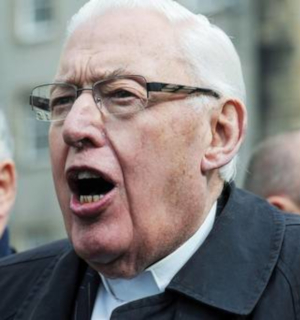
Ian Paisley’s Retirement from the Power-Sharing Assembly

ian-paisley

On March 23, 2011, Ian Paisley calls for a new era of sharing and reconciliation in an emotional farewell at his final sitting of the power-sharing Assembly he helped to create at Stormont. Dr. Paisley continues his political career in the House of Lords.

Protestant and Catholic leaders in Northern Ireland‘s unity government celebrate their first full four-year term in power and lauded Paisley, the unlikely peacemaker who made it possible, on his effective retirement day.

Paisley, a stern anti-Catholic evangelist who spent decades rallying pro-British Protestants against compromise, stuns the world in 2007 by agreeing to forge a coalition alongside senior Irish Republican Army (IRA) veterans. Their polar-opposite combination governs Northern Ireland with surprising harmony for the four years leading up to his retirement.

The Northern Ireland Assembly that elects the administration is dissolved on March 14, 2011, in preparation for a May 5 election in the British territory. The 84-year-old Paisley makes his last debate in an elected chamber on March 6, 2011, noting that this local government is not ending in chaos and acrimony, as 1999-2002 attempts at power-sharing repeatedly had done.

At this point, Paisley has already stepped down as a member of the British and European parliaments and as leader of the Democratic Unionists, a party of hard-line Protestant protesters that he founded in 1970 and watched grow over the previous decade into the most popular in Northern Ireland.

Those lauding him include Peter Robinson, who succeeded him in 2008 as leader of both the government and the Democratic Unionists and Sinn Féin‘s Martin McGuinness, the senior Catholic politician who spends decades as a commander of Paisley’s archenemy, the IRA.

The IRA kills nearly 1,800 people in a failed 1970-1997 effort to force Northern Ireland out of the United Kingdom. Northern Ireland remains part of the United Kingdom when the overwhelmingly Catholic rest of Ireland gains its independence in 1922. The outlawed IRA formally renounces violence and disarms in 2005, clearing the way for its allied Sinn Féin party to recognize the legal authority of Northern Ireland and its police.

Still, few observers expected Paisley to agree to a pact so quickly after the IRA-Sinn Féin peace moves or to get along so warmly with McGuinness during their year in partnership.

McGuinness, whose organization once considered Paisley a prime target for assassination, addressing his remarks to the stooped, silver-haired Paisley across the chamber, notes that Ulster wits had christened the two of them “the Chuckle Brothers.” He adds, “And I would like to think that we showed leadership. I think my relationship with him will undoubtedly go down in the history books.”

(From: “Northern Ireland power-sharing marks 1st full term,” the Associated Press and CTV News, March 23, 2011)


Leave a comment

Death of William III, King of England, Scotland & Ireland

Kneller, Godfrey, 1646-1723; King William III (1650-1702)

William III, also widely known as William of Orange, dies at Kensington Palace on March 8, 1702, following a fall from his horse when it stumbles on a molehill. Upon his death, Anne accedes to the throne of Britain and Ireland.

William is sovereign Prince of Orange from birth, Stadtholder of Holland, Zeeland, Utrecht, Gelderland and Overijssel in the Dutch Republic from 1672 and King of England, Ireland and Scotland from 1689 until his death in 1702. As King of Scotland, he is known as William II. He is sometimes informally known in Northern Ireland and Scotland as “King Billy.”

William is born on November 4, 1650, at Binnenhof, The Hague, Dutch Republic. He inherits the Principality of Orange from his father, William II, who dies a week before William’s birth. His mother, Mary, is the daughter of King Charles I of England. In 1677, William marries his fifteen-year-old first cousin, Mary, the daughter of his maternal uncle James, Duke of York.

A Protestant, William participates in several wars against the powerful Catholic King of France, Louis XIV, in coalition with Protestant and Catholic powers in Europe. Many Protestants herald him as a champion of their faith. In 1685, William’s Catholic uncle and father-in-law, James, becomes king of England, Scotland and Ireland. James’s reign is unpopular with the Protestant majority in Britain. William, supported by a group of influential British political and religious leaders, invades England in what becomes known as the Glorious Revolution. On November 5, 1688, he lands at the southern English port of Brixham. James is deposed and William and his wife become joint sovereigns in his place.

William’s reputation as a staunch Protestant enables him to take power in Britain when many are fearful of a revival of Catholicism under James. William’s victory at the Battle of the Boyne in 1690 is still commemorated by loyalists in Northern Ireland and Scotland.

William and Mary reign together until Mary’s death from smallpox on December 28, 1694, after which William rules as sole monarch. Despite his conversion to Anglicanism, his popularity plummets during his reign as a sole monarch. His reign in Britain marks the beginning of the transition from the personal rule of the House of Stuart to the more Parliament-centred rule of the House of Hanover.

On March 8, 1702, William dies of pneumonia, a complication from a broken collarbone following a fall from his horse, Sorrel. The horse had been confiscated from Sir John Fenwick, one of the Jacobites who had conspired against William. Because his horse had stumbled into a mole’s burrow, many Jacobites toast “the little gentleman in the black velvet waistcoat.” Years later, Winston Churchill, in his A History of the English-Speaking Peoples, states that the fall “opened the door to a troop of lurking foes.” William is buried in Westminster Abbey alongside his wife. His sister-in-law, Anne, becomes queen regnant of England, Scotland and Ireland.

William’s death means that he would remain the only member of the Dutch House of Orange to reign over England.


Leave a comment

Birth of Cosslett Quinn, Priest & Linguist

cosslett-o-cuinn-book

The Rev. Canon Cosslett Quinn (in Irish Cosslett Ó Cuinn), scholar, linguist, and priest of the Church of Ireland who translates the New Testament into Irish, is born in Derriaghy, County Antrim in what is now Northern Ireland on February 27, 1907.

Quinn is born to Charles Edward Quinn, rector of Derriaghy, and Edith Isobel Wadell. He studies at Campbell College in Belfast, and later at Trinity College Dublin, where he receives his Bachelor of Divinity in Theology in 1940.

Quinn is a poet, theologian, critic, biblical scholar, member of the ecumenical movement, and a scholar of the Irish language. During his studies, he develops a strong interest in Ulster Irish and often visits the Irish-speaking Gola Island and Derrybeg. He also publishes articles in Éigse: A Journal of Irish Studies on the dialects of Irish spoken on Rathlin Island and Kilkenny. He compiles the folklore of native Irish speakers from the islands of Tory and Arranmore off the coast of County Donegal.

While working in Belfast and Inishowen in 1931, Quinn is promoted to the post of deacon. In 1961, he is appointed professor of Biblical Greek at Trinity College and begins work on a new translation of the New Testament. He also translates the Book of Psalms and the Prayer Book of the Church of Ireland into Irish, as well as several Spanish works. Although it is unusual in his lifetime for Protestants to hold leading positions in the Irish language movement, Quinn is for a time President of Oireachtas na Gaeilge. He is made a canon of St. Patrick’s Cathedral in 1966, before retiring from the ministry in 1971.

Cosslett Quinn dies on December 6, 1995.


Leave a comment

Birth of William Carleton, Writer & Novelist

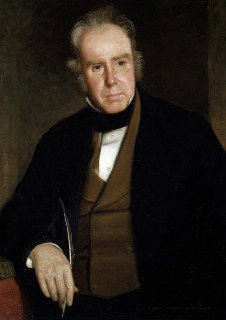
william-carleton

William Carleton, Irish writer and novelist, is born in Clogher, County Tyrone on February 20, 1794. He is best known for his Traits and Stories of the Irish Peasantry, a collection of ethnic sketches of the stereotypical Irishman.

Carleton receives a basic education at various hedge schools. Most of his learning is gained from a curate, Father Keenan, who teaches at a classical school at Donagh, County Monaghan which he attends from 1814 to 1816. He studies for the priesthood at St. Patrick’s Pontifical University, Maynooth, but leaves after two years. Around the age of 19 he undertakes one of the religious pilgrimages then common in Ireland. His experiences as a pilgrim make him give up the thought of entering the church.

Carleton’s vacillating ideas as to a mode of life are determined by reading the picaresque novel Gil Blas by Alain-René Lesage. He decides to try what fortune has in store for him, and he goes to Killanny, County Louth. For six months he serves as tutor to the family of a farmer named Piers Murphy. After some other experiments he sets out for Dublin, arriving with two shillings and sixpence in his pocket.

Carleton first seeks occupation as a bird-stuffer, but a proposal to use potatoes and meal as stuffing fails to recommend him. He then tries to become a soldier, but the colonel of the regiment dissuades him. After staying in a number of cheap lodgings, he eventually finds a place in a house on Francis Street which contains a circulating library. The landlady allows him to read from 12 to 16 hours a day. He obtains some teaching and a clerkship in a Sunday School office, begins to contribute to journals. “The Pilgrimage to Lough Derg,” which is published in the Christian Examiner, attracts great attention.

In 1830 Carleton publishes his first full-length book, Traits and Stories of the Irish Peasantry (2 volumes), which is considered his best achievement. A second series (3 volumes) appears in 1833, and Tales of Ireland in 1834. From that time until a few years prior to his death he writes constantly. “Fardorougha the Miser, or the Convicts of Lisnamona” appears in 1837–1838 in the Dublin University Magazine.

Carleton remained active publishing in Dublin magazines through the 1830s and 1840s writing many ethnic stories often drawn from the south Tyrone locality. He also writes a lot of fiction. During the last months of his life, he begins an autobiography which he brings down to the beginning of his literary career. This forms the first part of The Life of William Carleton by David James O’Donoghue, which contains full information about his life, and a list of his scattered writings.

Carleton’s later years are characterised by drunkenness and poverty. In spite of his considerable literary production, he remains poor but receives a pension in 1848 of £200 a year granted by Lord John Russell in response to a memorial on Carleton’s behalf signed by numbers of distinguished persons in Ireland.

William Carleton dies at his home at Woodville, Sandford Road, in Ranelagh, Dublin on January 30, 1869, and is interred at Mount Jerome Cemetery, Harold’s Cross, Dublin. The house, now demolished, is close to the entrance to the Jesuit residence at Milltown Park. Despite his conversion to Protestantism, Carleton remains on friendly terms with one of the priests there, Reverend Robert Carbery, who offers to give him the Last Rites of the Catholic Church. In the final weeks before his death, Carleton politely declines the offer, stating he had not been a Roman Catholic “for half a century and more.”

(Pictured: Portrait of Irish author William Carleton (1794-1869) by John Slattery (fl. 1850s))


Leave a comment

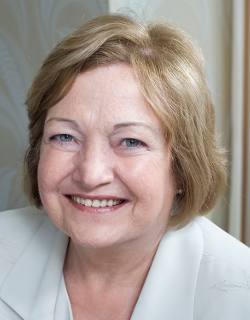
Birth of Máiread Maguire, Northern Irish Peace Activist

mairead-maguire

Máiread Maguire, née Máiread Corrigan, also called Máiread Corrigan Maguire, peace activist from Northern Ireland, is born in Belfast on January 27, 1944. Along with Betty Williams and Ciaran McKeown, she founds the Peace People, a grassroots movement of both Roman Catholic and Protestant citizens dedicated to ending the sectarian violence in Northern Ireland. For their work, Maguire and Williams share the 1976 Nobel Peace Prize.

Although Maguire from a young age earns her living as a secretary, she also is from her youth a member of the Legion of Mary, a lay Catholic welfare organization, and through it she becomes deeply involved in voluntary social work among children and teenagers in various Catholic neighbourhoods of Belfast. She is stirred to act against the growing violence in Northern Ireland after witnessing in August 1976 an incident in which a car being driven by an Irish Republican Army (IRA) terrorist goes out of control when the IRA man is shot by British troops. The car strikes and kills three children of Maguire’s sister.

Within days each woman publicly denounces the violence and calls for mass opposition to it. Marches of Catholic and Protestant women, numbering in the thousands, are organized, and shortly afterward the Peace People is founded based on the conviction that genuine reconciliation and prevention of future violence are possible, primarily through the integration of schools, residential areas, and athletic clubs. The organization publishes a biweekly paper, Peace by Peace, and provides a bus service to and from Belfast’s jails for families of prisoners.

Although Williams breaks away from the Peace People in 1980, Maguire remains an active member and later serves as the group’s honorary president. In 2006 she joins Williams and fellow Nobel Peace Prize winners Shirin Ebadi, Jody Williams, Wangari Maathai, and Rigoberta Menchú to found the Nobel Women’s Initiative. She is also active in various Palestinian causes, notably efforts to end the Israeli government’s blockade of the Gaza Strip, and she is deported from Israel on several occasions.

In October 2012, Maguire travels to New York City to serve on the Russell Tribunal on Israel/Palestine alongside writer Alice Walker, activist Angela Davis, former Congresswoman Cynthia McKinney, and Pink Floyd’s Roger Waters. The Russell Tribunal’s findings and conclusions challenge governments and civil society to have courage and act by implementing sanctions, thereby refusing to be silent and complicit in the face of Israel ’s violation of International Laws.

In March 2018, Maguire and two Nobel peace laureates, Shirin Ebadi and Tawakkol Karman, visit rohingya camps in Cox’s Bazar and share opinion on the crisis. After returning to Dhaka, they discuss the Rohingya crisis with members of the civil society of Bangladesh.

Maguire is a proponent of the belief that violence is a disease that humans develop but are not born with. She believes humankind is moving away from a mindset of violence and war and evolving to a higher consciousness of nonviolence and love. Among the figures she considers spiritual prophets in this regard are Jesus, Francis of Assisi, Mahatma Gandhi, Abdul Ghaffār Khān, Fr. John L. McKenzie, and Martin Luther King, Jr. She professes to reject violence in all its forms.


Leave a comment

Birth of James Ussher, Primate of All Ireland

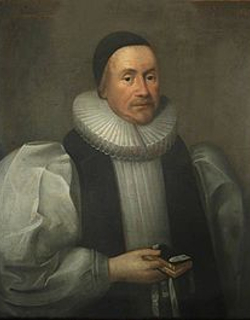
james-ussher

James Ussher, Archbishop of Armagh and Primate of All Ireland, is born in Dublin on January 4, 1581. He is best known for his massive compendium of ancient history, The Annals of the World, in which he attempts to calculate the number of years that had elapsed since creation.

Early in life Ussher is determined to pursue a career with the Church of England, a resolve quite similar to that of the Biblical Judge, Samuel.

A gifted polyglot, Ussher enters Dublin Free School and then the newly founded Trinity College, Dublin on January 9, 1594, at the age of thirteen (not an unusual age at the time). He receives his Bachelor of Arts degree by 1598 and is a fellow and MA by 1600. In May 1602, he was ordained in the Trinity College Chapel as a deacon (and possibly priest on the same day) in the Protestant Church of Ireland by his uncle Henry Ussher, the Archbishop of Armagh and Primate of All Ireland.

At the age of 26, Ussher becomes Professor and Chairman of the Department of Divinity at Dublin University, and he holds his professorship from 1609 to 1621. In 1625, he becomes Archbishop of Armagh, an office he apparently holds until his death. In 1628, King James I makes him a Privy Councillor.

Ussher is considered well-read and well-versed in history, a subject that soon becomes his primary focus. He writes several histories of the doings of the Irish and English churches dating back to Roman times. He also makes himself an expert in Semitic languages, an expertise that informs his argument in favor of the Masoretic Text of the Bible in preference to the Septuagint.

Ussher’s Confessions appear in 1643, followed in 1646 by his fifth work, Here I Stand. His most famous work, the dating of the creation as calculated from the Biblical record, appears in writing in the 1650s.

In 1656, Ussher goes to stay in the Countess of Peterborough’s house in Reigate, Surrey. On March 19, he feels a sharp pain in his side after supper and takes to his bed. His symptoms seem to have been those of a severe internal haemorrhage. Two days later, on March 21, 1656, he dies at the age of 75. His last words are reported as: “O Lord, forgive me, especially my sins of omission.” His body is embalmed and is to have been buried in Reigate, but at Oliver Cromwell‘s insistence he was given a state funeral on April 17 and was buried in the chapel of St. Erasmus in Westminster Abbey.

Ussher’s extensive library of manuscripts, many of them Middle Eastern originals, become part of the collection at Dublin University.


Leave a comment

Birth of Kenneth Branagh, Actor, Director & Producer

kenneth-branagh

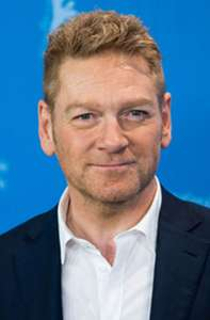
Sir Kenneth Charles Branagh, British actor, director, producer, and screenwriter, is born in Belfast on December 10, 1960.

Branagh is the middle of three children of working-class Protestant parents Frances (née Harper) and William Branagh, a plumber and joiner who runs a company that specialises in fitting partitions and suspended ceilings. He lives in the Tiger’s Bay area of the city and is educated at Grove Primary School.

At the age of nine, Branagh moves with his family to Reading, Berkshire, England, to escape the Troubles. He is educated at Whiteknights Primary School, then Meadway School, Tilehurst, where he appears in school productions such as Toad of Toad Hall and Oh, What a Lovely War!. He attends the amateur Reading Cine & Video Society (now called Reading Film & Video Makers) as a member and is a keen member of Progress Theatre for whom he is now the patron. He goes on to train at the Royal Academy of Dramatic Art in London and in 2015 succeeds Richard Attenborough as its president.

Branagh has both directed and starred in several film adaptations of William Shakespeare‘s plays, including Henry V (1989) (for which he was nominated for the Academy Award for Best Actor and Academy Award for Best Director), Much Ado About Nothing (1993), Othello (1995), Hamlet (1996) (for which he was nominated for the Academy Award for Best Adapted Screenplay), Love’s Labour’s Lost (2000), and As You Like It (2006).

Branagh stars in numerous other films and television series including Fortunes of War (1987), Woody Allen‘s Celebrity (1998), Wild Wild West (1999), The Road to El Dorado (2000), Conspiracy (2001), Harry Potter and the Chamber of Secrets (2002), Warm Springs (2005), as Major General Henning von Tresckow in Valkyrie (2008), The Boat That Rocked (2009), Wallander (2008–2016), My Week with Marilyn (2011) as Sir Laurence Olivier (nominated for Academy Award for Best Supporting Actor), and as Royal Navy Commander Bolton in the action-thriller Dunkirk (2017). He directs such films as Dead Again (1991), in which he also stars, Swan Song (1992) (nominated for Academy Award for Best Live Action Short Film), Mary Shelley’s Frankenstein (1994) in which he also stars, The Magic Flute (2006), Sleuth (2007), the blockbuster superhero film Thor (2011), the action thriller Jack Ryan: Shadow Recruit (2014) in which he also co-stars, the live-action film Cinderella (2015), and the mystery drama adaptation of Agatha Christie‘s Murder on the Orient Express (2017), in which he also stars as Hercule Poirot.

Branagh narrates the series Cold War (1998), the BBC documentary miniseries Walking with Dinosaurs (1999), Walking with Beasts (2001) and Walking with Monsters (2005). He has been nominated for five Academy Awards, five Golden Globe Awards, and has won three BAFTAs, and an Emmy Award. He is appointed a Knight Bachelor in the 2012 Birthday Honours and is knighted on November 9, 2012. He is awarded the Freedom of the City of his native city of Belfast in January 2018.


Leave a comment

The Birth of John Toland, Philosopher & Freethinker

john-toland

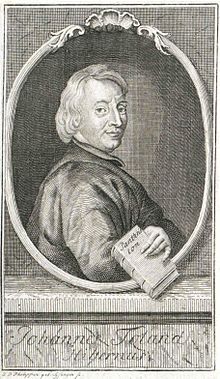
John Toland, Irish rationalist philosopher and freethinker, and occasional satirist, is born in Ardagh on the Inishowen peninsula, a predominantly Catholic and Irish-speaking region in northwestern Ireland, on November 30, 1670. He writes numerous books and pamphlets on political philosophy and philosophy of religion which are early expressions of the philosophy of the Age of Enlightenment.

Very little is known of Toland’s early life. His parents are unknown. He later writes that he had been baptised Janus Junius, a play on his name that recalls both the Roman two-faced god Janus and Lucius Junius Brutus, reputed founder of the Roman Republic. According to his biographer, Pierre des Maizeaux, he adopts the name John as a schoolboy with the encouragement of his schoolteacher.

Having formally converted from Catholicism to Protestantism at the age of 16, Toland gets a scholarship to study theology at the University of Glasgow. In 1690, at age 19, the University of Edinburgh confers a master’s degree on him. He then gets a scholarship to spend two years studying at Leiden University in the Netherlands, and subsequently nearly two years at the University of Oxford in England (1694–95). The Leiden scholarship is provided by wealthy English Dissenters who hope Toland will go on to become a minister for Dissenters.

In Toland’s first and best-known book, Christianity not Mysterious (1696), he argues that the divine revelation of the Bible contains no true mysteries. Rather, all the dogmas of the faith can be understood and demonstrated by properly trained reason from natural principles. For this argument he is prosecuted by a grand jury in London. As he is a subject of the Kingdom of Ireland, members of the Parliament of Ireland propose that he should be burned at the stake. In his absence three copies of the book are burned by the public hangman in Dublin as the content is contrary to the core doctrines of the Church of Ireland. Toland bitterly compares the Protestant legislators to “Popish Inquisitors who performed that Execution on the Book, when they could not seize the Author, whom they had destined to the Flames.”

After his departure from Oxford, Toland resides in London for most of the rest of his life but is also a somewhat frequent visitor to Continental Europe, particularly Germany and the Netherlands. He lives on the Continent from 1707 to 1710.

John Toland dies in Putney on March 10, 1722. Just before he dies, he composes his own epitaph: “He was an assertor of liberty, a lover of all sorts of learning … but no man’s follower or dependent. Nor could frowns or fortune bend him to decline from the ways he had chosen.” The 1911 Encyclopædia Britannica says of him that at his death in London at age 51 “he died… as he had lived, in great poverty, in the midst of his books, with his pen in his hand.”

Very shortly after his death a lengthy biography of Toland is written by Pierre des Maizeaux.

(Pictured: The only known image of John Toland)


Leave a comment

Birth of Donagh MacDonagh, Playwright & Writer

donagh-macdonagh

Donagh MacDonagh, Irish writer, judge, presenter, broadcaster, and playwright, is born in Dublin on November 22, 1912. He is the son of Irish nationalist and poet Thomas MacDonagh.

MacDonagh is still a young child when his father is executed in 1916 for his part in the Easter Rising. Tragedy strikes again when his mother dies of a heart attack a year afterwards while swimming at Skerries to Lambay Island, County Dublin on July 9, 1917. He and his sister are then cared for by their maternal aunts, in particular Catherine Wilson.

His parents’ families then engage in a series of child custody lawsuits as the MacDonaghs are Roman Catholic and the Giffords are Protestant. In the climate of Ne Temere, the MacDonaghs are successful.

He and his sister Barbara, who later marries actor Liam Redmond, live briefly with their paternal aunt Eleanor Bingham in County Clare before being put into the custody of strangers until their late teens when they are taken in by Jack MacDonagh.

MacDonagh is educated at Belvedere College and University College Dublin (UCD) with contemporaries Cyril Cusack, Denis Devlin, Charles Donnelly, Brian O’Nolan, Niall Sheridan and Mervyn Wall. In 1935 he is called to the Bar and practises on the Western Circuit. In 1941 he is appointed a District Justice in County Mayo. To date, he remains the youngest person appointed as a judge in Ireland. He is Justice for the Dublin Metropolitan Courts at the time of his death.

MacDonagh publishes three volumes of poetry: Veterans and Other Poems (1941), The Hungry Grass (1947) and A Warning to Conquerors (1968). He also edits the Oxford Book of Irish Verse (1958) with Lennox Robinson. He also writes poetic dramas and ballad operas. One play, Happy As Larry, is translated into a number of languages. He has three other plays produced: God’s Gentry (1951), Lady Spider (1959) and Step in the Hollow, a piece of situation comedy nonsense.

MacDonagh also writes short stories. He publishes Twenty Poems with Niall Sheridan, stages the first Irish production of “Murder in the Cathedral” with Liam Redmond, later his brother-in-law, and is a popular broadcaster on Radio Éireann.

MacDonagh is married twice, to Maura Smyth and, following her death after she drowns in a bath whilst having an epileptic seizure, to her sister, Nuala Smyth. He has four children, Iseult and Breifne by Maura and Niall and Barbara by Nuala.

Donagh MacDonagh dies in Dublin on January 1, 1968, and is buried at Deans Grange Cemetery.


Leave a comment

The Death of Theobald Wolfe Tone

theobald-wolfe-tone

Theobald Wolfe Tone, Irish republican and rebel who sought to overthrow English rule in Ireland and who led a French military force to Ireland during the Irish Rebellion of 1798, dies at Provost’s Prison, Dublin on November 19, 1798, from a stab wound to his neck which he inflicted upon himself on November 12. His attempted suicide is the result of being refused a soldier’s execution by firing squad and being sentenced to death by hanging.

Wolfe Tone is born in Dublin on June 20, 1763. The son of a coach maker, he studies law and is called to the Irish bar in 1789 but soon gives up his practice. In October 1791 he helps found the Society of United Irishmen, initially a predominantly Protestant organization that works for parliamentary reforms, such as universal suffrage and Roman Catholic emancipation. In Dublin in 1792 he organizes a Roman Catholic convention of elected delegates that forces Parliament to pass the Catholic Relief Act of 1793. He himself, however, is anticlerical and hopes for a general revolt against religious creeds in Ireland as a sequel to the attainment of Irish political freedom.

By 1794 Wolfe Tone and his United Irishmen friends begin to seek armed aid from Revolutionary France to help overthrow English rule. After an initial effort fails, he goes to the United States and obtains letters of introduction from the French minister at Philadelphia to the Committee of Public Safety in Paris. In February 1796 he arrives in the French capital, presents his plan for a French invasion of Ireland, and is favourably received. The Directory then appoints one of the most brilliant young French generals, Lazare Hoche, to command the expedition and makes Tone an adjutant in the French army.

On December 16, 1796, Wolfe Tone sails from Brest with 43 ships and nearly 14,000 men. But the ships are badly handled and, after reaching the coast of west Cork and Kerry, are dispersed by a storm. He again brings an Irish invasion plan to Paris in October 1797, but the principal French military leader, Napoleon Bonaparte, takes little interest. When insurrection breaks out in Ireland in May 1798, Wolfe Tone can only obtain enough French forces to make small raids on different parts of the Irish coast. In September he enters Lough Swilly, Donegal, with 3,000 men and is captured there.

At his trial in Dublin on November 10, Wolfe Tone defiantly proclaims his undying hostility to England and his desire “in fair and open war to produce the separation of the two countries.” He is found guilty and is sentenced to be hanged. Early in the morning of November 12, 1798, the day he is to be hanged, he cuts his throat with a penknife and dies at the age of 35 in Provost’s Prison, Dublin, not far from where he was born. He is buried in Bodenstown, County Kildare, near his birthplace, and his grave is in the care of the National Graves Association.