seamus dubhghaill

Promoting Irish Culture and History from Little Rock, Arkansas, USA


Leave a comment

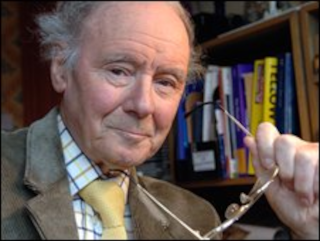
Birth of David Hammond, Singer & Folklorist

David Andrew (Davy) Hammond, singer, folkloristtelevision producer and documentary maker, is born on December 5, 1928, in Miss Kell’s nursing home on the Castlereagh Road in Belfast, Northern Ireland.

Hammond is the son of Leslie Hammond, a tram driver, and his wife Annie (née Lamont). His parents are not city people; his mother grew up near Ballybogy in the Ballymoney area of County Antrim, and his father, though from a family with roots in south County Londonderry, had lived in Ballymoney as a boy, and had been apprenticed to a blacksmith there. Both have a strong sense of their rural identity and maintain the Ulster Scots dialect of their childhood. They are never quite at home in the Belfast suburb of Cregagh, and in particular do not share the sectarian attitudes that are much more present in 1930s Belfast than they had been in north Antrim, one of the last strongholds of Presbyterian radicalism. Even as a boy, Hammond is interested in the old songs that his mother sang and realises that the traditions in which his parents had been nurtured are disappearing quickly in an increasingly urbanising and modernising world. When he encounters the work of Emyr Estyn Evans in the early 1940s, he is encouraged to document both rural tradition and the street life of the city, and he and a couple of friends, though still just teenagers, ride off on their bicycles to look for folklore in the hinterland of Belfast.

After primary school, Hammond wins a scholarship in 1941 to Methodist College Belfast, where he does well in examinations, and then goes to Stranmillis University College to train as a teacher. In his first job, in Harding Memorial primary school in east Belfast, he proves to be a popular, idealistic teacher, and is remembered by his pupils fifty years later as a fine singer and a teller of ghost stories, who had taken the class on memorable youth-hosteling trips to the Mourne Mountains. Youth hosteling and folklore collecting increases his awareness and understanding of the rich traditions of the whole community in the north of Ireland, and he is never constrained by political or religious barriers. His early career mirrors closely that of James Hawthorne, and their paths are to cross in later life.

Hammond is friendly with many others active in the cultural life of Northern Ireland and makes a name for himself as a song collector and eventually as an expert on all aspects of traditional singing. In 1956, he is awarded a scholarship to travel in the United States to meet the important pioneers of folk-music collecting and performance there. He records his first LP record of Ulster songs, I Am The Wee Falorie Man (1958), in the United States, and becomes friends with Pete Seeger, the Appalachian singer Jean Ritchie, with old blues singers, and notably with Liam Clancy, one of the three Clancy brothers who as a quartet with Tommy Makem are to popularise Irish folk music in the United States and elsewhere.

On returning to Belfast, Hammond takes a job in 1958 in Orangefield secondary school in the east of the city, where the highly regarded headmaster John Malone encourages new approaches to education. Among his pupils at Orangefield is George Ivan “Van” Morrison, who credits him with inspiring his interest in Irish traditional music. Hammond enjoys teaching but is increasingly drawn to folk-song performance and recording. He appears regularly on radio programmes of the BBC and Radio Éireann, and in 1964 joins the school’s department in BBC Northern Ireland. There, with colleagues like Sam Hanna Bell, James Hawthorne and others, he works on programmes such as Today and Yesterday in Northern Ireland, which for the first time introduces pupils (and many adults) to local history and to aspects of tradition. In 1968, with two friends, the poets Seamus Heaney and Michael Longley, he puts on poetry and traditional music events in schools all over the province. The Arts Council funds the Room to Rhyme project, which is immensely influential and inspiring, and is still talked about many years later by those who attended as children.

Hammond is creatively involved with hundreds of hours of broadcasting, in television as well as radio, and eventually for adults as well as children. He writes scripts, produces documentary series such as Ulster in Focusand Explorations, and brings an artistic sensibility to filming, as well as working sympathetically with traditional singers and craftspeople. Dusty Bluebells, a sensitively made film of Belfast children’s street games, wins the prestigious Golden Harp award in 1972. After he leaves the BBC to work as a freelance, and founds Flying Fox Films in 1986, he continues making documentaries on many aspects of Ulster life and heritage. His film called Steel Chest, Nail in the Boot and the Barking Dog (1986), about working in the Belfast shipyards, also wins a Golden Harp award. A companion book of the same name is published. Another book is Belfast, City of Song(1989), with Maurice Leyden. In 1979, he edits a volume of the songs of Thomas Moore. His documentary programmes include films about singers from Boho, County Fermanagh, and about the big houses of the gentry in Ireland. The Magic Fiddle (1991/2) examines the role of the instrument in the folk music of Ireland, ScandinaviaCanada, and the American south, while Another Kind of Freedom (1993) is about the experiences of a former Orangefield pupil, the Beirut hostage Brian Keenan. He also produces and directs the films Something to Write Home About (1998), Where Are You Now? (1999), and Bogland (1999), all of which explore Seamus Heaney’s home region and experiences.

The first poem in Heaney’s collection Wintering Out (1972) is entitled “For David Hammond and Michael Longley.” Their lifelong friendship leads to several other creative collaborations. In particular, after a distressing evening in 1972 when Hammond, affected by the despair and terror unleashed by Irish Republican Army (IRA) bombing of his city, is for once unable to sing, Heaney meditates on the experience in an essay and in an important poem, “The singer’s house” (subsequently included in his 1979 Field Work collection). The poem urges the singer to keep singing, to defend the values of art and friendship in a hostile time. Hammond collaborates with Dónal Lunny and other traditional musicians to bring out an LP also called The Singer’s House(1978), which includes Heaney’s poem on the album sleeve, and features some of the songs that he had made famous, such as “My Aunt Jane” and “Bonny Woodgreen,” from his vast repertoire of songs from Ulster. The album is reissued in 1980.

In 1995, Hammond is one of Heaney’s personal guests at the award of his Nobel prize in Stockholm, characteristically wearing his usual, mustard-yellow, cattle-dealer boots with evening dress. On another formal occasion, when he is awarded an honorary doctorate by Dublin City University in November 2003, he surprises the audience by standing up in his academic robes to sing “My Lagan love,” instead of giving an address. His unique, light mellow voice is an ideal vehicle for the traditional ballads which he knows so well. He records a number of records in the 1960s, including Belfast Street Songs, and publishes the book Songs of Belfast (1978). He also encourages traditional musicians like Arty McGlynn, and collaborates with them on various recording projects. He is well known for live and often impromptu performances at festivals and venues in Ireland and the United States. He also performs at the John F. Kennedy Center for the Performing Arts in Washington, D.C.

Hammond is also a notable collaborator with poets and dramatists, especially in the important Field Day Theatre Company project, of which he is a director, along with Seamus Heaney, Tom PaulinSeamus DeaneThomas Kilroy, and the project’s founders, Brian Friel and Stephen Rea. He supports the Field Day search for a “fifth province,” where history and community and culture can intersect, believing that to speak unthinkingly of “two traditions” is to perpetuate superficial political divisions. As he says in an interview in The Irish Times on July 4, 1998, songs can “take you out of yourself” and become bridges to unite people.

Hammond receives many honours. In 1994, he receives the Estyn Evans award for his contribution to mutual understanding, and his work is featured in several major events in his honour: in the University of North Florida (1999), in the Celtic Film Festival in Belfast (2003), and in Belfast’s Linen Hall Library (2005). A Time to Dream, a film about his life and work, is broadcast on BBC Northern Ireland in December 2008.

Hammond dies in hospital in Belfast, after a long illness, on August 25, 2008, survived by his wife Eileen (née Hambleton), whom he marries on July 19, 1954, and by their son and three daughters. His funeral in St. Finnian’s Church is a major cultural event, where friends sing, play and speak in his honour.

In Seamus Heaney’s last collection of poetry, Human Chain (2010), he includes a poignant farewell to Hammond. The poet imagines (or perhaps dreams) of another visit to the singer’s house, but this time “The door was open, and the house was dark.”

(From: “Hammond, David Andrew (‘Davy’)” by Linde Lunney, Dictionary of Irish Biography, http://www.dib.ie, December 2014)


Leave a comment

Death of David Hammond, Singer, Folklorist & Television Producer

David Andrew (Davy) Hammond, singer, folklorist, television producer and documentary maker, dies in Belfast, Northern Ireland, following a long illness, on August 25, 2008.

Hammond is born on December 5, 1928, in Miss Kells’s nursing home on the Castlereagh Road in Belfast, the son of Leslie Hammond, a tram driver, and his wife Annie (née Lamont). His parents are not city people; his mother grew up near Ballybogy in the Ballymoney area of County Antrim, and his father, though from a family with roots in south County Londonderry, had lived in Ballymoney as a boy, and had been apprenticed to a blacksmith there. Both have a strong sense of their rural identity and maintain the Ulster Scots dialect of their childhood. They are never quite at home in the Belfast suburb of Cregagh, and in particular do not share the sectarian attitudes that are much more present in 1930s Belfast than they had been in north Antrim, one of the last strongholds of Presbyterian radicalism. Even as a boy, Hammond is interested in the old songs that his mother sang and realises that the traditions in which his parents had been nurtured are disappearing quickly in an increasingly urbanising and modernising world. When he encounters the work of Emyr Estyn Evans in the early 1940s, he is encouraged to document both rural tradition and the street life of the city, and he and a couple of friends, though still just teenagers, ride off on their bicycles to look for folklore in the hinterland of Belfast.

After primary school, Hammond wins a scholarship in 1941 to Methodist College Belfast, where he does well in examinations, and then goes to Stranmillis University College to train as a teacher. In his first job, in Harding Memorial primary school in east Belfast, he proves to be a popular, idealistic teacher, and is remembered by his pupils fifty years later as a fine singer and a teller of ghost stories, who had taken the class on memorable youth-hosteling trips to the Mourne Mountains. Youth hosteling and folklore collecting increases his awareness and understanding of the rich traditions of the whole community in the north of Ireland, and he is never constrained by political or religious barriers. His early career mirrors closely that of James Hawthorne, and their paths are to cross in later life.

Hammond is friendly with many others active in the cultural life of Northern Ireland and makes a name for himself as a song collector and eventually as an expert on all aspects of traditional singing. In 1956, he is awarded a scholarship to travel in the United States to meet the important pioneers of folk-music collecting and performance there. He records his first LP record of Ulster songs, I Am The Wee Falorie Man (1958), in the United States, and becomes friends with Pete Seeger, the Appalachian singer Jean Ritchie, with old blues singers, and notably with Liam Clancy, one of the three Clancy brothers who as a quartet with Tommy Makem are to popularise Irish folk music in the United States and elsewhere.

On returning to Belfast, Hammond takes a job in 1958 in Orangefield secondary school in the east of the city, where the highly regarded headmaster John Malone encourages new approaches to education. Among his pupils at Orangefield is George Ivan “Van” Morrison, who credits him with inspiring his interest in Irish traditional music. Hammond enjoys teaching but is increasingly drawn to folk-song performance and recording. He appears regularly on radio programmes of the BBC and Radio Éireann, and in 1964 joins the school’s department in BBC Northern Ireland. There, with colleagues like Sam Hanna Bell, James Hawthorne and others, he works on programmes such as Today and Yesterday in Northern Ireland, which for the first time introduces pupils (and many adults) to local history and to aspects of tradition. In 1968, with two friends, the poets Seamus Heaney and Michael Longley, he puts on poetry and traditional music events in schools all over the province. The Arts Council funds the Room to Rhyme project, which is immensely influential and inspiring, and is still talked about many years later by those who attended as children.

Hammond is creatively involved with hundreds of hours of broadcasting, in television as well as radio, and eventually for adults as well as children. He writes scripts, produces documentary series such as Ulster in Focus and Explorations, and brings an artistic sensibility to filming, as well as working sympathetically with traditional singers and craftspeople. Dusty Bluebells, a sensitively made film of Belfast children’s street games, wins the prestigious Golden Harp award in 1972. After he leaves the BBC to work as a freelance, and founds Flying Fox Films in 1986, he continues making documentaries on many aspects of Ulster life and heritage. His film called Steel Chest, Nail in the Boot and the Barking Dog (1986), about working in the Belfast shipyards, also wins a Golden Harp award. A companion book of the same name is published. Another book is Belfast, City of Song (1989), with Maurice Leyden. In 1979, he edits a volume of the songs of Thomas Moore. His documentary programmes include films about singers from Boho, County Fermanagh, and about the big houses of the gentry in Ireland. The Magic Fiddle (1991/2) examines the role of the instrument in the folk music of Ireland, Scandinavia, Canada, and the American south, while Another Kind of Freedom (1993) is about the experiences of a former Orangefield pupil, the Beirut hostage Brian Keenan. He also produces and directs the films Something to Write Home About (1998), Where Are You Now? (1999), and Bogland (1999), all of which explore Seamus Heaney’s home region and experiences.

The first poem in Heaney’s collection Wintering Out (1972) is entitled “For David Hammond and Michael Longley.” Their lifelong friendship leads to several other creative collaborations. In particular, after a distressing evening in 1972 when Hammond, affected by the despair and terror unleashed by Irish Republican Army (IRA) bombing of his city, is for once unable to sing, Heaney meditates on the experience in an essay and in an important poem, “The singer’s house” (subsequently included in his 1979 Field Work collection). The poem urges the singer to keep singing, to defend the values of art and friendship in a hostile time. Hammond collaborates with Dónal Lunny and other traditional musicians to bring out an LP also called The Singer’s House (1978), which includes Heaney’s poem on the album sleeve, and features some of the songs that he had made famous, such as “My Aunt Jane” and “Bonny Woodgreen,” from his vast repertoire of songs from Ulster. The album is reissued in 1980.

In 1995, Hammond is one of Heaney’s personal guests at the award of his Nobel prize in Stockholm, characteristically wearing his usual, mustard-yellow, cattle-dealer boots with evening dress. On another formal occasion, when he is awarded an honorary doctorate by Dublin City University in November 2003, he surprises the audience by standing up in his academic robes to sing “My Lagan love,” instead of giving an address. His unique, light mellow voice is an ideal vehicle for the traditional ballads which he knows so well. He records a number of records in the 1960s, including Belfast Street Songs, and publishes the book Songs of Belfast (1978). He also encourages traditional musicians like Arty McGlynn, and collaborates with them on various recording projects. He is well known for live and often impromptu performances at festivals and venues in Ireland and the United States. He also performs at the John F. Kennedy Center for the Performing Arts in Washington, D.C.

Hammond is also a notable collaborator with poets and dramatists, especially in the important Field Day Theatre Company project, of which he is a director, along with Seamus Heaney, Tom Paulin, Seamus Deane, Thomas Kilroy, and the project’s founders, Brian Friel and Stephen Rea. He supports the Field Day search for a “fifth province,” where history and community and culture can intersect, believing that to speak unthinkingly of “two traditions” is to perpetuate superficial political divisions. As he says in an interview in The Irish Times on July 4, 1998, songs can “take you out of yourself” and become bridges to unite people.

Hammond receives many honours. In 1994, he receives the Estyn Evans award for his contribution to mutual understanding, and his work is featured in several major events in his honour: in the University of North Florida (1999), in the Celtic Film Festival in Belfast (2003), and in Belfast’s Linen Hall Library (2005). A Time to Dream, a film about his life and work, is broadcast on BBC Northern Ireland in December 2008.

Hammond dies in hospital in Belfast, after a long illness, on August 25, 2008, survived by his wife Eileen (née Hambleton), whom he marries on July 19, 1954, and by their son and three daughters. His funeral in St Finnian’s church is a major cultural event, where friends sing, play and speak in his honour.

In Seamus Heaney’s last collection of poetry, Human Chain (2010), he includes a poignant farewell to Hammond. The poet imagines (or perhaps dreams) of another visit to the singer’s house, but this time “The door was open, and the house was dark.”

(From: “Hammond, David Andrew (‘Davy’)” by Linde Lunney, Dictionary of Irish Biography, http://www.dib.ie, December 2014)

Leave a comment

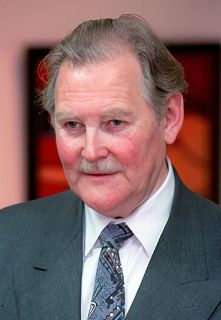
Birth of Proinsias Mac Aonghusa, Journalist, Writer & Presenter

Proinsias Mac Aonghusa (English: Francis McGuinness), Irish journalist, writer, television presenter and campaigner, is born into an Irish-speaking household on June 23, 1933, in Salthill, Galway, County Galway. He becomes one of the most noted Irish language broadcasters and journalists of the 20th century.

Mac Aonghusa is the son of Criostóir Mac Aonghusa, a writer and Irish language activist, and Mairéad Ní Lupain, a nurse and native Irish speaker. The eldest of four siblings, he grows up speaking Irish as his first language and allegedly does not learn English until the age of eleven. His parents are left-wing Irish republicans who support Fianna Fáil and associate with the like-minded Máirtín Ó Cadhain and Peadar O’Donnell. His parents split when he is ten years of age. His mother takes his siblings away to Dublin while he and his father remain in Rosmuc, a remote village and part of the Galway Gaeltacht. As a teenager he is educated at Coláiste Iognáid (also known as St. Ignatius College), a bilingual school in Galway.

Upon leaving school, Mac Aonghusa first works as an actor at the Abbey Theatre in Dublin, performing in Irish language productions. In 1952, he becomes involved in Radio Éireann, first as an actor but later as a reader of short stories before advancing to becoming a newsreader, presenter and interviewer. As he advances his career, he works for RTÉ, UTV and BBC television from the 1960s. In 1962, he begins presenting An Fear agus An Sceal (The Man & his Story) on RTÉ television, an Irish language show which sees him interviewing a different guest of note about their life each episode. That same year he wins a Jacob’s Award for An Fear agus an Sceal, which he continues to host until 1964.

As well as attracting awards, An Fear agus an Sceal also brings controversy. Two interviews, one with Máirtín Ó Cadhain, one with Con Lehane, both criticise the measures practised by the Fianna Fáil government during World War II to suppress and imprison Irish republicans. In response, the Fianna Fáil government intervenes with RTÉ, and those episodes are not aired. This is not to be Mac Aonghusa’s only run-in with the Fianna Fáil government. After he recorded a programme in which he questioned the effectiveness of Ireland’s civil defence measures in the face of nuclear war, then Minister for Defence Kevin Boland has the episode suppressed. He once again runs afoul of the Fianna Fáil government when, after criticising the party in his anonymous weekly political gossip column in the Sunday Independent, then Minister for Agriculture Neil Blaney sees to it that the column is dropped. He is not deterred and returns anonymously as “Gulliver” in The Sunday Press and a gossip column on the back page of The Hibernia Magazine.

The latter half of Mac Aonghusa’s 1960s/70s broadcasting career is primarily associated with the Irish language current events show Féach, which he both presents and edits. He resigns from Féach in 1972 following a bitter dispute with the broadcaster and commentator Eoghan Harris.

Influenced by O’Donnell and Ó Cadhain in his youth, Mac Aonghusa also pursues left-wing republican politics as an adult. In 1958, he becomes, alongside David Thornley, Noël Browne, Owen Sheehy-Skeffington and Desmond Ryan, a member of the “1913 Club,” a group which seeks to ideologically reconcile Irish nationalism and socialism.

In 1959, Mac Aonghusa writes a series of six articles for The Irish Times in which he vehemently opposes the Fianna Fáil government’s proposal to abolish single transferable vote in Ireland in favour of first-past-the-post voting. He contends that first-past-the-post voting gives too much influence to party bosses, while proportional representation gives even small minorities representation, preventing them from feeling excluded by the state such as nationalists in Northern Ireland. In the referendum held on the matter on June 17, 1959, voters reject first past the vote by a margin of 2%. Fianna Fáil attempts to repeal proportional representation again in the late 60s, at which point Mac Aonghusa once again throws himself into the fight, leading a group called “Citizens for PR.” In the referendum of 1968, voters reject the first past the post system by over 20%. He later recalls that his defence of proportional representation his greatest achievement in politics.

In the 1960s, both Mac Aonghusa and his wife, Catherine, join the Sean Connolly branch of the Labour Party in Dublin. The branch had established a reputation as a haven for intellectuals who want a branch to themselves away from the many other Labour branches dominated by trade unionists. The branch comes to advocate for expressly socialist policies combined with on-the-ground grass-roots campaigning. Through the Sean Connolly Branch, both he and his wife begin to develop significant influence over the leader of the Labour party Brendan Corish.

In the 1965 Irish general election, Mac Aonghusa stands on behalf of the Labour party in the Louth constituency but is not elected. In 1966, he publishes a book of speeches by Corish, the speeches themselves mostly having been ghostwritten by his wife Catherine. The introduction of the book proclaims that Corish had developed a “brand of democratic republican socialism … broadened by experience and built firmly on Irish‐Ireland roots” and had rid the party of “do‐nothing backwoodsmen”, thereby becoming the “first plausible and respected Labour leader in Ireland”. It is at this same time that he is elevated to vice-chairman of the party. As vice-chair, he tries to convince Corish to stand in the 1966 Irish presidential election. When he fails to do so, he supports Fine Gael‘s Tom O’Higgins in his bid for the presidency. O’Higgins comes within 0.5% of beating the incumbent, an ageing Éamon de Valera.

It was around this same time that Mac Aonghusa becomes active in the Wolfe Tone Societies, a republican organisation linked almost directly to Sinn Féin. He suggests that republicans with “progressive views” should join the Labour party. In 1966, alongside Máirtín Ó Cadhain and other Gaeilgeoirí, he counter-protests and disrupts the Language Freedom Movement, an organisation seeking the abolition of compulsory Irish in the education system. For this, he and his allies are criticised as acting illiberally, while he maintains that those who oppose the Irish language are “slaves” unworthy of tolerance.

Mac Aonghusa’s open disdain for the conservative and trade union wings of the Labour, as well as his open embrace of republican sensibilities and tendency to make pronouncements on Labour policy without first consulting the party’s structures, bring him many internal enemies. An attempt is made to censure him for backing breakaway trade unions, but he is able to survive this. In 1966, he encourages the formation of the Young Labour League, an unofficial youth wing of the party led by Brian Og O’Higgins, son of former Sinn Féin president Brian O’Higgins. Mirroring his own position, the Youth League are Corish loyalists that openly rebel against the views of Labour’s conservative deputy leader James Tully. When the youth league begins publishing their own weekly newsletter, Labour’s administrative council condemns it after discovering material which is “violently” critical of Tully and other Labour conservatives. An ensuing investigation into the newsletter leads to Mac Aonghusa admitting that he had financed it and written some of the content, but not the anti-Tully material. After he refuses to co-operate with further investigations into the matter, he is expelled on January 12, 1967 for “activities injurious” to the party. In the aftermath, he portrays himself a left-wing martyr purged by a right-wing “Star chamber,” a tactic that garners him sympathy. Nevertheless, his expulsion is confirmed at the October 1967 party conference, despite one last appeal. His wife leaves the party alongside him.

In the aftermath of his expulsion from Labour, Mac Aonghusa expresses an interest in the social democratic wing of Fine Gael, which had been developing under Declan Costello since the mid-1960s. However, he does not join the party and instead runs as an independent candidate in the 1969 Irish general election in Dún Laoghaire–Rathdown. When he is not elected, he begins to refocus on the revival of the Irish language and with nationalist politics rather than being elected himself.

Upon the onset of the Troubles, Mac Aonghusa is initially supportive of Official Sinn Féin, however by 1972 he comes to resent them and, through the Ned Stapleton Cumann, their secret influence over RTÉ. During the Arms Crisis in 1970, he supports Charles Haughey and Neil Blaney, who stand accused of arranging to supply weapons to the Provisional IRA, in the pages of the New Statesman and other left‐wing journals. In this time period, he warns editors not to reprint his material in the Republic of Ireland as there is a de facto ban on him, and indeed, official attempts are made to block the transmission of his telexed reports.

Despite his earlier famed stark criticism of Fianna Fáil, Mac Aonghusa’s defence of Haughey leads to a friendship between the two men which results in him becoming one of Haughey’s loudest defenders throughout the rest of his career. His columns in The Sunday Press and Irish language paper Anois are accused of descending into self-parody in their stringent defences of Haughey.

During the 1970s, Mac Aonghusa writes a number of books covering significant figures in Irish republicanism. In order, he releases books on James Connolly, Patrick Pearse, Wolfe Tone and Éamon de Valera. In his work on De Valera, he emphasises what he perceives as the more radical aspects of the Fianna Fáil founder. During 1974 and 1975, he works as a United Nations Special Representative to the Southern Africa region with Seán MacBride, where they involve themselves in the South African Border War, and during which time Mac Aonghusa becomes involved in setting up a radio station in Namibia, linked to the South West Africa People’s Organisation (SWAPO) nationalist party.

In the 1980s, Haughey twice appoints Mac Aonghusa to the Arts Council as well as naming him president of Bord na Gaeilge (1989-93). This is an issue as Mac Aonghusa is already president of Conradh na Gaeilge. Being head of the main Irish language lobbying body as well as the state body responsible for the Irish language has an obvious conflict of interest. In 1991, following the announcement by Haughey that the government is to fund the creation of an Irish-language television station (launched in 1996 as Teilifís na Gaeilge), an elated Mac Aonghusa suggests that Haughey would be “remembered among the families of the Gael as long as the Gaelic nation shall survive.”

In 1992 there are calls for Mac Aonghusa to step down from Bord na Gaeilge after he pronounces that “every respectable nationalist” in West Belfast should vote for Sinn Féin’s Gerry Adams over the Social Democratic and Labour Party (SDLP) candidate Joe Hendron in the 1992 United Kingdom general election as he considers a defeat for Adams “a victory for British imperialism.” Nevertheless, he simultaneously advises voters in South Down to vote for the SDLP’s Eddie McGrady over Sinn Féin. He rails against his detractors at the Conradh na Gaeilge ardfheis that year, declaring that “The mind of the slave, of the slíomadóir, of the hireling and the vagabond is still fairly dominant in Ireland.”

As of 1995, Mac Aonghusa continues to label himself a socialist. In the foreword to the book, he writes about James Connolly that is released that year, he declares that “the abolition of capitalism is essential if the great mass of the people in all parts of the globe are to be emancipated.”

However, with the recent collapse of the Soviet Union in mind, Mac Aonghusa declares that the Stalinist regimes of Eastern Europe have not been socialist and argues that the social democracies of Scandinavia are what James Connolly had envisioned as the desired socialist society. In the same text, he accuses the Irish education system as well as Ireland’s media of obfuscating Connolly’s views on socialism and nationalism.

Mac Aonghusa battles through ill health in his final years but remains able to continue writing a number of books. His last publication, Súil Tharam (2001), comes just two years before his death in Dublin on September 28, 2003.

In 1955, Mac Aonghusa marries Catherine Ellis, a member of the Church of Ireland from Belfast. For her married name, she chooses to use “McGuinness,” the English language equivalent of Mac Aonghusa. Catherine McGuinness goes on to become a Senator and a Judge of the Circuit Court, High Court and Supreme Court over the course of her legal career. Together they have three children together.


Leave a comment

Death of William Wilde, Surgeon, Author & Father of Oscar Wilde

Sir William Robert Wills Wilde, Irish otoophthalmologic surgeon and the author of significant works on medicine, archaeology and folklore, particularly concerning his native Ireland dies on April 19, 1876. He is the father of poet and playwright Oscar Wilde.

Wilde is born in March 1815 at Kilkeevin, near Castlerea, County Roscommon, the youngest of the three sons and two daughters of a prominent local medical practitioner, Thomas Wills Wilde, and his wife, Amelia Flynne. His family are members of the Church of Ireland, and he is descended from a Dutchman, Colonel de Wilde, who came to Ireland with King William of Orange‘s invading army in 1690, and numerous Anglo-Irish ancestors. He receives his initial education at the Elphin Diocesan School in Elphin, County Roscommon. In 1832, he is bound as an apprentice to Abraham Colles, the pre-eminent Irish surgeon of the day, at Dr. Steevens’ Hospital in Dublin. He is also taught by the surgeons James Cusack and Sir Philip Crampton and the physician Sir Henry Marsh. He also studies at the private and highly respected school of anatomy, medicine, and surgery in Park Street (later Lincoln Place), Dublin. In 1837, he earns his medical degree from the Royal College of Surgeons in Ireland. In the same year, he embarks on an eight-month-cruise to the Holy Land with a recovering patient, visiting various cities and islands throughout the Mediterranean. Porpoises are flung on board the ship, Crusader, and Wilde dissects them. Taking notes, he eventually composes a two-volume book on the nursing habits of the creatures. Among the places he visits on this tour is Egypt. In a tomb he finds the mummified remains of a dwarf and salvages the torso to bring back to Ireland. He also collects embalmed ibises.

Once back in Ireland, Wilde publishes an article in the Dublin University Magazine suggesting that one of the “Cleopatra’s Needles” be transported to England. In 1878, one of the Needles is transported to London, and in 1880 the other one is brought to New York City‘s Central Park. In 1873 he is awarded the Cunningham Gold Medal by the Royal Irish Academy.

Wilde runs his own hospital, St. Mark’s Ophthalmic Hospital for Diseases of the Eye and Ear, in Dublin and is appointed to serve as Oculist-in-ordinary to Queen Victoria. At one point, he performs surgery on the father of another famous Irish dramatist, George Bernard Shaw.

Wilde had a very successful medical practice and is assisted in it by his natural son, Henry Wilson, who had been trained in Dublin, Vienna, Heidelberg, Berlin, and Paris. Wilson’s presence enables him to travel, and he visits Scandinavia, where he receives an honorary degree from Uppsala University, and is welcomed in Stockholm by Anders Retzius, among others. King Charles XV of Sweden confers on him the Nordstjärneorden (Order of the Polar Star). In 1853, he is appointed Surgeon Occulist in Ordinary to the Queen in Ireland, the first position of its kind, probably created for him.

Wilde is awarded a knighthood in a ceremony at Dublin Castle on January 28, 1864, more for his involvement with the Irish census than for his medical contributions, although he had been appointed medical commissioner to the Irish census in 1841. In 1845, he becomes editor of the Dublin Journal of Medical & Chemical Science, to which he contributes many articles.

Wilde marries the poet Jane Francesca Agnes Elgee on November 12, 1851, who writes and publishes under the pen name of Speranza. The couple has two sons, William (Willie) and Oscar, and a daughter, Isola Francesca, who dies in childhood.

In addition to his children with his wife, Wilde is the father of three children born out of wedlock before his marriage: Henry Wilson, born in 1838, and Emily and Mary Wilde, born in 1847 and 1849, respectively, of different parentage to Henry. He acknowledges paternity of his illegitimate children and provides for their education, but they are reared by his relatives rather than with his wife and legitimate children. Emily and Mary both die in 1871 following a Halloween party at which their dresses accidentally catch fire.

From 1855 until his death in 1876, Wilde lives at 1 Merrion Square, now the headquarters of American College Dublin. The building is named Oscar Wilde House after William Wilde’s son, who also lives at the address from 1855 until 1878. There is a plaque at 1 Merrion Square dedicated to him.

Wilde’s reputation suffers when Mary Travers, a long-term patient of his and the daughter of a colleague, claims that he had seduced her two years earlier. She writes a pamphlet crudely parodying Wilde and Lady Wilde as Dr. and Mrs. Quilp, and portraying Dr. Quilp as the rapist of a female patient anaesthetised under chloroform. She distributes the pamphlets outside the building where Wilde is about to give a public lecture. Lady Wilde complains to Mary’s father, Robert Travers, which results in Mary bringing a libel case against her. Mary Travers wins her case but is awarded a mere farthing in damages by the jury. Legal costs of £2,000 are awarded against Lady Wilde. The case is the talk of all Dublin, and Wilde’s refusal to enter the witness box during the trial is widely held against him as ungentlemanly behaviour.

From this time onwards, Wilde begins to withdraw from Dublin to the west of Ireland, where he had started in 1864 to build what becomes Moytura, his house overlooking Lough Corrib in Connemara, County Galway. His health deteriorates in 1875. He dies, likely of cancer, at the age of 61 on April 19, 1876. He is buried in Mount Jerome Cemetery in Dublin.

(Pictured: Sketch of William Wilde by J.H. Maguire, 1847)


Leave a comment

Birth of Máire de Paor, Historian & Archaeologist

maire-de-paor

Máire de Paor, Irish historian and archaeologist who also works as a researcher and presenter for national broadcaster RTÉ, is born on May 6, 1925, in Buncrana, County Donegal.

De Paor is born Máire MacDermott to Eamonn MacDermott and Delia MacVeigh. She is educated in the Convent of Mercy in Buncrana before going to University College Dublin, where she completes a master’s degree and a doctorate on early Christian archaeology and metalwork.

De Paor works in the Department of Archeology at UCD from 1946 to 1958. She marries Liam de Paor in 1946, and they have a daughter and four boys. They collaborate on a number of publications. She publishes her papers in the Proceedings of the Royal Irish Academy, Archaeologia, Seanchas Armagh and Comhar. Her husband also works at the university and, as a result of policies about married women, she is forced to leave. Initially she lectures in the United States, Canada, Scandinavia, France and the United Kingdom. She works as lecturer in archaeology at Trinity College, Dublin. The de Paors spend a year in Nepal on a UNESCO project in 1963.

De Paor works as a freelance researcher for Raidió Teilifís Éireann until she is given a full-time position in the 1970s.

De Paor is elected a member of the Royal Irish Academy in 1960 and is a member of the Arts Council from 1973. She becomes a member of Conradh na Gaeilge from 1962. From 1968 she is working with Cumann Merriman, the Irish cultural organisation named after Brian Merriman, working with the group as a director of the schools and spends four years as chairperson. In 1992 she is appointed to the board of Amharclann de hÍde.

Máire de Paor dies on December 6, 1994, at the age of 69.

University College Dublin has created the Dr. Máire de Paor Award for best PhD thesis. Her biographer identifies her as a committed republican, socialist and feminist.


Leave a comment

Earliest Verifiable Viking Invasion of Ireland

The earliest verifiable date of a Viking invasion of Ireland is September 9, 872, in Dunrally in what is now County Laois.

The Vikings conduct extensive raids in Ireland and found many towns, including Dublin, Limerick, Wexford, Waterford, Wicklow, Arklow and Leixlip. Literature, crafts, and decorative styles in Ireland and Britain reflect Scandinavian culture. Vikings trade at Irish markets in Dublin. Excavations find imported fabrics from England, Byzantium, Persia, and Central Asia. Dublin becomes so crowded by the 11th century that houses are built outside the town walls.

The Vikings pillage monasteries on Ireland’s west coast in 795 and then spread out to cover the rest of the coastline. The north and east of the island are most affected. During the first 40 years, the raids are conducted by small, mobile Viking groups. From 830 on, the groups consist of large fleets of Viking ships. From 840, the Vikings begin establishing permanent bases at the coasts. Dublin is the most significant settlement in the long term. The Irish become accustomed to the Viking presence and culture. In some cases, they become allies and also intermarry.

In 832, a Viking fleet of about 120 ships under Turgesius invades kingdoms on Ireland’s northern and eastern coasts. Some believe that the increased number of invaders coincides with Scandinavian leaders’ desires to control the profitable raids on the western shores of Ireland. During the mid-830s, raids begin to push deeper into Ireland. Navigable waterways make this deeper penetration possible. After 840, the Vikings have several bases in strategic locations throughout Ireland.

In 838, a small Viking fleet enters the River Liffey in eastern Ireland, probably led by the chieftain Saxolb, who is killed later that year. The Vikings set up a base, which the Irish call longphorts. This longphort would eventually become Dublin. After this interaction, the Irish experience Viking forces for about 40 years. The Vikings also establish longphorts in Cork, Limerick, Waterford, and Wexford. The Vikings are driven out of Ireland for a short period around 900 but return to Waterford in 914 to found what would become Ireland’s first city. The other longphorts are soon re-occupied and developed into cities and towns.

The last major Irish battle involving Vikings is the Battle of Clontarf in 1014, in which a large force from the pan-Viking world and their Irish allies oppose Brian Boru, then the High King of Ireland and his forces, a small contingent of which are Viking defectors. The battle is fought in what is the now Dublin suburb of Clontarf on Good Friday of that year. Boru, the Irish High King has allowed the Viking King of Dublin, Sigtrygg Silkbeard, one year to prepare for his coming assault. Silkbeard responds by offering the bed of his mother to several Viking lords from Scandinavia, Ireland and Britain. The savage mêlée between the heavily mailed Norse and the unarmoured, yet undaunted Gaels ends in a rout of the Vikings and their Irish allies. Careful accounts are taken by both sides during the battle, and thus many famous warriors seek each other out for personal combat and glory. High King Brian, who is nearly eighty, does not personally engage in the battle but retires to his tent where he spends the day in quiet prayer.

The Viking Brodir of Man chances upon Brian’s tent as he flees the field. He and a few followers seize the opportunity, and surprise the High King, killing the aged Brian before being captured. Brian’s foster son Ulf the Quarrelsome later tracks down and dispatches Brodir by disembowelment. The battle is fairly matched for most of the day and each side has great respect for the prowess of the other, however, in the end, the Irish forces the Norse to return to the sea. Many of the fleeing Vikings are drowned in the surf due to their heavy mail coats as they struggled for the safety of their longships. Others are pursued and slain further inland.

After the battle, Viking power is broken in Ireland forever, though many settled Norse remain in the cities and prosper greatly with the Irish through trade. With Brian dead, Ireland returns to the fractured kingdom it had once been but is now cleared of further Viking predation.

(Pictured: Guest from Overseas, Nicholas Roerich, 1901)