seamus dubhghaill

Promoting Irish Culture and History from Little Rock, Arkansas, USA


Leave a comment

Mary Robinson Inaugurated 7th President of Ireland

Mary Robinson, Irish lawyer, independent politician, and diplomat born Mary Teresa Winifred Bourke, is inaugurated as the seventh President of Ireland on December 3, 1990, becoming the first woman to hold the office. She later serves as United Nations High Commissioner for Human Rights (UNHCHR) from September 1997 – September 2002.

Robinson is born on May 21, 1944, in Ballina, County Mayo. She is educated at Trinity College and the King’s Inns in Dublin and at Harvard Law School in the United States. She serves at Trinity College (University of Dublin) as Reid Professor of penal legislation, constitutional and criminal law, and the law of evidence (1969–1975) and lecturer in European Community law (1975–1990). In 1988 she and her husband establish the Irish Centre for European Law at Trinity College.

A distinguished constitutional lawyer and a renowned supporter of human rights, Robinson is elected to the Royal Irish Academy and is a member of the International Commission of Jurists in Geneva (1987–1990). She sits in Seanad Éireann, the upper house of the Oireachtas, for the University of Dublin constituency (1969–1989) and serves as whip for the Labour Party until resigning from the party over the Anglo-Irish Agreement of 1985, which she feels ignores unionist objections. She is also a member of the Dublin City Council (1979–1983) and runs unsuccessfully in 1977 and 1981 for Dublin parliamentary constituencies.

Nominated by the Labour Party and supported by the Green Party and the Workers’ Party, Robinson becomes Ireland’s first woman president in 1990 by mobilizing a liberal constituency and merging it with a more conservative constituency opposed to the Fianna Fáil party. As president, she adopts a much more prominent role than her predecessors and she does much to communicate a more modern image of Ireland. Strongly committed to human rights, she is the first head of state to visit Somalia after it suffers from civil war and famine in 1992 and the first to visit Rwanda after the genocide in that country in 1994.

Shortly before her term as president expires, Robinson accepts the post of United Nations High Commissioner for Human Rights (UNHCHR). As high commissioner, she changes the priorities of her office to emphasize the promotion of human rights at the national and regional levels. She was the first UNHCHR to visit China, and she also helps to improve the monitoring of human rights in Kosovo. In 2001 she serves as secretary-general of the World Conference against Racism held in Durban, South Africa. In 1998 she is elected chancellor of Trinity College, a post she holds until 2019.

After stepping down as UNHCHR, Robinson founds the nongovernmental organization Realizing Rights: The Ethical Globalization Initiative (2002–2010). Its central concerns include equitable international trade, access to health care, migration, women’s leadership and corporate responsibility. She is also a founding member of the Council of Women World Leaders, serves as honorary president of Oxfam International, a private organization that provides relief and development aid to impoverished or disaster-stricken communities worldwide, and is a member of the Club of Madrid, which promotes democracy. She also holds various posts at the United Nations, and in 2010, she establishes the Mary Robinson Foundation—Climate Justice, which operates until 2019.

Robinson is the recipient of numerous honours. In 2004 Amnesty International awards her its Ambassador of Conscience Award for her human rights work. In 2009 she receives the United States Presidential Medal of Freedom from President Barack Obama. Her memoir, Everybody Matters: My Life Giving Voice (cowritten with Tessa Robinson), is published in 2012.

(Pictured: Mary Robinson during her inauguration as president in 1990, photograph by Matt Kavanagh)

Leave a comment

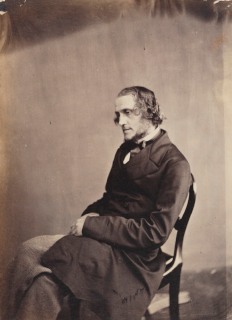
Birth of Architect Benjamin Woodward

Benjamin Woodward, Irish architect who, in partnership with Sir Thomas Newenham Deane, designs a number of buildings in Dublin, Cork and Oxford, is born in Tullamore, County Offaly on November 16, 1816.

Woodward is trained as an engineer but develops an interest in medieval architecture, producing measured drawings of Holy Cross Abbey in County Tipperary. These drawings are exhibited at the Royal Institute of British Architects (RIBA) in London in 1846.

The same year Woodward joins the office of Sir Thomas Deane and becomes a partner in 1851 along with Deane’s son, Thomas Newenham Deane. It seems that Deane looks after business matters and leaves the design work to Woodward.

Woodward’s two most important buildings are the Museum at Trinity College, Dublin (1854-1857) and the Oxford University Museum of Natural History, Oxford, (1854-1860). He is also responsible for the Kildare Street Club in Dublin (1858-1861) and Queen’s College Cork, now University College Cork (1845-1849).

The work of Deane and Woodward is characterised by naturalistic decoration with foliage and animals carved into capitals and plinths around windows and doors. It is extolled by John Ruskin in particular when he visits the Museum at Trinity College, Dublin. Woodward collaborates in particular with the O’Shea brothers, James and John, who are stone carvers from County Cork. They, along with London sculptors, carve the abundant decorative stonework at Trinity, showing owls, lizards, cats and monkeys, as well as other flora and fauna. Later the O’Sheas carve stonework at the Kildare Street Club, including the famous window piece showing the club members as monkeys playing billiards. Some stories tell of the O’Sheas getting into trouble and possibly even being sacked for carving cats or monkeys at the Oxford University Museum.

Benjamin Woodward dies on May 16, 1861.

(Pictured: Benjamin Woodward attributed to Lewis Carroll, albumen print, late 1850s, © National Portrait Gallery, London)


Leave a comment

Birth of Justice Catherine McGuinness

Catherine McGuinness (née Ellis), retired Irish judge, is born in Belfast, Northern Ireland on November 14, 1934. She serves as a Judge of the Supreme Court of Ireland from 2000 to 2006, a Judge of the High Court from 1996 to 2000, a Judge of the Circuit Court from 1994 to 1996 and a Senator for the University of Dublin from 1979 to 1981 and between 1983 and 1987. She is appointed by President Michael D. Higgins to the Council of State from 1988 to 1990 and 2012 to 2019.

McGuinness is President of the Law Reform Commission from 2007 to 2009. In May 2013, she is appointed Chair of the National University of Ireland Galway Governing Authority.

McGuinness is educated in Alexandra College, Trinity College Dublin and the King’s Inns. In the 1960s she works for the Labour Party. She is called to the Irish Bar in 1977 at age 42. In 1989, she is called to the Inner Bar.

In 1979, McGuinness is elected as an independent candidate to Seanad Éireann at a by-election on December 11, 1979, as a Senator for the University of Dublin constituency, following the resignation of Senator Conor Cruise O’Brien, taking her seat in the 14th Seanad. She is re-elected at the 1981 elections to the 15th Seanad, and in 1983 to the 17th Seanad, where she serves until 1987, losing her seat to David Norris. She is appointed to the Council of State on May 2, 1988, by President Patrick Hillery and serves until 1990.

McGuinness is appointed a judge of the Circuit Court in 1994, the first woman to hold that office in Ireland. In 1996, she is appointed to the High Court and remains there until her appointment to the Supreme Court in January 2000.

In November 2005, McGuinness is appointed Adjunct Professor at the Faculty of Law, National University of Ireland, Galway. She is also appointed President of the Law Reform Commission in 2005 and holds that position until 2011.

In April 2009, McGuinness is awarded a “Lord Mayor’s Award” by Lord Mayor of Dublin Eibhlin Byrne “for her contribution to the lives of children and families in the city through her pioneering work.” In September 2010, she is named as one of the “People of the Year” for “her pioneering, courageous and long-standing service to Irish society.” In November 2012, she wins the Irish Tatler Hall of Fame Award.

In addition to her judicial career, McGuinness serves on the Employment Equality Agency, Kilkenny Incest Investigation, the Forum for Peace and Reconciliation, the National Council of the Forum on End of Life in Ireland and the Irish Universities Quality Board. In June 2011, she becomes patron of the Irish Refugee Council. In November 2011, she is appointed Chairperson of the “Campaign for Children.”

McGuinness has received honorary doctorates from the University of Ulster, the National University of Ireland, the University of Dublin, the Higher Education and Training Awards Council (HETAC) and the Royal College of Surgeons in Ireland. In February 2013, she accepts the Honorary Presidency of Trinity College, Dublin’s Free Legal Advice Centre.

In January 2014, McGuinness is appointed by Minister for Communications, Energy and Natural Resources, Pat Rabbitte, to chair the expert panel to oversee the preparation of reports on the best underground route options to compare with the Grid Link and Grid West high voltage power lines in Ireland. In March 2015, McGuinness receives an Alumni Award from Trinity College Dublin.

McGuinness is married to broadcaster and writer Proinsias Mac Aonghusa from 1954 until his death in 2003 and has three children. She resides in Blackrock, Dublin.


Leave a comment

Death of Risteárd Ó Glaisne, Irish Language Writer & Teacher

Risteárd Ó Glaisne, teacher and writer with a lifelong commitment to the Irish language, dies in Dublin on November 6, 2003. He is the author of biographies of two former Presidents, Douglas Hyde (pictured) and Cearbhall Ó Dálaigh.

Risteárd Earnán Ó Glaisne is born on September 2, 1927, near Bandon, County Cork, the third of four children of George William Giles and his wife, Sara Jane (née Vickery). Educated at Bandon Grammar School and Trinity College Dublin, he graduates with a BA in 1949 and obtains a master’s degree in 1959. At TCD he is greatly influenced by Daithí Ó hUaithne.

Ó Glaisne first becomes interested in the Irish language at school in Bandon. His headmaster gives him a copy of Liam Ó Rinn‘s Peann agus Pár, along with a book of poems by Ivan Turgenev translated into Irish by Ó Rinn. “I suddenly found myself breaking into a world vastly larger than my own world in Irish,” he recalls. “The quality of mind I encountered made me realise I could never again connect Irish only with poteen and potatoes.”

Ó Glaisne further explores the language by making contact with the few native Irish speakers left in the Bandon area. He gradually comes to the conclusion that he is a member of a nation that has an extremely old and in many ways distinguished culture, of which Irish has been historically an integral part. Deciding that Irish best reflects the society in which he grew up and reflects him as an individual, he adopts it as his first language.

On graduating from TCD Ó Glaisne teaches Irish at Avoca School, Blackrock. He later teaches in St. Andrew’s College, Dublin, and at St. Patrick’s Cathedral Grammar School, where he ends his teaching career in 1989. He took a career break in the mid-1960s to study the French educational system and to travel on the Continent.

To perfect his Irish Ó Glaisne holidays on the Great Blasket Island, where he immerses himself in the rich oral culture. He makes many friends among the islanders, and the friendships continue after they are resettled on the mainland in Dún Chaoin. He regularly visits Corca Dhuibhne to meet friends like Muiris Mhaidhc Léan Ó Guithín, one of the last surviving islanders, and to enjoy the annual Ceiliúradh an Bhlascaoid.

Ó Glaisne holds that Protestants have enjoyed a long association with Irish, pointing to 18th-century followers of John Wesley such as Charles Graham, Gideon Ousley and Tomás Breathnach, who evangelised in Irish. He firmly believes that Protestants can be “every whit as Irish” as Roman Catholics. He urges his co-religionists to identify fully with Ireland.

Ó Glaisne is the founder and editor of Focus (1958-66), a monthly magazine that aims to help Protestants “come to an understanding of their cultural heritage.” He is a regular contributor to programmes on RTÉ and RTÉ Raidió na Gaeltachta, and writes for Comhar, Inniú, An tUltach and The Irish Times.

Ó Glaisne is the author of over 20 books and pamphlets in Irish. These include biographies of Conor Cruise O’Brien, Ian Paisley, Tomás Ó Fiaich and Dúbhglas de hÍde. Other works include a history of Methodism in Ireland, a book of essays on early revivalist writers and a manual for beginners in journalism. He also writes Saoirse na mBan (1973), Gaeilge i gColáiste na Trionóide 1592-1992 (1992) and Coláiste Moibhí (2002), a history of the preparatory college for Protestant teachers.

Generous with his time and knowledge, Ó Glaisne makes a point of encouraging young writers.

(From: “Worked to make Protestants aware of Irish culture heritage,” The Irish Times, Saturday, November 15, 2003)


Leave a comment

Birth of John Mitchel, Nationalist Activist & Journalist

John Mitchel, Irish nationalist activist, author, and political journalist, is born in Camnish, near Dungiven, County Derry on November 3, 1815.

Mitchel is the son of a Presbyterian minister. At the age of four, he is sent to a classical school, run by an old minister named Moor, nicknamed “Gospel Moor” by the students. He reads books from a very early age. When a little over five years old, he is introduced to Latin grammar by his teacher and makes quick progress. In 1830, not yet 15 years old, he enters Trinity College, Dublin and obtains a law degree in 1834.

In the spring of 1836 Mitchel meets Jane Verner, the only daughter of Captain James Verner. Though both families are opposed to the relationship, they become engaged in the autumn and are married on February 3, 1837, by the Rev. David Babington in Drumcree Church, the parish church of Drumcree.

Mitchel works in a law office in Banbridge, County Down, where he eventually comes into conflict with the local Orange Order. He meets Thomas Davis and Charles Gavan Duffy during visits to Dublin. He joins the Young Ireland movement and begins to write for The Nation. Deeply affected by the misery and death caused by the Great Famine, he becomes convinced that nothing will ever come of the constitutional efforts to gain Irish freedom. He then forms his own paper, United Irishmen, to advocate passive resistance by Ireland’s starving masses.

In May 1848, the British tire of Mitchel’s open defiance. Ever the legal innovators in Ireland, they invent a crime especially for the Young Irelanders – felony-treason. They arrest him for violating this new law and close down his paper. A rigged jury convicts him, and he is deported first to Bermuda and then to Australia. However, in June 1853, he escapes to the United States.

Mitchel works as a journalist in New York City and then moves to the South. When the American Civil War erupts, he is a strong supporter of the Southern cause, seeing parallels with the position of the Irish. His family fully backs his commitment to the Southern cause. He loses two sons in the war, one at the Battle of Gettysburg in 1863 and another at the Battle of Fort Sumter in 1864, and another son loses an arm. His outspoken support of the Confederacy causes him to be jailed for a time at Fort Monroe, where one of his fellow prisoners is Confederate President Jefferson Davis.

In 1874, the British allow Mitchel to return to Ireland and in 1875 he is elected in a by-election to be a member of the Parliament of the United Kingdom representing the Tipperary constituency. However, his election is invalidated on the grounds that he is a convicted felon. He contests the seat again in the resulting by-election and is again elected, this time with an increased vote.

Unfortunately, Mitchel, one of the staunchest enemies to English rule of Ireland in history, dies in Newry on March 20, 1875, and is buried there. Thirty-eight years later, his grandson, John Purroy Mitchel, is elected Mayor of New York City.


Leave a comment

Opening of Ireland’s First Passenger Railway

Ireland’s first passenger railway, the Dublin and Kingstown Railway (D&KR), opens on October 9, 1834. It links Westland Row in Dublin with Kingstown Harbour (Dún Laoghaire) in County Dublin. The D&KR is also notable for a number of other achievements besides being Ireland’s first passenger railway. It operates an atmospheric railway for ten years, claims the first use of a passenger tank engine and is the first railway company to build its own locomotives.

Construction begins on a new harbour at Dunleary village in 1817 that soon begins to attract traffic due to silting problems elsewhere around Dublin Bay. Proposals for canal or rail infrastructure links to Dublin are variously proposed through to the 1830s. James Pim takes the initiative and commissions a plan by Alexander Nimmo which is presented as a petition to the House of Commons on February 28, 1831 for a rail line from near Trinity College Dublin to the west pier at the Royal Harbour of Kingstown under a company to be known as the D&KR. A bill is presented and is progressing but is scuppered by a prorogation of parliament and an election. A fresh bill receives Royal assent on September 6, 1831.

A meeting of D&KR subscribers on November 25, 1831 at the Dublin Chamber of Commerce includes the submission of a long report which indicates that Westland Row is to be the Dublin terminus and that the enterprise is initially to focus on passenger traffic with a high train frequency.

The construction contract is awarded to William Dargan, with Charles Blacker Vignoles as engineer. The construction contract is signed on May 7, 1833 and is completed in about 18 months. The railway proves expensive to build with the final cost being a little under £60,000 per mile. Thomas Grierson, the Dublin, Wicklow and Wexford Railway (DW&WR) chief engineer comments in a presentation to the Institution of Civil Engineers of Ireland in 1887 that speed of construction is remarkably short and leads to “many failures in masonry, bridges, etc.”

On October 4, 1834 the first recorded train with invited passengers is hauled by the engine Vauxhall and runs as far as the Williamstown Martello Tower at what is now Blackrock Park before returning. The engine Hibernia on October 9, 1834 hauls another train of invited passengers composed of eight carriages the entire length of the line and back. Plans are made to introduce a service on October 22, 1834 but storms and flooding damage the line including wrecking the bridge over the River Dodder and this leads to delays for repairs. A timetabled regular service is introduced from January 1835.

On June 30, 1856 the Dublin and Wicklow Railway (D&WR) takes over operation of the line from the D&KR with the D&KR continuing to lease out the line. The D&WR had formerly been known as the Waterford, Wicklow, Wexford and Dublin Railway (WWW&DR or 3WS). It changes its name to the Dublin Wicklow and Wexford Railway (DW&WR) in May 1860 and is ultimately renamed the Dublin and South Eastern Railway (D&SER) in 1907, a name which is retained until the amalgamation of the D&KR and D&SER with the Great Southern Railways on January 1, 1925. As of 1974, its independent existence of over 90 years by a railway company is only exceeded in the British Isles by the Great Western Railway and the Londonderry and Lough Swilly Railway.

(Pictured: Sketch of Second Class Carriage on the Dublin and Kingstown Railway by E. Heyden, with Patent Spiral spring Buffer, as invented by T.F. Bergin)


Leave a comment

Birth of Edmond Malone, Shakespearean Scholar

Edmond Malone, Shakespearean scholar and editor of the works of William Shakespeare, is born on October 4, 1741 in Dublin.

Malone is born to Edmond Malone Sr. (1704–1774), MP of the Irish House of Commons and judge of the Court of Common Pleas in Ireland, and Catherine Collier, the niece of Robert Knight, 1st Earl of Catherlough. He has two sisters, Henrietta and Catherine, and an older brother, Richard (later Lord Sunderlin). His father is a successful lawyer and politician in England, but his practice fails and he returns to Ireland. Little is known of his childhood and adolescence except that in 1747 he is sent to Dr. Ford’s preparatory school in Molesworth Street, Dublin. The next record of his education is ten years later, in 1757, when he enters Trinity College, Dublin. He receives his BA degree on February 23, 1762.

After practicing in Ireland as a lawyer and journalist, Malone settles in London in 1777. There he numbers among his literary friends Samuel Johnson, Horace Walpole, and the ballad collector Thomas Percy, the Bishop of Dromore. He also is an associate of the statesmen Edmund Burke and George Canning and of the dean of English painters, Sir Joshua Reynolds, who paints his portrait and whose literary works he collects and publishes (1797). The portrait now resides in the National Portrait Gallery, London.

In the following months Malone sends a steady stream of notes and corrections to George Steevens, who, by then the inheritor, from Samuel Johnson, of the editor’s mantle for the Jacob Tonson edition of Shakespeare’s collected works, is busy preparing a second edition. His main contribution appears in the first volume as “An Attempt to Ascertain the Order in Which the Plays Attributed to Shakspeare Were Written.”

Malone’s three supplemental volumes (1780–1783) to Steevens’ edition of Johnson’s Shakespeare, containing apocryphal plays, textual emendations, and the first critical edition of the sonnets, are landmarks in Shakespearean studies. His “Historical Account of the Rise and Progress of the English Stage, and of the Economy and Usages of the Ancient Theatres in England” (1800) is the first treatise on English drama based on original sources. His own edition of Shakespeare in 11 volumes appears in 1790. A new octavo edition, unfinished at his death, is completed by James Boswell, the son of Samuel Johnson’s biographer, and published in 1821 in 21 volumes. This work, which includes a memoir of Malone, is the standard edition of Shakespeare’s writings for more than a century.

Malone dies at the age of 70 in London on May 25, 1812.

(Pictured: Portrait of Edmond Malone by Joshua Reynolds (1778), National Portrait Gallery)


Leave a comment

Birth of Musicologist Francis Llewellyn Harrison

Francis Llewellyn Harrison, better known as “Frank Harrison” or “Frank Ll. Harrison” and one of the leading musicologists of his time and a pioneering ethnomusicologist, is born in Dublin on September 29, 1905. Initially trained as an organist and composer, he turns to musicology in the early 1950s, first specialising in English and Irish music of the Middle Ages and increasingly turning to ethnomusicological subjects in the course of his career. His Music in Medieval Britain (1958) is still a standard work on the subject, and Time, Place and Music (1973) is a key textbook on ethnomusicology.

Harrison is the second son of Alfred Francis Harrison and Florence May (née Nash). He becomes a chorister at St. Patrick’s Cathedral, Dublin in 1912 and is educated at the cathedral grammar school and Mountjoy School. A competent organist, he is deputy organist at St. Patrick’s from 1925 to 1928. In 1920, he also begins musical studies at the Royal Irish Academy of Music, where he studies with John Francis Larchet (composition), George Hewson (organ) and Michele Esposito (piano). In 1926, he graduates Bachelor of Music at Trinity College Dublin and is awarded a doctorate (MusD) in 1929 for a musical setting of Psalm 19. He then works in Kilkenny for one year, serving as organist at St. Canice’s Cathedral and music teacher at Kilkenny College.

In 1930, Harrison emigrates to Canada to become organist at Westminster Presbyterian Church in New Glasgow, Nova Scotia. In 1933, he studies briefly with Marcel Dupré in France but returns to Canada in 1934 to become organist at Knox Presbyterian Church in Ottawa. In 1935, he takes a position as organist and choirmaster at St. George’s Cathedral in Kingston, Ontario, as well as taking up the newly created post of “resident musician” at Queen’s University at Kingston. His duties include giving lectures, running a choir and an orchestra, and conducting concerts himself. His course in the history and appreciation of music is the first music course to be given for full credit at Queen’s. He resigns from St. George’s in 1941 to become assistant professor of music at Queen’s in 1942. During his years in Canada, he still pursues the idea of remaining a performing musician and composer, winning three national composition competitions: for Winter’s Poem (1931), Baroque Suite (1943) and Night Hymns on Lake Nipigon (1945).

On a year’s leave of absence from Queen’s, Harrison studies composition with Paul Hindemith at Yale University, also taking courses in musicology with Leo Schrade. In 1946, he takes up a position at Colgate University in Hamilton, New York, and then moves on to Washington University in St. Louis as head of the new Department of Music (1947–1950).

In 1951, Harrison takes the degrees of Master of Arts (M.A.) and Doctor of Music (DMus) at Jesus College, Oxford, and becomes lecturer (1952), senior lecturer (1956), and reader in the history of music (1962–1970) there. In 1965, he is elected Fellow the British Academy and Senior Research Fellow at Oxford. From 1970 to 1980, he is Professor of Ethnomusicology at the University of Amsterdam in the Netherlands, retiring to part-time teaching in 1976.

Harrison also holds Visiting Professorships in musicology at Yale University (1958–1959), Princeton University (spring 1961 and 1968–1969), and Dartmouth College (winter 1968 and spring 1972). He also briefly returns to Queen’s University at Kingston as Queen’s Quest Visiting Professor in the fall of 1980 and is Visiting Andrew W. Mellon Professor of Music at the University of Pittsburgh for the calendar year 1981.

Harrison’s honorary titles also include Doctor of Laws at Queen’s University, Kingston (1974), Corresponding Member of the American Musicological Society (1981), and Vice President and Chairman of the Plainsong and Medieval Music Society (1985). At Queen’s also, the new Harrison-LeCaine Hall (1974) is partly named in his honour.

Harrison dies in Canterbury, England on December 29, 1987.

In 1989, Harry White appreciates Harrison as “an Irish musicologist of international standing and of seminal influence, whose scholarly achievement, astonishingly, encompassed virtually the complete scope of the discipline which he espoused.” David F. L. Chadd writes of him “He was above all things an explorer, tirelessly curious and boyishly delighted in the pursuit of knowledge, experience and ideas, and totally heedless of artificially imposed constraints and boundaries.”

Since 2004, the Society for Musicology in Ireland (SMI) awards a bi-annual Irish Research Council Harrison Medal in his honour to distinguished international musicologists.


Leave a comment

Birth of George Salmon, Mathematician & Theologian

Rev. Prof. George Salmon, distinguished and influential Irish mathematician and Anglican theologian, is born in Dublin on September 25, 1819. After working in algebraic geometry for two decades, he devotes the last forty years of his life to theology. His entire career is spent at Trinity College Dublin.

Salmon, the son of Michael Salmon and Helen Weekes, spends his boyhood in Cork, where his father is a linen merchant. There he attends Hamblin and Porter’s Grammar School before attending Trinity College in 1833, graduating with First Class Honours in mathematics in 1839. In 1841 he attains a paid fellowship and teaching position in mathematics at Trinity. In 1845 Salmon is additionally appointed to a position in theology at the university, after having been ordained a deacon in 1844 and a priest in the Church of Ireland in 1845.

In the late 1840s and the 1850s Salmon is in regular and frequent communication with Arthur Cayley and J. J. Sylvester. The three of them together with a small number of other mathematicians develop a system for dealing with n-dimensional algebra and geometry. During this period, he publishes about 36 papers in journals.

In 1844 Salmon marries Frances Anne Salvador, daughter of Rev. J. L. Salvador of Staunton-upon-Wye in Herefordshire, with whom he has six children, of which only two survive him.

In 1848 Salmon publishes an undergraduate textbook entitled A Treatise on Conic Sections. This text remains in print for over fifty years, going through five updated editions in English, and is translated into German, French and Italian. From 1858 to 1867 he is the Donegall Lecturer in Mathematics at Trinity.

In 1859 Salmon publishes the book Lessons Introductory to the Modern Higher Algebra. This is for a while simultaneously the state-of-the-art and the standard presentation of the subject, and goes through updated and expanded editions in 1866, 1876 and 1885, and is translated into German and French. He also publishes two other mathematics texts, A Treatise on Higher Plane Curves (1852) and A Treatise on the Analytic Geometry of Three Dimensions (1862).

In 1858 Salmon is presented with the Cunningham Medal of the Royal Irish Academy. In June 1863 he is elected a Fellow of the Royal Society followed in 1868 by the award of their Royal Medal. In 1889 he receives the Copley Medal of the society, the highest honorary award in British science, but by then he has long since lost his interest in mathematics and science.

From the early 1860s onward Salmon is primarily occupied with theology. In 1866 he is appointed Regius Professor of Divinity at Trinity College, at which point he resigns from his position in the mathematics department. In 1871 he accepts an additional post of chancellor of St. Patrick’s Cathedral, Dublin.

Salmon is Provost of Trinty College from 1888 until his death in 1904. The highlight of his career is likely when in 1892 he presides over the great celebrations marking the tercentenary of the College, which had been founded by Queen Elizabeth I. His deep conservatism leads him to strongly oppose women receiving degrees from the University.

Salmon dies at the Provost’s House on January 22, 1904, and is buried in Mount Jerome Cemetery, Dublin. An avid reader throughout his life, his obituary refers to him as “specially devoted to the novels of Jane Austen.”

Salmon’s theorem [ru] is named in honor of George Salmon.


Leave a comment

Death of Thomas Davis, Organizer of the Young Ireland Movement

thomas-osborne-davis

Thomas Osborne Davis, Irish writer and the chief organiser and poet laureate of the Young Ireland movement, dies from scarlet fever in Dublin on September 16, 1845.

Davis is born in Mallow, County Cork, on October 14, 1814, the son of a Welsh father, a surgeon in the Royal Artillery, and an Irish mother. Through his mother he is descended from the Gaelic noble family of O’Sullivan Beare. His father dies one month after his birth and his mother moves to Warrington Place near Mount Street bridge in Dublin. In 1830, they move to 67 Lower Baggot Street. He attends school in Lower Mount Street before studying at Trinity College, Dublin. He graduates in Law and receives an arts degree in 1836, before being called to the Irish Bar in 1838.

Davis gives a voice to the 19th-century foundational culture of modern Irish nationalism. Formerly it is based on the republicans of the 1790s and on the Catholic emancipation movement of Daniel O’Connell in the 1820s-30s, which has little in common with each other except for independence from Britain. Davis aims to create a common and more inclusive base for the future. He establishes The Nation newspaper with Charles Gavan Duffy and John Blake Dillon.

He writes some stirring nationalistic ballads, originally contributed to The Nation and afterwards republished as Spirit of the Nation, as well as a memoir of Curran, the Irish lawyer and orator, prefixed to an edition of his speeches, and a history of King James II‘s parliament of 1689. He has formed many literary plans which are unfinished at the time of his early death.

Davis supports O’Connell’s Repeal Association from 1840, hoping to recreate the old Parliament of Ireland. They split during a debate on the proposed new Queen’s University of Ireland, when Davis is reduced to tears by O’Connell’s superior debating skill. Davis is in favour of a university that would inclusively educate all Irish students. O’Connell and the Catholic hierarchy prefer a separate system for Catholic students within Ireland that would remain under church control.

O’Connell generally refers to his inexperienced allies as “Young Ireland,” initially as a dismissive term, that from the 1870s becomes the accepted term for nationalists inspired by Davis. He also prefers a federal arrangement with Britain in the 1840s while Davis seeks a greater degree of autonomy. Both agree that a gradual and non-violent process is the best way forward. Despite their differences, O’Connell is distraught at Davis’s early death.

Davis is a Protestant but preaches unity between Catholics and Protestants. To him, it is not blood that makes a person Irish, but the willingness to be part of the Irish nation. He is to the fore of Irish nationalist thinking and it has been noted by later nationalist notables, such as Patrick Pearse, that while Theobald Wolfe Tone laid out the basic premise that Ireland as a nation must be free, Davis is the one who built this idea up promoting the Irish identity.

He is the author of influential songs such as The West’s Awake, A Nation Once Again and In Bodenstown Churchyard. He also writes The Lament for Owen Roe O’Neill.

Thomas Davis dies from scarlet fever on September 16, 1845, at the age of thirty. He is buried in Mount Jerome Cemetery, Dublin.