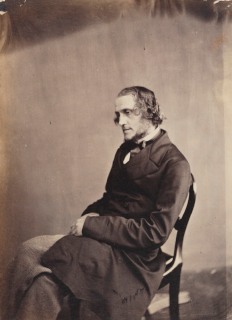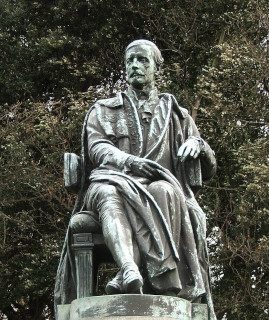
Malone is born to Edmond Malone Sr. (1704–1774), MP of the Irish House of Commons and judge of the Court of Common Pleas in Ireland, and Catherine Collier, the niece of Robert Knight, 1st Earl of Catherlough. He has two sisters, Henrietta and Catherine, and an older brother, Richard (later Lord Sunderlin). His father is a successful lawyer and politician in England, but his practice fails and he returns to Ireland. Little is known of his childhood and adolescence except that in 1747 he is sent to Dr. Ford’s preparatory school in Molesworth Street, Dublin. The next record of his education is ten years later, in 1757, when he enters Trinity College, Dublin. He receives his BA degree on February 23, 1762.
In the following months Malone sends a steady stream of notes and corrections to George Steevens, who, by then the inheritor, from Samuel Johnson, of the editor’s mantle for the Jacob Tonson edition of Shakespeare’s collected works, is busy preparing a second edition. His main contribution appears in the first volume as “An Attempt to Ascertain the Order in Which the Plays Attributed to Shakspeare Were Written.”
Malone’s three supplemental volumes (1780–1783) to Steevens’ edition of Johnson’s Shakespeare, containing apocryphal plays, textual emendations, and the first critical edition of the sonnets, are landmarks in Shakespearean studies. His “Historical Account of the Rise and Progress of the English Stage, and of the Economy and Usages of the Ancient Theatres in England” (1800) is the first treatise on English drama based on original sources. His own edition of Shakespeare in 11 volumes appears in 1790. A new octavo edition, unfinished at his death, is completed by James Boswell, the son of Samuel Johnson’s biographer, and published in 1821 in 21 volumes. This work, which includes a memoir of Malone, is the standard edition of Shakespeare’s writings for more than a century.
Malone dies at the age of 70 in London on May 25, 1812.
(Pictured: Portrait of Edmond Malone by Joshua Reynolds (1778), National Portrait Gallery)
Francis Llewellyn Harrison, better known as “Frank Harrison” or “Frank Ll. Harrison” and one of the leading musicologists of his time and a pioneering ethnomusicologist, is born in Dublin on September 29, 1905. Initially trained as an organist and composer, he turns to musicology in the early 1950s, first specialising in English and Irish music of the Middle Ages and increasingly turning to ethnomusicological subjects in the course of his career. His Music in Medieval Britain (1958) is still a standard work on the subject, and Time, Place and Music (1973) is a key textbook on ethnomusicology.
Harrison is the second son of Alfred Francis Harrison and Florence May (née Nash). He becomes a chorister at St. Patrick’s Cathedral, Dublin in 1912 and is educated at the cathedral grammar school and Mountjoy School. A competent organist, he is deputy organist at St. Patrick’s from 1925 to 1928. In 1920, he also begins musical studies at the Royal Irish Academy of Music, where he studies with John Francis Larchet (composition), George Hewson (organ) and Michele Esposito (piano). In 1926, he graduates Bachelor of Music at Trinity College Dublin and is awarded a doctorate (MusD) in 1929 for a musical setting of Psalm 19. He then works in Kilkenny for one year, serving as organist at St. Canice’s Cathedral and music teacher at Kilkenny College.
In 1930, Harrison emigrates to Canada to become organist at Westminster Presbyterian Church in New Glasgow, Nova Scotia. In 1933, he studies briefly with Marcel Dupré in France but returns to Canada in 1934 to become organist at Knox Presbyterian Church in Ottawa. In 1935, he takes a position as organist and choirmaster at St. George’s Cathedral in Kingston, Ontario, as well as taking up the newly created post of “resident musician” at Queen’s University at Kingston. His duties include giving lectures, running a choir and an orchestra, and conducting concerts himself. His course in the history and appreciation of music is the first music course to be given for full credit at Queen’s. He resigns from St. George’s in 1941 to become assistant professor of music at Queen’s in 1942. During his years in Canada, he still pursues the idea of remaining a performing musician and composer, winning three national composition competitions: for Winter’s Poem (1931), Baroque Suite (1943) and Night Hymns on Lake Nipigon (1945).
In 1951, Harrison takes the degrees of Master of Arts (M.A.) and Doctor of Music (DMus) at Jesus College, Oxford, and becomes lecturer (1952), senior lecturer (1956), and reader in the history of music (1962–1970) there. In 1965, he is elected Fellow the British Academy and Senior Research Fellow at Oxford. From 1970 to 1980, he is Professor of Ethnomusicology at the University of Amsterdam in the Netherlands, retiring to part-time teaching in 1976.
Harrison also holds Visiting Professorships in musicology at Yale University (1958–1959), Princeton University (spring 1961 and 1968–1969), and Dartmouth College (winter 1968 and spring 1972). He also briefly returns to Queen’s University at Kingston as Queen’s Quest Visiting Professor in the fall of 1980 and is Visiting Andrew W. Mellon Professor of Music at the University of Pittsburgh for the calendar year 1981.
Harrison’s honorary titles also include Doctor of Laws at Queen’s University, Kingston (1974), Corresponding Member of the American Musicological Society (1981), and Vice President and Chairman of the Plainsong and Medieval Music Society (1985). At Queen’s also, the new Harrison-LeCaine Hall (1974) is partly named in his honour.
In 1989, Harry White appreciates Harrison as “an Irish musicologist of international standing and of seminal influence, whose scholarly achievement, astonishingly, encompassed virtually the complete scope of the discipline which he espoused.” David F. L. Chadd writes of him “He was above all things an explorer, tirelessly curious and boyishly delighted in the pursuit of knowledge, experience and ideas, and totally heedless of artificially imposed constraints and boundaries.”
Since 2004, the Society for Musicology in Ireland (SMI) awards a bi-annual Irish Research Council Harrison Medal in his honour to distinguished international musicologists.
Salmon, the son of Michael Salmon and Helen Weekes, spends his boyhood in Cork, where his father is a linen merchant. There he attends Hamblin and Porter’s Grammar School before attending Trinity College in 1833, graduating with First Class Honours in mathematics in 1839. In 1841 he attains a paid fellowship and teaching position in mathematics at Trinity. In 1845 Salmon is additionally appointed to a position in theology at the university, after having been ordained a deacon in 1844 and a priest in the Church of Ireland in 1845.
In the late 1840s and the 1850s Salmon is in regular and frequent communication with Arthur Cayley and J. J. Sylvester. The three of them together with a small number of other mathematicians develop a system for dealing with n-dimensional algebra and geometry. During this period, he publishes about 36 papers in journals.
In 1844 Salmon marries Frances Anne Salvador, daughter of Rev. J. L. Salvador of Staunton-upon-Wye in Herefordshire, with whom he has six children, of which only two survive him.
In 1848 Salmon publishes an undergraduate textbook entitled A Treatise on Conic Sections. This text remains in print for over fifty years, going through five updated editions in English, and is translated into German, French and Italian. From 1858 to 1867 he is the Donegall Lecturer in Mathematics at Trinity.
In 1859 Salmon publishes the book Lessons Introductory to the Modern Higher Algebra. This is for a while simultaneously the state-of-the-art and the standard presentation of the subject, and goes through updated and expanded editions in 1866, 1876 and 1885, and is translated into German and French. He also publishes two other mathematics texts, A Treatise on Higher Plane Curves (1852) and A Treatise on the Analytic Geometry of Three Dimensions (1862).
In 1858 Salmon is presented with the Cunningham Medal of the Royal Irish Academy. In June 1863 he is elected a Fellow of the Royal Society followed in 1868 by the award of their Royal Medal. In 1889 he receives the Copley Medal of the society, the highest honorary award in British science, but by then he has long since lost his interest in mathematics and science.
From the early 1860s onward Salmon is primarily occupied with theology. In 1866 he is appointed Regius Professor of Divinity at Trinity College, at which point he resigns from his position in the mathematics department. In 1871 he accepts an additional post of chancellor of St. Patrick’s Cathedral, Dublin.
Salmon is Provost of Trinty College from 1888 until his death in 1904. The highlight of his career is likely when in 1892 he presides over the great celebrations marking the tercentenary of the College, which had been founded by Queen Elizabeth I. His deep conservatism leads him to strongly oppose women receiving degrees from the University.
Salmon dies at the Provost’s House on January 22, 1904, and is buried in Mount Jerome Cemetery, Dublin. An avid reader throughout his life, his obituary refers to him as “specially devoted to the novels of Jane Austen.”
Salmon’s theorem [ru] is named in honor of George Salmon.
Davis is born in Mallow, County Cork, on October 14, 1814, the son of a Welsh father, a surgeon in the Royal Artillery, and an Irish mother. Through his mother he is descended from the Gaelic noble family of O’Sullivan Beare. His father dies one month after his birth and his mother moves to Warrington Place near Mount Street bridge in Dublin. In 1830, they move to 67 Lower Baggot Street. He attends school in Lower Mount Street before studying at Trinity College, Dublin. He graduates in Law and receives an arts degree in 1836, before being called to the Irish Bar in 1838.
Davis gives a voice to the 19th-century foundational culture of modern Irish nationalism. Formerly it is based on the republicans of the 1790s and on the Catholic emancipation movement of Daniel O’Connell in the 1820s-30s, which has little in common with each other except for independence from Britain. Davis aims to create a common and more inclusive base for the future. He establishes The Nation newspaper with Charles Gavan Duffy and John Blake Dillon.
He writes some stirring nationalistic ballads, originally contributed to The Nation and afterwards republished as Spirit of the Nation, as well as a memoir of Curran, the Irish lawyer and orator, prefixed to an edition of his speeches, and a history of King James II‘s parliament of 1689. He has formed many literary plans which are unfinished at the time of his early death.
Davis supports O’Connell’s Repeal Association from 1840, hoping to recreate the old Parliament of Ireland. They split during a debate on the proposed new Queen’s University of Ireland, when Davis is reduced to tears by O’Connell’s superior debating skill. Davis is in favour of a university that would inclusively educate all Irish students. O’Connell and the Catholic hierarchy prefer a separate system for Catholic students within Ireland that would remain under church control.
O’Connell generally refers to his inexperienced allies as “Young Ireland,” initially as a dismissive term, that from the 1870s becomes the accepted term for nationalists inspired by Davis. He also prefers a federal arrangement with Britain in the 1840s while Davis seeks a greater degree of autonomy. Both agree that a gradual and non-violent process is the best way forward. Despite their differences, O’Connell is distraught at Davis’s early death.
Davis is a Protestant but preaches unity between Catholics and Protestants. To him, it is not blood that makes a person Irish, but the willingness to be part of the Irish nation. He is to the fore of Irish nationalist thinking and it has been noted by later nationalist notables, such as Patrick Pearse, that while Theobald Wolfe Tone laid out the basic premise that Ireland as a nation must be free, Davis is the one who built this idea up promoting the Irish identity.
Le Fanu is born at 45 Lower Dominick Street in Dublin to Thomas Philip Le Fanu and Emma Lucretia Dobbin, a literary family of Huguenot, Irish, and English descent. Within a year of his birth the family moves to the Royal Hibernian Military School in Phoenix Park where his father, a Church of Ireland clergyman, is appointed to the chaplaincy of the establishment.
In 1826, the family moves to Abington, County Limerick, where Le Fanu’s father takes up his second rectorship. Le Fanu uses his father’s library to educate himself and by the age of fifteen he was writing poetry.
The disorders of the Tithe War (1831–1836) affect the region in 1832 and the following year the family temporarily moves back to Dublin, where Le Fanu works on a government commission. Although Thomas Le Fanu tries to live as though he is well-off, the family is in constant financial difficulty. At his death, Thomas has almost nothing to leave to his sons and the family has to sell his library to pay off some of his debts.
Le Fanu studies law at Trinity College, Dublin, where he is elected Auditor of the College Historical Society. He is called to the bar in 1839 but never practices and soon abandons law for journalism. In 1838 he begins contributing stories to the Dublin University Magazine, including his first ghost story, The Ghost and the Bone-Setter (1838). He becomes owner of several newspapers from 1840, including the Dublin Evening Mail and the Warder.
In 1856 the family moves from Warrington Place to the house of his wife Susanna’s parents at 18 Merrion Square. His personal life becomes difficult at this time, as his wife suffers from increasing neurotic symptoms. She suffers from anxiety after the deaths of several close relatives, including her father two years previous. In April 1858, Susanna suffers a “hysterical attack” and dies the following day. She is buried in the Bennett family vault in Mount Jerome Cemetery beside her father and brothers. He does not write any fiction from this point until the death of his mother in 1861.
He becomes the editor and proprietor of the Dublin University Magazine in 1861 and begins to take advantage of double publication, first serializing in the Dublin University Magazine, then revising for the English market. He publishes both The House by the Churchyard and Wylder’s Hand in this manner. After lukewarm reviews of The House by the Churchyard, which is set in the Phoenix Park area of Dublin, Le Fanu signs a contract with Richard Bentley, his London publisher, which specifies that future novels be stories “of an English subject and of modern times,” a step Bentley thinks necessary for Le Fanu to satisfy the English audience. Le Fanu succeeds in this aim in 1864, with the publication of Uncle Silas, which is set in Derbyshire. In his very last short stories, however, Le Fanu returns to Irish folklore as an inspiration and encourages his friend Patrick Kennedy to contribute folklore to the Dublin University Magazine.
Le Fanu dies in his native Dublin on February 7, 1873, at the age of 58. Today there is a road and a park in Ballyfermot, near his childhood home in south-west Dublin, named after him.
In 1887 Gogarty’s father dies of a burst appendix, and he is sent to Mungret College, a boarding school near Limerick. He is unhappy in his new school, and the following year he transfers to Stonyhurst College in Lancashire, England, which he likes little better, later referring to it as “a religious jail.” He returns to Ireland in 1896 and boards at Clongowes Wood College while studying for examinations with the Royal University of Ireland. In 1898 he switches to the medical school at Trinity College, having failed eight of his ten examinations at the Royal.
A serious interest in poetry and literature begins to manifest itself during his years at Trinity. In 1900 he makes the acquaintance of W. B. Yeats and George Moore and begins to frequent Dublin literary circles. In 1904 and 1905 he publishes several short poems in the London publication The Venture and in John Eglinton‘s journal Dana. His name also appears in print as the renegade priest Fr. Oliver Gogarty in George Moore’s 1905 novel The Lake.
In 1905 Gogarty becomes one of the founding members of Arthur Griffith‘s Sinn Féin, a non-violent political movement with a plan for Irish autonomy modelled after the Austro-Hungarian dual monarchy.
In July 1907 his first son, Oliver Duane Odysseus Gogarty, is born, and in autumn of that year he leaves for Vienna to finish the practical phase of his medical training. Returning to Dublin in 1908, he secures a post at Richmond Hospital, and shortly afterwards purchases a house in Ely Place opposite George Moore. Three years later, he joins the staff of the Meath Hospital and remains there for the remainder of his medical career.
As a Sinn Féiner during the Irish War of Independence, Gogarty participates in a variety of anti-Black and Tan schemes, allowing his home to be used as a safe house and transporting disguised Irish Republican Army (IRA) volunteers in his car. Following the ratification of the Anglo-Irish Treaty, he sides with the pro-Treaty government and is made a Free State Senator. He remains a senator until the abolition of the Seanad in 1936, during which time he identifies with none of the existing political parties and votes according to his own whims.
Gogarty maintains close friendships with many of the Dublin literati and continues to write poetry in the midst of his political and professional duties. He also tries his hand at playwriting, producing a slum drama in 1917 under the pseudonym “Alpha and Omega”, and two comedies in 1919 under the pseudonym “Gideon Ouseley,” all three of which are performed at the Abbey Theatre. He devotes less energy to his medical practice and more to his writing during the twenties and thirties.
With the onset of World War II, Gogarty attempts to enlist in the Royal Air Force (RAF) and the Royal Army Medical Corps (RAMC) as a doctor. He is denied on grounds of age. He then departs in September 1939 for an extended lecture tour in the United States, leaving his wife to manage Renvyle House, which has since been rebuilt as a hotel. When his return to Ireland is delayed by the war, he applies for American citizenship and eventually decides to reside permanently in the United States. Though he regularly sends letters, funds, and care-packages to his family and returns home for occasional holiday visits, he never again lives in Ireland for any extended length of time.
Gogarty suffers from heart complaints during the last few years of his life, and in September 1957 he collapses in the street on his way to dinner. He dies on September 22, 1957. His body is flown home to Ireland and buried in Cartron Church, Moyard, near Renvyle.
(Pictured: 1911 portrait of Oliver St. John Gogarty painted by Sir William Orpen, currently housed at the Royal College of Surgeons in Ireland)
The Purser family had come to Ireland from Gloucestershire in the eighteenth century. Purser is born in Kingstown (now Dún Laoghaire) in County Dublin on March 22, 1848. She is raised in Dungarvan, County Waterford, one of the numerous children of Benjamin Purser, a prosperous flour miller and brewer, and his wife Anne Mallet. She is related to Sir Frederic William Burton, RHA (1816-1900), who is a son of Hannah Mallet. Two of her brothers, John and Louis, become professors at Trinity College Dublin. Her niece Olive Purser, daughter of her brother Alfred, is the first woman scholar at Trinity.
At thirteen Purser attends the Moravian school, Institution Evangélique de Montmirail, Switzerland where she learns to speak fluent French and begins painting. In 1873 her father’s business fails and she decides to become a full-time painter. She attends classes at the Dublin Metropolitan School of Art and joins the Dublin Sketching Club, where she is later appointed an honorary member. In 1874 she distinguishes herself in the National Competition. In 1878 she again contributes to the Royal Hibernian Academy, and for the next fifty years becomes a regular exhibitor, mainly portraits, and shows an average of three works per show.
Purser becomes wealthy through astute investments, particularly in Guinness, for which several of her male relatives have worked over the years. She is very active in the art world in Dublin and is involved in the setting up of the Municipal Gallery of Modern Art, persuading the Irish government to provide Charlemont House in Parnell Square to house the gallery.
Purser works mostly as a portraitist. Through her talent and energy and owing to her friendship with the Gore-Booths, she is very successful in obtaining commissions. When the Lord Lieutenant of Ireland commissions her to portray his children in 1888, his choice reflects her position as the country’s foremost portraitist. Various portraits painted by Purser are held in the National Gallery of Ireland.
Purser finances An Túr Gloine (The Tower of Glass), a stained-glass cooperative, at 24 Upper Pembroke and runs it from its inauguration in 1903 until her retirement in 1940. Michael Healy is the first of a number of distinguished recruits, such as Catherine O’Brien, Evie Hone, Wilhelmina Geddes, Beatrice Elvery and Ethel Rhind. She is determined the stained-glass workshop should adhere to true Arts and Crafts philosophy. An Túr Gloine archive is held in the Centre for the Study of Irish Art, National Gallery of Ireland.
Purser does not produce many items of stained glass herself. Most of the stained-glass works are painted by other members of the co-operative, presumably under her direction. Two early works are St. Ita (1904) for St. Brendan’s Cathedral, Loughrea and The Good Shepard (1904) for St. Columba’s College, Dublin. Her last stained-glass work is believed to be The Good Shepard and the Good Samaritan (1926) for the Church of Ireland at Killucan, County Westmeath.
Until her death Purser lives for many years in Mespil House, a Georgian mansion with beautiful plaster ceilings on Mespil Road, on the banks of the Grand Canal. Here she is “at home” every Tuesday afternoon to Dublin’s writers and artists. Her afternoon parties are a fixture of Dublin literary life.
Purser dies in Dublin on August 7, 1943, and is buried in Mount Jerome Cemetery beside her brothers John and Louis. Mespil House is demolished after her death and developed into apartments.
Purser is the second woman to sit on the Board of Governors and Guardians, National Gallery of Ireland, 1914-1943. She is made an Honorary Member of the Royal Hibernian Academy in 1890, becoming the first female Associate Member in 1923 and the first female Member in 1924. Also, in 1924 she initiates the movement for the launching of the Friends of the National Collection of Ireland. Archives relating to Sarah Purser are housed in the Centre for the Study of Irish Art, National Gallery of Ireland.
(Pictured: Portrait of Sarah Purser by John Butler Yeats, c. 1880–1885)
John Dillon, a Member of Parliament (MP) for over 35 years and the last leader of the Irish Parliamentary Party in the struggle to secure Home Rule by parliamentary means, dies in a Londonnursing home on August 4, 1927. Through the 1880s he is perhaps the most important ally of the greatest 19th-century Irish nationalist, Charles Stewart Parnell, but, following Parnell’s involvement as co-respondent in a divorce case, he repudiates Parnell for reasons of political prudence.
Dillon is a member of the British House of Commons during 1880–1883 and 1885–1918. For his vigorous work in the Irish National Land League, which seeks fixed tenure, fair rents, and free sale of Irish land, he is imprisoned twice between May 1881 and May 1882. He is Parnell’s fellow inmate in Kilmainham Gaol in Dublin from October 1881. For six months in 1888 he is imprisoned for aiding William O’Brien, author of the “plan of campaign” against high rent charges by English absentee landlords in Irish farming districts.
When Parnell is named co-respondent in Captain William Henry O’Shea’s divorce suit in 1890, Dillon and O’Brien at first affirm their support of him, but they finally decide that he will thenceforth be a liability as party leader. The party then splits, the anti-Parnellite majority forming the Irish National Federation, of which Dillon serves as chairman from 1896. In 1900, however, he agrees to join a reunited party under the Parnellite John Redmond.
During the prime ministry of Arthur James Balfour (1902–1905), Dillon comes to believe that the British Conservative government intends to grant Irish reforms without independence, thereby “killing Home Rule by kindness.” In 1905 he advises Irishmen to vote for Liberal Party candidates for Parliament, and, after the Liberals had taken office that year, he supports their reform program.
Throughout World War I Dillon vehemently opposes the extension of British military conscription to Ireland, both because that measure would strengthen the agitation by the more extreme nationalistSinn Féin party and because he never accepted the view that British imperial interests necessarily coincided with those of Ireland. After the Easter Rising in Dublin in 1916, he protests against the harsh measures that ensue and, in the House of Commons, makes a passionate speech in defense of the Irish rebels.
Upon Redmond’s death on March 6, 1918, Dillon, who had broken with him over Irish support for the British war effort, succeeds him as Irish Parliamentary Party leader. By that time, however, the party has been discredited and in the 1918 Irish general election Sinn Féin wins easily. On losing his House of Commons seat to Éamon de Valera, the future president of the Republic of Ireland, he retires from politics.
The Irish Convention is an assembly which sits in Dublin from July 1917 until March 1918 to address the Irish question and other constitutional problems relating to an early enactment of self-government for Ireland, to debate its wider future, discuss and come to an understanding on recommendations as to the best manner and means this goal can be achieved. It is a response to the dramatically altered Irish political climate after the 1916 Easter rebellion and is proposed by Lloyd George in May 1917 to John Redmond, leader of the Irish Parliamentary Party, announcing that “Ireland should try her hand at hammering out an instrument of government for her own people.”
The Convention is publicly called in June 1917, to be composed of representative Irishmen from different political parties and spheres of interest. After months of deliberations, the Convention’s final report, which had been agreed upon in March 1918, is seriously undermined. With the urgent need for military manpower on the Western Front following the German Spring Offensive, the government decides in April 1918 to simultaneously introduce Home Rule and apply conscription to Ireland. This “dual policy” of conscription and devolution heralds the end of a political era.
(Pictured: Group portrait of the members of the Irish Convention at Trinity College, taken on August 21, 1917 | National Library of Ireland, NPA Conv.)
Kenealy suffers from diabetes and an erratic temperament is sometimes attributed to poor control of the symptoms. In 1850 he is sentenced to one month imprisonment for punishing his six-year-old illegitimate son with undue severity. He marries Elizabeth Nicklin of Tipton, Staffordshire in 1851 and they have eleven children, including novelist Arabella Kenealy (1864–1938). They live in Portslade, East Sussex, from 1852 until 1874. He commutes to London and Oxford for his law practice but returns at weekends and other times to be with his family.
In 1866, Kenealy writes The Book of God: the Apocalypse of Adam-Oannes, an unorthodox theological work in which he claims that he is the “twelfth messenger of God,” descended from Jesus Christ and Genghis Khan. He also publishes a more conventional biography of Edward Wortley Montagu in 1869.
During the Tichborne trial, Kenealy abuses witnesses, makes scurrilous allegations against various Roman Catholic institutions, treats the judges with disrespect, and protracts the trial until it becomes the longest in English legal history. His violent conduct of the case becomes a public scandal and, after rejecting his client’s claim, the jury censures his behaviour.
Kenealy starts a newspaper, The Englishman, to plead his cause and to attack the judges. His behaviour is so extreme that in 1874 he is disbenched and disbarred by his Inn. He forms the Magna Charta Association and goes on a nationwide tour to protest his cause.
At a by-election in 1875, Kenealy is elected to Parliament for Stoke-upon-Trent with a majority of 2,000 votes. However, no other Member of Parliament will introduce him when he takes his seat. Benjamin Disraeli forces a motion to dispense with this convention.
In Parliament, Kenealy calls for a Royal commission into his conduct in the Tichborne case, but loses a vote on this by 433–3. One vote is Kenealy’s, another that of his teller, George Hammond Whalley. The third “aye” is by Purcell O’Gorman of Waterford City. During this period, he also writes a nine-volume account of the case.
Kenealy gradually ceases to attract attention, loses his seat at the 1880 general election and dies in London on April 16, 1880. He is buried in the churchyard of St. Helen’s Church, Hangleton, East Sussex.