seamus dubhghaill

Promoting Irish Culture and History from Little Rock, Arkansas, USA


Leave a comment

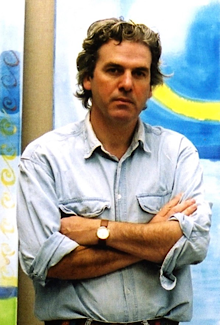
Birth of Jeremy Henderson, Anglo-Irish Artist & Painter

Jeremy Henderson, an Anglo-Irish artist and painter, is born at Lisbellaw, County Fermanagh, Northern Ireland, on December 25, 1952. He was Artist-in-Residence at Kingston University, with art exhibited at the Royal Academy of Arts and National Art Collections.

Henderson is born to James Douglas Alexander Henderson, who manages the family business of Henderson & Eadie, and Doris Josephine (née Watson). He attends Portora Royal School in Enniskillen, where the art master, Angus Bryson, spots him as an exceptional student.

From 1972 to 1973 Henderson studies an Arts Foundation course at Ulster University. From 1973 to 1976 he studies Fine Art at Kingston University, London, achieving a Bachelor of Arts first class honours degree under the tutelage of Terry Jones, returning in 1977 as Artist-in-Residence. In the same year he becomes the first recipient of the Stanley Picker Fellowship Award in Painting. Between 1978 and 1979 he completes a MA postgraduate in Fine Art at Chelsea School of Art under the tutelage of the artist John Hoyland.

In 1980, Henderson starts his professional artistic journey, developing abstract techniques, creating large canvases with complex layers of overlaid and inter-worked paint. He lives and paints in London for twenty years before relocating back to Ireland. In the mid-1980s he works in a studio adjacent to the house he shares with his partner, Jenni Stone, with whom he has a daughter named Emerald.

During the mid-1980s Henderson’s work becomes recognised by private and public collectors, including Bono, leader of the Irish rock band U2. During this period he sells his first work to the National Art Collection (1986). Cuilcagh Under A Renaissance Sky is purchased for Fermanagh County Museum with a grant from the Arts Council of Northern Ireland during his first solo exhibition “Around a Border” in Ireland. This is followed by three more acquisitions via the Arts Council during the 1980s, who continue to support his work into the new millennium acquiring If Hobbema had Seen Ireland (1989) in 2004 via Art Fund with support from the Esmée Fairbairn Foundation. His work is exhibited by Arts Council England.

In 1990 Henderson moves to the Cooperage Studio, Brick Lane, London, sharing the top floor with sculptor David Fusco and artist Bryan Benge, a friend from Kingston University. Benge says “Every summer the studios in the East End became part of the open studios programme. . . . . He was an intelligent and incredibly accomplished Painter.” It is here, separated from his partner and virtually penniless, he devotes himself entirely to his work, living in a tent, donated by Benge’s parents, inside the studio.

Henderson begins Palinurus in Soho in 1991, a series of twelve paintings depicting night time rooftop scenes across London, painted from an attic in Kingly Street. Exhibited at the Anna Bornholt Gallery in 1992, ten of the series are acquired by a single private collector.

Around 2000, Henderson becomes more influenced by Greek and Irish symbolism, in particular White Island, the Book of Kells and Sheela na gig, reflected in much of the art produced from this time onward. In 2001, he creates a set of enamel manuscripts for The Clinton Centre in Enniskillen, inaugurated by U.S. President Bill Clinton in 2002, in commemoration of the Remembrance Day bombing of 1987. He is interested in enameling because of the possibilities that it offers to him as a colourist and in the behaviour of gestural mark-making. The process is made possible when he is introduced to Andrew Morley, the authority on enamel sign making.

Henderson’s artistic influences include Hans HofmannBarnett NewmanMark Rothko, and John Hoyland. Frequently associated with Samuel Beckett and Jack Butler Yeats, he is influenced by his homeland; his early environment, growing up around weaving, yarns and dyeing, the regions political turmoil, symbolism, and in later life his chronic illness, expressed in his more sombre paintings.

John Hutchinson, critic and director of the Douglas Hyde Gallery writes in the Sunday Independent that Henderson’s paintings “demonstrate the fruitfulness of the no man’s land between abstraction and representation,” and “His images deliberately evoke the picturesque and romantic landscape conventions that originated in the late 18th century…..as well as the expressionist subjectivity of painters such as Jack B. Yeats.” Due to Henderson’s disinterest in the commercialisation of his work, he is sometimes referred to as Ireland’s Invisible Genius.

Henderson describes the evolution of his work, after returning to Ireland in 1993, saying, “Since returning to Ireland my work has become less concerned with resting landscape painting in a cultural context more appropriate to our times, but has come full circle towards an internalised organic abstraction which characterised my more intuitive approach until the early eighties.”

Henderson is married once, in 1995 to the actress Patricia Martinelli with whom he subsequently has a daughter in 1997, Bella-Lucia. He remains married, living in the remote village of Boho, County Fermanagh, Northern Ireland, until his death, brought on by a brain tumour, on April 28, 2009. He remains a prolific artist throughout his life.

Henderson’s work is held in the private collection of the entrepreneur Vincent Ferguson, owner of Fitzwilton and Independent News & Media PLC. His work is also held in the Smurfit Art Collection of Smurfit Kappa Group.

Leave a comment

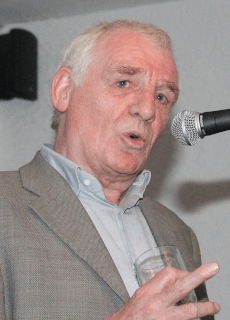
Birth of Eamon Dunphy, Media Personality & Journalist

Eamon Martin Dunphy, Irish media personality, journalist, broadcaster, author, sports pundit and former professional footballer, is born in Dublin on August 3, 1945.

Dunphy grows up in Drumcondra, Dublin, in what he describes as “a one-room tenement flat [with] no electricity, no hot water.” He attends Saint Patrick’s National School, Drumcondra. In 1958, he gets a one-year government scholarship to Sandymount High School but has to work as a messenger at the tweed clothing shop Kevin and Howlin.

A promising footballer, Dunphy leaves Dublin while still a teenager to join Manchester United as an apprentice. He does not break into the first team at United, and subsequently leaves to play for York City, Millwall, Charlton Athletic, Reading and Shamrock Rovers. It is at Millwall that he makes the most impact. He is considered an intelligent and skillful player in the side’s midfield. He is a member of “The Class of ’71,” the Millwall side that fails by just one point to gain promotion to the Football League First Division.

Dunphy plays 23 times for the Republic of Ireland and is Millwall’s most capped international footballer with 22 caps, until surpassed by David Forde and Shane Ferguson. He makes his Ireland debut on November 10, 1965, in the playoff at the Parc des Princes in Paris for the 1966 FIFA World Cup which Spain wins 1–0, thanks to a José Ufarte goal. He goes on to become, in his own words, “a good player, not a great player.”

Dunphy accompanies Johnny Giles back to Ireland to join Shamrock Rovers in 1977. Giles wants to make the club Ireland’s first full-time professional club and hopes to make Rovers into a force in European football by developing talented young players at home who would otherwise go to clubs in England. Dunphy is originally intended to be in charge of youth development. However, despite an FAI Cup winners medal in 1978, his only medal in senior football, and two appearances in the UEFA Cup Winners’ Cup, he becomes disillusioned with the Irish game and drops out of football altogether to concentrate on a career in journalism.

After retiring from the game, Dunphy first begins writing on football for the Sunday Tribune and then contributes regular columns on both football and current events for the Sunday Independent. He currently writes a column on football for the Irish Daily Star. He coins the term “Official Ireland” to refer to the establishment. He also works for Ireland on Sunday (now the Irish Daily Mail), The Sunday Press (now defunct), and the Irish Examiner.

Since the 1980s, Dunphy has written a number of books. His first and most widely praised book is Only a Game? The Diary of a Professional Footballer, which is an autobiographical account of his days playing for Millwall. Written in diary form, it records events from the dressing room of his 1973–74 season, which begins well for him at Millwall but subsequently ends in disillusionment: after being substituted in an October 27, 1973, home loss to eventual league winners Middlesbrough, he does not play another game all season, the club finishing mid-table.

In 1985, rock band U2 and manager Paul McGuinness commission Dunphy to write the story of their origins, formation, early years and the time leading up to their highly successful album The Joshua Tree. His book Unforgettable Fire – Past, Present, and Future – The Definitive Biography of U2 is published in 1988. It receives some favourable reviews, but critics close to the band speak of many inaccuracies. A verbal war erupts in the press during which he calls lead singer Bono a “pompous git.”

Dunphy also writes a biography of long-serving Manchester United manager Matt Busby and in 2002 ghost writes the autobiography of Republic of Ireland and Manchester United player Roy Keane.

Since the mid-1980s, Dunphy has regularly appeared as an analyst during football coverage on Raidió Teilifís Éireann (RTÉ). Since RTÉ acquired the rights to show English football, he has been a regular contributor to Premier Soccer Saturday. He also contributes to analysis of UEFA Champions League games and, in international football, RTÉ’s coverage of FIFA World Cups, UEFA European Football Championships and qualifying matches involving the Republic of Ireland national football team.

In 2001, Dunphy becomes the first male host of the quiz show The Weakest Link, which airs on TV3, for just one series. In 2003, he is hired again by TV3 to host their new Friday night chat show, entitled The Dunphy Show. Pitted head-to-head with RTÉ’s long-running flagship programme, The Late Late Show, Dunphy’s show loses what is a highly publicised “ratings war,” and is cancelled before its original run concludes.

Dunphy is the first presenter of a made-for-mobile television show on the 3 mobile network in Ireland. His rants and “Spoofer of the Week” are watched by thousands of 3 Mobile customers. The shows are awarded “Best Entertainment Show” at Ireland’s Digital Media Awards. He admits he never uses a mobile himself but enjoys filming for a mobile audience from his living room in Ranelagh.

In July 2018, Dunphy announces that he is leaving RTÉ after 40 years with the broadcaster, and that he intends to focus on his podcast The Stand with Eamon Dunphy.

Dunphy has also has a prominent radio career with several stations, including Today FM, Newstalk and RTÉ Radio 1. He is the original host in 1997 of the popular current affairs show The Last Word on Today FM. In September 2004, he takes over The Breakfast Show slot on the Dublin radio station Newstalk 106 from David McWilliams. The show tries to court controversy and listeners in equal measure. He fails to attract the large listenership predicted, with only a few additional thousand tuning in. He announces in June 2006 his intention to leave Newstalk 106, citing an inability to sustain the demands of an early morning schedule. After his departure from Newstalk 106, he confirms he is suffering from a viral illness from which he later recovers.

In July 2006, RTÉ announces that Dunphy will present a new weekly programme as part of the new RTÉ Radio 1 autumn schedule.

Dunphy rejoins Newstalk but leaves again in 2011 “due to interference from management and a push to put a more positive spin on the news.” On his last show he accuses his boss, Denis O’Brien, of “hating journalism.” He quits after Sam Smyth is sacked from Today FM (also owned by O’Brien) and says management at Newstalk is trying to remove “dissenting voices” like Constantin Gurdgiev from the airwaves.

Dunphy is a daily Mass-goer until he is preparing for marriage to his first wife, Sandra from Salford, when he is 21. He is Catholic and she is Protestant. The priest instructing them for marriage disapproves strongly of the mixed couple, saying that he should not marry her because she is “not a proper person.” Dunphy’s observance is already weakening but he quits his daily Mass-going at this point. He and Sandra have two children, a boy and a girl, and he is now a grandfather. His first marriage ends, and he moves to Castletownshend in County Cork for two years in the early 1990s. He lives with another partner, Inge, before meeting his second wife, RTÉ commissioning editor Jane Gogan, in the Horseshoe Bar in Dublin in 1992. They marry at the Unitarian Church on St. Stephen’s Green on September 24, 2009.

In an interview with An Phoblacht, Dunphy, who had previously written highly critical articles on the Provisional IRA and Sinn Féin, states that he is now a Sinn Féin supporter and declares he had voted for them in the 2011 Irish general election. He describes their representatives as “incredibly hard-working and incredibly intelligent.”

Dunphy publishes his autobiography entitled The Rocky Road in October 2013.

Today, Dunphy generally resides at his home near Ranelagh in Dublin. He also owns a holiday home in Deauville, France.

(Pictured: Éamon Dunphy at the Sinn Féin Summer School, 2013)


Leave a comment

Birth of Paul McGuinness, Former Manager of U2

Paul McGuinness, the founder of Principle Management Limited, a popular music act management company based in Dublin, is born on June 16, 1951, in Rinteln, Westphalia, Germany. He is the manager of the rock band U2 from 1978 to 2013.

McGuinness is born in a British military hospital at Rinteln where his father, Philip McGuinness, a native of Liverpool, is serving with the Royal Air Force. His mother, Sheila McGuinness (née Lyne), is a schoolteacher from County Kerry. There are three children in the family: Paul, Niall, and Katy.

McGuinness receives his early formal education in Ireland at the private Jesuit boarding school, Clongowes Wood College. From there he goes on to Trinity College Dublin, where he directs plays, edits the magazine T.C.D. Miscellany, and promotes gigs, but drops out before obtaining a degree.

Before becoming involved with U2, Guinness works as a film assistant director on productions such as John Boorman‘s Zardoz. For a time, he also manages folk-rock group Spud.

McGuinness first meets U2 at a Dublin gig on May 25, 1978, where they are supporting the Gamblers. Following this meeting, he becomes U2’s manager, having been introduced to the band by Bill Graham, a journalist with Hot Press magazine. His original agreement with the band is that the money is to be split equally five ways, though this is later changed.

McGuinness founds Principle Management Limited on March 29, 1984. He and Bill Whelan set up a music publishing company called McGuinness/Whelan Publishing in the late 1980s. Whelan later composes the music for the theatrical show Riverdance.

In 2002, McGuinness is presented with a Lifetime Achievement Award at the Meteor Music Awards at the Point Theatre in Dublin and U2 wins the best Irish Band Award.

Noted for his business acumen, McGuinness is responsible for U2 3D concert films, U2-branded iPods, sponsorship from BlackBerry and the first-ever concert streamed live on YouTube.

McGuinness is regarded as the fifth member of U2, although in an interview with The Irish Press in 1985, when asked if he is the fifth member of U2, he replies, “The fifth member of U2 is in Adam (Clayton)‘s trousers.” He is also regarded as one of the most successful managers in the music business.

McGuinness steps down as manager of U2 after 34 years on November 13, 2013, with Madonna‘s manager, Guy Oseary, succeeding him in 2014 when he sells Principle Management Limited to Live Nation.

McGuinness is a founding partner of TV3 (Ireland) and is one of the owners of Ardmore Film Studios. He becomes a member of the Arts Council of Ireland on January 1, 1988, having been appointed by Charles Haughey. He serves until February 2000 when he resigns.

McGuinness has been an advocate on behalf of artists, record labels, and music publishers. On January 28, 2008, in a speech at the Midem music industry convention in Cannes, he specifically accuses companies such as Apple, Google, Yahoo!, and Facebook of building “multi-billion dollar industries on the back of our content without paying for it.”

In 2015, McGuinness founds Primo Productions, a film and TV company. Primo produces three seasons of Riviera, a drama set in the South of France. He writes the “list of ingredients” for the show: “Rich people behaving badly in the sun, yachts, Maseratis, great clothes, beautiful women, art fraud, money laundering through the auction houses, Russians, English people, American, French. Murder, adultery.” Everyday life on the Côte d’Azur. His production partner is Kris Thykier of Archery Pictures. The show is originally commissioned by Anne Mensah of Sky Atlantic.

McGuinness marries Kathy Gilfillan in 1977. They meet while he is studying at Trinity. Gilfillan is director of The Lilliput Press. They have two children.


Leave a comment

U2’s Los Angeles Rooftop Video Shoot

Irish rock band U2 records the video for “Where the Streets Have No Name” on the rooftop of the Republic Liquor store in downtown Los Angeles on March 27, 1987, at a time when MTV still shows videos and U2 is unquestionably the biggest band in the world. The video shows police advising the U2 crew that they will shut down the performance due to crowd safety.

It takes place on the rooftop of the Republic Liquor store at 7th and Main. The location is now Margarita’s Place, a Mexican restaurant that still draws tourists. The impromptu performance is an homage to the Beatles final concert, as depicted in the film Let It Be. As lead vocalist and primary lyricist Bono says at the time, “It’s not the first time we’ve ripped off the Beatles.

The video shows the police about to shut down the show at any moment with one cop heard saying, “You’re drawing people in here from Orange County and all over the goddamned place. We’re shutting this location down.” According to band manager Paul McGuinness, the confrontation is overly dramatized. The band is hoping to get shut down by the authorities to garner publicity, but the police let them play.

The video is directed by Meiert Avis and produced by Michael Hamlyn and Ben Dossett and goes on to win a Grammy Award for Best Performance Music Video. Hamlyn is almost arrested following a confrontation with the police, according to an interview with Uncut magazine. Avis later says that “getting busted was an integral part of the plan.”

Bass guitarist Adam Clayton later says, “The object was to close down the streets. If there’s one thing people in L.A. hate, it’s streets closing down, and we’ve always felt bands should shake things up. We achieved it because the police stopped us filming. Were we worried about being arrested? Not at the time.”

The performance actually is not quite as impromptu as it appears. Prior to filming, a week is spent reinforcing the roof of the liquor store to ensure it will not collapse if fans swarmed onto it, according to Wikipedia. A backup generator is also put on the roof so shooting can continue if the authorities shut off the power on the primary generator. They also rebuild the sign for The Million Dollar Hotel, which can be seen in the background, as an added draw in case no one shows up.

The performance attracts about 1,000 people, not the 30,000 predicted in the radio clips at the beginning of the video. The audio is actually a studio recording, although the band plays four versions of the opening track hit from their 1987 album The Joshua Tree.

(From: “Flashback Monday: U2 Performs On A Roof In Downtown L.A.” by Sharon Knolle, LAist of Southern California Public Radio, laist.com, September 22, 2013)


Leave a comment

Birth of Bill Graham, Rock Journalist & Author

Bill Graham, Irish rock journalist and author, is born in Belfast, Northern Ireland, on August 29, 1951. He attends Blackrock College and Trinity College, Dublin. In addition to authoring several books, he writes for Hot Press magazine from its founding.

Graham’s long time colleague and Hot Press editor Niall Stokes describes him, “In many ways, he was a founding father of modern Irish music. He inspired a whole generation of Irish fans and musicians to look at the world in a different and broader light. And he was good on more than music too. He felt a kinship with Northern Ireland and the people on both sides of the sectarian and political divide there that was unusual in those who were brought up within the narrow confines of the culture of Ireland in the ‘60s and ‘70s – and his political writing reflected this. And he was also ahead of the game in terms of his appreciation of the importance of the politics of food and the position of the developing world in the new era.”

Graham is instrumental in the formation of Irish rock band U2, having brought them to the attention of their manager Paul McGuinness. At an exhibition of early group photos, McGuinness remembers the role Graham played by introducing him to the band. Despite being widely known as the man who “discovered” U2, it is a title he disavowed. He writes enthusiastically about the band, giving them their first exposure. Both guitarist The Edge and Bono have explained Graham’s role in the band’s development.

John Waters observes that “It is often said that Bill ‘discovered’ U2. This is untrue. Bill created U2, through his enthusiasm for them. He gave them a reflection of their own possibilities and they only looked back that once.” Graham has a deep knowledge of virtually every form of popular and roots music. Waters goes on to credit him as “the first Irish writer to write about the connection between Irish political culture and Irish rock ‘n’ roll.”

A number of music critics/journalists have cited Graham as a primary influence, in some cases suggesting they got into the field as a direct result of his writing.

Graham dies of a heart attack at the age of 44 at his home in Howth, County Dublin, on May 11, 1996. His funeral draws many of the biggest bands from the world of Irish music including Clannad, Altan, U2, and Hothouse Flowers, along with singers Simon Carmody and Gavin Friday.


Leave a comment

Birth of Bill Whelan, Musician & Composer of “Riverdance”

Bill Whelan, composer and musician, is born in Limerick, County Limerick, on May 22, 1950. He is best known for composing a piece for the interval of the 1994 Eurovision Song Contest. The result, Riverdance, is a seven-minute display of traditional Irish dancing that becomes a full-length stage production and spawns a worldwide craze for Irish dancing and Celtic music. It also wins him a Grammy. Riverdance is released as a single in the UK in 1994, credited to “Bill Whelan and Anúna featuring the RTÉ Concert Orchestra.” It reaches number 9 and stays on the charts for 16 weeks. The album of the same title reaches number 31 in the album charts in 1995.

Whelan also composes a symphonic suite version of Riverdance, with its premiere performed by the Ulster Orchestra on BBC Radio 3 in August 2014.

Whelan is educated at Crescent College, University College Dublin and the King’s Inns. While he is best known for his Riverdance composition, he has been involved in many ground-breaking projects in Ireland since the 1970s. As a producer he works with U2 on their War album, Van Morrison, Kate Bush, The Dubliners, Planxty, Andy Irvine & Davy Spillane, Patrick Street, Stockton’s Wing and fellow Limerickman Richard Harris.

As an arranger and composer, Whelan’s credits include:

  • The Spirit of Mayo, performed by an 85-piece orchestra in Dublin‘s National Concert Hall and featuring a powerful Celtic drum corps and a 200 strong choir and choral group Anúna.

In theatre, Whelan receives a Laurence Olivier Awards nomination for his adaption of Gilbert and Sullivan‘s H.M.S. Pinafore. He writes original music for fifteen of W. B. Yeats‘s plays for Dublin’s Abbey Theatre and his film credits include Dancing at Lughnasa (starring Meryl Streep), Some Mother’s Son, Lamb (starring Liam Neeson) and the award-winning At the Cinema Palace.


Leave a comment

Bono Named Europe’s Greatest Hero of 2003 by “Time” Magazine

On April 19, 2003, Bono, the lead singer of the Irish rock band U2, surpasses competition from British Prime Minister Tony Blair and French President Jacques Chirac to become Europe’s greatest hero. Already laden down with similar honours, he is picked by online voters from a list of 36 other Europeans compiled by the prestigious Time magazine.

Bono’s work for the starving starts with Band Aid in 1984 but develops over the years into a crusade lobbying world leaders and trying to reduce Third World debt.

Able to open any door from the Vatican to the White House, Bono in 2003 alone is nominated for a second successive Nobel Peace Prize, receives the French Legion of Honour and an international humanitarian award from the American Ireland Fund.

“There are potentially another ten Afghanistans in Africa, and it is cheaper by a factor of 100 to prevent the fires from happening than to put them out. Look, I know how absurd it is to have a rock star talk about debt relief or HIV/AIDS in Africa. But if not me, who?” Bono says.

Caoimhe Butterly, a 24-year-old from Dublin, is also nominated by Time editors for her role as a peace activist, which resulted in her being shot at by Israeli troops. “I don’t really think the concept of heroes is helpful, but if my inclusion helps highlight the cause of people struggling against oppression, then it’s of some good,” Butterly says. She expects to go to Iraq in the near future “to further the struggle against oppression.”

The third Irish person on the list is 58-year-old Christina Noble whose torrid childhood leads her to work on behalf of impoverished street children in Asia. She survives tuberculosis, hunger, homelessness, beatings, molestation by relatives, institutionalisation and a gang rape. She starts her foundation‘s work in Vietnam in 1989 and Mongolia in 1997.

In Vietnam, where she is known fondly as Mama Tina, her foundation has 50 projects providing education, food and clean water for children. “We’re tools. We help a little. You don’t need brains or brawn to do that. You just need the heart of a survivor,” Noble says.

Others nominated include footballers David Beckham and Zinedine Zidane, former The Who singer Roger Daltrey, celebrity chef Jamie Oliver, and Harry Potter author J. K. Rowling.

All 36 nominees are honoured at a ceremony in London on May 21, 2003.

(From: “Debt crusader Bono named greatest European hero” be Sean O’Riordan, Irish Examiner, http://www.irishexaminer.com, April 21, 2003)


2 Comments

Birth of Author Gerard Beirne

Author Gerard Beirne is born on October 30, 1962 in County Tipperary. He attends Trinity College, Dublin and holds Irish and Canadian citizenship.

Beirne is the writer in residence for the 2008-2009 academical year at the University of New Brunswick, where he previously worked in the English Department. He is a Fiction Editor of The Fiddlehead, Canada’s longest surviving literary magazine. He also curates the on-line magazines The Irish Literary Times and The New Brunswick Literary Times.

Beirne’s novel The Eskimo in the Net is published by Marion Boyars in 2003 and is short-listed for the 2004 Kerry Group Irish Fiction Award. It is selected by the Daily Express as Book of the Year.

Beirne’s collection of poetry, Digging My Own Grave, published by Dedalus Press, is runner-up for the Patrick Kavanagh Poetry Award. His story, “Sightings of Bono”, is adapted for Irish film and features Bono of the Irish rock band U2. His most recent collection of poems, Games of Chance – A Gambler’s Manual, is published by Oberon Press, Fall 2011.

Beirne’s CD of spoken word poetry, If it’s words you’re after, is released in 2006. He is a past winner of two Sunday Tribune/Hennessey Literary Awards including as New Irish Writer of the Year 1996. His collaboration with classical composer Siobhán Cleary, Hum!, is called “a theatrical tour de force” by The Irish Times.

In 2009, Oberon Press published Beirne’s second novel, Turtle.

Beirne’s first short story collection, In a Time of Drought and Hunger, is published in 2015 and is a shortlisted nominee for the 2016 Danuta Gleed Literary Award.


Leave a comment

Ireland Awarded the 2003 Special Olympics World Summer Games

On March 31, 1999, Ireland is selected as the location for the 2003 Special Olympics World Summer Games. It is the first time the event has been staged outside the United States. The organising committee, which is formed in 1999 following the success of the bid, is chaired by entrepreneur Denis O’Brien. The chief executive is Mary Davis.

The Games are hosted in Dublin, with participants staying in 177 towns, cities and villages and the Aran Islands in the lead up to the Games before moving to Dublin for the events. Events are held from June 21-29, 2003 at many venues including Morton Stadium, the Royal Dublin Society, the National Basketball Arena, all in Dublin. Croke Park serves as the central stadium for the opening and closing ceremonies, even though no competitions take place there. Belfast is the venue for roller skating events at the King’s Hall, as well as the Special Olympics Scientific Symposium held on June 19-20.

Approximately 7,000 athletes from 150 countries compete in the Games in 18 official disciplines and three exhibition sports. The participants from Kosovo are the region’s first team at an international sporting event. A 12-member team from Iraq receives special permission to attend the games, despite ongoing war in their home nation. This is the largest sporting event held in 2003.

The opening ceremony is held in Croke Park and features an array of stars and is hosted by Patrick Kielty. The ceremony is officially opened by President of Ireland Mary McAleese and attended by Taoiseach Bertie Ahern. Performances include U2, The Corrs and the largest Riverdance troupe ever assembled on one stage. There are 75,000 athletes and spectators in attendance at the opening ceremonies. Irish and international celebrities such as Arnold Schwarzenegger and Jon Bon Jovi walk with the athletes, with Muhammad Ali as a special guest and Manchester United and Republic of Ireland football player Roy Keane taking the athletes oath with one of the Special Olympians. Nelson Mandela officially opens the Games.

The Games Flame is lit at the culmination of the Law Enforcement Torch Run, in which more than 2,000 members of the Garda Síochána and the Police Service of Northern Ireland participate. This is a series of relays carrying the Special Olympics Torch, the “Flame of Hope,” from Europe to the Games’ official opening.

The 2003 Games are the first to have their opening and closing schemes broadcast on live television, and Raidió Teilifís Éireann provides extensive coverage of the events through their ‘Voice of the Games’ radio station which replaces RTÉ Radio 1 on medium wave for the duration of the event. There is also a nightly television highlight programme. A daily newspaper, the Games Gazette, was published for each day of the Games.

Among the activities carried out during the Games are thorough medical checks on the athletes, some of whom have previously undiagnosed conditions uncovered, as some of the athletes come from countries with limited medical facilities or have difficulty communicating their symptoms.

Among the contributors to the Games is the Irish Prison Service. Prisoners from Mountjoy Prison, Midlands Prison, Wheatfield Prison and Arbour Hill Prison construct podiums and make flags, towels, signs, benches and other equipment.


Leave a comment

Thin Lizzy Reaches No. 1 with “Whiskey In The Jar”

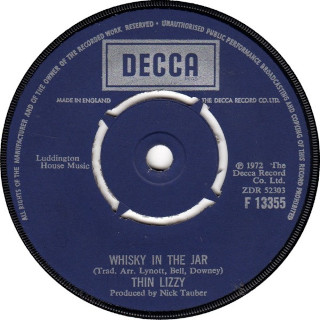
Irish rock band Thin Lizzy reaches No. 1 on the Irish Singles Chart with its rendition of “Whiskey In The Jar” on December 19, 1972.

“Whiskey in the Jar” is the tale of a highwayman or footpad who, after robbing a military or government official, is betrayed by a woman; whether she is his wife or sweetheart is not made clear. Various versions of the song take place in County Kerry, Kilmoganny, Cork, Sligo and other locales throughout Ireland. It is also sometimes placed in the American South, in various places among the Ozarks or Appalachians, possibly due to Irish settlement in these places. Names in the song change, and the official can be a Captain or a Colonel, called Farrell or Pepper among other names. The protagonist’s wife or lover is sometimes called Molly, Jenny, Emzy, or Ginny among various other names. The details of the betrayal are also different, being either betraying him to the person he robbed and replacing his ammunition with sand or water, or not, resulting in his killing the person.

The song first gains wide exposure when Irish folk band The Dubliners perform it internationally as a signature song, and record it on three albums in the 1960s. In the United States, the song is popularized by The Highwaymen, who record it on their 1962 album Encore. The song has also been recorded by singers and folk groups such as Roger Whittaker, The Irish Rovers, Seven Nations, Off Kilter, King Creosote, Brobdingnagian Bards, Charlie Zahm, and Christy Moore.

Thin Lizzy’s 1972 single (bonus track on Vagabonds of the Western World [1991 edition]) stays at the top of the Irish charts for 17 weeks, and the British release stays in the top 30 for 12 weeks, peaking at No. 6, in 1973. This version has since been covered by U2, Pulp (first released on a 1996 various artist compilation album Childline and later on deluxe edition of Different Class in 2006), Smokie, Metallica (Garage Inc. in 1998, which wins a Grammy Award), Belle and Sebastian (The Blues Are Still Blue EP in 2006), Gary Moore (2006), Nicky Moore (Top Musicians Play Thin Lizzy in 2008), Simple Minds (Searching for the Lost Boys in 2009), Blaggards (Live in Texas in 2010) and Israeli musician Izhar Ashdot. The song is also on the Grateful Dead live compilation So Many Roads (1965-1995) disc five.