seamus dubhghaill

Promoting Irish Culture and History from Little Rock, Arkansas, USA


Leave a comment

The Soloheadbeg Ambush

The Soloheadbeg ambush takes place on January 21, 1919, when members of the Irish Volunteers, which becomes the Irish Republican Army (IRA) later that year, ambush Royal Irish Constabulary (RIC) officers who are escorting a consignment of gelignite explosives at Soloheadbeg, County Tipperary. Two RIC officers are killed, and their weapons and the explosives are seized. As it happens on the same day that the revolutionary Irish parliament first meets and declares Ireland’s independence, it is often seen as the first engagement of the Irish War of Independence.

In April 1916, during World War I, Irish republicans launch an uprising against British rule in Ireland, called the Easter Rising. They proclaim an Irish Republic. After a week of heavy fighting, mostly in Dublin, the rising is put down by British forces. About 3,500 people are taken prisoner by the British, many of whom had played no part in the Rising. Most of the Rising’s leaders are executed. The rising, the British response, and the British attempt to introduce conscription in Ireland, leads to an even greater public support for Irish republicanism.

In the 1918 Irish general election, the Irish republican party Sinn Féin wins a landslide victory in Ireland, gaining 73 out of 105 seats in the British Parliament. However, in its election manifesto, the party has vowed to set up a separate government in Ireland rather than sit in the British Parliament. At a meeting in Dublin on January 21, 1919, Sinn Féin establishes an independent parliament called Dáil Éireann and declares independence from the United Kingdom.

That same day, an ambush is carried out by Irish Volunteers from the 3rd Tipperary Brigade. It involves Seán Treacy, Dan Breen, Seán Hogan, Séumas Robinson, Tadhg Crowe, Patrick McCormack, Patrick O’Dwyer and Michael Ryan. Robinson is the commander of the group that carries out the attack and Treacy coordinates the planning of the attack. The unit involved acts on its own initiative as had they had to wait for a response, even if it is affirmative, it might come too late.

In December 1918, they receive information that there are plans to move a consignment of gelignite from Tipperary British Army barracks to the Soloheadbeg quarry. They begin plans to intercept the consignment and Dan Breen’s brother Lars, who works at the quarry, receives information that the consignment is to be moved around January 16, 1919. They anticipate that there would be between two and six armed escorts, and they discuss different plans. If the escort is small, they believe they can overpower the RIC officers without firing a shot. Gags and ropes are hidden in the quarry, so that should officers surrender they can be bound and gagged. The planning for the ambush takes place in the ‘Tin Hut,’ a deserted semi-derelict house at Greenane.

Each day from January 16 to 21, the men chosen for the ambush take up their positions from early in the morning to late afternoon and then spend the night at the deserted house. Seven of the Volunteers are armed with revolvers while Treacy is armed with a small automatic rifle. On a rainy January 21, around noon, Patrick O’Dwyer sees the transport leaving the barracks. The consignment of 160 lbs. of gelignite is on a horse-drawn cart, led by two council men and guarded by two RIC officers armed with carbine rifles. O’Dwyer cycles quickly to where the ambush party is waiting and informs them. Robinson and O’Dwyer hide about 20 yards in front of the main ambush party of six, in case they rush through the main ambush position.

When the transport reaches the position where the main ambush party is hiding, masked Volunteers step out in front of them with their guns drawn and call on the RIC to surrender. The officers can see at least three of the ambushers. One officer gets down behind the cart and the other apparently fumbles with his rifle. According to the Volunteers, the officers raise their rifles to fire at them, but the rifles do not fire. The Volunteers immediately fire at the officers, and it is believed that Treacy fires the first shot. Both officers, James McDonnell and Patrick O’Connell, native Roman Catholics, are killed. MacDonnell (50) of Belmullet, County Mayo, is a widower with five children. O’Connell is unmarried and a native of Coachford, County Cork.

As planned, Hogan, Breen and Treacy take the horse and cart with the explosives and speed off. Tadhg Crowe and Patrick O’Dwyer take the guns and ammunition from the dead officers, while Robinson, McCormack and Ryan guard the two council workers, Ned Godfrey and Patrick Flynn, before releasing them once the gelignite is far enough away. Initially the explosives are hidden in a field in Greenane. They are moved several times and are later divided up between the battalions of the brigade.

The ambush is later seen as the beginning of the Irish War of Independence. The British government declares South Tipperary a Special Military Area under the Defence of the Realm Act two days later. There is strong condemnation from the Catholic Church in Ireland. The parish priest of Tipperary calls the dead officers “martyrs to duty.”

A meeting of the Executive of the Irish Volunteers takes place shortly thereafter. On January 31, An t-Óglach, the official publication of the Irish Volunteers, states that the formation of Dáil Éireann “justifies Irish Volunteers in treating the armed forces of the enemy – whether soldiers or policemen – exactly as a National Army would treat the members of an invading army.”

In February 1919 at a Brigade meeting in Nodstown, Tipperary, Brigade officers draft a proclamation, signed by Séumas Robinson as OC, ordering all British military and police forces out of South Tipperary and, should they stay, they will be held to have “forfeited their lives.” GHQ refuses to sanction the proclamation and demands it not be publicly displayed. Despite this it is still posted in several places in Tipperary.

In order to avoid capture, Breen, Treacy, Hogan and the other participants are forced to stay on the move for the following months, often hiding in the barns and attics of sympathisers.

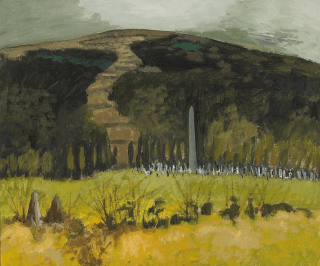
A monument (pictured) has been erected at the site of the ambush, and each year a ceremony of remembrance is held there.


1 Comment

Birth of Joe Doherty, Former Provisional Irish Republican Army Volunteer

Joe Doherty, former volunteer in the Belfast Brigade of the Provisional Irish Republican Army (IRA), is born on January 20, 1955, in New Lodge, Belfast.

The son of a docker, Doherty is born into an Irish republican family, his grandfather being a member of the Irish Citizen Army which fought against British rule in the 1916 Easter Rising. Doherty leaves school at the age of 14 and begins work on the docks and as an apprentice plumber, before being arrested in 1972 on his seventeenth birthday under the Special Powers Act. He is interned on the prison ship HMS Maidstone and at Long Kesh Detention Centre, and while interned hears of the events of Bloody Sunday in Derry, where 14 civil rights protesters were shot dead by the British Army. This leads to him joining the IRA after he is released in June 1972. In the mid-1970s he is convicted of possession of explosives and sentenced to six years imprisonment in Long Kesh. He is released in December 1979.

After his release, Doherty becomes part of a four-man active service unit nicknamed the “M60 gang” due to their use of an M60 heavy machine gun, along with Angelo Fusco and Paul Magee. On April 9, 1980, the unit lures the Royal Ulster Constabulary (RUC) into an ambush on Stewartstown Road, killing one constable and wounding two others. On May 2 the unit is planning another attack and has taken over a house on Antrim Road, when an eight-man patrol from the Special Air Service (SAS) arrive in plain clothes, after being alerted by the RUC. A car carrying three SAS members goes to the rear of the house, and another car carrying five SAS members arrives at the front of the house. As the SAS members at the front of the house exit the car, the IRA unit opens fire with the M60 machine gun from an upstairs window, hitting Captain Herbert Westmacott in the head and shoulder. Westmacott, who is killed instantly, is the highest-ranking member of the SAS killed in Northern Ireland. The remaining SAS members at the front, armed with Colt Commando automatic rifles, submachine guns and Browning pistols, return fire but are forced to withdraw. Magee is apprehended by the SAS members at the rear of the house while attempting to prepare the IRA unit’s escape in a transit van, while the other three IRA members remain inside the house. More members of the security forces are deployed to the scene and, after a brief siege, the remaining members of the IRA unit surrender.

The trial of Doherty and the other members of the M60 gang begins in early May 1981, on charges including three counts of murder. On June 10, Doherty and seven other prisoners, including Angelo Fusco and the other members of the IRA unit, take a prison officer hostage at gunpoint in Crumlin Road Gaol. After locking the officer in a cell, the eight take other officers and visiting solicitors hostage, also locking them in cells after taking their clothing. Two of the eight wear officers’ uniforms while a third wears clothing taken from a solicitor, and the group moves towards the first of three gates separating them from the outside world. They take the officer on duty at the gate hostage at gunpoint and force him to open the inner gate. An officer at the second gate recognises one of the prisoners and runs into an office and presses an alarm button, and the prisoners run through the second gate towards the outer gate. An officer at the outer gate tries to prevent the escape but is attacked by the prisoners, who escape onto Crumlin Road. As the prisoners are moving towards the car park where two cars are waiting, an unmarked RUC car pulls up across the street outside Crumlin Road Courthouse. The RUC officers open fire, and the prisoners return fire before escaping in the waiting cars. Two days after the escape, Doherty is convicted in absentia and sentenced to life imprisonment with a minimum recommended term of thirty years.

Doherty escapes across the border into the Republic of Ireland, and then travels to the United States on a false passport. He lives with an American girlfriend in Brooklyn and New Jersey, working on construction sites and as a bartender at Clancy’s Bar in Manhattan, where he is arrested by the Federal Bureau of Investigation (FBI) on June 28, 1983. He is imprisoned in the Metropolitan Correctional Center in Manhattan, and a legal battle ensues with the British government seeking to extradite him back to Northern Ireland. Doherty claims he is immune from extradition as the killing of Westmacott was a political act, and in 1985 federal judge John E. Sprizzo rules Doherty cannot be extradited as the killing was a “political offense.” His legal battle continues as the United States Department of Justice then attempts to deport him for entering the country illegally.

Doherty remains in custody at the Metropolitan Correctional Center and attempts to claim political asylum, and June 15, 1988, the United States Attorney General Edwin Meese overturns an earlier ruling by the Federal Board of Immigration Appeals that Doherty can be deported to the Republic of Ireland and orders his deportation to Northern Ireland. In February 1989 new Attorney General Dick Thornburgh chooses not to support the decision made by his predecessor and asks lawyers for Doherty and the Immigration and Naturalization Service to submit arguments for a review of the decision and Doherty’s claim for asylum. By this time Doherty’s case is a cause célèbre with his sympathisers including over 130 Congressmen and a son of then President of the United States George H. W. Bush, and in 1990 a street corner near the Metropolitan Correctional Center is named after him.

In August 1991, Doherty is transferred to a federal prison in Lewisburg, Pennsylvania, and on January 16, 1992, the Supreme Court of the United States overturns a 1990 Federal Appeals Court ruling by a 5-to-3 decision, paving the way for his deportation. On February 19, 1992, he is deported to Northern Ireland, despite pleas to delay the deportation from members of Congress, Mayor of New York City David Dinkins, and the Cardinal Archbishop of New York, John Joseph O’Connor. He is returned to Crumlin Road Gaol before being transferred to HM Prison Maze, and is released from prison on November 6, 1998, under the terms of the Good Friday Agreement. After his release he becomes a community worker specialising in helping disadvantaged young people. In 2006, he appears in the BBC television show Facing the Truth opposite the relatives of a soldier killed in the Warrenpoint ambush.


Leave a comment

Death of T. P. Gill, Member of the Irish Parliamentary Party

Thomas Patrick (T. P.) Gill, a prominent member of the Irish Parliamentary Party (IPP) in the late 19th and early 20th century, dies on January 19, 1931. He is a Member of Parliament (MP) in the British House of Commons representing the South Louth constituency unopposed from 1885 to 1892. His uncle Peter is an unsuccessful election candidate in 1868 in County Tipperary.

Gill is born on October 25, 1858, in Ballygraigue, Nenagh, County Tipperary, the first of four sons of Robert Gill, a civil engineer who is assistant county surveyor, and Mary (née Clampett), daughter of a woolen merchant, James Clampett of Mount Kennett, County Limerick. He attends St. Joseph’s CBS Nenagh, St. John’s College, Kilkenny, and Trinity College Dublin becoming a journalist, firstly as editor of the Catholic World magazine of New York, and an associate editor of the North American Review (1883–85). He marries Annie Fennell of Dublin in 1882 and they have two sons, Donat and Roy, and a daughter Finola.

Gill is a friend and political ally of Charles Stewart Parnell. After the death of Parnell, he remains with the Irish Parliamentary Party. He works with Horace Plunkett in developing the Irish co-operative movement. He is member and honorary secretary to the 1895 Recess Committee which leads to the formation of both the Department of Agriculture and Technical Instruction (DATI), forerunner of the Irish Department of Agriculture, and the Vocational Education Committee (VEC). His key work for the Recess Committee is research into the state aid to agriculture in France and Denmark. In February 1900, he is appointed Secretary of the new Department of Agriculture and Technical Instruction in Ireland. In 1907, he is appointed Chairman of the Departmental Committee on Irish Forestry. He also serves on a number of governmental committees concerning agriculture and agricultural production. He is President of the Irish Technical Instruction Association from 1925 to 1929.

A raconteur with, in the words of R. A. Anderson, ‘a queer charm about him,’ Gill moves in Dublin literary circles, and in his retirement, he makes a translation of Louis Paul-Dubois’ Le drame irlandais et l’Irlande nouvelle (1927), published posthumously as The Irish struggle and its results (1934).

Gill is an uncle of former Workers’ Party of Ireland president and Dublin West TD Tomás Mac Giolla.

Gill dies in a Dublin hospital on January 19, 1931. His papers are in the National Library of Ireland.

(Pictured: “Portrait of T.P. Gill, Journalist, Secretary, Department of Agriculture and Technical Instruction,” oil on canvas by Sarah Purser, 1898, National Gallery of Ireland)


Leave a comment

Birth of Leo Varadkar, Fine Gael Politician & Taoiseach

Leo Eric Varadkar, Irish Fine Gael politician who is serving since June 2020 as Tánaiste and Minister for Enterprise, Trade and Employment, is born on January 18, 1979, in the Rotunda Hospital, Dublin.

Varadkar is the third child and only son of Ashok and Miriam (née Howell) Varadkar. His father was born in Bombay (now Mumbai), India, and moved to the United Kingdom in the 1960s to work as a doctor. His mother, born in Dungarvan, County Waterford, meets her future husband while working as a nurse in Slough, Berkshire, England. He is educated at the St. Francis Xavier national school in Blanchardstown, Dublin, and then The King’s Hospital, a Church of Ireland secondary school in Palmerstown. During his secondary schooling, he joins Young Fine Gael. He is admitted to Trinity College Dublin (TCD), where he briefly reads law before switching to its School of Medicine. At TCD, he is active in the university’s Young Fine Gael branch and serves as Vice-President of the Youth of the European People’s Party, the youth wing of the European People’s Party, of which Fine Gael is a member. He is selected for the Washington Ireland Program for Service and Leadership (WIP), a half-year personal and professional development program in Washington, D.C., for students from Ireland.

Varadkar graduates in 2003, after completing his internship at King Edward Memorial Hospital in Mumbai. He then spends several years working as a non-consultant hospital doctor in St. James’s Hospital, Dublin, and Connolly Hospital, Blanchardstown, before specialising as a general practitioner in 2010.

In 2004, Varadkar joins Fine Gael and becomes a member of Fingal County Council and later serves as Deputy Mayor of Fingal. He is elected to Dáil Éireann for the first time in 2007. During the campaign for the 2015 same-sex marriage referendum, he comes out as gay, becoming the first serving Irish minister to do so.

Varadkar is elected a Teachta Dála (TD) for the Dublin West constituency in 2007. He serves under Taoiseach Enda Kenny as Minister for Transport, Tourism and Sport from 2011 to 2014, Minister for Health from 2014 to 2016, and Minister for Social Protection from 2016 to 2017.

In May 2017, Kenny announces that he is planning to resign as Taoiseach and Fine Gael leader. Varadkar stands in the leadership election to replace him. Although more party members vote for his opponent, Simon Coveney, he wins by a significant margin among Fine Gael members of the Oireachtas and is elected leader on June 2. Twelve days later, he is appointed Taoiseach, and at 38 years of age becomes the youngest person to hold the office. He is Ireland’s first, and the world’s fourth, openly gay head of government and the first Taoiseach of Indian heritage.

In 2020, Varadkar calls a general election to be held in February. While polls in 2019 have suggested a favourable result for Fine Gael, they ultimately come in third in terms of seats and votes, behind Fianna Fáil and Sinn Féin, with 35 seats, a loss of 15 seats for the party from the previous general election, when it had finished in first position. He resigns and is succeeded by Micheál Martin as Taoiseach. He is subsequently appointed Tánaiste and Minister for Enterprise, Trade and Employment as part of a three-party coalition composed of Fianna Fáil, Fine Gael and the Green Party.


Leave a comment

The Teebane Bombing

The Teebane bombing takes place on January 17, 1992, at a rural crossroads between Omagh and Cookstown in County Tyrone, Northern Ireland. A roadside bomb destroys a van carrying 14 construction workers who had been repairing a British Army base in Omagh. Eight of the men are killed and the rest are wounded. The Provisional Irish Republican Army (IRA) claims responsibility, saying that the workers were killed because they were “collaborating” with the “forces of occupation.”

Since the beginning of its campaign in 1969, the Provisional IRA has launched frequent attacks on British Army and Royal Ulster Constabulary (RUC) bases in Northern Ireland. In August 1985 it begins targeting civilians who offer services to the security forces, particularly those employed by the security forces to maintain and repair its bases. Between August 1985 and January 1992, the IRA kills 23 people who had been working for (or offering services to) the security forces. The IRA also alleges that some of those targeted had links with Ulster loyalist paramilitaries.

On the evening of January 17, 1992, the 14 construction workers leave work at Lisanelly British Army base in Omagh. They are employees of Karl Construction, based in Antrim. They travel eastward in a Ford Transit van towards Cookstown. When the van reaches the rural Teebane Crossroads, just after 5:00 PM, IRA volunteers detonate a roadside bomb containing an estimated 600 pounds (270 kg) of homemade explosives in two plastic barrels. Later estimates report a 1,500-pound (680 kg) device. The blast is heard from at least ten miles away. It rips through one side of the van, instantly killing the row of passengers seated there. The vehicle’s upper part is torn asunder, and its momentum keeps it tumbling along the road for 30 yards. Some of the bodies of the dead and injured are blown into the adjacent field and ditch. IRA volunteers had detonated the bomb from about 100 yards away using a command wire. A car travelling behind the van is damaged in the explosion, but the driver is not seriously injured. Witnesses report hearing automatic fire immediately prior to the explosion.

Seven of the men are killed outright. They are William Gary Bleeks (25), Cecil James Caldwell (37), Robert Dunseath (25), David Harkness (23), John Richard McConnell (38), Nigel McKee (22) and Robert Irons (61). The van’s driver, Oswald Gilchrist (44), dies of his wounds in hospital four days later. Robert Dunseath is a British soldier serving with the Royal Irish Rangers. The other six workers are badly injured; two of them are members of the Ulster Defence Regiment (UDR). It is the highest death toll from one incident in Northern Ireland since 1988.

The IRA’s East Tyrone Brigade claims responsibility for the bombing soon afterward. It argues that the men were legitimate targets because they were “collaborators engaged in rebuilding Lisanelly barracks” and vowed that attacks on “collaborators” would continue.

Both unionist and Irish nationalist politicians condemn the attack. Sinn Féin president Gerry Adams, however, describes the bombing as “a horrific reminder of the failure of British policy in Ireland.” He adds that it highlights “the urgent need for an inclusive dialogue which can create a genuine peace process.” British Prime Minister John Major visits Northern Ireland within days and promises more troops, pledging that the IRA will not change government policy.

As all of those killed are Protestant, some interpret the bombing as a sectarian attack against their community. Less than three weeks later, the Ulster loyalist Ulster Defence Association (UDA) launches a ‘retaliation’ for the bombing. On February 5, two masked men armed with an automatic rifle and revolver enter Sean Graham’s betting shop on Ormeau Road in an Irish nationalist area of Belfast. The shop is packed with customers at the time. The men fire indiscriminately at the customers, killing five Irish Catholic civilians, before fleeing to a getaway car. The UDA claims responsibility using the cover name “Ulster Freedom Fighters,” ending its statement with “Remember Teebane.” After the shootings, a cousin of one of those killed at Teebane visits the betting shop and says, “I just don’t know what to say but I know one thing – this is the best thing that’s happened for the Provos [Provisional IRA] in this area in years. This is the best recruitment campaign they could wish for.”

The Historical Enquiries Team (HET) conducts an investigation into the bombing and releases its report to the families of the victims. It finds that the IRA unit had initially planned to carry out the attack on the morning of January 17 as the workers made their way to work but, due to fog, it was put off until the afternoon. Although suspects were rounded up and there were arrests in the wake of the attack, nobody has ever been charged or convicted of the bombing.

Karl Construction erects a granite memorial at the site of the attack and a memorial service is held there each year. In January 2012, on the 20th anniversary of the attack, Democratic Unionist Party (DUP) MLA, Trevor Clarke, whose brother-in-law Nigel McKee at age 22 was the youngest person killed in the bombing, demands that republicans provide the names of the IRA bombers.


Leave a comment

Death of Gobnait Ní Bhruadair, Irish Republican & Lifelong Radical

Gobnait Ní Bhruadair, Irish republican and lifelong radical, dies in Sneem, County Kerry, on January 16, 1955. She campaigns passionately for causes as diverse as the reform of nursing, protection and promotion of the Irish language and the freedom of Ireland from British rule.

Ní Bhruadair is born the Hon. Albinia Lucy Brodrick on December 17, 1861, at 23 Chester Square, Belgrave, London, the fifth daughter of William Brodrick, 8th Viscount Midleton (1830–1907), and his wife, Augusta Mary (née Freemantle), daughter of Thomas Fremantle, 1st Baron Cottesloe. She spends her early childhood in London until the family moves to their country estate in Peper Harow, Surrey in 1870. Educated privately, she travels extensively across the continent and speaks fluent German, Italian and French, and has a reading knowledge of Latin.

Ní Bhruadair’s family is an English Protestant aristocratic one which has been at the forefront of British rule in Ireland since the 17th century. In the early twentieth century it includes leaders of the Unionist campaign against Irish Home Rule. Her brother, St. John Brodrick, 1st Earl of Midleton, is a nominal leader of the Irish Unionist Alliance from 1910 until 1918 when he and other Unionists outside Ulster establish the Irish Unionist Anti-Partition League.

The polar opposite of Ní Bhruadair, her brother is consistent in his low opinion of the Irish and holds imperialist views that warmly embrace much of the jingoism associated with social Darwinism. The young Albinia Lucy Brodrick conforms to her familial political views on Ireland, if her authorship of the pro-Unionist song “Irishmen stand” is an indicator. However, by the start of the twentieth century she becomes a regular visitor to her father’s estate in County Cork. There she begins to educate herself about Ireland and begins to reject the views about Ireland that she had been raised on. In 1902 she writes about the need to develop Irish industry and around the same time she begins to develop an interest in the Gaelic revival. She begins to pay regular visits to the Gaeltacht where she becomes fluent in Irish and is horrified at the abject poverty of the people.

From this point on, Ní Bhruadair’s affinity with Ireland and Irish culture grows intensely. Upon her father’s death in 1907 she becomes financially independent and in 1908 purchases a home near West Cove, Caherdaniel, County Kerry. The same year she establishes an agricultural cooperative there to develop local industry. She organises classes educating people on diet, encourages vegetarianism and, during the smallpox epidemic of 1910, nurses the local people. Determined to establish a hospital for local poor people, she travels to the United States to raise funds.

There Ní Bhruadair takes the opportunity to study American nursing, meets leading Irish Americans and becomes more politicised to Ireland’s cause. Upon her return to Kerry, she establishes a hospital in Caherdaniel later in 1910. She renames the area Ballincoona (Baile an Chúnaimh, ‘the home of help’), but it is unsuccessful and eventually closes for lack of money. She writes on health matters for The Englishwoman and Fortnightly, among other journals, is a member of the council of the National Council of Trained Nurses and gives evidence to the royal commission on venereal disease in 1914.

Ní Bhruadair is a staunch supporter of the 1916 Easter Rising. She joins both Cumann na mBan and Sinn Féin. She visits some of the 1,800 Irish republican internees held by the British in Frongoch internment camp in Wales and writes to the newspapers with practical advice for intending visitors. She canvasses for various Sinn Féin candidates during the 1918 Irish general election and is a Sinn Féin member on Kerry County Council (1919–21), becoming one of its reserve chairpersons. During the Irish War of Independence, she shelters Irish Republican Army (IRA) volunteers and consequently her home becomes the target for Black and Tans attacks.

Along with Dr. Kathleen Lynn she works with the Irish White Cross to distribute food to the dependents of IRA volunteers. By the end of the Irish War of Independence she has become hardened by the suffering she has seen and is by now implacably opposed to British rule in Ireland. She becomes one of the most vociferous voices against the Anglo-Irish Treaty of December 6, 1921. She becomes a firebrand speaker at meetings in the staunchly republican West Kerry area. In April 1923 she is shot by Irish Free State troops and arrested. She is subsequently imprisoned in the North Dublin Union, where she follows the example of other republicans and goes on hunger strike. She is released two weeks later. Following the formation of Fianna Fáil by Éamon de Valera in 1926, she continues to support the more hardline Sinn Féin.

In October 1926 Ní Bhruadair represents Munster at the party’s Ardfheis. She owns the party’s semi-official organ, Irish Freedom, from 1926–37, where she frequently contributes articles and in its later years acts as editor. Her home becomes the target of the Free State government forces in 1929 following an upsurge in violence from anti-Treaty republicans against the government. She and her close friend Mary MacSwiney leave Cumann na mBan following the decision by its members at their 1933 convention to pursue social radicalism. The two then establish an all-women’s nationalist movement named Mná na Poblachta, which fails to attract many new members.

Ní Bhruadair continues to speak Irish and regularly attends Conradh na Gaeilge branch meetings in Tralee. Although sympathetic to Catholicism, she remains a member of the Anglican Church of Ireland, and regularly plays the harmonium at Sneem’s Church of Ireland services. Described by a biographer as “a woman of frugal habits and decided opinions, she was in many ways difficult and eccentric.” She dies on January 16, 1955, and is buried in the Church of Ireland graveyard in Sneem, County Kerry.

In her will Ní Bhruadair leaves most of her wealth (£17,000) to republicans “as they were in the years 1919 to 1921.” The vagueness of her bequest leads to legal wrangles for decades. Finally, in February 1979, Justice Seán Gannon rules that the bequest is void for remoteness, as it is impossible to determine which republican faction meets her criteria.


2 Comments

Death of Civil War Photographer Mathew Benjamin Brady

Mathew Benjamin Brady, one of the earliest photographers in American history and best known for his scenes of the American Civil War, dies in New York City on January 15, 1896.

Brady leaves little record of his life before photography. Speaking to the press in the last years of his life, he states that he was born between 1822 and 1824 in Warren County, New York, near Lake George. He is the youngest of three children to Irish immigrant parents, Andrew and Samantha Julia Brady. In official documents before and during the war, however, he claims to have been born in Ireland.

At age 16, Brady moves to Saratoga, New York, where he meets portrait painter William Page and becomes Page’s student. In 1839, the two travel to Albany, New York, and then to New York City, where he continues to study painting with Page, and also with Page’s former teacher, Samuel F. B. Morse. Morse had met Louis-Jacques-Mandé Daguerre in France in 1839 and returned to the United States to enthusiastically push the new daguerreotype invention of capturing images. At first, Brady’s involvement was limited to manufacturing leather cases that hold daguerreotypes. But soon he becomes the center of the New York artistic colony that wishes to study photography. Morse opens a studio and offers classes. Brady is one of the first students.

In 1844, Brady opens his own photography studio at the corner of Broadway and Fulton Street in New York, and by 1845, he begins to exhibit his portraits of famous Americans, including the likes of Senator Daniel Webster and poet Edgar Allan Poe. In 1849, he opens a studio at 625 Pennsylvania Avenue in Washington, D.C., where he meets Juliet Handy, whom he marries in 1850 and lives with on Staten Island. His early images are daguerreotypes, and he wins many awards for his work. In the 1850s ambrotype photography becomes popular, which gives way to the albumen print, a paper photograph produced from large glass negatives most commonly used in American Civil War photography.

In 1850, Brady produces The Gallery of Illustrious Americans, a portrait collection of prominent contemporary figures. The album, which features noteworthy images including the elderly Andrew Jackson at the Hermitage, is not financially rewarding but invites increased attention to his work and artistry. In 1854, Parisian photographer André-Adolphe-Eugène Disdéri popularizes the carte de visite and these small pictures rapidly become a popular novelty, with thousands being created and sold in the United States and Europe.

At first, the effect of the American Civil War on Brady’s business is a brisk increase in sales of cartes de visite to departing soldiers. He readily markets to parents the idea of capturing their young soldiers’ images before they might be lost to war by running an ad in The New York Daily Tribune. However, he is soon taken with the idea of documenting the war itself. He first applies to an old friend, General Winfield Scott, for permission to have his photographers travel to the battle sites, and eventually, he makes his application to President Abraham Lincoln himself. Lincoln grants permission in 1861, with the proviso that Brady finances the project himself.

His efforts to document the American Civil War on a grand scale by bringing his photographic studio onto the battlefields earns Brady his place in history. His first popular photographs of the conflict are at the First Battle of Bull Run, in which he gets so close to the action that he barely avoids capture. While most of the time the battle has ceased before pictures are taken, he comes under direct fire at the First Battle of Bull Run, Petersburg, and Fredericksburg.

Brady also employs Alexander Gardner, James Gardner, Timothy H. O’Sullivan, William Pywell, George N. Barnard, Thomas C. Roche, and seventeen other men, each of whom is given a traveling darkroom, to go out and photograph scenes from the American Civil War. He generally stays in Washington, D.C., organizing his assistants and rarely visiting battlefields personally.

This may be due, at least in part, to the fact that Brady’s eyesight has begun to deteriorate in the 1850s. Many of the images in Brady’s collection are, in reality, thought to be the work of his assistants. He is criticized for failing to document the work, though it is unclear whether it is intentional or due simply to a lack of inclination to document the photographer of a specific image. Because so much of his photography is missing information, it is difficult to know not only who took the picture, but also exactly when or where it was taken.

In October 1862 Brady opens an exhibition of photographs from the Battle of Antietam in his New York gallery, titled The Dead of Antietam. Many images in this presentation are graphic photographs of corpses, a presentation new to America. This is the first time that many Americans see the realities of war in photographs, as distinct from previous “artists’ impressions.”

Brady, through his many paid assistants, takes thousands of photos of American Civil War scenes. Much of the popular understanding of the Civil War comes from these photos. There are thousands of photos in the U.S. National Archives and Records Administration and the Library of Congress taken by him and his associates. The photographs include Lincoln, Ulysses S. Grant, and soldiers in camps and battlefields. The images provide a pictorial cross reference of American Civil War history. He is not able to photograph actual battle scenes, as the photographic equipment in the day is still in the infancy of its technical development and requires that a subject be still for a clear photo to be produced.

Following the conflict, a war-weary public loses interest in seeing photos of the war, and Brady’s popularity and practice decline drastically.

During the war, Brady spends over $100,000 (equivalent to $1,691,000 in 2020) to create over 10,000 plates. He expects the U.S. government to buy the photographs when the war ends. When the government refuses to do so he is forced to sell his New York City studio and go into bankruptcy. The United States Congress grants Brady $25,000 in 1875, but he remains deeply in debt. The public was unwilling to dwell on the gruesomeness of the war after it has ended, and so private collectors are scarce.

Depressed by his financial situation and loss of eyesight and devastated by the death of his wife in 1887, Brady dies penniless in the charity ward of Presbyterian Hospital in New York City on January 15, 1896, from complications following a streetcar accident. His funeral is financed by veterans of the 7th New York Infantry Regiment. He is buried in the Congressional Cemetery, which is located in Barney Circle, a neighborhood in the Southeast quadrant of Washington, D.C.

Brady photographs 18 of the 19 American presidents from John Quincy Adams to William McKinley. The exception is the 9th President, William Henry Harrison, who dies in office three years before Brady starts his photographic collection. He photographs Abraham Lincoln on many occasions. His Lincoln photographs have been used for the $5 bill and the Lincoln penny. One of his Lincoln photos is used by the National Bank Note Company as a model for the engraving on the 90c Lincoln Postage issue of 1869.

(Pictured: “Mathew B. Brady,” oil on canvas by Charles Loring Elliott, 1857, Metropolitan Museum of Art, New York)


4 Comments

Death of John O’Byrne, Judge & Barrister

John O’Byrne, Irish judge and barrister who serves as a Judge of the Supreme Court of Ireland, Judge of the High Court (1926-40) and Attorney General of Ireland (1924-26), dies in Killiney, Dublin, on January 14, 1954.

O’Byrne is born in Carlow on April 24, 1884, the fourth son of Patrick O’Byrne and Mary O’Byrne (née Tallon), of Seskin, County Wicklow. He is educated at the Patrician Monastery, Tullow, County Carlow, and studies Moral and Mental Science at the Royal University of Ireland, where he graduates in 1907 in First Place with First Class Honours. He is awarded a Master of Arts degree in 1908.

O’Byrne joins the Irish Land Commission, where he acquires an intimate knowledge of the system of real property and land tenure in Ireland. Subsequently, he studies at King’s Inns, Dublin, and is called to the Irish Bar in 1911, where he practises mainly in real property.

O’Byrne stands as a pro-Treaty Sinn Féin candidate at the 1922 Irish general election for the Wexford constituency but is not elected. In 1922, he is appointed by the Provisional Government of Ireland to the Irish Free State Constitution Commission to draft the Constitution of the Irish Free State. It prepares a draft Constitution. He is thus one of the constitutional architects of the Irish Free State.

In 1923, O’Byrne is appointed to the Judiciary Commission by the Government of the Irish Free State, on a reference from the Government to establish a new system for the administration of justice in accordance with the Constitution of the Irish Free State. The Judiciary Commission is chaired by the last Lord Chief Justice of Ireland (who had also been the last Lord Chancellor of Ireland). It drafts legislation for a new system of courts, including a High Court and a Supreme Court, and provides for the abolition of the Irish Court of Appeal.

O’Byrne is appointed King’s Counsel in 1924, becoming the last member of counsel in the Irish Free State to be appointed, thereafter counsel are appointed as Senior Counsel. He is also a delegate of the Irish Free State to the League of Nations in the same year.

On June 7, 1924, O’Byrne is appointed the second Attorney General of Ireland when Hugh Kennedy is appointed Chief Justice of Ireland. On January 9, 1926, he is appointed a Judge of the High Court, upon which he serves until he is appointed to the Supreme Court of Ireland in 1940. He is also Chairman of the Irish Legal Terms Advisory Committee from May 14, 1948 to May 13, 1953.

Another High Court judge, Kenneth Deale, writing extra judicially in “Beyond Any Reasonable Doubt?,” a collection of essays on celebrated Irish murder trials, offers some interesting insights into O’Byrne’s strengths and weaknesses as a judge. Deale praises him as a sound and experienced lawyer, conscientious, principled and level-headed. However he believes that O’Byrne has one serious flaw – he is excessively strong minded and, having made up his mind, is most reluctant to change it. This in Deale’s view is a serious fault in a judge especially in criminal trials, where Deale finds it hard to believe that a jury would not be greatly influenced by the summing up of so formidable and strong minded a judge. In particular Deale strongly criticises his conduct of the trial of Thomas Kelly, tried in 1936 for the murder of Patrick Henry. In Deale’s view, O’Byrne’s summing-up is designed to convince the jury that the accused is guilty. Kelly, after an unprecedented three trials, is found guilty, but the Government, which seems to have some doubts about his guilt, reprieves him from the death penalty.

O’Byrne marries Marjorie McGuire in 1924. He lives at Stonehurst, Killiney, County Dublin. He dies in office on January 14, 1954. His widow brings a celebrated test case arguing that judges could not be required to pay income tax as this breaches the Constitutional guarantee that their incomes cannot be reduced. The Supreme Court decides by a 3-2 majority that notwithstanding the guarantee, judges are liable to pay income tax.

One of O’Byrne’s sons is Paddy O’Byrne who becomes one of the best known radio presenters in South Africa.


Leave a comment

O’Connell Bridge Civilian Shootings

On January 13, 1921, British troops manning a checkpoint at O’Connell Bridge, Dublin, during the Irish War of Independence, open fire on a crowd of civilians, killing two and seriously wounding five.

Martha Nowlan, a cashier in a local restaurant, and James Brennan, a 10-year-old boy of Mary Street, are killed and five others are wounded when soldiers open fire on O’Connell Bridge, where they have been mounting checks for motor vehicle permits and licences. An English journalist who observes the incident says he saw a soldier on a lorry put his rifle to his shoulder and fire. Nowlan, 22, from Phibsborough, is shot through the left lung and is pronounced dead on arrival at Jervis Street Hospital. Brennan is shot through the centre of the forehead with the bullet coming through the top of his skull.

The incident follows an attack on a lorry carrying six Auxiliary cadets the day before on nearby Bachelor’s Walk. According to an official account, four bombs and a number of revolver shots were directed at the lorry, which was heading in the direction of the Phoenix Park. None of the cadets were killed and only one suffered minor injuries. Onlookers view the police officers’ escape as something of a miracle as the attack extended over a distance of 100 yards and involved two separate groups.

Women and men are seen throwing themselves on the path to avoid the bullets and splinters. A tram conductor named J. Doyle is also slightly wounded in the incident.


Leave a comment

Birth of Arthur Armstrong, Landscape & Still Life Painter

Arthur Armstrong, landscape and still life painter who often works in a Cubist style, is born in Carrickfergus, County Antrim, Northern Ireland, on January 12, 1924. A prolific painter, completing up to 300 paintings a year, in oils, watercolour and mixed media, he regards himself first and foremost as an abstract artist.

Armstrong is the son of a house painter and attends Strandtown Primary School. Later he studies architecture at Queen’s University Belfast, but after two years he moves to study art at Belfast School of Art. The influence of Cubism and the School of Paris can be clearly seen in his work, which takes him to England, France and Spain. He also travels and paints in the west of Ireland and Connemara inspires some of his best work. In 1950 his work is exhibited in the Grafton Gallery in Dublin, and subsequent exhibitions take place in England, Spain and the United States, as well as in Belfast and Dublin. In 1957 he is awarded a travelling scholarship from the Council for the Encouragement of Music and the Arts (CEMA), a forerunner of the Arts Council of Great Britain, and goes to Spain. He eventually settles in Dublin in 1962 and begins showing work at the Royal Hibernian Academy.

In 1968 Armstrong is awarded the Douglas Hyde Gold Medal at the Oireachtas Exhibition. In 1969 he designs sets, with George Campbell and Gerard Dillon, for the Seán O’Casey play, Juno and the Paycock, at the Abbey Theatre in Dublin. He becomes a member of the Royal Hibernian Academy in 1972 and in 1973 he is awarded the Art in Context prize from the Arts Council of Northern Ireland. He becomes a member of Aosdána in 1981, the same year that a retrospective exhibition of his work from 1950 to 1980 is held by the Arts Council of Northern Ireland.

From 1971 Armstrong lives at 28 Chelmsford Avenue, Ranelagh, Dublin, in a house he shares with Gerard Dillon. A bachelor, Armstrong dies in a Dublin hospital on January 13, 1996. The contents of his studio are sold February 3, 1998.

(Pictured: “Glendalough” by Arthur Armstrong, oil on board)