seamus dubhghaill

Promoting Irish Culture and History from Little Rock, Arkansas, USA


Leave a comment

Birth of William Carleton, Writer & Novelist

william-carleton

William Carleton, Irish writer and novelist, is born in Clogher, County Tyrone on February 20, 1794. He is best known for his Traits and Stories of the Irish Peasantry, a collection of ethnic sketches of the stereotypical Irishman.

Carleton receives a basic education at various hedge schools. Most of his learning is gained from a curate, Father Keenan, who teaches at a classical school at Donagh, County Monaghan which he attends from 1814 to 1816. He studies for the priesthood at St. Patrick’s Pontifical University, Maynooth, but leaves after two years. Around the age of 19 he undertakes one of the religious pilgrimages then common in Ireland. His experiences as a pilgrim make him give up the thought of entering the church.

Carleton’s vacillating ideas as to a mode of life are determined by reading the picaresque novel Gil Blas by Alain-René Lesage. He decides to try what fortune has in store for him, and he goes to Killanny, County Louth. For six months he serves as tutor to the family of a farmer named Piers Murphy. After some other experiments he sets out for Dublin, arriving with two shillings and sixpence in his pocket.

Carleton first seeks occupation as a bird-stuffer, but a proposal to use potatoes and meal as stuffing fails to recommend him. He then tries to become a soldier, but the colonel of the regiment dissuades him. After staying in a number of cheap lodgings, he eventually finds a place in a house on Francis Street which contains a circulating library. The landlady allows him to read from 12 to 16 hours a day. He obtains some teaching and a clerkship in a Sunday School office, begins to contribute to journals. “The Pilgrimage to Lough Derg,” which is published in the Christian Examiner, attracts great attention.

In 1830 Carleton publishes his first full-length book, Traits and Stories of the Irish Peasantry (2 volumes), which is considered his best achievement. A second series (3 volumes) appears in 1833, and Tales of Ireland in 1834. From that time until a few years prior to his death he writes constantly. “Fardorougha the Miser, or the Convicts of Lisnamona” appears in 1837–1838 in the Dublin University Magazine.

Carleton remained active publishing in Dublin magazines through the 1830s and 1840s writing many ethnic stories often drawn from the south Tyrone locality. He also writes a lot of fiction. During the last months of his life, he begins an autobiography which he brings down to the beginning of his literary career. This forms the first part of The Life of William Carleton by David James O’Donoghue, which contains full information about his life, and a list of his scattered writings.

Carleton’s later years are characterised by drunkenness and poverty. In spite of his considerable literary production, he remains poor but receives a pension in 1848 of £200 a year granted by Lord John Russell in response to a memorial on Carleton’s behalf signed by numbers of distinguished persons in Ireland.

William Carleton dies at his home at Woodville, Sandford Road, in Ranelagh, Dublin on January 30, 1869, and is interred at Mount Jerome Cemetery, Harold’s Cross, Dublin. The house, now demolished, is close to the entrance to the Jesuit residence at Milltown Park. Despite his conversion to Protestantism, Carleton remains on friendly terms with one of the priests there, Reverend Robert Carbery, who offers to give him the Last Rites of the Catholic Church. In the final weeks before his death, Carleton politely declines the offer, stating he had not been a Roman Catholic “for half a century and more.”

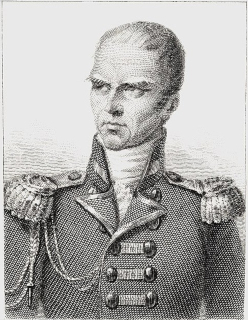
(Pictured: Portrait of Irish author William Carleton (1794-1869) by John Slattery (fl. 1850s))


Leave a comment

Laying of the Foundation Stone of Parliament House

parliament-house

The foundation stone of Parliament House in College Green is laid on February 3, 1729, by Thomas Wyndham, 1st Baron Wyndham, the Lord Chancellor of Ireland. Parliament House is initially home to the Parliament of Ireland and later houses the Bank of Ireland. It is the world’s first purpose-built bicameral parliament house. The current parliament building is Leinster House.

The building is home to the two Houses of Parliament, serving as the seat of both chambers, the House of Lords and House of Commons, of the Parliament of the Kingdom of Ireland for most of the 18th century until that parliament is abolished by the Acts of Union 1800, when Ireland becomes part of the United Kingdom of Great Britain and Ireland.

In the 17th century, parliament settles at Chichester House, a town house in Hoggen Green (later College Green) formerly owned by Sir George Carew, Lord President of Munster and Lord High Treasurer of Ireland, which had been built on the site of a nunnery disbanded by King Henry VIII at the time of the dissolution of the monasteries. Carew’s house, named Chichester House after its later owner Sir Arthur Chichester, is a building of sufficient importance to have become the temporary home of the Kingdom of Ireland’s law courts during the Michaelmas law term in 1605. Most famously, the legal documentation facilitating the Plantation of Ulster is signed there on November 16, 1612.

Chichester House is in a dilapidated state, allegedly haunted and unfit for official use. In 1727 parliament votes to spend £6,000 on a new building on the site. It is to be the world’s first purpose-built two-chamber parliament building.

The then ancient Palace of Westminster, the seat of the English before 1707 and, later, British Parliament, is a converted building. The House of Commons‘s odd seating arrangements is due to the chamber’s previous existence as a chapel. Hence MPs face each other from former pews.

The design of the new building, one of two purpose-built Irish parliamentary buildings (along with Parliament Buildings, Stormont), is entrusted to an architect, Edward Lovett Pearce, who is a member of parliament and a protégé of the Speaker of the Irish House of Commons, William Conolly of Castletown House. During construction, Parliament moves into the Blue Coat Hospital on Dublin‘s Northside.

The original, domed House of Commons chamber is destroyed by fire in the 1790s, and a less elaborate new chamber, without a dome, is rebuilt in the same location and opened in 1796, four years before the Parliament’s ultimate abolition.

Pearce’s designs come to be studied and copied both at home and abroad. The Viceregal Apartments in Dublin Castle imitate his top-lit corridors. The British Museum in Bloomsbury in London copies his colonnaded main entrance. His impact reaches Washington, D.C., where his building, and in particular his octagonal House of Commons chamber, is studied as plans are made for the United States Capitol building. While the shape of the chamber is not replicated, some of its decorative motifs are, with the ceiling structure in the Old Senate Chamber and old House of Representatives chamber (now the National Statuary Hall) bearing a striking resemblance to Pearce’s ceiling in the House of Commons.

(Pictured: Architectural drawing of the front of Parliament House by Peter Mazell based on the drawing by Rowland Omer, 1767)


Leave a comment

Birth of Thomas Crofton Croker

thomas-crofton-croker

Thomas Crofton Croker, antiquarian and folklorist, is born on January 15, 1798 in Cork, County Cork. His collections of songs and legends form a storehouse for writers of the Irish Literary Revival.

The son of an army major, Croker has little school education but does read widely while working in merchant trade. For some years Croker holds a position in the Admiralty, where his distant relative, John Wilson Croker, is his superior.

Croker devotes himself largely to the collection of ancient Irish poetry and Irish folklore. He assists in founding the Percy Society and the Camden Society. He and his wife’s testimonies about funereal customs, particularly the tradition of keening the deceased are among the earliest and most significant contributions to the understanding of the Irish language lament and the accompanying traditions. The first part of his Fairy Legends and Traditions of the South of Ireland is published in 1825. It grows to six editions and is translated into German by the Brothers Grimm (Irische Elfenmärchen, 1826). Parts two and three follow in 1828, the latter including Croker’s translation of the long Grimm preface to part one.

Croker publishes Legends of the Lakes: Or, Sayings and Doings at Killarney in 1829, in which he features discussions of the music of his friend, the Irish piper James Gandsey.

Thomas Crofton Croker dies on August 8, 1854 and is buried in Brompton Cemetery, London.


Leave a comment

Birth of Sir John Parnell, 2nd Baronet

john-parnell

Sir John Parnell, 2nd Baronet, an Anglo-Irish Member of Parliament, is born on December 25, 1744.

A Church of Ireland landowner, his family had originally migrated to Ireland from Congleton in Cheshire. Although not from an Irish Roman Catholic background, Parnell, the only son of Sir John Parnell, 1st Baronet, is renowned in Irish history for his efforts to bring about a more emancipated country. He is the great-grandfather of Charles Stewart Parnell, known as the uncrowned king of Ireland and best known for opposing the Acts of Union 1800 between the two kingdoms of Great Britain and Ireland.

From a line of politically astute ancestors who had moved to Ireland in the 17th century, Parnell rises to the highest positions in Irish politics as Commissioner of the Revenue (1780), Chancellor of the Exchequer of Ireland (1787), and Lord of the Treasury (1793).

Parnell first serves in the Parliament of Ireland as one of the members for Bangor, from 1767 to 1768. He later sits for Queen’s County from 1783 until the Union with Great Britain creates the United Kingdom of Great Britain and Ireland in 1801. After the Union, he gains a seat in the Parliament of the United Kingdom for a short time as member for Queen’s County but dies suddenly in London in December 1801.

Henry Grattan describes Parnell as “an honest, straightforward, independent man, possessed of considerable ability and much public spirit; as Chancellor of the Exchequer, he was not deficient, and he served his country by his plan to reduce the interest of money. He was amiable in private, mild in disposition, but firm in mind and purpose. His conduct at the Union did him honour, and proved how warmly he was attached to the interests of his country, and on this account, he was dismissed.”

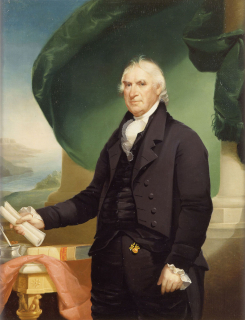
(Pictured: Oil painting on canvas, The Right Hon. Sir John Parnell, 2nd Bt (1744–1801) by Pompeo Girolamo Batoni (Lucca 1708 – Rome 1787))


Leave a comment

Birth of Martin Archer Shee, Portrait Painter

martin-archer-shee

Sir Martin Archer Shee, portrait painter and president of the Royal Academy of Arts, is born in Dublin on December 23, 1769.

Shee is born into an old Irish Catholic family, the son of Martin Shee, a merchant, who regards the profession of a painter as an unsuitable occupation for a descendant of the Shees. He nevertheless studies art in the Royal Dublin Society and comes to London. There, in 1788, he is introduced by Edmund Burke to Joshua Reynolds, on whose advice he studies in the schools of the Royal Academy of Arts.

In 1789 Shee exhibits his first two pictures, the “Head of an Old Man” and “Portrait of a Gentleman.” Over the next ten years he steadily increases in practice. In 1798 he is chosen an associate of the Royal Academy and in 1800 he is elected a Royal Academician. He moves to George Romney‘s former house at 32 Cavendish Square and sets up as his successor.

Shee continues to paint with great readiness of hand and fertility of invention, although his portraits are eclipsed by more than one of his contemporaries, and especially by Thomas Lawrence. His earlier portraits are carefully finished, easy in action, with good drawing and excellent discrimination of character. They show an undue tendency to redness in the flesh painting, a defect which is still more apparent in his later works, in which the handling is less square, crisp and forcible. In addition to his portraits, he executes various subjects and historical works, such as Lavinia, Belisarius, his diploma picture “Prospero and Miranda,” and the “Daughter of Jephthah.”

In 1805 Shee publishes a poem consisting of Rhymes on Art, and a second part follows in 1809. Lord Byron speaks well of it in his English Bards and Scotch Reviewers. He publishes another small volume of verse in 1814, entitled The Commemoration of Sir Joshua Reynolds, and other Poems, but this is less successful. He also produces a tragedy, Alasco, set in Poland. The play is accepted at Covent Garden, but is refused a licence, on the grounds that it contains treasonable allusions, and Shee angrily resolves to make his appeal to the public. He carries out his threat in 1824, but Alasco is still on the list of unacted dramas in 1911. He also publishes two novels – Oldcourt (1829, in three volumes) and Cecil Hyde (1834).

On the death of Sir Thomas Lawrence in 1830, Shee is chosen president of the Royal Academy in his stead and shortly afterwards receives a knighthood. In 1831 he is elected a Fellow of the Royal Society. In an examination before the parliamentary committee of 1836 concerning the functions of the Royal Academy, he ably defends its rights. He continues to paint until 1845, when illness makes him retire to Brighton. He is deputised for at the Academy by J. M. W. Turner, who had appointed him a trustee of the projected Turner almshouse.

From 1842–1849, Shee is the first president of the Royal Birmingham Society of Artists.

Martin Archer Shee dies in Brighton, Sussex, England on August 13, 1850, and is buried in the western extension to St. Nicholas’ Churchyard in Brighton. His headstone remains but has been laid flat and moved to the perimeter of the site.


Leave a comment

The Death of Theobald Wolfe Tone

theobald-wolfe-tone

Theobald Wolfe Tone, Irish republican and rebel who sought to overthrow English rule in Ireland and who led a French military force to Ireland during the Irish Rebellion of 1798, dies at Provost’s Prison, Dublin on November 19, 1798, from a stab wound to his neck which he inflicted upon himself on November 12. His attempted suicide is the result of being refused a soldier’s execution by firing squad and being sentenced to death by hanging.

Wolfe Tone is born in Dublin on June 20, 1763. The son of a coach maker, he studies law and is called to the Irish bar in 1789 but soon gives up his practice. In October 1791 he helps found the Society of United Irishmen, initially a predominantly Protestant organization that works for parliamentary reforms, such as universal suffrage and Roman Catholic emancipation. In Dublin in 1792 he organizes a Roman Catholic convention of elected delegates that forces Parliament to pass the Catholic Relief Act of 1793. He himself, however, is anticlerical and hopes for a general revolt against religious creeds in Ireland as a sequel to the attainment of Irish political freedom.

By 1794 Wolfe Tone and his United Irishmen friends begin to seek armed aid from Revolutionary France to help overthrow English rule. After an initial effort fails, he goes to the United States and obtains letters of introduction from the French minister at Philadelphia to the Committee of Public Safety in Paris. In February 1796 he arrives in the French capital, presents his plan for a French invasion of Ireland, and is favourably received. The Directory then appoints one of the most brilliant young French generals, Lazare Hoche, to command the expedition and makes Tone an adjutant in the French army.

On December 16, 1796, Wolfe Tone sails from Brest with 43 ships and nearly 14,000 men. But the ships are badly handled and, after reaching the coast of west Cork and Kerry, are dispersed by a storm. He again brings an Irish invasion plan to Paris in October 1797, but the principal French military leader, Napoleon Bonaparte, takes little interest. When insurrection breaks out in Ireland in May 1798, Wolfe Tone can only obtain enough French forces to make small raids on different parts of the Irish coast. In September he enters Lough Swilly, Donegal, with 3,000 men and is captured there.

At his trial in Dublin on November 10, Wolfe Tone defiantly proclaims his undying hostility to England and his desire “in fair and open war to produce the separation of the two countries.” He is found guilty and is sentenced to be hanged. Early in the morning of November 12, 1798, the day he is to be hanged, he cuts his throat with a penknife and dies at the age of 35 in Provost’s Prison, Dublin, not far from where he was born. He is buried in Bodenstown, County Kildare, near his birthplace, and his grave is in the care of the National Graves Association.


Leave a comment

Opening of the Custom House in Dublin

custom-house

The Custom House (Irish: Teach an Chustaim), a neoclassical 18th century building in Dublin which houses the Department of Housing, Planning and Local Government, opens on November 7, 1791. It is located on the north bank of the River Liffey, on Custom House Quay between Butt Bridge and Talbot Memorial Bridge.

A previous Custom House had been built in 1707 by engineer Thomas Burgh. However, by the late 18th century it is deemed unfit for purpose.

The building of a new Custom House for Dublin is the idea of John Beresford, who becomes first commissioner of revenue for Ireland in 1780. In 1781 he appoints James Gandon as architect, after Thomas Cooley, the original architect on the project, dies. This is Gandon’s first large scale commission. The new Custom House is unpopular with the Dublin Corporation and some city merchants who complain that it moves the axis of the city, would leave little room for shipping, and is being built on what at the time is a swamp. Purchase of land is delayed and proves exorbitant, and the laying of foundations is disrupted by the High Sheriff and members of the Dublin Corporation with a mob of several thousand. However, Beresford is determined to complete the project and ignores the protests.

Construction begins in 1781, and for his assistants Gandon chooses Irish artists such as Meath stone-cutter Henry Darley, mason John Semple, and carpenter Hugh Henry. Every available mason in Dublin is engaged in the work. When it is completed and opens for business on November 7, 1791, it has cost £200,000 to build – a considerable sum at the time. The four facades of the building are decorated with coats-of-arms and ornamental sculptures by Edward Smyth representing Ireland’s rivers. Another artist, Henry Banks, is responsible for the statue on the dome and other statues.

As the port of Dublin moves further downriver, the building’s original use for collecting custom duties becomes obsolete, and it is used as the headquarters of local government in Ireland. During the Irish War of Independence in 1921, the Irish Republican Army (IRA) burns down the Custom House in an attempt to disrupt British rule in Ireland. Gandon’s original interior is completely destroyed in the fire and the central dome collapses. A large quantity of irreplaceable historical records is also destroyed in the fire. Despite achieving its objectives, the attack on the Custom House is a setback for the IRA as a large number of Volunteers are captured either during the attack or when falling back.

After the Anglo-Irish Treaty, it is restored by the Irish Free State government. The results of this reconstruction can still be seen on the building’s exterior today. The dome is rebuilt using Irish Ardbraccan limestone which is noticeably darker than the Portland stone used in the original construction. This is done as an attempt to promote Irish resources.

Further restoration and cleaning of the stonework is done by an Office of Public Works team in the 1980s.


Leave a comment

Birth of Benjamin Lee Guinness

benjamin-lee-guinness

Sir Benjamin Lee Guinness, 1st Baronet, Irish brewer and philanthropist, is born in Dublin on November 1, 1798.

Guinness is the third son of Arthur Guinness II (1768–1855), and his wife Anne Lee, and a grandson of the first Arthur (1725–1803), who had bought the St. James’s Gate Brewery in 1759. He joins his father in the business in his late teens, without attending university, and from 1839 he takes sole control within the family. From 1855, when his father dies, he has become the richest man in Ireland, having built up a huge export trade and by continually enlarging his brewery.

In 1851 Guinness is elected the first Lord Mayor of Dublin under the reformed corporation. In 1863 he is made an honorary LL.D. (Doctor of Laws) by Trinity College Dublin, and on April 15, 1867, is created a baronet by patent, in addition to which, on May 18, 1867, by royal licence, he has a grant of supporters to his family arms.

Guinness is elected to the House of Commons of the United Kingdom in 1865 as a Conservative Party representative for Dublin City, serving until his death. His party’s leader is Edward Smith-Stanley, 14th Earl of Derby. Previously he had supported the Liberal Party‘s Henry John Temple, 3rd Viscount Palmerston, but in the 1860s the Liberals propose higher taxation on drinks such as beer. Before 1865 the Irish Conservative Party does not entirely support British conservative policy but does so after the Irish Church Act 1869. The government’s most notable reform is the Reform Act 1867 that expands the franchise.

From 1860 to 1865, Guinness undertakes at his own expense, and without hiring an architect, the restoration of the city’s St. Patrick’s Cathedral, an enterprise that costs him over £150,000. In 1865 the building is restored to the dean and chapter and reopens for services on February 24. The citizens of Dublin and the dean and chapter of St. Patrick’s present him with addresses on December 31, 1865, expressive of their gratitude for what he has done for the city. The addresses are in two volumes, which are afterwards exhibited at the Paris Exhibition.

In recognition of his generosity, Guinness is made a baronet in 1867. He is one of the ecclesiastical commissioners for Ireland, a governor of Simpson’s Hospital, and vice-chairman of the Dublin Exhibition Palace. He dies the following year, on May 19, 1868, at his Park Lane home in London. At the time of his death, he is engaged in the restoration of Marsh’s Library, a building which adjoins St. Patrick’s Cathedral. The restoration is completed by his son Arthur.

Guinness is buried in Mount Jerome Cemetery, Dublin, in the family vault, on May 27, 1868. His personalty is sworn under £1,100,000 on August 8, 1868. A bronze statue of him by John Henry Foley is erected by the Cathedral Chapter in St. Patrick’s churchyard, on the south side of the cathedral, in September 1875, which is restored in 2006.


Leave a comment

Death of Jonathan Swift, Satirist & Essayist

jonathan-swift

Jonathan Swift, satirist, essayist, political pamphleteer, poet and cleric who becomes Dean of St. Patrick’s Cathedral, Dublin, dies in Dublin on October 19, 1745.

Swift is born in Dublin on November 30, 1667. His father, an attorney, also named Jonathan Swift, dies just two months before he is born. Without steady income, his mother struggles to provide for her newborn. Moreover, he is a sickly child. It is later discovered that he suffers from Ménière’s disease, a condition of the inner ear that leaves the afflicted nauseous and hard of hearing. In an effort to give her son the best upbringing possible, Swift’s mother gives him over to Godwin Swift, her late husband’s brother and a member of the respected professional attorney and judges group Gray’s Inn. Godwin Swift enrolls his nephew in the Kilkenny Grammar School (1674–1682), which is perhaps the best school in Ireland at the time. His transition from a life of poverty to a rigorous private school setting proves challenging. He does, however, make a fast friend in William Congreve, the future poet and playwright.

At age 14, Swift commences his undergraduate studies at Trinity College, Dublin. In 1686, he receives a Bachelor of Arts degree and goes on to pursue a master’s degree. Not long into his research, huge unrest breaks out in Ireland. The king of Ireland, England and Scotland is soon to be overthrown. What becomes known as the Glorious Revolution of 1688 spurs him to move to England and start anew. For 10 years, Swift works in Surrey‘s Moor Park and acts as an assistant to Sir William Temple.

During his Moor Park years, Swift met the daughter of Temple’s housekeeper, an 8-year-old named Esther Johnson. They become lovers for the rest of their lives until Johnson’s death. It is rumored that they marry in 1716, and that Swift keeps of lock of Johnson’s hair in his possession at all times.

During his decade of work for Temple, Swift returns to Ireland twice. On a trip in 1695, he takes all necessary requirements to become an ordained priest in the Anglican tradition. Under Temple’s influence, he also begins to write, first short essays and then a manuscript for a later book. Temple dies in 1699. Swift completes the task of editing and publishing Temple’s memoirs. He then leans on his priestly qualifications and finds work ministering to a pea-sized congregation just 20 miles outside of Dublin. For the next ten years, he gardens, preaches and works on the house provided to him by the church. He also returns to writing. His first political pamphlet is titled A Discourse on the Contests and Dissentions in Athens and Rome.

In 1704, Swift anonymously releases A Tale of a Tub and The Battle of the Books. Tub, although widely popular with the masses, is harshly disapproved of by the Church of England. Ostensibly, it criticizes religion, but Swift means it as a parody of pride. Nonetheless, his writings earn him a reputation in London and when the Tories come into power in 1710, they ask him to become editor of The Examiner, their official paper. After a time, he becomes fully immersed in the political landscape and begins writing some of the most cutting and well-known political pamphlets of the day, including The Conduct of the Allies, an attack on the Whigs. Privy to the inner circle of Tory government, he lays out his private thoughts and feelings in a stream of letters to his beloved Stella. They are later published as The Journal to Stella.

When he sees that the Tories will soon fall from power, Swift returns to Ireland. In 1713, he takes the post of dean at St. Patrick’s Cathedral in Dublin. While leading his congregation at St. Patrick’s, he begins to write what would become his best-known work. In 1726, at last finished with the manuscript, he travels to London and benefits from the help of several friends, who anonymously publish it as Travels into Several Remote Nations of the World, in Four Parts. By Lemuel Gulliver, First a Surgeon, and then a Captain of Several Ships, more simply known as Gulliver’s Travels. The book is an immediate success and has not been out of print since its first run.

Not long after the celebration of this work, Swift’s longtime love, Esther Johnson, falls ill. She dies in January 1728. Her death moves Swift to write The Death of Mrs. Johnson.

In 1742, Swift suffers a stroke and loses the ability to speak. On October 19, 1745, Jonathan Swift dies. He is laid to rest next to Esther Johnson inside Dublin’s St. Patrick’s Cathedral.


Leave a comment

Birth of Actress Margaret “Peg” Woffington

peg-woffington

Margaret “Peg” Woffington, well-known Irish actress in Georgian London, is born of humble origins in Dublin on October 18, 1720.

Woffington’s father is believed to have been a bricklayer, and, after his death, the family becomes impoverished. Her mother is obliged to take in washing while Peg sells watercress door to door. It is said that she is walking through a marketplace as a pre-teen and happens upon Madame Signora Violante, a famous tightrope walker. Violante is so immediately enthralled by Peg’s beautiful face that she accompanies her home and asks her mother permission to take her in as her apprentice.

Around 1730, Violante features Woffington as Polly Peachum in a production of John Gay’s The Beggar’s Opera. This serves as a springboard for her fame in Dublin, and she continues dancing and acting in the area playing Dorinda in an adaptation of The Tempest at the Theatre Royal, Dublin in 1735 and joining the Smock Alley Theatre to perform with well-known actor David Garrick.

Woffington dances and acts at various Dublin theaters until her success as Sir Harry Wildair in The Constant Couple leads to her being given her London debut at Covent Garden. She becomes well known as an actress thereafter.

Woffington enjoys success in the role of Sylvia in The Recruiting Officer. She performs at Drury Lane for several years and later returns to Dublin, appearing in a variety of plays. Her most well-received performances are in comic roles, such as elegant women of fashion like Lady Betty Modish and Lady Townley, and breeches roles. She is impeded in the performance of tragedy by a harsh tone in her voice that she strives to eliminate.

Woffington lives openly with David Garrick, the foremost actor of the day, and her other love affairs are numerous and notorious. She becomes friend and mentor to the socialite/actress sisters, Elizabeth and Maria Gunning, and also shares the stage with the likes of Charles Macklin, Kitty Clive, and the tragedienne Susannah Maria Arne.

Though Woffington is popular with society figures, she is not always favored by her competition. She tends to create rivalries with similar-type actresses at Drury Lane and Covent Garden. Her fiercest rivalry is with “equally peppery” actress Kitty Clive. According to Garrick biographer Thomas Davies, “No two women in high life ever hated each other more unreservedly than these two great dames of the stage.” When she returns to Covent Garden, rivalries with these women and with the manager, John Rich, eventually send her back to Dublin, where she is unrivaled and celebrated at the Smock Alley Theatre.

Rich decides to start a Beefsteak Club in 1749, also known as the Sublime Society of Steaks or “the Club.” Some of its members include Garrick and William Hogarth, as well as many other London celebrities. Not only is Woffington the first female member of the all-male dining club, in 1750 she becomes president of the club by election. She also educates and supports her sister and cares for and pensions her mother.

For whatever reason, Woffington leaves Garrick in about 1744 and moves to Teddington, into a house called Teddington Place. In 1754 she becomes the beneficiary of the will of the Irish impresario Owen Swiny. In 1756, she performs the part of Lady Randolph in Douglas, a part which finds a later exponent in Sarah Siddons.

On May 3, 1757, Woffington is playing the part of Rosalind in As You Like It when she collapses on stage. She rallies but would never act again, lingering with a wasting illness. She dies in Queen Square, Westminster on March 28, 1760. She is buried in St. Mary with St. Alban, the parish church in Teddington.