seamus dubhghaill

Promoting Irish Culture and History from Little Rock, Arkansas, USA


Leave a comment

Birth of Abraham Colles, Professor & President of the RCSI

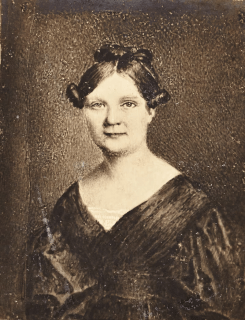
Abraham Colles, Professor of Anatomy, Surgery and Physiology at the Royal College of Surgeons in Ireland (RCSI) and the President of RCSI in 1802 and 1830, is born in Millmount, County Kilkenny, on July 23, 1773. A prestigious Colles Medal & Travelling Fellowship in Surgery is awarded competitively annually to an Irish surgical trainee embarking on higher specialist training abroad before returning to establish practice in Ireland.

Descended from a Worcestershire family, some of whom had sat in Parliament, Colles is born to William Colles and Mary Anne Bates of Woodbroak, County Wexford. The family lives near Millmount, a townland near Kilkenny, County Kilkenny, where his father owns and manages his inheritance which is the extensive Black Quarry that produces the famous Kilkenny black marble. His father dies when he is 6 years old, but his mother takes over the management of the quarry and manages to give her children a good education. While at Kilkenny College, a flood destroys a local physician’s house. He finds an anatomy book belonging to the doctor in a field and returns it to him. Sensing the young man’s interest in medicine, the physician lets him keep the book.

Colles goes on to enroll in Trinity College Dublin in 1790 and is indentured to Philip Woodroffe, studying at Dr. Steevens’ Hospital, The Foundlings’ Hospital and the House of Industry hospitals. He receives the Licentiate Diploma of the Royal College of Surgeons in 1795 and goes on to study medicine at the University of Edinburgh Medical School, receiving his MD degree in 1797. Afterward, he lives in London for a short period, working with the famous surgeon Sir Astley Cooper in his dissections of the inguinal region.

Following his return to Dublin, in 1799, Colles is elected to the staff at Dr. Steevens’ Hospital where he serves for the next 42 years. In October 1803, he is appointed Surgeon to Cork-street Fever Hospital, and subsequently becomes Consulting Surgeon to the Rotunda Hospital, City of Dublin Hospital, and Victoria Lying-in Hospital. He is a well-regarded surgeon and is elected as president of the Royal College of Surgeons in Ireland (RCSI) in 1802 at the age of 28 years, subsequently also serving as president in 1830. In 1804, he is appointed Professor of Anatomy, Physiology, and Surgery at RCSI.

In 1811, Colles writes an important treatise on surgical anatomy and some terms he introduces have survived in surgical nomenclature until today. He is remembered as a skillful surgeon and for his 1814 paper On the Fracture of the Carpal Extremity of the Radius. This injury continues to be known as Colles’ fracture. This paper, describing distal radial fractures, is far ahead of its time, being published decades before X-rays come into use. He also describes the membranous layer of subcutaneous tissue of the perineum, which comes to be known as Colles’ fascia. He also extensively studies the inguinal ligament, which is sometimes called Colles’ ligament. He is regarded as the first surgeon to successfully ligate the subclavian artery.

In 1837, Colles writes “Practical observations on the venereal disease, and on the use of mercury” in which he introduces the hypothesis of maternal immunity of a syphilitic infant when the mother has not shown signs of the disease. His principal textbook is the two-volume Lectures on the theory and practice of surgery. His writings are important, though not voluminous. Some of his papers are collected and edited by his son, William Colles, and published in the Dublin Journal of Medical Science. Selections from the works of Abraham Colles, chiefly relative to the venereal disease and the use of mercury, comprise Volume XOII. of the Library of the New Sydenham Society, published in 1881. They are edited and annotated by one of the most distinguished Fellows of the RCSI, Robert McDonnell. His Lectures on Surgery are edited by Simon M’Coy and published in 1850. In tribute to his distinguished career, he is awarded a baronetcy in 1839, which he refuses.

Upon Colles’s retirement as Professor of Surgery, the Members of RCSI pass a resolution which includes “We have also to assure you that it is the unanimous feeling of the College, that the exemplary and efficient manner in which you have filled this chair for thirty-two years, has been a principal cause of the success and consequent high character of the School of Surgery in this country.”

Colles dies on November 16, 1843, from gout. He is buried in Mount Jerome Cemetery, Dublin.

In 1807, Colles marries Sophia Cope. His son William follows in his footsteps, being elected to the Chair of Anatomy in the Royal College of Surgeons in Ireland in 1863. Another of his sons, Henry, marries Elizabeth Mayne, a niece of Robert James Graves. His grandson is the eminent music critic and lexicographer H. C. Colles. His granddaughter Frances marries the judge Lord Ashbourne, and her sister Anna marries his colleague Sir Edmund Thomas Bewley.


Leave a comment

Birth of Richard Colley Wellesley, 1st Marquess Wellesley

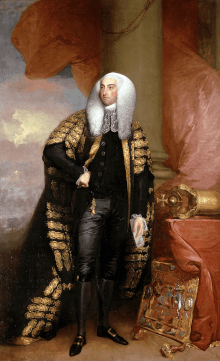
Richard Colley Wellesley, 1st Marquess Wellesley, Anglo-Irish politician and colonial administrator, is born on June 20, 1760, at Dangan Castle, County Meath. He, as governor of Madras (now Chennai) and governor-general of Bengal (both 1797–1805), greatly enlarges the British Empire in India and, as Lord Lieutenant of Ireland (1821–28, 1833–34), attempts to reconcile Protestants and Roman Catholics in a bitterly divided country. Throughout his life he displays an ever-increasing jealousy of his younger brother Arthur Wellesley, 1st Duke of Wellington, despite his own achievements.

Born Richard Colley Wesley, he is the eldest son of Garret Wesley, 1st Earl of Mornington (he changes the family surname to Wellesley in 1789). He is educated at the Royal School, Armagh, Harrow School, Eton College, and Christ Church, Oxford, although he leaves the latter in 1781, following his father’s death, before completing his degree. He enters the Irish House of Commons in 1780 and, after he inherits his father’s Irish titles in 1781, moves to the Irish House of Lords. A moderately liberal disciple of Prime Minister William Pitt the Younger, he wins a seat in the British House of Commons in 1784 and serves there until 1797. From 1793 he is a member of the British Privy Council and a commissioner of the India Board of Control.

As Governor-General of India, Wellesley uses military force and diplomacy to strengthen and expand British authority. East India Company forces defeat and kill Tipu Sultan, Indian Muslim ruler of the Kingdom of Mysore (present-day Mysuru) and sympathizer for Revolutionary France, in the Fourth Anglo-Mysore War (1799), and he then restores the Hindu dynasty there that had been deposed by Tipu’s father, Hyder Ali. He annexes much territory after his brother Arthur and General Gerard Lake defeat the Maratha Confederacy of states in the Deccan Plateau (peninsular India). In addition, he forces the Oudh State to surrender numerous important cities to the British, and he contracts with other states a series of “subsidiary alliances” by which all parties recognize British preponderance. He receives a barony in the British peerage in 1797 at the time of his appointment as governor-general, and in 1799 he is awarded a marquessate in the Irish peerage for his victory in the Mysore War.

When Wellesley is faced with an invasion by Zaman Shah Durrani, ruler (1793–1800) of Kabul (Afghanistan), he utilizes his envoy, Captain John Malcolm, to induce Fatḥ-Alī Shah Qajar of Qajar Iran to restrain Zaman Shah Durrani and to give British political and commercial interests preference over the French. On receiving a British government order to restore to France its former possessions in India, he refuses to comply. His policy is vindicated when the Treaty of Amiens (1802) is violated, and Great Britain resumes war against Napoleonic France.

Wellesley’s annexations and the vast military expenditure that he had authorized alarms the court of directors of the East India Company. In 1805, he is recalled, and soon afterward he is threatened with impeachment, although two years later he refuses an offer of the foreign secretaryship. In 1809, he goes to Spain to make diplomatic arrangements for the Peninsular War against France and later that year becomes foreign secretary under Prime Minister Spencer Perceval. In that office he antagonizes his colleagues, who consider him an indolent megalomaniac and welcome his resignation in February 1812. Unlike most of them, however, he had urged a stronger war effort in Spain and had advocated political rights for British Roman Catholics. After Perceval’s assassination on May 11, 1812, he attempts unsuccessfully to form a government at the request of the prince regent (the future King George IV).

As Lord Lieutenant of Ireland, Wellesley disappoints the anti-Catholic George IV, and he is about to be removed when his brother, Arthur, is appointed prime minister in January 1828. He then resigns because his brother is opposed to Roman Catholic emancipation, although the duke is constrained to accept that policy as a political necessity in 1829. His second term as Lord Lieutenant of Ireland (1833–34) ends with the fall of Charles Grey, 2nd Earl Grey’s reform government. When the Whig Party returns to power in April 1835, he is not sent back to Ireland, and in his rage, he threatens to shoot the prime minister, William Lamb, 2nd Viscount Melbourne. He wants to be created Duke of Hindustan so that his rank will equal that of his brother.

Wellesley dies at the age of 82 on September 26, 1842, at Knightsbridge, London. He is buried in Eton College Chapel, at his old school. He and Arthur, after a long estrangement, had been once more on friendly terms for some years. Arthur weeps at the funeral and says that he knows of no honour greater than being Lord Wellesley’s brother.

Wellesley’s library is sold at auction in London by R. H. Evans on January 17, 1843 (and three following days); a copy of the catalogue, annotated with prices and buyers’ names, is held at Cambridge University Library.

Wellesley has several children, including three sons, but none are legitimate. The marquessate thus becomes extinct upon his death. The earldom of Mornington goes to his next surviving brother, William Wellesley-Pole.

(From: “Richard Colley Wellesley, Marquess Wellesley, British statesman,” written and fact-checked by the Editors of Encyclopaedia Britannica, http://www.britannica.com, April 2024 | Pictured: “Richard Colley Wellesley, Marquess of Wellesley (1760-1842),” oil on canvas portrait by Thomas Lawrence, 1812-13)


Leave a comment

Birth of Amhlaoibh Ó Súilleabháin, Author, Draper & School Master

Amhlaoibh Ó Súilleabháin, Irish language author, linen draper, politician, and one-time hedge school master, is born on May 1, 1780. He is also known as Humphrey O’Sullivan.

Ó Súilleabháin is deeply involved in Daniel O’Connell‘s Catholic emancipation movement and in relief work among the poor of County Kilkenny. He is also an avid bird watcher and a collector of manuscripts in the Irish language. His diary, published later as Cín Lae Amhlaoibh, is kept between 1827 and 1835. It remains one of the most important sources for 19th-century Irish life and one of the few surviving works from the perspective of the Roman Catholic lower and middle classes. (A translation has been published in English and an abridged and annotated edition in Irish, both edited by Tomás de Bhaldraithe.) He also composes verse and stories.

Ó Súilleabháin is born in Killarney, County Kerry. He comes to live at Callan, County Kilkenny, when he is nine years old, joining his father, Donncha Ó Súilleabháin. Father and son establish themselves as teachers in the surrounding towns. They begin by teaching under the hedges, but eventually a cabin is built as a school. He takes over the post of teacher there when his father dies in 1808. He remains a resident of Callan until his death. At the time, County Kilkenny is one of the most strongly Irish-speaking areas in Leinster.

As a teacher, Ó Súilleabháin is well versed in mathematics and Latin, and likely teaches English to a high standard. His diary shows him to have a deep interest in the natural world, and there are daily references to the weather.

Though Ó Súilleabháin is clearly a master of English, his diary is mostly in Irish, with occasional business-related entries in English, likely so that such transactions can be verified by others. He mostly eschews the archaisms favoured by other writers in Irish, writing in a fluent, flexible, colloquial style which could encompass both concision and literary elaboration. His diary shows him to be deeply involved in the life of the poor but to also be well acquainted with local notables. He is fond of occasional revelry and a good meal.

Ó Súilleabháin has an impressive collection of Irish language manuscripts, both prose and verse, which are supplemented by books. As a businessman, he deals in linen, corn and meal, and often has to make long trips to Dublin, Clonmel and Waterford.

Ó Súilleabháin marries a woman named Máire Ní Dhulachanta, not often mentioned in his diary. They have six or seven children, four of whom survive into adulthood. Her death, however, causes him great grief, and he never remarries.

Ó Súilleabháin dies on November 20, 1838, in Callan and is buried in the family plot in St. Brigid’s graveyard.

Amhlaoibh’s original manuscript is currently in the possession of the Royal Irish Academy. An edition of the complete manuscript is published as Cinnlae Amhlaoibh Uí Shúileabháin by M. McGrath in 1936-37 and an abridged and annotated edition, Cín Lae Amhlaoibh, by Tomás de Bhaldraithe in 1970–1973. A translation, The Diary of an Irish Countryman, is published by de Bhaldraithe (Mercier Press) in 1979.

(Pictured: The Seal of Milesius, the official seal of the Ó Súilleabháin Clann of Munster)


Leave a comment

Death of Irish Dramatist George Farquhar

George Farquhar, Irish dramatist, dies in London on April 29, 1707. He is noted for his contributions to late Restoration comedy, particularly for his plays The Constant Couple (1699), The Recruiting Officer (1706) and The Beaux’ Stratagem (1707).

Born in Derry in 1677, Farquhar is one of seven children born to William Farquhar, a clergyman of modest means. The author of “Memoirs of Mr. George Farquhar,” a biographical sketch prefixed to certain 18th-century editions of his works, claims that he “discovered a Genius early devoted to the Muses. When he was very young, he gave Specimens of his Poetry; and discovered a Force of Thinking, and Turn of Expression, much beyond his years.”

Farquhar is educated at Foyle College and later enters Trinity College Dublin at age seventeen as a sizar under the patronage of the Bishop of Dromore, who may have been related to Farquhar’s mother. He may have initially intended to follow his father’s profession and become a clergyman but is “unhappy and rebellious as a student” and leaves college after two years to become an actor. His 18th-century biographer claims that the departure is because “his gay and volatile Disposition could not long relish the Gravity and Retirement of a College-life,” but another story of uncertain veracity has him being expelled from Trinity College due to a “profane jest.” The two accounts are not necessarily mutually exclusive.

Farquhar joins a company performing on the Dublin stage, probably through his acquaintance with the well-known actor Robert Wilks. However, he is reportedly not that impressive as an actor. It is said that “his voice was somewhat weak” and that “his movements [were] stiff and ungraceful.” But he is well received by audiences and thought to continue in this career “till something better should offer.” Some of the roles reportedly played by Farquhar are Lennox in William Shakespeare‘s Macbeth, Young Bellair in The Man of Mode by George Etherege, Lord Dion in Philaster by Francis Beaumont and John Fletcher, and Guyomar in The Indian Emperour by John Dryden.

During one of the performances in the Dryden play, an accident on stage puts an end to Farquhar’s acting career. As Guyomar, he is supposed to “kill” Vasquez, one of the Spanish generals in the drama. Forgetting to exchange his sword for a foil before enacting this scene, he severely wounds Price, the actor playing Vasquez. Although Price recovers, Farquhar resolves after this mishap to give up acting for good.

Farquhar then leaves for London, “possibly with a draft of his first play in his portmanteau.” Some writers tie his move to that of his friend Wilks, who had received an offer from the manager of Drury Lane to come to London and join that theatre. Wilks is also credited with encouraging Farquhar’s efforts at writing plays.

Farquhar’s first comedy, Love and a Bottle, premieres in 1698 and is well received by the audience. Called a “licentious piece” by one scholar and cited as proof that Farquhar had “absorbed the stock topics, character-types, and situations of Restoration comedy” by another, the play deals with Roebuck, “An Irish Gentleman of a wild roving Temper” who is “newly come to London.” The general character of the play can be evaluated by considering that in the opening scene, Roebuck tells his friend Lovewell that he has left Ireland due to getting a woman pregnant with twins and to Roebuck’s father trying to force Roebuck to marry the woman; however, Roebuck remarks, “Heav’n was pleas’d to lessen my Affliction, by taking away the She-brat.”

After the favourable reception of Love and a Bottle, Farquhar decides to devote himself to playwriting. He also at this point receives a commission in the regiment of the Earl of Orrery, so his time for the next few years is divided between the vocations of soldier and dramatist. It is also at about this time that he discovers Anne Oldfield, who is reading aloud a scene from The Scornful Lady at her aunt’s tavern. Impressed, he brings her to the notice of Sir John Vanbrugh, and this leads to her theatrical career, during which she is the first performer of major female roles in Farquhar’s last comedies.

In 1700, Farquhar’s The Constant Couple is acted at Drury Lane and proves a great success, helped considerably by his friend Wilks’ portrayal of the character of Sir Henry Wildair. The playwright follows up with a sequel, Sir Harry Wildair, the following year, and in 1702 writes the comedies The Inconstant and The Twin Rivals. Also in 1702, he publishes Love and Business, a collection that includes letters, verse, and A Discourse Upon Comedy.

The next year, Farquhar marries Margaret Pemell, “a widow with three children, ten years his senior,” who reportedly tricks him into the marriage by pretending to have a great fortune. His 18th century biographer records that “though he found himself deceived, his Circumstances embarrassed, and his Family increasing, he never upbraided her for the Cheat but behaved to her with all the Delicacy and Tenderness of an indulgent Husband.” He is engaged in recruiting for the army, due to the War of the Spanish Succession, for the next three years, writing little except The Stage Coach in collaboration with Peter Motteux, an adaptation of a French play. He draws on his recruiting experience for his next comedy, The Recruiting Officer (1706). However, he has to sell his army commission to pay debts, reportedly after the Duke of Ormonde advises him to do so, promising him another but failing to keep his promise.

Early in 1707, Farquhar’s friend Wilks visits him. Farquhar is ill and in distress, and Wilks is said to have “cheered him with a substantial present and urged him to write another comedy.” This comedy, The Beaux’ Stratagem, is given its première on March 8, 1707. It is known from Farquhar’s own statement prefacing the published version of the play that he wrote it during his sickness:

“The reader may find some faults in this play, which my illness prevented the amending of; but there is great amends made in the representation, which cannot be match’d, no more than the friendly and indefatigable care of Mr. Wilks, to whom I chiefly owe the success of the play.”

Farquhar dies in London on April 29, 1707, not quite two months after the opening of this last play. He is buried on May 3 in St. Martin-in-the-Fields, a Church of England parish church in the City of Westminster, London.


Leave a comment

Birth of William Brownlow, MP and Landowner

William Brownlow, MP and landowner, is born on April 10, 1726, the son of William Brownlow (1683–1739), landowner and MP for County Armagh (1711–27), and Lady Elizabeth Brownlow of County Armagh, and grandson of Arthur Brownlow. His mother is a daughter of James Hamilton, 6th Earl of Abercorn. He inherits the family estates around Lurgan in 1739 and spends some of his youth in France and Italy with his mother.

Brownlow’s father, grandfather, and great-grandfather had been MPs, and in 1753 he wins a hotly contested by-election in which his opponents accuse him of papist and Jacobite sympathies. The unsuccessful candidate is Francis Caulfeild, brother of James, 1st Earl of Charlemont, his petition to parliament causing a furor and is defeated by only one vote in one of the most celebrated electoral struggles of the day. Brownlow represents the county for over forty years, from 1753 until his death. In 1753, he supports the government on the controversial money bill.

Brownlow marries Judith, daughter of the Rev. Charles Meredyth, Dean of Ardfert, of County Meath, on May 25, 1754. They have two sons. After her death in Lyon, France, in October 1763, he marries Catherine, daughter of Roger Hall of Newry, County Down, on November 25, 1765. They have two sons and five daughters, three who marry into the nobility. In 1758, he is one of the Wide Streets commissioners in Dublin and owns an imposing house in Merrion Square. He is a trustee of the linen board in Ulster, and makes many improvements to his estate, castle, and demesne, the local church, and the town of Lurgan. However, it is alleged that private roads in his demesne were built with public money. He is one of a few landowners in County Armagh who are believed to have misappropriated the unusually high county cess levied by the grand jury, of which he is a member. In 1758, he suggests that salaries be paid to government officials, and one official, Henry Meredyth, his first wife’s uncle, subsequently receives an annual salary of £500.

In June 1763, large numbers of Presbyterian farmers and weavers, calling themselves the Hearts of Oak, in a notable show of dissatisfaction with the privileges of landlords, march on the homes of the gentry to demand redress. Brownlow is in England and avoids a confrontation. Despite the allegations of abuse of public money, he is generally recognised as one of the more independent and reform-minded MPs of the day. He captains a Volunteer troop of dragoons which march from Lurgan to assist Belfast after the French commander François Thurot lands at Carrickfergus in 1760. As one of the supporters of Henry Grattan, he is prominent in the Volunteer movement of the 1780s. He is captain of the Lurgan Volunteer company and lieutenant-colonel of the northern battalion and backs the movement in parliament until displeased by the Volunteer national convention (November 10 – December 2, 1783), which seeks franchise reform and seems to challenge the authority of the existing parliament.

Brownlow subscribes £9,000 to help found the Bank of Ireland in 1783, and in parliament on February 7, 1785, vigorously opposes William Pitt‘s proposals on Ireland’s commercial relations with England, seeing in them the danger that Ireland would become a “tributary nation.” He is appointed a privy councilor in 1765. He organises horse races in his locality and is a talented harpsichord player. After his death on October 28, 1794, the Belfast News Letter prints an unusually long and glowing tribute, expressing admiration for his “incorruptible integrity” and patriotism, as well as two poetic elegies. He is succeeded by his son William Brownlow.

(From: “Brownlow, William” by Linde Lunney, Dictionary of Irish Biography, http://www.dib.ie, October 2009 | Pictured: Portrait of the Right Honorable William Brownlow, oil on canvas by Gilbert Stuart, circa 1790)


Leave a comment

Birth of Thomas Reynolds, United Irishman and Informant

Thomas Reynolds, United Irishman, informant, consul and heir to a fortune, is born at his father’s house, 9 West Park Street, Dublin, on March 12, 1771.

Reynolds’s family history is well documented. His great-great-grandfather was Connor Reynolds of Rhynn Castle, County Leitrim, who married the daughter of Sir Robert Nugent, by whom he leaves three sons, Conor, George Nugent and Thomas. The second of these renounces his family’s Catholicism and becomes a Protestant in order to obtain possession of the greater part of the family estates and was grandfather of the George Nugent Reynolds who was killed in a duel in 1786. The third son, Thomas, a successful wool-stapler in Dublin, married Margaret Lacy, the sister of the famous Austrian general, Franz Moritz von Lacy, and by her had three sons and one daughter. Thomas’s eldest son, James, inherited his business and was one of the seven Catholics who in 1757 met at the Globe coffee-house, Essex Street, to form a committee to request the removal of legal disabilities imposed on Catholics. Thomas’s second son, also Thomas, a manufacturer of woolen poplins, had three daughters, whose marriages connected him with several distinguished Catholic families, and an only son, Andrew, father of the main subject of this article. Andrew Reynolds, admitted into partnership with his father, later developed a new poplin “by having the warp of silk and the weft, or shoot, of worsted.” These poplins came to be “prized in foreign countries as Irish tabinets.” He had an annual turnover of £100,000 to £150,000 and eventually made profits of £15,000 to £20,000 a year. On April 20, 1767, Andrew Reynolds married as his second wife, a second-cousin, Rose Fitzgerald, eldest daughter of Thomas Fitzgerald of Kilmead, County Kildare, a distant kinsman and substantial creditor of the Duke of Leinster, and his wife Rose, daughter of Francis Lacy of Inns Quay, Dublin. By Rose he had two sons and twelve daughters.

Until the age of eight, Reynolds, the future United Irishman and the only son to survive to adulthood, lives at the seat of his maternal grandfather in the care of a Catholic priest, William Plunkett. He is then moved to the school of a Protestant clergyman named Crawford at Chiswick near London and by the age of twelve he spends all vacations in the house of Sir Joshua Reynolds, who appears to take pleasure in teaching him the first principles of drawing. From Chiswick, he moves to Liège in 1783 to be educated by Catholics priests, former Jesuits, returning to Ireland shortly before his father’s death, at the age of 44, on May 8, 1788.

After 1784, the introduction of cottons to Ireland spoiled Andrew Reynolds’s trade. Loans to his nephews, the O’Reilly brothers (Thomas, Patrick and Andrew), iron-smelters at Arigna, County Roscommon, worsen his losses, which reach £200,000 at the time of his death. Lodging with his mother in Dublin, 17-year-old Reynolds mixes with “dissipated idlers” such as Simon Butler and Valentine Lawless. He revisits the Continent and is in Paris in July 1789 when the Bastille is stormed. At the behest of his mother, he becomes a member of the Catholic Committee in succession to his father on February 9, 1791, and attends the Catholic Convention as a delegate of the Dublin parish of St. Nicholas Without in December 1792. He chooses not to enter his late father’s business, preferring, despite his small income, the carefree life of a gentleman, doing the rounds of his well-to-do country relations. On March 25, 1794, he marries Harriet Witherington, fourth daughter of William Witherington, a Dublin woolen merchant, and a younger sister of Matilda Tone. His mother thereupon assigns to him half of the capital in the family business – now carried on by a relation, Thomas Warren, formerly clerk to Andrew Reynolds – and one third of the profits. He has other property as well and expectations of more, including a life-interest in an estate in Jamaica and the promise from the Duke of Leinster of the reversion of Kilkea Castle in County Kildare. A poor manager, Warren is forced out and later testifies against him in a judicial process. He still has £18,500 in assets and in 1797 obtains possession of Kilkea Castle and winds up his business affairs.

On the eve of the rebellion of 1798, Reynolds is a gentleman “of ample fortune and of the first connexions in the country.” In January or February 1797, he is drawn into the United Irish organisation by Peter Sullivan, a confidential clerk in the Reynolds family business, who refers him to Richard Dillon, a Catholic linen-draper, and to Oliver Bond, in whose house in Bridge Street he is sworn in, believing, according to his son, that the sole objects of the organisation are Catholic emancipation and the reform of parliament. Soon he is attending meetings of a baronial committee, but only after meeting Lord Edward FitzGerald in November 1797 achieves a position of importance, that of County Kildare treasurer and membership of the Leinster provincial committee. After being informed of a plan for an insurrection and for the assassination of approximately eighty individuals, some of them his own relations, and knowing the provincial committee is to meet on March 12 at the house of Oliver Bond to decide finally on a general rising, he communicates the United Irishmen’s plan to Dublin Castle through William Cope, a merchant. Those present at Bond’s house are arrested and so the plan is spoiled. He resigns as county treasurer on March 18, to be replaced by John Esmonde. Known to the United Irish leadership as an informant and in danger of his life – at least two unsuccessful attempts on his life are made – but known to Dublin Castle only as an influential United Irishman, he suffers the ransacking of his house at Kilkea on April 20 by dragoons and militia, who believe FitzGerald is concealed there. Finally, he is arrested and is to face a court-martial at Athy but, his true identity being disclosed to Dublin Castle by Cope, he is delivered to a grateful Irish privy council on May 5.

During the rebellion, Kilkea Castle, which had been renovated by Reynolds in 1797 at an expense of over £2,500 and contains priceless paintings, is garrisoned by troops and attacked by insurgents, rendering it uninhabitable for many years. It is refitted in the late 1830s. He is the principal prosecution witness in the trials of John McCann, William Michael Byrne and Bond. There being few other grounds of defence, the defence counsel, John Philpot Curran, seeks to impeach his character and motives, which, with adverse remarks by Thomas Moore in his Life and Death of Lord Edward Fitzgerald (1831) and a hostile obituary in The Morning Chronicle, gives rise after his death to a two-volume apologia by his son, Thomas, based on family papers and a remarkably detailed source for the history of the Reynolds family. For his action in coming forward at a critical period to save Ireland from the wicked plans of the conspirators, he is honoured by Dublin Corporation with the Freedom of the City on October 19, 1798.

His life threatened, Reynolds resides for some months in Leinster Street, Dublin, then moves with his family to Britain, spending some time in Monmouthshire before settling in London in 1803. In 1810, he is appointed British postmaster-general in Lisbon, an onerous but lucrative appointment owing to the Peninsular War. In September 1814 he returns to England. In July 1817, favoured by Lord Castlereagh, he goes to Copenhagen as consul to Iceland. He has to visit that remote island part of the kingdom of Denmark only once (June–August 1818) and in January 1820 finally leaves Copenhagen leaving his younger son, Thomas, in charge of consular affairs. With his wife and daughters, he settles in Paris. There in 1825, his elder son, Andrew Fitzgerald, fights a duel with Thomas Warren, a French army officer and son of Thomas Warren who had been Reynolds’s clerk, and is later a United Irishman. In 1831, he undergoes a religious experience and embraces evangelical Protestantism.

Reynolds dies in Paris on August 18, 1836, and is buried in a vault in the churchyard at Welton, near Brough, East Riding of Yorkshire.

(From: “Reynolds, Thomas” by C. J. Woods, Dictionary of Irish Biography, http://www.dib.ie, October 2009)


Leave a comment

Death of Esther Johnson, Close Friend of Jonathan Swift

Esther Johnson, an Englishwoman known as “Stella” and known to be a close friend of Jonathan Swift, dies on January 28, 1728. Whether or not she and Swift are secretly married, and if so, why the marriage is never made public, is a subject of debate.

Johnson is born in Richmond, Surrey, England, on March 13, 1681, and spends her early years at Moor Park, Farnham, home of Sir William Temple, 1st Baronet. Here, when she is about eight, she meets Swift, who is Temple’s secretary. He takes a friendly interest in her from the beginning and apparently supervises her education.

Johnson’s parentage has been the subject of much speculation. The weight of evidence is that her mother acts as companion to Temple’s widowed sister, Martha, Lady Giffard, and that Johnson, her mother and her sister Anne are regarded as part of the family. Her father is said to have been a merchant who died young. Gossip that she is Temple’s illegitimate daughter seems to rest on nothing more solid than the friendly interest he shows in her. There are similar rumours about his supposed relationship with Swift.

When Swift sees Johnson again in 1696, he considers that she has grown into the “most beautiful, graceful and agreeable young woman in London.” Temple, at his death in 1699, leaves her some property in Ireland, and it is at Swift’s suggestion that she move to Ireland in 1702 to protect her interests, but her long residence there is probably due to a desire to be close to Swift. She generally lives in Swift’s house, though always with female companions like Rebecca Dingley, a cousin of Temple whom she has known since childhood. She becomes extremely popular in Dublin and an intellectual circle grows up around her, although it was said that she finds the company of other women tedious and only enjoys the conversation of men.

In 1704, their mutual friend, the Reverend William Tisdall, tells Swift that he wishes to marry Johnson, much to Swift’s private disgust, although his letter to Tisdall, which outlines his objections to the marriage, is courteous enough, making the practical point that Tisdall is not in a position to support a wife financially. Little is known about this episode, other than Swift’s letter to Tisdall. It is unclear if Tisdall actually proposes to her. If he does, he seems to have been met with a firm rejection, and he marries Eleanor Morgan two years later. He and Swift, after a long estrangement, become friends once more after Johnson’s death.

Johnson’s friendship with Swift becomes fraught after 1707 when he meets Esther Vanhomrigh, daughter of the Dutch-born Lord Mayor of Dublin, Bartholomew Van Homrigh. Swift becomes deeply attached to her and invents for her the name “Vanessa.” She in turn becomes infatuated with him and after his return to Ireland follows him there. The uneasy relationship between the three of them continues until 1723 when Vanessa, who is by now seriously ill from tuberculosis, apparently asks Swift not to see Johnson again. This leads to a violent quarrel between them, and Vanessa, before her death in June 1723, destroys the will she had made in Swift’s favour, leaving her property to two men, George Berkeley and Robert Marshall, who though eminent in their respective callings are almost strangers to her.

Whether Swift and Johnson are married has always been a subject of intense debate. The marriage ceremony is allegedly performed in 1716 by St. George Ashe, Bishop of Clogher, with no witnesses present, and it is said that the parties agree to keep it secret and live apart. Johnson always describes herself as a “spinster” and Swift always refers to himself as unmarried. Rebecca Dingley, who lives with Johnson throughout her years in Ireland, says that Johnson and Swift were never alone together. Those who know the couple best are divided on whether a marriage ever took place. Some, like Mrs. Dingley and Swift’s housekeeper Mrs. Brent laugh at the idea as “absurd.” On the other hand, Thomas Sheridan, one of Swift’s oldest friends, believes that the story of the marriage is true. He reportedly gives Johnson herself as his source. Historians have been unable to reach a definite conclusion on the truth of the matter. Bishop Ashe dies before the story first becomes public, and there are no other witnesses to the supposed marriage.

A collection of Johnson’s witticisms is published by Swift under the titles of “Bon Mots de Stella” as an appendix to some editions of Gulliver’s Travels. A Journal to Stella, a collection of 65 letters from Swift to Johnson, is published posthumously.

In 1722, Martha, Lady Giffard, dies and leaves money to Johnson and Swift’s sister, Mrs. Fenton, who had been her companion in 1711.

Johnson’s health begins to fail in her mid-forties. In 1726, she is thought to be dying and Swift rushes back from London to be with her but finds her better. The following year it becomes clear that she is gravely ill. After sinking slowly for months, she dies on January 28, 1728, and is buried in St. Patrick’s Cathedral, Dublin. Swift is inconsolable at her death and writes The Death of Mrs. Johnson in tribute to her. When Swift dies in October 1745, he is buried beside her at his own request. A ward in St. Patrick’s University Hospital is named “Stella” in her memory.

In the 1994 film Words Upon the Window Pane, based on the play by William Butler Yeats, Johnson is played by Bríd Brennan. The plot turns on a séance in Dublin in the 1920s, where the ghosts of Swift, Johnson and Vanessa appear to resume their ancient quarrel.

In the 1982 Soviet film The House That Swift Built, Johnson is played by Aleksandra Zakharova.


1 Comment

Birth of Sylvester O’Halloran, Surgeon & Historian

Sylvester O’Halloran, Irish surgeon with an abiding interest in Gaelic poetry and history, is born on December 31, 1728, at Caherdavin, County Limerick. For most of his life he lives and practises in Limerick and is later elected a member of the Royal Irish Academy (RIA).

O’Halloran is the third son of Michael O’Halloran, a prosperous farmer, and his wife Mary McDonnell. He is named after Sylvester Lloyd, the titular Catholic bishop of Killaloe (1728–39). His mother’s cousin, Sean Claragh McDonnell, teaches him much at an early age, including some Greek and Latin. He goes on to a Limerick school run by Robert Cashin, a Protestant clergyman, which is unusual at the time as the O’Hallorans are Roman Catholics during the difficult time of the Penal Laws.

O’Halloran and his brothers engage successfully in areas of life that work around the restrictions of the Penal Laws. Joseph becomes a Jesuit and holds chairs in rhetoric, philosophy and divinity at the Jesuit College at Bordeaux in France. George becomes a jeweler and in time a property-owner. O’Halloran goes to London to learn medicine at the age of 17, particularly studying the methods of Richard Mead, as well as the oculists Taylor and Hillmer. After further study at Leiden, and in Paris under the anatomist and academician Antoine Ferrein, he sets up practice as a surgeon in Limerick in early 1749.

O’Halloran writes several learned treatises on medical matters, and his fame is acknowledged by his membership of the RIA in 1787. He is a founder of the County Limerick Infirmary that starts with four beds in 1761 before moving to larger premises at St. Francis’s Abbey in 1765. The foundation stone of the original infirmary is now preserved in the Sylvester O’Halloran Post Graduate Centre at the Mid-Western Regional Hospital, Limerick.

While in France, O’Halloran is very impressed with the Académie Royale de Chirurgie, which had been founded in Paris in 1731 during the reign of Louis XV. He is subsequently instrumental in founding the Royal College of Surgeons in Ireland (RCSI), by writing its blueprint, Proposals for the Advancement of Surgery in Ireland, in 1765. In 1780, he is made an honorary member of the new Dublin Society of Surgeons and, when the RCSI receives its charter in 1784, is again elected an honorary member, equivalent to a Fellowship today.

As well as his scientific knowledge, O’Halloran’s interest in the arts begins with his collection of Gaelic poetry manuscripts and this leads on to an interest in Irish history. Given his background, he argues to validate the pre-Norman history of Ireland which had often been dismissed as a period of barbarism.

O’Halloran’s correspondents include Edmund Burke on early history. With Charles O’Conor of Bellanagare he discusses James Macpherson‘s translated version of Ossian and advises him about an eye complaint.

In 1789, Charlotte Brooke publishes the first English-language compendium of Irish poetry, the seminal “Reliques of Irish Poetry”, giving full due to O’Halloran for lending her his manuscript collection and for having written the essential history underlying her anthology.

In 1752, O’Halloran marries Mary Casey of Ballycasey, County Limerick, and they have four sons and a daughter. Their homes are in Change Lane and then on Merchants’ Quay. One of their sons is Major-General Sir Joseph O’Halloran, the father of Thomas Shuldham O’Halloran, after whom the Adelaide, South Australia suburb of O’Halloran Hill is named. Mary dies in 1782.

After a stroke, O’Halloran is infirm and confined to his chair for some time before his death on August 11, 1807, at his home on Limerick’s Merchant Quay. His is buried at St. Munchin’s graveyard at Killeely, which is now a suburb of Limerick.

Though politically restricted in his life by the Penal Laws, O’Halloran helps establish the county Infirmary, is elected President of the city’s Free Debating Society in 1772 and is elected to a committee in 1783 that examines the River Shannon navigation. Appropriately, a Limerick bridge over the River Shannon has been named after him.


1 Comment

Irish Regiments Fight with Spain in the Battle of Villaviciosa

Three Irish regiments in the service of Spain fight in the Battle of Villaviciosa on December 10, 1710, during the War of the Spanish Succession. The regiments are commanded by Colonel Don Demetrio MacAuliffe, Colonel Don John de Comerford, and Colonel Don Reynaldo Mac Donnell. This last becomes known as the Hibernia Regiment.

The Battle of Villaviciosa is a battle between a Franco-Spanish army led by Louis Joseph, Duke of Vendôme, and Philip V of Spain and a Habsburg-allied army commanded by Austrian Guido Starhemberg. The battle takes place one day after a Franco-Spanish victory at Brihuega against a British army under James Stanhope, 1st Earl Stanhope. Both Philip V of Spain and the Archduke Charles of Austria claim victory, but the number of dead and wounded, the number of artillery and other weapons abandoned by the Allied army and the battle’s strategic consequences for the war confirm victory for Philip.

The battle is largely determined by the Spanish dragoons commanded by the Marquis of Valdecañas and the Count of Aguilar, which far exceeds the opposing forces. The Austrian forces retreat, pursued by Spanish cavalry, and the allied army is reduced to 6,000 or 7,000 men when it reaches Barcelona, one of the few places in Spain still recognizing Charles’ authority, on January 6.

After victories in the Battle of Almenar on July 27 and the Battle of Saragossa on August 20, the Habsburg allies supporting Archduke Charles capture Madrid for the second time and Charles enters Madrid on September 21. The 1710 invasion is a repetition of the one in 1706, and the 23,000-strong allied army is reduced at Almenara and Saragossa and in skirmishes with the Spanish-Bourbon militia. The allied troops are unable to maintain an occupation.

The allied position in Madrid is dangerous. On November 9, the city is evacuated and the retreat to Catalonia begins, pursued by Spanish cavalry led by the Marquis of Valdecañas. The archduke leaves the army with 2,000 cavalry and rushes back to Barcelona, while the rest of the army marches in two detachments. Austrian general Starhemberg and the main body of 12,000 men are a day’s march ahead of the 5,000 British troops under Lord Stanhope. The British force, surprised, is defeated at Brihuega on December 9, 1710. The British are taken prisoner, including Stanhope, who finally surrenders.

When General Starhemberg is informed of the attack on the British column, he moves his troops to help Stanhope’s army, unaware that the latter had capitulated. The next morning, December 10, the Franco-Spanish army is waiting on the plain of Villaviciosa. Compared to the Austrian general’s 14,000 troops, the Duke of Vendôme deploys about 20,000 men, including King Philip and other troops who had joined the duke that morning. The armies deploy in two lines on parallel ridges.

The battle begins during the afternoon, lasting until midnight. Each army has 23 pieces of artillery, deployed in three batteries. The artillery fire begins simultaneously, damaging both armies. The Marquis de Valdecañas, commanding the cavalry in the Bourbon right wing, begins the attack. Valdecañas sends his cavalry against the allied left wing, composed of German infantry and Portuguese and Spanish cavalry under Imperial General von Frankenberg. The German infantry and Portuguese cavalry try to stop the Bourbon charge before yielding, and the left wing is destroyed. The Spanish capture the artillery pieces, killing the Anglo-Dutch troops sent to aid the left wing. With the allied left wing defeated, the archduke’s infantry advances toward the Franco-Spanish center and drives back the Bourbon infantry. The Marquis of Toy tries to prevent losses in the center and avoid the division of the army, but most of his men are taken prisoner by the Portuguese.

Although the Bourbons in the center are in difficulty, the Count of Aguilar throws his cavalry against the archduke’s right wing, commanded by General Starhemberg and comprising the best grenadiers and cavalry squadrons of the allied army. The allies are unable to stop the Count of Aguilar’s cavalry. The archduke’s right wing is saved from disaster by support from the center, led by the Spanish general Antoni de Villarroel. Starhemberg regroups his forces, repulses the Count of Aguilar’s cavalry and charges the Bourbon left wing. After capturing the left-wing cannons, Starhemberg launches his army against the center.

The Bourbon center and left wing begin to retreat, and the right-wing cavalry pursues the allied left wing. The Count of Aguilar then attacks against the archduke’s right wing with his dragoons. Although the German and Portuguese cavalry, under Pedro Manuel de Ataíde, 5th Count of Atalaya, resist the first charge, Aguilar’s cavalry breaks the allied right wing. Valdecañas’ cavalry also deals a severe blow to the allied army, and Lt. Gen. Mahony and Field Marshal Amezaga’s troops charge from the right wing. Starhemberg in return launches three cavalry charges against them. During the fighting, Amezaga is wounded in the face. Starhemberg’s forces retreat to a nearby forest to escape the Franco-Spanish cavalry, and the allied forces begin their withdrawal under cover of night. The British regiments suffer heavy losses. Brigadier-General Lepell, the senior British officer, reports two regiments have been cut off while over 107 men are missing from his own and he has only two squadrons still available.

Although Philip V of Spain and the Archduke Charles both claim victory, the number of dead and wounded, the weapons abandoned by the allied army, and the strategic consequences in the war confirm French domination.

Starhemberg continues his retreat, harassed by Spanish cavalry. His army is reduced to 6,000 or 7,000 men by the time he reaches Barcelona. The Spanish throne is finally secured for Philip when Charles leaves Spain in April 1711 to become Holy Roman Emperor after the death of his older brother.

(Pictured: “Battle of Villaviciosa, December 10, 1710,” oil on canvas by Jean Alaux, Museum of the History of France)


1 Comment

Death of George Beresford, 1st Marquess of Waterford

George de la Poer Beresford, 1st Marquess of Waterford, KP, PC (Ire), an Irish politician, known as George Beresford, 2nd Earl of Tyrone from 1763 to 1789, dies on December 3, 1800.

Beresford is the eldest surviving son of Marcus Beresford, 1st Earl of Tyrone, and his wife, Lady Catherine Power, suo jure Baroness de la Poer. Among his siblings are John Beresford, who marries Countess Anne Constantin de Ligondes, and William Beresford, 1st Baron Decies, who marries Elizabeth FitzGibbon, sister of John FitzGibbon, 1st Earl of Clare.

Beresford’s mother is the only daughter of James Power, 3rd Earl of Tyrone (who is also the 8th Baron Power) and the former Anne Rickard, eldest daughter and co-heiress of Andrew Rickard, of Dangan-Spidoge. His father is the only son of Sir Tristram Beresford, 3rd Baronet, and his wife Nichola Sophia Hamilton, youngest daughter of Hugh Hamilton, 1st Viscount of Glenawly.

Beresford is educated at Kilkenny College and Trinity College Dublin.

From 1757 to 1760, Beresford is a Member of the Irish House of Commons for County Waterford from 1757 to 1760, and for Coleraine from 1761 until 1763, when he inherits his father’s earldom, enters the Irish House of Lords and is admitted to the Privy Council of Ireland.

Beresford is Governor of Waterford from 1766 and Custos Rotulorum of County Waterford from 1769 to 1800, during which time he is made a Knight of St. Patrick, created Baron Tyrone in the Peerage of Great Britain in 1786, and elevated as a marquess in 1789.

On April 19, 1769, Beresford marries Elizabeth Monck, the daughter of Henry Monck, of Charleville, and the former Lady Isabella Bentinck, second daughter of Henry Bentinck, 1st Duke of Portland. Elizabeth is also the cousin of Charles Monck, 1st Viscount Monck. Together, they are the parents of eight children:

Beresford also has two illegitimate sons, William Carr Beresford, 1st Viscount Beresford, and Sir John Beresford, 1st Baronet.

Beresford dies on December 3, 1800, and his titles pass to his eldest surviving legitimate son, Henry.

(Pictured: George Beresford, First Marquess of Waterford, oil on canvas by Gilbert Stuart (1755-1828))