seamus dubhghaill

Promoting Irish Culture and History from Little Rock, Arkansas, USA


Leave a comment

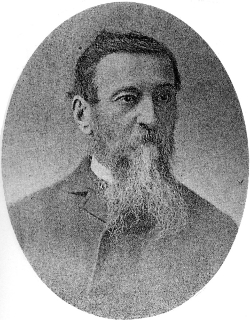
Death of Robert John Kane, Chemist & Educator

robert-john-kane

Sir Robert John Kane, chemist and educator, dies at the age of 80 in Dublin on February 16, 1890. In a distinguished career, he founds the Dublin Journal of Medical  & Chemical Science, is Vice-Chancellor of Royal University of Ireland and is director of the Museum of Irish Industry.

Kane is born at 48 Henry Street, Dublin on September 24, 1809 to John and Eleanor Kean (née Troy). His father is involved in the Irish Rebellion of 1798 and flees for a time to France where he studies chemistry. Back in Dublin, Kean (now Kane) founds the Kane Company and manufactures sulfuric acid.

Kane studies chemistry at his father’s factory and attends lectures at the Royal Dublin Society as a teenager. He publishes his first paper in 1828, Observations on the existence of chlorine in the native peroxide of manganese, in the London Quarterly Journal of Science, Literature and Art. The following year, his description of the natural arsenide of manganese results in the compound being named Kaneite in his honour. He studies medicine at Trinity College, Dublin, graduating in 1834 while working in the Meath Hospital. He is appointed Professor of Chemistry at the Apothecaries’ Hall, Dublin in 1831, which earns him the moniker of the “boy professor.” In the following year he participates in the founding of the Dublin Journal of Medical & Chemical Science.

On the strength of his book Elements of Practical Pharmacy, Kane is elected to the Royal Irish Academy in 1832. He studies acids, shows that hydrogen is electropositive, and proposes the existence of the ethyl radical. In 1836 he travels to Giessen in Germany to study organic chemistry with Justus von Liebig. In 1843 he is awarded the Royal Irish Academy’s Cunningham Medal for his work on the nature and constitution of compounds of ammonia.

Kane publishes a three-volume Elements of Chemistry in 1841–1844, and a detailed report on the Industrial Resources of Ireland. This includes the first assessment of the water power potential of the River Shannon, which is not realised until the 1920s at Ardnacrusha.

Kane becomes a political adviser on scientific and industrial matters. He serves on several commissions to enquire into the Great Irish Famine, along with Professors Lindley and Taylor, all more or less ineffective. His political and administrative work means that his contribution to chemistry ceases after about 1844.

Kane’s work on Irish industry leads to his being appointed director of the Museum of Irish Industry in Dublin in 1845. The Museum is a successor to the Museum of Economic Geology, and is housed at 51 St. Stephen’s Green.

Also in 1845 Kane becomes the first President of Queen’s College, Cork (now University College Cork). He does not spend a lot of time in Cork as he has work in Dublin, and his wife lives there. The science building on the campus is named in his honour. He is knighted in 1846.

In 1873 Kane takes up the post of National Commissioner for Education. He is elected president of the Royal Irish Academy in 1877, holding the role until 1882. In 1880 he is appointed the first chancellor of the newly created Royal University of Ireland. After a motion to admit women to the University, put forward by Prof. Samuel Haughton at Academic Council in Trinity College Dublin, March 10, 1880, Kane is appointed to a committee of ten men to look into the matter. He is opposed to the admission of women, and nothing is reported from the committee in the Council minutes for the next ten years.


Leave a comment

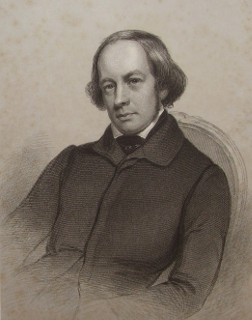
Death of Robert Hobart, 4th Earl of Buckinghamshire

robert-hobart-4th-earl-of-buckinghamshire

Robert Hobart, 4th Earl of Buckinghamshire and former Member of Parliament (MP) for Portarlington and Armagh Borough, dies from a fall from his horse in St. James’s Park, London on February 4, 1816. He is styled Lord Hobart from 1793 to 1804.

Hobart is born at Hampden House on May 6, 1760, the son of George Hobart, 3rd Earl of Buckinghamshire and Albinia, daughter of Lord Vere Bertie, younger son of Robert Bertie, 1st Duke of Ancaster and Kesteven. He is educated at Westminster School, London, and later serves in the American Revolutionary War. He acts as aide-de-camp to successive lord lieutenants of Ireland from 1784 onwards.

Hobart is a Member of Parliament (MP) in the Irish House of Commons for Portarlington from 1784 to 1790 and thereafter for Armagh Borough from 1790 to 1797. He sits also in the House of Commons of the United Kingdom for the rotten borough of Bramber in 1788, a seat he holds until 1790, and then for Lincoln from 1790 to 1796. In 1793 he is invested a member of the Privy Council, and appointed Governor of Madras. In 1798 he is recalled to England by the President of the Board of Control responsible for Indian affairs, Henry Dundas, and summoned to the House of Lords through a writ of acceleration in his father’s junior title of Baron Hobart.

Hobart later serves as Secretary of State for War and the Colonies from 1801 to 1804 when it is said he had “a better grasp of the local or colonial conditions, and a more active spirit than did some of his successors.” He is Chancellor of the Duchy of Lancaster in 1805 and again in 1812, Postmaster General from 1806 to 1807 and President of the Board of Control from 1812 to 1816. Hobart, the capital of Tasmania, is named after him.

Hobart marries firstly Margaretta, daughter of Edmund Bourke, in 1792. They have one son, who dies in infancy, and a daughter, Lady Sarah, who marries Prime Minister Lord Goderich and is the mother of George Robinson, 1st Marquess of Ripon. After Margaretta’s death in 1796 he marries secondly the Hon. Eleanor Agnes, daughter of William Eden, 1st Baron Auckland, in 1799. There are no children from this marriage.

Robert Hobart dies at Hamilton Place, London, on February 4, 1816 at the age of 55, after falling from his horse. He is succeeded in the earldom by his nephew, George. Lady Buckinghamshire dies in October 1851, at the age of 74.


Leave a comment

Birth of James Joyce, Novelist, Short Story Writer & Poet

james-joyce

James Augustine Aloysius Joyce, Irish novelist, short story writer, and poet, is born in 41 Brighton Square, Rathgar, Dublin on February 2, 1882. He contributes to the modernist avant-garde and is regarded as one of the most influential and important authors of the 20th century.

Joyce is one of the ten children of Mary Jane “May” Murray and John Stanislaus Joyce, a professional singer and later rate-collector from a bourgeois Catholic family. He attends Clongowes Wood College, a Jesuit boarding school, until 1891, when his father’s financial worries mean they can no longer afford to send him there. He is temporarily home-schooled and spends a short time at a Christian Brothers school, before starting at Belvedere College, a Jesuit day school run by his old Clongowes headmaster, Father John Conmee.

Much of Joyce’s childhood is influenced by his charismatic, but increasingly alcohol-dependent and difficult father, whose ongoing financial troubles led to regular domestic upheaval. However, John Joyce’s passions, eccentricities, as well as his gift as a singer are celebrated in his son’s work. The death of the Irish Home Rule movement leader Charles Stewart Parnell in 1891 is a watershed moment in Joyce’s life and is the subject of an inflammatory argument during a Christmas dinner, in which John Joyce and his friend John Kelly passionately defend Parnell from the accusations of the pious Elizabeth Conway. Joyce recreates the scene in A Portrait of the Artist as a Young Man, portraying Kelly’s character, Mr. Casey, crying loudly with a “sob of pain,” “Poor Parnell! … My dead king!”

Joyce attends University College Dublin in 1899-1902, where he studies modern languages, with Latin and logic. In 1902 he goes to Paris with an intent of studying medicine but discovers, on arrival, that he does not have the necessary qualifications. He constantly struggles for money, relying on irregular work as a teacher, bank employee, cinema-owner and tweed-importer, and on patrons and supporters such as Harriet Shaw Weaver and Ezra Pound.

Joyce returns to Ireland in 1903 after his mother falls ill. She dies in August 1903. He refuses to take the sacraments or kneel at her deathbed, and the guilt he later feels is depicted in Ulysses when the ghost of Stephen’s mother returns to haunt him. On June 16, 1904, he meets Nora Barnacle, the woman with whom he spends the rest of his life. By autumn, he is convinced of the impossibility of remaining in Ireland and persuades Nora to travel with him. They arrive in Paris on October 9, 1904. He would not return to Ireland to live. He cultivates a sense of himself as an exile, living in Trieste, Zürich, Rome and Paris.

Joyce’s first publication in 1907 is the poetry collection Chamber Music. When he sends Pound a revised first chapter of Portrait of an Artist as a Young Man, along with the manuscript of his short story collection Dubliners, Pound arranges for Portrait to be published serially in the modernist magazine The Egoist between 1914 and 1915. His short story collection, Dubliners, had been delayed by years of arguments with printers over its contents, but is also published in 1914.

Joyce then begins work on Ulysses, an experimental account of a single day in Dublin. The novel is serialised between 1918 and 1920, but full publication is delayed due to problems with American obscenity laws. The work is finally published in book form by his friend Sylvia Beach in Paris in 1922. His play Exiles is first performed in German in 1919, and English in 1926. His last novel, Finnegans Wake (1939), is an innovative language experiment that contains over 40 languages and a huge variety of popular and arcane references.

On January 11, 1941, Joyce undergoes surgery in Zürich for a perforated duodenal ulcer. He falls into a coma the following day. He awakes at 2:00 AM on January 13, 1941, and asks a nurse to call his wife and son, before losing consciousness again. They are en-route when he dies 15 minutes later, less than a month short of his 59th birthday. He is buried in the Fluntern Cemetery, Zürich.


Leave a comment

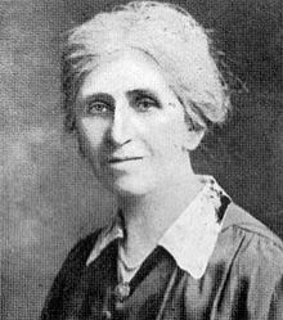
Birth of Matilda Cullen Knowles, Pioneer in Irish Lichenology

matilda-cullen-knowles

Matilda Cullen Knowles, considered the founder of modern studies of Irish lichens following her work in the early twentieth century on the multi-disciplinary Clare Island Survey, is born on January 31, 1864 in Cullybackey near Ballymena, County Antrim, Northern Ireland. Her work is said to have “formed an important baseline contribution to the cryptogamic botany of Ireland and western oceanic Europe.”

Knowles’ early interest in botany is encouraged by her father, William James Knowles, himself an amateur scientist who takes Matilda and her sister to meetings of the Belfast Naturalists’ Field Club. This is where she first meets Robert Lloyd Praeger who continues to be a lifelong influence. In 1895 she is introduced to the Derry botanist Mary Leebody and together they work on a supplement to Samuel Alexander Stewart‘s and Thomas Hughes Corey‘s 1888 book the Flora of the North-east of Ireland.

Knowles then volunteers to help with the crowdsourcing of material about the plants of County Tyrone. While completing this work Knowles publishes her own first paper about Tyrone’s flowering plants in 1897. She eventually sends in over 500 examples that are considered for inclusion in the Irish Topographical Botany, which Praeger publishes in 1901.

In 1902, after attending the Royal College of Science for Ireland for a year, Knowles is appointed a temporary assistant in the then Botanical Section of the National Science and Art Museum. She works closely with Professor Thomas Johnson to continue the development of the Herbarium collection. She also co-authors with him the Hand List of Irish Flowering Plants and Ferns (1910).

One of Knowles’ first works is The Maritime and Marine Lichens of Howth, which the Royal Dublin Society publishes in 1913. Knowles had gathered the knowledge and experience to do this while diligently assisting with a survey of Clare Island as suggested by Praeger. This novel survey involves not only Irish but also several European scientists including prominent UK lichenologist, Annie Lorrain Smith. This is claimed as the most extensive piece of field work at the time. As a result, Knowles is able to create a foundation for her later specialism in lichens.

Knowles publishes more than thirty scientific papers on a wide range of botanical subjects between 1897 and 1933. It is while studying the lichens of Howth that she discovers how lichens by the shore grow in distinct tidal zones that can be distinguished by their colour: black, orange and grey.

Her major work is The Lichens of Ireland which adds over 100 species of lichen to the Irish List and records the distribution of the eight hundred species identified in Ireland. She achieves this task with the collaboration of thirty other natural scientists. It is published in 1929 and includes twenty lichens that had previously not been identified as Irish.

Professor Thomas Johnson retires in 1923, allowing Knowles to take over curatorship, working with Margaret Buchanan. As she becomes older Knowles’ hearing begins to fail such that she has to rely on an ear trumpet. Despite her deafness she still attends meetings. She cares for and adds to the National Museum Herbarium collection although never gets the credit she deserves. In 1933 she plans to retire but pneumonia ends her life before she ends her career. Knowles dies in Dublin on April 27, 1933.

Knowles is honoured with a commemorative plaque by the Irish National Committee for Science and Engineering in October 2014 to mark the 150th anniversary of her birth.


Leave a comment

Birth of Katharine O’Shea Parnell

katharine-oshea

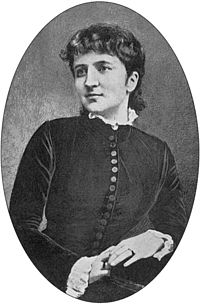
Katharine O’Shea (née Wood), English woman of aristocratic background, whose decade-long secret adultery with Charles Stewart Parnell leads to a widely publicized divorce in 1890 and his political downfall, is born in Braintree, Essex on January 30, 1846.

Katharine is the daughter of Sir John Page Wood, 2nd Baronet (1796–1866), and granddaughter of Sir Matthew Wood, a former Lord Mayor of London. She has an elder brother who becomes Field Marshal Sir Henry Evelyn Wood and is also the niece of both Western Wood MP (1804–1863) and Lord William Wood, William Ewart Gladstone‘s first Liberal Lord Chancellor.

Katharine marries Captain William O’Shea in 1867, a Catholic Nationalist MP for Clare from whom she separates around 1875. She first meets Parnell in 1880 and begins a relationship with him. Three of her children are fathered by Parnell. Although Captain O’Shea keeps publicly quiet for several years, he is aware of the relationship. He challenges Parnell to a duel in 1881 and initially forbids his estranged wife to see him, although she says that he encouraged her in the relationship. Although their relationship is a subject of gossip in London political circles from 1881, later public knowledge of the affair in an England governed by “Victorian morality” with a “nonconformist conscience” creates a huge scandal, as adultery is prohibited by the Ten Commandments.

Out of her family connection to the Liberal Party, Katharine acts as liaison between Parnell and Gladstone during negotiations prior to the introduction of the First Irish Home Rule Bill in April 1886. Parnell moves to her home in Eltham, close to the London-Kent border, that summer.

Captain O’Shea files for divorce in 1889 and his reasons are a matter for speculation. Some say he may have political motives. Alternatively, it is claimed that he has been hoping for an inheritance from Katharine’s rich aunt whom he had expected to die earlier, but when she dies in 1889 her money is left in trust to cousins. After the divorce the court awards custody of Katharine O’Shea and C.S. Parnell’s two surviving daughters to her ex-husband.

Katharine’s November divorce proceedings from Captain O’Shea, in which Parnell is named as co-respondent, leads to Parnell’s being deserted by a majority of his own Irish Parliamentary Party and to his downfall as its leader in December 1890. Catholic Ireland feels a profound sense of shock when Katharine breaks the vows of her previous Catholic marriage by marrying Parnell on June 25, 1891. With his political life and his health essentially ruined, Parnell dies at the age of 45 in Hove on October 6, 1891 in her arms, less than four months after their marriage. The cause is stomach cancer, possibly complicated by coronary artery disease inherited from his grandfather and father, who also died prematurely.

Though to her friends Katharine is known as Katie O’Shea, Parnell’s enemies, in order to damage him personally, call her “Kitty O’Shea” because at that time “kitty,” as well as being an Hiberno-English version of Catherine/Katherine/Katharine, is also a slang term for a prostitute. She lives the rest of her life in relative obscurity. She dies on February 5, 1921, at the age of 75, and is buried in Littlehampton, Sussex, England, apparently never once setting foot on Irish soil.

Captain Henry Harrison, MP, who had acted as Parnell’s bodyguard and aide-de-camp, devotes himself after Parnell’s death to the service of his widow. From her he hears a completely different version of the events surrounding the divorce issue from that which had appeared in the press, and this is to form the seed of his later two books defending Parnell published in 1931 and 1938. They have a major impact on Irish historiography, leading to a more favourable view of Parnell’s role in the O’Shea affair.


1 Comment

Birth of Sir Arthur Philip du Cros

arthur-du-cros

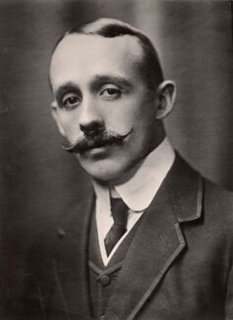
Sir Arthur Philip du Cros, British industrialist and politician, is born in Dublin on January 26, 1871.

Du Cros is the third of seven sons of Harvey du Cros. He is brought up in modest circumstances. His father, later a well-known manufacturer, is at the time only a bookkeeper with an income of £170 a year. He attends a national school in Dublin and then enters the civil service at the lowest grade. In 1892 he joins the Pneumatic Tyre and Booth’s Cycle Agency Ltd, of which his father is now the chairman, and is made a joint managing director in 1896 when it is floated as a public company.

In 1895 du Cros marries Maude Gooding, the daughter of a Coventry watch manufacturer. They have two sons and two daughters before a divorce in 1923.

In 1901 du Cros founds the Dunlop Rubber Company, converting 400 acres of land in Birmingham to produce and manufacture tires, with the area henceforth being known as Fort Dunlop. The firm eventually diversifies into making other rubber products as well as tires, and du Cros selects plantations in Malaya and Sri Lanka for the company, which by 1917 owns 60,000 acres of rubber-producing land.

In 1906 du Cros enters politics, unsuccessfully contesting the seat of Bow & Bromley as a Conservative Party candidate, a seat his brother is elected to in 1910. In 1908 he is elected Member of Parliament for Hastings, a position his father had held immediately before.

In 1909 du Cros forms, and is director of, the Parliamentary Aerial Defence Committee to ensure funding for military aeronautical development, of which he is a strong proponent. During World War I he works for the Ministry of Munitions on an honorary basis, buying two motorised ambulance convoys out of his own money and helping raise an infantry battalion, being a former captain of the Royal Warwickshires and for some years being the honorary colonel of the 8th battalion of the Royal Warwickshire Regiment. In 1916 he is created a baronet. He continues to represent Hastings until 1918, when he is elected as a Member of Parliament for Clapham, a position he resigns four years later.

His later career is awash with financial impropriety. He finds it difficult to distinguish between personal and company assets, using company funds to sponsor family investments and appointing family members to senior position with no regard for merit. He also participates in financial manipulation, being a close associate of James White, a financial expert who specialises in share rigging and whose actions leave Dunlop, had already lost influence within the company, close to collapse in 1921. He is quietly removed after the 1921 crash.

Arthur du Cros dies at home near Watford, Hertfordshire on October 28, 1955, at the age of 84. He is interred in Finstock, Oxfordshire.


Leave a comment

Birth of Edmund Ignatius Hogan, Jesuit Scholar

edmund-ignatius-hogan

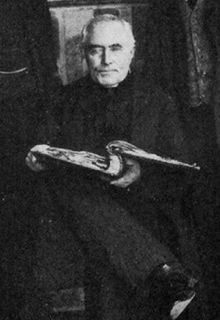
Jesuit scholar Edmund Ignatius Hogan S.J. is born in Cork, County Cork on January 25, 1831.

Hogan joins the Society of Jesus and studies for the priesthood in Belgium and France. He returns to Ireland where he teaches German for a year at Clongowes Wood College and then languages and music in the Sacred Heart College, Limerick.

After extensive research in Rome Hogan publishes a history of the Jesuits in Ireland and a life of Saint Patrick. He lectures on Irish language and history at University College Dublin and is Todd Professor (Celtic) at the Royal Irish Academy.

Hogan’s works include Distinguished Irishmen of the 16th Century (1894), the Irish Phrase Book (1899) and Onomasticon Goedelicum: An Index to Irish Names of Places and Tribes (1910), a standard reference based on the research of John O’Donovan, The Irish Wolfhound, A Description of Ireland in 1598 and Chronological list of the Irish members of the Society of Jesus, 1550-1814. He also contributes to the editing and compilation of other works in his field.

Edmund Ignatius Hogan dies on November 26, 1917.


Leave a comment

Birth of William X. O’Brien, Politician & Trade Unionist

william-x-obrien

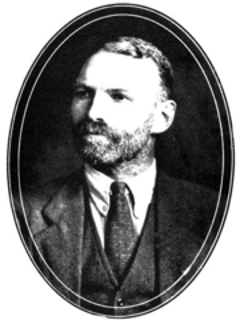
William X. O’Brien, politician and trade unionist, is born on January 23, 1881, in Clonakilty, County Cork. He is christened “John William.”

O’Brien moves with his family to Dublin in 1897 and quickly becomes involved in the Irish Socialist Republican Party (ISRP). He is described as “a very significant figure in the ISRP” by ISRP historian David Lynch. He is a member of the Socialist Party of Ireland, serving on its executive.

A close friend and associate of James Connolly, O’Brien helps establish the Irish Transport and General Workers’ Union (ITGWU) in 1909 and is instrumental in the Dublin lock-out strike in 1913.

A member of the Irish Neutrality League and Anti-Conscription Committee during World War I, O’Brien is interned on several occasions by the Dublin Castle government. During one of these instances, he stands in the 1920 Stockport by-election but is refused a release to campaign in it.

With the formation of the Irish Free State, O’Brien is elected as Teachta Dála (TD) for Dublin South at the 1922 general election, and again for Tipperary in June 1927 and again in 1937.

An important figure in the Labour Party in Ireland in its formative days, O’Brien resists James Larkin‘s attempt to gain control of the Party on release from prison. Taking Larkin to court over his occupation of ITGWU headquarters, the Larkin-O’Brien feud results in a split within the labour and trade union movements, and the formation of the Irish Congress of Trade Unions.

In 1930, O’Brien seeks to have Leon Trotsky granted asylum in Ireland, but the head of the Free State government, W. T. Cosgrave, refuses to allow it.

Active in politics and the trade union movement into his 60s, O’Brien retires in 1946 and dies on October 31, 1968.


Leave a comment

Death of Queen Victoria

queen-victoria

Queen Victoria dies at Osborne House, Isle of Wight on January 22, 1901, ending an era in which most of her British subjects know no other monarch.

With a reign of 63 years, seven months and two days, she is the longest-reigning British monarch and the longest-reigning queen regnant in world history until her great-great-granddaughter Elizabeth II surpasses her on September 9, 2015. She restores dignity to the English monarchy and ensures its survival as a ceremonial political institution. Edward VII accedes to the throne upon her death.

Born on May 24, 1819, in Kensington Palace, London, Victoria comes to the throne after the death of her uncle, King William IV, in 1837. As a young woman ascending to the throne, her future husband describes her “as one whose extreme obstinacy was constantly at war with her good nature.” Her first prime minister, William Lamb, 2nd Viscount Melbourne, becomes her close friend and adviser, and she succeeds in blocking his replacement by Tory leader Sir Robert Peel in 1839. Two years later, however, an election results in a Tory majority in the House of Commons, and she is compelled to accept Peel as prime minister. Never again does she interfere so directly in the politics of democratic Britain.

In 1839, her first cousin Albert, a German prince, comes to visit the English court at Windsor, and Victoria proposes to him five days after his arrival. Prince Albert accepts, and they are married in February 1840. He soon becomes the dominant influence in her life and serves as her private secretary. Among his greatest achievements as Prince Consort is his organization of The Great Exhibition of 1851, the first world’s fair, in the Crystal Palace in London. He also steers her support away from the Whigs to the conservative Tories. She later is a vocal supporter of Benjamin Disraeli, leader of the Conservative Party.

Victoria and Albert build royal residences at Osborne House on the Isle of Wight and at Balmoral Castle in Scotland and become increasingly detached from London. They have nine children, including Victoria, later the empress of Germany, and the Prince of Wales, later King Edward VII. In 1861, Albert dies, and Victoria’s grief is such that she does not appear in public for three years. She never entirely gets over the loss and, until the end of her life, has her maids nightly lay out Albert’s clothes for the next day and in the morning replace the water in the basin in his room.

Disraeli coaxes Victoria out of seclusion, and she is impressed by his efforts to strengthen and expand the British Empire. In 1876, he has her made “empress of India,” a title which pleases her and makes her a symbol of imperial unity. During the last few decades of her life, her popularity, which had suffered during her long public absence, increases greatly. She never embraces the social and technological advances of the 19th century but accepts the changes and works hard to fulfill her ceremonial duties as head of state.

Following a custom she maintains throughout her widowhood, Victoria spends the Christmas of 1900 at Osborne House on the Isle of Wight. Rheumatism in her legs has rendered her lame and her eyesight is clouded by cataracts. Through early January, she feels weak and unwell, and by mid-January she is drowsy, dazed and confused. She dies in the early evening of Tuesday, January 22, 1901, at the age of 81. Her son and successor King Edward VII, and her eldest grandson, Emperor Wilhelm II of Germany, are at her deathbed. Her favourite pet Pomeranian, Turi, is laid upon her deathbed as a last request.

Victoria’s funeral is held on Saturday, February 2, in St. George’s Chapel, Windsor Castle, and after two days of lying-in-state, she is interred beside Prince Albert in Frogmore Mausoleum at Windsor Great Park. When she dies, she has 37 surviving great-grandchildren, and their marriages with other monarchies give her the name “grandmother of Europe.”


Leave a comment

Birth of Thomas Clarke Luby, Irish Revolutionary

thomas-clarke-luby

Thomas Clarke Luby, Irish revolutionary, author, journalist and one of the founding members of the Irish Republican Brotherhood, is born in Dublin on January 16, 1822.

Luby is the son of a Church of Ireland clergyman from Templemore, County Tipperary, his mother being a Catholic. He is educated at Trinity College Dublin where he studies law and puts in the necessary number of terms in London and Dublin where he acquires a reputation as a scholar and takes his degree. He goes on to teach at the college for a time.

Luby supports the Repeal Association and contributes to The Nation newspaper. After the breach with Daniel O’Connell, he joins the Young Irelanders in the Irish Confederation. He is deeply influenced by James Fintan Lalor at this time. Following the suppression of the Young Ireland Rebellion of 1848, he with Lalor and Philip Gray attempt to revive the fighting in 1849 as members of the secret Irish Democratic Association. This, however, ends in failure.

In 1851 Luby travels to France, where he hopes to join the French Foreign Legion to learn infantry tactics but finds the recruiting temporarily suspended. From France he goes to Australia for a year before returning to Ireland. From the end of 1855 he edits the Tribune newspaper founded by John E. Pigot who had been a member of The Nation group. During this time, he remains in touch with the small group of ’49 men including Philip Gray and attempts to start a new revolutionary movement. Luby’s views on social issues grow more conservative after 1848 which he makes clear to James Stephens whom he meets in 1856.

In the autumn of 1857 Owen Considine arrives with a message signed by four Irish exiles in the United States, two of whom are John O’Mahony and Michael Doheny. The message conveys the confidence they have in Stephens and asks him to establish an organisation in Ireland to win national independence. Considine also carries a private letter from O’Mahony to Stephens which is a warning, and which is overlooked by Luby and Stephens at the time. Both believe that there is a strong organisation behind the letter, only later to find it is rather a number of loosely linked groups. On December 23 Stephens dispatches Joseph Denieffe to America with his reply which is disguised as a business letter dated and addressed from Paris. In his reply, Stephen’s outlines his conditions and his requirements from the organisation in America.

On March 17, 1858, Denieffe arrives in Dublin with the acceptance of Stephens’s terms by the New York Committee and the eighty pounds. On that very evening the Irish Republican Brotherhood is established in Peter Langan’s timberyard in Lombard Street.

In mid-1863 Stephens informs his colleagues he wishes to start a newspaper, with financial aid from O’Mahony and the Fenian Brotherhood in America. The offices are established at 12 Parliament Street, almost at the gates of Dublin Castle. The first issue of the Irish People appears on November 28, 1863. The staff of the paper along with Luby are Charles J. Kickham and Denis Dowling Mulcahy as the editorial staff. Jeremiah O’Donovan Rossa and James O’Connor have charge of the business office, with John Haltigan being the printer. John O’Leary is brought from London to take charge in the role of Editor.

On July 15, 1865, American-made plans for a rising in Ireland are discovered. Superintendent Daniel Ryan, head of the G Division of the Dublin Metropolitan Police at Dublin Castle, has an informer within the offices of the Irish People who supplies him with an “action this year” message on its way to the IRB unit in Tipperary. With this information, Ryan raids the offices of the Irish People on Thursday, September 15, followed by the arrests of Luby, O’Leary and O’Donovan Rossa. Kickham is caught after a month on the run. Stephens is also caught with the support of Fenian prison warders. The last number of the paper is dated September 16, 1865.

After his arrest and the suppression of the Irish People, Luby is sentenced to twenty years of penal servitude. He is released in January 1871 but is compelled to remain away from Ireland until the expiration of his sentence.

Upon his release Luby goes first to the Continent and later settles in New York City. He lectures all over the country for years and writes for a number of Irish newspapers on political topics. At the memorial meeting on the death of John Mitchel, he delivers the principal address in Madison Square Garden.

Thomas Clarke Luby dies at 109½ Oak Street, Jersey City, New Jersey of paralysis, on November 29, 1901, and is buried in a grave shared with his wife in Bayview Cemetery in Jersey City. His epitaph reads: “Thomas Clarke Luby 1822–1901 He devoted his life to love of Ireland and quest of truth.”