seamus dubhghaill

Promoting Irish Culture and History from Little Rock, Arkansas, USA


Leave a comment

Birth of James Henry Cousins, Playwright & Actor

james-h-cousins

James Henry Cousins, Irish writer, playwright, actor, critic, editor, teacher and poet, is born in Belfast on July 22, 1873, a descendant of Huguenot refugees. He uses several pseudonyms including Mac Oisín and the Hindu name Jayaram.

Largely self-educated at night schools, Cousins works some time as a clerk and becomes private secretary and speechwriter to Sir Daniel Dixon, 1st Baronet, the Lord Mayor of Belfast. In 1897 he moves to Dublin where he becomes part of a literary circle which includes William Butler Yeats, George William Russell and James Joyce. It is believed that he serves as a model for the Little Chandler character in Joyce’s short story collection Dubliners.

Cousins is significantly influenced by Russell’s ability to reconcile mysticism with a pragmatic approach to social reforms and by the teachings of Helena Blavatsky. He has a lifelong interest in the paranormal and acts as reporter in several experiments carried out by William Fletcher Barrett, Professor of physics at the University of Dublin and one of the founders of the Society for Psychical Research.

Cousins produces several books of poetry while in Ireland as well as acting in the first production of Cathleen ní Houlihan, under the stage name of H. Sproule, with the famous Irish revolutionary and beauty Maud Gonne in the title role. His plays are produced in the first years of the twentieth century in the Abbey Theatre, the most famous being “the Racing Lug”. After a dispute with W.B. Yeats, who objects to “too much Cousins,” the Irish National Theatre movement splits with two-thirds of the actors and writers siding with Cousins against Yeats.

Cousins also writes widely on the subject of Theosophy and in 1915 travels to India with the voyage fees paid for by Annie Besant, the President of the Theosophical Society. He spends most of the rest of his life in the sub-continent, apart from a year as Professor of English Literature at Keio University in Tokyo and another lecturing in New York. Toward the end of his life, he converts to Hinduism. At the core of Cousins’s engagement with Indian culture is a firm belief in the “shared sensibilities between Celtic and Oriental peoples.”

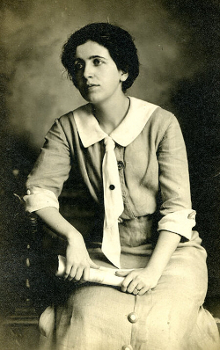
While in India he becomes friendly with many key Indian personalities including poet Rabindranath Tagore, Indian classical dancer Rukmini Devi Arundale, painter Abdur Rahman Chughtai and Mahatma Gandhi. He is the person who brings change into the life of poetry of the great renowned Kannada poet and writer Kuvempu. He writes a joint autobiography with his wife Margaret Elizabeth Cousins, a suffragette and one of the co-founders of the Irish Women’s Franchise League and All India Women’s Conference (AIWC).

In his The Future Poetry Sri Aurobindo acclaims Cousins’ New Ways in English Literature as “literary criticism, which is of the first order, at once discerning and suggestive, criticism which forces us both to see and think.” He also acknowledges that he learned to intuit deeper being alerted by Cousins’ criticisms of his poems. In 1920 Cousins comes to Pondicherry to meet the Mother and Sri Aurobindo.

James Cousins dies on February 20, 1956, in Madanapalle, Andhra Pradesh, India at the age of 82.


Leave a comment

Birth of Chauncey Olcott, Actor, Singer & Songwriter

chauncey-olcott

John Chancellor “Chauncey” Olcott, American stage actor, songwriter and singer of Irish descent, is born in Buffalo, New York on July 21, 1858. His mother, Margaret (née Doyle), is a native of Killeagh, County Cork.

In the early years of his career Olcott sings in minstrel shows, before studying singing in London during the 1880s. Lillian Russell plays a major role in helping make him a Broadway star. When the producer Augustus Pitou approaches him in 1893 to succeed William J. Scanlan as the leading tenor in sentimental operettas on Irish themes, Olcott accepts and performs pseudo-Irish roles for the remainder of his career.

Olcott combines the roles of tenor, actor, lyricist and composer in many productions. He writes the complete scores to Irish musicals such as Sweet Inniscara (1897), A Romance of Athlone (1899), Garrett O’Magh (1901), and Old Limerick Town (1902). For other productions he collaborates with Ernest Ball and George Graff, Jr. in works such as The Irish Artist (1894), Barry of Ballymore (1910), Macushla (1912), and The Isle o’ Dreams (1913). There are some twenty such works between 1894 and 1920.

Olcott is a good songwriter who captures the mood of his Irish American audience by combining melodic and rhythmic phrases from traditional Irish music with melancholy sentiment. Some numbers from his musicals become very popular, such as “My Wild Irish Rose” from A Romance of Athlone, “Mother Machree” from Barry of Ballymore, and “When Irish Eyes Are Smiling” from The Isle o’ Dreams. Sometimes he uses tunes from others, such as that of the title song from Macushla from Irish composer Dermot Macmurrough (pseudonym of Harold R. White) or Too Ra Loo Ra Loo Ral (Irish Lullaby) by James Royce Shannon for his production Shameen Dhu (1914).

In 1925, a serious illness forces Olcott to retire, and he moves to Monte Carlo, Monaco where he dies of pernicious anemia on March 18, 1932. His body is brought home and interred in the Woodlawn Cemetery in The Bronx, New York City.

Olcott’s life story is told in the 1947 Warner Bros. motion picture My Wild Irish Rose starring Dennis Morgan as Olcott. The film’s plot is based on the biography by Olcott’s widow, Rita Olcott, Song in His Heart (1939).

In 1970, Olcott is posthumously inducted into the Songwriters Hall of Fame.


Leave a comment

Birth of Francis Elrington Ball, Author & Legal Historian

the-judges-in-ireland-1221-1921

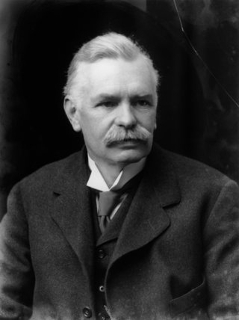
Francis Elrington Ball, Irish author and legal historian best known as F. Elrington Ball, is born in Portmarnock, County Dublin on July 18, 1863. He is best known for his work The Judges in Ireland 1221–1921 (1926).

A younger son of John Thomas Ball, the Lord Chancellor of Ireland from 1875 to 1880, and his wife Catherine Elrington, Ball is unsuccessful in seeking election as a Unionist to Parliament at the 1900 United Kingdom general election in Ireland in South Dublin. His father had represented University of Dublin in Parliament from 1868 to 1875.

Ball is, however, best known for his scholarship, particularly for his work on Jonathan Swift, the local history of Dublin and on the history of the judiciary in Ireland from 1221 to 1921. The destruction of the Four Courts in 1922, during the Irish Civil War, and of the public records and legal archives it contained (especially those of the Irish Public Records Office) make his prior research into the history of the Irish judiciary up to 1921 particularly valuable to later scholars. The review published in the Irish Law Times & Solicitors’ Journal described it as “a truly marvellous condensation of judicial history involving the exhaustive study of a long period, the earlier part of which was hitherto obscure.” The same review characterised Ball as “a writer of great care and accuracy, whose work is always characterised by minute and diligent research.”

Ball also serves as a governor of the Blue Coat School, Oxmantown, Dublin. Francis Elrington Ball dies in 1928.


Leave a comment

Death of William James MacNeven, Physician & Writer

william-james-macneven-1

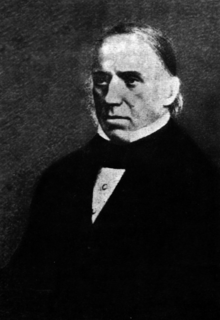
William James MacNeven, Irish American physician and writer, dies in New York City on July 12, 1841.

MacNeven is born on March 21, 1763, at Ballinahown, Aughrim, County Galway. The eldest of four sons, at the age of 12 MacNeven is sent by his uncle Baron MacNeven to receive his education abroad as the Penal Laws render education impossible for Catholics in Ireland. He makes his collegiate studies in Prague. His medical studies are made in Vienna where he is a pupil of Pestel and takes his degree in 1784. He returns to Dublin in the same year to practise.

MacNeven becomes involved in the Society of United Irishmen with such men as Lord Edward Fitzgerald, Thomas Addis Emmet, and his brother Robert Emmet. He is arrested in March 1798 and confined in Kilmainham Gaol, and afterwards in Fort George, Scotland, until 1802, when he is liberated and exiled. In 1803, he is in Paris seeking an interview with Napoleon Bonaparte in order to obtain French troops for Ireland. Disappointed in his mission, MacNeven comes to the United States, landing at New York City on July 4, 1805.

In 1807, he delivers a course of lectures on clinical medicine in the recently established College of Physicians and Surgeons. Here in 1808, he receives the appointment of professor of midwifery. In 1810, at the reorganization of the school, he becomes the professor of chemistry, and in 1816 is appointed to the chair of materia medica. In 1826 with six of his colleagues, he resigns his professorship because of a misunderstanding with the New York Board of Regents and accepts the chair of materia medica at Rutgers Medical College, a branch of the New Jersey institution of that name, established in New York as a rival to the College of Physicians and Surgeons. The school at once becomes popular because of its faculty, but after four years is closed by legislative enactment on account of interstate difficulties. The attempt to create a school independent of the regents results in a reorganization of the University of the State of New York.

MacNeven, affectionately known as “The Father of American Chemistry,” dies in New York City on July 12, 1841. He is buried on the Riker Farm in the Astoria section of Queens, New York.

One of the oldest obelisks in New York City is dedicated to him in the Trinity Church, located between Wall Street and Broadway, New York. The obelisk is opposite to another commemorated for his friend Thomas Emmet. MacNeven’s monument features a lengthy inscription in Irish, one of the oldest existent dedications of this kind in the Americas.


Leave a comment

Birth of William O’Dwyer, 100th Mayor of New York City

william-o-dwyer

William O’Dwyer, Irish American politician and diplomat who serves as the 100th Mayor of New York City, holding that office from 1946 to 1950, is born in Bohola, County Mayo on July 11, 1890.

O’Dwyer studies at St. Nathy’s College, Ballaghaderreen, County Roscommon. He emigrates to the United States in 1910, after abandoning studies for the priesthood. He sails to New York City as a steerage passenger on board the liner Philadelphia and is inspected at Ellis Island on June 27, 1910. He first works as a laborer, then as a New York City police officer, while studying law at night at Fordham University Law School. He receives his degree in 1923 and then builds a successful practice before serving as a Kings County (Brooklyn) Court judge. He wins election as the Kings County District Attorney in November 1939 and his prosecution of the organized crime syndicate known as Murder, Inc. makes him a national celebrity.

After losing the mayoral election to Fiorello La Guardia in 1941, O’Dwyer joins the United States Army for World War II, achieving the rank of brigadier general as a member of the Allied Commission for Italy and executive director of the War Refugee Board, for which he receives the Legion of Merit. During that time, he is on leave from his elected position as district attorney and replaced by his chief assistant, Thomas Cradock Hughes, and is re-elected in November 1943.

In 1945, O’Dwyer receives the support of Tammany Hall leader Edward V. Loughlin, wins the Democratic nomination, and then easily wins the mayoral election. He establishes the Office of City Construction Coordinator, appointing Park Commissioner Robert Moses to the post, works to have the permanent home of the United Nations located in Manhattan, presides over the first billion-dollar New York City budget, creates a traffic department and raises the subway fare from five cents to ten cents. In 1948, he receives The Hundred Year Association of New York‘s Gold Medal Award “in recognition of outstanding contributions to the City of New York.” In 1948, he receives the epithets “Whirling Willie” and “Flip-Flop Willie” from U.S. Representative Vito Marcantonio of the opposition American Labor Party while the latter is campaigning for Henry A. Wallace.

Shortly after his re-election to the mayoralty in 1949, O’Dwyer is confronted with a police corruption scandal uncovered by the Kings County District Attorney, Miles McDonald. O’Dwyer resigns from office on August 31, 1950. Upon his resignation, he is given a ticker tape parade up Broadway‘s Canyon of Heroes in the borough of Manhattan. President Harry Truman appoints him U.S. Ambassador to Mexico. He returns to New York City in 1951 to answer questions concerning his association with organized crime figures and the accusations follow him for the rest of his life. He resigns as ambassador on December 6, 1952, but remains in Mexico until 1960.

O’Dwyer visits Israel for 34 days in 1951 on behalf of his Jewish constituents. Along with New York’s Jewish community, he helps organize the first Israel Day Parade.

William O’Dwyer dies in New York City on November 24, 1964, in Beth Israel Hospital, aged 74, from heart failure. He is interred at Arlington National Cemetery, Section 2, Grave 889-A-RH.


Leave a comment

Birth of Chicago Mobster Charles Dean O’Banion

charles-o-banion

Charles Dean O’Banion, better known as Dion O’Banion, is born to Irish Catholic parents in Maroa, Illinois on July 8, 1892. He graduates from the violent newspaper wars of early 20th century Chicago to become the chief bootlegging rival of mobsters Al Capone and Johnny Torrio.

After the death of his mother in 1901, O’Banion moves with his family to a North Side neighborhood populated largely by other Irish Americans. The neighborhood, then known as Kilgubbin after an Irish place name and now called Goose Island, is notorious for its high crime rate, and O’Banion by all accounts fit easily into that environment. In his teens, he forms a street gang with Earl “Hymie” Weiss, Vincent “The Schemer” Drucci and George “Bugs” Moran with whom he continues to associate throughout his life.

Chicago of the period is, according to Mayor William Hale “Big Bill” Thompson, a “wide open city.” Wide open for rackets such as prostitution and gambling, and wide open for violent competition among gangsters. Bombings and murder are met with token official resistance but are often settled by uneasy truces among the rivals.

The violence extends to the press. O’Banion and his friends are “sluggers” for, first, the Chicago Tribune and later for the Tribune’s rival, the Chicago Examiner. Sluggers intimidate sellers and readers of the wrong newspaper. Although played for laughs in stage and film in productions such as The Front Page, the Chicago newspaper wars are quite violent and include lethal gunfights in saloons and on the streets.

In 1909, O’Banion is arrested and convicted of robbery and assault.

The newspapers wars are a good warm-up for O’Banion’s work as a bootlegger when Prohibition comes into effect in 1920. Chicago, with its large population of immigrants from Ireland, Germany, Italy and Eastern Europe, is a town that loves its beer, wine and liquor. Almost from the start, O’Banion’s North Side Gang is at odds with the South Side outfit led at the time by Torrio.

About 1921, O’Banion and Torrio, who actively wants peace with his rival, works out a deal that seems to satisfy both the South Side gangsters and O’Banion’s group. O’Banion not only keeps the North Side and the Gold Coast, a wealthy neighborhood on Lake Michigan, but he even gets a slice of Cicero, a suburb controlled by Torrio and Capone on the South Side of Chicago, and they all share profits from a lakefront casino called The Ship.

Eventually the peace breaks down. O’Banion is enraged by efforts of a third gang, the Genna crime family’s West Side Gang, to expand its bootlegging and rackets operations into his territory. The Gennas are allied with Torrio’s South Side gang. O’Banion seals his fate when he refuses to forgive a gambling debt that one of the Gennas had racked up at The Ship.

On the morning of November 10, 1924, O’Banion is in his North Side flower shop, Schofield’s, a front for his mob activities. A Torrio associate from New York City, Frankie Yale, enters the shop with Genna gunmen John Scalise and Albert Anselmi. When O’Banion and Yale shake hands, Yale grasps O’Banion’s hand in a tight grip. At the same time, Scalise and Anselmi step aside and fire two bullets into O’Banion’s chest and two into his throat. One of the killers fires a final shot into the back of his head as he lies face down on the floor.

Since O’Banion is a major crime figure, the Catholic Church denies him burial in consecrated ground. However, a priest O’Banion has known since childhood recites the Lord’s Prayer and three Hail Marys in his memory. Despite this restriction, his funeral is the biggest anyone can remember. Among those attending are Al Capone and members of the South Side Gang. But there soon will be other funerals. The Beer Wars, as they become known, are just beginning.

Torrio escapes an assassination attempt in 1925 and turns over his operation to Capone, the greatest gangster of all. O’Banion’s friend and conspirator Hymie Weiss, who is fingered as one of those who tried to kill Torrio, is gunned down in 1926. In 1929, in an effort to permanently put down the North Side Gang, led then by Bugs Moran, seven of the North Side mobsters are killed in the infamous Saint Valentine’s Day Massacre, but Moran survives through the end of Prohibition in 1933.


Leave a comment

First Horse-Drawn Coach Service in Ireland

charles-bianconi

Charles Bianconi, Italo-Irish entrepreneur, opens his first horse-drawn coach service, between Clonmel and Cahir, County Tipperary, a distance of 10 miles, on July 6, 1815.

Born Carlo Bianconi, in Tregolo, Costa Masnaga, Italy on September 24, 1786, he moves from an area poised to fall to Napoleon and travels to Ireland via England in 1802, just four years after the Irish Rebellion of 1798. At the time, British fear of continental invasion results in an acute sense of insecurity and additional restrictions on the admission of foreigners. He is christened Carlo but anglicises his name to Charles when he arrives in Ireland in 1802.

At the age of 16, Bianconi works as an engraver and printseller in Dublin, near Essex Street, under his sponsor, Andrea Faroni. In 1806 he sets up an engraving and print shop in Carrick-on-Suir, moving to Clonmel in 1815.

Bianconi eventually becomes famous for his innovations in transport and is twice elected mayor of Clonmel. He is the founder of public transportation in Ireland, at a time preceding railways. He establishes regular horse-drawn carriage services on various routes beginning in 1815. These are known as “Bianconi coaches” and the first service, Clonmel to Cahir, which takes five to eight hours by boat, takes only two hours by Bianconi’s carriage. Travel on a coach costs one penny farthing a mile.

Bianconi’s carriage services continue into the 1850s and later, by which time there are a number of railway services in the country. The Bianconi coaches continue to be well-patronised, by offering connections from various termini, one of the first and few examples of an integrated transport system in Ireland. By 1865 Bianconi’s annual income is about £35,000.

Bianconi also establishes a series of inns, the Bianconi Inns, some of which still exist; in Piltown, County Kilkenny and Killorglin, County Kerry.

In 1832 Bianconi marries Eliza Hayes, the daughter of a wealthy Dublin stockbroker. They have three children. Bianconi dies on September 22, 1875 at Longfield House, Boherlahan, County Tipperary.

Having donated land to the parish of Boherlahan for the construction of a parish church, Bianconi wishes to be buried on the Church grounds. He, and his family, are buried in a side chapel, separate from the parish church in Boherlahan, approximately 5 miles from Cashel, County Tipperary.


Leave a comment

Birth of New Zealand Settler Frederick Edward Maning

frederick-edward-maning

Frederick Edward Maning, a notable early settler in New Zealand and writer and judge of the Native Land Court, is born in Johnville, County Dublin on July 5, 1812.

Maning is the eldest son of moderately wealthy, Protestant Anglo-Irish parents. His father, Frederick Maning, emigrates to Van Diemen’s Land in 1824 with his wife and three sons to take up farming. Young Maning becomes a skilled outdoorsman and builds up the physical strength to match his six-foot, three-inch stature. In 1829, his father becomes a customs officer in Hobart and moves there with his family. By 1832, Frederick leaves home to manage a remote outpost in the north of Tasmania. Soon after, he decides to pursue his fortune in New Zealand.

Maning arrives in the Hokianga area on June 30, 1833, and lives among the Ngāpuhi Māori people. With his physical skills and great stature, as well as his considerable good humor, he quickly gains favour with the tribe. He becomes known as a Pākehā Māori (a European turned native) and his arrival in New Zealand is the subject of the first chapters of his book Old New Zealand.

In 1837, he sells his property and returns to Hobart. He returns to Hokianga in March 1839 and in September purchases 200 acres for a farm at Onoke. He builds a house there that is standing until destroyed by fire in 2004. He takes a Māori wife, Moengoroa, and they have four children.

In 1840, Maning acts as a translator at meetings about the Treaty of Waitangi, and he advises the local Māori to not sign. His vocal opposition to the Treaty is primarily because he has settled with the Māori precisely to escape from the restrictions of European civilisation. He fears that the introduction of European style law will put a damper on his lifestyle and on his entrepreneurial trading activities. He warns the Māori that European colonisation will degrade them. Governor William Hobson counters by telling the Māori that without British Law, lawless self-interested Europeans without any regard for Māori rights will soon take all their land. Maning’s book Old New Zealand is, in part, a lament for the lost freedom enjoyed before European rule.

In 1845–1846, during the Māori Wars, Maning sometimes uses his influence with the Māori to intercede on behalf of settlers. He also organises supplies to the government’s Māori supporters. However, he writes his second book, History of the War in the North of New Zealand against the Chief Heke, from the perspective of an imaginary supporter of Hōne Heke, who is one of the principal antagonists opposing the government.

Through the 1850s, Maning primarily occupies himself with timber and gum trade. In the early 1860s, he retires from business activities. In 1865, he enters the public service as a judge of the Native Land Court, where his unequalled knowledge of the Māori language, customs, traditions and prejudices are of solid value.

Maning retires in 1876 although he helps conduct a major land court hearing at Taupo in 1881. He becomes estranged from his children in his later years. In November 1882, he goes to London for an operation, however, he dies there on July 25, 1883, of cancer. At his wish, his body is taken back to New Zealand and buried in December 1883, in the Symonds Street Cemetery in Auckland.

Maning is chiefly remembered as the author of two short books, Old New Zealand and History of the War in the North of New Zealand against the Chief Heke. Both books have been reprinted many times and have become classics of New Zealand literature.


2 Comments

Birth of Robert Nugent, Civil War and Indian Wars Officer

robert-nugent

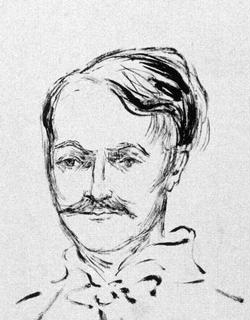
Brigadier General Robert Nugent, Irish-born American United States Army officer during the American Civil War and the American Indian Wars, is born on June 27, 1824, in Kilkeel, County Down, in what is now Northern Ireland.

Nugent serves with the Irish Brigade‘s 69th Infantry Regiment, from its days as a National Guard unit and into its incorporation into the Union Army at the start of the war. He is one of its senior officers at the First Battle of Bull Run.

When the unit is originally mustered out of service, the 90-day enlistment terms having expired, Nugent accepts a commission as a captain in the regular army. He is immediately assigned to the 13th Infantry Regiment whose commanding officer, Colonel William Tecumseh Sherman, personally requests. Taking a leave of absence to return to New York, he assists Thomas Francis Meagher in organizing the Irish Brigade. The newly reformed 69th Infantry Regiment is the first unit assigned to the Irish Brigade and, with Nugent as its colonel, he leads the “Fighting 69th” at the Battles of Fair Oaks, Gaines’ Mill, Savage’s Station, White Oak Swamp, Glendale and Malvern Hill.

Nugent is shot in the stomach at the Battle of Fredericksburg and is eventually forced to resign his command. He is appointed acting assistant provost marshal for the southern district of New York, which includes New York City and Long Island, by the United States War Department. An Irishman and Democrat, his appointment is thought to assure the Irish American population that conscription efforts would be carried out fairly. The Irish American, a popular Irish language newspaper, writes that the selection is a “wise and deservedly popular one.” He encounters resistance from city officials wanting to remain uninvolved, however by mid-June reports to his superior officer and provost marshal general Colonel James Barnet Fry that conscription efforts are “nearing completion without serious incident.”

Understanding the seriousness of the situation, Nugent attempts to keep the draft selections quiet and in isolated parts of the city. In Manhattan however, lotteries are placed in the heart of Irish tenement and shanty neighborhoods where the draft is most opposed.

In the ensuing New York City draft riots, Nugent takes command of troops and attempts to defend the city against the rioters. Despite issuing the cancellation of the draft, the riots continue for almost a week. His home on West 86th Street is looted and burned by the rioters during that time, his wife and children barely escaping from their home. Upon breaking into his house, furniture is destroyed, and paintings of Nugent and Meagher are slashed, although a painting of Brigadier General Michael Corcoran is reportedly left untouched.

On October 28, Nugent is relieved of his post and succeeded by General William Hays. Returning to active duty, he assumes command of the Irish Brigade in November 1864, shortly after the death of Corcoran. He is present at the battle of Battle of Spotsylvania Court House, the Siege of Petersburg and the Appomattox Campaign. As its last commanding officer, he and the Irish Brigade also march in the victory parade held in Washington, D.C. following Robert E. Lee‘s surrender at Appomattox Court House.

Nugent is brevetted Brigadier General for distinguished leadership of the 69th Regiment on March 13, 1865. The veterans of the Irish Brigade are honorably discharged and mustered out three months later. Nugent remains in the regular U.S. Army for the next twenty years, a formidable “Indian fighter” during the American Indian Wars with the 13th and 24th Infantry Regiments. In 1879, he retires at the rank of major and resides in New York where he is involved in the Grand Army of the Republic, the War Veterans’ Association of the 7th Regiment and an honorary member of The Old Guard.

Nugent becomes ill in his old age, complications arising from his wounds suffered at Fredericksburg, and remains bedridden for two months before his death at his McDonough Street home in Brooklyn on June 20, 1901. In accordance with his last wishes, he is buried at Cypress Hills National Cemetery.


Leave a comment

Death of Inventor Alexander Mitchell

alexander-mitchell

Alexander Mitchell, Irish engineer who from 1802 is blind, dies on June 25, 1868. He is known as the inventor of the screw-pile lighthouse.

Mitchell is born in Dublin on April 13, 1780. His family moves to Belfast while he is a child. He receives his formal education at Belfast Academy where he excels in mathematics. He begins to notice that his eyesight is failing. By the age of 16 he can no longer read and by the age of 22 he is completely blind.

Undeterred, Mitchell borrows £100 and starts up a successful business making bricks in the Ballymacarrett area of Belfast. This enables him to start building his own houses and he completes approximately twenty in the city. It is during this period that his talent for inventing comes to the fore and he fabricates several machines for use in brickmaking and the building trade.

Mitchell patents the screw-pile in 1833, for which he later gains some fame. The screw-pile is used for the erection of lighthouses and other structures on mudbanks and shifting sands, including bridges and piers. His designs and methods are employed all over the world from the Portland, Maine breakwater to bridges in Bombay. Initially it is used for the construction of lighthouses on Maplin Sands in the Thames Estuary in 1838, at Fleetwood Lancashire (UK) Morecambe Bay in 1839 and at Belfast Lough where his lighthouse is finished in July 1844.

In 1848 Mitchell is elected member of the Institution of Civil Engineers (ICE) and receives the Telford Medal the following year for a paper on his invention.

In May 1851 Mitchell moves to Cobh to lay the foundation for the Spit Bank Lighthouse. The success of these undertakings leads to the use of his invention on the breakwater at Portland, the viaduct and bridges on the Bombay, Baroda and Central India Railway and a broad system of Indian telegraphs.

Mitchell becomes friendly with astronomer John Thomas Romney Robinson and mathematician George Boole.

Alexander Mitchell dies at Glen Devis near Belfast on June 25, 1868, and is buried in the old Clifton graveyard in Belfast. His wife and daughter predecease him.