seamus dubhghaill

Promoting Irish Culture and History from Little Rock, Arkansas, USA


Leave a comment

Birth of Helen Waddell, Poet & Playwright

helen-waddell

Helen Jane Waddell, Irish poet, translator and playwright, is born in Tokyo, Japan on May 31, 1889.

Waddell is the tenth and youngest child of Hugh Waddell, a Presbyterian minister and missionary who is lecturing in the Imperial University. She spends the first eleven years of her life in Japan before her family returns to Belfast. Her mother dies shortly afterwards, and her father remarries. Hugh Waddell himself dies and leaves his younger children in the care of their stepmother. Following the marriage of her elder sister Meg, she is left at home to care for her stepmother, whose health is deteriorating by this time.

Waddell is educated at Victoria College for Girls and Queen’s University Belfast, where she studies under Professor Gregory Smith, graduating in 1911. She follows her BA with first class honours in English with a master’s degree, and in 1919 enrolls in Somerville College, Oxford, to study for her doctorate. A traveling scholarship from Lady Margaret Hall in 1923 allows her to conduct research in Paris. It is at this time that she meets her life-long friend, Maude Clarke.

Waddell is best known for bringing to light the history of the medieval goliards in her 1927 book The Wandering Scholars and translating their Latin poetry in the companion volume Medieval Latin Lyrics. A second anthology, More Latin Lyrics, is compiled in the 1940s but not published until after her death. Her other works range widely in subject matter. For example, she also writes plays. Her first play is The Spoiled Buddha, which is performed at the Opera House, Belfast, by the Ulster Literary Society. Her The Abbe Prevost is staged in 1935. Her historical novel Peter Abelard is published in 1933. It is critically well received and becomes a bestseller.

Waddell also writes many articles for the Evening Standard, The Manchester Guardian and The Nation, and does lecturing and broadcasting.

Waddell is the assistant editor of The Nineteenth Century magazine. Among her circle of friends in London, where she is vice-president of the Irish Literary Society, are William Butler Yeats, Virginia Woolf, Rose Macaulay, Max Beerbohm and George William Russell. Her personal and professional friendship with Siegfried Sassoon apparently makes the latter’s wife suspicious. Although she never marries, she has a close relationship with her publisher, Otto Kyllmann of Constable & Company.

Waddell receives honorary degrees from Columbia, Belfast, Durham and St. Andrews and wins the Benson Medal of the Royal Society of Literature.

A serious debilitating neurological disease puts an end to her writing career in 1950. She dies in London on March 5, 1965, and is buried in Magherally churchyard, County Down, Northern Ireland. A prize-winning biography of her by the Benedictine nun Dame Felicitas Corrigan is published in 1986.


Leave a comment

Death of Playwright John Brendan Keane

john-brendan-keane

John Brendan Keane, playwright, novelist and essayist, dies in Listowel, County Kerry on May 30, 2002.

Keane is born on Church Street in Listowel on July 21, 1928, the son of a national school teacher, William B. Keane, and his wife Hannah (née Purtill). He is educated at Listowel National School and then at St. Michael’s College, Listowel. He works as a chemist’s assistant for A.H. Jones who dabbles in buying antiques. He has various jobs in the UK between 1951 and 1955 working as a street cleaner and a bartender, living in a variety of places including Northampton and London. It is while he is in Northampton that Keane is first published in an unnamed women’s magazine for which he receives £15.

After returning from the United Kingdom, Keane is a pub owner in Listowel from 1955.

Keane marries Mary O’Connor at Knocknagoshel Church on January 5, 1955 and they have four children: Billy, Conor, John and Joanna. He is an Honorary Life Member of the Royal Dublin Society from 1991, serves as president of Irish PEN and is a founder member of the Society of Irish Playwrights as well as a member of Aosdána. He is named the patron of the Listowel Players after the Listowel Drama Group fractures. He remains a prominent member of the Fine Gael party throughout his life, never being shy of political debate.

Keane cites many literary influences including Bryan MacMahon and George Fitzmaurice, fellow Kerry writers and playwrights. His personal influences are numerous but, most notably he thanks his father and his wife, Mary. He is grateful for his father’s help with early editing, allowing him access to his personal library, and encouraging him to continue his work until he is successful. He is also influenced by the local population and the patrons of his pub from which he bases some of his characters.

Keane dies on May 30, 2002 of complications from prostate cancer, which he had been battling for eight years. His death comes on the eve of the annual Listowel Writers’ Festival, a week-long event at which he had long been a dominating and avuncular presence.

Keane’s nephew is the investigative journalist Fergal Keane. His son John is a journalist with the Kilkenny People while his son Billy regularly writes a column for the Irish Independent.


Leave a comment

Birth of Thomas Moore, Poet, Satirist & Composer

thomas-moore

Thomas Moore, poet, satirist, composer, and political propagandist, is born in Dublin on May 28, 1779. He is best remembered for the lyrics of “The Minstrel Boy” and “The Last Rose of Summer.” He is a close friend of Lord Byron and Percy Bysshe Shelley. As Lord Byron’s named literary executor, along with John Murray, Moore is responsible for burning Lord Byron’s memoirs after his death. In his lifetime he is often referred to as Anacreon Moore.

The son of a Roman Catholic wine merchant, Moore graduates from Trinity College, Dublin, in 1799 and then studies law in London. His major poetic work, Irish Melodies (1807–34), earns him an income of £500 annually for a quarter of a century. It contains such titles as “The Last Rose of Summer” and “Oft in the Stilly Night.” The Melodies, a group of 130 poems set to the music of Moore and of Sir John Stevenson and performed for London’s aristocracy, arouses sympathy and support for the Irish nationalists, among whom Moore is a popular hero.

Lalla-Rookh (1817), a narrative poem set in an atmosphere of Oriental splendour, gives Moore a reputation among his contemporaries rivaling that of Byron and Sir Walter Scott. It is perhaps the most translated poem of its time, and it earns what was until then the highest price paid by an English publisher for a poem (£3,000). His many satirical works, such as The Fudge Family in Paris (1818), portray the politics and manners of the Regency era.

In 1824 Moore becomes a participant in one of the most celebrated episodes of the Romantic era. He is the recipient of Byron’s memoirs, but he and the publisher John Murray burn them, presumably to protect Byron. He later brings out the Letters and Journals of Lord Byron (1830), in which he includes a life of the poet. His lifelong espousal of the Catholic cause leads him to produce such brilliant works as his parody of agrarian insurgency, The Memoirs of Captain Rock (1824), and his courageous biography of the revolutionary leader of the 1798 rebellion, The Life and Death of Lord Edward Fitzgerald (1831).

Moore’s personal life is dogged by tragedy including the deaths of all five of his children within his lifetime and a stroke in later life, which disables him from performances, the activity for which he is most renowned. Moore dies while being cared for by his wife, Elizabeth (nee Dyke), at Sloperton Cottage, Bromham, Wiltshire, England on February 26, 1852. His remains are in a vault at St. Nicholas churchyard, Bromham, within view of his cottage-home and beside his daughter Anastasia.

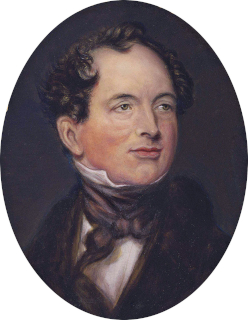
(Pictured: Thomas Moore, after a painting by Thomas Lawrence)


Leave a comment

Birth of William Drennan, Physician, Poet & Political Radical

william-drennan

William Drennan, physician, poet and political radical, is born on May 23, 1754, in Belfast. He is one of the chief architects of the Society of United Irishmen and is known as the first to refer in print to Ireland as “the emerald isle” in his poem When Erin first rose.

Drennan is son the son of Reverend Thomas Drennan (1696–1768), minister of Belfast’s First Presbyterian Church on Rosemary Street. Thomas Drennan is an educated man from the University of Glasgow and is ordained to the congregation of Holywood, County Down in 1731. Drennan is heavily influenced by his father, whose religious convictions serve as the foundation for his own radical political ideas. His sister, Martha, marries fellow future United Irishman Samuel McTier in 1773.

In 1769 Drennan follows in his father’s footsteps by enrolling in the University of Glasgow where he becomes interested in the study of philosophy. In 1772 he graduates in arts and then in 1773 he commences the study of medicine at Edinburgh. After graduating in 1778 he sets up practice in Belfast, specialising in obstetrics. He is credited with being one of the earliest advocates of inoculation against smallpox and of hand washing to prevent the spread of infection. He also writes much poetry, coining the phrase “Emerald Isle” and is the founder and editor of a literary periodical, Belfast Magazine. He moves to Newry in 1783 but eventually moves to Dublin in 1789 where he quickly becomes involved in nationalist circles.

Like many other Ulster Presbyterians, Drennan is an early supporter of the American Colonies in the American Revolution and joins the Volunteers who had been formed to defend Ireland for Britain in the event of French invasion. The Volunteer movement soon becomes a powerful political force and a forum for Protestant nationalists to press for political reform in Ireland eventually assisting Henry Grattan to achieve legislative independence for the Irish parliament in 1782. However, Drennan, like many other reformers, quickly becomes dismayed by the conservative and sectarian nature of the Irish parliament and in 1791 he co-founds the Society of United Irishmen with Wolfe Tone and Thomas Russell.

Drennan writes many political pamphlets for the United Irishmen and is arrested in 1794 for seditious libel, a political charge that is a major factor in driving the United Irishmen underground and into becoming a radical revolutionary party. Although he is eventually acquitted, he gradually withdraws from the United Irishmen but continues to campaign for Catholic Emancipation.

On February 8, 1800, Drennan marries Sarah Swanwick, “an English lady of some wealth” from Shropshire. They have one daughter and four sons.

Drennan settles in Belfast in 1807. In 1810 he co-founds the non-denominational Royal Belfast Academical Institution. As a poet, he is best remembered for his poem The Wake of William Orr, written in memory of a United Irishman executed by the British. Despite his links with revolutionary republicans, he gradually becomes alienated from the post-Union nationalism of the period. His abiding concern for Liberalism and post union realities make him contemplate his political ideas anew.

Drennan dies on February 5, 1820. He directs that his coffin be carried by an equal number of Catholics and Protestants with clergy from different denominations in attendance.

Drennan’s son, John Swanwick Drennan, is a noted poet who, along with his brother William Drennan, write a biography of him for Richard Davis Webb‘s A Compendium of Irish Biography. Through his daughter Sarah, who marries John Andrews of a prominent family of flax merchants, he has several notable descendants, including William Drennan Andrews, judge of the High Court of Justice in Ireland, Sir James Andrews, 1st Baronet, Lord Chief Justice of Northern Ireland, John Miller Andrews, Prime Minister of Northern Ireland, Thomas Andrews who drew up the plans for the RMS Titanic and was aboard and drowned when she sank, and Thomas Drennan, performance artist known primarily for his seminal work ‘Journey to the Centre of Drennan.’


Leave a comment

Death of Novelist Maria Edgeworth

maria-edgeworth

Maria Edgeworth, Anglo-Irish writer known for her children’s stories and for her novels of Irish life, dies on May 22, 1849, in Edgeworthstown, County Longford.

Edgeworth is born at Black Bourton, Oxfordshire, England on January 1, 1768. She is the second child of Richard Lovell Edgeworth and Anna Maria Edgeworth (née Elers). She spends her early years with her mother’s family in England, until her mother’s death when Maria is five. When her father marries his second wife Honora Sneyd in 1773, she goes with him to his estate, Edgeworthstown, in County Longford. There, she assists her father in managing his estate. In this way she acquires the knowledge of rural economy and of the Irish peasantry that is to become the backbone of her novels.

Domestic life at Edgeworthstown is busy and happy. Encouraged by her father, Edgeworth begins her writing in the common sitting room, where the 21 other children in the family provide material and audience for her stories. She publishes them in 1796 as The Parent’s Assistant. Even the intrusive moralizing, attributed to her father’s editing, does not wholly suppress their vitality, and the children who appear in them, especially the impetuous Rosamond, are the first real children in English literature since William Shakespeare.

Her first novel, Castle Rackrent (1800), written without her father’s interference, reveals her gift for social observation, character sketch, and authentic dialogue and is free from lengthy lecturing. It establishes the genre of the “regional novel,” and its influence is enormous. Sir Walter Scott acknowledges his debt to Edgeworth in writing Waverley. Her next work, Belinda (1801), a society novel unfortunately marred by her father’s insistence on a happy ending, is particularly admired by Jane Austen.

Edgeworth never marries. She has a wide acquaintance in literary and scientific circles. Between 1809 and 1812 she publishes her Tales of Fashionable Life in six volumes. They include one of her best novels, The Absentee, which focuses attention on a great contemporary abuse in Irish society: absentee English landowning.

Before her father’s death in 1817 she publishes three more novels, two of them, Patronage (1814) and Ormond (1817), of considerable power. After 1817 she writes less. She completes her father’s Memoirs (1820) and devotes herself to the estate. She enjoys a European reputation and exchanges cordial visits with Scott. Her last years are saddened by the Irish famine of 1846, during which she works for the relief of stricken peasants.

After a visit to see her relations in Trim, Maria, now in her eighties, begins to feel heart pains and dies suddenly of a heart attack in Edgeworthstown on May 22, 1849. She is laid to rest in a vault at Edgeworthstown Church.

The feminist movement of the 1960s leads to the reprinting of her Moral Tales for Young People, 5 vol. (1801) and Letters for Literary Ladies (1795) in the 1970s. Her novels continue to be regularly reprinted in the 21st century.

(Pictured: Maria Edgeworth by John Downman, 1807)


Leave a comment

Birth of Poet Thomas Kinsella

thomas-kinsella

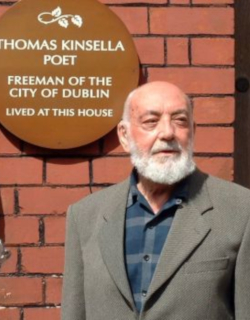
Thomas Kinsella, poet whose sensitive lyrics deal with primal aspects of the human experience, often in a specifically Irish context, is born in Inchicore, Dublin on May 4, 1928.

Kinsella spends most of his childhood in the Kilmainham/Inchicore area of Dublin. He is educated at the Model School, Inchicore, where classes are taught in Irish Gaelic, and at the O’Connell School in North Richmond Street, Dublin. He acquires a series of grants and scholarships that allow him to attend University College Dublin, where he studies physics and chemistry before receiving a degree in public administration.

Kinsella begins serving in the Irish civil service in 1946, and in the early 1950s he meets Liam Miller, the founder of Dolman Press, which publishes much of Kinsella’s poetry beginning in 1952. Among these publications are Poems (1956), his first volume of collected work, Another September (1958), which contains poems that explore the imposition of existential order through various forms, be they natural or products of the poet’s imagination and Downstream (1962), a collection focusing on war and political and social disruption in modern Ireland.

In 1965 Kinsella leaves the Irish civil service and takes a position as a writer in residence at Southern Illinois University in Carbondale (1965–70). During this time, he publishes Nightwalker, and Other Poems (1967), a sombre collection ruminating on Ireland’s past and turbulent present. His translation of the ancient Gaelic saga The Cattle Raid of Cooley (Táin bó Cuailnge) is published in 1969, and the following year he begins teaching at Temple University in Philadelphia. New Poems 1956–73 (1973) and One, and Other Poems (1979) skillfully extend the themes of love, death, and rejuvenation.

Kinsella founds his own publishing company, the Peppercanister Press, in Dublin in 1972, which allows him to publish pamphlets and individual poems in limited editions without relying on submissions to journals or magazines. His first poem to be published through his press is Butcher’s Dozen (1972), about Bloody Sunday, in which 13 demonstrators are killed by British troops in Derry, Northern Ireland, and the ensuing tribunal. Blood & Family (1988) combines four short collections of prose and verse originally published individually through Peppercanister, and Godhead (1999) explores the Trinity in the light of contemporary society. Later works published through Peppercanister include Marginal Economy (2006), Man of War (2007), and Belief and Unbelief (2007). Numerous collections of his poems have been released, including Collected Poems, 1956–2001 (2001) and Selected Poems (2007).

In December 2018, Kinsella is awarded Doctor in Littoris, Honoris Causa, by Trinity College Dublin.


1 Comment

Death of Writer Walter Macken

Walter Macken, writer of short stories, novels and plays, dies at his home in the Gaeltacht village of Menlo, County Galway on April 22, 1967.

Macken is born at 18 St. Joseph’s Terrance in Galway, County Galway on May 3, 1915. His father, Walter Macken, Sr., formerly a carpenter, joins the British Army in 1915 and is killed in March of the following year at Saint-Éloi. The family therefore has to rely on lodgers and a small service pension to sustain them.

Macken attends the Presentation Convent for Infants from (1918-1921), St. Mary’s, a Diocesan College where they train people who want to become priests (1923-1924), and Patrician Brothers both Primary and Secondary (1921-1922 and 1924-1934), where he takes his Leaving Certificate. He is writing short stories, novels, and plays in exercise books from the age of eight and carries on these works well into his teens.

Macken is originally an actor, principally with the Taibhdhearc na Gaillimhe in Galway, where he meets his wife Peggy, and The Abbey Theatre in Dublin. He also plays lead roles on Broadway in M. J. Molloy‘s The King of Friday’s Men and his own play Home Is the Hero. The success of his third book, Rain on the Wind, winner of the Literary Guild award in the United States, enables him to focus his energies on writing.

Macken also acts in films, notably in Arthur Dreifuss‘ adaptation of Brendan Behan‘s The Quare Fellow. He is perhaps best known for his trilogy of Irish historical novels Seek the Fair LandThe Silent People, and The Scorching Wind.

His son Ultan Macken is a well-known journalist in the print and broadcast media of Ireland, and wrote a biography of his father, Walter Macken: Dreams on Paper.

Walter Macken dies of heart failure at the age of 51 in Menlo, County Galway, on April 22, 1967.


Leave a comment

Birth of Denis Devlin, Poet & Diplomat

denis-devlin

Denis Devlin, poet, translator, and career diplomat, is born in Greenock, Scotland of Irish parents on April 15, 1908. Along with Samuel Beckett and Brian Coffey, he is one of the generation of Irish modernist poets to emerge at the end of the 1920s.

Devlin and his family return to live in Dublin in 1918. He studies at Belvedere College and, from 1926, as a seminarian for the Roman Catholic priesthood at Clonliffe College. As part of his studies he attends a degree course in modern languages at University College Dublin (UCD), where he meets and befriends Brian Coffey. Together they publish a joint collection, Poems, in 1930.

In 1927, Devlin abandons the priesthood and leaves Clonliffe. He graduates with his BA from UCD in 1930 and spends that summer on the Blasket Islands to improve his spoken Irish. Between 1930 and 1933, he studies literature at the University of Munich and the Sorbonne in Paris, meeting, amongst others, Beckett and Thomas MacGreevy. He then returns to UCD to complete his MA thesis on Michel de Montaigne.

Devlin joins the Irish Diplomatic Service in 1935 and spends a number of years in Rome, New York and Washington, D.C.. During this time he meets the French poet Saint-John Perse, and the Americans Allen Tate and Robert Penn Warren. He goes on to publish a translation of Exile and Other Poems by Saint-John Perse, and Tate and Warren edit his posthumous Selected Poems.

Since his death on August 21, 1959, there have been two Collected Poems published; the first in 1964 is edited by Coffey and the second in 1989 by J.C.C. Mays.

Devlin’s personal papers are held in University College Dublin Archives. His niece goes on to become writer Denyse Woods.


Leave a comment

Birth of John Jordan, Poet & Writer

john-jordan

John Jordan, Irish poet, short-story writer and broadcaster, is born in the Rotunda Hospital, Dublin on April 8, 1930.

Jordan is educated at Synge Street CBS, University College Dublin (UCD) and Pembroke College, Oxford. In his teens he acts on the stage of the Gate Theatre, Dublin, before winning a Scholarship in English and French to the University of Oxford from UCD. In the mid-1950s he returns to UCD as a lecturer in English and teaches there until the end of the 1960s. He also lectures on sabbatical leave at the Memorial University of Newfoundland and briefly at Princeton University in the United States. He is a founding member of Aosdána. He is a celebrated literary critic from the late 1950s until his death on June 6, 1988, in Cardiff, Wales, where he had been participating in the Merriman Summer School.

In 1962 Jordan re-founds and edits the literary magazine Poetry Ireland in hopes of contributing towards the recreation of Dublin as a literary centre. In this journal, he introduces a number of poets who are to become quite famous later, including Paul Durcan, Michael Hartnett and Seamus Heaney. This series of Poetry Ireland lasts until 1968–69.

In 1981 Jordan becomes the first editor of the new magazine published by the Poetry Ireland Society, called Poetry Ireland Review. He serves as a reviewer of novels for The Irish Times, writes a column for Hibernia, contributes to Envoy, A Review of Literature and Art and The Irish Press among others, and serves as a TV presenter and arts interviewer. He is a defender of Gaelic literature, translates Pádraic Ó Conaire, edits The Pleasures of Gaelic Literature (Mercier Press, 1977), and champions the later plays of Seán O’Casey. His translation of one of Aogán Ó Rathaille‘s essays is published in The Pleasures of Gaelic Poetry (London: Allen Lane, 1982).

Jordan’s Collected Poems (Dedalus Press) and Collected Stories (Poolbeg Press) are edited by his literary executor, Hugh McFadden, and published in Dublin in 1991. His Selected Prose, Crystal Clear, also edited by McFadden, is published by The Lilliput Press in Dublin in 2006. His Selected Poems, edited with an introduction by McFadden, is published in February 2008 by Dedalus Press. Uncollected stories appear in Penguin Book of Irish Short Stories, Cyphers, and The Irish Press, among other places.

Jordan’s literary papers and letters are held in the National Library of Ireland. In 1953 the young Irish artist Reginald Gray is commissioned by University College Dublin to design the decor and costumes for their production of “The Kings Threshold” by William Butler Yeats. The leading role is given to Jordan. During the preparations for the production, Gray starts a portrait of Jordan, which he never finishes. This work now hangs in the Dublin Writers Museum.

(Pictured: John Jordan, by Patrick Swift, c. 1950)


Leave a comment

Death of Writer John McGahern

john-mcgahern

John McGahern, regarded as one of the most important Irish writers of the latter half of the twentieth century, dies in Dublin on March 30, 2006. Known for the detailed dissection of Irish life found in works such as The Barracks, The Dark and Amongst Women, The Observer hails him as “the greatest living Irish novelist” before his death and in its obituary The Guardian describes him as “arguably the most important Irish novelist since Samuel Beckett.”

Born in Knockanroe about half a mile from Ballinamore, County Leitrim, McGahern is the eldest child of seven. Raised alongside his six young siblings on a small farm in Knockanroe, his mother runs the farm (with some local help) while maintaining a job as a primary school teacher in the local school. His father, a Garda sergeant, lives in the Garda barracks at Cootehall in County Roscommon, a somewhat sizeable distant away from his family at the time. His mother subsequently dies of cancer in 1944, when the young McGahern is ten years old resulting in the unrooting of the McGahern children to their new home with their father in the aforementioned Garda barracks, Cootehall.

In the years following his mother’s death, McGahern completes his primary schooling in the local primary school, and ultimately wins a scholarship to the Presentation Brothers secondary school in Carrick-on-Shannon. Having traveled daily to complete his second level education, he continues to accumulate academic accolades by winning the county scholarship in his Leaving Certificate enabling him to continue his education to third level.

Following on from his second level success, McGahern is offered a place at St. Patrick’s College of Education in Drumcondra where he trains to be a teacher. Upon graduation from third level education, he begins his career as a primary schoolteacher at Scoil Eoin Báiste (Belgrove) primary school in Clontarf where, for a period, he teaches the eminent academic Declan Kiberd. He is dismissed from Scoil Eoin Báiste on the order of the Archbishop of Dublin, John Charles McQuaid. He is first published by the London literary and arts review, X magazine, which publishes in 1961 an extract from his abandoned first novel, The End or Beginning of Love.

McGahern marries his first wife, Finnish-born Annikki Laaksi, in 1965 and in the same year publishes his second novel, The Dark, which is banned by the Censorship of Publications Board for its alleged pornographic content along with its implied sexual abuse by the protagonist’s father. Due to the controversy which is stirred by the book’s publication McGahern is dismissed from his teaching post and forced to move to England where he works in a variety of jobs before returning to Ireland to live and work on a small farm near Fenagh in County Leitrim.

John McGahern dies from cancer in the Mater Misericordiae University Hospital in Dublin on March 30, 2006, at the age of 71. He is buried in St. Patrick’s Church, Aughawillan alongside his mother.