seamus dubhghaill

Promoting Irish Culture and History from Little Rock, Arkansas, USA


Leave a comment

Birth of Poet Charles Wolfe

charles-wolfe

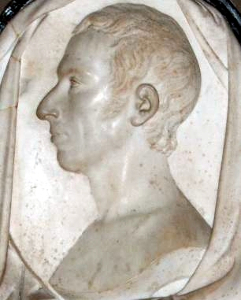
Charles Wolfe, Irish poet, is born at Blackhall, County Kildare, on December 14, 1791. He is chiefly remembered for “The Burial of Sir John Moore after Corunna” which achieves popularity in 19th century poetry anthologies.

Wolfe is the youngest son of Theobald Wolfe of Blackhall and his wife Frances, who is also his cousin and daughter of the Rev. Peter Lombard of Clooncorrick Castle, Carrigallen, County Leitrim. He is a brother of Peter Wolfe, High Sheriff of Kildare. His father is the godfather, but widely believed to be the natural father, of Theobald Wolfe Tone and the first cousin of Arthur Wolfe, 1st Viscount Kilwarden.

Not long after he is born, his father dies, and the family moves to England. In 1801, Wolfe is sent to a school in Bath but is sent home a few months later due to ill health. From 1802 to 1805, he is tutored by a Dr. Evans in Salisbury before being sent to Hyde Abbey School, Winchester. In 1808, his family returns to Ireland, and the following year he enters Trinity College, Dublin, graduating in 1814.

Wolfe is ordained as a Church of Ireland priest in 1817, first taking the Curacy of Ballyclog in County Tyrone before transferring almost immediately to Donaghmore, County Tyrone. There he develops a close friendship and deep respect for the Rev. Thomas Meredith, Rector of nearby Ardtrea, and a former Fellow of Trinity College Dublin. Wolfe writes two epitaphs for Meredith, one on his memorial in the parish church of Ardtrea, and another intended for his tomb.

Wolfe is best remembered for his poem “The Burial of Sir John Moore after Corunna”, written in 1816 and much collected in 19th and 20th century anthologies. The poem first appears anonymously in the Newry Telegraph of April 19, 1817, and is reprinted in many other periodicals. But it is forgotten until after his death when Lord Byron draws the attention of the public to it. Wolfe’s only volume of verse, Poetical Remains, appears in 1825 with “The Burial of Sir John Moore” and fourteen other verses of an equally high standard.

Wolfe remains at Donaghmore until 1820 but, rejected by the woman for whom he gave up his academic career, and with Meredith, his only real friend in County Tyrone, now dead, he moves to Southern France. Shortly before his death he returns to Ireland and lives at Cobh, County Cork, where he dies at the age of 31 of consumption, which he catches from a cow. He is buried in Cobh at Old Church Cemetery. There is also a plaque to his memory in the church at Castlecaulfield, the village where he lives whilst Curate at Donaghmore, as well as a marble monument to him at St. Patrick’s Cathedral, Dublin.

(Pictured: Bas-relief of Charles Wolfe in St. Patrick’s Cathedral, Dublin)


1 Comment

Birth of Anglican Bishop Charles Graves

charles-graves

Charles Graves FRS, 19th-century Anglican Bishop of Limerick, Ardfert and Aghadoe, is born at 12 Fitzwilliam Square, Dublin, on December 6, 1812. He serves as President of the Royal Irish Academy, Dean of the Chapel Royal at Dublin Castle and is a noted mathematician.

Graves is born to John Crosbie Graves (1776–1835), Chief Police Magistrate for Dublin, and Helena Perceval, the daughter and co-heiress of the Rev. Charles Perceval (1751–1795) of Bruhenny, County Cork. Educated at Trinity College, Dublin, he wins a scholarship in Classics, and in 1834 graduates BA as Senior Moderator in mathematics, getting his MA in 1838. He plays cricket for Trinity, and later in his life does much boating and fly-fishing. It is intended that he join the 18th Royal Irish Regiment of Foot under his uncle, Major-General James William Graves (1774–1845), and in preparation he becomes an expert swordsman and rider.

After leaving Trinity College, Graves follows in the steps of his grandfather, Thomas Graves, who was appointed Dean of Ardfert in 1785 and Dean of Connor in 1802, and his great uncle, Richard Graves. He is appointed a fellow of Trinity College from 1836 to 1843 before taking the professorship of mathematics, a position he holds until 1862.

Graves is elected a member of the Royal Irish Academy in 1837 and subsequently holds various officerships, including President from 1861 to 1866. In 1860 he is appointed Dean of the Chapel Royal and, from 1864 to 1866, he is the Dean of Clonfert before being consecrated as Bishop of Limerick, Ardfert and Aghadoe, a position he holds for 33 years until his death on July 17, 1899. He is elected a Fellow of the Royal Society in 1880 and receives the honorary degree of DCL from Oxford University in 1881.

In 1841 Graves publishes an original mathematical work and he embodies further discoveries in his lectures and in papers read before and published by the Royal Irish Academy. He is a colleague of Sir William Rowan Hamilton and, upon the latter’s death, Graves gives a presidential panegyric containing a valuable account both of Hamilton’s scientific labours and of his literary attainments.

Graves is very interested in Irish antiquarian subjects. He discovers the key to the ancient Irish Ogham script which appears as inscriptions on cromlechs and other stone monuments. He also prompts the government to publish the old Irish Brehon Laws, Early Irish law. His suggestion is adopted, and he is appointed a member of the Commission to do this.

Graves’ official residence is The Palace at Limerick, but from the 1850s he takes the lease of Parknasilla House, County Kerry, as a summer residence. In 1892 he buys out the lease of the house and a further 114 acres of land that includes a few islands. In 1894 he sells it to Great Southern Hotels, who still own it to this day.


Leave a comment

Execution of John Atherton, Anglican Bishop of Waterford & Lismore

john-atherton-execution-pamphlet

John Atherton, Anglican Bishop of Waterford and Lismore in the Church of Ireland, is executed on December 5, 1640, on a charge of immorality.

Atherton is born in 1598 in Somerset, England. He studies at Oxford University and joins the ranks of the Anglican clergy. In 1634 he becomes Bishop of Waterford and Lismore in the Church of Ireland. In 1640 he is accused of buggery with a man, John Childe, his steward and tithe proctor. They are tried under a law that Atherton himself had helped to institute. They are both condemned to death, and Atherton is executed in St. Stephen’s Green, Dublin. Reportedly, he confesses to the crime immediately before his execution, although he had proclaimed his innocence before that.

More recently, some historical evidence has been developed that shows Atherton might have been a victim of a conspiracy to discredit him and his patrons. This is attributable to Atherton’s status as an astute lawyer, who seeks to recover lost land for the relatively weak Protestant Church of Ireland during the 1630s. Unfortunately for Atherton, this alienates him from large landowners, who then allegedly use his sexuality to discredit him.

English Puritan, Congregationalist and Independent activists, as well as English and Scottish Presbyterian activists, contemporaneously campaign to abolish Episcopacy (bishops) within the embattled Church of England, Church of Scotland and Church of Ireland, notionally expediting the political interest in Atherton’s downfall.

Posthumous accusations of sexual wrongdoing also include allegations of “incest” with his sister-in-law, and infanticide of the resultant child, as well as zoophilia with cattle. However, these allegations begin to be circulated several months after his death in an anonymous pamphlet, and may have been intended to further discredit the bishop’s campaign to restore the finances of the Church of Ireland.

(Pictured: Anonymous pamphlet of the hangings of John Atherton and John Childe, 1641)


Leave a comment

Birth of Cardinal Tomás Séamus Ó Fiaich

Tomás Séamus Ó Fiaich, Irish prelate of the Roman Catholic Church, is born in Cullyhanna, County Armagh, on November 3, 1923. He serves as the Catholic Primate of All Ireland and Archbishop of Armagh from 1977 until his death. He is created a Cardinal in 1979.

Ó Fiaich is ordained a priest on July 6, 1948. He spends his first year of ordination as assistant priest in Clonfeacle parish. He undertakes post-graduate studies at University College, Dublin, (1948–50), receiving a Master of Arts (MA) in early and medieval Irish history. He also studies at the Catholic University of Leuven in Belgium, (1950–52), receiving a licentiate in historical sciences.

In 1952 Ó Fiaich returns to Clonfeacle where he remains as assistant priest until the following summer and his appointment to the faculty of St. Patrick’s College, Maynooth. He is an academic and noted Irish language scholar, folklorist and historian in the Pontifical University in St. Patrick’s College, Maynooth, the National Seminary of Ireland. From 1959 to 1974 he is Professor of Modern Irish History at the college. In this capacity he suggests to Nollaig Ó Muraíle that he begin research on Dubhaltach Mac Fhirbhisigh and his works. He “was an inspired lecturer, an open and endearing man, who was loved by his students… Tomas O’Fiaich was my Good Samaritan.”

Ó Fiaich serves as vice president of the college from 1970 to 1974 and is then appointed college president, a post that traditionally precedes appointment to an episcopal position in the Irish Church. He holds this position until 1977.

Following the relatively early death from cancer of Cardinal William Conway in April 1977, Monsignor Ó Fiaich is appointed Archbishop of Armagh by Pope Paul VI on August 18, 1977. He is consecrated bishop on October 2, 1977. The principal consecrator is the papal nuncio Archbishop Gaetano Alibrandi. The principal co-consecrators are Bishop Francis Lenny, the auxiliary Bishop of Armagh, and Bishop William Philbin, the Bishop of Down and Connor. Pope John Paul II raises Ó Fiaich to the cardinalate on June 30, 1979, and he is appointed Cardinal-Priest of S. Patrizio that same day.

Ó Fiaich dies of a heart attack on the evening of May 8, 1990, while leading the annual pilgrimage by the Archdiocese of Armagh to the Marian shrine of Lourdes in France. He arrives in France the day before and complains of feeling ill shortly after saying Mass at the grotto in the French town. He is rushed by helicopter to a hospital in Toulouse, 125 miles away, where he dies. He lies in state at the cathedral in Armagh, where thousands of people lined up to pay their respects.

Ó Fiaich is succeeded as archbishop and cardinal by a man six years his senior, Cahal Daly, then the Bishop of Down and Connor.


Leave a comment

Death of John McElroy, Founder of Boston College

Death of Jesuit John McElroy, the founder of Boston College, at age of 95 in Frederick, Maryland, on September 12, 1877.

McElroy is born on May 14, 1782, in Enniskillen, County Fermanagh, the younger of two sons. In the hopes of providing a better life for John and his brother Anthony, their father, a farmer, finances their travel to the United States. In 1803 the two young men board a ship leaving the port of Londonderry and arrive in Baltimore, Maryland, on August 26. McElroy eventually settles in Georgetown, Washington, D.C., and becomes a merchant.

In 1806, McElroy enters Georgetown College in Washington, D.C., the same year he enters the novitiate of the Society of Jesus as a lay brother. He eventually manages the finances of Georgetown College and in 1808 erects the tower building. He managed the school’s finances so well that through the period of economic hardship following the War of 1812, he is able to send several Jesuits to Rome to study.

McElroy is ordained in May 1817, after less than two years of preparation. As a new priest, he is assigned to Holy Trinity Catholic Church in Georgetown as an assistant pastor. In his short time at Trinity, he contributes to the growth of the congregation and enlarging of the church building. This is achieved by increasing the monthly subscription for congregation members from 12½ cents to $12.50 on July 3, 1819. The following day he travels to most of the congregation members’ homes and collects $2,000 in pledges. He immediately sets to work having the Church modified to include two lateral-wing chapels, which are first used on October 3, 1819.

On January 11, 1819, McElroy is granted United States citizenship. Also in 1819, McElroy starts a Sunday School for black children who are taught prayers and catechism simultaneously with spelling and reading, by volunteer members of the congregation. McElroy spends his remaining years in Georgetown teaching the lower grades.

In 1823, McElroy begins negotiations with the Sisters of Charity in Emmitsburg, Maryland, for the establishment of a school for girls in Frederick. In 1824, the St. John’s Benevolent Female Free School is founded by the Sisters of Charity of Saint Joseph at 200 East Second Street in Frederick. In 1825, McElroy sets to work replacing the pre-American Revolution log cabin that houses the school with a modern building large enough to also house an orphanage.

McElroy’s next task is to found an educational institution for boys. On August 7, 1828, the construction of St. John’s Literary Institute begins. The following year the construction is completed, and the school is opened, a school which is currently operating under the name of Saint John’s Catholic Prep.

In October 1847, McElroy is welcomed in Boston, Massachusetts, by the Bishop of Boston, John Bernard Fitzpatrick, to serve as pastor of St. Mary’s parish in the North End. Bishop Fitzpatrick sets McElroy to work on bringing a college to Boston.

In 1853, McElroy finds a property in the South End where the city jail once stood. After two years of negotiations the project falls through due to zoning issues. A new site is identified, and city officials endorse the sale. In 1858, Bishop Fitzpatrick and Father McElroy break ground for Boston College, and for the Church of the Immaculate Conception. Classes began in the fall of 1864 and continue at this location until 1913 when the college moves to its current location at Chestnut Hill. Initially Boston College offers a 7-year program including both high school and college. This joint program continues until 1927 when the high school is separately incorporated.

In 1868, McElroy retires to the Jesuit novitiate in Frederick, Maryland. He visits Georgetown for the final time in 1872 to celebrate his golden jubilee. His eyesight is failing and while moving through his home he falls, fracturing his femur, which eventually leads to his death. Father John McElroy dies September 12, 1877, at the Jesuit novitiate in Frederick, Maryland. For some years leading up to his death, he is regarded as the oldest priest in the United States and the oldest Jesuit in the world. He is buried in the Novitiate Cemetery. In 1903, the Jesuits withdraw from Frederick and the graves are moved from the Frederick Jesuit Novitiate Cemetery to St. John’s Cemetery.


Leave a comment

Birth of John Ireland, First Archbishop of St. Paul

John Ireland, the third Roman Catholic bishop and first Roman Catholic archbishop of Saint Paul, Minnesota, is born in Burnchurch, County Kilkenny, on September 11, 1838. He becomes both a religious as well as civic leader in Saint Paul during the turn of the 20th century.

Ireland is known for his progressive stance on education, immigration and relations between church and state, as well as his opposition to saloons and political corruption. He promotes the Americanization of Catholicism, especially in the furtherance of progressive social ideals. He is a leader of the modernizing element in the Roman Catholic Church during the Progressive Era. He creates or helps to create many religious and educational institutions in Minnesota. He is also remembered for his acrimonious relations with Eastern Catholics.

Ireland’s family immigrates to the United States in 1848 and eventually moves to Saint Paul, Minnesota, in 1852. One year later Joseph Crétin, first bishop of Saint Paul, sends Ireland to the preparatory seminary of Meximieux in France. Ireland is consequently ordained in 1861 in Saint Paul. He serves as a chaplain of the Fifth Minnesota Volunteer Infantry Regiment in the American Civil War until 1863 when ill health leads to his resignation. Later, he is famous nationwide in the Grand Army of the Republic.

Ireland is appointed pastor at Saint Paul’s cathedral in 1867, a position which he holds until 1875. In 1875, he is made coadjutor bishop of St. Paul and in 1884 he becomes bishop ordinary. In 1888 he becomes archbishop with the elevation of his diocese and the erection of the ecclesiastical province of Saint Paul. Ireland retains this title for thirty years until his death in 1918. Before Ireland dies, he burns all of his personal papers.

Ireland is awarded an honorary doctorate (LL.D.) by Yale University in October 1901, during celebrations for the bicentenary of the university.

Ireland is personal friends with Presidents William McKinley and Theodore Roosevelt. At a time when most Irish Catholics are staunch Democrats, Ireland is known for being close to the Republican party. He opposes racial inequality and calls for “equal rights and equal privileges, political, civil, and social.” Ireland’s funeral is attended by eight archbishops, thirty bishops, twelve monsignors, seven hundred priests and two hundred seminarians.

A friend of James J. Hill, Archbishop Ireland has his portrait painted in 1895 by the Swiss-born American portrait painter Adolfo Müller-Ury almost certainly on Hill’s behalf, which is exhibited at M. Knoedler & Co., New York, January 1895 and again in 1897.


Leave a comment

Founding of The Legion of Mary

The Legion of Mary, an international association of practicing members of the Catholic Church who serve the Church on a voluntary basis, is founded as a Roman Catholic Marian Movement by layman by Br. Frank Duff on September 7, 1921, at Myra House, Francis Street, in Dublin.

Duff’s idea is to help Catholic lay people fulfill their baptismal promises and be able to live their dedication to the Church in an organized structure, supported by fraternity and prayer. The Legion draws its inspiration from St. Louis de Montfort‘s book True Devotion to Mary.

The legionaries first start out by visiting hospitals, but they are soon active among the most destitute, notably among Dublin prostitutes. Duff subsequently lays down the system of the Legion in the Handbook of the Legion of Mary in 1928.

The Legion of Mary soon spreads from Ireland to other countries and continents. At first, the Legion is often met with mistrust due to its dedication to lay apostolate which is unusual for the time. After Pope Pius XI expresses praise for the Legion in 1931, the mistrust is quelled.

Most prominent for spreading the Legion is the Irish legionary Venerable Edel Mary Quinn for her activities in Africa during the 1930s and 40s. Her dedication to the mission of the Legion even in the face of her ill health due to tuberculosis brings her great admiration in and outside of the Legion. A canonization process is currently under way for Edel Quinn. She is declared venerable by Pope John Paul II on December 15, 1994, since when the campaign for her beatification has continued.

A beatification process is currently underway for Servant of God Frank Duff. In July 1996, the Cause of Duff’s canonisation is introduced by the Archbishop of Dublin, Desmond Connell. A Cause for Canonization for Servant of God Alfie Lambe (1932-1959), Legion Envoy to South America, is introduced by the Archdiocese of Buenos Aires in 1978 and concluded on March 26, 2015.

Membership in Ireland has been declining but due to efforts by the Concilium to attract younger people to its ranks through the Deus et Patria movement, a substantial increase in membership is now occurring.

On March 27, 2014, the Secretary of the Pontifical Council for the Laity, Bishop Josef Clemens, delivers the decree in which the Legion of Mary is recognized by the Holy See as International Association of the Faithful.


Leave a comment

Birth of Sister Anthony, Mary Ellen O’Connell

Mary Ellen O’Connell, Roman Catholic Religious Sister better known as Sister Anthony, S.C., is born in Limerick, County Limerick, on August 14, 1814.

Connell is the daughter of William O’Connell (1769-1841) and Catherine Murphy (-1821). In 1821, she emigrates with her family to Boston, and attends the Ursuline Academy in Charlestown, Massachusetts. On June 5, 1835, she enters the novitiate of the American Sisters of Charity in St. Joseph’s Valley, Maryland, founded by Saint Elizabeth Seton, and is professed in 1837, taking the name of Sister Anthony. Soon after, she goes to Cincinnati, Ohio.

Sister Anthony arrives in Cincinnati in 1837 to begin her work at St. Peter’s Orphan Asylum and School for girls. Given charge of St. Joseph’s Orphan Asylum for boys when it is begun in 1852, she later oversees the combining of the two asylums in the Cincinnati neighborhood of Cumminsville. She is in Cincinnati through 1852, when the Sisters in Cincinnati become independent of their founding motherhouse in Emmitsburg, Maryland. She is placed in charge of St. John’s Hostel for Invalids, a new hospital.

At the outbreak of the American Civil War, the Sisters volunteer as nurses. More than one-third of the community, which by then has more than one hundred members, serve. In June 1861, Sister Anthony is one of six Sisters of Charity who go to Camp Dennison, about 15 miles from Cincinnati. A request is made from Cumberland, Virginia for nursing assistance, and eight sisters are sent to serve the wounded of both armies.

The Battle of Shiloh brings ten sisters to the scene including Sister Anthony. Some describe her word as being law with officers, doctors, and soldiers once she has established herself as a prudent and trusted administrator and nurse. She and other sisters often are picked to treat wounded prisoners of war since they show no bias in serving rebel, yank, white, or black soldiers.

When Sister Anthony serves at Shiloh she becomes known as the “Angel of the Battlefield” and “the Florence Nightingale of America.” She goes out to the battlefield to help bring in the sick and dying and also develops the Battlefield Triage. Her method is “the first recognizably modern triage techniques in war zones, saved countless lives through faster hospital treatment and won her praise from President Lincoln.” Her medical skills allow her to intervene to save soldiers’ limbs from amputation.

Sister Anthony also serves at the battlefields of Winchester, VA, the Cumberland Gap, TN, Richmond, VA, Nashville, TN, Gallipolis, OH, Culpeper Court House, VA, Murfreesboro, TN, Pittsburg Landing, TN, and Lynchburg, VA. She also serves on a hospital ship on the Ohio River. She sees no distinction between Union and Confederate soldiers. She becomes personally acquainted with Jefferson Davis and knows a number of generals on both sides of the conflict.

After the war, in 1866, Joseph C. Butler and a friend, Louis Worthington, purchase a large building at Sixth and Lock Street, to present to Sister Anthony as a gift in recognition of the sisters’ service during the war. There are two conditions: that no one be excluded from the hospital because of color or religion, and that the hospital be named “The Hospital of the Good Samaritan,” to honor the sisters’ kindness. It opens that same year as the St. Joseph Foundling and Maternity Hospital. It still serves as St. Joseph Hospital, a residential facility for children and adults with severe mental and multiple physical disabilities.

Sister Anthony is also recognized for her work during the yellow fever epidemic of 1877. She retires from active service in 1880, and dies in 1897 in Cumminsville, Cincinnati, Ohio.

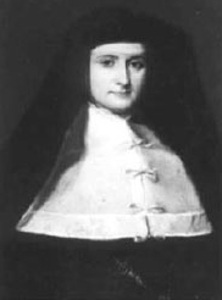
Sister Anthony’s portrait hangs in the Smithsonian Institution in Washington, D.C.


Leave a comment

Patrick Francis Healy Becomes President of Georgetown University

Patrick Francis Healy, Jesuit priest and educator, becomes the 29th President of Georgetown University on July 31, 1874. He is known for expanding the school following the American Civil War. Healy Hall is constructed during his tenure and is named after him. It is designated as a National Historic Landmark in the late 20th century.

Healy is born into slavery in 1834 in Macon, Georgia, the third son of Irish American plantation owner Michael Healy and his African American slave Mary Eliza, who is the multiracial daughter of a black slave and white slaveowner. The law establishes during colonial slavery in the United States that children are to take the legal status of the mother. By the principle of partus sequitur ventrum, Patrick and his siblings are legally considered slaves in Georgia, although their father is free, and they are three-quarters or more European in ancestry.

Discriminatory laws in Georgia prohibit the education of slaves and require legislative approval for each act of manumission, making these essentially impossible to gain. Michael Healy arranges for all his children to leave Georgia and move to the North to obtain their educations and have opportunities in their lives. They are raised as Irish Catholics. Patrick’s brothers and sisters are nearly all educated in Catholic schools and colleges. Many achieve notable firsts for Americans of mixed-race ancestry during the second half of the 19th century, and the Healy family of Georgia is remarkably successful.

Healy sends his older sons first to a Quaker school in Flushing, New York. Despite the Quakers’ emphasis on equality, Patrick encounters some discrimination during his grade school years, chiefly because his father is a slaveholder, which by the late antebellum years the Quakers consider unforgivable. Patrick also meets resistance in the school as an Irish Catholic. When Michael Healy hears of a new Jesuit college, the College of the Holy Cross in Worcester, Massachusetts, he sends his four oldest sons, including Patrick, to study there in 1844. They are joined at Holy Cross by their younger brother Michael in 1849.

Following Patrick’s graduation in 1850, he enters the Jesuit order, the first African American to do so, and continues his studies. The order sends him to Europe to study in 1858. His mixed-race ancestry has become an issue in the United States, where tensions are rising over slavery. He attends the Catholic University of Leuven in Belgium, earning his doctorate, becoming the first American of openly acknowledged part-African descent to do so. During this period, he is also ordained to the priesthood on September 3, 1864.

In 1866 Healy returns to the United States and teaches philosophy at Georgetown University in Washington, D.C. On July 31, 1874, he is selected as the school’s twenty-ninth president. He is the first college president in the United States of African American ancestry. At the time, he identifies as Irish Catholic and is accepted as such.

Patrick Healy’s influence on Georgetown is so far-reaching that he is often referred to as the school’s “second founder,” following Archbishop John Carroll. Healy helps transform the small nineteenth-century college into a major university for the twentieth century, likely influenced by his European education.

He modernizes the curriculum by requiring courses in the sciences, particularly chemistry and physics. He expands and upgrades the schools of law and medicine. The most visible result of Healy’s presidency is the construction of the university’s flagship building designed by Paul J. Pelz, begun in 1877 and first used in 1881. The building is named in his honor as Healy Hall.

Healy leaves the College in 1882 and travels extensively through the United States and Europe, often in the company of his brother James, a bishop in Maine. In 1908 he returns to the campus infirmary, where he dies on January 10, 1910. He is buried on the grounds of the university in the Jesuit cemetery.


Leave a comment

Death of Thomas Croke, Archbishop of Cashel & Emly

Thomas William Croke, the second Catholic Bishop of Auckland in New Zealand (1870–74) and later Archbishop of Cashel and Emly in Ireland, dies on July 22, 1902. He is important in the Irish nationalist movement especially as a Champion of the Irish National Land League in the 1880s. The main Gaelic Athletic Association stadium in Dublin is named Croke Park in his honour.

Croke is born in Castlecor, County Cork, on May 28, 1824. He is educated in Charleville, County Cork, the Irish College in Paris and the Pontifical Irish College in Rome, winning academic distinctions including a Doctor of Divinity with honours. He is ordained in May 1847. Returning to Ireland for a short time he is appointed a Professor in St. Patrick’s, Carlow College. The Irish radical William O’Brien says that Croke fought on the barricades in Paris during the French Revolution of 1848. Croke returns to Ireland and spends the next 23 years working there. In 1858 he becomes the first president of St. Colman’s College, Fermoy, County Cork and then serves as both parish priest of Doneraile and Vicar General of Cloyne diocese from 1866 to 1870. Croke attends the First Vatican Council as the theologian to the Bishop of Cloyne 1870.

Croke gains the good opinion of the Irish ecclesiastical authorities and is rewarded in 1870 by his promotion to Bishop of Auckland in New Zealand. His former professor, Paul Cullen, by then Cardinal Archbishop of Dublin, is largely responsible for filling the Australasian Catholic church with fellow Irishmen. His strong recommendations lead to Croke’s appointment. Croke arrives at Auckland on December 17, 1870, on the City of Melbourne. During his three years as bishop, he restores firm leadership to a diocese left in disarray by his predecessor, Bishop Jean Baptiste Pompallier. He devotes some of his considerable personal wealth to rebuilding diocesan finances and also takes advantage of Auckland’s economic growth following the development of the Thames goldfields to further his aims, ensuring that all surplus income from parishes at Thames and Coromandel is passed on to him, and he institutes a more rigorous system for the Sunday collection at St. Patrick’s Cathedral. He imports Irish clergy to serve the growing Catholic community, and with Patrick Moran, the first Catholic Bishop of the Diocese of Dunedin, he tries unsuccessfully to secure an Irish monopoly on future episcopal appointments in New Zealand. Croke supports separate Catholic schools and their right to state aid and voices his opposition to secular education as Auckland’s Catholic schools are threatened by the provincial council’s Education Act 1872, which helps to create a free, secular and compulsory education system. However, generally, Croke’s image is uncontroversial. On January 28, 1874, after barely three years in office, Croke departs for Europe, on what is ostensibly a 12-month holiday, and he does not return to New Zealand.

Croke becomes a member of the Irish hierarchy when he is translated to be Archbishop of Cashel, one of the four Catholic Irish archbishoprics in 1875. Archbishop Croke is a strong supporter of Irish nationalism, aligning himself with the Irish National Land League during the Land War, and with the chairman of the Irish Parliamentary Party, Charles Stewart Parnell. In an 1887 interview he explains that he had opposed the League’s “No rent manifesto” in 1881, preferring to stop payment of all taxes.

Croke also associates himself with the Temperance Movement of Fr. Theobald Mathew and Gaelic League from its foundation in 1893. Within Catholicism he is a supporter of Gallicanism, as opposed to the Ultramontanism favoured by the Archbishop of Dublin, Cardinal Cullen. His support of nationalism causes successive British governments and Lord Lieutenant of Ireland‘s governments in Dublin to be deeply suspicious of him, as are some less politically aligned Irish bishops.

Following the scandal that erupts over Parnell’s relationship with Katharine O’Shea, the separated wife of fellow MP Captain William O’Shea, Archbishop Croke withdraws from active participation in nationalist politics.

Thomas Croke, 78, dies at the Archbishop’s Palace in Thurles, County Tipperary on July 22, 1902. He is buried at the Cathedral of the Assumption in Thurles. In honour of Croke, his successors as Archbishop of Cashel and Emly traditionally are asked to throw in the ball at the minor Gaelic football and All-Ireland Senior Hurling Championship finals.