seamus dubhghaill

Promoting Irish Culture and History from Little Rock, Arkansas, USA


Leave a comment

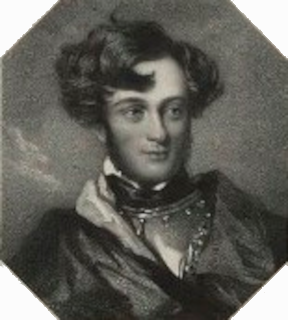
Birth of Henry Lawes Luttrell, 2nd Earl of Carhampton

General Henry Lawes Luttrell, 2nd Earl of Carhampton PC, Anglo-Irish politician and soldier, who both in public and private life attracts scandal, is born on August 7, 1743. He is spurned by colleagues in the British House of Commons who believe that in the election of 1769 he played an underhand role in denying his seat to the popular choice, the reformer John Wilkes. In 1788 he is publicly accused in Dublin of raping a twelve-year-old girl. Ten years later, his command in the suppression of the Irish Rebellion of 1798 is criticised by fellow officers for its savagery, and not least against women. His last years in Parliament are marked by his opposition to Catholic Emancipation, and to parliamentary reform.

Luttrell is the scion of an Anglo-Irish landed family, descendants of Sir Geoffrey de Luterel, who established Luttrellstown Castle, County Dublin, in the early 13th century. His grandfather, Henry Luttrell, had been a pardoned Jacobite commander murdered on the street in Dublin in 1717 supposedly by his former comrades. His father, Simon Luttrell, is successively titled Baron Irnham, Viscount Carhampton and Earl Carhampton, all in the Peerage of Ireland. His mother, Maria, is the daughter of Sir Nicholas Lawes, Governor of Jamaica, and the eventual heir to a slave plantation on the West Indian Island which, on her husband’s death in 1787, passes to her son.

Educated at Westminster School and Christ Church, Oxford, Luttrell is commissioned into the 48th (Northamptonshire) Regiment of Foot in 1757. Two years later he becomes lieutenant of the 34th (Cumberland) Regiment of Foot.

Father and son, both accounted “notorious womanizers,” have a bitter relationship. His father once challenges him to a duel, but he declines, observing that his father is not a gentleman.

Luttrell, described as “strong in body, if not in mind,” achieves a reputation for bravery as a soldier during the Seven Years’ War, becoming Deputy Adjutant-General of the British Forces in Portugal. In 1768 he becomes a Tory Member of Parliament representing Bossiney.

With the support of the Grafton ministry and of the Court, in 1769 Luttrell stands in Middlesex against John Wilkes, the radical and popular figure who had already been the constituency’s three-time democratic choice. He loses the poll (1,143 votes to 269) but is seated in Parliament, Wilkes having once again been barred as an adjudged felon. As a result of the affair, for some months, Luttrell dares not appear in the street and is “the most unpopular man in the House of Commons.”

The government rewards Luttrell by appointing him Adjutant General for Ireland in 1770. He continues to sit in the Commons, where he describes the Whigs in their opposition to the conduct of the American War, as “the abetters of treason and rebellion combined purposely for the ruin of their country.”

Luttrell becomes active in Irish politics and between 1783 and 1787, he sits in the Irish House of Commons for Old Leighlin. On his father’s death in 1787, he succeeds to the earldom of Carhampton and other titles. He becomes Colonel of the 6th Dragoon Guards and Lieutenant-General of the Ordnance in Ireland.

In 1788, Luttrell is publicly accused in Dublin of the rape of a 12-year-old girl. Having been paid to deliver a message, Mary Neal claims she is bundled into a brothel and there assaulted throughout the night by Luttrell. The keeper of the house, Maria Llewellyn, is charged in a case marked by accusations of witness tampering, the death in prison of Mary’s mother and newborn baby sister and by the insinuation that Mary was already working as a prostitute. The affair becomes a cause célèbre with the public intervention of Archibald Hamilton Rowan, later a founding member of the Dublin Society of United Irishmen. To clear Mary’s name he brings her to Dublin Castle to see the Lord Lieutenant, John Fane, 10th Earl of Westmorland. Westmorland, unmoved, pardons Llewellyn and sets her at liberty. Luttrell is never asked to answer for raping Mary Neal. In 1790 he re-enters the British Parliament as Member for Plympton Erle.

In 1791 and 1792, Luttrell helps vote down bills to abolish the slave trade. Negroes, he proposes, only want “to murder their masters, ravish their women, and drink all their rum.” At the same time, he opposes lifting civil disabilities on Roman Catholics by abolishing the Test Act in Scotland and speaks scathingly of parliamentary reform.

In October 1793, a younger brother, Temple Simon Luttrell, is arrested in Boulogne and, until February 1795, is held in Paris where, on the strength of their sister Anne Luttrell being married to Prince Henry, Duke of Cumberland, he is publicly exhibited as the brother of the king of England.

In 1795, Luttrell is entrusted with the breakup and disarming of Defenders, the agrarian semi-insurgency, in Connacht. His proceedings and impressment of some 1,300 “rebels” into the British navy elicits criticism in otherwise loyal circles.

In 1796, with the leaders of the democratic party, the United Irishmen, preparing for a French-assisted insurrection, Luttrell is given overall command of the Crown forces in Ireland. He demonstrates still greater ruthlessness in attempting to “pacify” the country and suppress the eventual rising in the summer of 1798. His command has the unusual distinction of being upbraided by his successor as Commander in Chief, Sir Ralph Abercromby, for an army “in a state of licentiousness, which must render it formidable to everyone but the enemy.”

Luttrell is seen by his critics as having “fanned the flame of disaffection into open rebellion” by “the picketings, the free quarters, half hangings, flogging and pitch-cappings” he directs.

In July 1799, Luttrell sells his Irish property and by his own later account, he takes no part in the Acts of Union. He claims to be “disgusted at the scene that was passing before me”, and to abandon Ireland because, under a “cowardly” government, he sees “the country likely to become Catholic.” When the Dublin Post of May 2, 1811, erroneously reports his death, he demands a retraction which they print under the headline Public Disappointment.

Luttrell purchases an estate at Painshill Park in Surrey and lives for several years in relative obscurity. From 1813 he harries the government of Robert Jenkinson, 2nd Earl of Liverpool, with the claim that George III had promised him a secure seat in the Commons. In June 1817, five weeks short of his eightieth birthday, he finds his own way back to Parliament as Member for Ludgershall and revenges himself, in the four years remaining to him, by voting with the opposition. This, however, does not extend to joining in the attacks on the domestic spy system in 1818 nor to voting for parliamentary reform in 1819. Moreover, in the wake of the Peterloo Massacre, he supports the government, lauding the use of deadly force against “the Radicals and their system.”

Luttrell dies at his home at Bruton Street, London, on April 25, 1821.


Leave a comment

Killing of Frank Brooke, Director of Dublin and South Eastern Railways

Francis Theophilius “Frank” Brooke PC, JP, DL, Anglo-Irish Director of Dublin and South Eastern Railway and a member of the Earl of Ypres‘ Advisory Council, is killed allegedly by the Irish Republican Army (IRA) in his Dublin office on July 30, 1920.

Brooke is a cousin of Sir Basil Brooke, the future Prime Minister of Northern Ireland (1943-63) who is later created, in 1952, the 1st Viscount Brookeborough.

Brooke is also Deputy Lieutenant of County Wicklow and County Fermanagh, a Lieutenant in the Royal Navy, a Justice of the Peace for County Fermanagh and an Irish Privy Counsellor (1918), thus he is styled The Right Honourable Francis Brooke.

In July 1912 Brooke attends a house party at Wentworth Woodhouse hosted for George V‘s stay there.

On July 30, 1920, Brooke is killed, at the age of 69, at his offices in Dublin, by Paddy Daly, Tom Keogh and Jim Slattery, members of Michael Collins‘s Squad of the Irish Republican Army (IRA). He is killed in view of a colleague, who is spared. He is marked out for his activities as a judge, anti-republican activities, and his friendship with Sir John French. As an Irish Privy Counsellor, he is a signatory of the order proclaiming Dáil Éireann illegal.

The inquest following the assassination finds that Brooke had a pistol in his jacket pocket. His killing has been termed the only outright political assassination of the Irish War of Independence.

(Photo credit: Kevin Lee)


Leave a comment

Birth of E. R. Dodds, Irish Classical Scholar

Eric Robertson Dodds, Irish classical scholar, is born in Banbridge, County Down, on July 26, 1893. He is Regius Professor of Greek at the University of Oxford from 1936 to 1960.

Dodds is the son of schoolteachers. His father Robert is from a Presbyterian family and dies of alcoholism when Dodds is seven years old. His mother Anne is of Anglo-Irish ancestry. When he is ten, he moves with his mother to Dublin, and he is educated at St. Andrew’s College, where his mother teaches, and at Campbell College in Belfast. He is expelled from the latter for “gross, studied, and sustained insolence.”

In 1912, Dodds wins a scholarship at University College, Oxford, to read classics, or Literae Humaniores, a two-part, four-year degree program consisting of five terms of study of Latin and Greek texts followed by seven terms of study of ancient history and ancient philosophy. His friends at Oxford include Aldous Huxley and T. S. Eliot. In 1916, he is asked to leave Oxford due to his support for the Easter Rising, but he returns the following year to take his final examinations in Literae Humaniores, and is awarded a first-class degree to match the first-class awarded him in 1914 in Honour Moderations, the preliminary stage of his degree. His first tutor at Oxford is Arthur Blackburne Poynton.

After graduation, Dodds returns to Dublin and meets W. B. Yeats and George William Russell. He teaches briefly at Kilkenny College and in 1919 is appointed as a lecturer in classics at the University of Reading, where in 1923 he marries a lecturer in English, Annie Edwards Powell. They have no children.

In 1924, Dodds is appointed Professor of Greek at the University of Birmingham, and comes to know W. H. Auden, whose father George, Professor of Public Medicine and an amateur classicist, is a colleague. He is also responsible for Louis MacNeice‘s appointment as a lecturer at Birmingham in 1930. He assists MacNeice with his translation of Aeschylus, Agamemnon (1936), and later becomes the poet’s literary executor. He publishes one volume of his own poems, Thirty-Two Poems, with a Note on Unprofessional Poetry (1929).

In 1936, Dodds becomes Regius Professor of Greek at the University of Oxford, succeeding Gilbert Murray. Murray decisively recommends him to British Prime Minister Stanley Baldwin and it is not a popular appointment. He is chosen over two prominent Oxford dons, Maurice Bowra of Wadham College and John Dewar Denniston of Hertford College. His lack of service in World War I and his support for Irish republicanism and socialism in addition to his scholarship on the non-standard field of Neoplatonism, also does not make him initially popular with colleagues. He is treated particularly harshly by Denys Page at whose college, Christ Church, the Regius Chair of Greek is based.

Dodds has a lifelong interest in mysticism and psychic research, being a member of the council of the Society for Psychical Research from 1927 and its president from 1961 to 1963.

On his retirement in 1960, Dodds is made an Honorary Fellow of University College, Oxford, until his death on April 8, 1979. He dies in the village of Old Marston, northeast of Oxford.

Among Dodds’s works are The Greeks and the Irrational (1951), which charts the influence of irrational forces in Greek culture up to the time of Plato, and Pagan and Christian in an Age of Anxiety, a study of religious life in the period between Marcus Aurelius and Constantine I. He is also editor of three major classical texts for the Clarendon Press, Proclus: Elements of Theology, EuripidesThe Bacchae and Plato’s Gorgias, all published with extensive commentaries, and a translation in the case of the first. His autobiography, Missing Persons, is published in 1977. He edits Louis MacNeice’s unfinished autobiography The Strings are False (1965) and MacNeice’s Collected Poems (1966).


Leave a comment

Birth of Edward Plunkett, 18th Baron of Dunsany

Edward John Moreton Drax Plunkett, 18th Baron of Dunsany FRSL, Anglo-Irish writer and dramatist, is born in London, England, on July 24, 1878. Over 90 volumes of fiction, essays, poems and plays appear in his lifetime, and a modest amount of material is published posthumously.

Plunkett, known to his family as “Eddie,” is the first son of John William Plunkett, 17th Baron of Dunsany (1853–1899), and his wife, Ernle Elizabeth Louisa Maria Grosvenor Ernle-Erle-Drax (née Burton) (1855–1916). From a historically wealthy and famous family, he is related to many well-known Irish figures. He is a kinsman of the Catholic Saint Oliver Plunkett, the martyred Archbishop of Armagh. He is also related to the prominent Anglo-Irish unionist and later nationalist Home Rule politician Sir Horace Plunkett and George Noble Plunkett, Papal Count and Republican politician, father of Joseph Plunkett, executed for his part in the 1916 Easter Rising.

Plunkett’s only grown sibling, a younger brother, from whom he is estranged from about 1916, for reasons not fully clear but connected to his mother’s will, is the noted British naval officer Sir Reginald Drax. Another younger brother dies in infancy.

Plunkett grows up at the family properties, notably, Dunstall Priory in Shoreham, Kent, and Dunsany Castle in County Meath, but also in family homes such as in London. His schooling is at Cheam School, Eton College and the Royal Military College, Sandhurst, which he enters in 1896.

The title passes to Plunkett at his father’s death in 1899 at a fairly young age. The young Lord Dunsany returns to Dunsany Castle in 1901 after war duty. In that year he is also confirmed as an elector for the Representative Peers for Ireland in the House of Lords.

In 1903, Plunkett meets Lady Beatrice Child Villiers (1880–1970), youngest daughter of Victor Child Villiers, 7th Earl of Jersey, who is then living at Osterley Park. They marry in 1904. Their one child, Randal, is born in 1906. Lady Beatrice is supportive of her husband’s interests and helps him by typing his manuscripts, selecting work for his collections, including the 1954 retrospective short story collection, and overseeing his literary heritage after his death.

The Plunketts are socially active in Dublin and London and travel between homes in Meath, London and Kent, other than during the First and Second World Wars and the Irish War of Independence. He circulates with many literary figures of the time. To many of these in Ireland he is first introduced by his uncle, the co-operative pioneer Sir Horace Plunkett, who also helps to manage his estate and investments for a time. He is friendly, for example, with George William Russell, Oliver St. John Gogarty, and for a time, W. B. Yeats. He also socialises at times with George Bernard Shaw and H. G. Wells and is a friend of Rudyard Kipling.

In 1910 Plunkett commissions a two-story extension to Dunsany Castle, with a billiard room, bedrooms and other facilities. The billiard room includes the crests of all the Lords Dunsany up to the 18th.

Plunkett serves as a second lieutenant in the Coldstream Guards in the Second Boer War. Volunteering in World War I and appointed Captain in the Royal Inniskilling Fusiliers, he is stationed for a time at Ebrington Barracks in Derry, Northern Ireland. Hearing while on leave of disturbances in Dublin during the Easter Rising of 1916, he drives in to offer help and is wounded by a bullet lodged in his skull. After recovery at Jervis Street Hospital and what is then the King George V Hospital (now St. Bricin’s Military Hospital), he returns to duty. His military belt is lost in the episode and later used at the burial of Michael Collins. Having been refused forward positioning in 1916 and listed as valuable as a trainer, he serves in the later war stages in the trenches and in the final period writing propaganda material for the War Office with MI7b. There is a book at Dunsany Castle with wartime photographs, on which lost members of his command are marked.

During the Irish War of Independence, Plunkett is charged with violating the Restoration of Order in Ireland Act 1920, tried by court-martial on February 4, 1921, convicted, and sentenced to pay a fine of 25 pounds or serve three months in prison without labour. The Crown Forces had searched Dunsany Castle and had found two double-barrelled shotguns, two rook rifles, four Very pistols, an automatic pistol and a large quantity of pistol ammunition, along with shotgun and rifle ammunition.

During World War II, Plunkett signs up for the Irish Army Reserve and the British Home Guard, the two countries’ local defence forces, and is especially active in Shoreham, Kent, the English village bombed most during the Battle of Britain.

Plunkett’s fame arises chiefly from his prolific writings. He is involved in the Irish Literary Revival. Supporting the Revival, he is a major donor to the Abbey Theatre, and he moves in Irish literary circles. He is well acquainted with W. B. Yeats, Lady Gregory, Percy French, George “AE” Russell, Oliver St. John Gogarty, Padraic Colum and others. He befriends and supports Francis Ledwidge, to whom he gives the use of his library, and Mary Lavin.

Plunkett makes his first literary tour to the United States in 1919 and further such visits up to the 1950s, in the early years mostly to the eastern seaboard and later, notably, to California. His own work and contribution to the Irish literary heritage are recognised with an honorary degree from Trinity College Dublin.

In 1940, Plunkett is appointed Byron Professor of English in the University of Athens in Greece. Having reached Athens by a circuitous route, he is so successful that he is offered a post as Professor of English in Istanbul. However, he has to be evacuated due to the German invasion of Greece in April 1941, returning home by an even more complex route, his travels forming a basis for a long poem published in book form (A Journey, in 5 cantos: The Battle of Britain, The Battle of Greece, The Battle of the Mediterranean, Battles Long Ago, The Battle of the Atlantic, special edition January 1944). Olivia Manning‘s character Lord Pinkrose in her novel sequence the Fortunes of War is a mocking portrait of Dunsany in that period.

In 1947, Plunkett transfers his Meath estate in trust to his son and heir and settles in Kent at his Shoreham house, Dunstall Priory, not far from the home of Rudyard Kipling. He visits Ireland only occasionally thereafter and engages actively in life in Shoreham and London. He also begins a new series of visits to the United States, notably California, as recounted in Hazel Littlefield-Smith’s biographical Dunsany, King of Dreams.

In 1957, Plunkett becomes ill while dining with the Earl and Countess of Fingall at Dunsany, in what proves to be an attack of appendicitis. He dies in hospital in Dublin, at the age of 79, on October 25, 1957. He is buried in the churchyard of the ancient church of St. Peter and St. Paul, Shoreham, Kent. His funeral is attended by many family members, representatives of his old regiment and various bodies in which he had taken an interest, and figures from Shoreham. A memorial service is held at Kilmessan in County Meath, with a reading of “Crossing the Bar,” which coincides with the passing of a flock of geese.

Beatrice survives Plunkett, living mainly at Shoreham and overseeing his literary legacy until her death in 1970. Their son Randal succeeds to the barony and is in turn succeeded by his grandson, the artist Edward Plunkett. Plunkett’s literary rights pass from Beatrice to Edward.


Leave a comment

Edward Bruce Proclaimed Last High King of Ireland

Edward Bruce is proclaimed the last High King of Ireland on June 29, 1315. He is crowned in 1316. He reigns between 1315 and 1318. The English colonists in Ireland vehemently oppose him.

Bruce, the brother of the King of Scots, Robert the Bruce, leads a three-year military campaign, known as the Bruce campaign, against the Anglo-Norman lordship of Ireland. This invasion, which lasts from 1315 to 1318, ultimately gives rise to the two nations we recognize now as Ireland and Scotland.

In May 1315, a Scots army of up to six thousand soldiers lands on the Antrim coast. That June, near Carrickfergus, many Gaelic lords led by Donnell O’Neill of Ulster join Bruce. “All the Gaels of Ireland agreed to grant him lordship and they called him King of Ireland,” declares the Irish annals.

The invasion coincides with the Great European Famine (1315-1317), which brings hardship and disillusionment among Bruce’s followers. The annals ruefully comment, “falsehood and famine and homicide filled the country, and undoubtedly men ate each other in Ireland.”

In February 1317, Dublin, the capital of the English royal administration in Ireland, comes close to being captured by the Bruce brothers. The brothers encamp at Castleknock within sight of the city walls. The panicking Dubliners burn the suburbs of the city. In order to re-fortify the city walls, they dismantle the Dominican priory north of the River Liffey and tear down the bridge across the river. The Bruce brothers do not lay siege to the city and instead move south to Munster.

In 1318, the invasion is brought to an end when, after marching south from Ulster for one last push, Bruce risks an open battle with an English army north of Dundalk at Faughart and is killed. His corpse is dismembered, and portions of it hung over the gates of various Irish towns. His decapitated head is brought to King Edward II of England by the victor, John de Bermingham, a minor Anglo-Irish baron who is elevated to the status of “Earl of Louth” for bringing the Bruce campaign in Ireland to an end.

A conference at Trinity College Dublin, in 2015, entitled The Irish-Scottish World in the Middle Ages, explores this key moment in the history of Ireland and Scotland. “The Bruce Invasion was a watershed moment in that story,” says Seán Duffy, Professor of Medieval Irish History and one of the organizers of the conference.

“Although Edward Bruce was defeated and killed in 1318, the effect of the invasion was far-reaching. The tide of Anglo-Norman expansion in Ireland turned back and the late Middle Ages saw the flowering of a Gaelic literary and cultural revival. Scotland, meanwhile, was galvanized by its victory over the English at Bannockburn which secured its path to independent nationhood.”

“Few peoples have as much in common as the Irish and the Scots. The very name Scotland is an ever-present reminder of that connection, because, in the Latin of the early Middle Ages, a Scotus was an Irishman, and the homeland of the Scoti was Ireland. That the name came to be applied to the northern part of Britain is testament to the strength of Irish influence on what we now know today as Scotland.”

(From: “On This Day: Edward Bruce, the last High King of Ireland, dies in 1318” by IrishCentral Staff, http://www.irishcentral.com, October 2022 | Pictured: Grave of Edward de Bruce, High King of Ireland, in Faughart Cemetery, County Louth)


Leave a comment

Death of Patrick Mayhew, British Barrister, Politician & Northern Ireland Secretary

Patrick Barnabas Burke Mayhew, Baron Mayhew of Twysden, PC, QC, DL, British barrister, politician and Secretary of State for Northern Ireland, who serves during a critical period in the Northern Ireland peace process, dies at his home in Kent, England, on June 25, 2016. He is a key figure in the December 1993 Downing Street Declaration which leads to the Provisional Irish Republican Army (IRA) ceasefire on August 31, 1994

Mayhew is born on September 11, 1929. His father, George Mayhew, is a decorated army officer turned oil executive. His mother, Sheila Roche, descendant of members of the Anglo-Irish Protestant ascendancy, is a relative of James Roche, 3rd Baron Fermoy, an Irish National Federation MP for East Kerry. Through his father, Mayhew is descended from the Victorian social commentator Henry Mayhew. He is educated at Tonbridge School, an all boys public school in Tonbridge, Kent.

Mayhew then serves as an officer in the 4th/7th Royal Dragoon Guards, studies law at Balliol College, Oxford, and is president of the Oxford University Conservative Association (OUCA) and of the Oxford Union. He is called to the Bar by the Middle Temple in 1955.

In 1963, Mayhew marries The Rev. Jean Gurney, and they have four sons.

Mayhew contests Dulwich at the 1970 United Kingdom general election, but the incumbent Labour Party member, Samuel Silkin, beats him by 895 votes. He is Member of Parliament (MP) for Tunbridge Wells from its creation at the February 1974 United Kingdom general election, standing down at the 1997 United Kingdom general election.

Mayhew is Under Secretary of Employment from 1979 to 1981, then Minister of State at the Home Office from 1981 to 1983. After this, he serves as Solicitor General for England and Wales from 1983 to 1987, and then Attorney General for England and Wales and simultaneously Attorney General for Northern Ireland from 1987 to 1992.

Mayhew is Secretary of State for Northern Ireland from 1992 to 1997, the longest anyone has served in this office.

Mayhew is one of only five Ministers (Tony Newton, Kenneth Clarke, Malcolm Rifkind and Lynda Chalker are the others) to serve throughout the whole 18 years of the premiership of Margaret Thatcher and John Major. This represents the longest uninterrupted Ministerial service in Britain since Henry John Temple, 3rd Viscount Palmerston, in the early 19th century.

Mayhew is knighted in 1983. On June 1997, he is given a life peerage as Baron Mayhew of Twysden, of Kilndown in the County of Kent. He retires from the House of Lords on June 1, 2015.

Mayhew suffers from cancer and Parkinson’s disease in his later years. He dies at the age of 86 on June 25, 2016, in his home in Kent.

Mayhew’s son, The Honourable Henry Mayhew, appears in the fourth episode of the series The Secret History Of Our Streets, discussing life in the Portland Road, Notting Hill, London. Another son, Tristram, co-founds the outdoor adventure company Go Ape. His son Jerome is the Conservative Party MP for the constituency of Broadland in Norfolk since December 2019.


Leave a comment

Birth of Robert Stewart, 2nd Marquess of Londonderry

Robert Stewart, 2nd Marquess of Londonderry, KG, GCH, PC, PC (Ire), Anglo-Irish politician and statesman usually known as Lord Castlereagh, derived from the courtesy title Viscount Castlereagh by which he is styled from 1796 to 1821, is born in Dublin on June 18, 1769. As secretary to the Viceroy of Ireland, he works to suppress the Irish Rebellion of 1798 and to secure passage in 1800 of the Irish Act of Union. As the Foreign Secretary of the United Kingdom from 1812, he is central to the management of the coalition that defeats Napoleon and is British plenipotentiary at the Congress of Vienna. In the post-war government of Lord Liverpool, he is seen to support harsh measures against agitation for reform.

Stewart is born in 28 Henry Street, in Dublin’s Northside. He is the second and only surviving child of Robert Stewart (the elder) and his wife Sarah Frances Seymour-Conway. His parents marry in 1766. He has recurring health problems throughout his childhood, and is sent to The Royal School, Armagh, rather than to England for his secondary education. At the encouragement of Charles Pratt, 1st Earl Camden, who takes a great interest in him and treats him as if he is a grandson by blood, he later attends St. John’s College, Cambridge (1786–87), where he applies himself with greater diligence than expected from an aristocrat and excels in his first-year examinations. But he then withdraws, pleading an illness that he admits to Camden is something “which cannot be directly acknowledged before women,” i.e. something sexually transmitted.

Early in his career in Ireland, and following a visit to revolutionary France, Stewart recoils from the democratic politics of his Presbyterian constituents in Ulster. Crossing the floor of the Irish House of Commons in support of the government, he takes a leading role in detaining members of the republican conspiracy, the United Irishmen, his former political associates among them. After the 1798 Rebellion, as Chief Secretary for Ireland, he pushes the Act of Union through the Irish Parliament. But it is without the Catholic Emancipation that both he and British Prime Minister William Pitt believe should have accompanied the creation of a United Kingdom.

From 1805 Stewart serves under Pitt and then the Duke of Portland as Secretary of State for War. In 1809 he is obliged to resign after fighting a duel with the Foreign Secretary, George Canning, in a dispute over the Walcheren Campaign. In 1812 he returns to government serving Lord Liverpool as Foreign Secretary and as Leader of the House of Commons.

Stewart organises and finances the alliance that defeats Napoleon, bringing the powers together at the Treaty of Chaumont in 1814. After Napoleon’s second abdication in 1815, he works with the European courts represented at the Congress of Vienna to frame the territorial, and broadly conservative, continental order that holds until mid-century. He blocks harsh terms against France believing that a treaty based on vengeance and retaliation will upset a necessary balance of powers. France is restored to the frontiers of 1791, and her British-occupied colonies are returned. In 1820 Stewart enunciates a policy of non-intervention, proposing that Britain hold herself aloof from continental affairs.

After 1815, at home, Stewart supports repressive measures that link him in public opinion to the Peterloo Massacre of 1819. Widely reviled in both Ireland and Great Britain, overworked, and personally distressed, he commits suicide on August 12, 1822. He is found in a dressing room seconds after he has cut his own throat using a small knife. He collapses and dies almost instantly.

(Pictured: “Robert Stewart, 2nd Marquess of Londonderry,” oil on canvas by Thomas Lawrence, National Portrait Gallery)


Leave a comment

James FitzGerald, Lord Ophaly, Wins Athy By-Election

At the Athy by-election on June 12, 1741, following the death of Sir Walter Dixon Borrowes, James FitzGerald, styled Lord Ophaly and later 1st Duke of Leinster, is returned. In the course of the election there is a duel between William Paul Warren and Jack Hardy, which leads to Hardy’s right hand and arm being shattered. It is thought that it might have to be amputated.

FitzGerald, an Anglo-Irish nobleman, soldier and politician, is the son of Robert FitzGerald, 19th Earl of Kildare, and Lady Mary, daughter of William O’Brien, 3rd Earl of Inchiquin.

FitzGerald is a member of the Irish House of Commons for Athy from the 1741 by-election until he succeeds his father as 20th Earl of Kildare in 1743. He is sworn of the Privy Council of Ireland in 1746 and in 1747, on the occasion of his marriage, he is created Viscount Leinster, of Taplow in the County of Buckingham, in the Peerage of Great Britain, and takes his seat in the British House of Lords that same year. From 1749 to 1755 he is one of the leaders of the Popular Party in Ireland and serves as the country’s Master-General of the Ordnance between 1758 and 1766, becoming Colonel of the Royal Irish Artillery in 1760. He is promoted to Major General in 1761 and to Lieutenant General in 1770.

In 1761 FitzGerald is created Earl of Offaly and Marquess of Kildare in the Peerage of Ireland and in 1766 he is further honoured when he is made Duke of Leinster, becoming by this time the Premier Duke, Marquess and Earl in the Peerage of Ireland.

FitzGerald marries the 15-year-old Lady Emily Lennox, daughter of Charles Lennox, 2nd Duke of Richmond, and one of the famous Lennox Sisters, in London on February 7, 1747. She is a great-granddaughter of King Charles II and is therefore a distant fifth cousin of King George III. Both of them are descended from King James VI and I. The couple has nineteen children.

FitzGerald dies at Leinster House, Dublin, on November 19, 1773, aged 51, and is buried in the city’s Christ Church Cathedral. He is succeeded by his second (but eldest surviving) son, William, Marquess of Kildare. The Duchess of Leinster causes a minor sensation by marrying her lover William Ogilvie in 1774 but continues to be known as The Dowager Duchess of Leinster. She has a further three children by him. She dies in London on March 27, 1814, aged 82.

In 1999, Irish Screen, BBC America and WGBH produce Aristocrats, a six-part limited television series based on the lives of Emily Lennox and her sisters. FitzGerald is portrayed by Ben Daniels.


Leave a comment

Death of William Wilde, Surgeon, Author & Father of Oscar Wilde

Sir William Robert Wills Wilde, Irish otoophthalmologic surgeon and the author of significant works on medicine, archaeology and folklore, particularly concerning his native Ireland dies on April 19, 1876. He is the father of poet and playwright Oscar Wilde.

Wilde is born in March 1815 at Kilkeevin, near Castlerea, County Roscommon, the youngest of the three sons and two daughters of a prominent local medical practitioner, Thomas Wills Wilde, and his wife, Amelia Flynne. His family are members of the Church of Ireland, and he is descended from a Dutchman, Colonel de Wilde, who came to Ireland with King William of Orange‘s invading army in 1690, and numerous Anglo-Irish ancestors. He receives his initial education at the Elphin Diocesan School in Elphin, County Roscommon. In 1832, he is bound as an apprentice to Abraham Colles, the pre-eminent Irish surgeon of the day, at Dr. Steevens’ Hospital in Dublin. He is also taught by the surgeons James Cusack and Sir Philip Crampton and the physician Sir Henry Marsh. He also studies at the private and highly respected school of anatomy, medicine, and surgery in Park Street (later Lincoln Place), Dublin. In 1837, he earns his medical degree from the Royal College of Surgeons in Ireland. In the same year, he embarks on an eight-month-cruise to the Holy Land with a recovering patient, visiting various cities and islands throughout the Mediterranean. Porpoises are flung on board the ship, Crusader, and Wilde dissects them. Taking notes, he eventually composes a two-volume book on the nursing habits of the creatures. Among the places he visits on this tour is Egypt. In a tomb he finds the mummified remains of a dwarf and salvages the torso to bring back to Ireland. He also collects embalmed ibises.

Once back in Ireland, Wilde publishes an article in the Dublin University Magazine suggesting that one of the “Cleopatra’s Needles” be transported to England. In 1878, one of the Needles is transported to London, and in 1880 the other one is brought to New York City‘s Central Park. In 1873 he is awarded the Cunningham Gold Medal by the Royal Irish Academy.

Wilde runs his own hospital, St. Mark’s Ophthalmic Hospital for Diseases of the Eye and Ear, in Dublin and is appointed to serve as Oculist-in-ordinary to Queen Victoria. At one point, he performs surgery on the father of another famous Irish dramatist, George Bernard Shaw.

Wilde had a very successful medical practice and is assisted in it by his natural son, Henry Wilson, who had been trained in Dublin, Vienna, Heidelberg, Berlin, and Paris. Wilson’s presence enables him to travel, and he visits Scandinavia, where he receives an honorary degree from Uppsala University, and is welcomed in Stockholm by Anders Retzius, among others. King Charles XV of Sweden confers on him the Nordstjärneorden (Order of the Polar Star). In 1853, he is appointed Surgeon Occulist in Ordinary to the Queen in Ireland, the first position of its kind, probably created for him.

Wilde is awarded a knighthood in a ceremony at Dublin Castle on January 28, 1864, more for his involvement with the Irish census than for his medical contributions, although he had been appointed medical commissioner to the Irish census in 1841. In 1845, he becomes editor of the Dublin Journal of Medical & Chemical Science, to which he contributes many articles.

Wilde marries the poet Jane Francesca Agnes Elgee on November 12, 1851, who writes and publishes under the pen name of Speranza. The couple has two sons, William (Willie) and Oscar, and a daughter, Isola Francesca, who dies in childhood.

In addition to his children with his wife, Wilde is the father of three children born out of wedlock before his marriage: Henry Wilson, born in 1838, and Emily and Mary Wilde, born in 1847 and 1849, respectively, of different parentage to Henry. He acknowledges paternity of his illegitimate children and provides for their education, but they are reared by his relatives rather than with his wife and legitimate children. Emily and Mary both die in 1871 following a Halloween party at which their dresses accidentally catch fire.

From 1855 until his death in 1876, Wilde lives at 1 Merrion Square, now the headquarters of American College Dublin. The building is named Oscar Wilde House after William Wilde’s son, who also lives at the address from 1855 until 1878. There is a plaque at 1 Merrion Square dedicated to him.

Wilde’s reputation suffers when Mary Travers, a long-term patient of his and the daughter of a colleague, claims that he had seduced her two years earlier. She writes a pamphlet crudely parodying Wilde and Lady Wilde as Dr. and Mrs. Quilp, and portraying Dr. Quilp as the rapist of a female patient anaesthetised under chloroform. She distributes the pamphlets outside the building where Wilde is about to give a public lecture. Lady Wilde complains to Mary’s father, Robert Travers, which results in Mary bringing a libel case against her. Mary Travers wins her case but is awarded a mere farthing in damages by the jury. Legal costs of £2,000 are awarded against Lady Wilde. The case is the talk of all Dublin, and Wilde’s refusal to enter the witness box during the trial is widely held against him as ungentlemanly behaviour.

From this time onwards, Wilde begins to withdraw from Dublin to the west of Ireland, where he had started in 1864 to build what becomes Moytura, his house overlooking Lough Corrib in Connemara, County Galway. His health deteriorates in 1875. He dies, likely of cancer, at the age of 61 on April 19, 1876. He is buried in Mount Jerome Cemetery in Dublin.

(Pictured: Sketch of William Wilde by J.H. Maguire, 1847)


Leave a comment

Birth of Mary Field Parsons, Countess of Rosse

Mary Parsons (née Field), Countess of Rosse, Anglo-Irish amateur astronomer, architect, furniture designer, and pioneering photographer, is born on April 14, 1813, at Heaton Hall, Heaton, Bradford, West Yorkshire, England. Often known simply as Mary Rosse, she is one of the early practitioners of making photographs from waxed-paper negatives.

Field is the daughter of John Wilmer Field, a wealthy estate owner. She has a sister, Delia, and they are educated at home by Susan Lawson, a governess who encourages her creativity and broad interests, including astronomy. The sisters are joint heirs to their father’s fortune.

Through her family Field meets William Parsons, then Lord Oxmantown and the future 3rd Earl of Rosse, an Anglo-Irish astronomer and naturalist, and they are married on April 14, 1836, her 23rd birthday. In February 1841, Lord Oxmantown succeeds his father in the family peerage to become the 3rd Earl of Rosse. She, Baroness Oxmantown since her marriage, thus now becomes the Countess of Rosse.

In the early 1840s the couple becomes interested in astronomy, and the Countess of Rosse helps her husband build a number of giant telescopes, including the so-called Leviathan of Parsonstown, that is considered a technical marvel in its time. The author, Henrietta Heald, contends that she is not only a financial support to the building of the telescope, but is also involved in a practical and intellectual capacity. The Leviathan of Parsontown is completed in 1845 and holds the record as the world’s largest telescope for over 70 years. It is mentioned in Jules Verne’s science fiction novel, From the Earth to the Moon.

The Countess of Rosse is an accomplished blacksmith, which is very unusual for higher class women of the time, and she may have constructed some of the iron work that supports the telescope. Other metal cast items around the castle grounds are designed by her, including bronze gates.

During the Great Famine of 1845–47 in Ireland, the Countess of Rosse is responsible for keeping over five hundred men employed in work in and around Birr Castle, where she and her husband live.

The Countess of Rosse creates a huge dining room at Birr Castle in which to entertain scientific guests, which becomes increasingly used when Lord Rosse becomes President of the Royal Society of London in 1848. Guests include mathematician William Rowan Hamilton, who writes her a sonnet about his experience of gazing through the Leviathan.

In 1842, Lord Rosse begins experimenting in daguerreotype photography, possibly learning some of the art from his acquaintance William Henry Fox Talbot. In 1854, he writes to Fox Talbot saying that the Countess too has just commenced photography and sends some examples of her work. Fox Talbot replies that some of her photographs of the telescope “are all that can be desired.”

The Countess of Rosse becomes a member of the Dublin Photographic Society, and in 1859 she receives a silver medal for “best paper negative” from the Photographic Society of Ireland. Many examples of her photography are in the Birr Castle Archives. Much of the topography of Birr Castle that she portrayed has changed very little, and it is possible to compare many of her photographs with the actual places. She records the Leviathan in her photographs including one image showing her three sons, Clere, Randal and Charles along with her sister-in-law, Jane Knox, standing upright at the mouth of the telescope.

The Countess of Rosse gives birth to eleven children, but only four survive to adulthood:

Mary, Dowager Countess of Rosse, dies in 1885.