seamus dubhghaill

Promoting Irish Culture and History from Little Rock, Arkansas, USA


Leave a comment

Death of Sister Catherine McAuley, Founder of the Sisters of Mercy

Catherine Elizabeth McAuley, Irish religious sister who founds the Sisters of Mercy in 1831, dies in Dublin on November 11, 1841. The Sisters of Mercy has always been associated with teaching, especially in Ireland, where the sisters teach Catholics, and at times Protestants, at a time when education is mainly reserved for members of the established Church of Ireland.

McAuley is born on September 29, 1778, at Stormestown House in Dublin to James and Elinor (née Conway) McAuley. Her father dies in 1783 when she is five and her mother dies in 1798. She first goes to live with a maternal uncle, Owen Conway, and later joins her brother James and sister Mary at the home of William Armstrong, a Protestant relative on her mother’s side. In 1803, she becomes the household manager and companion of William and Catherine Callaghan, an elderly, childless, and wealthy Protestant couple and friends of the Armstrongs, at their estate in Coolock, a village northeast of Dublin. For 20 years she gives catechetical instruction to the household servants and the poor village children. Catherine Callaghan, who is raised in the Quaker tradition, dies in 1819. When William Callaghan dies in 1822, McAuley becomes the sole residuary legatee of their estate.

McAuley inherits a considerable fortune and chooses to use it to build a house where she and other compassionate women can take in homeless women and children to provide care and education for them. A location is selected at the junction of Lower Baggot Street and Herbert Street in Dublin, and in June 1824, the cornerstone is laid by the Rev. Dr Blake. As it is being refurbished, she studies current educational methods in preparation for her new endeavour. On the feast of Our Lady of Mercy, September 24, 1827, the new institution for destitute women, orphans, and schools for the poor is opened and McAuley, with two companions, undertake its management.

For three years, McAuley and her companions continue their work as lay women. She never intends to found a community of religious women. Her initial intention is to assemble a lay corps of Catholic social workers. In 1828 Archbishop of Dublin Daniel Murray permits the staff of the institute to assume a distinctive dress and to publicly visit the sick. The uniform adopted is a black dress and cape of the same material reaching to the belt, a white collar and a lace cap and veil – such a costume as is now worn by the postulants of the congregation. In the same year the archbishop desires McAuley to choose some name by which the little community might be known, and she chooses that of “Sisters of Mercy,” having the design of making the works of mercy the distinctive feature of the institute.

McAuley is desirous that the members should combine with the silence and prayer of the Carmelites, with the active labours of a Sister of Charity. The position of the institute is anomalous, its members are not bound by vows nor are they restrained by rules. The clergy and people of the church of the time, however, are not supportive of groups of laywomen working independently of church structures. The main concern is for the stability and continuity of the works of mercy which the women had taken on. Should any of them get married or lose interest, the poor and the orphans whom they are caring for would then be at a loss.

McAuley’s clerical mentor urges her to form a religious institute. Along with two other women, Mary Ann Doyle and Mary Elizabeth Harley, she enters the novitiate of the Presentation Sisters to formally prepare for life as women religious in September 1830. On December 12, 1831, they profess vows and return to the House of Mercy. The Sisters of Mercy consider December 12, 1831, as the day of their founding as a religious community. Archbishop Murray assists McAuley in founding the Sisters of Mercy and professes the first three members. He then appoints her Mother Superior.

Between 1831 and 1841 McAuley founds additional Convents in Tullamore, Charleville, Cork, Carlow, Galway, Limerick, Birr, Bermondsey and Birmingham and branch houses in Kingstown and Booterstown. A cholera epidemic hits Dublin in 1832, and she agrees to staff a cholera hospital on Townsend Street.

The rule of the Sisters of Mercy is formally confirmed by Pope Gregory XVI on June 6, 1841. McAuley lives only ten years as a Sister of Mercy, Sister Mary Catherine.

McAuley dies of tuberculosis at the age of sixty-three on November 11, 1841, at Baggot Street. She is buried at Baggot Street Cemetery. At the time of her death, there are 100 Sisters of Mercy in ten foundations. Shortly thereafter, small groups of sisters leave Ireland to establish new foundations on the east and west coasts of the United States, in Newfoundland, Australia, New Zealand, and Argentina.

Total worldwide membership consists of about 5,500 Sisters of Mercy, 5,000 Associates, and close to half a million partners in ministry. The Mercy International Centre in Dublin is the international “home” of Mercy worldwide and the mercyworld.org website is the virtual home.

In 1978, the cause for the beatification of the Servant of God Catherine McAuley is opened by Pope Paul VI. In 1990, upon recognition of her heroic virtues, Pope John Paul II declares her Venerable.
Leave a comment

The Beginning of the 1980 Hunger Strike

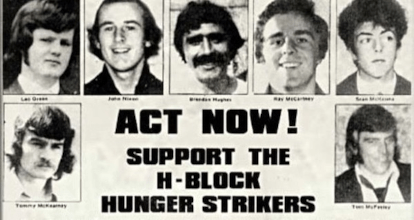
Irish political prisoners confined in the infamous H-Blocks of Long Kesh Detention Centre commence a hunger strike on October 27, 1980. The hunger strike is to continue until their demands for political status and for an end to British torture are met, or until death.

It begins with seven republican volunteers: Brendan Hughes, the IRA commanding officer in the prison, Sean McKenna, Tommy McKearney, Tommy McFeely, Leo Green, and Raymond McCartney, all of the Irish Republican Army (IRA), and John Nixon of the Irish National Liberation Army (INLA).

On December 1, three female prisoners, Mary Doyle, Mairéad Farrell and Mairéad Nugent, join the strike in Armagh Prison. Thirty more republican prisoners join later.

Despite being deceived into ending prematurely after 53 days, it sets the scene for a second hunger strike the following March, led by Bobby Sands. The first hunger strike announcement is made in a statement which is reprinted in full below.

“We the Republican POWs in the H-Blocks, Long Kesh, demand the right of political recognition and that we be accorded the status of political prisoners. We claim this right as captured combatants in the continuing struggle for national liberation and self-determination. We refute most strongly the tag of criminal with which the British have attempted to label us and our struggle, and we point to the devisive, partitionist institution of the six-county state as the sole criminal aspect of the present conflict.

“All of us were arrested under repressive laws, interrogated and often tortured in RUC barracks, and processed through special non-jury courts, where we were sentenced to lengthy terms of imprisonment. After this we were put in the H-Blocks and were expected to bow the knee before the British administration and wear their criminal uniform. Attempts to criminalise us were designed to depoliticise the Irish national struggle.

“We don’t have to recite again the widespread, almost total forms of punishment, degradations and deprivations we have been subjected to. All have failed to break our resistance.

“For the past four years we have endured this brutality in deplorable conditions. We have been stripped naked and robbed of our individuality, yet we refuse to be broken. Further repression only serves to strengthen our resolve and that of our gallant female comrades’ enduring the same hardships in Armagh jail.

“During this period many individuals, religious figures and political organisations and sections of the media have condemned the way we have been treated. Yet despite appeals for a resolution of the H-Block protest, the British government has remained intransigent and has displayed vindictive arrogance in dealing with the problem. They refuse to treat this issue in a realistic manner which is just another reflection of their attitude to the entire Irish question.

“Bearing in mind the serious implications of our final step, not only for us but for our people, we wish to make it clear that every channel has now been exhausted, and not wishing to break faith with those from whom we have inherited our principles, we now commit ourselves to a hunger strike.

“We call on the Irish people to lend us their support for our just demands and we are confident that this support will be very much in evidence in the coming days.

“We call on all solidarity and support groups to intensify their efforts and we also look forward with full confidence to the support of our exiled countrymen in America and Australia.

“We declare that political status is ours of right and we declare that from Monday, October 27th, 1980, a hunger strike by a number of men representing H- Blocks 3, 4, and 5 will commence.

“Our widely recognised resistance has carried us through four years of immense suffering, and it shall carry us through to the bitter climax of death, if necessary.”

Signed: PRO, H-Block blanket men, Long Kesh camp

(From: “The 1980 H-Block hunger strike,” Irish Republican News, http://www.republican-news.org, October 31, 2020)


Leave a comment

Birth of John Keegan “Leo” Casey, the Poet of the Fenians

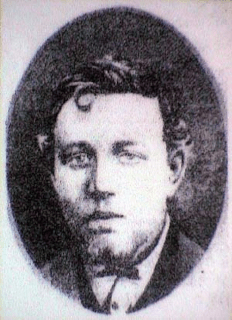
John Keegan “Leo” Casey, Irish poet, orator and republican known as the Poet of the Fenians, is born in Mount Dalton, County Westmeath on August 22, 1846. He is famous as the writer of the song “The Rising of the Moon” and as one of the central figures in the Fenian Rising of 1867. He is imprisoned by the English and dies on Saint Patrick’s Day in 1870.

Casey is born to a teacher during the height of the Great Famine of 1846. Eight years later he moves to Gurteen, near Ballymahon in County Longford, when his father is given the post of headmaster at the local school. His work would come to be closely associated with Ballymahon.

As a teenager Casey works as an assistant to his father and is expected to follow him into teaching. However, he is disillusioned by the insufficiently nationalistic nature of the curriculum and spends a great deal of time writing poetry. It is at this time, reputedly at the age of fifteen, that he writes his best-known song, “The Rising of the Moon,” which commemorates the Irish Rebellion of 1798.

Following the increasing popularity of his songs and ballads at nationalist gatherings, Casey moves to Dublin in the 1860s and becomes active in the Fenian movement. He is a major contributor to The Nation newspaper, for which he assumes his pen name of ‘Leo.’

In 1866, at the age of 20, Casey publishes a collection of poems, entitled A Wreath of Shamrocks. Most of the poems therein had already been published elsewhere, primarily in The Nation. The further fame engendered by the success of the book leads him to be sought after as a speaker. He addresses mass rallies in Dublin, Liverpool and London that year, in the lead up to the Fenian Rising in 1867.

When the uprising fails, Casey is imprisoned without trial for eight months in Mountjoy Prison. He is released on the understanding that he would leave for Australia and not return to Ireland. However, he chooses to stay on in Summerhill, Dublin in disguise, living as a Quaker and continuing to write and publish in secret.

Casey marries Mary Josephine Briscoe in January 1868 and they have a son Michael, who dies shortly after birth in October 1869. Casey’s health had been broken by the treatment he had received in prison. He falls from a cab on or near O’Connell Bridge in the centre of Dublin in 1870. He dies from his injuries on St. Patrick’s Day, March 17, 1870.

Following his death, Casey is buried in Glasnevin Cemetery. The newspapers report that between fifty and one hundred thousand mourners walk in his funeral procession.


Leave a comment

The Templemore Miracles

In August and September 1920 the town of Templemore in County Tipperary is the sight of alleged Marian apparitions. Thousands of people come to the town daily to see the apparitions. The affair occurs during the Irish War of Independence and results in a short-lived local truce between the Irish Republican Army (IRA) and Crown forces. When the truce ends, pilgrims stop coming to the town and the sightings end. The affair is sometimes referred to as the Templemore miracles.

In January 1919 the Irish War of Independence begins and lasts until July 1921. On the night of August 16, 1920, British soldiers of the Northamptonshire Regiment attack Templemore in reprisal for the killing of an Royal Irish Constabulary (RIC) officer by IRA volunteers earlier that day. They fire volleys and burn homes and businesses. No civilians or IRA men are killed but two soldiers die by accident in the fires.

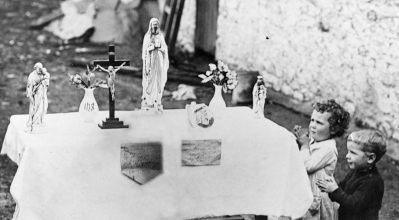
Shortly after the attack, a sixteen-year old farm labourer named James Walsh claims that he was visited by the Virgin Mary in his cottage in the nearby townland of Curraheen. She told him that she was troubled by what was happening in Ireland. At her request he digs a hole in the ground in his bedroom and this soon fills with spring water. Afterwards he claims that all three statues of the Virgin Mary in his home began to bleed. He takes these statues to Templemore, where the bleeding is witnessed. One man who had been crippled for most of his life claims he is dancing in the streets after visiting Walsh’s cottage. He is the first of many who claim to have been cured of their ailments in the presence of Walsh or the statues.

Locals believe that divine intervention had prevented any of them being killed or wounded during the attack by the British. Walsh gathers people around the statues to say the Rosary in Irish. According to Ann Wilson, the statues are seen “as asserting the Catholic Irish identity of the population in the face of the non-Catholic British opponent, a superior spiritual power which would win out against the much more substantial, but merely worldly, advantages of the enemy.”

The affair is soon reported in local and national newspapers, which causes more pilgrims to go to Tipperary, both to see the statues in Templemore and Walsh’s cottage in Curraheen. On August 31, 1920 an RIC inspector writes to the Dublin Castle administration, estimating that over 15,000 pilgrims per day are coming down. Many come seeking cures for various illnesses and report that they had received them. One RIC officer resigns from his job to join a religious order. One soldier is reported to convert to Catholicism. The influx results in a large economic windfall for the town.

The official position of the church is one of ‘extreme reserve.’ The parish priest Reverend Kiely refuses to see the statues. However, no effort is made to stop people making pilgrimages. Local IRA commander James Leahy notes a division between older and younger clergy in the local church, with older clergy generally being skeptical of Walsh while younger clergy are more enthusiastic about his claims.

Prior to the apparitions beginning, Wilson had given a Virgin Mary statue to a local RIC constable named Thomas Winsey, according to the Tipperary Star. Winsey placed the statue in the barracks. This too is said to be bleeding. One day a large crowd of pilgrims besiege the barracks and have to be physically restrained when they attempt to enter it. The statue is removed from the barracks. Police and military stop appearing on the street shortly after.

The IRA effectively takes over the area at this point. They keep order, organise traffic and help pilgrims. However, they do not appear in the streets in uniform and there is an informal truce in effect between them and Crown forces.

Local IRA commander James Leahy is concerned at the effect that tips given to IRA volunteers were having on discipline. He and other local commanders interrogate Walsh and stop believing him after this. He contacts IRA Director of Intelligence Michael Collins. Collins has Dan Breen interrogate Walsh. Breen reports that Walsh “was a fake.” Collins sarcastically replies, “One can’t take any notice of what you say, Breen, because you have no religion.”

Having failed to get the church to intervene and denounce Walsh, Leahy and other IRA members decide to restart the war anyway. On September 29, IRA volunteers attack a group of RIC men between Templemore and Curraheen. Two constables are killed. As anticipated, this brings police and army reinforcements to the area. Soldiers loot and desecrate sites outside Templemore associated with the pilgrimage. Rumours begin that the town itself would soon be attacked. Pilgrims flee the area. The statues apparently stop bleeding.

Interest in the statues and Walsh’s cottage largely end at this point, ending Templemore as a sight for pilgrimages. However, Michael Collins does receive a statue at his request. Upon receiving the statue, he smashes it. He discovers that inside is an alarm clock connected to fountain pen inserts containing sheep’s blood. When the clock strikes a certain time, it sends a spurt of blood out of the statue, giving the impression it is bleeding. It is not clear whether this statue performed in Templemore or was one of the ones owned by James Walsh. Collins had received complaints from a local priest that IRA volunteers had engineered statues that would bleed at intervals.

James Walsh is labelled as a possible spy by Dan Breen. At the request of Templemore clergy he is taken to Salesian College in Limerick and placed in the care of Father Aloysius Sutherland. He emigrates to Australia in 1923, settling in Sydney. Towards the end of his life he attempts to enter numerous religious orders but is unsuccessful due to a prior divorce. He dies in Sydney in 1977, having never returned to Ireland.

Historian John Reynolds states at a talk that the affair could have been a prank that got out of hand or was a money-making swindle. He speculates that Walsh may have been used by others, who really instigated it. He discounts the local IRA as having been the instigators.

The affair is not well-known despite gaining worldwide attention at the time. However, in November 2012 the Irish-language television broadcaster TG4 screens a documentary about it. In 2019 the book The Templemore Miracles, written by John Reynolds, is published.

(Pictured: Children pray beside statues that were reported to have started bleeding, Belfast Telegraph, http://www.belfasttelegraph.co.uk)


Leave a comment

Death of Kieran Doherty, Irish Republican Hunger Striker

Kieran Doherty, Irish republican hunger striker and politician who serves as a Teachta Dála (TD) for the Cavan–Monaghan constituency from June 1981 to August 1981, dies on August 2, 1981, in HM Prison Maze (known to republicans as Long Kesh) on the 73rd day of his hunger strike. He is a volunteer in the Belfast Brigade of the Provisional Irish Republican Army (IRA).

Doherty is the third son in a family of six. He is born on October 16, 1955, in the Andersonstown area of Belfast and is educated at St. Theresa’s Primary School and Glen Road Christian Brothers School (CBS). The Doherty brothers are known cyclists and sportsmen in the Andersontown area. He wins an Antrim Gaelic football medal at minor level in 1971.

Doherty joins Fianna Éireann in 1971 and is interned by the British Government between February 1973 and November 1975. His brothers Michael and Terence are interned between 1972 and 1974.

Doherty works as an apprentice heating engineer. His girlfriend is Geraldine Scheiss and, although they never become formally engaged, they become very close toward the end of his life. Before his arrest, she had not known that he is in the IRA.

In August 1976, while he is out to set a bomb, the van in which he is riding is chased by the Royal Ulster Constabulary (RUC). During the chase Doherty manages to leave the van and hijack a car. He later ditches the car and is found one mile away from the car. He is convicted and sentenced to 18 years for possession of firearms and explosives, with another four years for the hijack.

Doherty starts his hunger strike on May 22, 1981. While on hunger strike, he is elected as an Anti H-Block TD for the Cavan–Monaghan constituency at the 1981 Irish general election, which is held on June 11. He receives 9,121 (15.1%) first preference votes and is elected on the fourth count. The two seats gained by Anti H-Block candidates denies Taoiseach Charles Haughey the chance to form a government, and the 22nd Dáil Éireann sees a Fine GaelLabour Party coalition government come to office, with Garret FitzGerald as Taoiseach.

Doherty dies at the age of 25 on August 2, 1981. He lasts 73 days on hunger strike, the longest of the 1981 hunger strikers, and only one day short of Terence MacSwiney. He is the shortest-serving Dáil deputy ever, serving as a TD for only two months.

Doherty is commemorated on the Irish Martyrs Memorial at Waverley Cemetery in Sydney, Australia. In October 2016, a painting of him is unveiled in Leinster House by Sinn Féin.


Leave a comment

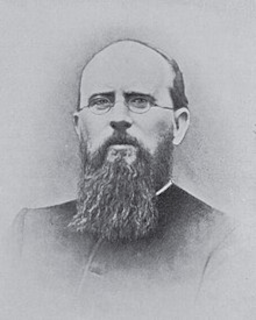
Death of John O’Reily, Archbishop of Adelaide

John O’Reily, the first Bishop of Port Augusta and the second Archbishop of Adelaide, dies in Adelaide, Australia on July 6, 1915.

O’Reily is born John O’Reilly on November 19, 1846, in Kilkenny, County Kilkenny, the son of Michael, a military officer, and Anne, née Gallagher. He completes his primary education at the parochial school of St. John’s Parish, and spends six and a half years at St. Kieran’s College. Due to poor health, he decides against pursuing a military career, and in 1864 he enters All Hallows College in Dublin to study for the priesthood. He learns the Irish language and studies mental philosophy, mathematics and ecclesiastical studies, achieving first prize in each of his classes.

After being ordained on June 21, 1869, O’Reily leaves Ireland for Western Australia in October, arriving in January 1870. Having served briefly in Newcastle (present day Toodyay) and Northam, he becomes a parish priest in Fremantle, establishing the West Australian Catholic Record in 1874 and serving as its publisher, editor and printer from 1883.

When the Diocese of Port Augusta is established in 1887, Pope Leo XIII names O’Reily as its first bishop. Concerned about the financial position of the diocese, which had inherited significant debt from the Diocese of Adelaide, he accepts the posting reluctantly. As bishop, he greatly improves the financial position of the new diocese, reducing its debt by half and earning a reputation as a competent administrator.

In 1894, O’Reily is appointed to replace the deceased Christopher Reynolds as Archbishop of Adelaide. The archdiocese he inherits is burdened with substantial debt, again left over from the old Diocese of Adelaide. Through the sale of church assets and a fundraising campaign, he is able to eliminate most of the Archdiocese’s liabilities while still investing in church infrastructure. He also actively participates in public discussions relating to education policy at a time when the role of the state in supporting religious education is topical. He publicly advocates government assistance for religious schools, stating that it is unfair Catholics pay taxes to support state schools, but receive no funding for their own.

In the later years of his life, poor health forces O’Reily to spend less time attending to his episcopal duties, and from 1905, he keeps to himself in his house in Glen Osmond, leading to the local press referring to him as the “Recluse of Glen Osmond.” Increasingly, his episcopal duties are fulfilled by Bishop of Port Augusta John Norton, who has to visit the more remote parts of O’Reily’s see on his behalf.

As he becomes more frail, O’Reily asks certain priests to accompany him when he travels, among whom is the Dominican prior Robert Spence. When O’Reily requests a coadjutor in 1913, he chooses Spence as his first preference for the role. Despite the reluctance of some clergy to the appointment of a religious as Archbishop, Spence is consecrated as coadjutor, with right of succession, in August 1914.

O’Reily dies at his house in Adelaide on July 6, 1915 and is buried under a large Celtic cross at the West Terrace Cemetery in Adelaide. He is highly regarded by many in South Australian society, with Adelaide’s daily newspapers praising his character, administrative ability and positive relations with non-Catholics.


Leave a comment

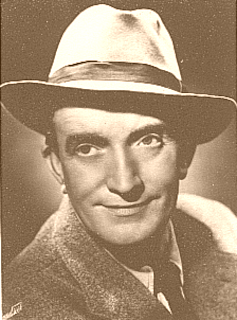
Birth of Cavan O’Connor, “The Singing Vagabond”

Clarence Patrick O’Connor, British singer of Irish heritage known professionally as Cavan O’Connor, is born on July 1, 1899 in Carlton, Nottinghamshire, England. He is most popular in the 1930s and 1940s, when he is billed as “The Singing Vagabond” or “The Vagabond Lover.”

O’Connor is born to parents of Irish origin. His father dies when he is young, and he leaves school at an early age to work in the printing trade. He serves in World War I as a gunner and signaler in the Royal Artillery, after first being rejected by the Royal Navy when it is discovered that he had pretended to be three years older than his real age. He is wounded in the war, aged 16, while serving with the Royal Artillery. After the war he returns to Nottingham where he works in a music shop. He starts singing in clubs and at concerts, before deciding to turn professional in the early 1920s.

O’Connor wins a scholarship to the Royal College of Music in London, where he meets his wife, Rita Tate (real name Margherita Odoli), a niece of the opera singer Maggie Teyte. He makes his first recordings, as Cavan O’Connor, for the Vocalion label in 1925, including “I’m Only a Strolling Vagabond” from the operetta The Cousin from Nowhere, which becomes his signature song. Noted for his fine tenor voice, well suited for recording, he appears on many British dance band recordings in the 1920s and 1930s, and uses a wide variety of pseudonyms, including Harry Carlton, Terence O’Brien, and Allan O’Sullivan. He also joins Nigel Playfair‘s revue company at the Lyric Theatre in Hammersmith, before moving on to playing lead roles in opera productions at The Old Vic, often performing in French, Italian and Spanish.

O’Connor turns increasingly toward light entertainment, largely for financial reasons. He starts appearing in variety shows around the country, often performing Irish folk songs. Having made his first radio broadcasts for BBC Radio in 1926, he continues to feature occasionally, but makes his breakthrough when he is billed, initially anonymously, as “The Strolling Vagabond” and “The Vagabond Lover” on a series of radio programmes produced by Eric Maschwitz in 1935. This is the first British radio series based around a solo singer, and when it becomes known that he is the performer, makes him a star, “one of Britain’s highest paid radio personalities.” The series continues for over ten years. From 1946, his Sunday lunchtime radio series, The Strolling Vagabond, is heard by up to 14 million listeners.

O’Connor consistently tours and continues to broadcast regularly. During World War II he settles in Bangor, Gwynedd, north Wales, and regularly appears on the Irish Half Hour radio programmes. His most popular songs include “The World Is Mine Tonight,” written for O’Connor by Maschwitz and George Posford, “Danny Boy” and “I’ll Take You Home Again, Kathleen,” an American song widely assumed to be Irish. He records frequently for at least 15 record labels over his career, including Decca Records, at one point recording 40 songs in five days. He makes over 800 recordings in total, both under his own name and pseudonyms, and also appears in two films, Ourselves Alone (1936) and Under New Management (known in the U.S. as Honeymoon Hotel, 1946).

After the war, O’Connor returns to live in London, and tours in Australia and South Africa as well as in Don Ross‘s Thanks for the Memory tours. He retires at one point to set up an electrical goods business, but then resumes his music career in the Avonmore Trio with his wife and son, to give occasional performances and make recordings, the last in 1984.

O’Connor dies at the age of 97 in London on January 11, 1997.


Leave a comment

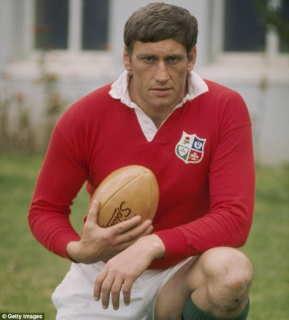
Birth of Willie John McBride, Rugby Union Footballer

William James McBride, former rugby union footballer better known as Willie John McBride, is born at Toomebridge, County Antrim, Northern Ireland on June 6, 1940. He plays as a lock for Ireland and the British and Irish Lions. He plays 63 tests for Ireland including eleven as captain, and tours with the Lions five times, a record that gives him 17 Lions test caps. He also captains the most successful ever Lions side, which tours South Africa in 1974.

Owing to his father’s death when he is four years old, McBride spends most of his spare time helping out on his family farm. Because of this he does not start playing rugby until he is seventeen. He is educated at Ballymena Academy and plays for the school’s First XV. After he leaves he joins Ballymena R.F.C.

In 1962 McBride is selected to play for Ireland. His first Test on February 10, 1962 is against England at Twickenham Stadium. Later that year he is selected to tour South Africa with the British and Irish Lions.

McBride continues to play for Ireland throughout the 1960s and plays for Ireland when they first defeat South Africa in 1965, and when Ireland defeats Australia in Sydney, the first time a Home Nations team had defeated a major southern hemisphere team in their own country. He is again selected for the Lions in 1966, this time touring New Zealand and Australia. He tours South Africa with the Lions again in 1968.

McBride is selected to play for the Lions in their 1971 tour of New Zealand. Despite being criticized by some as being “over the hill,” he is made pack leader and helps the Lions to a test series win over New Zealand, their first and last series win over New Zealand. He receives an MBE in 1971 for services to rugby football.

McBride’s leadership qualities lead to his appointment as captain of the British and Irish Lions in their 1974 tour to South Africa. The test series is won 3–0, with one match drawn, the first Lions series ever won in South Africa. It is one of the most controversial and physical test match series ever played. At the time there are only substitutions if a doctor agrees that a player is physically unable to continue and there are no video cameras and sideline officials to keep the punching, kicking and head butting to a minimum. If the South Africans are to resort to foul play then the Lions decide “to get their retaliation in first.” The signal for this is to call “99,” which is a signal for the Lions to clobber their nearest rival players.

In 1975 as his international career is ending McBride plays his last game for Ireland at Lansdowne Road. The game is against France, and near the end of the match he scores his first test try for Ireland. It is the crowning moment of a great playing career. His last international game is against Wales on March 15, 1975. After retiring from playing the game, McBride coaches the Irish team and is manager of the 1983 Lions tour to New Zealand. Despite the test results being mainly poor, team camaraderie is high and some good wins are recorded in other games.

In 1997 McBride is an inaugural inductee into the International Rugby Hall of Fame. He has been asked to present test jerseys and give motivational speeches to Lions players prior to matches. In 2004 he is named in Rugby World magazine as “Rugby Personality of the Century.” He is a major supporter of the Wooden Spoon Society.

McBride is awarded a CBE in the 2019 New Year Honours list for services to Rugby Union.


Leave a comment

Birth of George Barrington, Pickpocket, Socialite & Pioneer

George Barrington, Irish-born pickpocket, popular London socialite, Australian pioneer, and author, is born in Maynooth, County Kildare on May 14, 1755. His father is either a working silversmith named Waldron, or a Captain Barrington, English troop commander.

Barrington’s escapades, arrests, and trials are widely chronicled in the London press of his day. For over a century following his death, and still perhaps today, he is most celebrated for the line “We left our country for our country’s good.” The attribution of the line to Barrington is considered apocryphal since the 1911 discovery by Sydney book collector Alfred Lee of the 1802 book in which the line first appears.

In 1771 Barrington robs his schoolmaster in Dublin and runs away from school, becoming a member of a touring theatrical company at Drogheda under the assumed name of Barrington. At the Limerick races he joins the manager of the company in picking pockets. The manager is detected and sentenced to penal transportation, and Barrington flees to London, where he assumes clerical dress and continues his pickpocketing. At Covent Garden theatre he robs the Russian Count Orlov of a snuff box, said to be worth £30,000. He is detected and arrested but, as Count Orlov declines to prosecute, is discharged, though subsequently he is sentenced to three years’ hard labour for pocket-picking at Theatre Royal, Drury Lane.

On his release, Barrington is again caught at his old practices and sentenced to five years’ hard labour, but influence secures his release on the condition that he leave England. He accordingly goes for a short time to Dublin and then returns to London, where he is once more detected pocket-picking, and, in 1790, sentenced to seven years’ penal transportation.

One account states that on the voyage out to Botany Bay a conspiracy is hatched by the convicts on board to seize the ship. Barrington discloses the plot to the captain, and the latter, on reaching New South Wales, reports him favourably to the authorities, with the result that Barrington obtains a warrant of emancipation in 1792, becoming subsequently superintendent of convicts and later high constable of Parramatta.

While enjoying the beginnings of his prosperity in Australia, Barrington romances and cohabits with a native woman, Yeariana, who soon leaves him to return to her family. He says that Yeariana possessed “a form that might serve as a perfect model for the most scrupulous statuary.”

Barrington dies on December 27, 1804, at the age of 49 in Parramatta, New South Wales.

At some point in the 1785–1787 period Barrington marries, and the couple has a child, but the names of the wife and child, and their eventual fates, are not known.


Leave a comment

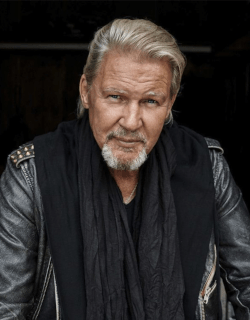
Birth of Johnny Logan, Two-time Eurovision Song Contest Winner

Seán Patrick Michael Sherrard, Irish singer and composer better known by his stage name Johnny Logan, is born in the Melbourne suburb of Frankston, Victoria, Australia on May 13, 1954. He is known as being the only performer to have won the Eurovision Song Contest twice, in 1980 and 1987. He also composes the winning song in 1992.

Logan is born while his father, Charles Alphonsus Sherrard, is a Derry-born Irish tenor known by the artistic name Patrick O’Hagan, is touring Australia. The family moves back to Ireland when he is three years old. He learns the guitar and begins composing his own songs by the age of thirteen. On leaving school he apprentices as an electrician, while performing in pubs and cabaret. His earliest claim to fame is starring as “Adam” in the 1977 Irish musical Adam and Eve and “Joseph” in Joseph and the Amazing Technicolor Dreamcoat.

Logan adopts the stage name Johnny Logan after the main character of the film Johnny Guitar and releases his first single in 1978. He first attempts to participate in the Eurovision Song Contest in 1979, when he places third in the Irish National Final with the song “Angie.” Readers of The Connaught Telegraph in Ireland vote him as “Best New Male Artist.”

In 1980, Logan again enters the Irish National selection for the Eurovision Song Contest with the Shay Healy song “What’s Another Year,” winning the Irish final on March 9 in Dublin. Representing Ireland in the Netherlands, he wins the Eurovision Song Contest on April 19. The song becomes a hit all over Europe and reaches number one in the UK.

In 1987, Logan makes another attempt at Eurovision and with his self-penned song, “Hold Me Now,” representing Ireland at the Eurovision Song Contest in Belgium. The song wins the contest, and he becomes the first person to win the contest twice.

Having composed the Irish Eurovision Song Contest 1984 entry for Linda Martin, “Terminal 3” (which finishes in second place), Logan repeats the collaboration in 1992 when he gives Martin another of his songs, “Why Me?” The song becomes the Irish entry at the finals in Sweden. The song takes the title and cements Logan as the most successful artist in Eurovision history with three wins.

Logan continues to perform and write songs. He is sometimes referred to as “Mister Eurovision” by fans of the contest and the media at large. He has continued his love of participating in musical theatre, having toured Norway with Which Witch, an opera-musical originating in that country. He continues to have success, particularly in the Scandinavian countries. His 2007 album, The Irish Connection, goes platinum in Denmark, twice platinum in Norway and gold in Sweden. He performs in the Celtic rock opera Excalibur from 2009 to 2011.

On May 16, 2020, Logan appears in Eurovision: Europe Shine a Light which is commissioned to replace the 65th Eurovison Song Contest due to its postponement until 2021 as a result of the Coronavirus Pandemic, singing his 1980 winning song “What’s Another Year.”

Logan and his family live in Ashbourne, County Meath. He rarely gives media interviews, claiming to have been frequently misquoted.