Fay is born on August 30, 1870, at 10 Lower Dorset Street, Dublin, the eldest son of four children of William Patrick Fay, a government clerk, and his wife, Martha Fay (née Dowling). He is educated at Belvedere College, Dublin, where he learns shorthand and typing, before leaving to become a secretary for an accountancy firm in Dublin. From an early age he has a passion for the theatre and immerses himself in books on the subject, becoming a drama expert. His brother, William George Fay, shares his enthusiasm and they take part in many amateur productions, setting up the Ormonde Dramatic Company in 1891.
Fay is an ardent nationalist, and Arthur Griffith appoints him drama critic for his newspaper, the United Irishman (1899–1902), where he develops his ideas on how the theatre should be run. Initially in favour of plays in the Irish language, he soon abandons this as unworkable. In May 1901 he attacks W. B. Yeats for his faulty notions about theatre and even his work as a dramatist, ending with the fiercely nationalistic assertion that “there is a herd of Saxon and other swine fattening on us. They must be swept into the sea with the pestilent breed of West Britons with which we are troubled, or they will sweep us there.” Yeats’s and Lady Gregory‘s next play is Cathleen ni Houlihan.
In 1902, Fay writes a famous article advocating a national theatre company that will “be the nursery of an Irish dramatic literature which, while making a world-wide appeal, would see life through Irish eyes.” He is a member of his brother’s National Dramatic Society, which merges with the Irish Literary Theatre in 1902 to form the Irish National Theatre Society, the originating body of the Abbey Theatre. The following year Yeats declares that the national theatre owes its existence to the two Fay brothers. Fay soon abandons Griffith and begins to champion the cause of Yeats.
An excellent tragic actor, Fay can make audiences forget his less than five feet six-inch stature through the power of his voice. When the Abbey Theatre opens on December 27, 1904, he stars in Yeats’s On Baile’s Strand as Cú Chulainn, a role he makes his own. He spends much time training the other actors. As an elocution teacher he has no equal. One play has Yeats leaving with his “head on fire” because of the quality of the voices on stage. Yeats dedicates his play The King’s Threshold (1904) with the words: “In memory of Frank Fay and his beautiful speaking in the character of Seanchan.”
Fay has a close but turbulent relationship with his brother William, whom he defers to in all theatrical matters except acting. Their heated arguments sometimes lead to blows. His temper is always volatile, and he is prone to histrionics and fits of depression. After 1905, the Abbey Theatre becomes a limited company owing to the patronage of Annie Horniman, and the Fays lose most of their control, which results in much tension and bitterness. In 1907, Fay plays Shawn Keogh in the first production of The Playboy of the Western World by John Millington Synge.
Disagreements with Yeats over the approach to choosing and staging of plays comes to a head late in late 1907 and the Fays resign on January 13, 1908. On March 13 they are suspended from the Irish National Theatre Society. They tour the United States with Charles Frohman before separating. Fay then tours England in minor Shakespearean roles and melodrama. Between 1912 and 1914, Thomas MacDonagh and Joseph Mary Plunkett attempt to persuade him to become actor-manager of an Irish theatre. In 1918 he returns to the Abbey Theatre in two short-lived revivals of Yeats’s The Hour Glass and The King’s Threshold. He retires to Dublin permanently in 1921, teaching elocution and directing plays in local colleges.
Fay marries, in 1912, Freda, known as “Bird.” They live at Upper Mount Street, Dublin, and have one son, Gerard, who becomes a popular writer and memoirist. Fay dies on January 2, 1931, having never really recovered from the death of his wife, and is buried at Glasnevin Cemetery. He is credited with creating the Abbey Theatre style of acting, which becomes internationally known, and influences many other schools of acting. He wanted actors to behave as naturally as possible and to speak the lines as people would in real life, rather than with an exaggerated stage delivery. His training is a major influence on subsequent generations, as actors learned to “speak words with quiet force, like feathers borne on puffs of wind.”
(From: “Fay, Frank J. (Francis John)” by Patrick M. Geoghegan, Dictionary of Irish Biography, http://www.dib.ie, October 2009) | Pictured: Portrait of Frank Fay by John Butler Yeats, commissioned by Annie Horniman for the opening of the Abbey Theatre, December 27, 1904)
De Bhaldraithe’s stance on standard forms and spellings is supported by Éamon de Valera despite opposition from traditionalists in the Department of Education, and the work is widely seen as an important benchmark in Irish scholarship.
In 1942, de Bhaldraithe is appointed a professor at the Dublin Institute for Advanced Studies (DIAS) in the department of Celtic Studies. In 1960 he is appointed professor of modern Irish language and literature at University College Dublin (UCD), where he develops an impressive archive of material on Irish dialects. Much of the material in this archive is later used as the basis of Niall Ó Dónaill‘s Foclóir Gaeilge-Béarla, published in 1978, for which he is consulting editor. Also, during the 1970s, de Bhaldraithe translates the Irish language diary of Amhlaoibh Ó Súilleabháin, Cín Lae Amhlaoibh, into English. It is then published by Mercier Press as The Diary of an Irish Countryman.
The language laboratory which de Bhaldraithe sets up in UCD is the first of its kind in any university in Ireland. His interest in seanchas (folklore) leads to his publication of Seanchas Thomáis Laighléis in 1977, while his earlier work includes the ground-breaking study of the Cois Fharraige dialect (a variety of Connacht Irish), Gaeilge Chois Fharraige: Deilbhíocht. In later years he works extensively on the definitive Irish dictionary, Foclóir Stairiúil na Nua-Ghaeilge, which remains unfinished at the time of his death, but which is still in progress today.
De Bhaldraithe dies in Dublin on April 24, 1996, after launching a collection of a friend’s writings entitled The words we use. He marries Vivienne Ní Thoirdhealbhaigh in 1943 and they have nine children.
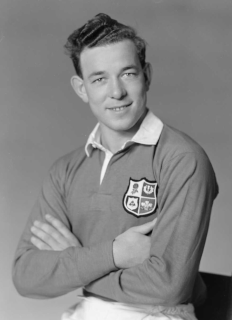
On January 25, 1947, Mullen makes his formal Irish debut in a 12–8 loss to France. He plays as hooker, winning 25 caps for Ireland from 1947 to 1952. A year later, on January 31, 1948, he plays his first game for Barbarian F.C. in a 9–6 victory over Australia in Cardiff, Wales. After helping Ireland to victory over France on January 1, 1948, at the age of 21, he captains Ireland for the first time, on February 14, 1948, leading them to an 11–10 victory over England at Twickenham Stadium.
Mullen captains the Irish team to their first Grand Slam in the 1948 Five Nations Championship and is one of eight players from that team who live to see the country’s next Grand Slam in 2009.
Ireland retains the triple crown in 1949 by beating Wales 5–0 in Swansea, ending a run of defeats on Welsh soil lasting fourteen years. The following season Ireland suffers from injuries and loses to both England and Wales, the latter securing the triple crown.
Mullen is selected to captain the 1950 Lions Tour to Australia and New Zealand. After appearing in the first two tests against New Zealand, a 9–9 draw and an 8–0 loss, he sustains an ankle injury in the latter game and concedes his place to Dai Davies of Wales. Returning for the second test against Australia, a resounding 24–3 victory, he also plays in a semi-official “British Isles RFU” team against Ceylon during their return journey in September.
Under Mullen’s captaincy Ireland regains the international championship in 1951. His last cap comes in a 14–3 loss to Wales at Lansdowne Road on March 8, 1952. In twenty-five successive appearances (fifteen as captain), he secured three international championships and two triple crowns for Ireland in four seasons, their most successful haul of the twentieth century.
Mullen is one of eight surviving members of the 1948 team to witness Ireland’s second grand slam on March 21, 2009. Only weeks later, having suffered from a long illness, he dies on April 27, 2009, at his home, Gilltown Lodge, in Kilcullen.
(Pictured: Karl Mullen, captain of the British Lions rugby union team, 1950)
Cox is the younger of two sons of Dr. Michael Cox, physician originally of Roscommon and Sligo, and Elizabeth Cox (née Nolan). Like his father, he supports the Irish Parliamentary Party (IPP) and maintains an interest in a wide range of subjects outside his chosen career throughout his life. He attends Belvedere College (1900-09), where he often obtains first place in his class and wins the Union prize for essay writing three years in a row (1905–07). He is the first auditor of the Belvedere Debating Society and is succeeded in the post by George O’Brien, who remains his lifelong friend. In 1909, he wins both a Royal University of Ireland (RUI) scholarship and an entrance exhibition to University College Dublin (UCD), a college of the new National University of Ireland (NUI).
Working for an arts degree at UCD, then housed at 86 St. Stephen’s Green, Cox overcomes an innate shyness to cultivate a reputation as a skillful and humorous orator in the Literary and Historical Society (L&H), where he befriends both Kevin O’Higgins and John A. Costello. He has immense respect for both men, and they remain firm friends. The respect is reciprocal, and during their subsequent careers O’Higgins and Costello often have occasion to seek Cox’s wise counsel. In 1912, Cox defeats Costello for the auditorship of the L&H by 112 votes to 63, and in the same year attains a first-class honours BA. His role as auditor means that he is involved with UCD for a further year. He attends lectures at the Incorporated Law Society while at the same time he pursues both the LL. B course, a one-year postgraduate law degree, and an MA at UCD. By the end of 1913 he has achieved first place in the LL. B and first-class honours in his MA. In addition, he has become auditor of the Solicitors’ Apprentices’ Debating Society.
After university Cox is apprenticed to a solicitor, Francis Joseph Scallan, who runs a firm in partnership with his brother, John Louis Scallan. On qualifying in 1915, he remains with the firm as an assistant solicitor until 1920, when he forms a partnership with another solicitor, John McAreavey. The firm is called Arthur Cox & Co. and has its offices at 5 St. Stephen’s Green. Initially the new firm’s clients are predominantly made up of those for whom he worked at his previous firm, and friends from his university days. Through George O’Brien he meets Sir Horace Plunkett, president of the Irish Agricultural Organisation Society (IAOS), a connection of enormous benefit, which sees the firm both become solicitor to the IAOS and gain a large number of clients through its membership.
Despite his relative youth, Cox is held in high esteem by those attempting to construct the apparatus of the newly independent Irish Free State in 1922. This is clear when he provides Hugh Kennedy, law officer to the provisional government and future Chief Justice of Ireland, with a lengthy opinion on the status of the Anglo–Irish Treaty, in the context of drafting a constitution for the new state. He is conscious of the need to counter claims that the treaty does not go far enough in acknowledging Irish nationhood; and he advises that the first article of the new constitution should explicitly state that the sovereignty of the new state derives from the Irish people. This is ultimately done in the preamble of the Constitution of the Irish Free State (1922).
In 1923, Cox is appointed solicitor to Siemens-Schuckert, the German engineering firm, and helps to negotiate the terms of an agreement with the Irish government for the construction of a hydro-electric station at Ardnacrusha, County Clare. In 1926, the Electricity (Supply) Act is passed, on which he advises. Although he experiences much success in these years, he is very much affected by the death of his friend Kevin O’Higgins, who is shot and dies from his injuries on July 10, 1927. He visits O’Higgins on his deathbed. Arthur Cox & Co. expands rapidly in its early years, and in 1926 Cox and McAreavey purchase new premises at 42–3 St. Stephen’s Green. Four years later he buys his partner out of the firm.
Given his friendships with various members of the original Free State administration, and the amount of work he receives from it, government work for Cox dries up when Fianna Fáil comes to power in 1932. However, the protectionist corporate policies and implementing legislation of the new administration bring new opportunities. The legislation places severe restrictions on foreign companies owning and operating enterprises in Ireland. He develops a reputation for assisting corporate clients to circumnavigate the restrictive laws. Along with his friend James Beddy, chief executive of the Industrial Credit Corporation, he realises that foreign investment is essential to the growth of the Irish economy. He introduces many clients to Beddy, and between them they find ways to assist the firms in investing in various enterprises without breaching the law. During this period, he cements his reputation as the foremost corporate lawyer in Ireland. This is evident when James Marmion Gilmor Carroll appoints him, as one of only two non-family members, to the board of the tobacco manufacturers P. J. Carroll & Co. He plays a key role in transforming the archaic practices of the firm by persuading Carroll to recruit Kevin McCourt as executive director. He and McCourt later convince Carroll to employ his nephew, Don Carroll, who plays a key role in the modernisation and diversification of the firm. In 1960 He and Carroll negotiate the sale of 40 per cent of the company to Rothmans International.
Despite his reputation as a corporate lawyer, Cox also represents non-corporate clients, some of whom include well-known personalities. In 1946, he agrees to assist Hungarian film-maker Gabriel Pascal in attempting to persuade the Irish government to establish an Irish film studio, with a view to filming the plays of George Bernard Shaw. He puts much time and energy into trying to convince the government to provide finance for the venture, but to no avail.
In 1942, Cox is elected to the council of the Incorporated Law Society and becomes president of the society for the 1951-52 term, presiding over the celebrations to commemorate the centenary of the society’s charter of incorporation. In 1951, he also becomes chairman of the company law reform committee, which produces its report, known as “the Cox report,” in 1958. Renowned for his eccentricities, he is almost as well known for his shabby mode of dress as he is for his incisive mind and immense capacity for work. His reputation is also based on a strict adherence to discretion and confidentiality. This is clear in 1948 when his old friend John A. Costello, having been offered the office of Taoiseach in the first inter-party government, turns to him for advice on whether he should accept the post. In 1954, Costello nominates him to the 8th Seanad.
In October 1953, the London firm of Nicholl Manisty & Co. retains him to represent British Prime Minister Sir Winston Churchill in a libel action brought by BrigadierEric Dorman O’Gowan, arising from comments in Churchill’s The Second World War: The Hinge of Fate. Churchill also relies on the advice of his friend Sir Hartley Shawcross, leader of the English bar, who makes several visits to Dublin to meet Cox and counsel (including John A. Costello). Cox and Shawcross believe it necessary to reach some form of settlement to avoid Churchill having to appear in court. The action is therefore withdrawn in return for an undertaking that certain corrections will be made.
On August 5, 1940, Cox marries Brigid O’Higgins (née Cole), widow of his friend Kevin O’Higgins. Prior to this he lives with his mother at 26 Merrion Square. He had purchased Carraig Breac in Howth in 1936 and moves there on his marriage. His commitment to his work means that he often works seven days a week and he therefore keeps a flat on Mespil Road, Dublin, from 1940. In 1959, he sells Carraig Breac and moves to 8 Shrewsbury Road, Dublin.
On February 14, 1961, Brigid Cox dies. Soon after, Cox decides to retire from his profession and study for the priesthood. He is intent on becoming a Jesuit and discusses his intentions with the Archbishop of Dublin, John Charles McQuaid, who agrees to ordain him after two years of private tuition at the Jesuit theologate at Milltown Park, Dublin. On being accepted by the Jesuits, he makes arrangements to settle his worldly affairs by selling his home on Shrewsbury Road and leaving his practice to the existing partners. He enters Milltown Park on October 15, 1961, and is ordained on December 15, 1963. His impact on Irish life over the previous forty years is evident by the presence at his ordination of John A. Costello, W. T. Cosgrave, Seán T. O’Kelly, and James Dillon, among others.
Following ordination Cox is appointed to serve at the Jesuit mission in Monze, Northern Rhodesia (Zambia). He arrives at Monze in August 1964 and is appointed extraordinary chaplain to the local convent and hospital. On June 8, 1965, he suffers head injuries in a car accident while traveling to Namwada in Zambia. Taken to Choma hospital, he initially appears to be relatively unscathed but collapses and dies on June 11, 1965. He is found to have suffered from a cerebral haemorrhage and a fractured skull. He is buried in the grounds of the Jesuit retreat house in Chikuni, Zambia.
Many of the Cox family papers are housed at the UCD archives.
(From: “Cox, Arthur Conor Joseph” by Shaun Boylan, Dictionary of Irish Biography, http://www.dib.ie, October 2009)
Connell is ordained priest by Archbishop John Charles McQuaid on May 19, 1951. He takes up a teaching post at the Department of Metaphysics at the University College Dublin. He is appointed Professor of General Metaphysics in 1972 and in 1983 becomes the Dean of the Faculty of Philosophy and Sociology. The College’s Department of Metaphysics is abolished after his departure.
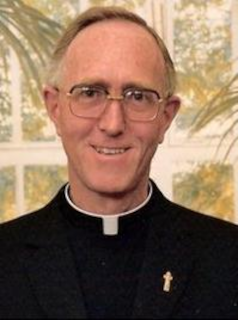
Connell is appointed Archbishop of Dublin by the Holy See in early 1988. He is consecrated at St. Mary’s Pro-Cathedral, Dublin on March 6, 1988. He is created Cardinal-Priest by Pope John Paul II at the Consistory in Rome on February 21, 2001, with the TitulusS. Silvestri in Capite. Archbishops of Armagh, who hold the higher title of Primate of All Ireland, are more frequently appointed Cardinal than Archbishops of Dublin. The last Archbishop of Dublin to have been a cardinal is Cardinal Edward MacCabe, who was appointed in 1882. A large Irish contingent from Church and State, along with family and friends of the Cardinal, attend the installation which for the first time takes place at the front of the entrance to St. Peter’s Basilica.
On April 26, 2004, Connell retires as archbishop, handing the diocese to the coadjutor bishop, Diarmuid Martin. All bishops submit their resignation to the Pope on their 75th birthday. Connell’s is accepted shortly after his 78th birthday.
It is Connell’s failure, when Archbishop of Dublin in 1988–2004, to address adequately the abuse scandals in Dublin that lead the Vatican to assign Archbishop Martin as his replacement in the country’s largest diocese. The Murphy Report finds that Connell had handled the affair “badly” as he was “slow to recognise the seriousness of the situation.” It does praise him for making the archdiocesan records available to the authorities in 2002 and for his 1995 actions in giving the authorities the names of 17 priests who had been accused of abuse, although it says the list is incomplete as complaints were made against at least 28 priests in the archdiocese.
From 1988 Connell also continues to insure his archdiocese against liability from complainants, while claiming to the Murphy Commission that the archdiocese is “on a learning curve” in regard to child abuse. He arranges for compensation payments to be made from a “Stewardship Trust” that is kept secret from the archdiocese’s parishioners until 2003. In 1996 he refuses to help a victim of Paul McGennis and does not pass on what he knows about McGennis to her, or to the police. He apologises for this in 2002.
Desmond Connell dies in Dublin at the age of 90 on February 21, 2017, exactly sixteen years after his creation as Cardinal.
Clarke is born in Dublin on March 17, 1889, the younger son and third child of Joshua Clarke and Brigid Clarke (née MacGonigal). Church decorator Joshua Clarke moves to Dublin from Leeds, West Yorkshire, England, in 1877 and starts a decorating business, Joshua Clarke & Sons, which later incorporates a stained-glass division. Through his work with his father, Clarke is exposed to many schools of art but Art Nouveau in particular.
Clarke is educated at the Model School in Marlborough Street, Dublin, and Belvedere College, which he leaves in 1905. After his mother’s death in 1903, he is apprenticed into his father’s studio and attends evening classes in the Metropolitan College of Art and Design. His The Consecration of St. Mel, Bishop of Longford, by St. Patrick wins the gold medal for stained-glass work in the 1910 Board of Education National Competition. At the art school in Dublin, he meets fellow artist and teacher Margaret Crilley. They marry on October 31, 1914.
Clarke moves to London to seek work as a book illustrator. Picked up by London publisher George G. Harrap and Co., he starts with two commissions which are never completed. Difficulties with these projects makes Fairy Tales by Hans Christian Andersen his first printed work, in 1916. It includes 16 colour plates and more than 24 halftone illustrations. This is followed by illustrations for an edition of Edgar Allan Poe‘s Tales of Mystery and Imagination, the second version of which, published in 1923, makes his reputation as a book illustrator. His work can be compared to that of Aubrey Beardsley, Kay Nielsen, and Edmund Dulac. His final book, Selected Poems of Algernon Charles Swinburne, is published in 1928.
Clarke also continues to work in stained-glass, producing more than 130 windows. His glass is distinguished by the finesse of its drawing and his use of rich colours. He is especially fond of deep blues. His use of heavy lines in his black-and-white book illustrations echoes his glass techniques.
Clarke is plagued with ill health, in particular respiratory problems. He is diagnosed with tuberculosis in 1929 and goes to a sanatorium in Davos, Switzerland. Fearing that he will die abroad, he begins his journey back to Dublin in 1931, but dies on this journey on January 6, 1931, in Chur where he is buried. A headstone is erected but local law requires that the family pledge to maintain the grave 15 years after the death. This is not explained to the Clarke family and Harry Clarke’s remains are disinterred in 1946 and reburied in a communal grave.
Fay is the eldest son of four children of William Patrick Fay, a government clerk, and his wife, Martha Fay (née Dowling). He is educated at Belvedere College, Dublin, where he learns shorthand and typing, before leaving to become a secretary for an accountancy firm in Dublin. From an early age he has a passion for the theatre and immerses himself in books on the subject, becoming a drama expert. His brother, William George Fay, shares his enthusiasm and they take part in many amateur productions, setting up the Ormonde Dramatic Company in 1891.
Fay is an ardent nationalist and Arthur Griffith appoints him drama critic for his newspaper, the United Irishman (1899–1902), where he develops his ideas on how the theatre should be run. Initially in favour of plays in the Irish language, he soon abandons this as unworkable. In May 1901 he attacks W. B. Yeats for his faulty notions about theatre and even his work as a dramatist, ending with the fiercely nationalistic assertion that “there is a herd of Saxon and other swine fattening on us. They must be swept into the sea with the pestilent breed of West Britons with which we are troubled, or they will sweep us there.” Yeats’s and Lady Gregory‘s next play is Cathleen ni Houlihan.
In 1902, Fay writes a famous article advocating a national theatre company that will “be the nursery of an Irish dramatic literature which, while making a world-wide appeal, would see life through Irish eyes.” He is a member of his brother’s National Dramatic Society, which merges with the Irish Literary Theatre in 1902 to form the Irish National Theatre Society, the originating body of the Abbey Theatre. The following year Yeats declares that the national theatre owes its existence to the two Fay brothers. Fay soon abandons Griffith and begins to champion the cause of Yeats.
An excellent tragic actor, Fay can make audiences forget his less than five feet six inch stature through the power of his voice. When the Abbey Theatre opens on December 27, 1904, he stars in Yeats’s On Baile’s Strand as Cú Chulainn, a role he makes his own. He spends much time training the other actors. As an elocution teacher he has no equal. One play has Yeats leaving with his “head on fire” because of the quality of the voices on stage. Yeats dedicates his play The King’s Threshold (1904) with the words: “In memory of Frank Fay and his beautiful speaking in the character of Seanchan.”
Fay has a close but turbulent relationship with his brother William, whom he defers to in all theatrical matters except acting. Their heated arguments sometimes lead to blows. His temper is always volatile and he is prone to histrionics and fits of depression. After 1905, the Abbey Theatre becomes a limited company owing to the patronage of Annie Horniman, and the Fays lose most of their control, which results in much tension and bitterness. In 1907, Fay plays Shawn Keogh in the first production of The Playboy of the Western World by John Millington Synge.
Disagreements with Yeats over the approach to choosing and staging of plays comes to a head late in late 1907 and the Fays resign on January 13, 1908. On March 13 they are suspended from the Irish National Theatre Society. They tour the United States with Charles Frohman before separating. Fay then tours England in minor Shakespearean roles and melodrama. Between 1912 and 1914, Thomas MacDonagh and Joseph Mary Plunkett attempt to persuade him to become actor-manager of an Irish theatre. In 1918 he returns to the Abbey Theatre in two short-lived revivals of Yeats’s The Hour Glass and The King’s Threshold. He retires to Dublin permanently in 1921, teaching elocution and directing plays in local colleges.
Fay marries, in 1912, Freda, known as “Bird.” They live at Upper Mount Street, Dublin, and have one son, Gerard, who becomes a popular writer and memoirist. Fay dies on January 2, 1931, having never really recovered from the death of his wife, and is buried at Glasnevin Cemetery. He is credited with creating the Abbey Theatre style of acting, which becomes internationally known, and influences many other schools of acting. He wanted actors to behave as naturally as possible and to speak the lines as people would in real life, rather than with an exaggerated stage delivery. His training is a major influence on subsequent generations, as actors learned to “speak words with quiet force, like feathers borne on puffs of wind.”
(From: “Fay, Frank J. (Francis John)” by Patrick M. Geoghegan, Dictionary of Irish Biography, http://www.dib.ie, October 2009) | Pictured: Portrait of Frank Fay by John Butler Yeats, commissioned by Annie Horniman for the opening of the Abbey Theatre, December 27, 1904)
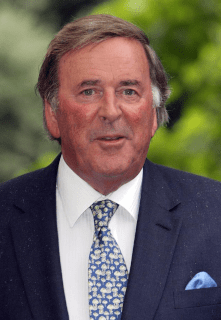
Sir Michael Terence WoganKBEDL, Irish-British radio and television broadcaster who works for the BBC in the United Kingdom (UK) for most of his career, is born at Cleary’s Nursing Home, Elm Park, Limerick, County Limerick, on August 3, 1938. Between 1993 and his semi-retirement in December 2009, his BBC Radio 2 weekday breakfast programme Wake Up to Wogan regularly draws an estimated eight million listeners. He is believed at the time to be the most listened-to radio broadcaster in Europe.
Wogan is the elder of two children. He is the son of the manager of Leverett & Frye, a high-class grocery store in Limerick, and is educated at Crescent College, a Jesuit school, from the age of eight. He experiences a strongly religious upbringing, later commenting that he had been brainwashed into believing by the threat of going to hell. Despite this, he often expresses his fondness for the city of his birth, commenting on one occasion that “Limerick never left me, whatever it is, my identity is Limerick.”
At the age of 15, after his father is promoted to general manager, Wogan moves to Dublin with his family. While living there he attends Crescent College’s sister school, Belvedere College. He participates in amateur dramatics and discovers a love of rock and roll. After leaving Belvedere in 1956, he has a brief career in the banking profession, joining the Royal Bank of Ireland. Still in his twenties, he joins the national broadcaster of Ireland, Raidió Teilifís Éireann (RTÉ), as a newsreader and announcer, after seeing a newspaper advertisement inviting applicants.
Wogan conducts interviews and presents documentary features during his first two years at RTÉ, before moving to the light entertainment department as a disc jockey and host of TV quiz and variety shows such as Jackpot, a top-rated quiz show on RTÉ in the 1960s.
Wogan is a leading media personality in Ireland and Britain from the late 1960s, and is often referred to as a “national treasure.” In addition to his weekday radio show, he is known for his work on television, including the BBC One chat show Wogan, presenting Children in Need, the game show Blankety Blank and Come Dancing. He is the BBC’s commentator for the Eurovision Song Contest from 1971 to 2008 (radio in 1971, 1974–1977; television in 1973, 1978, 1980–2008) and the Contest’s host in 1998. From 2010 to 2015 he presents Weekend Wogan, a two-hour Sunday morning show on BBC Radio 2.
In 2005, Wogan acquires British citizenship in addition to his Irish nationality and is awarded a knighthood in the same year and is therefore entitled to use the title “Sir” in front of his name.
Wogan’s health declines after Christmas 2015. He does not present Children in Need in November 2015, citing back pain as the reason for his absence from the long-running annual show. One of his friends, Father Brian D’Arcy, visits him during January and notices he is seriously ill. He dies of cancer at the age of 77 on January 31, 2016 at his home.
After Wogan’s death and his private funeral a few weeks later, a public memorial service is held on September 27 the same year. This is held at Westminster Abbey and is opened by a recording of Wogan himself, and features a number of his celebrity friends making speeches, such as Chris Evans and Joanna Lumley. The service is broadcast live on BBC Radio 2.
On November 16, 2016, the BBC renames BBC Western House, home of BBC Radio 2, in his memory, to BBC Wogan House.
Bowman is brought up in Ballsbridge in south Dublin. His father works for Great Southern Railways (later CIÉ) and his mother is a nurse, originally from County Monaghan. He is educated at Belvedere College and Trinity College Dublin where he receives a bachelor’s degree in history and political science in 1970 and a PhD in political science in 1980. He joins Radio Éireann in 1962, later becoming the presenter and commentator on numerous current affairs programmes, as well as an analyst of political developments and interviewer of politicians on radio and later on television. In the 1980s, he presents the current affairs programme Today Tonight, the precursor to Prime Time.
Bowman wins Jacob’s Awards in 2013 and 2016 for his radio broadcasting, the former for his presentation of the current affairs programme, Day by Day. In April 2008, he comments on RTÉ television coverage of the state funeral of Patrick Hillery, a former President of Ireland.
Bowman chairs the audience-participation political programme Questions and Answers on RTÉ One television for 21 years, the final edition airing on June 29, 2009. He is the presenter of Bowman: Sunday: 8.30 (previously Bowman Saturday) on radio, a weekly compilation of material from broadcasting archives at home and abroad.
Bowman writes a history of RTÉ Television called Window and Mirror. RTÉ Television: 1961-2011. It is launched by TaoiseachEnda Kenny at the National Museum of Ireland in Dublin on November 23, 2011.
Bowman is married to psychiatrist Eimer Philbin Bowman and they have have four children: Jonathan, Emma, Abie and Daniel. His eldest son, Jonathan Philbin Bowman, a journalist, television and radio presenter, dies in an accident in March 2000. His daughter, Emma Philbin Bowman, works in Dublin as a psychotherapist. His middle son, Abie Philbin Bowman, is a columnist for The Dubliner magazine and a stand-up comedian, while in 2005 his youngest son, Daniel, initiates Be Not Afraid, a charity wristband campaign which raises over €80,000 in aid of Turning the Tide of Suicide and the Irish Red Cross and later sets up a youth marketing firm, Spark.
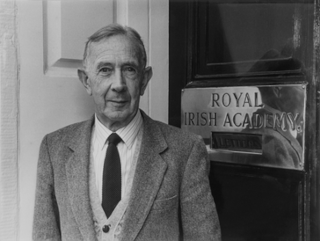
Ryan is Professor of Oriental Languages at University College Dublin before his appointment by Pope Paul VI as Archbishop of Dublin and Primate of Ireland on December 29, 1971. Maintaining his connection and interest in oriental studies, he serves as chairman of the trustees of the Chester Beatty Library from 1978 to 1984.
During his term, Ryan consolidates much of the expansion of the archdiocese which had taken place during the term of his predecessor. He also oversees the fuller implementation of the reforms of Vatican II. He is particularly interested in liturgical reform.
Ryan also takes a traditional stand on social issues, including poverty, family life and opposition to abortion. He strongly promotes the Eighth Amendment of the Constitution of Ireland in 1983, granting the equal right to life to mother and unborn.
As Archbishop, Ryan gives the people of Dublin a public park on a site earmarked by his predecessors for a proposed cathedral. It is named “Archbishop Ryan Park” in his honour. The land, at Merrion Square, is a gift from the archbishop to the city of Dublin.
Ryan is named in the Murphy Report, released in 2009, on sexual abuse of children in Dublin. His actions in respect of complaints against priest Fr. McNamee are described in the report as “an example of how, throughout the 1970s, the church authorities were more concerned with the scandal that would be created by revealing Fr. McNamee’s abuse rather than any concern for the abused.” He also does not act on complaints against other priests who are also subsequently confirmed to be abusers.
In January 2010, after Ryan has been criticised in the Murphy Report the previous year, Dublin City Council seeks public views on renaming “Archbishop Ryan Park.” Later that same year it is renamed “Merrion Square Park” by the City Council.