seamus dubhghaill

Promoting Irish Culture and History from Little Rock, Arkansas, USA


Leave a comment

Assassination of Irish Republican Ronnie Bunting

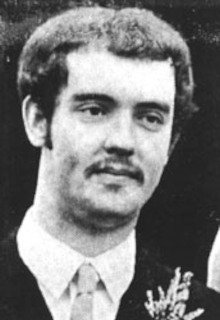
Ronnie Bunting, a Protestant Irish republican and socialist activist, is assassinated on October 15, 1980, when several gunmen enter his home in the Downfine Gardens area of Andersonstown.

Bunting is born into an Ulster Protestant family in East Belfast. His father, Ronald Bunting, had been a major in the British Army and Ronnie grew up in various military barracks around the world. His father became a supporter and associate of Ian Paisley and ran for election under the Protestant Unionist Party banner.

Having completed his education and graduating from Queen’s University Belfast, Bunting briefly becomes a history teacher in Belfast, but later becomes involved in the Northern Ireland Civil Rights Association and then with Irish republican organisations.

Unlike most Protestants in Northern Ireland, Bunting becomes a militant republican. His father, by contrast, was a committed Ulster loyalist. Despite their political differences, they remain close.

Bunting joins the Official Irish Republican Army (OIRA) around 1970 as he is attracted to their left-wing and secular interpretation of Irish republicanism and believes in the necessity of armed revolution. The other wing of the IRA, the Provisional Irish Republican Army, is seen to be more Catholic and nationalist in its outlook. At this time, the communal conflict known as the Troubles is beginning and the Official IRA is involved in shootings and bombings. He is interned in November 1971 and held in Long Kesh until the following April.

In 1974, Bunting follows Seamus Costello and other militants who disagree with the Official IRA’s ceasefire of 1972, into a new grouping, the Irish National Liberation Army (INLA). Immediately, a violent feud breaks out between the Official IRA and the INLA.

In 1975, Bunting survives an assassination attempt when he is shot in a Belfast street. In 1977, Costello is killed by an Official IRA gunman in Dublin. Bunting and his family hide in Wales until 1978, when he returns to Belfast. For the remaining two years of his life, he is the military leader of the INLA. The grouping regularly attacks the British Army and Royal Ulster Constabulary (RUC) in Belfast. He calls in claims of responsibility to the media by the code name “Captain Green.”

At about 4:30 AM on October 15, 1980, several gunmen wearing balaclavas storm Bunting’s home in the Downfine Gardens area of Andersonstown. They shoot Bunting, his wife Suzanne and another Protestant INLA man and ex-member of the Red Republican Party, Noel Lyttle, who has been staying there after his recent release from detention.

Both Bunting and Lyttle are killed. Suzanne Bunting, who is shot in the face, survives her serious injuries. The attack is claimed by the Ulster Defence Association (UDA), but the INLA claims the Special Air Service are involved.

Upon his death, Bunting’s body is kept in a funeral parlour on the Newtownards Road opposite the headquarters of the UDA. On the day of the funeral, as the coffin is being removed, UDA members jeer from their building. The Irish Republican Socialist Party wants a republican paramilitary-style funeral for Bunting but his father refuses and has his son buried in the family plot of a Church of Ireland cemetery near Donaghadee.
Leave a comment

Birth of Rev. William Corby, Chaplain & Notre Dame President

The Rev. William Corby, American priest of the Congregation of Holy Cross and Union Army chaplain in the American Civil War attached to the Irish Brigade, is born in Detroit, Michigan on October 2, 1833. He serves twice as president of the University of Notre Dame.

Corby is born to Daniel Corby, an Irish immigrant, and his wife Elizabeth, a Canadian. He attends public school until age 16, then joins his father’s real estate business. In 1853, he enrolls in the 10-year-old college of Notre Dame in South Bend, Indiana, and begins study for the priesthood three years later. Following ordination, he teaches at Notre Dame and serves as a local parish priest.

Corby leaves his position at Notre Dame and joins the predominately Catholic Irish Brigade in 1861. He spends the next three years as chaplain of the 88th New York Volunteer Infantry, which is one of the five original regiments in the Irish Brigade. He is perhaps best known for giving general absolution to the Irish Brigade on the second day of the Battle of Gettysburg. Of the Brigade’s original 3,000 men, only about 500 remain. Of the men Corby absolves that day, 27 are killed, 109 are wounded, and 62 are listed as missing. The scene of Corby blessing the troops is depicted in the 1891 painting Absolution under Fire by Paul Wood, and dramatized in the 1993 film Gettysburg. His memoir of the Irish Brigade becomes a best-seller.

Following his service in the Civil War, Corby returns to Notre Dame and serves as its vice-president (1865–1866) and twice as its president (1866–1872, 1877-1881). Under his first administration, enrollment at Notre Dame increases to more than 500 students. In 1869 he opens the law school, which offers a two-year course of study, and in 1871 he begins construction of Sacred Heart Church, today the Basilica of the Sacred Heart, Notre Dame. The institution is still small, and he teaches in the classroom and knows most students and faculty members. In 1869, the entire student body and the faculty present him with the gift of a black horse and, when he leaves the presidency three years later, they present him with a matching carriage.

Corby becomes president again following the short term of Fr. Patrick Colovin. When he returns to the presidency, Notre Dame has not yet become a significant academic institution. His presidency sees the April 1879 fire that destroys the old Main Building of the school. He sends all students home and promises that they will return to a “bigger and better Notre Dame.” He overcomes the $200,000 fire loss and rebuilds the Main Building, which now stands with its “Golden Dome.” During his administration, he also constructs Washington Hall, in which he takes much pride, and starts the construction of St. Edward’s Hall for the minims program.

In addition to his presidency, Corby is also serving as the Holy Cross Provincial, when Rev. Edward Sorin, who had become Superior General of the Congregation, writes to him to tell him that he will have to relinquish one of his positions. He wants to remain president but is overruled by Sorin. Famous throughout the U.S. Catholic world as chaplain for the Irish Brigade, known as the “Fighting Irish,” it may be that the nickname followed Corby back to Notre Dame, where it stuck.

Corby dies at the age of 64 on December 28, 1897 in South Bend, Indiana. He is buried in Holy Cross Cemetery, Notre Dame, Indiana.

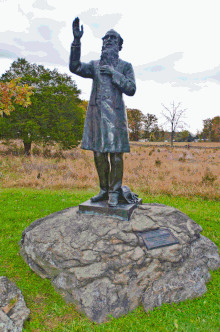
A statue by Samuel Murray, depicting Corby with right hand raised in the gesture of blessing, stands upon the same boulder at the Gettysburg Battlefield on which the priest stood while blessing the troops that second morning of the battle. It is the first statue of a non-general erected on the Gettysburg Battlefield, and is dedicated in 1910.

Corby is widely remembered among military chaplains and celebrated by Irish American fraternal organizations. Corby Hall at Notre Dame is named for him, and a copy of the Gettysburg statue stands outside the building. An organization of Notre Dame alumni is named The William Corby Society.

(Pictured: Statue of Father William Corby by Samuel Murray, Gettysburg Battlefield, Gettysburg, Pennsylvania)


Leave a comment

The Founding of Saor Éire

Saor Éire, a left-wing political organisation, is established on September 26, 1931 by communist-leaning members of the Irish Republican Army, with the backing of the IRA leadership. Notable among its founders is Peadar O’Donnell, former editor of An Phoblacht and a leading left-wing figure in the IRA. Saor Éire describes itself as “an organization of workers and working farmers.”

It is believed that the support of the then IRA chief of staff Moss (Maurice) Twomey is instrumental in the organisation’s establishment. However, Tim Pat Coogan claims that Twomey is doubtful about the organisation, worrying about involvement in electoral politics and possible communist influence.

During its short existence Saor Éire uses the republican publication An Phoblacht, under the editorship of Frank Ryan, to report on its progress and to promote its radical, left-wing republican views.

On the weekend of September 26-27, 1931, Saor Éire holds its first conference in Dublin at Iona Hall. One hundred and fifty delegates from both the Irish Free State and Northern Ireland attend the conference against a background of police raids on the houses and offices connected with Saor Éire and An Phoblacht. Seán Hayes is chairman, while David Fitzgerald acts as secretary.

The conference elects an executive of Hayes, Fitzgerald, Sean McGuinness, May Laverty, Helena Molony, Sheila Dowling, Sheila Humphreys, D. McGinley, Mick Fitzpatrick, Seán MacBride, Michael Price, Peadar O’Donnell, Mick Hallissey, M. O’Donnell, Patrick McCormack, Tom Kenny, L. Brady, Nicholas Boran, John Mulgrew and Tom Maguire. George Gilmore and Frank Ryan are also involved.

The constitution elaborates upon the aims by describing a two-phase programme. The first phase is described as being one of organisation and propagandising in order to organise a solid front for mass resistance to the oppressors. This is to build upon the day-to-day resistance and activity towards “rents, annuities, evictions, seizures, bank sales, lock-outs, strikes and wage-cuts.” This challenge, it is believed, would lead to power passing from the hands of the imperialists to the masses. The second phase is one of consolidation of power through the organisation of the economy and a workers’ and working farmers’ republic.

Ideologically Saor Éire adheres to the Irish socialist republicanism developed by James Connolly and Peadar O’Donnell. As a consequence of the heavy influence of O’Donnell, Saor Éire strongly advocates the revival of Gaelic culture and the involvement of the poorer rural working communities in any rise against the Irish capitalist institutions and British imperialism.

The organisation is attacked by the centre-right press and the Catholic Church as a dangerous communist group, and is quickly banned by the Free State government. The strength of reaction against it prevents it from becoming an effective political organisation. O’Donnell and his supporters attempt a similar initiative two years later with the establishment of the Republican Congress in 1933.


Leave a comment

Birth of Charlie Lawson, Northern Irish Actor

charles-lawson

Quintin Charles Devenish “Charlie” Lawson, actor from Northern Ireland best known for playing Jim McDonald in the ITV soap opera Coronation Street, is born in Enniskillen, County Fermanagh on September 17, 1959.

Lawson is raised in a Protestant family and is educated at Campbell College, a grammar school in Belfast. He then trains as an actor at the Guildhall School of Music and Drama in London, where a classmate and good friend of his is fellow Enniskillen native Adrian Dunbar, whom Lawson says is the first Catholic he has ever met.

Lawson appears in at least three films and in at least twenty television productions. He is probably best known for appearing as Jim McDonald in the ITV television soap opera Coronation Street. He first appears as Jim in 1989 and remains a regular character for eleven years, since which time his appearances have been few and far between.

Lawson’s other television work includes appearing as Seamus Duffryn in the 1982 Yorkshire Television thriller miniseries Harry’s Game (also known as Belfast Assassin), and as one of the main characters, Billy, in Mike Leigh‘s television film Four Days in July, both based on The Troubles in Northern Ireland. He plays Trigg in the 1989 television film The Firm and has also appeared in various other television series including Doctors, Bread, The Bill and Rosemary & Thyme.

In 2000, Lawson makes a programme for ITV Granada, Passion for Peace, which follows him back to Northern Ireland and reports on the creation of the Tim Parry Johnathan Ball Peace Centre in Warrington. In 2005 he appears in the TV documentary Titanic: Birth of a Legend. In 2009 he appears alongside an eight-foot Frankfurter sausage in a German television commercial, advertising hot dogs. His overdubbed catchphrase in the commercial is Betrachten Sie die Größe meiner Wurst! (English: “Look at the size of my sausage!”).

In 2010, Lawson reveals that he is returning to Coronation Street for its fiftieth anniversary celebrations. He speculates that bosses may be planning to kill his character off, however, this never happens. He stays until April 2011. He then returns for a three-month stint on the soap between August and November 2014.

In 2015, Lawson makes a guest appearance in an episode of the Comedy Central sitcom Brotherhood as the father of the three main characters. He also appears as Doctor Black in the 2016 BBC Northern Ireland drama My Mother and Other Strangers.

Lawson returns to Coronation Street in September 2018 with his supposed long-lost daughter from his relationship with Liz. On October 8, 2018, while portraying Inspector John Rebus in the play Long Shadows in Edinburgh, he suffers a minor stroke on stage but recovers shortly afterwards.

Lawson lives in Belfast with his partner, Debbie Stanley, having previously lived with her in Chester, Cheshire, for a number of years.


Leave a comment

Death of Thomas Davis, Organizer of the Young Ireland Movement

thomas-osborne-davis

Thomas Osborne Davis, Irish writer and the chief organiser and poet laureate of the Young Ireland movement, dies from scarlet fever in Dublin on September 16, 1845.

Davis is born in Mallow, County Cork, on October 14, 1814, the son of a Welsh father, a surgeon in the Royal Artillery, and an Irish mother. Through his mother he is descended from the Gaelic noble family of O’Sullivan Beare. His father dies one month after his birth and his mother moves to Warrington Place near Mount Street bridge in Dublin. In 1830, they move to 67 Lower Baggot Street. He attends school in Lower Mount Street before studying at Trinity College, Dublin. He graduates in Law and receives an arts degree in 1836, before being called to the Irish Bar in 1838.

Davis gives a voice to the 19th-century foundational culture of modern Irish nationalism. Formerly it is based on the republicans of the 1790s and on the Catholic emancipation movement of Daniel O’Connell in the 1820s-30s, which has little in common with each other except for independence from Britain. Davis aims to create a common and more inclusive base for the future. He establishes The Nation newspaper with Charles Gavan Duffy and John Blake Dillon.

He writes some stirring nationalistic ballads, originally contributed to The Nation and afterwards republished as Spirit of the Nation, as well as a memoir of Curran, the Irish lawyer and orator, prefixed to an edition of his speeches, and a history of King James II‘s parliament of 1689. He has formed many literary plans which are unfinished at the time of his early death.

Davis supports O’Connell’s Repeal Association from 1840, hoping to recreate the old Parliament of Ireland. They split during a debate on the proposed new Queen’s University of Ireland, when Davis is reduced to tears by O’Connell’s superior debating skill. Davis is in favour of a university that would inclusively educate all Irish students. O’Connell and the Catholic hierarchy prefer a separate system for Catholic students within Ireland that would remain under church control.

O’Connell generally refers to his inexperienced allies as “Young Ireland,” initially as a dismissive term, that from the 1870s becomes the accepted term for nationalists inspired by Davis. He also prefers a federal arrangement with Britain in the 1840s while Davis seeks a greater degree of autonomy. Both agree that a gradual and non-violent process is the best way forward. Despite their differences, O’Connell is distraught at Davis’s early death.

Davis is a Protestant but preaches unity between Catholics and Protestants. To him, it is not blood that makes a person Irish, but the willingness to be part of the Irish nation. He is to the fore of Irish nationalist thinking and it has been noted by later nationalist notables, such as Patrick Pearse, that while Theobald Wolfe Tone laid out the basic premise that Ireland as a nation must be free, Davis is the one who built this idea up promoting the Irish identity.

He is the author of influential songs such as The West’s Awake, A Nation Once Again and In Bodenstown Churchyard. He also writes The Lament for Owen Roe O’Neill.

Thomas Davis dies from scarlet fever on September 16, 1845, at the age of thirty. He is buried in Mount Jerome Cemetery, Dublin.


Leave a comment

Birth of Joe McDonnell, Irish Hunger Striker

joseph-mcdonnell

Joseph (Joe) McDonnell, a volunteer in the Provisional Irish Republican Army (IRA), is born on Slate Street in the lower Falls Road of Belfast, Northern Ireland on September 14, 1951. He dies after 61 days on hunger strike during the 1981 Irish hunger strike.

McDonnell is one of ten children. He attends a nearby Roman Catholic school. He marries Goretti in 1970 and moves into her sister’s house in Lenadoon. There are only two Catholic houses in this predominantly Ulster Protestant housing estate, and their house is attacked on numerous occasions.

McDonnell is arrested in Operation Demetrius and, along with Gerry Adams and others, is interned on the prison ship HMS Maidstone. He is later moved to HM Prison Maze in County Down for several months. Upon release, he joins the Provisional IRA Belfast Brigade. He meets Bobby Sands during the preparation for a firebomb attack on the Balmoral Furnishing Company’s premises in Dunmurry. During the ensuing shoot-out between the IRA and the Royal Ulster Constabulary (RUC) and British Army, both men, along with Séamus Finucane and Seán Lavery, are arrested. McDonnell and the others are sentenced to 14 years in prison for possession of a firearm. None of the men accept the jurisdiction of the court.

McDonnell agrees with the goals of the 1981 Irish hunger strike, namely: the right not to wear a prison uniform; the right not to do prison work; the right of free association with other prisoners; the right to organise their own educational and recreational facilities and the right to one visit, one letter and one parcel per week.

Although McDonnell is not involved in the first hunger strike in 1980, he joins Bobby Sands and the others in the second hunger strike the following year. During the strike he fights the general election in the Republic of Ireland, and only narrowly misses election in the Sligo–Leitrim constituency. He goes 61 days without food before dying on July 8, 1981. He has two children. His wife takes an active part in the campaign in support of the hunger strikers.

McDonnell is buried in the grave next to Bobby Sands at Milltown Cemetery in west Belfast. John Joe McGirl, McDonnell’s election agent in Sligo–Leitrim, gives the oration at his funeral. Quoting Patrick Pearse, he states, “He may seem the fool who has given his all, by the wise men of the world; but it was the apparent fools who changed the course of Irish history.”

McDonnell is commemorated on the Irish Martyrs Memorial at Waverley Cemetery in Sydney, Australia and is also commemorated in The Wolfe Tones song, “Joe McDonnell.”


Leave a comment

Mitchell Returns to Belfast to Save the Peace Process

george-mitchellFormer United States Senator George Mitchell returns to Belfast on September 13, 1999 in a bid to prevent the Northern Ireland peace process from coming apart at the seams.

The soft-spoken but firm Mitchell leads a review of the 1998 Good Friday Agreement, which he played a crucial part in brokering. The aim is to halt a renewed drift to violence by pro-British Protestant and pro-Irish Catholic paramilitaries, and to persuade the two communities to begin cooperating in the province’s elected assembly.

“The peace process is mired in mistrust on both sides of the sectarian divide,” says a British government official, who declines to be identified. “It will need somebody of Mr. Mitchell’s political caliber and neutrality to find a way forward.” The future role of the Northern Ireland police force, the Royal Ulster Constabulary (RUC), will be “part of the tangle [Mitchell] has to unravel,” the official adds. The 92% Protestant force, in a society where Catholics make up 42% of the population, is widely seen as requiring urgent attention.

The Protestant political leaders are unwilling to accept the good faith of Sinn Féin, the political ally of the Irish Republican Army (IRA). They are also attacking Northern Ireland Secretary of State Mo Mowlam for having refused to acknowledge that republican paramilitaries have breached the cease-fire despite several violent incidents and the discovery of an alleged plot to send arms to the IRA from the United States.

Mowlam’s decision enraged David Trimble, leader of the Ulster Unionist Party, Northern Ireland’s main Protestant political party and first minister-designate in a devolved Belfast government. Trimble and his senior lieutenants called for her to be fired. Trimble also launches a bitter attack on the Patten Commission after a leaked report indicates it would recommend allowing active IRA members to join the RUC police force.

Mitchell’s main contribution to the peace process has been to insist that the issue of decommissioning terrorist arms must be addressed in parallel with talks on future political structures in Northern Ireland. But he still has to find a formula that will satisfy Unionists for the IRA to begin handing in its weapons and explosives. Trimble and other Protestant leaders insist the IRA must agree to decommission before Sinn Féin is allowed to join a devolved Belfast government. Sinn Féin says that was not part of the 1998 peace accord.

Most worrying for Mitchell is the recent outcry over IRA tactics that makes a solution to the problem of law and order all the more important. The IRA is known to use threats and so called “punishment beatings” to maintain law and order in areas under its control, where RUC forces dare not tread. Six Catholic youths are in hiding in Britain after being threatened with violence, even death, if they remained in Northern Ireland.

According to the RUC, the youths have been targeted because of their refusal to accept the authority of sectarian paramilitaries in the areas where they live. Vincent McKenna, spokesman for the Northern Ireland Human Rights Bureau, says, “The IRA thinks it has the right to police its own areas, and it is determined to punish anyone critical of the political direction of the Sinn Féin leadership.” He adds that since the Belfast agreement was signed 16 months earlier, 757 young people have been “exiled” by the IRA and Protestant paramilitary groups.

Mowlam reportedly says that if the Patten Commission can come up with a blueprint for the police that gives Catholics a larger role in legitimate law enforcement, the scope for policing by paramilitary groups will be reduced.

(From: “Mitchell returns to N. Ireland tinderbox,” The Christian Science Monitor, September 2, 1999)


Leave a comment

The Dromcollogher Burning

drumcollogher-cinema-fire

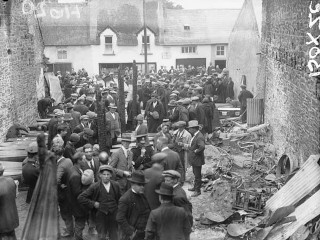
Forty-eight people die when a fire breaks out in a make-shift cinema on the upper floor of the village hall in Dromcollagher, County Limerick, on September 5, 1926.

The conversion of village halls into makeshift cinemas is a common practice in many rural villages in Ireland, right up to the 1940s. Prints are often borrowed from cinemas in larger towns or in Cork city and then bicycled over to smaller venues (sometimes surreptitiously).

During the Irish Free State period (1922-1937), the exhibition of films is still governed by legislation put in place by the British government in 1909. The Cinematograph Act 1909 stipulates that cinema owners must apply for a license to screen films, and that venues must observe strict safety standards. Such standards include encasing projectors in fireproof booths, ensuring that the highly unstable nitrate film, then the industry standard, be properly stored and handled, and fitting out venues with several fire exits. The regulations are generally observed by established cinemas, but they are often ignored by operators of ad hoc venues/makeshift conversions.

The consequences of such indifference to patron safety are tragically realized in the small town of Dromcollogher in West Limerick in 1926. Situated a few miles from the County Cork border, its population is around 500 at the time, hardly enough to sustain a full-time cinema. However, local hackney driver, William Forde, identifies a business opportunity that seems too good to pass up. Through a contact, Patrick Downey, who works as a projectionist in Cork city’s Assembly Rooms cinema, he arranges for a print of Cecil B. DeMille’s Biblical epic The Ten Commandments to be bicycled over for an unofficial one-off screening.

Forde rents the upstairs room of a venue on Church Street, later described by the Leinster Express as a wooden two-story structure and advertises his evening’s entertainment. He finds a readymade audience among the churchgoers that come out of the service in the adjacent Catholic Church and straight into the hall, many with their rosary beads still entwined in their hands. It is estimated that 150 people crowd into the room and ascend the ladder to the upstairs room. Though Forde has been informed by one local Garda that he cannot run a screening unless the venue is equipped with fire blankets and exits, he and Downey disregard the advice and, in a bid to reduce the weight for the cyclist bringing the reels from Cork, instruct that the fireproof metal cases be left behind in the city.

A generator hooked up to a lorry is used to power the borrowed projector, and candles to illuminate the makeshift box-office. It is one of those candles, placed in close proximity to an exposed film reel, which sparks off a series of small fires that quickly developed into an inferno. Some of those seated closest to the main exit manage to escape, but those nearer the screen find themselves trapped and iron bars that had been placed on the few windows in the hall windows seal their fate. Whole families are wiped out and the final death toll comes to 48. As newspapers of the time report, 1/10th of the town’s population is lost.

Newspapers around the world carry reports of the tragedy and a relief fund is set up for the survivors with Hollywood star Will Rogers being one of the contributors. President of the Executive Council of the Irish Free State William T. Cosgrave later travels to the town to attend the mass funeral service held for the victims.

As for Forde and Downey, they are later charged with manslaughter, but the State chooses not to pursue the prosecutions. Forde apparently later immigrates to Australia and possibly accidentally poisons himself, and two others, while working as a cook in the Outback.

The “Dromcollogher Burning”, as it becomes known, holds the dubious honour of Ireland’s worst cinema fire. Sadly, it is not the last time safety regulations are disregarded in an entertainment venue: 75 years later the devastating Stardust Nightclub fire in Dublin also claims the lives of 48 patrons.

(From: “The Dromcollogher Cinema Fire,” http://www.corkmoviememories.com | Image Source: National Library of Ireland)


Leave a comment

Death of Thomas Fitzsimons, U.S. Merchant & Statesman

thomas-fitzsimons

Thomas Fitzsimons, American merchant and statesman of Philadelphia, Pennsylvania, dies in Philadelphia on August 26, 1811. He represents Pennsylvania in the Continental Congress, the Constitutional Convention and the United States House of Representatives.

Fitzsimons is born in Ireland in 1741. In the mid-1750s his family immigrates to Philadelphia, where his father dies soon thereafter. He has enough education that he begins work as a clerk in a mercantile house. He marries Catherine Meade on November 23, 1761 and forms a business partnership with her brother George. Their firm, which specializes in the West Indies trade, operates successfully for over 41 years.

The firm is soon hit by the new revenue measures created to help support the finances of the British Empire, including the much reviled Stamp Act of 1765. Concerned with these ideas, Fitzsimons becomes active in the Irish merchant community in Philadelphia. He is a founding member of the Friendly Sons of St. Patrick in 1771 and later, in 1774, a steering committee organized to protest the Coercive Acts.

When Pennsylvania begins mobilizing and organizing a militia to fight the British, Fitzsimons is soon involved. He serves as captain of a company of home guards under the command of Colonel John Caldwalader. Initially his company serves as part of the soldiers who man posts along the New Jersey coast. His unit later serves as part of the reserve at the Battle of Trenton in 1776. Later in the war, he serves on the Pennsylvania Council of Safety and heads a board to oversee the newly formed Pennsylvania Navy.

Fitzsimons enters active politics as a delegate to the Continental Congress in 1782 and 1783. He is a member of the Pennsylvania House of Representatives from 1786 until 1795. He is also a delegate to the U.S. Constitutional Convention in 1787. Although not a leading member of that convention, he supports a strong national government, the end of slavery, the United States Congress‘s powers to impose a tariff on imports and exports, the granting the House of Representatives, and power in equal to the United States Senate in making treaties. He is one of only two Catholic signers of the Constitution of the United States, the other being Daniel Carroll of Maryland.

After the Constitution is established, Fitzsimons serves in the first three sessions of the House of Representatives as a Federalist, where he favors protective tariffs and a strong navy, co-drafting the Naval Act of 1794 authorizing the original six frigates of the United States Navy. He fails to win re-election in 1794. This was partially attributed to public opinion turning against the Federalist Party over the forceful suppression of the Whiskey Rebellion. Although he never holds elective office again, he serves in 1798 as head of the committee of merchants overseeing the subscription-loan to build a warship at private expense for use in the Quasi-War.

In 1796, Fitzsimons, along with James Innes of Virginia, is appointed by President John Adams to serve as one of two American members on the five-man debt commission charged under Article VI of the Jay Treaty with examining the claims of British subjects unable to collect debts incurred by Americans prior to the American Revolution. Fitzsimons, Innes and Samuel Sitgreaves, who replaces Innes upon the latter’s death, become annoyed with the arguments used by their British counterparts to inflate the claims total. Fitzsimons and Sitgreaves angrily and permanently secede from the board in July 1799. The claims are eventually disposed of by a lump-sum payment, agreed upon by United States Minister to Britain Rufus King with British Foreign Secretary Robert Banks Jenkinson and approved by President Thomas Jefferson and the Senate in 1802.

While withdrawing from politics, Fitzsimons remains active in civic and business affairs. He serves as president of Philadelphia’s Chamber of Commerce, as a trustee of the University of Pennsylvania, Director of the Delaware Insurance Company and a director of the Bank of North America from 1781–1803. He is a founder of the bank and supports efforts to found Georgetown College. He also helps found the Insurance Company of North America.

Fitzsimons dies on August 26, 1811, in Philadelphia, where he is buried in the cemetery of St. Mary’s Roman Catholic Church, which is in present-day Independence National Historical Park.


Leave a comment

Birth of Novelist & Screenwriter Brian Moore

brian-moore

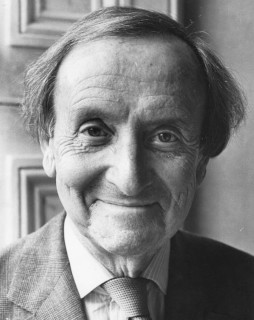
Brian Moore, novelist and screenwriter who is acclaimed for the descriptions in his novels of life in Northern Ireland after World War II, is born in Belfast, Northern Ireland on August 25, 1921. He has been described as “one of the few genuine masters of the contemporary novel.”

Moore is born into a large Roman Catholic family. His father, James Bernard Moore, is a prominent surgeon and the first Catholic to sit on the senate of Queen’s University Belfast. His mother, Eileen McFadden Moore, a farmer’s daughter from County Donegal, is a nurse. His uncle is the prominent Irish nationalist, Eoin MacNeill, founder of Conradh na Gaeilge and Professor of Irish at University College Dublin. He is educated at St. Malachy’s College, Belfast. He leaves the college in 1939, having failed his senior exams.

Moore is a volunteer air raid warden during World War II and serves during the Belfast Blitz in April and May 1941. He goes on to serve as a civilian with the British Army in North Africa, Italy and France. After the war ends, he works in Eastern Europe for the United Nations Relief and Rehabilitation Administration.

In 1948 Moore emigrates to Canada to work as a reporter for the Montreal Gazette and becomes a Canadian citizen. While eventually making his primary residence in California, he continues to live part of each year in Canada up to his death.

Moore lives in Canada from 1948 to 1958, where he meets his first wife, Jacqueline (“Jackie”) Sirois, a French Canadian and fellow journalist. They marry in 1952. He moves to New York City in 1959 to take up a Guggenheim Fellowship and remains there until his divorce in October 1967. He then moves to the west coast of the United States, settling in Malibu, California, with his new wife Jean Denney, a former commentator on Canadian TV. There he teaches creative writing at UCLA.

Moore writes his first novels in Canada. His earliest novels are thrillers, published under his own name or using the pseudonyms Bernard Mara or Michael Bryan. His first novel outside the genre, Judith Hearne, remains among his most highly regarded. The book is rejected by ten American publishers before being accepted by a British publisher. It is made into a film, with British actress Maggie Smith playing the lonely spinster who is the book/film’s title character.

Other novels by Moore are adapted for the screen, including Intent to Kill, The Luck of Ginger Coffey, Catholics, Black Robe, Cold Heaven, and The Statement. He co-writes the screenplay for Alfred Hitchcock‘s Torn Curtain, and writes the screenplay for The Blood of Others, based on the novel Le Sang des autres by Simone de Beauvoir.

Some of Moore’s novels feature staunchly anti-doctrinaire and anti-clerical themes, and in particular he speaks strongly about the effect of the Church on life in Ireland. A recurring theme in his novels is the concept of the Catholic priesthood. On several occasions he explores the idea of a priest losing his faith. At the same time, several of his novels are deeply sympathetic and affirming portrayals of the struggles of faith and religious commitment, Black Robe most prominently.

Moore dies at his Malibu home, which is celebrated in Seamus Heaney‘s poem Remembering Malibu, on January 11, 1999, from pulmonary fibrosis. His widow, Jean, lives on in the house until it is destroyed in 2018 in the Woolsey Fire.

At the time of his death, Moore is working on a novel about the 19th-century French symbolist poet Arthur Rimbaud. His last published work before his death is an essay entitled “Going Home.” It is a reflection inspired by a visit he made to the grave in Connemara of his family friend, the Irish nationalist Bulmer Hobson. The essay is commissioned by Granta and published in The New York Times on February 7, 1999.

In 1996, the Brian Moore Short Story Awards is launched by the Creative Writers Network in Northern Ireland and is open to all authors of Irish descent. Previous judges have included Glenn Patterson, Lionel Shriver, Carlo Gébler and Maeve Binchy.

In 1975 Moore arranges for his literary materials, letters and documents to be deposited in the Special Collections Division of the University of Calgary Library, an inventory of which is published by the University of Calgary Press in 1987. His archives, which include unfilmed screenplays, drafts of various novels, working notes, a 42-volume journal (1957–1998), and his correspondence, are housed at the Harry Ransom Center at the University of Texas at Austin.