Recriminations over his victory begin almost immediately. Unionist parties come under fire for not mounting an effective challenge. There is also sharp criticism of the failure of the moderate CatholicSocial Democratic and Labour Party (SDLP) to contest the seat. Many believe the absence of an alternative Catholic candidate ensures victory for Sands in a seat with a Catholic majority.
Sands’ election agent, Owen Carron, says the British Government has been sent a message. “The nationalist people have voted against Unionism and against the H-blocks. It is time Britain got out of Ireland and put an end to the torture of this country,” he says.
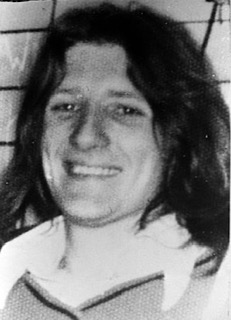
At the time of his election, Sands, 27, has served four years of a fourteen-year sentence for firearms possession. He began his hunger strike 41 days earlier to press the republican prisoners’ claim to be treated as prisoners of war.
The government has to decide how to respond to Sands’ victory. It can try to have him expelled on the grounds that he is an “unacceptable member.” However, unless he starts to eat again, he is not expected to live for more than another few weeks. He has already lost two stone and is too weak to leave his bed in the prison’s hospital wing.
Sand’s victory is the second time the voters of Fermanagh and South Tyrone have elected a republican prisoner as their MP. The first, Philip Clarke, in 1955, is disqualified because the law then does not allow convicts to take up political office.
In spite of attempts by the European Commission of Human Rights to mediate, Sands dies on May 5, 1981. He is the first of ten republican prisoners to die after hunger strikes. They attract international media attention and sympathy for the republicans.
The hunger strikes come to an end in October 1981. However, the Conservative Government of Margaret Thatcher grants the republicans only a few minor concessions.
(From: “1981: Hunger striker elected MP” on “On The Day 1950-2005,” BBC, news.bbc.co.uk)
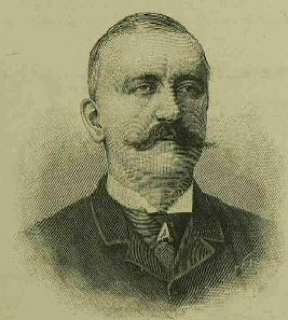
Williams is born on May 4, 1838, in Coleraine, County Londonderry. He claims to be descended on his father’s side from Worcestershireyeomen living in the parishes of Tenbury and Mamble. On his mother’s side he descends from Scottish settlers who planted Ulster in 1610. He is educated at Belfast Academy in Belfast under Dr. Reuben John Bryce and at a Greenwich private school under Dr. Goodwin. Later on, he goes to the southern United States for his health and takes part in a filibustering expedition to Nicaragua, where he sees some hard fighting and reportedly wins the reputation of a blockade runner. He is separated from his party and is lost in the forest for six days. Fevered, he discovers a small boat and manages to return to the nearest British settlement. He serves in the London Irish Rifles and has the rank of sergeant.
Williams returns to England in 1859, where he becomes a volunteer, and a leader writer for the London Evening Herald. In October 1859, he begins a connection with The Standard which lasts until 1884. From 1860 until 1863, he works as a first editor for the London Evening Standard and from 1882 until 1884, as editor of The Evening News.
Williams is best known for being a war correspondent. He is described as an admirable war correspondent, a daring rider as well as writer. For The Standard, he is at the headquarters of the Armée de la Loire, a French army, during the Franco-Prussian War in 1870. He is also one of the first correspondents in Strasbourg, where the French forces are defeated. In the summer and autumn of 1877, he is a correspondent to Ahmed Muhtar Pasha who commands the Turkish forces in Armenia during the Russo-Turkish War of 1877 and 1878. He remains constantly at the Turkish front, and his letters are the only continuous series that reaches England. In 1878, he publishes this series in a revised and extended form as The Armenian Campaign: A Diary of the Campaign on 1877, in Armenia and Koordistan, which is a large accurate record of the war, even though it is pro-Turkish. From Armenia, he follows Muhtar Pasha to European Turkey and describes his defence of the lines of Constantinople against the Imperial Russian Army. He is with General Mikhail Skobelev at the headquarters of the Imperial Russian Army when the Treaty of San Stefano is signed in March 1878. He reports this at the Berlin Congress.
At the end of 1878, Williams is in Afghanistan reporting the war, and in 1879 publishes the Notes on the Operations in Lower Afghanistan, 1878–9, with Special Reference to Transport.
In 1887, Williams meets with then General of the United States Army, Philip Sheridan, in Washington, D.C. to update the general on European affairs and the prospects of upcoming conflicts.
Williams is said to possess a voice of thunder and expresses with terrific energy. He conducts a lecture tour of the United States where he describes the six campaigns, illustrated by limelight photographs. His audience in Brooklyn, New York, is described by The New York Times as highly delighted by his lecture about the hardships and adventures. His presentation is “a feast for the eyes and ears and was highly appreciated by the large audience assembled.” He later tours England, Scotland, and Ireland speaking about his then seven campaigns.
Williams also writes fiction, including his book John Thaddeus Mackay, a tale about religious tolerance and understanding. With the sanction of Commander in Chief, Field MarshalGarnet Wolseley, he edits a book Songs for Soldiers for the March The Camp and the Barracks to improve morale and relieve boredom. Included in the book are a number of songs that he composed. He also writes about ecclesiastical questions, and contributes articles and stories to different periodicals.
Williams is a strong adherent to Wolseley’s military views and policy, and has considerable military knowledge. He also publishes military subjects in several publications such as the United Service Magazine, the National Review, and other periodicals. In 1892, he publishes Life of Sir H. Evelyn Wood, which is controversial as he defends the actions of Wood after the Battle of Majuba Hill in 1881. In 1902, he publishes a pamphlet, entitled Hush Up, in which he protests against the proposed limited official inquiry into the South African War and calls for an investigation.
Early in his career, Williams shares an office with friend and colleague Robert Gascoyne-Cecil, who later becomes Prime Minister of the United Kingdom. They have a standing tradition of always sending out for two beers with payment alternating between each man. Many years later, Williams is in the lobby of the House of Lords and Gascoyne-Cecil approaches him with an outstretched hand and asks, “By the way, Mr. Williams, whose turn is it to stand the beer?”
In 1884, the steamer carrying Williams and colleague Frederic Villiers of The Graphic overturns in the Nile River. Their rescue leads Williams to later commission a unique ivory and gold mitre for the Bishop of London as a thank-offering to God for his safe return from Khartoum.
Williams receives a personal invitation from King Edward VII to attend the funeral of his mother, Queen Victoria.
Both of Williams‘a sons became journalists. Frederick is a noted parliamentary reporter, writer, and historian in Canada. Francis Austin Ward Williams practices journalism in Sydney, Australia.
In the Nile Campaign of 1884-85, application is made to the War Office with the support of the Commander in Chief Lord Wolseley for medals for Willams and correspondent Bennet Burleigh. Williams has been twice requested to take command of some of the men by senior officers on the spot. The Secretary of War is unable to grant the recognition under the rules of the day but writes a letter saying that he regrets that this must be his decision.
Williams is a recipient of the Queen’s Sudan Medal, an award given to British and Egyptian forces which took part in the Sudan campaign between 1896 and 1898.
Field Marshall Garnet Wolseley recognizes the contributions of Williams on the battlefield. He says in a speech that from “Charles Williams, he had at various times received the greatest possible help in the field.”
Williams dies in Brixton, London, on February 9, 1904. He is buried in Nunhead Cemetery in London. His son, journalist Fred Williams, first learns of his father’s death on the wire service he is monitoring at his newspaper in Toronto, Ontario, Canada.
Williams’s funeral is well attended by the press as well as members of the military including Field Marshal Sir Evelyn Wood. Colleague Henry Nevison writes a long reflection on Williams. It includes, “On the field he possessed a kind of instinctive sense of what was going to happen. When I went to big field-days with him he was already an elderly man, and much broken down with the hardships of a war correspondent’s life; but he invariably appeared at the critical place exactly at the right moment, and I once heard the Duke of Connaught, who was commanding, say, ‘When I see Charlie Williams shut up his telescope, I know it’s all over.’ And now he is gone, with his rage, his generosity, his innocent pride, his faithful championship of every friend, and his memories of so many a strange event. His greatest joy was to encourage youth to follow in his steps, and the world is sadder and duller for his going.”
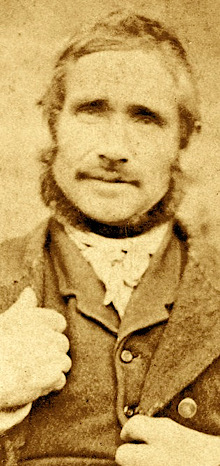
Maolra Seoighe (English: Myles Joyce), is an Irish man who is wrongfully convicted and hanged on December 15, 1882. He is found guilty of the Maumtrasna Murders and is sentenced to death. Though he can only speak Irish, the case is heard in English without any translation service. He is posthumously pardoned in 2018.
Seoighe is the most prominent figure in a controversial trial in 1882 that takes place while Ireland is part of the United Kingdom. Three Irish language speakers are condemned to death for the murder of a local family (John Joyce, his wife Brighid, his mother Mairéad, his daughter Peigí and son Mícheál) in Maumtrasna, on the border between County Mayo and County Galway. It is presumed by the authorities to be a local feud connected to sheep rustling and the Land War. Eight men are convicted on what turns out to be perjured evidence and three of them condemned to death: Maolra Seoighe (a father of five children), Pat Casey and Pat Joyce.
Covering the incident, The Spectator writes the following:
“The Tragedy at Maumtrasna, investigated this week in Dublin, almost unique as it is in the annals of the United Kingdom, brings out in strong relief two facts which Englishmen are too apt to forget. One is the existence in particular districts of Ireland of a class of peasants who are scarcely civilised beings, and approach far nearer to savages than any other white men; and the other is their extraordinary and exceptional gloominess of temper. In remote places of Ireland, especially in Connaught, on a few of the islands, and in one or two mountain districts, dwell cultivators who are in knowledge, in habits, and in the discipline of life no higher than Maories or other Polynesians.”
The court proceedings are carried out in a language the accused do not understand (English), with a solicitor from Trinity College Dublin (TCD), who does not speak Irish. The three are executed in Galway by William Marwood for the crime in 1882. The role of John Spencer, 5th Earl Spencer, who is then Lord Lieutenant of Ireland, is the most controversial aspect of the trial, leading most modern scholars to characterise it as a miscarriage of justice. Research carried out in The National Archives by Seán Ó Cuirreáin, has found that Spencer “compensated” three alleged eyewitnesses to the sum of £1,250, equivalent to €157,000 (by 2016 rates).
As of 2016, nobody has issued an apology or pardon for the executions, though the case has been periodically taken up by various political figures. The then MP for Westmeath, Timothy Harrington, takes up the case, claiming that the Crown Prosecutor for the case George Bolton, had deliberately withheld evidence from the trial. In 2011, two sitting members of the House of Lords, the Liberal Democrat life peers David Alton and Eric Lubbock, request a review of the case. Crispin Blunt, ToryParliamentary Under-Secretary of State for Prisons and Youth Justice, states that Seoighe was “probably an innocent man,” but he does not seek an official pardon.
Seoighe’s final words are: “Feicfidh mé Iosa Críost ar ball beag – crochadh eisean san éagóir chomh maith. … Ara, tá mé ag imeacht … Go bhfóire Dia ar mo bhean agus a cúigear dílleachtaí.” (I will be seeing Jesus Christ soon – he too was also unjustly hanged … I am leaving … the blessings of God on my wife and her five orphans.)
On April 4, 2018, Michael D. Higgins, the President of Ireland, issues a pardon on the advice of the government of Ireland saying “Maolra Seoighe was wrongly convicted of murder and was hanged for a crime that he did not commit”. It is the first presidential pardon relating to an event predating the foundation of the state in 1922 and the second time a pardon has been issued after an execution. Seoighe’s case is not an isolated one, and there are strong similarities with the case of Patrick Walsh who was hanged in the Galway jail on September 22, 1882, just three months before Seoighe for the murders of Martin and John Lydon. The same key players and political factors are active in both cases and his conviction is just as questionable as that of Seoighe.
In September 2009, the story is featured on RTÉ‘s CSI programme under an episode entitled CSI Maamtrasna Massacre. A dramatised Irish language film regarding the affair, entitled Murdair Mhám Trasna, produced by Ciarán Ó Cofaigh is released in 2017.
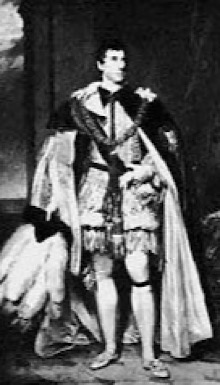
Cuffe is the son of John Otway Cuffe, 2nd Earl of Desart, and Catherine, daughter of Maurice O’Connor. He succeeds in the earldom in November 1820, aged two, on the early death of his father. He is educated at Eton College and enters Christ Church, Oxford in 1836 but takes no degree.
Cuffe marries Lady Elizabeth Lucy Campbell, daughter of John Campbell, 1st Earl Cawdor, in 1842. They have three sons and a daughter. He dies at the age of 46 at his home in Belgravia, City of Westminster, Greater London on April 1, 1865, due to a fall suffered during an attack of paralysis. He is buried in Castleinch Cemetery, Kilkenny, County Kilkenny. He is succeeded in the earldom by his son, William. The Countess of Desart dies in April 1898, aged 76.
He marries firstly Mary Halloran of Cloyne, County Cork, in 1845. She dies in 1901. In the year of his retirement, he remarries Florence Henrietta Gore, widow of Edward Croker. He has no children. James Joyce remarks in Ulysses that his second marriage at the age of 85 infuriates his nephew, who had been waiting patiently for years to inherit his money.
Despite his many years of service on the Bench, Chatterton does not seem to be highly regarded as a judge. On his retirement the Bar pays tribute to his good qualities but adds several qualifications: “there might have been on the Bench lawyers more profound, reasoners more acute…” In his first decade on the Bench, Chatterton has to endure the continual denigration of Jonathan Christian, the Lord Justice of Appeal in Chancery. Christian is notoriously bitter-tongued, and while he despises most of his colleagues, he seems to have a particular dislike of Chatterton. He regularly votes on appeal to overturn his judgments, and frequently adds personal insults. Nor does he confine his attacks to the courtroom: there is controversy in 1870 when remarks of Christian that Chatterton is “lazy, stupid, conceited and so incompetent that he ought to be pensioned off” find their way into The Irish Times. The hint about pensioning off Chatterton is not taken up, no doubt because he enjoys the confidence of the Lord Chancellor of Ireland, Thomas O’Hagan, 1st Baron O’Hagan, who is also on bad terms with Christian. In an appeal from Chatterton in 1873, the two appeal judges clash publicly, with O’Hagan reprimanding Christian for insulting a judge who is not there to defend himself.
Chatterton becomes involved in controversy in 1885, over the first attempt to rename Sackville Street to O’Connell Street. Dublin Corporation votes for the name change, but it arouses considerable objections from local residents, one of whom seeks an injunction. Chatterton grants the injunction on the ground that the corporation has exceeded its statutory powers. Rather unwisely, he also attacks the merits of the decision, accusing the Corporation of “sentimental notions.” The corporation is angered by both the decision and the criticisms: while it may have been a coincidence, the fact that Temple Street is briefly renamed Chatterton Street is interpreted by some as an insult to the judge, since the street is much frequented by prostitutes. The controversy is short-lived as the corporation is granted the necessary statutory powers in 1890, and the new name becomes official in 1924, by which time it has gained popular acceptance.
The Land Purchase (Ireland) Act 1903, also known as the Wyndham Land Act, is enacted on August 14, 1903, and allows for entire estates to be purchased by the occupying tenantry, subsidized by the state.
It differs from earlier legislation which initially advanced to tenants the sum necessary to purchase their holdings, repayable over a period of years on terms determined by an independent commission, while the Wyndham Act finishes off absentee landlords‘ control over tenants and makes it easier for tenants to purchase land, facilitating the transfer of about 9 million acres (36,000 km2) up to 1914. By then, 75% of occupiers are buying out their landlords under the 1903 Act and the later Irish Land Act 1909 of Augustine Birrell, which extends the 1903 act by allowing for the compulsory purchase of tenanted farmland by the Land Commission, but falls far short in its financial provisions. In all, under these pre-1921 Land Acts over 316,000 tenants purchase their holdings amounting to 11.5 million acres (47,000 km2) out of a total of 20 million acres (81,000 km2) in the country.
The Acts provide Irish tenant farmers with more rights than tenant farmers in the rest of the United Kingdom. Munster tenants avail of land purchase in exceptionally high numbers, encouraged by their Irish Land and Labour Association‘s leader D. D. Sheehan after he and O’Brien establish an Advisory Committee to mediate between landlords and tenants on purchase terms which produce a higher take-up of land purchase than in any other province.
Historian Robert K. Webb gives most of the credit for the Wyndham Act to Conservative leader Arthur Balfour. He says the Act is “a complete success. By the time the Irish Free State was created in 1922, the system of peasant proprietorship had become universal… A land problem more than a century old had been solved, though it had taken more than 30 years of educating Parliament and landlords to do it. The scheme was intended as well to ‘kill Home Rule by kindness.’”
Kilfedder leaves the UUP in 1977 in opposition to the party’s policies tending to integrationism, preferring to advocate the restoration of the Stormont administration. For a time he sits as an “Independent Ulster Unionist.” He contests the 1979 European Parliament election under that label, finishing fourth in the count for the three seats, having overtaken the UUP leader Harry West on transfers.
On March 20, 1995, while traveling by train into London from Gatwick Airport, Kilfedder dies of a heart attack. This is the same day that the Belfast Telegraph carries a front-page story saying that an Ulster MP has been targeted as one of twenty MPs invited by the LGBT rights organisation OutRage! in a letter to come out. He dies unmarried and is survived by two sisters.
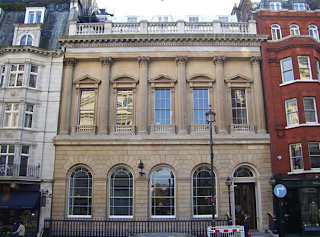
On June 25, 1990, shortly after 8:30 p.m., the Provisional Irish Republican Army detonates a bomb at the Carlton Club, a club in London popular among MPs and supporters of the ruling Conservative Party. The ground floor collapses to the basement and windows are shattered. The blast is felt up to half a mile away. The bombing injures twenty people, including Lord Donald Kaberry, a former Vice-Chairman of the Conservative Party, and a much-loved porter, Charles Henry. Neither ever regains full health. Kaberry dies the following March, though Henry is able to return to his duties after a serious operation, but dies three years later.
In a statement, the IRA says, “Like Brighton in 1984, the IRA has brought the war directly to those who keep the British Army on the streets and in the fields of Ireland. While such occupation continues, and the Nationalist people face daily oppression, the policy makers and their military arm will not be safe.” The attack is part of the IRA’s escalating campaign that started in early 1990 and which has claimed two lives and 27 injuries since May of that year. The conservative MP for FulhamMatthew Carrington calls the attack very “worrying” as it is a non-military target, suggesting a dangerous tactic from the IRA against members of the public.
The bomb contains 15 lbs. (6.8 kg) of Semtex explosives. Prime MinisterMargaret Thatcher arrives at the club shortly after the bombing and speaks with some of the victims.
(Pictured: Building of Arthur’s which has hosted the Carlton Club since 1943)
Joyce is the eldest of three sons of Michael Joyce, an Irish Catholic from a family of tenant farmers in Ballinrobe, County Mayo, and his wife, Gertrude (née Brooke), who although born in Shaw and Crompton, Lancashire, is from a well-off AnglicanAnglo-Irish family of physicians associated with County Roscommon. The Joyces return to Ireland in 1909. William, a precocious child, attends Coláiste Iognáid SJ, a Jesuit school in County Galway, from 1915 to 1921. At the age of fourteen, he abandons Catholicism for Anglicanism, apparently after being told that all non-Catholics, including his mother, would be damned. In adult life he is nominally anglican, though his adherence to Christianity is tenuous.
The Joyces are unionists and teach their children fervent imperialism. During the Irish War of Independence, Joyce openly associates with the Black and Tans and acts as a scout for them. An acquaintance claims that his views are so extreme even loyalists dislike him. On December 9, 1921, he flees to England to join the Worcestershire Regiment and is followed to England in 1923 by the rest of the family. When he enlists, he claims to be eighteen, but after he contracts rheumatic fever, his age is discovered, and he is discharged in March 1922. For a time, he studies mathematics and chemistry at Battersea Polytechnic Institute as a pre-medical student (1922–23), but he leaves of his own accord, with a reputation for laziness and violent political views. His studies in English and history at Birkbeck College are more successful. He is a brilliant linguist and mathematician and graduates BA with first-class honours in 1927. He publishes an academic article on philology and considers progressing to an MA. He later falsely claims that his research had been plagiarised by a Jewish academic. In 1932, he enrolls at King’s College, London, for a Ph.D. in educational psychology.
Joyce is disturbed by the difference between depressed post-war Britain and the imperial ideal that he had imbibed in Galway and is mocked for his outspoken patriotism and obvious Irishness. He identifies strongly with Thomas Carlyle, an earlier angry anti-liberal from the provinces. His life is marked by repeated episodes of hero worship, followed by disillusion and bitter denunciation. In 1923, he joins the British Fascists, an organisation that has a significant Irish loyalist membership, and in 1924 he allies himself with a militant splinter group, the National Fascists. Most British fascists see themselves as Tory auxiliaries, and they often provide a security presence at conservative meetings. On October 22, 1924, while stewarding a meeting addressed by a Jewish conservative candidate, he has his face slashed and is left with a prominent scar across his right cheek. He joins the Conservative Party in 1928 and is active in the Chelsea constituency until 1930, when he is forced out because of his eccentricities and sexual misbehaviour. On April 30, 1927, he marries Hazel Kathleen Barr. They have two daughters but separate in 1935, largely because of his infidelities, heavy drinking, and temper. The marriage is dissolved in 1937.
In November 1933, Joyce abandons his Ph.D. studies to work for Sir Oswald Mosley‘s British Union of Fascists (BUF). By early 1934 he has become its paid publicity director, traveling throughout Britain to organise meetings. He is a powerful, rabble-rousing speaker, driven by an instinctive awareness that vitriolic verbal abuse gives speaker and audience a sense of power and solidarity. MI5 sees him as a compelling, though deranged, personality. On February 8, 1937, he marries Margaret Cairns White, a BUF activist from Lancashire, with whom he had cohabited since 1936.
Joyce leads a BUF faction that favours a recruitment strategy based on uncompromising ideological assertion. This is challenged by populists who prioritise marches and displays and hold that indoctrination should follow membership. In February 1937, he is BUF candidate for the London County Council in Shoreditch. The party wins 14 percent of the vote. In March 1937, he, along with many full-time BUF staff, are sacked when the BUF cuts expenses. But his dismissal also reflects Mosley’s awareness that his obsessive rhetoric repels “respectable” recruits and that he is no longer a biddable, slavish admirer of “the Leader.” He later falsely claims near-exclusive credit for the BUF’s escalating antisemitism, a view that Mosley eventually finds it convenient to adopt in order to evade his own responsibility.
In April 1937, Joyce founds the National Socialist League, helped by a wealthy patron. He supports himself as a private tutor, refusing to take Jewish pupils. He is active in various antisemitic and pro-Nazi groups such as the Right Club and engages in “peace” campaigns based on the view that British interests lay with Germany against Russia. Political marginalisation intensifies his admiration for Nazi Germany and hero worship of Adolf Hitler. By the time of the Munich crisis in 1938, he has decided that if war comes, he will go to Germany, though he also considers moving to Ireland. He renews his British passport for one-year terms in August 1938 and August 1939.
On August 26, 1939, Joyce and his wife leave London for Berlin. He is allegedly tipped off about his impending arrest and internment by an MI5 officer, to whom he had supplied information on communists. His siblings, whom he recruited into his fascist organisations, are variously penalised for his activities. At a loose end in Berlin, he is persuaded by a British associate to become a radio announcer with the English-language service of the Reichs-Rundfunk-Gesellschaft (RRG). He makes his first broadcast on September 6, 1939, and receives a contract in October. He finds in radio an outlet for his forceful style and delight in saying the unsayable, and in the early years of the war takes an exultant pride in recounting Nazi victories. His performances are admired by Joseph Goebbels, whom Joyce, to his regret, never meets. On September 26, 1940, he acquires German citizenship.
The novel experience of hearing the enemy in one’s own living room attracts wide audiences in Britain. Joyce’s practice of naming newly captured prisoners of war in his broadcasts is also a compelling motive for listening. In fact, he tries to recruit British prisoners of war as collaborators. The name “Lord Haw-Haw,” invented by the Daily Express radio critic in September 1939, initially applies to several English-language broadcasters but in time becomes associated with Joyce. He is initially a figure of fun, imitated by comedians, but there are sinister undercurrents of terrifying omnipotence, intensified by his sneering, gloating delivery and his delighted deployment of the “big lie” technique. It is widely believed that British-based fifth columnists supply him with information, that he predicts air raids, and shows minute local knowledge. In time, fear and his growing notoriety feed popular hatred of him in Britain, though his anti-British taunts allegedly win appreciative Irish audiences. He exults that he is daily committing treason and rendering himself liable to the death penalty.
In 1940, Joyce publishes a commissioned self-justifying propaganda work, Twilight over England. His representation of himself echoes that of Hitler in Mein Kampf – the provincial patriot, whose martial sacrifices are betrayed by corrupt elites, learning through poverty the hollowness of bourgeois patriotism and the need to synthesise socialism with nationalism. He shares with his hero a paranoid belief in his own ability to create an alternative reality through language and obstinacy. He dreams of becoming the English Führer.
In Berlin, the Joyces’ marriage comes under increasing strain, marked by drunken rows, domestic violence, and infidelity on both sides, though they retain a fierce mutual fascination. They divorce on August 12, 1941, but remarry on February 11, 1942, while continuing their previous behaviour. As the Axis powers begin to fail, his broadcasts become more defensive, focusing on the Soviet threat. On October 14, 1944, he is awarded the German War Merit Cross, first class. On October 22, he is sworn into the Volkssturm (territorial army) and begins drilling. The Joyces are evacuated from Berlin in March 1945, initially to Apen near the Dutch border and then to Hamburg, where he makes a last, drunken, defiant broadcast on April 30, 1945, the day of Hitler’s death. After an unsuccessful attempt to escape to Sweden, the Joyces hide at Flensburg near the Danish border. On May 28, 1945, he is shot and captured while gathering firewood.
Joyce is brought back to Britain on June 16 after Parliament passed legislation simplifying treason trial procedures. At his September 17-20 trial, he proves his American citizenship, but the court holds that his illegally acquired British passport incurred duties of allegiance. His appeals are rejected by the Court of Appeal and the House of Lords. His fate is influenced by British public opinion, and possibly by a desire to avoid antagonising the Soviet Union. In his death cell he blames the defeat of national socialism on German limitations. He also fantasises that he could have saved Hitler from his incompetent subordinates.
Joyce is hanged by Albert Pierrepoint at Wandsworth Prison on January 3, 1946. Unlike most of his fellow Nazis, he proclaims to the end his allegiance to national socialism and hatred of Jews. He corresponds cheerfully with Margaret, joking evasively about the death camps and expressing a belief that his spirit will survive, watch over her, and continue his work. To neo-Nazis he becomes a martyr. Even among those to whom his activities had been repellent, a significant body of opinion holds he should not have been condemned on a questionable and innovative technicality. The historian A. J. P. Taylor maintains that Joyce was executed for making a false declaration to obtain a passport, a misdemeanour that normally incurs a £2 fine.
In 1976, Joyce is reinterred in Galway as it is feared that a grave in England might become a fascist shrine. Thomas Kilroy‘s play Double Cross (1986) juxtaposes Joyce and Brendan Bracken as Irishmen who reinvented themselves through fantasies of Britishness. The BBC Sound Archive has recordings of some of Joyce’s broadcasts and transcripts of others, collected during the war as evidence for a future treason trial.
(From: “Joyce, William Brooke (‘Lord Haw-Haw’)” by Patrick Maume, Dictionary of Irish Biography, http://www.dib.ie, October 2009)
Ford stands unsuccessfully for Antrim Borough Council in 1989 and enters politics full-time when he becomes general secretary of the Alliance Party. In that role, he is best known as a strong supporter of the then-leader John Alderdice and an advocate of better political organisation and community politics. He is elected to Antrim Borough Council in 1993, 1997 and – after leaving the Council in 2001 to concentrate on Assembly business – again in 2005.
In 2001, Seán Neeson resigns from the Party leadership following poor election results. Ford wins the leadership election on October 6 by 86 votes to 45, ahead of Eileen Bell.
Ford gives Alliance a stability which it has lacked since the departure of John Alderdice, but the Party has declined seriously in the late 1990s and all he can do is stabilise the situation. Within a month of taking over the leadership, however, he has a chance to establish Alliance’s relevancy in the post-Good Friday Agreement environment. On November 6, 2001, the Northern Ireland Executive is to be re-established. Due to defections within his own Ulster Unionist Party (UUP), First MinisterDavid Trimble has insufficient support within the Unionist bloc in the Assembly to be re-elected to his post. Ford and two of his five colleagues re-designate as Unionist for just 22 minutes in order to secure Trimble’s position and thereby enable the devolved institutions to operate for another year. However, Alliance fails to make any political gains from their move, and the UUP and Sinn Féin fail to reach agreement on the decommissioning issue, ensuring that the institutions collapse again in October 2002.
In the 2003 Northern Ireland Assembly election, Ford’s seat in the Assembly is perceived to be under severe threat from Sinn Féin’s Martin Meehan, with many commentators expecting him to lose it. However, his expertise in nuts-and-bolts electioneering stands him in good stead. Although Alliance’s vote almost halved, his own vote in South Antrim increases from 8.6% to 9.1%. Meehan’s vote increases dramatically, from 7.3% to 11.5%, and he starts the election count ahead. Ford has much greater transfer appeal and finishes 180 votes ahead of Meehan at the end of a dramatic three-way fight for the last two seats, with Thomas Burns of the Social Democratic and Labour Party (SDLP) just 14 votes ahead of Ford. Despite the dramatic fall in vote, Alliance holds on to its six seats in the Assembly, which remains suspended.
In 2004, Ford makes good his leadership election pledge to work with other parties, as Alliance joins with the Workers’ Party, Northern Ireland Conservatives and elements of the Northern Ireland Women’s Coalition to support Independent candidate John Gilliland in the European elections, achieving the best result for the centre ground for 25 years.
Ford’s greatest triumph comes in the 2007 Northern Ireland Assembly election, when the party achieves its highest vote share since Alderdice’s departure and picks up a seat in what is an otherwise poor election for the moderates. Despite media predictions once again of his demise, Ford himself is elected third in South Antrim, with over 13% of the poll.
On April 12, 2010, Ford is chosen by the Assembly to become Northern Ireland’s first Justice Minister in 38 years. He is supported in the Assembly by the Democratic Unionist Party (DUP), Sinn Féin, the Alliance Party, the Green Party and the Progressive Unionist Party (PUP). Separate candidates for the position are put forward by both the UUP and the SDLP, being Danny Kennedy and Alban Maginness respectively.
Ford announces his resignation as Leader in October 2016 on the fifteenth anniversary of his election as leader noting, “The team is working well, and I think it’s an appropriate time to hand over to a new leader who will lead the party forward in the next stage of its development and growth.”
Ford and his wife Anne have four grown children and live in rural County Antrim. Until the spring of 2013, he is an elder in the Second Donegore congregation of the Presbyterian Church in Ireland. He is removed from his role as a ruling elder over differences with fellow congregants on the subject of same-sex marriage. In a 2016 interview he says he is still hurt by the decision by his fellow elders who chose not to work with him because of his support for equal marriage. “It saddened me that there was, if I may put it, a lack of understanding from some people about the role I had as a legislator, compared to the role I have within the church.”

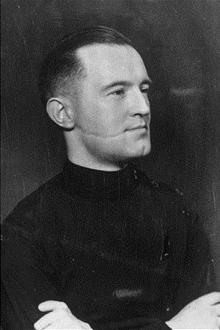

 seamus dubhghaill