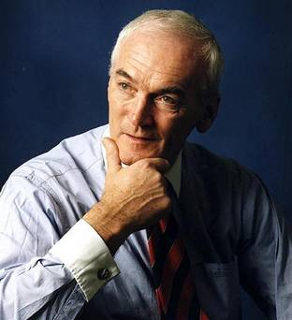
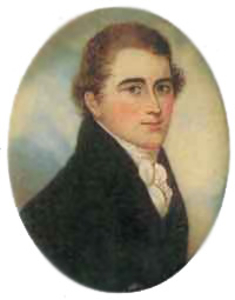
Bennett attends Hamblin and Porter’s School in Cork, and the Academic Institute in Hardcourt Street. He enrolls in medical school at Trinity College, Dublin in 1854 at the age of 17. At college he studies under professor Robert Smith, under whom he develops an interest in bone fractures. He gains the degrees of BA and MB before graduating with a M.Ch. in 1859 and MD in 1864. He is conferred with a fellowship of the Royal College of Surgeons in Ireland (RCSI) in 1863.
Following a period as an anatomy demonstrator Bennett is appointed as Surgeon to Sir Patrick Dun’s Hospital in 1864. He succeeds Robert Smith as Professor of Surgery in 1873 following his death. He studies fractures, joint dislocations and bone diseases, recording them at the Pathology Museum at Trinity College. He describes his eponymous fracture at the British Medical Association meeting in Cork in 1880 and today he is best remembered for the fracture he describes which still bears his name. Perhaps more importantly, however, he is accredited with having introduced antiseptic techniques to Dublin hospitals. Bennett also serves as President of the RCSI.
Edward Hallaran Bennett dies in Dublin on June 21, 1907.
Mulhare, one of three brothers, is born at 22 Quaker Road, Cork, County Cork, in what is then known as the Irish Free State, to John and Catherine Mulhare. As a child, he receives his education at St. Nessan’s Christian Brothers School, and later North Monastery. As a young adult, he begins schooling at the National University of Ireland in medicine, but eventually decides upon a career in theatre. After acting in various Irish venues including the Gate Theatre in Dublin, he moves to London, where he works with Orson Welles and John Gielgud.
His best-known stage role is as Professor Higgins in the original Broadway production of My Fair Lady, having taken over the role from Rex Harrison in 1957.
Mulhare’s first television appearance is in 1956 in a production of The Adventures of Robin Hood. He is a guest panelist in 1958 on the CBS television game show What’s My Line? By 1965, he is back in Hollywood appearing in films and television shows. He earns a role in the films Von Ryan’s Express in 1965, Our Man Flint in 1966, and Caprice in 1967. He guest-stars in television programs, including the Twelve O’Clock High episode “Siren Voices” as Luftwaffe Colonel Kurt Halland. He also guest-stars in “Experiment In Terra,” an episode of the original Battlestar Galactica series. In The Ghost & Mrs. Muir, a supernatural sitcom that runs from 1968 to 1970, he stars as Captain Daniel Gregg, and again is something of a successor to Rex Harrison, who had originated the role of “The Ghost” in the original 1947 film. In the mid-1980s, Mulhare hosts the television series Secrets & Mysteries, also called Secrets of the Unknown, a magazine show that examines historical mysteries and the paranormal. His most famous role is probably as Devon Miles in the Knight Rider series.
Edward Mulhare dies of lung cancer on May 24, 1997, age 74, at his home in Van Nuys, California. He had been battling the cancer for five months prior to his death. He is buried in St. Joseph’s Cemetery, Tory Top Road, Cork. Team Knight Rider dedicates an episode titled “K.R.O.” to Mulhare’s memory which is broadcast on October 27, 1997.
McAuliffe’s parents are Cornelius McAuliffe and Jane Bailey, who are living at 5 Christ Church Lane, Cork, at the time of Jack’s birth. He emigrates to the United States in 1871, where he spends his early years in Bangor, Maine.
McAuliffe makes his first appearance as an amateur boxer in 1883. He turns professional soon after, fighting Jem Carney 78 rounds to a draw at Revere Beach, Massachusetts. He fights Billy Dacey for the lightweight championship and a $5,000 purse in 1888, knocking him out in eleven rounds. He is known as a strong two-handed fighter with “cat-like” reflexes.
McAuliffe is married twice, both times to stage actresses. His first wife is Katie Hart, who plays in farce comedies. After her death, he marries Catherine Rowe in 1894, whose stage name is Pearl Inman, of the song and dance team The Inman Sisters. Between marriages he dates a third actress, Sadie McDonald. McAuliffe and Rowe move back to Bangor, Maine, in 1894, where he undertakes preliminary training for a fight later that year at the Seaside Athletic Club on Coney Island.
McAuliffe retires in 1897. According to the International Boxing Hall of Fame, he has 36 professional fights. He finishes his career with 30 victories with 22 by knockout, five draws and one no decision.
Jack McAuliffe dies on November 5, 1937, at his home on Austin Street in Forest Hills, Queens.
Thomas Curtin is born at Ballyknockane, Mourne Abbey, County Cork, on March 20, 1884, the son of Patrick Curtin, a farmer, and Julia Sheehan. He attends Burnfort National School. In 1897 the family moves to Cork City, where he attends the North Monastery school.
Mac Curtain, as he later becomes known, is active in a number of cultural and political movements beginning around the turn of the 20th century. He joins the Blackpool, Cork branch of Conradh na Gaeilge, becoming its secretary in 1902. He has interests in music, poetry, history, archaeology and Irish history. He works in his early career as a clerk, and in his free time teaches Irish. In 1911 he joins Fianna Éireann and is a member of the Irish Volunteers.
He meets Elizabeth Walsh (Eibhlís Breathnach) at a Gaelic League meeting, and they marry on June 28, 1908. They have six children, five of whom survive into adulthood. The family lives over 40 Thomas Davis Street, where Mac Curtain runs a small clothing and rainwear factory.
In April 1916, at the outset of the Easter Rising, Mac Curtain commands a force of up to 1,000 men of the Irish Volunteers who assemble at various locations around County Cork. From the volunteer’s headquarters at Sheares Street in the city, Mac Curtain and his officers await orders from the volunteer leadership in Dublin, but conflicting instructions and confusion prevail and as a result the Cork volunteers never enter the fray. A tense stand-off develops when British forces surround the volunteer hall and continued for a week until a negotiated agreement leads to the surrender of the volunteers’ arms to the then Lord Mayor of Cork Thomas Butterfield on the understanding that they will be returned at a later date. This does not happen however, and Mac Curtain is jailed in Wakefield Prison, in the Frongoch internment camp in Wales, and in Reading Gaol. After the general amnesty of participants in the Rising 18 months later, Mac Curtain returns to active duty as a Commandant of what is now the Irish Republican Army.
By 1918 Mac Curtain is a brigade commander, the highest and most important rank in the IRA. During the Conscription Crisis of 1918, he actively encourages the hiring of the women of Cumann na mBan to cater for Volunteers. He is personally involved with Michael Collins‘ Squad that, along with a Cork battalion, attempt to assassinate Lord John French, whose car is missed as the convoy passes through the ambush positions. Despite the setback he remains brigadier of No.1 Cork when he is elected Lord Mayor. He is elected in the January 1920 council elections as the Sinn Féin councillor for NW Ward No. 3 of Cork and is chosen by his fellow councillors to be the Lord Mayor. He begins a process of political reform within the city.
In January 1919, the Irish War of Independence starts, and Mac Curtain becomes an officer in the IRA. On March 20, 1920, his 36th birthday, Mac Curtain is shot dead in front of his wife and son by a group of men with blackened faces, who are found to be members of the Auxilaries along with unknown members of the Royal Irish Constabulary (RIC) by the official inquest into the event. In the wake of the killing, which is in revenge for the shooting of a policeman, Mac Curtain’s house in Blackpool is ransacked.
The killing causes widespread public outrage. The coroner’s inquest passes a verdict of willful murder against British Prime MinisterDavid Lloyd George and against certain members of the RIC. Michael Collins later orders his squad of assassins to uncover and assassinate the police officers involved in the attack. RIC District Inspector Oswald Swanzy, who had ordered the attack, is fatally shot, with Mac Curtain’s own revolver, while leaving a Protestant church in Lisburn, County Antrim on August 22, 1920, sparking what is described by Tim Pat Coogan as a “pogrom” against the Catholic residents of the town.
Coveney is interested in yachting throughout most of his adult life. His yacht Golden Apple of The Sun, designed by Cork-based designer Ron Holland, is a successful competitor in the Admiral’s Cup in the 1970s. A later 50-foot yacht, Golden Apple, is used by the family for the “Sail Chernobyl” project. The family sails around the world to raise €650,000 for Chernobyl Children’s Project International, a charity which offers assistance to children affected by the 1986 Chernobyl disaster.
In March 1998 it becomes publicly known that the Moriarty Tribunal has questioned Coveney about whether he had a secret offshore account with Ansbacher Bank, a bank which had become notorious for facilitating tax evasion. Ten days later, on March 13, 1998, Coveney visits his solicitor to change his will. The following day, he dies in a fall from a seaside cliff while out walking alone. His son, Simon Coveney, insists that his father had never held an Ansbacher account. It later emerges that Hugh Coveney had $175,000 on deposit in the secret Cayman Islands-based bank. The account was closed in 1979.
Simon Coveney is later elected to succeed his father in the resulting by-election on November 3, 1998.
Eilís Dillon, Irish author of 50 books, is born in Galway, County Galway on March 7, 1920. Her work has been translated into 14 languages.
Dillon is the third of five children of Professor Thomas Dillon and his wife Geraldine (née Plunkett), who is the sister of Joseph Mary Plunkett. She is raised at Dangan House outside of Galway City before moving to the small fishing village of Barna. She attends the local primary school where she becomes proficient in the Irish language and gains an intimate knowledge of tradition in the Connemara. Her family is involved in Irish revolutionary politics. Her uncle, Joseph Mary Plunkett, is a signatory of the 1916 Proclamation of the Irish Republic and is executed after the Easter Rising.
Educated by the Ursuline nuns in Sligo, she works briefly in the hotel and catering trade. In 1940 she marries Cormac Ó Cuilleanáin, an academic from University College Cork and 17 years her senior. They have at least three children, including the Irish poet and Trinity College Dublin professor Eiléan Ní Chuilleanáin and her brother, Cormac Ó Cuilleanáin, also a Trinity professor, who writes novels as Cormac Millar.
Dillon’s first books are written in Irish including An Choill Bheo, published in 1948, Oscar agus an Cóiste sé nEasóg in 1952 and Ceol na coille in 1955. After the success of The Lost Island, published in 1952, she writes almost exclusively in English. Most of her books are aimed at teen readers with themes of self-discovery and problem solving evident.
Dillon’s adult fiction career begins in 1953 with the publication of the detective novel Death at Crane’s Court. This is followed by Sent to His Account in 1954 and Death in the Quadrangle in 1956. These novels are known for their depiction of contemporary Ireland. Over the following decade Dillon publishes many novels including The Bitter Glass (1959), Across the Bitter Sea (1973) and The Wild Geese (1981).
In 1964 she moves to Rome due to her husband’s poor health. While there she acts as adviser to International Commission on English in the Liturgy. She returns to Cork with her husband in 1969 where he dies the following year. She continues to visit Italy over the next several years, setting some of her stories there including Living in Imperial Rome (1974) and The Five Hundred (1972), though these are not as popular as her Irish books. In 1974 she marries the American-based critic and professor Vivian Mercier, dividing her time between California, Italy and Dublin.
In her later years Dillon plays a prominent role in Irish culture. She is a Fellow of the Royal Society for Literature and a member of Aosdána, serves on the Irish Arts Council 1974–1979, chairs the Irish Writers’ Union and the Irish Writers’ Centre, and founds the Irish Children’s Book Trust. In 1987 she and her husband move permanently to Dublin where she supports up and coming Irish authors. Her last story is Children of Bach published in 1993.
Life in New York is difficult during the Great Depression, so John and his two brothers are shipped back to Ireland in 1933. The two eldest are sent to their maternal grandmother’s house in Fintona, County Tyrone, but John is sent to his father’s ancestral home at Garvaghey, then maintained by two spinster aunts.
A year of graduate school at University of California, Berkeley convinces Montague that he should return to Ireland. He settles in Dublin working at the Irish Tourist Office. In 1961 he moves to Bray, County Wicklow. A regular rhythm of publication sees his first book of stories, Death of a Chieftain (1964) after which the musical group The Chieftains is named, his second book of poems, A Chosen Light (1967), Tides (1970).
All during the 1960s, Montague continues to work on his long poem, The Rough Field, a task that coincides with the outbreak of the Northern Ireland civil rights movement. A Patriotic Suite appears in 1966, Hymn to the New Omagh Road and The Bread God in 1968, and A New Siege, dedicated to Bernadette Devlin which he reads outside Armagh Jail in 1970.
Montague settles in Cork in 1974 and publishes an anthology, theFaber Book of Irish Verse (1974) with a book of lyrics, A Slow Dance (1975). Recognition is now beginning to come, with the award of the Irish American Cultural Institute in 1976, the first Marten Toonder Award in 1977, and the Alice Hunt Bartlett Award for The Great Cloak in 1978.
In 1987, Montague is awarded an honorary doctor of letters by the State University of New York at Buffalo. He serves as distinguished writer-in-residence for the New York State Writers Institute during each spring semester, teaching workshops in fiction and poetry and a class in the English Department of the University at Albany. In 1998, he is named the first Irish professor of poetry, a three-year appointment to be divided among Queen’s University Belfast, Trinity College Dublin, and University College Dublin. In 2008, he publishes A Ball of Fire, a collection of all his fiction including the short novella The Lost Notebook.
John Montague dies at the age of 87 in Nice, France on December 10, 2016, after complications from a recent surgery.
The protesters chant and wave banners bearing the slogan “The Milosevic of Manhattan” prior to the arrival of the 56th U.S. Secretary of State, who was in office during the controversial administration of Richard Nixon. Kissinger says he is pleased to discover that even in Ireland people are not indifferent to him. However, he denies being a war criminal claiming it is an insult to human intelligence for protesters in Cork to compare him with Slobodan Milošević.
“These people are throwing around allegedly criminal charges without a shred of real evidence. I don’t know who they represent but I wish their knowledge equalled their passion.”
Kissinger, who is visiting the university to deliver a speech at an MBA Association of Ireland business conference, says he has never replied to derogatory remarks in the media. He adds, “I consider them (the accusations) fundamentally beneath contempt. They are based on distortions and misrepresentations.”
Kissinger says the international scene is experiencing an extraordinary period of change for which there is no historical precedent. One of the biggest challenges facing the U.S. administration, he says, is to bring countries together to prevent the spread of biological and chemical weapons.
Kissinger’s visit is condemned by human rights organisations who claim he flouted international law in his dealings with Bangladesh, Chile and East Timor. Cork Sinn FéincouncillorJonathan O’Brien tells an earlier council meeting that Kissinger is not welcome in the city, and calls on UCC to cancel his invitation.
O’Leary is born around 1800 in Cork, County Cork. His father is Jeremiah O’Leary, a butter merchant. Little is known of his early life.
In 1817, O’Leary travels to London to enlist in a regiment being formed by Henry Wilson. Wilson is recruiting officers and NCOs to go to South America and form a Hussar regiment in service to Simón Bolívar, who goes on to liberate much of South America from Spanish rule.
O’Leary sails for Venezuela with Wilson near the end of 1817, arriving in March 1818. Unlike many of the Irish who fight for Simón Bolívar in his many campaigns to win South American independence, he has not served in the Napoleonic Wars. He first meets Bolívar away from the front shortly his arrival and Bolívar is apparently impressed with the young Irish officer.
In March 1819, O’Leary sees his first action and is promoted to captain. In July, after Bolívar’s famous crossing through the Casanare Swamps and over the Andes, he receives a saber wound in the battle of Pantano de Vargas but he quickly recovers and takes part in the Battle of Boyacá on August 9. Shortly after this, he becomes aide-de-camp to Bolívar. Two years later, after much more fighting, Venezuela is freed.
During the next few years, as the fight continues to free the rest of South American from Spanish domination, O’Leary performs many dangerous missions for “The Liberator,” rising ever higher in his esteem. He continues to serve Bolívar well through the political and military intrigues that follow the freeing of South America from the Spanish.
After Bolívar’s death in December 1830, O’Leary disobeys orders to burn the general’s personal documents and is exiled to Jamaica by the new Venezuelan government. There he writes extensive memoirs that are later edited by his son, Simon Bolivar O’Leary, and published in the 1870s and 1880s. Simon is the eldest of six children O’Leary has with his South American wife. He also writes his own very extensive memoirs, spanning thirty-four volumes, of his time fighting in the revolutionary wars with Bolívar.
In 1833, O’Leary is able to return to Venezuela. He holds a number of diplomatic posts for the Venezuelan government for the next 20 years, and on at least two occasions is able to visit his boyhood home of Cork.
Daniel O’Leary dies in Bogotá on February 24, 1854. The Venezuelans name a plaza after him in Caracas. In 1882, they obtain permission to take O’Leary’s body from Bogotá to Caracas, where it is laid to rest in the National Pantheon of Venezuela to lie forever in death next to the man he had served so faithfully in life, Don Simón Bolívar. A bust and plaque honouring O’Leary are presented by the Venezuelan Government to the people of Cork and unveiled on May 12, 2010 by the Venezuelan Ambassador to Ireland, Dr. Samuel Moncada.
Ó Faoláin writes his first stories in the 1920s, eventually completing 90 stories over a period of 60 years. From 1929 to 1933 he lectures at the Catholic college, St. Mary’s College, at Strawberry Hill in Twickenham, England, during which period he writes his first two books. His first book, Midsummer Night Madness, is published in 1932. It is a collection of stories partly based on his Civil War experiences. He afterwards returns to his native Ireland. He publishes novels, short stories, biographies, travel books, translations, and literary criticism – including one of the rare full-length studies of the short story, The Short Story (1948). He also writes a cultural history, The Irish, in 1947.