seamus dubhghaill

Promoting Irish Culture and History from Little Rock, Arkansas, USA


Leave a comment

King William III, William of Orange, Arrives in Belfast

William of Orange, King of Holland, and recently declared King William III of England, arrives with his fleet in Belfast on June 14, 1690. He remains for twelve days, departing on June 26. For his part he likes what he sees. “This country is worth fighting for,” he says.

William’s departure from London is held up by parliamentary business until the end of May, when he announces that he can wait no longer and adjourns Parliament. He sets out early in the morning of June 4, reaching Northampton before nightfall. On Sunday, June 8, he attends divine service in Chester Cathedral and goes on to inspect the ships at Hoylake on the tip of the Wirral Peninsula.

For two days the wind is contrary, but on June 11 he embarks on board the yacht “Mary” with a fleet escorted by Sir Cloudesley Shovell‘s squadron. On June 14 the hills of Ireland come in sight and in the afternoon the fleet casts anchor off Carrickfergus. He is rowed ashore in the Rear Admiral’s barge and at about 3:30 p.m. lands at the Old Quay under the shadow of the great Norman Castle.

The Garrison of the Castle has drawn up a Guard of Honour and the townspeople add their applause. The chosen spokesman is a Quaker, whose principles forbid him to doff his hat or use such titles as Sir and Majesty. He gets around the difficulty by taking off his hat and laying it on a stone and then stepping forward and saying “William, thou art welcome to thy Kingdom” which pleases the King so much that he replies, “You are the best-bred gentleman I have met since I came to England.” With these words he mounts his horse and sets off for Belfast.

Halfway along the shore is the little port of Whitehouse, where most of the army disembarks. The Commander-in-Chief, Frederick Schomberg, 1st Duke of Schomberg, and his senior commanders are waiting here to welcome the King. To cover the disembarkation, earthworks have been thrown up by the engineers at Fort William and garrisoned by troops ready for action.

In 1690 Belfast consists of about 300 houses in five streets. It has two churches, the Parish Church, where St. George’s Church still stands in the High Street, and the Presbyterian Meeting House in Rosemary Lane. The town had been surrounded by a rampart in 1642 and had been captured by Colonel Robert Venebles for Oliver Cromwell after a four-day siege and an assault on the North Gate in 1649.

It is at the North Gate that King William enters Belfast where North Street now crosses Royal Avenue. Here he is welcomed by the magistrates and burgesses in their robes and by the Rev. George Walker, now Bishop-elect of Derry. A Royal Salute is fired from the Castle and is echoed and re-echoed by the guns which Schomberg had placed at wide intervals for the purpose of conveying signals from post to post. Wherever it is heard it is known that King William has come. Before midnight all the heights of Antrim and Down are blazing with bonfires.

The next day being Sunday, William attends church at the Corporation Church, now St. George’s Church. On Monday, June 16, addresses of loyalty are presented on behalf of the Church of Ireland and Presbyterian Church clergy, the civic authorities of the city of Londonderry, the town of Belfast and by the Sheriffs, Justices of the Peace and Gentlemen of the Counties of Down and Antrim. The next two days are spent in military preparation.

In the previous season Schomberg had conducted a slow and cautious campaign but William says he has not come to Ireland to let the grass grow under his feet. He orders a general muster of the army in the Parish of Aghaderg which includes Scarvagh and on Thursday, June 19, begins his southward march from Belfast Castle.

The line of march continues along Upper Malone by the Old Coach Road and past the ruins of both Drumbeg and Lambeg Parish Churches which had been burned down in 1641. William reaches Schomberg’s headquarters in Lisburn Castle for lunch on the same day that he left Belfast Castle. The afternoon and evening are spent inspecting troops on Blaris Moor, and then on to Hillsborough Castle for the night.

The cavalcade moves on through the little round hills of County Down, crosses the Upper Bann between Huntly and Ballievey by ford over the hill of Banbridge and on to the rendezvous on the northwest of Loughbrickland.

After the disappointments of the previous season and the appalling loss of life through disease, Schomberg had dispersed his army into winter quarters all over Ulster. The Derry and Enniskillen men had gone home to pick up the threads of their lives. Now the farmers among them have the crop in and are recalled to the colours and ready to be reviewed. There are four regiments of Enniskillen men – Wynns, Tiffins, Lloyds and Cunninghams, one of foot and three of horse. There is only one regiment of Derry men, St. John’s, commanded by Mitchelburne with Rev. George Walker as chaplain.

On June 22, William sits in the saddle for hours reviewing his 36,000 men. Marching past are 10,000 Danes, some of whom came from Norway and Sweden, and even Finland, 7,000 Dutch and Brandenburgers, 2,000 French Huguenots, 11,000 English and Scots, 800 Derrymen, 4,500 Inniskilleners and two companies from Bandon, County Cork.

On June 24, an advance party reaches beyond Newry to the edge of Dundalk and brings intelligence that the deposed King James II has fallen back on Ardee. The following day the main army advances to Newry and camps on the side of a hill. On June 25, with the King at their head, wearing an Orange colour sash, they go through the Moyry Gap and pass out of Ulster en route to the Boyne.

(From: “History of Orangeism: King William in Ulster,” Museum of Orange Heritage, http://www.orangeheritage.co.uk)


Leave a comment

Death of Rosamond Praeger, Artist & Sculptor

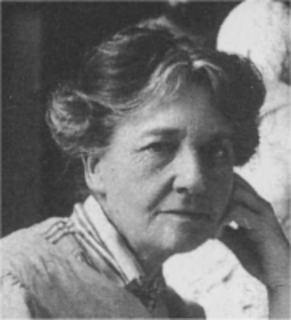
Sophia Rosamond Praeger, Irish artist, sculptor, illustrator, poet and writer, dies at Rock Cottage, County Down, Northern Ireland, on April 17, 1954.

Praeger is born on April 15, 1867, in Holywood, County Down. She is the daughter of Willem Emilius Praeger, a Dutch linen merchant who had settled in Ireland in 1860, and Marie Patterson. She has five brothers of who Robert goes on to become a distinguished naturalist. Within months of her birth the family moves to Woodburn House, Croft Road, Holywood, where they have as a neighbour Rev. Charles McElester, a Non-subscribing Presbyterian minister who runs a day school in his church. She both attends this school, and later teaches there. She receives her secondary education at Sullivan Upper School, Holywood, the Belfast School of Art, and the Slade School of Fine Art, London. Before returning to Ireland to open a studio in Belfast and then in Holywood, she studies art in Paris.

Praeger writes and illustrates children’s books but achieves fame with her sculpture The Philosopher which is exhibited at the Royal Academy of Arts in London, bought by an American collector, and is now on display in the Colorado Springs Museum and Art Gallery. She mostly works in plaster, but also uses stone, marble, terracotta and bronze, and her work includes relief panels, memorial plaques and stones. She exhibits in London and Paris, at the Royal Hibernian Academy, as well as at the Irish Decorative Art Association Exhibitions. She is a member of the Guild of Irish Art Workers.

Among Praeger’s other works are The Wai, Johnny the Jig, These Little Ones, St. Brigid of Kildare and The Fairy Fountain. For the Causeway School near Bushmills, County Antrim, she carves Fionnula the Daughter of Lir in stone. She models a heraldic figure for the Northern Bank in Donegall Square West, Belfast, and bronze plaques for the front door of the Carnegie library, Falls Road, Belfast, as well as the angels on Andrews Memorial Hall in Comber, County Down, and some work in St. Anne’s Cathedral, Belfast. She illustrates three books for her brother, Robert Praeger. She is President of the Royal Ulster Academy, an honorary Fellow of the Royal Hibernian Academy, and she receives an honorary doctorate from Queen’s University, Belfast. In 1939 she is awarded the MBE.

Praeger maintains her studio in Hibernian Street, Holywood, up until 1952, at the age of 85. She dies at Rock Cottage, County Down, on April 17, 1954. She is buried in the Priory Cemetery, Holywood. Her work in included in the collections of the Ulster Museum and the National Gallery of Ireland, and some private collections around the world

(From: “Sophia Rosamond Praeger (1867 – 1954): Sculptor” by Kate Newmann and Richard Froggatt, Dictionary of Ulster Biography, http://www.newulsterbiography.co.uk)


Leave a comment

Birth of Neil Shawcross, Post-Impressionist Artist

Neil Shawcross MBE, RHA, HRUA, Post-Impressionist artist, is born in Kearsley, Lancashire, England, on March 15, 1940. He has been a resident of Northern Ireland since 1962.

Shawcross studies at Bolton College of Art from 1955 to 1958, and Lancaster College of Art from 1958 to 1960, before moving to Belfast in 1962 to take up a part-time lecturer’s post at the Belfast College of Art, becoming full-time in 1968. He continues to lecture there until his retirement in 2004.

Primarily a portrait painter, his subjects include Nobel Prize winning poet Seamus Heaney, novelist Francis Stuart (for the Ulster Museum), former Lord Mayor of Belfast David Cook (for Belfast City Council), footballer Derek Dougan and fellow artists Colin Middleton and Terry Frost. He also paints the figure and still life, taking a self-consciously childlike approach to composition and colour. His work also include printmaking, and he has designed stained glass for the Ulster Museum and St. Colman’s Church, Lambeg, County Antrim.

Shawcross’s academic career includes a residency at Virginia Center for the Creative Arts in Amherst, Virginia in 1987, a residency at Vermont Studio Center in Johnson, Vermont in 1991, and a visiting assistant professorship at Pennsylvania State University in 1993.

Shawcross has exhibited nationally, with one-man shows in London, Manchester, Dublin and Belfast, and internationally in Hong Kong and the United States, and his work is found in many private and corporate collections.

Shawcross is elected an Associate of the Royal Ulster Academy of Art in 1975, and is made a full Academician in 1977. He wins the Academy’s Conor Award in 1975, its gold medal in 1978, 1982, 1987, 1994, 1997 and 2001, and its James Adam Prize in 1998. He is also a member of the Royal Hibernian Academy (RHA). He is awarded the Gallaher Portrait Prize in 1966.

Shawcross is conferred an honorary doctorate by Queen’s University Belfast in 2007. He is appointed Member of the Order of the British Empire (MBE) in the 2014 New Year Honours for services to arts in Northern Ireland.

In 2010, the Merrion Hotel, Dublin, hosts a private collection of the works of Shawcross. In 2015, he exhibits a collection of six foot tall book covers inspired by original Penguin paperbacks at the National Opera House in Wexford, County Wexford. In 2018, he donates to Belfast City Council a collection of 36 paintings dedicated to ‘Writers of Belfast’ in a show of appreciation to his adopted home city. A major retrospective of his works are exhibited at the F. E. McWilliam Gallery and Studio, Banbridge, County Down, in the same year.

Shawcross is a Patron of the charity YouthAction Northern Ireland. He lives in Hillsborough, County Down, Northern Ireland.


Leave a comment

Birth of Northern Irish Motorcyclist Joey Dunlop

William Joseph Dunlop OBE, Northern Irish motorcyclist, is born in Armoy, County Antrim, near Ballymoney, on February 25, 1952. His achievements include three hat-tricks at the Isle of Man TT meeting (1985, 1988 and 2000), where he wins a record 26 races in total. A curve at the 26th milestone on the Isle of Man is named in his honour. During his career he won the Ulster Grand Prix 24 times.

Dunlop marries on September 22, 1972 at the Ballymoney register office. He is the proprietor of a pub in Ballymoney and is highly superstitious, always wearing a red T-shirt and his yellow crash helmet when racing. He is presented with the Freedom of the Borough by Ballymoney Council in 1993.

Dunlop helps orphans in the Balkans, driving a van loaded with supplies to orphanages in Romania, Albania and Bosnia-Herzegovina before the annual racing season begins. In 1996, he receives an OBE for his humanitarian work.

On the night of May 23, 1985, Dunlop is traveling from Northern Ireland to the Isle of Man for the annual TT races by sea, onboard the Tornamona, a former fishing boat. The vessel departs from Strangford, County Down with Dunlop, other riders, racing bikes and equipment onboard. Strong currents into Strangford Lough push the Tornamona onto St. Patrick’s Rock where her rudder breaks off in a crevice. The boat sinks and all 13 passengers and crew are rescued by the Portaferry Lifeboat. The bikes are later recovered by divers.

In 1986, Dunlop wins a fifth consecutive TT Formula One world title. Initially based on one race at the Isle of Man TT after the loss of World Championship status from 1977-onwards and organised by the Auto-Cycle Union, the title is eventually expanded to take in more rounds in other countries.

Dunlop is awarded the MBE in 1986 for his services to the sport. He is featured in three documentary films regarding his career: V Four Victory (1983), Joey – The Man Who Conquered the TT (2013) and Road (2014).

Dunlop wins his third hat trick at the Isle of Man TT in 2000 and sets his fastest lap on the course of 123.87 mph in the Senior race, in which he finishes third.

Dunlop dies in Tallinn, Estonia, on July 2, 2000 while leading a 125cc race on the Pirita-Kose-Kloostrimetsa Circuit. He appears to lose control of his bike in the wet conditions and dies instantly on impact with trees. As a mark of respect, the Estonian government’s official website is replaced with a tribute to Dunlop within hours of his death. Northern Ireland television carries live coverage of his funeral. Fifty thousand mourners, including bikers from all parts of Britain and Ireland and people from all backgrounds in Northern Ireland, attend the funeral procession to Garryduff Presbyterian church and his burial in the adjoining graveyard.

Following Dunlop’s death, the Leisure Centre in his hometown of Ballymoney is renamed from the Riada Centre to the Joey Dunlop Leisure Centre. Also, a memorial statue is erected in his hometown. The Joey Dunlop Foundation is initiated, a charity that provides appropriate accommodation for disabled visitors to the Isle of Man. In 2001, the Joey Dunlop Memorial Garden is established in the Dunlop family’s hometown, and in 2010 the tribute is extended to include the Robert Dunlop Memorial Garden to honour Joey’s late brother, Robert Dunlop.

The most successful overall rider at the annual TT races is awarded the “Joey Dunlop Cup.” On the Isle of Man, a statue of Dunlop astride a Honda overlooks the Bungalow Bend at Snaefell and the 26th Milestone area of the TT course is named “Joey’s.” A memorial stone is installed at the crash site in Tallinn as well. Irish publishers the O’Brien Press produces a full-colour pictorial tribute to Dunlop following his death. Northern Ireland band Therapy? records a song in memory of Dunlop called “Joey.” It appears on the album Shameless, released in 2001.

On January 30, 2015, Dunlop is voted Northern Ireland’s greatest sports star by readers of the Belfast Telegraph newspaper. In 2016 he is voted through Motorcycle News as the fifth greatest motorcycling icon ever, behind Valentino Rossi.


Leave a comment

Death of James “Jemmy” Hope, United Irishmen Leader

James “Jemmy” Hope, Society of United Irishmen leader who fights in the Irish Rebellions of 1798 and 1803 against British rule in Ireland, dies on February 10, 1847 at his son Henry’s home, 1 Lancaster St., Belfast.

Hope is born in Templepatrick, County Antrim, on August 25, 1764 to a Presbyterian family originally of Covenanter stock. He is apprenticed as a linen weaver but attends night school in his spare time. Influenced by the American Revolution, he joins the Irish Volunteers, but upon the demise of that organisation and further influenced by the French Revolution, he joins the Society of the United Irishmen in 1795.

Hope quickly establishes himself as a prominent organiser and is elected to the central committee in Belfast, becoming close to leaders such as Samuel Neilson, Thomas Russell, and Henry Joy McCracken. He is almost alone among the United Irish leaders in targeting manufacturers as well as landowners as the enemies of all radicals. In 1796, he is sent to Dublin to assist the United Irish organisation there to mobilise support among the working classes, and he is successful in establishing several branches throughout the city and especially in The Liberties area. He also travels to counties in Ulster and Connacht, disseminating literature and organizing localities.

Upon the outbreak of the 1798 rebellion in Leinster, Hope is sent on a failed mission to Belfast by Henry Joy McCracken to brief the leader of the County Down United Irishmen, Rev. William Steel Dickson, with news of the planned rising in County Antrim, unaware that Dickson had been arrested only a couple of days before. He manages to escape from Belfast in time to take part in the Battle of Antrim where he plays a skillful and courageous role with his “Spartan Band,” in covering the retreat of the fleeing rebels after their defeat.

Hope manages to rejoin McCracken and his remaining forces after the battle at their camp upon Slemish mountain, but the camp gradually disperses, and the dwindling band of insurgents are then forced to go on the run. He successfully eludes capture, but his friend McCracken is captured and executed on July 17. Upon the collapse of the general rising, he refuses to avail of the terms of an amnesty offered by Charles Cornwallis, 1st Marquess Cornwallis on the grounds that to do so would be “not only a recantation of one’s principles, but a tacit acquiescence in the justice of the punishment which had been inflicted on thousands of my unfortunate associates.”

Hope lives the years following 1798 on the move between counties Dublin, Meath and Westmeath but is finally forced to flee Dublin following the failure of Robert Emmet‘s rebellion in 1803. He returns to the north and evades the authorities attentions in the ensuing repression by securing employment with a sympathetic friend from England. He is today regarded as the most egalitarian and socialist of all the United Irish leadership.

After suffering poor health for some years, Hope dies on February 10, 1847 at his son Henry’s home, 1 Lancaster St., Belfast. He is buried in the Mallusk Cemetery, Newtownabbey, County Antrim. The headstone is raised by his friends, Henry Joy McCracken’s sister Mary Ann, and the Shankill Road United Irishman Isreal Milliken. The historian Richard Robert Madden, who had encouraged Hope to write his memoirs, supplies the inscription. The headstone features the outline of a large dog, which supposedly brought provisions to him and his compatriots when they were hiding following the Battle of Antrim.


Leave a comment

Birth of Arthur Armstrong, Landscape & Still Life Painter

Arthur Armstrong, landscape and still life painter who often works in a Cubist style, is born in Carrickfergus, County Antrim, Northern Ireland, on January 12, 1924. A prolific painter, completing up to 300 paintings a year, in oils, watercolour and mixed media, he regards himself first and foremost as an abstract artist.

Armstrong is the son of a house painter and attends Strandtown Primary School. Later he studies architecture at Queen’s University Belfast, but after two years he moves to study art at Belfast School of Art. The influence of Cubism and the School of Paris can be clearly seen in his work, which takes him to England, France and Spain. He also travels and paints in the west of Ireland and Connemara inspires some of his best work. In 1950 his work is exhibited in the Grafton Gallery in Dublin, and subsequent exhibitions take place in England, Spain and the United States, as well as in Belfast and Dublin. In 1957 he is awarded a travelling scholarship from the Council for the Encouragement of Music and the Arts (CEMA), a forerunner of the Arts Council of Great Britain, and goes to Spain. He eventually settles in Dublin in 1962 and begins showing work at the Royal Hibernian Academy.

In 1968 Armstrong is awarded the Douglas Hyde Gold Medal at the Oireachtas Exhibition. In 1969 he designs sets, with George Campbell and Gerard Dillon, for the Seán O’Casey play, Juno and the Paycock, at the Abbey Theatre in Dublin. He becomes a member of the Royal Hibernian Academy in 1972 and in 1973 he is awarded the Art in Context prize from the Arts Council of Northern Ireland. He becomes a member of Aosdána in 1981, the same year that a retrospective exhibition of his work from 1950 to 1980 is held by the Arts Council of Northern Ireland.

From 1971 Armstrong lives at 28 Chelmsford Avenue, Ranelagh, Dublin, in a house he shares with Gerard Dillon. A bachelor, Armstrong dies in a Dublin hospital on January 13, 1996. The contents of his studio are sold February 3, 1998.

(Pictured: “Glendalough” by Arthur Armstrong, oil on board)


Leave a comment

British Ultimatum to the Irish Delegation at the Anglo-Irish Treaty Talks

The Irish delegation at the Anglo-Irish Treaty talks in London are given an ultimatum by British Prime Minister David Lloyd George on December 5, 1921. Sign the treaty or face “immediate and terrible war.”

In 1920, during the Irish War of Independence, the Government of Ireland Act not only establishes the new state of Northern Ireland but gives that state the right to opt-out of a future self-governing Irish Free State within the British Commonwealth of Nations.

The Northern state consists of the six northeastern counties of Ulster with a unionist majority. They are Antrim, Down, Armagh, Derry, Tyrone, and Fermanagh. Belfast is to be the seat of a government and hold limited devolved powers. The counties of Donegal, Cavan, and Monaghan are to be absorbed within the Irish Free State controlled from parliament in Dublin.

Irish nationalists are dismayed with the plan. Protestant Unionists, particularly those living within the boundaries of the new state, accept and start to implement the Act. Sectarian attacks are launched upon Catholic homes in Belfast, Derry, Banbridge, Lisburn, and Dromore. Catholics are driven from Belfast shipyards and from various engineering works in the city. Supposedly these attacks are in revenge for Irish Republican Army (IRA) assassinations.

The IRA continues the campaign to establish a republic with the Irish War of Independence. By the middle of 1921, both sides are exhausted, and a truce is called on June 9.

In July 1921, Éamon DeValera, the president of Dáil Éireann, goes to London to meet with Prime Minister Lloyd George. They agree an Irish delegation will come to London to discuss terms in the autumn.

The delegation appointed by the Dáil to travel to London consists of Arthur Griffith (Minister for Foreign Affairs and chairman of the delegation); Michael Collins (Minister for Finance and deputy chairman of the delegation); Robert Barton (Minister for Economic Affairs); George Gavan Duffy and Éamonn Duggan, with Erskine Childers, Fionán Lynch, Diarmuid O’Hegarty, and John Chartres providing secretarial assistance. DeValera himself does not attend. Future historians wonder if he knew they would not be able to negotiate a 32 county Irish Republic.

During the debate, Lloyd George insists Ireland remain part of the Commonwealth and Dáil Éireann members take the oath of allegiance to the British throne. After a delay of two months, Lloyd George delivers the ultimatum on December 5, sign a treaty within three days or there will be war.

The Anglo-Irish Treaty is to give Ireland a 26 county Free State with Dominion status. The right to raise taxes, regulate foreign trade, independence in internal affairs, own an army, and the oath of allegiance is changed to one of fidelity.

The British are to retain three naval bases within the jurisdiction of the Free State, at Cobh, Lough Swilly, and Berehaven. The Northern Ireland boundary is to be determined by a commission. This gives false hope to large tracts of Tyrone, Fermanagh, Down, Armagh, and Derry City would be given to the Free State as they have Catholic majorities.

Just after 2:00 AM on December 6, 1921, the Irish delegation, without consulting the Dáil, finally sign a treaty with the British. Collins writes, prophetically, later on the day of the signing, “early this morning I signed my death warrant.”

The Treaty displeases the Catholics in the north and the unionists in the south. Meanwhile, many of those involved in the conflict are abhorred at the fact that not all of Ireland is to leave the United Kingdom.

(From: “The Anglo-Irish Treaty (1921)” by Brian O’Neill, Your Irish Culture, http://www.yourirish.com, May 20, 2020)


Leave a comment

Birth of Roy McFadden, Poet, Editor & Lawyer

Roy McFadden, Northern Irish poet, editor, and lawyer, is born in Downpatrick, County Down, on November 14, 1921.

McFadden is born to Roland Victor MCFadden and his wife Maud Steele. A short time after his birth the family relocates to Belfast. He is educated at Knock Grammar School, Regent House School in Newtownards, and later graduates in Law from Queen’s University Belfast in 1944. He becomes a prominent lawyer and an influential figure in the Belfast literary scene.

McFadden’s first poem is published before he is thirteen. His earliest influences are from magazines and journals that his father brings home, and by Francis Turner Palgrave‘s Golden Treasury. He first comes to prominence as a promoter of Ulster literature in the 1940s when he edits two anthologies of poetry, Ulster Voices and Irish Voices in 1943. In 1948, he co-founds with Barbara Edwards (née Hunter) the Northern Irish poetry magazine Rann and then, co-edits it with her during its whole run, until 1953. Like its predecessor Lagan, it is unapologetically regionalist.

McFadden is the author of nine volumes of poetry, from Swords and Ploughshares (1943) to the posthumously published Last Poems (2002). Among his poems are “Saint Francis and the Birds” and “Independence”. His book, The Garryowen, is published by Chatto & Windus in the Phoenix Living Poets series. Most recently, his poem “Post-War” has been anthologised in Armistice: A Laureate’s Choice of Poems of War and Peace (Faber Poetry) (2018). There is a long gap between 1947 and 1971 when he publishes no collections of his work, however he continues to write and publishes in periodicals and newspapers such as The Irish Times where in that time he has sixty poems printed. His voice is well known on local BBC Radio through the Poetry Notebooks series, and he also has several verse-plays broadcast.

In 1952 McFadden marries Margaret Ferguson. Together they produce three sons and two daughters. He lives for a number of years in Lisburn, County Antrim. Inspired by Herbert Read and Alex Comfort, he describes himself as a pacifist and an anarchist in 1999. McFadden dies at his Belfast home on September 15, 1999.

The Roy McFadden Papers, comprising the poet’s personal manuscripts and papers, are lodged at Queen’s University Belfast. The Roy McFadden Library at Trinity College Dublin comprises books and journals on Irish and world literature from his collection. A comprehensive collection of his published work is held at the National Poetry Library, Southbank Centre, London.


Leave a comment

Death of Sir John Purser Griffith, Civil Engineer & Politician

Sir John Purser Griffith, Irish civil engineer and politician, dies at Rathmines Castle in Dublin on October 21, 1938.

Griffith is born on October 5, 1848, in Holyhead, Wales. He is educated at Trinity College Dublin and gains a license in civil engineering in 1868. He serves a two-year apprenticeship under Dr. Bindon Blood Stoney, the Engineer in Chief of the Dublin Port and Docks, before working as assistant to the county surveyor of County Antrim. He returns to Dublin in 1871 and works as Dr. Stoney’s assistant, becoming the Chief Engineer in 1898 before retiring in 1913.

Griffith serves as president of the Institution of Civil Engineers of Ireland between 1887 and 1889 and of the Institution of Civil Engineers between 1919 and 1920. He is elected Commissioner of Irish Lights in 1913 and is a member of the Royal Commission on Canals and Waterways between 1906 and 1911.

Griffith purchases and drains the bogland at Pollagh, part of the Bog of Allen. A peat fueled power station is built which drives an excavator, with excess peat being taken by the Grand Canal for sale in Dublin. The site is sold to the Turf Development Board in 1936 who uses it as a basis for all of their later peat fueled power stations. The area is now a nature reserve.

Griffith receives a knighthood in 1911 and becomes vice-president of the Royal Dublin Society in 1922. He serves as Honorary Professor of Harbour Engineering in Trinity College, his alma mater, and receives an honorary M.A.I. degree from the University of Dublin in 1914. From 1922 he is an elected member of the Seanad Éireann, the Irish senate, until its abolition in 1936. In the 1930s he and his niece, Sarah Purser, endow the Purser Griffith Travelling Scholarship and the Purser Griffith Prize to the two best performing students in European Art History at University College Dublin.

Griffith dies at Rathmines Castle in Dublin on October 21, 1938, having rightly earned the epithet ‘Grand Old Man of Irish engineering.’ A portrait in oils by his niece Sarah Purser, RHA, hangs in the Museum Building in Trinity College Dublin.


Leave a comment

The Maze Prison Escape

The Maze Prison escape, known to Irish republicans as the Great Escape, takes place on September 25, 1983, in County Antrim, Northern Ireland. HM Prison Maze, also known as Long Kesh, is a maximum-security prison considered to be one of the most escape-proof prisons in Europe, and holds prisoners suspected of taking part in armed paramilitary campaigns during the Troubles. In the biggest prison escape in UK history, 38 Provisional Irish Republican Army (IRA) prisoners escaped from H-Block 7 (H7) of the prison. One prison officer dies of a heart attack during the escape and twenty others are injured, including two who are shot with guns that had been smuggled into the prison. The escape is a propaganda coup for the IRA, and a British government minister faces calls to resign. The official inquiry into the escape places most of the blame onto prison staff, who in turn blame the escape on political interference in the running of the prison.

IRA volunteers regard themselves as prisoners of war with a duty to escape. During the Troubles, Irish republican prisoners escape from custody en masse on several occasions between 1971 and 1981.

Prisoners had been planning the 1983 escape for several months. Bobby Storey and Gerry Kelly start working as orderlies in H7, which allows them to identify weaknesses in the security systems. Six handguns are also smuggled into the prison. Shortly after 2:30 PM on September 25, prisoners seize control of H7 by simultaneously taking the prison officers hostage at gunpoint in order to prevent them from triggering an alarm. One officer is stabbed with a craft knife, and another is knocked down by a blow to the back of the head. One officer who attempts to prevent the escape is shot in the head by Gerry Kelly but survives. By 2:50 PM the prisoners are in control of H7 without an alarm being raised. A dozen prisoners also take uniforms from the officers, and the officers are forced to hand over their car keys and details of where their cars are, for possible later use during the escape. A rearguard is left behind to watch over hostages and keep the alarm from being raised until they believe the escapees are clear of the prison, at which time they return to their cells. At 3:25 PM, a lorry delivering food supplies arrives at the entrance to H7, whereupon Brendan McFarlane and other prisoners take the occupants hostage at gunpoint and move them inside H7. The lorry driver is told the lorry is being used in the escape, and he is instructed what route to take and how to react if challenged.

At 3:50 PM the prisoners leave H7, and the driver and a prison orderly are taken back to the lorry. Thirty-seven prisoners climb into the back of the lorry, while Gerry Kelly lay on the floor of the cab with a gun pointed at the driver, who is also told the cab has been booby trapped with a hand grenade. At nearly 4:00 PM the lorry drives toward the main gate of the prison, where the prisoners intend to take over the gatehouse. Ten prisoners dressed in guards’ uniforms and armed with guns and chisels dismount from the lorry and enter the gatehouse, where they take the officers hostage.

At 4:05 PM the officers begin to resist, and an officer presses an alarm button. When other staff respond via an intercom, a senior officer says while being held at gunpoint that the alarm had been triggered accidentally. By this time the prisoners are struggling to maintain control in the gatehouse due to the number of hostages. Officers arriving for work are entering the gatehouse from outside the prison, and each is ordered at gunpoint to join the other hostages. Officer James Ferris runs from the gatehouse toward the pedestrian gate attempting to raise the alarm, pursued by Dermot Finucane. Ferris had already been stabbed three times in the chest, and before he can raise the alarm he collapses.

Finucane continues to the pedestrian gate where he stabs the officer controlling the gate, and two officers who had just entered the prison. This incident is seen by a soldier on duty in a watchtower, who reports to the British Army operations room that he has seen prison officers fighting. The operations room telephones the prison’s Emergency Control Room (ECR), which replies that everything is all right and that an alarm had been accidentally triggered earlier.

At 4:12 PM the alarm is raised when an officer in the gatehouse pushes the prisoner holding him hostage out of the room and telephones the ECR. However, this is not done soon enough to prevent the escape. After several attempts the prisoners open the main gate and are waiting for the prisoners still in the gatehouse to rejoin them in the lorry. At this time two prison officers block the exit with their cars, forcing the prisoners to abandon the lorry and make their way to the outer fence which is 25 yards away.

Four prisoners attack one of the officers and hijack his car, which they drive toward the external gate. They crash into another car near the gate and abandon the car. Two escape through the gate, one is captured exiting the car, and another is captured after being chased by a soldier. At the main gate, a prison officer is shot in the leg while chasing the only two prisoners who have not yet reached the outer fence. The prisoner who fires the shot is captured after being shot and wounded by a soldier in a watch tower, and the other prisoner is captured after falling. The other prisoners escape over the fence, and by 4:18 PM the main gate is closed and the prison secured, after 35 prisoners had breached the prison perimeter. The escape is the biggest in British history, and the biggest in Europe since World War II.

Outside the prison the IRA has planned a logistical support operation involving 100 armed members, but due to a miscalculation of five minutes, the prisoners find no transport waiting for them and are forced to flee across fields or hijack vehicles. The British Army and Royal Ulster Constabulary immediately activate a contingency plan and by 4:25 PM a cordon of vehicle checkpoints are in place around the prison, and others are later in place in strategic positions across Northern Ireland, resulting in the recapture of one prisoner at 11:00 PM. Twenty prison officers are injured during the escape, thirteen are kicked and beaten, four stabbed, and two shot. One prison officer, James Ferris, who had been stabbed, dies after suffering a heart attack during the escape.

The escape is a propaganda coup and morale boost for the IRA, with Irish republicans dubbing it the “Great Escape.” Leading unionist politician Ian Paisley calls on Nicholas Scott, the Parliamentary Under-Secretary of State for Northern Ireland, to resign. The British Prime Minister Margaret Thatcher makes a statement in Ottawa during a visit to Canada, saying “It is the gravest [breakout] in our present history, and there must be a very deep inquiry.” The day after the escape, Secretary of State for Northern Ireland James Prior announces an inquiry to be headed by Her Majesty’s Chief Inspector of Prisons, James Hennessy. The Hennessy Report is published on January 26, 1984, placing most of the blame for the escape on prison staff, and making a series of recommendations to improve security at the prison. The report also places blame with the designers of the prison, the Northern Ireland Office and successive prison governors who had failed to improve security. Prior announces that the prison’s governor has resigned, and that there will be no ministerial resignations as a result of the report’s findings. Four days after the Hennessy Report is published, the Minister for Prisons Nicholas Scott dismisses allegations from the Prison Governors Association and the Prison Officers Association that the escape is due to political interference in the running of the prison.

Fifteen escapees are captured on the day, including four who are discovered hiding underwater in a river near the prison using reeds to breathe. Four more escapees are captured over the next two days, including Hugh Corey and Patrick McIntyre who are captured following a two-hour siege at an isolated farmhouse. Out of the remaining 19 escapees, 18 end up in the republican stronghold of South Armagh where two members of the IRA’s South Armagh Brigade are in charge of transporting them to safehouses and given the option of either returning to active service in the IRA’s armed campaign or a job and new identity in the United States.

On October 25, 1984, nineteen prisoners appear in court on charges relating to the death of prison officer James Ferris, sixteen charged with his murder. A pathologist determines that the stab wounds Ferris suffered would not have killed a healthy man. The judge acquits all sixteen as he cannot correlate the stabbing to the heart attack.