seamus dubhghaill

Promoting Irish Culture and History from Little Rock, Arkansas, USA


Leave a comment

Loyalists Protest Sinn Féin Minister’s Refusal to Fly Union Flag

On Friday, August 4, 2000, Loyalists protest after Northern Ireland health minister Bairbre de Brún, a member of Sinn Féin, refuses to fly the Union flag outside her Belfast offices to mark the 100th birthday of Britain’s Queen Mother. First Minister David Trimble had written to the Northern Ireland secretary requesting that the Union Flag should be flown on all government buildings.

About 20 people take part in the picket organised by the loyalist Progressive Unionist Party (PUP) as the minister leaves the Department of Health offices on Friday morning.

In Bangor, County Down, a group of loyalist protesters put up a Union Flag outside the offices of Sinn Féin education minister Martin McGuinness at his department’s Rathgael House headquarters. Another group of PUP protesters demonstrate at government buildings in Adelaide Street in Belfast city centre, where the Union Flag is flying above two of the government buildings in the street.

Protestors hold up posters showing the faces of de Brun and McGuinness printed on a Union Flag. The posters also show the face of the nationalist Social Democratic and Labour Party (SDLP) agriculture minister Bríd Rodgers.

The PUP’s Billy Hutchinson criticises Sinn Féin ministers over their refusal to fly the Union Flag. “These people cannot even recognise that we have a monarch who’s 100 years old and they can’t even fly the flag, just because they think that everything that is British is no good,” he says. “These people forget that they have lived in Britain all their lives, most of them. They weren’t even born at Partition (of Ireland).” He adds that Sinn Féin’s ministers should accept that they are “British ministers in a British state.”

However, Sinn Féin’s Alex Maskey condemns the protests as “intimidating and sectarian.” He says Sinn Féin’s position on the flying of flags is designed not to cause offence. “Where British cultural and political symbols are invoked in public life, equivalent Irish cultural and political symbols should be given equal prominence. Where this cannot be agreed, no such symbols should fly,” he says.

The issue of flags has been emotive and divisive in Northern Ireland. The Sinn Féin ministers anger unionists on May 2 by ordering their civil servants not to fly the flag as part of the Coronation Day celebrations. The row reaches a head when the anti-agreement Democratic Unionist Party (DUP) attempts to guarantee the flying of the Union Flag with an assembly motion in June. However, the party fails to win enough support for their motion to be passed.

There are about 13 days in the year when the Union Flag is flown on designated government offices in the United Kingdom. Government buildings across the UK – from Whitehall ministries to town council offices are expected to raise the Union Flag on these days.

It is the second time in a week that the health minister has run into controversy. On Wednesday, August 2, she is confronted by angry loyalist protesters during an official visit to a County Antrim hospital. Around 20 demonstrators picket the Lagan Valley Hospital in Lisburn, while she is on a visit to see a GP scheme as part of a programme to learn about aspects of the health service. The tyres on the minister’s car are let down and an egg is thrown. De Brun is forced to leave the complex by another door.

(From: “Trimble joins Union Flag row,” BBC News, news.bbc.co.uk, Friday, August 4, 2000 | Pictured: Protesters picket the Department of Health)


Leave a comment

Reverend Ian Paisley Elected MP for North Antrim

After having been in prison for unlawful assembly and breach of the peace, the “anti-popery” Reverend Ian Richard Kyle Paisley, loyalist politician and Protestant religious leader from Northern Ireland, is elected to Westminster on July 18, 1970, as an MP for North Antrim.

Paisley is born on April 6, 1926, in Armagh, County Armagh. He becomes a Protestant evangelical minister in 1946 and remains one for the rest of his life. In 1951, he co-founds the fundamentalist Free Presbyterian Church of Ulster and is its leader until 2008. He becomes known for his fiery speeches and regularly preaches and protests against Catholicism, ecumenism and homosexuality. He gains a large group of followers who are referred to as “Paisleyites.”

Paisley becomes involved in Ulster unionist/loyalist politics in the late 1950s. In the mid-late 1960s he leads and instigates loyalist opposition to the Catholic civil rights movement in Northern Ireland. This leads to the outbreak of the Troubles in the late 1960s, a conflict that engulfs Northern Ireland for the next thirty years. In 1970, he becomes Member of Parliament for North Antrim and the following year he founds the Democratic Unionist Party (DUP), which he leads for almost forty years. In 1979, he becomes a Member of the European Parliament.

Throughout the Troubles, Paisley is seen as a firebrand and the face of hard-line unionism. He opposes all attempts to resolve the conflict through power-sharing between unionists and Irish nationalists/republicans, and all attempts to involve the Republic of Ireland in Northern affairs. His efforts help bring down the Sunningdale Agreement of 1974. He also opposes the Anglo-Irish Agreement of 1985, with less success. His attempts to create a paramilitary movement culminate in Ulster Resistance. He and his party also oppose the Northern Ireland peace process and Good Friday Agreement of 1998.

In 2005, Paisley’s DUP becomes the largest unionist party in Northern Ireland, displacing the Ulster Unionist Party (UUP), which has dominated unionist politics since 1905. In 2007, following the St. Andrews Agreement, the DUP finally agrees to share power with republican party Sinn Féin and consent to all-Ireland governance in certain matters. He and Sinn Féin’s Martin McGuinness become First Minister and deputy First Minister respectively in May 2007. He steps down as First Minister and DUP leader in May 2008 and leaves politics in 2011. He is made a life peer in 2010 as Baron Bannside.

In November 2011, Paisley announces to his congregation that he is retiring as a minister. He delivers his final sermon to a packed attendance at the Martyrs’ Memorial Hall on December 18, 2011, and finally retires from his religious ministry on January 27, 2012.

Paisley dies in Belfast on September 12, 2014. He is buried in Ballygowan, County Down on September 15 following a private funeral and a public memorial for 800 invited guests is held in the Ulster Hall on October 19. An obituary in The New York Times reports that late in life Paisley had moderated and softened his stances against Roman Catholics but that “the legacies of fighting and religious hatreds remained.”


Leave a comment

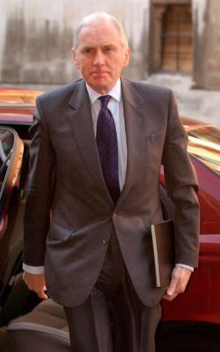
Birth of Brian Hutton, Lord Chief Justice of Northern Ireland

James Brian Edward Hutton, Baron Hutton, PC, a British Lord Chief Justice of Northern Ireland and Lord of Appeal in Ordinary, is born in Belfast, Northern Ireland, on June 29, 1932.

Hutton is the son of a railways executive. He wins a scholarship to Shrewsbury School and Balliol College, Oxford (BA jurisprudence, 1953) before returning to Belfast to study at Queen’s University Belfast and becoming a barrister, being called to the Bar of Northern Ireland in 1954. He begins working as junior counsel to the Attorney General for Northern Ireland in 1969.

Hutton becomes a Queen’s Counsel in 1970. From 1979 to 1989, as Sir Brian Hutton, he is a High Court judge. In 1989, he becomes Lord Chief Justice of Northern Ireland, becoming a member of the Privy Council of Northern Ireland, before moving to England to become a Lord of Appeal in Ordinary on January 6, 1997. He is consequently granted a life peerage as Baron Hutton, of Bresagh in the County of Down.

On March 30, 1994, as Lord Chief Justice of Northern Ireland, Hutton dismisses Private Lee Clegg‘s appeal against his controversial murder conviction. On March 21, 2002 he is one of four Law Lords to reject David Shayler‘s application to use a “public interest” defence as defined in section 1 of the Official Secrets Act 1989 at his trial.

Hutton represents the Ministry of Defence at the inquest into the killing of civil rights marchers on “Bloody Sunday.” Later, he publicly reprimands Major Hubert O’Neil, the coroner presiding over the inquest, when the coroner accuses the British Army of murder, as this contradicts the findings of the Widgery Tribunal.

Hutton also comes to public attention in 1999 during the extradition proceedings of former Chilean dictator General Augusto Pinochet. Pinochet had been arrested in London on torture allegations by request of a Spanish judge. Five Law Lords, the UK’s highest court, decide by a 3-2 majority that Pinochet is to be extradited to Spain. The verdict is then overturned by a panel of seven Law Lords, including Hutton, on the grounds that Lord Lennie Hoffmann, one of the five Law Lords, has links to human rights group Amnesty International which had campaigned for Pinochet’s extradition.

In 1978, Hutton defends the UK at the European Court of Human Rights in the case of Ireland v United Kingdom, when the court decides that the interrogation techniques used were “inhuman and degrading” and breached the European Convention on Human Rights, but do not amount to “torture.” The court also finds that the practice of internment in Northern Ireland had not breached the Convention. He sentences ten men to 1,001 years in prison on the word of “supergrass” informer Robert Quigley, who is granted immunity in 1984.

Hutton is appointed by Tony Blair‘s government to chair the inquiry on the circumstances surrounding the death of scientist David Kelly. The inquiry commences on August 11, 2003. Many observers are surprised when he delivers his report on January 28, 2004 and clears the British Government in large part. His criticism of the BBC is regarded by some as unduly harsh with one critic commenting that Hutton had given the “benefit of judgement to virtually everyone in the government and no-one in the BBC.” In response to the verdict, the front page of The Independent newspaper consists of one word, “Whitewash?”

Peter Oborne writes in The Spectator in January 2004: “Legal opinion in Northern Ireland, where Lord Hutton practised for most of his career, emphasises the caution of his judgments. He is said to have been habitually chary of making precedents. But few people seriously doubt Hutton’s fairness or independence. Though [he is] a dour Presbyterian, there were spectacular acquittals of some very grisly IRA terrorist suspects when he was a judge in the Diplock era.”

Hutton retires as a Law Lord on January 11, 2004. He remains a member of the House of Lords until retiring under the House of Lords Reform Act 2014 on April 23, 2018.

Hutton dies at the age of 88 on July 14, 2020.


Leave a comment

King William III, William of Orange, Arrives in Belfast

William of Orange, King of Holland, and recently declared King William III of England, arrives with his fleet in Belfast on June 14, 1690. He remains for twelve days, departing on June 26. For his part he likes what he sees. “This country is worth fighting for,” he says.

William’s departure from London is held up by parliamentary business until the end of May, when he announces that he can wait no longer and adjourns Parliament. He sets out early in the morning of June 4, reaching Northampton before nightfall. On Sunday, June 8, he attends divine service in Chester Cathedral and goes on to inspect the ships at Hoylake on the tip of the Wirral Peninsula.

For two days the wind is contrary, but on June 11 he embarks on board the yacht “Mary” with a fleet escorted by Sir Cloudesley Shovell‘s squadron. On June 14 the hills of Ireland come in sight and in the afternoon the fleet casts anchor off Carrickfergus. He is rowed ashore in the Rear Admiral’s barge and at about 3:30 p.m. lands at the Old Quay under the shadow of the great Norman Castle.

The Garrison of the Castle has drawn up a Guard of Honour and the townspeople add their applause. The chosen spokesman is a Quaker, whose principles forbid him to doff his hat or use such titles as Sir and Majesty. He gets around the difficulty by taking off his hat and laying it on a stone and then stepping forward and saying “William, thou art welcome to thy Kingdom” which pleases the King so much that he replies, “You are the best-bred gentleman I have met since I came to England.” With these words he mounts his horse and sets off for Belfast.

Halfway along the shore is the little port of Whitehouse, where most of the army disembarks. The Commander-in-Chief, Frederick Schomberg, 1st Duke of Schomberg, and his senior commanders are waiting here to welcome the King. To cover the disembarkation, earthworks have been thrown up by the engineers at Fort William and garrisoned by troops ready for action.

In 1690 Belfast consists of about 300 houses in five streets. It has two churches, the Parish Church, where St. George’s Church still stands in the High Street, and the Presbyterian Meeting House in Rosemary Lane. The town had been surrounded by a rampart in 1642 and had been captured by Colonel Robert Venebles for Oliver Cromwell after a four-day siege and an assault on the North Gate in 1649.

It is at the North Gate that King William enters Belfast where North Street now crosses Royal Avenue. Here he is welcomed by the magistrates and burgesses in their robes and by the Rev. George Walker, now Bishop-elect of Derry. A Royal Salute is fired from the Castle and is echoed and re-echoed by the guns which Schomberg had placed at wide intervals for the purpose of conveying signals from post to post. Wherever it is heard it is known that King William has come. Before midnight all the heights of Antrim and Down are blazing with bonfires.

The next day being Sunday, William attends church at the Corporation Church, now St. George’s Church. On Monday, June 16, addresses of loyalty are presented on behalf of the Church of Ireland and Presbyterian Church clergy, the civic authorities of the city of Londonderry, the town of Belfast and by the Sheriffs, Justices of the Peace and Gentlemen of the Counties of Down and Antrim. The next two days are spent in military preparation.

In the previous season Schomberg had conducted a slow and cautious campaign but William says he has not come to Ireland to let the grass grow under his feet. He orders a general muster of the army in the Parish of Aghaderg which includes Scarvagh and on Thursday, June 19, begins his southward march from Belfast Castle.

The line of march continues along Upper Malone by the Old Coach Road and past the ruins of both Drumbeg and Lambeg Parish Churches which had been burned down in 1641. William reaches Schomberg’s headquarters in Lisburn Castle for lunch on the same day that he left Belfast Castle. The afternoon and evening are spent inspecting troops on Blaris Moor, and then on to Hillsborough Castle for the night.

The cavalcade moves on through the little round hills of County Down, crosses the Upper Bann between Huntly and Ballievey by ford over the hill of Banbridge and on to the rendezvous on the northwest of Loughbrickland.

After the disappointments of the previous season and the appalling loss of life through disease, Schomberg had dispersed his army into winter quarters all over Ulster. The Derry and Enniskillen men had gone home to pick up the threads of their lives. Now the farmers among them have the crop in and are recalled to the colours and ready to be reviewed. There are four regiments of Enniskillen men – Wynns, Tiffins, Lloyds and Cunninghams, one of foot and three of horse. There is only one regiment of Derry men, St. John’s, commanded by Mitchelburne with Rev. George Walker as chaplain.

On June 22, William sits in the saddle for hours reviewing his 36,000 men. Marching past are 10,000 Danes, some of whom came from Norway and Sweden, and even Finland, 7,000 Dutch and Brandenburgers, 2,000 French Huguenots, 11,000 English and Scots, 800 Derrymen, 4,500 Inniskilleners and two companies from Bandon, County Cork.

On June 24, an advance party reaches beyond Newry to the edge of Dundalk and brings intelligence that the deposed King James II has fallen back on Ardee. The following day the main army advances to Newry and camps on the side of a hill. On June 25, with the King at their head, wearing an Orange colour sash, they go through the Moyry Gap and pass out of Ulster en route to the Boyne.

(From: “History of Orangeism: King William in Ulster,” Museum of Orange Heritage, http://www.orangeheritage.co.uk)


Leave a comment

Birth of Isaac Corry, Lawyer & Member of Parliament

Isaac Corry FRS, PC (I), PC, an Irish and British Member of Parliament and lawyer, is born on May 15, 1753, in Newry, County Down.

Corry is the son of Edward Corry, sometime Member of Parliament, and Catharine Bristow. His cousin is the writer Catherine Dorothea Burdett. He is educated at the Royal School, Armagh, where his contemporaries include Robert Stewart, Viscount Castlereagh, and later at Trinity College, Dublin, from which he graduates in 1773. On October 18, 1771, he is admitted to the Middle Temple and called to the bar at King’s Inns in 1779.

Corry succeeds his father as Member of Parliament for Newry in 1776, sitting in the Irish House of Commons until the Acts of Union 1800. From 1782 to 1789 he serves as equerry to Prince Henry, Duke of Cumberland, being described in 1794 by Rt. Hon. Sylvester Douglas as “a well-bred man…He has no brogue…He once acted as a sort of groom of the bedchamber to the late Duke of Cumberland.” In 1798, he is also elected for Randalstown, but chooses not to sit and, in 1802, he is returned to the British House of Commons for Newry. He serves as a Whig at Westminster until 1806. It is written in 1783 that he would expect to enter high office, given that “he lives expensively and does not pursue his profession, which is the law.” In 1788 he becomes Clerk of the Irish Board of Ordnance. The following year he is appointed a commissioner of the revenue. Finally in 1799 he is appointed Chancellor of the Exchequer of Ireland and a Lord High Treasurer of Ireland in place of Sir John Parnell, who quarreled violently with William Pitt the Younger over the projected union, which he categorically refuses to support. In 1795 he becomes a Privy Councillor.

In 1802 Corry is dismissed from the Exchequer and replaced by John Foster (later Lord Oriel), he is awarded, however, £2,000 p.a. in compensation. In 1806 the changes in ownership of the Newry estates alters his position. The lands pass to a senior line of the Needham family and they support General Francis Needham, 1st Earl of Kilmorey, at the general election. Corry does not have the funds needed, in excess of £5000, to purchase a seat elsewhere. However, Lady Downshire is inclined to support the Grenville ministry and comes to a formal agreement with Corry to give him £1000 towards his expenses should he be successful in Newry, and, if not, to bring him in for another borough. He fails against the Needham interest in Newry, but a seat at Newport, Isle of Wight, is purchased for him, with £4000 from Lady Downshire, and he is appointed to the Board of Trade. Six months later Grenville’s ministry has fallen and there is another general election. Corry stands, again unsuccessfully, for Newry.

Corry is unmarried but has a long-term relationship with Jane Symms. They have three sons and three daughters. His daughter Ann marries Lt. Col. Henry Westenra, the brother of Robert Cuninghame, 1st Baron Rossmore. His residence in Newry is the Abbey Yard, now a school, and Derrymore House, Bessbrook, County Armagh, which he had inherited from his father and sold in 1810. It is now the property of the National Trust. During his life, a road is constructed from near the main entrance of Derrymore House around Newry and links up with the Dublin Road on the southern side of the town primarily for his use. This road subsequently becomes known as “The Chancellor’s Road,” as a result of his term as the Irish Chancellor of the Exchequer. A local legend has it that the road is constructed after an incident in which Corry’s stagecoach is stoned while passing through Newry by people angry at an unpopular window tax he had introduced. The road has retained this name, but it is cut in half by the Newry by-pass in the mid-1990s, however, as a result of works associated with the new A1 dual carriageway, the two-halves of the road are now reconnected.

Corry dies at his house in Merrion Square, Dublin, on May 15, 1813, his 60th birthday. He is buried in St. Patrick’s Cathedral, Dublin.


Leave a comment

Birth of Mathematician William McFadden Orr

William McFadden Orr, mathematician, is born May 2, 1866, at Ballystockart, Comber, County Down, in what is now Northern Ireland.

Orr is the eldest son of Fletcher Blakely Orr of Ballystockart, a unitarian farmer and millowner, and Elizabeth Orr, daughter of David Lowry, farmer, of Ballymacashin, County Down. He attends a local national school, spends two years at an intermediate school in Newtownards, and then attends Methodist College Belfast (MCB). He wins a Royal University of Ireland (RIU) scholarship in mathematics in 1883 and graduates in 1885 from Queen’s College Belfast, a constituent college of the RUI. He then matriculates at St. John’s College, Cambridge, where he is Senior Wrangler in 1888 and comes in first in part two of the Mathematical Tripos in 1889. Two years later he is elected to a fellowship at St. John’s, and the same year is appointed professor of applied mathematics at the Royal College of Science for Ireland in Dublin. When the Royal College is merged with University College Dublin (UCD) in October 1926, he becomes professor of pure and applied mathematics, a position he holds until his retirement in 1933.

Orr’s 1909 publication Notes on Thermodynamics for Students is seen as epitomising his style of teaching, with its emphasis on logical rigour and clear statement of underlying assumptions. Known for his generosity to staff and students who encounter difficulties, he is nonetheless a strict disciplinarian who abhors idleness and valued stoicism. He is elected Fellow of the Royal Society (FRS) in 1909 and is awarded an honorary degree of D.Sc. from Queen’s University Belfast (QUB) in 1919.

In 1892, Orr marries Elizabeth Campbell of Melbourne, Australia, whose father, Samuel Campbell, is from County Down. They live at 19 Pembroke Road, Dublin, and have three daughters. He dies at Douglas, Isle of Man on August 14, 1934, and is interred in Mount Jerome Cemetery, Dublin. He is survived by his two daughters.

(From: “Orr, William McFadden” contributed by Paul Rouse, Dictionary of Irish Biography, http://www.dib.ie)


Leave a comment

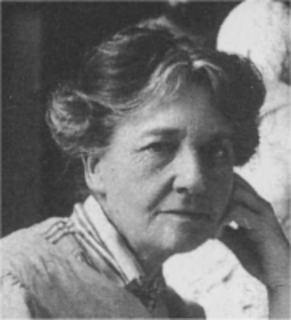
Birth of Mary Ward, Astronomer, Microscopist, Author & Artist

Mary Ward (née King), Irish naturalist, astronomer, microscopist, author, and artist, is born in Ballylin near present-day Ferbane, County Offaly, on April 27, 1827. She is killed in 1869 when she falls under the wheels of an experimental steam car built by her cousins, thereby becoming the first person known to be killed by a motor vehicle.

King is the youngest child of the Reverend Henry King and his wife Harriette. She and her sisters are educated at home, as are most girls at the time. However, her education is slightly different from the norm because she is of a renowned scientific family. She is interested in nature from an early age, and by the time she is three years old she is collecting insects.

King is a keen amateur astronomer, sharing this interest with her cousin, William Parsons, 3rd Earl of Rosse, who builds the Leviathan of Parsonstown, a reflecting telescope with a six-foot mirror which remains the world’s largest until 1917. She is a frequent visitor to Birr Castle, producing sketches of each stage of the process. Along with photographs made by Parson’s wife, Mary Rosse, her sketches are used to aid in the restoration of the telescope.

King also draws insects, and the astronomer James South observes her doing so one day. She is using a magnifying glass to see the tiny details, and her drawing so impresses him that he immediately persuades her father to buy her a microscope. A compound microscope made by Andrew Ross is purchased for £48 12s 8d. This is the beginning of a lifelong passion. She begins to read everything she can find about microscopy, and teaches herself until she has an expert knowledge. She makes her own slides from slivers of ivory, as glass is difficult to obtain, and prepares her own specimens. The physicist David Brewster asks her to make his microscope specimens, and uses her drawings in many of his books and articles.

Universities and most societies do not accept women at the time, but King obtains information any way she can. She writes frequently to scientists, asking them about papers they had published. During 1848, Parsons is made president of the Royal Society, and visits to his London home allows her to meet many scientists.

King is one of only three women on the mailing list for the Royal Astronomical Society. The others are Queen Victoria and Mary Somerville, a scientist for whom Somerville College at the University of Oxford is named.

On December 6, 1854, King marries Henry Ward of Castle Ward, County Down, who in 1881 succeeds to the title of Viscount Bangor. They have three sons and five daughters, including Maxwell Ward, 6th Viscount Bangor. Her best-known descendants are her grandson, Edward Ward, the foreign correspondent and seventh viscount, and his daughter, the Doctor Who actress Lalla Ward.

When Ward writes her first book, Sketches with the microscope (privately printed in 1857), she apparently believes that no one will print it because of her gender or lack of academic credentials. She publishes 250 copies of it privately, and several hundred handbills are distributed to advertise it. The printing sells during the next few weeks, which prompts a London publisher to take the risk and contract for future publication. The book is reprinted eight times between 1858 and 1880 as A World of Wonders Revealed by the Microscope. A new full-colour facsimile edition at €20 is published in September 2019 by the Offaly Historical and Archaeological Society, with accompanying essays.

Her books are A Windfall for the Microscope (1856), A World of Wonders, Revealed by the Microscope (1857), Entomology in Sport, and Entomology in Earnest (1857, with Lady Jane Mahon), Microscope Teachings (1864), Telescope Teachings (1859). She illustrates her books and articles herself, as well as many books and papers by other scientists.

Ward is the first known automobile fatality. William Parsons’ sons had built a steam-powered car and on August 31, 1869, she and her husband are traveling in it with the Parsons boys, Richard Clere Parsons and the future steam turbine pioneer Charles Algernon Parsons, and their tutor, Richard Biggs. She is thrown from the car on a bend in the road at Parsonstown (present-day Birr, County Offaly). She falls under its wheel and dies almost instantly. A doctor who lives near the scene arrives within moments, and finds her cut, bruised, and bleeding from the ears. The fatal injury is a broken neck. It is believed that the grieving family destroys the car after the crash.

Ward’s microscope, accessories, slides and books are on display in her husband’s home, Castle Ward, County Down. William Parsons’ home at Birr Castle, County Offaly, is also open to the public.


Leave a comment

Death of Rosamond Praeger, Artist & Sculptor

Sophia Rosamond Praeger, Irish artist, sculptor, illustrator, poet and writer, dies at Rock Cottage, County Down, Northern Ireland, on April 17, 1954.

Praeger is born on April 15, 1867, in Holywood, County Down. She is the daughter of Willem Emilius Praeger, a Dutch linen merchant who had settled in Ireland in 1860, and Marie Patterson. She has five brothers of who Robert goes on to become a distinguished naturalist. Within months of her birth the family moves to Woodburn House, Croft Road, Holywood, where they have as a neighbour Rev. Charles McElester, a Non-subscribing Presbyterian minister who runs a day school in his church. She both attends this school, and later teaches there. She receives her secondary education at Sullivan Upper School, Holywood, the Belfast School of Art, and the Slade School of Fine Art, London. Before returning to Ireland to open a studio in Belfast and then in Holywood, she studies art in Paris.

Praeger writes and illustrates children’s books but achieves fame with her sculpture The Philosopher which is exhibited at the Royal Academy of Arts in London, bought by an American collector, and is now on display in the Colorado Springs Museum and Art Gallery. She mostly works in plaster, but also uses stone, marble, terracotta and bronze, and her work includes relief panels, memorial plaques and stones. She exhibits in London and Paris, at the Royal Hibernian Academy, as well as at the Irish Decorative Art Association Exhibitions. She is a member of the Guild of Irish Art Workers.

Among Praeger’s other works are The Wai, Johnny the Jig, These Little Ones, St. Brigid of Kildare and The Fairy Fountain. For the Causeway School near Bushmills, County Antrim, she carves Fionnula the Daughter of Lir in stone. She models a heraldic figure for the Northern Bank in Donegall Square West, Belfast, and bronze plaques for the front door of the Carnegie library, Falls Road, Belfast, as well as the angels on Andrews Memorial Hall in Comber, County Down, and some work in St. Anne’s Cathedral, Belfast. She illustrates three books for her brother, Robert Praeger. She is President of the Royal Ulster Academy, an honorary Fellow of the Royal Hibernian Academy, and she receives an honorary doctorate from Queen’s University, Belfast. In 1939 she is awarded the MBE.

Praeger maintains her studio in Hibernian Street, Holywood, up until 1952, at the age of 85. She dies at Rock Cottage, County Down, on April 17, 1954. She is buried in the Priory Cemetery, Holywood. Her work in included in the collections of the Ulster Museum and the National Gallery of Ireland, and some private collections around the world

(From: “Sophia Rosamond Praeger (1867 – 1954): Sculptor” by Kate Newmann and Richard Froggatt, Dictionary of Ulster Biography, http://www.newulsterbiography.co.uk)


Leave a comment

The Downpatrick Land Mine Attack

On April 9, 1990, the Provisional Irish Republican Army (IRA) detonates a massive, improvised land mine under a British Army convoy outside Downpatrick, County Down, Northern Ireland. Four soldiers of the Ulster Defence Regiment (UDR) are killed, the regiment’s greatest loss of life since 1983.

The Provisional IRA had been attacking British Army patrols and convoys with land mines and roadside bombs since the beginning of its campaign in the early 1970s. The deadliest attack was the Warrenpoint ambush of August 1979, when 18 soldiers were killed by two large roadside bombs near Warrenpoint, County Down. In July 1983, four soldiers of the local Ulster Defence Regiment (UDR) were killed when their vehicle struck an IRA land mine near Ballygawley, County Tyrone. It was the UDR’s biggest loss of life up until then.

On the morning of April 9, 1990, two UDR armoured landrovers are traveling from Abercorn Barracks to Downpatrick. An IRA unit has planted a 1,000-pound improvised land mine in a culvert under the Ballydugan Road, just outside the town. The unit waits in woodland overlooking the road, about 350 feet away. As the landrovers drive over the culvert, the IRA detonates the bomb by command wire. The huge blast blows the vehicle into a field and gouges a large crater in the road, 50 feet wide and 15 feet deep. A witness describes “a scene of utter carnage.” Four soldiers are killed: Michael Adams (23), John Birch (28), John Bradley (25), and Steven Smart (23). It is the biggest loss of life suffered by the UDR since the 1983 Ballygawley land mine attack. The soldiers in the other landrover suffer severe shock and are airlifted to hospital. According to police, a civilian driver also suffers shock, and another receives cuts and bruises.

The bombers escape on a motorcycle which had been stolen in Newry a week earlier, and is later found abandoned in Downpatrick. The IRA issues a statement saying the attack was carried out by members of its South Down Brigade.

British Prime Minister Margaret Thatcher says on BBC Radio, “You take these murders of these four people today alongside those decisions in the Supreme Court of the Republic not to extradite those accused of violent crime – and one is very, very depressed.” Charles Haughey, the Taoiseach of the Republic of Ireland, condemns the attack as an “atrocity.”

A 23 year-old man is later sentenced to 15 years in prison for the attack. He had driven a scout car for the bombers when it was planted the day before the attack.


Leave a comment

Birth of Irish American Novelist Thomas Mayne Reid

Thomas Mayne Reid, Irish American novelist, who fought in the Mexican-American War (1846–1848), is born on April 4, 1818, in Ballyroney, a hamlet near Katesbridge, County Down, in present day Northern Ireland.

Reid is the son of the Rev. Thomas Mayne Reid, a Presbyterian minister and later a senior clerk of the General Assembly of the Presbyterian Church in Ireland, and his wife, a daughter of the Rev. Samuel Rutherford. Educated at the Royal Belfast Academical Institution, he rebels against his father’s plans for him and decides not to pursue a career in the church. He briefly runs a school at Ballyroney before emigrating to the United States in 1839. Arriving in New Orleans, Louisiana, he finds a job as a corn factor’s clerk in the corn market. After six months he leaves because he refuses to whip slaves. Travelling across America, he works as a teacher, a clerk and an Indian-fighter, and anonymously publishes his first poem in August 1843. Later that year he meets Edgar Allan Poe in Philadelphia and the two become close friends. Poe later admits that Reid was ‘a colossal but most picturesque liar,’ but was impressed by his brilliant story-telling abilities.

With the outbreak of the Mexican-American War in 1846 Reid enlists in the 1st New York Infantry Regiment and is commissioned second lieutenant. Contributing a series of reports from the front under the pseudonym ‘Ecolier,’ he performs with great bravery in the Battle of Chapultepac on September 13, 1847. Wounded during the battle, he is promoted to first lieutenant three days later. Following his discharge from the army in 1848 he claims to have reached the rank of captain, but this is another of his inventions.

Reid’s first play, Love’s Martyr, is staged at the Walnut Street Theatre, Philadelphia, for five nights in October 1848, and the following year he publishes an embellished account of his experiences in Mexico entitled War Life. All of his works are published under the name ‘Captain Mayne Reid.’ In July 1849 he sails to England with a group of Hungarian radicals but decides against accompanying them to the Continent. Returning briefly to Ireland, he settles in London in 1850 and writes a novel, The Rifle Rangers. It is an immediate success and is followed quickly by The Scalp Hunters (1851), The Desert Home (1852), and The Boy Hunters (1853). While in England in 1851 he meets and falls in love with a 13-year-old girl, Elizabeth Hyde, daughter of his publisher, G. W. Hyde, an English aristocrat. When he discovers her age, he tells her that she is ‘getting old enough to have a lover, and you must have me.’ Two years later he continues with his suit, and this time is successful as they marry in 1853. He is immensely proud of his young bride, and later writes a semi-autobiographical novel The Child Wife (1868), based on their relationship.

Establishing a reputation as one of the most popular novelists of his generation, Reid does much to enhance the romantic image of the American West. His internationally successful books include The White Chief (1855), Bush Boys (1856), Oceola (1859), and The Headless Horseman (1865), and his novel about miscegenation, The Quadroon (1856), is later plagiarised by Dion Boucicault for The Octoroon (1859). A champion croquet player, he writes a treatise on the subject in 1863.

Disaster strikes in November 1866 when Reid is declared bankrupt. He had squandered all his money on the construction of ‘The Ranche,’ a Mexican-style hacienda in England. To raise money, he returns to the United States and embarks on a successful lecturing tour. Settling at Newport, Rhode Island, he writes another novel, The Helpless Hand (1868), which is a huge success and alleviates some of his difficulties. His wife hates America, however, and after he is briefly hospitalised in 1870, they decide to return to England.

Ill health, artistic doubts, and financial insecurity plagued Reid’s final years. Diagnosed with acute depression, he is unable to recapture his earlier audience and, despite a pension from the U.S. government, he struggles for money. He dies at Ross in Herefordshire on October 22, 1883, and is buried at Kensal Green Cemetery in London.

Although not regarded as an important novelist, Reid none the less has a significant influence on subsequent writers. The young Vladimir Nabokov is deeply impressed by his adventure stories, and one of his own first works is a poetic recreation of The Headless Horseman in French alexandrine. Both Robert Louis Stevenson and Arthur Conan Doyle are admirers, and politicians as diverse as Theodore Roosevelt and Leon Trotsky also make reference to his varied output. In total, Reid publishes over sixty novels, which are printed in ten languages.