seamus dubhghaill

Promoting Irish Culture and History from Little Rock, Arkansas, USA


Leave a comment

The Great Chicago Fire

The Great Chicago Fire, a conflagration that destroys roughly 3.3 square miles of Chicago, Illinois, including over 17,000 structures, kills approximately 300 people and leaves more than 100,000 residents homeless, starts at about 8:30 p.m. on October 8, 1871, in or around a small barn belonging to the Irish immigrant O’Leary family that borders the alley behind 137 W. DeKoven Street.

The shed next to the barn is the first building to be consumed by the fire. City officials never determine the cause of the blaze, but the rapid spread of the fire due to a long drought in that year’s summer, strong winds from the southwest, and the rapid destruction of the water pumping system, explain the extensive damage of the mainly wooden city structures. There has been much speculation over the years on a single start to the fire. The most popular tale blames Catherine O’Leary‘s cow, who allegedly knocked over a lantern; others state that a group of men were gambling inside the barn and knocked over a lantern. Still other speculation suggests that the blaze was related to other fires in the Midwest that day.

The fire’s spread is aided by the city’s use of wood as the predominant building material in a style called balloon framing. More than two-thirds of the structures in Chicago at the time of the fire are made entirely of wood, with most of the houses and buildings being topped with highly combustible tar or shingle roofs. All of the city’s sidewalks and many roads are also made of wood. Compounding this problem, Chicago receives only 1 inch of rain from July 4 to October 9, causing severe drought conditions before the fire, while strong southwest winds help to carry flying embers toward the heart of the city.

In 1871, the Chicago Fire Department has 185 firefighters with just 17 horse-drawn steam pumpers to protect the entire city.  The initial response by the fire department is timely, but due to an error by the watchman, Matthias Schaffer, the firefighters are initially sent to the wrong place, allowing the fire to grow unchecked.  An alarm sent from the area near the fire also fails to register at the courthouse where the fire watchmen are, while the firefighters are tired from having fought numerous small fires and one large fire in the week before. These factors combined to turn a small barn fire into a conflagration.

When firefighters finally arrive at DeKoven Street, the fire has grown and spread to neighboring buildings and is progressing toward the central business district. Firefighters hope that the South Branch of the Chicago River and an area that had previously thoroughly burned would act as a natural firebreak.  All along the river, however, are lumber yards, warehouses, and coal yards, and barges and numerous bridges across the river. As the fire grows, the southwest wind intensifies and becomes superheated, causing structures to catch fire from the heat and from burning debris blown by the wind. Around midnight, flaming debris blows across the river and lands on roofs and the South Side Gas Works. 

With the fire across the river and moving rapidly toward the heart of the city, panic sets in. About this time, Mayor Roswell B. Mason sends messages to nearby towns asking for help. When the courthouse catches fire, he orders the building to be evacuated, and the prisoners jailed in the basement to be released. At 2:30 a.m. on October 9, the cupola of the courthouse collapses, sending the great bell crashing down.  Some witnesses report hearing the sound from a mile away.

As more buildings succumbed to the flames, a major contributing factor to the fire’s spread is a meteorological phenomenon known as a fire whirl. As overheated air rises, it comes into contact with cooler air and begins to spin, creating a tornado-like effect. These fire whirls are likely what drives flaming debris so high and so far. Such debris is blown across the main branch of the Chicago River to a railroad car carrying kerosene. The fire has jumped the river a second time and is now raging across the city’s north side.

Despite the fire spreading and growing rapidly, the city’s firefighters continue to battle the blaze. A short time after the fire jumps the river, a burning piece of timber lodges on the roof of the city’s waterworks. Within minutes, the interior of the building is engulfed in flames and the building is destroyed. With it, the city’s water mains go dry and the city is helpless. The fire burns unchecked from building to building, block to block.

Finally, late into the evening of October 9, it starts to rain, but the fire has already started to burn itself out. The fire had spread to the sparsely populated areas of the north side, having thoroughly consumed the densely populated areas.

Once the fire has ended, the smoldering remains are still too hot for a survey of the damage to be completed for many days. Eventually, the city determines that the fire destroyed an area about 4 miles long and averaging 3⁄4 mile wide, encompassing an area of more than 2,000 acres. Destroyed are more than 73 miles of roads, 120 miles of sidewalk, 2,000 lampposts, 17,500 buildings, and $222 million in property, which is about a third of the city’s valuation in 1871.

On October 11, 1871, General Philip H. Sheridan comes quickly to the aid of the city and is placed in charge by a proclamation, given by mayor Roswell B. Mason.

To protect the city from looting and violence, the city is put under martial law for two weeks under Gen. Sheridan’s command structure with a mix of regular troops, militia units, police, and a specially organized civilian group “First Regiment of Chicago Volunteers.”

For two weeks Sheridan’s men patrol the streets, guard the relief warehouses, and enforce other regulations. On October 24, the troops are relieved of their duties and the volunteers are mustered out of service.

Of the approximately 324,000 inhabitants of Chicago in 1871, 90,000 residents (about 28% of the population) are left homeless. One hundred twenty bodies are recovered, but the death toll is believed to possibly exceed 300. The county coroner speculates that an accurate count is impossible, as some victims may have drowned or been incinerated, leaving no remains.

In the days and weeks following the fire, monetary donations flow into Chicago from around the country and abroad, along with donations of food, clothing, and other goods. These donations come from individuals, corporations, and cities.

Almost from the moment the fire breaks out, various theories about its cause begin to circulate. The most popular and enduring legend maintains that the fire began in the O’Leary barn as Mrs. O’Leary is milking her cow. The cow kicks over a lantern (or an oil lamp in some versions), setting fire to the barn. The O’Leary family denies this, stating that they were in bed before the fire started, but stories of the cow begin to spread across the city. Catherine O’Leary seems the perfect scapegoat: she is a poor, Irish Catholic immigrant. During the latter half of the 19th century, anti-Irish sentiment is strong in Chicago and throughout the United States. This is intensified as a result of the growing political power of the city’s Irish population.

Furthermore, the United States has been distrustful of Catholics since its beginning, carrying over attitudes in England in the 17th century. As an Irish Catholic, Mrs. O’Leary is a target of both anti-Catholic and anti-Irish sentiment. This story is circulating in Chicago even before the flames die out and is noted in the Chicago Tribune‘s first post-fire issue. In 1893, the reporter Michael Ahern retracts the “cow-and-lantern” story, admitting it is fabricated, but even his confession is unable to put the legend to rest. Catherine O’Leary turns into a recluse after the fire and dies in 1895. Although the O’Learys are never officially charged with starting the fire, the story becomes so engrained in local lore that Chicago’s city council officially exonerates them — and the cow — in 1997.

(Pictured: A Currier & Ives lithograph showing people fleeing across the Randolph Street Bridge)

Leave a comment

Death of Florence Stoney, First Female Radiologist in the UK

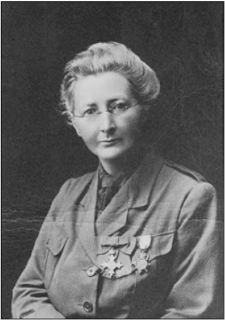
Florence Ada Stoney, Irish physician who is the first female radiologist in the United Kingdom, dies of vertebral cancer in Bournemouth, Dorset, England, on October 7, 1932. During World War I she serves abroad as head of the X-ray department and of staff in makeshift hospitals.

Stoney is born in Dublin on February 4, 1870, to George and Margaret Sophia Stoney. Her father is a mathematical physicist who later serves as Secretary of Queen’s University of Ireland and is an advocate for women’s right to higher education in Ireland. His efforts are considered to be among the principal reasons that women can qualify for a medical license. Of weak health as a child, she is at first privately educated in the home but then attends the Royal College for Science of Ireland with her sister Edith. In 1883, the Stoney family moves to London in order to provide higher education for the daughters since this is unavailable for women in Ireland at the time. She attends the London School of Medicine for Women where she is a distinguished student with great academic achievements in subjects such as anatomy and physiology. She obtains her MBBS with honours in 1895 and a Doctor of Medicine in 1898, going on to specialise in radiology.

Stoney works as an ENT clinical assistant at the Royal Free Hospital as well as spending six years as a demonstrator in anatomy at the London School of Medicine for Women.

After this she spends a short amount of time in the Victoria Hospital for Sick Children in Kingston upon Hull and then goes on to establish an X-ray department in the Elizabeth Garret Anderson Hospital for Women in London in 1902. At the hospital she carries out a variety of work but mainly deals with X-rays, often developing the radiographic plates at her own house. She is the first female radiologist to work in the United Kingdom at a time when knowledge on radiology and the equipment involved is still in its developmental stages. She is forced to work in poor conditions with badly ventilated rooms and a lack of space for X-ray work. She is given no assistance and has to do the majority of the work on her own. Furthermore, she is excluded as a member of the medical staff and from the X-ray department committee. In 1906 she sets up a practice in Harley Street.

Stoney leaves the hospital at the start of the war. She has 13 years of experience in her field when World War I breaks out in August 1914. She and her sister Edith, a medical physicist, volunteer to assist the British Red Cross, but both are refused by surgeon Frederick Treves since they were women. Despite the refusal, Stoney prepares an X-ray installation and helps to organise a unit of women volunteers alongside Mrs. St. Clair Stobart, Women’s Imperial Service League and the Belgian Red Cross to aid the Belgian soldiers in Antwerp. The team converts an abandoned music hall into a makeshift hospital where she manages the surgical unit as head of the medical staff and radiologist. The hospital comes under fire and after enduring ongoing shellfire for 18 hours, the hospital is evacuated. The team walks to Holland, where they manage to cross the Scheldt River on buses carrying ammunition, twenty minutes before the bridge is blown up. She and her unit earn the 1914 Star for bravery.

Stoney continues working in a hospital near Cherbourg in France, mainly dealing with cases relating to compound fractures and locating bullet fragments in wounds. During this time, she becomes experienced in recognizing dead bone and discovers that removing it will speed up recovery.

In March 1915, the Cherbourg hospital is no longer needed, and Stoney moves back London. She begins full-time work at the 1,000-bed Fulham Military Hospital. She is one of the first female physicians granted to serve as a full-time worker under the British War Office and goes on to receive the Order of the British Empire in June 1919. She works as the Head of the X-ray and Electrical Department and remains there until 1918.

In her later years, Stoney suffers from ill health, largely attributed to her over-exposure to radiation in her work. It is reported that she has X-ray dermatitis of her left hand, a painful skin condition associated in modern times with radiation therapy as a treatment for cancer. She moves to the south coastal town of Bournemouth in England where she is on the staff of two hospitals, practicing radiology part-time. She occupies the position of Honorary Medical Officer to the Electrical Department of the Royal Victoria and West Hants Hospital in Bournemouth. She is the founder and president of the Wessex branch of the British Institute of Radiology. She serves as the consulting actinotherapist at the Victoria Cripples Home. During retirement she pens a number of articles in contribution to the medical literature of the time. She publishes research on topics such as fibroids, goitre, Graves’ disease, soldier’s heart, rickets and osteomalacia.

Stoney retires from all of her hospital positions in 1928 at the age of 58. She, along with her older sister Edith, travel in retirement. One trip is to India, where she writes her final scientific paper, the subject of which is osteomalacia (bone softening), in particular in relation to pelvic deformities in childbirth. She studies and investigates this topic overseas, and specifically the association between UV exposure, vitamin D and skeletal development. In India, she also uses her expertise to advise on the use of UV light in hospitals.

Stoney dies at the age of 62, on October 7, 1932. She is suffering from a long and painful illness, vertebral cancer, again largely attributed to her work in the presence of high levels of radiation. Her funeral takes place on October 11 at Golders Green Crematorium, London. The British Journal of Radiology publishes her official obituary which spans five pages, containing many warm personal testimonials. After her sister’s death, Edith Stoney continues to travel and research.


Leave a comment

Death of Sir James Shaw Willes

Sir James Shaw Willes, a judge of the English Court of Common Pleas, kills himself at his residence near Watford, Hertfordshire, England, on October 2, 1872, while suffering a nervous breakdown.

Willes is born on February 13, 1814, in Cork, County Cork, the eldest among six children of James Willes, physician, and his wife, Elizabeth Aldworth, daughter of John Shaw, mayor of Cork in 1792. Educated at Dr. Porter’s school in Cork and Trinity College Dublin (TCD), he graduates BA in 1836, having entered the King’s Inns the previous year. In 1837, he goes to London and joins the Inner Temple as a pupil of the noted barrister Thomas Chitty (1802–78), in whose chambers he remains as a salaried assistant and special pleader before being called to the English bar on June 12, 1840. The Willes and Chitty families are connected, and James’s younger sister, Mary, later marries Thomas Chitty’s son.

Willes joins the home circuit, though his practice is chiefly in London in mercantile and maritime law. A leading junior in the Court of Exchequer, he holds the post of tubman from 1851, an honorary position in the gift of the Lord Chief Baron. Known for his erudition, he is persuaded to edit, with Sir Henry Singer Keating, the third and fourth editions of John William Smith‘s Leading Cases (1849, 1856). In 1850, his reputation is such that he is appointed one of the commissioners to draft the common law procedure bill (1854) and is credited with having effected most of the reform therein. On July 3, 1855, he is appointed judge of the Court of Common Pleas, though he has not yet taken silk and is only 41, the youngest lawyer but one to have been appointed to the bench since 1778.

A classical scholar and linguist who knows oriental as well as European languages, who travels widely, loves poetry, and frequents literary men, and whose judgments are clear and philosophical, Willes is accounted among the best common law judges of his day, and is celebrated for the simplicity and lucidity of his style. Notable judgments include Esposito v. Bowden (1857), which lays down that the force of a declaration of war is equal to that of an act of parliament prohibiting commercial transactions with the enemy. In the law of torts, he gives an oft-cited judgment in the case of Indermaur v. Dames (1866), which has been accepted almost as statutory, on the liability of the occupier of a building for the safety of a visitor. In 1868, as one of the first judges appointed to try election petitions, he lays down the rules of practice generally followed afterward. A strong British patriot, he serves in the Inns of Court Volunteers from 1859 until shortly before his death.

On November 3, 1871, Willes is sworn of the privy council. However, his health has deteriorated through overwork and an emotional temperament, and he has long suffered heart disease and gout. In August 1872, after a heavy assize at Liverpool, he returns to his house, Otterspool, Watford, Hertfordshire, and succumbs to a nervous breakdown, which leads to his shooting himself on October 2, 1872. He is buried on October 7 at Brompton Cemetery in London. He is survived fifteen years by his wife, Helen, daughter of Thomas Jennings of Cork, whom he married on May 17, 1856. There have no children.

A tall, reserved man, with a prominent nose and sad eyes, Willes has great affection for children and animals and is singularly emotional. He is known to return to his room and shed tears before passing sentence on a criminal. He never loses his Irish accent. His marriage is allegedly unhappy, as he had been forced into it after he had fallen out of love. Sir Frederick Pollock (1845–1937), author of the magisterial History of English Law before the Time of Edward I and sometime marshal to Willes, dedicates to him his first textbook on torts in 1879, writing that he was “one of those whose knowledge is radiant and kindles answering fire.” A century later, A. W. B. Simpson maintains that “his reputation as a jurist will last as long as the law reports of England are read.”

(From: “Willes, Sir James Shaw” by Bridget Hourican, Dictionary of Irish Biography, http://www.dib.ie, October 2009)


Leave a comment

Birth of Sir Shane Leslie, 3rd Baronet

Sir John Randolph Leslie, 3rd Baronet, Anglo-Irish diplomat and writer commonly known as Sir Shane Leslie, is born in Glaslough, County Monaghan, on September 24, 1885. He is a first cousin of Sir Winston Churchill. In 1908, he becomes a Roman Catholic and supports Irish Home Rule.

Leslie is born into a wealthy Anglo-Irish landowning family. His father is Sir John Leslie, 2nd Baronet, and his mother, Leonie Jerome, is the sister of Winston Churchill’s mother, Jennie. Both are daughters of Leonard W. Jerome. His ancestor, The Right Reverend John Leslie, Bishop of the Isles, moves from Scotland to Ireland in 1633 when he is made Bishop of Raphoe in County Donegal and is made Bishop of Clogher in 1661. Bishop Leslie is a vocal opponent of Oliver Cromwell.

Together with his brother Norman, Leslie’s early education begins at home where a German governess, Clara Woelke, is their first teacher. As children the brothers have more contact with servants than they have with their parents. His own daughter, Anita, says, “In my parents’ view schools performed the same functions that kennels did for dogs. They were places where pets could be conveniently deposited while their owners travelled.”

Leslie is educated at Ludgrove School, then Eton College and King’s College, Cambridge. While at Cambridge University he becomes a Roman Catholic and a supporter of Irish Home Rule. He adopts an anglicised Irish variant of his name (“Shane”). Not overly impressed by Eton, as a lower boy he and his roommates occupy “an old, battered warren betwixt the chapel cemetery and Wise’s horse yard … [T]he food was wretched and tasteless … As for thrashings which tyrannised rather than disciplined our house, they were excessive. Bullying was endemic and Irish boys were ridiculed, especially on St Patrick’s Day.”

Leslie refuses to send his own sons to Eton. They are educated at Roman Catholic Benedictine schools: Jack at Downside School and Desmond at Ampleforth College.

In the January 1910 United Kingdom general election Leslie stands as the Irish Parliamentary Party (IPP) candidate for the Londonderry City constituency, losing by just 57 votes. In the second general election later that year he is again narrowly defeated by the Unionist candidate.

Before World War I, Leslie travels extensively and in 1912 he marries Marjorie Ide, the youngest daughter of Henry Clay Ide, then United States ambassador to Spain and former Governor-General of the Philippines. His parents and other family members move temporarily to London at the outbreak of war.

During the war Leslie is in a British Ambulance Corps, until invalided out. He is then sent to Washington, D.C. to help the British Ambassador, Sir Cecil Spring Rice, soften Irish American hostility toward England and obtain American intervention in the war in the aftermath of the 1916 Easter Rising in Dublin and the execution of its leaders. But he also looks to Ireland for inspiration when writing and edits a literary magazine that contains much Irish verse. He becomes a supporter of the ideals of Irish nationalism, although not physical force republicanism.

In the 1918 United Kingdom general election in Ireland, the Irish Parliamentary Party loses massively to Sinn Féin, putting an end to Leslie’s political career, but as the first cousin of Winston Churchill he remains a primary witness to much that is said and done outside the official record during the negotiation of the Anglo-Irish Treaty of 1921. Disappointed, he feels unwanted in Ireland and abandoned by the British. Like many members of the landed gentry from the 1880s who were obliged to turn to other occupations, he can no longer rely on income from landholdings.

Leslie writes extensively, in a wide range of styles, in verse, prose, and polemic, over several decades. His writings include The End of a Chapter (1916), while hospitalised during World War I, The Oppidan (1922), a roman à clef about his life and contemporaries at Eton, an edition of the Letters of Herbert Cardinal Vaughan to Lady Herbert of Lea (1942), and a biography Mrs. Fitzherbert: a life chiefly from unpublished sources (1939), together with an edition of her letters (with Maria Anne Fitzherbert), The letters of Mrs. Fitzherbert and connected papers; being the second volume of the life of Mrs. Fitzherbert (1944). He also writes Mark Sykes: His Life and Letters (1923), a biography of the English traveler, Conservative Party politician and diplomatic advisor. He advises budding novelist Scott Fitzgerald on the title of his first novel, they share correspondence with the future Mnsg. William A. Hemmick, who is Fitzgerald’s teacher at the Newman School.

A passionate advocate of reforestation, Leslie finds the business of running an estate uncreative and boring, and transfers the estate entailed to him to his eldest son, John Norman Leslie, who succeeds as the 4th Baronet. He transfers St. Patrick’s Purgatory on Lough Derg to the Roman Catholic Bishop of Clogher, Eugene O’Callaghan.

The wealth of the Leslies wanes by the 1930s following the Wall Street crash of 1929 and a farm that is loss making. In his unpublished memoirs, Leslie writes “a gentleman’s standing in his world was signalled by his list of clubs and it was worth paying hundreds of pounds in subs.” They continue to maintain their lifestyle, involving attendance at the London season and the entertainment of distinguished visitors, including Anthony Eden at Glaslough. At the outbreak of World War II in 1939 he joins the Home Guard. He spends the remainder of his life between Glaslough and London.

Leslie’s first wife, Marjorie, dies on February 8, 1951. On May 30, 1958, at the Catholic Church of St. Peter & Edward, Westminster, he marries Iris Carola Frazer, who is the daughter of Charles Miskin Laing and Etheldreda Janet Laing.

Leslie dies at the age of 85 at 15b Palmeira Court, Hove, East Sussex, on April 14, 1971. A Requiem Mass is held for him in Westminster Cathedral on October 12, 1971.


Leave a comment

Birth of Janet McNeill, Novelist & Playwright

Janet McNeill, prolific Irish novelist and playwright, is born on September 14, 1907, in Dublin. Author of more than 20 children’s books, as well as adult novels, plays, and two opera libretti, she is best known for her children’s comic fantasy series My Friend Specs McCann.

McNeill is born to Rev. William McNeill, a minister at Adelaide Road Presbyterian Church, and Jeannie Patterson (Hogg) McNeill. In 1913, the family moves to Birkenhead, Merseyside, England, where her father becomes minister at Trinity Road Church. She attends public school in Birkenhead and studies classics at the University of St. Andrews in St. Andrews, Scotland, completing a MA degree in 1929. While at university, she is involved in writing and acting with the College Players. In 1924, the family returns to Ireland due to her father’s failing health, and Rev. McNeill becomes the minister of a village church in Rostrevor, County Down, Northern Ireland, while Janet joins the Belfast Telegraph as a secretary.

In 1933, McNeill marries Robert Alexander, the chief engineer in the Belfast city surveyor’s department, and the couple settles in Lisburn, where they raise their four sons. One son is the zoologist Professor Robert McNeill Alexander, CBE, FRS. Though she plans to write her first novel early on, she finds it impossible to write seriously until the children grow up, saying, “It was four years before I had a baby and twenty-five before I produced the book.”

In 1946, McNeill wins a prize in a BBC competition for her play Gospel Truth. She begins writing radio dramas, which are broadcast by the BBC. She suffers an intracerebral hemorrhage in 1953. During her recovery, she begins writing novels both for adults and children, producing a large body of work between 1955 and 1964. Her popular children’s character, Specs McCann, who debuts in a 1955 book and makes several reappearances, also inspires a newspaper cartoon strip by Rowel Friers, a Belfast artist and friend of hers.

Her 1944 novel The Maiden Dinosaur is her first to be published in the United States, twenty-two years later. She also has three writing credits on television with series and plays. Several of her plays are staged at the Ulster Group Theatre.

In 1964, McNeill’s husband retires, and the couple moves to Bristol, South West England. She writes one more novel after she leaves Northern Ireland but continues to write children’s books for another decade. During this time, she writes her only children’s play, published as Switch On, Switch Off, and other plays (1968), which presents different moral themes in scenes set in “domestic and workplace settings in contemporary England.” Her children’s book The Battle of St. George Without is televised by the BBC in 1969.

In her adult fiction, McNeill focuses on the lifestyle and social mores of Belfast and Ulster in the mid-twentieth century. Her characters are primarily “menopausal, middle-aged, middle-class Protestants.” She depicts the “dreary, Ulster religiosity” of ministers and laymen alike, and the class conventions and sexual repression of middle-aged, upper-middle-class women. The theme of suppressing self-identity and goals, both by wives in deference to their husbands and parents on behalf of their children, pervades her adult novels.

McNeill has a number of health problems and dies in Bristol in October 1994.


Leave a comment

Birth of Siobhan Fahey, Founding Member of Bananarama

Siobhan Maire Fahey, Irish singer and founding member of the British girl group Bananarama, who have ten top-10 hits including the U.S. number one hit single “Venus,” is born on September 10, 1958, in County Meath. She is the first Irish-born woman to have written two number one singles on the Irish charts. She later forms the musical act Shakespears Sister, who have a UK number one hit with the 1992 single “Stay.” She joins the other original members of Bananarama for a 2017 UK tour, and, in 2018, a North America and Europe tour.

Fahey is the daughter of Helen and Joseph Fahey, both from County Tipperary. She has two younger sisters, Maire (who plays Eileen in the video of the 1982 song “Come On Eileen,” a hit for Dexys Midnight Runners) and Niamh, a producer and editor. She lives in Ireland for several years before her father joins the British Army and the family moves to England, then to Germany for several years, and back to England when she is nine years old. When she is 14, she and her family move to Harpenden, Hertfordshire, and, two years later, she leaves home for London and becomes involved in the punk scene of the late 1970s.

Fahey takes a course in fashion journalism at the London College of Fashion, where she meets Sara Dallin in 1980. Along with Keren Woodward, they found Bananarama and record their first demo “Aie a Mwana” in 1981. Bananarama then works with the male vocal trio Fun Boy Three, releasing two top-five singles with them in early 1982 before having their own top-five hit with “Shy Boy” later that year. Fahey, with Dallin and Woodward, co-write many of the group’s hits, including “Cruel Summer,” “Robert De Niro’s Waiting…,” “I Heard a Rumour,” and “Love in the First Degree.”

In 1988, frustrated with the direction she feels Bananarama is heading, Fahey leaves the group and forms Shakespears Sister. Initially, she effectively is Shakespears Sister, though American singer/songwriter Marcella Detroit later becomes an official member, making the outfit a duo. Their 1992 single “Stay” spends eight weeks at number one on the UK Singles Chart and wins the 1993 Brit Award for Best British Video. At the 1993 Ivor Novello Awards, she, Detroit, and Dave Stewart receive the award for Outstanding Contemporary Song Collection. She often appears in the band’s music videos and on-stage as a vampish glam figure. After two successful albums, tensions begin to rise between Fahey and Detroit and they split up in 1993. That year, Fahey admits herself into a psychiatric unit with severe depression.

In 1996, Fahey continues as Shakespears Sister by herself and releases the single “I Can Drive.” Intended as the first single from Shakespears Sister’s third album and her first record since her split with Marcella Detroit, the single performs disappointingly (UK number 30), which prompts London Records not to release the album. Following this, she leaves the label and, after a lengthy battle, finally obtains the rights to release the album (entitled #3) independently through her own website in 2004.

Fahey briefly re-joins Bananarama in 1998 to record a cover version of ABBA‘s “Waterloo” for the Channel 4 Eurovision special A Song for Eurotrash. She reteams with Bananarama again in 2002 for a “last ever” reunion at the band’s 20th-anniversary concert at G-A-Y in London. The trio performs “Venus” and “Waterloo.”

Fahey continues to make music into the new millennium. In 2005, she independently releases The MGA Sessions, an album recorded with frequent collaborator Sophie Muller in the mid-1990s. Her most recent single under her own name, “Bad Blood,” is released on October 17, 2005.

Fahey’s track “Bitter Pill” is partially covered by the pop band The Pussycat Dolls on their 2005 debut album PCD. The verses, which were slightly altered, and the overall sound of the song are from “Bitter Pill,” but added in is the chorus of Donna Summer‘s “Hot Stuff.” The song is renamed “Hot Stuff (I Want You Back)” and a remix is included as a B-side to their hit single “Beep.”

In 2008, Fahey appears in the Chris Ward-written and directed short film What Shall We Do with the Drunken Sailor, based on the life of artist/model Nina Hamnett, self-styled “Queen of Bohemia,” with Fahey playing the role of Hamnett opposite actor Clive Arrindel, Donny Tourette, frontman with punk band Towers of London, and Honey Bane, former vocalist of the punk band Fatal Microbes.

In 2009, Fahey decides to resurrect the Shakespears Sister name and releases a new album. Entitled Songs from the Red Room, it is released on her own record label, SF Records, and includes various singles she had released under her own name in recent years. She performs her first live show in almost 15 years as Shakespears Sister in Hoxton, London, on November 20, 2009. In 2014 she joins the line-up of Dexys Midnight Runners for some shows, including at Glastonbury Festival.

In 2017, it is announced that Fahey has joined her former Bananarama bandmates for an upcoming UK tour. This is the first live tour she has done as a member of Bananarama.

In 2019, Fahey reunites with Marcella Detroit for Shakespears Sister dates, commencing with an appearance on BBC One‘s The Graham Norton Show on May 10, 2019.

Fahey marries Dave Stewart of Eurythmics in 1987; the couple divorces in 1996. They have two sons, Samuel (born November 26, 1987) and Django James (born 1991). The two brothers form a musical band called Nightmare and the Cat. As an infant, Samuel Stewart appears in early Shakespears Sister videos for “Heroine” and “You’re History.” Django Stewart is also an actor. Samuel is currently the guitarist for the American indie rock band Lo Moon.

Prior to her marriage to Stewart, Fahey is romantically involved with Jim Reilly, the drummer for the Northern Irish punk rock band Stiff Little Fingers and Scottish singer Bobby Bluebell of The Bluebells, with whom she co-writes the UK No. 1 “Young at Heart.”


Leave a comment

Birth of Journalist Terry Keane

Terry Keane, Irish social columnist and fashion journalist, is born in Guildford, Surrey, England, on September 9, 1939.

Born Ann Teresa O’Donnell, she studies medicine at Trinity College Dublin (TCD). She drops out without taking a degree and later marries a young barrister, Ronan Keane. The couple separates in the 1990s, but never divorce. Ronan Keane goes on to become Chief Justice of Ireland (2000-2004).

Keane spends the majority of her career working for the Irish newspaper, the Sunday Independent, where she is the principal contributor of the newspaper’s long-running gossip column, “The Keane Edge.”

In “The Keane Edge” column there are often hints of a relationship with a prominent political figure, named in the column as Sweetie, and her relationship is apparently widely known in certain circles, though never openly confirmed. She leaves the paper on bad terms after selling the story of her 27-year affair with former Taoiseach Charles Haughey to the British newspaper The Sunday Times, a rival to the affiliated London Independent newspapers, though she admits her affair on The Late Late Show in 1999.

Keane’s death on May 31, 2008, after a long illness is announced by her son-in-law, the Irish garden designer and television personality Diarmuid Gavin. She is survived by her children Jane, Madeleine and Justine, who is married to Gavin. Her son Tim dies in 2004. One of her granddaughters, Holly Carpenter, is Miss Ireland in 2011.


Leave a comment

Mary Peters Becomes First Irish Woman to Win an Olympic Gold Medal

Lady Mary Elizabeth Peters, LG, CH, DBE, Northern Irish former athlete and athletics administrator, wins the women’s pentathlon on September 3, 1972, at the 1972 Summer Olympics in Munich, West Germany, becoming the first Irish woman to win an Olympic Gold medal.

Peters is born on July 6, 1939, in Halewood, Lancashire, England, later living at 5 Mere Avenue in Alkrington, where she goes to primary school. She moves to Ballymena (and later Belfast) at the age of eleven when her father’s job is relocated to Northern Ireland. As a teenager, her father encourages her athletic career by building her home practice facilities as birthday gifts. She qualifies as a teacher and works while training.

After Ballymena, the family moves to Portadown where she attends Portadown College. The headmaster, Donald Woodman, and the PE teacher, Kenneth McClelland, introduce her to athletics, McClelland being her first coach. She is head girl of the school in 1956.

At the 1972 Summer Olympics in Munich, competing for Great Britain and Northern Ireland, Peters wins the gold medal in the women’s pentathlon. She had finished 4th in 1964 and 9th in 1968. To win the gold medal, she narrowly beats the local favourite, West Germany’s Heide Rosendahl, by 10 points, setting a world record score. After her victory, death threats are phoned into the BBC: “Mary Peters is a Protestant and has won a medal for Britain. An attempt will be made on her life, and it will be blamed on the IRA … Her home will be going up in the near future.” But Peters insists she will return home to Belfast. She is greeted by fans and a band at the airport and paraded through the city streets but is not allowed back in her flat for three months. Turning down jobs in the United States and Australia, where her father lives, she insists on remaining in Northern Ireland.

In 1972, Peters wins the BBC Sports Personality of the Year award: “Peters, a 33-year-old secretary from Belfast, won Britain’s only athletics gold at the Munich Olympics. The pentathlon competition was decided on the final event, the 200m, and Peters claimed the title by one-tenth of a second.”

She represents Northern Ireland at every Commonwealth Games between 1958 and 1974. In these games she wins two gold medals for the pentathlon, plus a gold and silver medal for the shot put.

Peters establishes a charitable Sports Trust in 1975 (now known as the Mary Peters Trust) to support talented young sportsmen and -women, both able-bodied and disabled, from across Northern Ireland in a financial and advisory capacity. The trust has made a large number of awards and has a list of well-known alumni that includes Graeme McDowell, Rory McIlroy, Jonathan Rea, Darren Clarke, David Humphreys, Bethany Firth, Ryan Burnett, Carl Frampton, Paddy Barnes, Michael Conlan, Kelly Gallagher, and Michael McKillop.

In May 2001, following her athletic career, Peters becomes a Trustee of The Outward Bound Trust and is Vice-President of the Northern Ireland Outward Bound Association. She is also Patron of Springhill Hospice in Rochdale, Greater Manchester.

Peters is appointed a Member of the Order of the British Empire (MBE) for services to athletics in the 1973 New Year Honours. For services to sport, she is promoted in the same Order to Commander (CBE) in the 1990 Birthday Honours and again to Dame Commander (DBE) in the 2000 Birthday Honours. In the 2015 New Year Honours, she is awarded as Member of the Order of the Companions of Honour (CH), also for services to sport and the community in Northern Ireland, and in 2017, she is made a Dame of the Order of Saint John (DStJ). She is appointed a Lady Companion of the Order of the Garter (LG) on February 27, 2019, and therefore granted the title Lady. She represents the Order at the 2023 coronation.

Northern Ireland’s premier athletics track, on the outskirts of Belfast, is named after Peters. A statue of her stands within it.

In April 2009, Peters is named the Lord Lieutenant of the City of Belfast; she retires from the post in 2014, being succeeded by Fionnuala Jay-O’Boyle. She is a Freeman of the Cities of Lisburn and Belfast.

Peters now lives in Derriaghy, within the Lisburn and Castlereagh district, just outside Belfast.


Leave a comment

Death of Maurice FitzMaurice FitzGerald, 3rd Lord of Offaly

Maurice FitzMaurice FitzGerald, Irish magnate, soldier, and Justiciar of Ireland from 1272 to 1273, dies in Ross, County Wexford, on September 2, 1277. His family comes to epitomise the ideal of cultural synthesis in Ireland, becoming “more Irish than the Irish themselves,” fusing Gaelic and Norman customs in Irish identity.

FitzGerald is born in 1238 in Wexford, the second son of Maurice FitzGerald, 2nd Lord of Offaly, and Juliana de Grenville. He has three brothers, Gerald FitzMaurice II, Thomas FitzMaurice and David FitzMaurice. He is known by the nickname of Maurice Mael (from an old word meaning “devotee” in Irish). He is granted his father’s lands in Connacht in exchange for quitclaiming the barony of Offaly sometime before May 20, 1257, when his father, Maurice FitzGerald II, dies at Youghal Monastery.

Before his father’s death, FitzGerald is custos of Offaly, but after the 2nd Lord of Offaly dies, the countess of Lincoln, Margaret de Quincy, sues him for custody of Offaly.

Terrible feuds rage in his time between the Geraldines and the De Burghs. FitzGerald and his nephew John, son of his brother Thomas, capture the justiciar, Richard de la Rochelle, Theobald Butler IV, and John de Cogan I (whose son is married to Maurice FitzGerald III’s sister, Juliana). The capture of the three magnates leads to a private war in Ireland, with the Geraldines on one side and Walter de Burgh and Geoffrey de Geneville on the other. However, the Second Barons’ War in England forces them to come to a temporary peace while they battle Montfortians in the English Midlands in 1266.

In May 1265, FitzGerald is among the chief magnates in Ireland summoned to inform King Henry III of England and his son Prince Edward about conditions in the country, and again in June 1265. These are the result of the private war between the Geraldines and Walter de Burgh, lord of Connacht (who is later made the 1st Earl of Ulster). He is appointed Justiciar of Ireland on June 23, 1272, following the accidental death of his predecessor, James de Audley, on June 11 of that year. His father had served in the same capacity from 1232 to 1245. He holds the post until September 1273, when he is succeeded by Sir Geoffrey de Geneville, Seigneur de Vaucouleurs.

FitzGerald holds four knight’s fees in both Lea and Geashill from Roger Mortimer, 1st Baron Mortimer of Wigmore, who had inherited them from his wife, Maud de Braose.

In 1276, FitzGerald leads a force of men from Connacht against the Irish of County Wicklow. His contingent joins the main army of English settlers jointly commanded by his son-in-law, Thomas de Clare, Lord of Inchiquin and Youghal, who had been made Lord of Thomond earlier that same year, and Sir Geoffrey de Geneville, Maurice’s successor as Justiciar of Ireland. The English under Thomas de Clare and Geoffrey de Geneville attack the Irish at Glenmalure, but are defeated and suffer heavy losses.

Shortly before October 28, 1259, FitzGerald married his first wife, Maud de Prendergast, daughter of Sir Gerald de Prendergast of Beauvoir and Matilda de Burgh, daughter of Richard Mór de Burgh. Together they have two daughters:

FitzGerald is Maud’s third husband. She dies on an unknown date. In 1273, he marries his second wife, Emmeline Longespee (1252–1291), daughter of Stephen Longespée and Emmeline de Ridelsford. He and Emeline have no issue.

FitzGerald dies September 2, 1277, at Ross, County Wexford. Emmeline Longespée then fights until her death to claim her dower against her daughter, Juliana, her stepdaughter, Amabilia, and John FitzGerald, who is created 1st Earl of Kildare on May 14, 1316. John is the son of his brother, Thomas by Rohesia de St. Michael. John sues or physically takes lands from the bailiffs of Emmeline, Juliana, and Amabilia.

There is some confusion as to whether Gerald Fitzmaurice FitzGerald is the first or second son of Maurice FitzGerald, 2nd Lord of Offaly. Most, like M. Hickson, of the Royal Society of Antiquaries of Ireland (RSAI) say he is the eldest. Lord Walter FitzGerald says he is the second. In any event, he predeceases his father in 1243. His son, Maurice FitzGerald, drowns in the Irish Channel in July 1268. His son is Gerald FitzMaurice III, born in 1263. Gerald’s marriage is sold to Geoffrey de Geneville, who matches Gerald with his own daughter, Joan, but he dies childless on August 29, 1287.

Maurice FitzMaurice FitzGerald 3rd Earl of Offaly, is succeeded by his nephew John, son of his younger brother Thomas FitzMaurice FitzGerald.


Leave a comment

Birth of Mary Letitia Martin, Novelist & Philanthropist

Mary Letitia Martin, Irish novelist and philanthropist who is known as the “Princess of Connemara,” is born in Ballynahinch Castle, in the Connemara region of County Galway, on August 28, 1815. She publishes two books in her lifetime, and a third is published posthumously.

Martin is born into the chief landowning family of Connemara, the Martins of Ballynahinch Castle, a branch of the Martyn Tribe of Galway. Her parents are Thomas Barnwall Martin and Julia Kirwin. Her paternal grandfather is Richard Martin, a Member of Parliament (MP) for County Galway also known as “Humanity Dick.”

Educated at home in the upper-class style and by herself, Martin becomes fluent in Irish, English, French and a number of other languages. According to Maria Edgeworth, who meets her during her tour of Connemara in 1833, she is courted in 1834 by Count Adolphe de Werdinsky, whom she had met in London earlier in the year. She refuses to marry and de Werdinsky feigns a suicide attempt at Ballynahinch.

Martin publishes her first novel, St. Etienne, a Tale of the Vendean War, in 1845.

In 1847, Martin marries a cousin, Colonel Arthur Gonne Bell. He takes the name of Martin on marriage, by Royal Licence. In the same year, her father dies of famine fever contracted while visiting his tenants in the Clifden workhouse.

On the death of her father, Martin inherits a heavily encumbered estate of 200,000 acres. In the following two years, her remaining fortune is destroyed in the famine as she attempts to alleviate its effects on her tenants. Penniless, she emigrates with her husband to Belgium. There she contributes to a number of periodicals, notably Encyclopaedie Des Gens Du Monde.

In 1850, Martin’s autobiographical novel, Julia Howard: A Romance, is published. Martin and her husband sail to the United States in 1850, but she dies at the Union Place Hotel in New York City on November 7, 1950, ten days after arrival due to complications of premature childbirth in which the baby does not survive.

Martin’s husband returns to England. He arranges for the posthumous publication of her novel, Deed, not Words (1857). In 1883, he is killed in a railway accident.