seamus dubhghaill

Promoting Irish Culture and History from Little Rock, Arkansas, USA


Leave a comment

Birth of Irish Writer Francis Stuart

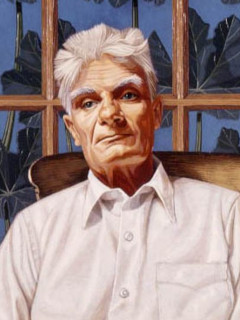
Henry Francis Montgomery Stuart, Irish writer, is born in Townsville, Queensland, Australia on April 29, 1902. He is awarded one of the highest artistic accolades in Ireland, being elected a Saoi of Aosdána, before his death in 2000. His years in Nazi Germany lead to a great deal of controversy.

Stuart is born to Irish Protestant parents, Henry Irwin Stuart and Elizabeth Barbara Isabel Montgomery. His father is an alcoholic and kills himself when Stuart is an infant. This prompts his mother to return to Ireland and Stuart’s childhood is divided between his home in Ireland and Rugby School in England, where he boards.

In 1920, at age 17, Stuart becomes a Catholic and marries Iseult Gonne, daughter of Maud Gonne. Her father is the right-wing French politician Lucien Millevoye, with whom Maud Gonne had had an affair between 1887 and 1899. Because of her complex family situation, Iseult is often passed off as Maud Gonne’s niece in conservative circles in Ireland. Iseult has a brief affair with Ezra Pound prior to meeting Stuart. Pound and Stuart both believe in the primacy of the artist over the masses and are subsequently drawn to fascism, Stuart to Nazi Germany and Pound to Fascist Italy.

Gonne and Stuart have a baby daughter who dies in infancy. Perhaps to recover from this tragedy, they travel for a while in Europe but return to Ireland as the Irish Civil War begins. Unsurprisingly given Gonne’s strong opinions, the couple are caught up on the anti-Treaty Irish Republican Army (IRA) side of the fight. Stuart is involved in gun running and is interned following a botched raid.

After independence, Stuart participates in the literary life of Dublin and writes poetry and novels. His novels are successful, and his writing is publicly supported by W. B. Yeats.

Stuart’s time with Gonne is not an entirely happy time as both he and his wife apparently struggle with personal demons and their internal anguish poisons their marriage. In letters to close friend W. B. Yeats, Maud Gonne characterizes Stuart as being emotionally, financially, and physically abusive towards Iseult.

During the 1930s Stuart becomes friendly with German Intelligence (Abwehr) agent Helmut Clissmann and his Irish wife Elizabeth. Clissmann is working for the German Academic Exchange Service and the Deutsche Akademie (DA). He is facilitating academic exchanges between Ireland and the Third Reich but also forming connections which might be of benefit to the Abwehr. Clissmann is also a representative of the Nazi Auslandorganisation (AO), the Nazi Party’s foreign organisation, in pre-war Ireland.

Stuart is also friendly with the head of the German Legation in Dublin, Dr. Eduard Hempel, largely as a result of Maud Gonne MacBride’s rapport with him. By 1938 he is seeking a way out of his marriage and the provincialism of Irish life. Iseult intervenes with Clissmann to arrange for Stuart to travel to Germany to give a series of academic lectures in conjunction with the DA. He travels to Germany in April 1939 and visits Munich, Hamburg, Bonn and Cologne. After his lecture tour, he accepts an appointment as lecturer in English and Irish literature at Berlin University to begin in 1940. At this time, under the Nuremberg Laws, the German academic system has barred Jews.

In July 1939, Stuart returns home to Laragh, County Wicklow, and after his plans for traveling to Germany are finalised, he receives a visit from his brother-in-law, Seán MacBride, following the seizure of an IRA radio transmitter on December 29, 1939, which had been used to contact Germany. Stuart, MacBride, Seamus O’Donovan, and IRA Chief of Staff Stephen Hayes then meet at O’Donovan’s house. Stuart is told to take a message to Abwehr HQ in Berlin. Upon arrival in Berlin in January 1940, he delivers the IRA message and has some discussion with the Abwehr on conditions in Ireland and the fate of the IRA-Abwehr radio link. Around August 1940, he is asked by Sonderführer Kurt Haller if he will participate in Operation Dove and he agrees, although he is later dropped in favour of Frank Ryan.

Between March 1942 and January 1944 Stuart works as part of the Redaktion-Irland team, reading radio broadcasts containing Nazi propaganda which are aimed at and heard in Ireland. In his broadcasts he frequently speaks with admiration of Adolf Hitler and expresses the hope that Germany will help unite Ireland. He is dropped from the Redaktion-Irland team in January 1944 because he objects to the anti-Soviet material that is presented to him and deemed essential by his supervisors. His passport is taken from him by the Gestapo after this event.

In 1945 Stuart plans to Ireland with a former student Gertrude Meissner. They are arrested and detained by Allied troops. Following their release, Stuart and Meissner live in Germany and then France and England. They marry in 1954 after Iseult’s death and in 1958 they return to settle in Ireland. In 1971 Stuart publishes his best-known work, Black List Section H, an autobiographical fiction documenting his life and distinguished by a queasy sensitivity to moral complexity and moral ambiguity.

In 1996 Stuart is elected a Saoi of Aosdána, a high honour in the Irish art world. Influential Irish language poet Máire Mhac an tSaoi objects strongly, referring to Stuart’s actions during the war and claiming that he holds anti-Semitic opinions. When it is put to a vote, she is the only person to vote for her motion. She resigns from Aosdána in protest, sacrificing a government stipend by doing so. While the Aosdána affair is ongoing, The Irish Times columnist Kevin Myers attacks Stuart as a Nazi sympathiser. Stuart sues for libel and the case is settled out of court. The statement from The Irish Times read out in the High Court accepts “that Mr. Stuart never expressed anti-Semitism in his writings or otherwise.”

For some years before his death Stuart lives in County Clare with his partner Fionuala and in County Wicklow with his son Ian and daughter-in-law Anna in a house outside Laragh village. He dies of natural causes on February 2, 2000, at the age of 97 in County Clare.
Leave a comment

Birth of Jimmy O’Dea, Actor & Comedian

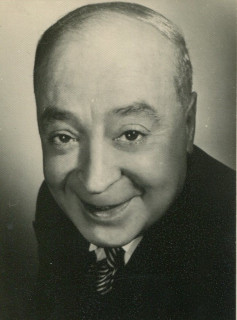
Jimmy O’Dea, Irish actor and comedian, is born at 11 Lower Bridge Street, Dublin, on April 26, 1899.

O’Dea, born James Augustine O’Dea, is one of eleven children of James O’Dea, an ironmonger, and Martha O’Gorman, who keeps a small toy shop. His father has a shop in Capel Street. He is educated at the Irish Christian Brothers O’Connell School in North Richmond Street, Dublin, where a classmate is future Taoiseach Seán Lemass, by the Holy Ghost Fathers at Blackrock College, and by the Jesuits at Belvedere College. From a young age he is interested in taking to the stage. He co-founds an amateur acting group, the Kilronan Players, in 1917, but his father will not hear of it. He is apprenticed to an optician in Edinburgh, Scotland, where he qualifies as an optician.

O’Dea returns to Dublin where, at age 21, he sets up his own business which he eventually gives to his sister, Rita. In his spare time he takes part in amateur productions of Henrik Ibsen and Anton Chekhov. From 1920 he is in the Irish theatre in Hardwicke Street working with actor-producer John MacDonagh. In 1922 he makes a series of comedy films for Norman Whitten. After working in plays by George Bernard Shaw for a few years he rejoins MacDonagh in revues, the first of which, Dublin To-Night, is produced at the Queen’s Theatre, Dublin in 1924. In 1927 he takes to the stage full-time. In 1928, the company’s first production Here We Are wins international acclaim, and in December of the same year it produces its first Christmas Pantomime, Sinbad the Sailor.

O’Dea forms a partnership with Harry O’Donovan whom he first meets in a production of You Never Can Tell in 1924. Their first show is Look Who’s Here at Queen’s Theatre. For more than two decades beginning in 1929 the duo produces two shows a year in Dublin, first in the Olympia Theatre, then in the Gaiety Theatre. They create O’Dea’s most famous character, Mrs. Biddy Mulligan. The role draws on O’Dea’s previous manifestations as “Dames” in Variety performances and pantomimes. Biddy Mulligan is the representation (caricature, parody and stereotype) of a Dublin street-seller, with all the working-class repartee, wisdom and failings implicit. He makes a number of recordings of sketches starring Mrs. Mulligan. Biddy Mulligan is referenced in many Dublin music hall songs such as “Biddy Mulligan the Pride of the Coombe,” “Daffy the Belle of the Coombe” and “The Charladies’ Ball.”

O’Dea makes some film appearances, such as Darby O’Gill and the Little People (1959) in which he plays King Brian of the little people and Johnny Nobody (1961). He also has a successful career in pantomime and tours Ireland and England many times, and is much associated with actress Maureen Potter, with whom he often partners.

O’Dea is also a prolific songwriter in his day. Many of his songs are still well known to this day, some of them having been sung and recorded by Dublin singer Frank Harte.

O’Dea marries Ursula Doyle, a theatrical impresario, in September 1959 with Seán Lemass standing in as best man and Maureen Potter as the bridesmaid. O’Dea had been best man at Lemass’s wedding in 1924.

Jimmy O’Dea dies at Dr. Steevens’ Hospital, Dublin, at age 65, on January 7, 1965. Seán Lemass, at the time Taoiseach, gives the valedictory oration at his funeral. He is buried in Glasnevin Cemetery, Dublin.


Leave a comment

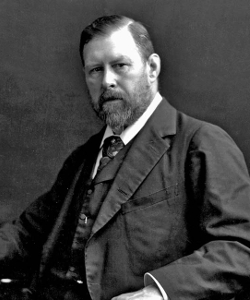
Death of Author Abraham “Bram” Stoker

Abraham “Bram” Stoker, Irish author best known today for his 1897 Gothic fiction novel Dracula, dies in London on April 20, 1912.

Stoker is born on November 8, 1847, in Clontarf, Dublin. During his lifetime, he is better known as the personal assistant of actor Henry Irving and business manager of the Lyceum Theatre, London, which Irving owns.

Stoker’s father, Abraham Stoker, is a civil servant and his mother, Charlotte Mathilda Blake Thornley, is a charity worker and writer. Stoker is a sickly child and is bedridden with an unknown illness until he starts school at the age of seven, when he makes a complete recovery. Growing up his mother tells him a lot of horror stories which may have influence on his later writings.

In 1864 Stoker enters Trinity College, Dublin. While attending college he begins working as an Irish civil servant. He also works part time as a free lance journalist and drama critic. In 1876 he meets Henry Irving, a famous actor, and they soon become friends. Not long after that, Stoker meets and falls in love with an aspiring actress named Florence Balcombe whom he marries on December 4, 1878 at St. Anne’s Parish Church, Dublin. In 1878 he accepts a job working in London as Irving’s personal secretary.

On December 9, Stoker and his new wife move to England to join Irving. His first book The Duties of Clerks of Petty Sessions in Ireland, though written while he is still in Dublin, is published in 1879. On December 30, 1879 Stoker and his wife have their only child, a son Noel. While in England Stoker also writes several novels and short stories. His first book of fiction, Under the Sunset, is published in 1881.

Stoker visits the English coastal town of Whitby in 1890, a visit that is said to be part of the inspiration for Dracula. Before writing Dracula, he meets Ármin Vámbéry, a Hungarian writer and traveler. Dracula likely emerges from Vámbéry’s dark stories of the Carpathian Mountains. Stoker then spends several years researching European folklore and mythological stories of vampires.

Dracula is an epistolary novel, written as a collection of realistic but completely fictional diary entries, telegrams, letters, ship’s logs, and newspaper clippings, all of which add a level of detailed realism to the story, a skill which Stoker develops as a newspaper writer. At the time of its publication, Dracula is considered a “straightforward horror novel” based on imaginary creations of supernatural life.

The original 541-page typescript of Dracula is believed to have been lost until it is found in a barn in northwestern Pennsylvania in the early 1980s. It consists of typed sheets with many emendations, plus handwritten on the title page is “THE UN-DEAD.” The author’s name is shown at the bottom as Bram Stoker. The typescript is purchased by Microsoft co-founder Paul Allen.

After suffering a number of strokes, Abraham “Bram” Stoker dies at No. 26 St. George’s Square, London on April 20, 1912. Some biographers attribute the cause of death to tertiary syphilis, others to overwork. He is cremated and his ashes are placed in a display urn at Golders Green Crematorium in north London.


Leave a comment

Death of Charles Leslie, Jacobite Propagandist & Non-Juror

Charles Leslie, former Church of Ireland priest who becomes a leading Jacobite propagandist after the 1688 Glorious Revolution, dies in Glaslough, County Monaghan on April 13, 1722. One of a small number of Irish Protestants to actively support the Stuarts after 1688, he is best remembered today for his role in publicising the 1692 Massacre of Glencoe.

Leslie is born on July 27, 1650, in Dublin, the sixth son and one of eight surviving children of John Leslie (1571-1671) and Katherine Conyngham (or Cunningham), daughter of Dr. Alexander Cunningham, Dean of Raphoe. He is allegedly named after the executed Charles I and educated at Enniskillen school and Trinity College, Dublin. After his father dies in 1671, he studies law in London before changing career and being ordained as an Anglican priest in 1681. Shortly afterwards, he returns to the family estate at Glaslough in County Monaghan and marries Jane Griffith. They have a daughter, Vinigar Jane, who appears to have died young and two sons, Robert (1683-1744) and Henry who are also Jacobites and spend time in exile.

Leslie is appointed assistant curate for the Church of Ireland parish of Donagh but as most of his parish is Roman Catholic or Presbyterian, he has few duties. His father had been chaplain to Charles I and a key supporter of Caroline religious reforms, first in Scotland, then in Ireland as Bishop of Raphoe in 1633, while the estate at Glaslough was granted by Charles II in 1660 as a reward for his service. With this background, Leslie is a firm supporter of the Stuart dynasty, although deeply hostile to Catholicism and soon becomes involved in political and theological disputes.

When the Catholic James II becomes King in 1685, his brother-in-law Henry Hyde, 2nd Earl of Clarendon, is appointed Lord Lieutenant of Ireland. In July 1686, Leslie’s legal training results in Clarendon making him chancellor of Connor cathedral and later Justice of the Peace. Clarendon’s authority is overshadowed by his Catholic deputy Richard Talbot, 1st Earl of Tyrconnell, who begins undermining legal restrictions on Catholics embodied in the Test Act. Clarendon employs Leslie’s polemical skills to oppose the appointment of Catholics to public office, but he is recalled in 1687. When James is deposed by the Glorious Revolution in December 1688, Leslie is in the Isle of Wight.

Shortly afterwards, Leslie becomes Clarendon’s personal chaplain and like his patron refuses to take the oath of allegiance to William III and Mary II. Like other non-jurors, he is deprived of his Church offices and becomes instead one of the most prominent Jacobite and Tory propagandists. This includes a long dispute with his Trinity College contemporary William King, who supports the Revolution. Gilbert Burnet, Bishop of Salisbury, later names him ‘the violentest Jacobite’ active in England during these years.

Much of Leslie’s early writing focuses on Scotland, where the 1690 Settlement ends Episcopacy and restores a Presbyterian kirk. He uses this to inspire concern about William’s intentions towards the Church of England. Ironically, his modern fame now rests primarily on a pamphlet written in 1695, called Gallienus Redivivus, or Murther will out, &c. Being a true Account of the De Witting of Glencoe, Gaffney. The focus of this is William’s alleged complicity in the 1672 death of Dutch Republican leader Johan de Witt, with other crimes including Glencoe included as secondary charges. During the Jacobite rising of 1745, Charles Stuart orders Leslie’s pamphlet and the 1695 Parliamentary minutes of the investigation to be reprinted in the Edinburgh Caledonian Mercury.

During the 1690s, Leslie serves as a messenger between James’ court in exile at Château de Saint-Germain-en-Laye and the Non-Juror community in England, including the non-juror bishops Jeremy Collier, Thomas Ken and George Hickes. He defends Collier and two other non-juror priests when they become involved in a furor over the execution of Sir John Friend and Sir William Parkyns for their role in the 1696 Jacobite plot to assassinate William. Immediately prior to the execution, the clergymen declare the two absolved of their sins, effectively declaring the correctness of their actions, while also performing a rite not recognised by the Church of England.

In 1702, the accession of Queen Anne, the last Stuart monarch, causes a resurgence in Jacobite activity and in 1704, Leslie begins a weekly periodical initially called The Observator, later The Rehearsal of Observator and finally The Rehearsal. Although his Tory readership shares his High Church principles, he is primarily a Jacobite and violently opposes the common practice of ‘occasional conformity.’ The Rehearsal is forced to close in 1709 and he falls out with his former allies, including Henry Sacheverell whose trial helped the Tories win a landslide victory in the 1710 British general election.

Despite his Tory allies now being in government, a warrant is issued for Leslie’s arrest for his tract The Good Old Cause, or, Lying in Truth. In 1711 he escapes to Paris, where James Francis Edward Stuart has succeeded his father as the Stuart heir in 1701. He continues to write polemics and act as a Jacobite agent. However, after the failed Jacobite rising of 1715, France withdraws support for the Stuarts who are forced to leave France, eventually being invited to settle in Rome by Pope Benedict XIV. The Spanish-sponsored 1719 Rising in Scotland is judged to have done more damage to the Jacobite cause than otherwise, one of its leaders concluding “it bid fair to ruin the King’s Interest and faithful subjects in these parts.”

Despite these failures, Leslie remains a dedicated Jacobite but his lifelong antipathy towards Catholicism makes living in Rome as a Papal pensionary difficult, while hopes of converting James to Anglicanism fades due to his devout personal Catholicism. He returns to Paris in 1717 and in 1719 publishes a two folio-volume edition of his Theological Works. It is later claimed these placed him ‘very high in the list of controversial authors, the ingenuity of the arguments being equalled only by the keenest and pertinacity with which they are pursued.’ He invites friends and supporters to subscribe to these and by 1721, over 500 members of the House of Lords and House of Commons have pledged a total of £750. Charles Spencer, 3rd Earl of Sunderland finally allows him to return home, with the stipulation he cease his political activities.

Charles Leslie dies at Glaslough on April 13, 1722. His grandchildren include Charles Leslie MP, whose son in turn is John Leslie, Bishop of Kilmore, Elphin and Ardagh.

(Pictured: Charles Leslie, mezzotint by Unknown artist, National Portrait Gallery, NPG D5066)


Leave a comment

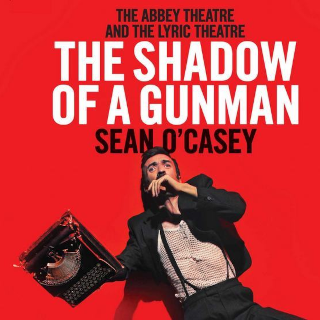
Abbey Theatre Premiere of “The Shadow of a Gunman”

The Shadow of a Gunman, a 1923 tragicomedy play by Seán O’Casey, premieres at the Abbey Theatre in Dublin on April 12, 1923.

The play is the first in O’Casey’s “Dublin Trilogy” – the other two being Juno and the Paycock (1924) and The Plough and the Stars (1926). It is set in Dublin in May 1920 during the Irish War of Independence and centres on the mistaken identity of a building tenant who is thought to be an Irish Republican Army (IRA) assassin. Each act takes place in Seumus Shield’s room in a tenement in Hilljoy Square.

Donal Davoren is a poet who has come to room with Seumus Shields in a poor, Dublin tenement slum. Many of the residents of the tenement mistake Donal for an IRA gunman on the run. Donal does not refute this notoriety, especially when it wins him the affection of Minnie Powell, an attractive young woman in the tenement. Meanwhile, Seumus’ business partner, Mr. Maguire, drops a bag off at Seumus’ apartment before participating in an ambush in which he is killed. Seumus believes the bag to contain household items for re-sale. The city is put under curfew as a result of the ambush. The Black and Tans raid the tenement and, at that point, Donal and Seumus discover the bag is full of Mills bombs. Minnie Powell takes the bag and hides it in her own room. The Black and Tans find nothing of note in Seumus’ room, but arrest Minnie Powell, who is later shot and killed trying to escape.

The first performance of The Shadow of a Gunman in England is given in 1958 at the Progress Theatre in Reading, Berkshire.

A 1972 televised version of The Shadow of a Gunman stars Frank Converse and Academy Award winner Richard Dreyfuss. In 1973, Alvin Rakoff directs a televised version for BBC Two starring Stephen Rea, Sinéad Cusack and Donal McCann. In 1992 Kenneth Branagh, Stephen Rea and Bronagh Gallagher star in an adaption as part of the 1992 BBC Two Performance series.

In the music video for Northern Irish rock/pop band The Adventures song “Send My Heart” (1984), the lead character is seen trying out for a version of the play.


Leave a comment

Birth of Robert Simms, Founding Member of the Society of United Irishmen

Robert Simms, Irish radical, a founding member of the Society of United Irishmen (Cumann na nÉireannach Aontaithe) in Belfast, and proprietor of the Northern Star newspaper, is born into a Presbyterian family in Belfast on March 20, 1761.

Simms is the owner of a paper mill in Ballyclare with his brother William Simms, one of twelve proprietors of the Northern Star. A close friend of Theobald Wolfe Tone, he is one of the founders of the Society of United Irishmen in Belfast in 1791 and the author of “Declaration and Resolutions of the Society of United Irishmen of Belfast.” He serves as the first Secretary of the Society, drafting many of its early letters, pamphlets and papers.

Following the French declaration of war on Britain in February 1793, the movement is outlawed and goes underground from 1794 as they become more determined to force a revolt against British rule. Simms, along with his brother William and Thomas Addis Emmet are arrested, but swiftly acquitted. The leadership is divided into those who wish to wait for French aid before rising and the more radical elements that wish to press ahead regardless. However, the suppression of a bloody preemptive rebellion, which breaks out in Leitrim in 1793, leads to the former faction prevailing and links are forged with the revolutionary French government with instructions to wait sent to all of the United Irish membership.

In 1795, along with Wolfe Tone, Samuel Neilson and Thomas Russell meet atop the summit of McArt’s Fort, overlooking Belfast, and, in Wolfe Tone’s words, “took a solemn obligation…never to desist in our efforts until we had subverted the authority of England over our country and asserted her independence.” The Simms brothers are again arrested in 1797 and held in Newgate Prison. From there he is transported along with Russell and Emmett to Fort George, Scotland. In his absence, the printing press and building housing the Northern Star is burned.

Upon his release, Simms is appointed as Commander of the United Army in Antrim. The appointment is met reluctantly however, as he feels his lack of military experience counts against him being an effective leader. In addition, many leaders are beginning to agitate for a rising without French aid. He is unwavering in his rejection of this idea. He resigns his position on June 1, 1798, after falling out with the leadership on this issue when most had changed their minds. He is replaced by Henry Joy McCracken who leads the Society in the Battle of Antrim. Simms is accused by many of cowardice and indecision for his refusal to launch an insurrection in Antrim.

Simms is nonetheless arrested and again imprisoned in Fort George with Emmet and William James MacNeven and is released in 1802. When Robert Emmet‘s failed coup is launched in 1803, the Simms brothers do not participate. He dies at the age of 82 in 1843.

Simms is a friend of the naturalist John Templeton and his son, also Robert Simms, is one of the founders of the Belfast Natural History Society.


Leave a comment

Birth of Shakespearean Actress Harriet Smithson

Harriet Constance Smithson, Anglo-Irish Shakespearean actress of the 19th century and best known as the first wife and muse of Hector Berlioz, is born at Ennis, County Clare on March 18, 1800.

Her father, William Joseph Smithson, is an actor and theatrical manager from Gloucestershire, England, and her mother is an actress whose full name is unknown. She also has a brother, Joseph Smithson, and a sister, name also unknown. In October 1801, she is left in the care of Reverend James Barrett, a priest of the Church of Ireland, parish of Drumcliffe. Barrett becomes her guardian and raises her as though she were his own daughter. He instructs her “in the precepts of religion,” and keeps everything connected with the stage from her view. After his death on February 16, 1808, the Smithsons send Harriet to a boarding school in Waterford.

On May 27, 1814, Smithson makes her first stage appearance at the Theatre Royal, Dublin, as Albina Mandevill in Frederick Reynolds‘s The Will. Her performance is well received. In 1815, she takes her parents’ place in Montague Talbot’s company in Belfast after they return to Dublin. The season opens on January 1, 1816, where she extends her range in roles, performing in multiple comedies. She then travels to Newry, Limerick, Dublin, and Birmingham, where she joins Robert Elliston‘s company. She spends the next two months playing over forty roles in various genres.

Four years later, January 20, 1818, Smithson makes her first London appearance at Drury Lane as Letitia Hardy in The Belle’s Stratagem. Her first performance receives mixed reviews from critics, but she quickly gains some favour of critics and performers as she obtains more experience. She joins the permanent company at the Royal Coburg Theatre later that year. However, she rejoins Drury Lane Company in the autumn of 1820. On February 20, 1821, she takes the lead female role in Thérèse by John Howard Payne, when the cast actress falls ill. Overall, the London public remembers her as The Times put it, “a face and features well adapted to her profession; but [an actress] not likely to make a great impression on a London audience, or to figure among stars of the first magnitude.”

In 1827, Smithson makes her Paris début as Lydia Languish in The Rivals at the Théâtre de l’Impératrice. Though she receives negative reviews for this role, she is highly praised for her beauty and ability in the subsequent performance of She Stoops to Conquer. On September 11, 1827, she is given the small part of Ophelia next to Charles Kemble in Shakespeare’s Hamlet. She leaves a long-lasting impression on the French through her interpretation of Ophelia’s madness, utilizing pantomime and natural presentation.

The tremendous success of Hamlet leads to the announcement of Romeo and Juliet, for September 15. Smithson is cast as Juliet, where she revolutionizes the women’s role in theatre by becoming as important as her male counterpart. Until this point, women’s lines in theatre are heavily cut and censored to reduce the role for the company’s “restricted talent.” Again, the production is widely well received. On September 18, Shakespeare’s Othello becomes the third Shakespeare tragedy to be performed by The English theatre. Her performance as Desdemona is less effective, but the production is popular enough to be repeated the following week. She is cast as Jane Shore in the renowned tragedy The Tragedy of Jane Shore, a role in which she moves her audience to tears. The production soon becomes the most performed play in the English season. At the end of her time in France, she had acted in several productions with famous actors such as William Charles Macready, Edmund Kean, and Charles Kemble.

As opportunities to continue her work in Paris dwindle, Smithson returns to London to perform Jane Shore again. The production opens at Covent Garden on May 11, 1829, under unfavorable circumstances. Some audience members, who had read her reviews before she went to Paris, feel reluctant to attend the show. However, just seven days after her next performance as Juliet, in Shakespeare’s Romeo and Juliet, the press gives her glowing reviews.

After Covent Garden closes for the summer in 1832, Smithson tours England to minor theatres performing almost exclusively in tragedies. In June 1832, she joins the Theatre Royal Haymarket, where she has limited success and receives criticism about her weight.

In 1830, Smithson goes back to Paris to set up an English theatre under her own management. She obtains permission to perform at the Theatre-Italien where she performs several unsuccessful plays. A year later, she breaks her leg and is forced to put her career on hold until her leg heals, leaving her in great debt. She gives her last performance, as Ophelia, on December 15, 1836, before her health deteriorates.

Toward the end of her life, Smithson suffers from paralysis, which leaves her barely able to move or speak. She dies on March 3, 1854, at her home on the rue Saint-Vincent, and is buried at the Cimetière Saint-Vincent. Berlioz has her body is later reinterred at the Montmartre Cemetery when Cimetière Saint-Vincent undergoes redevelopment.

(Pictured: Oil on canvas portrait of Harriet Smithson by Claude-Marie-Paul Dubufe, located at the Musee Magnin, Dijon, France)


2 Comments

Birth of James Patrick Mahon, Journalist, Barrister & Parliamentarian

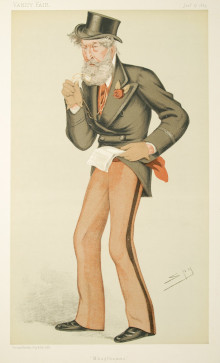
James Patrick Mahon, Irish nationalist journalist, barrister, parliamentarian and international mercenary, is born into a prominent Roman Catholic family in Ennis, County Clare, on March 17, 1803.

Mahon, the eldest of four children, is the son of Patrick Mahon of New Park, who took part in the Irish Rebellion of 1798, and Barbara, a considerable heiress and the only daughter of James O’Gorman of Ennis. He studies at Clongowes Wood College, where he is one of the earliest pupils, and at Trinity College Dublin, where he takes his BA in 1822 and his MA in law in 1832. Following his father’s death in 1821, he inherits half the family property and becomes a magistrate for Clare.

In 1830, Mahon marries Christina, the daughter of John O’Brien of Dublin. She is an heiress and has property valued at £60,000 in her own right, which gives him the resources to seek election to parliament. The couple spends little time together, and she dies apart from him in Paris in 1877. They have one son who dies in 1883.

In 1826, Mahon joins the newly formed Catholic Association. He encourages fellow member Daniel O’Connell to stand for election at the 1828 Clare by-election. O’Connell’s election, in which Mahon plays a large role, persuades the British Government to pass the Roman Catholic Relief Act 1829, which finalises the process of Catholic Emancipation and permitted Roman Catholics to sit in the British Parliament.

As a result, when Mahon is elected for Clare at the 1830 United Kingdom general election, he is entitled to take his seat. However, during the election campaign he quarrels with O’Connell, and after his election he is unseated for bribery. He is subsequently acquitted and stands again at the 1831 United Kingdom general election, but is defeated by two O’Connell-backed candidates, one of whom is his old schoolfriend Maurice O’Connell, Daniel O’Connell’s son. He gives up on politics, becomes deputy lieutenant of Clare, and captain of the local militia.

Mahon becomes a barrister in 1834, but the following year, he leaves for Paris. There he associates with Charles Maurice de Talleyrand-Périgord, becoming a favourite at Louis Philippe‘s court and working as a journalist. He travels the world, spending time in both Africa, where he befriends Ferdinand de Lesseps, engineer of the Suez Canal, and South America, before returning to Ireland in 1846.

At the 1847 United Kingdom general election, Mahon is elected for Ennis and declares himself a Whig in favour of Irish Repeal. However, he opposes the Young Irelanders and narrowly loses his seat at the 1852 United Kingdom general election.

Following his defeat in the 1852 election, Mahon returns to Paris, then travels on to Saint Petersburg, where he serves in the Imperial Bodyguard. During this period, he journeys through lands from Finland to Siberia. He then travels across China, India and Arabia. His finances largely exhausted, he serves as a mercenary in the Ottoman and Austrian armies before returning to England in 1858. Late that year, he leaves for South America, where he attempts to finance the construction of a canal through Central America.

After exploits abroad Mahon returns to Ireland in 1871 and is a founding member of the Home Rule League. Nearly ruined by his ventures, he even ends up at the Old Bailey as a consequence of his dealings but is acquitted. He is defeated in Ennis at the 1874 United Kingdom general election, and also at the 1877 Clare by-election. Finally, he wins the 1879 Clare by-election and holds the seat at the 1880 United Kingdom general election.

Mahon is a close associate of Charles Stewart Parnell, who he successfully nominates for the leadership of the League in 1880 but is dropped in 1885 as a party candidate because of his age and his tendency to vote with the Liberal Party in Parliament. He is also embroiled in a court case disputing the will of his son.

Parnell personally ensures Mahon is a candidate at the 1887 County Carlow by-election, which he wins at the age of 87 as a Liberal. By this point, he is the oldest MP in the House of Commons of the United Kingdom. He dies at his home in South Kensington, London on June 15, 1891, while still in office.

Mahon had served alongside William O’Shea as an MP, and the two were close friends. He introduced him and Katharine O’Shea, his wife, to Parnell. After Parnell is named in the O’Sheas’ divorce case in 1890, Mahon splits with Parnell, siding with the Irish National Federation. However, Parnell attends Mahon’s funeral in Glasnevin Cemetery a few months later.

(Pictured: Caricature of James Patrick Mahon by Sir Leslie Matthew Ward under the pseudonym “Spy” published in Vanity Fair in 1885)


3 Comments

Birth of Isaac Weld, Writer, Explorer & Artist

Isaac Weld, Irish topographical writer, explorer, and artist, is born on Fleet Street, Dublin on March 15, 1774. He is a member of the Royal Dublin Society.

Weld’s name stems from his great-grandfather Nathanael Weld’s close friendship with Sir Isaac Newton, and as such both his grandfather and father are also named Isaac. His father is a close friend of Charles James Fox. His sister marries George Ensor, and their half-brother is Charles Richard Weld, traveler and author of A Vacation Tour in the United States and Canada (London, 1855), which is dedicated to his brother, Isaac. He is sent to the school of Samuel Whyte at Grafton Street and from there to another private school Barbauld at Palgrave near the town of Diss in Norfolk. From Diss he proceeds to Norwich as a private pupil of Dr. William Enfield. He leaves Norwich in 1793.

In 1795 he sails to Philadelphia from Dublin and spends two years traveling in the United States and Canada, partly as an adventure and partly as research into suitable countries to which the Irish can emigrate. He visits Monticello and Mount Vernon and meets George Washington and Thomas Jefferson. He travels on horseback, by coach and by canoe in Canada with local native guides. He returns in 1797 “without entertaining the slightest wish to revisit it.” He finds the Americans to be obsessed with material things and prefers Canada. His published Travels (1799) quickly goes into three editions and is translated into French, German, Italian, and Dutch.

Weld writes on slavery that “there will be an end to slavery in the United States…[as] negroes will not remain deaf to the inviting call of liberty forever.” With regard to Americans in general, he states, “Civility cannot be purchased from them on any terms; they seem to think that it is incompatible with freedom.” On Washington, D.C., he writes “If the affairs of the United States go on as rapidly as they have done, it will become the grand emporium of the West, and rival in magnitude and splendour the cities of the whole world.”

Weld visits Killarney, navigates the lakes in a boat he made from compressed brown paper, and publishes Scenery of Killarney (1807), illustrated with his own drawings. He is also well known for his drawings of American life and, in particular, the Niagara Falls.

In May 1815 Weld sails from Dún Laoghaire to London in the 14 horsepower (10 kW) steamboat Thames, the first such vessel to make the passage. He compiles the Statistical Survey of the County of Roscommon (1838) for the Royal Dublin Society, of which he is Honorary Secretary and Vice-President. In later life, he spends much time in Italy and particularly Rome, where he develops a friendship with Antonio Canova.

Weld dies at his home, Ravenswell, near Bray, County Wicklow, on August 4, 1856, and is buried in Mount Jerome Cemetery, Dublin.

Weld is part of the Weld family of New England. His ancestor, Thomas Welde, is a Puritan minister from Suffolk, England who is one of three brothers who emigrated to Roxbury, Massachusetts in 1632. His great-great-grandfather, Thomas Weld, helps to publish the Bay Psalm Book, the first book published in America. His great-grandfather, Nathaniel, is graduated at Harvard College. He leaves Massachusetts for Kinsale and then Blarney Castle, County Cork, in 1655 to be a Puritan Chaplain with Oliver Cromwell. He later moves to Dublin.

The family that stays in America grows in wealth and influence and includes such notables as Governor of Massachusetts William Weld, Isabel Weld Perkins, and Theodore Dwight Weld.


Leave a comment

Laying of the Trinity College Foundation Stone

The foundation stone of Trinity College is laid by the Lord Mayor of Dublin on March 13, 1592.

By 1590 English rule is, with the exception of Ulster, firmly secured throughout Ireland. The Catholic Gaels and Old English of Munster, Leinster, and Connacht have been more or less brought to heel, and Presidencies are established over each of them.

English law is dominant, and Protestant English planters are laying claim to the lands seized from the Catholics. The present-day counties are already taking shape, land divisions modeled on the shires of Great Britain. Queen Elizabeth I feels that the time is right to bolster up English civility and in 1592 she grants the city of Dublin a charter to establish a university.

The university is to be named The College of the Holy and Undivided Trinity of Queen Elizabeth, juxta Dublin. It has been commonly called Trinity College Dublin ever since.

The lands and buildings of the college are donated by the city corporation and are originally those of the Augustinian All Hallows Priory which had been suppressed in 1583. This property is situated about half a mile from the city walls.

The first Provost of the university is the Protestant Archbishop of Dublin Adam Loftus. A favorite of Elizabeth I, he had originally been brought over from England and appointed Dean of Armagh in 1565 but his tenure there was a short one as he fled the wrath of Shane (the Proud) O’ Neill the following year.

In Dublin Loftus is appointed the dean of St. Patrick’s Cathedral and in 1567 he is appointed to the See of Dublin. He has opposition from the Lord Deputy of Ireland Sir John Perrot who had sought to have the university put to St. Patrick’s Cathedral. However, at this time Perrot is under suspicion for having verbally abused her majesty’s legitimacy and is to die in the Tower of London in September 1592.

Within two years of its foundation, Trinity College, consisting of a small square, is up and running with some fellows and a handful of students. Its raison d’etre is to provide a Protestant education and to consolidate the Tudor monarchy. Catholics and Dissenting Christians are not permitted entrance unless they convert to the Anglican faith. Those who do attend are the children of the New English and the children of Old English and native Irish who have abandoned their ancestors’ faith, for reasons of dogma or, as is more likely, in order to retain their lands and wealth.

Trinity is, over the next three centuries, to grow into a wealthy establishment. It receives appropriated properties and has annuities paid in from the government. In later years it is to be the the alma mater of many famous men. Sons of the Protestant Ascendency consider it their own during the 17th and 18th centuries but in the 20th century Trinity manages to adapt to the new Irish state with which it is fully involved in all aspects of Irish education and Irish life, and it is much loved by the Irish people.

(From: “The Founding of Trinity College Dublin 1592,” YourIrishCulture, http://www.yourirish.com)