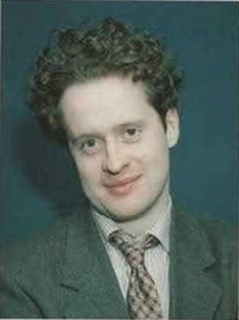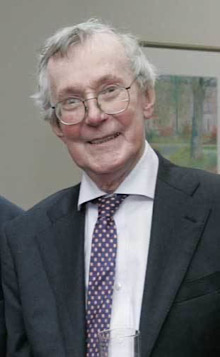
Cruise O’Brien follows his cousin Owen into Sandford Park School, which has a predominantly Protestant ethos despite objections from Catholic clergy. He subsequently attends Trinity College Dublin (TCD) before joining the Irish diplomatic corps.
Although he is a fierce advocate of his homeland, Cruise O’Brien is a strong critic of Irish Republican Army (IRA) violence and of what he considers the romanticized desire for reunification with Northern Ireland. His collection of essays Maria Cross: Imaginative Patterns in a Group of Modern Catholic Writers (1952; written under the pseudonym Donat O’Donnell) impresses UN Secretary-GeneralDag Hammarskjöld, who in 1961 appoints him UN special representative in the Congo, later the Democratic Republic of the Congo. He orders UN peacekeeping forces into the breakaway Katanga province, and the resulting scandal forces him out of office. Despite UN objections, he writes To Katanga and Back (1963) to explain his actions.
After serving as vice-chancellor of the University of Ghana (1962–65) and Albert Schweitzer Professor of Humanities at New York University (1965–69), Cruise O’Brien enters Irish politics. He holds a Labour Party seat in Dáil Éireann from 1969 to 1977 and then in the Senate from 1977 to 1979, representing Trinity College, of which he is pro-chancellor (1973–2008).
In 1979, Cruise O’Brien is named editor in chief of the British Sunday newspaper The Observer, but he leaves after three tumultuous years. He remains an active newspaper columnist, especially for the Irish Independent until 2007. His books include States of Ireland (1972) and On the Eve of the Millennium (1995), as well as perceptive studies of Charles Stewart Parnell, Edmund Burke, and Thomas Jefferson.
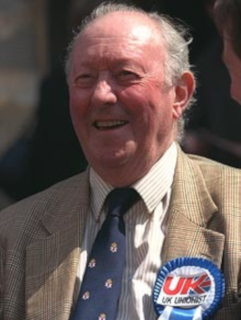
In early July 1996, in the period of Cruise O’Brien’s involvement as a UK Unionist Party (UKUP) representative in talks at Stormont, he suffers a mild stroke. He recovers well, but is left with anxiety about his recall of names. His last public appearance is on September 7, 2006, to deliver an address on the ninetieth anniversary of the death of Tom Kettle, in the old House of Lords chamber of the Bank of Ireland on College Green.
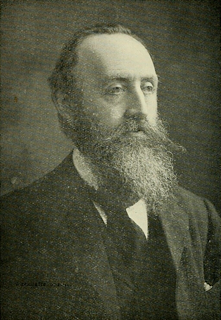
Plunkett is educated expensively: at a primary school in Nice, making him fluent in French and Italian, then at Clongowes Wood College, and, from 1872, at Trinity College Dublin (TCD), where his generous allowance allows him to study renaissance and medieval art. He enrolls at King’s Inns in 1870 and the Middle Temple in 1874, but is not called to the bar until 1886. While there he befriends Oscar Wilde and Jeremiah O’Donovan Rossa. In 1877, he endows a university gold medal for Irish speakers and publishes a book of poems, God’s Chosen Festival, and the following year he issues a pamphlet, The Early Life of Henry Grattan. He also writes articles for magazines, editing a short-lived one, Hibernia, for eighteen months from 1882. In 1883, he donates funds and property to the nursing order of the Little Company of Mary (Blue Sisters), and on April 4, 1884, Pope Leo XIII makes him a count.
On June 26, 1884, Plunkett marries Mary Josephine Cranny (1858–1944). The couple has seven children: Philomena (Mimi) (b. 1886), Joseph (b. 1887), Mary Josephine (Moya) (b. 1889), Geraldine (b. 1891), George Oliver (b. 1894), Fiona (b. 1896), and Eoin (Jack) (b. 1897).
In 1894, Plunkett part-edits Charles O’Kelly‘s memoir The Jacobite War in Ireland. By 1900, when he publishes the standard biography Sandro Botticelli, he is supplementing his income by renewed artistic studies, which until 1923 finances his lease of Kilternan Abbey, County Dublin. His Pinelli (1908) is followed by Architecture of Dublin, and, in 1911, by his revised edition of Margaret McNair Stokes‘s Early Christian Art in Ireland. In 1907, he becomes director of the National Museum of Ireland, where he increases annual visits from 100 to 3,000.
Joseph Plunkett swears his father into the Irish Republican Brotherhood (IRB) in April 1916, sending him secretly to seek German aid and a papal blessing for the projected Easter rising. After its defeat, Plunkett is sacked by the National Museum of Ireland and deported with the countess to Oxford, and the following January he is expelled by the Royal Dublin Society (RDS). This earns him nomination as the surviving rebels’ candidate in the North Roscommon by-election. He returns to Ireland illegally on January 31, 1917, and wins the seat easily three days later. Pledging abstention from attendance at Westminster in accordance with Sinn Féin policy, he initiates a Republican Liberty League, which coalesces with similar groups such as Sinn Féin. In October this front becomes the new Sinn Féin, committed to Plunkett’s republic rather than to the “king, lords and commons“ of Arthur Griffith. Plunkett and Griffith become the new party’s vice-presidents, under Éamon de Valera.
On May 18, 1918, Plunkett is interned again. Released after Sinn Féin’s general election landslide (in which he is returned unopposed), he presides, Sinn Féin’s oldest MP, at the planning meeting for Dáil Éireann on January 17, 1919, and at its opening session on January 21. On the 22nd he is made foreign affairs minister by Cathal Brugha, an appointment reaffirmed by de Valera on April 10. He criticises his president for advocating a continuing Irish external relationship with Britain, and fails to organise an Irish foreign service. In February 1921, de Valera makes Robert Brennan his departmental secretary and a ministry takes shape, while Plunkett publishes a book of poems, Ariel. After uncontested “southern Irish“ elections to the Second Dáil, de Valera moves his implacable foreign minister from the cabinet to a tailor-made portfolio of fine arts. Plunkett’s Dante sexcentenary commemoration is overshadowed by news of the Anglo–Irish Treaty. Opposing this, Plunkett cites his oath to the republic and its martyrs including his son. He leaves his ministry on January 9, 1922.
Plunkett chairs the anti-treaty Cumann na Poblachta, which loses the June general election, though he is returned again unopposed. In the Irish Civil War the treatyites intern him and the republicans appoint him to their council of state. In the August 1923 Irish general election, his first electoral contest since 1917, the interned count tops the poll in County Roscommon. He is released in December.
When de Valera forms Fianna Fáil in 1926, Plunkett stays with Sinn Féin, and loses his deposit in the June 1927 Irish general election. A year later he publishes his last poetry collection, Eros. He runs for a new Cumann Poblachta na hÉireann in a County Galway by-election in 1936, but loses his deposit again. On December 8, 1938, with the other six surviving abstentionist Second Dáil TDs, he transfers republican sovereignty to the IRA Army Council.
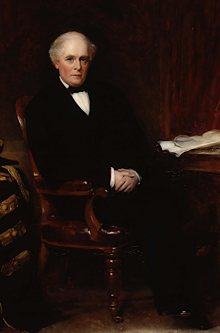
Plunkett is a big man with a black beard which whitens steadily after his fiftieth birthday. He is always formally pleasant and courteous. His oratory is described by M. J. MacManus as “level, cultured tones . . . [more] used to addressing the members of a learned society than to the rough and tumble of the hustings” (The Irish Press, March 15, 1948). Theoretically and practically, he is more scholar than politician. His portrait is on display at the Royal Society of Antiquaries of Ireland (RSAI).
Plunkett dies from cancer on March 12, 1948, and is buried in Glasnevin Cemetery, survived by his children Geraldine (wife of Thomas Dillon), Fiona, and Jack. His grandson Joseph (1928–66), son of George Oliver Plunkett, inherits the title.
(From: “Plunkett, Count George Noble” by D. R. O’Connor Lysaght, Dictionary of Irish Biography, http://www.dib.ie, October 2009)
Corrigan is the son of a dealer in agricultural tools. He is educated in St. Patrick’s College, Maynooth, which then has a department for secular students apart from the ecclesiastical seminary. He is attracted to the study of medicine by the physician in attendance, and spends several years as an apprentice to the local doctor, Edward Talbot O’Kelly. He studies medicine in Dublin later transferring to Edinburgh Medical School where he receives his degree as MD in August 1825.
Corrigan returns to Dublin in 1825 and sets up a private practice at 11 Ormond Street. As his practice grows, he moves to 12 Bachelors Walk in 1832, and in 1837 to 4 Merrion Square West. Apart from his private practice, he holds many public appointments. He is a physician to St. Patrick’s College, Maynooth, the Sick Poor Institute, the Charitable Infirmary Jervis Street (1830–43) and the House of Industry Hospitals (1840–66). His work with many of Dublin’s poorest inhabitants leads to him specialising in diseases of the heart and lungs, and he lectures and published extensively on the subject. He is known as a very hard-working physician, especially during the Great Famine of Ireland. At the 1870 Dublin City by-election he is elected a LiberalMember of Parliament for Dublin City. In parliament he actively campaigns for reforms to education in Ireland and the early release of Fenian prisoners. He does not stand for re-election in 1874. His support for temperance and Sunday closing (of pubs) antagonises his constituents and alcohol companies
In 1847, Corrigan is appointed physician-in-ordinary to the Queen in Ireland. Two years later he is given an honorary MD from Trinity College Dublin (TCD). In 1846, his application to become a fellow of the Royal College of Physicians of Ireland (RCPI) is blocked. In 1855, he gets around this opposition by sitting the college’s entrance exam with the newly qualified doctors. He becomes a fellow in 1856, and in 1859 is elected president, the first Catholic to hold the position. He is re-elected president an unprecedented four times. There is a statue of Corrigan in the Graves’ Hall of the college by John Henry Foley.
Corrigan is President of the Royal Zoological Society of Ireland, the Dublin Pathological Society, and the Dublin Pharmaceutical Society. From the 1840s he is a member of the senate of the Queen’s University and in 1871 becomes its vice-chancellor. In 1866, he is created a baronet, of Cappagh and Inniscorrig in County Dublin and of Merrion Square in the City of Dublin, partly as a reward for his services as Commissioner of Education for many years. He is a member of the board of Glasnevin Cemetery and a member of the Daniel O’Connell Memorial Committee. Armand Trousseau, the French clinician, proposes that aortic heart disease should be called Corrigan’s disease.
The Corrigan Ward, a cardiology ward in Beaumont Hospital, Dublin is named in his honour. Part of his family crest is also part of the Beaumont Hospital crest.
Corrigan marries Joanna Woodlock, the daughter of a wealthy merchant, and sister of the Bishop Dr. Bartholomew Woodlock, in 1827. They have six children, three girls and three boys. Hus eldest son, Captain John Joseph Corrigan, Dragoon Guards, dies on January 6, 1866, aged 35 years and is interred at the Melbourne General Cemetery, Melbourne, Australia.
Corrigan dies at Merrion Square, Dublin, on February 1, 1880, having suffered a stroke the previous December. He is buried in the crypt of St. Andrews Church on Westland Row, Dublin. His grandson succeeds him to the baronetcy.
Power is born to Henry Power, a watchmaker, and Mary (née Atkins), an embroideress. He has one older brother, and one younger sister. He attends a Christian Brothersnational school in North Brunswick Street. As a child he plays in local clay brickyards and sculpts busts of his friends. After finishing his primary school education, he trains with a firm of sculptors run by Edward Smyth. In 1884, he enrolls as an evening pupil at the Dublin Metropolitan School of Art (DMSA), later attending as a full-time student from 1906 to 1911. During his time at the DMSA he is taught and strongly influenced by John Hughes, Oliver Sheppard and William Orpen. He wins a number of prizes during his time at the DMSA, including medals, three scholarships, book prizes, and the national gold medal for the best modeling of a nude figure, in Ireland, Scotland, and the Channel Islands in 1911.
Power marries Agnes Kelly in 1903. The couple has ten children, four daughters and six sons, including May and James who also become sculptors.
Power establishes his own stone-carving business in 1912 from his new home at 18 Geraldine Street, Phibsborough, Dublin. As the firm grows, it moves to premises nearby at 15 Berkeley Street from 1930. He executes a wide range of works, including monuments and architectural features in bronze, marble, and stone. Among his notable works are the figure of “Science” designed by Sheppard from the façade of the new Royal College of Science for Ireland (later Government Buildings) on Merrion Street, Dublin, carved motifs and sphinxes for the Gresham Hotel, O’Connell Street, and four statues on the dome of Christ the King church, Carndonagh, County Donegal.
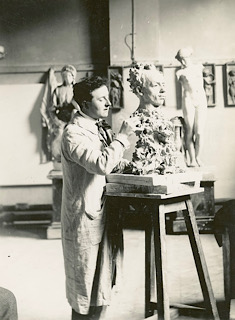
Power is considered the leading Irish sculptor of the 1920s and 1930s. He is a nationalist and promotes the use of Irish materials such as limestone from Durrow and Connemara marble. He is noted for his academic realist style. He exhibits regularly with the Royal Hibernian Academy from 1906, becoming an associate member in 1911, and a full member in 1919. Among those he models sculptures for are James Stephens (1913), W. B. Yeats (1918), and Lord Dunsany (1920). Among his patrons are Oliver St. John Gogarty, and through Gogarty he is commissioned to model a number of prominent Irish nationalists. Gogarty asks him to carve a portrait of Terence MacSwiney in 1920, while MacSwiney is on hunger strike in HM Prison Brixton, London. Smuggled into the prison to do a thumbnail sketch, Power then carves a portrait in the form of a life mask.
On Gogarty’s recommendation, Power is commissioned by the Irish Free State government to create portraits of a number of leading politicians including Arthur Griffith (1922), Michael Collins (1936), and Austin Stack (1939). He is also privately commissioned to execute a portrait of Éamon de Valera in 1944. Among his monumental works are sculptures of Tom Kettle (1919) at St. Stephen’s Green, Dublin, Christ the King in Gort, County Galway, (1933), Pádraic Ó Conaire (1935) at Eyre Square, Galway, and W. B. Yeats (1939) at Sandymount Green, Dublin. He is one of the artists invited to submit designs for the new coinage of the Irish Free State in 1928.
Power dies in Dublin on July 10, 1945, following complications from a double hernia. His is buried in Glasnevin Cemetery, Dublin.
Whelan is awarded many prizes in the Royal Dublin Society (RDS) Taylor art competitions, including one in 1912 for a portrait of his sister Lena, entitled On the Moors, rendered in a strongly academic technique. In 1916, he wins the Taylor scholarship for the Royal Hibernian Academy (RHA) schools for his finest early work, The Doctor’s Visit, an adroitly executed composition of contrasting shadows and light. Typical of many of his genre interiors, the painting depicts a room in the family home, with relatives as models: Whelan’s mother sits by the bed watching over his ill cousin, while his sister, dressed in a Mater hospital nurse’s uniform, is in the background opening the door for the doctor. The subtly evoked atmosphere of restrained emotion foreshadowed a hallmark of his mature style.
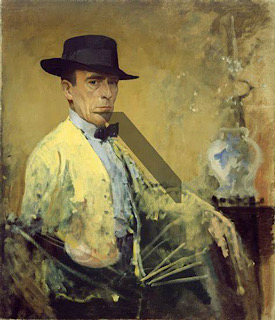
Whelan exhibits annually at the RHA for forty-five years (1911–56), averaging six works per year. He is elected an RHA associate in 1920, becoming a full member in 1924. He participates in the Exposition d’art irlandais at the Galerie Barbazanges in Paris in 1922. A visiting teacher at the RHA schools in 1924, he also teaches in the DMSA for a time. He has studios at 64 Dawson Street (1914–27) and 7 Lower Baggot Street (1931–56). Beginning in the 1910s, he receives regular commissions for portraits, constituting his primary source of income. Having become the family’s main breadwinner following his parents’ deaths in the 1920s, he concentrates most of his production on this lucrative activity, portraying numerous leading figures in the spheres of politics, academia, religion, society, medicine, and law.
Situated securely in the academic tradition, in most of his portraits Whelan favours a sombre, restricted palette, with the sitter placed, in grave demeanour, against a monotone background with few accessories. In a 1943 interview he asserts that twentieth-century portraiture suffers from the drabness of modern costume, for which the artist must compensate by careful rendition of the subject’s hands. He tends to depart from his prevailing portrait style when painting women, whom he characteristically depicts in meticulously observed interiors, a notable example being his portrait of Society hostess Gladys Maccabe (c.1946; NGI).
Whelan’s commercial concentration on portraiture notwithstanding, he expresses his true talent in genre compositions, especially kitchen interiors, in which he emulates the technique of the Dutch painter Johannes Vermeer. Two of the most accomplished of these depict his sister Frances in the basement kitchen of the family home: The Kitchen Window (1927; Crawford Art Gallery, Cork) demonstrates a particularly skillful use of light, while Interior of a Kitchen (1935) is notable for the dexterous handling of objects of varied shapes and textures. His genre works include both urban and rural scenes, with a distinctive interest in portraying occupations and other activities. Gypsy (1923), an Orpenesque composition of a shawled woman in a west-of-Ireland landscape with a caravan in the background, receives wide contemporary critical acclaim. Jer (c.1925), depicting a man seated by the fire in a cottage interior, is reproduced in J. Crampton Walker’s Irish Art and Landscape (1927). The Fiddler (c.1932), a naturalistic, sensitively characterised study, is first shown at an Ulster Academy exhibition at Stranmillis, Belfast. A Kerry Cobbler is reproduced in Twelve Irish Artists (1940), introduced by Thomas Bodkin, as among the works denoting the development of a distinctively Irish school of painting.
In 1929, Whelan designs the first Irish Free State commemorative stamp, a portrait of Daniel O’Connell for the centenary of Catholic emancipation. Commissioned by the Thomas Haverty trust to paint an incident from the life of Saint Patrick for the 1932 Eucharistic Congress, he executes The Baptism by St. Patrick of Ethna the Fair and Fedelmia the Ruddy, Daughters of the Ard Rí Laoghaire, a work highly conservative in style. He rapidly completes an oil study of the papal legate, Lorenzo Lauri, also for the Eucharistic Congress. He is represented in the art competitions at the 1932 Summer Olympics in Los Angeles. His depiction of Saint Brigid, shown at the Academy of Christian Art exhibition (1940), becomes a familiar image owing to the wide circulation of reproductions.
Whelan’s political portraits are influential in creating a strong, assured image of the newly formed Irish state, and thus retain an historical significance. His posthumous portrait, The Late General Michael Collins, exhibited at the RHA in 1943 and now held in Leinster House, is an iconic, heroic image of the fallen leader. His portraits of Arthur Griffith and Kevin O’Higgins – commissioned posthumously, as is the Collins, by Fine Gael – also hang in Leinster House, while that of John A. Costello, exhibited at the RHA in 1949, is now held in the King’s Inns, Dublin. He paints two presidents, Douglas Hyde and Seán T. O’Kelly, both works currently in Áras an Uachtaráin. A portrait of Éamon de Valera, painted in 1955 when the sitter is Leader of the Opposition, is in Leinster House. In 1954, he designs a second commemorative stamp, picturing a reproduction of a portrait bust of John Henry Newman, to mark the centenary of the Catholic University of Ireland.
Whelan is elected an honorary academician of both the Ulster Academy of Arts (1931), and the Royal Ulster Academy (1950). He becomes a member of the United Arts Club in 1934. As a representative of the RHA, he sits on the board of governors of the National Gallery of Ireland for many years, and is on the advisory committee of the Municipal Gallery of Modern Art. Unmarried, he resides until his death at the Eccles Street address, with two sisters who continue to manage the family hotel. He dies on November 6, 1956, from leukemia at the Mater private nursing home in Dublin. He is buried in Glasnevin Cemetery.
(From: “Whelan, (Michael) Leo,” by Carmel Doyle, Dictionary of Irish Biography, http://www.dib.ie, October 2009)
She is the eldest daughter of John and Anne Gaynor, of Athlone. At the age of fifteen she moves with her family to Dublin where her education is completed. Two of her sisters, Anna and Marcella, become nuns with Religious Sisters of Charity. At twenty-five, she marries the much older George Atkinson, a medical doctor and, with Sir John Gray, joint proprietor of the Freeman’s Journal. They are both interested in art and she accompanies her husband on many trips abroad, taking in the cultural centres of Europe. At home they make the acquaintance of prominent politicians, journalists and musicians. Regular guests at their house are Dr. John Shaw, editor of the Evening Mail, Rosa Mulholland and Katharine Tynan.
The loss of her only child in his fourth year deeply affected Atkinson and she throws herself into charitable and other good works. She moves with her husband to Drumcondra in Dublin, where she makes the acquaintance of Ellen Woodlock. Woodlock, a sister of Francis Sylvester Mahony, is born in Cork, County Cork, in 1811 and is married in 1830 and widowed quite young, just before the birth of her only son. Woodlock is the sister-in-law of Rev. Dr. Bartholomew Woodlock, who is President of All Hallows College. She intends to join a religious community in France but after spending a few years in that country (with her son in a nearby school) returns to Cork and then moves to Dublin. At this time the post-famine city is inundated with poverty-stricken families and abandoned children. Fever and disease are rife, and the Poor Law of the day is insufficient to meet the needs of the starving population. Many evictions are taking place in deplorable circumstances, which force the poor, however reluctantly, to seek refuge in the workhouses. The most vulnerable sections of the community are single women (including widows) and children. Woodlock is totally against placing children in workhouses and founds St. Joseph’s Industrial Institute in 1855 to rescue girls from that situation. With her, Atkinson interests herself in the female paupers of the South Dublin Union. With much difficulty in the 1860s, she gains permission for ladies like herself to enter and inspect the condition of young girls in the North and South Dublin Unions, after which she opens a better home to which many were transferred. She campaigns for years to improve the state of the workhouses and provide better conditions for the poverty-stricken. One of her sisters runs the Our Lady’s Hospice in Dublin, to which she donates funds. She helps Woodlock establish the Children’s Health Ireland at 9 Buckingham Street in 1872, which later moves to Temple Street, which she visits every day. Every week she visits hospitals and prisons, in the 1880s accompanying Katharine Tynan to visit the last of the Land Leaguers incarcerated in Kilmainham Gaol.
From the 1850s Atkinson contributes a large number of historical and biographical articles and essays to several publications, including Duffy’s Hibernian Magazine, The Month, The Nation and the Freeman’s Journal. She later writes for the Irish Monthly after it is established, and for the Irish Quarterly Review. Her Life of Mary Aikenhead is published in 1875 and is very well received. She follows this with biographies of the Irish sculptors John Henry Foley and John Hogan and also a life of Catherine of Siena. A collection of her essays, with a preface and biography by Rosa Mulholland, is published posthumously in 1895.
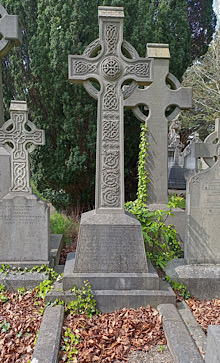
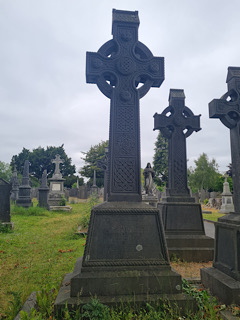
Atkinson dies in County Dublin on July 8, 1893, and is buried in Glasnevin Cemetery, Dublin, where the cemetery committee places a Celtic cross as a monument to her and her husband after his death on December 8, 1893.
O’Shannon is awarded lifetime membership of the Irish Film & Television Academy in 2010, to which he says it is “particularly gratifying that it occurs before I pop my clogs”.
The Irish radio and television broadcaster Terry Wogan describes O’Shannon as possibly the greatest Irish television journalist of the 20th century.
O’Shannon first becomes a journalist with The Irish Times on leaving the Royal Air Force in 1947. Later he joins the Irish state broadcasting service Raidió Teilifís Éireann (RTÉ).
In July 1972, O’Shannon records a notable television interview with 31-year-old Muhammad Ali, when Ali is in Dublin to compete at Croke Park in a bout with Alvin Lewis.
O’Shannon receives a Jacob’s Award for his 1976 TV documentary, Even the Olives are Bleeding, which details with the activities of the “Connolly Column” in the Spanish Civil War. Two years later he is honoured with a second Jacob’s Award for his television biography Emmet Dalton Remembers (1978).
In 1978, O’Shannon leaves RTÉ to join Canadian company Alcan which is setting up an aluminum plant at Aughinish, County Limerick, in 1978. He is head-hunted to become its Director of Public Affairs, an important post at a time when there are environmental concerns about the effects of aluminum production. He admits that he is attracted by the salary, “five times what RTÉ were paying me,” but he also later says that one reason for the move is that he had become unhappy with working at RTÉ, stating in an interview that: “The real reason I got out of RTÉ was that they wouldn’t let me do what I wanted to do journalistically.” He had submitted proposals to the station’s editors for television documentary series on the Irish Civil War, and also one on the wartime Emergency period, but they had been rejected. While he enjoys the social life with lavish expenses which his public relations duties involve, his friends believe that he misses the varied life and travel of journalism. He retires early from Aughinish in 1992, and returns to making television documentaries with RTÉ.
O’Shannon’s wife, Patsy, whom he met while they were working at The Irish Times office in London, dies in 2006. They had been married for more than 50 years.
On January 12, 2007, O’Shannon announces his retirement at the age of 80. In a 2008 television documentary, he admits that throughout his marriage he had been a serial womaniser and had repeatedly engaged in extra-marital affairs unbeknownst to his wife.
After weakening health for two years, and spending his last days in a hospice at Blackrock, O’Shannon dies at the Beacon Hospital in Dublin on October 22, 2011, in his 84th year. His body is reposed at Fanagans Funeral Home in Dublin on October 25, followed by a funeral the following day at Glasnevin Cemetery Chapel, where his remains are cremated afterward.
Director General of RTÉNoel Curran says O’Shannon had brought into being “some of the great moments in the RTÉ documentary and factual schedule over the past five decades.” In tribute, RTÉ One shows the documentary Cathal O’Shannon: Telling Tales on November 10, 2011. It had originally aired in 2008 to mark his 80th birthday
Dinneen is a leading figure in the Irish Texts Society, publishing editions of Geoffrey Keating‘s Foras Feasa ar Éirinn, poems by Aogán Ó Rathaille, Piaras Feiritéar, Tadhg Gaelach Ó Súilleabháin, and other poets. He also writes a novel and a play in Irish, and translates such works as Charles Dickens‘s A Christmas Carol into Irish. His best known work, however, is his Irish–English dictionary, Foclóir Gaedhilge agus Béarla, which is first published in 1904. The stock and plates of the dictionary are destroyed during the Easter Rising of 1916, so Dinneen takes the opportunity to expand the dictionary. A much larger second edition, compiled with the assistance of Liam S. Gógan, is published in 1927. His request to the Irish Texts Society to include Gogan’s name on the title page is refused. Gogan continues to work on the collection of words up to his death in 1979. This complementary dictionary is published online in 2011.
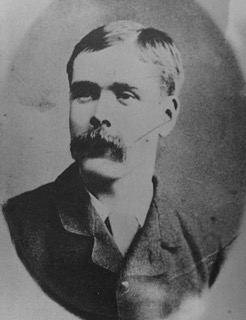
Rossa becomes a shopkeeper in Skibbereen where, in 1856, he establishes the Phoenix National and Literary Society, the aim of which is “the liberation of Ireland by force of arms.” This organisation later merges with the IRB, founded two years later in Dublin.
In December 1858, Roosa is arrested and jailed without trial until July 1859. He is charged with plotting a Fenian rising in 1865, put on trial for high treason, and sentenced to penal servitude for life due to previous convictions. He serves his time in Pentonville, Portland, and Chatham prisons in England.
After giving an understanding that he will not return to Ireland, Rossa is released as part of the Fenian amnesty of 1870. Boarding the S.S. Cuba, he leaves for the United States with his friend John Devoy and three other exiles. Together they were dubbed “The Cuba Five.”
In 1885, Rossa is shot outside his office near Broadway by an Englishwoman, Yseult Dudley, but his wounds are not life-threatening. He is allowed to visit Ireland in 1894, and again in 1904. On the latter visit, he is made a “Freeman of the City of Cork.”
Rossa is seriously ill in his later years and is finally confined to a hospital bed in St. Vincent’s Hospital, Staten Island, where he dies suddenly at the age of 83 on June 29, 1915. His body is returned to Ireland for burial and a hero’s welcome. The funeral at Glasnevin Cemetery on August 1, 1915, is a huge affair, garnering substantial publicity for the Irish Volunteers and the IRB at time when a rebellion, later to emerge as the Easter Rising, is being actively planned. The graveside oration given by Patrick Pearse remains one of the most famous speeches of the Irish independence movement stirring his audience to a call to arms.
Christened as William O’Brien, Ó Briain is born at 10 Church Street, North Wall, Dublin, on September 16, 1888, the seventh child of Arthur O’Brien, clerk, and Mary O’Brien (née Christie), who is from County Meath. He takes an interest in the Irish language from an early age and begins learning Irish by himself from a grammar book, as it is not encouraged by his teachers at the Christian Brothers’ O’Connell School nor spoken by his parents. While still at the O’Connell School, he starts using the Irish version of his name. He also attends meetings of the Gaelic League, then attends University College Dublin (UCD) on a scholarship, where he studies French, English and Irish, receiving a BA (1909) and an MA (1910).
UCD decides to start awarding one annual scholarship for overseas travel in 1911, and Ó Briain wins the first one, using it to visit Germany and study under Kuno Meyer and Rudolf Thurneysen. After three years, he returns home, where he rejoins the Gaelic League and begins teaching French at UCD. He also joins the Irish Volunteers then, the following year, Seán T. O’Kelly convinces him to join the Irish Republican Brotherhood (IRB).
Around this time, Ó Briain joins Sinn Féin, and he stands unsuccessfully for the party in Mid Armagh at the 1918 United Kingdom general election in Ireland, taking 5,689 votes. His campaign leads, indirectly, to his arrest and three months in jail in Belfast. In 1920, following his release, he is appointed a judge in the then-illegal republican court system in Galway, and visits both France and Italy to try to source weapons for the Irish Republican Army (IRA). In November 1920, he is arrested in the UCG dining room by Black and Tans, and is imprisoned for thirteen months, first in Galway and then in the Curragh camp in County Kildare, thereby missing the conclusion of the Irish War of Independence. By the time he is released, the Anglo-Irish Treaty has been signed. He supports the treaty and takes no further part in militant activity.
In the newly independent Ireland, Ó Briain remains a professor at Galway. He also stands in the 1925 Seanad election, although he is not successful. He is the founding secretary of the Taibhdhearc na Gaillimhe theatre, also acting in many of its productions, and spends much time translating works from English and the Romance languages into Irish. He stands to become president of UCG in 1945, but is not elected, and in the 1940s and 1950s is best known for his many appearances on television and radio.
From his retirement in 1959, Ó Briain lives in Dublin. In 1974, the National University of Ireland (NUI) confers an honorary doctorate on him. He dies on August 12, 1974, at St. Gabriel’s Hospital, Cabinteely, County Dublin. His funeral to Glasnevin Cemetery is almost a state occasion, with a huge attendance of public figures, and a military firing party at the graveside, where the oration is given by Micheál Mac Líammóir and a lesson is read by Siobhán McKenna. For days after his death, the newspapers carry tributes to his many-sided career and personality. On the one hundredth anniversary of his birth, Proinsias Mac Aonghusa and Art Ó Beoláin write commemorative articles in Feasta.
On September 1, 1921, Ó Briain marries Helen Lawlor, of Dublin, who dies two years before him. The couple’s only child is Eibhlín Ní Bhriain, who is a journalist for The Irish Times and other periodicals.