In the early morning of August 5, 1922, during the Irish Civil War, around 200 anti-Treaty Irish Republican Army (IRA) volunteers are mobilised around Dublin. Their mission is to isolate the city by destroying all bridges and road crossings leading into it, cutting off Free State forces and supplies.
The anti-Treaty IRA, opposed to the Anglo-Irish Treaty and the newly established Irish Free State, aim to dismantle the stone bridges over Dublin’s rivers and canal, lay explosives on road and railway bridges, dig trenches in roads to block movement and scout the surrounding countryside for Free State troops.
They are organised in groups of 5–40, some armed with handguns and grenades, others with explosives and tools like spades and picks. Parties are sighted in the hills south of the city (from Kilakee to Roundwood) and across villages north of Dublin (from Raheny to Blanchardstown).
The Free State’s intelligence service intercepts the plan when Liam Clarke, a captured anti-Treaty officer, reveals the details to Free State Intelligence officers. This intelligence allows the Free State to anticipate and counter the operation.
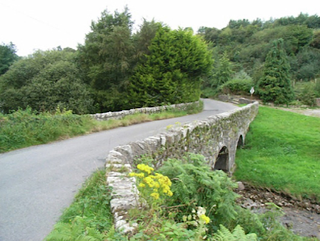
On August 6, Free State forces move quickly to intercept the IRA. They capture 31 anti-Treaty irregulars at Glencullen Bridge (pictured) and later take 104 fighters in County Dublin, including officer Pat Sweeney. These actions cripple the remnants of the anti-Treaty IRA in Dublin and prevent the city from being isolated.
The “Bridges Job” is a major anti-Treaty attempt to cut off Dublin during the Irish Civil War. Its failure marks a turning point, as Free State forces can now move freely into the city, accelerating the end of the conventional phase of the conflict.
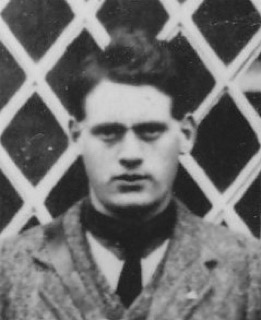
Burke is born into an influential Drogheda family, the Burkes of Duleek Street. His father, also named Christopher Patrick Burke, is a gas works secretary, and his mother is Mary McQuillan. The family lives initially on Coola Street before moving to Duleek Street after his father’s death in 1906.
Raised in a well-off household, Burke’s early years are shaped by the nationalist and cultural revival movements of the time, including the Gaelic League, which fosters physical resilience and republican ideals. His family connections, including to fellow revolutionary Thomas Burke, provide him with early exposure to Sinn Féin and Irish Volunteers activities.
Burke operates under the nom de guerre “Seán Jones” (also “Seaghan Mac Seaghan”) and is captured on at least one occasion by British forces, later released in a prisoner exchange.
During the Irish Civil War, Burke undertakes a 23-day hunger strike, reflecting his continued commitment to republican resistance against the Irish Free State.
In 1932, Burke is brought to court by his older brother, Michael, after assaulting him in the family home on Duleek Street, Drogheda. The house had been left to Michael in the will of their aunt Jane McQuillan, who died in 1919, leaving the premises to him, but requiring his mother and two sisters, Mary “Maise” and Christina Mary “Tena”, to be supported there. However, Burke insists on living there, along with his brother Joseph, leading to a family dispute. The Justice rules that the will gives Michael Burke the ownership of the house and the tenants subject to the charges set out in it. He fines Burke five shillings.
After this, Burke goes into the dairy business with his brother Joseph, and builds a house on the family farm in Bryanstown, County Meath. He dies from coronary occlusion at the age of 65 in his home on June 23, 1964. His sister, Christina Mary “Tena” Burke is present at his death. His requiem mass is celebrated at St. Mary’s Church in Drogheda. His republican comrades attend the funeral, and the Mayor of Drogheda and members of the Drogheda Corporation walk in the cortége wearing their robes of office.
Burke’s contributions to the IRA’s armament production and his steadfast republican stance cements his place in Irish revolutionary history. His life bridges the technical skills of a craftsman with the political resolve of a nationalist leader, making him a notable figure in the struggle for Irish independence.
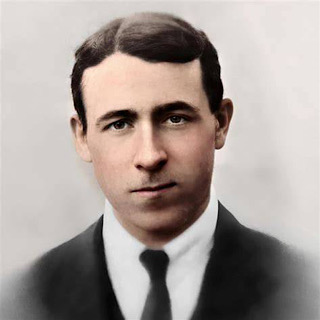
On the morning of August 3, his body is discovered in a field at Maher’s farm, close to Jamestown Road in Finglas. He had been shot dead. The exact details of his capture and killing are later ordered to be destroyed in 1932 by the Pro-Treaty government.
McEntee is buried in the Republican Plot at Glasnevin Cemetery, Dublin. A National Graves Association memorial plaque is placed there around 1932 and is maintained by the Fianna Sluagh in Finglas during the 1950s–60s. In 2023, his family and community commemorate the centenary of his death, remembering him as a skilled carpenter, devoted father, and soldier of the Irish Citizen Army.
In summary, Henry McEntee’s abduction and murder in August 1923 are part of the violent post-war repression of anti-Treaty IRA members, and his case remains a poignant example of the personal toll of Ireland’s Civil War.
By mid-July 1922, the Free State has re-taken counties Limerick and Waterford, but the IRA still controls counties Cork and Kerry, as well as much of the west under Liam Lynch’s command. A purely land-based advance into these areas risks long, attritional battles. Dalton’s plan is to create a second front by landing troops along the County Kerry and County Cork coasts, isolating republican strongholds like Tralee.
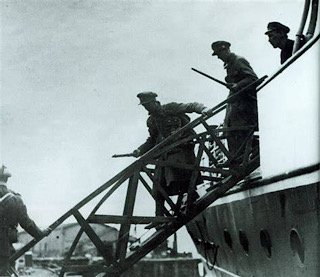
The SS Lady Wicklow carries 450 soldiers of the Dublin Guardbrigade under Paddy Daly, along with a field gun and an armoured car nicknamed the Ex-Mutineer. The Dublin Guards are considered the most disciplined and politically reliable unit in the Army, and Daly is one of Michael Collins’ trusted lieutenants. The landing is intended to secure Fenit as a base for an amphibious assault on Tralee, a key republican stronghold.
The surprise attack catches the IRA forces off guard, taking their left flank in the rear. The Free State quickly advances, and by the following days, much of County Kerry is freed from republican control. The operation is part of a broader offensive that culminates in the capture of Tralee on August 2, one of the bloodiest single days of combat for the National Army.
While the initial landings are successful, the IRA mounts counterattacks over August and September, regaining some ground. However, the Free State’s superior resources, better equipment, and lack of popular support for the republicans allows them to consolidate control in County Kerry over time. The Fenit landing is a turning point, shifting the momentum in favour of the Free State and contributing to the eventual republican defeat in the Irish Civil War.
In summary, the August 2, 1922, naval landing at Fenit is a bold, surprise amphibious operation that disrupts republican defenses, opens County Kerry to Free State advance, and alters the course of the Irish Civil War.
(Pictured: Free State troops landing at Fenit, County Kerry, on August 2, 1922)
The 3rd Tipperary Brigade is one of the most active IRA units in mid-Munster, operating mainly in southern County Tipperary and parts of County Limerick. It is known for its mobility and effectiveness in ambush tactics. Dinny Lacey, as a senior commander, is instrumental in planning and executing these operations.
While the exact details of the July 31 operations are not fully documented in the provided sources, the date falls within a period of intense IRA activity in the region. In July 1920, the IRA has already conducted several notable actions in County Tipperary, including the Newtown Cross Ambush on July 2, 1920, in which Sergeant Robert Tobin is killed and Constable Brady is wounded, and the Dingle Ambush on July 13, 1920, in which two Royal Irish Constabulary (RIC) men are killed.
These earlier incidents show that IRA forces in southern County Tipperary are actively targeting RIC patrols and outposts, and the July 31 ambushes are likely part of a similar pattern of harassment and disruption.
Successful ambushes like these weaken British control in rural County Tipperary, disrupt police and military operations, demonstrate the IRA’s ability to strike quickly and effectively in difficult terrain and contribute to the overall IRA strategy of attrition and intimidation.
The brigade continues to operate under Lacey’s leadership until his death in 1923 during the Irish Civil War. His tactics in 1920 help establish the 3rd Tipperary Brigade as a key player in the IRA’s campaign in the south.
In summary, on July 31, 1920, Dinny Lacey’s IRA unit in southern County Tipperary executes two successful ambushes, continuing a series of targeted attacks that are central to the IRA’s guerrilla campaign against British forces in the region.
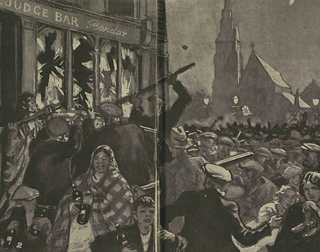
On July 21, 1920, the Belfast Shipyard Expulsions take place as thousands of Catholic workers and socialists in Belfast’s shipyards are attacked and driven from their jobs following Edward Carson’s speech on the Twelfth at Finaghy during the annual industrial holiday. This day marks the first day back at work after the holiday, and the violence erupts in the shipyards, particularly in the Harland & Wolff yards.
The disturbances are part of a wider Belfast pogrom in 1920, rooted in sectarian tensions between unionist and nationalist communities. The Twelfth of July celebrations in Finaghy have been a focal point for nationalist and socialist mobilisation, and Carson’s speech is seen by many Catholic workers as inflammatory, stoking fears of reprisals.
The targeted groups of the expulsions include Catholic workers, trade unionists, and socialist activists, many of whom are from the working class “plebeian” strata. Reports describe beatings, assaults, and intimidation in the shipyards, with workers being pushed out of their posts or forced to leave premises. The expulsions disrupt shipbuilding operations, as skilled labour is removed from the workforce overnight. The events reinforce sectarian divisions, with unionist groups and some employers using the violence to assert control over the workforce.
By July 1920, newspapers are the main source of news, with current affairs often appearing on later pages. Coverage in papers such as the Belfast News Letter, Belfast Telegraph, The Irish Times, and Freeman’s Journaldescribe the expulsions as part of a broader outbreak of violence, but without the front-page headlines typical of later conflicts. The absence of radio broadcasts means that news is spread through print, handbills, and word of mouth.
The July 21, 1920, expulsions are a turning point in the sectarian conflict in Belfast, marking a shift from political mobilisation to direct, violent confrontation in the industrial heart of the city. They reflect the deep entrenchment of sectarianism in the shipbuilding industry and foreshadow further violence in the years leading up to the Irish Civil War.
At the start of the Irish Civil War in June 1922, the Free State controls only Dublin. Anti‑Treaty forces, forming the so‑called Munster Republic, hold Cork, Limerick, and Waterford, along with much of the west. Waterford’s republican garrison has fortified the city, dismantled the drawbridge’s control equipment, and isolated the port by removing wireless and other communications.
On July 16, republican forces learn that Free State troops ae moving toward Waterford. They raise the drawbridge early and move vessels from the Kilkenny side to the Waterford side. On July 18, Prout’s column is spotted from Sallypark Hill, prompting republican machine gun and rifle fire. A Free State volunteer, Costeloe, is wounded and later dies.
From July 19, sniping continues across the River Suir. On July 19, the Free State brings the 18‑pounder artillery into position overlooking the city, bombarding republican positions. The republicans hold key buildings such as the Adelphia Hotel, Country Club, and Reginald’s Tower.
By July 21, Free State forces cross the River Suir downstream at Gyles Quay, enter the city, and drive out republican troops from their positions. The drawbridge on Redmond Bridge is lowered by hand, and republican reinforcements from Cork and Tipperary either withdraw or do not engage. The Free State takes Waterford on July 21, 1922, ending the republican hold on the city.
Two anti‑Treaty volunteers, Maurice McGrath and John “Bonny” Boyle, are killed. Two Free State soldiers, Sergeant James Howlett and Michael Costelloe, are killed. At least six civilians are killed, including Joseph Dwan, William Long, and a 10‑year‑old girl. Many civilians are wounded.
The fall of Waterford marks a key Free State victory in the conventional phase of the Irish Civil War, contributing to the re‑capture of major southern cities and paving the way for the later guerrilla phase.
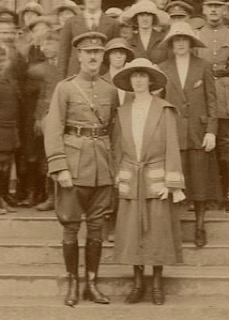
(Pictured: John T. Prout at his wedding to Limerick native Mary Conba at St. John the Evangelist Church (O’Loughlin Memorial Church), Kilkenny, July 12, 1922)
The Irish Civil War (June 1922–May 1923) pits pro-Treaty Free State forces against anti-Treaty IRA units who oppose the Treaty’s terms. Aiken is a key republican commander, and Dundalk is a stronghold for his forces. By mid-July 1922, Free State troops have taken several towns, and Dundalk is next in line for reoccupation.
General Hogan’s forces enter Dundalk, engaging republican snipers and irregulars. The attack targets the Gaol, where Aiken and many of his men are held. The Free State troops overpower the defenders, leading to Aiken’s arrest and the capture of a significant portion of the Fourth Northern Division.
Aiken and about 104 other prisoners escape on July 27, 1922, through a narrow gap in the jail wall, later dubbed the “Hole in the Wall.” This escape is a major republican success, temporarily reoccupying Dundalk. However, Free State forces retake the town on August 14, 1922, and the jail remains under military control until 1924.
The capture is significant as it marks a turning point in the Free State’s campaign in County Louth, weakening republican resistance in the area. Aiken’s arrest underscores the Free State’s determination to dismantle anti-Treaty leadership. The events in Dundalk become a symbol of republican resilience, as the escape through the “Hole in the Wall” is widely reported and commemorated.
In summary, the July 16, 1922, capture of Frank Aiken in Dundalk is a decisive Free State action in the Irish Civil War, leading to a notable republican escape and a prolonged military standoff in the town.
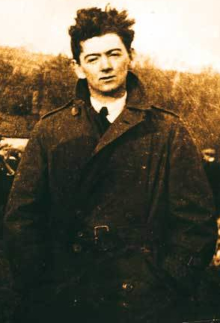
(Pictured: Frank Aiken and the 4th Northern Division)
Wexford had been relatively quiet during the Irish War of Independence, but the Treaty split in 1921 creates deep divisions. The South Wexford Brigade under Thomas O’Sullivan is overwhelmingly anti-Treaty, while the North Wexford Brigade under Joseph Cummins is nominally pro-Treaty but contains a significant anti-Treaty minority. This division means that when the Irish Civil War breaks out on June 28, 1922, Wexford becomes one of the most violent counties, with Republican forces rapidly moving to secure strategic towns.
On July 4, anti-Treaty IRA units, including Tipperary volunteers and escaped Four Courts fighters, move into Enniscorthy, take over key positions and force the surrender of Free State troops. In the opening fighting, three combatants are killed — two IRA and one National Army — marking the first major Republican gains in the county. James Roche, an IRA member, is fatally wounded in an accident outside Newtownbarry (now Bunclody) on the same day, one of several accidental deaths among IRA personnel in Wexford during the Irish Civil War.
The capture of Enniscorthy is part of a broader Republican offensive in County Wexford in early July 1922. However, the balance of power shifts quickly. By July 6, a large relief force of government troops sets out from Dublin to retake the town. This marks the beginning of a protracted and bloody campaign in County Wexford, which sees the county become one of the most violent in the Irish Civil War.
In summary, the capture of Enniscorthy on July 4, 1922, is a significant Republican victory in County Wexford, driven by the Treaty split and reinforced by external IRA units. It reflects the rapid escalation of violence in the county and sets the stage for a prolonged and destructive phase of the Irish Civil War in County Wexford.
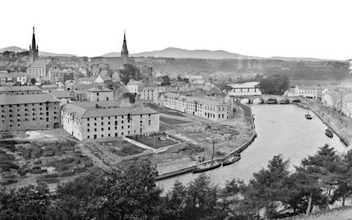
(Pictured: Enniscorthy at the turn of the last century, National Library of Ireland collections)
Barry returns to Bandon in early 1919. He describes in his guerilla days in Ireland a Damascus-like conversion to Irish nationalism on hearing of the Easter Rising while with the Mesopotamian expeditionary force, but he is only accepted into the IRA with considerable caution. Initially tested in intelligence and training work, in mid-1920 he takes charge of the new brigade flying column, which is used both to train officers and to stage offensive actions.
Barry adapts his military experience successfully to the demands of guerrilla warfare, becoming the most famed of column leaders during the Irish War of Independence. In his memoirs, he pours scorn on the obsession of many with military titles and orthodox procedure, complaining of a “paper army.” He stresses the need for spontaneity, initiative, and knowledge of local conditions. “The reality,” he writes, “was a group of fellows, mostly in caps and not-too-expensive clothing, wondering how to tackle their job and where they would sleep that night or get their supper.” (The Reality of the Anglo–Irish War (1974)). He well realises that the war’s character does not permit any close control from the IRA’s GHQ in Dublin, hence increasing the importance of local leaders. His tactics put strong emphasis on speed of movement and on the need to attack the enemy at his weakest point. The column’s ambush successes are small in number but among the best-remembered of the war. He admits, however, that his own and his column’s lack of experience with mines frequently weakened their offensives.
The column’s first successful ambush is at Tooreen on October 22, 1920, followed on November 28 by the dramatic ambushing of a patrol of auxiliaries at Kilmichael while traveling from their Macroom base. A column of thirty-six men, divided into three sections, kill sixteen auxiliaries, with one captured and later shot, suffering two fatalities of their own. Controversy has raged since over whether a false surrender by the British force caused the brutality of some of the deaths. Together with the Bloody Sunday killings of a week earlier in Dublin, Kilmichael has a profound effect on the British military and political establishment, with the declaration in December of martial law for much of Munster and the implementation of wide-ranging internment, together with the authorisation of official reprisals.
After a short period in hospital with a heart condition, in early 1921 Barry leads unsuccessful attacks on Kilbrittain, Innishannon, Drimoleague, and Bandon barracks. The seizure of Burgatia House, outside Rosscarbery, in early February, and the successful resistance made there to British troops, wins much publicity but has little military significance. He is a leading figure in the brutal final stage of the war in the first six months of 1921, which sees widespread shooting of suspected spies and destruction of loyalist property. By March 1921, his flying column, with 104 men, is easily the largest in Ireland, and an explosives expert, Capt. McCarthy, has joined them.
The protracted engagement between Barry’s column and encircling British forces at Crossbarry on March 19, 1921, comes at a time when large-scale sweeps are making life increasingly difficult for the IRA. It consists of a daring and courageous breakout. Crossbarry is the largest action of the war, and Barry is to regard it as even more important than Kilmichael. Soon afterwards, Rosscarbery barracks is successfully attacked by a Barry-led party, representing one of the few successful such initiatives in 1921. Isolated triumphs, however, cannot hide the fact that pressure is increasing on the column, and he becomes increasingly critical of inactive regions. He is later to say that all County Kerry does during the war is to shoot one decent police inspector at Listowel Racecourse and a colleague of his. He is strongly critical also of the lack of assistance from GHQ and of the divisionalisation policy. He visits Dublin in May, travels around with Michael Collins, and is present when two American officers demonstrate the Thompson submachine gun. He is more aware than most of his 1st Southern Division colleagues of the scarcity of arms and ammunition at the war’s end.
During the truce, Barry becomes liaison officer for Munster, riling the British by insisting on his military rank, and criticising the IRA liaison men in Dublin for being overly deferential. He joins the overwhelming majority of the Cork IRA in opposing the Anglo–Irish Treaty but plays a characteristically maverick role throughout the treaty split. His independent attitude is heightened by his dislike of Liam Lynch, the republican IRA’s Chief of Staff, and his continuing respect for Michael Collins. He shows impatience at the long-drawn-out peace initiatives. In March 1922, therefore, he advocates armed confrontation with pro-treaty units over the occupation of barracks in Limerick, and on June 18 he submits a resolution, which only narrowly fails, at the army convention, giving British troops seventy-two hours to leave Dublin.
At the beginning of the Irish Civil War, Barry is arrested entering the Four Courts disguised as a woman. He escapes from an internment camp at Gormanston in early September 1922. For the rest of the war his actions mirror its confused nature. In late October 1922, he leads successful raids on the small towns of Ballineen and Enniskean, and later on Inchigeelagh and Ballyvourney. In December his column takes Carrick-on-Suir, demonstrating the weakness of the Free State army, but his talk of advancing on the Curragh and of large-scale actions does not materialise. There is no evidence that he is acting in accordance with any coordinated plan. By February 1923, he realises that the Republican IRA cause is hopeless and he is involved with Fr. Tom Duggan in efforts to get 1st Southern Division to declare a ceasefire. He journeys to Dublin to put pressure on the intransigent Lynch in this connection, telling Lynch, “I did more fighting in one week than you did in your whole life.”
Barry avoids capture in roundups after the war, remaining on the run until 1924. Unlike many republicans, he does not turn to constitutionalism, remaining strongly militaristic. He is always an unreconstructed republican, though by no means a naive one. In 1924 he becomes attached to Cleeves Milk Co., based in Limerick and Clonmel, and from 1927 to retirement in 1965 is general superintendent with the Cork harbour commissioners. He strongly advocates preserving the independence of the IRA army executive during the republican split of 1925–27. He is instrumental in continuing the drilling of IRA members and is a strong supporter of armed opposition to the Blueshirts.
During the 1930s Barry is arrested at various times for possession of arms and seditious utterances. He promotes an attack against a Freemasons’ meeting in Cork in 1936 and gives the orders for the killing on March 4 of that year of Vice-AdmiralHenry Boyle Somerville. He is opposed to the use by Frank Ryan of IRA volunteers to support the republican cause in the Spanish Civil War and to the proposals of Seán Russell for a bombing campaign in England. To maintain the link with traditional republicanism, he is elected IRA chief of staff in 1937. His plan, however, for the seizure of Armagh city, as part of a direct northern offensive, quickly collapses due to a leak of information, and he soon resigns his position. He forcefully attacks the bombing of English cities in 1938, regarding attacks on innocent civilians as immoral and counterproductive. He enlists in the National Army on July 12, 1940, only to be demobilised a month later. In 1946, he stands as an independent candidate in a by-election in the Cork Borough constituency, finishing at the bottom of the poll. He is more comfortable the following year touring the United States on an anti-partition platform.
In 1949 his Guerilla Days in Ireland is published. It proves a best-seller and has frequently been reprinted. It is well written in a forceful and direct style, one memoir needing no assistance from a ghost writer. Age does not mellow him: lawyers and bank managers are threatened by him over matters relating to his own column, and in 1974 he publishes a fierce pamphlet, angry at perceived slights in the Irish War of Independence memoir of Liam Deasy. He does strive to achieve a public reconciliation with Collins’s memory by unveiling the memorial to Collins at Sam’s Cross in 1966. On the outbreak of the Northern Ireland crisis in the late 1960s, he takes a militant line, castigating the argument that the Six Counties can be brought into the Republic by peaceful means, and asking when had peaceful means existed there. At the memorial meeting in Carrowkennedy, County Mayo, in 1971, he claims that there is a perfect right at the opportune time to take the Six Counties by force. He remains opposed to IRA bombing of civilian targets.
Barry dies in Cork on July 2, 1980. He is buried in St. Finbarr’s Cemetery, Cork. Early in the truce of 1921 he marries Leslie Price, one of the most active of Cumann na mBan members during and after the rising. They have no children.
While Barry always remains an influential figure in republican circles, he will be remembered best as the pioneer of guerrilla warfare, the hero of Kilmichael and Crossbarry. His military flair, individualism, and ruthlessness are well suited to the 1919–21 conflict. After that, his strained relations with colleagues and his lack of flexibility reduce his importance. While his life after the revolutionary era appears anti-climactic, he retains much of his charisma. In later years, he is ever willing to remind politicians and historians how far Ireland has retreated from republican ideals. He is often prickly and autocratic yet could be generous to old colleagues of either side of the treaty split. He is arguably the most intelligent but also the most intolerant of the revolutionary leaders.
(From: “Barry, Thomas Bernadine (‘Tom’)” by M. A. Hopkinson, Dictionary of Irish Biography, http://www.dib.ie, October 2009)