seamus dubhghaill

Promoting Irish Culture and History from Little Rock, Arkansas, USA


Leave a comment

The Copley Street Riot

The Copley Street riot occurs on August 13, 1934, at the Copley Street Repository, Cork, County Cork, after Blueshirts opposed to the collection of annuities from auctioned cattle ram a truck through the gate of an ongoing cattle auction. The Broy Harriers open fire and one man, 22 year old Michael Lynch, is killed and several others injured.

Following the Irish War of Independence (1919–21), Britain relinquishes its control over much of Ireland. However, aspects of the Anglo-Irish Treaty, which had marked the end of the war, lead to the Irish Civil War (1922–23). The aftermath leaves Ireland with damaged infrastructure and hinders its early development.

Éamon de Valera, who had voted against the Anglo-Irish treaty and headed the Anti-Treaty movement during the civil war, comes to power following the 1932 Irish general election and is re-elected in 1933. While the treaty stipulates that the Irish Free State should pay £3.1 million in land annuities to Great Britain, and despite advice that an economic war with Britain could have catastrophic consequences for Ireland (as 96% of exports are to Britain), de Valera’s new Irish government refuses to pay these annuities – though they continue to collect and retain them in the Irish exchequer.

This refusal leads to the Anglo-Irish trade war (also known as the “Economic War”), which persists until 1935, when a new treaty, the Anglo-Irish Trade Agreement, is negotiated in 1938. During this period, a 20% duty is imposed on animals and agricultural goods, resulting in significant losses for Ireland. Specifically, poultry trade declines by 80%, butter trade by 50% and cattle prices drop by 50%. Some farmers are forced to kill and bury animals because they cannot afford to maintain them.

In 1933, Fine Gael emerges as a political party—a merger of Cumann na nGaedheal and the National Centre Party. Fine Gael garners substantial support from rural farmers who are particularly affected by the Economic War. They strongly object to the collection of land annuities by the Fianna Fáil government. The Blueshirts, a paramilitary organisation founded as the Army Comrades Association in 1932 and led by former Garda Commissioner Eoin O’Duffy, transforms into an agrarian protest organisation, mobilising against seizures, cattle auctions, and those tasked with collecting annuities.

O’Duffy, a key figure in Irish politics, encourages farmers to withhold payment of land annuities to the government. Arising from this stance, Gardaí start to seize animals and farm equipment, auctioning them to recover the outstanding funds. While seized cattle are auctioned, local farmers rarely participate. Instead, Northern Ireland dealers, often associated with the name O’Neill, are the primary buyers. These auctions are protected by the Broy Harriers, an armed auxiliary group linked to the police.

By 1934, tensions escalate, and a series of anti-establishment incidents are attributed to the Blueshirts. These incidents range from minor acts of violence, such as breaking windows, to more serious offenses like assault and shootings.

On August 13, 1934, an auction takes place at Marsh’s Yard on Copley Street in Cork, featuring cattle seized from farms in Bishopstown and Ballincollig. The police establish a cordon by 10:00 a.m., with 300 officers on duty. Lorries arrived at 11:00 a.m.

Around noon, three thousand protestors assemble. Within twenty-five minutes, an attempt is made to breach the yard gate by ramming it with a truck. According to Oireachtas records, there are approximately 20 men in the truck which they run against the gate. The Minister for Justice P. J. Ruttledge, says that the truck “with those people in it charged through those cordons of Guards; that several Guards jumped on to the lorry and tried to divert the driver by catching hold of the steering wheel and trying to twist it.” Some contemporary news sources suggest that the ramming truck knocked down the surrounding police cordon “like ninepins and crush[ed] a police inspector against a gate.” Later sources suggest that the senior officer (a superintendent) was injured in a fall, while attempting to avoid being struck, rather than being hit directly by the truck.

A man named Michael Lynch, wearing the distinctive blue shirt, and approximately 20 others reportedly manage to enter the yard. As soon as they enter the yard they are fired upon by armed “special branch” police detectives who are in the yard. Lynch later succumbs to his injuries at the South Infirmary. Thirty-six others are wounded. Despite the violence, the auction proceeds after a one-hour delay.

Following the shooting, a riot ensues, but when news of Lynch’s death reaches the participants, they cease rioting, kneel, and recited a Rosary.

The funeral of Michael Lynch occurs on August 15, 1934. The funeral procession is planned to depart from Saints Peter and Paul’s Church, Cork at 2:30 PM.

The occasion allows for a significant show of force for Eoin O’Duffy and the Blueshirts, and features Roman salutes and military drills. Farmers in Munster reportedly stop work for an hour, and Blueshirt members ask shopkeepers to close their businesses, as a show of respect for the “martyr.” Lynch is afforded a “full Blueshirt burial,” and the coffin is adorned with the flag of the Blueshirts (the Army Comrades Association).

According to the  Minister for Justice, at the funeral W. T. Cosgrave stands beside O’Duffy as the Blueshirt leader gives an oration saying, “We are going to carry on until our mission is accomplished […] those 20 brave men, whose deed will live for ever, not only in Cork but in every county in Ireland, broke through in the lorry […] all Blueshirts should try to emulate his bravery and nobleness. Every Blueshirt is prepared to go the way of Michael for his principles.”

The court grants the family £300 in 1935. This is appealed to the High Court, followed by the Supreme Court, which dismisses the case. In the Supreme Court, Henry Hanna describes the Broy Harriers as “an excrescence” upon the Garda Síochána.

When the matter is discussed in the Seanad in September 1934, and before a vote is taken to “[condemn] the action of the members of the special branch of the Gárda Síochána […] on Monday, the 13th August 1934,” the senators who support Éamon de Valera’s government walk out.

In August 1940, a memorial is unveiled on the tomb of Lynch in Dunbulloge Cemetery in Carrignavar, County Cork, consisting of a limestone Celtic cross and pedestal. The pedestal is engraved with a quote from the American orator, William Jennings Bryan: “The humblest citizen of all the land, when clad in the armour of a righteous cause is stronger than all the hosts of error.”

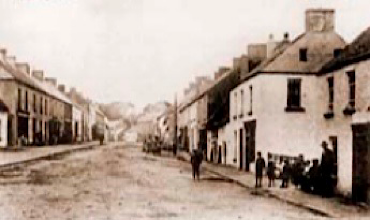
(Pictured: Aftermath of the ramming of Marsh’s Yard, Copley Street, that leads to the death of Michael Lynch and the Copley Street Riot on August 13, 1934)


Leave a comment

Birth of Sidney Czira, Journalist, Broadcaster, Writer & Revolutionary

Sidney Sarah Madge Czira (née Gifford), journalistbroadcaster, writer and revolutionary, known by her pen name John Brennan, is born in Rathmines, Dublin, on August 3, 1889. She is an active member of the revolutionary group Inghinidhe na hÉireann (Daughters of Ireland) and writes articles for its newspaper, Bean na h-Éireann, and for Arthur Griffith‘s newspaper Sinn Féin.

Gifford is the youngest of twelve children of Frederick and Isabella Gifford. Isabella Gifford (née Burton), is a niece of the artist Frederic William Burton, and is raised with her siblings in his household after the death of her father, Robert Nathaniel Burton, a rector, during the Great Famine.

Gifford’s parents—her father is Catholic and her mother Anglican—are married in St. George’s Church, a Church of Ireland church on the north side of Dublin, on April 27, 1872. She grows up in Rathmines and is raised as a Protestant, as are her siblings.

Like her sisters, the socialist Nellie GiffordGrace Gifford, who marries Joseph Plunkett, and Muriel Gifford, who marries Thomas MacDonagh, she becomes interested and involved in the suffrage movement and the burgeoning Irish revolution.

Gifford is educated in Alexandra College in Earlsfort Terrace. After leaving school she studies music at the Leinster House School of Music. It is her music teacher, in her teens, who first gives her her first Irish national newspaper, The Leader. She begins reading this secretly and then starts reading Arthur Griffith’s newspaper, Sinn Féin.

Gifford is a member of Inghinidhe na hÉireann, a women’s political organisation active from the 1900s. It is founded by Maud Gonne and a group of working-class and middle-class women to promote Irish culture and help to alleviate the shocking poverty of Dublin and other cities at a time when Dublin’s slums are unfavourably compared with Calcutta‘s. Gifford, who is already writing under the name “John Brennan” for Sinn Féin, is asked to write for its newspaper Bean na h-Éireann. Her articles vary from those highlighting poor treatment of women in the workplace to fashion and gardening columns, some written under the pseudonym Sorcha Ní hAnlúan.

She also works, along with her sisters, in Maud Gonne’s and Constance Markievicz‘s dinner system in St. Audoen’s Church, providing good solid dinners for children in three Dublin schools – poor Dublin schoolchildren often arrive at school without breakfast, go without a meal for the day, and if their father has been given his dinner when they arrive home, might not eat or might only have a crust of bread that night.

In 1911, Gifford is elected (as John Brennan) to the executive of the political group Sinn Féin.

Gifford is a member of Cumann na mBan (The Irish Women’s Council) from its foundation in Dublin on April 2, 1914. Its members learn first aid, drilling and signalling and rifle shooting, and serve as an unofficial messenger and backup service for the Irish Volunteers. During the fight for Irish Independence the women carry messages, store and deliver guns and run safe houses where men on the run can eat, sleep and pick up supplies.

In 1914, Gifford moves to the United States to work as a journalist. Through her connection with Padraic Colum and Mary Colum, whom she had met through her brother-in-law Thomas MacDonagh, she meets influential Irish Americans such as Thomas Addis Emmet and Irish exiles like John Devoy, and marries a Hungarian lawyer, Arpad Czira, a former prisoner of war who is said to have escaped and fled to America. Their son, Finian, is born in 1922.

Czira writes both for traditional American newspapers and for Devoy’s newspaper, The Gaelic American. She and her sister Nellie found the American branch of Cumann na mBan, and she acts as its secretary. Both sisters tour and speak about the Easter Rising and those involved. She is an active campaigner for Irish independence and against the United States joining the war against Germany, seen as a war for profit and expansion of the British Empire, and so to the disadvantage of the work for Irish independence. She helps Nora Connolly O’Brien to contact German diplomats in the United States.

In 1922, Czira returns to Ireland with her son. As a member of the Women’s Prisoners’ Defence League, she is an activist against the ill-treatment of Republican prisoners during the Irish Civil War. She continues to work as a journalist, though she is stymied in her work, as are the women of her family and many of those who had taken the anti-Free State side. In the 1950s her memoirs are published in The Irish Times, and she moves into work as a broadcaster and produces a series of historical programmes.

Czira dies in Dublin on September 15, 1974, and is buried in Dean’s Grange Cemetery.


Leave a comment

Beginning of the Battle of Kilmallock

The Battle of Kilmallock begins on July 25, 1922, in County Limerick, ending on August 5. It is one of the largest engagements of the Irish Civil War.

The battle consists of ten days of fighting in the countryside around Kilmallock in County Limerick, in which the National Army of the Irish Free State, advancing south from Limerick city, find their path blocked by anti-Treaty IRA troops, dug into a number of villages at BruffBruree and Patrickswell. The fighting end with the retreat of the anti-Treaty fighters and the occupation of Kilmallock by Free State forces.

The prelude to the battle is the fall of Limerick city to Free State forces. The Republican forces in the city under Liam Deasy withdraw from their positions after a week of fighting and concentrate in Kilmallock and the nearby towns of Bruff and Bruree. The Free State forces, advancing south from the city, find their path blocked by the Republicans dug in at the three hilltop towns.

The National Army’s attempt to break through this position produces the only “line battle” of the war with the two sides facing each other along clear front-lines. The Kilmallock-Bruff-Bruree triangle sees some of the war’s most intense fighting.

Whereas in the fighting in Dublin, Limerick and Waterford, Free State troops equipped with artillery overcome Anti-Treaty resistance relatively easily, at Kilmallock they have a much harder time. The main reason for this is that the Free State troops, most of whom are new recruits, are facing some of the best of the IRA forces without an advantage in numbers or firepower. General Eoin O’Duffy complains of shortage of arms and ammunition. He estimates that while his forces have about 1,300 rifles, the Republicans could muster over 2,000. He is also critical of the quality of the troops at his disposal, whom he describes as, “a disgruntled, undisciplined and cowardly crowd.”

The Republicans know this and are confident of success. Nevertheless, the Republican commanders have their own issues with logistical support and lack of co-operation between forces from different counties. Deasy’s command includes Volunteers from counties Limerick itself, Cork and Kerry, all of whom have their own commanders. They have three improvised armoured cars, some mortars and heavy machine guns but no artillery.

O’Duffy draws up plans for the advance on Kilmallock with the assistance of his second-in-command Major General W. R. E. Murphy who had been a lieutenant colonel in World War I. His experience in the trenches has a major effect on his approach – pre-disposing him to cautious advances and use of trenches for cover.

The Republican forces have the better of the first clashes. On Sunday, July 23, Free State forces take Bruff and begin their advance on Kilmallock, but are twice beaten back by determined Republican resistance. The following day, the Republicans manage to retake Bruff in a counter-attack, taking 76 prisoners. As a result of this setback, O’Duffy calls off the advance for the time being and waits for reinforcements.

National Army forces quickly retake Bruff after reinforcements arrive. However, things get worse for the National Army as the week goes on. They make slow progress in taking the Republican strongpoints, and their casualties also mount. On Tuesday, July 25, a unit of the Dublin Guard under Tom Flood is ambushed on a narrow road. They fight their way clear, but only after losing four men. Three more Free State soldiers are killed two days later. On July 30, Major General Murphy launches an attack to take Bruree. The Dublin Guards attack the town from the southeast, supported by armoured cars and an 18-pound field gun. The Republicans hold out for five hours until Free State artillery is brought into action. At least 13 Free State soldiers and nine Anti-Treaty fighters are killed in the action and more are wounded before the Free State troops secure Bruree.

The Republican commander, Deasy, knows how important Bruree is to the defence of Kilmallock and draws up plans to recapture the town using three armoured cars, trench mortars and machine guns. On August 2, Republicans capture Patrickswell south of Limerick. The armoured cars then attack Bruree, taking Free State forces by surprise. One car attacks Commandant Flood’s headquarters at the Railway Hotel. The Commandant and his men manage to escape out the back of the building under the cover of Lewis gun fire. The second armoured car rams the front door of another post in the school house, which persuades the twenty-five troops inside to surrender.

However, when Free State reinforcements, along with armoured cars arrive, the Republican counter-attack stalls. The Free State reinforcements are led by Commandant General Seamus Hogan, who personally leads his forces, riding in the armoured car nicknamed “The Customs House.” Having failed to secure the surrender of the town, Republican forces retreat.

Having held Bruree against a Republican counterattack, Free State forces prepare to capture Kilmallock itself, but anticipate there will be heavy fighting. Republican Adjutant General Con Moloney comments on August 2, “Up to yesterday we have had the best of the operations there [the Kilmallock area]. There will, I fear, be a big change there now as the enemy have been reinforced very considerably.” In the 3rd Western Division area they have all but disbanded, unwilling to fight Free Staters, destroy roads, and now discouraged by the Catholic church.

On Thursday, August 3, a force of 2,000 Free State troops, backed up by armoured cars and artillery, advance on Kilmallock from Bruree, Dromin and Bulgaden. Seven hundred troops arrive the next day with an armoured car and a field gun. By Saturday, the town is surrounded by Free State forces. The Dublin Guard are also on hand to prevent Republican forces from escaping. Three miles away, Free State artillery is deployed and shells Republican forces on Kilmallock Hill and Quarry Hill. The two hills are soon controlled by Free State forces.

The National Army has, therefore, assembled sufficient force to smother resistance at Kilmallock. They are still, however, expecting hard fighting before they take the town. To their surprise, when the Free State troops enter the town, they encounter only light resistance from a Republican rearguard (volunteers from Cork). Most of the Republican troops have already abandoned their positions and retreated to Charleville.

They departed not because the Free State troops are stronger, but because they have been outflanked by Free State seaborne landings on the coasts of County Kerry and County Cork on August 2 and 8 respectively. The landings in Cork and Kerry force Commandant General Deasy to release units from this area to return home to their own areas. Although the landings in Cork occur after the retreat from Kilmallock, the subsequent loss of brigades from Cork adds to Commandant General Deasy’s problems. The final phase of the fighting in County Limerick comes when the Free State advance south is held up at Newcastle West. Another day of heavy fighting ensues in which the National Army troops have to bring up armoured cars and artillery to dislodge the Republicans, who reportedly lose up to 12 men before they retreat in the direction of Cork.

(Pictured: National Army troops lined up for a roll call during the Irish Civil War with local children casting an eye over the proceedings)


Leave a comment

Birth of Luke O’Toole, Irish Gaelic Games Administrator

Luke O’Toole, Irish Gaelic games administrator, is born on June 21, 1873, in Ballycumber, Tinahely, County Wicklow.

O’Toole is the second son among five children of John O’Toole and Bridie O’Toole (née Doran). Of farming stock on both sides, he is educated at the local national school at Ballycumber and at a Dublin secondary school. When in the mid-1890s he moves to Dublin, he joins the Benburb Gaelic Football Club at Donnybrook, where his teammates include the future nationalist parliamentarian Thomas M. Kettle, who is killed in 1916 near Ginchy, France, during World War I. The proprietor of two newsagents’ shops near his home in Mount Pleasant Square, he soon becomes his club’s delegate to the Dublin county committee of the Gaelic Athletic Association about 1899. Founded in 1884 by Michael Cusack, the GAA by the late 1890s is insolvent and almost moribund, having been riven by rival nationalist factions. However, a group of younger officials which includes O’Toole is determined not to allow the Association to die, and at its annual congress in Thurles on September 22, 1901, stages what is in effect a palace coup. Alderman James Nowlan of Kilkenny, County Kilkenny, a labour activist and Gaelic League enthusiast, is elected president, and in a contest for the post of secretary, O’Toole defeats Cusack.

O’Toole holds the post of chief officer of the GAA until his death almost thirty years later. During this period, despite major political and military turmoil, including the world war, the Irish War of Independence, and the Irish Civil War, he is instrumental in turning the Association into the biggest Irish sports body, and some leading members, such as Michael Collins and Harry Boland, play major political roles between 1913 and 1923. Essentially a backroom administrator, O’Toole rarely appears in public apart from GAA events, one notable exception being on November 25, 1913, at the foundation meeting of the Irish Volunteers at the Rotunda Rink, Dublin, where he is one of the platform party. After the suppression of the 1916 Easter Rising, he goes into hiding temporarily in his native Wicklow. From then until the cessation of hostilities in mid-1921 he manages to evade the notice of the authorities though he is always a close associate of Sinn Féin leaders. He plays a big part in reviving the fortunes of the GAA after the Irish Civil War and is a principal organiser of the Tailteann Games in 1924 and 1928. His career, however, is cut short at the age of 56 by his sudden death at his desk on July 17, 1929.

For most of his life O’Toole resides in a house provided by the GAA beside Croke Park, the Association’s headquarters and principal stadium. He marries Bridget Doyle, a shopkeeper of Dublin. They have four sons and four daughters.

(From: “O’Toole, Luke” by Marcus de Búrca, Dictionary of Irish Biography, http://www.dib.ie, October 2009 | Pictured: Michael Collins, Luke O’Toole and Harry Boland in 1921, Image credit: GAA)


Leave a comment

Death of Joseph Campbell, Poet & Lyricist

Joseph Campbell, Irish poet and lyricist, dies at Lacken Daragh, Enniskerry, County Wicklow, on June 6, 1944. He writes under the Gaelic form of his name Seosamh Mac Cathmhaoil (also Seosamh MacCathmhaoil), as Campbell is a common anglicisation of the old Irish name MacCathmhaoil. He is now remembered best for words he supplied to traditional airs, such as “My Lagan Love” and “Gartan Mother’s Lullaby.” His verse is also set to music by Arnold Bax and Ivor Gurney.

Campbell is born in Belfast on July 15, 1879, into a Catholic and Irish nationalist family from County Down. He is educated at St. Malachy’s College, Belfast. After working for his father he teaches for a while. He travels to Dublin in 1902, meeting leading nationalist figures. His literary activities begin with songs, as a collector in Antrim, County Antrim and working with the composer Herbert Hughes. He is then a founder of the Ulster Literary Theatre in 1904. He contributes a play, The Little Cowherd of Slainge, and several articles to its journal Uladh edited by Bulmer HobsonThe Little Cowherd of Slainge is performed by the Ulster Literary Theatre at the Clarence Place Hall in Belfast on May 4, 1905, along with Lewis Purcell’s The Enthusiast.

Campbell moves to Dublin in 1905 and, failing to find work, moves to London the following year where he is involved in Irish literary activities while working as a teacher. He marries Nancy Maude in 1910, and they move shortly thereafter to Dublin, and then later to County Wicklow. His play Judgement is performed at the Abbey Theatre in April 1912.

Campbell takes part as a supporter in the Easter Rising of 1916, doing rescue work. The following year he publishes a translation from Irish of the short stories of Patrick Pearse, one of the leaders of the Rising.

Campbell becomes a Sinn Féin Councillor in Wicklow in 1921. Later in the Irish Civil War he is on the Republican side, and is interned in 1922-23. His marriage breaks up, and he emigrates to the United States in 1925 where he settles in New York City. He lectures at Fordham University, and works in academic Irish studies, founding the University’s School of Irish Studies in 1928, which lasts four years. He is the editor of The Irish Review (1934), a short lived “magazine of Irish expression.” The business manager is George Lennon, former Officer Commanding of the County Waterford Flying Column during the Irish War of Independence. The managing editor is Lennon’s brother-in-law, George H. Sherwood.

Campbell returns to Ireland in 1939, settling at Glencree, County Wicklow. He dies at Lacken Daragh, Enniskerry, County Wicklow on June 6, 1944.


Leave a comment

Birth of Richard Mulcahy, Fine Gael Politician & Army General

Richard James Mulcahy, Irish Fine Gael politician and army general, is born in Manor Street, Waterford, County Waterford, on May 10, 1886, the son of post office clerk Patrick Mulcahy and Elizabeth Slattery. He is educated at Mount Sion Christian Brothers School and later in Thurles, County Tipperary, where his father is the postmaster.

Mulcahy joins the Royal Mail (Post Office Engineering Dept.) in 1902, and works in Thurles, Bantry, Wexford and Dublin. He is a member of the Gaelic League and joins the Irish Volunteers at the time of their formation in 1913. He is also a member of the Irish Republican Brotherhood.

Mulcahy is second-in-command to Thomas Ashe in an encounter with the armed Royal Irish Constabulary (RIC) at Ashbourne, County Meath, during the 1916 Easter Rising, one of the few stand-out victories won by republicans in that week and generally credited to Mulcahy’s grasp of tactics. In his book on the Rising, Charles Townshend principally credits Mulcahy with the defeat of the RIC at Ashbourne, for conceiving and leading a flanking movement on the RIC column that had engaged with the Irish Volunteers. Arrested after the Rising, he is interned at Knutsford and at the Frongoch internment camp in Wales until his release on December 24, 1916.

On his release, Mulcahy immediately rejoins the republican movement and becomes commandant of the Dublin Brigade of the Irish Volunteers. He is elected to the First Dáil in the 1918 Irish general election for Dublin Clontarf. He is then named Minister for Defence in the new government and later Assistant Minister for Defence. In March 1918, he becomes Irish Republican Army (IRA) chief of staff, a position he holds until January 1922.

Mulcahy and Michael Collins are largely responsible for directing the military campaign against the British during the Irish War of Independence. During this period of upheaval in 1919, he marries Mary Josephine (Min) Ryan, sister of Kate and Phyllis Ryan, the successive wives of Seán T. O’Kelly. Her brother is James Ryan. O’Kelly and Ryan both later serve in Fianna Fáil governments.

Mulcahy supports the Anglo-Irish Treaty of December 1921. Archive film shows that Mulcahy, as Minister of Defence, is the Irish officer who raises the Irish tricolour at the first hand-over of a British barracks to the National Army in January 1922. He is defence minister in the Provisional Government on its creation and succeeds Collins, after the latter’s assassination, as Commander-in-Chief of the Provisional Government’s forces during the subsequent Irish Civil War.

Mulcahy earns notoriety through his order that anti-Treaty activists captured carrying arms are liable for execution. A total of 77 anti-Treaty prisoners are executed by the Provisional Government. He serves as Minister for Defence in the new Free State government from January 1924 until March 1924, but resigns in protest because of the sacking of the Army Council after criticism by the Executive Council over the handling of the “Army Mutiny,” when some National Army War of Independence officers almost revolt after he demobilises many of them at the end of the Irish Civil War. He re-enters the cabinet as Minister for Local Government and Public Health in 1927.

During Mulcahy’s period on the backbenches of Dáil Éireann his electoral record fluctuates. He is elected as TD for Dublin North-West at the 1921 and 1922 Irish general elections. He moves to Dublin North for the election the following year and is re-elected there in four further elections: June 1927, September 1927, 1932, and 1933.

Dublin North is abolished for the 1937 Irish general election, at which Mulcahy is defeated in the new constituency of Dublin North-East. However, he secures election to Seanad Éireann as a Senator, the upper house of the Oireachtas, representing the Administrative Panel. The 2nd Seanad sits for less than two months, and at the 1938 Irish general election he is elected to the 10th Dáil as a TD for Dublin North-East. Defeated again in the 1943 Irish general election, he secures election to the 4th Seanad by the Labour Panel.

After the resignation of W. T. Cosgrave as Leader of Fine Gael in 1944, Mulcahy becomes party leader while still a member of the Seanad. Thomas F. O’Higgins is parliamentary leader of the party in the Dáil at the time and Leader of the Opposition. Facing his first general election as party leader, Mulcahy draws up a list of 13 young candidates to contest seats for Fine Gael. Of the eight who run, four are elected. He is returned again to the 12th Dáil as a TD for Tipperary at the 1944 Irish general election. While Fine Gael’s decline had been slowed, its future is still in doubt.

Following the 1948 Irish general election Mulcahy is elected for Tipperary South, but the dominant Fianna Fáil party finishes six seats short of a majority. However, it is 37 seats ahead of Fine Gael, and conventional wisdom suggests that Fianna Fáil is the only party that can possibly form a government. Just as negotiations get underway, however, Mulcahy realises that if Fine Gael, the Labour Party, the National Labour Party, Clann na Poblachta and Clann na Talmhan band together, they would have only one seat fewer than Fianna Fáil and, if they can get support from seven independents, they will be able to form a government. He plays a leading role in persuading the other parties to put aside their differences and join forces to consign the then Taoiseach and Fianna Fáil leader Éamon de Valera, to the opposition benches.

Mulcahy initially seems set to become Taoiseach in a coalition government. However, he is not acceptable to Clann na Poblachta’s leader, Seán MacBride. Many Irish republicans had never forgiven him for his role in the Irish Civil War executions carried out under the Cosgrave government in the 1920s. Consequently, MacBride lets it be known that he and his party will not serve under Mulcahy. Without Clann na Poblachta, the other parties would have 57 seats between them — 17 seats short of a majority in the 147-seat Dáil. According to Mulcahy, the suggestion that another person serve as Taoiseach comes from Labour leader William Norton. He steps aside and encourages his party colleague John A. Costello, a former Attorney General of Ireland, to become the parliamentary leader of Fine Gael and the coalition’s candidate for Taoiseach. For the next decade, Costello serves as the party’s parliamentary leader while Mulcahy remained the nominal leader of the party.

Mulcahy goes on to serve as Minister for Education under Costello from 1948 until 1951. Another coalition government comes to power at the 1954 Irish general election, with Mulcahy once again stepping aside to become Minister for Education in the Second Inter-Party Government. The government falls in 1957, but he remains as Fine Gael leader until October 1959. In October the following year, he tells his Tipperary constituents that he does not intend to contest the next election.

Mulcahy dies from natural causes at the age of 85 in Dublin on December 16, 1971. He is buried in Littleton, County Tipperary.


Leave a comment

Birth of Goddard Henry Orpen, Lawyer & Historian

Goddard Henry Orpen, lawyer and historian, is born in Dublin on May 8, 1852, the fourth son of the five sons and three daughters of John Herbert Orpen, barrister, of Dublin, and Ellen Susanna Gertrude Richards, youngest daughter of Rev. John Richards of Grange, County Wexford.

For most of his childhood Orpen’s family lives at 58 St. Stephen’s Green. He is educated at Abbey CBS, a Christian Brothers secondary school in Tipperary, County Tipperary, and in 1869 enters Trinity College Dublin (TCD), where he displays early academic aptitude, obtaining exhibitions and scholarships and being elected a foundation scholar. He graduates BA with first-class honours in 1873 and four years later is called to the English bar at the Inner Temple, London.

On August 18, 1880, in St. Peter’s Church, Aungier Street, Dublin, Orpen marries Adela Elizabeth Richards, the daughter and heiress of Edward Moore Richards, engineer and the landlord of Grange, County Wexford. Adela is his first cousin once removed, her great-grandfather and his grandfather being the Rev. John Richards. They live for two decades after their marriage at Bedford Park, Chiswick, London, with their daughter Lilian Iris (b. 1883) and son Edward Richards (b. 1884). Soon after their marriage, he begins taking lessons in the Irish language in line with his passionate interest in Irish historical and antiquarian research, which gradually supplants his languishing legal career. He translates and edits a French rhymed chronicle about the Anglo-Norman conquest of Ireland, entitled The Song of Dermot and the Earl (1892), the title which he gives it and by which it has since generally been known in English. He also translates Émile de Laveleye‘s Le Socialisme Contemporain (The Socialism of Today, 1884), to which he adds a chapter on English socialism.

After Adela’s father transfers ownership of his estate to her in 1900, now renamed Monksgrange, the Orpens reluctantly leave London to live there, enabling Orpen to devote his time fully to research and writing. His major work is Ireland Under the Normans (Vols. 1–2, 1911; Vols. 3–4, 1920), which argue that the Norman invasion benefited the Irish, leading to advances in agriculture and trade.

Both before and after his death Orpen’s work is the subject of hostile criticism from those with more nationalist inclinations, starting with Eoin MacNeill in a series of lectures delivered in 1917. Despite his own eminence as a scholar of medieval Ireland, MacNeill resorts to unfair polemic in his attack on Orpen, caricaturing his account of pre-Norman Irish society and disregarding the more subtle nuances in his views of the English Irish relationship. In this he has been followed by generations of other scholars and readers, overlooking the depth of Orpen’s research, the perceptiveness of his interpretations, and the extent of his fieldwork on the archaeological evidence from the medieval period. Orpen takes the study of Anglo-Norman Ireland out of the realm of vague antiquarianism and professionalises it. His standards are not those of “the gentleman-amateur” as might be expected from his background, but of the twentieth century “scientific” historian, and he is therefore now widely regarded as the founder of the professional study of Anglo-Norman Ireland. Perhaps the most striking evidence of the continued validity and relevance of his work is that his four-volume Ireland Under the Normans has been twice republished in more recent years, in 1968 by Oxford University Press and in 2002 in a one-volume version by Four Courts Press.

Orpen is elected a member of the Royal Society of Antiquaries of Ireland (RSAI), serving as president in 1930–32), and the Royal Irish Academy (RIA) (1911), and contributes historical articles to their journals as well as to periodicals such as The American Historical Review (1913–14) and The Cambridge Medieval History (1932, 1936). A lecture to the New Ross Literary Society is later published as New Ross in the Thirteenth Century (1911). He also contributes a major chapter on the medieval church to the second volume of Walter Alison Phillips‘s History of the Church of Ireland (1934). Though his literary work is recognised by an honorary doctorate from TCD in 1921, he feels increasingly isolated as Monksgrange is targeted during the Irish Civil War and raided on several occasions. On religion he lists himself as an agnostic in the 1911 census.

Orpen’s final work is The Orpen Family, a personal family history printed for private circulation in 1930. A portrait of Orpen (above) by Seán O’Sullivan hangs in Monksgrange.

Orpen dies on May 15, 1932, at Monksgrange, and is buried alongside his wife Adela in St. Anne’s Churchyard, Killanne, County Wexford. His very extensive papers, including correspondence, manuscripts and drawings, as well as records and papers of the Orpen family, are held at Monksgrange. Included there is a very large collection of his photographs, a skill in which he notably distinguishes himself. A small collection of his correspondence is also held in the National Library of Ireland (NLI).

(From: “Orpen, Goddard Henry” by Philip Bull, Dictionary of Irish Biography, http://www.dib.ie, October 2009, revised March 2021 | Pictured: Portrait of Goddard Henry Orpen by Seán O’Sullivan)


Leave a comment

Birth of Mary Lou McDonald, Current President of Sinn Féin

Mary Louise McDonald, Irish politician and President of Sinn Féin since February 2018, is born in Dublin on May 1, 1969.

McDonald is born into a middle-class family in south Dublin. Her father Patrick McDonald, a builder and surveyor, and her mother Joan, separate when she is nine years old, and she stays with her mother in Rathgar. She has three siblings, one older and two younger. Her great-uncle, James O’Connor, was a member of the Anti-Treaty IRA and was executed at the Curragh Camp during the Irish Civil War.

McDonald is educated at Rathgar National School and at the Catholic all-girls, Notre Dame des Missions in Churchtown, South Dublin, where she is involved in debating. She then attends Trinity College Dublin (TCD), the University of Limerick and Dublin City University (DCU), studying English Literature, European Integration Studies and Human Resource Management.

She works as a researcher for the Institute of European Affairs, a consultant for the Irish Productivity Centre, a human resources consultancy that is jointly operated by Ibec and Irish Congress of Trade Unions (ICTU), and a trainer in the Partnership Unit of the Educational and Training Services Trust.

McDonald starts her political career by first joining Fianna Fáil in 1998 but leaves the party after a year due to core policy differences, particularly in relation to Northern Ireland and social justice. She quickly realises that Sinn Féin is a more appropriate party for her Republican views after meeting Sinn Féin members through the Irish National Congress.

She first runs for office at the 2002 Irish general election when she unsuccessfully contests the Dublin West constituency for Sinn Féin, polling 8.02% of first preference votes.

In 2004, McDonald becomes Sinn Féin’s first Member of the European Parliament (MEP) in Ireland, when she is elected at the 2004 European Parliament election in Ireland for the Dublin constituency, receiving over 60,000 first preference votes. She serves until 2009 and is a prominent member of the Employment and Social Affairs committee and Civil Liberties committee.

McDonald is an unsuccessful candidate in the Dublin Central constituency at the 2007 Irish general election. In 2009 she becomes the vice president of Sinn Féin.

McDonald contests the Dublin Central constituency again at the 2011 Irish general election, this time picking up 13.1% of first preference votes. She is successful in taking the last seat in the constituency. Following the election, she becomes Sinn Féin’s Spokesperson for Public Expenditure and Reform and is a member of the Public Accounts Committee from then until 2017.

After her re-election to the Dáil at the 2016 Irish general election, in which she tops the poll in Dublin Central, she becomes Sinn Féin’s All-Ireland Spokesperson for Mental Health and Suicide Prevention, which she holds until being elected president of Sinn Féin in 2018.

At a Sinn Féin party conference on November 18, 2017, Gerry Adams is re-elected party leader but announces that he will ask party leadership to call for a special Ard Fheis to be held within three months to choose a new president, and that he will not stand for re-election as TD for the Louth constituency in the next election.

At the close of nominations to succeed Adams on January 20, 2018, McDonald is announced as the president-elect of Sinn Féin, as she is the sole nominee to enter the race. She is confirmed as president at a special Ard Fheis on February 10, 2018, in Dublin.

McDonald is nominated as Taoiseach on February 20, 2020, but is defeated 45 to 84. On June 26, 2020, Fianna Fáil, Fine Gael, and the Green Party form a coalition government, leaving Sinn Féin as the largest opposition party, and McDonald as Leader of the Opposition. She dismisses the coalition agreement as a “marriage of convenience,” and accuses Fianna Fáil and Fine Gael of conspiring to exclude Sinn Féin from government.

At the 2024 Irish general election, McDonald is re-elected to the Dáil topping the poll in Dublin Central with Sinn Féin increasing their seat share by two seats, remaining the second largest party by representation in the Dáil and attaining 19% of the first preference votes, a fall of 5.5% from 2020 and fall behind Fianna Fáil by 2.9% and Fine Gael by 1.8%.

McDonald is again nominated as Taoiseach on December 18, 2024, but is defeated 44 to 110.

McDonald’s husband, Martin Lanigan, works as a gas control superintendent for the emergency dispatch division of Gas Networks Ireland, a state infrastructure provider. They have two children and live in Cabra, Dublin.


Leave a comment

Death of Leslie Mary de Barra, Irish Nationalist & Republican

Leslie Mary de Barra (née Price), Irish nationalist and republican active during the Easter Rising of 1916, the Irish War of Independence and the Irish Civil War, dies in Cork, County Cork, on April 9, 1984. She becomes Director of Cumann na mBan and goes on to be chairman and President of the Irish Red Cross.

She is born Leslie Mary Price in Dublin on January 9, 1893, to Michael and Mary Price. Her father is a blacksmith, and she is one of six children. She wants to be a teacher and by 1911 has become a Monitress, a common way for girls to get into the teaching profession. Two of her brothers are involved in the Irish Volunteers and she is a member of Cumann na mBan. In advance of the Easter Rising, with the confusion over orders and lack of information, she states that she “did not question anything” as, with all that was happening, there are often odd events in her house. But they all wait for the mobilisation orders for the Rising.

De Barra’s role during the republican rebellion in Ireland, Easter 1916, is to act as a courier carrying messages and ammunition between the main headquarters in the General Post Office (GPO) and other posts. She does her role well during the Rising and gains the respect of many Irish Republicans. On the orders of Seán Mac Diarmada, one of the principal leaders of the rising, she and fellow Cumann na mBan member Bríd Dixon are promoted in the field and treated as officers. She later admits that the job was stressful. She is stationed both in the GPO and in the Hibernian Bank. It is while she is in the bank that she comes closest to death, standing beside Captain Thomas Weafer while he is shot. Another soldier who goes to his aid is also shot. She barely has time to grab Captain Weafer before he dies. She is the person sent to fetch a priest for the dying and wounded soldiers on the Thursday. By Friday evening, she is in the GPO and is with the group evacuated with Louise Gavan Duffy. Once they reach the hospital on Jervis Street, she parts company from Duffy and heads to Jacob’s factory to see how the rebels are getting on there. She is also arrested and held in Broadstone Station but quickly released.

By 1918, de Barra represents West Cork in the Cumann na mBan convention and becomes a member of the executive committee. She leaves her teaching career to focus fully on the organisation required by the republican movement in 1918. She travels the country by train and by bicycle to get women to join the local branches of the Cumann and take part in the activities needed by the movement. She is tasked by the Irish Republican Army’s (IRA) General Headquarters to set up specific lines of communication between Dublin and the Provincial commands. Within the year the organisation has grown from 17 to over 600 branches. She is Director of the organisation during the period up to the end of the war.

De Barra marries Tom Barry on August 22, 1921, in Cork during the Truce period in the lead up to the Anglo-Irish Treaty. At the wedding are men who later end up on opposite sides. Both Éamon de Valera and Michael Collins are guests. Her husband is staunchly Anti-Treaty even though he has been friends with Collins. Although her husband is a staunch republican and a major figure in the Irish War of Independence and the Irish Civil War, while she is serving in the GPO in Dublin during the rising, he is in Mesopotamia serving in the British Army in World War I.

In later years de Barra is central to the Irish Red Cross. Initially she gets involved by organising the care of children orphaned by World War II. She represents the Irish Red Cross at conferences in Toronto, Oslo, Monaco, New Delhi, Geneva, Vienna, The Hague, Athens, Istanbul and Prague. She and her husband handle refugees from Czechoslovakia and Poland. Through the Red Cross she is able to ascertain the status of Irish held by the Spanish during the Spanish Civil War, as officially Ireland remains neutral and cannot get involved. She is Chairman of the Irish Red Cross from 1950 to 1973.

De Barra is instrumental in the setting up of the Voluntary Health Insurance organisation in the late 1950s. In 1962, with the Red Cross she launches the “Freedom from hunger” campaign in Ireland which later becomes the organisation Gorta. She serves as chairman of Gorta also.

In 1956, a memorial to 1916 is unveiled in Limerick. It is designed by Albert Power and the commemoration of the Rising is held in May 1956 and the monument is unveiled by de Barra. In 1963 she is awarded an honorary degree from University College Dublin (UCD) along with Éamon de Valera and others.

In 1971, de Barra is part of a series to look back on the events leading to Irish Independence and her story is broadcast by Raidió Teilifís Eireann. In 1979 she wins the Henry Dunant Medal which is the highest award of the Red Cross Movement.

De Barra and her husband live on St. Patrick’s Street in Cork from the 1940s until his death in 1980. She dies in Cork on April 9, 1984, and is buried with her husband in St. Finbarr’s Cemetery. She is remembered today in the Leslie Bean de Barra Trophy awarded for the Cork Area Carer of the Year.


Leave a comment

Birth of Máire Mhac an tSaoi, Diplomat, Poet & Memoirist

Máire Mhac an tSaoi, Irish civil service diplomat, writer of Modernist poetry in the Dingle Peninsula dialect of Munster Irish, a memoirist, and a highly important figure within modern literature in Irish, is born Máire MacEntee in Dublin on April 4, 1922. Along with Seán Ó Ríordáin and Máirtín Ó Direáin, she is, in the words of Louis de Paor, “one of a trinity of poets who revolutionised Irish language poetry in the 1940s and 50s.” She has a lifelong passion for the Irish language and is one of the leading authorities on Munster Irish.

Mhac an tSaoi’s father, Seán MacEntee, is born in Belfast and is a veteran of the Irish Volunteers during the 1916 Easter Rising and the subsequent Irish War of Independence, and of the Anti-Treaty Irish Republican Army (IRA) during the Irish Civil War. He is also a founding member of Fianna Fáil, a long-serving TD and Tánaiste in the Dáil. Her mother, Margaret Browne (or de Brún) of County Tipperary, is also an Irish republican and a distinguished Celticist who teaches courses in Irish literature in the Irish language at Alexandra College and University College Dublin (UCD).

Mhac an tSaoi is influenced by her stays in the Dingle Peninsula in County Kerry with her uncle, Monsignor De Brún, at his parish of Dún Chaoin. Monsignor de Brún, similarly to his sister, is a distinguished linguist and Celticist, the literary translator of Homer, Dante Alighieri, Sophocles, and Jean Racine into Modern Irish, “and one of the most distinguished literary figures of his time.”

Mhac an tSaoi studies Modern Languages and Celtic Studies at UCD, before going to further research at the Dublin Institute for Advanced Studies and at the University of Paris. She writes the famous work of Christian poetry in Munster Irish, Oíche Nollag (“Christmas Eve”), when she is only 15-years of age.

Mhac an tSaoi spends two years studying in post-war Paris (1945–47) before joining the Irish diplomatic service and is working at the Irish embassy in Madrid when she commits herself to writing poetry in Irish following her discovery of the works of Federico García Lorca.

She remains a prolific poet and is credited, along with Seán Ó Ríordáin and Máirtín Ó Direáin, with reintroducing literary modernism into Irish literature in the Irish language, where it had been dormant since the 1916 execution of Patrick Pearse, in the years and decades following World War II. Her poetry draws on the vernacular spoken by the native Irish speakers of the Munster Gaeltacht of West Kerry during the first half of the twentieth century. Formally, she draws on the song metres of the oral tradition and on older models from the earlier literary tradition. In later work, she explores looser verse forms but continues to draw on the remembered dialect of Dún Chaoin and on a scholarly knowledge of the older literature.

Mhac an tSaoi is elected to Aosdána in 1996 but resigns in 1997 after Francis Stuart is elevated to the position of Saoi. She had voted against Stuart because of his role as an Abwehr spy and in radio propaganda broadcasts from Nazi Germany aimed at neutral Ireland during World War II.

In 2001, she publishes an award-winning novel A Bhean Óg Ón… about the relationship between the 17th-century County Kerry poet and Irish clan chief Piaras Feiritéar and Meg Russell, the woman for whom he composed some of the greatest works of love poetry ever written in the Irish language.

Her poems Jack and An Bhean Óg Ón are both featured on the Leaving Certificate Irish course, at both Higher and Ordinary Levels, from 2006 to 2010. Her literary translation of Rainer Maria Rilke‘s Duino Elegies from Austrian German into the Irish language is published in 2013.

Mhac an tSaoi marries Irish politician, writer, and historian Conor Cruise O’Brien in a Roman Catholic wedding Mass in Dublin in 1962. This makes her the stepmother to O’Brien’s children from his 1939 civil marriage. Her mother is deeply embarrassed by the exposure of the relationship and staunchly opposes the match, as she has long been a close friend of O’Brien’s Presbyterian first wife. Despite their subsequent marriage, the exposure of their extramarital relationship ends Mhac an tSaoi’s diplomatic and civil service career. They later adopted two children, Patrick and Margaret.

She then lives with her husband in New York City, where he becomes a professor at New York University (NYU) after the Congo Crisis destroys O’Brien’s diplomatic career. He is long blamed by the United Nations for the escalation of the Congo Crisis.

Mhac an tSaoi and her husband, who is then serving as Albert Schweitzer Professor of the Humanities at NYU, are both staunchly opposed to the Vietnam War. They are both arrested by the New York City Police Department (NYPD), along with Dr. Benjamin Spock and Beat Generation poet Allen Ginsberg, during an allegedly violent protest outside a United States military induction centre in New York City on December 5, 1967. Afterward, during an interview with The New York Times, she accuses the NYPD of using excessive force both during and after her husband’s arrest.

She later returns with O’Brien to live in Dublin, where she attends another protest rally against the Vietnam War along O’Connell Street in 1969.

Mhac an tSaoi dies peacefully at the age of 99 on October 16, 2021, at home where she has been cared for by her daughter Margaret.