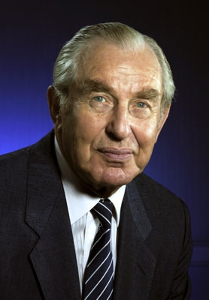
Clancy graduates in 1904 and finds a position teaching the Irish language at Clongowes Wood College and is active in the Gaelic Athletic Association. Due to ill health he has to return to his home at Grange. In 1908 he comes to Limerick to teach Irish. In 1913 he joins the Irish Volunteers. In 1915 he marries Máire Killeen, a teacher. After the 1916 Easter Rising, he is arrested and imprisoned in Cork, but is released before he comes to trial following a hunger strike.
Clancy helps in Éamon de Valera‘s election campaign in East Clare. He nearly dies of Spanish flu during the 1918 epidemic but recovers and, in January 1921, he is elected Sinn Féin Mayor of Limerick.
On the night of March 6, 1921, three Auxiliaries come to Clancy’s house and one of them shoots him, injuring him fatally. His wife is also injured in the attack. The previous Mayor, Michael O’Callaghan, is also murdered on the same night by the same group.
Suspicion immediately falls upon members of the Black and Tans, but a British inquiry into the murder, like most such inquiries through the years, absolve Crown forces of any blame. One of Clancy’s killers is later said to be George Nathan who dies in the Spanish Civil War in July 1937.
On February 26, 1978, film critic Ciaran Carty hails the Irish language film Poitín for its deromanticization of the west.
Poitín is partially conceived as a response to The Quiet Man, also set in the coastal area of Connemara, and its sentimental portrayal of the Irish landscape. Poitín tells of a small community centered on a home-distiller of Irish moonshine whiskey, or poteen.
In Gaelic dialogue, using local actors, with Cyril Cusack as the moonshiner, it shifts between a humorous, whimsical account of two men’s bumbling attempts at theft and a harsh series of revenges. Director Bob Quinn, a strong advocate of Gaelic culture, calls it “a horror story told amusingly.” Carty suggests that Quinn “implicitly deromanticizes the Robert Flaherty image of the rugged West as a place of primal dignity where man does noble battle with the elements.”
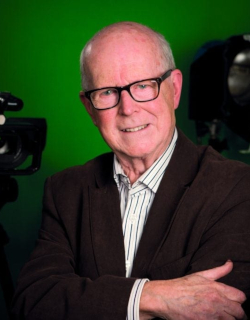
Since incurring the wrath of his first editor in 1960 by making Alfred Hitchcock’s Psycho his film of the year, Carty has consistently championed the arts, developing a career as one of Ireland’s leading critics and broadcasters. He serves as deputy editor of the Sunday Independent (1961–65) before becoming arts editor for the Sunday Tribune (1985–2011). Since 1988 he has edited the New Irish Writing page for both the Tribune and the Irish Independent, and is curator of the prestigious annual Hennessy Literary Awards. He is the author of Confessions of a Sewer Rat (1995), a two-volume biography of the artist Robert Ballagh (1985, 2011), and has co-edited, with Dermot Bolger, two anthologies of Hennessy fiction (1995, 2006).
Mac Stíofáin is born John Stephenson, the son of Protestant parents. He claims Irish ancestry on his mother’s side although the validity of this is uncertain. He leaves school at sixteen, working as a labourer and converting to Catholicism. He also serves in the Royal Air Force during World War II, working as a storeman. After the war, he becomes involved and obsessed with Irish republicanism. He joins the Irish Republican Army in 1949 and helps organise an IRA unit in London.
In 1953, Stephenson leads a raid that steals rifles and mortars from a cadet school armoury in Essex. He is stopped randomly by police, arrested and sentenced to eight years in prison. He serves more than three years behind bars, using this time to learn Irish Gaelic. Released in 1956, he marries an Irish woman, moves to Dublin and changes his name to Seán Mac Stíofáin, the Gaelic form of his birth name.
Mac Stíofáin gradually ascends through the ranks of the IRA, becoming its director of intelligence. The outbreak of the Troubles in 1969 opens up divisions in the IRA over strategy and tactics. While Cathal Goulding and other leaders want to use violence carefully, Mac Stíofáin and his supporters urge open warfare with the Royal Ulster Constabulary (RUC).
In August 1969, Mac Stíofáin leads a raid on the RUC station at Crossmaglen, in defiance of IRA orders. In December, he and four others form a Provisional Army Council. This splinter group becomes the nucleus of the Provisional IRA.
Mac Stíofáin becomes the Provisional IRA’s first chief of staff. He also oversees its rearming and the escalation of its military campaign in Northern Ireland. In July 1972, he represents the Provisional IRA in secret talks with the British government in London. When these talks collapse, he orders an increase in Provisional IRA operations, beginning with the mass bombing of Belfast on July 21, 1972.
Mac Stíofáin remains in charge until November 1972, when a controversial television interview leads to his arrest, imprisonment and removal from the Provisional IRA leadership. He is released the following year but is no longer prominent in the Provisional IRA. He spends the rest of the 1970s working for a Sinn Féin newspaper.
Hayes is first elected to Dáil Éireann as a Sinn Féin TD for the National University of Ireland constituency at the 1921 Irish elections. At the 1922 general election he is elected as a Pro-Treaty Sinn Féin TD. He serves as Minister for Education from January to September 1922, as part of the Dail Aireacht ministry as opposed to the Provisional Government. He has special responsibility for secondary education. He is also acting Minister for Foreign Affairs from August to September 1922. He supports the Anglo-Irish Treaty during the crucial debates in 1922. That same year he is elected Ceann Comhairle of the First Dáil of the Irish Free State. He holds that post for ten years until 1932.
Hayes loses his Dáil seat at the 1933 general election but is elected to Seanad Éireann in 1938 for Fine Gael. He remains a Senator until 1965, acting as leader of government and opposition there.
Hayes becomes Professor of Irish at University College Dublin in 1951.
Michael Hayes dies at the age of 86 on July 11, 1976, in Dublin.
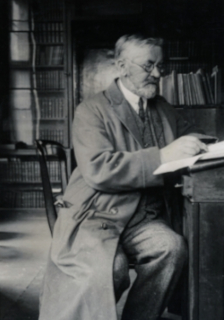
Within one year of becoming Director of the School of Irish Studies in the Dublin Institute for Advanced Studies, Bergin resigns both the senior professorship and his office of director. The reason for his resignation is never made public.
Bergin, who never uses the name Joseph except when signing with his initials, does not seem to have felt the need of institutional religion, and during his lifetime, he rarely attends religious services. He develops Irish nationalist sympathies and remains a firm nationalist all his life but without party affiliations. From the number of Irish speakers living in Cork, he quickly masters the spoken Irish of West Munster. By 1897, his knowledge of spoken and literary Modern Irish is so strong that he is appointed lecturer in Celtic in Queen’s College, Cork. It is during this time that he becomes an active member of the Gaelic League.
Bergin publishes extensively in the journal for Irish scholarship, Ériu. He is best known for his discovery of Bergin’s Law, which states that while the normal order of a sentence in Old Irish is verb-subject-object, it is permissible for the verb, in the conjunct form, to be placed at the end of the sentence. His friend Frank O’Connor writes humorously that while he discovers the law “he never really believed in it.” He writes poetry in Irish and makes a number of well-received translations of Old Irish love poetry.
Bergin is celebrated in Brian O’Nolan‘s poem Binchy and Bergin and Best, originally printed in the Cruiskeen Lawn column in The Irish Times and now included in The Best of Myles. He is noted for his feuds with George Moore and William Butler Yeats, but he enjoys a lifelong friendship with George William Russell. Frank O’Connor describes Bergin’s eccentricities affectionately in his memoir My Father’s Son.
Osborn Bergin dies in a nursing home in Dublin at the age of 76 on October 6, 1950, having never married.
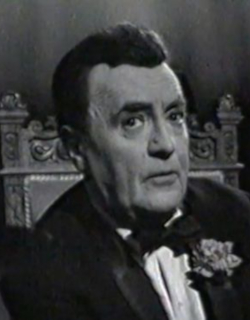
As Alfred Willmore, he is one of the leading child actors on the English stage, in the company of Noël Coward. He appears for several seasons in Peter Pan. He studies painting at London’s Slade School of Fine Art, continuing to paint throughout his lifetime. In the 1920s he travels all over Europe. He is captivated by Irish culture and learns the Irish language which he speaks and writes fluently. He changes his name to an Irish version, presenting himself in Ireland as a descendant of Irish Catholics from Cork. Later in his life, he writes three autobiographies in Irish and translates them into English.
While acting in Ireland with the touring company of his brother-in-law Anew MacMaster, Mac Liammóir meets the man who becomes his partner and lover, Hilton Edwards. Their first meeting takes place in the Athenaeum, Enniscorthy, County Wexford. Deciding to remain in Dublin, where they live at Harcourt Terrace, the pair assists with the inaugural production of Galway‘s Irish language theatre, An Taibhdhearc. The play is Mac Liammóir’s version of the mythical story Diarmuid agus Gráinne, in which Mac Liammóir plays the lead role as Diarmuid.
Mac Liammóir and Edwards then throw themselves into their own venture, co-founding the Gate Theatre in Dublin in 1928. The Gate becomes a showcase for modern plays and design. Mac Liammóir’s set and costume designs are key elements of the Gate’s success. His many notable acting roles include Robert Emmet/The Speaker in Denis Johnston‘s The Old Lady Says “No!” and the title role in Hamlet.
In 1948, Mac Liammóir appears in the NBC television production of Great Catherine with Gertrude Lawrence. In 1951, during a break in the making of Othello, he produces Orson Welles‘s ghost-story Return to Glennascaul which is directed by Hilton Edwards. He plays Iago in Welles’s film version of Othello (1951). The following year, he goes on to play ‘Poor Tom’ in another Welles project, the TV film of King Lear (1953) for CBS.
Mac Liammóir claims when talking to Irish playwright Mary Manning, to have had a homosexual relationship with General Eoin O’Duffy, former Garda Síochána Commissioner and head of the paramilitary Blueshirts in Ireland, during the 1930s. The claim is revealed publicly by RTÉ in a documentary, The Odd Couple, broadcast in 1999. However, Mac Liammóir’s claims have not been substantiated.
Mac Liammóir’s life and artistic development are the subject of a major study by Tom Madden, The Making of an Artist. Edwards and Mac Liammóir are the subject of a biography, titled The Boys by Christopher Fitz-Simon.
Micheál Mac Liammóir dies at the age of 78 on March 6, 1978. Edwards and Mac Liammóir are buried alongside each other at St. Fintan’s Cemetery, Sutton, Dublin.
Mac Fhionnlaoich is the son of Micheal McGinley and Susan Toner. He attends school locally until he is seventeen. He then attends Blackrock College in Dublin for two years. Upon leaving school he enters into the British Civil Service becoming an Inland Revenue Officer. In 1895 he marries Elizabeth Woods (Irish: Sibhéal Ní Uadhaigh) and they have twelve children. He speaks Irish from an early age and keeps an interest in the language throughout his life, first publishing an Irish language short story and poem in The Donegal Christmas Annual 1883. It is not until 1895 while living in Belfast that he becomes involved in the Gaelic Movement.
It is in Mac Fhionnlaoich’s Belfast home that the first meeting of the Ulster branch of the Conradh na Gaeilge takes place in 1895. From this point on he becomes very involved in Conradh na Gaeilge becoming the organisations president on several occasions.
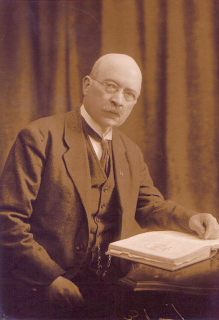
Cusack becomes a national school teacher, and after teaching in various parts of Ireland becomes a professor in 1874 at Blackrock College, then known as the French College. In 1877, he establishes his own Civil Service Academy, Cusack’s Academy, in Dublin which proves successful in preparing pupils for the civil service examinations.
A romantic nationalist, Cusack is also “reputed” to have been associated with the Fenian movement. He is active in the Gaelic revival as a member of the Society for the Preservation of the Irish Language which is founded in 1876, and later the Conradh na Gaeilge who in 1879 breaks away from the Society. Also in 1879, he meets Pat Nally, who is a member of the Irish Republican Brotherhood and a leading nationalist and athlete. He finds that Nally’s views on the influence of British landlordism on Irish athletics are the same as his. He recalls how both Nally and himself while walking through the Phoenix Park in Dublin seeing only a handful of people playing sports in the park so depressed them that they agreed it was time to “make an effort to preserve the physical strength of [their] race.” Nally organises a National Athletics Sports meeting in County Mayo in September 1879 which is a success, with Cusack organising a similar event which is open to ‘artisans’ in Dublin the following April.
Born in Dublin on November 10, 1879, Pearse joins the Irish Republican Brotherhood (IRB) in September 1913, becoming Director of Military Organisation of the Irish Volunteers in 1914 and is later co-opted into the IRB’s secretive Military Council, which infiltrates the Volunteers for the Easter Rising.
A writer and Irish language enthusiast long before he becomes a revolutionary, Pearse first comes to Ros Muc in 1903 as a 23-year-old handpicked by Conradh na Gaeilge to act as an Irish examiner.
Pearse develops a strong affinity with the area, buying land on Loch Eileabhrach in 1905, upon which he builds a cottage in 1909. Unusually for a professional at the time, he has it thatched in the style of poor country dwellings and on his regular visits between 1903 and 1915, spends time in the cabins of the poor, soaking up the folklore which finds its way into his writings.
Pearse has a rival for the affections of the locals in the shape of the Lord Lieutenant of Ireland, the Queen’s representative in Ireland. William Ward, 2nd Earl of Dudley also spends summers in the area, where he organises hunts with gentry and children’s fetes.
In response, Pearse organises an evening of Irish festivities for Ros Muc. Pearse gives scholarships to local gaeilgeoiri boys to his St. Enda’s School in Dublin.
Pearse’s last visit to the cottage is in 1915, when he composes the rousing oration for the funeral of Jeremiah O’Donovan Rossa. The following April, he goes one step further, declaring a Republic on the steps of the General Post Office (GPO) in Dublin.
After Pearse’s execution on May 3, 1916, his cottage passes to his mother Margaret. In 1921 it is burned down by the “Black and Tans” and Auxiliaries. Restored by Ó Conghaile and then again by Criostóir Mac Aonghusa, by 1943 Pearse’s sisters Senator Margaret Mary Pearse and Mary Brigid Pearse hand the cottage to the State.
Opened in 2016, a new visitor centre next to Pearse’s Cottage provides an introduction to the Irish language, Gaeltacht culture, and Pearse’s connection to Ros Muc.
(From: “Patrick Pearse’s cottage: a cultural visit to Ros Muc,” Darragh Murphy, The Irish Times, January 13, 2016)
Holland, the second of four siblings, all boys, is born on February 24, 1841 in a coastguard cottage in Liscannor, County Clare, where his father, John Philip Holland, Sr., is a member of the British Coastguard Service. His mother, a native Irish speaker from Liscannor, Máire Ní Scannláin, is John Holland’s second wife. His first wife, Anne Foley Holland, believed to be a native of Kilkee, dies in 1835. The area is heavily Irish-speaking and Holland learns English properly only when he attends the local English-speaking St. Macreehy’s National School, and from 1858, in the Christian Brothers in Ennistymon.
Holland joins the Irish Christian Brothers in Limerick and teaches in CBS Sexton Street in Limerick and many other centres in the country, including North Monastery CBS in Cork, St. Joseph’s CBS in Drogheda, and as the first Mathematics teacher in Coláiste Rís in Dundalk. Due to ill health, he leaves the Christian Brothers in 1873 and emigrates to the United States. Initially working for an engineering firm, he returns to teaching again for an additional six years in St. John’s Catholic school in Paterson, New Jersey.
While a teacher in Cork, Holland reads an account of the battle between the ironclads USS Monitor and USS Merrimack in the Battle of Hampton Roads during the American Civil War. He realizes that the best way to attack such ships would be through an attack beneath the waterline. He draws a design, but when he attempts to obtain funding, he is turned away. After his arrival in the United States, Holland slips and falls on an icy Boston street and breaks a leg. While recuperating from the injury in a hospital, he uses his time to refine his submarine designs and is encouraged by a priest, Isaac Whelan.
In 1875, his first submarine designs are submitted for consideration by the U.S. Navy, but are turned down as unworkable. The Fenians, however, continue to fund Holland’s research and development expenses at a level that allows him to resign from his teaching post. In 1881, Fenian Ram is launched, but soon after, Holland and the Fenians part company on bad terms over the issue of payment within the Fenian organization, and between the Fenians and Holland. The submarine is now preserved at Paterson Museum in New Jersey.
Holland continues to improve his designs and works on several experimental boats, prior to his successful efforts with a privately built type, launched on May 17, 1897. This is the first submarine having power to run submerged for any considerable distance, and the first to combine electric motors for submerged travel and gasoline engines for use on the surface. The submarine is purchased by the U.S. Navy on April 11, 1900, after rigorous tests and is commissioned on October 12, 1900 as USS Holland (SS-1). Six more of her type are ordered and built at the Crescent Shipyard in Elizabeth, New Jersey. The company that emerges from under these developments is called The Electric Boat Company, founded on February 7, 1899. Isaac Leopold Rice becomes the company’s first President with Elihu B. Frost acting as vice president and chief financial officer. The company eventually evolves into the major defense contractor General Dynamics.
The USS Holland design is also adopted by others, including the Royal Navy in developing the Holland-class submarine. The Imperial Japanese Navy employs a modified version of the basic design for their first five submarines, although these submarines are at least 10 feet longer at about 63 feet. These submarines are also developed at the Fore River Ship and Engine Company in Quincy, Massachusetts. Holland also designs the Holland II and Holland III prototypes. The Royal Navy ‘Holland 1’ is on display at the Submarine Museum in Gosport, England.